
Fender's New American Professional: What Actually Changed, and Why It Matters
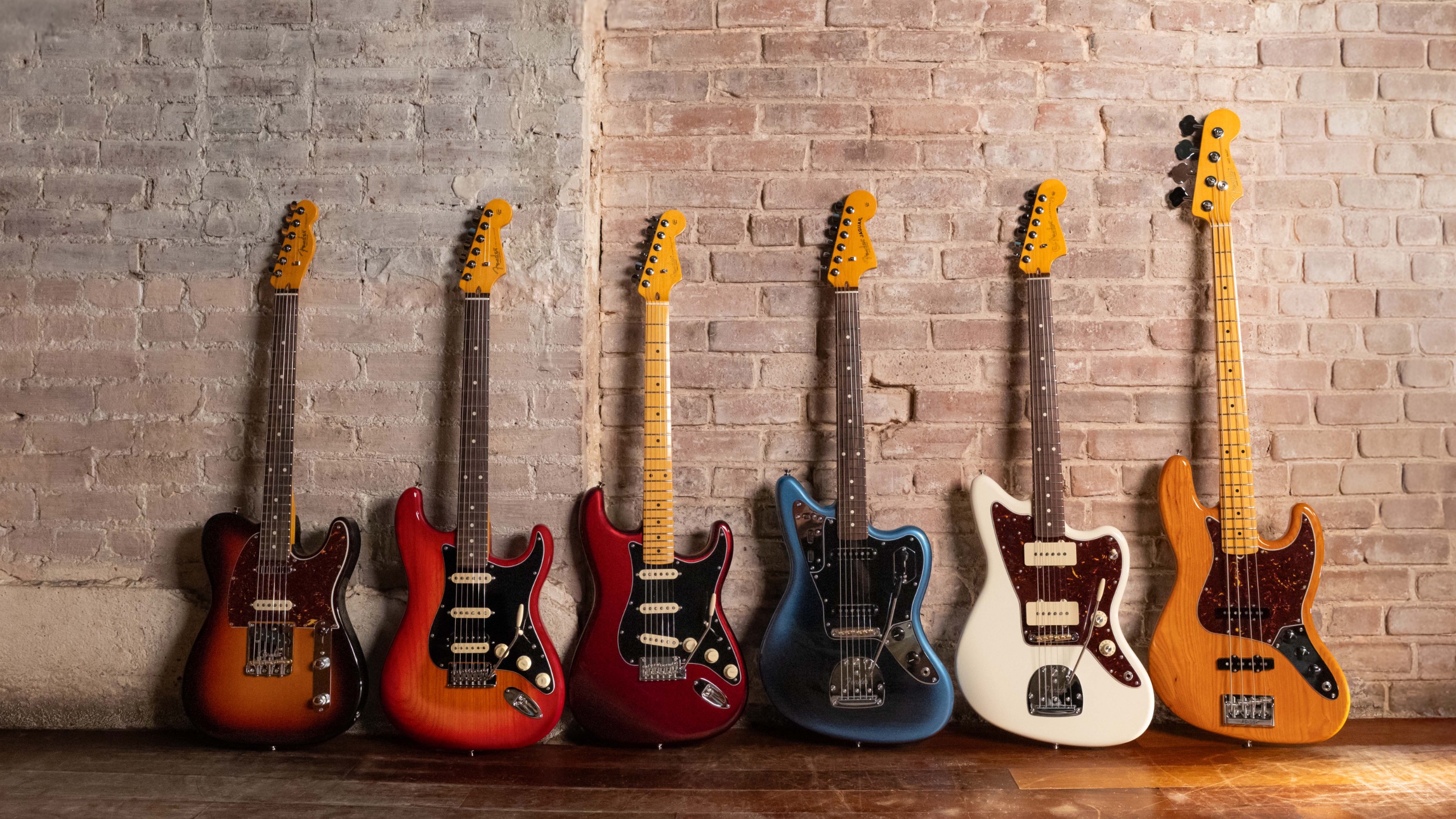
The new American Professional lineup. Photo: Fender Musical Instruments Corporation (press image)
Fender's new American Professional series drops the 'III', adds V-Mod III pickups, redesigned bridges and push-push tones, and starts at $1,799, $100 under AmPro II.
Fender doesn't overhaul its flagship US production line very often. When it does, the whole guitar world pays attention, because the American Professional series sets the standard that every other "pro-level" bolt-on gets measured against. On October 13, 2026, Fender announced the next generation of that series. Two things stand out right away, and neither one is a spec.
First, the number is gone. This isn't the American Professional III. It's just American Professional. Second, the price went down. The new line starts at $1,799 for a Stratocaster or Telecaster. Guitar World points out that's about $100 under what the outgoing American Professional II models typically sold for. That's a real reversal after years of US-made Fender prices only going one way.
This is announcement coverage, not a review. We haven't had one of these guitars in our hands yet. Below is what Fender says it changed, what the people who built it are saying, and what we think it means if you're shopping for a US Fender right now.
The Lineup
The new American Professional series covers the shapes you'd expect, built in Corona, California:
- Stratocaster
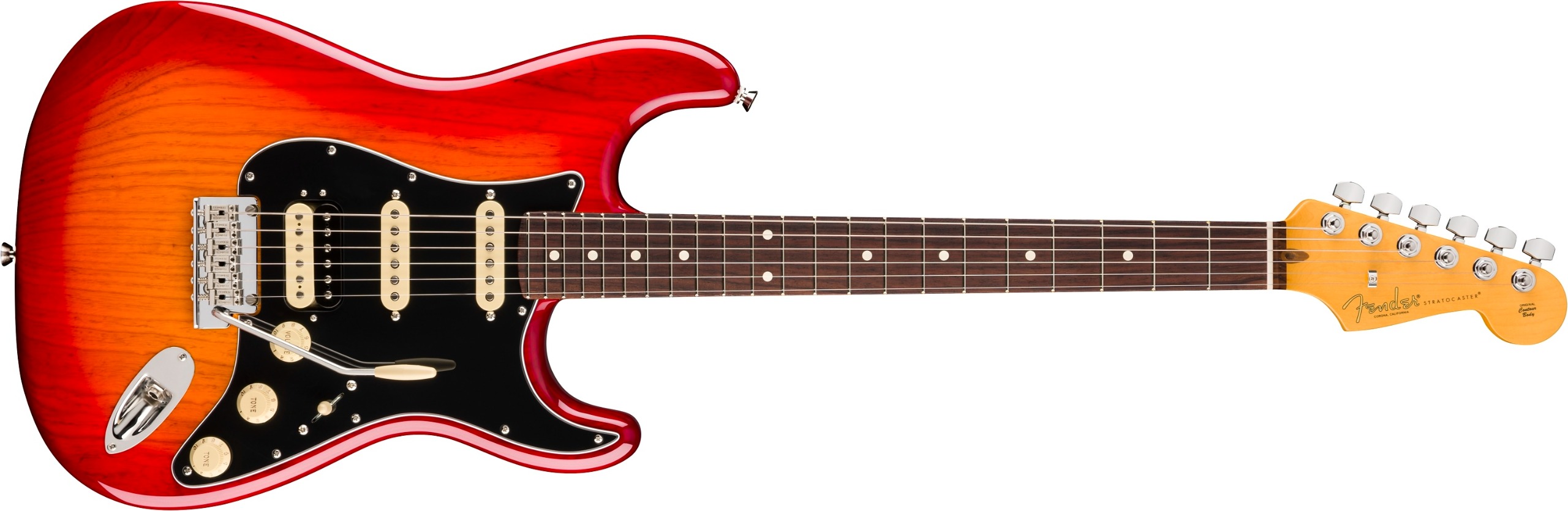
- Stratocaster HSS
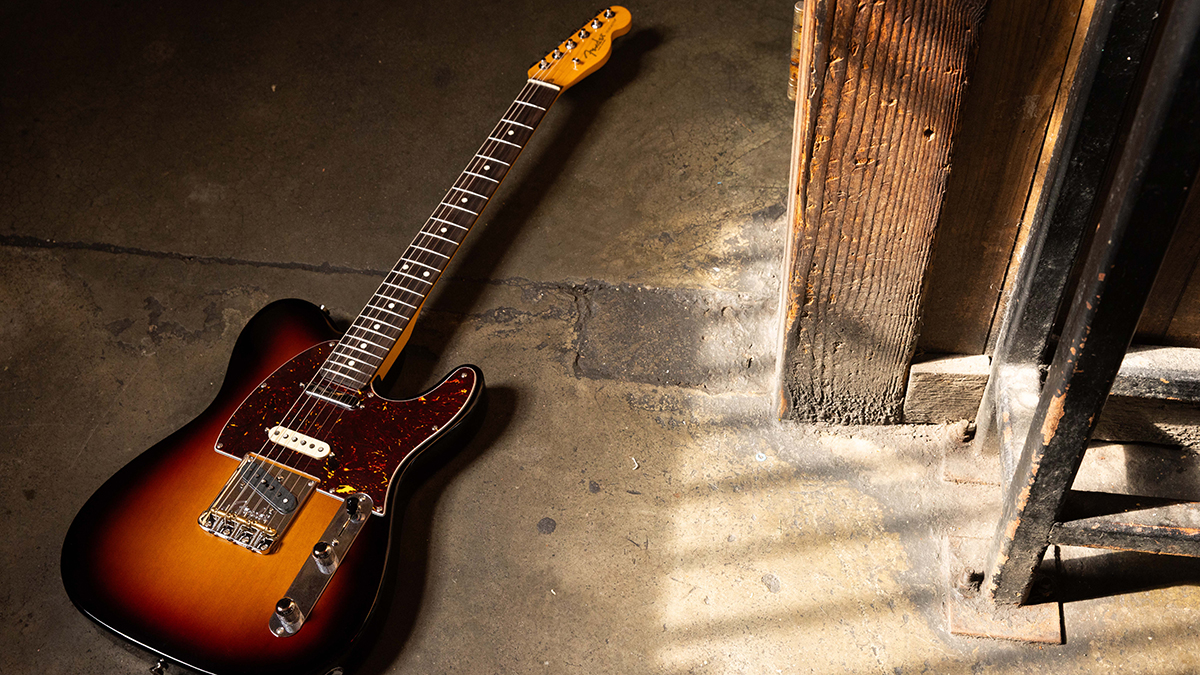
- Telecaster
- Hotshot Telecaster
- Jazzmaster
- Jaguar
- Precision Bass and Precision Bass V
- Jazz Bass and Jazz Bass V
Fender also confirmed that left-handed versions of the Stratocaster, Telecaster, Precision Bass and Jazz Bass will arrive in spring 2027. Lefties, you're getting the core four. Lefty offsets aren't part of the announcement yet.
Why Drop the "III"?
Every generation of AmPro has kept the core recipe and moved the details around: the American Standard, then American Professional, then American Professional II. Adding a III would have been the obvious move. Fender chose not to, and Guitar World describes the decision as "a mark of intent as the firm attempts to create clarity between its series."
It's a smart move for buyers too. If you've ever tried to explain to a friend the difference between an American Standard, an American Special, an American Performer, an American Professional, an American Professional II and an American Ultra, you know Fender's naming had become a maze. One clean name for the flagship workhorse makes it easier to see where everything else sits.
There's a practical side as well. When this line eventually gets updated again, Fender won't be stuck with "IV." The series name can stay put while the guitars keep changing.
The Big Three: Pickups, Bridges, Electronics
Fender's press release and Guitar World's interviews both put three areas at the center of this refresh. Here they are one at a time.
1. V-Mod III Pickups, Voiced Per Model
The V-Mod name has followed the AmPro line through its generations. V-Mod III is the new version, and the key detail is that it isn't one recipe applied to everything. Fender says each model gets its own voicing: new V-Mod III single-coils for the Stratocaster, Telecaster, Jaguar and Jazzmaster, a redesigned V-Mod III humbucking bridge pickup in the Stratocaster HSS, new Jazz Bass V-Mod III pickups, and a new V-Mod III split-coil for the Precision Bass.
Fender's official description says the pickups are "custom-voiced for balanced output, string to string note clarity, and a unique touch sensitivity."
The most interesting change is the magnet stagger. According to Guitar World, the Strat, Telecaster and Jazzmaster pickups each get new magnet staggers, so the pole heights follow the fretboard radius more closely. Fender Senior Design Engineer Steven Casado told Guitar World that this gives a tone that holds up better under heavy distortion and feels easier to play under chords.
If you've ever had a Strat where the G string jumps out in a chord or the B string disappears when you dig in, that's the problem staggers are meant to fix. Vintage staggers were designed around a 7.25" radius and wound G strings. Modern players use flatter fretboards and plain G strings, so updating the stagger is one of those quiet fixes that can matter a lot in real playing.
Guitar World also reports that the pickups have a few extra turns for more output and a more "modern" tone, along with a more complex mix of magnet types and wire gauges. The HSS Strat's humbucker uses two coils with different pitch and wire gauges for a more balanced sound. A lot of humbuckers in Strats can be too much: too loud next to the single-coils and too thick for clean tones. Fender's stated goal is "more push out of the bridge position" without that imbalance. Whether they've pulled it off is something you'll have to judge by ear.
2. Redesigned Bridges, and a "70-Plus-Year Gripe" Fixed
This is the part most likely to win over people who've played Fenders for decades.
Stratocaster: The new ClassicGear Radial bent steel saddles don't have screw ends sticking up through the top. If you palm-mute on a Strat, you've felt those height screws dig into the side of your hand for as long as you've played one. Justin Norvell, Fender's Chief Product Officer for guitars and basses, put it plainly in his Guitar World interview:
"The Stratocaster having a new saddle that enables the screws not to stick up, that [solves] a 70-plus-year gripe."
It's a small change that every Strat player will feel the first time they rest a hand on the bridge.
Telecaster: The Tele gets ClassicGear compensated brass bullet saddles and a choice of top-load or string-through stringing, according to Fender. Three-saddle Teles have always had intonation compromises, because two strings share each saddle. Compensated saddles are the classic fix, and brass keeps the twang and attack Tele players expect.
Jazzmaster and Jaguar: The offsets are where Fender has heard the most complaints over the years, and where aftermarket parts companies have made the most money. Jazzmaster and Jaguar bridges have a long reputation for strings popping out of saddles, rattling, and needing a Mastery or Staytrem swap before they feel right. Fender's press release says the Jaguar and Jazzmaster now pair a ClassicGear J-Bridge with a Panorama tremolo "for the full range of expressive vibrato."
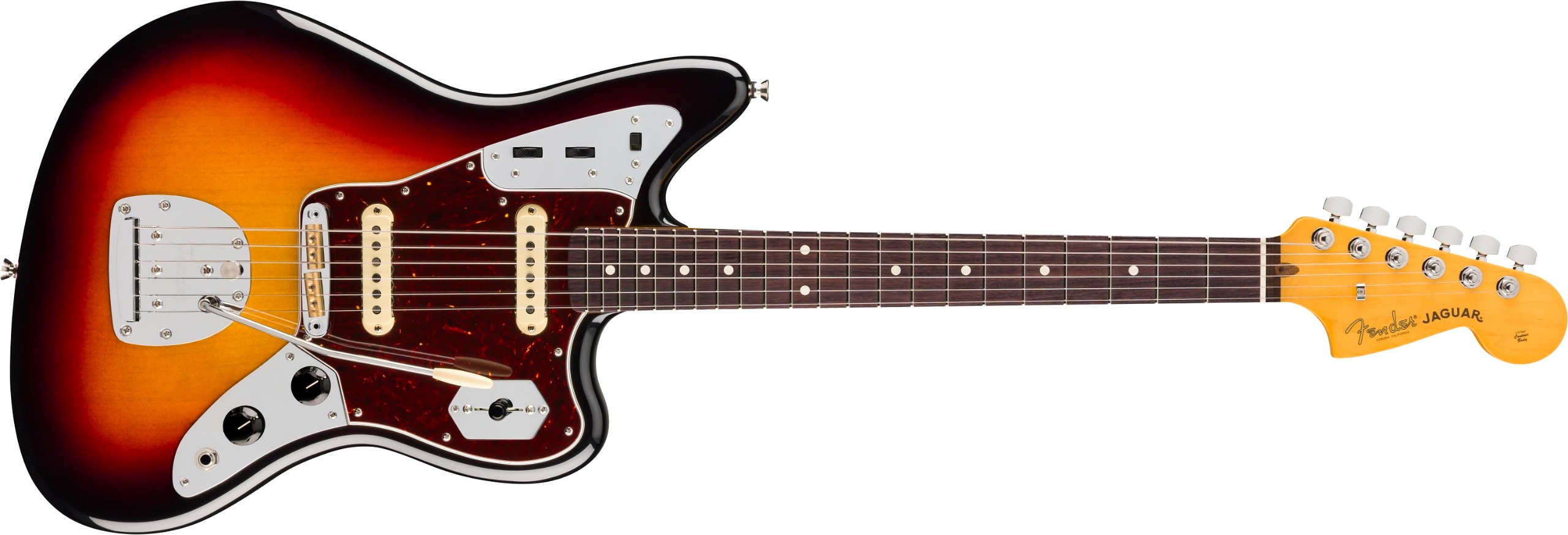
Norvell told Guitar World the offset bridge work was inspired by a Custom Shop piece:
"And the Jazzmaster bridge – you know, everyone's loved the Custom Shop RSD bridge. That bridge is one of one, handmade and milled. It was like, 'How can you make it in quantity?'"
He also described the overall goal of the project:
"The charge was led by the bridges and the pickups overall. We didn't want to just say we changed everything. But we were like, 'What can we do here? How can we make it better?'"
A note on naming: Guitar World's report describes the offsets as getting a redesigned "HiMass Modern Bridge" with the Panorama trem. Fender's own press release says the basses get the redesigned HiMass Modern Bridge, "for added resonance and sustain," while the Jazzmaster and Jaguar use the ClassicGear J-Bridge plus Panorama tremolo. We're following Fender's official spec here. Check the spec sheet for the exact model you're looking at before you buy.
3. Electronics You Feel More Than See
The third pillar is something most players won't notice right away: new ClassicGear Precision potentiometers. Fender says they "offer improved taper and ideal tension." Taper is how evenly the control works across its turn. A badly tapered volume pot does nothing until 7 and then everything between 7 and 10. Good taper means rolling back to 6 actually cleans up your sound in a usable way.
Norvell was honest about who this is for:
"It's under the hood. 90 percent of people won't notice and won't care, but we do."
Every guitar in the line also gets a push-push tone control, which Fender says puts "extra voices one click away." Fender hasn't published a single list of what each switch does on each model, and it likely varies by guitar. Check the individual product pages for the exact switching before you assume it's the bridge-pickup blend you know from older AmPros.
Necks: Deep "C," Rolled Edges
The guitars use a Deep "C" neck profile, the Precision Bass gets a Medium "C," and the Jazz Bass gets a Slim "C." All of them have rolled fingerboard edges, which Fender says "let the fretting hand move freely across the fingerboard."
The AmPro II used a "Deep C" too, so this isn't a total departure, but rolled edges as standard is a nice touch. It's the kind of worn-in feel that used to mean a Custom Shop price or a lot of years of playing.
Colors
Guitar World lists a mix of classic and contemporary finishes, including 3-Color Sunburst, Olympic White, Butterscotch Blonde, Oxblood, Aged Cherry Burst and Dark Night. Availability varies by model, so check Fender's product pages for the full color chart for each guitar.
Pricing
Here's the US price list as reported by Guitar World (Fender's official prices end in .99):
| Model | Price (USD) | ||
|---|---|---|---|
| American Professional Stratocaster | $1,799 | ||
| American Professional Telecaster | $1,799 | ||
| American Professional Stratocaster HSS | $1,849 | ||
| American Professional Hotshot Telecaster | $1,849 | ||
| American Professional Jazzmaster | $1,899 | ||
| American Professional Jaguar | $1,949 | ||
| American Professional Precision Bass | $1,899 | ||
| American Professional Jazz Bass | $1,999 |
Guitar World calls the price "a surprising reversal on the long-running upwards trajectory of Fender's US build prices." We agree. For several years, every refresh of a US Fender came with a higher price tag. A flagship refresh that adds new bridges, new pickups and new pots and costs less is not something we've seen from Fender in a long time.
What Fender Says It's About
Fender's announcement frames all of this around the identities of its original designs. In the press release, Norvell says:
"You don't evolve an instrument like the Strat or Tele by changing things just to make them new. We balance modern, useful improvements with the familiarity of what has made them iconic. In the same spirit as Leo Fender, we create tools for musicians by listening to what they need."
Fender CEO Edward "Bud" Cole credited the people building the guitars:
"There are incredibly talented designers, engineers and builders behind every one of these instruments. They listen to players, test ideas and work through the details to make meaningful improvements for players."
The launch is also the centerpiece of Fender's "The One. For All." campaign, which features Dinosaur Jr., Mike Kinsella of American Football, Lindsey Jordan of Snail Mail, Steve Gunn, Marc Ribot's Ceramic Dog, the Thurston Moore Group and They Are Gutting a Body of Water. J Mascis, whose name is pretty much synonymous with the Jazzmaster, told a great origin story in the release:
"Starting a band I decided I wanted a Fender… I went to buy a Strat but they had a Jaguar for $200 and Jazzmaster for $300. The neck felt better on the Jazzmaster, it was worn in like a baseball bat so I just went for the Jazzmaster."
Putting the guy who made the Jazzmaster cool again at the front of a launch built around a better Jazzmaster bridge is no accident.
The TGP Take
We'll hold back on a final verdict until we've played one, but here's how it looks on paper.
Who should be excited:
- Offset players. If Fender's new J-Bridge and Panorama trem really bring Custom Shop-style stability to production Jazzmasters and Jaguars, that's the biggest functional upgrade in this launch. It could save buyers the usual $100 to $200 aftermarket bridge swap.
- Strat players who palm-mute. The saddle change is small, but you'll notice it every time you play.
- Anyone who plays with gain. New magnet staggers tuned for modern radii and plain G strings, plus extra output, point to single-coils that should handle distortion better without turning harsh.
- Anyone on a budget. It's $100 less than the outgoing line, with real hardware upgrades. In 2026 that's a rare combination.
What to watch:
- The bridge naming confusion between early press coverage and Fender's official spec. Read the product page for the exact model you want.
- Push-push switching details, which will likely differ by model.
- Real-world feel. Pots, staggers and rolled edges are all feel-and-ear upgrades, and spec sheets can't tell you how those land. Play one before you decide.
If you already own an AmPro II: There's no reason to panic-sell it. The AmPro II is still a great guitar, and used prices may soften as the new models arrive, which makes it a great time to buy one used. If the screw-free Strat saddles or the new offset bridge solve a problem you've been fighting, though, this generation is worth trying.
Where to Buy
The new American Professional models are listed on Fender.com, and Fender dealers should have stock as the rollout continues. Left-handed Stratocaster, Telecaster, Precision Bass and Jazz Bass models arrive in spring 2027. When TGP gets one in for a proper hands-on review, we'll update this story.
Images: Fender Musical Instruments Corporation press images. Quotes from Justin Norvell and Steven Casado as reported by Guitar World (Matt Owen, October 13, 2026); press release quotes from Fender's official October 13, 2026 announcement.
Experience-driven coverage, not algorithm bait.
- 20+ years of guitar playing experience
- Real-world retail experience at Guitar Center
- Thousands of hours testing guitars, amps, and pedals
- A community of 50,000+ guitar enthusiasts across platforms
- Partnerships with Fender, DistroKid, TrueFire, Card Chords, and Enya
- Editorial standards published openly — see how we test gear
The Modern Guitar Magazine. Delivered to your inbox.
No spam. No gimmicks. Just great guitar content — stories, tones, iconic solos, and honest gear takes. Every week.
Ask GP
3 free questions a dayStill curious? Ask GP about this story.
Your personal classic-rock and guitar guide — ask anything about Fender's New American Professional.
Discussion (0)
Sign in to join the discussion.
Sign in to commentLoading comments…
Discover another guitar story
Swipe through our latest features, breaking news and iconic solos — one story at a time.
Open Swipe →More in Guitar News / Music Releases
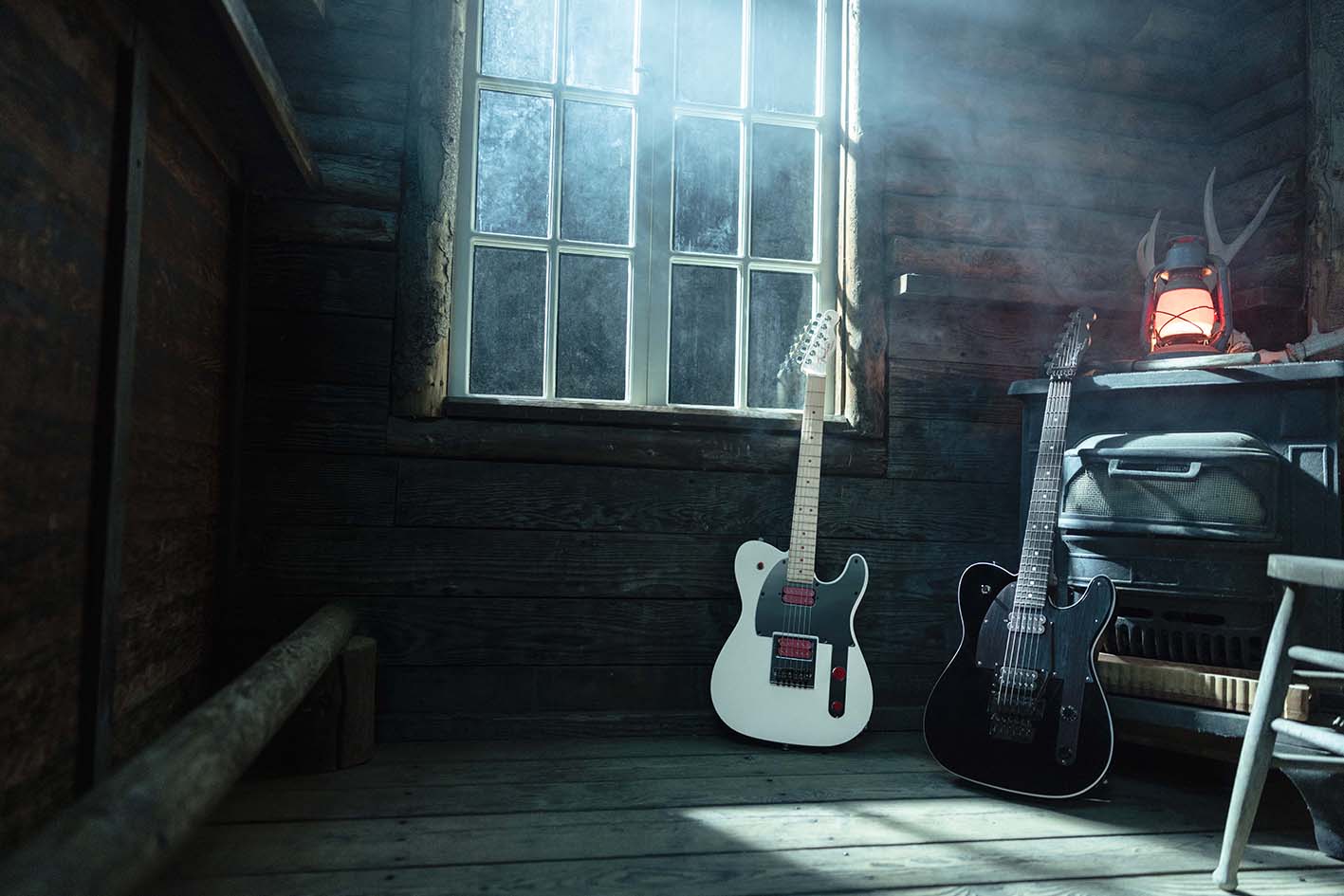
Fender Unleashes Three New John 5 Telecasters — Including a $6,000 Custom Shop Phantom
The Mötley Crüe guitarist's latest Fender collection brings high-output DiMarzio pickups, Floyd Rose-equipped performance, and his unmistakable visual style to three signature instruments.
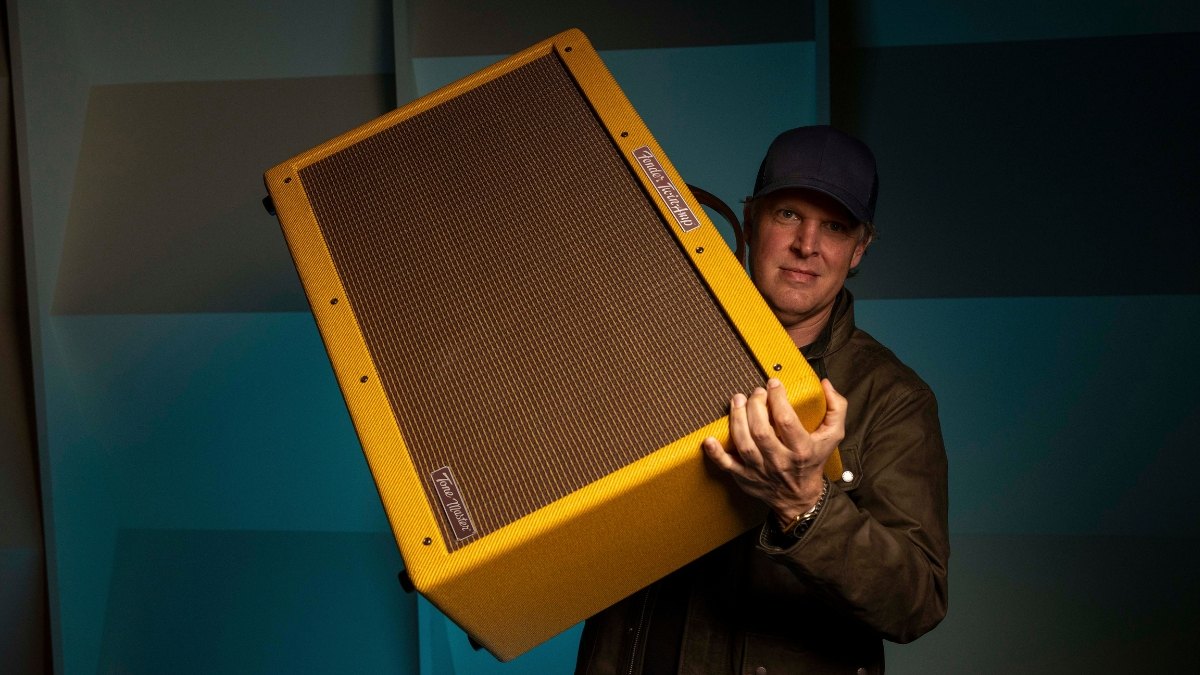
Joe Bonamassa's First Signature Amp Is a Digital Fender: The Tone Master '59 Twin-Amp JB Edition
The blues-rock guitarist whose vintage collection borders on a museum just put his name on an all-digital amplifier — and says it's tighter, punchier and better than his originals.
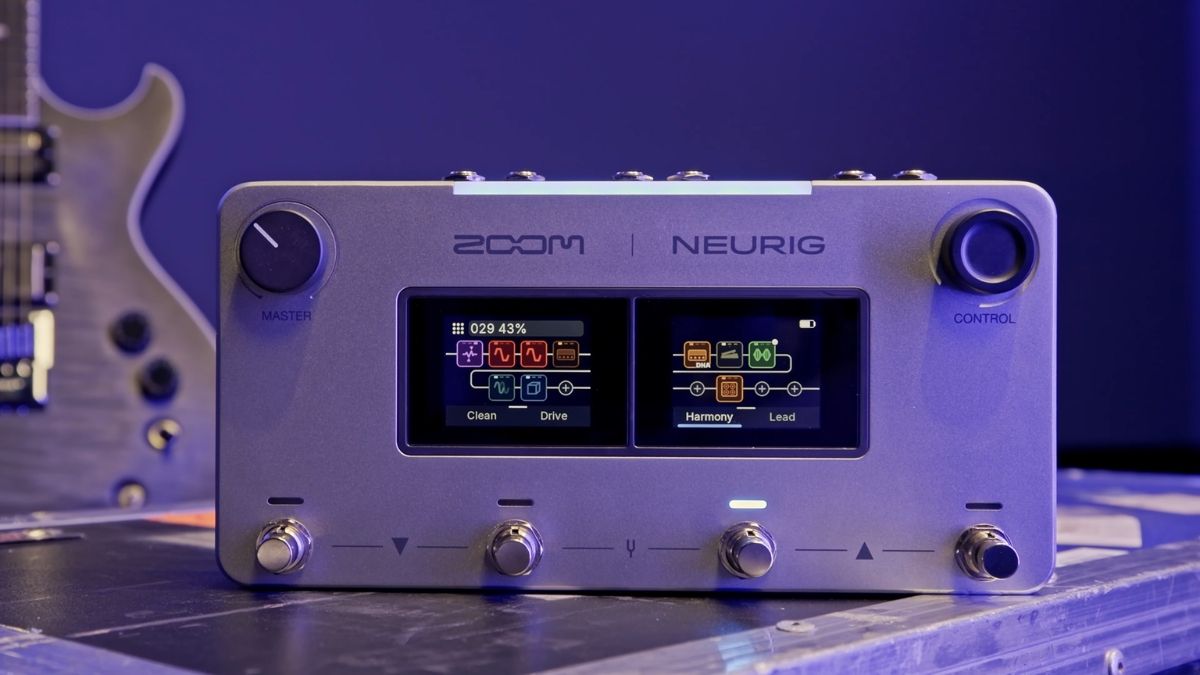
Zoom’s Neurig Puts Neural Amp Modeling in Reach — But the Fine Print Matters
Dual touchscreens, community amp captures and a Japanese price around $300 by conversion: Zoom’s new pedal has an ambitious spec sheet — and some important caveats.