
Fender's CEO Calls the Stratocaster "the Sum of Its Parts" — and Says the Legal Campaign Won't Stop
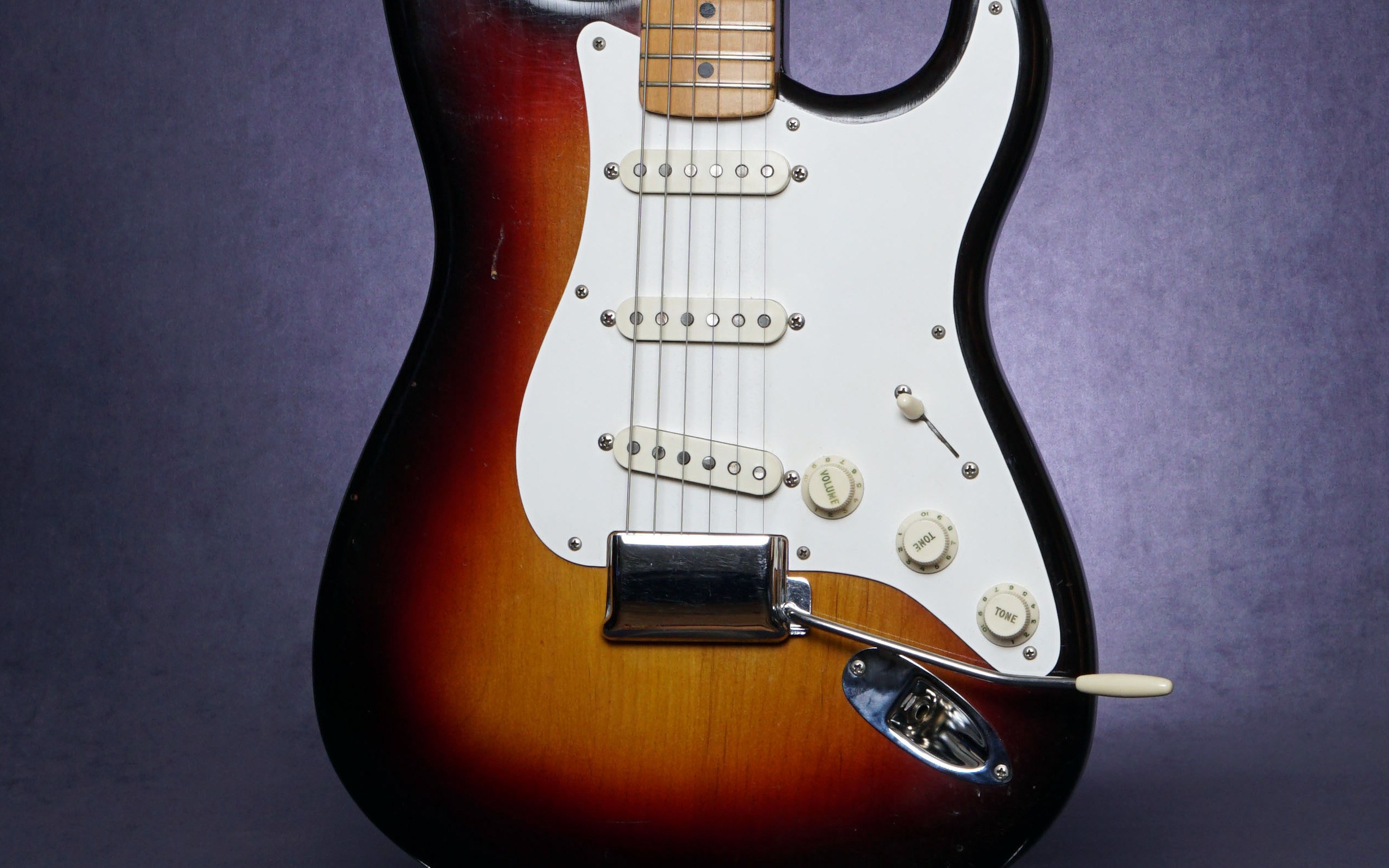
A 1958 Fender Stratocaster in three-color sunburst (landscape crop). Photo: Lightburst / Wikimedia Commons, CC BY-SA 4.0.
Fender's CEO admits the S-style cease-and-desist campaign could have been handled differently — then defines what he believes makes a Stratocaster a Stratocaster.
Fender's attempt to enforce its claim over the Stratocaster has been the guitar industry's defining argument of 2026 — and until now it has mostly been conducted through lawyers: cease-and-desist letters, quiet settlements and one German courtroom. This week the man running Fender put his own voice on the record. Edward "Bud" Cole, who became the company's CEO in January, sat for a 90-plus-minute interview with YouTuber Mary Spender, and his remarks — transcribed by Ultimate Guitar on September 27 and reported by MusicRadar on September 24 — amount to the most candid public accounting yet of how Fender sees both the campaign and the guitar it is fighting for.
The campaign itself needs little introduction. Fender's legal representatives have sent cease-and-desist letters to dozens of companies that make S-style guitars — from small boutique builders like LsL to the largest manufacturer in the industry, Yamaha, to German retail giant Thomann, maker of Harley Benton. According to Bloomberg's reporting, around 60 companies have received letters, Fender is in talks with 32 of them, and 18 have already signed agreements to change their designs. Thomann has countersued. And none of that — no letter, no agreement, no negotiation — is a court finding that any particular guitar infringes anything, a distinction we set out in detail in our earlier deep dive on the campaign.
"How we went about doing it got way ahead of the why"
Cole was blunt about the early handling. "I really would like to acknowledge the fact that how we went about doing it got way ahead of the why," he said, in quotes transcribed by Ultimate Guitar. "I'm the CEO and I have to own that. It's my responsibility. But we should have really gotten out before we did any notifications to anyone, and explained ourselves to the people that we notified. And at the end of the day we should have done a better job."
To MusicRadar he framed the same regret more pithily: "If I could go back in time with what I have heard, and what I know now, this would have been done very differently, and I think that's very important." Cole also pointed out that the groundwork had been laid before he took the top job — the German ruling at the center of all of it was handed down in December 2025.
What a Stratocaster actually is, according to Fender
Fender has never published the test it applies when deciding which guitars get a letter. Asked what he thinks a Stratocaster actually is, Cole offered the fullest answer yet: "I would define it as something that Leo Fender created over 70 years ago. [Not just] one of the most iconic shapes of guitars, but one of the most amazing designs of any product in any category that the modern world has ever known. So, it is really the sum of several parts; not any particular individual part but the sum of the parts."
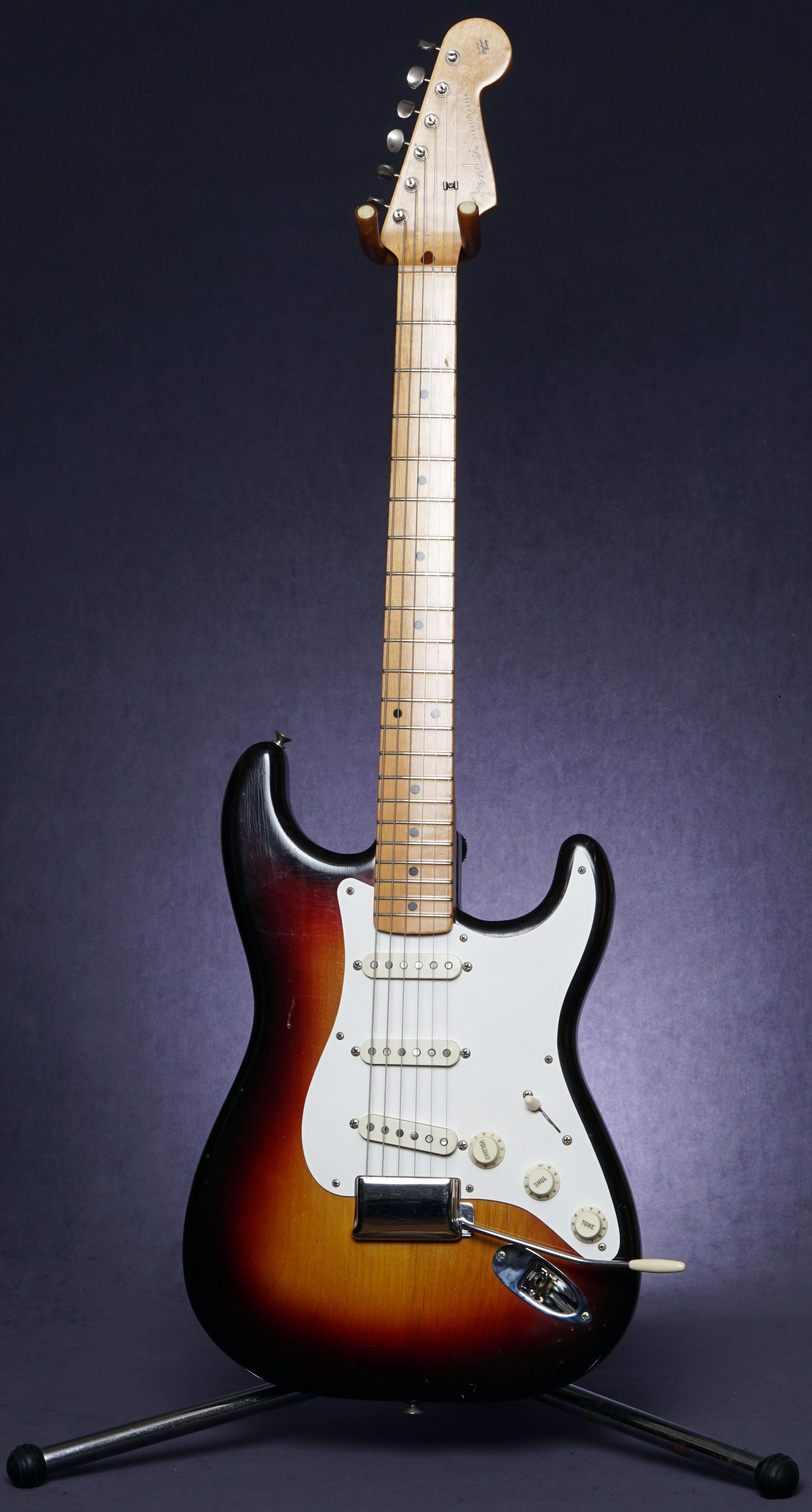
"So, to me, it is the shape of the body. It's the contours... that make up the arm and the belly. The body radius and the dimensions of that. The pickguard, the controls, and the knobs. And then, it is the output that sits on the front of the guitar. Not any individual piece, but altogether that silhouette and that image [which] is uniquely a Stratocaster."
That is as specific as Fender has been in public. Cole said the company gets more concrete in private: "When we meet with the different guitar companies, we want to show, 'Here's what we believe is a copy, and here's what we believe is an inspiration,' and to clearly articulate that." That standard now determines which guitars Fender leaves alone and which it pursues — and the public still cannot see it.
The PRS question — and John Mayer
Fender's letter to PRS — maker of John Mayer's Silver Sky, arguably the best-known S-style on the market — was the moment the story escaped the trade press. PRS has said publicly that it disagrees with Fender's assessment. Cole addressed it head-on: "Well, first of all, whether he plays a PRS guitar or any other guitar, we love John Mayer. He's an amazing artist; his artistry and playing capabilities are in rarified air. So, this has really nothing to do with John Mayer."
He declined to go further: "I won't get into specific brands of guitars at this point, because we are engaging guitar companies." For companies whose designs Fender considers "materially different," he said, there are no issues; for the others, Fender wants to "help them, or inspire them, or work with them to push their design further, so they have their own unique design to the naked eye."
Fees, fines and antitrust advice
Ultimate Guitar's transcription also pressed Cole on the campaign's one-size-fits-all mechanics, which saw small boutiques and multi-billion-dollar companies receive the same letters, with potential fees reportedly quoted at up to 250,000 euros — more than $284,000. Cole said the uniform approach was deliberate, on legal advice, so that every recipient received the same information. And the numbers, he insisted, were never threats: "those were [quoted] to start an engagement; to start a discussion. But those were never fines that have been applied to anyone."
He added that the reactions the letters produced "were not the reactions that was our original intention, which was really, let's sit down and have a conversation." Whether a letter arriving from Fender's lawyers reads as an invitation to a conversation is, presumably, a matter for the recipient.
Functionality versus art
Spender pushed back on the whole premise: many of the Strat's features are ergonomic rather than artistic — the contours fit a player's arm and hip, the headstock balances the neck. Classical makers converge on similar silhouettes for the same physical reasons, and Fender has borrowed plenty itself over the years. Cole's answer leaned on a distinction that could matter in court: "When you look at a Dreadnought, or you look at a concert, or you look at a parlor, they're built specifically, 100%, to sound how they sound." A Stratocaster, he argued, is different: "It is the design of the way that guitar looks. And the collection of those components together... we believe, is part of Fender's history. It's part of our intellectual property."
Where the campaign stands — and what it means for players
Nothing in the interview suggests a retreat. Bloomberg reported that Fender shows no signs of stopping, and Cole made the same point himself, saying the campaign will ultimately "improve" guitar design. The ruling at the center of the campaign remains what our earlier reporting established: a December 22, 2025 default judgment from the Regional Court of Düsseldorf, in a case the defendant did not defend, applying German copyright law to near-identical replicas sold in Germany — not a finding against any of the big-name builders. In the United States, Fender's attempt to trademark the Stratocaster body shape failed years ago; copyright and trademark are different tests, and Fender's new campaign is built on the first, in Europe.
For players, the practical stakes now sit with Thomann's countersuit and whatever definition Fender presents to companies behind closed doors. Cole's "sum of its parts" framing is compelling as design history. As a legal standard, it leaves every S-style builder — and everyone who plays one — waiting to find out which parts count, and who gets to decide. That question, as MusicRadar observed, may not be answered until the lawsuits conclude.
Sources & further reading
- 1.Ultimate Guitar — Fender CEO tries to define what makes a Stratocaster (transcription of the Mary Spender interview), September 27, 2026
- 2.MusicRadar — Fender CEO admits regret over handling of S-style cease-and-desist campaign, September 24, 2026
- 3.Mary Spender — "I Interviewed the CEO of Fender" (YouTube)
- 4.Bloomberg — Fender takes on the electric guitar industry over Stratocaster copyright, September 17, 2026
- 5.Lightburst — 1958 Fender Stratocaster photograph and license (Wikimedia Commons)
Experience-driven coverage, not algorithm bait.
- 20+ years of guitar playing experience
- Real-world retail experience at Guitar Center
- Thousands of hours testing guitars, amps, and pedals
- A community of 50,000+ guitar enthusiasts across platforms
- Partnerships with Fender, DistroKid, TrueFire, Card Chords, and Enya
- Editorial standards published openly — see how we test gear
The Modern Guitar Magazine. Delivered to your inbox.
No spam. No gimmicks. Just great guitar content — stories, tones, iconic solos, and honest gear takes. Every week.
Ask GP
3 free questions a dayStill curious? Ask GP about this story.
Your personal classic-rock and guitar guide — ask anything about Fender's CEO Calls the Stratocaster.
Discussion (0)
Sign in to join the discussion.
Sign in to commentLoading comments…
Discover another guitar story
Swipe through our latest features, breaking news and iconic solos — one story at a time.
Open Swipe →More in Guitar News / Music Releases

Mike McCready Plugged In, Faced the Flag, and Gave Seattle Its Hendrix Moment
One guitarist, one Strat, one stadium full of people who grew up on Seattle guitar. McCready's anthem at Lumen Field was a straight line back to Hendrix — and it landed.

Eric Clapton Revived a Song He Hadn’t Played in 51 Years — And Now It Looks Like It’s Staying
The 1974 deep cut “Give Me Strength” disappeared from Clapton’s concerts after 1975. Now he’s played it on consecutive nights — 51 years later.

KISS Have Recorded a New Paul Stanley Song—and Ace Frehley’s Guitar Legacy Still Looms Large
Tommy Thayer confirms fresh studio activity as KISS move beyond their farewell tour. It’s also a moment to revisit the guitarist who helped make the band essential listening.