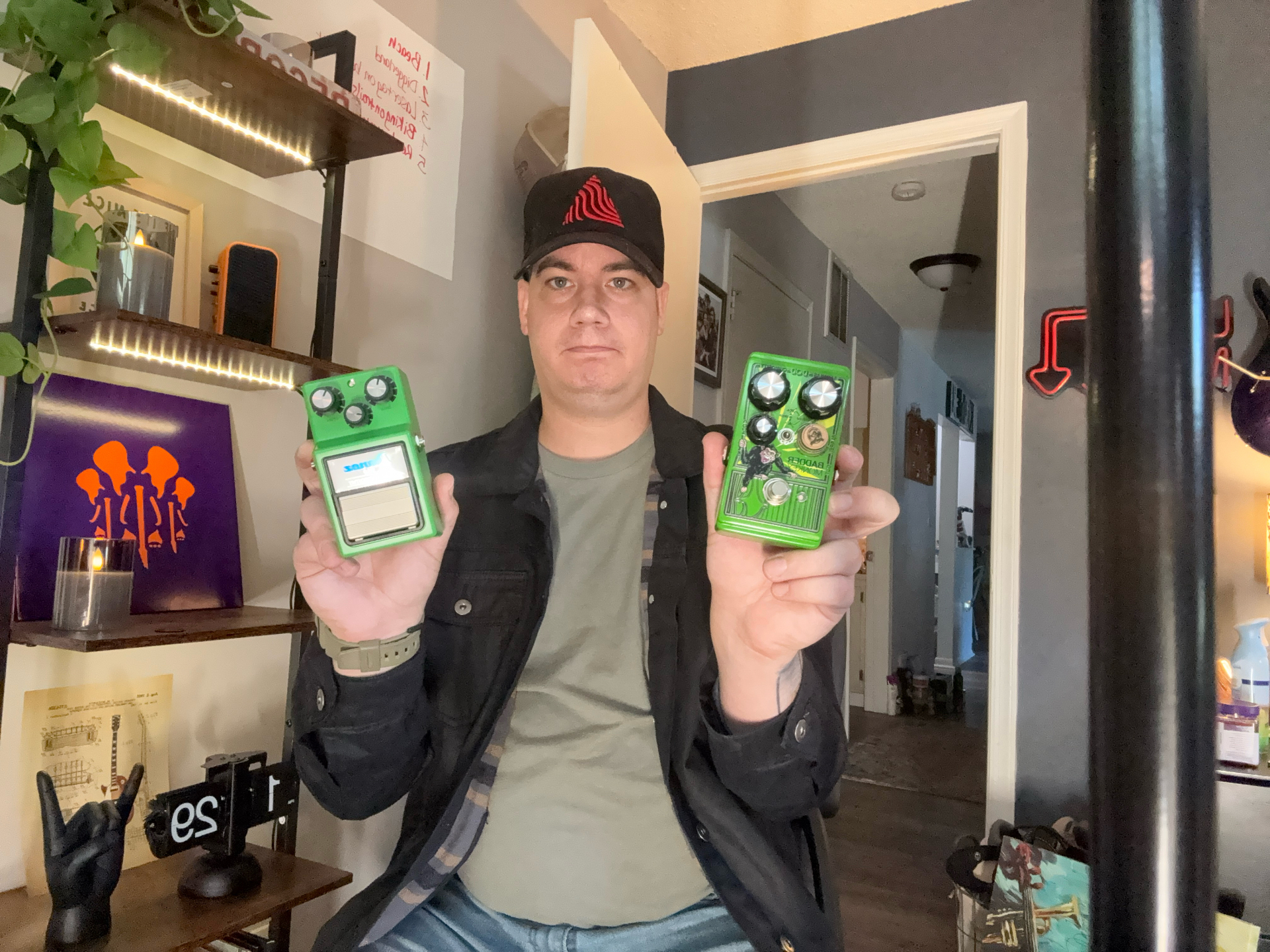
The Ibanez Tube Screamer: How a Little Green Box Built to Compete Became the Pedal Everyone Copies
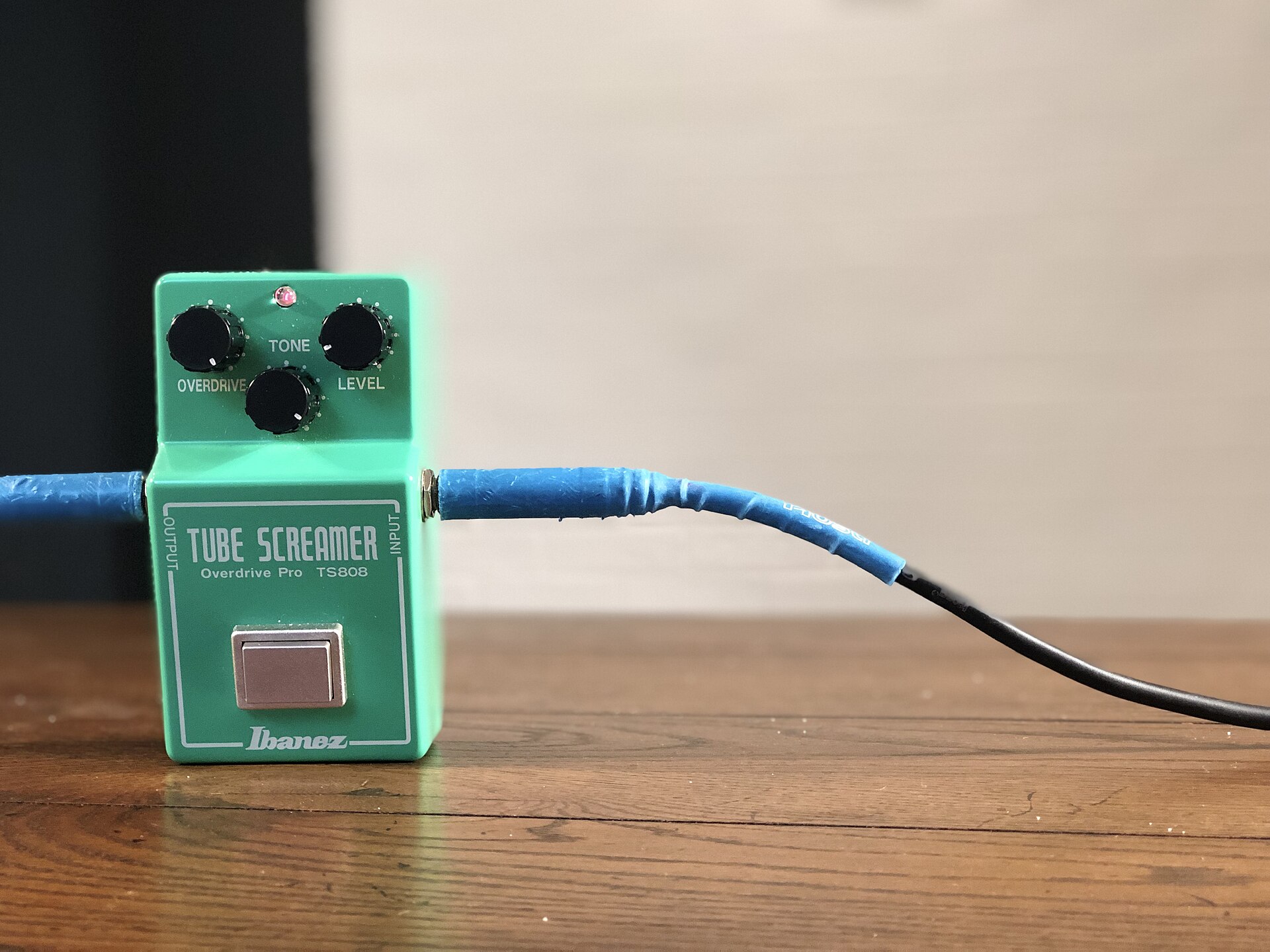
The Ibanez TS808 Tube Screamer Overdrive Pro: three knobs, a small footswitch, and a circuit copied ever since.
Photo: Guitar Chalk / Flickr via Wikimedia Commons (CC BY 2.0)
How a Maxon engineer's answer to the Boss OD-1 became the Ibanez Tube Screamer, why the TS808 vs TS9 debate never ends, and what SRV really used.
The Ibanez Tube Screamer was never supposed to be a legend. It was a product meant to answer a competitor. A young engineer at a Japanese pickup company was told to build something that could stand next to the Boss OD-1 and the MXR Distortion+ on a dealer's shelf. He couldn't play guitar. The pedal it became sold slowly, went out of production twice, and was being dumped back to dealers for a few dollars at one point.
Then a Texan with a beat-up Stratocaster put one in front of a Fender amp. Forty-plus years later, the green box with three knobs is probably the most copied circuit in the stompbox world, and players still argue about which version is the "real" one.
This is the Ibanez Tube Screamer history guitarists actually need: who built it, why it sounds the way it does, what Stevie Ray Vaughan really used, and why a pedal designed for blues players ended up in front of nearly every high-gain metal amp on the planet.
Before the Green Box: A Pickup Company Starts Making Pedals
The Tube Screamer's story starts with a company most American players have never heard of: Nisshin Onpa, of Matsumoto, Japan.
Nisshin Onpa began as an electric guitar pickup maker. It started building effects pedals as OEM projects for other brands, then launched its own Maxon line in 1971. One of its biggest customers was Hoshino Gakki, the Nagoya company that sold instruments abroad under the name Ibanez.
The arrangement was unusual. Nisshin built pedals for Ibanez to export, and it was also allowed to sell the same designs at home under Maxon. Maxon couldn't export on its own back then, so the overseas market went through Ibanez. In a 2023 Guitar Player interview, the pedal's designer said the Ibanez and Maxon versions were "basically the same" until Maxon stopped supplying Ibanez in 2003, and that you can often find Maxon printing on the circuit boards or battery lids of vintage Ibanez pedals.
That designer was Susumu Tamura. He joined Nisshin Onpa in 1974, straight out of an industrial high school where he'd studied electronics. His first pedal was a phaser, the PT999. His first overdrive was the OD880, which the Japanese guitar star Char used. Tamura has said plainly that he couldn't play guitar ("same as Leo Fender"), though he could tune one.
1979: The OD808 and the Birth of the TS808
By the late 1970s, overdrive pedals were becoming a real product category. Boss had the OD-1. MXR had the Distortion+. Nisshin needed an answer.
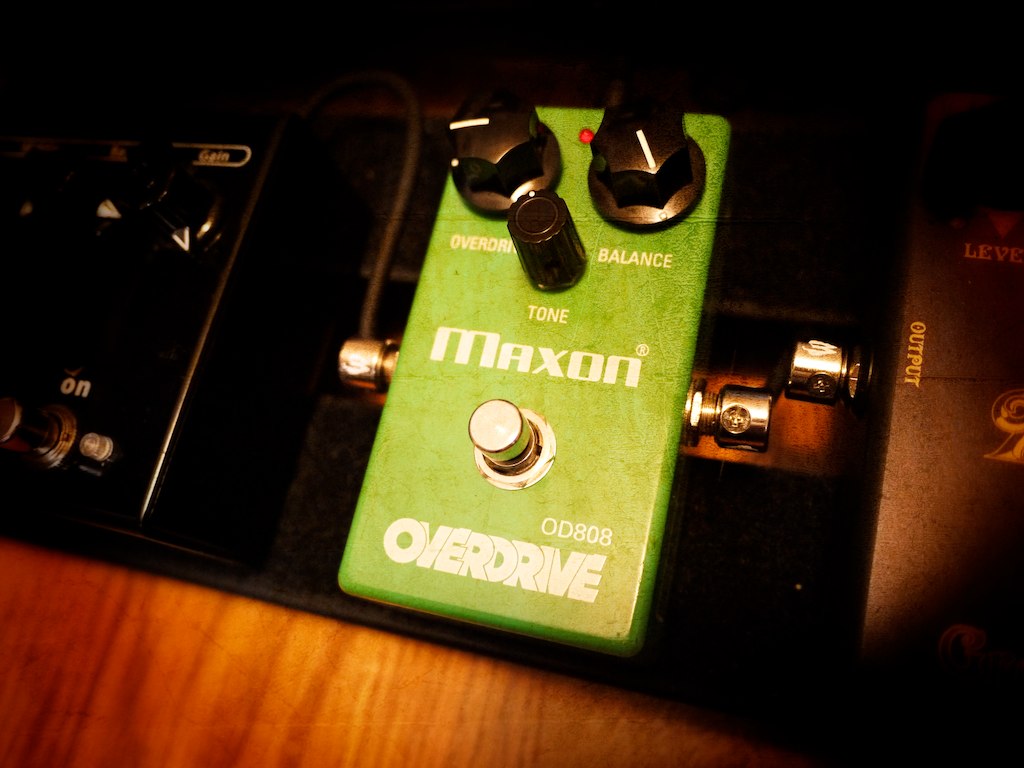
Photo: Mekkjp from Japan / Flickr via Wikimedia Commons (CC BY-SA 2.0)
Tamura has been refreshingly unromantic about it. "We simply had to come up with a pedal to compete with the BOSS OD-1 Overdrive and MXR Distortion+," he told Premier Guitar. "So the initial product concept was not viewed as 'special.'"
What he aimed for, though, was more specific than "another overdrive." He told Guitar Player that the goal of the OD808 "was not to obtain the overdrive effect alone but to create the sound of the guitar amplifier and overdrive pedal combined." He wanted the guitar's own sound to stay in the signal, with softer distortion than the fuzz and distortion boxes of the day, and with the player's picking nuances still coming through.
That design goal explains almost everything the Tube Screamer is famous for. It was voiced as a partner for a tube amp, not a replacement for one.
The Amps Behind the Voicing
Tamura has named his reference rigs. He mainly tested with a 1968 Fender Twin Reverb and a Fender Vibrolux Reverb, and occasionally a Marshall 1959 Super Lead. Final sign-off on almost all Maxon pedals came from a guitar instructor named Shiro Tanigawa, who also wrote the sample settings printed in Maxon manuals.
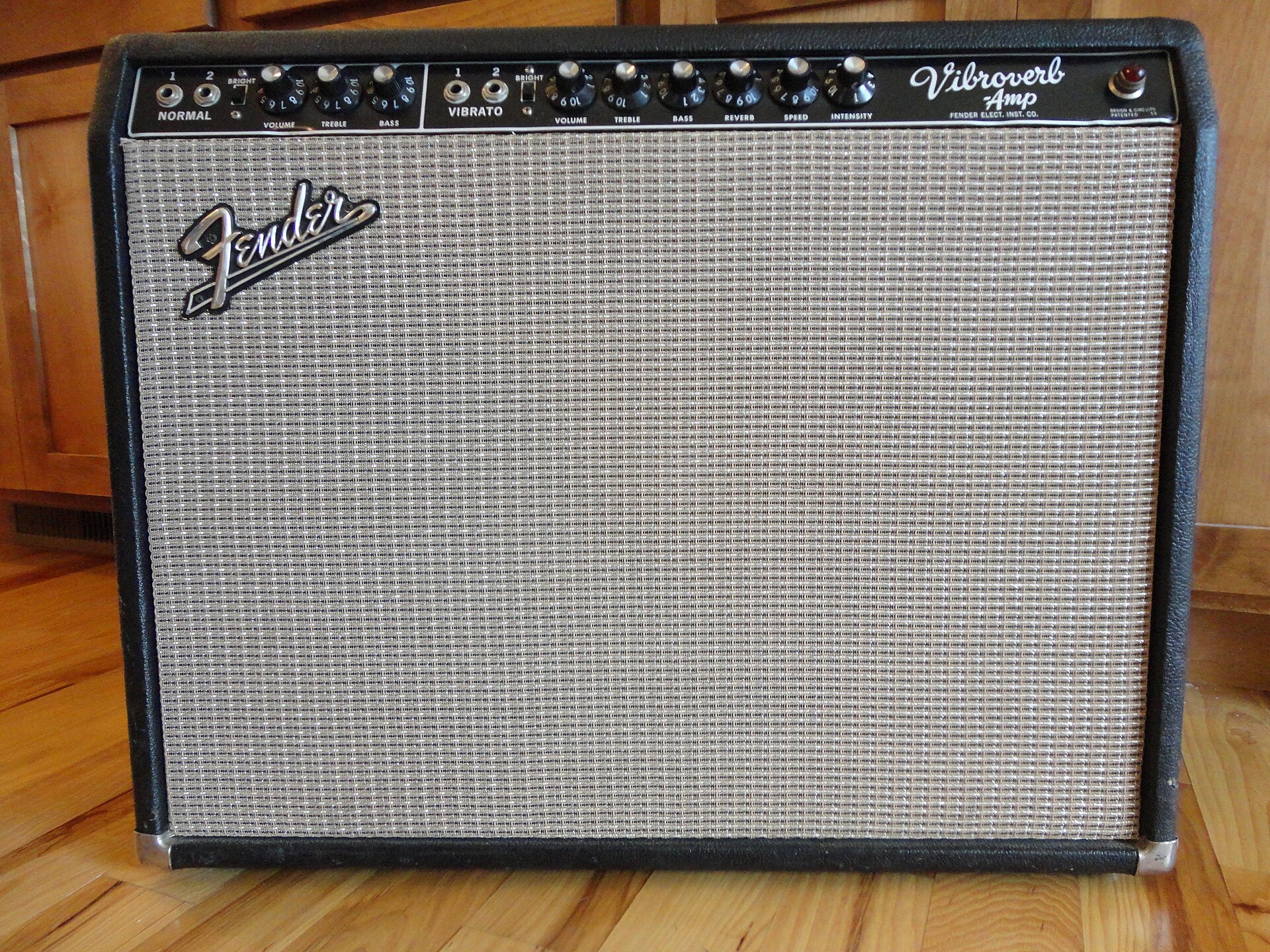
So the most famous overdrive in history was tuned by a non-guitarist engineer and a guitar teacher, mostly on clean American Fender amps. Keep that in mind when we get to Stevie Ray Vaughan.
Why Symmetrical Clipping?
The Tube Screamer's clipping is symmetrical: it rounds off the top and bottom of the waveform the same way. That wasn't purely an aesthetic choice. According to former Ibanez product manager John Lomas, speaking to Premier Guitar, Roland (Boss's parent company) already held a patent on solid-state asymmetrical clipping, the approach used in the OD-1. Nisshin went symmetrical.
Lomas has said that if you put a Tube Screamer schematic next to an OD-1's, "they're almost exactly the same thing," aside from that clipping difference. The TS808 also added something the OD-1 didn't have: a Tone control. That third knob turned out to matter a great deal.
How It Got the Name
The OD808 Overdrive Pro sold in Japan under Maxon. For export it needed an Ibanez name, and that came from a music store in Manhattan.
Tamura's account in Guitar Player puts it at Sam Ash Music on West 48th Street. The Nisshin team was showing a prototype mini amp to Sammy Ash, the founder's grandson, who knew pedals. When Tamura plugged the little amp's speaker output into a guitar amp's input, it "suddenly made a screaming sound." Sammy asked if Tamura knew how the Cry Baby wah got its name. Then he said this one sounded like "a screaming tube amp."
When the OD808 was ready, the Ibanez version shipped as the TS808 Tube Screamer Overdrive Pro.
One more detail from Tamura is too good to leave out. At the Musikmesse trade show in Frankfurt, a prototype TS808 went missing on the first evening and another vanished on day two. A trading-company colleague consoled him: "The unpopular pedals are not stolen."
Inside the Circuit: What Makes a Tube Screamer Sound Like a Tube Screamer
You don't need to read a schematic to understand why a Tube Screamer feels the way it does. Four design choices do most of the work.
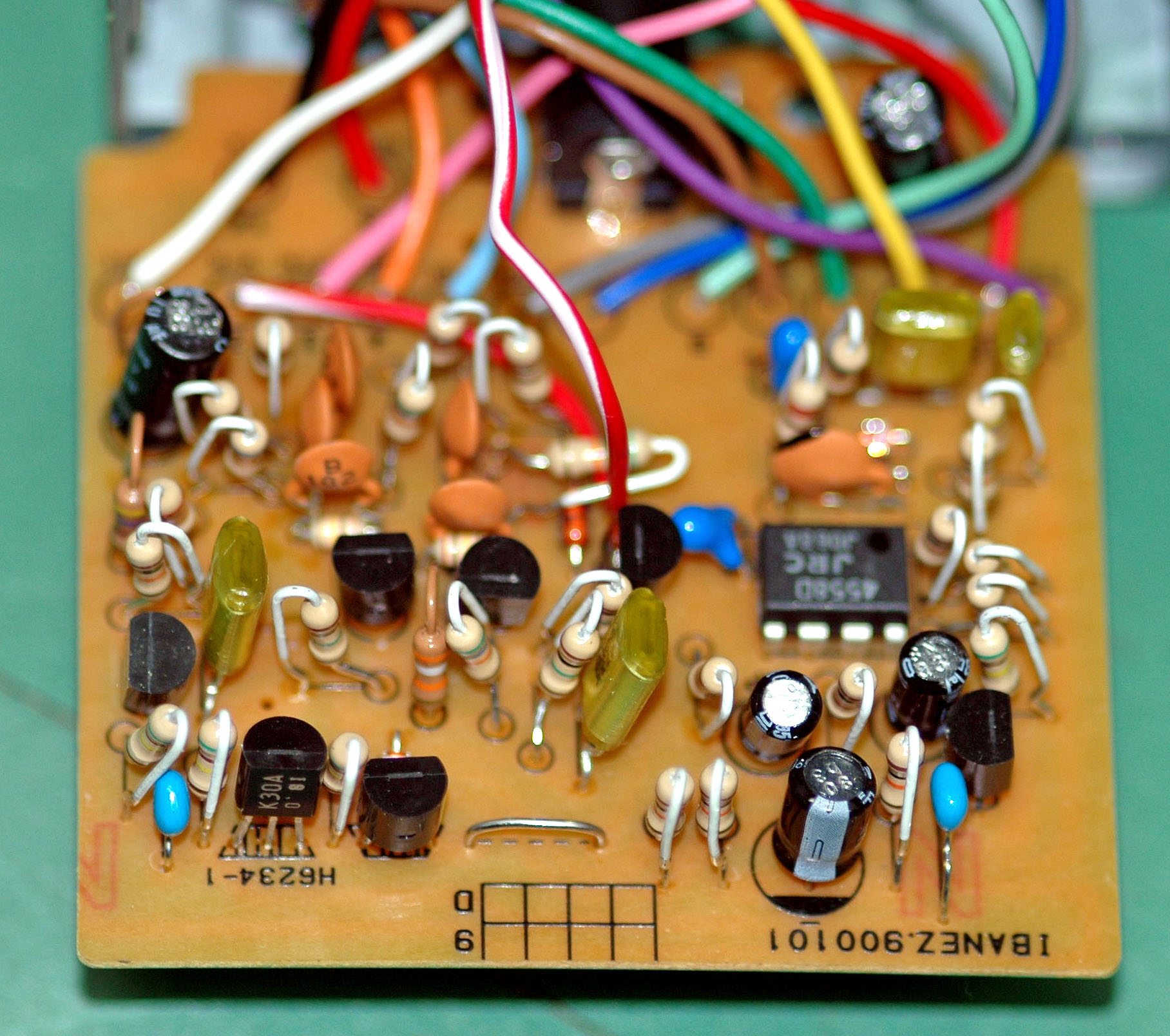
1. The Clean Signal Never Disappears
The Tube Screamer's gain stage is built around an op-amp with the clipping diodes in its feedback loop. Because of how that stage is arranged, the clean guitar signal always passes through alongside the clipped part, and the gain never drops below unity. Turn the Overdrive knob all the way down and you still hear your guitar, just pushed and slightly squashed.
That's the technical version of what Tamura described as keeping "the original sound of the guitar remaining." It's also why a Tube Screamer cleans up so well when you roll back your guitar's volume knob.
2. The Bass Gets Filtered Before It Clips
This is the famous mid hump. Before the signal reaches the clipping stage, the circuit rolls off low frequencies, starting at roughly 720 Hz in the gain path. The lows still pass through clean, but they aren't amplified and distorted the way the mids and highs are.
In practice, that means a Tube Screamer adds grit and push mostly in the midrange and leaves the low end comparatively lean. On a clean Fender, it sounds thick and vocal. In front of an already distorted amp, it keeps the bottom from turning to mush. Hold onto that second point; it's the whole reason metal players fell for it.
3. Soft, Symmetrical Clipping
Diodes in the feedback loop clip gently rather than slamming the signal flat. Pair that with the mid emphasis and you get the smooth, compressed, "singing" sustain players describe, rather than the buzzy edge of a hard-clipping distortion.
4. A Tone Knob That Actually Earns Its Place
The Tone control sets how much top end gets through after the clipping. It's a simple, effective shelf: turn it down for a darker, rounder sound, or up for more bite. Stevie Ray Vaughan specifically named this knob as the reason he used the pedal (more on that below).
The Chip Everyone Talks About
If you've spent five minutes on a guitar forum, you've seen people treat the JRC4558D op-amp chip like a holy relic. Lomas told Premier Guitar he believes the TS808's "sweet, vocal midrange" has everything to do with that chip.
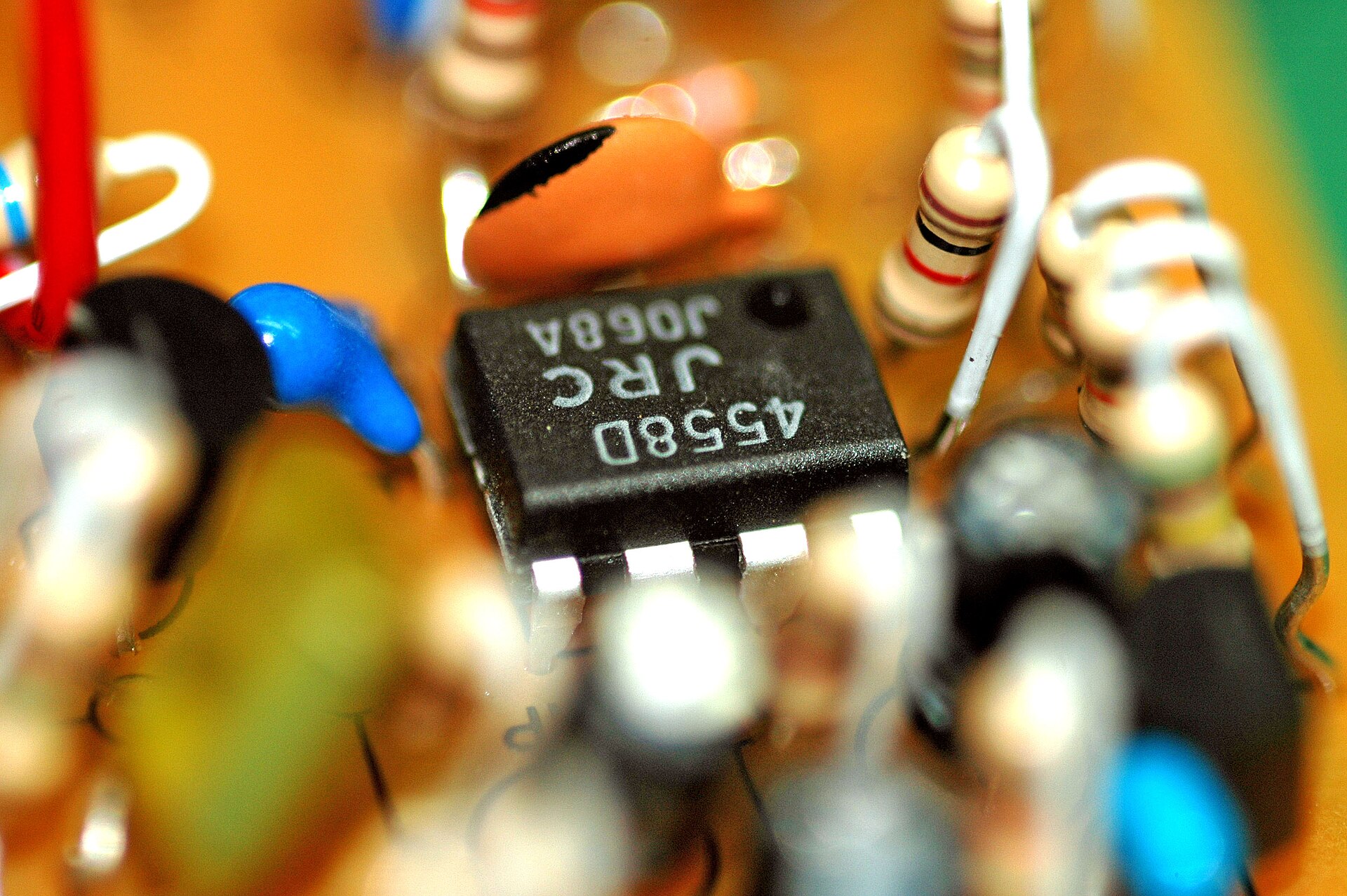
The fuller story is messier, and it comes from the man who designed the pedal. Tamura told Guitar Player that the very earliest narrow-case OD808 and TS808 units used a Fairchild UA1458. Later units moved to a Raytheon RC4558, and after that the RC4558, JRC NJM4558, and TI RC4558 were all used "depending on the production lot."
And when Ibanez prepared its TS9 reissue in the early 1990s, Lomas said the team opened up every original TS9 it could buy and found that roughly "90, 95 percent" had a Toshiba TA75558 chip, not a JRC. That's the chip they put back in.
None of that means the chip is irrelevant. Players do hear differences between op-amps. But the idea that every "real" vintage Tube Screamer had a JRC4558D in it simply doesn't match the designer's own account.
TS808 vs TS9: The Argument That Never Ends
The TS808 was made from about 1979 to 1981. In 1982, Ibanez replaced it with the TS9 as part of its new 9 Series.
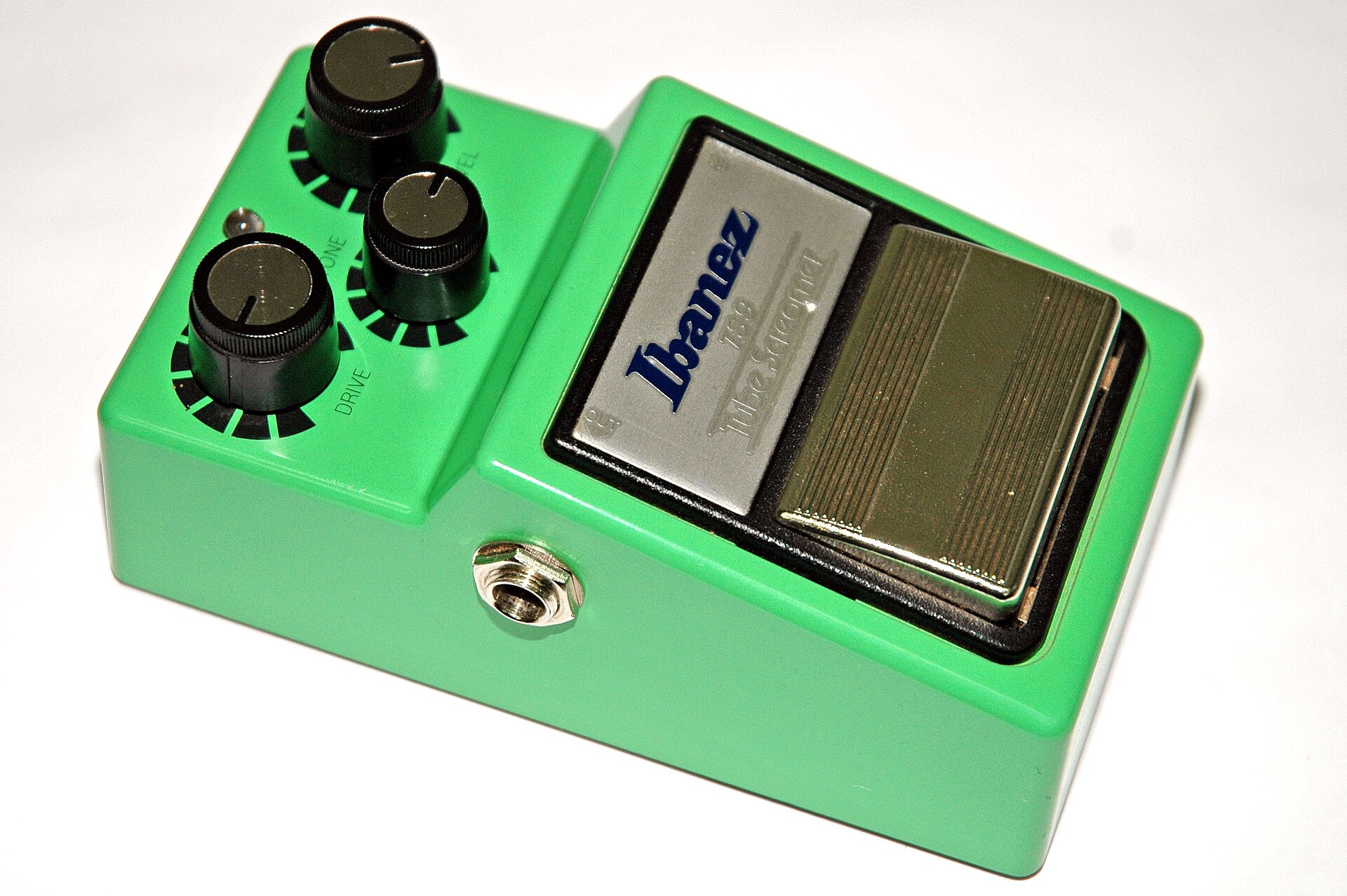
On the inside, the two are nearly identical. The important change is in the output section. The TS9's output stage was revised, and the common description from both Premier Guitar and Vintage Guitar is that it sounds a little brighter and less smooth than the 808. The best-known modification in pedal history, the "808 mod," mostly consists of swapping a couple of output resistors in a TS9 back to the TS808 values.
The TS9 also got a much larger footswitch, taking up about a third of the face. Lomas has said that was a clear attempt to match the easy-to-stomp design of Boss pedals.
Here's the part that surprises people: almost nobody cared at the time. "The public didn't give a rat's ass — not for the longest time," Lomas told Premier Guitar. He said players really started talking about it in the late '80s, and by 1990 it was "really starting to roll along." By then, the original TS9 was already gone; it was out of production by about 1985.
Lomas also pointed out that original TS9s were built from whatever parts were on hand at the time, so they varied a lot from batch to batch. Two "vintage TS9s" really can sound different from each other, which makes every online TS808-vs-TS9 shootout a little less conclusive than it looks.
| Model | Years (approx.) | What's different | Notes | ||
|---|---|---|---|---|---|
| TS808 | 1979–1981 | Original circuit, small rectangular footswitch | The "holy grail" in collector lore | ||
| TS9 | 1982–c.1985 | Revised output, larger footswitch | Brighter, slightly less smooth | ||
| ST9 Super Tube Screamer | 1984 | Added Mid Boost knob | Europe only, very rare | ||
| STL Super Tube | 1985 | TS circuit with 2-band EQ | Master Series; not officially a Tube Screamer | ||
| TS10 Classic | 1986–1993 | Power Series, quieter circuit, made in Taiwan | Later used by John Mayer | ||
| TS5 Soundtank | 1991–1998 | Cheaper build, plastic housing, made by Daphon in Taiwan | Budget version | ||
| TS9 reissue | 1992–present | Faithful copy of the original TS9 | Built in the same factory as the original | ||
| TS9DX Turbo | 1998–present | Four-position mode knob | TS9, +, Hot, Turbo |
Dates and details are from Premier Guitar's Tube Screamer history and Vintage Guitar's Tube Screamer profile; sources sometimes disagree by a year.
Stevie Ray Vaughan and the Tube Screamer: What He Really Used
No player is more tied to the Tube Screamer than Stevie Ray Vaughan. The common story goes like this: SRV used a TS808, so the TS808 is the authentic SRV pedal. The documented story is more interesting.
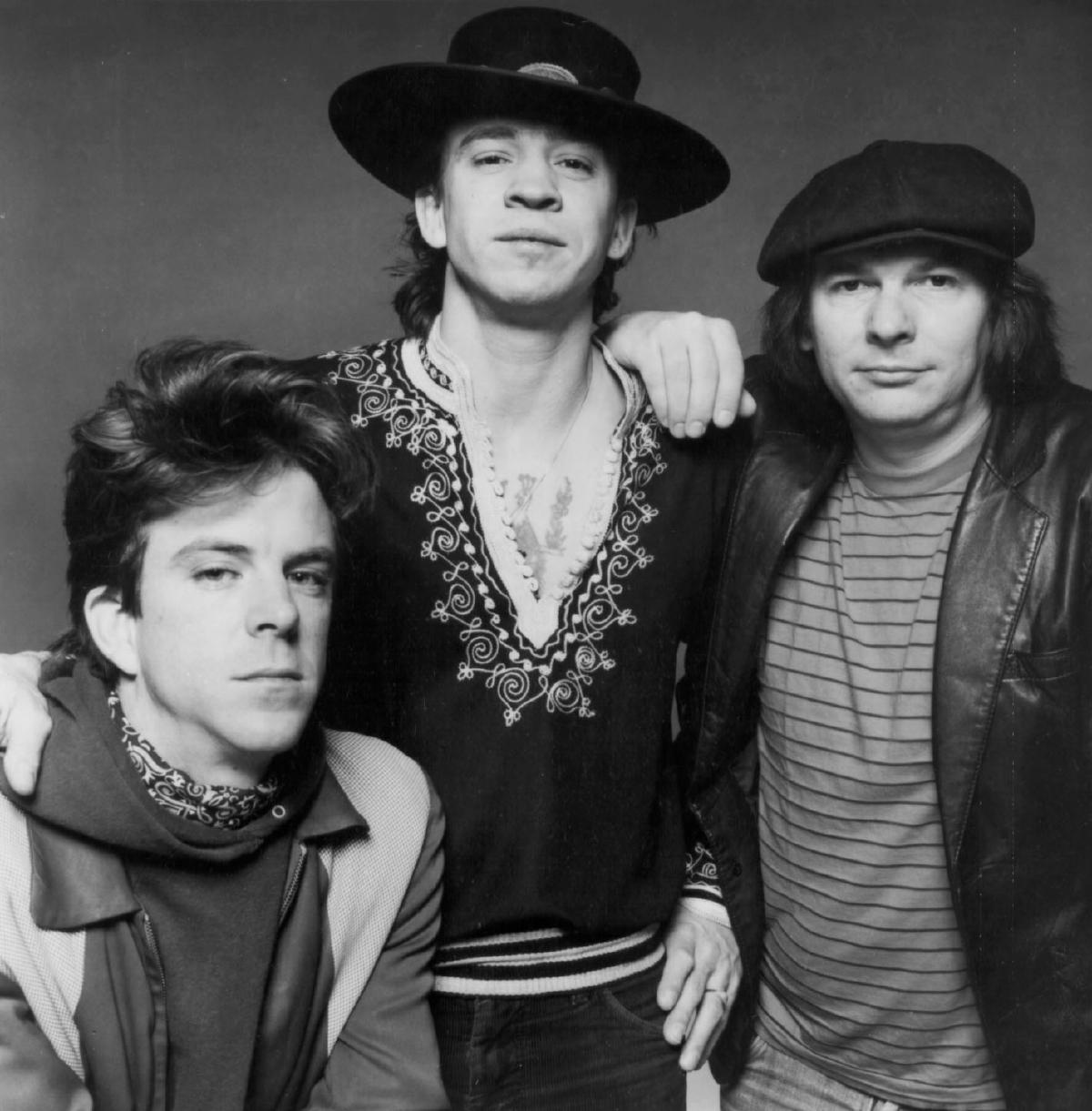
The Two Accounts
Vintage Guitar has written that Vaughan used a TS808 to drive his Fender Vibroverb or Dumble on Texas Flood, and that the snarl in the title track's opening notes came from that green box.
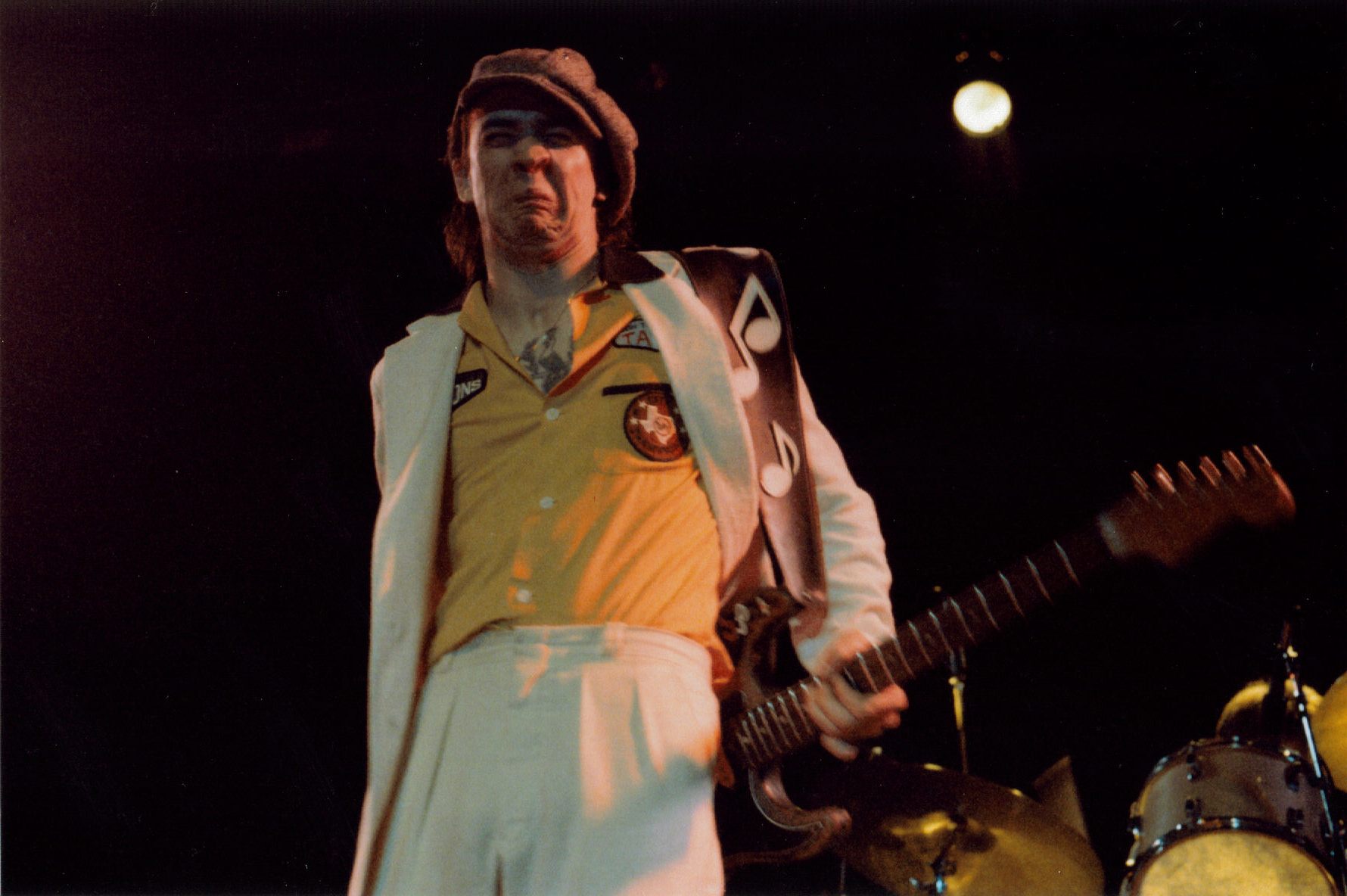
Guitar World, drawing on stage photos, live video, and gear documentation, says something different. By its account, Vaughan used a TS808 only briefly, from late 1981 to early 1982, and never on an officially released recording. From mid-1982 to mid-1988, his pedal was the TS9, both on stage and in the studio. The TS10 replaced it late in his career, on In Step, Family Style, and the studio version of "Boot Hill." The SRV Archive fan site, which draws on insurance documents and customs declarations, tells the same TS9-then-TS10 story.
Guitar World's version has the stronger documentation. And the dates line up: Texas Flood was recorded in late 1982, after the TS9 had replaced the TS808 in the Ibanez catalog. Either way, readers should know the "SRV equals TS808" claim is disputed.
How He Used It
On this point the sources agree, and it's the most useful lesson in this whole article. Vaughan mostly used the pedal as a boost, not as a distortion.
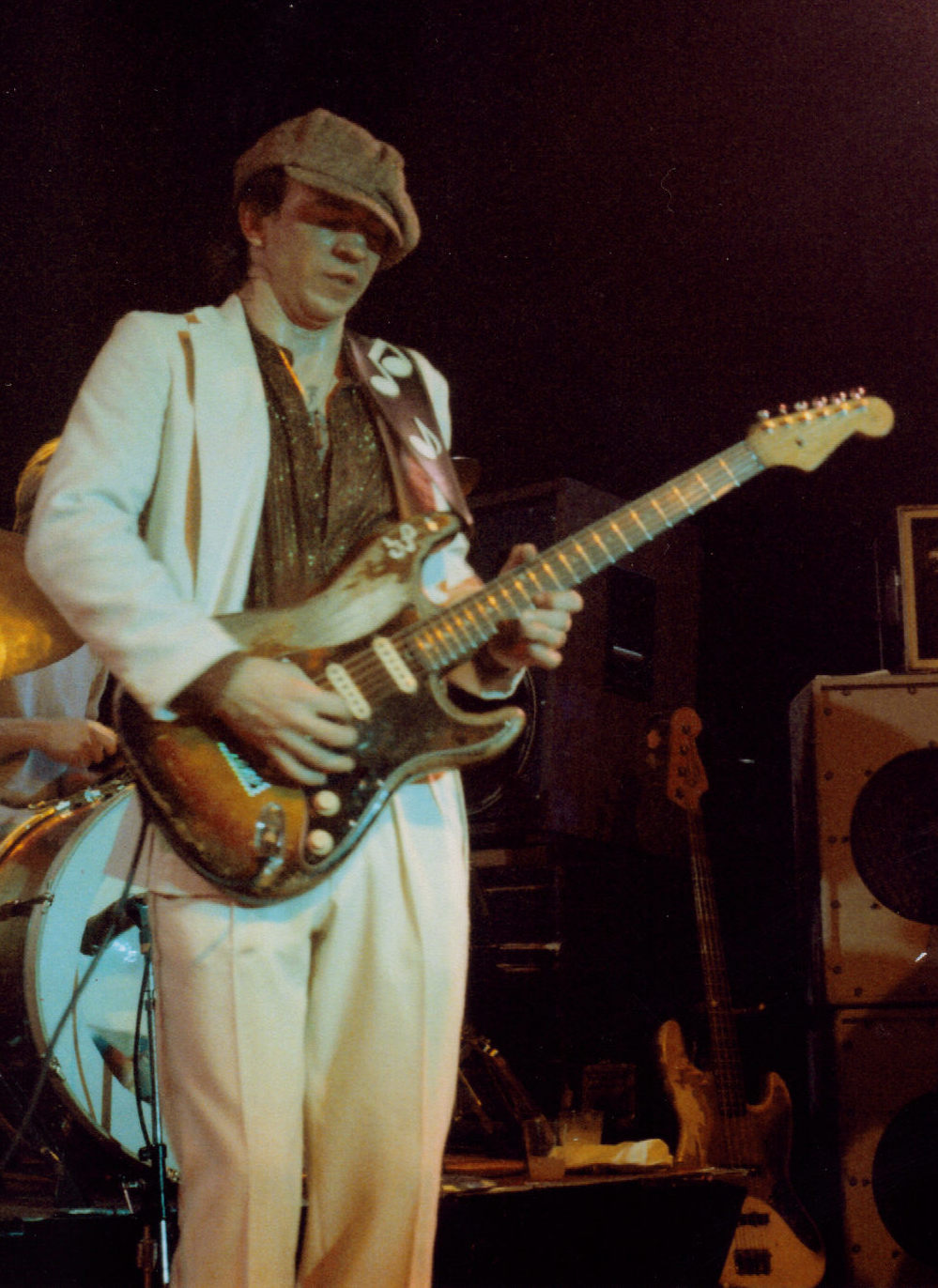
Guitar World reports he set the Level near or at full and the Drive near or at zero, using the pedal to slam his already loud amps rather than to create distortion on its own. He also used it sparingly. According to Guitar World, on Texas Flood it appears only on the gritty solos of the title track and "Testify," and he didn't use it at all on David Bowie's Let's Dance.
In his own words, from a September 1983 Guitar World interview: "I use the Tube Screamer because of the tone knob. You can turn it on slightly to get a Guitar Slim tone, which is how I use it."
That's a remarkably modest description of the most influential overdrive sound of the 1980s. It wasn't a magic box. It was a midrange push and a tone control, run into very loud Fender amps by a player with enormous hands, heavy strings, and a ferocious attack.
The TS10 Twist
The SRV Archive adds a late-career wrinkle: around 1988, Vaughan's TS10 was often used with both Drive and Level up for high-gain distortion his Dumble and Marshall Major rig didn't otherwise give him. Even the boost-only rule had exceptions.
The Collapse and the Comeback
Through the mid-1980s, the Tube Screamer line went in circles. The ST9 appeared briefly in Europe. The 1985 Master Series dropped the Tube Screamer name and offered the four-knob STL Super Tube instead. In 1986 the TS10 arrived in the brightly colored Power Series. It was quieter, and it fixed the chirp older units could make with everything turned up, but Premier Guitar notes it wasn't well received. Then came the plastic-cased TS5 in the Soundtank line in 1991.
Lomas has explained the business pressure behind that slide. When he joined the company around 1983 or '84, he said, the exchange rate was about 260 yen to the dollar. By around 1985, the yen was strengthening fast, and Hoshino suddenly had to make things cheaply.
Meanwhile, demand was building for the originals. When Lomas took over product development in 1990, he said used TS9s were selling for well over $250 in stores, while Ibanez itself had been selling used units to dealers for five dollars.
He pushed for a reissue. Nisshin, which wanted to move into digital products, thought he was crazy. He won anyway. The 1992 TS9 reissue was built in the same factory, and in Lomas's words, "by the same middle-aged ladies." Even the manual was a copy, dated 1981. He said more than 5,000 sold within weeks.

Photo: Andrés Galeotti / Flickr via Wikimedia Commons (CC BY 2.0)
In 1998, Lomas followed with the TS9DX Turbo Tube Screamer, a four-mode version (TS9, +, Hot, Turbo) that adds volume and low end without leaving the core circuit behind. A TS808 reissue, the TS7 Tone-Lok, a bass version (the TS9B), and even a Tube Screamer amplifier followed over the next decade or so.
Tamura told Premier Guitar that Maxon shipped about 350,000 units of the various 808 models over the years, and that's just the 808 family.
The Unlikely Second Life: Tube Screamers in Front of Metal Amps
Here's the twist Tamura could never have planned. A pedal voiced on a clean 1968 Twin Reverb became a near-standard tool for modern metal.
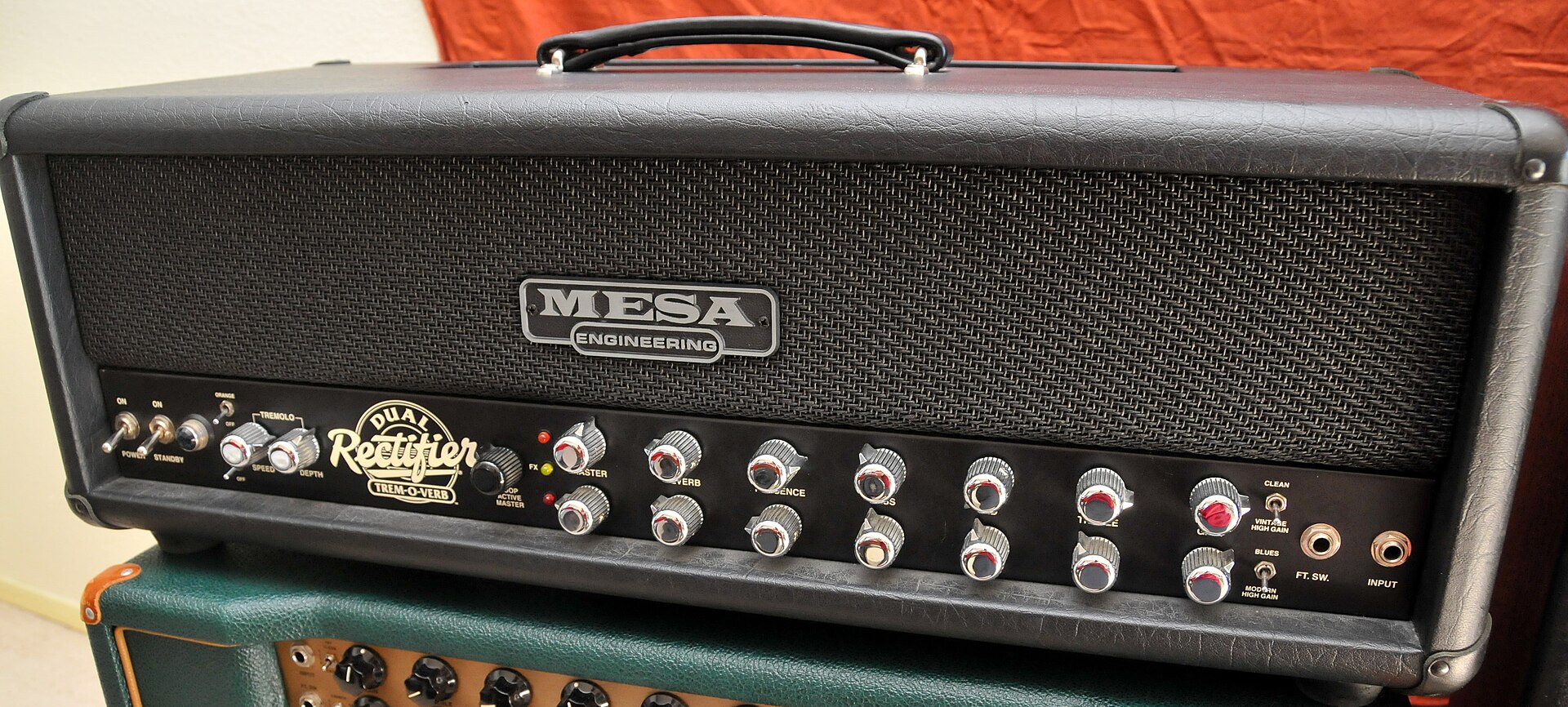
Photo: ArtBrom from Seattle / Flickr via Wikimedia Commons (CC BY-SA 2.0)
Remember the mid hump. When you put a Tube Screamer with the Drive at minimum and the Level high in front of a high-gain amp like a Mesa/Boogie Dual Rectifier or a Peavey 5150/6505, the pedal isn't adding much distortion of its own. It's doing three other things:
- Tightening the low end. Because the bass is cut before the boost, less low-frequency energy hits the amp's preamp. Palm mutes on low-tuned strings stay defined instead of turning into a woofy blur.
- Pushing the mids forward. That helps rhythm guitars cut through dense mixes.
- Adding a bit of compression and pick attack. Fast picking sounds more articulate.
Reverb's own guide to high-gain tone describes exactly this setup, with the Level high, the gain low, and the amp's gain often backed off a little. Gear writers frequently cite 2000s metalcore bands running a Maxon OD808 into Rectifiers as a defining version of that sound. This is, in effect, the SRV trick (low drive, high level) transplanted to a completely different genre.
It doesn't work for everything. Reverb notes that on an EL34 amp that's already heavy in the upper mids, like many Marshalls, a Tube Screamer can strip away low end you actually want. That's the honest tradeoff of the mid hump: it's a feature until it isn't.
The Children of the Tube Screamer
It's hard to overstate how much of the overdrive world descends from this circuit. A few branches worth knowing:
- Boss SD-1 Super OverDrive (1981). Boss's yellow pedal is close kin to the Tube Screamer family, but with asymmetrical clipping. Players often describe it as a bit brighter and edgier.
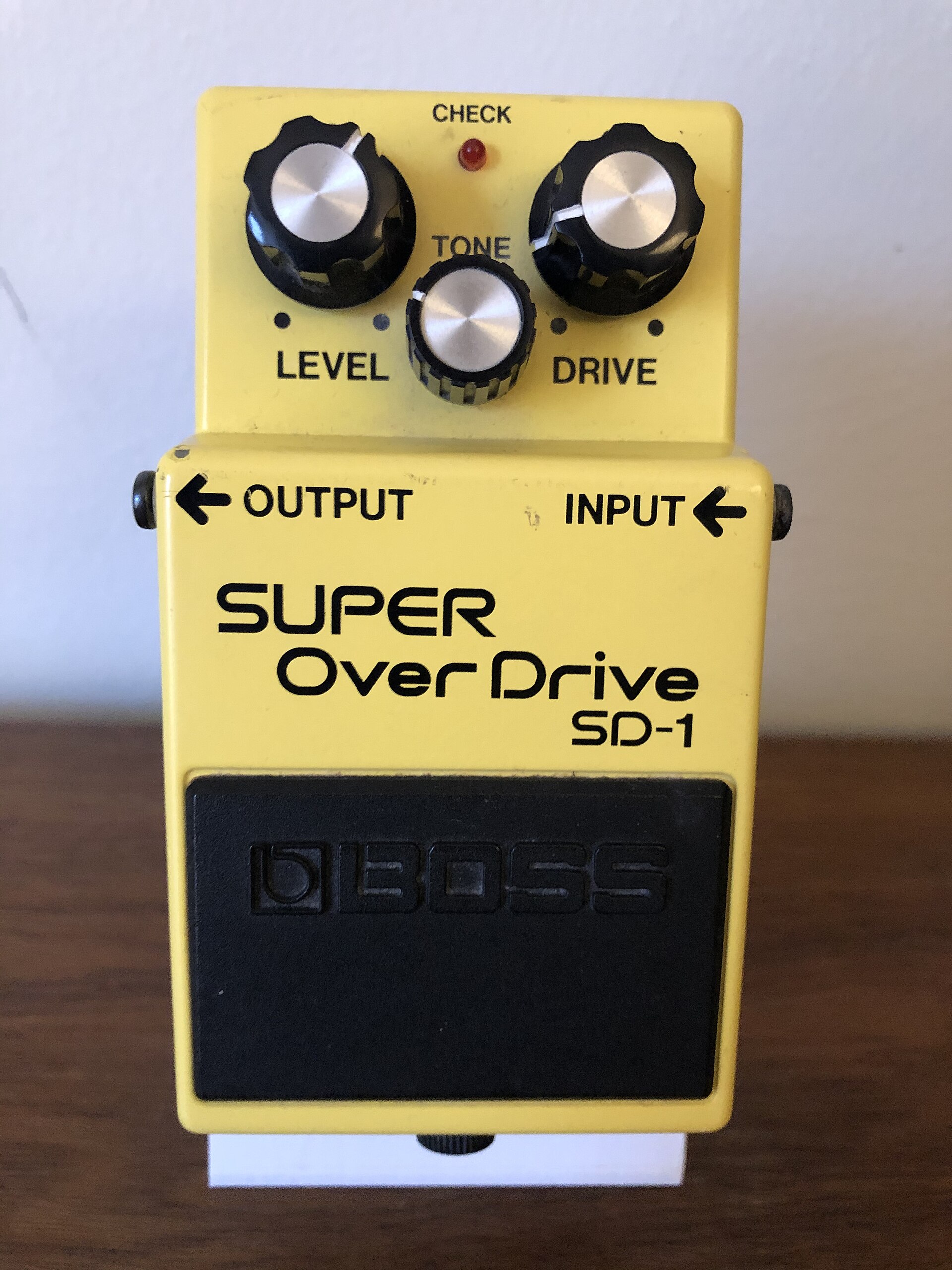
Photo: Johan Rosén (uploaded by Kuriosatempel) / Wikimedia Commons (CC BY-SA 4.0)
- Modded Tube Screamers. By the mid-1990s, Analog Man's Mike Piera was modifying TS9s back to TS808 specs, and boutique modders like Robert Keeley built businesses on the same idea. Common mods include the 808 output change, true-bypass switching, extra gain, and a fatter low end.
- The "transparent" reaction. Pedals like Bill Finnegan's Klon Centaur became famous largely as an alternative to the mid hump: players wanted the push of a boost without the Tube Screamer's midrange signature.
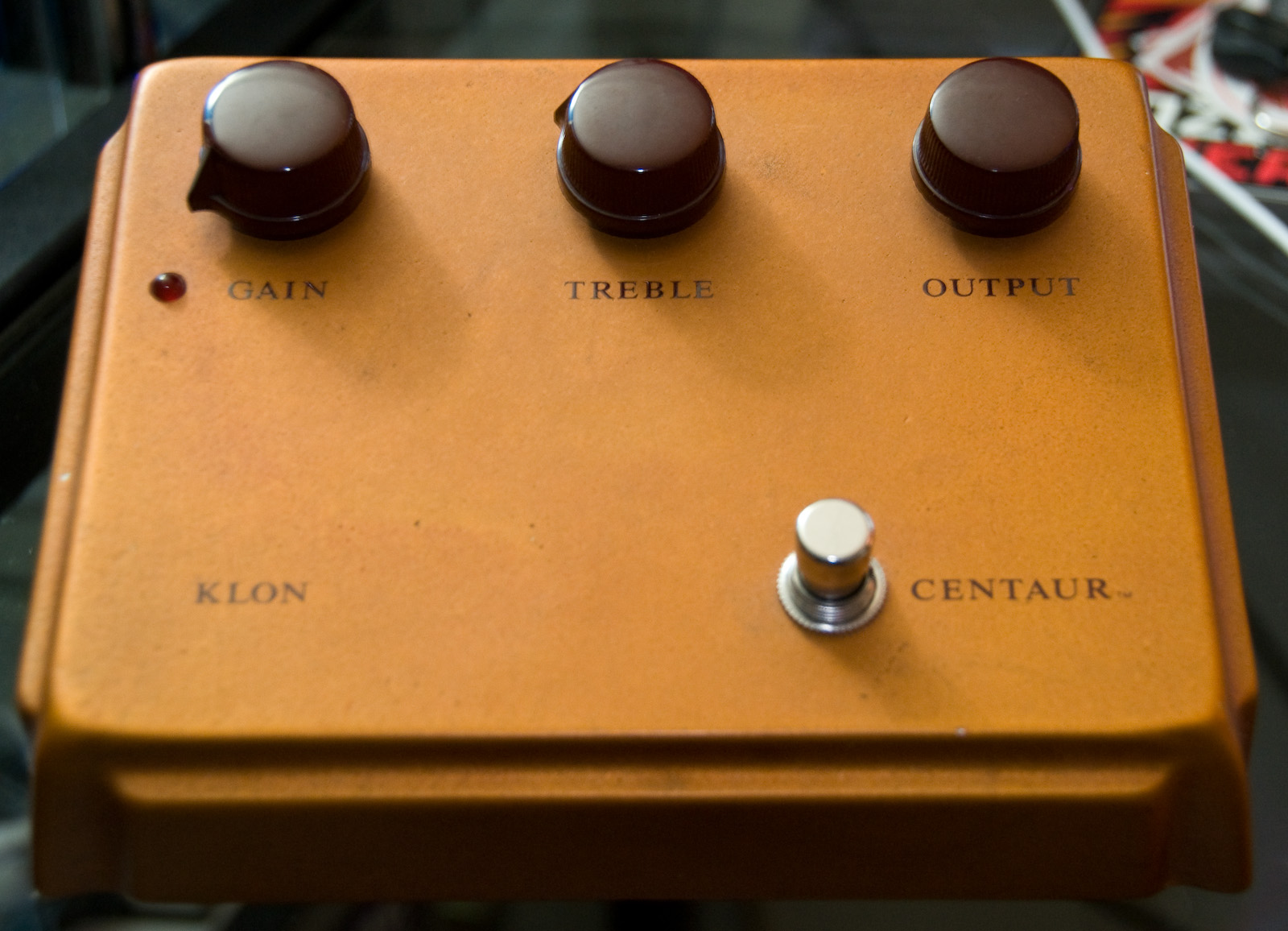
Photo: ArtBrom from Seattle / Flickr via Wikimedia Commons (CC BY-SA 2.0)
- The green clones. Nearly every pedal company has made a green overdrive with three knobs, and most players can pick out the family resemblance in a blind test.
Premier Guitar's list of notable Tube Screamer players runs from Eric Johnson to Trey Anastasio to Brad Paisley, while John Mayer helped revive interest in the long-dismissed TS10. That's a blues guitarist, a jam-band improviser, a country virtuoso, and a pop-blues star, and that's before you count the metal players.


Photo: Dan Shinneman / Flickr via Wikimedia Commons (CC BY-SA 2.0)
Which Tube Screamer Should You Buy?
Since we haven't run our own side-by-side test for this piece, here's a researched guide rather than a review. The good news is that the core circuit is the same across the main options, and the differences are smaller than forum debates suggest.
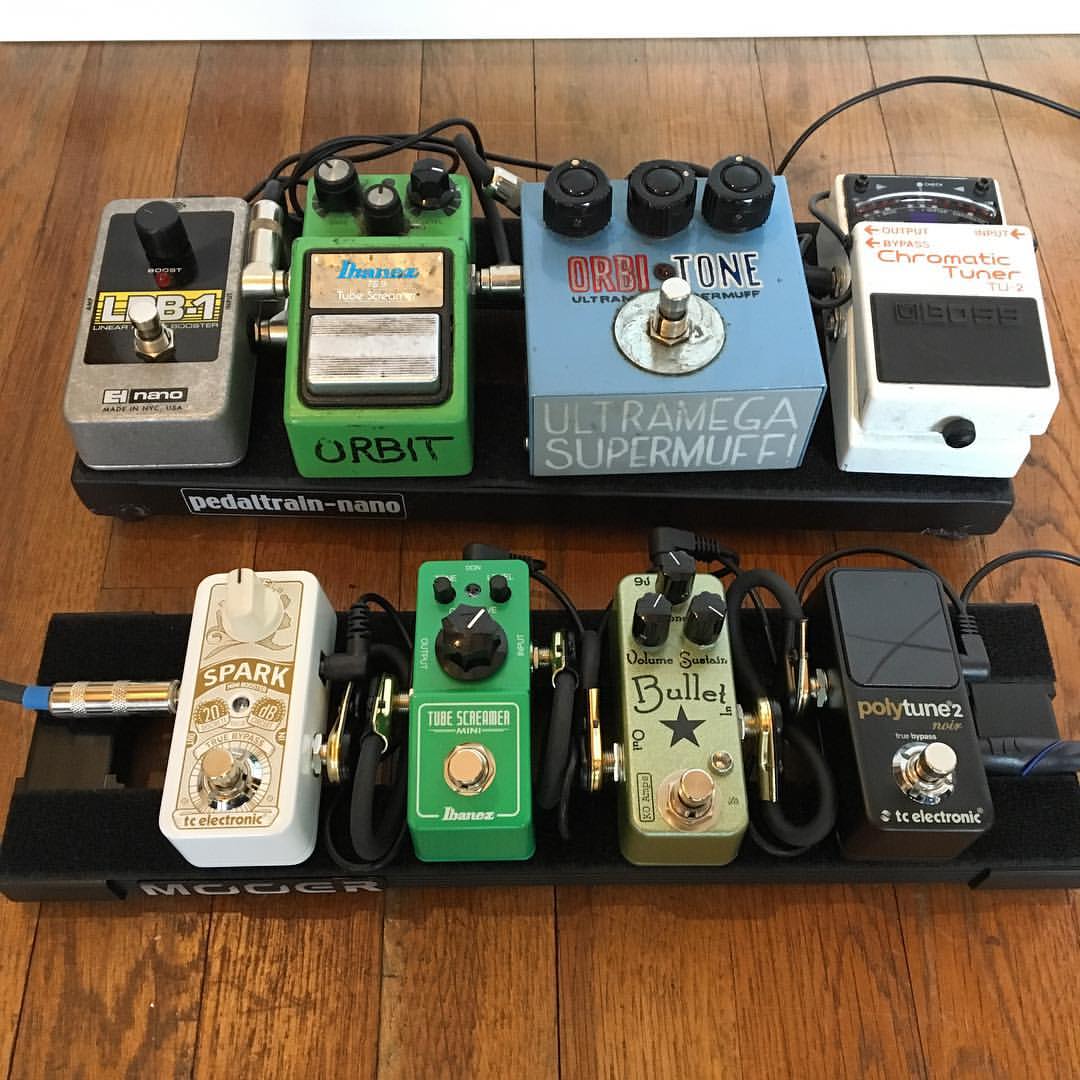
Photo: Jeff Robbins from Seekonk, MA, USA / Flickr via Wikimedia Commons (CC BY 2.0)
- Ibanez TS9 Tube Screamer. The reissue of the most popular original. It's a little brighter than an 808, so it's a good choice if your amp is on the dark side.
- Ibanez TS808 reissue. It has the original 808 output section for a slightly smoother, rounder sound. It's the obvious pick if you want the "classic" version.
- Ibanez TS Mini. This is a compact Tube Screamer for crowded pedalboards. Announced ahead of NAMM 2015, it's based on the TS808 circuit with a JRC4558 op-amp, true-bypass switching, and no battery slot, so it runs on a 9V adapter only.
- Maxon OD808. It comes from the company that designed and built the original, and it's a favorite boost for high-gain amps.
- TS9DX Turbo. This one makes sense if you want more volume and low end on tap, or if you play heavier styles and want more than a single voice.
If you're chasing the SRV approach, any of these will get you close. The bigger factors are your amp, your strings, and your hands.
Starting-Point Settings
These are widely used starting points, not settings we've verified in our own testing:
- Blues boost (the SRV approach): Drive low (roughly 9 o'clock or lower), Level high, Tone around noon. Use it into an amp that's already breaking up a little.
- Classic rock crunch: Drive around noon, Level at unity, and adjust Tone to match your pickups.
- High-gain tightener: Drive at or near zero, Level from noon to 2 o'clock, and Tone to taste. Back off the amp's gain slightly.
As an Amazon Associate, TGP earns from qualifying purchases.
The Takeaway
The Tube Screamer's greatness comes from a modest goal carried out well. Susumu Tamura wasn't trying to build a monster distortion. He was trying to make a solid-state box that let a tube amp sound like itself, only pushed harder, with the player's picking still audible.
That's also the best way to use one. Don't ask it to be your whole sound. Use it the way Vaughan did on his classic records: with the Level up, the Drive down, and a loud amp doing the real work. Whether you buy a reissue TS9, an 808, or a Maxon, you'll be using the same idea that made the original famous.
The pedal's own history adds a second lesson. The TS808 and TS9 flopped commercially, the "magic chip" story doesn't fully hold up, and even the SRV legend points to the wrong model. The sound survived all of it because players kept finding new ways to use a simple, well-voiced circuit.
What's on your board: a TS9, an 808, a Maxon, or a green clone? Tell us how you set it in Guitar Talk.
Related
Experience-driven coverage, not algorithm bait.
- 20+ years of guitar playing experience
- Real-world retail experience at Guitar Center
- Thousands of hours testing guitars, amps, and pedals
- A community of 50,000+ guitar enthusiasts across platforms
- Partnerships with Fender, DistroKid, TrueFire, Card Chords, and Enya
- Editorial standards published openly — see how we test gear
The Modern Guitar Magazine. Delivered to your inbox.
No spam. No gimmicks. Just great guitar content — stories, tones, iconic solos, and honest gear takes. Every week.
Ask GP
3 free questions a dayStill curious? Ask GP about this story.
Your personal classic-rock and guitar guide — ask anything about The Ibanez Tube Screamer.
Discussion (0)
Sign in to join the discussion.
Sign in to commentLoading comments…
Discover another guitar story
Swipe through our latest features, breaking news and iconic solos — one story at a time.
Open Swipe →