Iconic Solos: Eddie Van Halen's "Beat It" Solo — The Free Take That Put a Locking Trem on Pop Radio
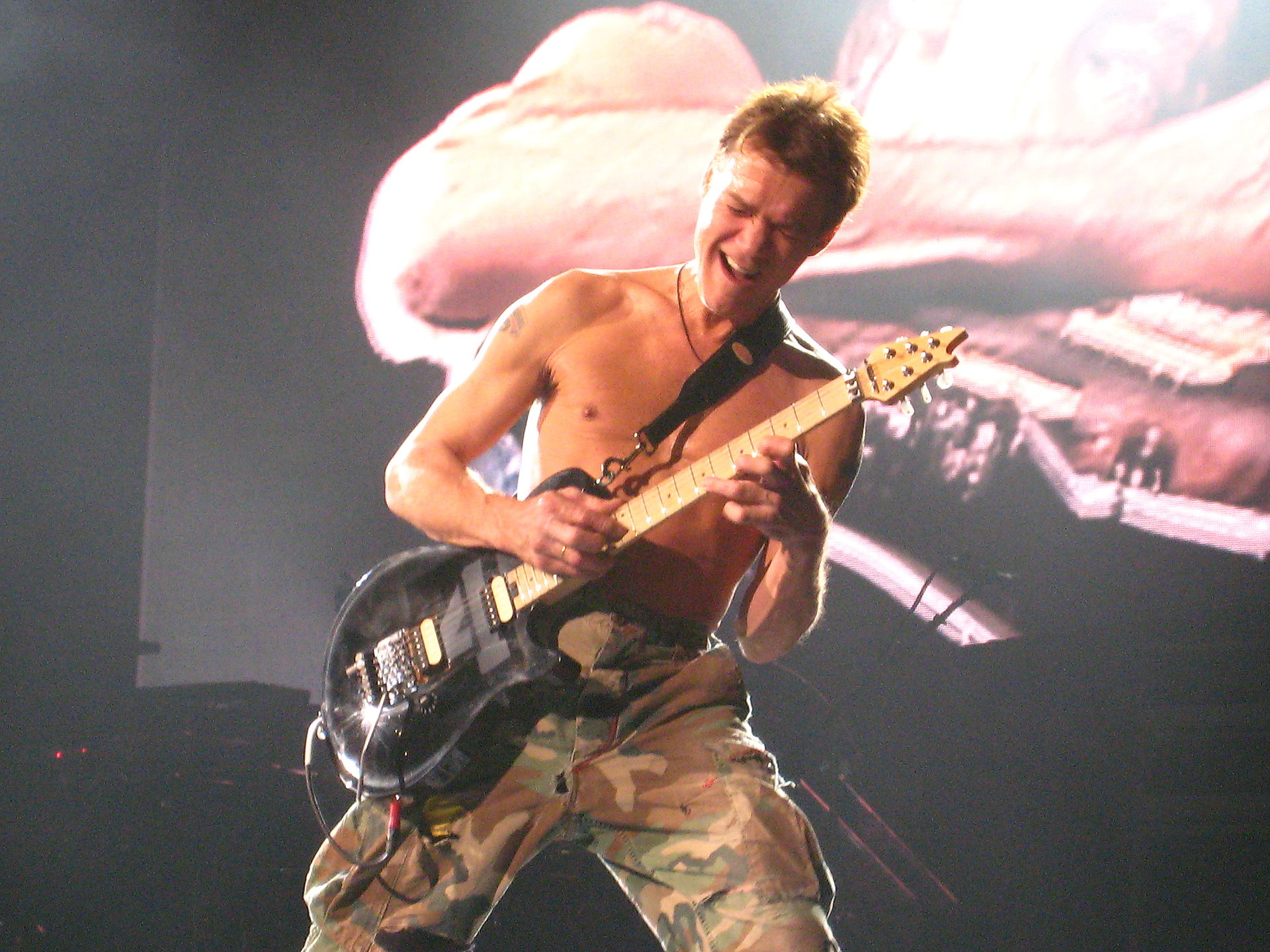
Photo: Anirudh Koul / Wikimedia Commons. This is not a Beat It photo and not the 1982 guitar. License: CC BY 2.0.
Not another Eruption recap. In October 1982 Eddie Van Halen walked into Westlake, cut the tape, improvised two solos on the Frankenstrat, and left without a songwriting credit. Here's what the record actually contains, which gear stories hold up, and what players still get wrong.
We already took "Eruption" apart. That piece is the minute-and-a-half reset: a homemade guitar, a cranked amp, and a new vocabulary dropped on a rock album in 1978. This one is the other Eddie Van Halen solo, and it did a different job. It lasted somewhere around twenty to thirty seconds, it sat in the middle of the biggest pop album ever made, and Eddie did it for nothing.
"Beat It" is Michael Jackson's song. He wrote it. Quincy Jones produced it. It was recorded in October 1982, during the Thriller sessions, and Epic released it as the album's third single on February 21, 1983. It hit No. 1 on the Billboard Hot 100 for three weeks and No. 1 on Hot Black Singles. The RIAA has certified the single 8× platinum. In 1984 it won Grammys for Record of the Year and Best Male Rock Vocal Performance. Rolling Stone later ranked it the 81st greatest guitar song, and the Rock and Roll Hall of Fame put it on the 500 Songs That Shaped Rock and Roll.
None of that is why guitar players still stop the track at the solo. They stop because a Floyd-equipped superstrat, played by the guy who had already broken rock guitar, interrupts a dance record and then gets out of the way. This is a researched Iconic Solos deep dive, not a hands-on rig test and not a History of the Riff chapter. The riff is Steve Lukather's problem. The solo is Eddie's.
Why the Beat It Guitar Solo Still Matters
"Eruption" taught a generation that the guitar could be the whole song. "Beat It" taught a bigger audience that the same guitar could be a plot twist. Those are not the same lesson, and chasing one with the other is how people botch this solo.
What still matters if you play:
- The bed has to move. Eddie refused to solo over a static loop. He had the track edited so the harmony under him went somewhere, then he played. A lot of "modern" guest solos are the mistake he wouldn't make: sixteen bars of the same chord and a lot of notes.
- Short is a choice. The solo is an event because it ends. Stretching it into a two-minute shred cover removes the thing that made it shocking on pop radio.
- Tapping is one color, not the subject. The two-hand passage is the moment everyone remembers. It is not the whole solo. The picked phrase before it, and the bar after it, are why it feels like a sentence.
- Contrast is the tone recipe. Quincy Jones made Lukather turn the rhythm guitar down — less Marshall, more small Fender — specifically so the record could live on R&B radio. Eddie's lead is the loud object in a quieter room. Match their gain and the solo stops being an entrance.
- The trem has to come back. This is a locking-trem solo. The bar is there to smear a note and land somewhere you can still sing the chorus. A non-locking vibrato that never returns in tune will not survive the exit.
- The key is not a suggestion. Published sheet music for the song is in E-flat minor, around 135 to 140 bpm, in 4/4. A lot of guitar tabs quietly rewrite the whole thing in E minor. If your fingers and the record are a half step apart, fix the pitch before you decide Eddie's phrasing is "loose."
Before the Call: A Rock Song Jackson Wanted to Buy
By 1982 Jackson and Jones were sequencing the follow-up to Off the Wall. Disco had curdled. Jones has written that he spent months pushing Jackson for a Michael Jackson version of the Knack's "My Sharona" — something with a spine. Jackson's own description, to Ebony in 1984, was plainer: "I wanted to write the type of song that I would buy if I were to buy a rock song." He also said he wanted school kids and college students to enjoy it.
The demo started at Jackson's home studio. Wikipedia's account of the production, drawn from session histories, says the drum part began on a drum machine and the bass was a hybrid of electric bass and a Bell Labs Digital Synthesizer Synergy. That hybrid bass idea survived into the finished record. The intro's seven-note synthesizer figure is a Synclavier part, credited to Tom Bahler.
Jones liked the vocal. The team moved the work to Westlake Studios on Santa Monica Boulevard, where engineer Bruce Swedien locked two 24-track machines together with SMPTE timecode so the vocal tape could stay first-generation while the track was built beside it.
There was already a guitar solo on the song, and it was not Eddie's. Jackson's brother Tito had played one. It was scrapped when Jones decided the record needed a different kind of rock credit. "Beat It" was not looking for a guitar solo. It was looking for a replacement.
The prank call
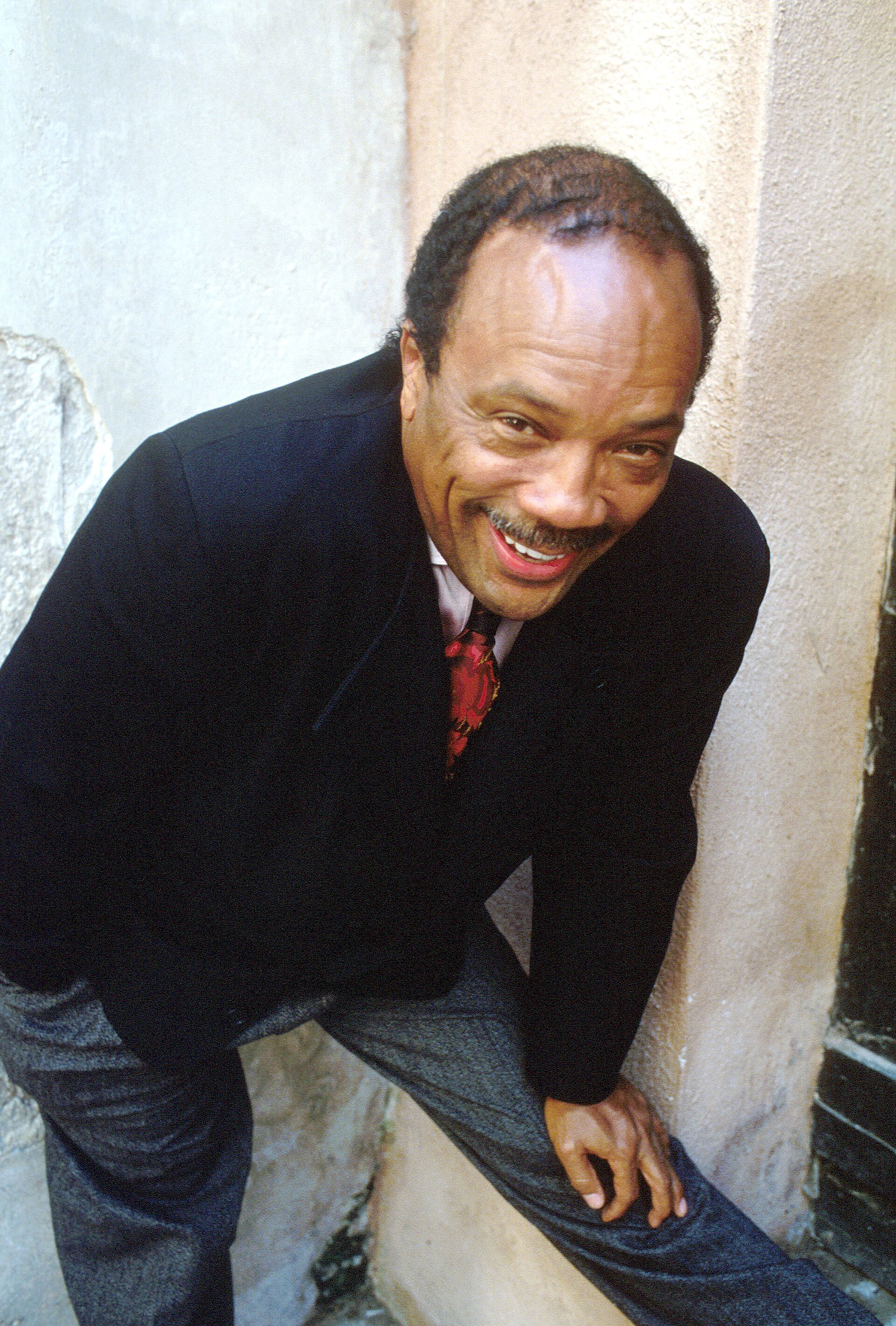
Jones got Eddie's number through Steve Lukather, the Toto guitarist who was already in the Thriller orbit — he had played on "The Girl Is Mine." Eddie's telling of the phone call, to CNN in 2012, is the one every retelling copies. He thought it was a joke. He hung up. More than once, in the longer versions. When he stayed on the line he still didn't know the name. "I don't know anyone named Quincy." Then: Quincy Jones, Michael Jackson, a solo.
He was not sure he wanted the job, and he was sure his own band wouldn't. Van Halen had a rule about outside projects. Eddie's version of his own logic, again to CNN: nobody was going to know he played on "this kid's record." David Lee Roth, Michael Anthony, and Alex Van Halen were out of town. He went anyway.
One claim stays in the "he said" column. In a 2020 Rolling Stone remembrance, Pete Townshend said Jackson asked him first, that he passed, and that he recommended Eddie. It is not in Eddie's CNN account of the call. Report it. Don't weld it into the timeline.
Westlake Studio B, a Razor Blade, and a Broken Timecode
Swedien has been specific about the room. Eddie was in Studio B at Westlake. Swedien was in Studio A with Jackson and Jones. He walked in while Eddie was tuning, decided the volume was a threat to his hearing, and left. He did not record the solo. He hired Eddie's own engineer, Donn Landee, on the theory that Landee's ears were already used to that volume.
That detail kills a popular shortcut. The solo was not cut at 5150, the studio Eddie and Landee built at the house. That room belongs to the 1984 era, after this session. Swedien's account puts the solo at Westlake.
Jones's instruction, in Eddie's memory, was "whatever you want to do." Eddie told him to be careful with that sentence. Then he listened to the track and didn't like the solo section he had been given.
Here the accounts agree on the musical problem and split on the carpentry.
Eddie's 2015 version, as summarized by Wikipedia from his interviews: they wanted him to solo over the chorus. He thought it would work better over the verse, with a chord change underneath. He told Landee to chop the arrangement — breakdown, into another section, pre-chorus, chorus, out. He said the edit took about ten minutes. Then he improvised two solos. He was finishing the second when Jackson walked in.
MusicRadar's 2024 reconstruction sits beside that, not instead of it. In that telling, the bed was about sixteen bars of a static one-note figure — the chug still audible before the solo, roughly 2:21 to 2:49. Jones and Swedien were in the other room, also finishing an E.T. storybook album in the same complex. Landee razored the two-inch master and edited in a copy of the verse so the solo had harmonic motion and could fall into a chorus.
Both versions say the same thing a player can use: Eddie would not accept a static loop as a solo section. He changed the song, on the tape, before he played.
He warned Jackson before they hit play. His line, to CNN: "Look, I changed the middle section of your song." He expected either bodyguards or a thank-you. Jackson's reply, in Eddie's memory: "Wow, thank you so much for having the passion to not just come in and blaze a solo, but to actually care about the song, and make it better."
The edit had a cost. "Beat It" lived on two synchronized reels. Cut one and the SMPTE stripe no longer matches its twin. Vocals and solo survived on the reel Landee cut. The backing track on the other reel would not lock. Jones would not redo the vocal. The band track had to be rebuilt around a performance that could not be moved.
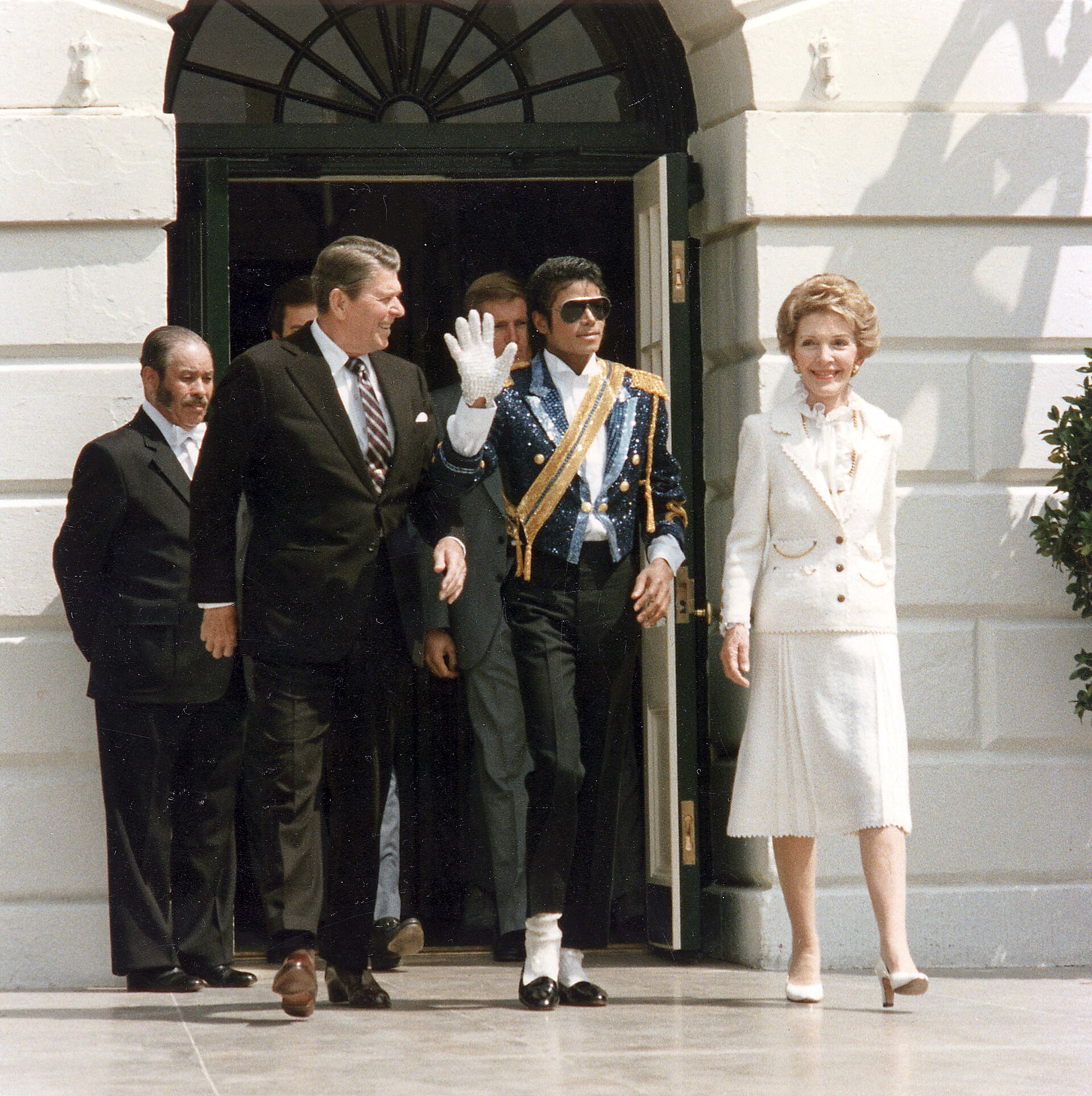
Photo: White House Photo Office / Wikimedia Commons, public domain.
Rebuilding the Song Under the Solo
With Westlake full, Jones sent the reel to Sunset Sound. Steve Lukather, drummer Jeff Porcaro, and engineer Humberto Gatica got a tape that was mostly Jackson's stacked vocals, Eddie's solo, and Jackson hitting a drum case on two and four. The Thriller 25 notes still credit Jackson as "drum case beater." That dry thwack, if you can separate it from the kit, is the leading explanation.
Porcaro, in Lukather's account to Rick Beato, made a click from the headphone bleed in the vocal takes and cut the drums in two passes. Lukather played guitar and the bass. His first guitar pass was Marshalls, inspired by the solo. Jones sent it back: too big for a crossover, use a little amp. Lukather has also quoted him calling it too metal for pop and R&B radio. The part on the record is a Paul Rivera-modded 1968 Fender Deluxe Reverb, blackface, distortion backed off. Lukather also talks about breaking up a verse riff that had been repeating for dozens of bars — he has said something like forty-five — with the variation at bars five and thirteen. He had to sell it. They bought it.
Read the credits before you let one interview become the whole personnel list. The Thriller 25 liner notes, which Wikipedia adapts, credit:
- Michael Jackson — lead and backing vocals, drum case beater
- Paul Jackson Jr. — rhythm guitar
- Steve Lukather — lead guitar and bass
- Eddie Van Halen — guitar solo
- Steve Porcaro — synthesizer and synthesizer programming
- Greg Phillinganes — Rhodes and synthesizer
- Bill Wolfer — keyboards
- Tom Bahler — Synclavier
- Jeff Porcaro — drums
- Greg Smith — Synergy synthesizer
- Chris Shepard — vibraslap
Lukather has said he played the bass and every guitar except the solo. The notes also list Paul Jackson Jr. on rhythm guitar. Both can be true of a session — a part played, a part replaced, a name that stayed — and we don't have the multitrack. The solo is not in that dispute. It is Eddie's. David Paich turns up in some synth tellings and is not on this credit list. Leave him off.
Inside the Solo: What You Can Actually Hear
The song is 4:18, in E-flat minor, about 135 to 140 bpm. The solo is not in its own key. It is in the song.
MusicRadar clocks Eddie's playing at roughly twenty seconds, or about thirty-one if you include the noise at the front and the dive at the end, with the static chug around 2:21. A Guitar World note on the isolated guitars points at 2:27. We are not treating a streaming master as a session log. Call it a short break in the back half of the third minute. That range is the fact.
What the break contains, without a fake transcription:
It does not open on the tap. A short picked idea comes first, the kind of phrase that needs a moving chord. Then the two-hand figure. Then the bar: a dip, a squeal or a harmonic, and an exit that is more noise than melody — a scrape, a dive, or both. Whammy, legato, tapping, and a harmonic, in one breath. The solo is not the tap.
The harmony under it is the point he fought for. Over a drone, every note is a color. Over a change, some notes are destinations. Learn only the tapped fragment and you learned a lick. Learn the chords under it and you learned the record.
The knock
Right before the lead there is a noise people hear as a knock. The campfire versions: someone walking in, Eddie rapping the guitar, a pick dragged down the low E, or the creak of a strap or trem arm. The team left it in. Swedien liked Jackson's snaps and foot taps as part of the character of a take. Same instinct here. Don't "clean it up" and call that fidelity.
The speaker that caught fire
You will also read that the solo set a monitor on fire and that Rod Temperton yelled, "This must be really good!" Jones did write, in Q, that a speaker burst into flames because the "Beat It" level was so hot, and that Swedien called them over. MusicRadar puts that fire in the mixing marathon, not in the ten minutes Eddie was playing. Wikipedia cites a 2016 interview that calls the mid-solo version an urban legend. A monitor died of volume somewhere in the process. It is not evidence the take was magic. Don't print it as a session fact.
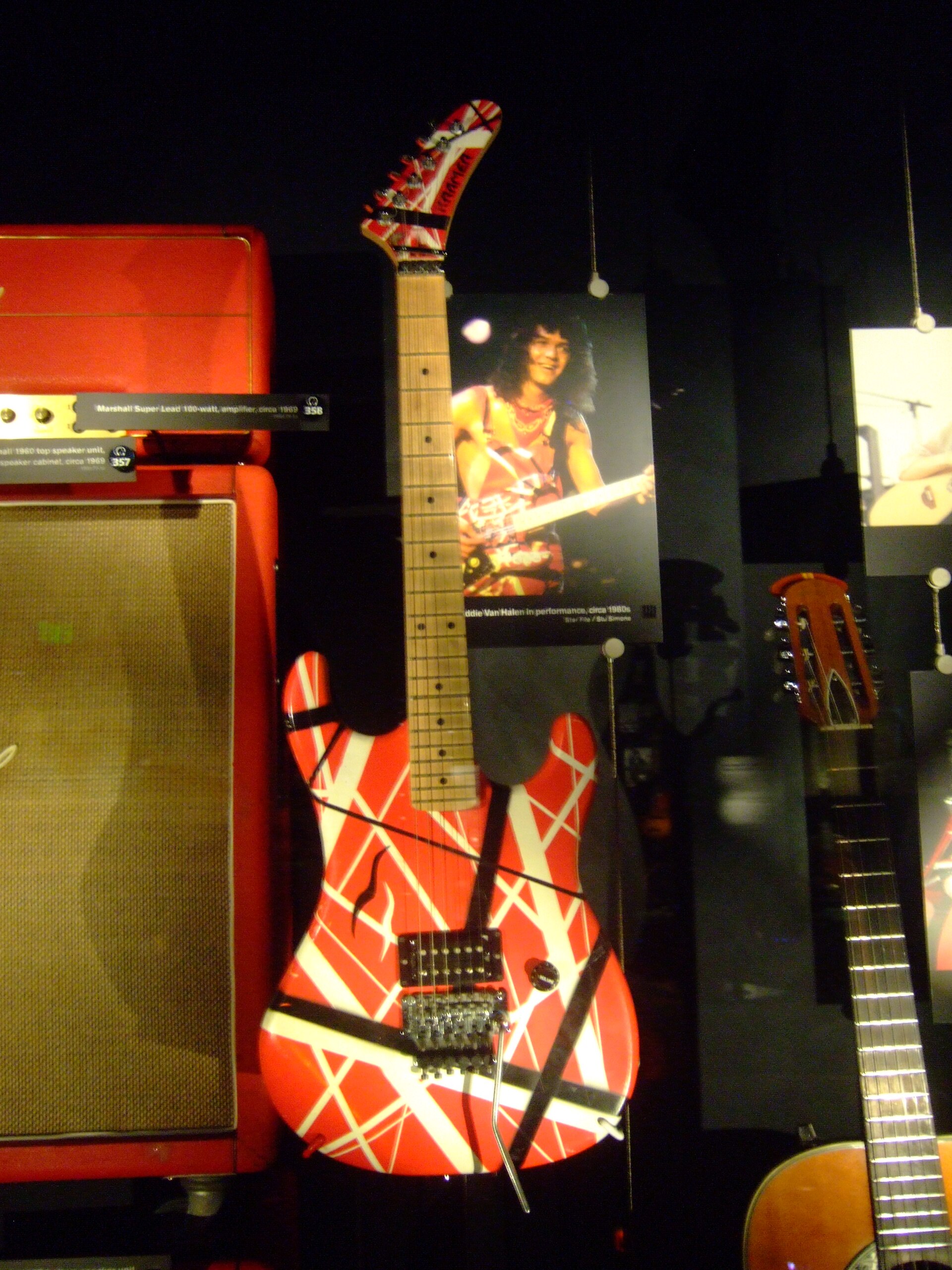
The Guitar Is the Frankenstrat. The Amp Is Not Settled.
On the instrument, the sources line up. Wikipedia, summarizing Eddie's interviews, says he played the Frankenstrat. MusicRadar's reconstruction says the same. Not a Kramer. Not a Charvel. Not a Jackson. The homemade guitar.
Frankenstein — Frankie, the Frankenstrat — is the guitar he built to put a humbucker and a Strat-style trem in one body. The instrument the Metropolitan Museum has documented is a contoured ash body, a maple neck, one working bridge pickup, and a Floyd Rose. The pickup story starts with a Gibson PAF from his ES-335, potted in wax, mounted a little crooked because a Gibson humbucker doesn't match Fender string spacing. The volume knob is labeled "Tone" because that was the knob he had. A 1971 quarter has been the shim under the bridge. Necks changed when the Floyd went on.
That is the superstrat before the catalogs finished naming it. The parts world around it is the late-1970s Southern California hot-rod scene: Boogie Bodies blanks, and the Charvel shop Wayne Charvel built and Grover Jackson later ran. A Charvel or a Jackson feels like a cousin of this solo. Neither name is on the guitar that played it. The Kramer endorsement, and the 5150 Kramer, belongs to 1984. A striped Kramer captioned as the "Beat It" guitar is the wrong guitar. The EMP photo above is that picture. Lineage, yes. October 1982, no.
The amp is where honest writing has to stop pretending.
- Account A. Wikipedia's summary of the interviews: a rented Marshall, the Frankenstrat, and an Echoplex. Two takes. No fee.
- Account B. MusicRadar in 2024, much more specific: a modified Hartley Thompson amp Eddie had borrowed from Allan Holdsworth — an HT45 combo and an HT45S cabinet — plus the Echoplex and the Frankenstrat. Two takes.
- Account C. Another MusicRadar piece says Paul Rivera hot-rodded an amp Eddie used on the solo. Rivera did modify Lukather's Deluxe, for the rhythm part. Until a tech note puts a Rivera amp in Eddie's chain, Account C is those two rigs swapped.
No session photo or rental receipt we found picks between the Marshall and the Hartley. The Echoplex is in both serious accounts, so tape echo is the effect worth repeating. "Just dime a Plexi" is a guess. What you can hear without a schematic: the notes stay separate. Tapping on this record only works if each note still has a front edge. A 1986-style gain blanket will hide the solo even if your fingers are right.
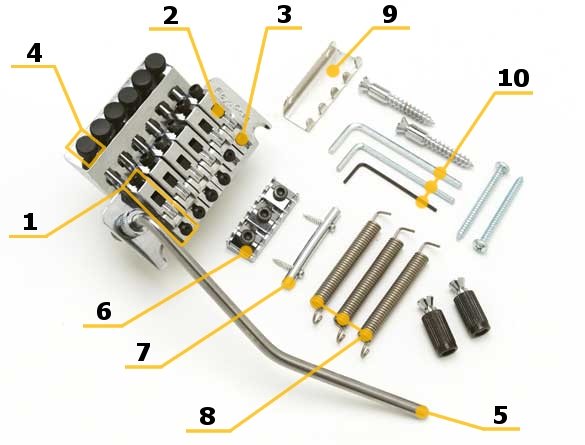
Image: Floyd Rose Guitars / Wikimedia Commons, public domain.
Why the locking trem is the actual gear story
The first trem on the Frankenstrat was a Fender unit. The Floyd came on because a conventional bar would not come back in tune after the dives he wanted to use as phrases. By 1982 it was on the guitar. "Beat It" is one of the places a non-guitar audience heard what the locks are for: a dip that returns, and an exit dive you can follow with somebody else's chorus.
A modern Charvel, Jackson, or Kramer-style superstrat is closer to that idea than a Les Paul, and it is still not Frankie. Bridge humbucker, locking nut, a bar that returns, clarity on the tap. The stripes are optional, and a little late for this record.
What He Was Paid, and Who Got Angry
Eddie did not get a fee. He has been consistent about that, and so has the paper trail we can actually see. Songwriting credit stayed with Michael Jackson. Eddie rearranged the middle of the song on the master tape and does not appear as a writer. That is not a rumor. That is the label copy.
The beer is the one "payment" people repeat, and it doesn't hold. Jones said he supplied it. Eddie told CNN he brought his own. Kevin Dodds's Edward Van Halen quotes Valerie Bertinelli that he never saw a dime and never thought to ask. Eddie's own line, via the interviews Wikipedia uses: "I was a complete fool, according to the rest of the band, our manager and everyone else. I was not used. I knew what I was doing — I don't do something unless I want to do it."
Roth found out at a 7-Eleven on Santa Monica, in the version Dodds records: "Beat It" on a truck radio, and a first impression that somebody was stealing Eddie's licks. It was Eddie. Alex's complaint, told later to Thomas Dolby and written up in The Speed of Sound, was that the Jackson solo was why 1984 stuck at No. 2. The chart fact is real — 1984 peaked at No. 2 on the Billboard 200 behind Thriller. The "only reason" is a brother's grievance. The single had already been a hit in 1983. Eddie's guest spot was weather inside a much bigger system.
He got one public correction he seemed to enjoy. At Tower Records in Sherman Oaks, kids in front of him wrote the solo off as some guy trying to sound like Eddie Van Halen. He tapped one and said it was him.
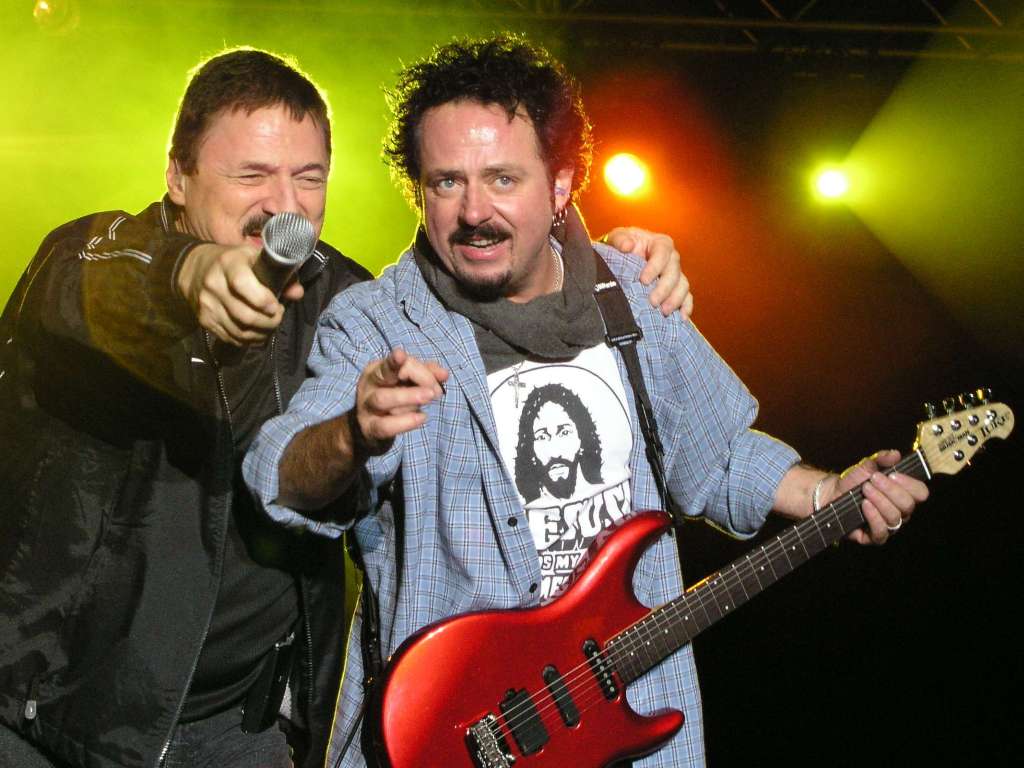
Photo: Bernd Kroeppel / Wikimedia Commons; released for unrestricted use, including commercial use.
Why It Stuck, and Why Covers Miss It
Jennifer Batten played guitar for Jackson from the Bad tour through HIStory. She told Guitar World in 2020 that nobody ordered the copy. She chose it, because she thought it was one of the most perfect solos on record and she couldn't do better. She also said it was still hard. That is a review from someone who had to hit it on a stadium clock for a decade.
It stuck because of placement, not because it is the hardest thing Eddie ever played. A lot of people who would never have bought Van Halen II heard tapping, a dive, and a humbucker attack inside a song they already liked. Thriller did the distribution. "Eruption" demonstrates. "Beat It" interrupts. The interruption works because Lukather's part is tough but not saturated, Porcaro's drums are a pop kit, and Jackson comes back in as if the guitar had been the plan. The politeness around the solo is what makes it rude.
Covers miss it in a predictable order:
1. Wrong key. Em tabs against an E-flat minor record. You can play the shapes in E minor if you tune down a half step or pitch the track up. You cannot do neither and claim you're playing along. 2. The tap, and nothing else. The tapped figure without the phrase before it and the bar after it is a textbook example, not the solo. 3. Too much gain, on both parts. Quincy was explicit. The rhythm guitar had to calm down so the lead could read. A full-stack cover of both parts at the same volume is a different arrangement. 4. A longer solo. Adding a chorus of pentatonic after the dive is how you prove you didn't understand the edit. He fought for a short section with chords under it. Honor the length. 5. The Kramer costume. A striped 5150-style guitar is a tribute to a later Eddie. It will play the part fine if the trem returns and the pickup is clear. It will not make the tone more accurate. 6. The fire story, told as fact. See above. It's a good yarn and a bad footnote.
Eddie often tuned down a half step in this era. We don't have a note that says the Frankenstrat was in E-flat that afternoon, rather than concert pitch on a song already written in E-flat minor. Fingerings are the open question. The sounding key of the record is not.
What to Steal Tonight
You don't need Frankie's PAF, a rented Marshall, or a borrowed Hartley Thompson. You need the decisions.
- Put a chord change under it. A static loop is the section he rejected.
- Keep it short on purpose. Phrase, tap, bar, out. If it feels unfinished, you are listening as the guitarist, not as the singer who has to come back in.
- Keep the rhythm part smaller than the lead. Deluxe-style crunch under a bridge humbucker that is only a little louder. The gap is the mix.
- Dive only on a trem that returns. No locking system, no fake dive.
- Leave one noise in. The knock or the scrape. The record kept it.
- Check the pitch. E-flat minor on the sheet. Confirm the tab against the record.
On the amp, you have a choice of myths. A Marshall-style crunch with an echo in front is the neighborhood of Account A. A louder, clearer combo is the neighborhood of Account B. Neither is a document. The document is note separation, plus a bar that returns.
The Takeaway
"Eruption" changed what guitar players thought a solo could be. The "Beat It" guitar solo changed who heard it. Eddie took no money, took a razor to somebody else's master, improvised two passes on a homemade guitar with a Floyd Rose, and left the writing credit with Jackson. Lukather and Porcaro rebuilt the band track around a timecode he and Landee had broken. Jones turned the rhythm guitar down so the lead could still live on R&B radio.
Leave the disputes disputed: which amp, whose beer, whether Townshend was asked first, when the monitor died, what the knock is. The rest is enough. For half a minute, the biggest pop single of that decade is a superstrat with a locking trem — and it works because he cut the section shorter and gave it chords.
If you want the origin story of the vocabulary, that's the Eruption piece. If you want the moment the vocabulary walked into a song your non-guitarist friends already know, this is the one.
Which part do you still chase — the tapped figure, the dive, or Lukather's turned-down rhythm tone under it? Bring it to Guitar Talk. The rest of Iconic Solos is there when you want another solo that earns its length.
Experience-driven coverage, not algorithm bait.
- 20+ years of guitar playing experience
- Real-world retail experience at Guitar Center
- Thousands of hours testing guitars, amps, and pedals
- A community of 50,000+ guitar enthusiasts across platforms
- Partnerships with Fender, DistroKid, TrueFire, Card Chords, and Enya
- Editorial standards published openly — see how we test gear
Ask GP
3 free questions a dayStill curious? Ask GP about this story.
Your personal classic-rock and guitar guide — ask anything about Iconic Solos.
Discussion (0)
Sign in to join the discussion.
Sign in to commentLoading comments…
Discover another guitar story
Swipe through our latest features, breaking news and iconic solos — one story at a time.
Open Swipe →More in Iconic Solos
The Story Behind the "Hotel California" Guitar Solo: How Don Felder and Joe Walsh Created Rock's Greatest Guitar Duel
Nearly five decades on, the final minutes of the Eagles' "Hotel California" still stop guitarists in their tracks. Inside the composition, tone, and interplay of Don Felder and Joe Walsh's legendary dual-guitar finale.

10 Underrated Guitar Solos Every Player Should Learn
Ten overlooked guitar solos — from Larry Carlton to Derek Trucks — that will make you a better player through phrasing, feel, and note choice.
Iconic Solos: Marty Friedman's "Tornado of Souls" — The Crown Jewel of Thrash Guitar
More than 35 years later, Marty Friedman's solo on Megadeth's Tornado of Souls is still the gold standard for melodic shred — exotic phrasing, vocal-like bends, and an ending run that breaks brains.