

Kim Gordon's Jazzmaster: Sonic Youth's Offset Sound, and Why Her Signature Drops the Rhythm Circuit
Kim Gordon with the Limited Edition Kim Gordon Jazzmaster.
Fender's Limited Edition Kim Gordon Jazzmaster costs $1,099.99. It pairs a Seymour Duncan JB with a Jazzmaster neck pickup and drops the rhythm circuit. Here's how Sonic Youth made the offset a noise-rock icon, and what Gordon's version changes.
When Fender introduced the Jazzmaster in 1958, it was meant to be the company's top-of-the-line guitar. It was built for jazz players, and it shipped with a second, preset "rhythm" circuit so a player could flip between a dark comping sound and a brighter lead sound without touching the main knobs. Jazz players mostly ignored it. A couple of decades later, the Jazzmaster had a very different crowd: young players in downtown New York who could afford a guitar nobody else wanted and then tuned it in ways Fender never planned for.
Kim Gordon was one of them. Fender's new Limited Edition Kim Gordon Jazzmaster, announced on October 27, 2026, at a U.S. MSRP of $1,099.99, is the first Fender signature guitar for the Sonic Youth co-founder. It also quietly drops the feature that defined the original Jazzmaster. There's no rhythm circuit. In its place is a straightforward master volume, master tone and three-way switch, plus a Seymour Duncan JB humbucker in the bridge.
We covered the launch when it was announced. This piece looks at the bigger picture: how Sonic Youth turned an unloved Fender into a noise-rock icon, what Gordon's history with the guitar looks like, and why a simpler control layout makes sense for the way she plays.
The Guitar at a Glance
Here are the specs, from Fender's product page and its October 27 press release:
- Body: Alder, gloss polyester finish in Olympic White with a matching headcap
- Neck: Maple, Modern "C" profile, satin urethane back with a gloss headstock face
- Fingerboard: Slab rosewood, 9.5" radius, rolled edges, white pearloid block inlays
- Scale / frets: 25.5", 22 medium jumbo frets, 1.650" synthetic bone nut
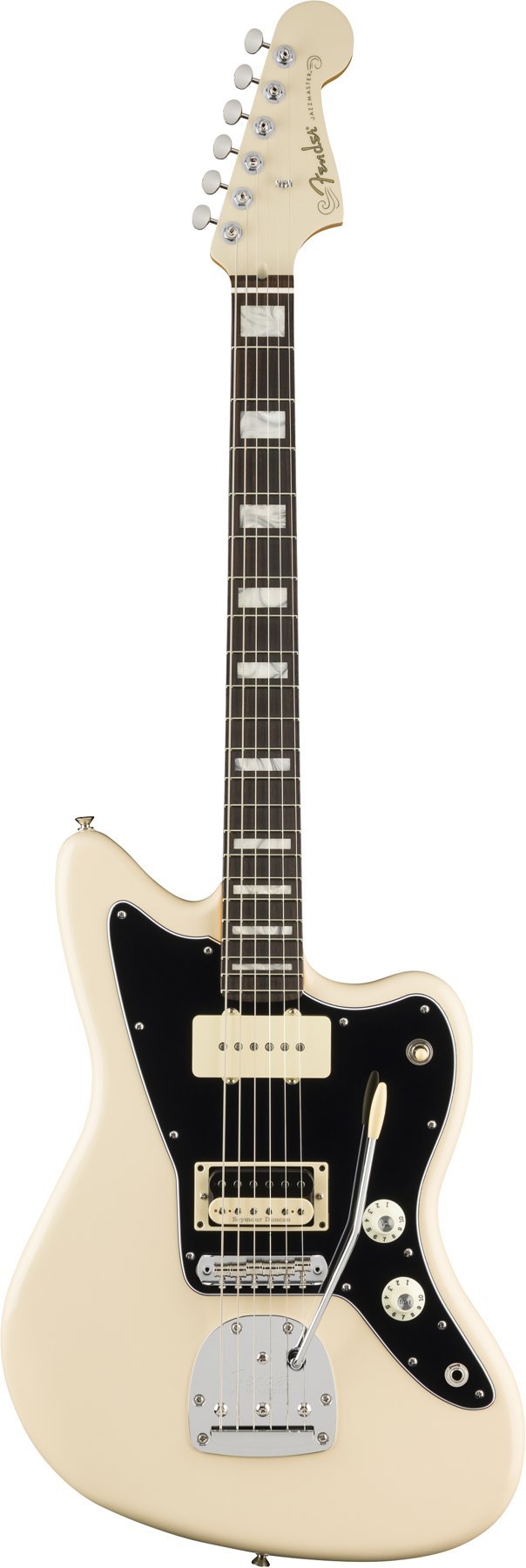
- Bridge pickup: Seymour Duncan JB TB-4 humbucker
- Neck pickup: Player Series Alnico V Jazzmaster single-coil
- Controls: Master volume, master tone, three-way pickup selector (listed by retailer Thomann and described by American Songwriter; see note below)
- Bridge / vibrato: Jazzmaster bridge with Mustang saddles, vintage-style floating tremolo
- Tuners: Fender ClassicGear, 18:1 ratio
- Price: $1,099.99 USD, £1,449 GBP, €1,699 EUR, ¥220,000 JPY
Fender calls it a limited edition but doesn't say how many will be made. When we checked fender.com on November 4, the product page showed $1,099.99 and Sold out online. Stock changes quickly, so check the listing before you plan around it.
How an Unwanted Fender Became the Noise-Rock Guitar
The Jazzmaster's comeback started because it was cheap. By the late 1970s and early 1980s, used offsets sold for a lot less than Stratocasters, Telecasters or Les Pauls. Players who wanted a real American Fender for not much money could find one.
Sonic Youth formed in New York in 1981. Kim Gordon played bass, with Thurston Moore and Lee Ranaldo on guitars. American Songwriter, writing about the new model, describes the Jazzmaster as a key member of the band from its early days. It was an affordable instrument they built a boundary-pushing sound on, and in doing so they turned the model from a cult classic into an icon.
That sound didn't come from vintage-correct playing. Sonic Youth's records are full of alternate tunings, often a different one for nearly every song. They also used prepared guitars, with objects jammed under the strings, and sounds coming from the "wrong" side of the bridge. A Jazzmaster is well suited to this kind of abuse for a few reasons:
- The long string length behind the bridge. The strings run a long way from the bridge to the floating tremolo. Strum or hit that section and you get bell-like, atonal overtones. That's a big part of the noise-rock vocabulary.
- The floating tremolo. The Jazzmaster vibrato is softer and more subtle than a Strat's. It's good for warbles and slow pitch bends that sit under a wall of feedback.
- The wide, flat pickups. The original Jazzmaster single-coils are wider and flatter than Strat pickups. They sound full and a bit hazy, and they feed back into a loud amp in a way that can be controlled.
Fender's own release puts it simply. The guitar's floating tremolo "preserves the offset architecture that made the Jazzmaster a staple of the no wave and noise rock scene of which Gordon has long been a massive influence."
Fender gave Thurston Moore and Lee Ranaldo their own signature Jazzmasters in 2009. Both were stripped down. Moore's model dropped the rhythm circuit, and Ranaldo's swapped the stock single-coils for a pair of humbuckers. Now the third founding member has her own, 17 years later, and it follows the same idea: keep the offset body and the vibrato, and cut what doesn't get used.

Kim Gordon: A Bassist Who Kept Picking Up the Guitar
Gordon is best known as Sonic Youth's bass player. That's how Fender introduces her, too: "widely recognized as one of the most original bass players in modern rock music." But Fender's copy also points out that she "has also continually returned to the guitar both in the studio and onstage, developing a distinctive voice defined by dissonance, texture and restraint."
That last word, restraint, matters. Gordon's guitar playing isn't about speed or technique. It's about texture: slow scrapes, sustained drones, feedback shaped by where she stands relative to the amp, and chords that sit somewhere between the notes. Andertons' product copy says she has used Jaguar, Mustang and Jazzmaster guitars over her career. That's three different Fender offset or short-scale designs, all of which have been part of the indie and noise world.
Her solo career has kept the guitar at the center. Gordon's 2019 debut, No Home Record, was followed by The Collective in 2024, made with producer Justin Raisen and additional producer Anthony Paul Lopez. That album earned two Grammy nominations, for Best Alternative Music Album and Best Alternative Music Performance ("BYE BYE"). Fender's release says her third solo album, PLAY ME, is out now and that she's touring through 2026.
Her quote in Fender's announcement says a lot about how she approaches the instrument:
"One thing that's great about the Jazzmaster, if you have a guitar that sounds good by just plugging it into an amplifier, it doesn't need effects," said Kim Gordon. "That's really satisfying…I just really like the sound…Electricity in the guitar is the gateway to losing yourself."
This sounds like a player who wants the guitar and amp to do the work. She doesn't want a pedalboard covering for a weak instrument. That leads straight into the biggest design decision on this model.

Why the Rhythm Circuit Is Gone
On a traditional Jazzmaster, the upper horn holds a small slider switch and two roller wheels. Flip the slider up and you're in the rhythm circuit. It uses only the neck pickup, with its own volume and tone wheels set for a darker sound. Flip it down and you're back on the main circuit, with the three-way toggle and the regular volume and tone knobs. The idea was to preset a rhythm sound and a lead sound and jump between them instantly.
It's a smart idea that a lot of players never use. Some players love it, especially for quick volume jumps. Many players find the extra switch and wheels confusing, or bump the slider by accident mid-song and suddenly lose half their volume.
Neither Fender's newsroom post nor its product page explains the reason for removing the rhythm circuit. The best explanation in our sources comes from American Songwriter's Sam Blalock, who wrote that the electronics have been simplified, and that Gordon removed the polarizing rhythm circuit because she wanted the guitar to be immediately approachable. The layout is now a master volume, a master tone and a three-way pickup selector. That's American Songwriter's account; we didn't find Gordon herself explaining the change in the sources we checked.
For Gordon's style, the simplicity makes sense in a few practical ways:
1. Fewer things to bump. When you're swinging the guitar around, pressing it against an amp or hitting the strings with something other than a pick, you want fewer switches that can change your sound by accident. 2. One volume knob for swells and feedback. One master volume is easy to find by feel. That matters when you're riding feedback. 3. Room for the humbucker. The JB in the bridge changes how the guitar works with an amp, and the rhythm circuit is built around the neck pickup anyway. A simple master layout keeps both pickups on the same controls.
Fender's Justin Norvell put it this way in the release:
"With two distinct pickup types offering incredible sonic versatility, we wanted to give players the freedom to explore and approach the instrument in their own way, whether they're experimenting with texture and noise, writing songs or simply looking for new sounds."
The JB-in-a-Jazzmaster Choice
The Seymour Duncan JB TB-4 is one of the most popular aftermarket humbuckers ever made. It's a hot pickup with a strong upper-mid bite. The "TB" in the model name means a trembucker, meaning wider pole spacing meant for Fender-style bridges.
A JB in the bridge of a Jazzmaster changes things. Fender describes the result as a pickup that "pushes the Jazzmaster's naturally open voice into heavier, more aggressive territory." In practice:
- The bridge position gets louder and thicker. That's good for pushing a dirty amp into feedback.
- Hum goes down in the bridge position. That helps at high gain and high volume.
- The neck pickup stays a classic Jazzmaster single-coil. Fender says it's a Player Series Alnico V unit, so the warm, open neck sound is still there.
- The middle position mixes the two different pickups. Expect something less glassy than a stock Jazzmaster's middle position. That's our expectation from the pickup pairing. We haven't played this guitar yet.
American Songwriter summed it up: the JB "forms a perfect contrast" to the neck single-coil, so the guitar has "two distinctly different sounds."
Bridge, Tremolo and Neck: Fixing the Old Complaints
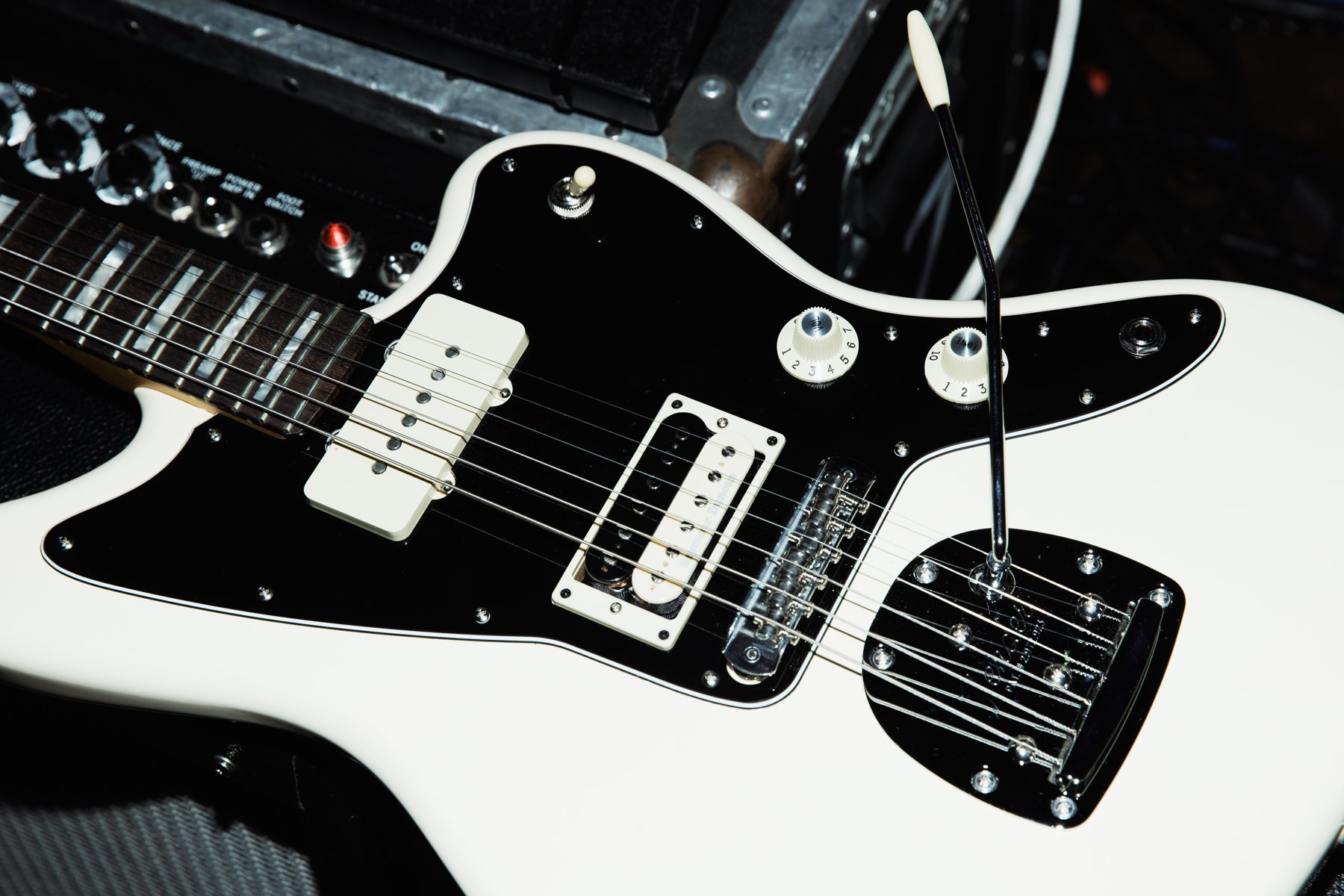
The original Jazzmaster bridge has a bad reputation. Strings can jump out of their saddle grooves if you hit hard, especially with light strings. The bridge can rattle. Fender's answer here is a Jazzmaster bridge with Mustang saddles. Mustang saddles have deeper grooves that hold strings in place, and many offset players install them as a mod anyway. Fender says the setup delivers "expressive vibrato, precise intonation and reliable tuning stability."
American Songwriter also reports that the vintage-style tremolo has been moved slightly closer to the bridge to increase sustain. Fender's own spec sheet and press release don't mention the change, so treat it as unconfirmed. Moving the tailpiece closer would also change the length of string behind the bridge. That's the part Sonic Youth players famously used for those bell-like sounds. If the change is real, it's worth noting for anyone who wants to use that technique.
The neck is a modern design: a Modern "C" profile, 9.5" radius, medium jumbo frets and rolled fingerboard edges. Fender's release says the rolled edges and 9.5" radius give a "smooth, broken-in feel and fluid bends." It's a comfortable, current Fender neck, not a thick vintage replica.
Visually, it's a late-1960s look: Olympic White with a matching painted headcap, and white pearloid block inlays on rosewood. American Songwriter notes that the look nods to late-60s versions of the model.
Watch Fender's Official Video
Who Should Buy It, and Who Shouldn't
It's a good match if you:
- Want a Jazzmaster that can handle high-gain and feedback-heavy playing without a pickup swap
- Never use the rhythm circuit and would rather have simple controls
- Like the white-with-matching-headcap, block-inlay look
- Are a Sonic Youth or Kim Gordon fan who wants an official model at a mid-range price
Look elsewhere if you:
- Want the full vintage experience, with two single-coils and the rhythm circuit. Fender's American Vintage II 1966 Jazzmaster or the Player II Jazzmaster are closer to that.
- Want a second color or a maple fingerboard. As far as Fender lists, the Kim Gordon model only comes in Olympic White with rosewood.
- Need a left-handed guitar. We found only a right-handed version in Fender's listing on November 4.
At $1,099.99, it costs more than a standard Player II Jazzmaster but far less than an American-made model. You're paying extra for the signature details: the JB, Mustang saddles, matching headcap, block inlays and simplified wiring. If you'd do those mods to a stock Jazzmaster anyway, the price gap shrinks fast.
Where to Buy
Disclosure: The Guitar Plugged may earn a commission if you buy through the Fender link below, at no extra cost to you.
- Fender: Limited Edition Kim Gordon Jazzmaster at Fender.com ($1,099.99; listed as sold out online when we checked on November 4, 2026)
The Bottom Line
Sonic Youth helped prove that the Jazzmaster's "flaws" were really features: the floating vibrato, the strange string length behind the bridge, and the hazy, feedback-friendly pickups. Kim Gordon's signature model keeps all of that and fixes the parts that annoyed players for decades. It drops the rhythm circuit, swaps in Mustang saddles, and adds a JB for when the band gets loud.
It's not a museum piece. It's a working instrument for someone who, in Gordon's words, wants "a guitar that sounds good by just plugging it into an amplifier."
Sources
- Fender Newsroom: "Fender And Kim Gordon Introduce Signature Jazzmaster, A Guitar Built For Original Expression" (Oct 27, 2026): https://www.fender.com/newsroom/273808-fender-and-kim-gordon-introduce-signature-jazzmaster-a-guitar-built-for-original-expression/
- Fender product page: https://www.fender.com/products/limited-edition-kim-gordon-jazzmaster (checked Nov 4, 2026: $1,099.99, sold out online)
- American Songwriter, Sam Blalock: "Fender and Kim Gordon Team up for Limited Edition Jazzmaster" (Nov 3, 2026): https://americansongwriter.com/kim-gordon-jazzmaster/
- Thomann listing (controls and spec details): https://www.thomannmusic.com/fender_ltd_kim_gordon_jazzm_rw_oly.htm
- Andertons listing: https://www.andertons.co.uk/fender-limited-kim-gordon-jazzmaster-rw-olympic-white/
Shop this gear
- Fender Limited Edition Kim Gordon Jazzmaster — Olympic WhiteCompare prices at Plugged Gear Co.

- Fender Player II Jazzmaster — 3-Color Sunburst / Slab RosewoodCompare prices at Plugged Gear Co.

- Fender American Vintage II 1966 Jazzmaster — 3-Color Sunburst / Bound Round-Laminated RosewoodCompare prices at Plugged Gear Co.

Plugged Gear Co. may earn a commission from qualifying purchases.
Experience-driven coverage, not algorithm bait.
- 20+ years of guitar playing experience
- Real-world retail experience at Guitar Center
- Thousands of hours testing guitars, amps, and pedals
- A community of 50,000+ guitar enthusiasts across platforms
- Partnerships with Fender, DistroKid, TrueFire, Card Chords, and Enya
- Editorial standards published openly — see how we test gear
The Modern Guitar Magazine. Delivered to your inbox.
No spam. No gimmicks. Just great guitar content — stories, tones, iconic solos, and honest gear takes. Every week.
Ask GP
3 free questions a dayStill curious? Ask GP about this story.
Your personal classic-rock and guitar guide — ask anything about Kim Gordon's Jazzmaster.
Discussion (0)
Sign in to join the discussion.
Sign in to commentLoading comments…
Discover another guitar story
Swipe through our latest features, breaking news and iconic solos — one story at a time.
Open Swipe →More Guitar News
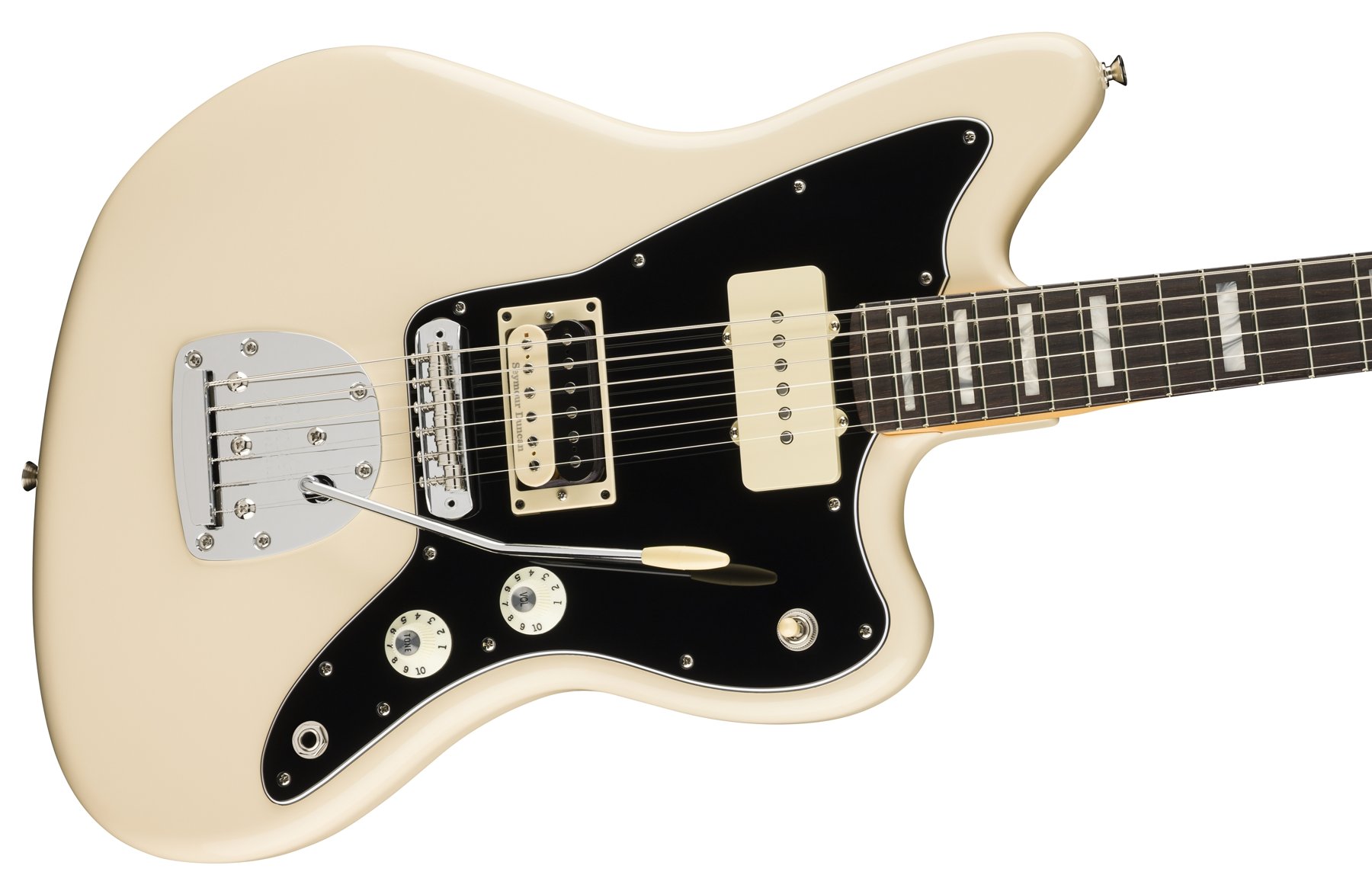
Fender's Kim Gordon Jazzmaster Gets a Seymour Duncan JB
Fender has announced a limited edition Kim Gordon signature Jazzmaster with a Seymour Duncan JB bridge humbucker, a Jazzmaster neck pickup and Mustang saddles. It costs $1,099.99 in the U.S.
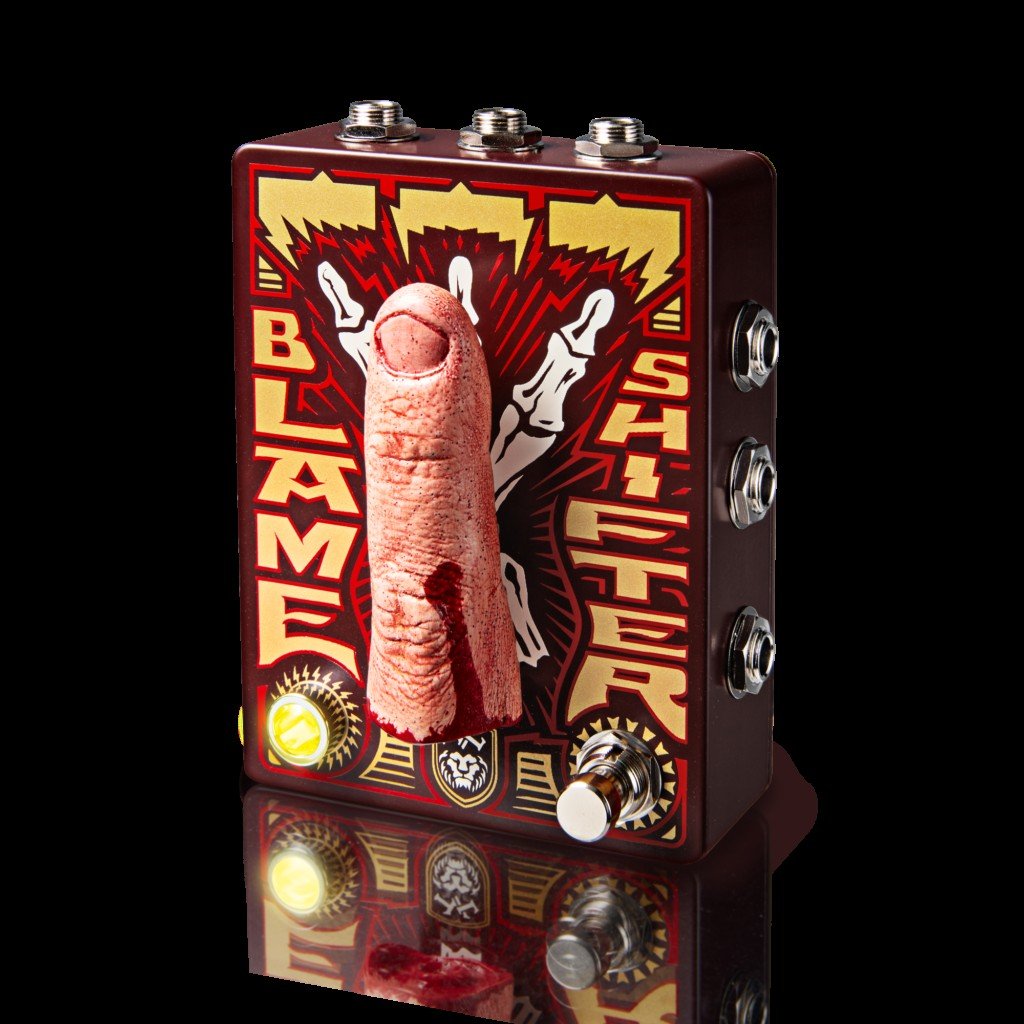
Troy Van Leeuwen’s Blameshifter Is Real: QOTSA Joke Pedal, Severed Finger, Dual-Amp Chaos
Queens of the Stone Age’s Troy Van Leeuwen and Dr. No Effects turn a decade-old QOTSA rehearsal joke into the TvL Blameshifter — a severed-finger switching pedal, on pre-sale now.