Neko Wants to Put Your Whole Rig, a Stem Splitter and a Songwriting Partner in Your Pocket
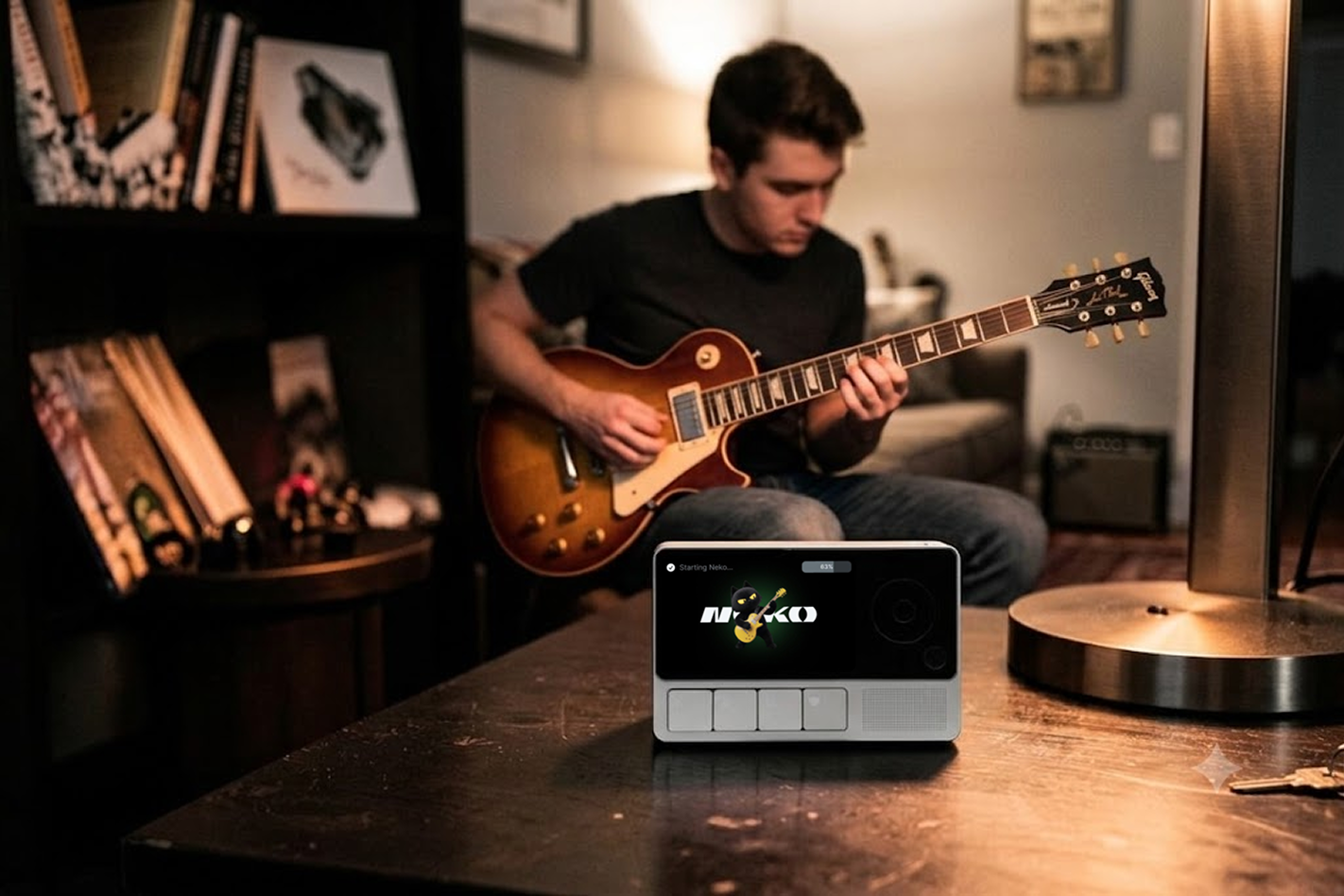
A guitarist playing through Neko at home.
Photo: Neko Engineering
Neko Engineering's pocket wireless guitar rig runs LALAL.AI stem separation on its own chip, with no cloud or app. NAM A2 Full tones, tabs, riff recorder and AI Arranger; $399 on Kickstarter, shipping April 2027.
Neko Engineering's pocket wireless guitar rig runs LALAL.AI stem separation on its own chip: no cloud, no phone app. Here's what has been announced, what it costs on Kickstarter, and what we still can't tell you.
Announcement coverage, not a review. No Neko units are available for independent testing yet.
Every few months, a new box shows up promising to replace your pedalboard. Most of them are modelers with a nicer screen. Neko, from Neko Engineering, a UAE-based hardware startup, aims at something different. On paper it is an amp modeler, effects processor, wireless rig, recorder, stem splitter, tab transcriber and AI backing-band generator, all in a device small enough to slide into a jeans pocket.
The headline feature arrived through a partnership announced on October 16, 2026. LALAL.AI, the Swiss audio-AI company known for separating songs into stems, has built its separation engine into Neko so that it runs on the device itself. You don't need a phone app, an internet connection or an upload queue. If it works the way the companies describe, you could feed Neko a song, mute the guitar and play the part yourself, anywhere, with nothing else in your bag.
That's a big "if," and we'll get to the caveats. First, here's what's actually been announced.
What Neko Is, According to Its Makers
Neko Engineering describes the device as a "wireless pocket studio." The press release calls it a mini multitool designed to replace an entire pedalboard, and lists the main features as:
- Neural Guitar FX based on NAM A2 Full, the Neural Amp Modeler format, connected directly to TONE3000, the community tone library. Neko quotes "250K+ tones."
- A built-in effects section. The official screenshots show categories like reverbs (digital, plate, hall and room, spring, ambient) alongside amp models.
- A Stem Splitter, powered by LALAL.AI, that separates any song into guitar, bass, drums and vocals in real time.
- A Tabs Converter that turns a guitar stem into readable tablature.
- Time Machine, a riff recorder that captures everything you play and organizes it on a timeline, "so that you never forget what you've played."
- AI Arranger, which takes a raw riff and builds a backing track around it.
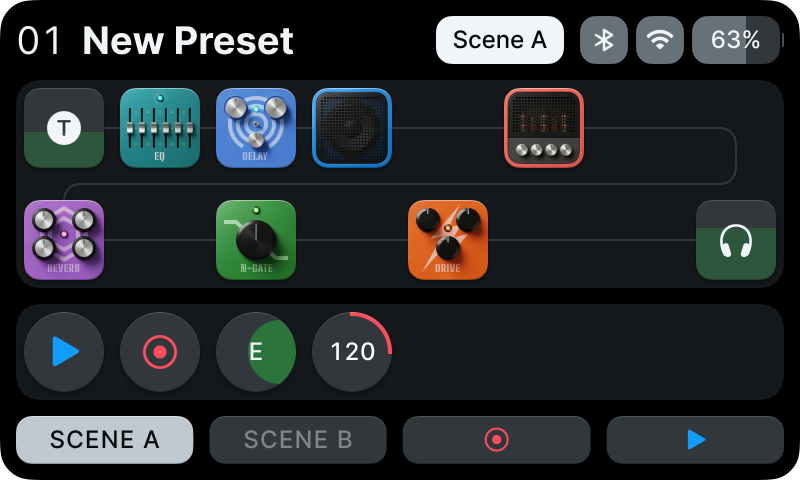
Image: Neko Engineering (official press image)
The design has already won a Red Dot Award: Design Concept 2026, and Neko was first shown alongside LALAL.AI at IBC 2026 in Amsterdam. Neko Engineering founder and CEO Vadim Smirnov, previously chief product officer behind a popular Arabic-language AI assistant and smart speaker in the UAE, frames the pitch around convenience rather than any single killer feature. In the release, he says the guitarists the company talked to were "tired of carrying five things to get one sound," and that Neko is meant to replace "the cable, the pedalboard, the looper, and the voice memo app."
The Price and the Timeline
Neko is crowdfunded. The Kickstarter campaign launched on October 13, 2026, with a $399 pledge level against a stated $599 retail price. Shipping to backers is scheduled to begin in April 2027.

Photo: Neko Engineering
Keep the usual crowdfunding rules in mind. A Kickstarter pledge isn't a store purchase. Ship dates on first-generation hardware often slip, and features shown at launch can change before units ship. None of that is a knock on Neko specifically. It's how crowdfunded hardware works, and it's why this article describes what the companies say rather than what we've measured.
The Big Idea: Stem Separation That Never Leaves the Box
Stem separation, pulling the vocals, drums, bass and guitar out of a finished mix, has gone from science project to everyday practice tool in a few years. Guitarists use it to isolate a solo they're learning, to make a guitar-free backing track for practice, or just to hear what a bass player was really doing under a dense mix.
Until recently, most of that work happened in the cloud or on a computer. You upload a file, wait, and download stems. LALAL.AI built its name with exactly that kind of service and later added local processing in its desktop app and VST plugin.
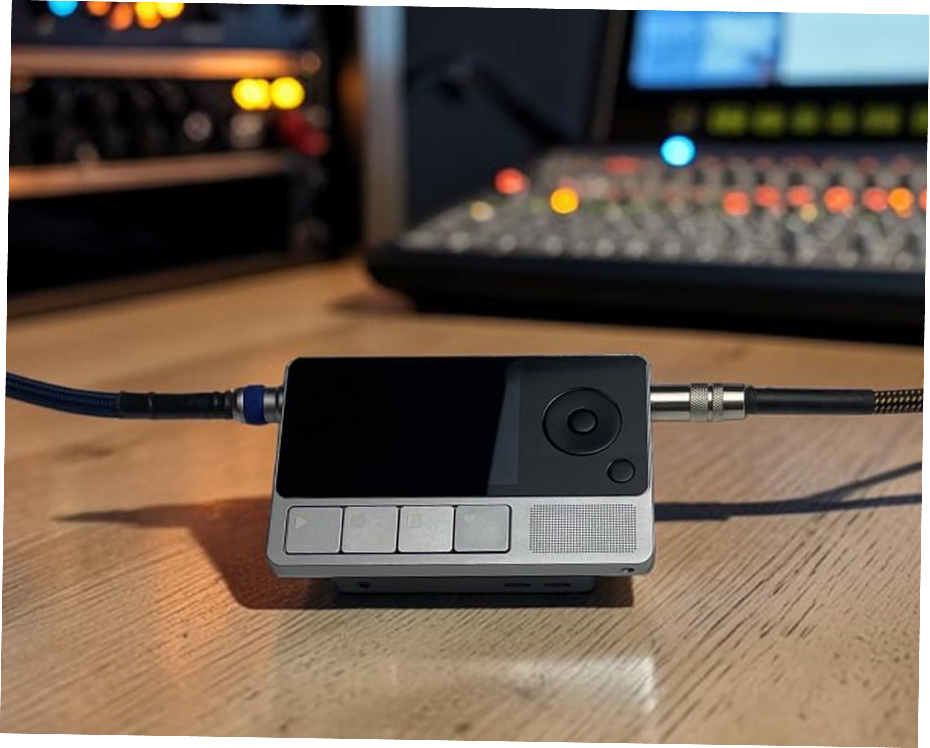
Photo: Neko Engineering
According to the press release, Neko uses the same engine that powers LALAL.AI's local separation on desktop. It's "not a scaled-down version," but engineered to run within the memory and processing limits of an embedded chip. Songs can come in over Bluetooth, through the microphone, over USB or as a file. Neko then splits them "on the fly, entirely on the device." From there, a player can:
- mute a part and play it themselves;
- slow a passage down and speed it back up;
- send the guitar stem to the Tabs Converter.
LALAL.AI co-founder Nik Pogorsky is pointed about why on-device matters. In the release, he notes that some hardware with "on-device" stem separation actually relies on a phone app for the processing, which means the feature "stops functioning the moment the phone isn't there." He says Neko's separation runs on Neko's own chip, and calls it the first time that's been done in a guitar multitool without a companion app doing the work.
Smirnov says the same thing from the hardware side. Neko evaluated other approaches, he says, but a phone-dependent integration "would have meant asking every Neko owner to keep an app running in the background." Running the engine on Neko's chip is what lets the company treat stem separation as "a native part of the product."
That "first" claim belongs to the companies, and we haven't verified it independently. The underlying design choice is real, though, and it's the clearest way to understand where Neko sits in a fast-growing category.
How Neko Compares With Zoom's Neurig
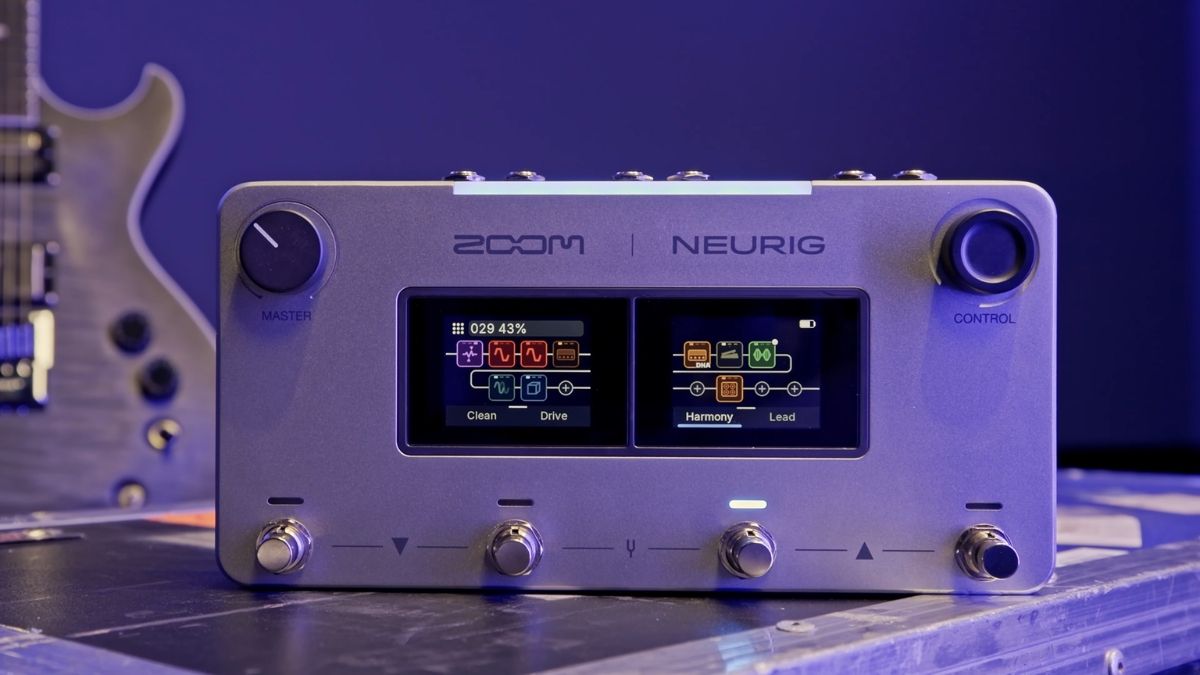
Earlier this week we covered Zoom's Neurig, a compact floorboard announced in Japan with two touchscreens, four footswitches, Zoom's DNA Engine models and native NAM support. The two products overlap enough to be worth comparing, and they differ in revealing ways.
Where the AI runs. This is the main difference. Zoom describes its stem separation, prompt-based rig generation and playback tools as features of SessionZ Pedal, its companion iOS/Android app and cloud service. As we noted in that piece, those are app and cloud features. They don't mean every AI task runs inside the pedal. Neko is pitched the opposite way: separation runs on the device, offline, with no app required. If you practice somewhere without reliable Wi-Fi, or you just don't want another account and another app, that matters.
Which NAM. Zoom lists native NAM A2 Lite support. Neko says its Neural Guitar FX are based on NAM A2 Full. In general terms, the "Full" and "Lite" labels describe heavier and lighter versions of the format's models. Neither company has published listening comparisons we can point to, and we haven't heard either device, so treat this as a spec-sheet difference for now, not a verdict on tone.
Tone library. Both connect to TONE3000. Zoom cites access to more than 700,000 NAM captures and IRs through its app. Neko quotes "250K+ tones." The numbers are counted differently and come from each company's own materials, and in both cases they describe access to a community library, not sounds preinstalled on the hardware. As we said about the Neurig, library size is no substitute for finding a handful of sounds that work with your guitar.
Form factor and focus. The Neurig is a floor unit with footswitches, routing and a rechargeable battery. It's built to sit on a stage or a desk and be stomped on. Neko is pocket-sized and wireless, and the official photos show it on a desk, in a pocket and in a small sling bag. Its extra features (Time Machine, Tabs Converter, AI Arranger) point toward practice, learning and songwriting more than toward a gig rig. Neko Engineering hasn't positioned it as a pedalboard you'd tap-dance on.
Price and availability. Zoom listed a Japanese store price that converts to roughly $300, with an early-November Japanese release. Neko is a $399 Kickstarter pledge against a stated $599 retail price, shipping to backers from April 2027. One is close to launching in at least one market. The other is a crowdfunding campaign.
Neither approach is automatically better. Cloud services can run models bigger than any pocket chip can hold, and they can be updated overnight. On-device processing is private, works offline and doesn't depend on a server staying online. For a practice tool that lives in your gig bag, though, "it works with nothing else around" is a strong selling point.
Time Machine, Tabs and the AI Arranger
The stem splitter gets the headlines, but the features most likely to change how people use Neko day to day may be the quieter ones.
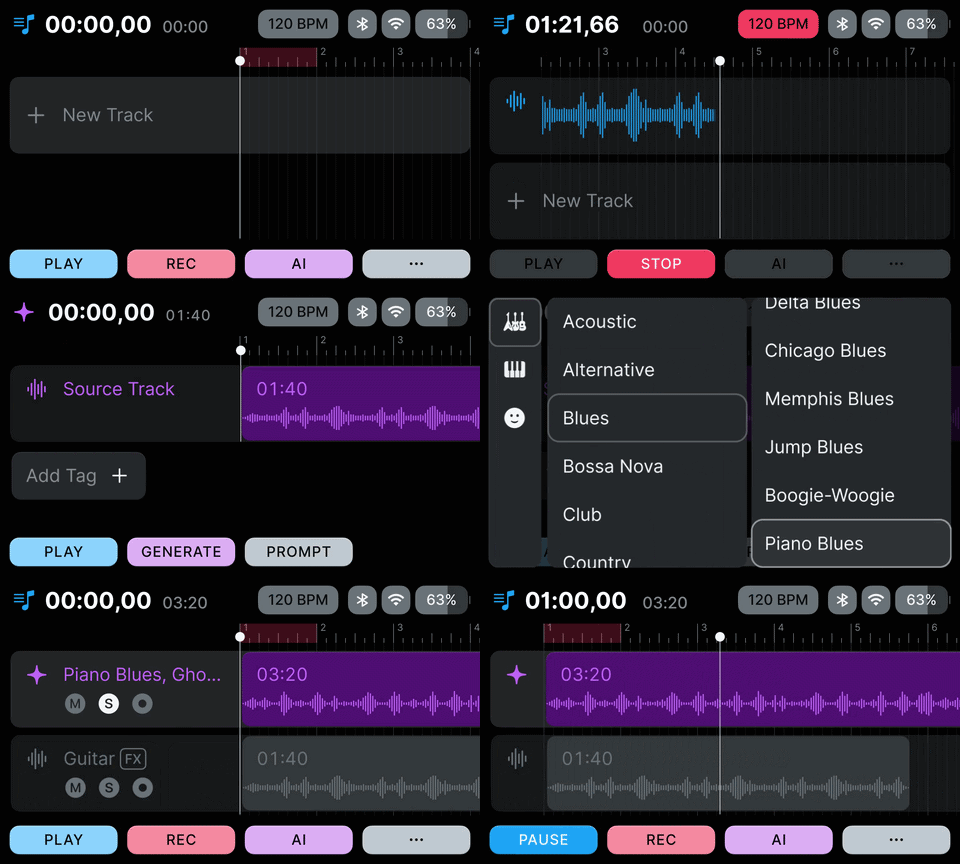
Image: Neko Engineering (official press image)
Time Machine is Neko's answer to the riff you came up with on the couch and forgot by dinner. The press release says it records everything you play and arranges riffs on a timeline. That's a familiar idea, close to an "always-on" looper or DAW buffer, but putting it in the same device as your tone means you don't have to remember to hit record on your phone.
Tabs Converter turns a guitar stem into readable tabs. Combined with the stem splitter, that's a workflow many players stitch together from separate apps today: isolate the guitar, transcribe it, then learn it. How accurate automatic tab transcription is, especially with bends, slides, layered parts and heavy distortion, is something we'll want to check carefully once units exist. Automatic transcription has historically struggled with exactly the expressive details guitarists care about most.
AI Arranger takes a raw riff and builds a full backing track around it. The official screenshot shows a simple track view with play, record and AI buttons, and a tempo readout. For a songwriter, that could be a fast way to hear whether a riff has legs. For a practicing player, it's an instant jam partner. Neko hasn't published detailed material on the arranger's styles, controls or output, so we can't say how musical it sounds yet.
The Amp and Effects Side
None of this matters if the core guitar sound doesn't hold up, so it's worth looking at the modeling.
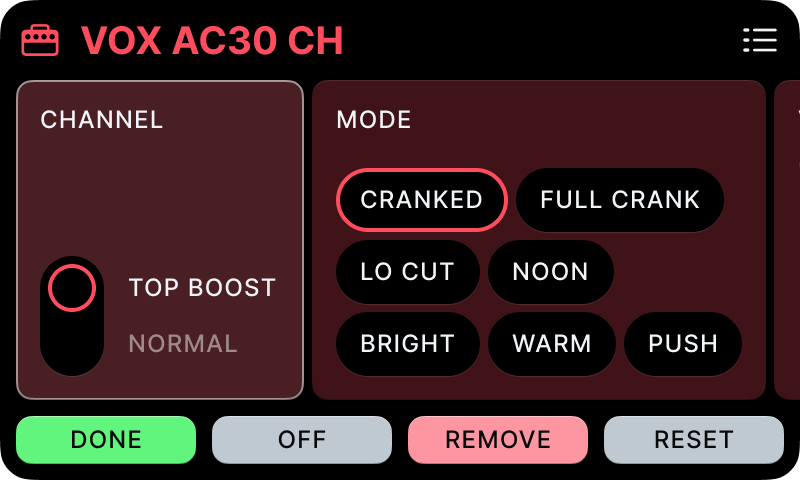
Image: Neko Engineering (official press image)
Neko's Neural Guitar FX are based on NAM, the open Neural Amp Modeler ecosystem that has become one of the most talked-about developments in guitar tone. Instead of a manufacturer's own proprietary amp models, NAM-based devices load captures of real amps, pedals and full rigs, many of them made and shared by players through TONE3000. Neko says it connects directly to that library.
The official interface screenshots show an amp page for a Vox AC30-style model with channel and mode options (Cranked, Full Crank, Lo Cut, Noon, Bright, Warm, Push), a signal-chain view with pedals, scenes and tempo, and an effects browser that lists reverb types. Those are interface mockups from the media kit. They show what Neko intends the experience to look like, not proof of how it sounds or feels to play through.
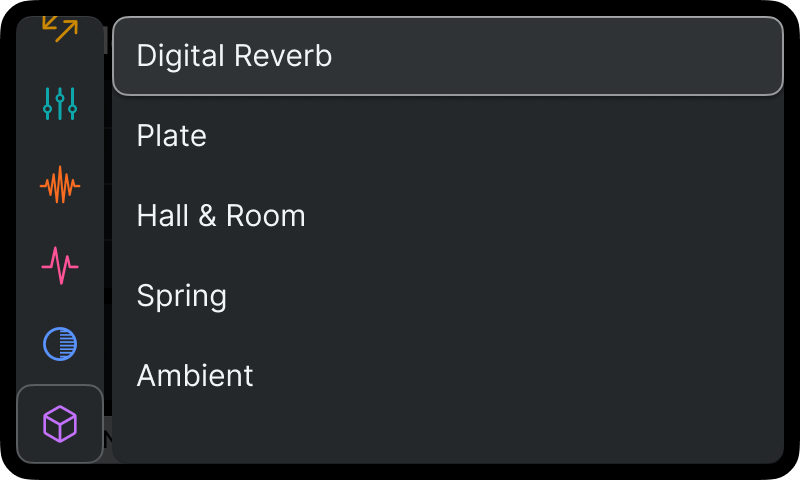
Image: Neko Engineering (official press image)
Some important unknowns remain:
- Latency. Wireless plus modeling plus real-time stem separation on one embedded chip is a heavy processing load. How the device handles it under the fingers will make or break it.
- Battery life. The press materials we've seen don't give a runtime figure.
- Outputs and connectivity. The release mentions Bluetooth, microphone, USB and file input for songs, but we haven't seen a full I/O spec covering how Neko connects to amps, PAs or headphones.
- Separation quality on a chip. LALAL.AI says the on-device engine isn't scaled down. How it compares with the same company's desktop processing is the obvious question to test.
Who It's For
Based on what's been announced, Neko looks less like a competitor to a Helix or Quad Cortex on a pro stage and more like an all-in-one practice, learning and idea-capture device:
- Students and self-taught players who learn songs by ear and want stems, slow-down and tabs in one place.
- Songwriters who lose riffs and want an always-recording sketchpad with a backing band attached.
- Traveling players who want real amp captures and headphones without a laptop.
- Players who don't want another app. If you're tired of devices that only work when your phone is paired and online, Neko's offline pitch is aimed straight at you.
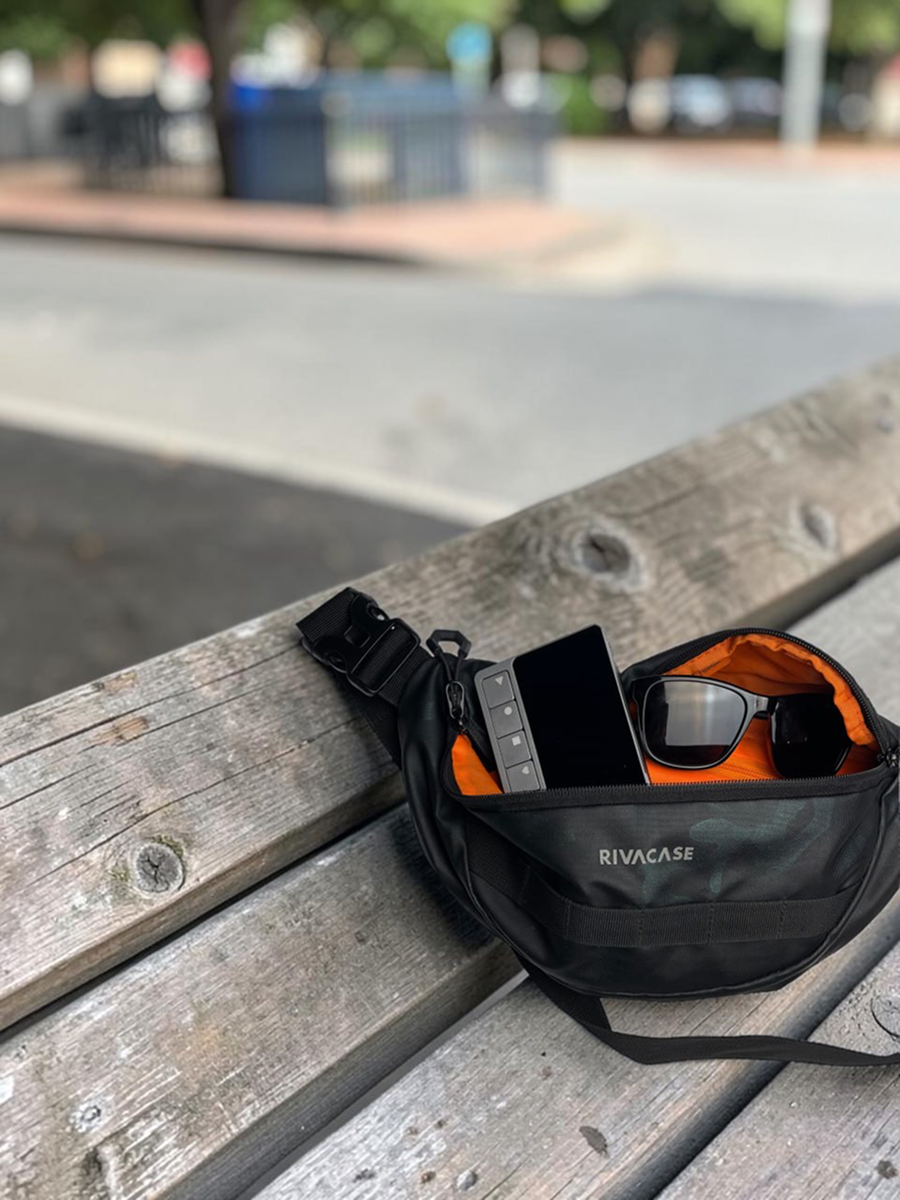
Photo: Neko Engineering
The Guitar Plugged's Take
Neko's big claim is architectural: stem separation running on the guitar device's own chip, not on your phone and not in the cloud. If that holds up in real-world use, with quality close to LALAL.AI's desktop processing, it's a real step for practice hardware, and a clear contrast with the app-and-cloud approach Zoom has taken with the Neurig's AI features.
But it's still an announcement. The device is crowdfunded, backers won't get units until April 2027 at the earliest, and nobody outside the companies has had one in hand for independent testing. The $399 pledge price is attractive next to the stated $599 retail, but backing a Kickstarter means accepting the usual risks on timing and final features.
We've asked for a review unit, and we'll report on latency, tone, separation quality and the tab converter's accuracy once we can actually play one. Until then, Neko is one of the more interesting ideas in guitar tech this fall, and one to watch rather than one to judge.
Would a pocket rig that splits songs offline change how you practice, or are you happy with your current modeler and a laptop?
Sources: LALAL.AI and Neko Engineering joint press release (Zug, Switzerland, Oct. 16, 2026) and official media kit; LALAL.AI communications. Product specifications, prices and ship dates are manufacturer statements and may change. All photos: Neko Engineering (official press images).
Experience-driven coverage, not algorithm bait.
- 20+ years of guitar playing experience
- Real-world retail experience at Guitar Center
- Thousands of hours testing guitars, amps, and pedals
- A community of 50,000+ guitar enthusiasts across platforms
- Partnerships with Fender, DistroKid, TrueFire, Card Chords, and Enya
- Editorial standards published openly — see how we test gear
The Modern Guitar Magazine. Delivered to your inbox.
No spam. No gimmicks. Just great guitar content — stories, tones, iconic solos, and honest gear takes. Every week.
Ask GP
3 free questions a dayStill curious? Ask GP about this story.
Your personal classic-rock and guitar guide — ask anything about Neko Wants to Put Your.
Discussion (0)
Sign in to join the discussion.
Sign in to commentLoading comments…
Discover another guitar story
Swipe through our latest features, breaking news and iconic solos — one story at a time.
Open Swipe →