
Editorial graphic by The Guitar Plugged.
Some songs need a chorus to announce themselves. These barely need the guitarist to get started — 15 intros ranked on recognition, personality, and pure gut reaction.
Some songs need a chorus to announce themselves. These barely need the guitarist to get started.
You can be halfway through a conversation when it happens. A guitar comes through the speakers, somebody reaches for the volume, and suddenly you're not really listening to the conversation anymore.
You're listening for the next note—even though you already know exactly what it will be.
The greatest guitar intros do more than identify a song. They bring back the room where you first heard it, the person who played it for you, or the car stereo you probably pushed a little too hard. Some are delicate enough to stop you in your tracks. Others practically demand that you turn them up.
For this list, we're ranking recognition, personality, and that immediate emotional connection—not technical difficulty. “One second” is the spirit of the exercise, not a stopwatch test. And we're talking about the familiar studio recordings: in a few cases, the defining guitar entrance arrives after the track itself has already begun.
These are The Guitar Plugged's picks. Your order will almost certainly be different. That's half the fun.
1. “Stairway to Heaven” — Led Zeppelin
Before the drums, before the electric guitar takes over, before the song becomes enormous, there is that acoustic opening.
Its strength is restraint. The picked notes feel deliberate, with a descending movement underneath that keeps the passage from sitting still. It sounds inviting, but there's also something unsettled about it. You want to hear where it goes.
“Stairway to Heaven” earns our top spot because the introduction has an identity almost separate from the rest of the song. You don't need the vocal. You don't need the famous solo. Those opening phrases are enough.
For guitarists, it can bring back the experience of learning to make individual notes ring cleanly. For everybody else, it's simply one of those sounds that seems to have always existed.
Overplayed? You can make that argument. Forgettable? Not a chance.
2. “Sweet Child O' Mine” — Guns N' Roses
Slash's opening figure has a quality that plenty of heavier riffs lack: you can sing it.
It moves around the strings in a repeating pattern that feels bright, slightly unusual, and completely self-contained. Before the band settles underneath it, the guitar already has your attention.
That's what makes this introduction so effective. It isn't just setting the tempo or establishing a chord. It is delivering a hook before the singer gets anywhere near the microphone.
The tone matters, too. There's bite, but the notes remain distinct. Add too much distortion when you play it yourself and some of that personality disappears.
We put it second, but if your argument is that this should be the most recognizable guitar intro on the planet, we're listening.
3. “Johnny B. Goode” — Chuck Berry
Some guitar intros create an atmosphere. This one opens the door and tells everybody to get moving.
Chuck Berry's opening has an unmistakable combination of sharp attack, ringing double-stops, and forward momentum. It sounds excited without sounding uncontrolled. Every phrase seems to lean into the next.
What stands out isn't complexity. It's confidence. The guitar arrives as the main event, not as decoration around a vocal.
Even after hearing countless players borrow from this musical vocabulary, the original still has its own snap. The notes matter, but so does the way they're pushed, clipped, and allowed to ring.
Third place feels right for an introduction that can turn a room into a rock 'n' roll room before anybody sings a word.
4. “Back in Black” — AC/DC
The spaces are part of the riff.
That's the detail that separates the opening of “Back in Black” from a generic sequence of big guitar chords. The hits land, the little answering phrases cut through, and the pauses make everything feel heavier.
There's no need for a wall of distortion. The guitar sound has enough clarity for you to hear the attack and enough grit to make it feel dangerous.
Try playing it with the wrong timing and you'll understand the difference between knowing the notes and knowing the riff.
This is an intro that makes a very convincing case for simplicity. Nothing feels missing. Nothing needs adding. Turn it up and leave it alone.
5. “Smoke on the Water” — Deep Purple
A riff can become so familiar that people stop hearing how good it is.
Get Slash’s “Sweet Child O' Mine” Tone
Tell ToneMD what guitar and gear you own and we’ll show you how to get as close as possible using the equipment you already have — full signal chain, real numbered settings, no guesswork.
Included with The Guitar Plugged Premium
“Smoke on the Water” suffers from that problem. It's easy to treat it as a beginner-guitar punch line instead of listening to what Ritchie Blackmore actually put on the recording.
The opening is blunt, spacious, and instantly identifiable. The movement between the notes gives it character; the way they're voiced gives it weight.
It doesn't need speed, a complicated progression, or an elaborate introduction to the introduction. The guitar states its case immediately.
Strip away the guitar-shop jokes and this remains an exceptionally effective piece of writing. A handful of notes, arranged with enough personality that you can recognize them almost anywhere.
6. “Enter Sandman” — Metallica
The opening guitar figure is quieter than the reputation of the song might suggest.
That's part of its appeal. Rather than beginning at full force, “Enter Sandman” gives you a repeating pattern and lets the tension build around it. The notes feel exposed at first. As the arrangement grows, the same musical idea becomes something much larger.
The introduction works because it makes you anticipate the impact. You know the heavier section is coming, and the waiting is part of the pleasure.
It's also proof that a clean guitar can sound ominous without needing much help.
When the full weight of the song finally arrives, it feels earned. The opening has already done its job.
7. “Hotel California” — Eagles
The opening of “Hotel California” puts you somewhere before it tells you anything.
The ringing acoustic texture and shifting chords create an atmosphere that feels warm on the surface, but not entirely comfortable underneath. There's movement and detail, yet nothing feels hurried.
That balance is why the introduction holds up so well on its own. You could stop the recording before the vocal enters and still have a complete musical impression.
The famous closing guitar exchange gets plenty of attention, understandably — we broke it down in our look at the Hotel California solo. But the opening deserves its own credit. It establishes the mood that makes everything afterward feel connected.
X Concepts Strings • Made in USA
Never Run Out of Strings Again.
Join the X Concepts String Club and get fresh USA-made strings delivered every month—plus Premium membership options for the full Guitar Plugged experience.
Some intros make you reach for an air guitar. This one makes you settle in and listen.
8. “Crazy Train” — Ozzy Osbourne
Once Randy Rhoads launches into that central guitar figure, there is no mistaking the song.
The low-note pulse gives it drive, while the moving upper notes provide the melody. It's tight, energetic, and memorable enough to work even when you hear it away from the full recording.
That combination is harder to pull off than it sounds. Plenty of riffs have aggression. Plenty have a catchy shape. This one gets both without feeling cluttered.
For a guitarist, the challenge is making it sound as controlled as it is exciting. The picking needs definition, and the transitions need to stay clean.
“They have an identity. A musical idea, a sound, and a way of delivering it that belong together.”
The result is a riff you can hum, play, or recognize through a terrible speaker from the other side of a room.
9. “Layla” — Derek and the Dominos
There's no gentle invitation here.
The opening guitar hook of “Layla” sounds urgent from the start. Its rising-and-falling shape gives it a vocal quality, almost as though the guitar is trying to say something before the actual words arrive.
The arrangement adds to that pressure. The guitars feel intertwined, giving the opening more depth than a single isolated riff would have.
For this ranking, we mean the electric Derek and the Dominos recording—not Eric Clapton's later acoustic reinterpretation. Both have their own appeal, but it's the electric version's immediate intensity that earns this place.
A great intro can establish the emotional temperature of a song. “Layla” gets it close to boiling in a hurry.
10. “Wish You Were Here” — Pink Floyd
This opening doesn't try to impress you. That's precisely why it works.
The distant, radio-like acoustic sound draws you toward it. When the fuller guitar joins, the recording begins to feel intimate, like someone sitting nearby and playing rather than performing at you.
The phrases leave room to breathe. Small slides, sustained notes, and the natural sound of the instrument carry more weight than a busier arrangement would.
It's a reminder that recognizable guitar playing isn't always about a big electric tone or a forceful riff. Sometimes it's about touch and the relationship between a few simple phrases.
This one can quiet a room just as effectively as the louder entries can wake one up.
11. “Money for Nothing” — Dire Straits
A small distinction matters here: the famous guitar part is not the first sound on the track.
But when it enters, the identity of the song is settled immediately.
Mark Knopfler's guitar tone has a pinched, growling character that practically becomes part of the composition. The riff would still be recognizable with another sound, but it wouldn't feel quite the same.
The attack is just as important. The notes have a percussive quality, and the spaces between phrases allow that distinctive texture to stand out.
This is one of those parts that can make guitarists spend an afternoon adjusting equipment before realizing that their hands have some work to do, too.
A great riff. An even more distinctive delivery.
12. “Purple Haze” — Jimi Hendrix
The opening of “Purple Haze” has an abrasive edge that still cuts through.
Those first guitar sounds don't ease you into a comfortable groove. They create friction. When the riff follows, the song finds its footing without losing that sense of instability.
Hendrix makes the guitar feel physical here. You hear attack, movement, and the interaction between the notes and the sound surrounding them.
It's also an introduction with a remarkably strong silhouette. Even without matching the original tone, a few well-placed notes can point unmistakably toward the song.
The recording itself offers more than that outline, though. Listen to the phrasing and texture, and the opening feels alive in a way that a tidy imitation often doesn't.
13. “Sunshine of Your Love” — Cream
This riff has weight without needing to move quickly.
Its descending shape is easy to follow, but the rhythm gives it a particular swagger. The guitar feels thick and deliberate, leaving enough space for each phrase to register before the next one arrives.
That's an important part of the appeal. It's not rushing to get somewhere else. The riff itself is the place you want to be.
For players, the temptation is to focus entirely on the note sequence. But getting the feel right means paying attention to length, emphasis, and how the phrase sits against the beat.
It remains the kind of opening that makes you nod along before you've consciously decided to.
14. “Walk This Way” — Aerosmith
Joe Perry's opening sounds like rhythm and lead guitar having the same conversation.
The riff is full of little movements, but it never loses its bounce. It has grit, yet the dominant feeling isn't heaviness. It's groove.
That makes it stand apart from many of the other entries here. You don't just recognize the notes; you recognize the way they dance around the beat.
Played stiffly, it can sound like an exercise. Played with the right touch, it has a loose, almost mischievous personality.
There are guitar intros that make you want to play louder. “Walk This Way” makes you want to play better rhythm.
15. “You Really Got Me” — The Kinks
Two chords can be plenty when you mean them.
The Kinks' original recording gets its force from repetition, attack, and a rough-edged guitar sound that suits the song perfectly. There's no elaborate setup. The riff arrives and immediately becomes the center of attention.
Its simplicity is the point. You can understand the musical idea on the first pass, but that doesn't make you any less interested in hearing it again.
We're specifically choosing The Kinks here, rather than Van Halen's later version. The original has a raw, impatient quality that gives it a personality all its own.
Fifteenth on this list doesn't mean minor. It means the competition is ridiculous.
The Notes That Stay With You
Look across these fifteen intros and there isn't one formula.
“Back in Black” gets its power from space. “Sweet Child O' Mine” puts a melody out front. “Wish You Were Here” invites you closer. “Johnny B. Goode” grabs you by the sleeve.
Some are approachable for a newer guitarist — several turn up in 20 easy guitar riffs that sound hard. Others take real work to play convincingly. But difficulty isn't what makes any of them last.
They have an identity. A musical idea, a sound, and a way of delivering it that belong together.
That's why you can hear one through a car window or across a crowded bar and know what comes next.
Does “Stairway to Heaven” deserve our number one spot? And which missing intro would you put on this list?
Experience-driven coverage, not algorithm bait.
- 20+ years of guitar playing experience
- Real-world retail experience at Guitar Center
- Thousands of hours testing guitars, amps, and pedals
- A community of 50,000+ guitar enthusiasts across platforms
- Partnerships with Fender, DistroKid, TrueFire, Card Chords, and Enya
- Editorial standards published openly — see how we test gear
The Modern Guitar Magazine. Delivered to your inbox.
No spam. No gimmicks. Just great guitar content — stories, tones, iconic solos, and honest gear takes. Every week.
Ask GP
3 free questions a dayStill curious? Ask GP about this story.
Your personal classic-rock and guitar guide — ask anything about Top 15 Guitar Intros You.
Discussion (0)
Sign in to join the discussion.
Sign in to commentLoading comments…
Discover another guitar story
Swipe through our latest features, breaking news and iconic solos — one story at a time.
Open Swipe →More Guitar News

20 Easy Guitar Riffs That Sound Way Harder Than They Are
Great riffs are not necessarily complicated riffs. Some of rock's most recognisable guitar moments are built from two strings, three chords and a rhythm that refuses to let go. Here are twenty of them — and how to make each one sound like the record.
Top 20 Guitarists Defined by One Solo
One unforgettable guitar moment can turn a great player into a permanent part of rock history. These are the 20 guitarists most defined by a single solo.
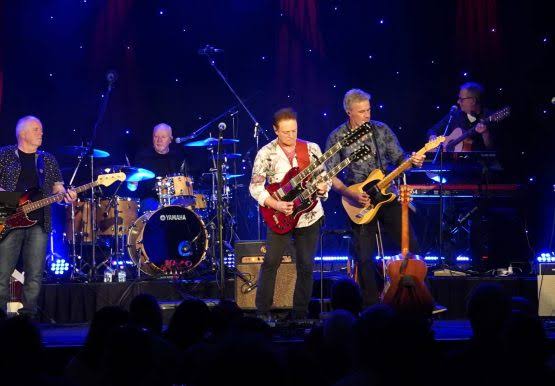
The Story Behind the "Hotel California" Guitar Solo: How Don Felder and Joe Walsh Created Rock's Greatest Guitar Duel
Nearly five decades on, the final minutes of the Eagles' "Hotel California" still stop guitarists in their tracks. Inside the composition, tone, and interplay of Don Felder and Joe Walsh's legendary dual-guitar finale.