Dumble Is Taking Special Orders Again. That Is Not the Same Thing as Alexander Coming Back.
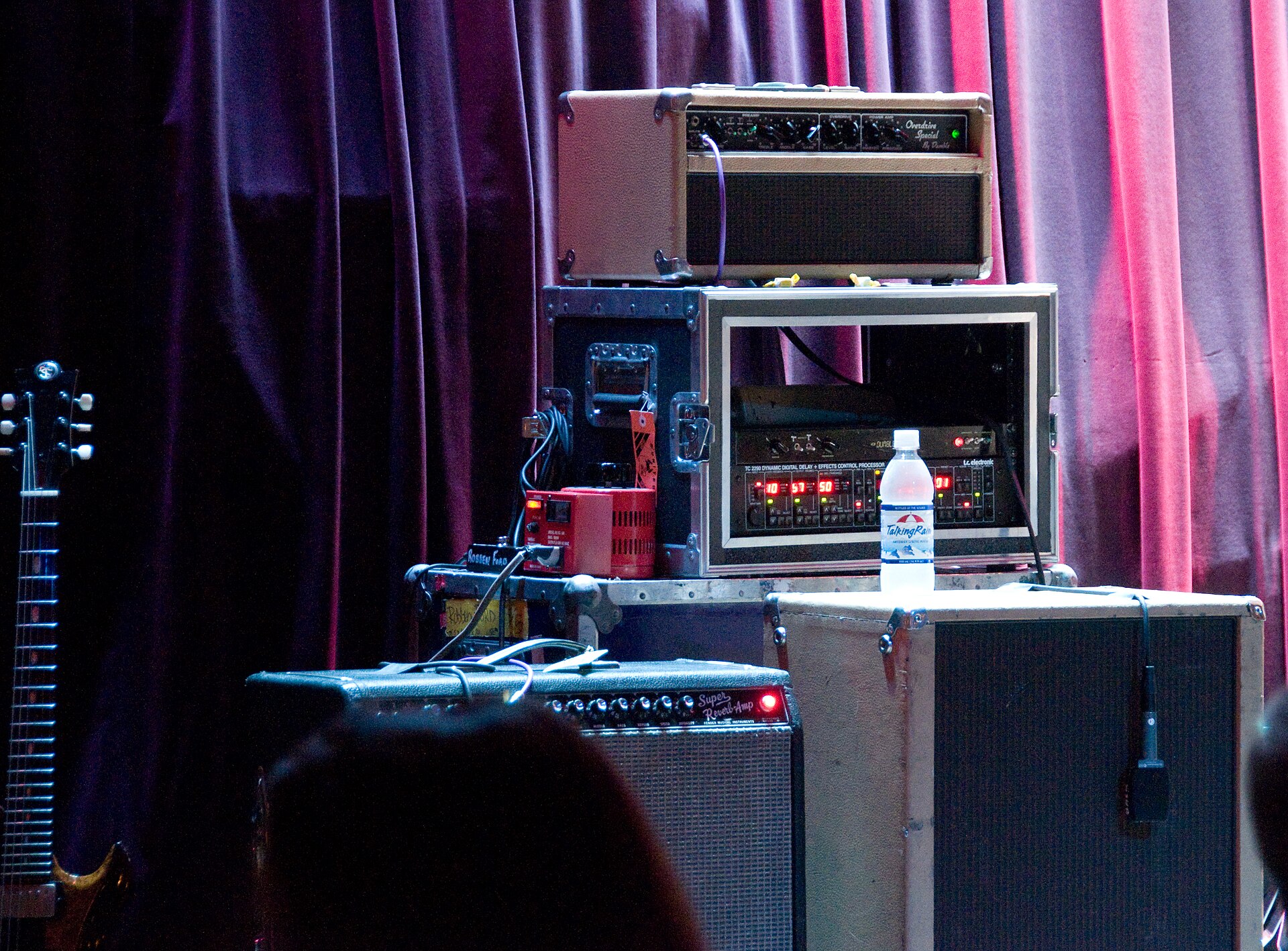
Robben Ford’s stage rig, 12 September 2008, with an Overdrive Special head on top. The photographer’s caption also notes a TC Electronic 2290 and a Fender Super Reverb. This is Ford’s 2008 rig, not a 2026 Dumble Preservation Society build, and not a picture of the new special-order amps. Photo: Art Bromage / Wikimedia Commons, CC BY-SA 2.0 (https://creativecommons.org/licenses/by-sa/2.0/). Source: https://commons.wikimedia.org/wiki/File:Dumble_Overdrive_Special_on_Robben_Ford%27s_Rig,_2008-09-12.jpg
The Dumble Preservation Society is inviting special orders for an Overdrive Special, a Tweedle Dee, and a MegaPLX. No prices are listed. Alexander Dumble died in 2022, and the guitarist most tied to the Overdrive Special says the builder wanted the amplifiers to stop with him.
On October 1, 2026, Guitar World ran the headline players had been half-dreading and half-dreaming about. Dumble is back. You can order an Overdrive Special. The news item is right about the fact that changed. It is also the kind of sentence this brand has always punished. “Dumble” was never one amplifier, never one revision, and never a catalog you reopened because a trademark clock was running. It was a man in a room, listening to one player, changing parts until the amp did what that player was already trying to do.
The man is gone. Howard Alexander Dumble — he preferred Alexander — died at home in Turlock, California, in mid-January 2022, at 77. Vintage Guitar dates it January 16. Premier Guitar’s remembrance says January 17. The one-day fork matters less than what two people close to him have said since, because those accounts do not agree, and the new order pages sit on the crack.
The Dumble Preservation Society, the California company behind dumble.com, is inviting special orders for three amplifiers: an Overdrive Special as a head or a combo, a Tweedle Dee, and a MegaPLX. No prices. The Tweedle Dee page says the waiting list is long, then adds that this is true of every Dumble amplifier. A MegaPLX “digital plug-in” is offered as something to try while you wait. Guitar World says that capture was made with TONE3000 and what it calls NAM2. On October 3 we could not find a public TONE3000 page that clearly identifies an official MegaPLX model. That gap is the story in miniature. A famous name, a real institutional claim, and a layer of reporting that still needs a chassis, a serial plate, or a download link.
This is not a review. The Guitar Plugged has not played a new Preservation Society amplifier. Nothing below is a tone verdict.
What the pages actually say
The Overdrive Special listing calls the circuit Alexander’s best-known architecture: a responsive clean voice into a second gain stage, “100 watts of touch sensitive overdrive from 6L6 tubes,” head or combo, your choice of covering and grille cloth. It also offers a “Dumblelator,” spelled that way on the new site, as a high-headroom effects loop or as more gain. On the amplifiers people already own, the outboard loop is the Dumbleator. The new spelling may be a trademark, a typo, or a different box. An order should pin that down before anyone sends money. Is it the old tube-buffered send and return, or a new circuit wearing a familiar job?
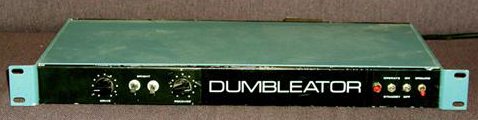

Photo: Teresa Epstein / Wikimedia Commons, marked public domain.
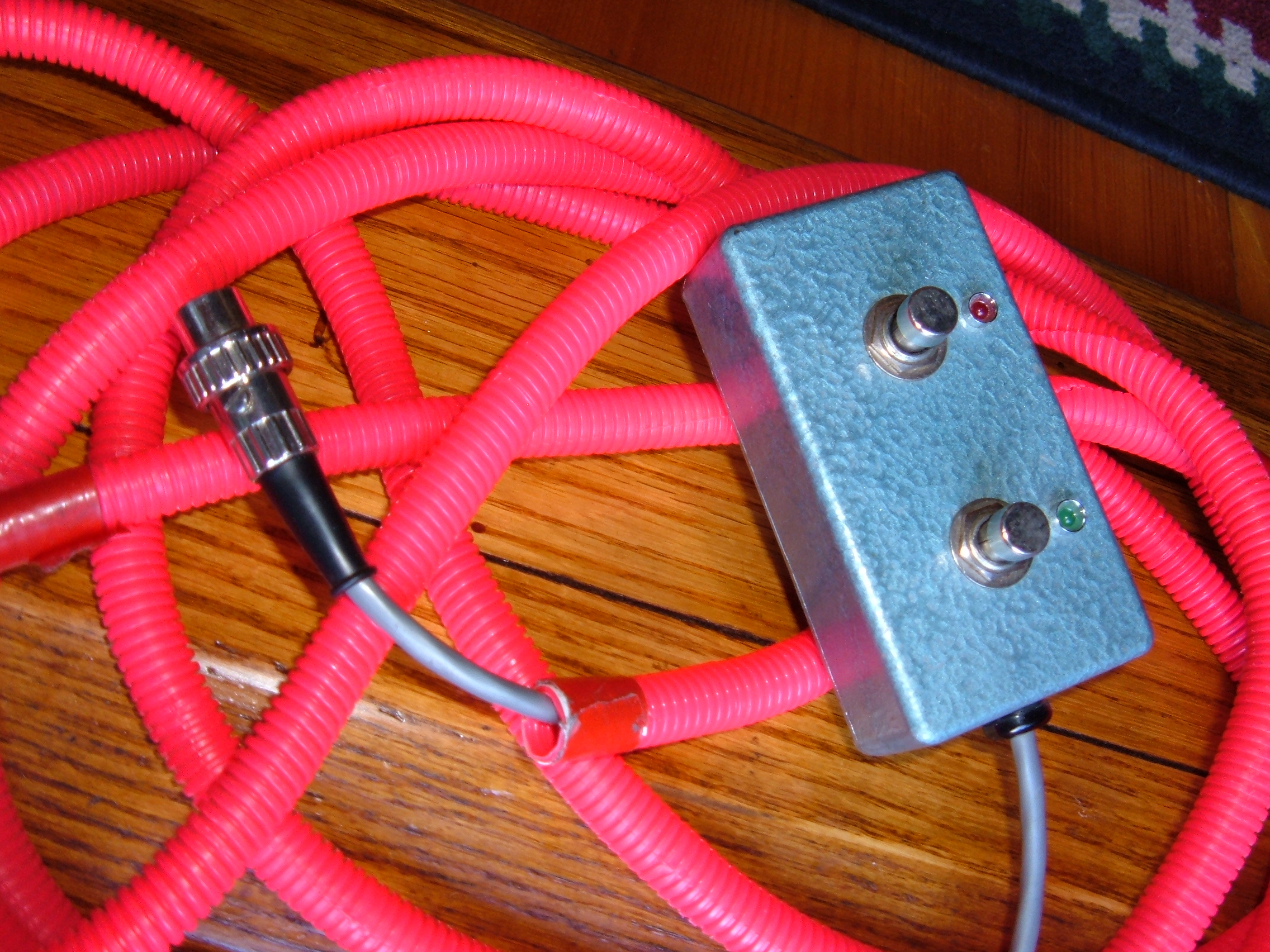
Photo: Teresa Epstein / Wikimedia Commons, marked public domain.
The Tweedle Dee page is more specific. The Society calls it the most popular of Alexander’s modifications, then describes a ground-up recreation: custom chassis, eyelet board, custom cabinet, a finish it names “Dumble Vintage Gold,” a leather handle, NOS resistors, and 6V6S output tubes selected for the higher-than-stock voltages of the mod. The claim is a few extra “toneful watts,” not a number. The speaker is a Celestion G12M, the 25-watt Greenback. The transformers are the Mercury Magnetics specification Alexander liked; the page writes “Mercury Magnetic,” without the final s. Options run to a Tuki cover, branded transformer bells, and a chrome-plated chassis. Read carefully. This is not, on the page’s own evidence, a Fender shell with a new circuit dropped in. It is a new object in the clothes of an old modification.
The MegaPLX page needs the slowest reading. The Society says Alexander built just three, each its own take on a “mega plexi” idea. It also says the last amplifier he finished entirely was MegaPLX 005, now theirs, and that the new amp is a reissue of serial 0003, also theirs, using NOS parts from his inventory. Three amplifiers, and the two serials they name are 0003 and 005. The gap is unexplained. Guitar World compresses this to “he only made three, and the last was the MegaPLX 005,” which follows their sentences and drops the part a buyer needs: the thing on offer is a recreation of 0003, not of 005.
Power, as described, is a matched pair of EL34s, a hand-wired eyelet board, and a five-piece chassis with wood end plates, “just as Dumble originally built it.” A pair of EL34s is not the four-bottle, 100-watt Marshall picture the words “mega plexi” will paint. The page states no wattage. This draft will not invent one.
Every listing ends the same way. Special order. Contact us for price and availability. No deposit, no public wait, no named person who signs the sound.
How a death became an order form
When Dumble died, the sensible assumption was that the work died too. He built alone. Drew Berlin, the vintage dealer who became one of his closest friends, told Premier Guitar in March 2025 that Dumble would not let anyone else touch a build. Berlin’s picture of the process is the opposite of a product line: dozens of parts swapped, the player called in, the amp sent back if the two of them did not agree, and only then a decision about the road. He also said Dumble had given up Steel String Singers and Overdrive Reverbs years earlier because they were too much work. From memory, Berlin put the counts at eleven Singers and, with an explicit “I think,” twelve Overdrive Reverbs. The second figure is a recollection, not a census.
The last months were thin. Premier Guitar’s February 2022 remembrance says little got finished, and that two prospects still had his attention: Slash had been in touch about a build, and there were talks about an amp for Keith Richards. Later headlines sometimes promote those conversations into amplifiers he was making. The obituary is looser. A conversation is not a serial number.
In late October 2024 a relaunched dumble.com carried a statement, reported by Guitar World, from “the successor to Mr. Dumble’s business.” It claimed the trademarks, schematics, trade secrets, and a database of authentic amplifiers good enough to verify them. It said manufacturing would continue, and that new products were coming, “in the mysterious ‘Dumble’ fashion.” Norm Harris had already said on camera that his friends Drew Berlin and Matt Swanson owned the company and meant to build. That clip is how many players heard the rumor. It is not a will, and this draft has not read one.
At NAMM in January 2025 the Society appeared in a private booth. Berlin told Guitar World they had promised Dumble they would keep the legacy alive. He also described the less poetic reason new amps had to exist. An attorney said the trademark protection was about to lapse, and that a trademark needs a product you build and sell. Berlin’s answer, as he told it, was that he was not an engineer. He had played while Dumble dialed. The lawyer’s reply decided the next two years: if you don’t do it, someone else can take the name.
They asked a technician Dumble had trusted to build a couple of amplifiers so the mark would have something under it. One, Berlin said, finished the last Overdrive Special Dumble had started and left incomplete. The other was new. Set that beside the MegaPLX page and the Society can say, without contradicting itself, that 005 was the last amp Alexander completed, and that an Overdrive Special was still open on the bench. “The last Dumble” is a phrase collectors will fight over forever. The 2026 news item does not separate the two.
In the Premier Guitar interview Berlin named the labor, not the laborers. Two builders, neither wanting credit. One had promised Dumble he would not use what he had been shown to make amplifiers of his own. Berlin’s question was a lever: would you rather the name went to strangers? The tech agreed. The second is a longtime repairman, one of the few Dumble would let near the work. Berlin and Swanson said the Society had serviced more than fifty originals since the death. Service was the job they thought they had inherited. Building was the job the trademark required.
Michael Doyle, the Marshall historian, has been described by Guitar World as heading the Society with Berlin. Premier Guitar centers Berlin and Matt Swanson. Harris named those two. We will not draw an org chart they have not published. The mismatch is a reason to ask, in writing, who owns the property, who designs, and who signs the amp.
As of that March 2025 interview, Berlin still would not say where the brand was headed. The new builds were few, slow, hand-cut, aimed at sounding close rather than better. The first one had already been on sessions. The circle was still small: a few of Dumble’s favorite players, amps tweaked the way he would have tweaked them. The October 2026 site is a wider door than that interview described. It is still not a shop. It is a contact form with three famous names on it.
The sentence that will not go away
In Premier Guitar’s 2022 remembrance, Robben Ford — the guitarist more bound to the Overdrive Special than anyone alive — said: “His wish was that once he was gone there would be no more Dumble amplifiers. Most people want to leave behind a legacy, but he didn’t want that.”
Three years later Berlin told the same magazine, and Guitar World, that the Society had promised to keep the legacy alive, that Dumble left them the name for a reason, and that building was how they stopped a stranger from doing it worse.
Both statements can be sincerely reported. They cannot both be the whole of what Alexander wanted, and this piece will not pick a winner from the sidewalk. Ford is the player the famous circuit was aimed at. Berlin is the friend who was in the room for twenty years, whose wife used to phone the workshop at midnight, and whom Dumble reportedly told would need Swanson’s help going forward. A buyer who finds “he left it to his friends” sufficient should still know that the guitarist most identified with the amplifier says the builder wanted the line to die.
Bonamassa, in that 2022 piece, cut a third path. Dumble, he said, created an industry he refused to join, and kept a code to the end. He has also put the Dumble sound, in Vintage Guitar’s telling, beside Fender, Marshall, and Vox as one of four quintessential amp tonalities. That is a judgment about records that already exist. It is not a vote for a new waiting list.
What an Overdrive Special was, before it was a SKU
The new page’s “100 watts, 6L6, clean into a second stage” is a fair postcard. It is not the amplifier.
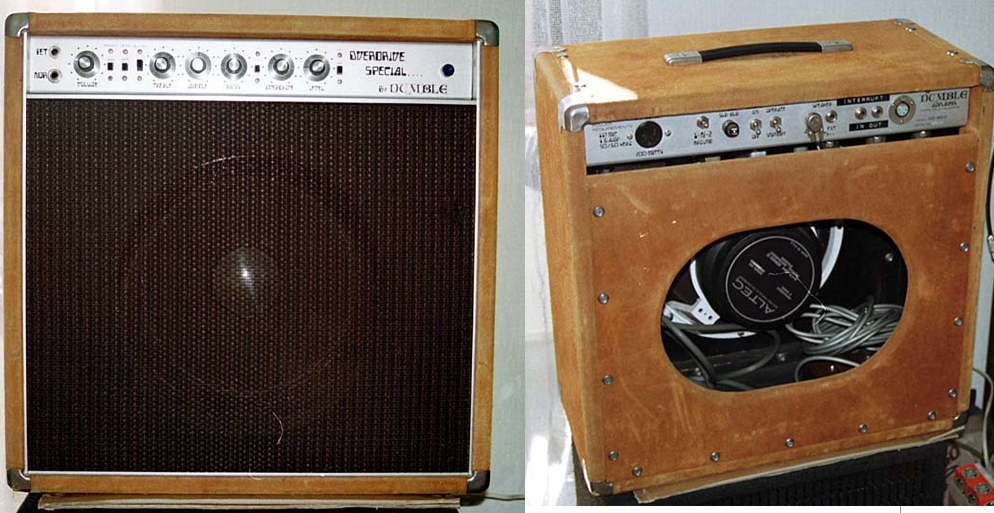
Photo: Scottie McInnes / Wikimedia Commons, marked public domain.
Dumble was born in Bakersfield on June 1, 1944. The origin that has held still in Vintage Guitar, Premier Guitar, and his own 1985 Guitar Player interview is not a myth invented after the prices went mad. As a boy he sold homemade transistor radios and built a 200-watt PA for a youth baseball team. Out of high school he was a working player who would not stop experimenting. In the mid-1960s Semie Moseley of Mosrite hired him, impressed by an amplifier that had drifted toward the Ventures, to build a short run. Dumble later said he was paid ninety dollars a week for about four weeks and then worked free. The Ventures thought the amps were “a little too much rock” and passed. He walked away from a further partnership.
A bass tour with Buffy Sainte-Marie, who did not yet know what he could do with circuits, paid for the first Santa Cruz shop. The Explosion, 1969, was the first model that was fully his, a modified-Fender idea under his name. The Overdrive Special dates to 1972. The spark, by Ford’s account and by Dumble’s, was Ford in a Santa Cruz bar through a blackface piggyback Bassman and a 2x12. Ford has also said a Tube Screamer was in front of that Bassman. Dumble heard a Fender platform being pushed into a singing overdrive, and he spent the rest of his life moving that behavior inside the amplifier.
The result is easier to hear than to draw, and this article will not draw it. A typical Overdrive Special is not two independent Fender-style channels. The overdrive sits on the clean path. Clean tone stack and gain cascade into at least one further stage, which is why players describe the lead sound as a change in the weather, not a second amp. Berlin says Dumble cared more about a clean, lush, powerful foundation than about the overdrive, which was a balance of crunch and sustain once the power amp was already right. Ford’s later summary is still the best short one: deep lows that do not mush, a punchy midrange, a bright top that does not hurt, loud and still musical.
Later amps hide the Hot Rubber Monkey, an internal stack after the overdrive clipping, there to shape distortion rather than to be a fashion on the panel. Not every amp got it. Most ODS power sections are 6L6, and the new listing standardizes on that at 100 watts. Some historic ones used EL34s. Some clean channels stay clean to 10. Some give up around 3. Reverb was its own model, the Overdrive Reverb, not a checkbox. There is no single schematic a cloner can photocopy and honestly call “the” Overdrive Special. The careful builders name a year, a serial, and a player. The others say “Dumble in a box.”
He potted boards in dark epoxy so parts would stop moving and so curious eyes would stop reading. He was already watching a cottage industry form around a sound he would not mass-produce. By the 1980s he was selling patience in tiers — a standard wait of roughly two to three years, an Express 180, an Express 60 — and telephone time by the minute. A recommendation from inside the circle, then an audition that might be a hang or a CD. Fame was not a key. Larry Thomas, former Fender and Guitar Center chief and a real friend, said Dumble wanted the best players and turned famous names down. He treated the amps like children.
The payment stories are evidence, not color. Christopher Cross, brought in by Bonnie Raitt, has described being handed a torn Sears page with a washer and dryer circled. Ford has said Dumble liked gold. Ford’s first Overdrive Special, bought around 1983 at The Alley in North Hollywood, cost $1,200. That number now looks like a typo. It was the price of a very good amp from a man who was not yet a market. A second ODS, ordered about a decade later and briefly imagined as a smaller stage amp, went back to 100 watts because Ford decided he wanted the headroom. When he later needed to sell it, he did not list it. He called Dumble, offered a split, and landed in a 60/40 deal in which Dumble’s share was a credit with the buyer. The amps had been voiced for a person. They were not supposed to walk off to strangers.
Ben Harper has described the used-market version of that ethic: you checked that a resale was acceptable, and a first Dumble bought secondhand often went back to be retuned. His telling includes Dumble listening to a guitar through an oscilloscope. Take that as one session remembered, not as a published method. “Closed book” is what players called the gate. We found no press release in which Dumble used the phrase. The practice was the policy.
Put the players back on the right amplifiers
The October 1 headline says you can order the amp beloved by John Mayer, Joe Bonamassa, and Lowell George, and the copy adds Stevie Ray Vaughan and Keith Urban. Some of those pairings are right. One of them is the mistake that has followed this name for forty years.
Robben Ford is the Overdrive Special’s north star, and he did not buy the first one. He is the reason it exists, a decade before he owned one. From the early 1980s the ODS was his voice often enough that other people still use his records as the reference, then get angry when a clone does not make them play like him.
Lowell George is a fair name for the headline. He played an early Overdrive Special with reverb — Universal Audio and the collector trail call it serial 009 — and told Guitar Player, in a line UA dates to 1977, that it was like a Fender made right. He also hit the front end hard with an Alembic preamp, which is a useful reminder that “straight in” was not a religion. Bonamassa owns that amp now, after a search he has described as years long. In 2022, before that purchase was the story, he told Premier Guitar he had four Overdrive Specials and a Dumble-modified Vibrolux. The count has moved. He is an ODS player. When he talks about Dumble as a category, this is mostly the family he means.
Stevie Ray Vaughan is the correction. The Dumble in most people’s heads when they say his name is not an Overdrive Special. At Jackson Browne’s studio in 1982 he recorded Texas Flood through a Dumbleland, Browne’s high-power amp. Mayer, on Cory Wong’s podcast as reported by Guitar World, identified it as Dumbleland Special 005, said Vaughan recorded the entire album through it, said the amp had been Browne’s, and said he himself used it at Vaughan’s Hall of Fame induction. Other rig histories treat that Dumbleland as the main guitar amp on the record without a take-by-take log. Trust Mayer that this is the amp and that he owns it. Hold “entire” as his emphasis.
Vaughan’s own stage Dumble, from 1984, was a Steel String Singer: clean, high headroom, 6550s, on the order of 150 watts, nicknamed the King Tone Consoul. A second followed in 1986. In Guitar Player that year he drew the line. The Singer was an overgrown Fender, a clear amp. The Overdrive Special, he said, will get away from you and take you with it. A late-1983 ODS shows up in some chronologies, before the Singer took over the clean job. Even if that chapter is right, it is not the pedestal amp. The Singer is a different thesis: one channel, reverb, built to stay clean and bloom when you dig in. Eric Johnson is tied to both, depending on the session. Henry Kaiser had Singer number one. If the current menu is only the ODS, the Tweedle Dee, and the MegaPLX, the amplifier most people mean by “Stevie’s Dumble” is not the one the site is selling.
John Mayer has been specific about at least two roles. Dumbleland 005 is the Texas Flood amp. Another, bought in Japan, he has called an “Overdrive version,” a favorite, and the one he had out with Dead & Company. Guitar World has also reported an Overdrive Special failing under him on stage and being swapped for a spare. That shows a deep bench. It does not make the new 6L6 listing “the John Mayer model.” He uses what the song wants. His name is not a schematic.
Kenny Wayne Shepherd belongs with the Tweedle Dee, and not cleanly. In 2020 he told Total Guitar that the Fenders on his stage are sleepers. Dumble kept cabinet and chassis, he said, and built a different hand-wired circuit in each: tweed Bassman, Pro Reverb, Bandmasters, a little Deluxe, about eleven amps, four up, two blended. The Deluxe’s nickname is Tweedle-Dee. He also restated the old rule in ordinary language. Dumble did not want them sold, because each was cut to a player like a suit. The new product page never mentions Shepherd. It describes a ground-up combo in gold lacquer with a Greenback. If the charm of Shepherd’s amp is that it looks like a battered Fender, the new Tweedle Dee is advertising the opposite.
Carlos Santana has owned Dumbles. The Society put one of his old Overdrive Specials on the NAMM table. He has also been linked to an Overdrive Reverb, and his live rig has long leaned on other builders beside Mesa/Boogie. His name on a 2026 order page would be a borrowed relationship. We did not find a current endorsement.
Keith Urban is on Guitar World’s list. This draft did not re-open a rig sheet. Treat him as a name the coverage is using.
The longer bench — Larry Carlton, David Lindley, Sonny Landreth, Eric Johnson, Jackson Browne, Henry Kaiser, Ben Harper, Bonnie Raitt, Christopher Cross, Jason Isbell — is real, and it is not one sound. Lindley ran early Dumbles in stereo. Cross wanted a clean rig and a lead rig on relays. Isbell has used a Dumble-modified Fender as well as an ODS. Dumble told Guitar Player in 1985 that there are hundreds, perhaps thousands or millions, of valid guitar tones, and that the right one is the moment the air goes electric. The Society’s homepage still talks about that “musical sound,” and about an archive of designs, letters, and photographs he cataloged. The archive is the serious claim. Three model names are the commercial one.
The rarest amp, and a plug-in instead of a wait
Almost nobody has stood near an original MegaPLX. That is the pitch and the problem. Three built, by the Society’s count. Two now in their hands: 005, the last he finished, and 0003, the pattern for the new ones. EL34s, eyelet board, wood cheeks, his own NOS parts. If the description holds, this is the closest they can come to saying they are copying an amplifier they can put on the bench, not interpreting a myth. It is also the one with the least public playing history. There is no Ford of the MegaPLX, and no Texas Flood. You would be buying rarity and a family relationship, then finding out if the result is musical.
The plug-in is the proposed audition. The product page says a digital MegaPLX plug-in is available now, and that the amplifier will take longer. The copy we read names no price, format, or host. Guitar World credits TONE3000 and NAM2.
The careful version: TONE3000 publishes a free plugin and standalone app for Neural Amp Modeler captures. Its current generation is NAM Architecture 2, A2, developed with Steve Atkinson. “NAM2” in a news brief is very likely that, shortened, not a second product. Community “Dumble” listings on TONE3000 are easy to find, and they are mostly Overdrive Special captures, many of clones. A search on October 3 did not surface an obvious official MegaPLX tone page. Until the Society publishes a URL, a price, and which physical amp was captured — 0003, 005, or a new build — the accurate line is that a plug-in has been announced on dumble.com and described by Guitar World as a TONE3000 capture, and we have not verified the file.
That is practical. The internet already sells NAM packs with Dumble in the filename. Some are serious. Some are a clone of a clone with a holy name on the zip. Reviewing the wrong download and deciding the MegaPLX “isn’t much” would be a review of your downloads folder. Even a perfect capture is one gain, one speaker, one mic. It is not the sag of the output stage when the band leans in, and it is not a suit cut to your hands. A taste is fair. The Society should say exactly what was tasted.
Clones, prices, and the only authenticity question that counts
For decades most of us heard “Dumble” sideways. Two-Rock’s early reputation grew in that shadow, before the company spent years becoming its own amp house. Ceriatone and a crowd of small shops have sold ODS-style circuits in the open, sometimes with a year and a serial, sometimes with a wink. Bludotone entered the Santana conversation because working players needed something they could tour without risking a one-of-one head. Hermida’s Zendrive is not an amp clone. It is a pedal aimed at the feeling of Ford’s overdrive, which is a different honesty. Universal Audio’s UAFX Enigmatic is a commercial pedal with an Overdrive Special and a year in the marketing. None of these is a counterfeit unless someone sells it as the original. The epoxy was a confession that he expected the attempts.
The Society’s bet is that provenance beats imitation: his parts, his papers, his friends, an unfinished chassis completed, a trademark defended. That bet is coherent. It is not the bet he made when he was alive. His bet was that amp and player had to be introduced by him, in person, for as long as it took. Berlin has said the new work is trying to get close, not to invent, and that he knows no one else with Dumble’s mix of ears, music, and electronics. That admission belongs on the order form. Closeness is a goal. It is not a 1983 serial plate.
There is a narrower service the Society is better placed to offer than any forum. Originals are scarce enough, and disputed enough, that bad restorations and wishful attributions have circulated for years. Six-figure asking prices are now ordinary news. Guitar World has written up a 1995 Overdrive Special “valued at” $175,000 while it climbed Reverb’s most-watched list. That is an ask, not a cleared check. An older auction-house report put a 1970s OD-50WC combo near $40,000, which shows the fever is not new and also shows why you should not average these into “what a Dumble costs.” If the database of authentic amps is real, the highest public good may not be a new MegaPLX. It may be a yes or a no on the amplifier already in a closet. Whether they will answer that for someone who is not ordering is, today, open.
If you write to them
Write. Do not romanticize the reply.
Ask which original, by model and serial, the new build is voiced against, and whether you can hear both in one room. Ask who builds it, even if the names stay private, and who approves the sound. Ask whether the Overdrive Special is a fixed 100-watt 6L6 design or whether they will still change it because of how you play. The second thing was the romance. A fixed reissue can be a fine object. It is closer to a catalog reissue than to a suit.
Ask what “Dumblelator” means and what the faceplate will say. Ask what the Tweedle Dee shares with any particular player’s sleeper. Ask which MegaPLX the plug-in is, and for the link. Ask the price, the deposit, the wait, and what happens to the money if the wait becomes the old kind of wait. Ask how a new chassis will be numbered so it cannot be mistaken, ten years from now, for one Alexander built. That is how you keep the used market from turning into a crime scene.
Then ask yourself Ford’s question. If the player who defined the sound says the builder wanted no more Dumbles, are you comfortable being the customer who proves the trademark lawyers right? Berlin’s answer is defensible: better the people who loved him than a stranger with a lapsed name. So is a refusal: service the originals, open the archive, and let everyone else build under their own names. The website has chosen. You have not.
None of this says the new amplifiers will be bad. Berlin is not a cartoon buyer of brands. The NAMM room held the real things — the first amp, Vaughan’s Steel String Singer, Santana’s old Overdrive Special, the “Woody” module players borrowed while they waited — and the man showing them had spent decades playing while his friend turned the screwdriver. By his account the first new builds have already survived sessions. That is the start of evidence. It is not a verdict, and we will not pretend to hear through a product page.
What ended in October 2026 was the idea that this name lived only on the used market, in a photograph, or in a capture of a capture. What did not end is the difficulty. There is still no price. There is still a long list. There is still a dead builder whose closest guitarist says the book was supposed to stay shut. The honest headline is smaller than “Dumble is back,” and it is better. The people who inherited the name have opened a waiting list. Whether what comes off it deserves the name is a question for a room, later, with an original sitting beside the new one and nobody selling you the moment.
Until then, play the records. Ford. George, hitting the front end. Vaughan’s Singer, clean past the point where a sensible amp would have surrendered. Mayer, if you want a collector who can play what he collects. The amplifiers were the tool. The music was never on backorder.
Sources & further reading
- 1.Guitar World, Matt Owen, 1 October 2026
- 2.Dumble Preservation Society
- 3.Overdrive Special listing
- 4.Tweedle Dee listing
- 5.MegaPLX listing
- 6.Guitar World, 28 October 2024
- 7.Guitar World, 30 January 2025
- 8.Premier Guitar, 24 March 2025
- 9.Premier Guitar obituary, 16 February 2022
- 10.Vintage Guitar, April 2022
- 11.Guitar World, 17 March 2022 (Mayer / Texas Flood)
- 12.Guitar World, 10 September 2020 (Kenny Wayne Shepherd)
- 13.Universal Audio, history of Dumble amplifiers
Experience-driven coverage, not algorithm bait.
- 20+ years of guitar playing experience
- Real-world retail experience at Guitar Center
- Thousands of hours testing guitars, amps, and pedals
- A community of 50,000+ guitar enthusiasts across platforms
- Partnerships with Fender, DistroKid, TrueFire, Card Chords, and Enya
- Editorial standards published openly — see how we test gear
Ask GP
3 free questions a dayStill curious? Ask GP about this story.
Your personal classic-rock and guitar guide — ask anything about Dumble Is Taking Special Orders.
Discussion (0)
Sign in to join the discussion.
Sign in to commentLoading comments…
Discover another guitar story
Swipe through our latest features, breaking news and iconic solos — one story at a time.
Open Swipe →More in Signature Gear

RipToneZ Is Giving Valeton GP-200 Players More Reasons to Keep Playing
With free downloads, affordable artist-inspired packs, and a $4.99 monthly Tone Club, RipToneZ is building an offering that goes beyond buying another preset.
Line 6 Helix Stadium Native Review: Agoura Amps, Proxy Clones, and the Studio Helix You’ve Been Waiting For
Agoura amp modeling, Proxy clone loading, Focus View, 48 blocks and 192 kHz—the Stadium brain finally lives in your DAW. Here’s who should pay $399.99, who should upgrade for $99.99, and who should start with the free Intro.
Jackson Pro Series Phil Collen PC1-E: Sustainer Superstrat Hits Pro Series (Specs, Price, Who It’s For)
Jackson put Phil Collen’s Sustainer Dinky in Pro Series reach — 18V PC1 Sustainer, DiMarzio X2N & Sugar Chakra, Worn Black nitro, Floyd Rose 1000, $2,199.99, Ensenada-built. Researched overview (not a TGP playtest).