
Epiphone's $849 Joe Bonamassa Skinnerburst '59 Les Paul Brings Principal Skinner Within Reach
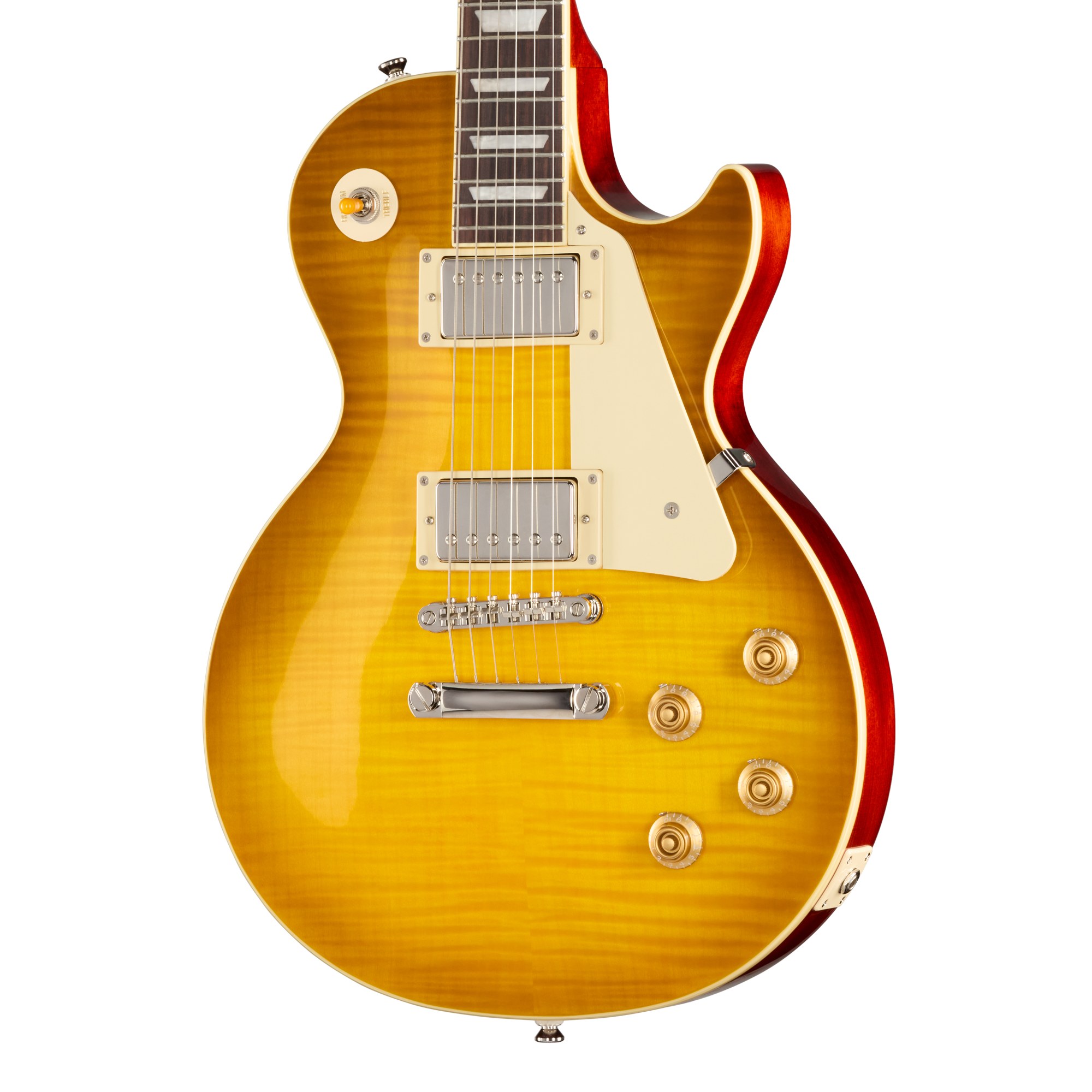
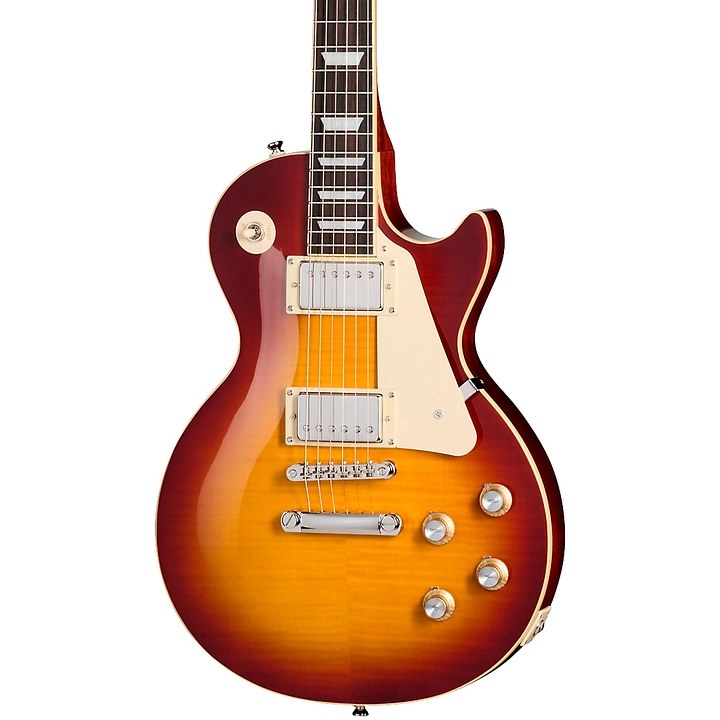
The Epiphone Joe Bonamassa Skinnerburst '59 Les Paul Standard in Dirty Lemon, official product photograph.
Photo: Epiphone / Gibson, used as a manufacturer press/product image.
On Joevember 2026, Epiphone announced its 15th Joe Bonamassa collaboration: a limited Skinnerburst '59 Les Paul Standard in Dirty Lemon, $849 as of November 18. Here is what the official spec actually says, and how it ties to a very busy week for Bonamassa's catalog.
There are weeks when Joe Bonamassa is in the guitar news because he broke a string on a big stage, or because Fender built him a digital Twin, or because he is standing next to someone else's legend. This is one of those weeks, and it has two honest reasons to exist on the same calendar.
The first is in Cork. On Wednesday, November 18, the Cork International Film Festival is giving the world premiere of Joe Bonamassa – The Spirit of Rory at The Everyman Palace Theatre, with a Q&A afterward featuring Dónal Gallagher. We already wrote the longer Rory Gallagher story that sits under that premiere: the battered '61 Strat, Irish Tour '74, the AC30, and a player who never softened his attack. If you came here because of the film, start there.
The second reason is a guitar, announced the same day, and priced for people who will never own the original. Epiphone and Nerdville used "Joevember" to introduce the limited-edition Joe Bonamassa Skinnerburst '59 Les Paul Standard in Dirty Lemon. Gibson's official gazette, dated November 18, 2026, calls it the 15th time Epiphone has partnered with Bonamassa. The official product page on Gibson.com listed it at $849.00 when we checked later that same day. That is the price we will use, dated, and we will not pretend a dealer coupon or a European listing is the official U.S. figure.
This is news, not a bench review. We have not had one of these in the building. What follows is what the official pages actually say, what they do not say, and why a $849 Les Paul with this particular nickname is getting the attention.
Principal Skinner, and Why This One Is Different
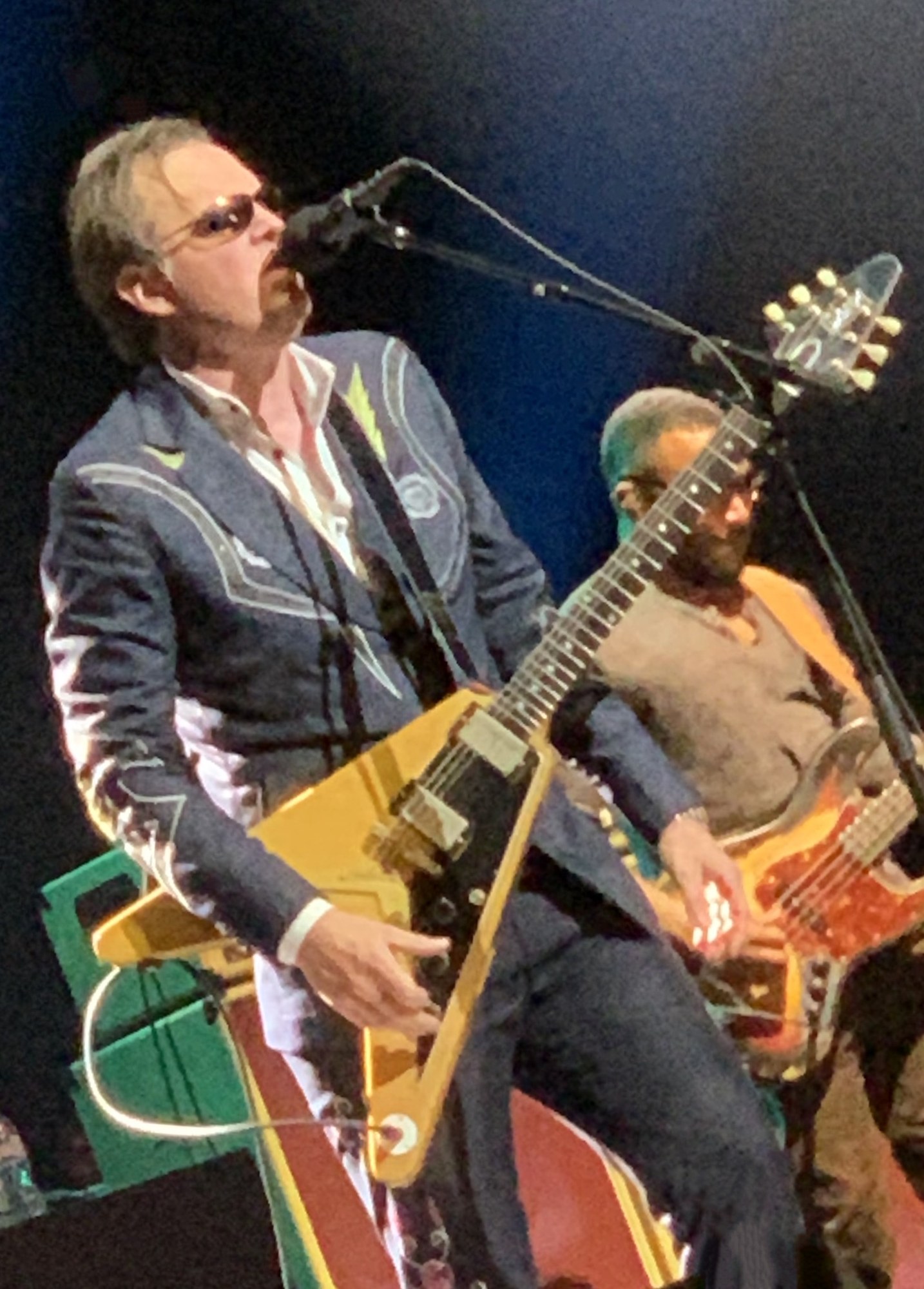
Bonamassa owns one of the more closely watched vintage collections in modern blues, a hoard he and the official copy now brand as the Nerdville Museum. The official product page is unusually specific about which guitar this Epiphone is meant to copy. It is not a generic '59 burst. It is the Skinnerburst 1959 Les Paul Standard, a guitar Bonamassa nicknamed "Principal Skinner," and one the copy says he "keeps reaching for time after time because of its exceptional sound and playability."
The provenance, as told on both the product page and the November 18 gazette, is short and worth keeping in the official wording. The original was purchased new in 1959. It later passed from father to son. In 2006, with the father's permission, the son put it up for auction. "Backed by a complete, documented history," the official copy says, "it became the most expensive non-celebrity guitar ever sold at the time." Bonamassa bought it in 2011. It has been in his collection since, "seeing extensive use live and on recordings."
We are repeating the manufacturer's history, not re-auditing the 2006 auction archives in this article. If you are the kind of reader who wants the sale documents, the place to start is the official provenance claim itself, not a paraphrase from a forum post.
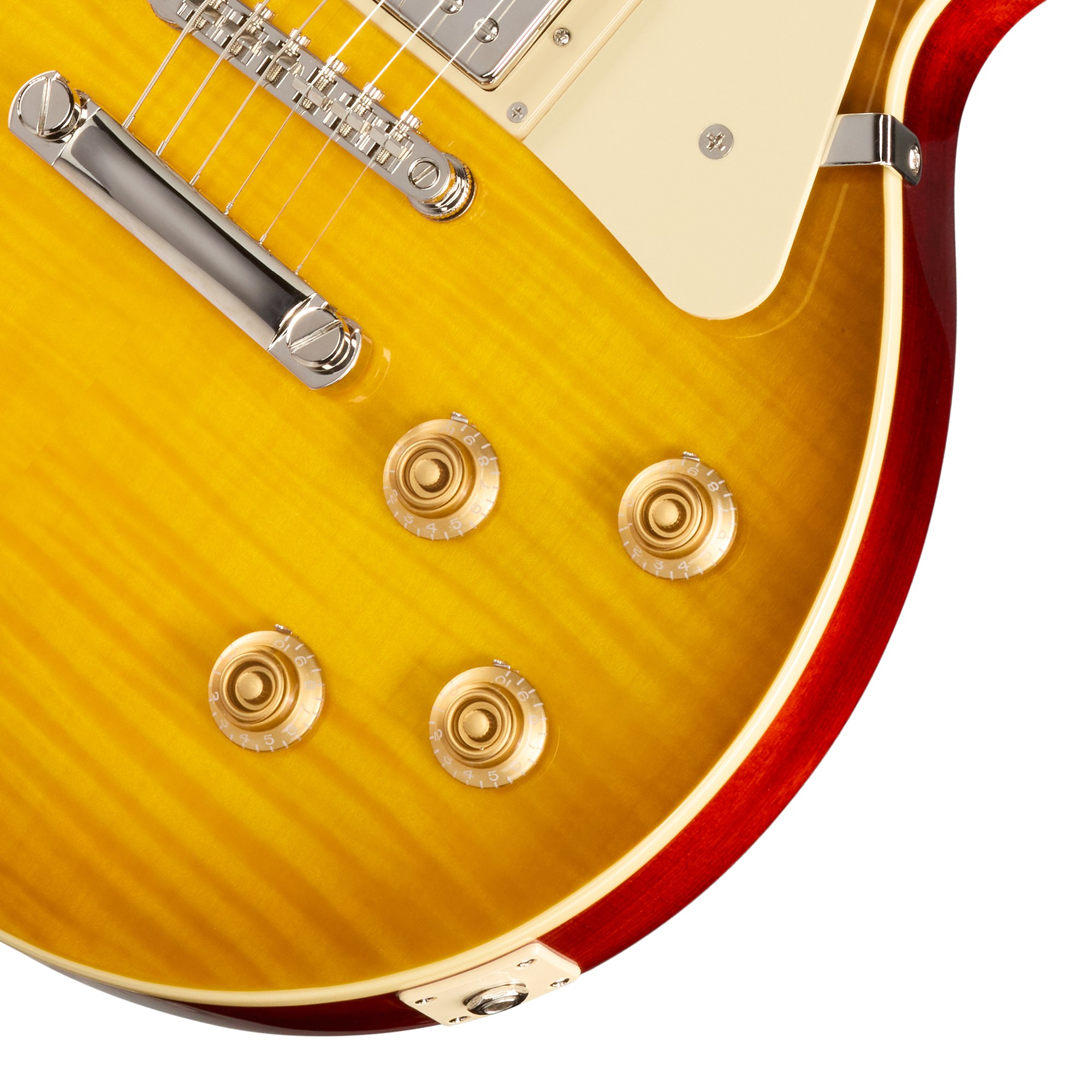
The nickname is doing a lot of work. "Skinnerburst" is a finish story as much as a guitar story: a Dirty Lemon-shaded top against a Faded Cherry back, in a gloss the official pages call a Skinnerburst finish. It is meant to look used in the right way, which is a hard thing to ask of a brand-new production guitar. Whether the flame maple veneer "mirrors the figuring of Bonamassa's original instrument as closely as possible," as Epiphone puts it, is something you can only judge in person, with the real Principal Skinner in the other hand. Most of us will not get that chance. The useful question is more modest: does the $849 version carry enough of the recipe to be a serious Les Paul, and not just a poster with a COA?
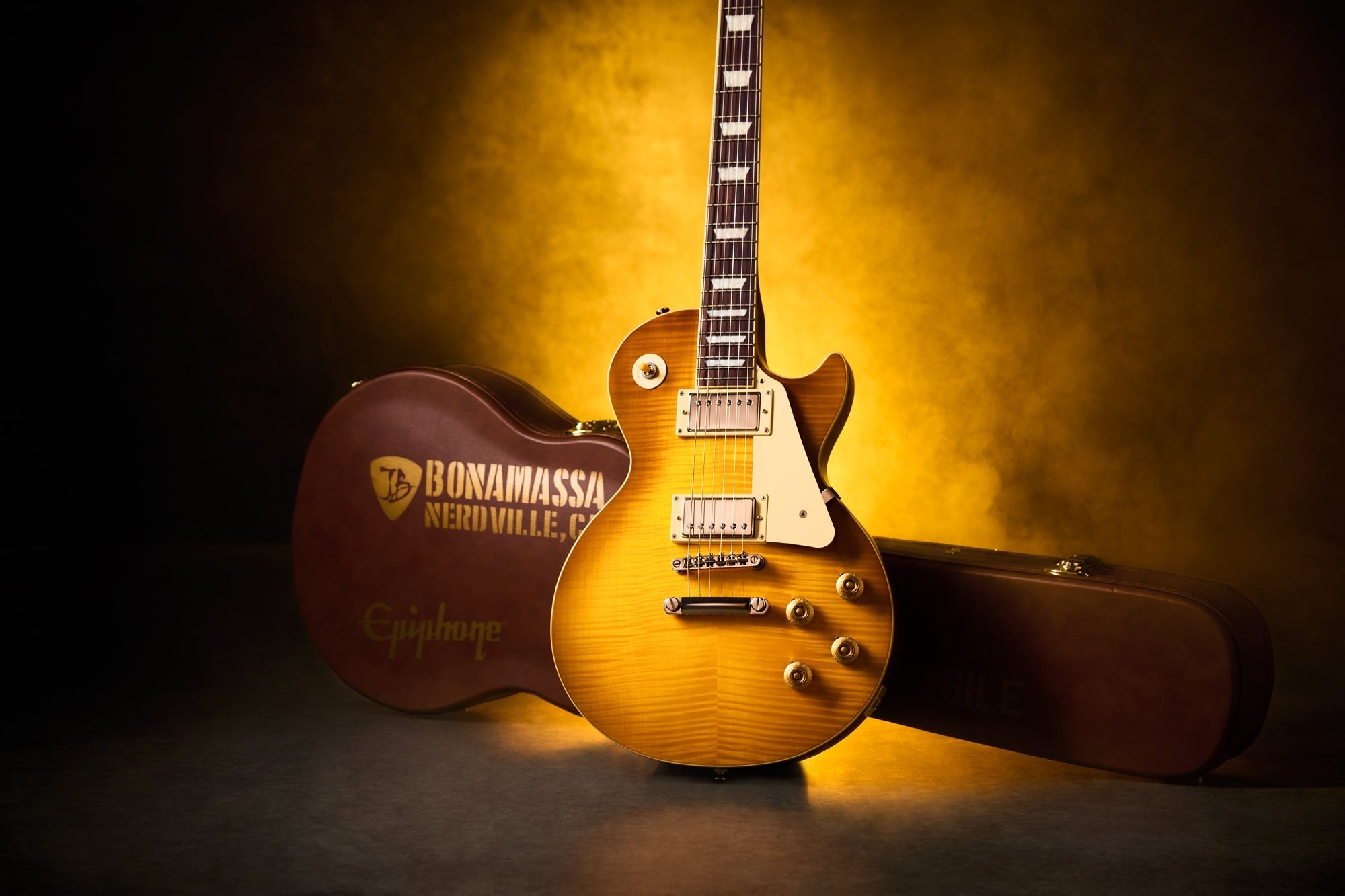
That press photograph is useful because it is honest about what $849 buys: a new gloss Les Paul, a proper case, and the Nerdville branding. It is not a picture of Principal Skinner. The original stays in the collection. This is the guitar most of us will actually be able to pick up.
What the Official Spec Actually Says
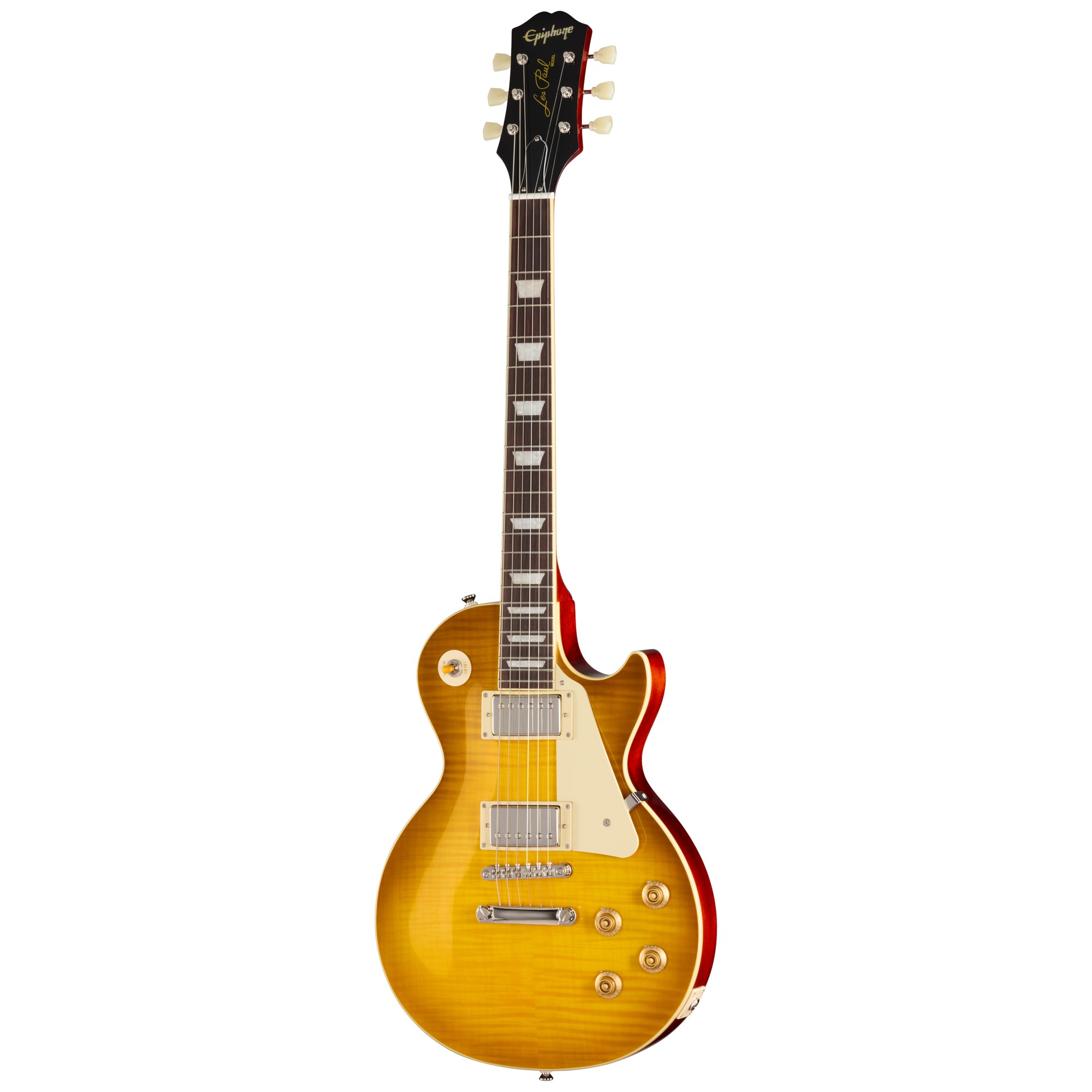
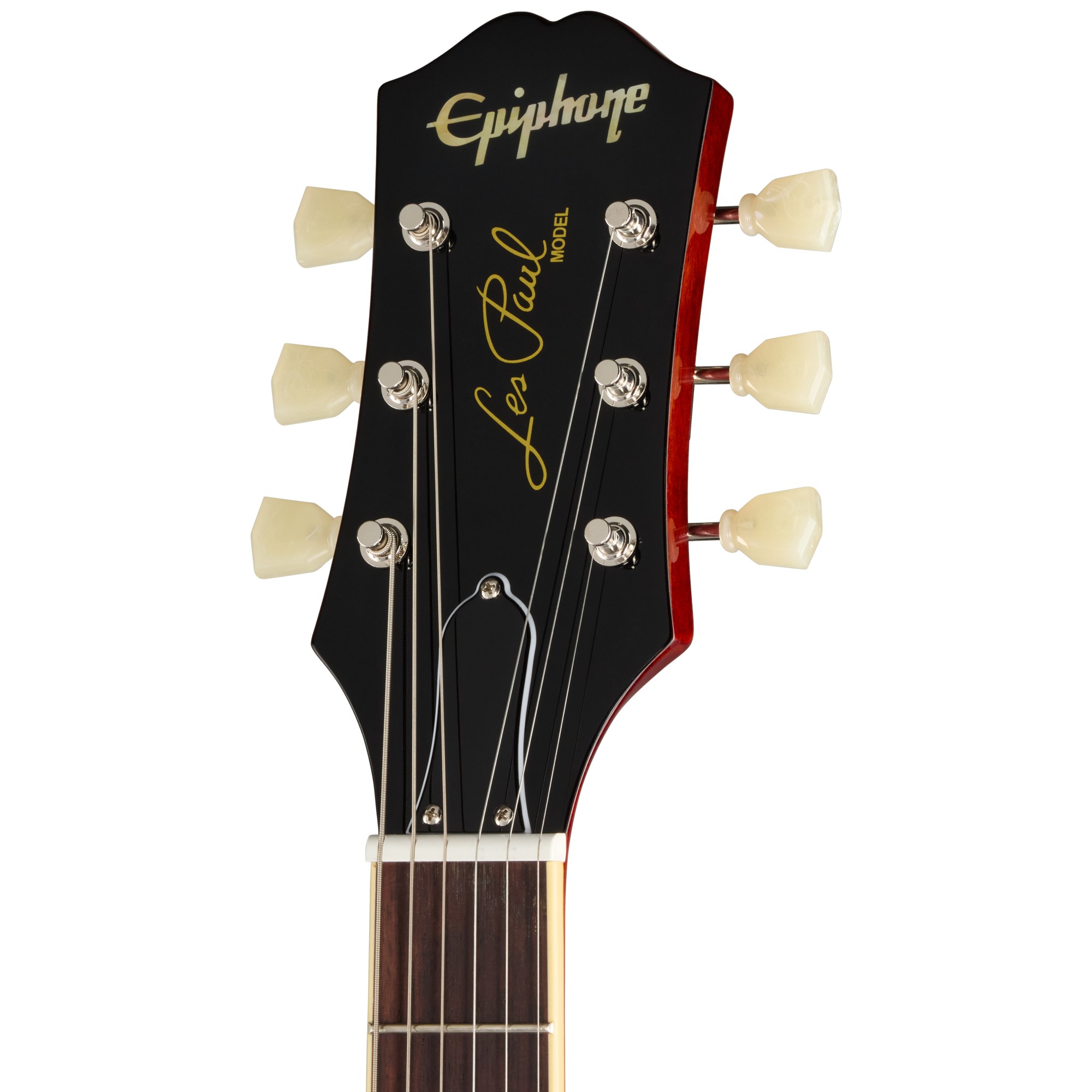
Start with the wood, because this is where Les Paul copyists either do the homework or get lazy. The official specification is a mahogany body with a maple cap and a flame maple veneer, a mahogany set neck, and a rosewood fingerboard. The neck profile is listed as a Custom '59 Rounded C. The scale is 24.75 inches (628.65 mm). The radius is 12 inches (304.8 mm). There are 22 medium jumbo frets and pearloid trapezoid inlays. The nut is Graph Tech, 1.69 inches (43.0 mm) wide. The headstock is the Kalamazoo style, with an aged mother-of-pearl Epiphone logo and a gold "Les Paul Model" silkscreen.
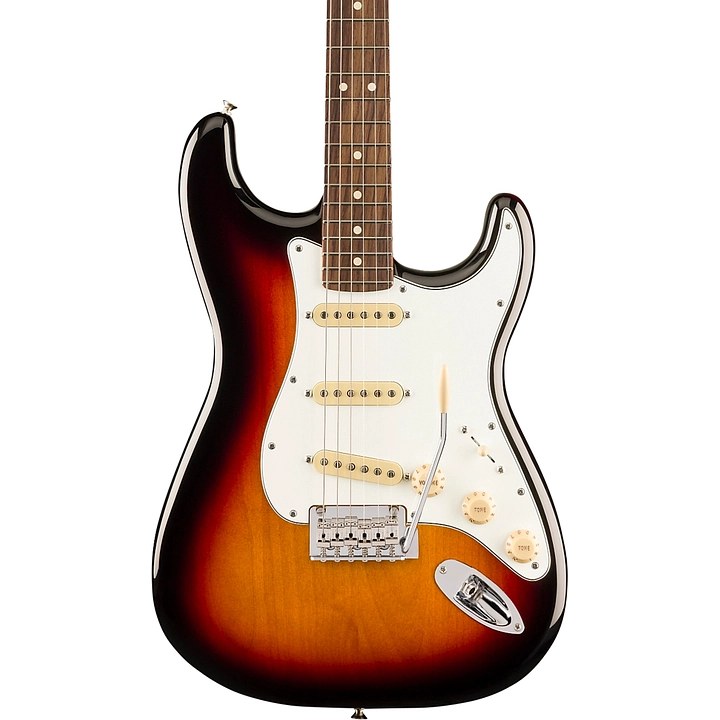

Fender Player II Stratocaster
$849.99 at Guitar Center
That is a very conventional, very deliberate '59-shaped list. It is not a slim modern C. It is not a baked-maple, compound-radius, locking-tuner reinterpretation. Epiphone is trying to sell the feel of a late-1950s Standard, and the official language is not shy about it: "substantial yet comfortable, with all of the magic of the legendary originals from the late 50s." "Magic" is marketing. The profile name is a spec. We will treat them differently.
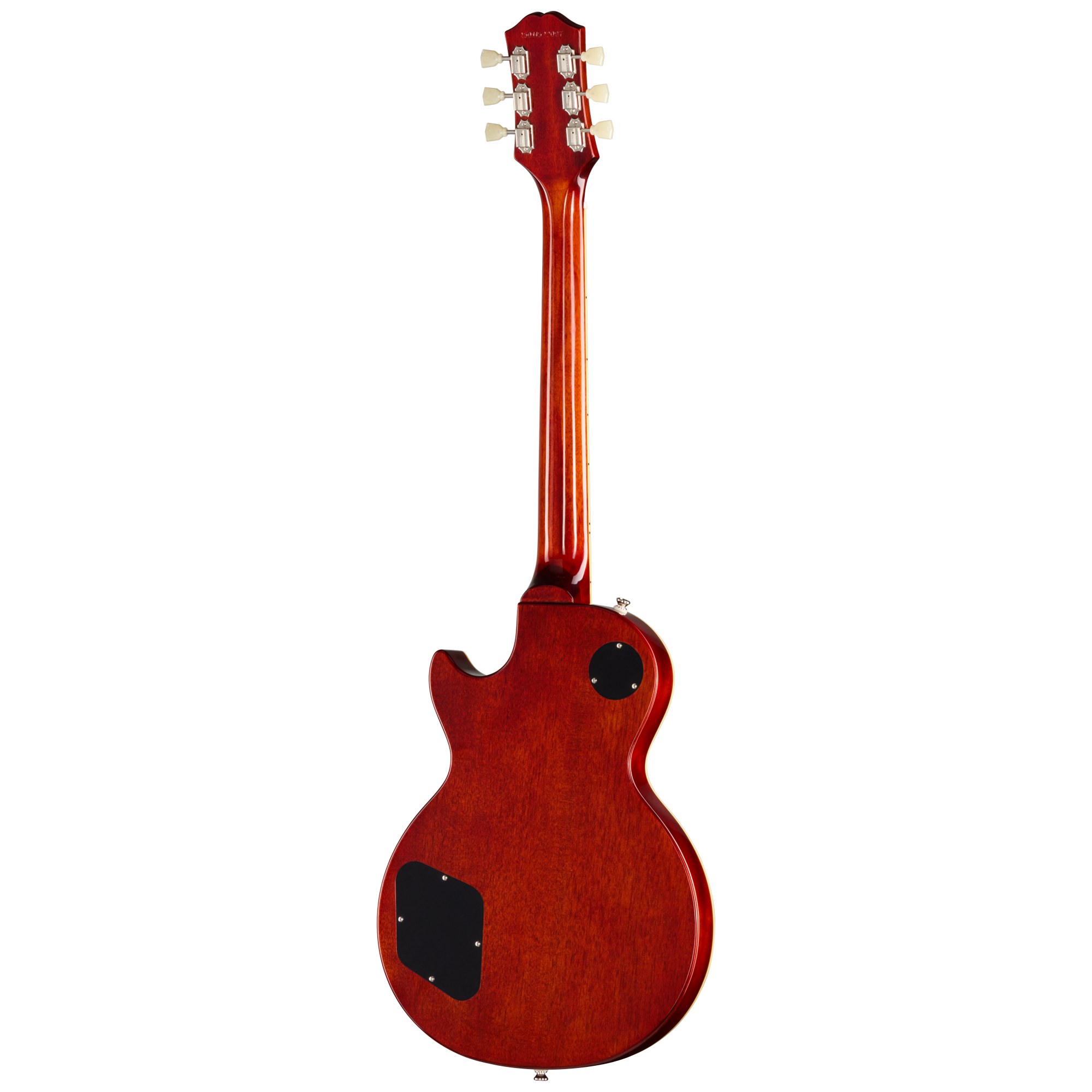
The pickups are Epiphone ProBuckers: a ProBucker 3 in the neck and a ProBucker Custom in the bridge, with individual volume and tone controls, CTS potentiometers, Mallory tone capacitors (the spec sheet names Mallory 150 series .022µF capacitors), a three-way toggle and a 1/4-inch jack.
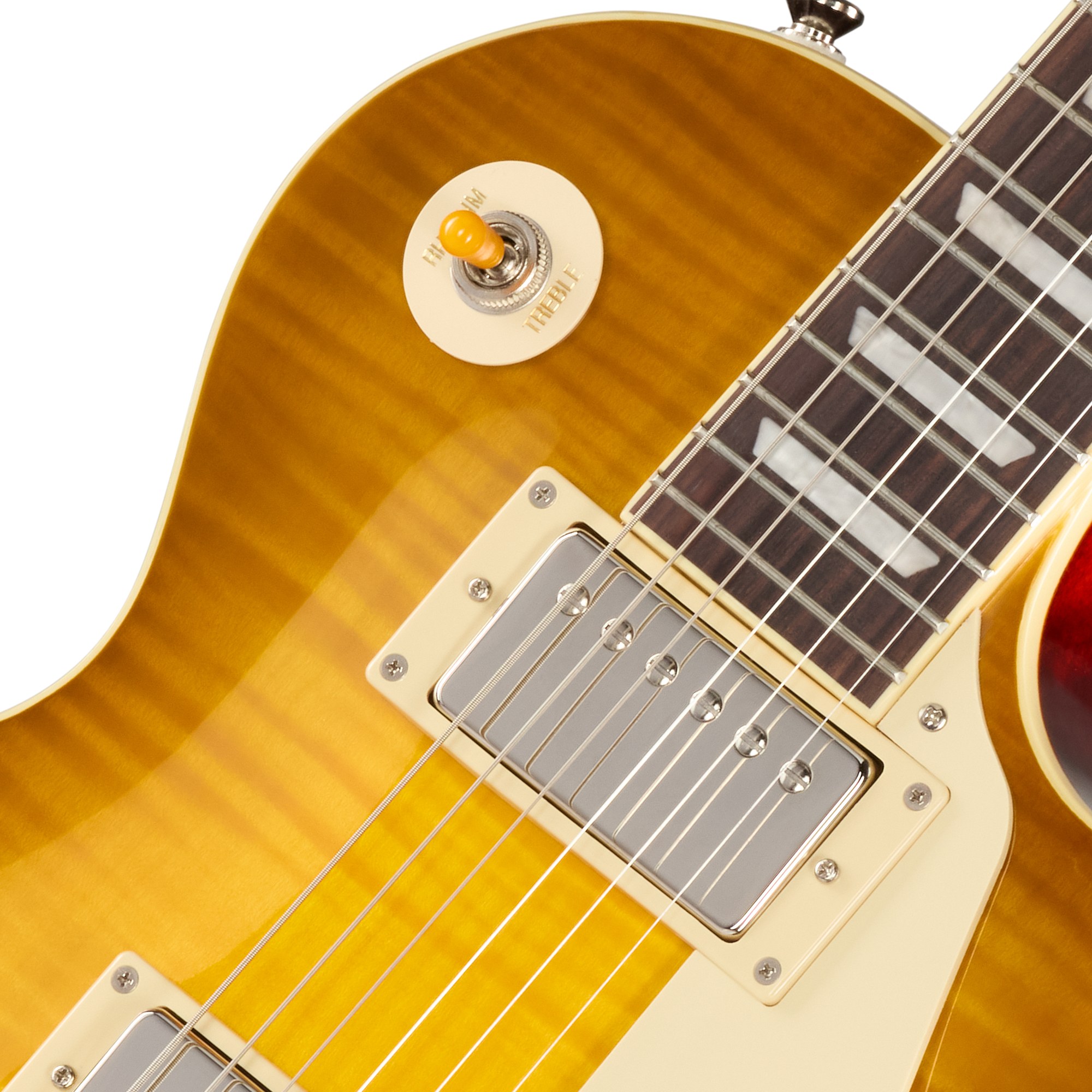
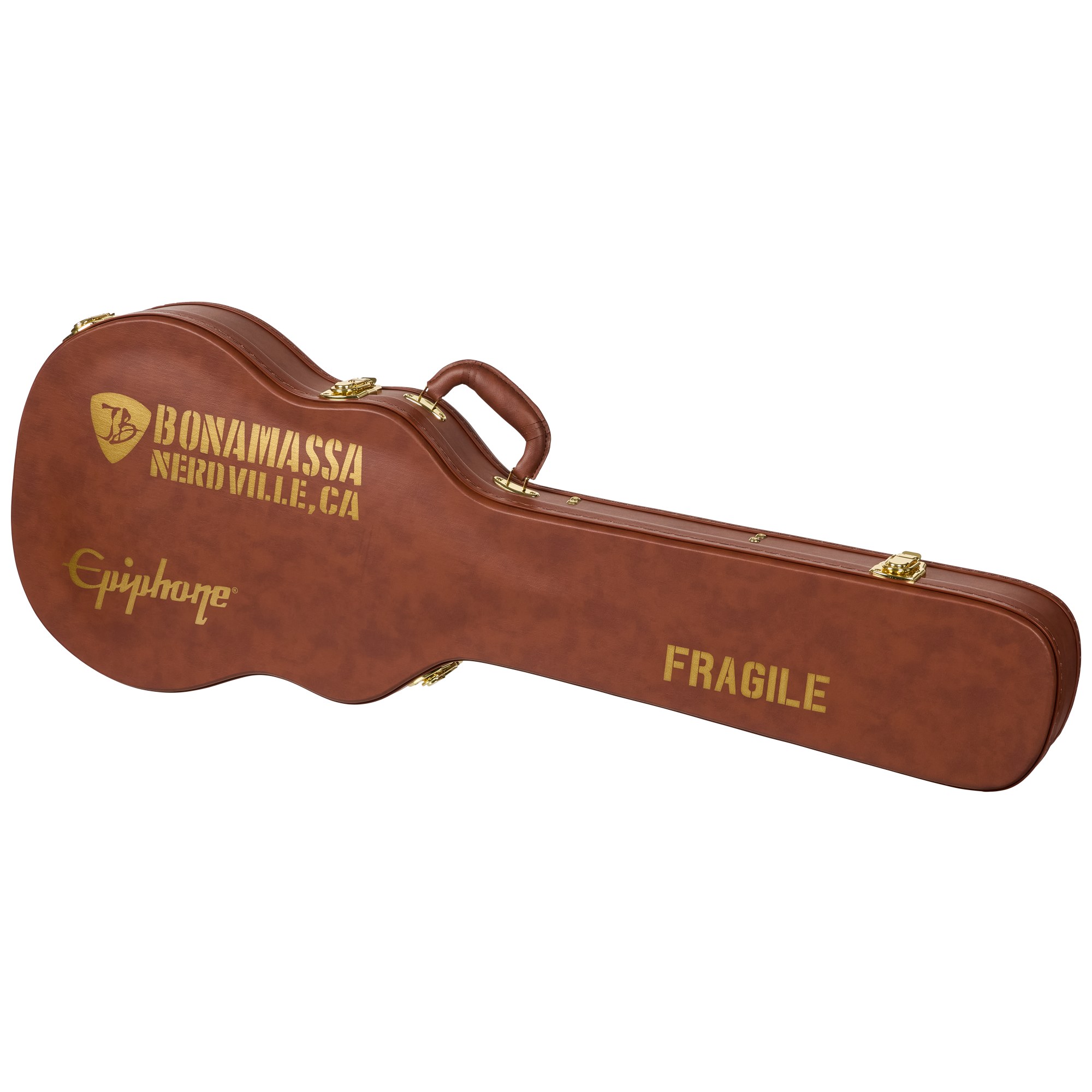
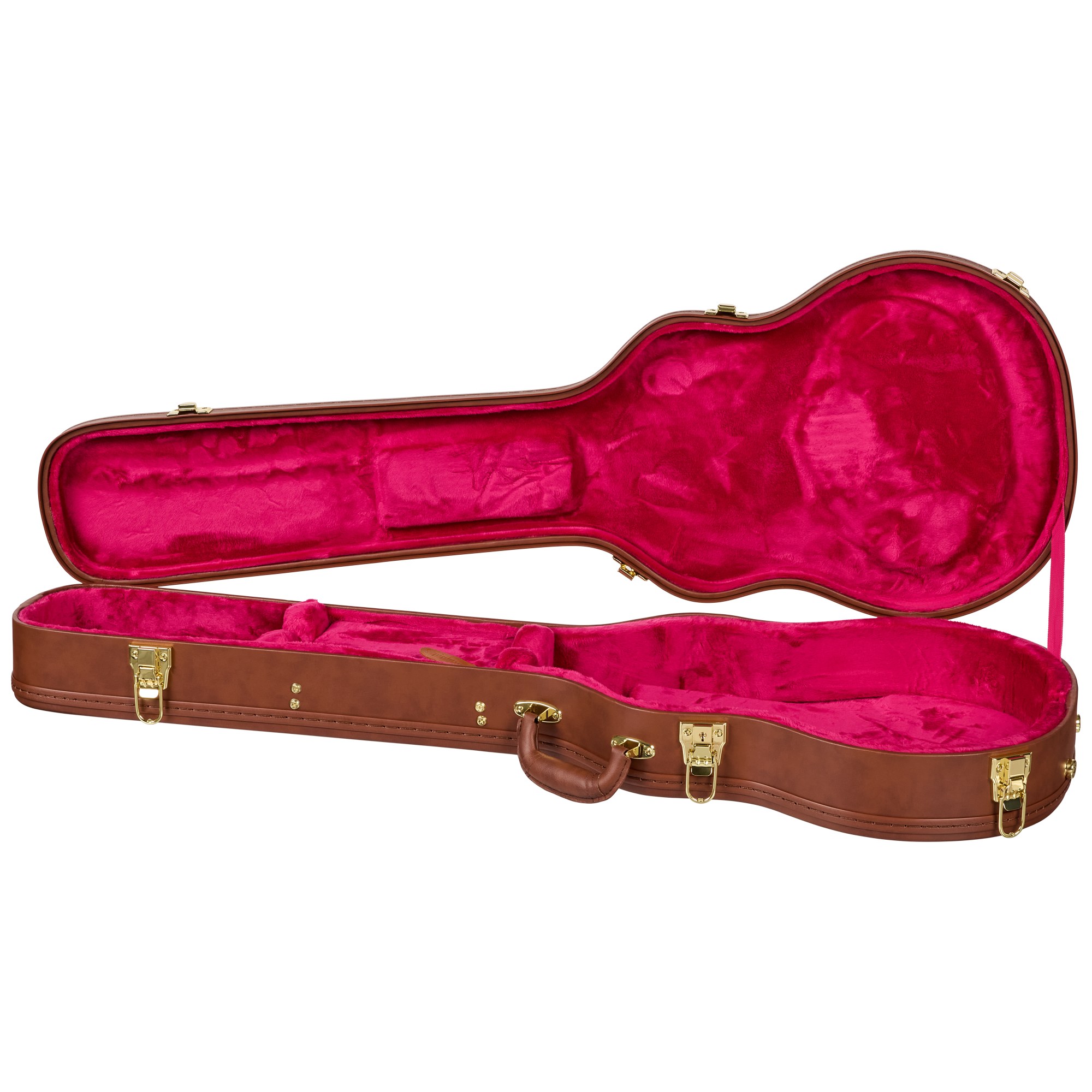
Hardware is nickel, including a LockTone Tune-O-Matic bridge and LockTone stop bar, plus Epiphone Deluxe tuners with yellow Keystone buttons. Plastics are cream, with gold Top Hat knobs and pointers, an amber switch tip, and a single-ply cream pickguard. The official case is a Lifton-style tan hardshell with a pink interior and gold Nerdville graphics, and each guitar comes with a certificate of authenticity. The model number is EIJB59DLNH. The factory string gauge is listed as .010–.046.
Two claims you will see in coverage of this guitar are not on the official spec sheet we pulled from Gibson.com on November 18. GuitarBomb's launch writeup, published the same day, describes "traditional 1950s-style wiring" and "long tenon set-neck construction." Those may well be accurate. They are also GuitarBomb's words, not Epiphone's, in the documents we have. Officially, the neck joint is a "glued-in, set neck," and the electronics are CTS pots with Mallory 150 .022µF caps. If '50s wiring and a long tenon matter to you — and for a '59-style Les Paul, they might — ask a dealer to confirm the joint and the volume-pot wiring before you treat a blog recap as a spec.
The same caution applies to price theater. GuitarBomb listed the guitar at $849.00 / £949.00. A Thomann page we saw on November 18 showed a different, higher dollar figure. Dealer promotions will move. The number we are willing to put in this sentence is the one on Gibson's own product page: $849.00, checked November 18, 2026. If you are reading this later, check the live page.
How This Fits the Bonamassa Epiphone Catalog
This is not Bonamassa's first Les Paul with an Epiphone badge, and the official gazette is careful to place it in a line. Previous launches, the gazette says, have included recreations inspired by his "Lazarus" 1959 Les Paul Standard, "Black Beauty" 1959 Les Paul Custom, 1962 ES-335, 1963 SG Custom, 1958 "Amos" Korina Flying V, and "Treasure" Firebird I. "Joe has estimated that at least 20,000 of his Epiphone signature guitars are now in players' hands around the world," the gazette says. That is his estimate, presented as such.
The Lazarus guitar is the useful comparison, because it was also a 1959 Standard story at a mid-tier price. Skinnerburst is a different original with a different finish and a different nickname. If you already own a Lazarus, this is not automatically a duplicate, and it is not automatically an upgrade. It is a different painting of a similar house. The thing that is new is the Dirty Lemon / Faded Cherry Skinnerburst cosmetic, the Principal Skinner provenance, and the Nerdville case that comes with it.
The gazette also says previous collaborations "sold out in record time," and the product page warns that the model is "only available for a limited time." We will not turn that into a false deadline. Limited editions sell out, or they do not. If you want one, the official channels named on November 18 were authorized dealers, Gibson Garage locations, and Epiphone.com.
One more limitation, from GuitarBomb rather than the official spec sheet: the writeup says the run is right-handed only, with no left-handed version. We did not see that restriction spelled out on the official product page extract we captured. If you play left-handed, confirm availability before you plan around a guitar that may not exist for you.
What $849 Can and Cannot Buy
A real 1959 Les Paul Standard is not a $849 problem. It is a museum, insurance and provenance problem. Bonamassa's own original, on the official telling, already set a non-celebrity auction record in 2006, and that was fifteen years before the current vintage market finished losing its mind. The Epiphone is not a substitute for that instrument, and Epiphone does not need it to be. It needs to be a good Les Paul at a price a working player can consider, with enough historical costume to satisfy the part of the audience that cares about Keystone buttons and Mallory caps.
ProBucker pickups have a known reputation in the Epiphone line: they are humbuckers designed to recall a PAF-ish voice, and they have been used on a lot of Inspired by Gibson instruments. That is not the same thing as saying these particular ProBucker 3 and ProBucker Custom units are indistinguishable from the pickups in Principal Skinner. We have not heard this guitar. We will not review it by adjective.
Epiphone Les Paul Standard 60s
$699.00 at Guitar Center
What we can say, from the official recipe, is that Epiphone did not cheap out in the usual places people look first. The cap is maple. The fingerboard is rosewood, not a no-name substitute named in the spec we have. The pots are CTS. The caps are Mallory. The tuners are Deluxe Keystones. The case is a proper hardshell with a COA, not a gig bag and a hangtag. Those are the reasons $849 is interesting. They are also the reasons you should still play one, because a '59 Rounded C that looks right on a spec sheet can still feel wrong in a specific hand, and a Dirty Lemon top can hide average figuring until you see it under a hard light.
If you already play a Gibson Les Paul Standard '50s, or a Custom Shop '59 reissue, you are not the target in the same way. You might still want this as a touring or travel guitar, or as a way to have the Skinnerburst look without taking the original out. If you have never owned a set-neck single-cut with this kind of neck, this is a more serious introduction than a stripped Special, and a more historically costumed one than a modern high-output Epiphone.
The practical test, when one lands in a shop, is unglamorous. Check the neck depth at the first and twelfth frets and see whether "Custom '59 Rounded C" feels like a handful or a home. Look at the veneer under a hard light, not just in a lifestyle shot. Roll the volume back on the bridge pickup and listen for whether the tone stays usable, which is the whole point of a carefully done wiring job — official or not. Make sure the LockTone bridge is sitting cleanly and the stop bar is not doing anything odd to the break angle. Then forget the nickname for a minute and play a straight twelve-bar. If it is a good Les Paul, you will know before you ever say the words Principal Skinner.
The Joe Bonamassa player profile on this site is the place to go if you want the broader gear picture; the Tone Master '59 Twin JB Edition is the place to go if you want the other 2026 signature story, which was an amp, not a burst.
A Very Bonamassa Week
It is not an accident that this guitar arrived on the same day as a film premiere about Rory Gallagher. Bonamassa's public life is now half touring musician and half curator. He plays the old guitars, he talks about the old guitars, and then he helps a factory make a version you can actually buy. The Rory film, by the official festival billing, follows him from New York to Cork and through the 2025 Live at the Marquee shows where he played the Irish Tour '74 set. The Skinnerburst is a different strand of the same instinct: find the instrument that still has blood in it, then try to get some of that feeling into the world at a price that is not a lottery ticket.
Whether a $849 Epiphone can carry any of that feeling is a playing question, and it should be answered with a cable, not a press release. The official pages have given us a clear recipe, a dated price, a nickname with a paper trail, and a case you will not throw away. That is enough to take the guitar seriously. It is not enough to declare it a vintage-killer, and we will not.
If you want the film's subject rather than the new signature model, the Rory Gallagher feature is already up. If you want the rest of the news desk, Guitar News / Music Releases is the queue.
Similar gear
These are similar options and substitutes, not the artist's exact gear or an endorsement by the artist.
- Gibson Custom 1959 Les Paul Standard Reissue AAA Quilt, Gloss, Minnesota Burst (not the new $849 Epiphone)Compare prices at Plugged Gear Co.

- Gibson Les Paul Standard 50s with Bigsby, Dirty Lemon Burst, Exclusive (a Gibson with a Bigsby; not the Epiphone Skinnerburst)Compare prices at Plugged Gear Co.

- Epiphone Prophecy Les Paul, Crimson Fog Satin (a modern Epiphone Les Paul, not a '59 recreation)Compare prices at Plugged Gear Co.

- Fender Joe Bonamassa Tone Master '59 Twin Amp — Tweed (Bonamassa's signature amp; not a guitar)Compare prices at Plugged Gear Co.

Plugged Gear Co., Guitar Center and American Musical Supply links may earn us a commission from qualifying purchases.
Reader-supported
Keep Guitar Alive
Enjoyed this story? The Guitar Plugged is free to read and reader-supported. If it helped you play, listen or buy a little smarter, chip in to keep guitar journalism like this coming.
One-time contribution, processed securely by Stripe. Contributions are not tax-deductible.
Experience-driven coverage, not algorithm bait.
- 20+ years of guitar playing experience
- Real-world retail experience at Guitar Center
- Thousands of hours testing guitars, amps, and pedals
- A community of 50,000+ guitar enthusiasts across platforms
- Partnerships with Fender, DistroKid, TrueFire, Card Chords, and Enya
- Editorial standards published openly — see how we test gear
The Modern Guitar Magazine. Delivered to your inbox.
No spam. No gimmicks. Just great guitar content — stories, tones, iconic solos, and honest gear takes. Every week.
Ask GP
20 free questions a dayStill curious? Ask GP about this story.
Your personal classic-rock and guitar guide — ask anything about Epiphone's $849 Joe Bonamassa Skinnerburst.
Discussion (0)
Sign in to join the discussion.
Sign in to commentLoading comments…
Discover another guitar story
Swipe through our latest features, breaking news and iconic solos — one story at a time.
Open Swipe →More Guitar News
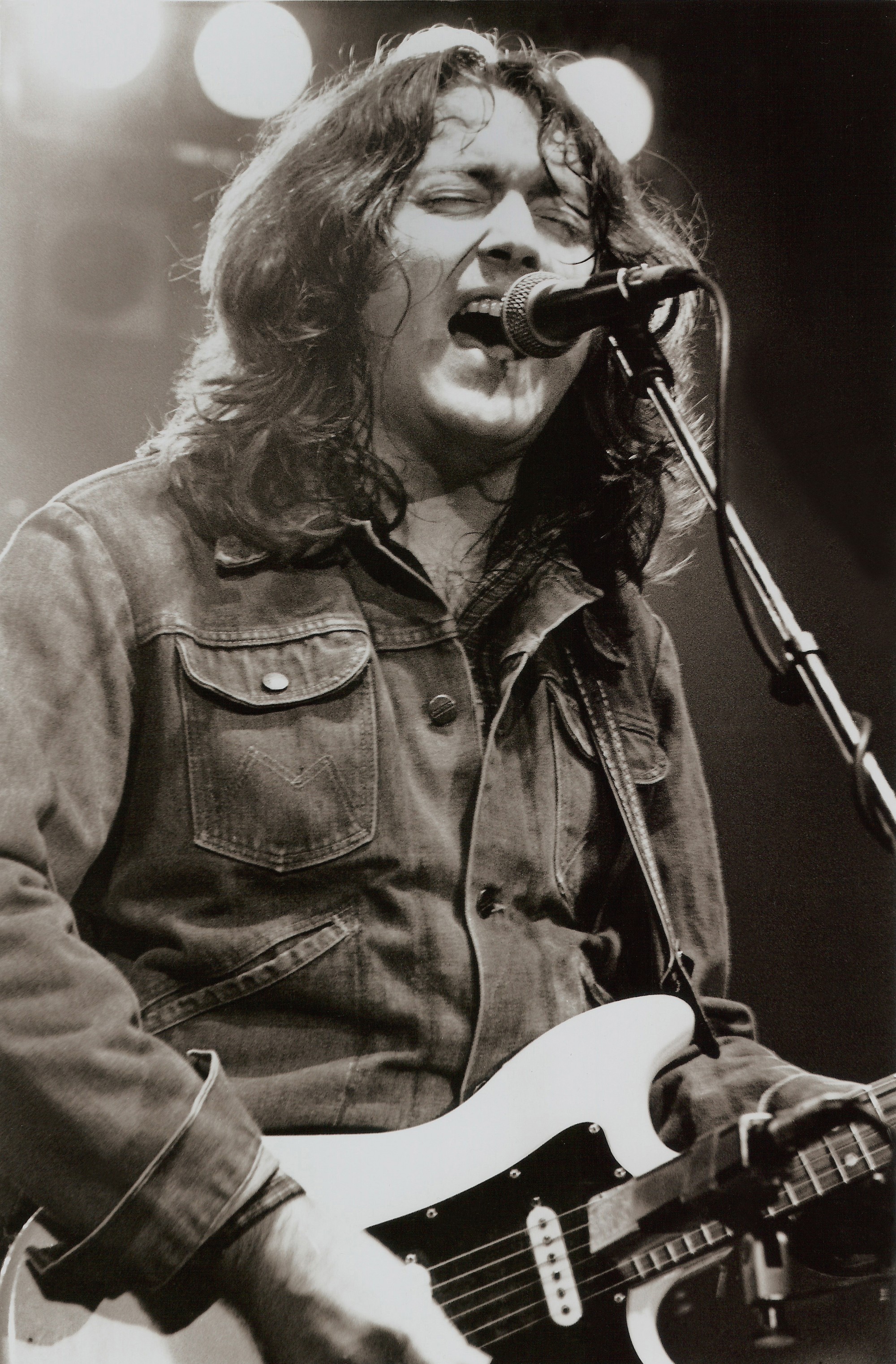
Rory Gallagher: The Battered '61 Strat, Irish Tour '74 and the Bluesman Who Never Softened
On Wednesday, a new film about Rory Gallagher premieres in Cork, the city that raised him. The story underneath it is a secondhand Strat, a refusal to stay away from Belfast, and a guitar tone that never learned to behave.
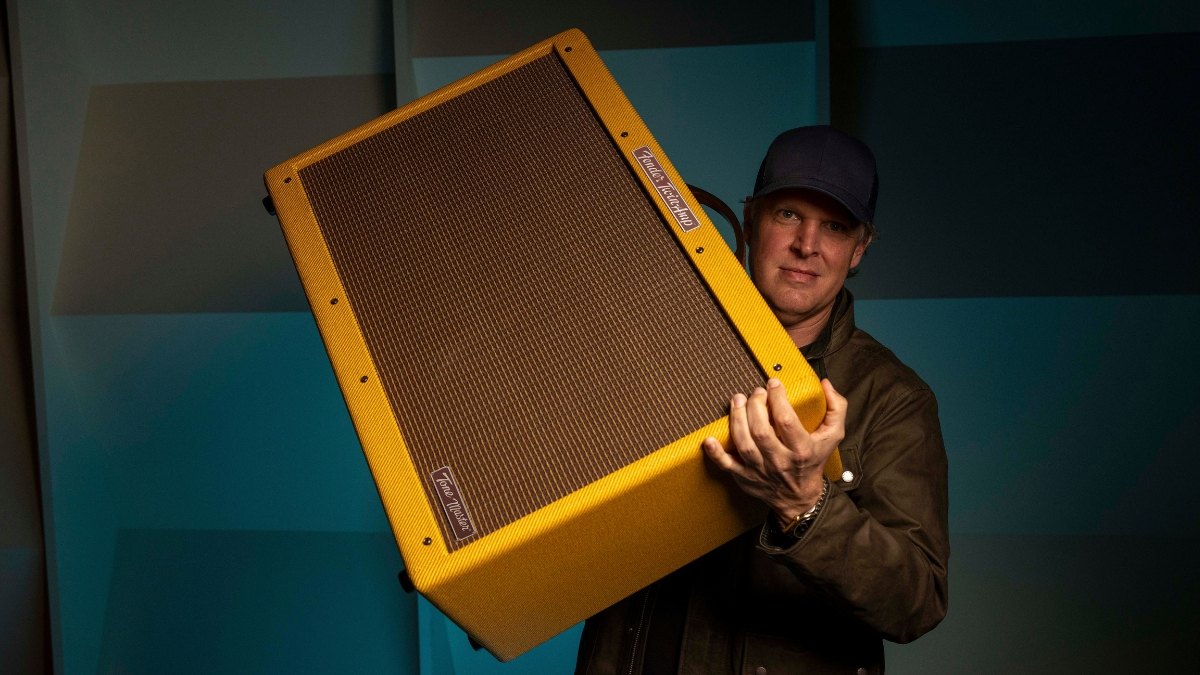
Joe Bonamassa's First Digital Signature Amp: Fender's Tone Master '59 Twin-Amp JB Edition
The blues-rock guitarist whose vintage collection borders on a museum just put his name on an all-digital amplifier — and says it's tighter, punchier and better than his originals.

Tone Decoded: Joe Bonamassa Finally Embraces Amp Modeling — What the Fender Tone Master Says About the Future of Guitar Tone
One of guitar's biggest tube amp advocates has put a digital Fender Tone Master amp in his touring rig. Here's what it means for the future of guitar tone.