
Rory Gallagher: The Battered '61 Strat, Irish Tour '74 and the Bluesman Who Never Softened
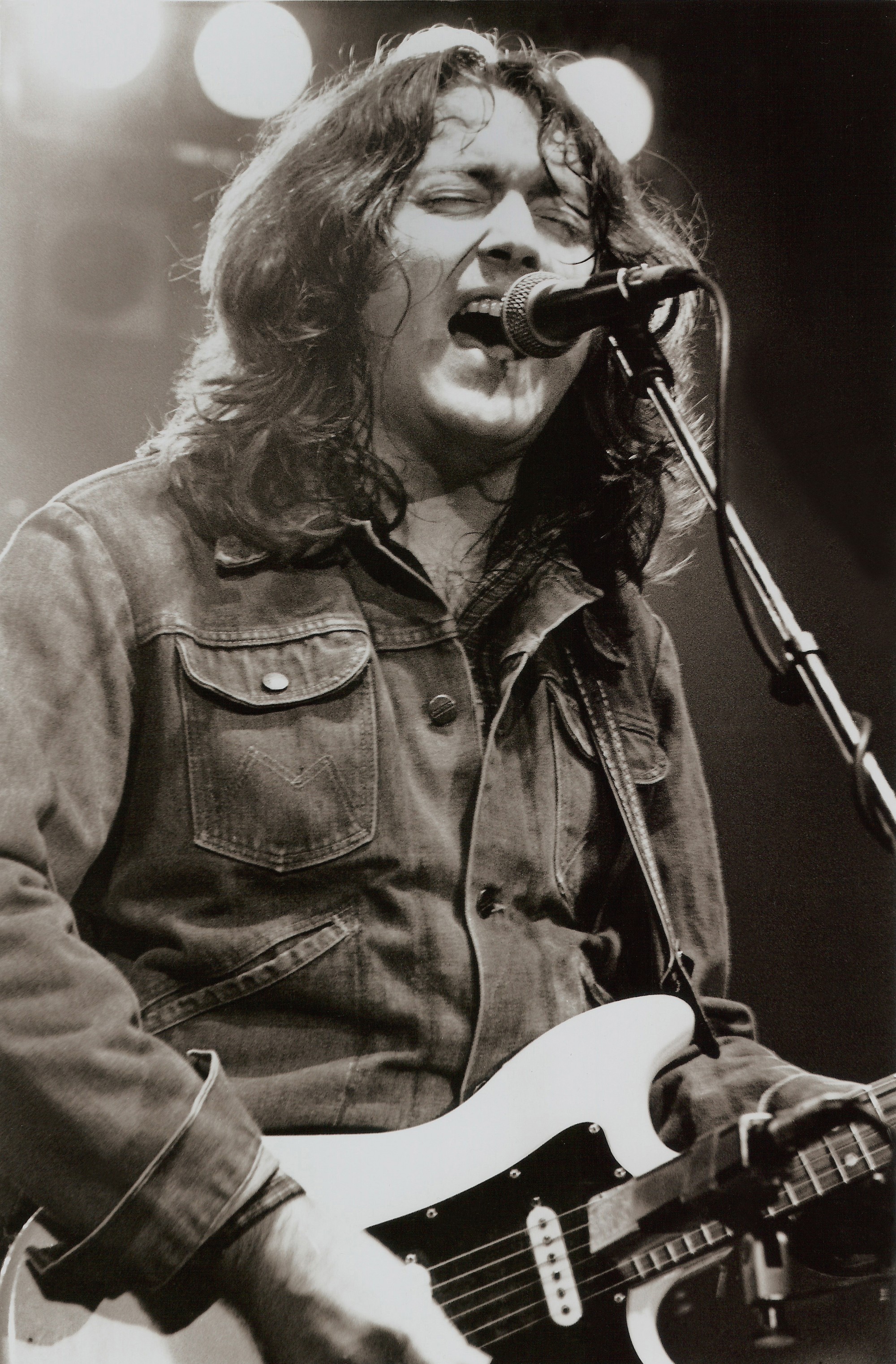
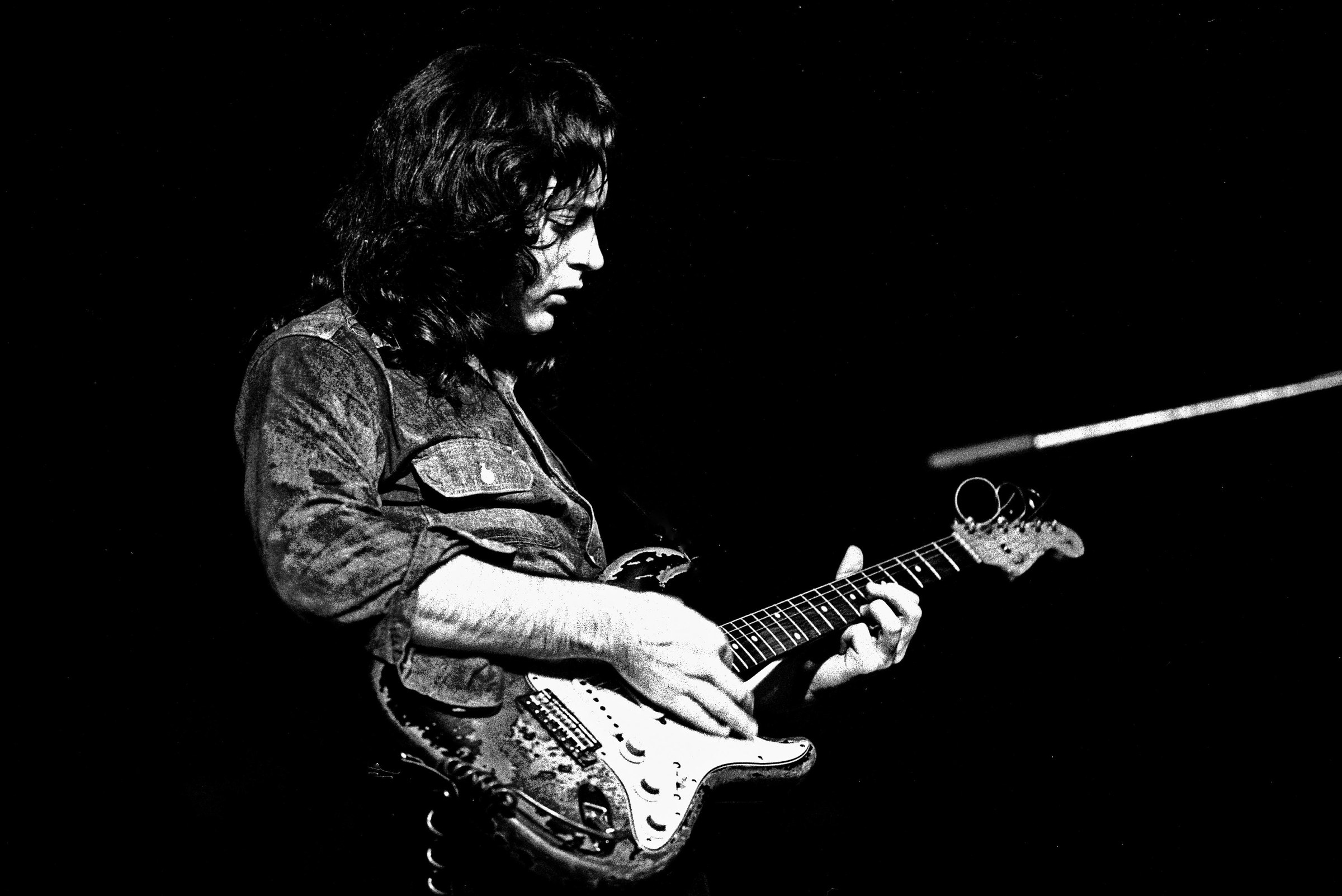
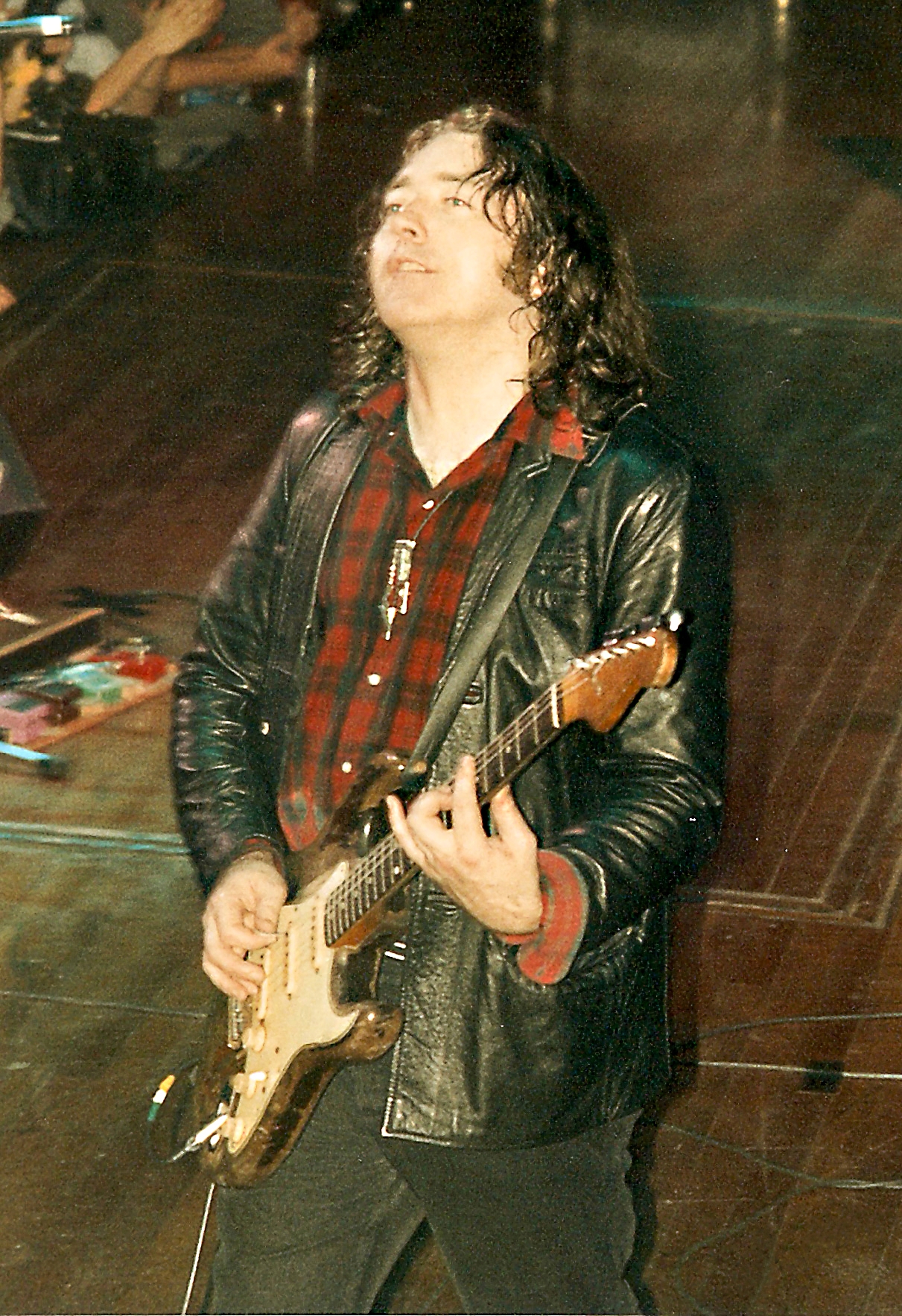
Rory Gallagher on stage at the Manchester Apollo, 1982, with the battered 1961 Stratocaster that never left his side for long.
On Wednesday, a new film about Rory Gallagher premieres in Cork, the city that raised him. The story underneath it is a secondhand Strat, a refusal to stay away from Belfast, and a guitar tone that never learned to behave.
On Wednesday night, November 18, Cork gets Rory Gallagher back on a screen in his own city.
The Cork International Film Festival is giving the world premiere of Joe Bonamassa – The Spirit of Rory at The Everyman Palace Theatre, with a Q&A afterward featuring Gallagher's brother and longtime manager, Dónal. The film follows Bonamassa from New York to Cork, and back through the 2025 Live at the Marquee shows where he played the Irish Tour '74 set. Bonamassa has said he first heard that live album as a kid in New York, and that it still sounds, to him, like a gutsy performance "from the word 'Go.'"
That is a good week to put the guitar back in the foreground. Gallagher's 1961 Fender Stratocaster, the sunburst that was worn down to bare wood over 30 years of work, now sits in the National Museum of Ireland's Changing Ireland galleries at Collins Barracks in Dublin. Dónal's memoir, Edged in Blue, arrived in September. The music was never in danger of disappearing. What still gets missed, especially outside Ireland, is how little of his reputation was built on polish.
Gallagher died in London on June 14, 1995, at 47. He is still the model of a certain kind of guitarist: one who treated a secondhand Strat, a small amp and a hard tour as enough, and who would rather play Belfast during the Troubles than become a personality. We already keep a short player profile on him, and he sits at No. 20 in our 25 greatest blues guitarists list. This is the longer story: the life, the '61 Strat, the amps, the way he actually played, and why the people who learned from him still talk about commitment before they talk about notes.
Ballyshannon, Cork and a Guitar in a Shop Window
William Rory Gallagher was born on March 2, 1948, at the Rock Hospital in Ballyshannon, County Donegal. His father, Danny, from Derry, had been in the Irish Army and led a céilí orchestra; his mother, Monica Roche, was from County Cork. Danny was in Ballyshannon working on the Cathaleen's Fall hydroelectric station on the River Erne. The family moved to Derry in 1949, where Dónal was born, then spent unsettled years moving between Derry, Cork and cities in England before Monica took the two boys back to Cork for good in 1956. They lived with her parents above the Modern Bar — later Roche's Bar — at 27 MacCurtain Street.
There was no record player in the house. The radio did the work: Radio Luxembourg, the BBC, the American Forces Network. Roy Rogers came first, then Lonnie Donegan, who opened the door to American blues and folk. Buddy Holly, Eddie Cochran and Chuck Berry followed, and then, the player he kept coming back to, Muddy Waters. "The more I heard, the more I got addicted," he later said.
He taught himself chords on a plastic Elvis Presley ukulele he got for Christmas at nine, then moved to an acoustic his mother bought him, copying hand shapes out of Melody Maker and songbooks from the library. In 1961 he won a talent contest at Cork City Hall. When he wanted an electric sound, Monica bought him a black Rosetti Solid 7. The guitar he actually wanted was still in a shop window.
In the summer of 1963, still a schoolboy, Gallagher answered a newspaper ad and joined the Fontana Showband, lying about his age to get the gig. Shortly after that he bought, on hire purchase, a used 1961 Stratocaster from Crowley's Music Shop in Cork, for £100, brown case included. The official Gallagher site still repeats the local legend that it was the first Stratocaster to reach Ireland; the site is careful to say it has not found proof. What isn't in dispute is the previous owner. Jim Conlon of the Royal Showband had wanted a red Strat to look like Hank Marvin. A sunburst arrived instead. When the red one finally showed up, the sunburst went into Crowley's.
Gallagher told the story himself:
It's a 1961 Fender Stratocaster which I bought secondhand in 1963. The previous owner was a guy in a showband. He originally ordered a red one so he could look just like Hank Marvin in The Shadows. But in those days Fenders only came into the country in ones and twos so he had to make do with a sunburst instead. I was still at school when I saw it in a shop window for £100 with an old brown case thrown in. So I saved up enough to pay the deposit and I bought it on HP.
Dónal has said their mother had already signed a hire-purchase agreement for the cheap Rosetti, and that Rory talked Michael Crowley into stretching the payments to cover the Strat. He also made her a practical promise: with this guitar he could play lead and rhythm, so the band would not need a second guitarist, and he could earn the money to pay it off. The Fontana dates — ballrooms and dancehalls across Ireland, often for hours at a stretch, and trips to Britain during Lent, when dances at home were restricted — were how the installment plan got paid.
He did not love showband life, but he used it. He pushed Chuck Berry into the set, and by 1965 Fontana had been reshaped into The Impact. A television appearance on Pickin' the Pops that April became a small local legend when he swapped the planned Buddy Holly number, at the last minute, for Larry Williams' "Slow Down." There was a residency in Spain, a short run in Hamburg billed as The Fendermen, and then, in 1966, the showband years were over. He was ready for a trio of his own.
Taste: The Power Trio That Almost Became the Story
Taste began in Cork, in the Long Valley Bar, with a name borrowed from a Beamish beermat. Gallagher asked bassist Eric Kitteringham and drummer Norman Damery, from a local band called the Axills, to join him. They debuted on September 10, 1966, at a school dance in the Imperial Hotel on Grand Parade, and by December they were in Belfast, where a residency at the Maritime Hotel put them in front of a mixed Protestant and Catholic blues crowd, opening for the likes of Cream, Fleetwood Mac and Chris Farlowe.
London came next: the Marquee, a move to the city, and a hard line-up change. Manager Eddie Kennedy, who had Polydor circling, told Gallagher the label wanted a different rhythm section. Kitteringham and Damery were replaced, apparently without a public feud, by two Belfast players from a Kennedy-managed band called Cheese: bassist Richard McCracken and drummer John Wilson. The new Taste signed to Polydor in August 1968.
What happened over the next two years is the part of Gallagher's career that should have made him as famous as the men he was opening for. At Eric Clapton's request, Taste supported Cream's Royal Albert Hall farewell shows, then opened for Blind Faith in the United States. Robert Stigwood, Cream's manager, even asked Gallagher to join Jack Bruce and Ginger Baker in a new version of that band. Gallagher said no. He already had his own group, and he was not built to be a hired gun.
The first Taste album, Taste, was cut in a single day in 1969. The second, On the Boards, released in January 1970, was all Gallagher originals and reached No. 18 in the UK. On July 21, 1970, Taste broke the Marquee's box-office record, a mark previously held by Jimi Hendrix. John Lennon, after hearing them, told an NME writer: "I heard Taste for the first time the other day and that bloke is going places."
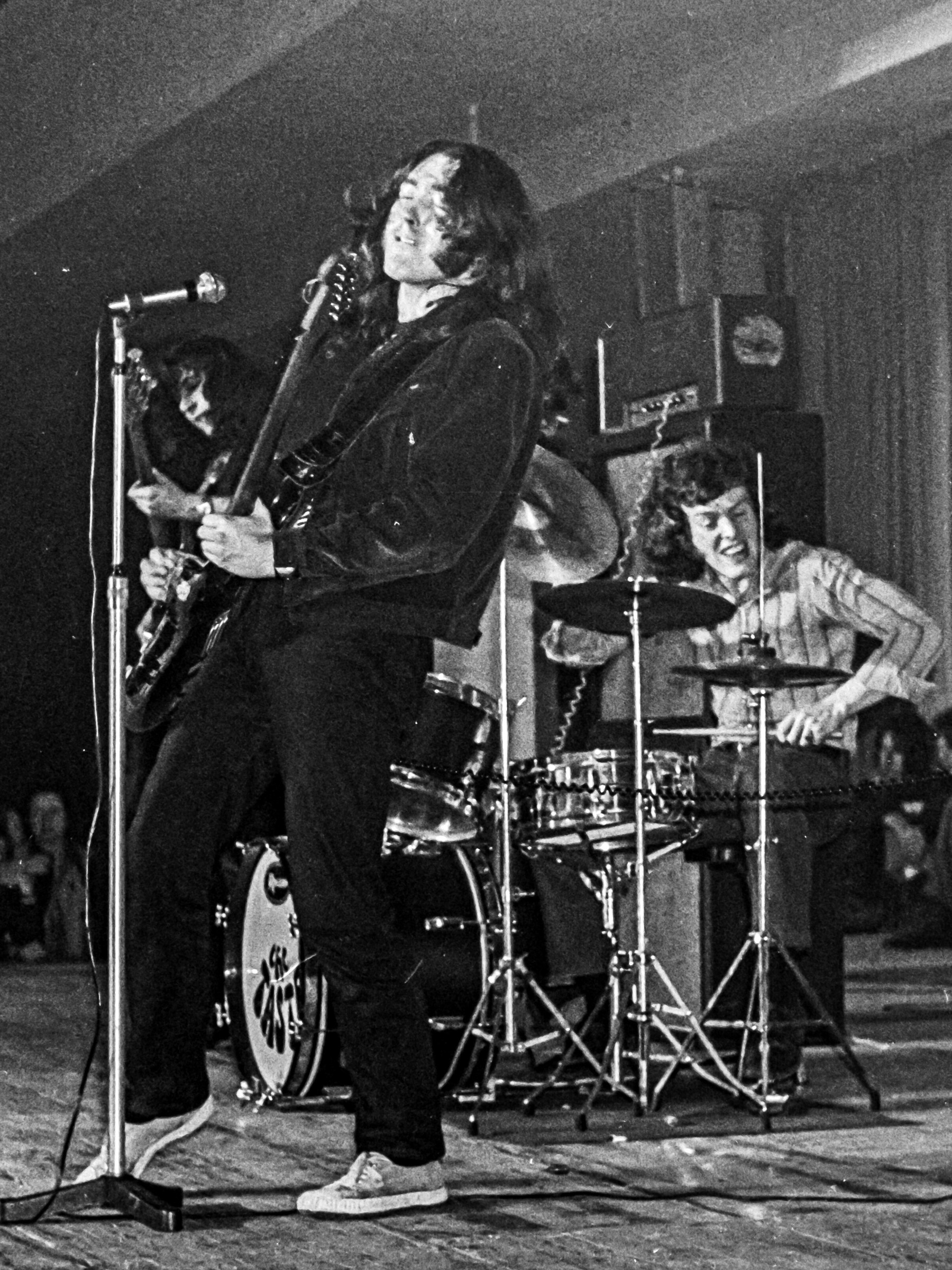
The live peak was the Isle of Wight Festival in August 1970, later preserved in Murray Lerner's concert film. Behind the scenes the band was already coming apart. Gallagher and Dónal believed Kennedy was mishandling money; Wilson and McCracken sided with the manager. There was also a nasty episode the night before the Isle of Wight, when Taste's van was broken into and Wilson accused Gallagher of staging it. They still had dates to honor, including Montreux, the start of a long relationship with that festival. Then Taste was over.
The last date is one of the facts that does not sit cleanly in the record. The official Gallagher site has long said the farewell show was in Belfast on New Year's Eve 1970. Wikipedia, citing later research, places the final concert at Queen's University, Belfast, on October 24, 1970. What is not in dispute is the aftermath. Gallagher called the split "traumatic" and "a communications breakdown" that "shouldn't have been allowed to happen," and he refused to run down the other players in public. A legal fight over Taste royalties ended when Kennedy folded before trial and claimed to have no money. Gallagher, by his family's account, never saw the income from those records. He also never again played a released Taste song on stage.
A Solo Band, a Live Album and a Year That Should Have Changed Everything
He borrowed money from his mother to make the first solo record. Rory Gallagher, released in May 1971, was cut at Advision in London and self-produced, with Gerry McAvoy on bass and Wilgar Campbell on drums, both Belfast players who had supported Taste in Deep Joy. Deuce followed six months later, recorded at Tangerine Studios with vocals and solos largely live. Johnny Marr would later call Deuce "a complete turning point" for him.
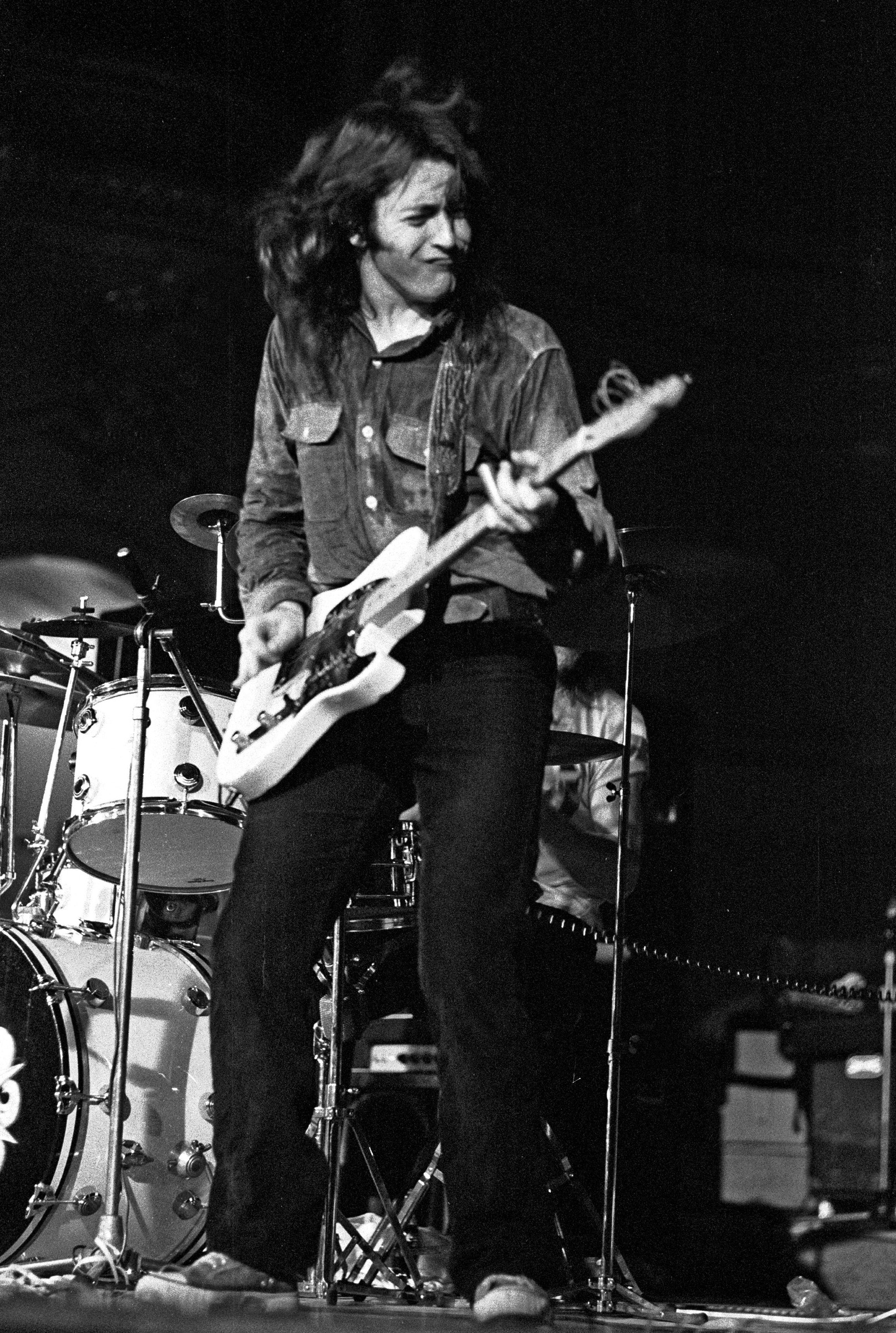
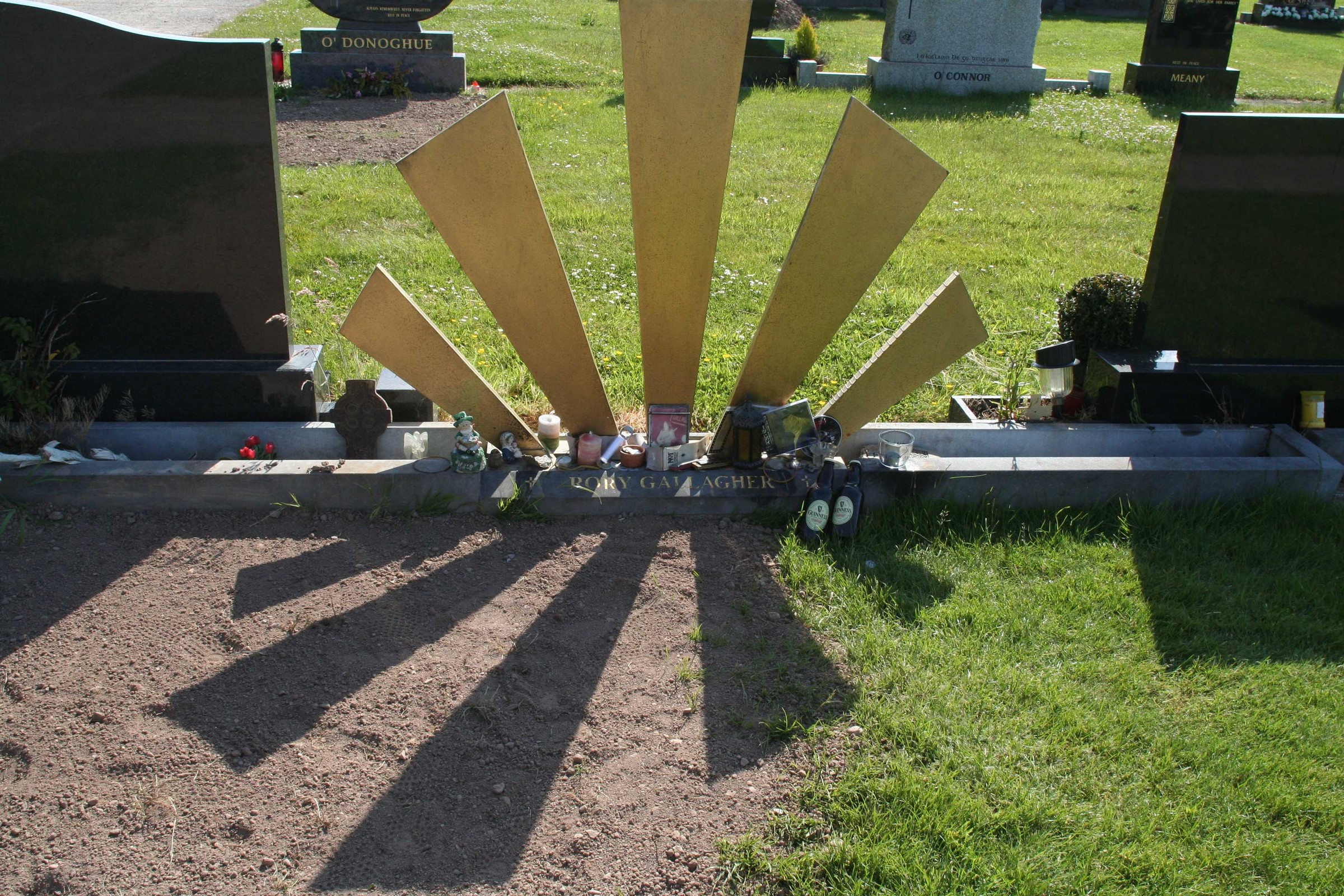
The record that spread his name was not a studio album. Live! in Europe, released in May 1972 and drawn from shows in England, Italy and Germany, reached the UK top ten and earned him his first gold disc. That same year a Melody Maker readers' poll voted him Guitarist of the Year. The award, five gold sunbeams, is the shape later carved into his headstone.
The touring load was already too much for Campbell, who had developed a fear of flying. Rod de'Ath, from Killing Floor, stood in, then took the job. On de'Ath's recommendation Gallagher added keyboardist Lou Martin, also from Killing Floor, and the four-piece that would play Irish Tour '74 made its debut in Switzerland on July 1, 1972. Two studio albums arrived in 1973, Blueprint and Tattoo, the second of them the source of "Cradle Rock," "Tattoo'd Lady," "A Million Miles Away" and "Who's That Coming?" — the songs he would soon test in front of Irish crowds that had more on their minds than a set list.
Irish Tour '74: The Album That Explains Him
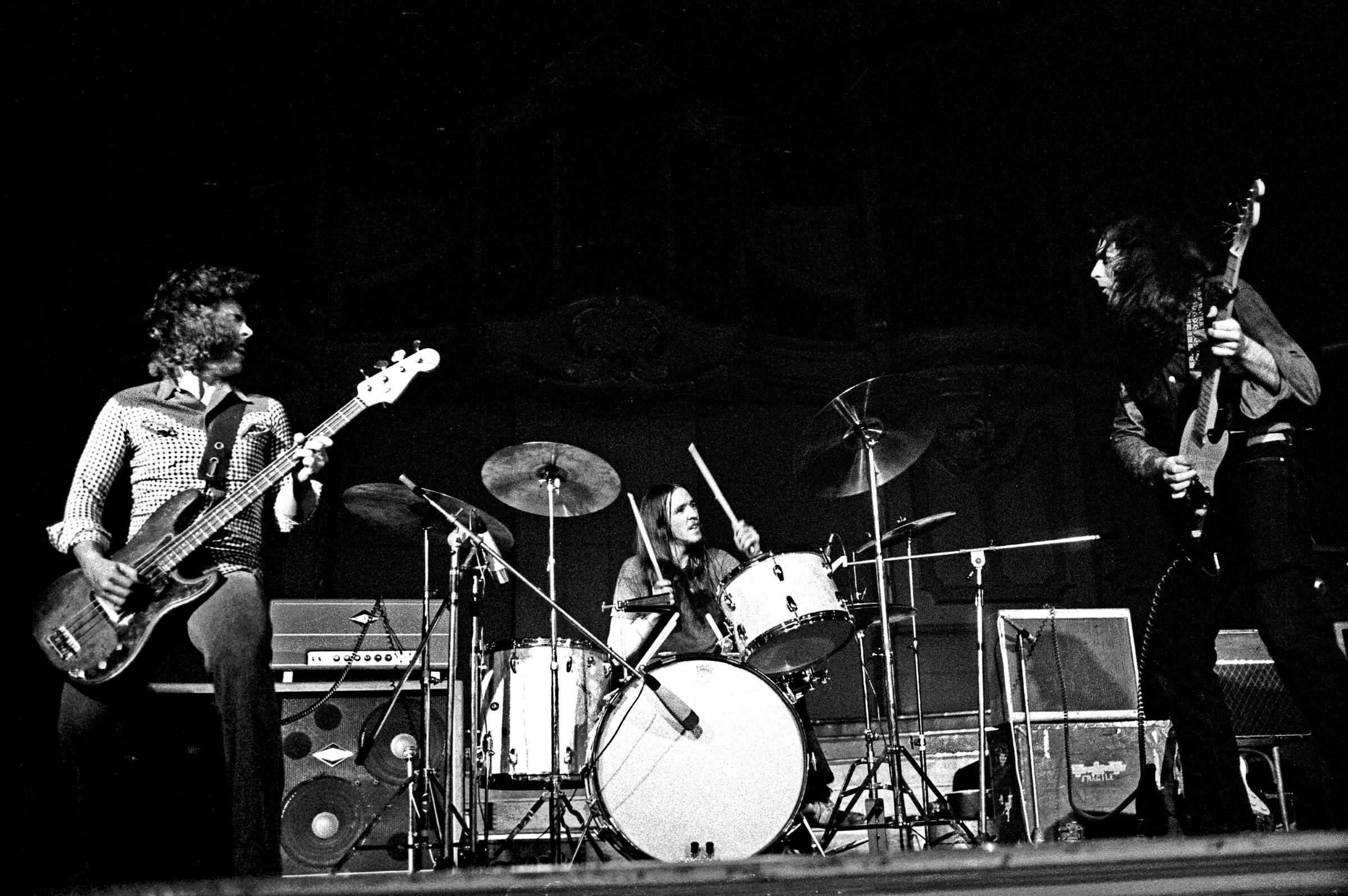
Gallagher never hid his dislike of the studio. Lou Martin later put it plainly: without a crowd to look at, Rory had trouble finding the energy that came so easily on stage. Irish Tour '74, compiled from January 1974 shows in Belfast, Dublin and Cork — with the Belfast date, on the later box set, listed as December 29, 1973 — is the record that caught him on his own terms. It was recorded with Ronnie Lane's mobile at the Ulster Hall, the Carlton Cinema and Cork City Hall, and it has been reported as selling more than two million copies. A Tony Palmer film of the tour did the same job for people who needed to see it.
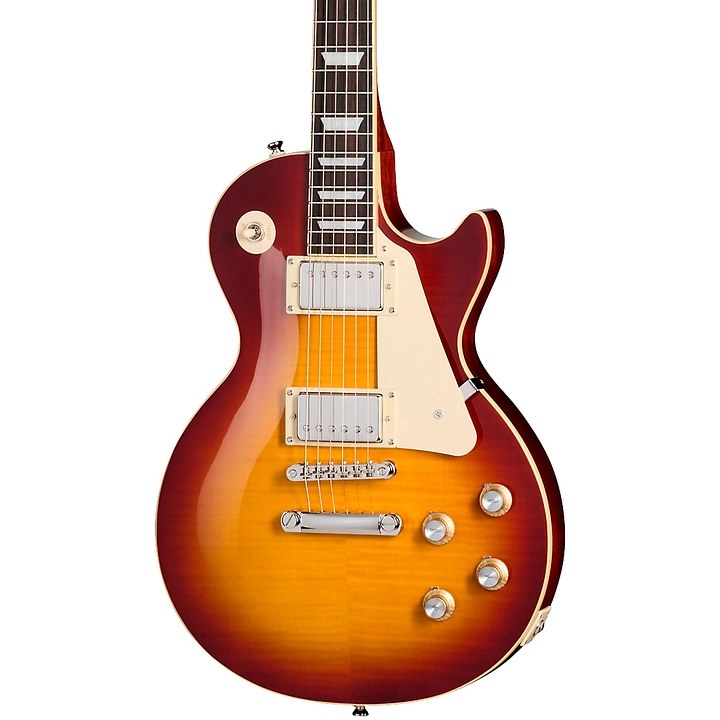

Epiphone Les Paul Standard 60s
$699.00 at Guitar Center
The politics around the Belfast show are the reason the album still matters as more than a guitar record. This was a period when many international acts would not play the city. An often-repeated account of that stop says ten bombs went off in Belfast the day before the concert, and that Gallagher went on anyway. Roy Hollingworth, writing in Melody Maker, described the moment the band walked out:
I've never seen anything quite so wonderful, so stirring, so uplifting, so joyous as when Gallagher and the band walked on stage. The whole place erupted, they all stood and they cheered and they yelled, and screamed, and they put their arms up, and they embraced. Then as one unit they put their arms into the air and gave peace signs. Without being silly, or overemotional, it was one of the most memorable moments of my life. It all meant something, it meant more than just rock n' roll, it was something bigger, something more valid than just that.
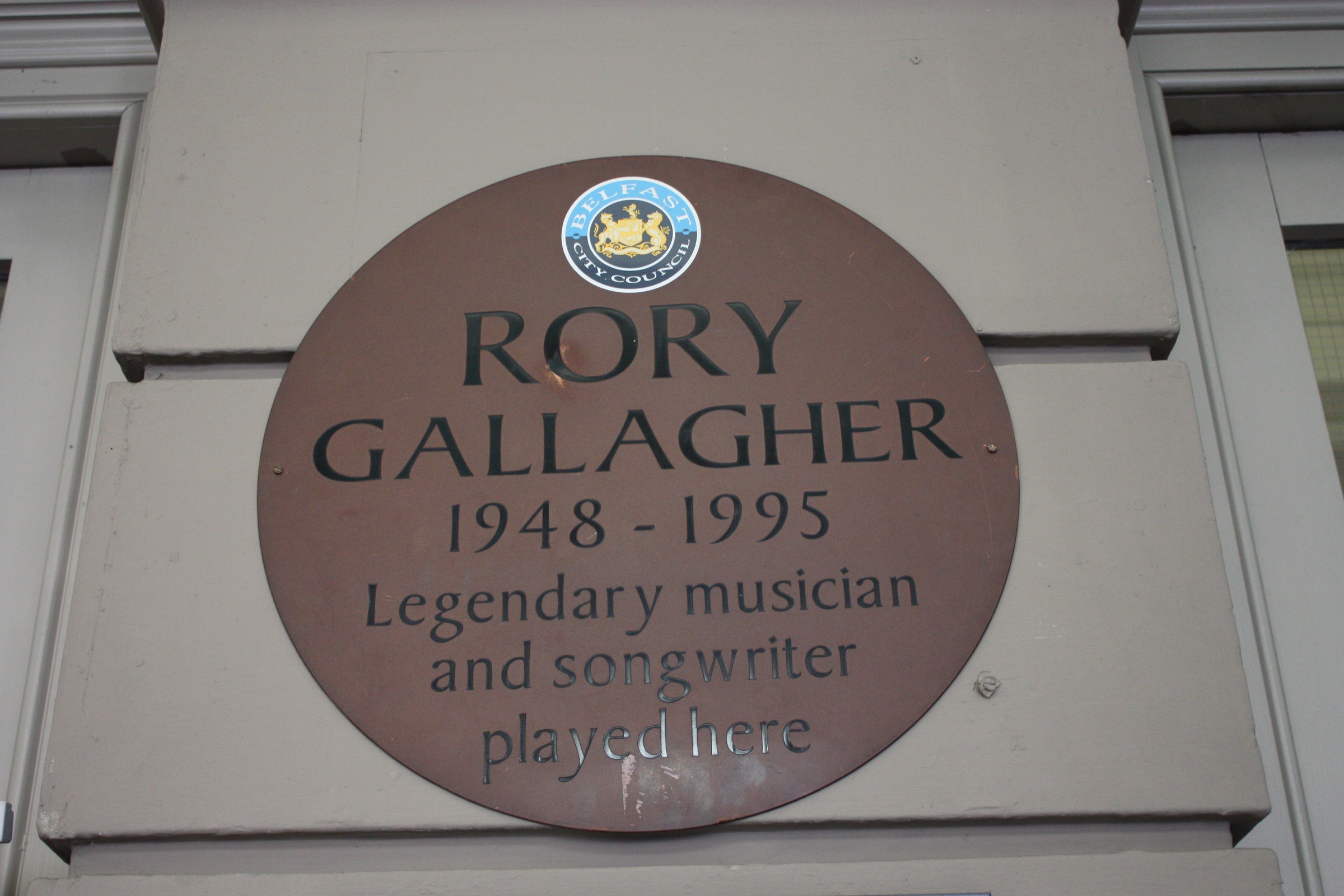
He kept going back. That choice is why there is a plaque, and now a statue, at the Ulster Hall, and why Belfast still claims him as something more local than a visiting name. In a 1972 Rolling Stone interview he had already explained the career he did not want: "It seems a waste to me to work and work for years, really gettin' your music together; then to make it big, as some people do, and just turn into some sort of personality. You play less, you perform less, you circulate less. It becomes something completely different."
The rest of the 1970s was a working musician's idea of a peak: Against the Grain in 1975, Calling Card in 1976 with Deep Purple's Roger Glover producing, then a scrapped San Francisco album, a tighter trio with Ted McKenna on drums, and Photo-Finish in 1978. In January 1975, between those records, Ian Stewart invited him to Rotterdam, where the Rolling Stones were trying out guitarists after Mick Taylor left. Gallagher later said he went "just to see what was going on" and jammed with them for three days, bringing a 1954 Fender Deluxe. He left a note and went off to Japan. He did not get the job. Bill Wyman later recalled that Gallagher "played some nice stuff," but that Mick Jagger and Keith Richards felt he "wasn't the kind of character that would fit," a player who would have had to stay "subservient to two big egos" and who was not going to become a Stones frontman. The episode is often retold as Gallagher turning the Stones down. The fuller version is that he showed up, played, and then kept the band he already had.
The 1961 Strat: Bought on Hire Purchase, Stolen, Recovered, Worn Down
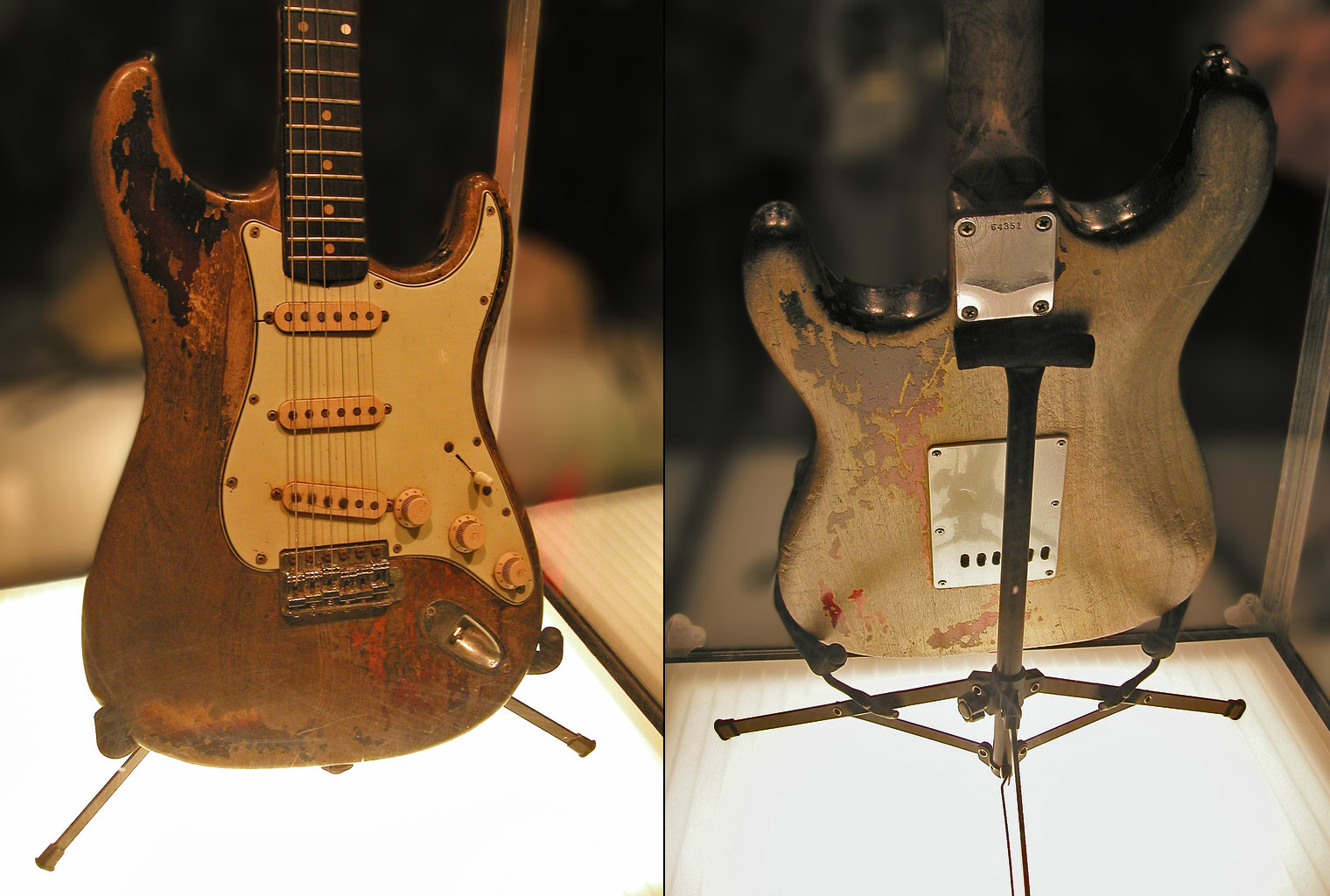
If you know one thing about Gallagher's gear, it is this guitar. It left the factory as a three-color sunburst 1961 Stratocaster. Wikipedia gives the serial number as 64351. He bought it used in 1963 and spent the rest of his life with it.
The first crisis came early. After a visit to the Five Club in Dublin to see Pat Egan, the Strat was stolen, along with a Telecaster Gallagher had borrowed for slide. He got the theft onto RTÉ's Garda Patrol. A few days later both guitars turned up, as he later told it, "behind a front garden wall on the South Circular Road, with some of the strings missing and the bodies knocked about but, thankfully, they were OK." Other tellings, including the official site's own narrative, put the guitar in a rainy ditch for days, and Dónal has described the week it was missing as a bereavement. The year slips between accounts — 1966 in some, 1967 in others — but Gallagher's own outline is consistent: stolen in Dublin, publicized on television, found damaged, and never casually left alone again.
The finish is the part everyone notices. Almost all of the sunburst was eventually worn off, down to pale, stained wood, with the remaining paint hanging on in patches around the edges. Water and brambles from the theft almost certainly started some of that damage. Decades of sweat and playing did the rest. Dónal has attributed the worn paint to the chemistry of his brother's sweat; some accounts call that sweat unusually acidic, while the official site has called it highly alkaline. Those two claims cannot both be right, and they don't need to be. Gallagher himself waved away the romance. "The less paint or varnish on a guitar, acoustic or electric, the better. The wood breathes more. But it's all psychological. I just like the sound of it."
He kept the guitar playable and never had the finish restored. He did change almost everything else. The tuners and the nut were replaced, the nut more than once. The pickguard was changed during the Taste years. In the mid-1970s the neck and bridge pickups failed, which Gallagher blamed on moisture the body had absorbed from his sweat; the middle pickup is the only original of the three. He also rewired the guitar, disconnecting the lower tone control so he had a master tone and a master volume, and he put in a five-way switch in place of the original three-way. In a 1993 interview he dropped the usual refusal to get soft about objects:
This is the best, it's my life, this is my best friend. It's almost like knowing its weak spots are strong spots. I don't like to get sentimental about these things, but when you spend 30 years of your life with the same instrument, it's like a walking memory bank of your life there in your arms.
After he died, the Strat went into a London bank vault under Dónal's care. It came out for special nights: Joe Bonamassa played it at the Hammersmith Apollo in October 2011, opening with "Cradle Rock"; Johnny Marr played it at the Shepherd's Bush Empire on March 17, 2013. In October 2024 it went across the block at Bonhams in London as the centerpiece of a larger instrument sale. Bonhams published the result as £889,400, including premium. Live Nation Gaiety Ltd bought it with the intention of donating it to the National Museum of Ireland, a plan that also brought Gallagher's 1958 "back-up" Strat into the national collection. The 1961 guitar has been on public view in the Changing Ireland galleries at Collins Barracks in Dublin since the exhibition opened in October 2025. A Cork display was also promised; as of October 2026, local reporting still had it in Dublin.
The AC30, the Rangemaster and the Amps That Had to Get Louder
The other half of the early sound is smaller than the legend around it. When Gallagher joined the Fontana Showband, he borrowed a Vox AC30 from the band's bass player. He never really got over that amp. For the Taste years, and into the early solo records, the core rig was the '61 Strat into a Dallas Rangemaster treble booster, into an AC30, often the Normal channel, with the amp running wide open and the volume coming off the guitar. His nephew Daniel later described the Isle of Wight set in those terms: everyone else had walls of Marshalls, and Gallagher put an AC30 on two folded-out chairs and played. We have already told part of that pairing in our Vox AC30 history.
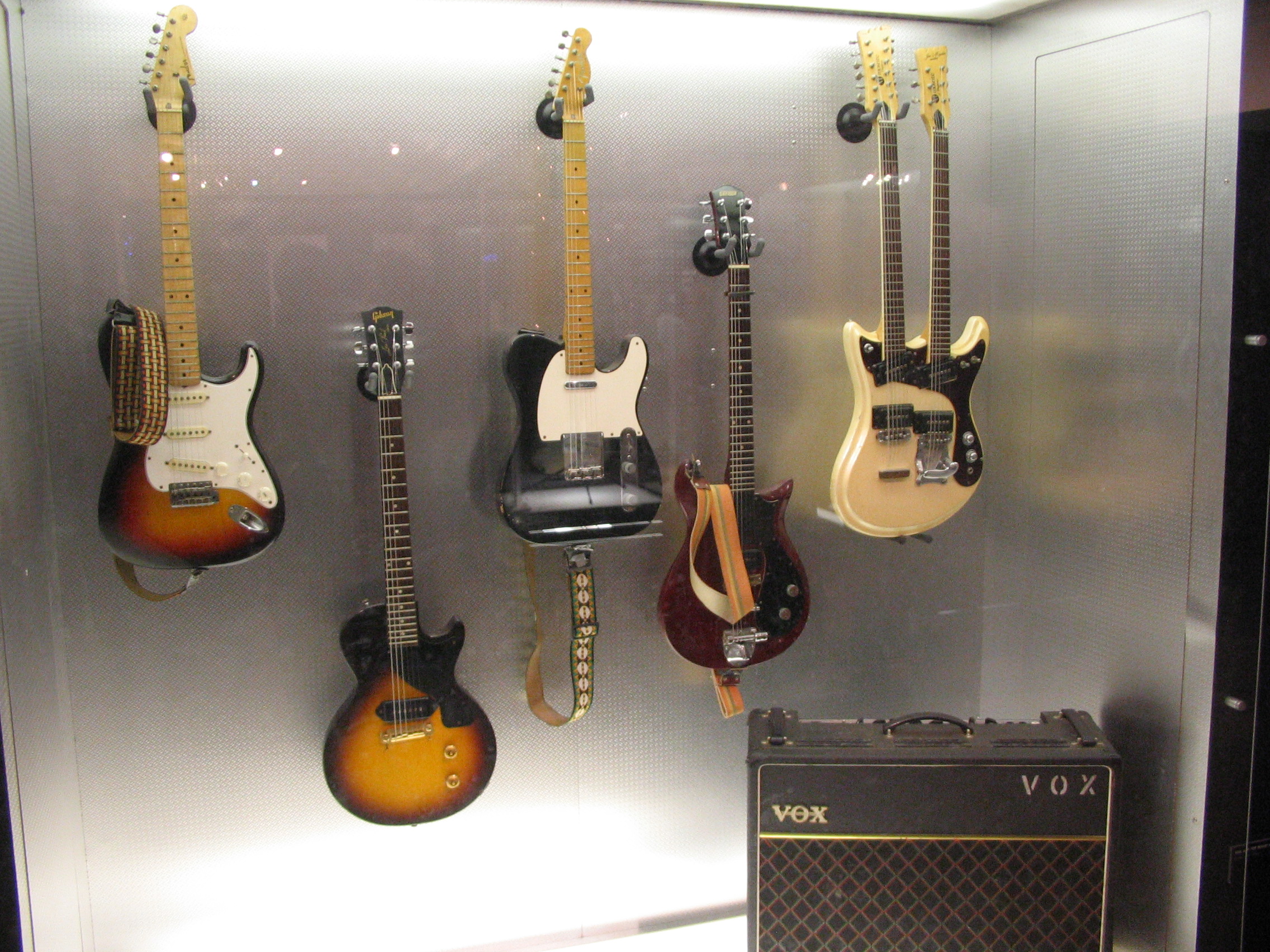
The AC30 could not cover every room. Gallagher started using a 4x10 Fender Bassman in 1973 — "Buddy Holly had one," he noted — and on bigger American tours he would pair Fender combos because, as Daniel later put it, a Vox was not going to do Madison Square Garden. In 1977 a brown Fender Concert, also with four 10-inch speakers, joined the Bassman, often with a Hawk booster. In the studio he was happy to drive tiny tweed Deluxes and Champs into the red. Late in his life the Vox came back into the foreground, sometimes with an analogue delay for slapback, and he also used Marshall combos and, at times, a converted Marshall Super Bass head with the cabinet kept visually discreet. He told interviewers it was a battle between the AC30, "my first amp," and the 4x10 Bassman, with the little Deluxe close behind. He also mentioned Ampeg VT-40 and VT-22 combos, and he was clear about the point of the whole pile: "The warmth of the Fenders and the character of the Voxes are pretty hard to beat."
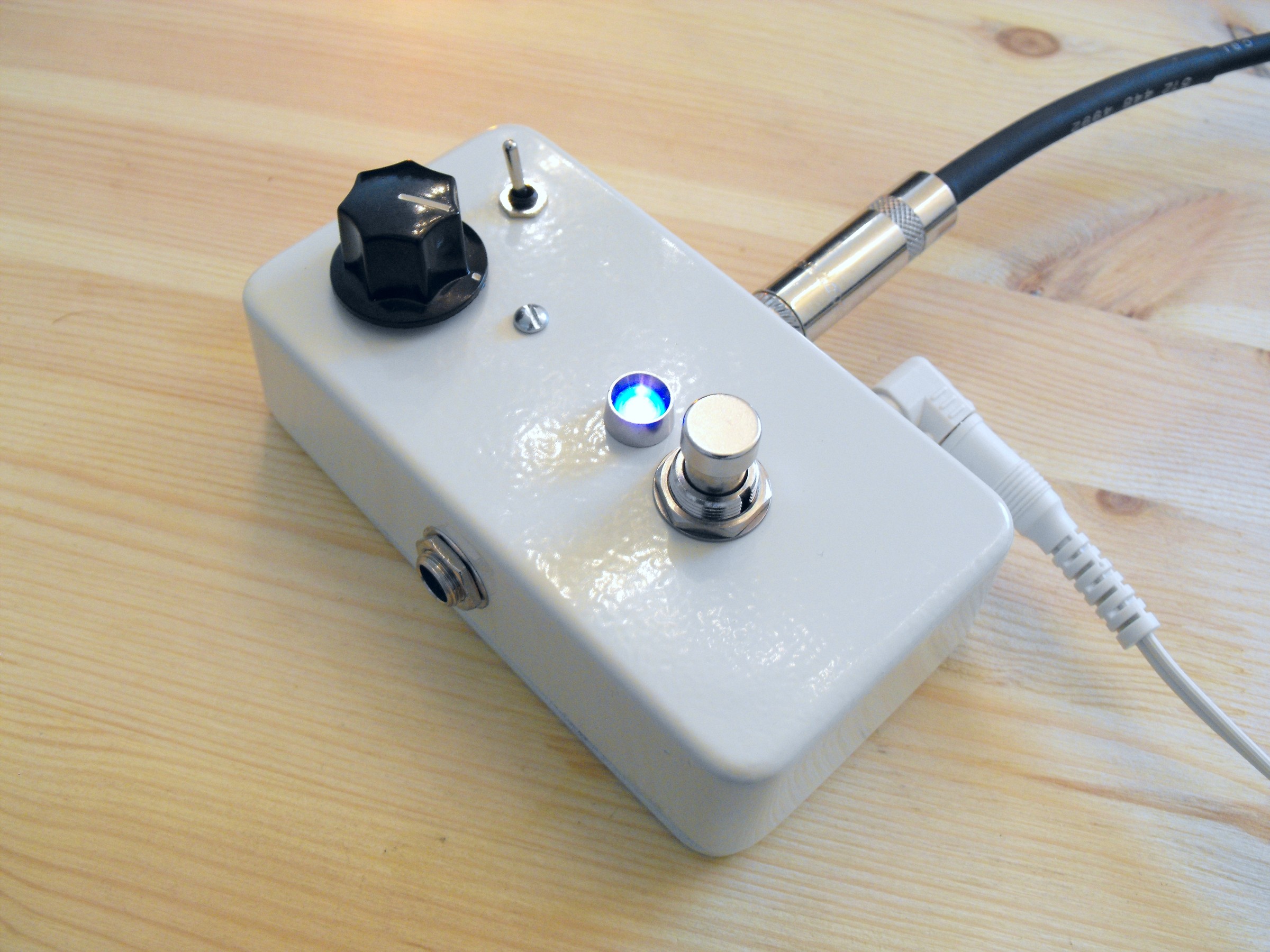
The myth that he used no pedals is only half true. Onstage in the Taste and early solo years, the Rangemaster was the effect that mattered. Offstage he collected hundreds of pedals and tried them at home and in the studio. From the early 1980s a few boxes started staying on the board. In one interview he described a large Boss unit he called a 'BD-1 Driver,' used more as a boost than as a distortion; the model name in that quote is uncertain. The live sound still came from a hard-driven small amp and a right hand that knew how to push it.
Slide, Open Tunings, Mandolin and the Acoustic Half of the Show
The Strat is the image. It was never the whole instrument rack. Gallagher played a National resonator, a Martin D-35, Telecasters, a Gretsch Corvette kept in open tunings for slide, a Les Paul Junior, harmonica, mandolin — he owned a Martin mandolin — and, after buying a saxophone in an Earl's Court bedsit during the Taste years, he even taught himself enough sax to use it on On the Boards, practicing in a cupboard so he would not bother the neighbors.
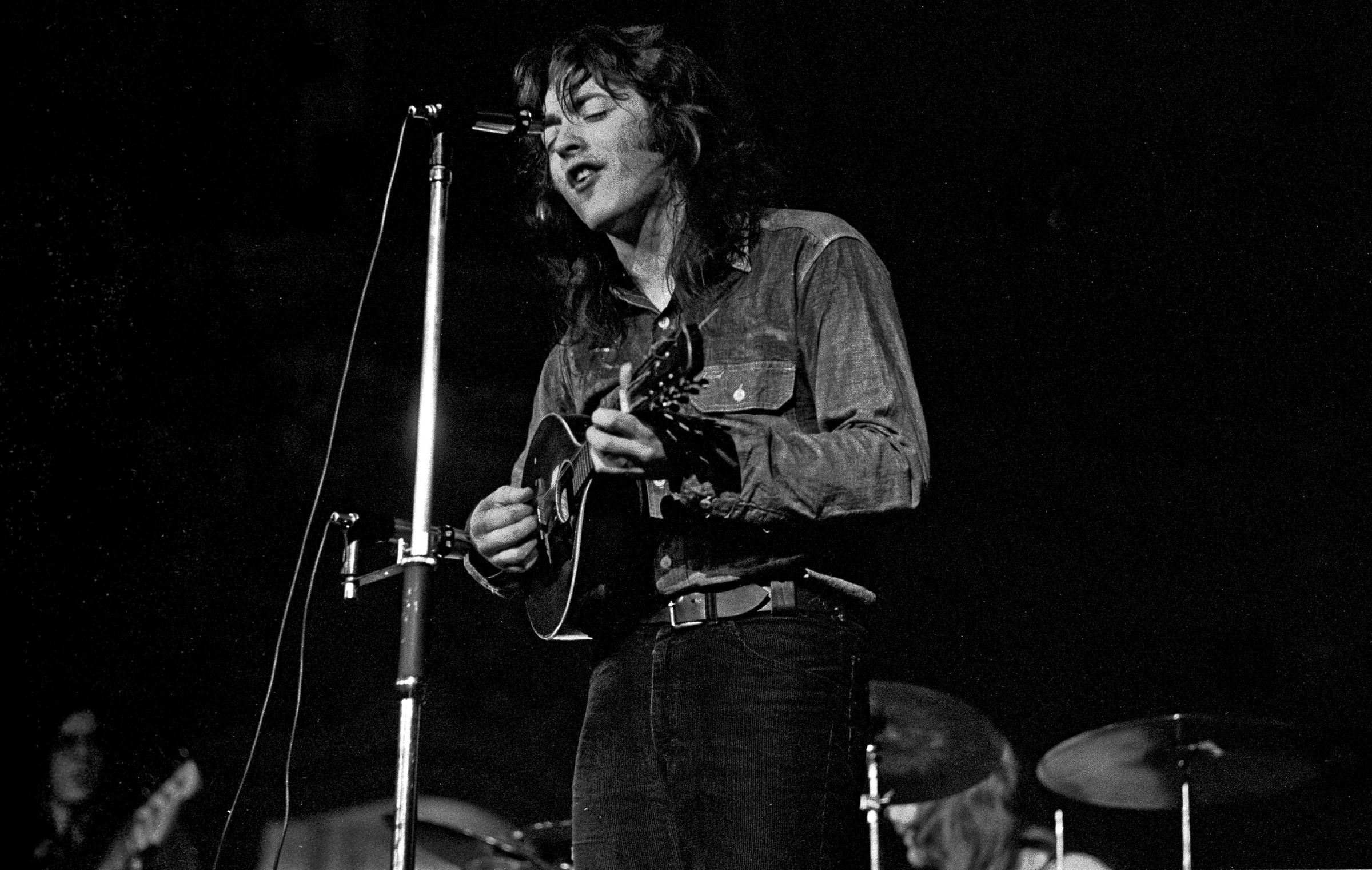
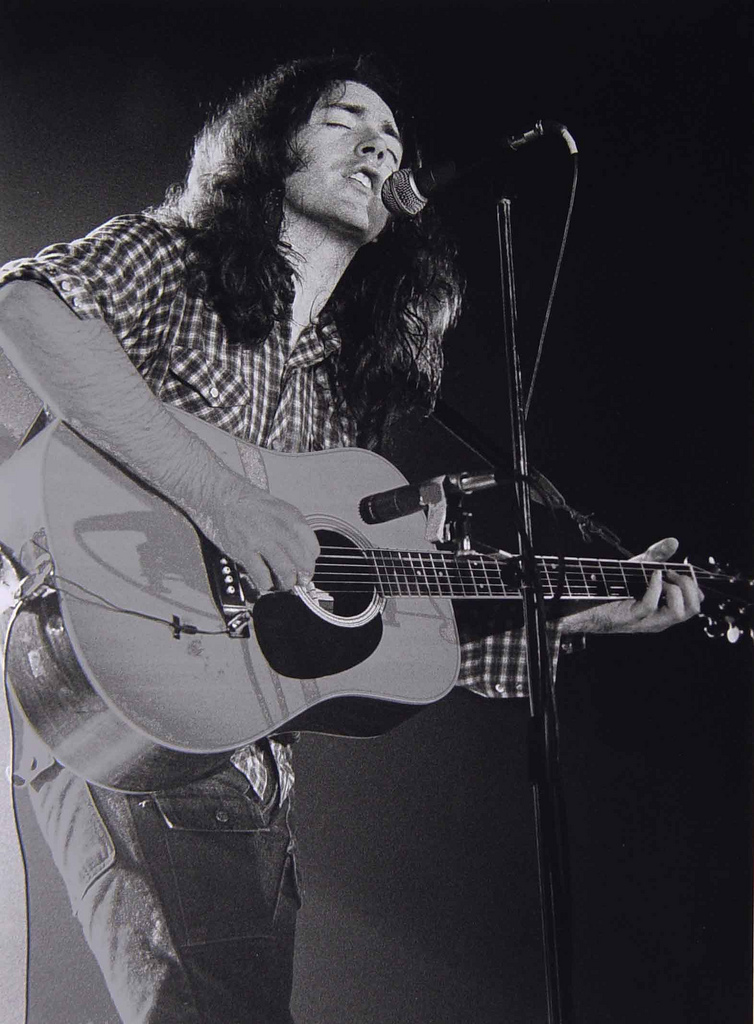
He talked about slide with the same practicality he brought to amps. He used a pick and fingers together. He varied the slide itself: a Coricidin bottle on the ring or little finger, a brass slide on the National when he wanted a harsher, Son House kind of bite, and a steel bottleneck for ordinary electric guitar, which he thought of as a useful middle ground. He mentioned socket wrenches, a tip he picked up from John Hammond and Lowell George, and he warned that they chew up a finger if you play more than a couple of songs. For dedicated open-tuning slide he kept heavier strings on the Corvette, about .013 to .050, usually in open G or open A. His regular set was lighter, about .010 to .044, with a relatively high action, which let him move to slide without a full guitar change.
He used open D, open G and open A in the tradition of Earl Hooker and Muddy Waters, and he also loved DADGAD, the Davy Graham tuning, on Lead Belly's "Out on the Western Plain." Some slide parts, he said, were just in standard tuning, "in the same way in which Earl Hooker could play chords and then go into the solo." The live shows made room for all of it: a country-blues fingerpicking tune, a mandolin or harmonica break, then the Strat through a boiling AC30, with the set changing from night to night.
That looseness was the point. He was a precise player in the sense that his time and his tone were under control. He was not a precise player in the sense of repeating a solo because it had worked the night before. Ritchie Blackmore, who saw plenty of him on bills with Deep Purple, called him "probably the most natural player I've ever seen," and said that in all the gigs they did together, "I don't think I ever heard him play the same thing twice."
Later Years, a Hotel in Chelsea and June 14, 1995
The 1980s were harder. Trends moved away from the music he was unwilling to dress up, and the touring that had always been his natural state began to cost him. Jinx, Defender and, in 1990, Fresh Evidence still moved the writing forward — "Loan Shark Blues," "Heaven's Gate" and "Ghost Blues" have a self-revealing streak that goes back to "A Million Miles Away" — but the output slowed as he agonized over records. McAvoy, who had been there since the first solo album, left with drummer Brendan O'Neill in the early 1990s. At the Roxy in Los Angeles, late in that farewell run, Slash came onstage to jam. Slash later called it one of the biggest thrills of his life.
His health was failing in public even when the details were kept private. A fear of flying, the grind of the road and an increasing load of prescription medication all took their share. In early 1993, trying to give him a version of life on the road that did not require another airport, Dónal moved him into the Conrad Hotel at Chelsea Harbour. He stayed there, sometimes under the alias Alain Delon, a nod to a favorite actor, even though he had an apartment nearby. "Rory was only happy on stage, with a guitar in his hands," Dónal later told the Dutch magazine Aardschok. "It was a dilemma: he needed rest, but was only happy when he was on tour." Gallagher himself shrugged at the cost in one late remark: "The blues is bad for your health, it's as simple as that, it goes with the territory."
He insisted on a short Dutch tour in January 1995. Dónal wanted to cancel it; they argued, and Rory stayed. The final concert, in Rotterdam on January 10, was cut short. Back in London he withdrew. In March, Dónal got into the apartment and got him to the Cromwell Hospital, where doctors found his liver failing, "primarily due to accidental overdoses of prescription medications over a number of years." He was transferred to King's College Hospital for a transplant, which was carried out successfully. After 13 weeks in intensive care, while waiting to move to a convalescent home, he contracted an MRSA infection, fell into a coma, and died on the morning of June 14, 1995.
The funeral cortège went through Cork on June 19, past MacCurtain Street. The Edge and Adam Clayton were there, along with Martin Carthy, members of the Dubliners, Clannad and Gary Moore. Mark Feltham played "Amazing Grace" on harmonica. Lou Martin played "A Million Miles Away" on piano. Gallagher was buried in St Oliver's Cemetery, Ballincollig, under a stone that repeats the shape of that 1972 Melody Maker award.
The Players Who Were Paying Attention
Brian May used to watch Taste at the Marquee. One night he stayed behind and asked, "How do you get your sound, Mr Gallagher?" The answer, in practical terms, was the AC30 and the Rangemaster, a combination May would make famous in another register. May has been frank, for decades, that Gallagher helped him hear what that rig could do.
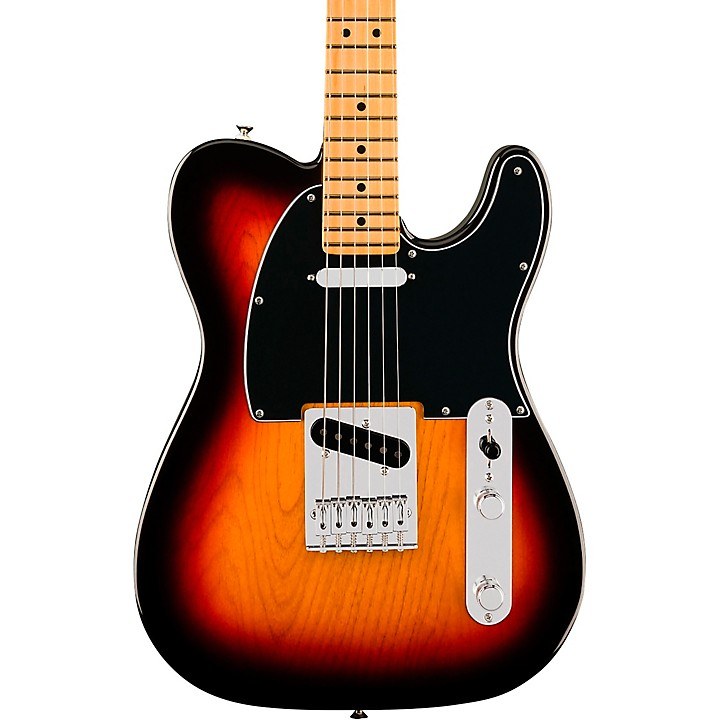
Fender Player II Telecaster
$849.99 at Guitar Center
Slash has called him "a really big influence on me" and "one of the all-time great guitar players." The Edge has described seeing Gallagher on stage as "an absolute eye-opener, a mind-blower," a morale boost when U2 were starting out: proof that an Irish player could do this at full stretch. Johnny Marr has called him "a beacon," and in the Ghost Blues documentary he told the story of using a blowtorch in woodshop class to fake the worn finish of that Strat. Jake Burns of Stiff Little Fingers, who saw Taste's farewell on the BBC, said Gallagher was "the main reason" he picked up a guitar. Glenn Tipton has called him his "main inspiration." Mick Fleetwood, in a 2020 Hot Press tribute, wrote: "From the first note I heard him play, we in Fleetwood Mac knew he had the magic! Rory was committed to every note he played."
Bonamassa is the latest in that line to do the work in public. He played the Irish Tour '74 set in Cork in 2025, thirty years after Gallagher's death, and this week he brings the film of that homage home to the Everyman. Dónal, welcoming the premiere, noted that the Cork festival had already honored his brother with Palmer's Irish Tour '74 and Lerner's Isle of Wight film, and that Rory, a serious film buff, had learned European cinema in the old Ritz on Washington Street.
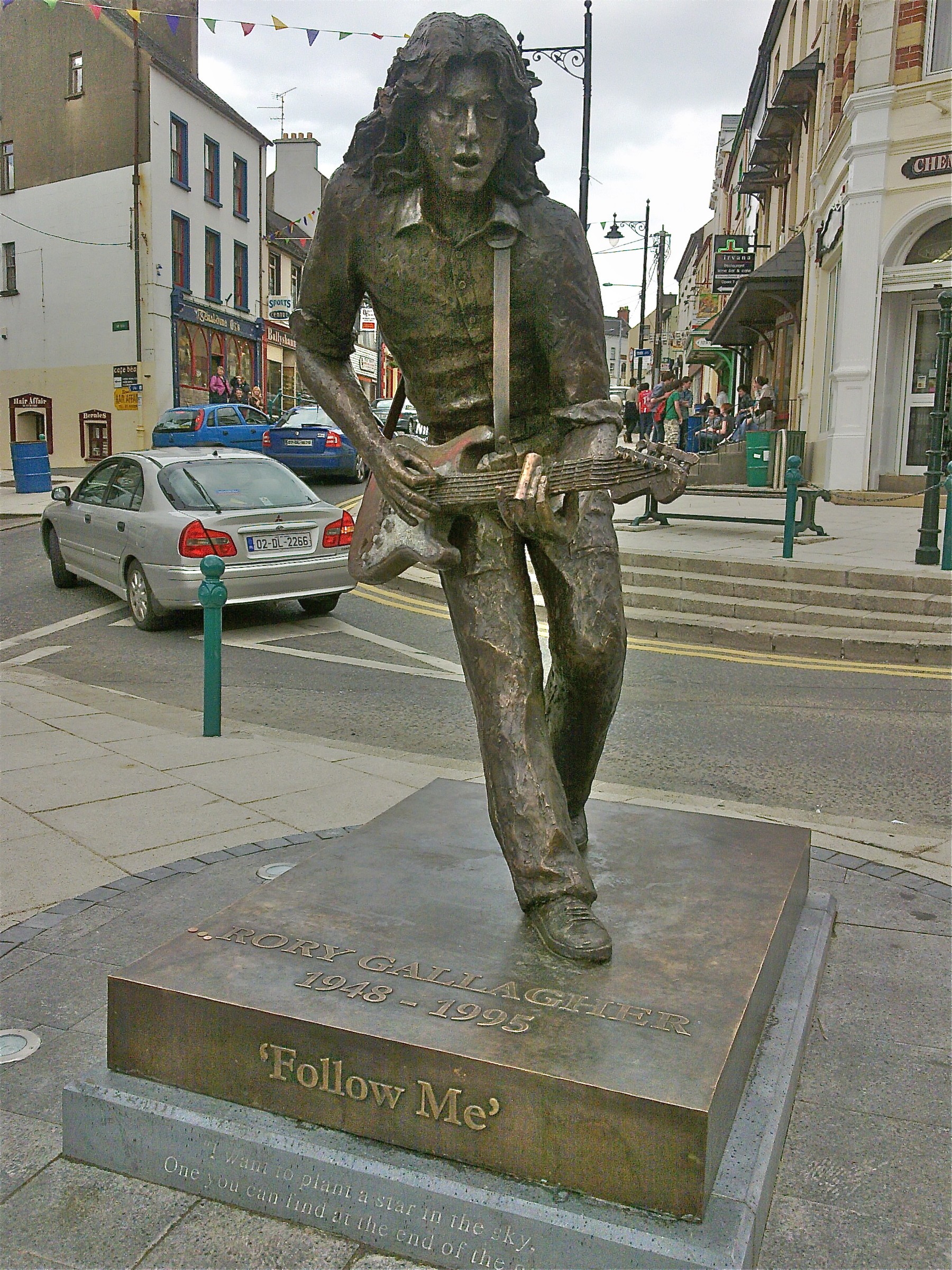
The commemorations in Ireland have caught up with the music. There is a bronze statue in Ballyshannon, unveiled in 2010, and Geraldine Creedon's sculpture in Rory Gallagher Place in Cork, from 1997. Dublin has had Rory Gallagher Corner in Temple Bar since 2006, when the Edge unveiled a mounted reproduction of the Strat. Belfast put a statue outside the Ulster Hall on January 4, 2025. On the 30th anniversary of his death, June 14, 2025, Cork named the main approach to the airport Rory Gallagher Avenue and opened a permanent "Stompin Ground" walking trail.
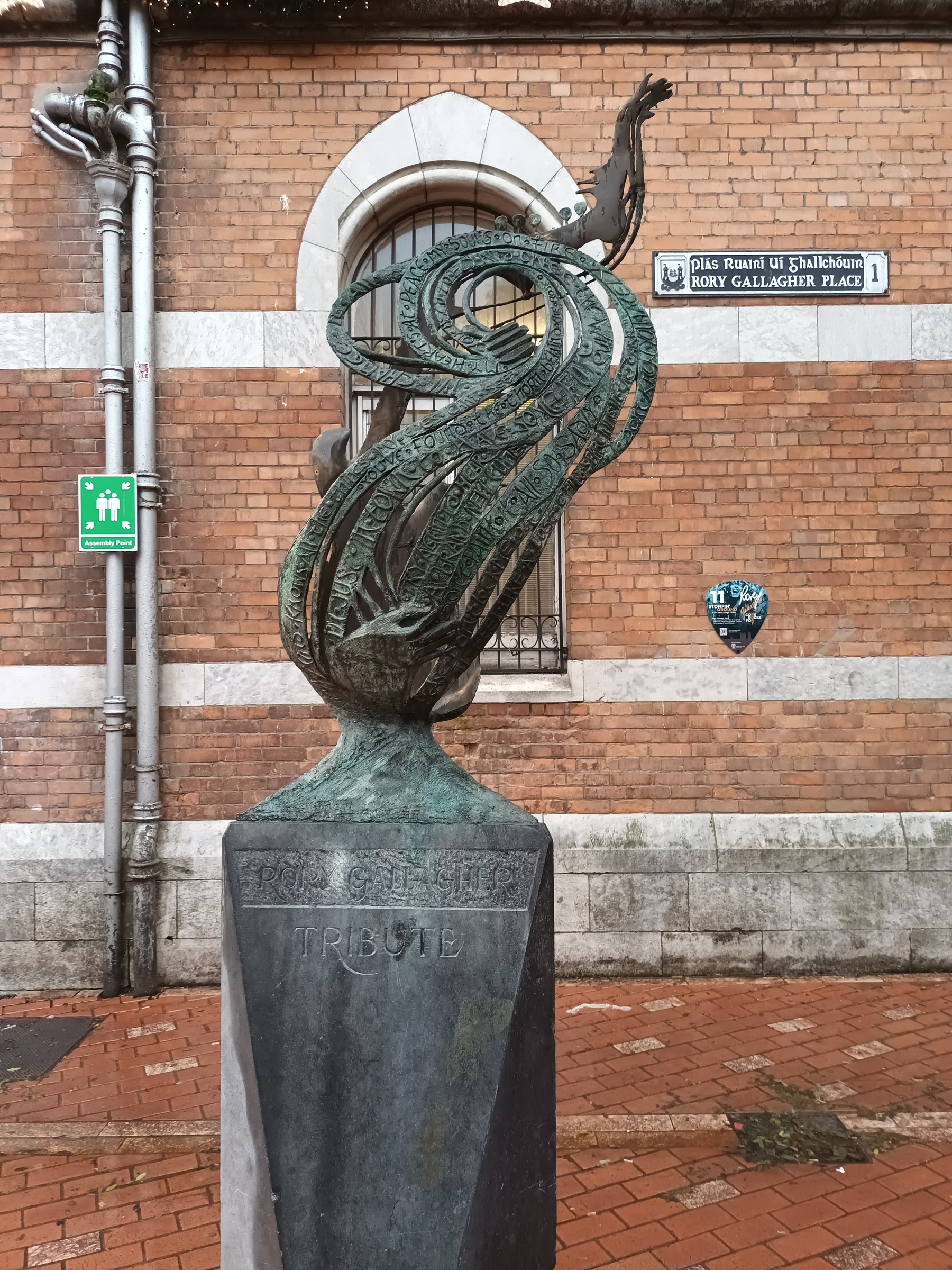
Getting a Rory Gallagher Sound Without Pretending You Own His Strat
You cannot buy that guitar, and you should not try to fake the scars. You can steal the method.
- Start with a Strat-style guitar and the middle pickup, or the middle-and-bridge blend. Gallagher's middle pickup is the only original one left in the '61, and a lot of his bite lives in those in-between sounds. A sunburst American-style Strat is the right shape and year-family, not a replica of the relic.
- Put a treble booster in front of a bright, small tube amp. A Rangemaster-style germanium booster into an AC30, or into a tweed Bassman, is the classic Taste-to-mid-1970s recipe. Run the amp too loud for the room, then control the gain with the guitar's volume knob. That dynamic range — clean enough for a verse, screaming for a solo, with no channel switch — is the point of the rig.
- If an AC30 is too expensive or too loud, a smaller Vox-style combo or a 4x10 Bassman-style amp will get you closer than a high-gain stack. He moved to Bassmans because rooms got bigger, not because he wanted a modern lead channel.
- Keep the pedalboard short. A booster, maybe a wah, maybe a slapback delay late in the story. Distortion pedals were not how he got the sound.
- For slide, leave the action up and learn open G and open A. A glass or steel slide on the little or ring finger, muted behind the slide, is enough to start. Put heavier strings on a second guitar if you have one. Listen to "As the Crow Flies" and "Out on the Western Plain" before you go chasing "Bullfrog Blues" at full volume.
- Play as if the arrangement is allowed to change. The records are guides, not scripts. The live albums — Live! in Europe, Irish Tour '74, later Stage Struck — are where the method is documented.
A starter listening list, if you want one: "Blister on the Moon" and the Isle of Wight set for Taste; "Laundromat" and "Used to Be" from the first solo albums; "A Million Miles Away," "Tattoo'd Lady" and "Cradle Rock" from Tattoo and the Irish tour; "Out on the Western Plain"; "Shadow Play"; and, for the late writing, "Ghost Blues."
The Takeaway
Rory Gallagher's career makes a lousy celebrity story and an excellent guitar lesson. He bought a used Strat because it was the guitar in the window, paid it off from showband wages, and then spent 30 years refusing to replace it, refinish it or retire it. He walked away from Taste rather than become someone else's idea of a hall-of-fame sideman, turned down a path that could have led back into Cream, jammed with the Stones and went home to his own band. He played Belfast when that was a decision, not a routing convenience.
The new film in Cork will bring in people who came to him through Bonamassa, or through a worn Fender Custom Shop tribute, or through a brother who would not let the catalogue go quiet. That is all fine. The thing to listen for, once the lights go down at the Everyman, is not nostalgia. It is the sound of a player who got loud by turning an AC30 all the way up and then kept the fine work in his hands.
If you want to keep the conversation going, Guitar Talk is open, and the AC30 history is the natural next stop.
Shop this gear
- Fender American Vintage II 1961 Stratocaster — 3-Color Sunburst / Slab RosewoodCompare prices at Plugged Gear Co.

- Fender Player II Stratocaster — 3-Color Sunburst / Slab RosewoodCompare prices at Plugged Gear Co.

- Vox AC15C1Compare prices at Plugged Gear Co.

- Fender '59 Bassman LTD — Lacquered TweedCompare prices at Plugged Gear Co.

Plugged Gear Co., Guitar Center and American Musical Supply links may earn us a commission from qualifying purchases.
Reader-supported
Keep Guitar Alive
Enjoyed this story? The Guitar Plugged is free to read and reader-supported. If it helped you play, listen or buy a little smarter, chip in to keep guitar journalism like this coming.
One-time contribution, processed securely by Stripe. Contributions are not tax-deductible.
Experience-driven coverage, not algorithm bait.
- 20+ years of guitar playing experience
- Real-world retail experience at Guitar Center
- Thousands of hours testing guitars, amps, and pedals
- A community of 50,000+ guitar enthusiasts across platforms
- Partnerships with Fender, DistroKid, TrueFire, Card Chords, and Enya
- Editorial standards published openly — see how we test gear
The Modern Guitar Magazine. Delivered to your inbox.
No spam. No gimmicks. Just great guitar content — stories, tones, iconic solos, and honest gear takes. Every week.
Ask GP
20 free questions a dayStill curious? Ask GP about this story.
Your personal classic-rock and guitar guide — ask anything about Rory Gallagher.
Discussion (0)
Sign in to join the discussion.
Sign in to commentLoading comments…
Discover another guitar story
Swipe through our latest features, breaking news and iconic solos — one story at a time.
Open Swipe →More Guitar News
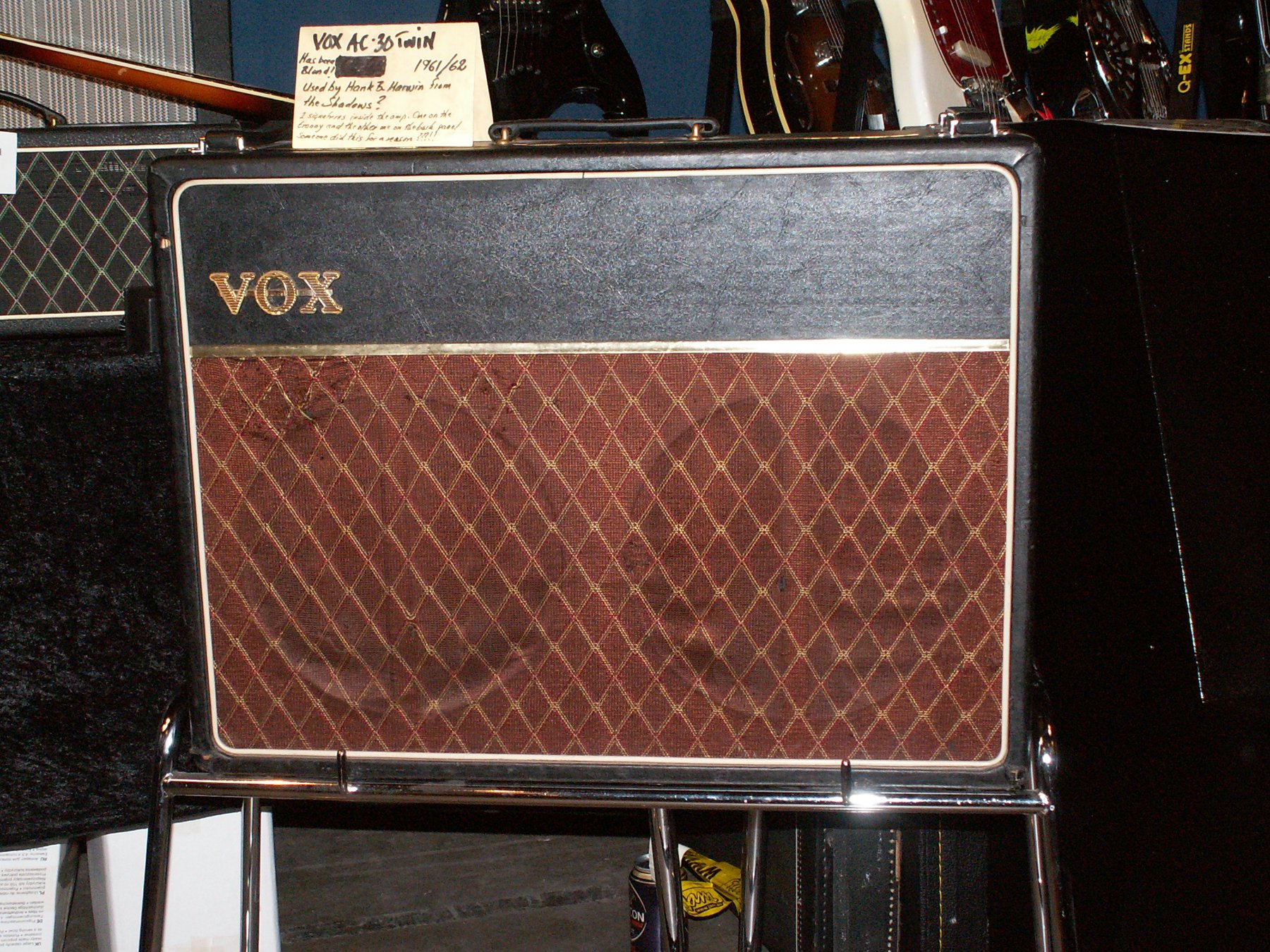
The Vox AC30 History: How a British Amp Learned to Chime
The Vox AC30 history, from Hank Marvin's call for more volume to the Top Boost, Beatlemania, Brian May and The Edge: the circuit, the speakers, the chime.
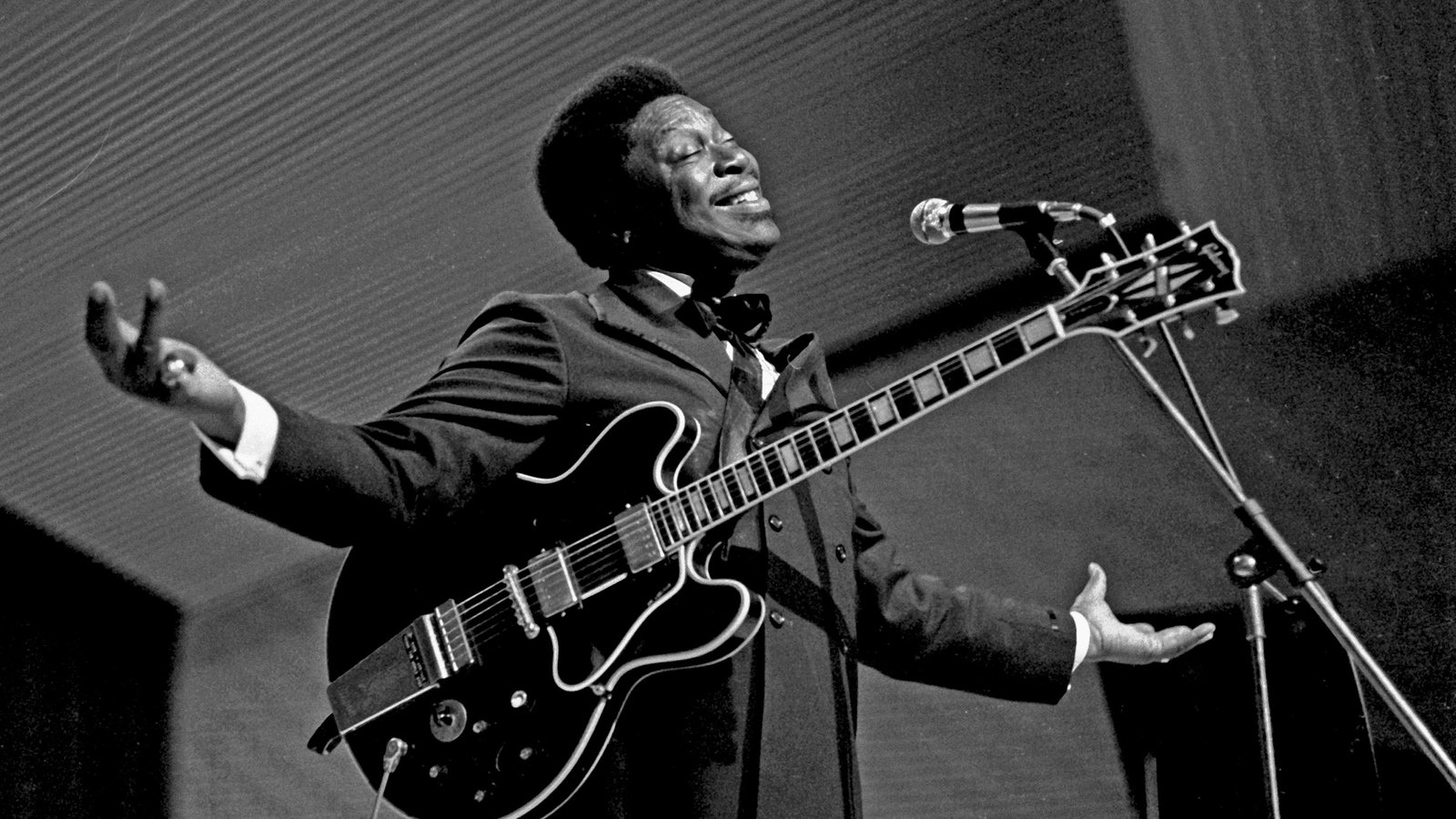
The 25 Greatest Blues Guitarists of All Time, Ranked
From B.B. King and Stevie Ray Vaughan to Robert Johnson, Buddy Guy and the Three Kings — The Guitar Plugged's editorial ranking of the 25 greatest blues guitarists ever to plug in.