
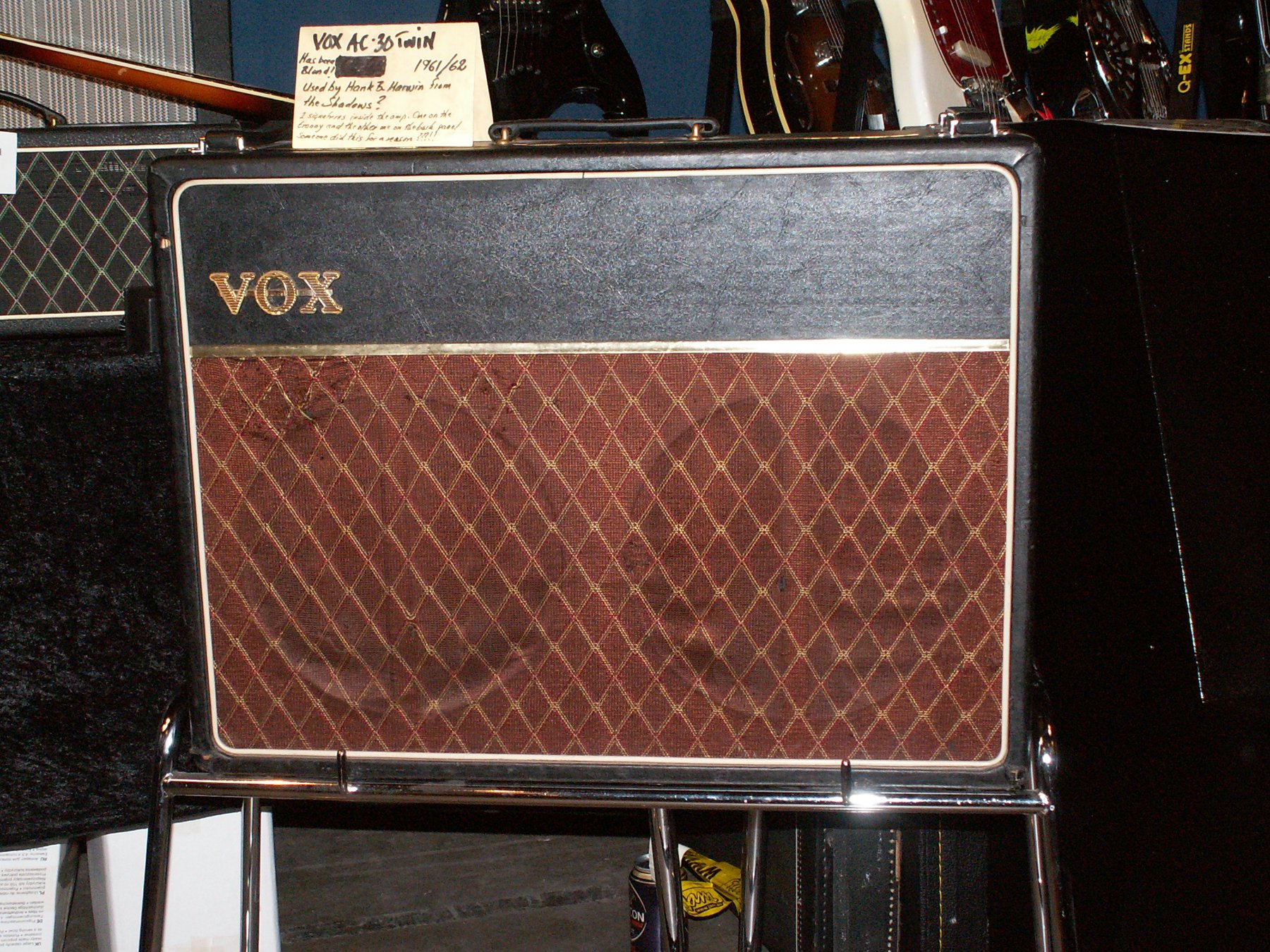
A Vox AC30 Twin dated to 1961 or 1962, with the fawn covering and diamond grille cloth of the early JMI amps.
The Vox AC30 history, from Hank Marvin's call for more volume to the Top Boost, Beatlemania, Brian May and The Edge: the circuit, the speakers, the chime.
Ask a room full of guitarists to describe the Vox AC30 and you'll hear the same word over and over: chime. That glassy, slightly compressed top end is all over the Beatles' early records, Queen's guitar orchestras, U2's delay-soaked arenas and a good chunk of '80s and '90s jangle rock. Very few amps have a sound so recognizable that people can name it from a single strummed chord.
The AC30 got there almost by accident. It started as a louder AC15 because one guitarist asked for more volume, went through a false start with the wrong power tubes, and only became the amp everyone pictures after a factory modification that was originally sold as an add-on.
This is the Vox AC30 history: who built it, what changed along the way, why it sounds the way it does, and the players who turned it into a standard.
Britain in the Late 1950s: No Fenders, Lots of Demand
To understand why the AC30 exists, you have to picture the British music scene at the end of the 1950s. Rock and roll had crossed the Atlantic and young players wanted electric guitars and amplifiers to match. The problem was supply. A trade embargo on American-made musical instruments meant Fender gear was expensive and hard to find in the U.K.
That gap was an opportunity for Tom Jennings, whose company, Jennings Musical Industries (JMI), was based in Dartford, Kent. Jennings wasn't trying to copy Fender for the sake of it. He saw a homegrown market with no homegrown product, and he had an engineer who could build one.
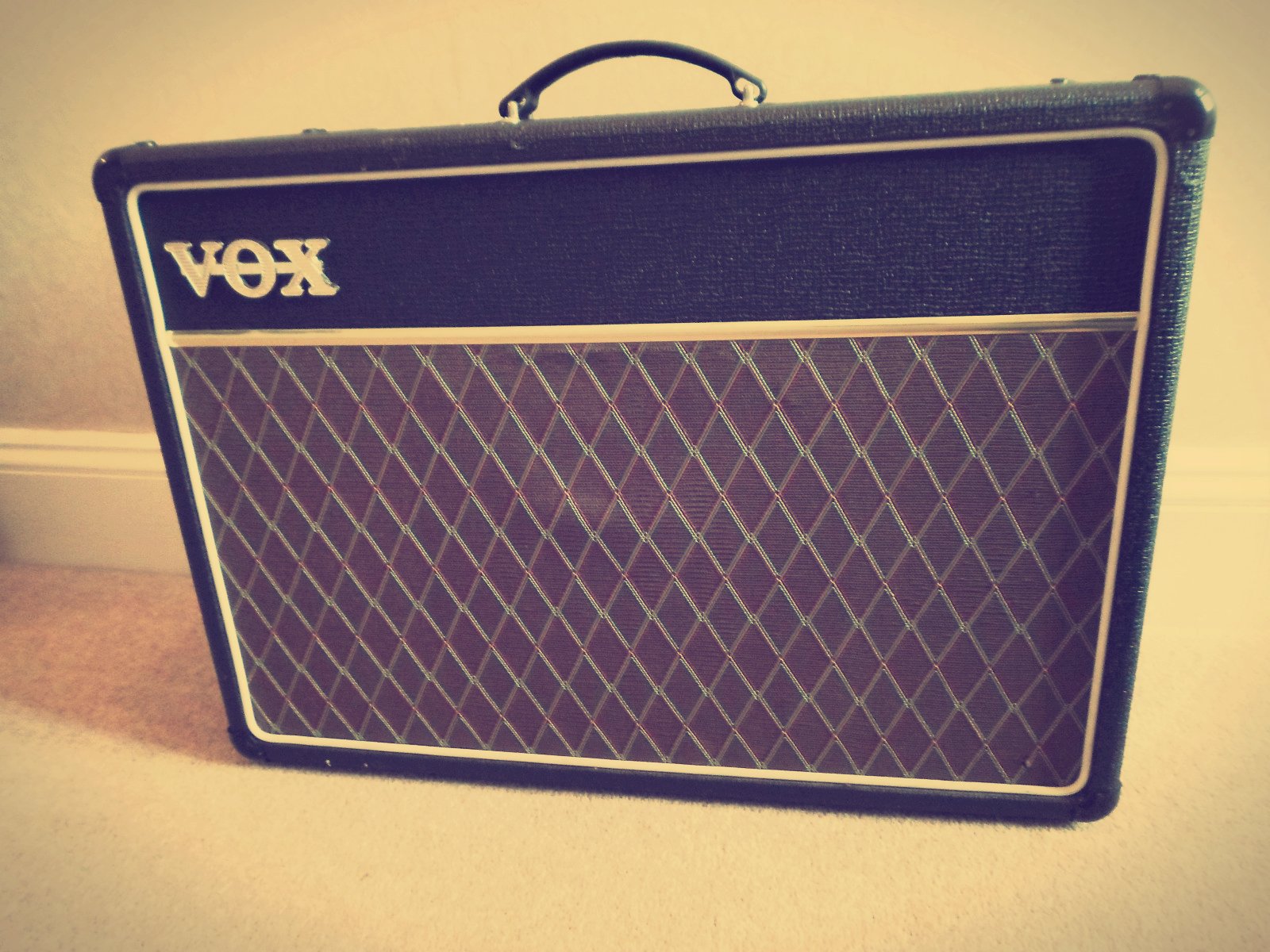
That engineer was Dick Denney. In early 1958, JMI released its first guitar amplifier, the Vox AC15. It was a combo powered by a pair of EL84 output valves, and it found an audience quickly. Hank Marvin of the Shadows, the most influential British guitarist of the moment, was among its early champions, and the amp's bright, clear voice suited the instrumental pop the Shadows were making.
Fifteen Watts Wasn't Enough
The AC15's success created its own problem. The bands using it were getting bigger, and so were the rooms. Fifteen watts could hold its own in a club, but it ran out of road in larger venues, especially against a drummer and screaming fans.
Hank Marvin is credited with pushing Vox for something louder, and he's generally recognized as the first artist to play the AC30. That detail matters, because it means the AC30 was designed in direct response to a working musician's complaint rather than a marketing plan.

The First AC30: A 1x12 With EL34s
The first AC30 appeared in 1959, and it was not the amp most people think of today. Denney's quickest route to more power was to swap the AC15's two EL84s for a pair of EL34s, a larger valve that could produce up to around 50 watts in a pair.
Cosmetically it looked a lot like the AC15. It used the same pale Rexine covering, the same diamond-patterned grille cloth and the same square "TV-front" cabinet, a style that itself echoed Fender's amps of the 1940s and 1950s. It had one 12-inch speaker.
The control set was spare by modern standards: a volume for the vibrato channel, a volume for the normal channel, one shared tone control, an on/off switch for the "tremulant," a three-position vibrato speed switch, and voltage selection.
This EL34 version of the AC30 stayed in production into 1960 and overlapped briefly with its replacement. It's a footnote now, but it's an interesting one. If Vox had stuck with EL34s, the AC30 might have ended up sounding a lot closer to the British amps that came later, and the chime might never have happened.
The Twins: Back to the EL84
The AC30 that became famous took shape in 1960. Inspired by the Fender Twin and its two 12-inch speakers, Vox designed two new 2x12 combos, the AC30/4 and AC30/6. Both schematics were originally dated April 29, 1960.
The key change was under the chassis. Vox went back to the EL84 valve used in the AC15, but used four of them instead of two, along with a GZ34 rectifier valve and a bigger transformer. That decision, four small output valves instead of two big ones, is a large part of why an AC30 sounds the way it does.
The model numbers referred to the inputs:
- AC30/4: two channels (Normal and Vib-Trem), two inputs each.
- AC30/6: three channels (Normal, Vib-Trem and a new Brilliant channel), two inputs each.
The Brilliant channel gave players a brighter option, and it hinted at where the amp was heading. The AC30/6 also replaced the Normal channel's EF86 preamp valve with the more common ECC83, better known in the U.S. as a 12AX7. The EF86 had a habit of becoming badly microphonic when it was shaken for long periods, which was a much bigger problem in a loud 2x12 combo than in the smaller AC15.
The AC30/4 was discontinued in September 1961 after about a year alongside the AC30/6. The six-input amp carried on, later joined by a mellower Bass version and a brighter Treble version. In 1961 Vox also introduced a head version, the AC30 Super Twin, with a matching 4x12 cabinet.
A new look to match
The Twins also brought the look that still defines the brand. Vox dropped the TV-front cabinet, as Fender had done. The front baffle was split by a thin gold-toned strip, with the top section covered in the same fawn Rexine as the cabinet and the lower section in the brown diamond grille cloth. Three small brass vents sat on top of the cabinet, and the single suitcase handle gave way to three leather straps.
The Speaker That Made the Sound
Dick Denney was never happy with the speakers Vox had been using. Earlier amps had used Goodmans Axiom and Celestion G12 drivers, and the first AC30 Twins came with Rola speakers that soon proved not durable enough.
So Vox and Celestion worked on something new, and in August 1960 they settled on a design called the Celestion T.530. It first came in a pink and silver finish, then switched a few months later to what became known as "Vox blue."
That speaker, the ancestor of what players now call the Celestion Alnico Blue, is regarded as one of the main reasons an AC30 sounds like an AC30. It has a slightly softened treble response, a bell-like top end, and natural compression when it's pushed hard. In a vintage AC30, the two 12-inch speakers were rated at 15 watts each, so a cranked amp often ran them right at the edge of what they could handle. That's part of the sound too: a cutting, immediate midrange that's quite different from a Fender or a Marshall.
Modern AC30s don't all use Blues. Some editions have used Celestion Greenbacks to keep costs down, and those have a slightly harsher character. If you're shopping, the speaker is one of the first things worth checking.
Top Boost: The Upgrade That Became the Amp
For many players, the real AC30 begins with the Top Boost circuit. It's essentially an adaptation of the Fender Bassman tone stack, with the middle control removed and the circuit adjusted for the AC30.
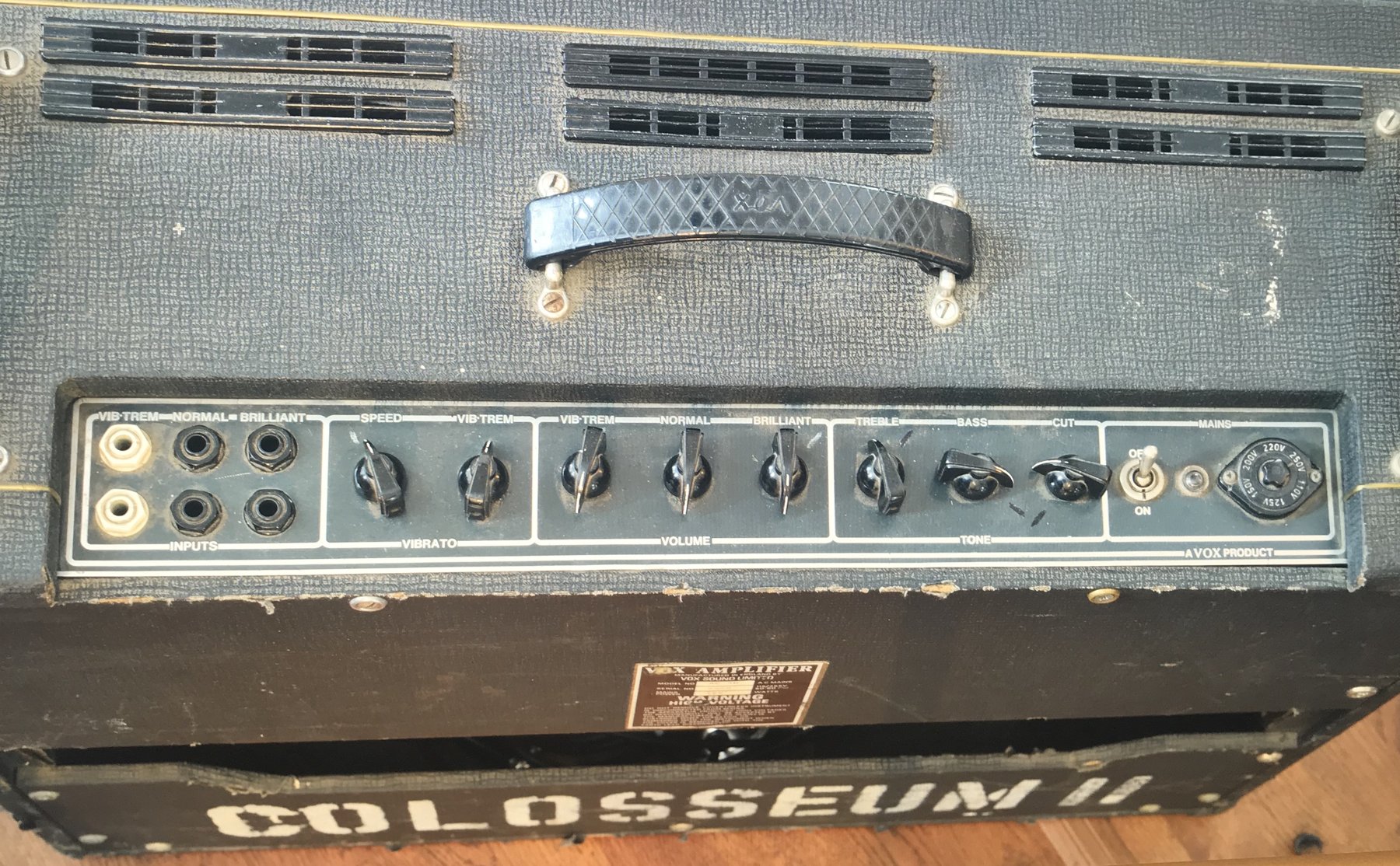
Here's the part that surprises people. Top Boost didn't start as a model. In 1961 it was a factory retrofit for owners who already had an AC30 and wanted it brighter. Vox would add an extra preamp valve and install a small plate with bass and treble controls on the back of the amp, reachable through a cutout in the back panel.
It caught on. In 1963 Vox made Top Boost standard on the AC30/6, moving the bass and treble controls to the top panel. The extra gain and shimmer it added became the defining AC30 sound, the one most people mean when they talk about chime. That same year, Vox began offering a black vinyl covering in place of fawn, which gave us the black-and-diamond look that's still the default today.
| Year | AC30 milestone |
|---|---|
| 1958 | JMI releases the AC15, its first guitar amp |
| 1959 | First AC30: 1x12, two EL34s, TV-front cabinet |
| 1960 | AC30/4 and AC30/6 Twins: 2x12, four EL84s, GZ34 rectifier; Celestion T.530 "blue" speaker arrives |
| 1961 | AC30/4 discontinued; Super Twin head launched; Top Boost offered as a factory retrofit |
| 1963 | Top Boost becomes standard on the AC30/6; black covering offered |
| 1964 | Jennings sells a majority stake in Vox to the Royston Group |
| 1966 | Most Vox tube models dropped except the AC30 Twin and AC50 Super Twin |
| 1992 | Korg buys Vox |
| 2004 | TBX line ends; AC30CC and Handwired AC30 introduced |
Beatlemania and the British Invasion
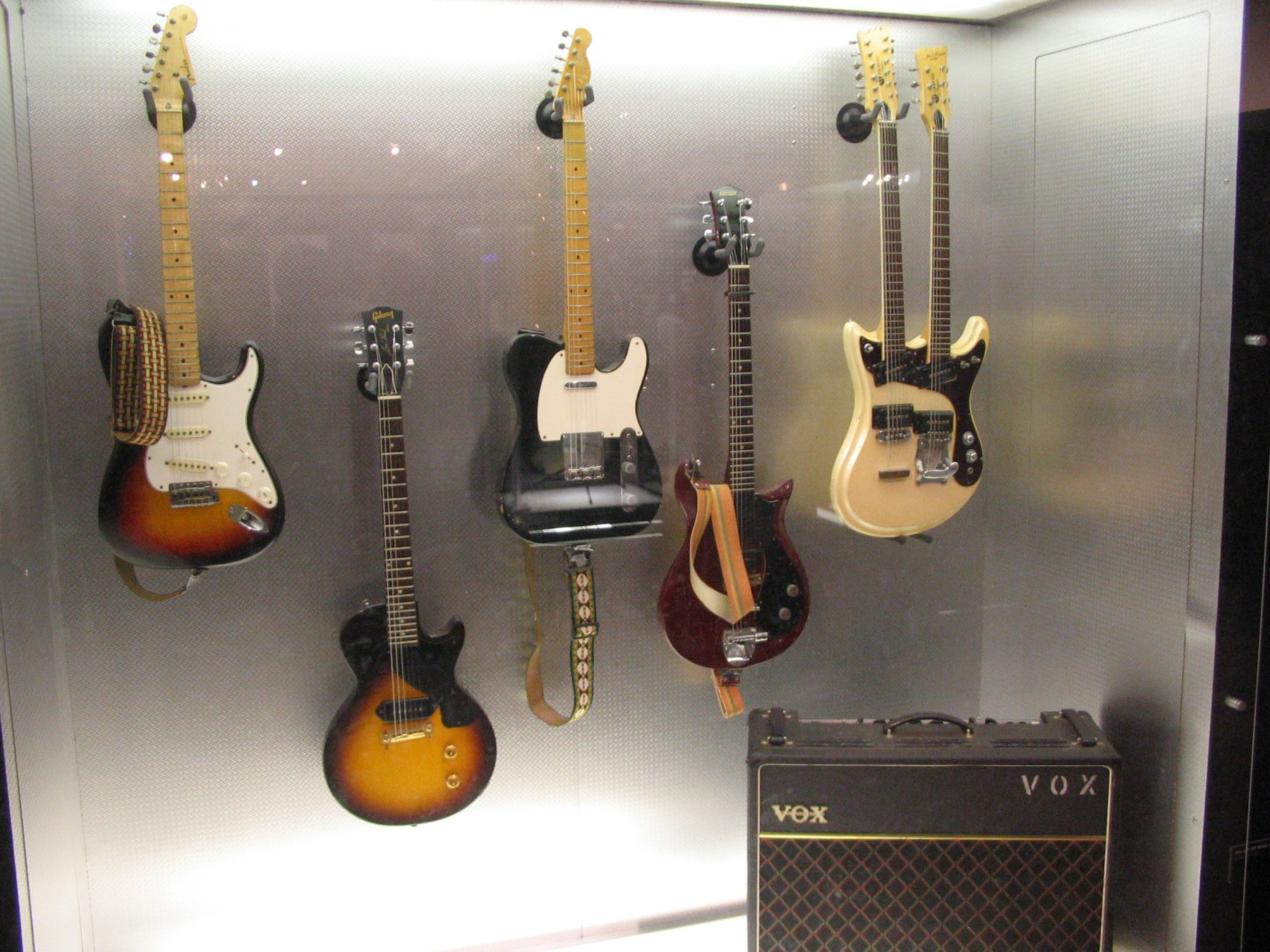
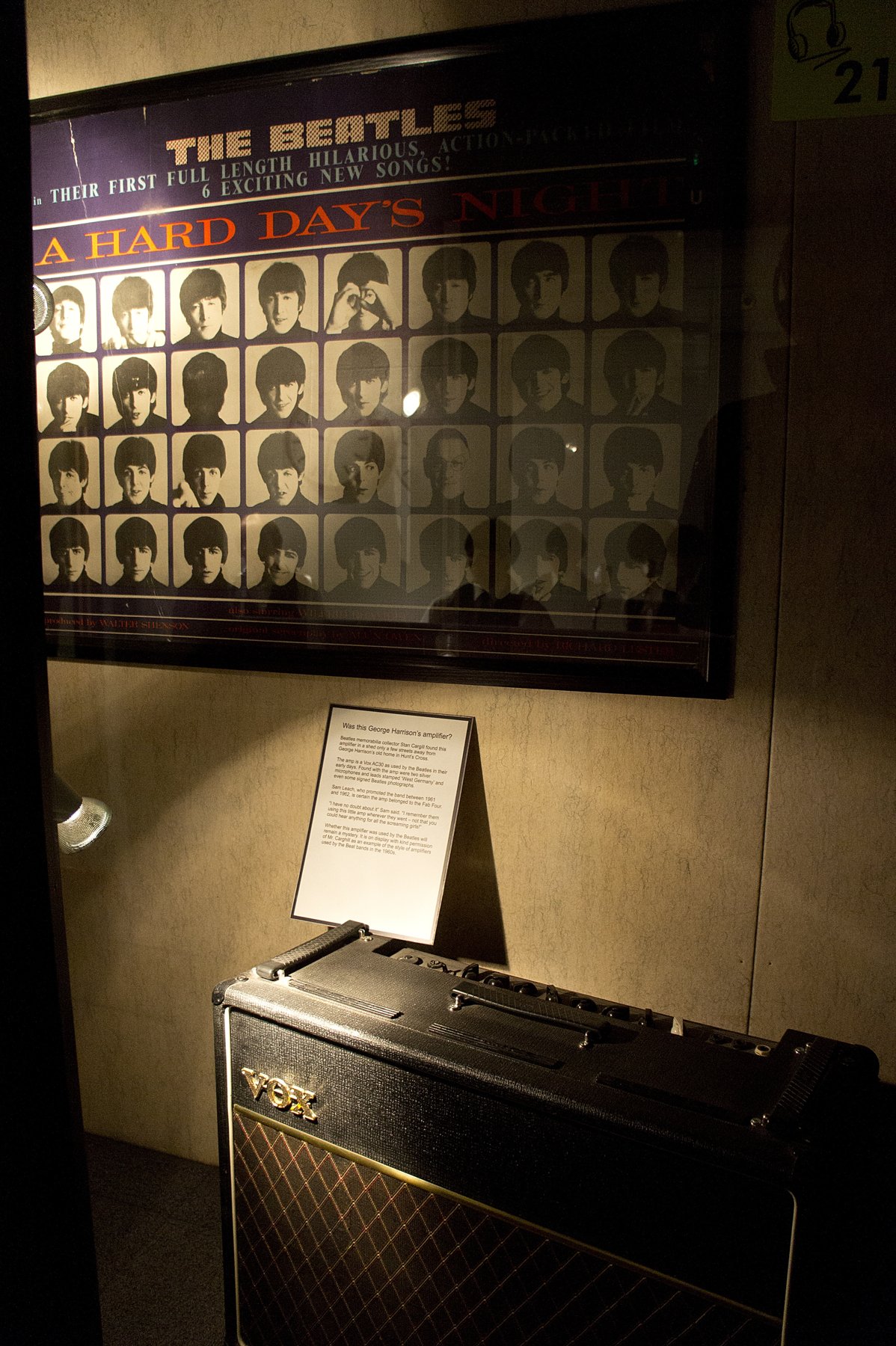
By 1963 most of the AC15's endorsers had moved up to the AC30, including the Beatles. George Harrison and John Lennon helped make it the sound of the moment, and Beatlemania carried Vox to success in both Britain and America.
It's worth being precise about this, because the story gets inflated. The Beatles used AC30s for a fairly short period in 1963. As crowds got louder, they moved on to more powerful Vox amps, and Vox developed the EL34-powered AC50 and AC100 largely to meet their need for volume. Those bigger amps stayed clean until much higher volumes than other famous amps of the day, and they've never been as prized on the vintage market as the AC15 and AC30.
Still, the AC30 defined the era. Jeff Beck, Eric Clapton and Jimmy Page all used AC30s in the Yardbirds. The Rolling Stones, the Kinks and the Who used them too. In early 1964 Vox even released a 2x15 version with Top Boost, the AC30X, or Expanded Frequency Fifteen.
Is the AC30 Really Class A?
This is the most common myth about the amp, and it's worth clearing up. The AC30 is widely described as a class A amplifier, but it's actually class AB. It uses four cathode-biased EL84 output valves in a push-pull configuration.
The confusion is understandable. The output valves run hot, and some players credit that bias setting for the amp's immediate response and bright top end. But several other design choices matter at least as much:
- No negative feedback: the power amp isn't reined in the way many American designs are, so it reacts quickly and breaks up openly.
- A minimal preamp: there's not much circuitry between your guitar and the output stage.
- A simple, low-loss tone stack: especially in Top Boost form, the treble and bass controls don't suck much signal away.
- Cathode bias on the output valves: this contributes to the soft, compressed feel when you dig in.
- The speakers: as covered above, the Celestion Blues are a big piece of the voice.
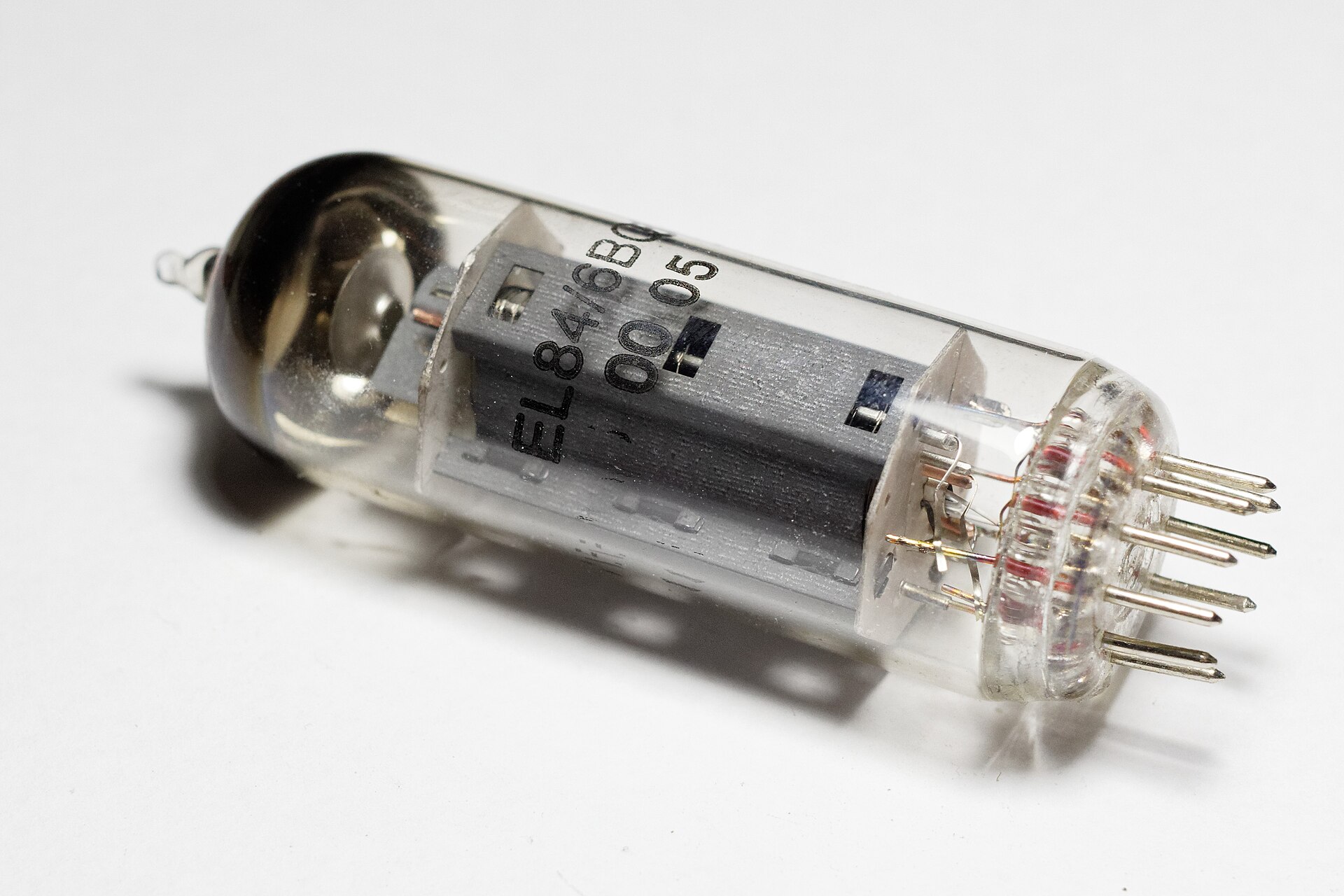
Photo: Retired electrician, CC0 (public domain dedication), via Wikimedia Commons
What an AC30 Actually Sounds Like
Writing in Guitar World, Joe Dean described the AC30 as "renowned for its honky midrange and sparkling high-end frequencies," and that's a fair summary. The midrange pushes forward, the top end has a glassy shimmer, and the amp tends to sit clearly in a mix, which is part of why it's been a studio favorite for decades.
It has real headroom for clean playing, with a character that's different from a Fender or Marshall clean. But it also breaks up easily when you push it, and many players find its sweet spot somewhere between fully clean and fully distorted, where it starts to compress and grit up as you pick harder. Brian May, in an interview with Total Guitar, credited the amp with a smooth transition into compression and distortion, and that zone is where it's at its most expressive.
The trade-offs are real. An AC30 can lack low-end warmth, especially at low volumes or with the Top Boost circuit engaged. That thinness tends to go away as the volume goes up. If you mostly play at bedroom levels, that's worth knowing before you buy one.
The treble booster connection
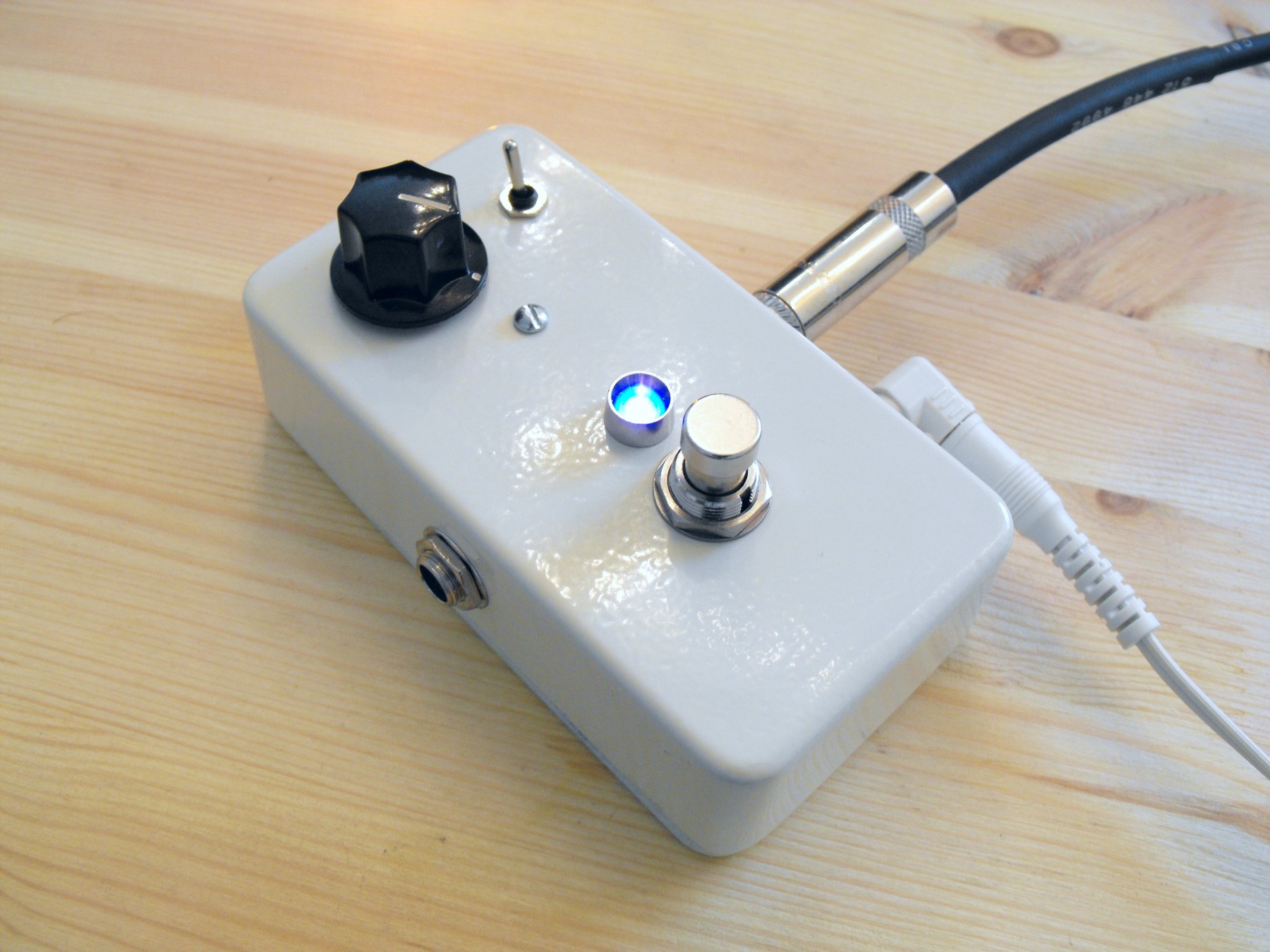
One of the most important AC30 pairings costs very little: a treble booster. Rory Gallagher ran a Dallas Rangemaster into his AC30, and Brian May did the same to build the singing, high-treble lead sound on Queen records (we break down how Brian May got his Queen tone in a separate piece). May's use of the combination helped keep the AC30 popular through the 1970s, when louder, darker amps were the fashion.

Ownership Changes and Hard Years
Vox's business history is a lot rockier than the amp's reputation. By the mid-1960s Jennings needed capital to keep expanding. In 1964 he sold a majority stake in Vox to the Royston Group, which struck a deal with an American manufacturer to build Vox-branded solid-state amps. Those were considered poor quality and damaged the name.
English-built Vox tube amps carried on, but by 1966 every model except the AC30 Twin and AC50 Super Twin had been dropped. Jennings and Denney left Vox the following year.
The 1970s weren't kind either. In 1970 a struggling JMI, losing ground to Marshall and Hiwatt, became Vox Sound Ltd. and released an AC30 built on cheaper printed circuit boards instead of hand-wired construction. CBS-Arbiter bought the company two years later and moved production to a new plant, and quality slipped further. Jennings stayed on as a consultant until his death in 1978. Rose Morris, who had been Marshall's distributor, then took over the brand, with mixed results.
Meanwhile, the original JMI-era AC30s from the 1960s were becoming prized on the growing vintage market. In 1990 Rose Morris released a limited run of AC30s with improved specs, and it sold well. A standard production model, the AC30 Vintage, followed.
The Korg Era and the Modern AC30
In late 1992, Rose Morris sold Vox to the Japanese company Korg. Korg made a series of improvements, most notably restoring the GZ34 rectifier and fitting the newly reissued Celestion Alnico Blue speaker. A few years later the revised AC30TBX was well received and helped keep the brand profitable.
In 2004 Vox ended the TBX line and split the AC30 in two directions. The AC30CC (Custom Classic) was built in China as an affordable option, while the limited high-end Handwired AC30 was as close to a vintage amp as you could buy new. The move to Chinese manufacturing was criticized at the time, and Vox argued that full U.K. production was no longer viable.
Later versions include the Brian May signature AC30BM in 2006, the Custom series in 2010, which updated the Custom Classics, and the AC30 Hand-Wired in 2025.

Photo: massygo, edited by Retired electrician, CC BY 2.0, via Wikimedia Commons
The Players Who Kept It Going
The AC30 didn't fade with the British Invasion. Each generation seems to rediscover it for a different reason.
Tom Petty and Mike Campbell started out with bigger amps like the Vox Super Beatle, then moved to AC30s as their main amps for much of their careers. That jangly, open sound on Heartbreakers records owes a lot to the switch.

The Edge built much of U2's sound by running AC30s with delay pedals, using the amp's clarity to keep layered repeats from turning to mud. If you've ever wondered why a dotted-eighth delay sounds so good through a Vox, it's partly because the amp's upper mids cut through without getting harsh.

Peter Buck of R.E.M. carried the jangle tradition into alternative rock, alongside Dave Grohl, Ed O'Brien and Thom Yorke of Radiohead, and Matt Bellamy of Muse. Even outside rock, jazz guitarist John Scofield has favored the AC30, and country star Brad Paisley has used one too.

The range is the point. Surf-influenced instrumentals, Merseybeat, guitar orchestras, stadium delay textures, college rock, Britpop and modern country have all leaned on the same basic circuit. Guitar World recently named the AC30, the Fender Deluxe Reverb and the Marshall Plexi as the three amps that keep turning up on records decade after decade, and it's hard to argue with that list.
AC30 vs AC15: Which One Makes Sense?
If you're thinking about a Vox, the question usually comes down to these two. Here's how the classic formats compare, based on the designs described above:
| AC15 | AC30 | |
|---|---|---|
| Power valves | Two EL84s | Four EL84s |
| Classic speaker format | 1x12 | 2x12 |
| Rated output | 15 watts | 30 watts |
| Where it shines | Clubs, home and studio, earlier breakup | Larger stages, more headroom, bigger low end at volume |
| Main drawback | Runs out of clean volume sooner | Heavy, loud, and thin at very low volumes |
For most home players, an AC15 gets you the voice at a volume you can actually use. If you play live with a loud drummer, or want clean headroom with chime on top, the AC30 is the one the legends used.
Why the AC30 Still Matters
The Vox AC30 history is a story of small decisions that added up. A guitarist asked for more volume. An engineer tried the obvious fix with EL34s, then went back to four EL84s instead. A speaker was redesigned because the designer didn't like the old one. A brighter tone control started life as a retrofit and became the standard.
None of those choices was made to create a legend. Together they produced an amp with a voice so distinct that, more than 65 years later, guitarists still describe their tone by comparing it to one. If you want to understand British rock guitar, from the Shadows to Queen to U2, the AC30 is one of the best places to start.
Got an AC30 story, or a favorite way to set one up? Tell us in Guitar Talk, and read why the Marshall JCM800 is still the king of rock tone for the other side of the British amp story.
Experience-driven coverage, not algorithm bait.
- 20+ years of guitar playing experience
- Real-world retail experience at Guitar Center
- Thousands of hours testing guitars, amps, and pedals
- A community of 50,000+ guitar enthusiasts across platforms
- Partnerships with Fender, DistroKid, TrueFire, Card Chords, and Enya
- Editorial standards published openly — see how we test gear
The Modern Guitar Magazine. Delivered to your inbox.
No spam. No gimmicks. Just great guitar content — stories, tones, iconic solos, and honest gear takes. Every week.
Ask GP
3 free questions a dayStill curious? Ask GP about this story.
Your personal classic-rock and guitar guide — ask anything about The Vox AC30 History.
Discussion (0)
Sign in to join the discussion.
Sign in to commentLoading comments…
Discover another guitar story
Swipe through our latest features, breaking news and iconic solos — one story at a time.
Open Swipe →More Guitar News

How Brian May Got His Legendary Queen Guitar Tone: Gear, Secrets & Settings
From the homemade Red Special to the Vox AC30, the sixpence coin, and the treble booster — how Brian May built one of the most recognizable guitar voices in history.

Why the Marshall JCM800 Is Still the King of Rock Tone
Four decades on, the 100-watt JCM800 2203 still defines hard rock bark. We compare a vintage 1984 head with the current 2203X to explain why nothing punches a mix like an 800.
History of the Riff: The Kinks' "You Really Got Me" — How Two Power Chords and a Sliced Speaker Invented Hard-Rock Guitar
After Rumble taught the guitar to threaten and Misirlou taught it to sprint, Dave Davies' 1964 two-chord smash taught it to punch the charts — with a razor-cut Elpico, a Vox slave, and zero apology.
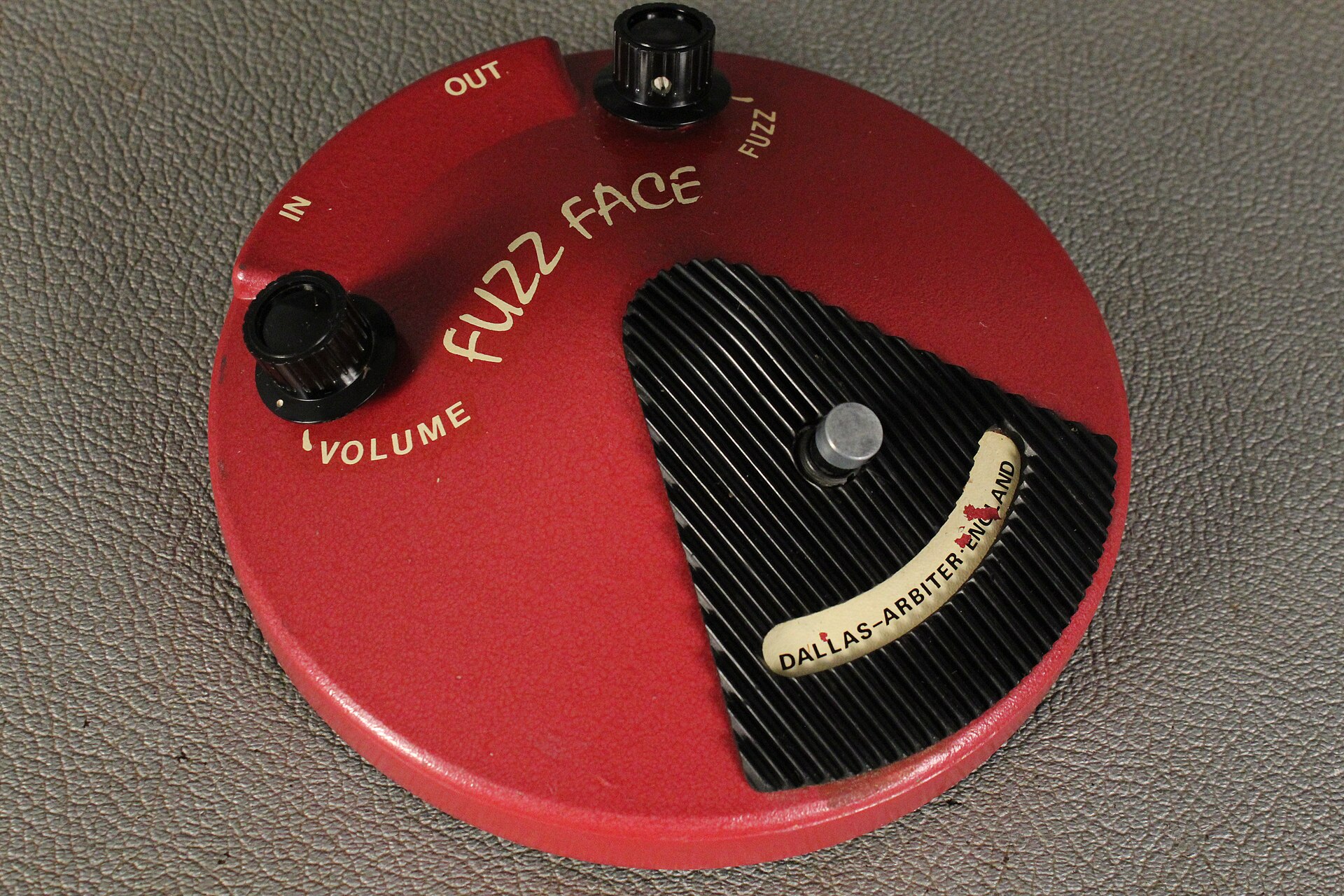
The Fuzz Face History: How a Cheap Copy in a Mic-Stand Base Outlived Its Flaws
The Fuzz Face was a borrowed circuit in a mic-stand base, and half of them sounded bad. Here's how it became Hendrix's fuzz and still sells 60 years later.