Happy Birthday, Joe Perry: The Riff Machine Who Gave Aerosmith Its Swagger
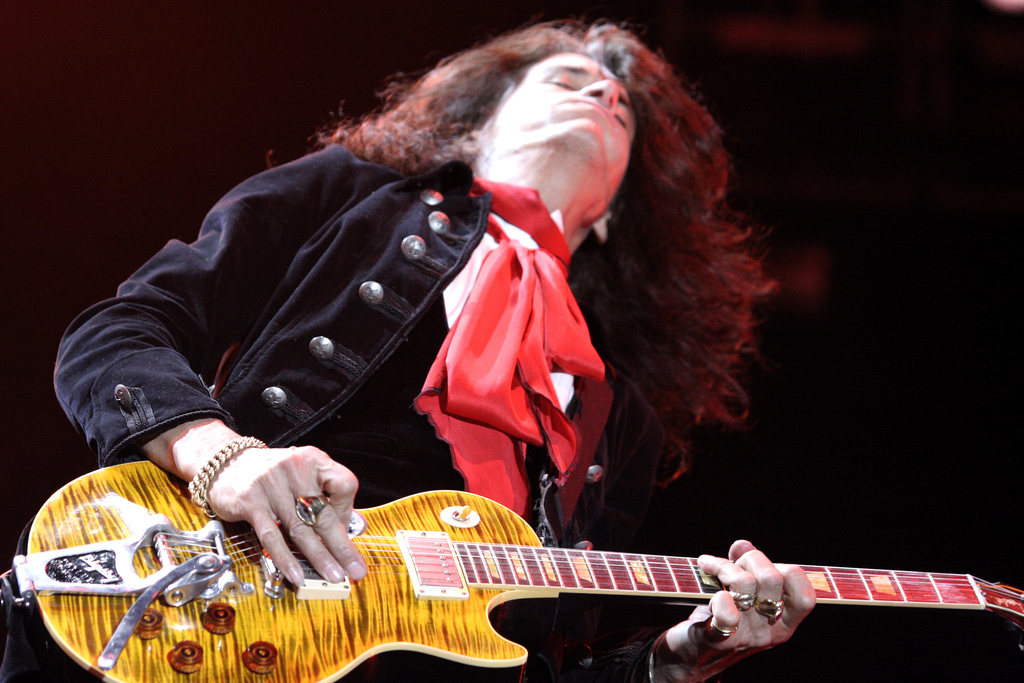
Joe Perry performing with Aerosmith, 2007. Photo by daigooliva via Wikimedia Commons, licensed under CC BY-SA 2.0.
Joe Perry turns 76 today. From the swampy grind of “Sweet Emotion” to the reunion that saved a band, this is the career of the guitarist who taught American hard rock how to strut.
Joe Perry was born on September 10, 1950, in Lawrence, Massachusetts, which makes today his 76th birthday. That is the news peg. The real story is older and stranger: for more than fifty years, one guitarist has been responsible for the specific feeling that a certain kind of American rock and roll gives you — loose, filthy, half a beat behind, absolutely certain of itself. That feeling has a name. It is Joe Perry.
You can hear it in four bars. The lurching, harmonised grind that opens “Walk This Way.” The talk-box slither at the top of “Sweet Emotion.” The gallop of “Back in the Saddle.” None of those parts are technically difficult. Every one of them is nearly impossible to play correctly, because what makes them work is not the notes but the way Perry leans on them.
[TOC]
• He gave American hard rock a blues-based rhythm vocabulary at a moment when the genre was drifting toward European heaviness.
• His riffs are groove-first: they swing, they breathe, and they leave enormous space for a singer.
• The Perry–Tyler partnership became the template for the two-man rock and roll engine — guitarist and frontman locked in a mutual argument.
• He survived the collapse of his own band, rebuilt it, and then helped it become bigger the second time around, which almost nobody manages.
Lawrence, Massachusetts, and a Kid Who Wanted Out
Perry grew up in Hopedale, Massachusetts, a small New England town where a teenager with a guitar had two options: get very good, or get very bored. He got very good, though not in the way guitar magazines usually mean. He was not a prodigy running scales in a bedroom. He was a kid obsessed with British blues records — the Yardbirds, the Rolling Stones, Fleetwood Mac when Peter Green was still in it — and, through them, with the American blues players those bands were rewriting.
That lineage matters. Perry's playing is descended from Chicago blues by way of London. It carries the grit of the originals and the volume of the imitators. When he finally started writing his own material, he wrote riffs that behave like blues licks that got a record deal.
The band came together in Boston in 1970, after Perry met a drummer-turned-singer named Steven Tyler in Sunapee, New Hampshire. With bassist Tom Hamilton, drummer Joey Kramer and, shortly after, guitarist Brad Whitford, Aerosmith started playing New England clubs relentlessly. The self-titled debut arrived in 1973 and did almost nothing at first. It contained “Dream On.”
1975–1976: Two Albums That Rewired American Rock
Everything Perry is remembered for is compressed into eighteen months.
Toys in the Attic landed in 1975 and turned Aerosmith into a headline act. “Walk This Way” is the famous one, and its main figure is a masterclass in how to make a guitar part feel like a strut rather than a sprint. The riff sits behind the beat and refuses to hurry. The chromatic movement is bluesy but abrupt. Played straight, at a metronomic tempo, it sounds like nothing. Played with Perry's push and pull, it sounds like an entire attitude.
“Sweet Emotion” is the deeper achievement. The intro — that vowel-bending talk-box phrase floating over Tom Hamilton's bass — is one of the most recognisable openings in American rock, and the main riff that follows is almost aggressively simple. What sells it is dynamics: how hard he digs in on the accent, how much he lets go on the rest, the way the guitar seems to breathe with the singer instead of over him.
Then, in 1976, came Rocks, which a certain generation of guitarists will tell you is the better record. It is meaner and less polished. “Back in the Saddle” opens with a huge, low, galloping figure. “Last Child” is pure funk-informed rhythm playing. “Rats in the Cellar” is a band playing at the edge of falling apart, which is exactly where Aerosmith always sounded best. Slash, Kirk Hammett and countless others have pointed at Rocks as a formative record, and the reason is simple: it is a guitar album about feel, not about technique.
For most players chasing that era, the gear question is a short one — a humbucker-loaded solidbody into a cranked British-voiced amp. Guitarists working toward that sound often start with a Gibson Les Paul Standard or the far more affordable Epiphone Les Paul Standard 50s. For the “Sweet Emotion” intro specifically, you need a talk box — there is no plugin shortcut that behaves the same way, because the effect is produced in your mouth.
The Rhythm Player Nobody Calls a Rhythm Player
Guitar culture has a bad habit of ranking players by solos. By that measure Perry is underrated, because his solos are almost never the point. They are short, vocal, slightly ragged, and frequently sound like a man arguing with the song rather than decorating it.
Get Joe Perry’s “Sweet Emotion” Tone
Tell ToneMD what guitar and gear you own and we’ll show you how to get as close as possible using the equipment you already have — full signal chain, real numbered settings, no guesswork.
Included with The Guitar Plugged Premium
His real contribution is rhythm guitar as composition. Listen to how much of Aerosmith's catalogue is built from a guitar part that could not be replaced by a keyboard, a synth pad or a producer's loop. “Last Child.” “Lord of the Thighs.” “Same Old Song and Dance.” “Mama Kin.” These are grooves first, riffs second, and melodies a distant third.
It also helps that he was never working alone. Brad Whitford is one of the most quietly excellent second guitarists in rock, and the Perry–Whitford relationship — one loose and provocative, one precise and structural — is a large part of why Aerosmith records sound thicker than the parts on paper suggest.
1979: The Band Falls Apart
By the end of the 1970s the machine was failing. Drugs, exhaustion, money, ego, and a level of touring that would break most bands took hold. Perry left Aerosmith in 1979 and formed the Joe Perry Project, releasing Let the Music Do the Talking in 1980.
The Project records are worth revisiting on a birthday, because they show Perry with nothing to hide behind. No Tyler. No arena. Just a guitarist fronting a hard rock band, playing raw and often ragged, working in the same blues-rock language with a fraction of the budget. The title track was good enough that Aerosmith later reclaimed it.
Whitford left too. Aerosmith limped through Rock in a Hard Place in 1982 with replacement players, and for a few years it genuinely looked over.
1984–1993: The Comeback Almost Nobody Gets

X Concepts Strings • Made in USA
Never Run Out of Strings Again.
Join the X Concepts String Club and get fresh USA-made strings delivered every month—plus Premium membership options for the full Guitar Plugged experience.
Perry and Whitford returned in 1984. Done with Mirrors followed in 1985 and underperformed, but something else that year mattered far more.
In 1986, Run-D.M.C. rebuilt “Walk This Way” with Perry and Tyler on the record and in the video. It is one of the genuinely important recordings in American popular music — not because it was the first meeting of rap and rock, but because it was the one that broke through commercially and forced two audiences into the same room. It also handed Aerosmith the improbable gift of relevance to teenagers who had not been born when Rocks came out.
What followed was the second career. Permanent Vacation in 1987. Pump in 1989, with “Love in an Elevator” and “Janie's Got a Gun.” Get a Grip in 1993, with “Cryin',” “Livin' on the Edge” and “Amazing.” Bigger production, outside co-writers, MTV, arenas that never emptied.
“Perry never played the most notes in the room. He played the ones that made you walk differently.”
Purists grumbled, and there is a fair argument that the polish of the late-'80s records sanded down some of the danger. But listen closely to Perry's playing across that stretch and the identity is intact. The tone is cleaner. The parts still swagger. “Love in an Elevator” is, underneath the gloss, exactly the kind of hip-swinging figure he was writing in 1975.
The Tone: Why It Is Harder to Copy Than It Looks
Perry's sound is often described as “Les Paul into a cranked Marshall,” which is true and almost useless. Plenty of players own both and sound nothing like him.
Three things matter more than the gear list.
Gain discipline. There is far less distortion on those records than memory suggests. The guitars sound big because they are loud and mid-heavy, not because they are saturated. Modern players routinely use twice the gain and lose the pick attack that makes the riffs speak.
Pick attack and timing. Perry plays hard, and he plays late. The groove sits behind the drums. If you quantise his parts they die instantly.
Slide and open tunings. A large amount of his signature phrasing comes from slide work and from tunings other than standard — an area most players skip when they try to learn his catalogue from tab.
He has spent decades playing Gibson solidbodies, most famously Les Pauls, and Gibson has produced signature models associated with him, including the Boneyard. But the honest advice for a player chasing this sound is to spend less on the guitar and more on the right hand.
Hollywood Vampires, Solo Records and the Long Third Act
Perry never stopped working outside Aerosmith. He has released solo albums across four decades, played on other people's records, and since 2015 has toured and recorded with the Hollywood Vampires alongside Alice Cooper and Johnny Depp — a covers-heavy rock band that is, at heart, an excuse for a group of veterans to play the songs they grew up on.
Aerosmith announced their retirement from touring in 2024 following Steven Tyler's vocal injury, which brought the band's road career to an end after more than fifty years. The two have continued to work together in other forms since, including the 2025 collaboration with Yungblud that produced the One More Time EP.
That is the unusual part of Perry's story. Most guitarists of his era are either gone, retired, or repeating themselves. He is 76 today and still recording.
Five Perry Performances Worth Playing Today
1. “Sweet Emotion” (1975) — the talk-box intro and the most economical riff of his career. 2. “Back in the Saddle” (1976) — huge, low, unhinged, and recorded with a six-string bass on the main figure. 3. “Last Child” (1976) — the funk-rock rhythm playing that most Aerosmith tributes ignore. 4. “Walk This Way” (1986, with Run-D.M.C.) — the same riff, a new context, a genuine cultural hinge point. 5. “Let the Music Do the Talking” (1980) — Perry with no safety net.
Explore Joe Perry's Music and Gear
The Guitar Plugged may earn a commission from purchases made through links in this article, at no extra cost to you.
If today sends you back to the catalogue, start with Toys in the Attic and Rocks — the two records that define him. The Joe Perry Project's Let the Music Do the Talking is the one most people have never heard.
On the gear side, options for exploring this style rather than claims about his exact rig: a humbucker-equipped solidbody such as an Epiphone Les Paul Standard 50s, a glass or brass guitar slide for the slide phrasing, and a talk box if “Sweet Emotion” is the goal. Used-market Les Pauls and British-voiced amps are worth a look before anything new.
Happy Birthday, Joe
There is a version of rock history where Aerosmith are a footnote — a Boston bar band who made one good record and burned out by 1980. That version very nearly happened.
What prevented it was, in large part, a guitarist who kept writing parts that people could not stop moving to. Perry never played the most notes in the room. He played the ones that made you walk differently. At 76, that is a better legacy than speed.
Happy birthday, Joe. Put on Rocks.
Related Reading
Experience-driven coverage, not algorithm bait.
- 20+ years of guitar playing experience
- Real-world retail experience at Guitar Center
- Thousands of hours testing guitars, amps, and pedals
- A community of 50,000+ guitar enthusiasts across platforms
- Partnerships with Fender, DistroKid, TrueFire, Card Chords, and Enya
- Editorial standards published openly — see how we test gear
The Modern Guitar Magazine. Delivered to your inbox.
No spam. No gimmicks. Just great guitar content — stories, tones, iconic solos, and honest gear takes. Every week.
Ask GP
3 free questions a dayStill curious? Ask GP about this story.
Your personal classic-rock and guitar guide — ask anything about Happy Birthday, Joe Perry.
Discussion (0)
Sign in to join the discussion.
Sign in to commentLoading comments…
Discover another guitar story
Swipe through our latest features, breaking news and iconic solos — one story at a time.
Open Swipe →More Guitar News
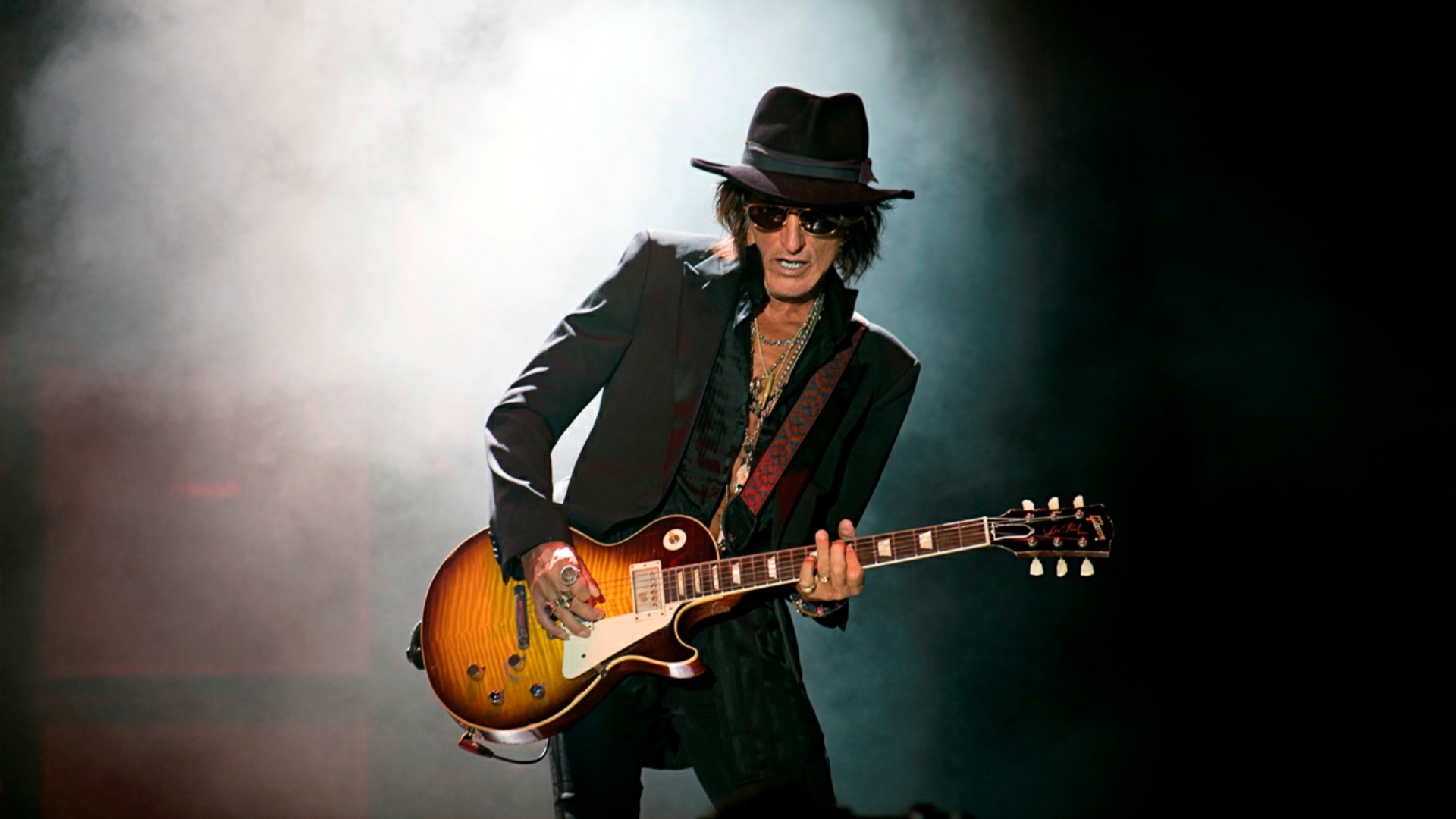
Joe Perry's Guitar Tone Decoded: The Secret Sauce Behind Aerosmith's Legendary Sound
Inside Joe Perry's iconic tone — the vintage Les Pauls, cranked Marshalls, key pedals, and playing techniques that define Aerosmith's sound.
Top 10 Guitar Tones of All Time: The Sounds That Changed Music Forever
From Brian May's orchestra-in-one-guitar to Eddie Van Halen's Brown Sound, these are the ten greatest guitar tones ever captured on tape — and the rigs that made them legendary.

The 25 Greatest Guitarists of All Time
From Jimi Hendrix and Eddie Van Halen to Mark Knopfler, Randy Rhoads and Duane Allman, these are the players who changed what the guitar could do.
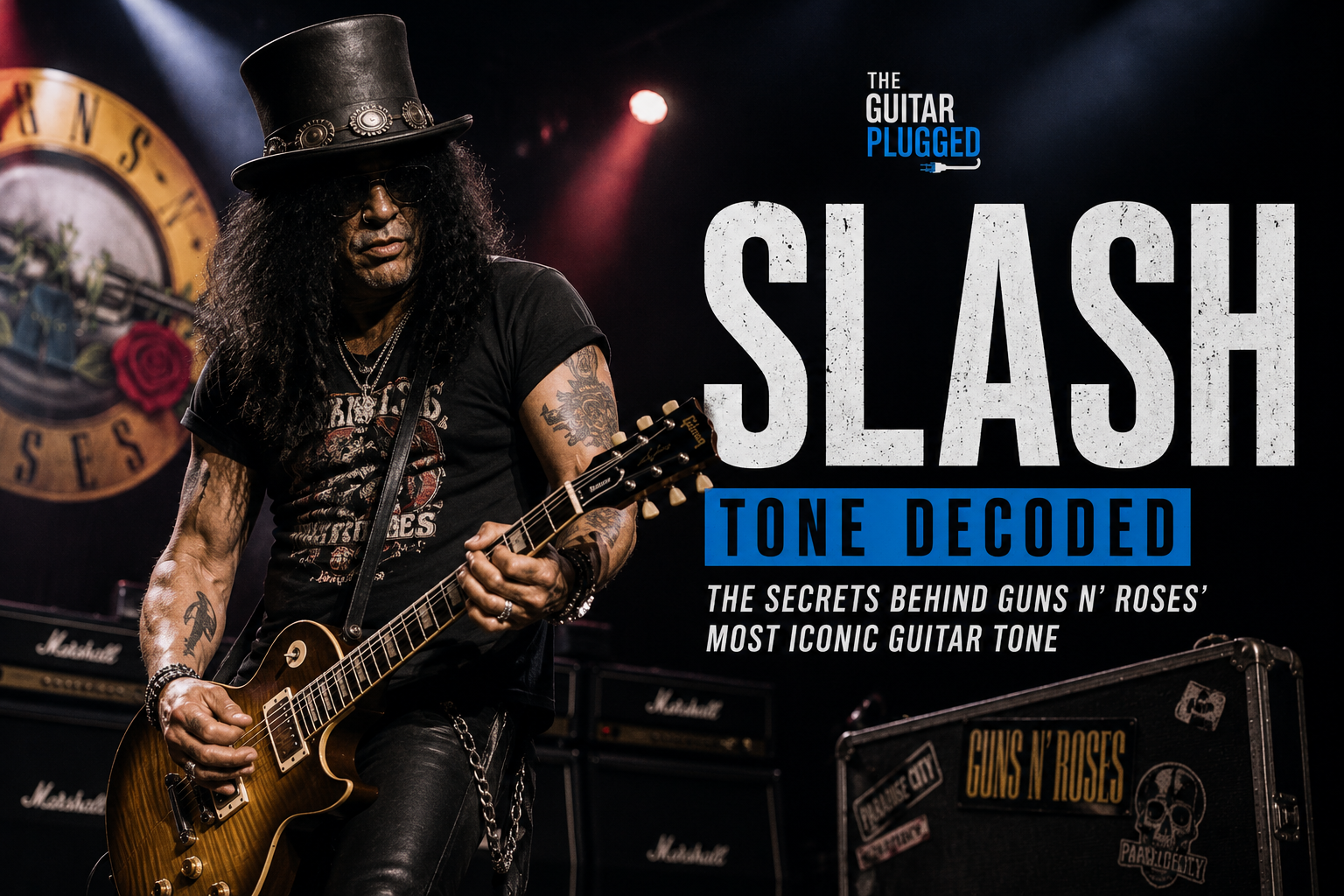
Tone Decoded: How Slash Created One of Rock's Most Iconic Guitar Tones
Few guitar players have a tone as instantly recognizable as Slash. We break down the Les Paul into Marshall formula, the Appetite for Destruction sound, the Alnico II pickups, the phrasing, and why his sound still defines rock guitar today.