Slash Has Used a Talk Box Since He Was 16. Now MXR Has Built One Specifically for Him
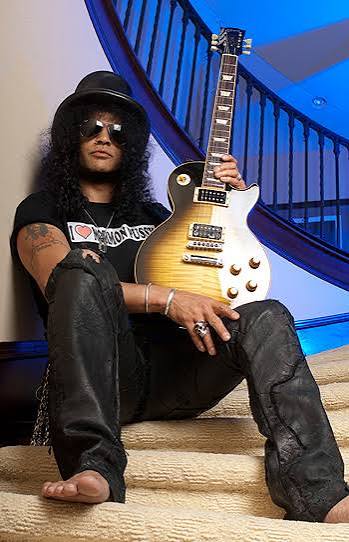
Slash performing live. Photo used under license; not a photograph of the MXR Slash Signature Talk Box.
The new MXR Slash Signature Talk Box takes one of rock guitar's strangest and most expressive effects, traces it back through Peter Frampton, Jeff Beck and Aerosmith, and rebuilds it around the unmistakable voice of Slash.
There are certain pieces of equipment so closely connected to Slash that you can almost hear them before he plays a note.
A sunburst Les Paul. A cranked British-style amplifier. A Cry Baby wah sitting somewhere near the front of the stage.
The talk box doesn't usually make that short list.
Maybe it should.
Slash has revealed that his relationship with the effect stretches back to his teenage years, and now that decades-long fascination has resulted in something remarkably appropriate: the MXR Slash Signature Talk Box.
This isn't simply another signature pedal with a famous guitarist's name printed across the enclosure. The story behind it reaches back to some of the most recognizable guitar sounds of the 1970s and eventually connects Peter Frampton, Jeff Beck and Aerosmith to a 16-year-old Slash discovering just how far an electric guitar could be pushed beyond sounding like an electric guitar.
And that's what makes this release interesting.
The talk box has always occupied a strange corner of the guitar world. It isn't quite a conventional effect. It isn't a synthesizer. It isn't a wah. It doesn't simply alter your tone after you step on a switch.
Instead, it effectively allows the guitarist's own mouth to become part of the signal-shaping process.
For Slash, that's the entire point.
[TOC]
Slash's Talk Box Story Started at 16
Long before Guns N' Roses became one of the biggest rock bands on the planet, Slash was listening to guitarists who had already discovered that the instrument could practically speak.
He specifically points to three recordings.
Peter Frampton's “Do You Feel Like We Do.”
Jeff Beck's version of “She's a Woman.”
And Aerosmith's live “Walk This Way.”
Slash says he's owned a talk box since he was 16.
That detail puts the new MXR pedal into a different context. This isn't an effect Slash recently discovered or something created simply because another signature product made sense.
It's part of the vocabulary he absorbed while he was still developing his own identity as a guitarist.
Frampton is probably the most obvious reference.
The extended talk-box passages in “Do You Feel Like We Do” helped turn what could have remained an obscure guitar effect into something recognizable even to people who couldn't tell you what a talk box actually was.
The guitar suddenly seemed capable of forming words.
But Jeff Beck demonstrated another side of the concept. His use of the effect showed how vocal phrasing could become intertwined with the personality of the guitarist.
Aerosmith brought yet another version of that attitude into hard rock.
For a young Slash absorbing blues, hard rock and the expressive possibilities of the electric guitar, those sounds clearly stuck.
Decades later, they still have.
A Guitar Effect That Literally Uses the Player
Part of what makes a talk box fascinating is how physical it is.
Modern guitar rigs can contain extraordinarily sophisticated digital processors capable of reproducing entire amplifier collections, cabinets, microphones, reverbs and signal chains inside a single box.
A talk box feels almost primitive by comparison.
And that's part of its magic.
The guitar signal drives a speaker inside the talk box. Rather than sending that sound directly through a traditional guitar cabinet, the sound travels through a plastic tube positioned near the player's mouth.
The guitarist then changes the shape of their mouth.
Those movements filter the sound.
A microphone captures the result.
In other words, the guitarist becomes part of the effect.
Your mouth essentially functions as an acoustic filter.
Move it as though you're forming different vowels and the harmonic content changes. Shape words and the guitar begins producing the illusion of speech.
That's why two players using the same talk box don't necessarily sound identical.
The effect is tied directly to phrasing and physical expression.
And that connection helps explain why Slash places it in unusually prestigious company.
He compares the talk box to the Cry Baby wah as an effect capable of transforming the guitar into an extension of the player's voice.
Coming from Slash, that's significant.
The wah pedal isn't an occasional novelty in his playing. It has become part of the expressive grammar people associate with him.
The talk box approaches expression from another direction.
A wah lets the player's foot manipulate a resonant frequency peak.
A talk box lets the player's mouth do it.
Different technology.
Similar philosophy.
The guitar stops behaving like a static instrument and starts reacting almost like a voice.
MXR Didn't Simply Repaint an Existing Talk Box
The new MXR Slash Signature Talk Box takes the classic Heil design as its foundation.
That matters because the Heil-style talk box sits at the center of the effect's rock history.
But MXR and Slash haven't simply recreated an old circuit and added a signature.
According to Dunlop, the design has been modified in several important areas.
One of the biggest changes is the loudspeaker.
MXR fitted the unit with an upgraded speaker personally selected by Slash, designed to produce greater volume along with a fuller low-frequency response.
That extra low end could be particularly important.
Traditional talk boxes can produce an aggressive, nasal midrange — part of their charm, certainly, but also something that can make the effect feel thinner when placed alongside a large modern guitar sound.
Slash's version is intended to retain more weight.
That makes sense when you consider the type of guitar tone associated with him.
Slash's sound has rarely been about surgical precision. Even at its most aggressive, there's usually thickness underneath the attack — a combination of humbuckers, British-style amplification, midrange and the physical push of a loud guitar rig.
A thin talk-box sound sitting on top of that could feel disconnected.
A heavier bottom end should allow the effect to integrate more naturally with the rest of the rig.
There's Another Clever Change Hidden in the Tube System
MXR also redesigned the tube adapter.
Instead of treating the connection between speaker and tube as an afterthought, the new design uses a conical interior intended to improve airflow.
That might sound like a small engineering detail.
For a talk box, it isn't.
Air movement is fundamental to the way the effect works. The sound generated inside the unit has to travel through the tube efficiently before reaching the player's mouth.
Improving that pathway can affect clarity and articulation.
And articulation is everything when you're trying to make a guitar sound like it's talking.
A muddy talk box defeats the purpose.
You want the harmonics to react clearly as the player's mouth changes shape.
MXR says the combination of the upgraded loudspeaker and redesigned adapter gives the Slash model clearer articulation and a broader expressive range.
That's arguably more interesting than simply making the unit louder.
Volume gets attention.
Articulation makes the effect usable.
Then There's the Candy Apple Red Finish
Nobody is going to mistake this for a generic black utility pedal.
Want Slash’s Tone?
Tell ToneMD what guitar and gear you own and we’ll show you how to get as close as possible using the equipment you already have — full signal chain, real numbered settings, no guesswork.
Included with The Guitar Plugged Premium
The enclosure is finished in Candy Apple Red, a color that's been associated with Slash across previous pieces of signature gear.
It's unmistakably a Slash product without becoming cartoonish.
More importantly, MXR has streamlined the enclosure itself.
Talk boxes have historically looked more like pieces of specialized stage equipment than conventional guitar pedals.
That's understandable because mechanically they're doing something very different.
But the new enclosure brings the effect closer visually to the rest of a modern pedalboard.
There is something appropriate about that.
For decades the talk box has sometimes been treated like a novelty — something you bring out for one song.
This release makes an argument that it deserves a more permanent place in the guitarist's arsenal.
The Talk Box Was Never Just a Gimmick
It's easy to dismiss certain effects because they're immediately recognizable.
The wah has suffered from that.
So has the chorus pedal.
So has the talk box.
When an effect becomes famous enough, players sometimes associate it with a handful of songs rather than considering what the device actually allows them to do.
But the most expressive guitarists rarely use effects simply because the effect itself sounds interesting.
They use them to manipulate phrasing.
That's the important distinction.
Listen to great wah playing and the pedal isn't merely sweeping back and forth mechanically.
It's interacting with the notes.
The same principle applies to the talk box.
Used without intention, it can absolutely sound like a novelty.
Used musically, it creates something that almost no other guitar effect can reproduce.
A guitarist can bend a note while simultaneously reshaping its harmonic content with their mouth.
They can exaggerate vowels.
They can make a sustained guitar note appear to speak.
They can create rhythmic patterns with their mouth while the fretting hand holds a simple chord.
Suddenly the guitar isn't merely generating notes.
It's generating syllables.
That's why the effect has survived.
Frampton Proved What It Could Become
Any discussion of the talk box eventually arrives at Peter Frampton.
There were important users before and around him, but Frampton demonstrated the effect's potential on an enormous cultural scale.
“Do You Feel Like We Do” turned the talk box into theater.
Audiences weren't simply hearing an altered guitar tone.
They were watching a conversation between guitarist, instrument and crowd.
The effect worked because Frampton understood something fundamental about guitar playing: listeners respond to phrasing that resembles the human voice.
Blues guitar had already been proving that for decades.
Bends imitate vocal inflection.
Vibrato mimics the natural movement of a sustained sung note.
X Concepts Strings • Made in USA
Never Run Out of Strings Again.
Join the X Concepts String Club and get fresh USA-made strings delivered every month—plus Premium membership options for the full Guitar Plugged experience.
Slides connect pitches in a way a piano physically cannot.
The talk box simply takes that relationship one step further.
Instead of making the guitar resemble a voice metaphorically, it runs the guitar's sound through the player's actual mouth.
Jeff Beck Took the Idea Somewhere Else
Jeff Beck was perhaps an even more interesting influence for a guitarist like Slash.
Beck spent much of his career trying to erase the boundary between player and instrument.
Volume controls, tremolo manipulation, harmonics, bends and touch became part of an incredibly vocal approach to the electric guitar.
His use of the talk box fit naturally into that philosophy.
For Beck, effects weren't there to cover the guitar.
They extended what the guitar could communicate.
That same principle runs through Slash's best playing.
Despite all the mythology surrounding the Les Pauls, Marshall-style tones, top hat and rock-star image, Slash's greatest strength has always been phrasing.
You can often recognize him within a few notes.
“A wah lets the player's foot manipulate a resonant frequency peak. A talk box lets the player's mouth do it.”
Not because the guitar tone is impossible to reproduce.
Because the phrasing is.
Why This Makes Sense for Slash
Slash emerged during an era filled with extraordinary technical guitar players.
The late 1980s guitar landscape was packed with speed, tapping, rack systems, extreme gain and increasingly complicated rigs.
Slash went in a different direction.
His playing was rooted heavily in blues phrasing, hard rock and melodic instinct.
That's one reason Guns N' Roses sounded so different when Appetite for Destruction arrived.
Slash could certainly play quickly.
But speed wasn't the identity.
His bends were.
His vibrato was.
His note choices were.
His sense of drama was.
Think about the opening phrases of the “Sweet Child O' Mine” solo.
Or the long melodic arc of “November Rain.”
Or the aggressive blues-rock vocabulary running through “Paradise City.”
Those parts feel vocal.
The talk box simply makes that philosophy literal.
The Other Slash Effect: Wah
It's impossible to talk about Slash and expressive effects without talking about wah.
The wah pedal has become so deeply connected with Slash's lead playing that hearing a mid-heavy Les Paul lead sweep through a wah immediately evokes his sound.
But what makes Slash's wah playing effective isn't simply the frequency sweep.
It's where he places the sweep against the phrase.
That's why his comparison between wah and talk box is revealing.
Both effects require interaction.
You don't simply switch them on.
You perform them.
With a wah, the guitarist controls the pedal continuously.
With a talk box, the guitarist physically shapes the resulting sound.
Both become extensions of technique rather than simple tone settings.
That's a very different experience from stepping on an overdrive pedal and leaving it engaged.
Why Release a Talk Box in 2026?
This may actually be the most interesting question.
We are living through perhaps the most technologically advanced period guitar gear has ever experienced.
Modelers can capture amplifiers with extraordinary realism.
Plugins can place legendary studio chains on a laptop.
AI-assisted music tools are becoming increasingly sophisticated.
Entire professional rigs can fit inside a backpack.
And here comes Slash with a tube you're supposed to put in your mouth.
It's almost hilariously analog.
That's exactly why it works.
The electric guitar has always been a physical instrument.
Players interact with strings, speakers, feedback and volume.
Some of the greatest guitar sounds ever recorded resulted from musicians exploiting those physical relationships.
A talk box preserves that unpredictability.
You can't completely automate it.
The player matters too much.
Your mouth position matters.
Your phrasing matters.
Your timing matters.
Your hands matter.
And in an increasingly automated musical environment, there is something refreshing about an effect that refuses to separate the sound from the person making it.
Can Modern Modelers Reproduce It?
Sort of.
You can approximate certain talk-box characteristics digitally.
Envelope filters, formant filters, vocoders and specialized effects can create vocal-like guitar sounds.
Modern processors can get remarkably creative.
But a traditional talk box remains fundamentally different because the player's mouth becomes part of the acoustic signal path.
That's difficult to replicate perfectly with an algorithm.
A modeler can simulate the frequency characteristics.
It can't completely simulate the interaction.
That's one reason the effect remains relevant.
A Perfect Candidate for Tone Experimentation
The release also raises an interesting challenge for players using modern rigs.
What happens when you combine the old-school physical interaction of a talk box with contemporary amp modeling?
Potentially, quite a lot.
Slash-style tones generally start with familiar ingredients: a humbucker-equipped guitar, British-inspired amplification, controlled gain, strong midrange and enough sustain to let the player's phrasing breathe.
From there, the talk box becomes another expressive layer rather than the foundation of the sound.
For players experimenting with modelers and digital rigs, tools such as ToneMD can help establish the underlying amp, cabinet and effects recipe before more unusual expressive devices enter the chain.
That's an important distinction.
The talk box doesn't replace a great core guitar tone.
It manipulates one.
Start with a weak foundation and you'll have a vocal version of a weak foundation.
Start with a thick, responsive rock tone and suddenly the effect has something substantial to work with.
[RIG]
What the Slash Signature Model Is Really Selling
On paper, the specifications are straightforward:
A classic Heil-inspired foundation.
An upgraded loudspeaker selected by Slash.
More output.
A fuller bottom end.
A redesigned conical tube adapter.
Improved airflow.
Greater articulation.
A streamlined enclosure.
Candy Apple Red.
But specifications aren't really the story.
Expression is.
This pedal exists because Slash still believes there is value in an effect he first discovered as a teenager.
That's a remarkably long relationship with a piece of guitar technology.
Trends changed.
Guitar rigs changed.
Amplifiers changed.
Recording changed.
Guns N' Roses went from dangerous club band to stadium institution.
Slash became one of the most recognizable guitarists alive.
The talk box survived all of it.
The Price
The MXR Slash Signature Talk Box is listed at $499.99 and launched as a Reverb exclusive.
That's substantial money for a specialized effect.
It will inevitably limit the audience.
This isn't likely to become the first pedal a new guitarist buys.
But signature gear isn't always about mass adoption.
Sometimes it exists because a particular piece of equipment occupies an unusually important place in an artist's history.
This appears to be one of those cases.
For Slash fans, collectors and guitarists already interested in talk-box sounds, the combination of historical design and Slash-specific modifications makes the proposition far more interesting than a cosmetic signature edition would have been.
More Than Another Signature Pedal
The guitar industry releases signature equipment constantly.
Some products recreate historically important instruments.
Some solve specific problems for touring musicians.
Some provide fans with more accessible versions of famous gear.
And, yes, sometimes the celebrity name is the biggest feature.
The MXR Slash Signature Talk Box feels different because the effect itself tells us something about Slash.
It connects the guitarist he became with the music he was listening to before anyone knew his name.
Peter Frampton.
Jeff Beck.
Aerosmith.
Those records showed a teenage guitarist that the electric guitar didn't have to sound like a guitar all the time.
It could laugh.
It could cry.
It could shout.
It could almost speak.
Slash carried that lesson into one of the most recognizable guitar careers in rock.
Now the piece of gear that helped teach it to him has his name on it.
And in 2026 — surrounded by increasingly intelligent processors capable of recreating nearly any amplifier or effect imaginable — there is something wonderfully rock 'n' roll about Slash returning to one of the simplest ideas in guitar history:
Take the sound of an electric guitar.
Run it through a tube.
Put the tube in your mouth.
And make the guitar talk.
What to Remember
- ▸The MXR Slash Signature Talk Box is built on the classic Heil design and launched as a Reverb exclusive at $499.99.
- ▸Slash chose the upgraded loudspeaker himself, aiming for more output and a fuller low end than a traditional talk box.
- ▸A redesigned conical tube adapter improves airflow, which matters more than volume when you want clear vowels and articulation.
- ▸Slash has owned a talk box since he was 16, tracing the interest to Peter Frampton, Jeff Beck and Aerosmith.
- ▸A talk box amplifies whatever core tone you feed it — start with a thick, responsive rock sound, not a thin one.
Would you put a talk box on your board?
Tap your pick. One vote per reader.
Frequently Asked Questions
- How much is the MXR Slash Signature Talk Box?
- It is listed at $499.99 and launched as a Reverb exclusive.
- How does a talk box actually work?
- The guitar signal drives a small speaker inside the unit. That sound travels up a plastic tube to the player's mouth, where the shape of the mouth filters it, and a microphone captures the result. Your mouth becomes part of the signal path.
- What makes the Slash version different from a standard talk box?
- It keeps the classic Heil foundation but adds an upgraded loudspeaker chosen by Slash for more volume and low end, a redesigned conical tube adapter for better airflow and articulation, and a streamlined Candy Apple Red enclosure.
- Can an amp modeler do the same thing?
- Formant filters, envelope filters and vocoders can get close to the frequency behaviour, but they cannot reproduce the interaction, because a real talk box puts the player's mouth inside the acoustic signal path.
Sources & further reading
Experience-driven coverage, not algorithm bait.
- 20+ years of guitar playing experience
- Real-world retail experience at Guitar Center
- Thousands of hours testing guitars, amps, and pedals
- A community of 50,000+ guitar enthusiasts across platforms
- Partnerships with Fender, DistroKid, TrueFire, Card Chords, and Enya
- Editorial standards published openly — see how we test gear
The Modern Guitar Magazine. Delivered to your inbox.
No spam. No gimmicks. Just great guitar content — stories, tones, iconic solos, and honest gear takes. Every week.
Ask GP
3 free questions a dayStill curious? Ask GP about this story.
Your personal classic-rock and guitar guide — ask anything about Slash Has Used a Talk.
Discussion (0)
Sign in to join the discussion.
Sign in to commentLoading comments…
Discover another guitar story
Swipe through our latest features, breaking news and iconic solos — one story at a time.
Open Swipe →More Guitar News

Top 15 Guitar Intros You Know in One Second
Some songs need a chorus to announce themselves. These barely need the guitarist to get started — 15 intros ranked on recognition, personality, and pure gut reaction.

The 10 Greatest Guitar Harmonies of All Time
One guitar states the melody. The second one changes its emotional weight. We rank the ten harmonized guitar moments that define the twin-lead sound.
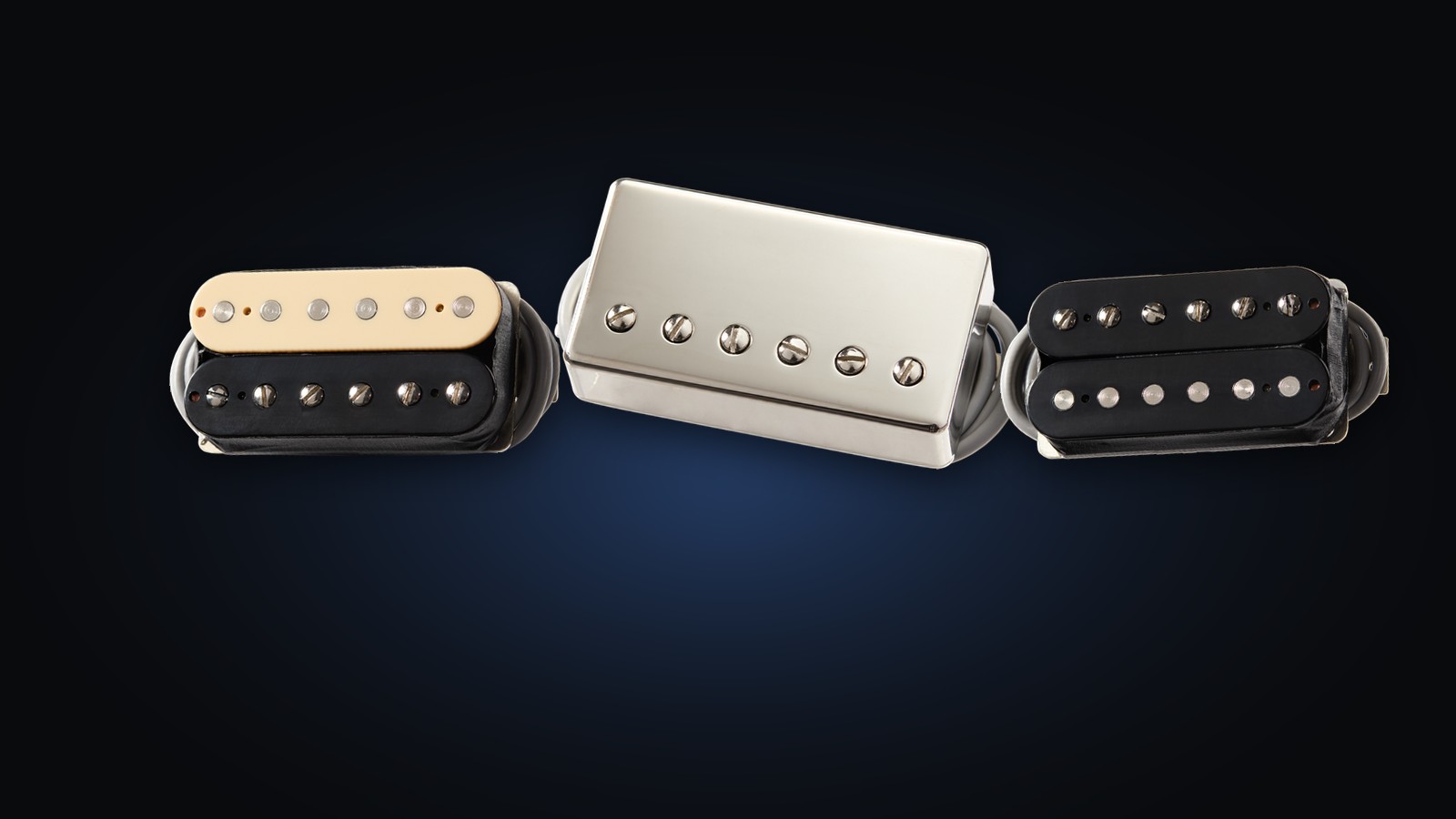
Gibson Breaks a 70-Year Habit: The ELEV8 Is Its First Alnico 8 Humbucker
For seventy years Gibson humbuckers have run on Alnico 2, 3, 4 and 5. The new ELEV8 series finally reaches for Alnico 8 — and it is aimed squarely at high-gain players.