Seymour Duncan's 805+ Adds a Second Voice to the Company's Green Overdrive
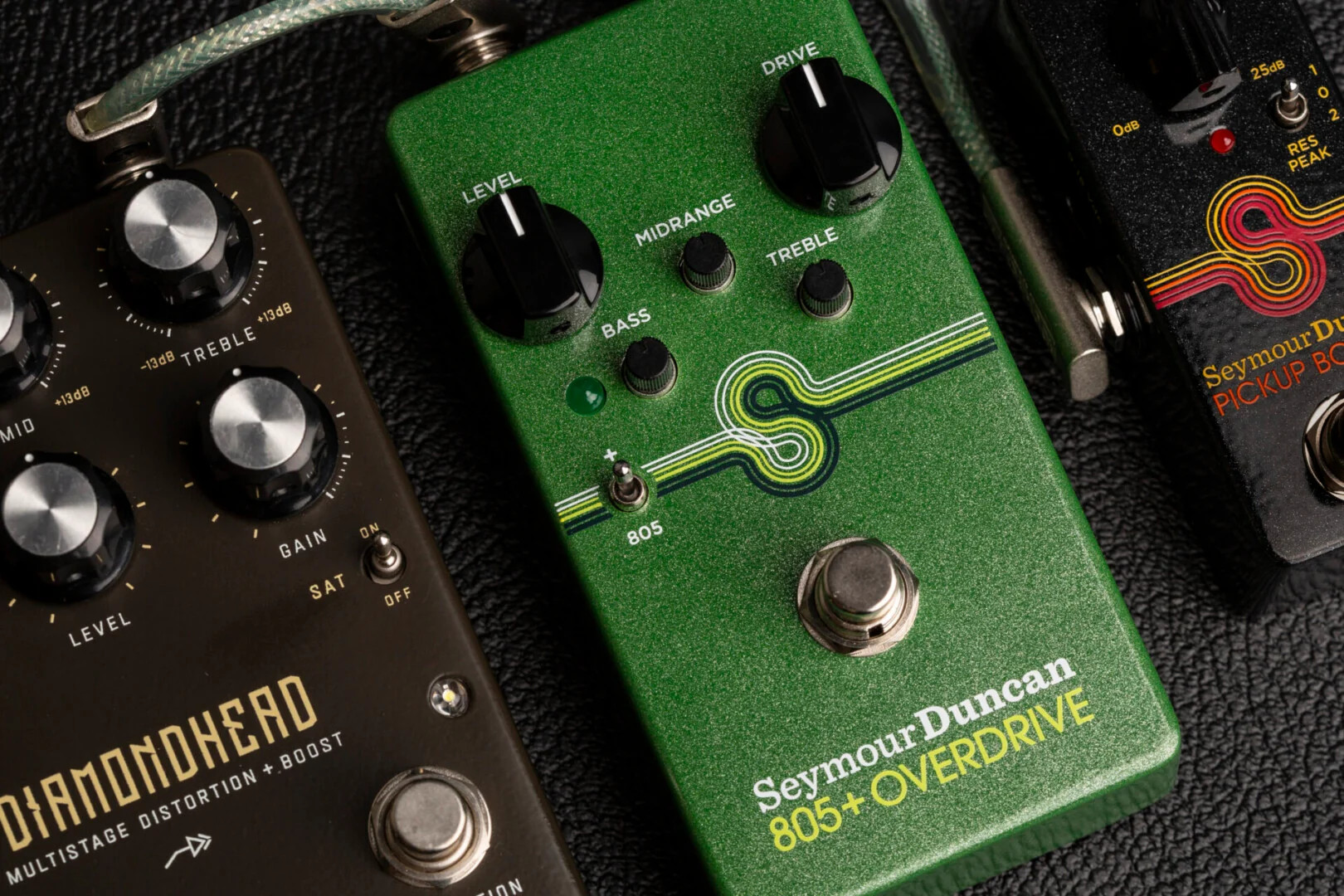
The Seymour Duncan 805+ Overdrive, official lifestyle photograph, on a board with the company's Diamondhead and Pickup Booster. The top-mounted Mode switch is labeled 805 and +.
Seymour Duncan has replaced its 2014 green overdrive with the 805+, a $189 pedal, as of November 25, 2026, that keeps the original mid-forward 805 and adds a second, full-range Plus mode drawn from the discontinued Forza. Here is what the official specification actually says.
The green overdrive is a crowded neighborhood, and Seymour Duncan has been living on one particular corner of it since 2014. That was the year the company shipped the 805, a mid-forward, three-band-EQ overdrive named for the Santa Barbara telephone area code, and spent the next decade selling it as a flexible alternative to the usual two-knob screamer formula. This month the 805 itself is gone from the current catalog. In its place is the 805+, a new pedal that keeps the original voice and adds a second one.
Seymour Duncan's official product page lists the 805+ at $189.00 and shows it in stock. We checked that page on November 25, 2026. Guitar Center had the same pedal, under the listing "Seymour Duncan 805+ Overdrive Pedal - Green," at $189.00 the same day, also marked in stock. Premier Guitar published Seymour Duncan's announcement on November 17, 2026, and called $189 a street price. Those three figures agree, and $189.00 as of November 25, 2026, is the official number we will use.
This is news, not a bench review. We have not had one of these on a board in this office. What follows is what Seymour Duncan's official product page and the official 805+ User Guide (document 501070-285, Rev3, dated 2026) actually say, how the new pedal sits next to the original 805 and the discontinued Forza, and where the published record still asks you to listen for yourself.
Two Voices, One Green Box
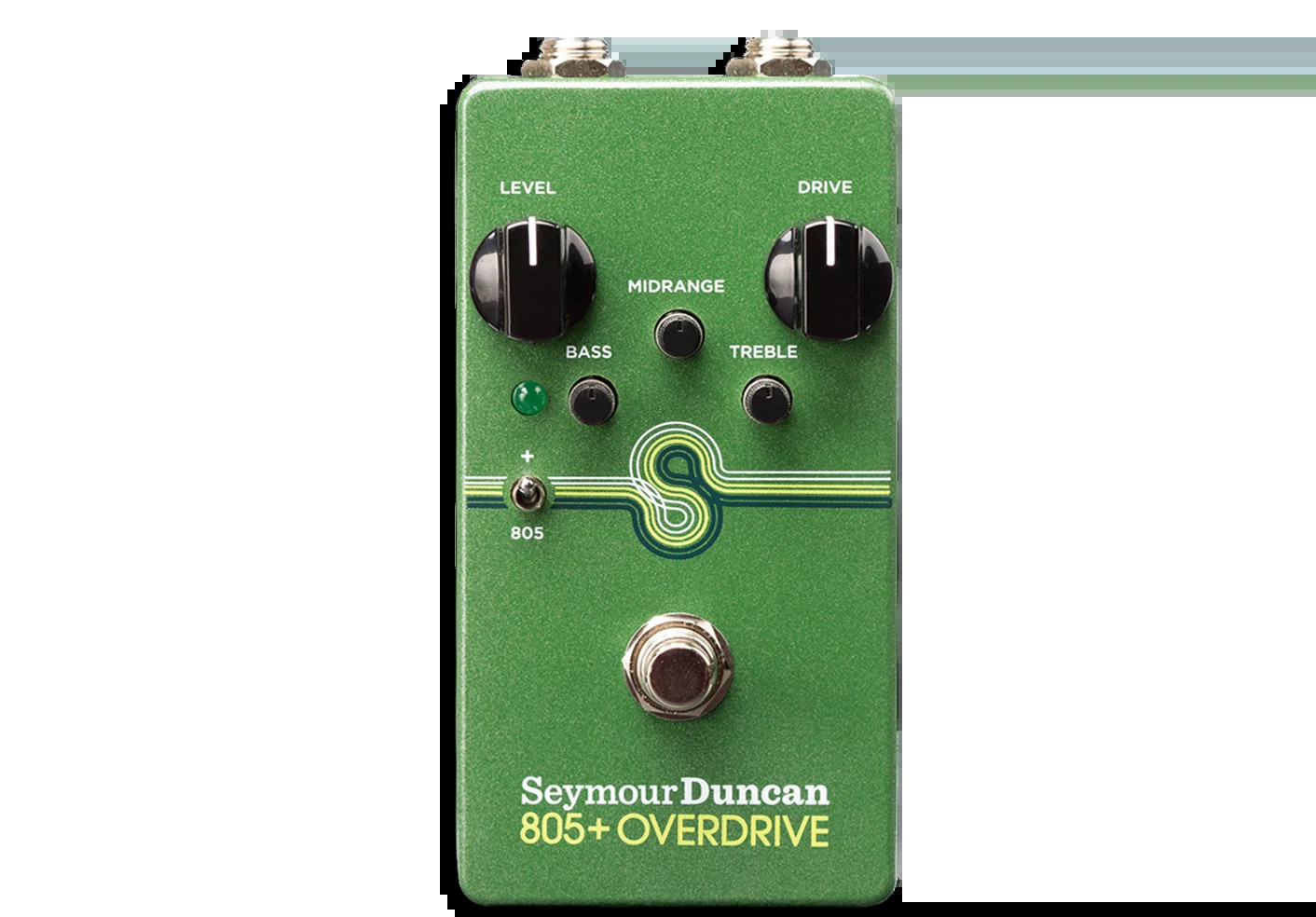
The official copy is unusually plain about what changed. "A legendary overdrive, now expanded with a second voice." Flip the top-mounted two-way toggle down and you get "Original 805 mode," which Seymour Duncan still describes as its classic "green" mid-forward overdrive with a three-band active EQ. Flip it up for Plus mode, "a full-frequency, highly adjustable overdrive — drawn from the voicing of Seymour Duncan's Forza pedal — that delivers more gain and sustain without sacrificing the natural voice of your amp." The official user guide says the same thing in slightly more technical language: "Down position equals original 805 mode. Up position equals + mode (Plus mode)."
That Forza reference matters, because the Forza is no longer a current product. Seymour Duncan's official Forza page, checked on November 25, 2026, says "This product has been discontinued" and "Out of stock." The 805+ is not a reissue of the Forza with a second toggle bolted on. It is the 805, still in a green enclosure, with a Plus mode the company says is drawn from that older voicing. If you already own a Forza, the official language does not say the two circuits are identical, and we will not say it either.
The official user guide publishes the gain ranges in both modes, which is the most useful hard fact in the document. In 805 mode, the Drive control runs from 8 dB to 36 dB. In Plus mode, it runs from 11 dB to 37 dB. The original 805, in Seymour Duncan's own 2014 product copy and in the leftover sample-settings text still shared with the 805+, was already being sold as a pedal that could act as an 8 dB clean-ish boost with the Drive control fully counter-clockwise. That 8 dB floor is still the official bottom of Original 805 mode. Plus mode does not go as low; its official floor is 11 dB.
The EQ is official, and it is the same in both modes. According to the specifications page of the user guide:
- Bass: 90 Hz, plus or minus 11 dB
- Midrange: 750 Hz, plus or minus 11 dB
- Treble: 2.1 kHz, plus or minus 12 dB
The control descriptions a few pages earlier give the treble center as 2.12 kHz; the formal specifications list 2.1 kHz. We are using the specifications figure as the canonical one and noting the slight difference, rather than pretending the two lines are word-for-word the same.
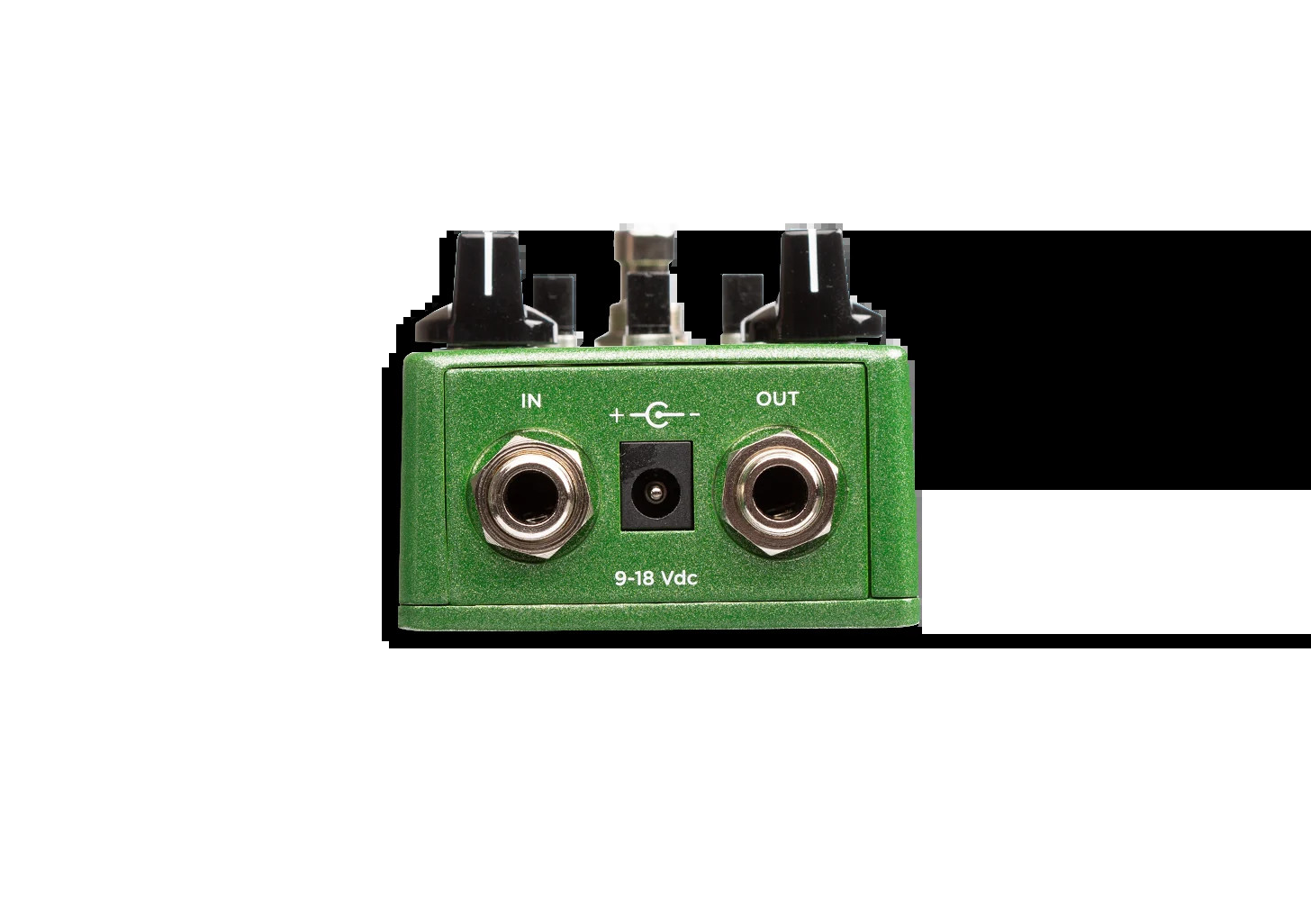
The rest of the official specification is compact enough to quote as a sheet. The circuitry is described as a "Low-noise IC with back-to-back glass diode stack overdrive circuit." Bypass is "True hard-wire bypass." Input impedance is 470k ohms. Output impedance is 1k ohms. Maximum output before saturation is 0.6 Vrms. Power is a 9-volt battery or an external 9-volt to 18-volt regulated DC adapter, center negative. Current consumption is 4.5 mA. Dimensions are 2.61 by 4.90 by 1.45 inches. Weight is 0.8 pounds without a battery. The official product page also notes true bypass, top-mounted jacks, a 9-volt battery or 9- to 18-volt supply, and a "vintage-inspired housing," and the footer on Seymour Duncan's site still says the pedals are "Handmade in Santa Barbara."
Two published bench measurements in the same specifications table are worth having, because they are easy to turn into listening claims they do not make. At a stated test point of 10 mVrms input at 1 kHz with 12 dB of gain, the official THD is 0.15 percent in 805 mode and 0.045 percent in Plus mode. In 805 mode, the official signal-to-noise figures are -112 dBV at minimum gain and -97.5 dBV at maximum gain, 20 Hz to 20 kHz. The Plus-mode row in the official table lists the gain range and the THD figure; it does not print a matching signal-to-noise pair on the page we opened. We are not going to invent one.
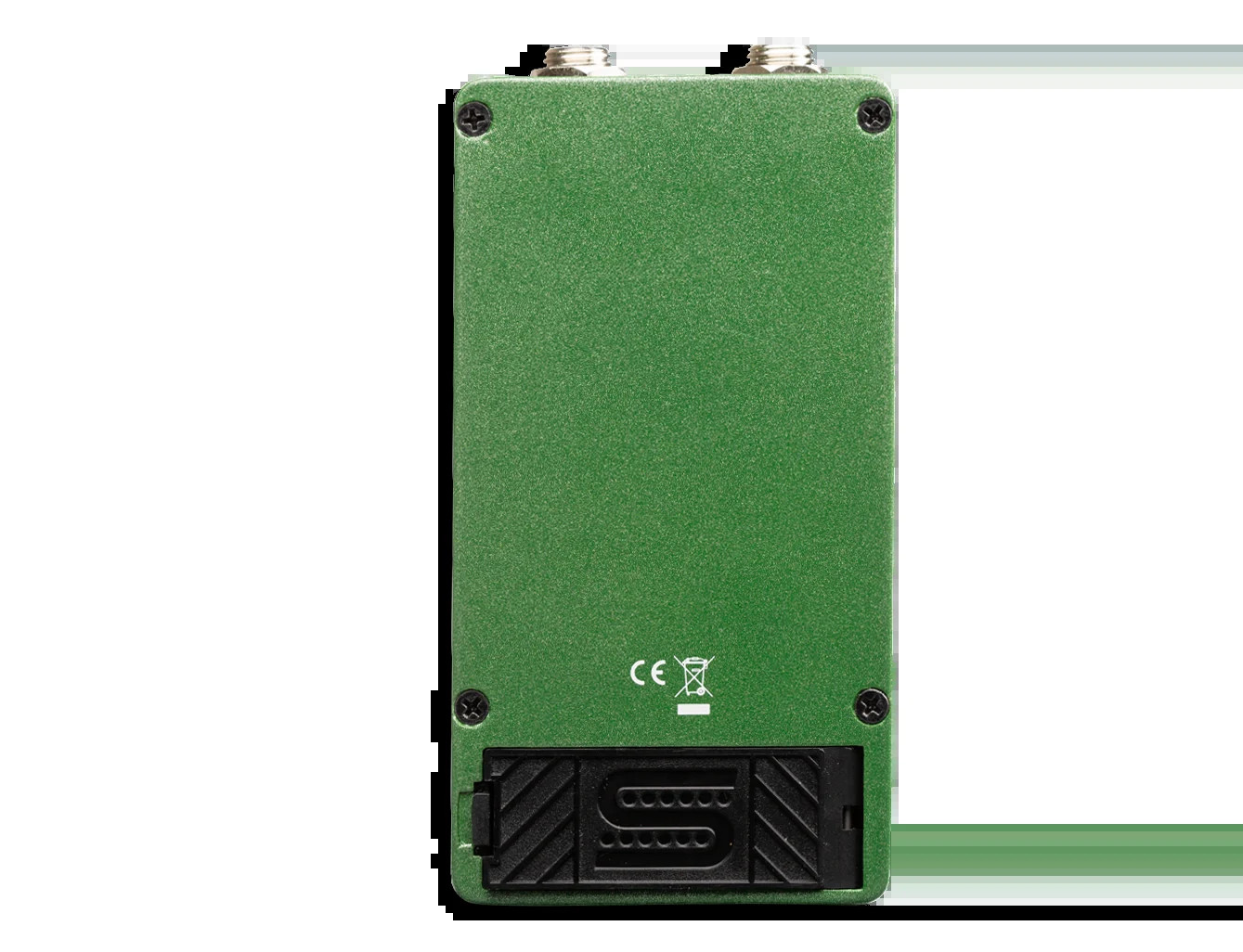
The user guide also tells you, in practical order, how the company wants the pedal used. Plug in a regulated 9- to 18-volt supply or a 9-volt battery behind the back-panel battery door. Use shielded guitar cables. Choose a mode with the toggle. Start in bypass with Bass, Midrange, Treble and Drive at 12 o'clock and Level at its lowest setting, then bring Level up and add Drive. When the pedal is off, "the circuit from your guitar's signal runs via a hardwired connection from the input jack to the output jack." When it is on, the status LED is lit. If you are running on a battery, the guide says to unplug the guitar cable from the input jack when the pedal is not in use.
A few things the official sheet does not say should be marked as absences. The 805+ user guide does not name the integrated circuit. A Seymour Duncan blog review of the original 805, published August 31, 2014, said that earlier pedal used an MC33178 chip. That is a statement about the 2014 805, not a specification printed in the 2026 805+ guide, and we are not going to carry it over. The official 805+ materials also do not publish a frequency-response plot, a clipping-waveform description beyond "back-to-back glass diode stack," or a side-by-side circuit claim against the Forza. Retailer copy may get more poetic. We are staying with the factory pages.
What the Official Sample Settings Are Actually For
Seymour Duncan has always sold the 805 with a set of starting points, and the 805+ guide keeps the old 805-mode set and adds a Plus-mode set. These are official recipes, not reviews.
In 805 mode, the official headings are Subtle Boost, Scooped Mid, Valve Howler and Modern Metal. Subtle Boost is the Drive control fully counter-clockwise, which the guide still describes as "a signal booster with 8 dB of gain," with the three-band EQ left available for contouring, and the familiar suggestion that "you may just want to leave it on all the time." Scooped Mid puts Midrange around 10 o'clock and Drive around 11 o'clock, "ranging from sparkly clean to fat crunch when you dig in." Valve Howler is the official name for pushing an amp's front end "into overdrive, with some additional grit," with the personality left dependent on the amp. Modern Metal is Drive low, Level and Bass at 1 o'clock, Treble at 3 o'clock, "in front of a high-gain amp or modeler." The official 805+ product page still attaches a Keith Merrow quote to that last idea: "I use the following setting, for a tight modern metal sound in front of a high gain amp."
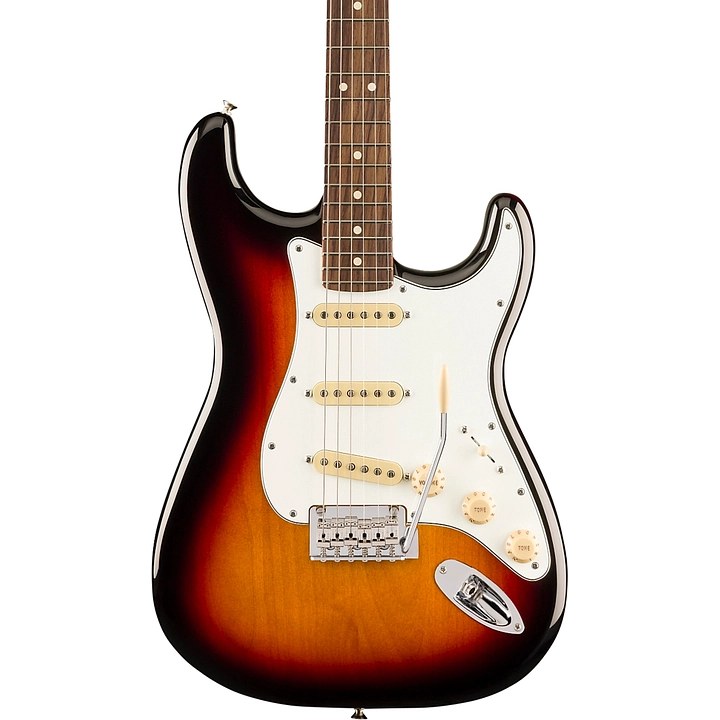

Fender Player II Stratocaster
$849.99 at Guitar Center
In Plus mode, the official headings are Sparkly Overdrive, British Crunch, Big Rhythm, Tight Metal Boost and Lead Boost. Sparkly Overdrive is described as "a little more" on top of a clean amp channel, "plenty of body with a little midrange dip," and the guide says "this setting sounds especially jangly with a Stratocaster." British Crunch is a clean-amp setting for "vintage crunch tone," with midrange "flat with lower bass" and "maximum drive with a slight high-end boost," said to work "equally well with single coil and humbucking pickups." Big Rhythm is a clean-amp "classic American rhythm sound," with "boosted bass and completely scooped mids." Tight Metal Boost is for the front of a high-gain amp, "to tighten up the bottom end and add thickness and compression to the mids while keeping pick articulation clear." Lead Boost is "on top of your overdriven or distorted rhythm sound," to add punch and sustain or to turn a rhythm sound into a lead sound.
None of those paragraphs is a substitute for listening. They are the manufacturer's map of what the two modes are supposed to be for: 805 mode as the mid-forward, screamer-neighborhood voice with an unusually serious EQ; Plus mode as the fuller-range, amp-pushing voice that the company no longer sells as a standalone Forza.
The 805, the Area Code and the Pedal That Came Before
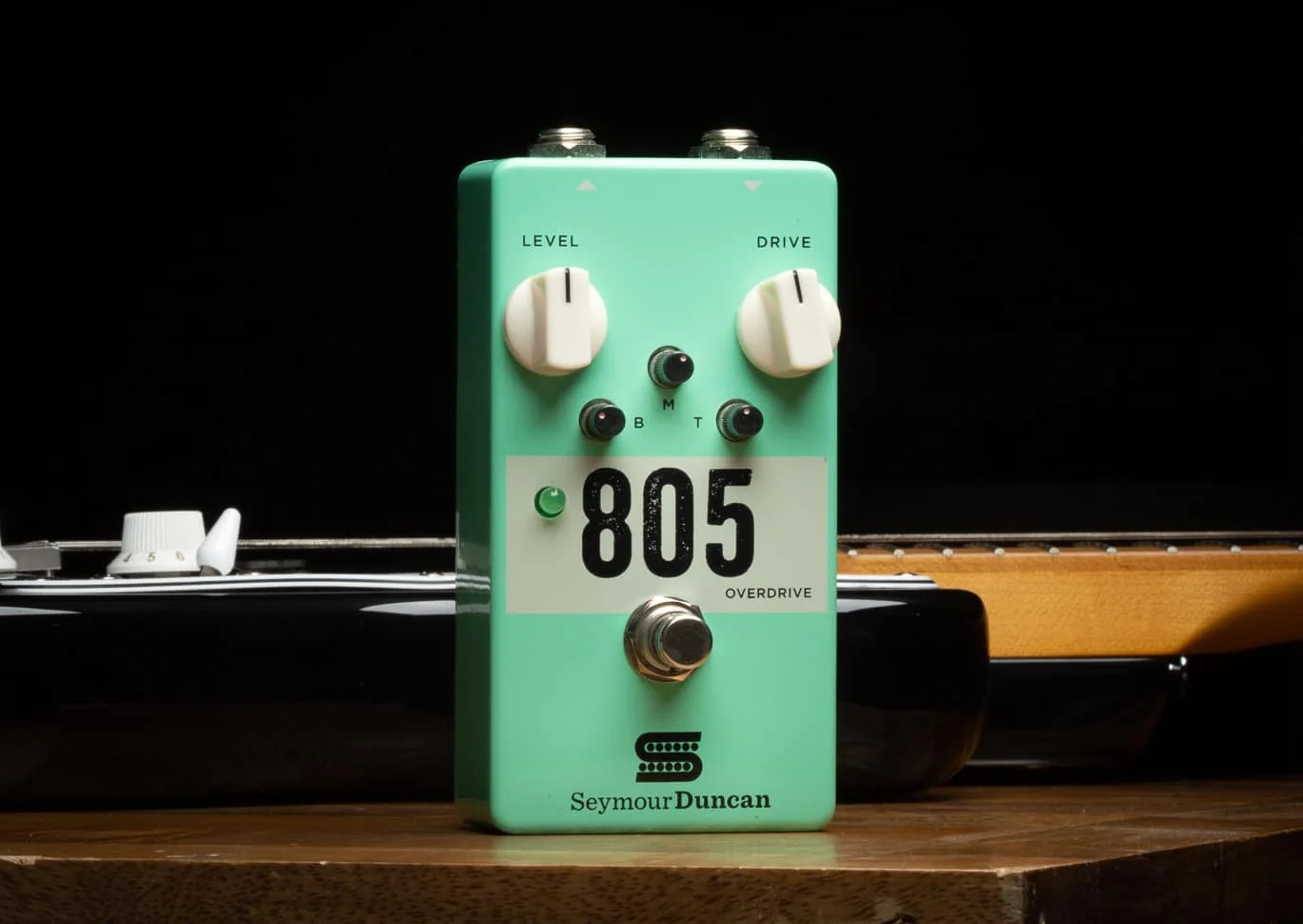
Seymour Duncan's official "Our Journey" timeline has a short, useful line for the original pedal: "The 805 overdrive pedal, 2014." A company blog review, published August 31, 2014, treated it as a new arrival alongside the Dirty Deed Distortion, the Vapor Trail Analog Delay and the Pickup Booster, and spent most of its space on the three-band active EQ — "well beyond the simple low-pass filter Tone knob on most overdrives." The same review argued, in the company's own voice, that "one of the problems I have with the standard green overdrives out there is the thinning of the bass frequencies that happens with higher gain controls," and that the 805's active bass control was the way to put those frequencies back. That is 2014 marketing language, but it is also the honest statement of why this particular green pedal existed: mid-forward, yes, but with an EQ that could undo the usual mid-and-thin trade.
The name is not a mystery, and it is not a guess. In a January 17, 2016 company blog post about the Catalina Dynamic Chorus, Seymour Duncan wrote, "we like to include local references from time to time as a little nod to who we are. The 805 Overdrive gets its name from our telephone area code, for example." The official user guide still prints the factory address as 5427 Hollister Ave, Santa Barbara, CA 93111, and the phone number as (805) 964-9610. The pedal is named for the place it is made.
The original 805 is now a closed chapter on the official site. The 805 product page, checked November 25, 2026, carries the line "This product has been discontinued and is no longer available," plus "Now Available as the 805+ Overdrive with added features," and it was marked out of stock. The same page still displayed $179.00. We are treating that $179.00 as a leftover figure on a discontinued page, not as a current selling price. The current official product, and the current official price, is the 805+ at $189.00.
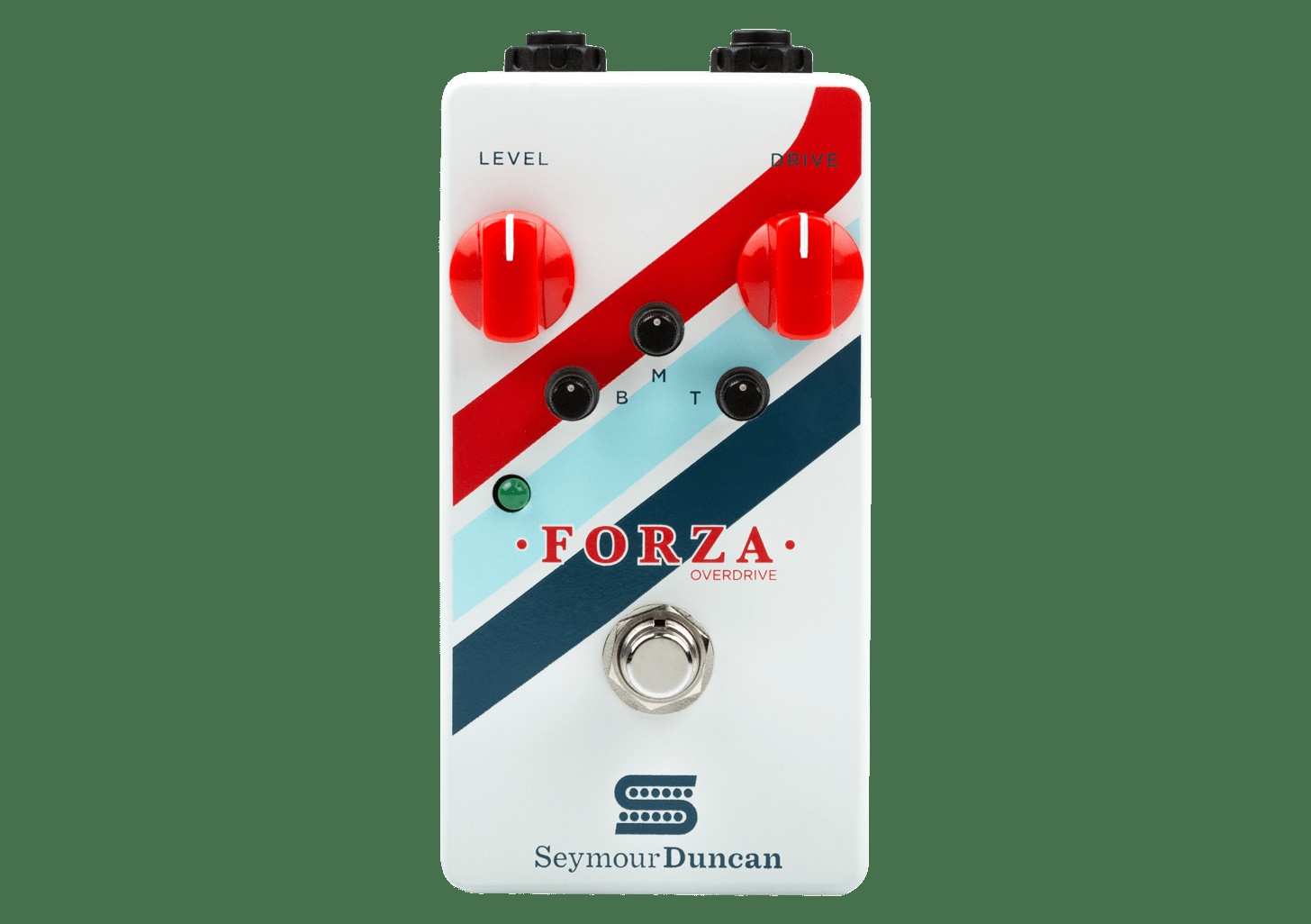
The Forza is the other half of the new toggle. Seymour Duncan and Chicago Music Exchange launched it as a full-range, transparent overdrive, and the official Forza page still describes it as "a full-range, highly adjustable and transparent overdrive for players who want more gain without losing the natural voice of their guitar." That sentence is now historically useful, because the 805+ official copy uses almost the same idea for Plus mode: more gain and sustain "without sacrificing the natural voice of your amp." The Forza, as of November 25, 2026, is officially discontinued and out of stock. The official Forza page did not display a current selling price when we opened it. We are not going to invent one.
A Santa Barbara Company That Started in a Very Small Room
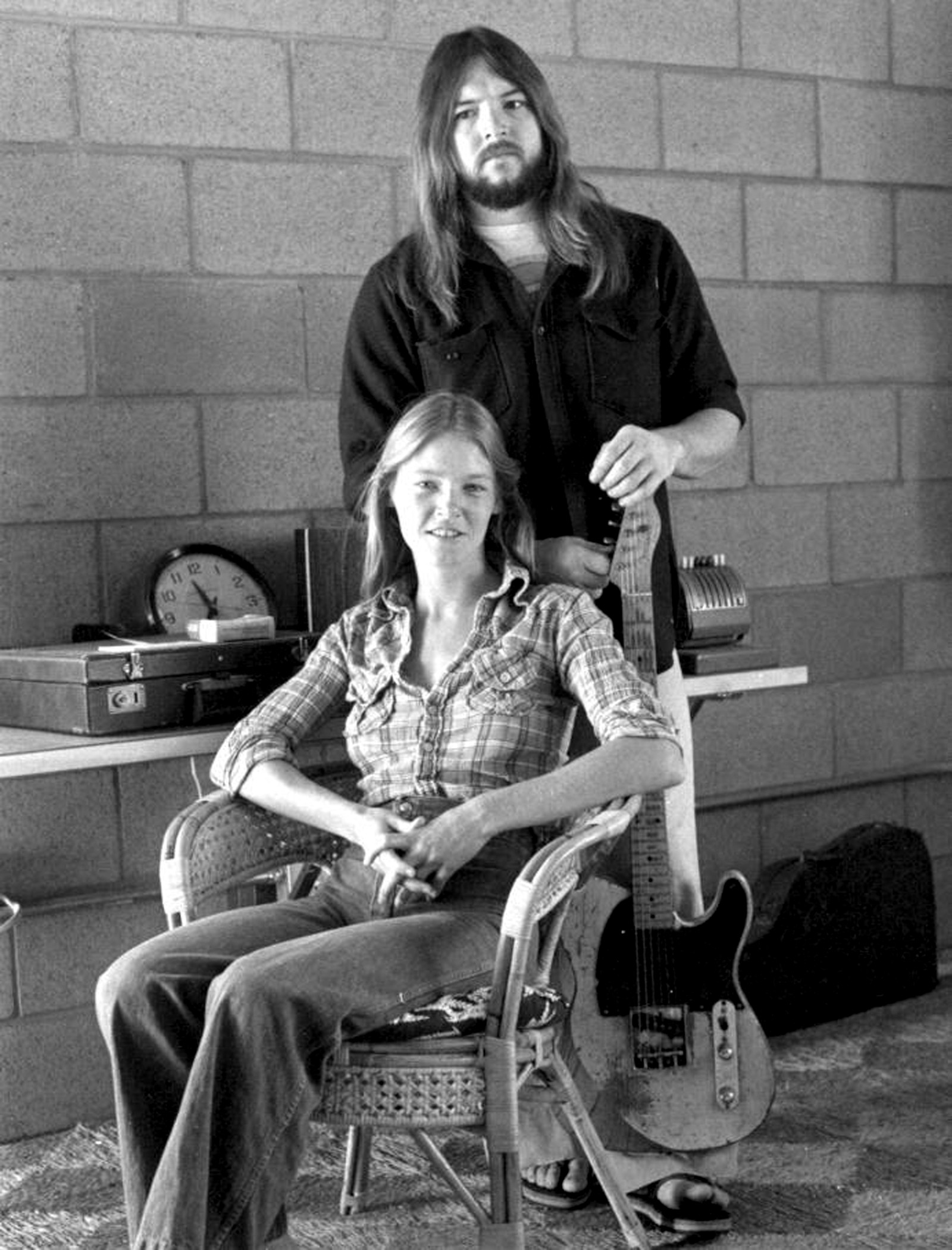
The 805+ is a pedal-board story, but it sits on a longer company story that Seymour Duncan tells, in Cathy Duncan's voice, on the official "Our Journey" page. Seymour W. Duncan spent years in London as a guitar repairman at Fender Soundhouse, "earning a reputation as someone who knew how to bring out the best from a guitar," with the official page naming Jimi Hendrix, Jimmy Page, Eric Clapton and Jeff Beck among the players who came to him. By the late 1970s he and Cathy were in Santa Barbara, in a first warehouse on Yanonali Street so small they could only afford to sub-lease 12 by 15 feet. The official page says they lived in the warehouse, that the first year's gross sales were $15,000, and that the first Guitar Player ad, in the late 1970s, offered Strat and Tele rewinds for $17.50 because they did not yet have the tooling to punch their own flatwork.
The pickup business is the one most players still mean when they say the name, and the official timeline is full of that work: an early December 1978 order for Eddie Van Halen, a 1985 patent for the original Stack, later signature work, the Custom Shop. The pedal line is newer in the public timeline. The official journey lists the ShapeShifter tremolo as first shipped in March 2014, the 805 in 2014, and a new pickup booster in July 2014. A one-year limited warranty for the original purchaser, covering labor and materials, is still the official terms in the 805+ user guide.
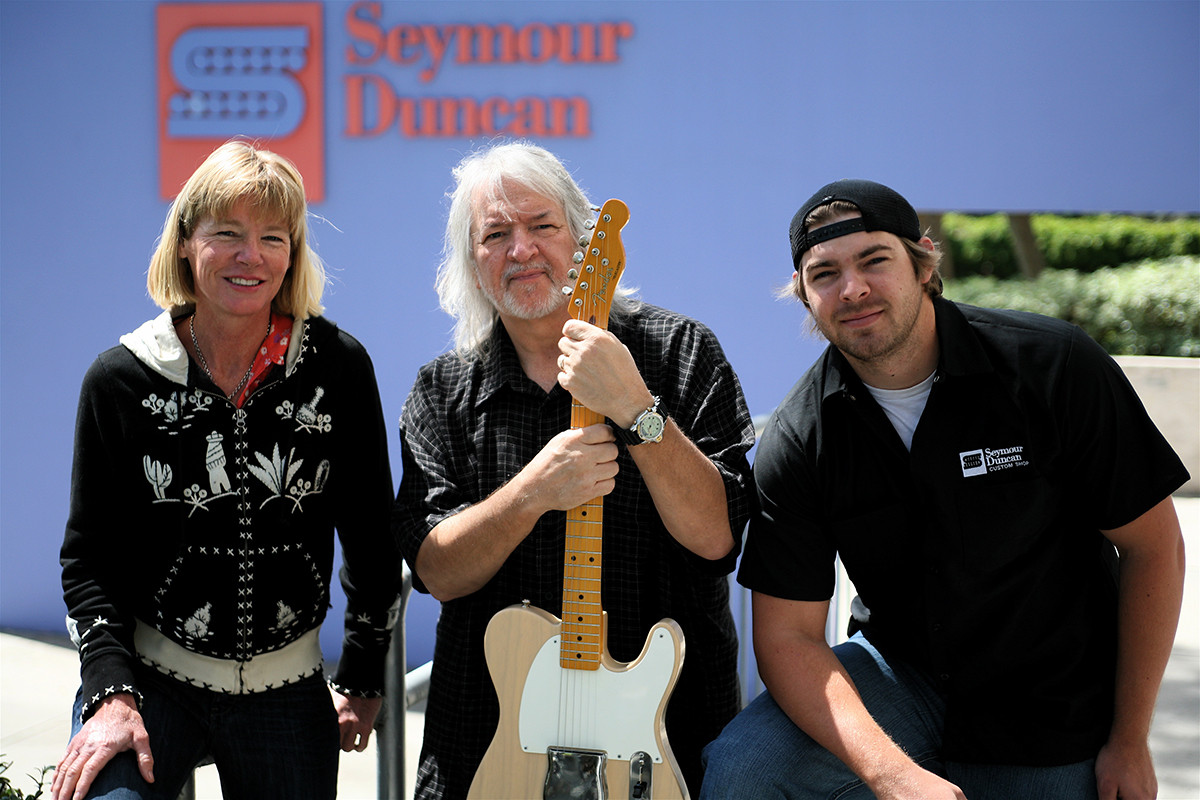
None of that history is a reason to buy an overdrive. It is the reason this particular overdrive is still being voiced, built and warranted in Santa Barbara, with a name that points at the local area code, rather than being treated as a generic green box that could come from anywhere.
How It Sits Among Other Mid-Forward Overdrives
A $189.00 official price, as of November 25, 2026, puts the 805+ in the serious-but-not-boutique bracket of compact overdrives, and the honest way to compare it is by published recipe, not by a shootout we have not played.
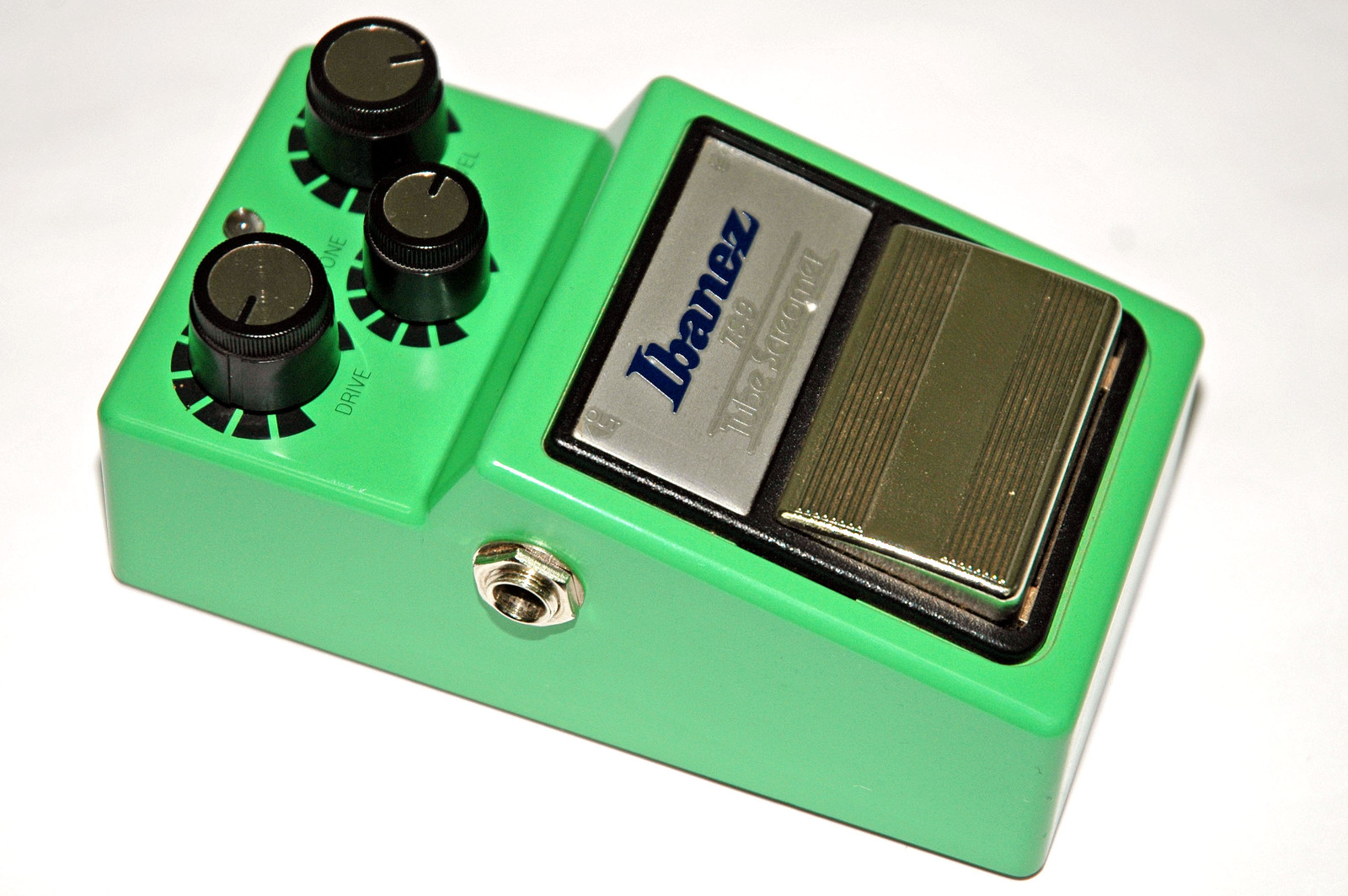
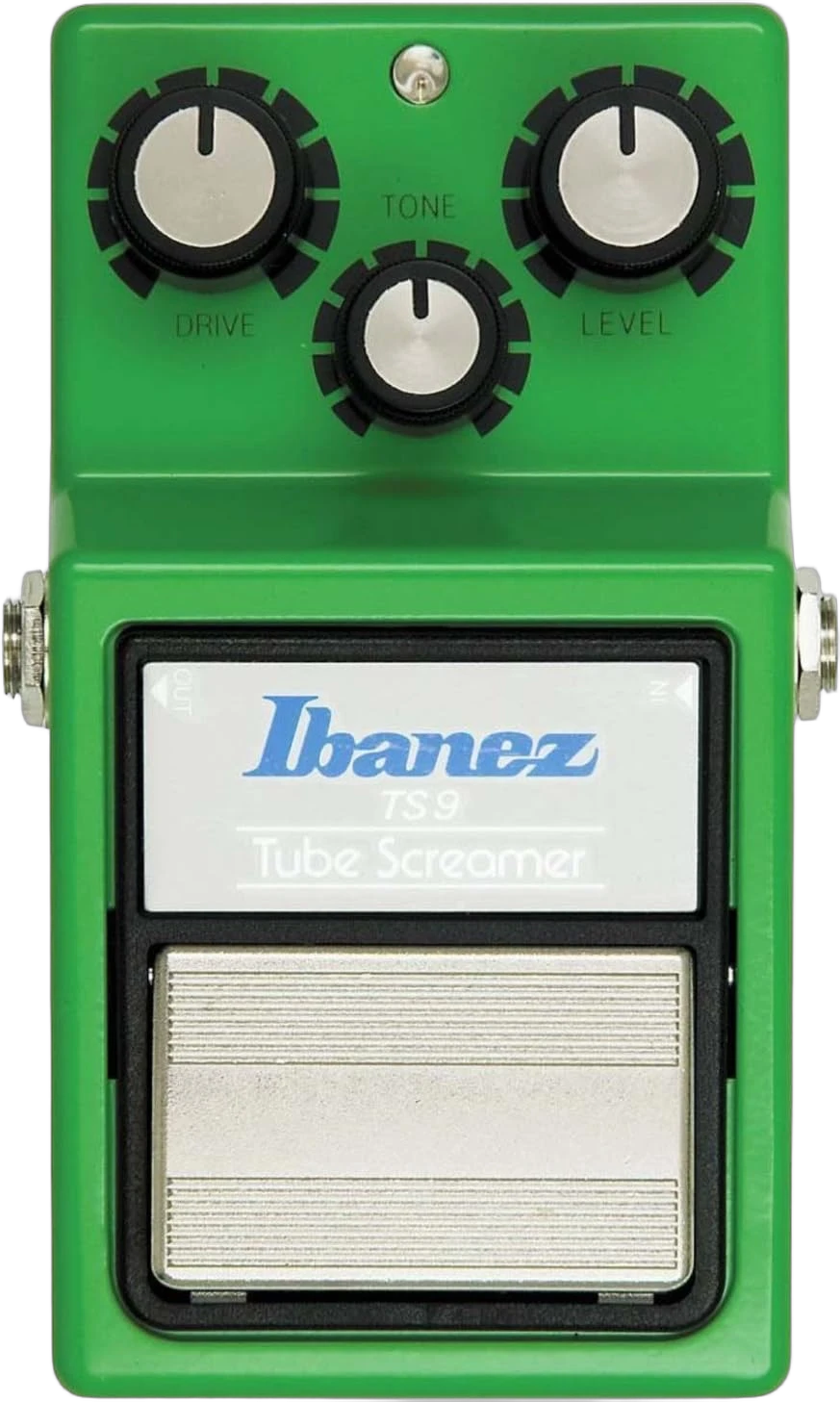
The comparison everyone will make, because of the green paint and the mid-forward 805 mode, is with the Ibanez Tube Screamer family. We have already told that longer circuit story in our Ibanez Tube Screamer history. A TS9 is a different official recipe: a mid-humped overdrive with a simpler tone control, no published three-band active EQ, and no second voicing toggle. If you want the classic mid-forward push and you already know that sound, the TS9 is the historical reference, not a feature-for-feature stand-in. If you want two official gain ranges and a plus-or-minus 11 or 12 dB active EQ at published center frequencies, that is the 805+'s official argument, not the Tube Screamer's.
Inside Seymour Duncan's own recent catalog, the other obvious comparison is the pedal the company just discontinued. The Forza was the standalone full-range voice. The 805+ official copy says Plus mode is drawn from that voicing and folded into the 805 enclosure. Whether that makes the 805+ a simpler way to get both ideas, or a compromise of both, is exactly the kind of sentence we cannot finish without playing the three pedals. The official record only goes as far as the company's own verbs: "drawn from the voicing," not "identical to."
On the pedalboard, the official 805+ lifestyle photographs already show the company's idea of a neighborhood: the 805+ sitting between a Diamondhead and a Pickup Booster, both of them Seymour Duncan pedals, with top-mounted jacks aimed at a tight board. That is a family photograph, not a value argument.
Guitar Center's live product page for the 805+ matched the official $189.00 price on November 25, 2026, and was marked in stock. We were not able to confirm a live American Musical Supply product page for the 805+ the same day, so we are not going to attach an AMS link. Plugged Gear Co. does not currently list the 805+ itself. Prices can change. Check the live page before you buy.
Who This One Is For
Buy one if you already liked the idea of the 805 — a mid-forward, three-band overdrive with a real clean-boost floor — and you want the official second voice without adding a second pedal. At $189.00 as of November 25, 2026, on both the official store and Guitar Center, you are paying $10.00 more than the leftover $179.00 still displayed on the discontinued original-805 page, and you are getting a published Plus-mode gain range of 11 to 37 dB on top of the original 8 to 36 dB.
Epiphone Les Paul Standard 60s
$699.00 at Guitar Center
Think twice if you already own a Forza and an 805. The official language does not promise that Plus mode is a full substitute for a standalone Forza, and we have not heard a comparison. Two pedals you already know may still be a clearer arrangement than one toggle you have not tried.
Skip it if what you actually want is a simple Tube Screamer and you have no use for a three-band active EQ or a second voicing. The 805+ is a more complicated tool than it looks in a product shot, and the official user guide is not shy about that. And skip it if you need a named op-amp, a published identity with the Forza circuit, or a bench review. Those are not in the official 2026 package.
Seymour Duncan has not reinvented the green overdrive here, and the official copy does not pretend that it has. The company has taken a 2014 mid-forward pedal, officially retired it, and put a second, fuller-range voice in the same enclosure, with the same active EQ and a user guide that is unusually willing to print numbers. The official sheet is complete enough to take seriously. The rest, as always, will have to wait until one of them is on a bench.
For the longer mid-forward story, the Ibanez Tube Screamer history is already up. For more of Seymour Duncan's current catalog on this site, see the EVH Frankenstein striped pickups and the Janick Gers signature Strat set. For the rest of the news desk, Guitar News / Music Releases is the queue.
Shop the Gear (Covered by TGP)
Affiliate disclosure: The Guitar Plugged may earn a commission if you buy through links on this page, at no extra cost to you. These picks are covered by TGP, not tested by us. We picked them because they match the gear and the neighborhood in this article.
The 805+ itself is not currently listed at Plugged Gear Co. The official source, as of November 25, 2026, is Seymour Duncan's 805+ product page, $189.00. Guitar Center had a live product page the same day at the same price: Seymour Duncan 805+ Overdrive Pedal - Green. We could not confirm a live American Musical Supply product page on November 25, 2026.
The Plugged Gear cards below are live overdrive and boost pedals in the same conversation, not the 805+. No Plugged Gear prices are listed here; none were verified for this draft. The best four are first because the ShopThisGear component only shows four.
- Ibanez TS9: the classic mid-forward green overdrive this pedal will be compared with.
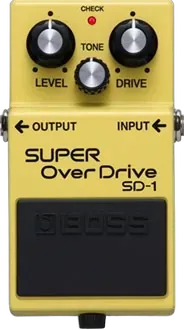
- BOSS Super Overdrive SD-1: another compact, mid-leaning overdrive with a long production history.
- Fender Santa Ana V2 Overdrive, Sea Foam Green: a newer, more fully featured overdrive, not a Tube Screamer copy.
- Walrus Audio Ages Five-State Overdrive, Green: a multi-voice overdrive, useful if the 805+'s two official modes are the feature you are actually shopping for.
- Walrus Audio Voyager Preamp Overdrive MKII, Seafoam
- Walrus Audio 385 Overdrive MKII, Yellow
- Fender Hammertone Overdrive
- JHS 3 Series Overdrive
- Engager Boost: a clean-boost comparison for the official 8 dB Subtle Boost use of 805 mode.
All of those Plugged Gear Co. product pages returned HTTP 200 on November 25, 2026.
Similar gear
These are similar options and substitutes, not the artist's exact gear or an endorsement by the artist.
- Ibanez TS9 Tube Screamer (a classic mid-forward overdrive; not the 805+)Compare prices at Plugged Gear Co.
- BOSS SD-1 Super OverDrive (a classic mid-forward overdrive; not the 805+)Compare prices at Plugged Gear Co.
- Fender Santa Ana V2 Overdrive — Sea Foam Green (a different overdrive; not the 805+)Compare prices at Plugged Gear Co.

- Walrus Audio Ages Five-State Overdrive — Green (a different overdrive; not the 805+)Compare prices at Plugged Gear Co.

Plugged Gear Co., Guitar Center and American Musical Supply links may earn us a commission from qualifying purchases.
Reader-supported
Keep Guitar Alive
Enjoyed this story? The Guitar Plugged is free to read and reader-supported. If it helped you play, listen or buy a little smarter, chip in to keep guitar journalism like this coming.
One-time contribution, processed securely by Stripe. Contributions are not tax-deductible.
Experience-driven coverage, not algorithm bait.
- 20+ years of guitar playing experience
- Real-world retail experience at Guitar Center
- Thousands of hours testing guitars, amps, and pedals
- A community of 50,000+ guitar enthusiasts across platforms
- Partnerships with Fender, DistroKid, TrueFire, Card Chords, and Enya
- Editorial standards published openly — see how we test gear
The Modern Guitar Magazine. Delivered to your inbox.
No spam. No gimmicks. Just great guitar content — stories, tones, iconic solos, and honest gear takes. Every week.
Ask GP
20 free questions a dayStill curious? Ask GP about this story.
Your personal classic-rock and guitar guide — ask anything about Seymour Duncan's 805+ Adds a.
Discussion (0)
Sign in to join the discussion.
Sign in to commentLoading comments…
Discover another guitar story
Swipe through our latest features, breaking news and iconic solos — one story at a time.
Open Swipe →More Guitar News
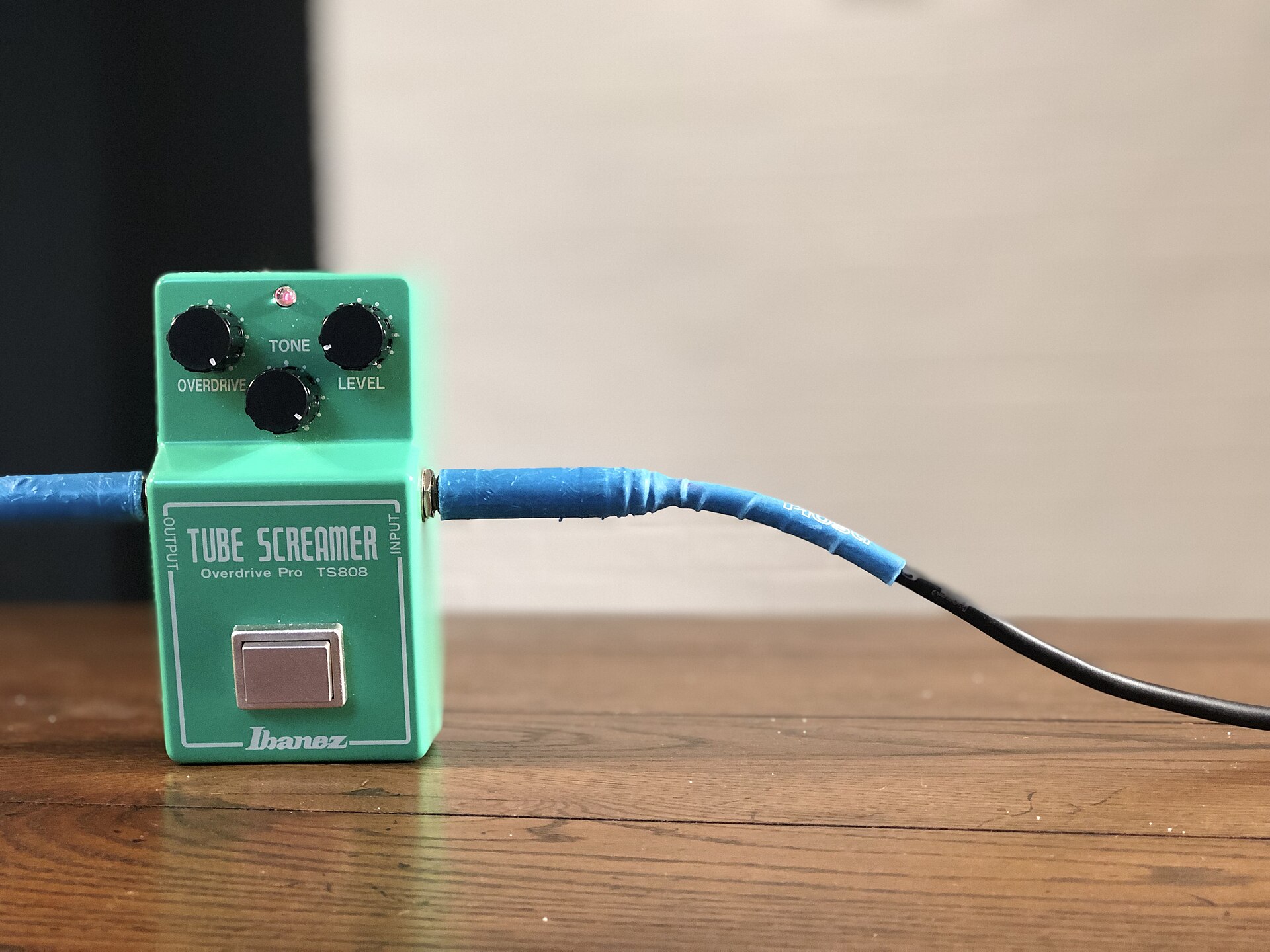
The Ibanez Tube Screamer: How a Little Green Box Built to Compete Became the Pedal Everyone Copies
How a Maxon engineer's answer to the Boss OD-1 became the Ibanez Tube Screamer, why the TS808 vs TS9 debate never ends, and what SRV really used.
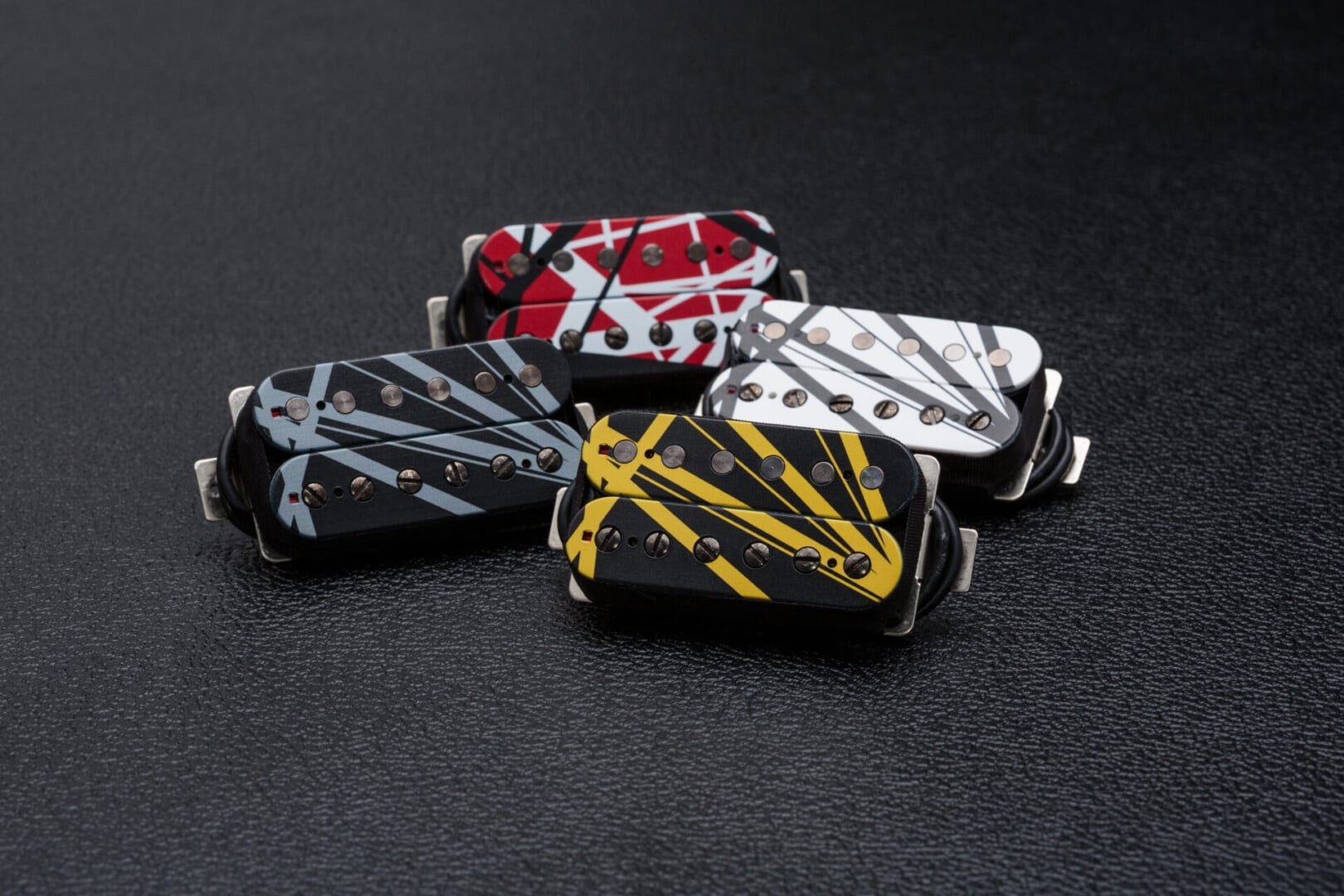
Seymour Duncan Paints Eddie Van Halen's Frankenstein Pickups in Stripes: Custom, Classic and Plus, Explained
Seymour Duncan's three EVH Frankenstein bridge humbuckers now come in red/white/black, white/black, Bumblebee yellow/black and grey/black stripes, each $199 on the official store as of November 11, 2026.
Seymour Duncan Unleashes Janick Gers Signature Pickups — Bringing Iron Maiden's Legendary Strat Tone to Your Guitar
Seymour Duncan's new Janick Gers Signature Strat set puts JB Jr. humbuckers in the neck and bridge with a Hot Rails in the middle — the Iron Maiden shredder's own Strat recipe — at $319 for the set and $419 for a loaded pickguard.