
Stephen Wilson Jr.'s "Stand By Me" at the Print Shop: The Nylon-String Cover That Made a Songwriter a Star
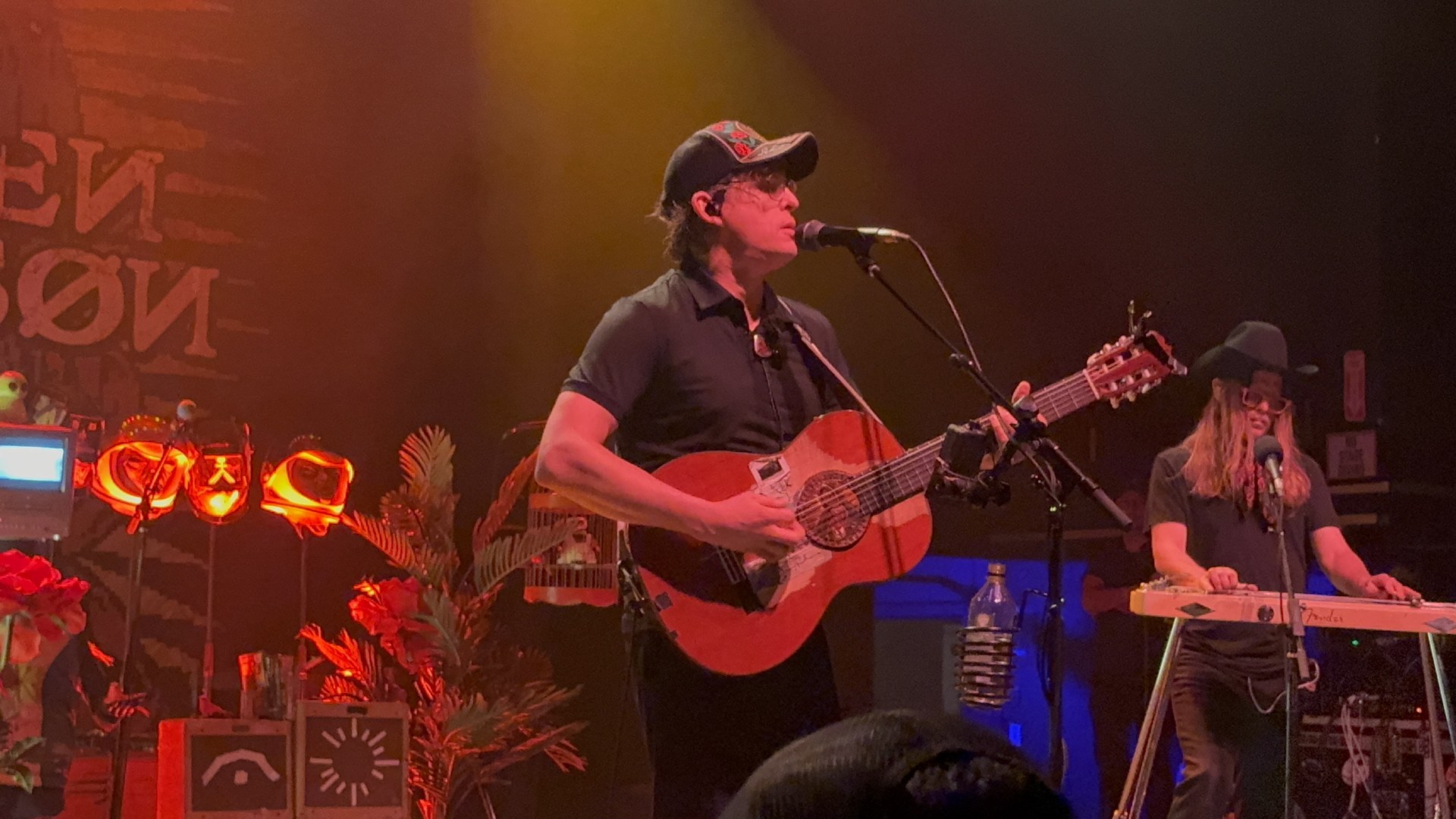
Stephen Wilson Jr. onstage at Buffalo's Town Ballroom on March 15, 2025, singing over his worn, sticker-covered nylon-string.
A battered nylon-string, a pick, a Fender combo and a Ben E. King song he'd been carrying since childhood. Here's how Stephen Wilson Jr.'s "Stand By Me" got out of an Atlanta-area basement, and what guitar players can learn from how he plays it.
Stephen Wilson Jr. has played a lot of big rooms in the last two years. The Ryman, Red Rocks, Stagecoach, the CMA Awards stage at Bridgestone Arena. But the performance that changed his career happened in a basement outside Atlanta, with a beat-up nylon-string guitar and a song that's older than he is.
In October 2024, the YouTube series Live at the Print Shop posted Wilson's cover of Ben E. King's "Stand By Me." It didn't sound like the version everyone knows. It sounded like a hymn being argued with. By the time his label released the audio a month later, Big Loud said the clip had passed a million views on YouTube and 18 million across social media. Two years on, the YouTube video alone shows more than 12.7 million views.
For guitar players, the clip is worth studying for more than the singing. Wilson plays a 1970s Takamine classical with a flat pick, through a Fender amp, with a Tube Screamer in the chain. He tunes it his own way. He'll swap a major chord for a minor six because it hurts more. And he got there by spending years learning the guitar the hard way, then deliberately forgetting most of it.
Here's the story of Stephen Wilson Jr.'s "Stand By Me," the long road that led to it, and how he gets that sound.
Live at the Print Shop: A Basement, a Label Owner and a Charity Check
Live at the Print Shop isn't a Nashville showcase or a radio session. According to the series' own site, it's run by Adam Blank, an entrepreneur from Marietta, Georgia, who set up a screen-printing shop for a merch deal that fell through. He decorated the space in 1970s style, decided it was a good place for live music, and launched the series in July 2019 alongside his indie label, Blank Records.
The format is simple and generous. Artists perform in what the site calls Blank's "state-of-the-art soundstage basement," then sit for an interview upstairs in the Print Shop. They leave with pro-shot video and audio, a meal and a fee, and each one picks a charity that Blank also donates to. Past guests include Collective Soul, Blues Traveler, Colin Hay and the Mavericks.
Wilson's full episode went up on the Print Shop's YouTube channel on October 17, 2024. The standalone "Stand By Me" clip followed on October 27, 2024 (Pacific time), titled "Stand By Me" [Ben E. King Cover] (Live at the Print Shop). It runs a little over four minutes.
The video's thumbnail shows what you're in for. Wilson is seated at a close mic with his eyes shut, playing a nylon-string guitar with a pick. The guitar's top is worn through in places and covered in stickers and tape.
What went viral, and when
The numbers here come from the people who'd know:
- Late October 2024: the clip is posted. Rolling Stone later wrote that the response was "remarkable" and brought Wilson "a new crop of fans."
- November 22, 2024: Big Loud releases "Stand By Me (Live at the Print Shop)" as a single, licensed to Mercury/Republic. Big Loud's announcement says the video "immediately went viral," with over 1 million YouTube views and more than 18 million across social media.
- January 10, 2025: the recording is added to the deluxe edition of his album søn of dad, along with the new song "I'm a Song" and 10 acoustic versions.
- November 19, 2025: Wilson performs "Stand By Me" solo at the 59th CMA Awards, the same year he's nominated for New Artist of the Year.
- November 11, 2026: the Print Shop's YouTube page shows about 12.77 million views for the clip.
That's a long tail for a basement session. When Big Loud announced his 2026 CMA nominations, it was still calling "Stand By Me" his "viral cover."
Why "Stand By Me" Means So Much to Him

The original is one of the most familiar records ever made. Ben E. King wrote it with Jerry Leiber and Mike Stoller, recorded it in October 1960, and released it on Atco in 1961. It hit No. 1 on the R&B chart and No. 4 on the Billboard Hot 100, then went back into the top 10 in 1986 after Rob Reiner's film Stand By Me used it. Stoller has said he worked out the chord changes and that famous bass line at the piano, in the key of A, and the string arrangement grew out of it.
Wilson's connection runs through that film. He's a Stephen King fan, and he's told Billboard the 1986 movie, adapted from King's story "The Body," is why the song "has been haunting me my whole life."
The bigger reason is his father. Stephen Wilson Sr. was a boxer, a single dad, and the person who pushed his son to quit a safe job and write songs. He died unexpectedly on September 15, 2018. Wilson told Holler that his father's last words to him, over the phone, included "Write a good song for me."
A couple of weeks later, a friend talked Wilson into playing a songwriters' festival in Deadwood, South Dakota. At the end of the event, every writer was asked to play a favorite cover. Wilson had been working up his own version of "Stand By Me" in his living room. He has said he made a quick work tape in his hotel room for the house band, and they played it together.
He told Holler there were probably a couple thousand people there, and "the whole place just went crazy." He's described the feeling the same way in several interviews since: that for those few minutes, his father felt like a small kid riding on his shoulders. "That was the beginning of my career as an artist," he said, "the moment that I knew I was no longer a songwriter."
That's the context for the line he gave Big Loud when the single came out: "'Stand By Me' was the song that brought my dad back, if only for a few."
So when the Print Shop clip spread six years later, it wasn't a clever cover finding an audience. It was the song that started his career as a performer, finally getting a wide audience.
How Wilson's "Stand By Me" Arrangement Works
Wilson doesn't think of covers as projects. "I don't really try to make it my own," he told TribLive in January 2025. He says he's never been good at copying records note for note, so he drifts.
He's specific about one change, though. "I don't really change the melody," he said, but on "Stand By Me" he swapped the harmony under it: "it made more sense to play a minor six instead of a major, like the root chord." To him, it added emotion.
That's the key to why the cover lands. The original sits on a warm, major-key loop that's almost a lullaby. Put a minor-sixth chord where the home chord should be, and the same melody suddenly sounds uneasy. The words haven't changed, but now they sound like a plea instead of a promise. Wilson has used exactly that word. He told Indianapolis Monthly that in Deadwood, "It was more a plea than a song," and on The Howard Stern Show he called it "a hymn, a plea."
The other ingredients are in how he plays:
- A pick on nylon strings. Classical guitars are built to be played with the fingers. A flat pick gives the attack a hard, percussive edge.
- Rhythm doing the work of a band. Rolling Stone described "slashing acoustic guitar playing." On Stern's show, after Wilson played part of it in the studio, Howard Stern told him, "You'd think there are 20 guys playing this thing."
- A voice pushed to its edge. Rolling Stone heard a "raspy moan." Premier Guitar places his weathered voice somewhere between Chris Stapleton and Eddie Vedder.
- An amp, not a microphone, carrying the guitar's personality. More on that in the gear section.
What about the tuning?
This is the part guitar players ask about most, and it's where we have to be careful. Wilson has said many times that he writes in alternate tunings. He has named drop D and drop C, and he also invents his own. We couldn't find any interview where he names the exact tuning or capo position for "Stand By Me." Fan transcriptions circulate online with an open, low C-based tuning, but none of them come from Wilson or his crew. If you're working it out, trust your ears over tabs.
Stephen Wilson Jr.'s Rise to Fame: From Boxing Rings to the CMA Awards
Seymour, Indiana, and a boxing ring

Never Run Out of Strings Again.
Fresh USA-made strings delivered every month from the X Concepts String Club.
Wilson was born on July 11, 1979, and grew up in Seymour, Indiana, the same southern Indiana town John Mellencamp comes from. His dad raised him and his younger brother as boxers, and Wilson fought in the Indiana Golden Gloves. He calls himself a painfully shy kid who rarely spoke. "My first stage wasn't a stage at all," he told Holler. "It was a boxing ring."
Music arrived in pieces. A 90-minute school bus ride with a driver who only played country radio. Tim McGraw's "Don't Take the Girl," which he says turned him into "a tearful disaster on the school bus." Then grunge. At 16 his dad bought him his first guitar, a black Alvarez Telecaster-style electric with a white pickguard, and a friend gave him a Soundgarden tab book he couldn't use himself.
The lab years and AutoVaughn
Wilson took the science route. He earned degrees from Middle Tennessee State University (Big Loud's bio says microbiology and chemistry) and went into food-science research and development at Mars, Inc. He also played lead guitar in an indie-rock band, AutoVaughn.
That band got him into Nashville writing rooms, and he never wanted to leave them. At Mars he was moving up fast. A boss pulled him aside and warned him that the company was about to put "golden handcuffs" on him. Wilson told Holler he handed in his notice about three weeks later. His father was the only person telling him to do it.
Publishing deal, then the hard years
Wilson waited tables and tended bar while he learned to write songs for a living. Then BMG publisher Chris Oglesby, known as "Cowboy Chris," heard him at a guitar pull and printed off a publishing deal the next morning. Big Loud dates the jump from the lab to BMG to 2016.
Cuts followed. Big Loud's bio lists songs recorded by Caitlyn Smith, Old Dominion, Tim McGraw, Sixpence None the Richer and Leigh Nash, Sixpence's singer and Wilson's wife. His first-ever cut was a McGraw recording that never came out, which Wilson called a "God nod" given what McGraw's song had done to him on that school bus. Before he died, his father heard Wilson's early demos and saw him play the Bluebird Cafe.
*søn of dad* and the breakthrough
His father's death turned the songwriter into an artist. After a handful of singles and the Bon Aqua EP in March 2023, Wilson signed to Big Loud Records. On September 15, 2023, exactly five years after his father died, he released søn of dad, a 22-song double album. Critics took notice. Holler named it the No. 1 album of 2023, and Rolling Stone included it among the year's best.
The next two years moved fast:
- 2023: debuts at the Grand Ole Opry, the Ryman, Stagecoach, CMA Fest and Red Rocks, plus dates with Brothers Osborne, the Cadillac Three and Midland.
- February 14, 2024: his network TV debut, performing "Cuckoo" on Late Night with Seth Meyers. Later... with Jools Holland, The Late Show's online music series and CBS Saturday Morning followed.
- October 2024: Live at the Print Shop.
- 2025: the deluxe søn of dad, the national anthem at the NFL Draft, the Blankets covers EP (Nirvana, Temple of the Dog, the Postal Service, the Smashing Pumpkins), "Took a Walk" with Shaboozey for the Stephen King film The Long Walk, and his first CMA nomination, for New Artist of the Year.
- 2026: "Gary," his first single to country radio, released January 26 and peaking at No. 33 on Billboard's Country Airplay chart. Its video, co-directed by Wilson and starring Gary Sinise, came out March 15. He won his first ACM Award in May, Visual Media of the Year for "Cuckoo." He opened for Guns N' Roses at the Formula 1 Miami Grand Prix kickoff concert on April 30, released "Hardwired" with Miranda Lambert in the summer, "Cørnerman" on September 15, and the double single "yellow brick home" and "Exorcisms on the Weekend" on October 16.
On September 10, 2026, the CMA named Wilson one of this year's top nominees, with four nods: New Artist, Male Vocalist, and Song and Music Video of the Year for "Gary," which he wrote alone. The 60th CMA Awards air live from Nashville on Wednesday, November 18, and the CMA says he'll perform with Chris Stapleton. His Gary The Torch Tour closes with two sold-out Nashville nights at The Truth on December 11 and 12.
That's about eight years from a phone call in the middle of Kentucky to Country Music's Biggest Night. And the gutsiest move in the whole story still sounds like a guitar nerd's choice: a classical guitar, played with a pick, through an amp.
Stephen Wilson Jr.'s Playing Style

Wilson calls his music "Death Cab for Country." That's a joke, but it's also a decent map of his guitar influences. He's a country songwriter whose hands learned on Seattle rock, jazz and flamenco.
Soundgarden taught him to retune
"The way I play guitar now - the open tunings, etc. - I have to give almost 100% credit to Kim Thayil and Chris Cornell from Soundgarden," he told Holler. He learned from that tab book at 16. In Premier Guitar he named Soundgarden's Superunknown as an early touchstone, along with Jimmy Page's acoustic Led Zeppelin parts and their "Celtic weird tunings."
From there he went deep. He told MusicRadar he got into modal jazz, classical guitar, big-band and symphonic playing, learning "every chord going." He calls himself "a guitar nerd. Perhaps to my detriment."
Then he had to unlearn it
That detriment is the most interesting part of his story for players. Once he started writing for a living, Wilson told MusicRadar, the guitar "had become a problem and was now getting in my way." Every song turned into a showcase for his hands. His fix was to retune and make his own chord vocabulary useless. "I needed to unlearn the instrument," he said. Once he did, "that's when the songs started showing up."
The Spokesman-Review reported a second, involuntary reset. A boat-trailer accident severed two tendons in his left hand, and he barely touched the guitar for most of a year. When he came back, he relearned it in drop D, drop C and tunings of his own. "Those tunings helped me unlearn guitar," he told the paper.
He still doesn't build songs from riffs. "I don't really write songs to guitar riffs," he told Premier Guitar. "I find the guitar gets in the way, as a songwriter." For "Gary," he wrote the whole song in his car, then built the guitar part to sound like an engine turning over.
Willie Nelson, flamenco and the guitar as a drum

The nylon-string comes from two places. As a kid, he told Guitar World, he got into Al Di Meola, Paco de Lucía and Willie Nelson. "All the classical guitar players taught me more about guitar playing, really, than any rock 'n' roll guitar player did," he said, "because they made the guitar a drum."
That's the rhythm you hear in "Stand By Me": strokes that are as much percussion as harmony.
Willie is the other source, and Wilson doesn't hide it. "I basically steal everything from Willie," he said on The Dan Patrick Show, as reported by American Songwriter. Willie plays a nylon-string with a pick and runs it through an amp. So does Wilson. He saw Nelson at the Ryman as a 23-year-old seat-filler, and he told Holler it changed his life.
Gentle instrument, punk attitude
Put those together and you get his tone in a sentence. "If you look at my rig, and what's actually coming out of that guitar at the end of the day," he told MusicRadar, "it's maybe a bit closer to Seattle than it is to Carnegie Hall."
His voice and guitar work as one instrument. In "Stand By Me" the guitar never solos. It drives, then backs off so the voice can crack, then digs back in. That push and pull is the arrangement.
Stephen Wilson Jr.'s Gear: Guitars, Amps and Pedals
Wilson's rig is short, and he likes it that way. Here's what's documented, and how solid each piece is.
The guitar: a 1970s Takamine nylon-string
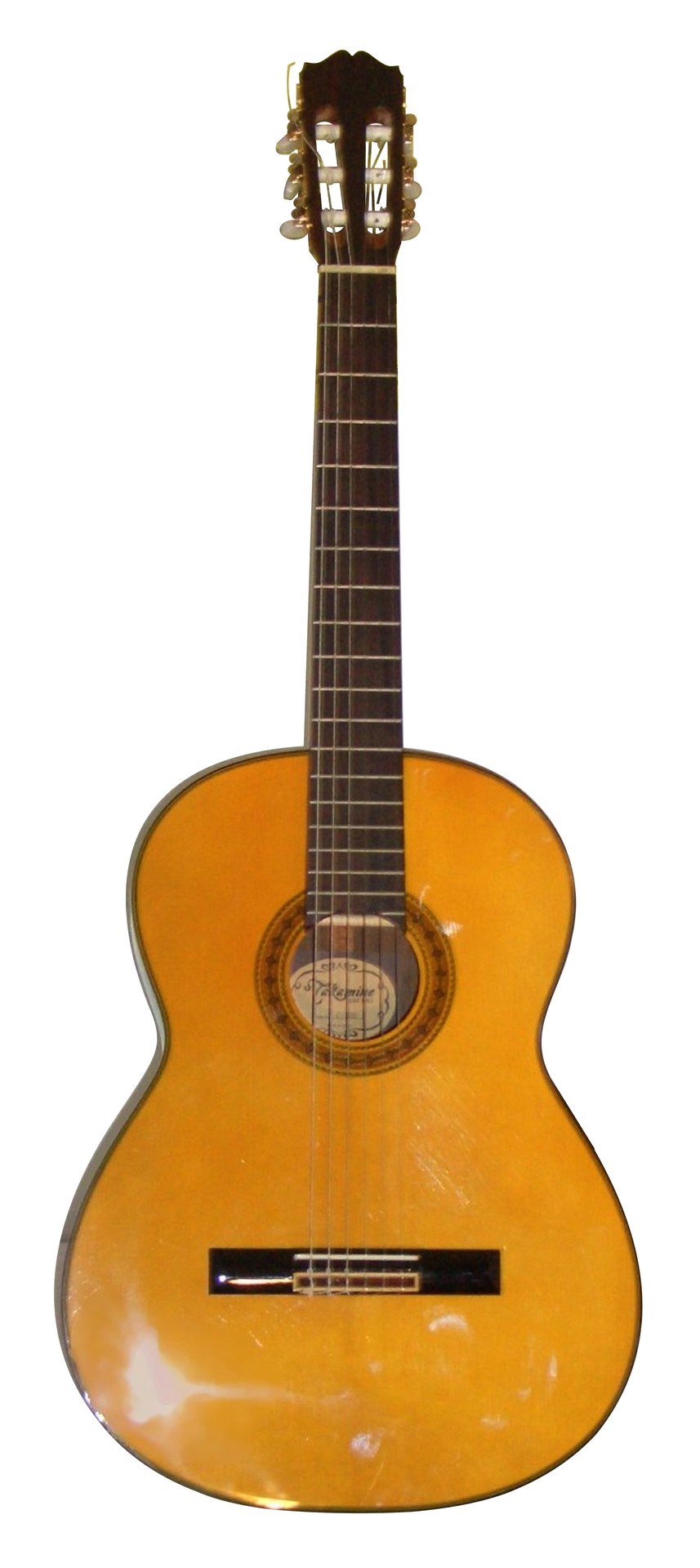
Wilson's main guitar is a 1970s Takamine nylon-string he bought about a decade ago. He told MusicRadar he found it through a sale in a Nashville parking lot and paid $400. In a Tiny House Concerts video quoted by Guitar World, he said he bought it off Craigslist from "some random guy" who met him in a van. He asked the seller to bring an amp, because he wanted to play it plugged in and couldn't afford a pickup. The seller ran it through an amp plugged into his cigarette lighter, and it sounded right.
"It was my Trigger, the moment I held it," Wilson told MusicRadar, naming Willie Nelson's famous Martin. He says he's written thousands of songs on it, and he's warned would-be copycats that a guitar from the same model and era won't necessarily sound like his.
Guitar World identifies it as a Takamine C136S. That's the only published model ID we found, so treat it as likely rather than certain.
Some other documented details:
- It's falling apart on purpose. He told Dan Patrick the guitar is "held together by the bonds of masking tape and drawings."
- The pick is eating the top. Because he plays a classical guitar with a pick, he said, it "just shovels away piles of sawdust on the floor after each show." He's fine with that. He'd rather wear a guitar out than hang it on a wall.
- There's more than one. Premier Guitar's 2026 gear list says he uses two Takamine acoustics "with gut strings."
What's not documented: his string brand and gauge, the exact pickup or preamp in the Takamines now, and which of the two he used at the Print Shop. We didn't find a reliable source for any of those.
The amps: Fender Princeton and Fender Deluxe
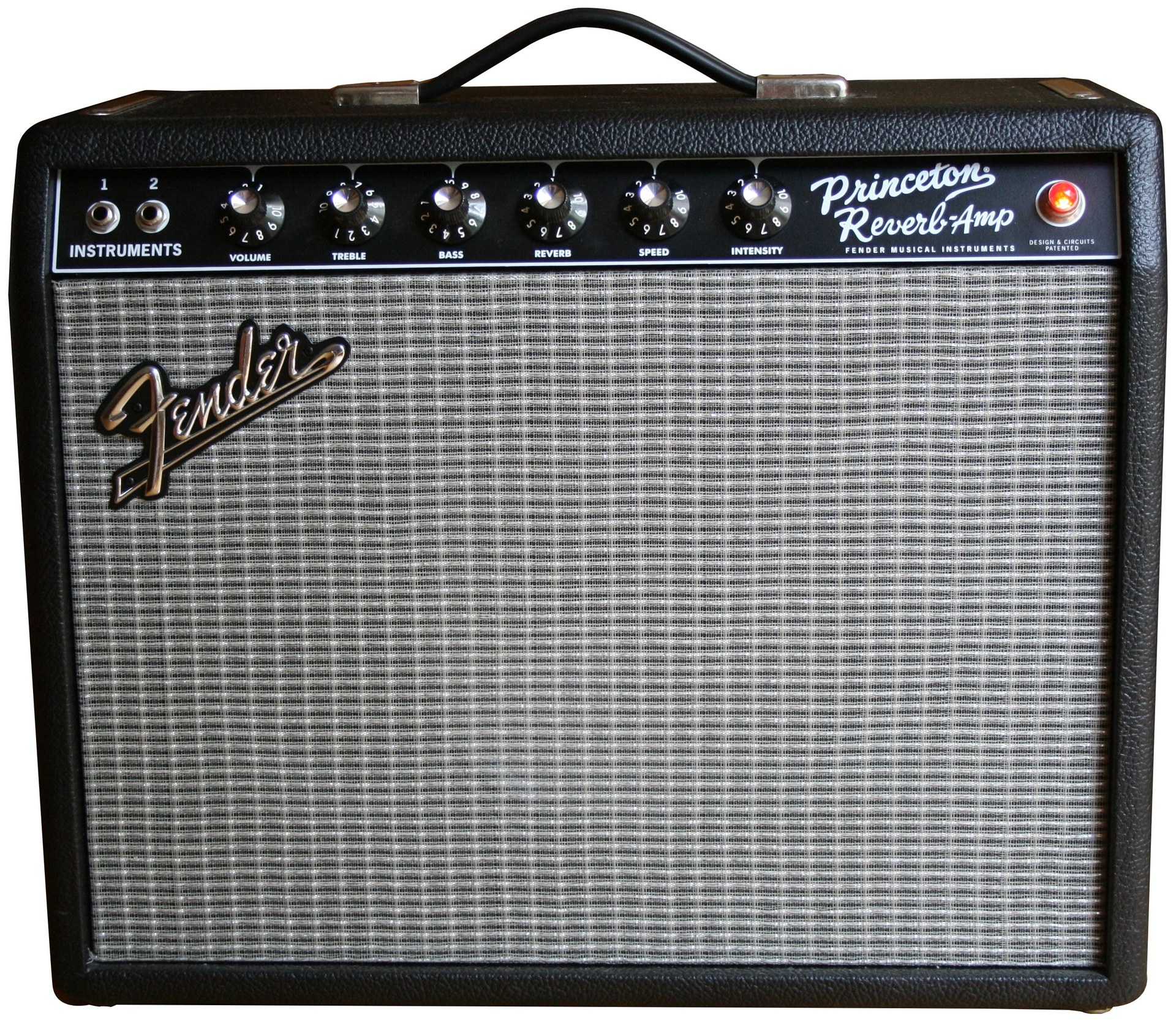
Premier Guitar's July 2026 feature lists two amps: a Fender Princeton and a Fender Deluxe. It doesn't specify the versions, such as Reverb models, reissues or Tone Master digital models, and we haven't seen a rig rundown that does.
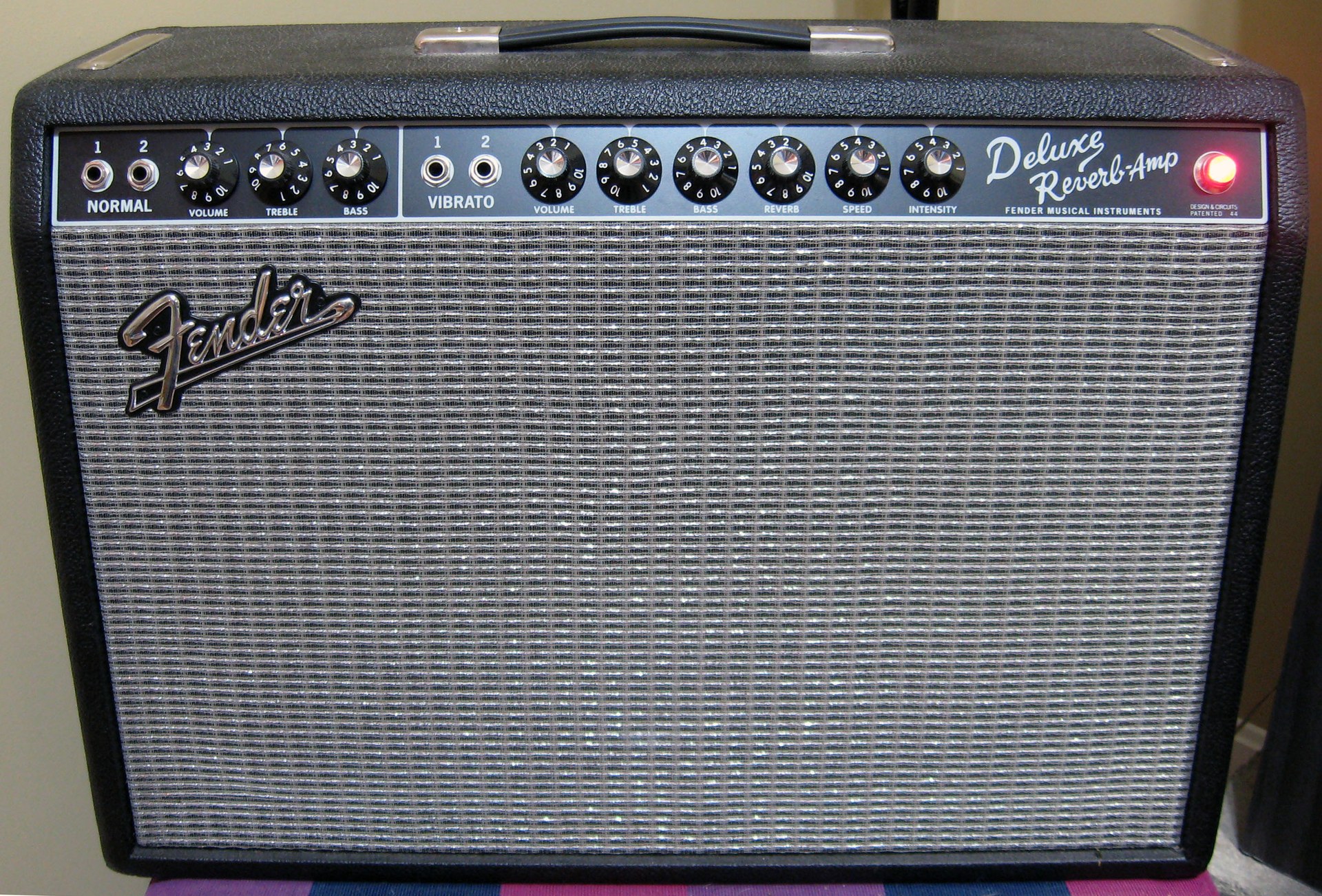
How he uses them is clearer. "I run it through a combo amp to get some natural distortion on it, some dirt," he told MusicRadar in 2024. That's the unusual part. Most players amplify a nylon-string to sound like a bigger, cleaner classical guitar. Wilson pushes a small Fender combo until the nylon starts to grind, which is where the Seattle in his sound comes from.
Pedals: a Tube Screamer and reverb
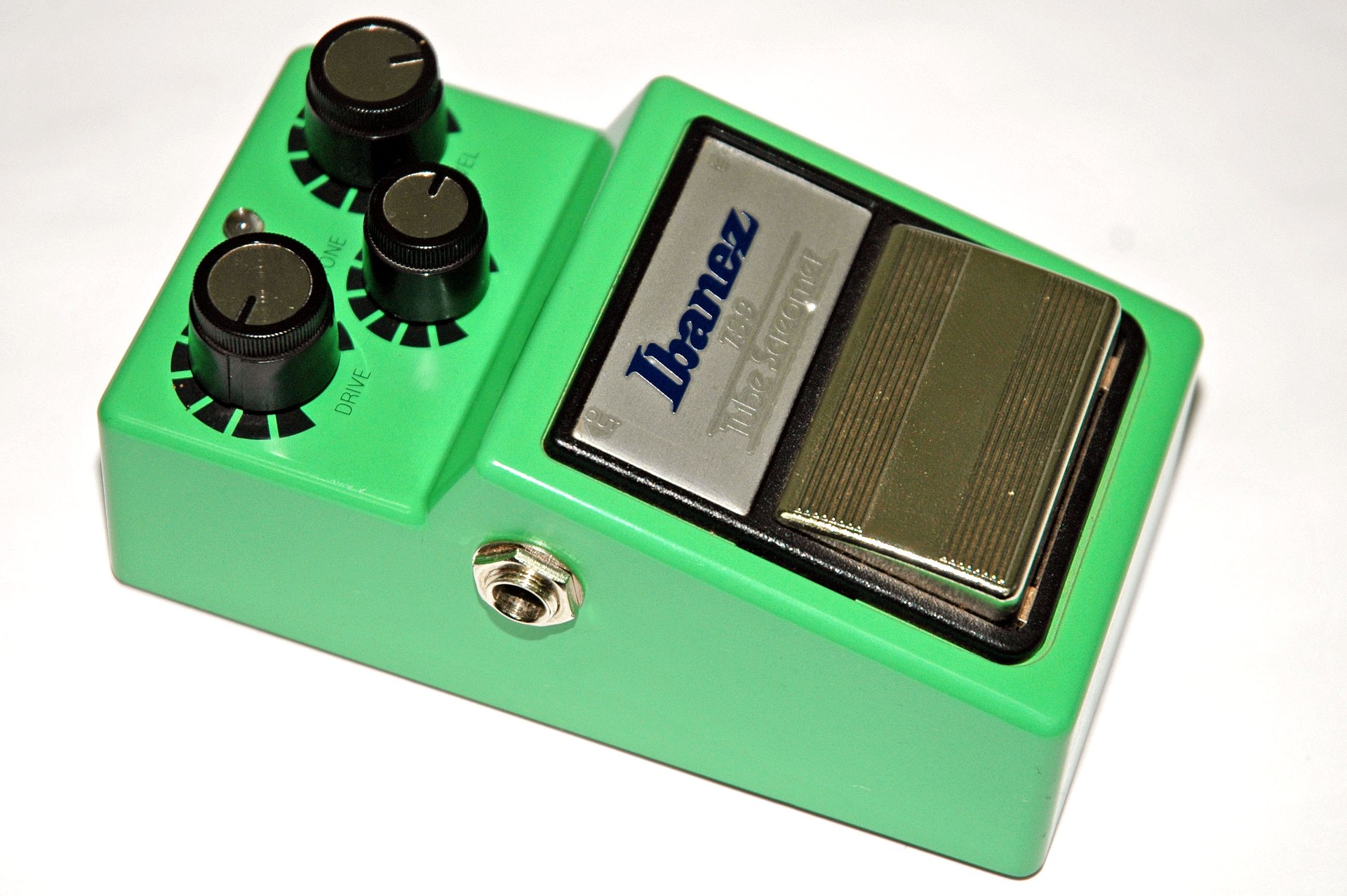
In the same interview he described the rest of his signal chain: "an Ibanez Tubescreamer, some reverb and that's pretty much it." Premier Guitar also lists an Ibanez Tube Screamer. (For why that green box shows up on so many boards, see our Ibanez Tube Screamer history.)
He points to Kurt Cobain's three-pedal board as his model for keeping it simple. Our Kurt Cobain tone breakdown shows why that approach works.
Beyond that, the details get softer. Equipboard's crowd-sourced page, based on photos and video of his board, lists a Strymon Flint V2 (tremolo and reverb), an Ibanez TS9, a Line 6 HX Stomp and a TC Electronic PolyTune. That lines up with "some reverb" and a Tube Screamer, but neither Wilson nor his team has confirmed the list, so treat it as a sighting, not a spec sheet.
Getting close to the sound
You don't need his exact guitar. The approach matters more than the parts:
- Use a nylon-string with a pickup, and play it with a medium flat pick. Expect some wear on the top.
- Plug into a small tube-style Fender combo, not an acoustic amp or PA. Turn it up until it just starts to break up.
- Add a Tube Screamer for push, not for heavy gain. Keep the drive low and the level up. If you're shopping, our best overdrive pedals of 2026 guide covers options.
- Add plate- or spring-style reverb, enough to add space without washing out the attack.
- Retune. Drop the low string, or try an open tuning you don't know, and write something without your usual shapes.
- On "Stand By Me," try his substitution. Play a minor-six chord where the home major chord would be, and hear what it does to the melody.
The Takeaway on Stephen Wilson Jr.'s "Stand By Me"
The Print Shop video works because nothing in it is decoration. Every choice is a guitar player's decision made for a songwriter's reason: the nylon strings, the pick, the dirty little Fender, the minor-six chord under a melody everyone knows by heart.
Wilson spent years becoming a skilled guitarist, then threw half of it away so the songs could get through. If there's a lesson for the rest of us, it's that your playing gets more personal when you make your own habits harder to fall back on, not when you add more technique.
Watch the clip with a guitar in your lap. Then play the first chord as a minor six.
Join the conversation: Did the Print Shop "Stand By Me" stop you cold, or do you prefer Ben E. King's original? Tell us in Guitar Talk. For another modern player taking roots music somewhere new, read our feature on Marcus King.
Plugged Gear Co. may earn a commission from qualifying purchases.
Experience-driven coverage, not algorithm bait.
- 20+ years of guitar playing experience
- Real-world retail experience at Guitar Center
- Thousands of hours testing guitars, amps, and pedals
- A community of 50,000+ guitar enthusiasts across platforms
- Partnerships with Fender, DistroKid, TrueFire, Card Chords, and Enya
- Editorial standards published openly — see how we test gear
The Modern Guitar Magazine. Delivered to your inbox.
No spam. No gimmicks. Just great guitar content — stories, tones, iconic solos, and honest gear takes. Every week.
Ask GP
3 free questions a dayStill curious? Ask GP about this story.
Your personal classic-rock and guitar guide — ask anything about Stephen Wilson Jr.'s "Stand By.
Discussion (0)
Sign in to join the discussion.
Sign in to commentLoading comments…
Discover another guitar story
Swipe through our latest features, breaking news and iconic solos — one story at a time.
Open Swipe →More Guitar News
Marcus King: The Blues Prodigy Carrying Southern Guitar Into a New Generation
Vocal bends, elite vibrato and a semi-hollow tone the size of a room. A guitarist's deep dive into Marcus King's technique, phrasing vocabulary, gear and why he may be the most complete young blues musician working today.
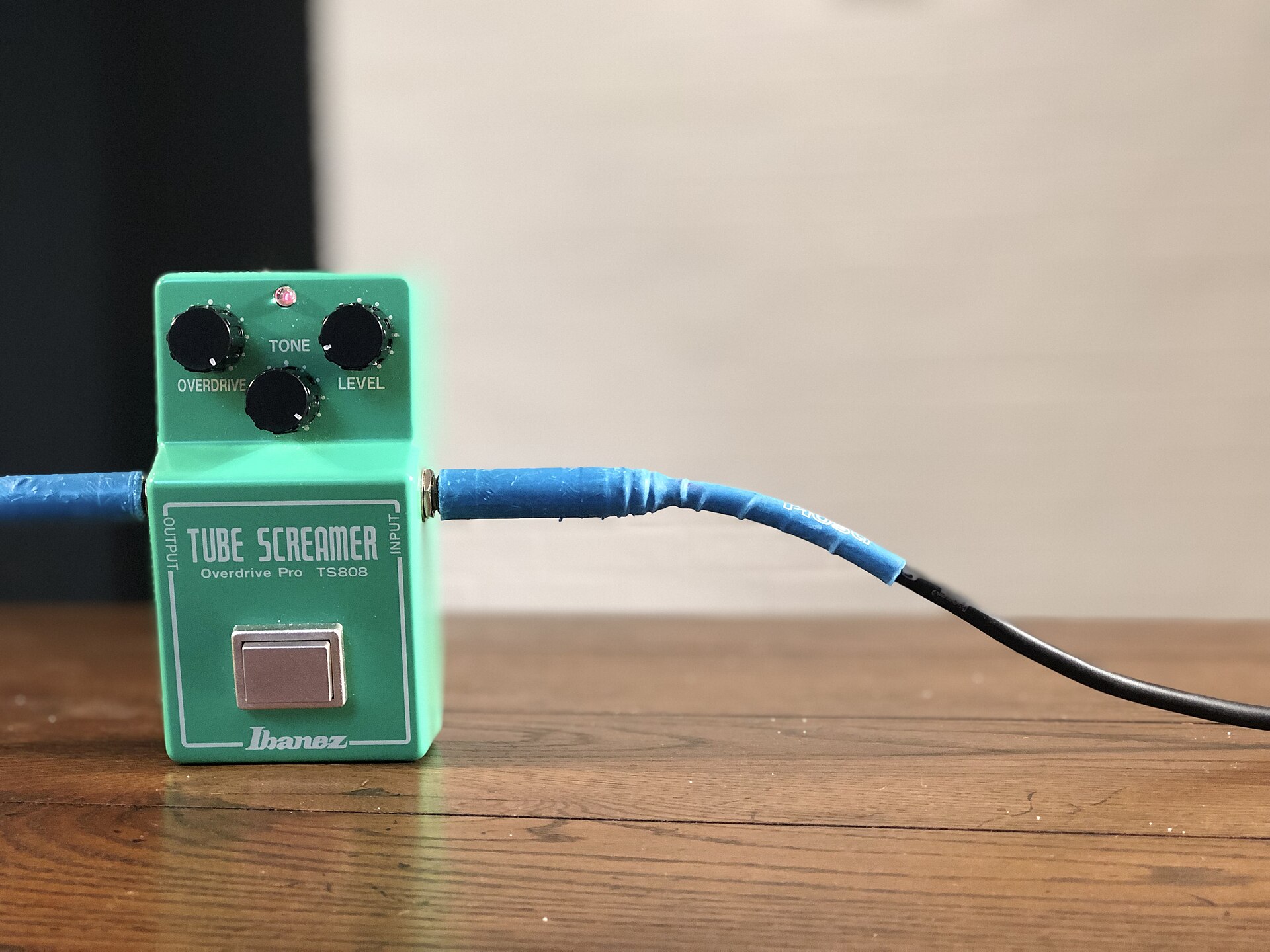
The Ibanez Tube Screamer: How a Little Green Box Built to Compete Became the Pedal Everyone Copies
How a Maxon engineer's answer to the Boss OD-1 became the Ibanez Tube Screamer, why the TS808 vs TS9 debate never ends, and what SRV really used.
Tone Decoded: Inside Kurt Cobain's Raw, Basement Grunge Sound
Kurt Cobain's tone wasn't pristine — it was angry, broken, loud, and human. Here's exactly how he built the Nevermind and In Utero sound from cheap Fenders, a Boss DS-1, and pure attitude.

The 10 Best Overdrive Pedals That Actually Sound Like Money
From transparent touch tools to iconic mid-humps and Klon chime, these 10 overdrives under $300 in 2026 punch above their weight with pro tones, tough builds, and real-world value.