
Steve Cropper at 85: The Stax Guitarist Who Proved Less Is Everything
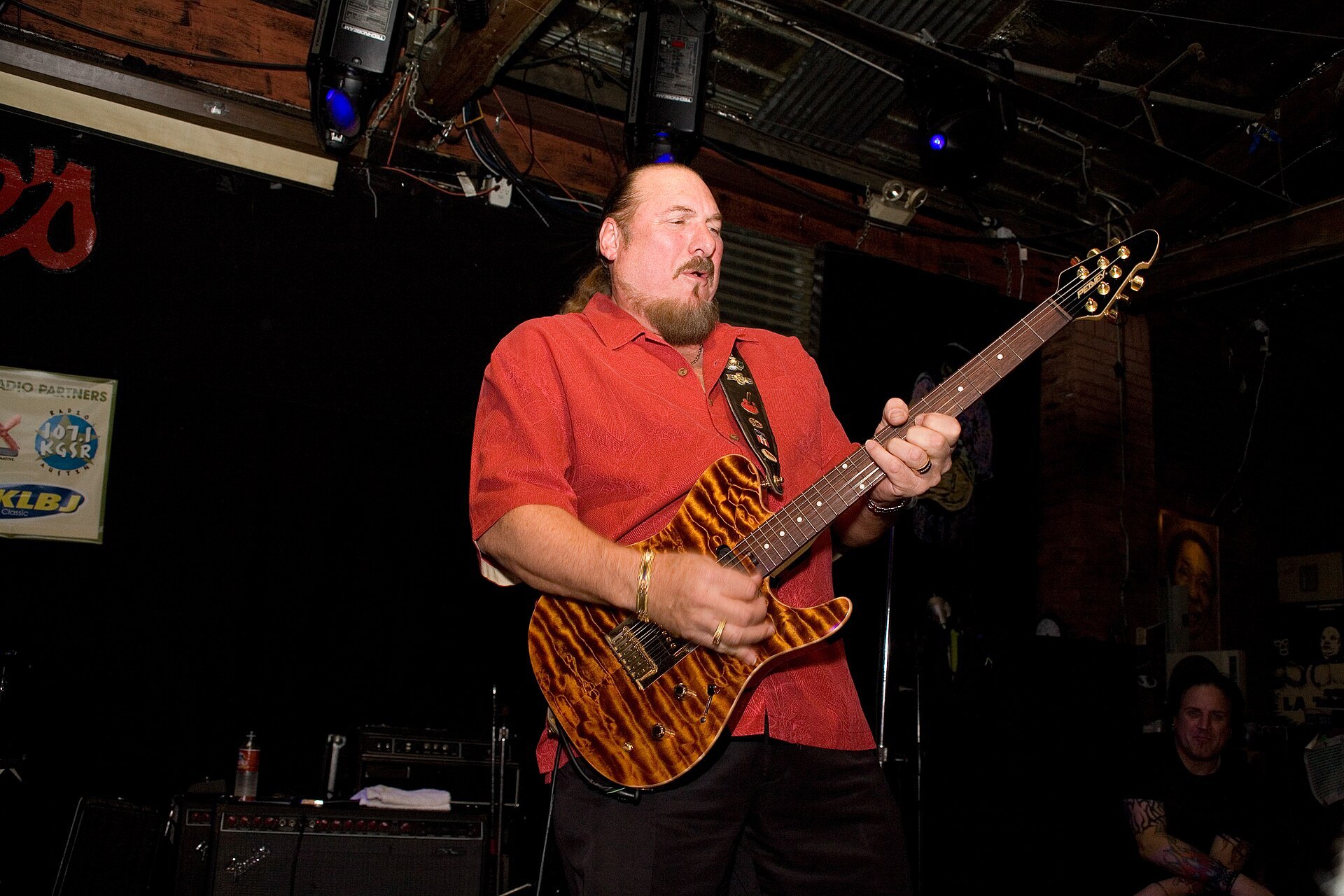
Steve Cropper on stage at SXSW in Austin, Texas, on March 15, 2007.
CC BY-SA 2.0. Photo: Charlie Llewellin / Flickr via Wikimedia Commons
Steve Cropper would have turned 85 today, his first birthday since he died. Here's how the Stax guitarist made every note count, and what players can learn.
Steve Cropper would have turned 85 today. It's the first October 21 since he died in Nashville last December, and the first time in more than six decades that the man who played guitar on "Green Onions," co-wrote "(Sittin' On) The Dock of the Bay" and anchored the Stax house band isn't here to mark it. This is a look at the player he was, the songs he left, and what any guitarist can still learn from him.
Stephen Lee Cropper was born on October 21, 1941, in Dora, Missouri, and died on December 3, 2025, in Nashville at the age of 84. In between he did something very few guitarists ever manage. He became famous for restraint.
He wasn't the fastest player of his generation and never tried to be. What he had was timing, taste and a feel for exactly how little a song needed from the guitar. The Guardian's obituary put it better than most: in an era when many rock players seemed to believe the spoils went to "the fastest and flashiest," Cropper "showed generations of younger players the virtues of economy and concision." A single chord, struck at the right moment, could say as much as a long solo.
If you've heard "Green Onions," "Soul Man," "In the Midnight Hour," "Knock on Wood" or "Dock of the Bay," you've heard Steve Cropper. Most people just didn't know his name. Here's the guitarist behind those records.
A Missouri Farm Kid in Memphis
Cropper grew up on a farm in the Missouri Ozarks. His father, Hollis, worked for the St. Louis–San Francisco Railway, and his mother, Grace, was a schoolteacher. When he was nine the family moved to Memphis, and that move decided everything.
Country music had been his first love. In Memphis he heard black gospel, rhythm and blues and the blues, and it stuck. He got his first guitar at 14 and started soaking up a wide range of players: the country fingerpicking of Chet Atkins, the jazz of Tal Farlow, and above all Lowman Pauling of the "5" Royales, a guitarist-songwriter who played sharp, punchy parts that served the song. Variety's obituary also lists Billy Butler of Bill Doggett's band and Wayne Bennett, Bobby "Blue" Bland's longtime guitarist, among the players he cited.
Those influences explain a lot about how he played later. Pauling, Butler and Bennett were all players who backed singers, played on the groove and made short statements count. Cropper spent the rest of his life doing the same thing.
The Royal Spades, the Mar-Keys and an Old Movie Theater
At Messick High School, Cropper formed a band called the Royal Spades with a group of classmates that included his childhood friend Donald "Duck" Dunn on bass. Saxophonist Charles "Packy" Axton joined soon after, and Axton happened to have useful family. His mother, Estelle Axton, and his uncle, Jim Stewart, ran a small label called Satellite Records out of a record shop and a converted movie theater on McLemore Avenue in South Memphis.
Satellite soon became Stax, and the Royal Spades became the Mar-Keys, a name taken from the theater's marquee.

CC BY 2.0. Photo: Avalon Frost / Flickr via Wikimedia Commons
There's an irony in the Mar-Keys' big moment. In 1961 the band had a hit with a rough, swaggering instrumental called "Last Night," which reached No. 2 on the R&B chart and No. 3 on the pop chart. According to Variety, producer Chips Moman decided a guitar wasn't needed on the session, so Cropper didn't play on the record that put his band on the map. He went out on the road with the touring Mar-Keys for a while, then came home to work in the Stax record shop and the studio.
That turned out to be the right call. When Moman left Stax after a falling-out with Stewart in 1962, Cropper, still in his early twenties, became the label's A&R man. Stewart had seen a professionalism in him that went beyond his age. From then on Cropper was a guitarist, a songwriter, an arranger, a producer and the person who helped decide what Stax recorded.
"Green Onions" and the Birth of Booker T. & the M.G.'s
The band that made Cropper's name came together almost by accident. In the summer of 1962, a session with rockabilly singer Billy Lee Riley fell through, and the musicians who'd been booked for it had studio time to burn: Cropper, 17-year-old organist Booker T. Jones, bassist Lewie Steinberg and drummer Al Jackson Jr.
They cut a slow blues called "Behave Yourself" as the A-side. For the B-side they worked up a medium-tempo twelve-bar groove built on a simple rising riff. That was "Green Onions."
Local radio liked the B-side better, so Stax reissued it as the A-side. "Green Onions" went to No. 1 on the R&B chart and No. 3 on the Billboard Hot 100 in September 1962. It's now one of the best-known instrumentals ever recorded, and it was given a Grammy Hall of Fame Award in 1999.
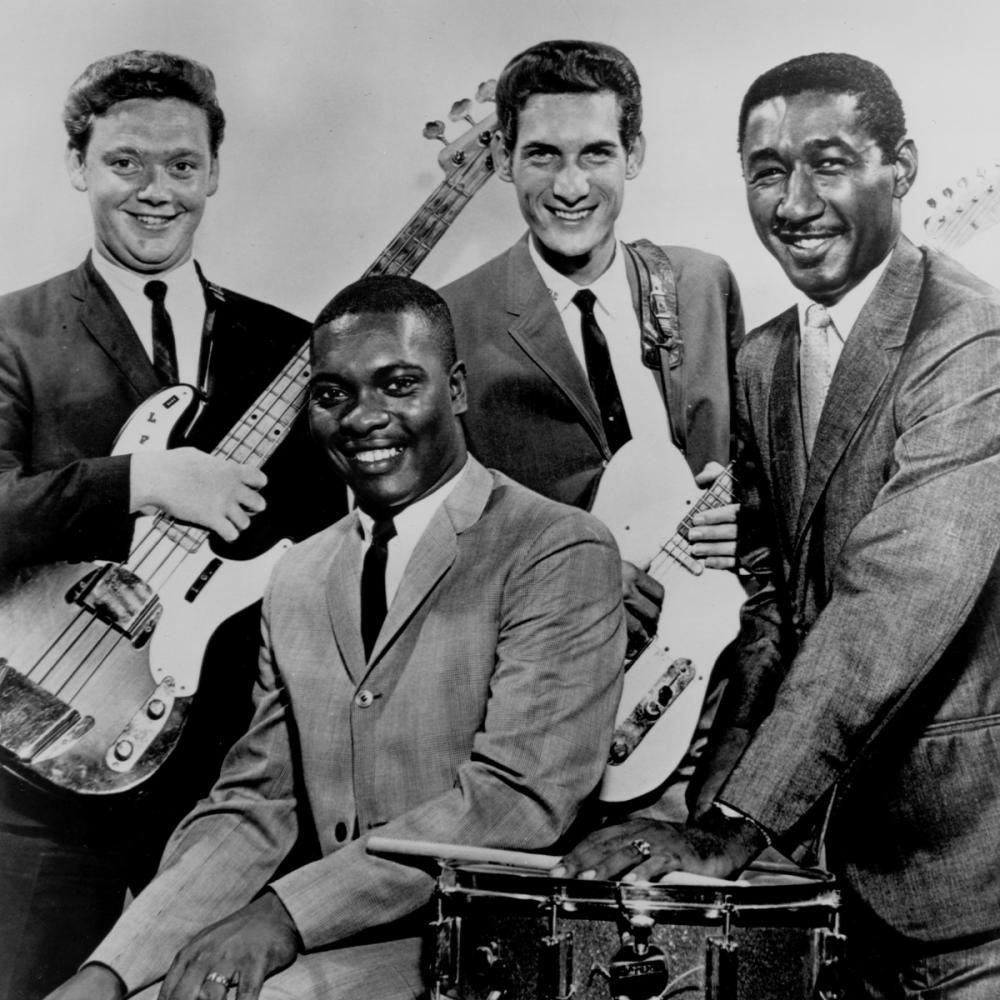
Public domain. Stax Records trade ad, Billboard, March 11, 1967, via Wikimedia Commons
Listen to it as a guitar player and two things jump out. First, the rhythm: Cropper's short, briskly flicked chords sit right on the backbeat and leave Jones' Hammond all the room it needs. Second, the solo, which is a lesson in compression. The Guardian described his phrases as "compressed," and that's exactly right. He plays a few stinging, twangy lines, answers the melody, and gets out.
The guitar on that record, as the Guardian tells it, was a 1956 Fender Esquire. Cropper remembered it slightly differently. In a 2008 interview with Vintage Guitar, he said his first guitar on "Green Onions" was an Esquire that "had to be early-'50s," one he'd sanded down and painted purple in his parents' garage. He also said he played it through "a little Fender Harvard amp." The exact year matters less than the setup itself: one single-coil pickup, a small tweed amp and nothing in between.
Bassist Lewie Steinberg was soon replaced by Duck Dunn, Cropper's old friend from the Royal Spades, and the classic lineup of Booker T. & the M.G.'s was set: two black musicians and two white musicians, in a segregated Southern city in the early 1960s. The Guardian called "Green Onions" "a manifesto for a new kind of rhythm section." The rest of the decade proved it.
The Stax House Band: Backing Otis, Sam & Dave, Wilson Pickett and More
Booker T. & the M.G.'s had hits of their own, including "Hip Hug-Her," "Soul Limbo," "Hang 'Em High" and "Time Is Tight." But their bigger job was being the Stax house band. For most of the 1960s, if a soul record came out of the McLemore Avenue studio, there was a good chance Cropper, Dunn, Jackson and Jones (or a combination of them) were on it.
That meant backing Otis Redding, Sam & Dave, Rufus Thomas, Carla Thomas, William Bell, Eddie Floyd, Johnnie Taylor and Albert King, among others. When Atlantic Records sent Wilson Pickett and Sam & Dave to record in Memphis, it was because of the sound that band could make.
The M.G.'s reputation reached all the way to England. In 1966, according to the Guardian, the Beatles had to be talked out of going to Memphis to record at Stax for what became Revolver. Wikipedia's account says John Lennon and Paul McCartney made tentative plans to work there with Cropper before Brian Epstein called it off over security concerns. In March 1967, the Stax/Volt revue toured Europe, with the M.G.'s backing Redding, Sam & Dave, Eddie Floyd and Arthur Conley in front of crowds who already knew every record.
Cropper's sound on those sessions changed as the decade went on. He moved from the Esquire to a Telecaster, which he preferred because it gave him a second pickup. "I liked the Tele because it had two pickups. It was a little more versatile than an Esquire, which had one pickup," he told Vintage Guitar years later. His main guitar for a long stretch was a white Telecaster with a rosewood fingerboard, which he believed was a '62 or '63 that he'd bought new. On the amp side, he eventually swapped the Harvard for a Fender Super Reverb, and he remembered the studio mic as a Neumann U-67. "That's on all kinds of stuff, like 'Soul Man,'" he said.
"Play it, Steve!"
"Soul Man" deserves its own line here. Sam & Dave's 1967 hit is the record where the guitarist gets a shout-out in the middle of the song: Sam Moore's "Play it, Steve!" It became Cropper's catchphrase for life. He later used it as the title of a 1998 album, The Interview – Play It, Steve!, and John Belushi shouted it again when the Blues Brothers remade the song more than a decade after the original.
The Songwriter: "In the Midnight Hour," "Knock on Wood" and "Dock of the Bay"
Cropper's guitar playing alone would have earned him a place in the history books. His songwriting put him in the Songwriters Hall of Fame, which inducted him in 2005.
"In the Midnight Hour"
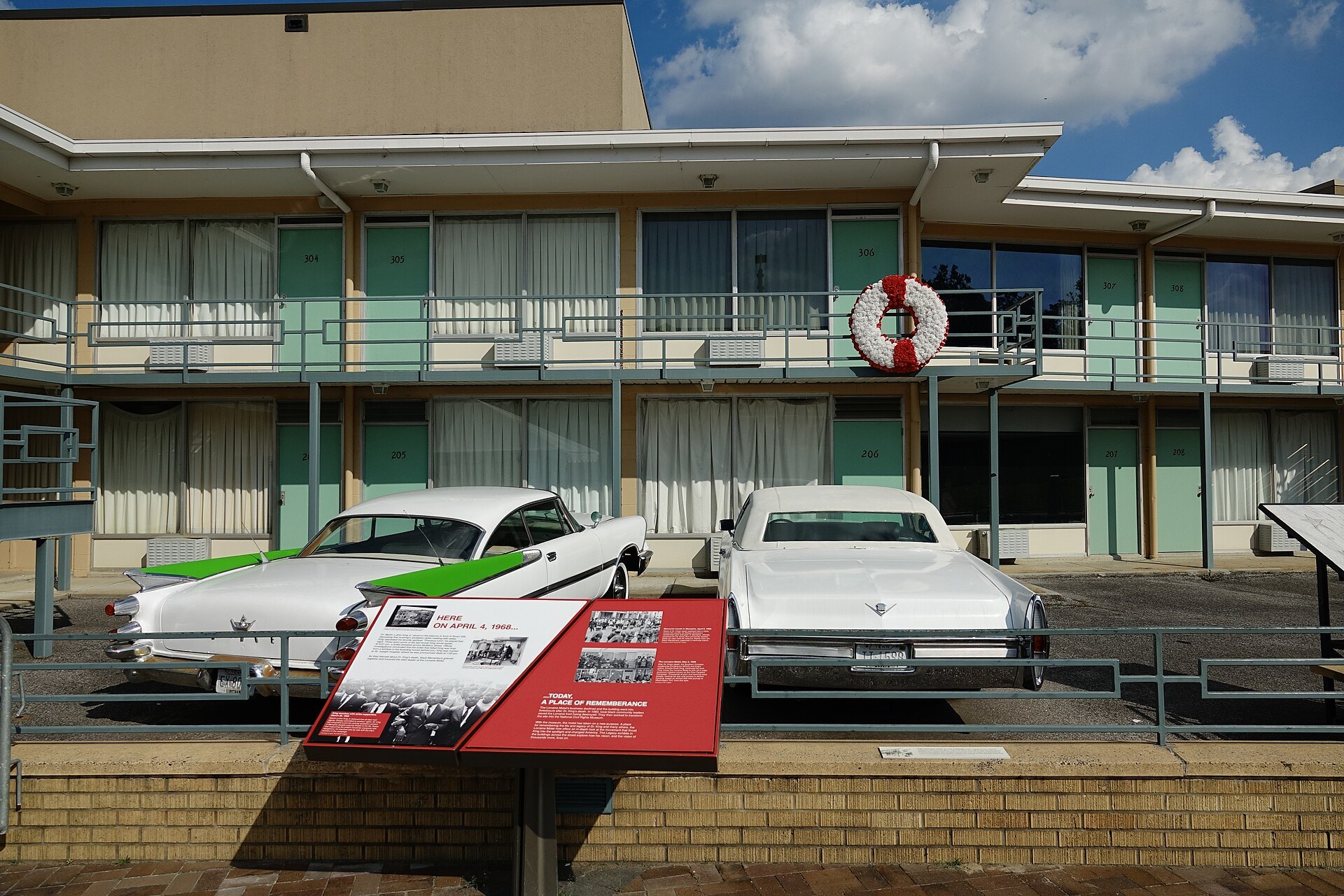
Cropper co-wrote "In the Midnight Hour" with Wilson Pickett at the Lorraine Motel in Memphis, a place many Stax artists used. Three years later, it was where Dr. Martin Luther King Jr. was assassinated. The song was recorded at Stax on May 12, 1965, with Cropper, Dunn, Jackson and trumpeter Wayne Jackson on the session.
The guitar-player detail in that story is the groove. Cropper said Atlantic's Jerry Wexler came into the studio and demonstrated a dance step called the Jerk, which put the accent on the two. Cropper reworked the groove around that "delayed backbeat," and the result is the slightly behind-the-beat push that makes the record feel the way it does. "In the Midnight Hour" went to No. 1 on the R&B chart in August 1965 and reached No. 21 on the pop chart. In 2017, the Library of Congress added it to the National Recording Registry.
"Knock on Wood"
Cropper wrote "Knock on Wood" with Eddie Floyd, also at the Lorraine Motel. In interviews, Cropper said there was a lightning storm the night they wrote it, which is where "It's like thunder, lightning" came from. According to Stax historian Rob Bowman, the song uses the chord progression of "In the Midnight Hour," only played in reverse. That's a neat trick worth stealing for your own writing.
Floyd recorded it at Stax on July 13, 1966, with the M.G.'s, Isaac Hayes on piano and Wayne Jackson on trumpet. Stax released it on July 25, 1966. It spent a week at No. 1 on the soul singles chart and reached No. 28 on the Hot 100, and later artists including David Bowie and Amii Stewart turned it into a hit again.
"(Sittin' On) The Dock of the Bay"
This is the one that will outlive everybody. Otis Redding started writing it in August 1967 while staying on a houseboat in Sausalito, California. He came to Memphis with a verse and an idea, and he and Cropper finished it together at Stax that November.
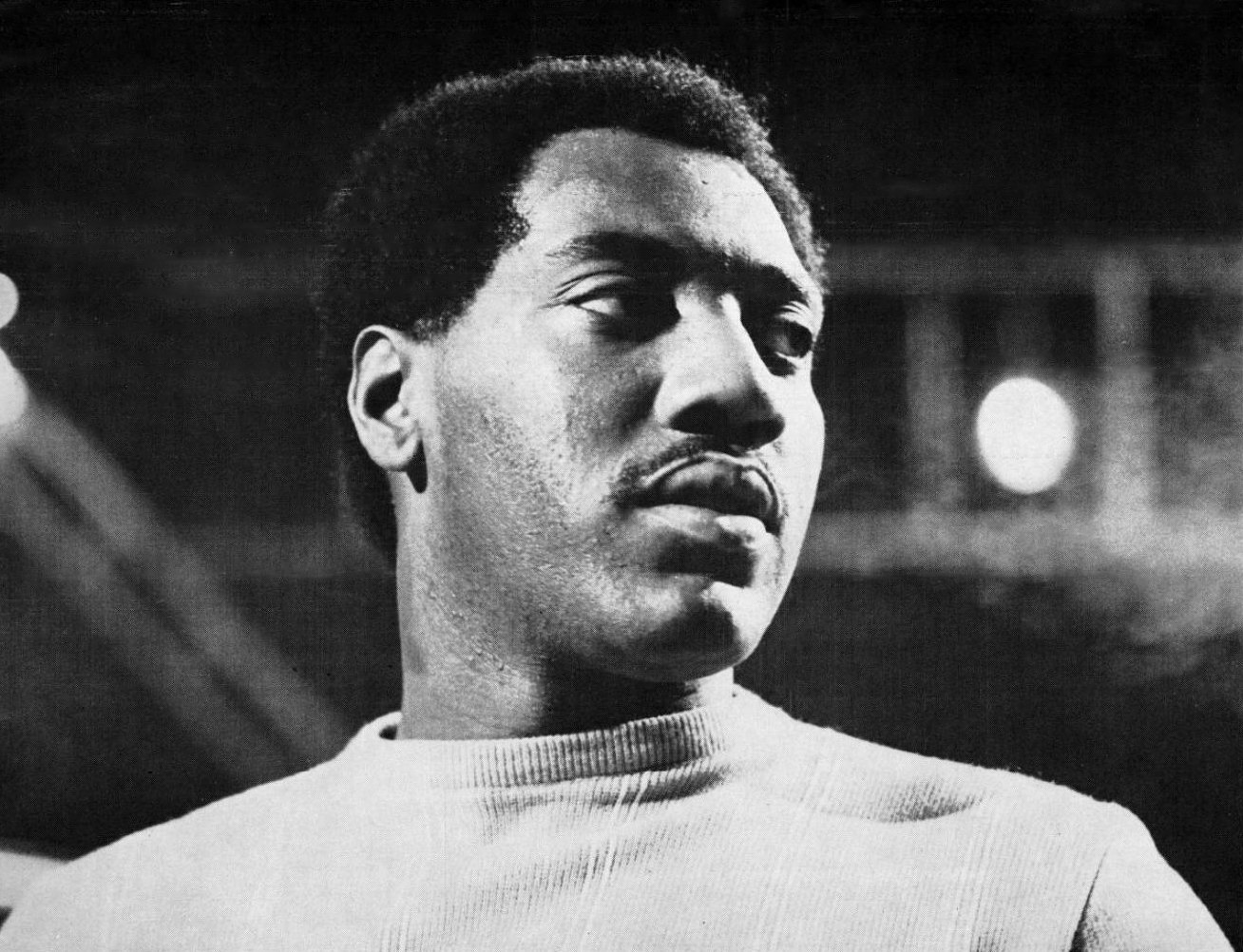
Public domain. Volt Records trade ad, Billboard, Jan. 7, 1967, via Wikimedia Commons
In a 1990 interview on NPR's Fresh Air, Cropper described what Redding brought in: "I watch the ships come in and I watch them roll away again." Cropper said, "I just took that... and I finished the lyrics."
"Dock of the Bay" was recorded on November 22, 1967, with overdubs on December 7. Three days later, on December 10, Redding died in a plane crash. Cropper mixed the song after his death and added the sounds of waves and seagulls Redding had asked for. Released in early 1968, it became the first posthumous No. 1 single in the United States, and it won Redding and Cropper the Grammy for Best Rhythm & Blues Song.
The guitar on the record tells you everything about Cropper's approach. He told Vintage Guitar he played acoustic on the session with Redding, then overdubbed the electric licks later, going back to his "old Harvard" for them. "Which, of course, Otis never heard," he added. Those little fills are some of the most quietly perfect guitar parts on any hit record. Nothing in them is showy, and every note is in the right spot.
Variety's list of his other co-writes shows how deep the catalog goes: Redding's "Mr. Pitiful," Pickett's "634-5789," Floyd's "Raise Your Hand," Don Covay's "Seesaw" and "Sookie Sookie," and the M.G.'s own "Soul Limbo" and "Time Is Tight."
Writing with a "one-fingered guitar player"
One of the best stories from the Vintage Guitar interview explains how Cropper worked with Redding. Redding tuned his guitar to an open chord and played it with one finger, Cropper said, which is why almost none of the songs Redding wrote contain minor chords. Cropper didn't want to keep retuning during sessions, so he kept a second Telecaster tuned the way Redding tuned his. Songs such as "Try a Little Tenderness" were played in standard tuning; for others, like the intro of "Ole Man Trouble," he grabbed the second Tele. Plenty of us own a spare guitar we leave in an open tuning. Cropper had a practical reason for doing it.
Life After Stax: Producer, Session Ace and Blues Brother
Cropper left Stax in late 1970 after clashing with the label's management, and by the time the M.G.'s last Stax album, Melting Pot, came out in 1971, he was gone. He set up his own Memphis studio, TMI, and became one of the most in-demand players and producers around. The Guardian lists John Lennon, Rod Stewart, Dolly Parton, Ringo Starr and Etta James among the artists who called him. He also worked with Jeff Beck and John Prine.
By 1975 he'd moved to Los Angeles. That year he, Jones, Dunn and Jackson made plans to reunite the original M.G.'s, but Al Jackson Jr. was murdered in his Memphis home before it could happen. Cropper later called Jackson "the greatest drummer to ever walk the Earth."
Then came the gig that introduced him to a new generation. Cropper and Dunn joined Levon Helm's RCO All-Stars, and soon after they became the backbone of the Blues Brothers band, the soul revue John Belushi and Dan Aykroyd built out of their Saturday Night Live sketches.
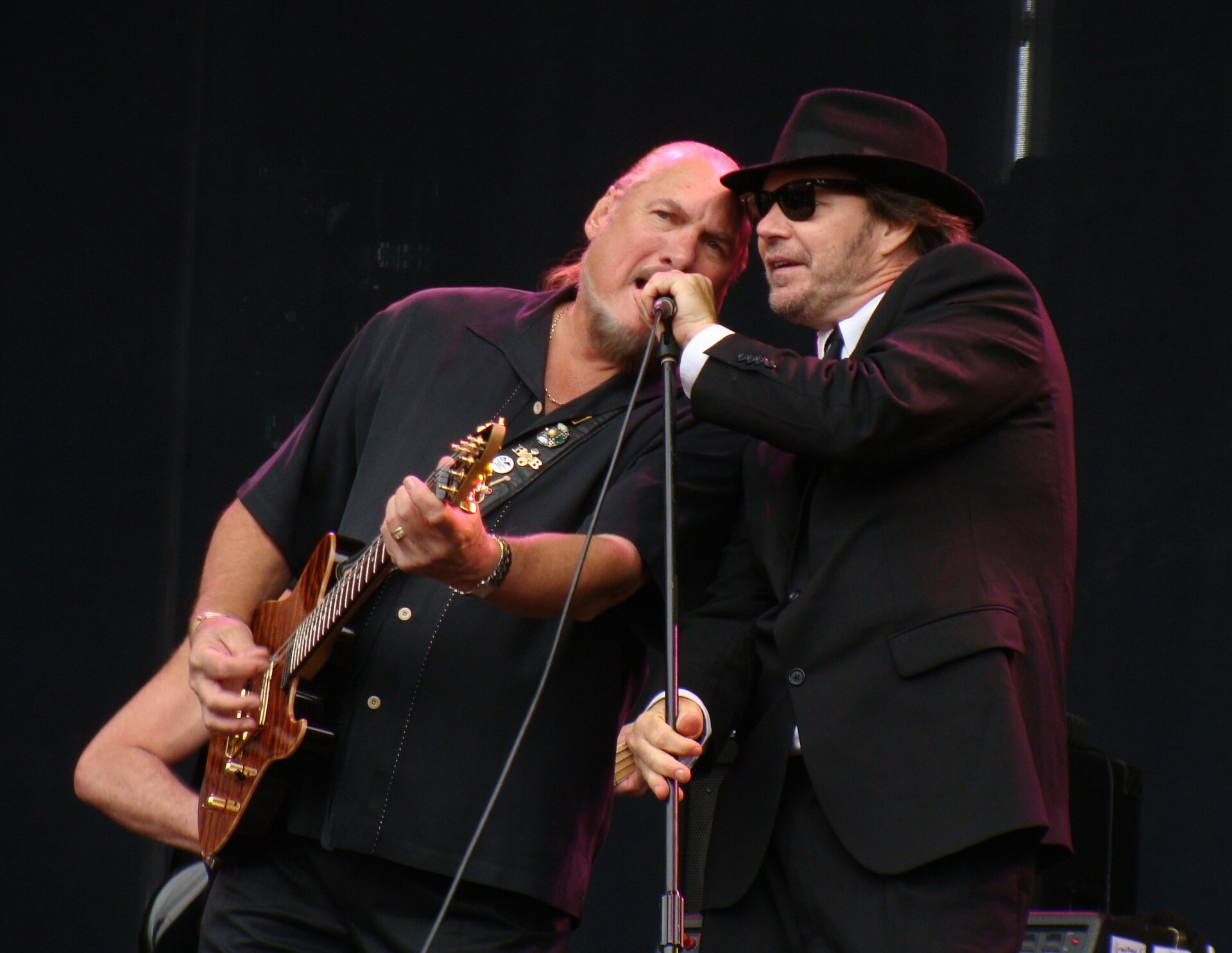
CC BY 2.0. Photo: Alberto Cabello from Vitoria-Gasteiz / Flickr via Wikimedia Commons
The Blues Brothers could have been a novelty. Musically, it wasn't. The 1978 album Briefcase Full of Blues went to No. 1 and sold double platinum, and its remake of "Soul Man," the same song Cropper and Dunn had played on 11 years earlier, reached No. 14. In the 1980 film The Blues Brothers, Cropper appears as himself alongside Aretha Franklin, James Brown, Ray Charles and John Lee Hooker. He came back for Blues Brothers 2000 in 1998 and kept touring with the band for decades.
Cropper moved to Nashville in 1988 and lived there for the rest of his life.
The Honors: Rock Hall, Mojo and Keith Richards
The M.G.'s were inducted into the Rock and Roll Hall of Fame in 1992. That October, a new M.G.'s lineup was the house band at Bob Dylan's 30th anniversary concert at Madison Square Garden, backing guests including George Harrison, Stevie Wonder, Johnny Cash, Neil Young, Lou Reed and Dylan himself. The band toured the United States behind Neil Young in 1993, and in 1994 Cropper won his second Grammy, for the instrumental "Cruisin'" from the M.G.'s album That's the Way It Should Be.
In 1996, Mojo magazine ranked him second only to Jimi Hendrix in its list of the greatest guitarists. Variety quoted the magazine's verdict, which works as a pretty good description of great rhythm guitar in general: Cropper "puts everything he's got, which is considerable, at the disposal of the artist and the song: metronome-crisp timing; deadly-accurate chops; earth-moving bottom-line riffs; sharp, nasty little licks and grace notes. His solos never outstay their welcome or leave you wanting less."
Keith Richards' review was shorter. Asked what he thought of Cropper, he reportedly said: "Perfect, man."
Steve Cropper's Gear, From Esquire to Peavey
Cropper's gear story is short because he never chased gear. Here's what the record shows:
- Fender Esquire: his first guitar on "Green Onions." The Guardian dates it to 1956; Cropper remembered it as early-'50s and said he sanded it and painted it purple himself.
- Fender Telecaster: a white Tele with a rosewood board, bought new in about '62 or '63 by his own estimate, plus a second Tele kept in Otis Redding's tuning.
- Fender Harvard: the small tweed combo on "Green Onions," brought back for his "Dock of the Bay" overdubs.
- Fender Super Reverb: his later Stax amp, recorded with a Neumann U-67 on records like "Soul Man."
- Peavey Tele-style guitars: in his later decades, his main guitars were one-off Peavey customs made by Jim DeCola, who also built the prototype that led to the production Cropper Classic.
- Fender "The Twin": the red-knob Fender Twin he played live in later years.
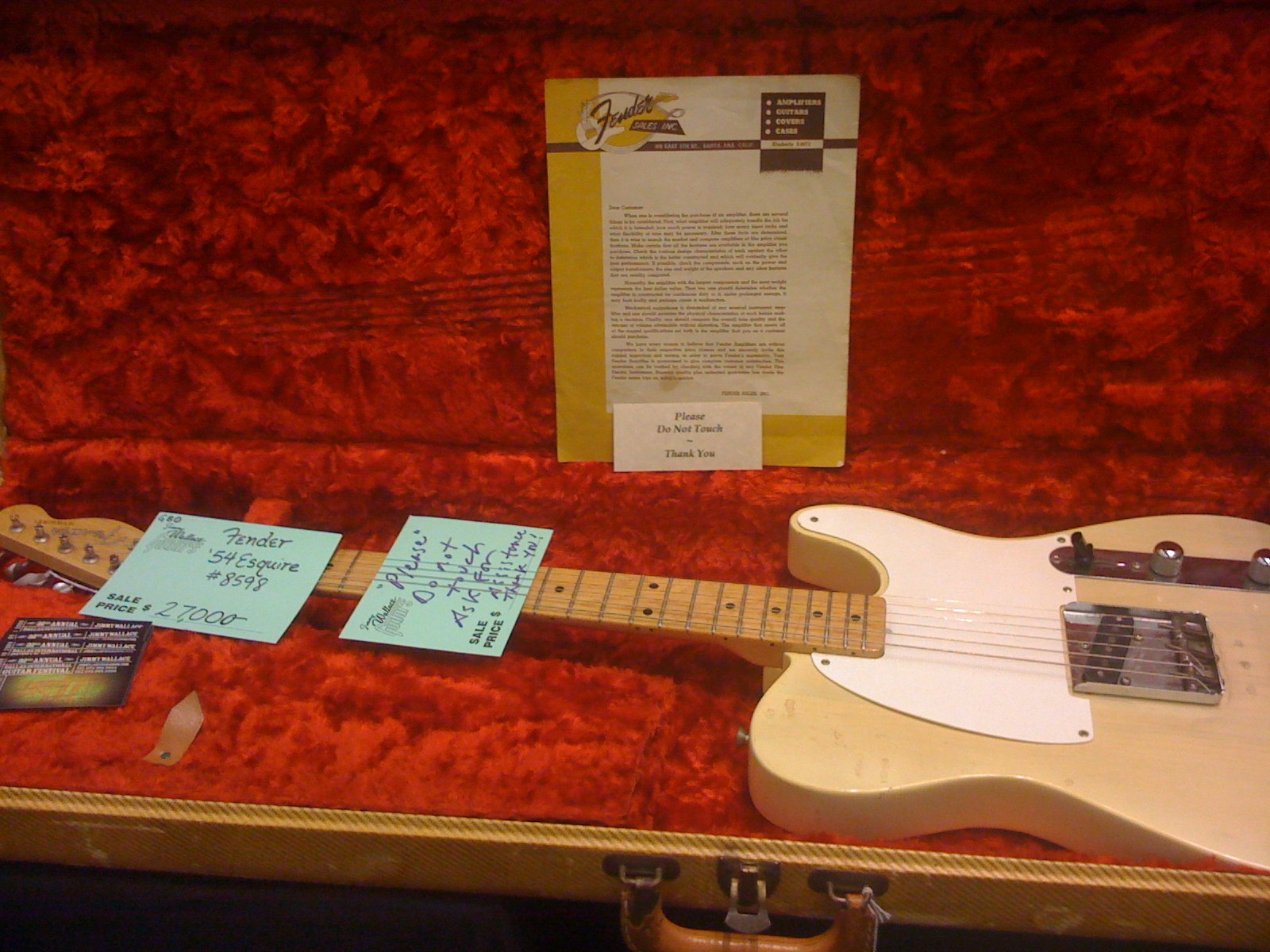
The Peavey years surprise some people, so it's worth hearing Cropper explain them. "When people ask why I don't play an old vintage Tele, I say, 'It's kind of like once I drove a Ferrari. I never went back to a Chevrolet,'" he told Vintage Guitar. In another Vintage Guitar interview, he said the Peavey Cropper Classic came from wanting a quality Tele-style guitar beginners could afford. He recalled telling Hartley Peavey, "I need to put a Tele-style guitar on the market for under $1,000." The production model paired a mahogany body and figured maple top with a 25.5-inch-scale maple neck and a rosewood board.
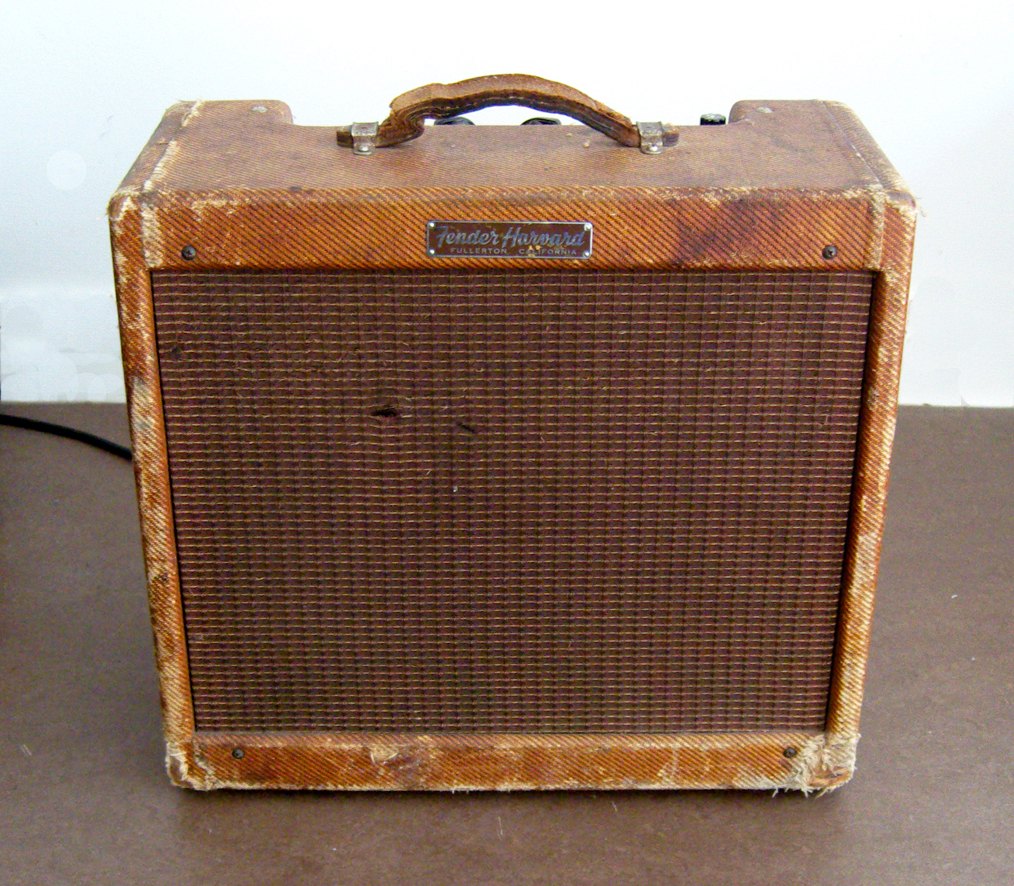
The point isn't the brand. Cropper's tone came from his hands, his timing and a clean, bright amp that cut through a band without fighting it. He said his Esquire and Telecaster didn't distort, and that engineers and producers liked how their clean tone cut through on the backbeat. If you're chasing his sound with a pedalboard full of drive, you've already gone too far.
How to Play Like Steve Cropper: Five Lessons
You can learn Cropper's lines note for note from transcriptions, and you should. But the bigger lessons are about approach. Here are five, drawn from the records and from how he and his peers described his playing.
1. Play for the singer
Cropper's best-known parts sit around a vocal, not on top of it. On "Dock of the Bay," the electric guitar fills only the spaces Redding leaves. Before you add a lick, ask whether the singer or melody already has that space covered.
2. Make the backbeat your home
The Mojo line about "metronome-crisp timing" is the core of it. Much of Cropper's work is short chord stabs on two and four, locked to Al Jackson's snare. Practice playing one small chord shape on the backbeat with a drum loop and try to make it feel great before you add anything else.
3. Learn the groove, not just the notes
"In the Midnight Hour" is the best example. The notes are simple. What makes it work is the delayed backbeat Cropper built after watching Jerry Wexler dance the Jerk. Play along with the record and pay attention to where the accents fall, not just which chords are being played.
4. Keep solos short and finished
Go back to the "Green Onions" solo. It answers the melody, makes a couple of points and stops. Mojo said his solos never outstay their welcome. Try writing a 12-bar solo you'd be happy to play exactly the same way every night, and leave out any note that doesn't earn its place.
5. Use small shapes and a clean amp
A Tele, a small Fender amp and partial chords on the top strings will get you closer to Cropper than any signature pedal. Clean tone shows every timing mistake, which is exactly why it's worth practicing with. When the timing is right, the clean sound is what makes those stabs land.
The Final Chapter: Friendlytown and Watching the Tide
Cropper never really stopped. In 2021 his album Fire It Up was nominated for the Grammy for Best Contemporary Blues Album. In 2024 he released Friendlytown as Steve Cropper & the Midnight Hour, with Billy Gibbons on lead guitar throughout and Brian May guesting on "Too Much Stress."
He was working on one more record when he died. Watching the Tide, credited to Steve Cropper & the Midnight Hour, came out on August 28, 2026, on Provogue/Artone. Its title nods to "Dock of the Bay." According to his label, Mascot Label Group, he wrote the songs with songwriter-producer Jon Tiven and Midnight Hour vocalist Roger C. Reale and recorded them at Nashville's historic RCA Studio C. Guests include Eric Clapton on "Ticket First," Brian May and Billy Gibbons on "My Angels Are Calling," and Ronnie Wood on "Until Now."
Tiven's account of the sessions, given to Guitar World in May, is worth reading in full. He said Clapton did around 11 takes on "Ticket First" and changed the song so much that Cropper and Tiven offered him a writing credit. Clapton's reply, as Tiven tells it: "Well, anything to get my name next to Steve Cropper's…" Tiven said he finished the mixes about a week and a half before Cropper died and brought him a CD at the medical facility where he was staying. "He called me the night before he passed to tell me how much he loved it," Tiven said. "He was playing it for everyone who came to visit him, telling them it was the best record he'd ever made."
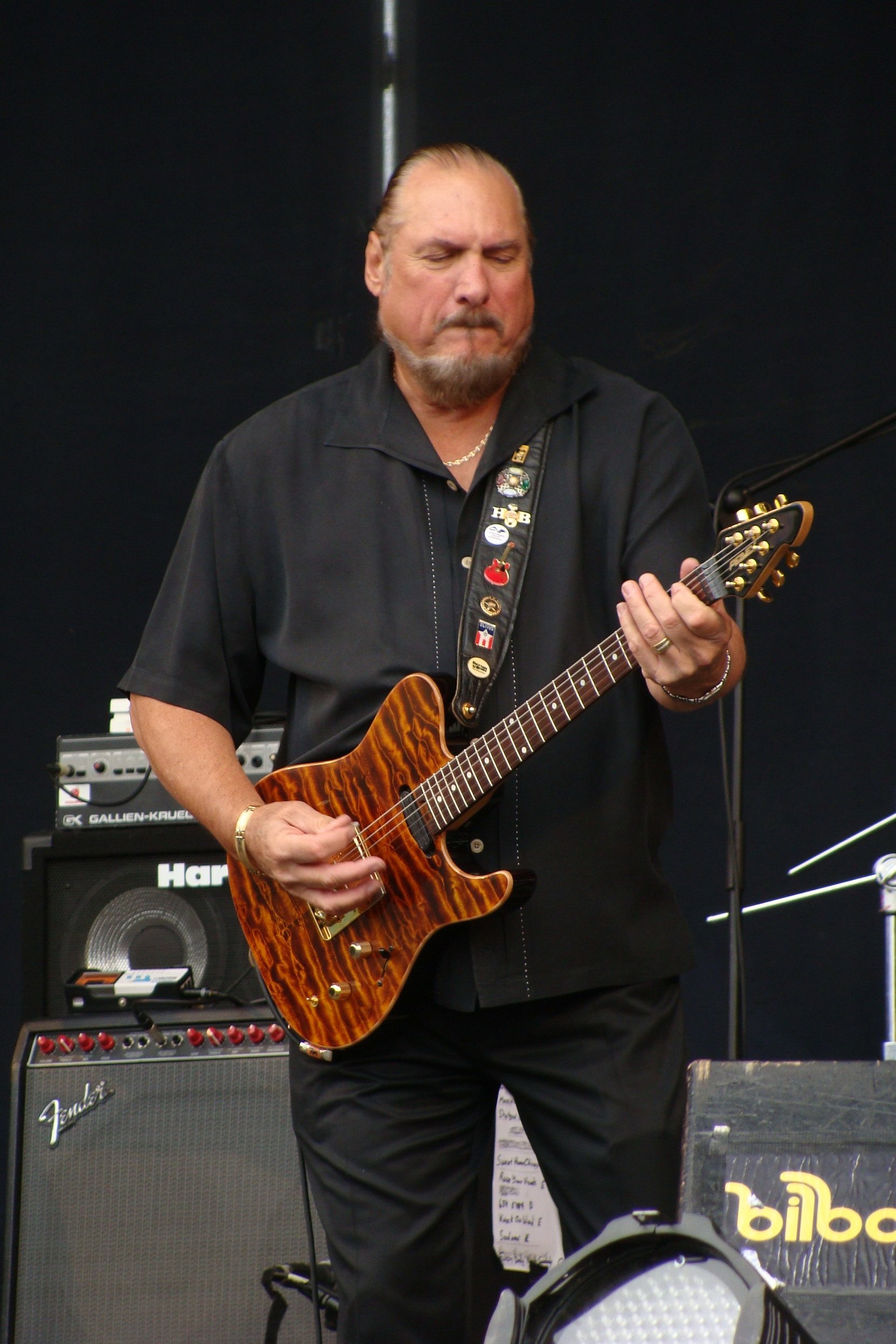
CC BY 2.0. Photo: Alberto Cabello / Flickr via Wikimedia Commons
Cropper died in Nashville on December 3, 2025. The Associated Press reported that he had been recovering from a fall at a rehabilitation facility in the days before. His family asked that, in lieu of flowers, donations be made in his memory to the Stax Music Academy or the Stax Museum of American Soul Music, the institutions that now stand on and beside the McLemore Avenue site where he started.
Steve Cropper's Legacy for Guitar Players

Public domain. Official White House photo by Chuck Kennedy, via Wikimedia Commons
Count the songs and the numbers are staggering: hit after hit as a player, a stack of standards as a writer, two Grammys, the Rock Hall, the Songwriters Hall of Fame. But Cropper's real legacy for guitarists is a way of thinking.
He showed that rhythm guitar is not the lesser job. He showed that a two-note fill in the right place can be more memorable than a whole chorus of soloing. And he showed that serving a singer, a song and a band can be its own kind of virtuosity. Every great session player since, from Nashville to Los Angeles, has worked in the space he helped define. (Steve Lukather, another session great, shares his October 21 birthday; we've written about why Lukather is underrated too.)
The takeaway: if you want to honor Steve Cropper today, don't just put on "Green Onions." Pick up a guitar, put on "Dock of the Bay" or "Soul Man," and play along using only the notes the song really needs. That's harder than it sounds, and it's the best lesson he left.
What's your favorite Steve Cropper part? Tell us in Guitar Talk, and read the story of another overlooked pioneer whose guitar just made headlines: Lonnie Mack and "Number 7".
Experience-driven coverage, not algorithm bait.
- 20+ years of guitar playing experience
- Real-world retail experience at Guitar Center
- Thousands of hours testing guitars, amps, and pedals
- A community of 50,000+ guitar enthusiasts across platforms
- Partnerships with Fender, DistroKid, TrueFire, Card Chords, and Enya
- Editorial standards published openly — see how we test gear
The Modern Guitar Magazine. Delivered to your inbox.
No spam. No gimmicks. Just great guitar content — stories, tones, iconic solos, and honest gear takes. Every week.
Ask GP
3 free questions a dayStill curious? Ask GP about this story.
Your personal classic-rock and guitar guide — ask anything about Steve Cropper at 85.
Discussion (0)
Sign in to join the discussion.
Sign in to commentLoading comments…
Discover another guitar story
Swipe through our latest features, breaking news and iconic solos — one story at a time.
Open Swipe →More Guitar News
Lonnie Mack's "Number 7" Just Sold for $550,000. The Man Who Played It Mattered More
Lonnie Mack's 1958 Flying V and Magnatone rig just sold for $550,000. Here's why the man behind "Memphis" and "Wham!" still matters to every lead guitarist.

Why Steve Lukather is One of the Most Underrated Guitarists Ever
Steve Lukather played on Thriller, anchored Toto, and quietly became the guitarist other elite guitarists look up to — here's why the 'Toto guitarist' deserves a much bigger seat at the all-time greats table.
Billy Gibbons: The Bearded Blues Wizard Who Made Tone More Important Than Speed
As the driving force behind ZZ Top, Billy Gibbons proved that you don't need a thousand notes to create something unforgettable. Sometimes one perfectly placed note says everything.
The 25 Greatest Blues Guitarists of All Time, Ranked
From B.B. King and Stevie Ray Vaughan to Robert Johnson, Buddy Guy and the Three Kings — The Guitar Plugged's editorial ranking of the 25 greatest blues guitarists ever to plug in.