Lonnie Mack's "Number 7" Just Sold for $550,000. The Man Who Played It Mattered More
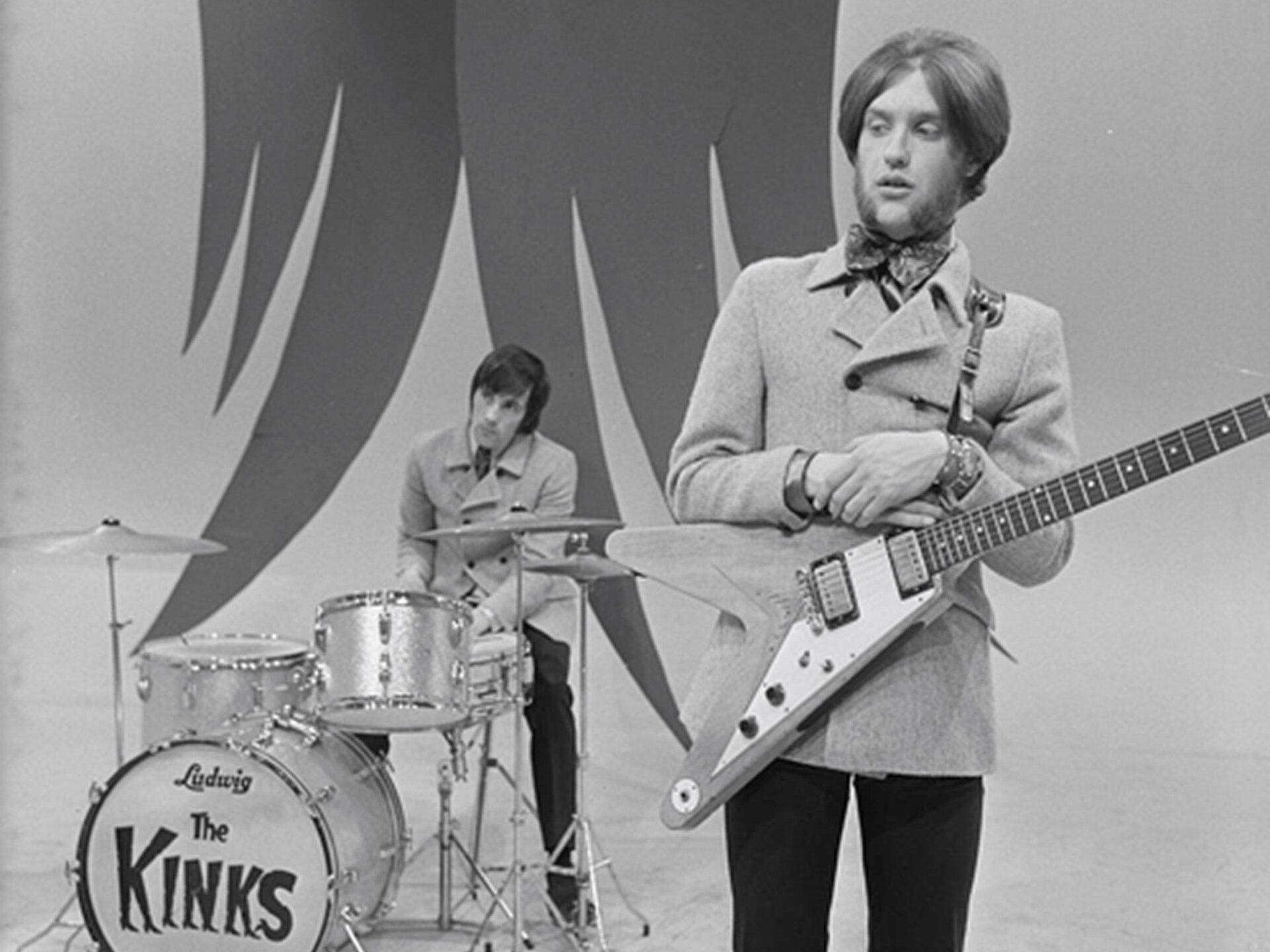
A first-run 1958-style korina Gibson Flying V, the same model as Lonnie Mack's "Number 7," played by Dave Davies of the Kinks on Dutch TV's Fanclub in April 1967. Illustrative: not Mack's guitar.
CC BY-SA 3.0 NL. Photo: W. Veenman (VARA) / Beeld en Geluid via Wikimedia Commons
Lonnie Mack's 1958 Flying V and Magnatone rig just sold for $550,000. Here's why the man behind "Memphis" and "Wham!" still matters to every lead guitarist.
Last week, the 1958 Gibson Flying V that Lonnie Mack played for most of his life sold at auction for half a million dollars. The price got the headlines. The bigger story is the guitarist, a farm kid from the Indiana side of the Ohio River who arguably played the first great blues-rock guitar solos before most of the British blues boom had started.
On October 15, 2026, Heritage Auctions in Dallas sold Lonnie Mack's Gibson Flying V, the guitar he called "Number 7," together with his 1962 Magnatone Custom 440 amplifier and his stage strap. The lot brought $550,000.
It shared the spotlight with a different kind of record. In the same sale, an exceptionally preserved 1959 Gibson Les Paul Standard sold for $781,250, which Heritage says is a world auction record for a vintage guitar without celebrity provenance.
One of those guitars is famous for being untouched. The other is famous because a man played it for decades until it was part of his sound. This piece is about the second one, and about why, if you play lead guitar with any blues in it, Lonnie Mack is probably somewhere in your family tree.
What Sold at Heritage, and for How Much
Here's what we know from Heritage's announcement and the auction catalog, as reported by outlets including Guitar World, The Music Universe and GuitarGangsters:
- The lot: Mack's 1958 Gibson Flying V "Number 7" (serial 176051), his 1962 Magnatone Custom 440 combo, his stage strap and a hard case.
- The price: $550,000 for the combined lot, not the guitar alone.
- The guitar's condition: Gibson refinished it red around 1963. The catalog notes a neck repair with two korina dowels visible at the heel, filled string-through holes, a later chrome ABR-1 bridge, and reproduction Kluson tuners, with the originals included. Both original PAF humbuckers are still in it and working.
- The amp: described as all-original.
- The other headliner: a 1959 Les Paul Standard Sunburst, serial 9 0640, sold for $781,250. It came from the collection of Japanese vintage-Gibson collector Ichiro Kato and is listed in the Burst Serial Registry.
- The sale: Heritage's Vintage Guitars and Musical Instruments Signature Auction totaled $2.15 million across 201 lots and drew 848 bidders, according to the auction house.
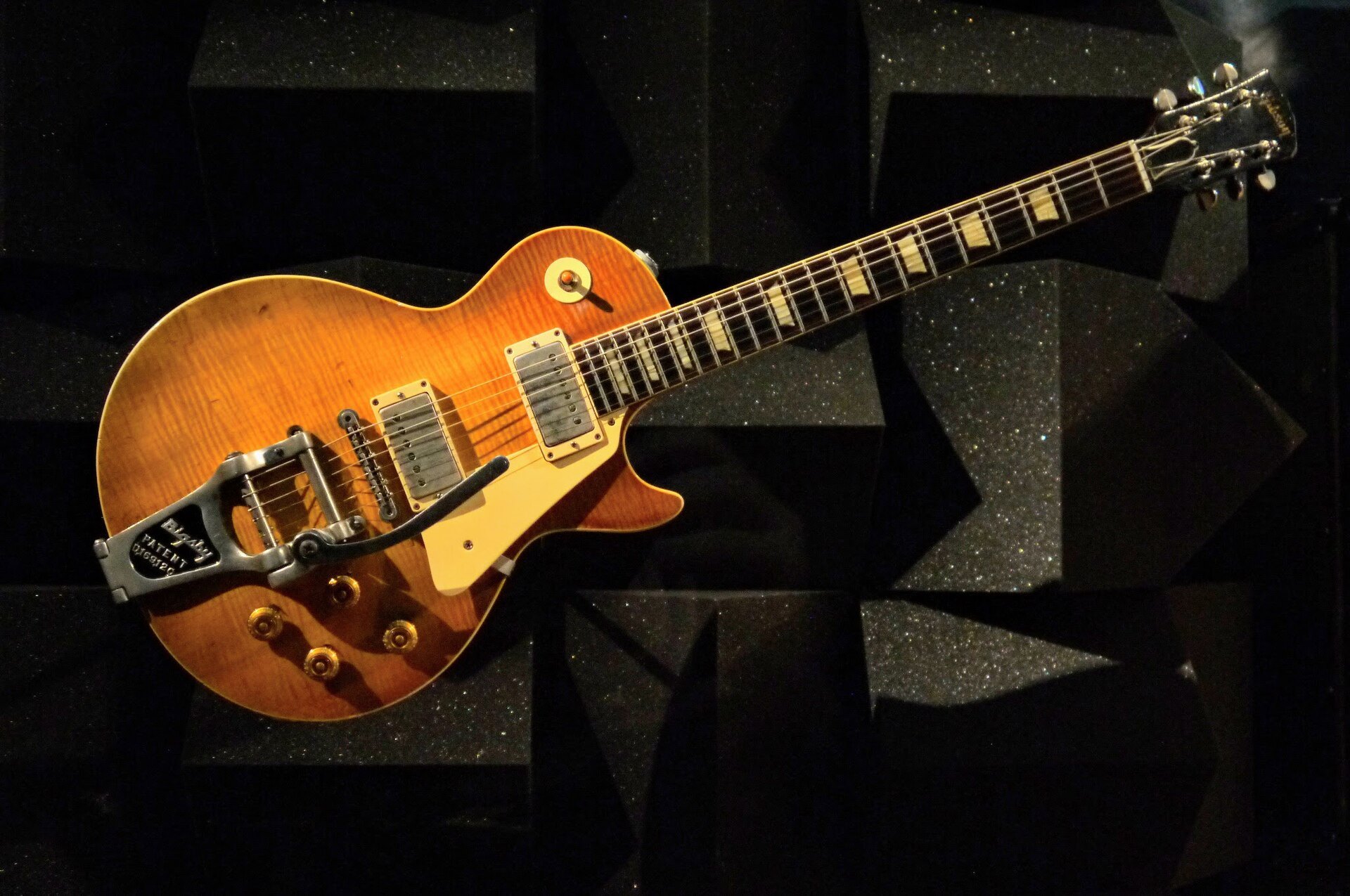
CC BY 2.0. Photo: Eden, Janine and Jim / Flickr via Wikimedia Commons
Heritage's Aaron Piscopo summed up the pairing neatly: "One is a remarkably preserved example of Gibson's Golden Era craftsmanship; the other helped shape the sound of modern electric guitar."
That second half of the quote is the part worth unpacking. The '59 Burst set its record because almost nothing about it has changed since 1959. Number 7 is the opposite. It was refinished, repaired and refitted, and it's worth what it is because of where it's been. It went from Cincinnati roadhouses to the Fillmore, Carnegie Hall and back. For guitar players, that's the more interesting kind of value.
Who Was Lonnie Mack?
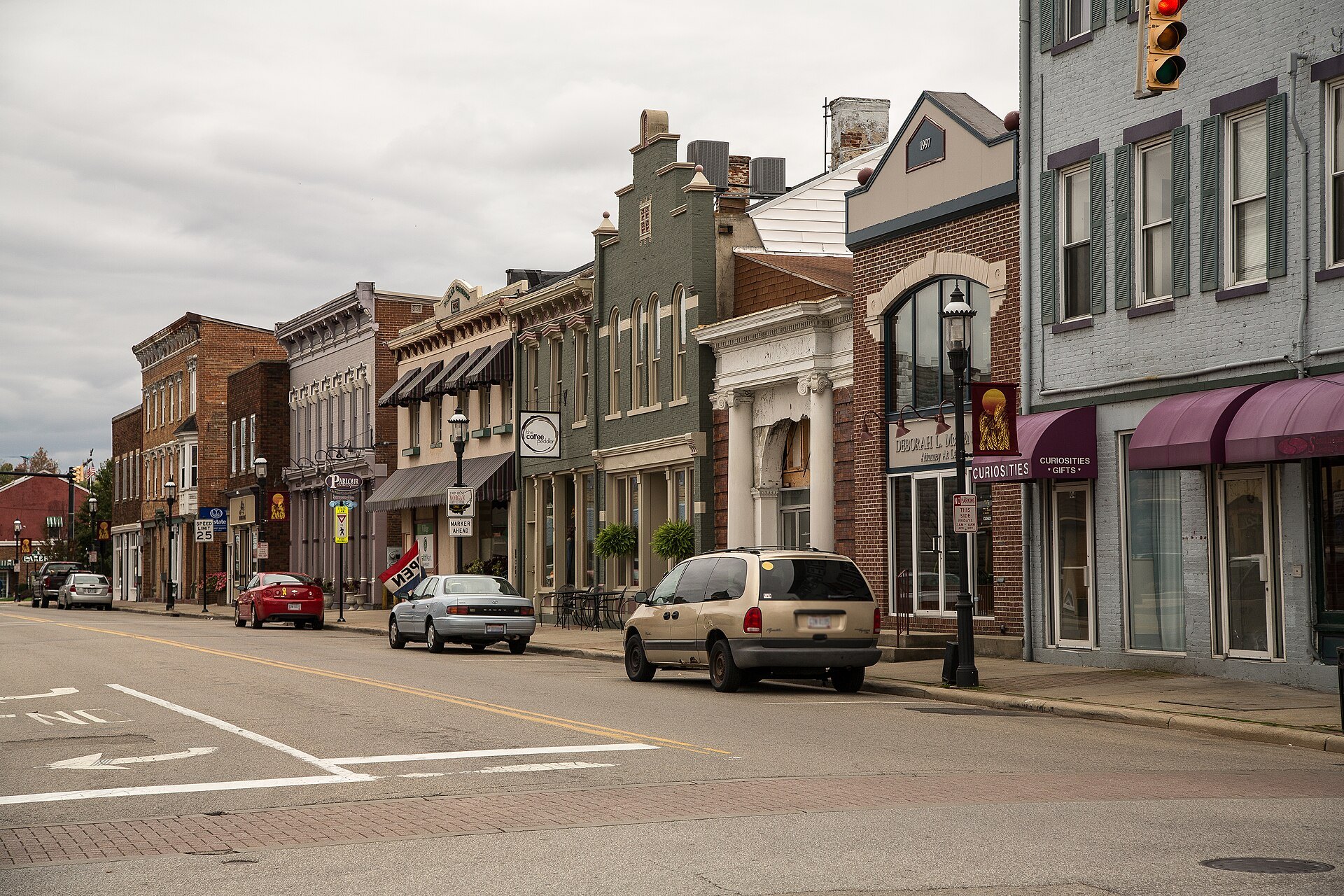
Lonnie Mack was born Lonnie McIntosh on July 18, 1941, in West Harrison, Indiana, just across the state line from Cincinnati. His family had moved there from Appalachian eastern Kentucky shortly before he was born, and he grew up on a series of sharecropping farms near the Ohio River.
The family listened to the Grand Ole Opry on a floor-model radio powered by a truck battery. After everyone else went to bed, young Lonnie kept listening and found rhythm and blues and black gospel on the late-night dial. That mix of country and black music is the key to everything he did later.
He started playing at seven, after trading his bicycle for a Lone Ranger acoustic guitar. His mother taught him basic chords, and he played bluegrass in the family band. He has said an uncle from Texas showed him blues guitar when he was seven or eight, and that a man named Wayne Clark introduced him to "Robert Johnson style guitar" a couple of years later. Mack put those pieces together into a hybrid of country fingerpicking and acoustic blues that, in his words, "sounded like rockabilly, but before rockabilly."
His guitar heroes were all over the map: country picker Merle Travis, blues pioneer T-Bone Walker, R&B guitarist Robert Ward and Les Paul. As a singer he loved Ray Charles, Bobby "Blue" Bland, Jimmy Reed and George Jones.
A working pro at 14
Mack dropped out of school at 13 after a fight with a teacher. He was big for his age, got hold of a fake ID and started playing bars around Cincinnati. By 14, he was reportedly earning $300 a week as a professional electric guitarist, more than most workers in the area's casket and whiskey factories. At 15 he was on local TV with his band, the Twilighters.
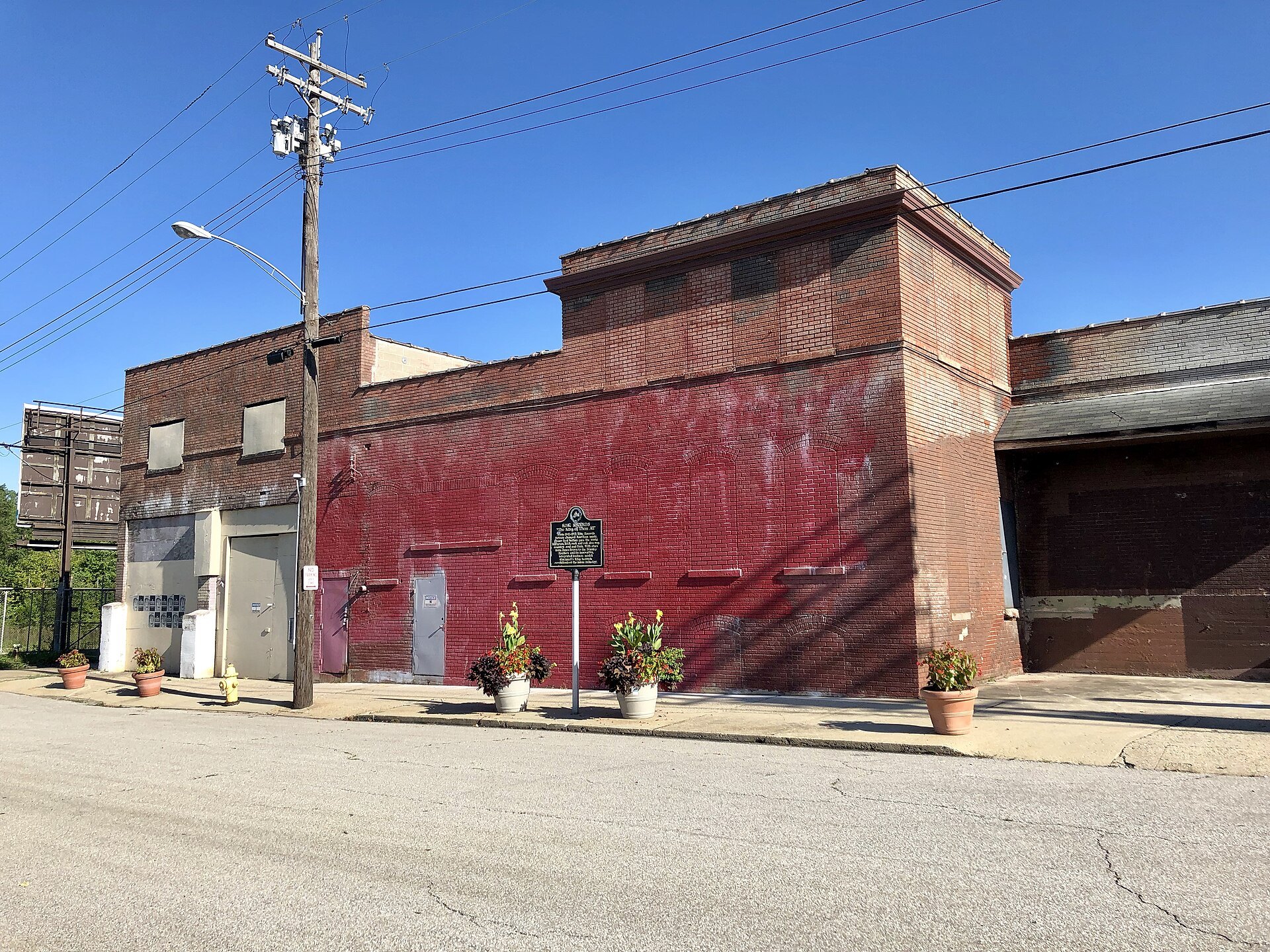
Cincinnati was a serious music town then, home to King Records and the small Fraternity label, where Mack ended up as a session guitarist in the early 1960s. That's where the accident that made him famous happened.
The 20 Minutes That Changed Rock Guitar: "Memphis" and "Wham!"
On March 12, 1963, Mack finished a session backing a vocal group called the Charmaines. There were about 20 minutes of paid studio time left, and he was offered them.
He used them to cut an instrumental version of Chuck Berry's "Memphis, Tennessee." It had started as a fill-in. A few years earlier, his keyboard player, Denzil "Dumpy" Rice, who usually sang the Berry song, missed a gig. The audience asked for it anyway. Mack didn't know the words, so he played the melody on guitar and embellished it, and it became a regular part of his set. He just called it "Memphis."
Mack said the recording didn't mean much to him at the time. He went back on the road and didn't hear the radio. Then, one night while his band was backing Chubby Checker, a DJ ran up to him and said, "You got the No. 1 record on our station!"
By late June 1963, "Memphis" had reached No. 4 on Billboard's R&B chart and No. 5 on the pop chart. Later that year he followed it with "Wham!", a faster, gospel-flavored guitar rave-up that reached No. 24 on the pop chart in September. In October, Fraternity released his debut album, The Wham of That Memphis Man!
Why those records mattered
It's easy to underrate "Memphis" now, because so much of what it did became normal. In 1963 it wasn't. Most rock guitar at the time was built on chords and riffs, the Chuck Berry approach, or on simple melodic instrumentals in the style of Duane Eddy or Hank Marvin. Mack added fast melodic runs, real blues phrasing and string bends to that framework, and he played it all with a clean, aggressive attack.
The book Legends of Rock Guitar described what you hear on "Wham!": the chordal licks of early rock, but with "string bends, pentatonic runs, and mature blues chops," plus "vibrato arm highlights, echoey single-note lines, and the repetitive string-pushing licks that eventually became so prevalent in Jeff Beck's guitar style." The same book argued that his bluesy solos predated the pioneering blues-rock work of Beck, Eric Clapton and Mike Bloomfield by nearly two years.
Musicians felt it at the time. Mike Johnstone, an early associate of Duane Allman, remembered how "Memphis" landed among young players in 1963: "It was the best guitar-playing I'd ever heard. All the guitar-players were [saying] 'How could anyone ever play that good? That's the new bar. That's how good you have to be now.'"
In 1980, Guitar World put "Memphis" at the top of its list of rock guitar's landmark recordings, ahead of whole albums by Jimi Hendrix, Clapton, Elvin Bishop and Bloomfield. Critic Jimmy Guterman later ranked The Wham of That Memphis Man! No. 16 in his book The 100 Best Rock 'n' Roll Records of All Time, calling it "the first of the guitar-hero records."
If you've read our History of the Riff on "Johnny B. Goode" or Link Wray's "Rumble", "Memphis" is the logical next chapter: what happened when a player with country chops and a gospel soul took Berry's vocabulary and started really soloing with it.
Number 7: The Flying V and the Magnatone Behind the Sound
A futuristic guitar nobody wanted
Gibson introduced the Flying V in 1958, alongside the Explorer, as part of a push for modernist designs to compete with Fender. The first run used limba wood, which Gibson marketed as "korina." It was a commercial flop. Fewer than 100 were made and sold in that first run.
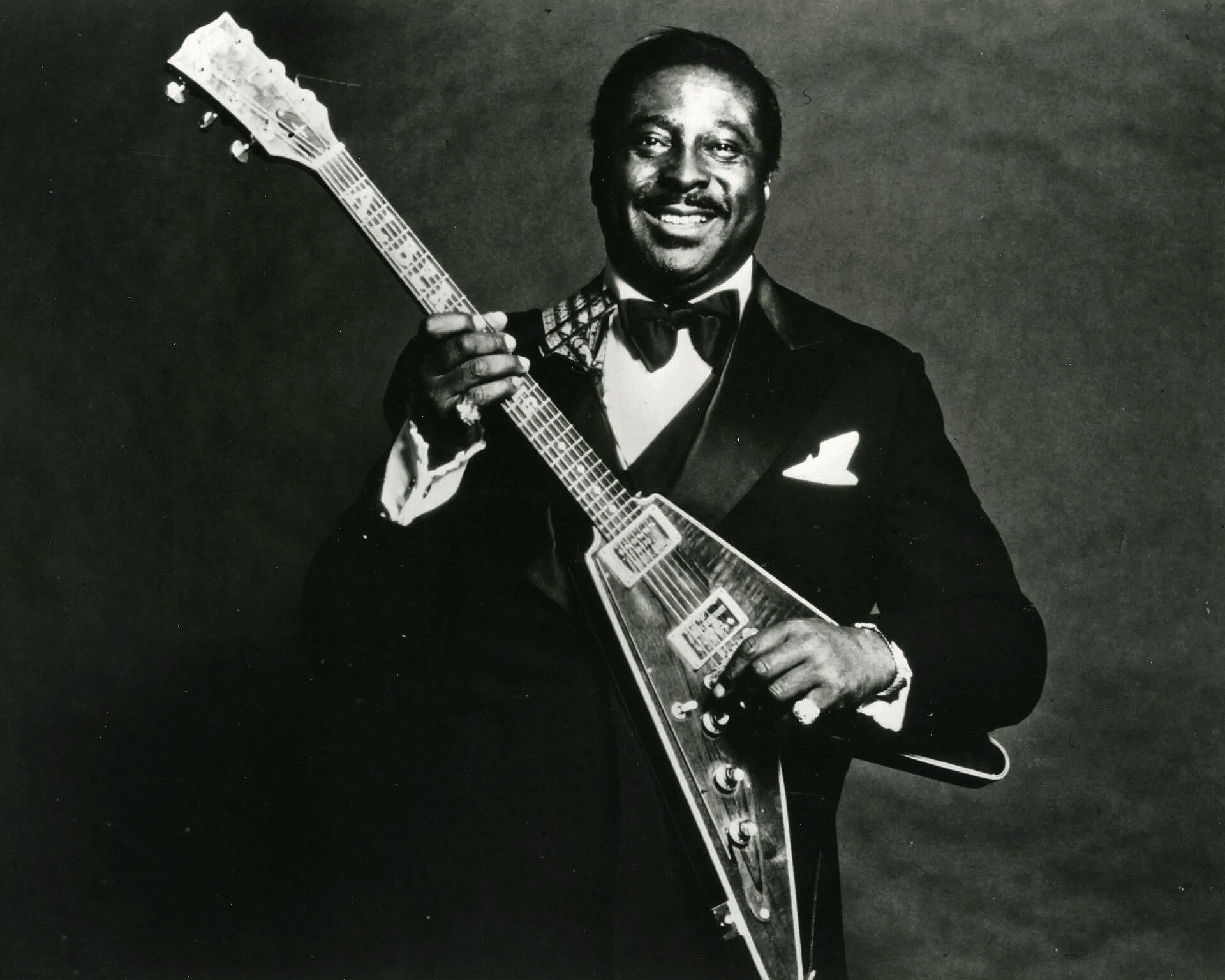
Public domain. Utopia Records/RCA press photo, 1976, via Wikimedia Commons
A couple of players saw something in it right away. One was Albert King. The other was a 17-year-old Lonnie Mack, who bought the seventh Flying V off the first-year production line and named it "Number 7." He was drawn to its arrow-like shape and played it almost exclusively for the rest of his career. When the Kinks' Dave Davies, Jimi Hendrix and others picked up Vs in the mid-to-late 1960s, Mack had already been playing his for years.
The Bigsby and the "whammy bar"
Early on, Mack added a Bigsby vibrato to Number 7. To fit it, a steel crossbeam had to be mounted about six inches below the point of the V, which gave his guitar its unmistakable look.
He used that bar constantly. He typically cradled the arm with the fourth finger of his picking hand, so he could work it while he kept picking. He often shook it rapidly in time with fast tremolo picking, which produced a machine-gunned, shuddering single-note sound. Neil Young has given him the credit: "Did I do that first? No. You've got to look at guys like Lonnie Mack. He showed everybody how to use a [vibrato arm]." According to several accounts, the nickname "whammy bar" comes from Mack's playing on "Wham!" Treat that as guitar lore rather than documented fact, but it says a lot that the story stuck to him. (For the rest of the vibrato story, see our history of the Floyd Rose.)
Heavy strings, wound third
Mack used a heavy set by modern standards: .010, .012, a wound .018, .028, .038 and .052. He typically bent only the top two strings and said the wound third string was important to his sound. Players who've tried a wound G know why. It's harder to bend, but it gives the middle of the guitar a thicker, more piano-like tone.
The Magnatone
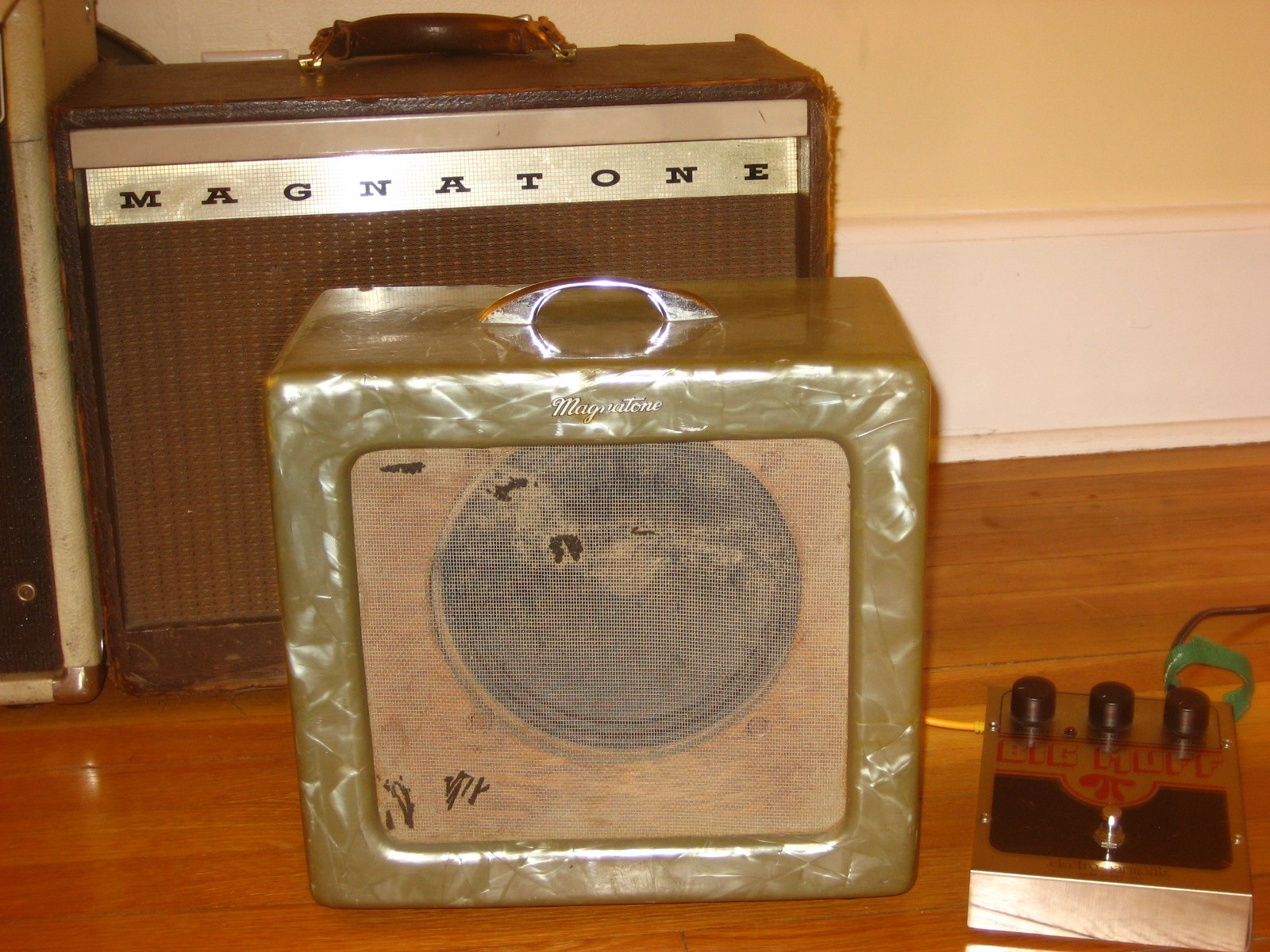
The amp is half the story. Early on, Mack played through 1950s Magnatone amps, whose "F.M. Vibrato" circuit produced true pitch vibrato rather than the volume-based tremolo found on most other amps of the time. That's the watery, wavering shimmer you hear on his early records, an approach he picked up from R&B guitarist Robert Ward, whose sound was also built on a Magnatone. Mack used Magnatone vibrato amps almost exclusively. The 1962 Custom 440 in the Heritage lot is one of those amps, which is why selling the guitar and amp together makes sense. They were one instrument.
Number 7 got its own recognition long before it reached auction. Gibson issued a limited-run Lonnie Mack Signature Edition Flying V in 1993. The guitar appears in Dave Hunter's book Star Guitars: 101 Guitars That Rocked the World (2010) and Walter Carter's The Guitar Collection (2011), and Rolling Stone included it in a 2012 feature on 20 iconic guitars. Mack even named his last album after it.
Why Mack Got Overlooked
Mack had a hit record in 1963 and the respect of every guitarist who heard it. So why isn't he a household name?
Timing, mostly. The Wham of That Memphis Man! came out in October 1963. Four months later, in February 1964, the Beatles played The Ed Sullivan Show, and the American music business turned toward England. A small Cincinnati label like Fraternity didn't have the money to fight that. Mack recorded many more sides for Fraternity between 1963 and 1967, but few were widely released or strongly promoted, and none charted. As one account quoted in his Wikipedia biography puts it, his recording career "withered on the vine."
He didn't stop working. He toured constantly through the 1960s and did session work with James Brown, Freddie King and others. In 1968, at the height of the blues-rock era, Elektra Records bought out his dormant Fraternity contract and moved him to Los Angeles. That November, the new Rolling Stone magazine ran a rave review of his out-of-print 1963 debut, which persuaded Elektra to reissue it. He played the Fillmore East and Fillmore West, opened for the Doors and played bass on their Morrison Hotel sessions.
But his rustic, blue-collar persona was a rough fit for the hippie-era rock audience, and his later Elektra albums played down the blues-rock guitar that had made his name. Mack wasn't happy with them either. "My music wasn't working that good then," he said later. He soured on the whole scene. "One of the best-feeling moments I ever had was when that L.A. sign was in my rear-view mirror and I was free again," he recalled.
For more than a decade after 1971, he mostly stayed out of the rock spotlight. He went home to southern Indiana, played roadhouses, made low-profile country and bluegrass records, and ran a nightclub in Covington, Kentucky, and an outdoor music venue in Friendship, Indiana. When he died, music historian Dick Shurman said Mack's temperament "wasn't suited to stardom. I think he'd rather have been hunting and fishing."
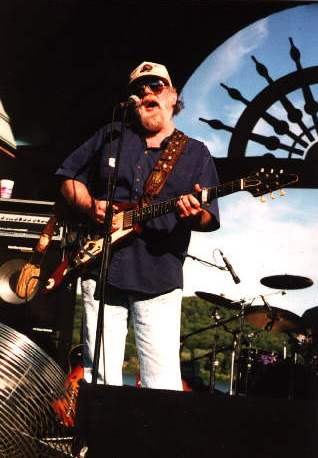
The Comeback: Stevie Ray Vaughan and Strike Like Lightning
The player who brought Mack back was one of his biggest fans. In 1983, Mack moved to Austin, Texas, to work with Stevie Ray Vaughan, his blues-rock disciple. Vaughan talked him into going back into the studio and co-produced the album that followed.
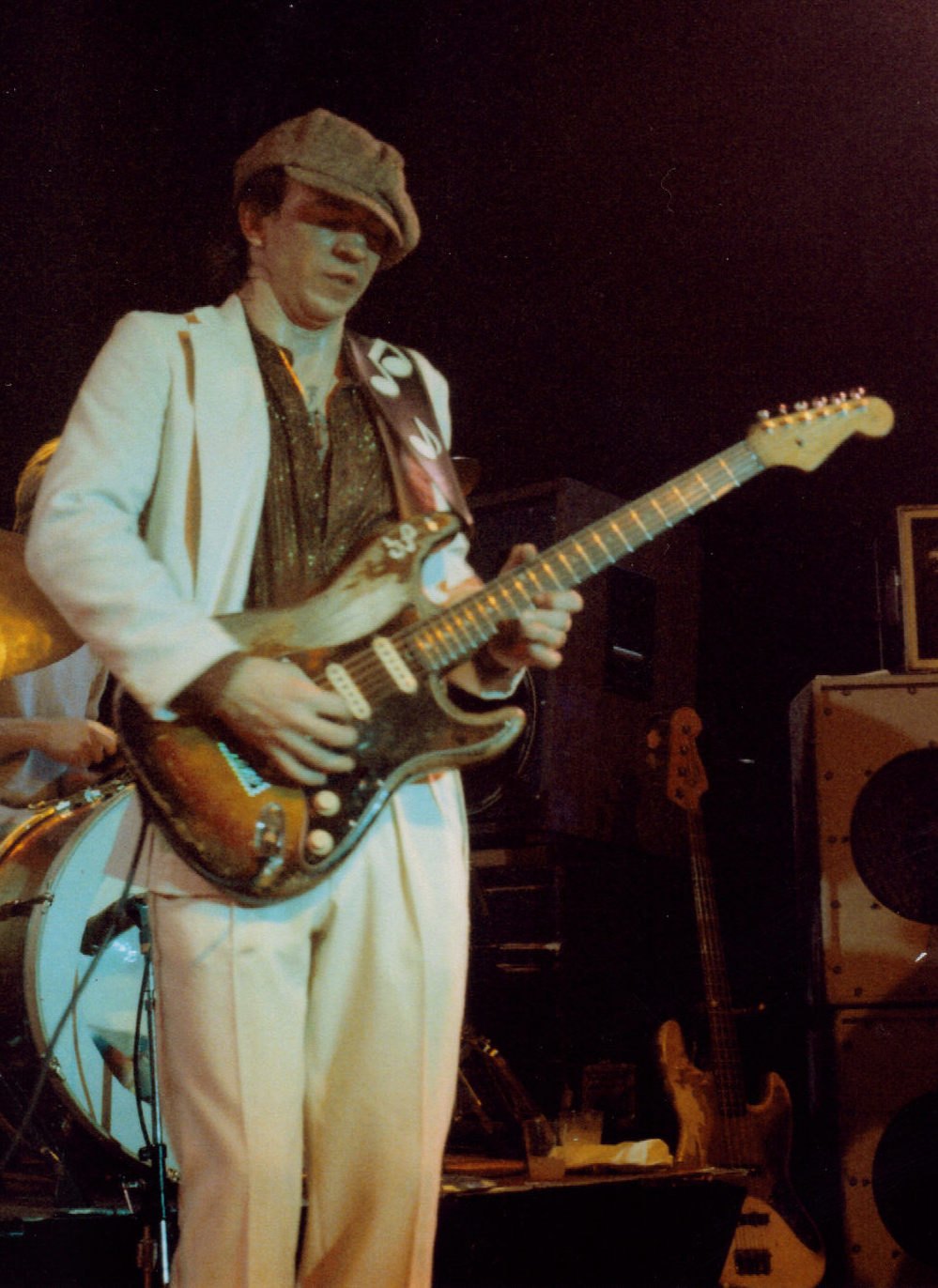
Strike Like Lightning came out on Alligator Records in 1985. Its working title was Return of the Flying V. Vaughan played a National steel guitar on "Oreo Cookie Blues" and sang on "If You Have to Know," and "Double Whammy" was a nod back to "Wham!" The album was a success, and the tour that followed featured guest appearances by Vaughan, Ry Cooder, Keith Richards and Ronnie Wood. Mack also played Carnegie Hall with Albert Collins and Roy Buchanan, and in 1986 he headlined the Great American Guitar Assault Tour with Buchanan and Dickey Betts.
His last album, 1990's Lonnie Mack Live! Attack of the Killer V, was named after Number 7. After that he stopped recording, worn down by the touring it took to sell records, but kept playing roadhouses and festivals until 2004. In 2008 he played "Wham!" at the Rock and Roll Hall of Fame's tribute to Les Paul, one of the guitarists who'd inspired him as a kid.
Lonnie Mack died of natural causes on April 21, 2016, in Nashville. He was 74. In a cruel bit of timing that fits his career a little too well, his death was overshadowed by the news that Prince had died the same day.
If you want the full Vaughan side of this story, our Ultimate Guide to Stevie Ray Vaughan covers the player who called Mack an influence and then put his own career on the line to bring him back.
The Players Who Learned From Lonnie Mack
The list of guitarists who've named Mack as an influence, or who sources say were influenced by him, reads like a who's who of rock guitar. It includes Stevie Ray Vaughan, Jeff Beck, Neil Young, Ted Nugent, Dickey Betts, Warren Haynes, Ray Benson, Rick Derringer, Bootsy Collins and Adrian Belew. Writers have also linked his playing to Joe Bonamassa, Eric Clapton, Duane Allman, Gary Rossington, Jerry Garcia, Keith Richards, Jimmy Page and Danny Gatton. (And yes, to Steve Gaines too, whose story we told yesterday.)
Warren Haynes put it most strongly: "Guitar players, true musicians, and real music fans realize that Lonnie was the Jimi Hendrix of his time." Haynes added that "people like Dickey Betts and Stevie Ray Vaughan would tell you that without Lonnie they wouldn't be who they were. That goes for all of us."
Former Elektra A&R executive James Webber made the same point from the business side: "Before Lonnie, the sax guys did all of the lead work. He made the guitar the preeminent lead instrument."
You can hear the line from Mack through Jeff Beck's whammy-bar phrasing to Vaughan's Texas blues to the Southern rock players who traded leads in the 1970s. Mack didn't invent all of it, but he put the pieces together first and recorded it where everyone could hear it.
What Guitarists Can Still Learn From Lonnie Mack
Mack's records are still the best lesson, but a few ideas are worth taking straight to the practice room.
1. Mix rhythm and lead in the same breath
Mack's trademark was moving back and forth between agile melodic lines and chunky chordal riffs, often within a single phrase. That approach was later picked up by Jeff Beck and Stevie Ray Vaughan. Practice a 12-bar blues where you never play more than two bars of single notes without dropping back into a rhythm figure.
2. Bring country technique to blues
He came up flatpicking bluegrass and country, and that clean, fast, accurate picking is what made his blues lines sound so different in 1963. If your blues playing feels stuck in the same box shapes, work on some alternate-picked country runs and hybrid licks and see what they do to your phrasing.
3. Treat the vibrato bar as part of your picking hand
Mack's habit of holding the Bigsby arm while picking is worth trying on any guitar with a vibrato. Keep the arm under your picking hand and add small, rhythmic wobbles to held notes instead of grabbing the bar only for big dive effects.
4. Melody first, speed second
"Memphis" works because the Chuck Berry melody is always there under the embellishments. Take a vocal melody you know, play it straight on guitar, and then decorate it a little more each time through without losing the tune.
Number 7's Price Is a Footnote. The Music Isn't
There's something fitting about how Number 7 sold. It wasn't the most valuable guitar in the auction. That was a near-perfect '59 Burst whose value comes from how little anyone ever did to it. Number 7's value comes from how much was done with it: the bars, the bends, the Bigsby, the refinish, the repaired heel and decades on the road.
Whoever owns it now has a piece of guitar history. The rest of us have something more useful: the records. Put on "Memphis," "Wham!" and "Why," the deep-soul ballad from the same debut album that showed Mack could sing as well as he played. Then listen to Strike Like Lightning and hear what Stevie Ray Vaughan heard in him.
The takeaway: Lonnie Mack may be the most influential guitarist casual rock fans have never heard of. The $550,000 headline is a good excuse to change that, so spend 10 minutes with "Memphis" today and listen for everything that came after it.
Do you have a favorite Lonnie Mack track, or a story about seeing him play? Share it in Guitar Talk. And today, read our tribute to another guitarist who made every note count: Steve Cropper at 85.
Experience-driven coverage, not algorithm bait.
- 20+ years of guitar playing experience
- Real-world retail experience at Guitar Center
- Thousands of hours testing guitars, amps, and pedals
- A community of 50,000+ guitar enthusiasts across platforms
- Partnerships with Fender, DistroKid, TrueFire, Card Chords, and Enya
- Editorial standards published openly — see how we test gear
The Modern Guitar Magazine. Delivered to your inbox.
No spam. No gimmicks. Just great guitar content — stories, tones, iconic solos, and honest gear takes. Every week.
Ask GP
3 free questions a dayStill curious? Ask GP about this story.
Your personal classic-rock and guitar guide — ask anything about Lonnie Mack's "Number 7" Just.
Discussion (0)
Sign in to join the discussion.
Sign in to commentLoading comments…
Discover another guitar story
Swipe through our latest features, breaking news and iconic solos — one story at a time.
Open Swipe →More Guitar News
The Ultimate Guide to Stevie Ray Vaughan: The Guitarist Who Brought the Blues Back to Life
Biography, gear, technique, tone secrets, top songs, and beginner tips for chasing the sound of the man who dragged the blues back into the spotlight.
History of the Riff: Chuck Berry's "Johnny B. Goode," the Intro That Taught Rock Guitar to Talk
Chuck Berry would have turned 100 today. Here's how a 1946 Carl Hogan lick, T-Bone Walker's slurs and one January day at Chess Records became the intro every rock guitarist learns first.
Jeff Beck: The Guitarist Who Never Stopped Reinventing the Electric Guitar
There are guitarists who become famous for a sound. There are guitarists who become famous for a song. And then there are the rare players who seem to spend their entire careers trying to discover sounds the electric guitar wasn't supposed to make. Jeff Beck belonged to that last category.
Steve Cropper at 85: The Stax Guitarist Who Proved Less Is Everything
Steve Cropper would have turned 85 today, his first birthday since he died. Here's how the Stax guitarist made every note count, and what players can learn.