
The Floyd Rose Story: Krazy Glue, a '57 Strat, and the Bridge That Built the Dive Bomb
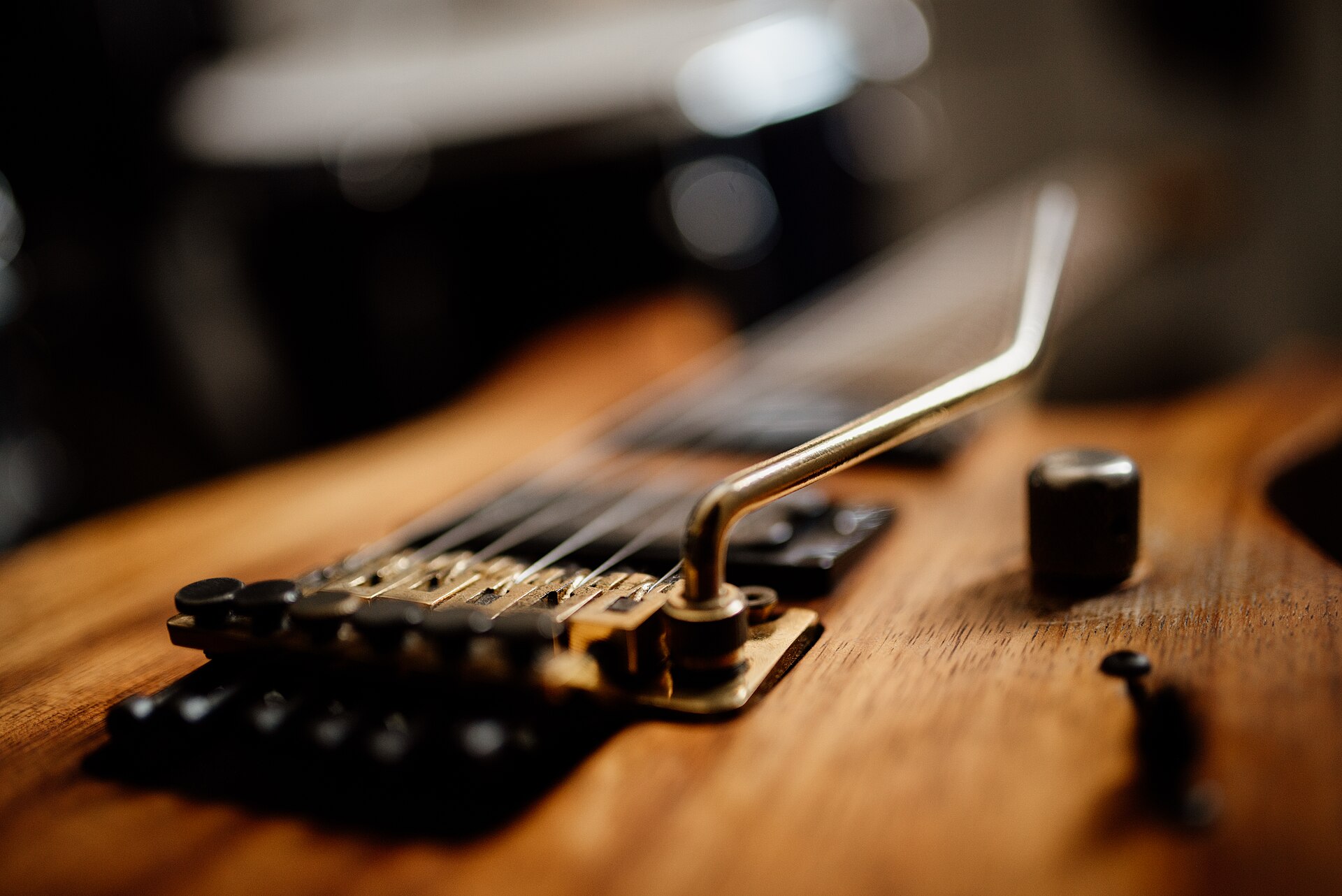
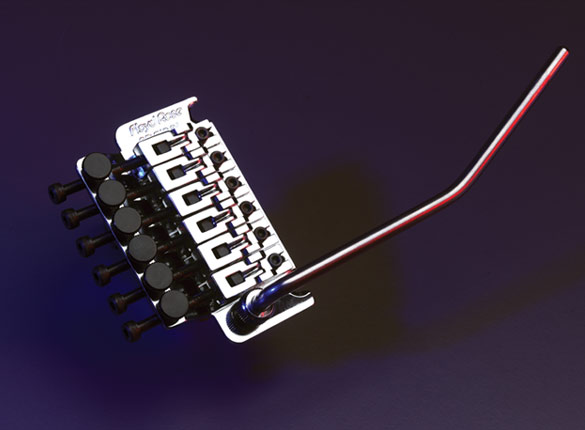
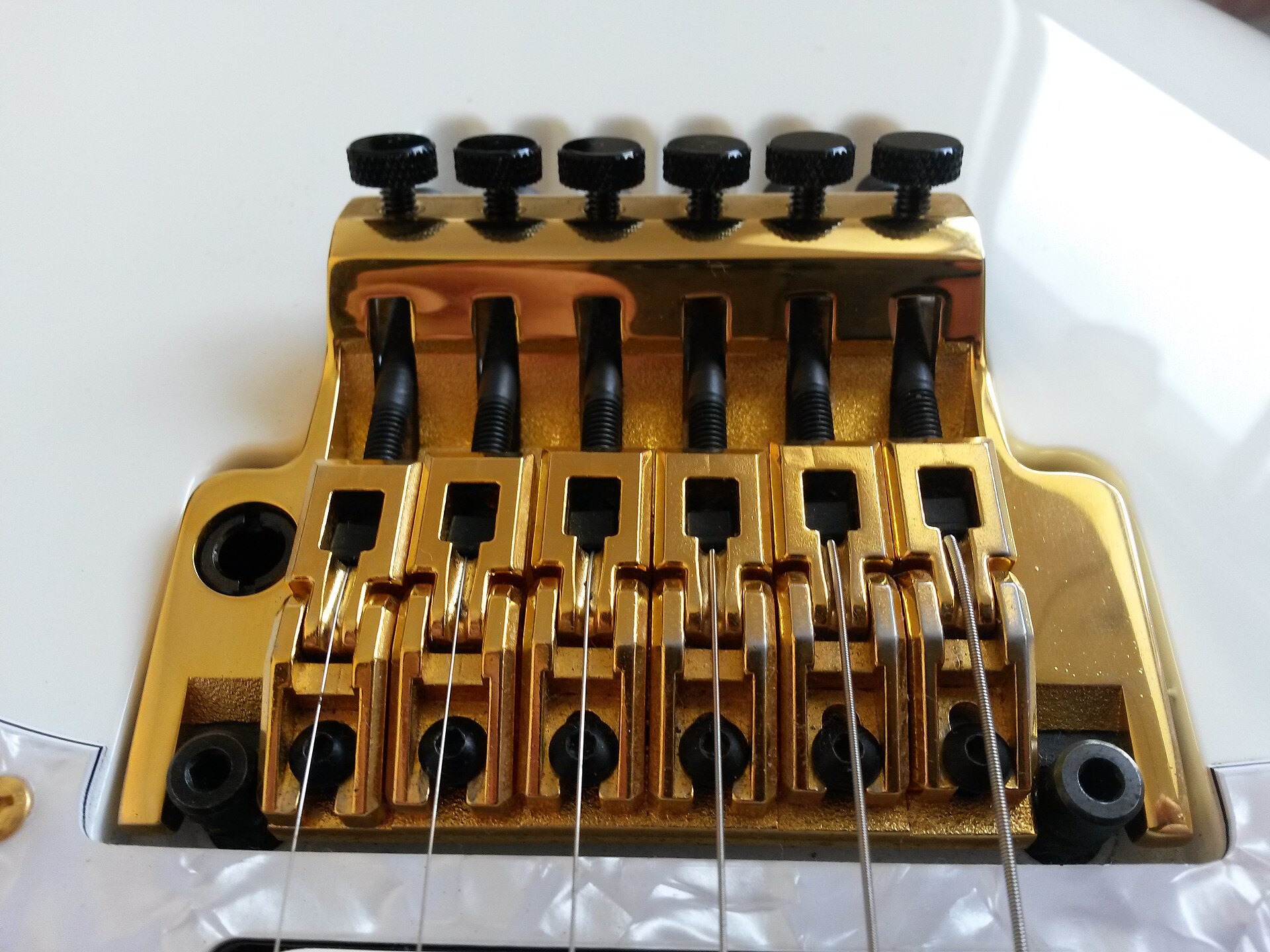
A Floyd Rose locking tremolo, with its fine tuners and bar, up close. Photo: Shixart1985 / Wikimedia Commons, CC BY 2.0 (https://creativecommons.org/licenses/by/2.0/). Source: https://commons.wikimedia.org/wiki/File:Floyd_rose_tremolo_on_an_guitar_closeup.jpg
Every guitar player knows the sound: the low E dropping until the string flaps against the pickups, then snapping back up to pitch like nothing happened. That trick didn't exist as an everyday move before the late 1970s. The Floyd Rose history explains why.
Every guitar player knows the sound: the low E dropping until the string flaps against the pickups, then snapping back up to pitch like nothing happened. That trick didn't exist as an everyday move before the late 1970s. The Floyd Rose history explains why, and it starts with one frustrated rock guitarist, a tube of Krazy Glue, and a 1957 Stratocaster that any collector today would weep over.
Floyd D. Rose didn't set out to start a company. He wanted his guitar to stay in tune after he used the bar. The fix he came up with, locking the strings at both the nut and the bridge, became the standard hardware on a decade of superstrats, the backbone of shred guitar, and one of the most copied designs in the instrument's history.
Here's how it happened, what actually makes it work, and what the different Floyd Rose models mean if you're shopping for one now.
The Problem Every Whammy Player Had
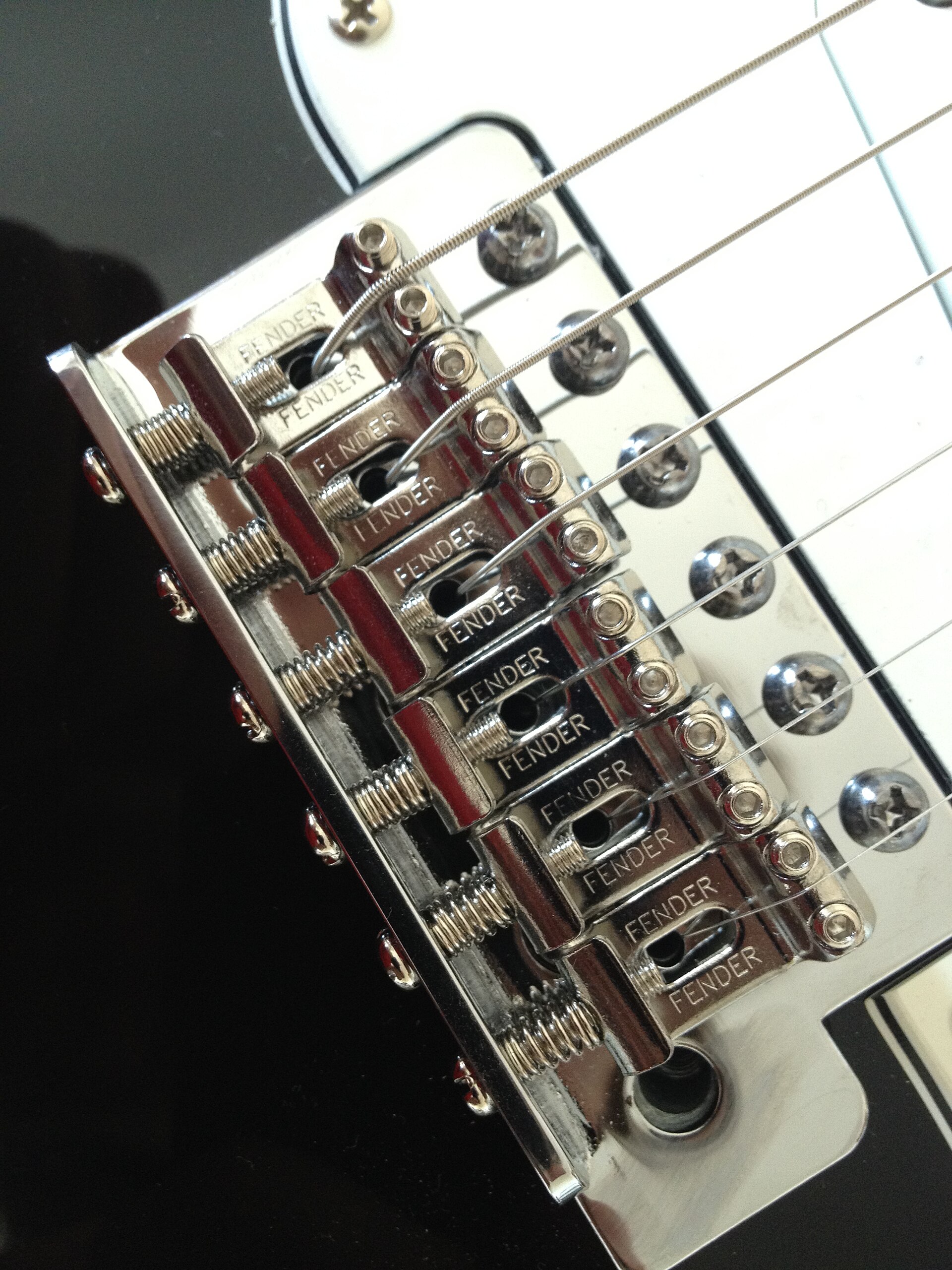
Vibrato arms were nothing new by the 1970s. Paul Bigsby's tailpiece was on guitars in the early 1950s, and Leo Fender's synchronized tremolo arrived on the Stratocaster in 1954. Jimi Hendrix, Ritchie Blackmore, and Jeff Beck had pushed the bar far past the gentle shimmer it was designed for.
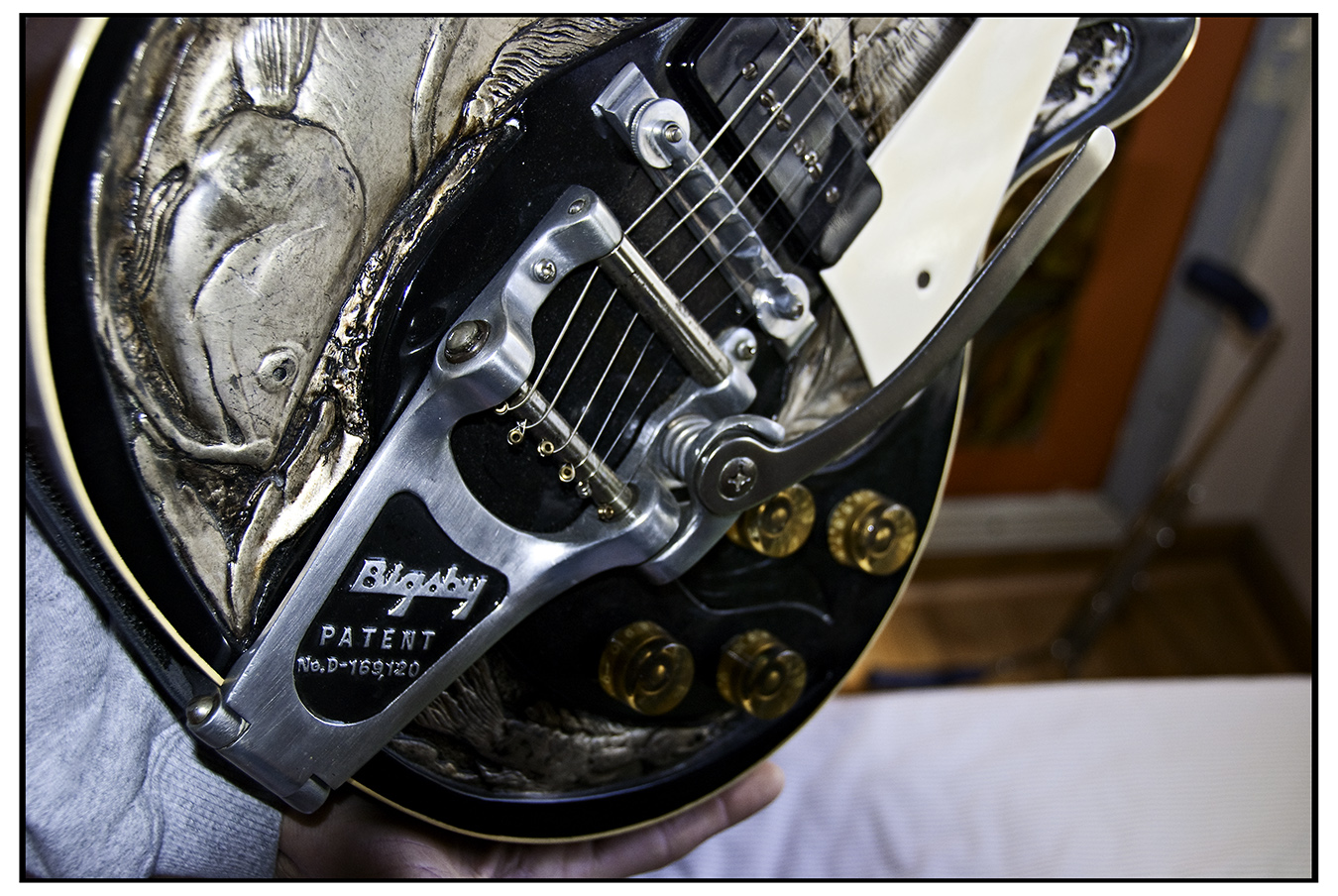
Photo: Seth Anderson (Flickr) / Wikimedia Commons, CC BY-SA 2.0.
The catch was tuning. Push a Strat bar hard and the strings slide over the nut and around the tuner posts. When the bridge comes back up, friction stops some of them short of where they started. Now you're a few cents flat, and the next chord sounds sour.
Players had a whole bag of tricks to fight it: graphite in the nut slots, fewer wraps around the tuning posts, carefully stretched strings. Rose tried all of them.
"Using the whammy was something I wanted to do, only I'm real finicky about being in tune when I play," he told Simon Bradley of Guitarist magazine in 2010. "All the tricks that we used just weren't good enough for me — lubricating the nut, aligning the strings, using fewer winds around the peg, that type of thing."
He'd made it worse on purpose. To get more range, he loosened the six pivot screws on his Strat's bridge and used a heavier quarter-inch bar. "To my dismay that increased range just made it more unstable," he said. "I like to start a song with a whammy bar effect but so often you'd come in on the first chord and it was like... horrible!"
Krazy Glue and a Pen Mark
The breakthrough came on a couch, not in a workshop. Rose said he was watching TV after band practice, noodling with the headstock close to his face, when he saw the windings on the low E slide across the nut as he pushed the bar down.
So he tested it. He marked the string with a pen, dipped the bar, and let the springs pull it back. The mark didn't return to where it started.
His conclusion was simple: "If friction was the problem, the answer was to remove it completely: no friction, no movement."
The first experiment was crude. "I got some Krazy Glue, glued the string after it was tuned, went down slowly and sure enough it worked for a while, until the glue let go," he recalled. "Boom, it came back in tune... well, at least that string did!"
A jeweler's tools
What turned a hack into an invention was Rose's day job. He was making jewelry at the time, so he owned a lapidary rig, the equipment jewelers use to cut stones and silver.
He cut a brass nut with three small U-shaped clamps, each pinning two strings, and fitted it to his '57 Strat neck. He was careful to make it fit the original nut slot and only drilled two holes underneath. "Of course [that's] sacrilege — every time a collector hears that, they just cringe," he admitted. "But I wanted it to stay in tune."
Brass turned out to be too soft. The steel strings dented the clamps after a few lockdowns and they stopped holding. The next version came from a machine shop and cost $600, money Rose said he had to borrow from his parents. That started what he called "the learning process of metalworking and hardening," and it's the reason the hardness of the steel in a Floyd still matters so much today.
From there, the design grew a second locking point. Rose redesigned the bridge so each string was clamped at the saddle too. With the strings pinned at both ends, the only part that could move was the bridge itself, pivoting on its springs. That's the "double-locking" idea in one sentence.
The Patent and Why It Matters
Rose filed his first patent application on January 3, 1977. U.S. Patent 4,171,661, titled "Guitar tremolo method and apparatus," was granted on October 23, 1979. The address listed for him on the patent is in Reno, Nevada.
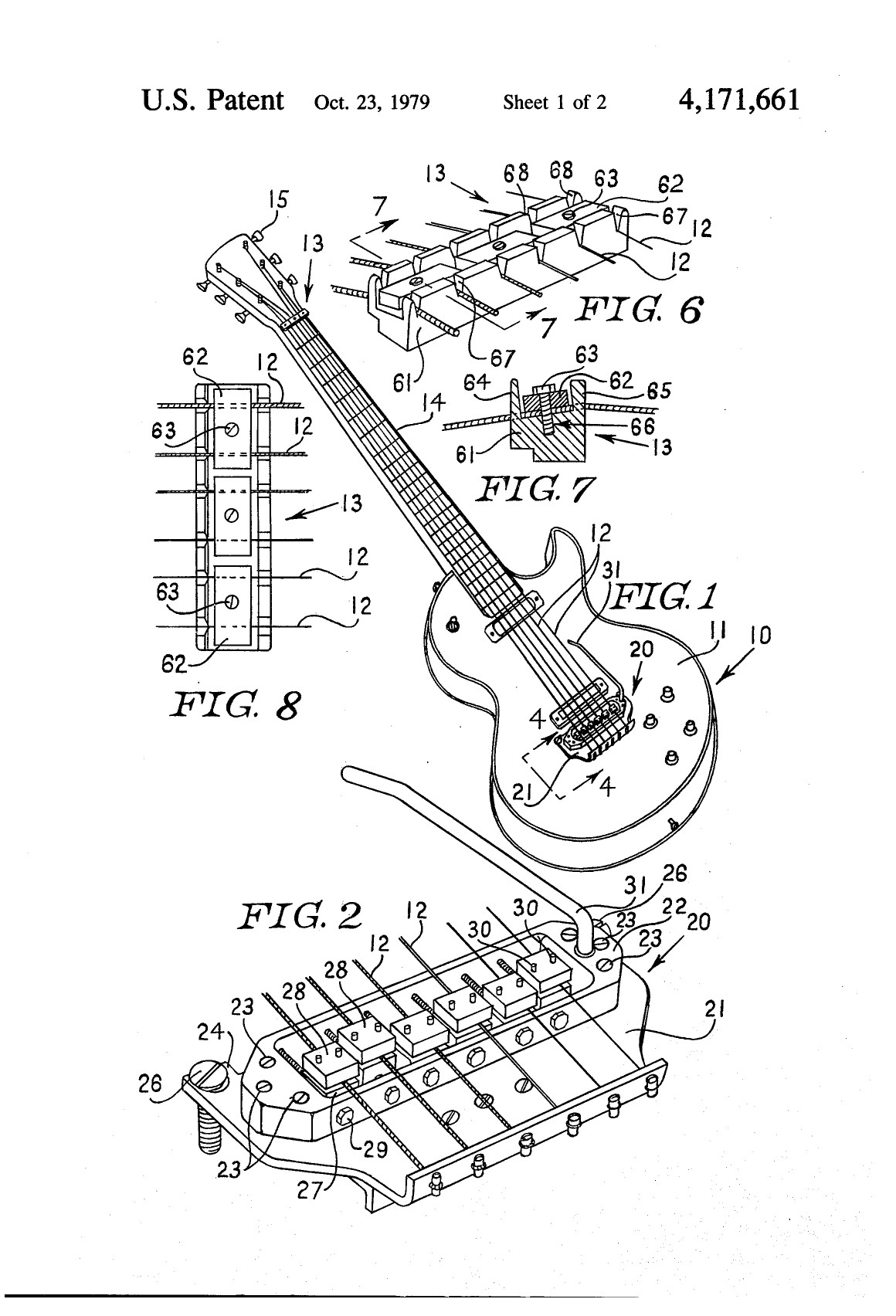
The patent's own summary describes a system built so the tremolo "can be used without altering the basic tuning when the tremolo device returns to the normal, inactive, position." Among the earlier patents it cites is Leo Fender's 1956 patent for the Stratocaster tremolo, which tells you exactly what Rose was building on.
There's a gap between those dates and the guitar that most players picture. The first handmade units had no fine tuners on the bridge, and that detail became a big deal once the bridge went into mass production.
Randy Hansen, Eddie Van Halen, and the Backstage Sales Pitch
Rose's first customers came from showing the bridge around. "The second guy I sold one to was Randy Hansen, an amazing Hendrix impersonator," he said. That fits, since Rose's own inspiration came from Hendrix.

Then came the connection that changed everything. Rose's friend Lynn Ellsworth of Boogie Bodies was making guitars for Eddie Van Halen at the time, so Rose went along to show Eddie the bridge. "He liked it and gave me a guitar to put one on, which was the one without fine tuners, the fourth version," Rose said.
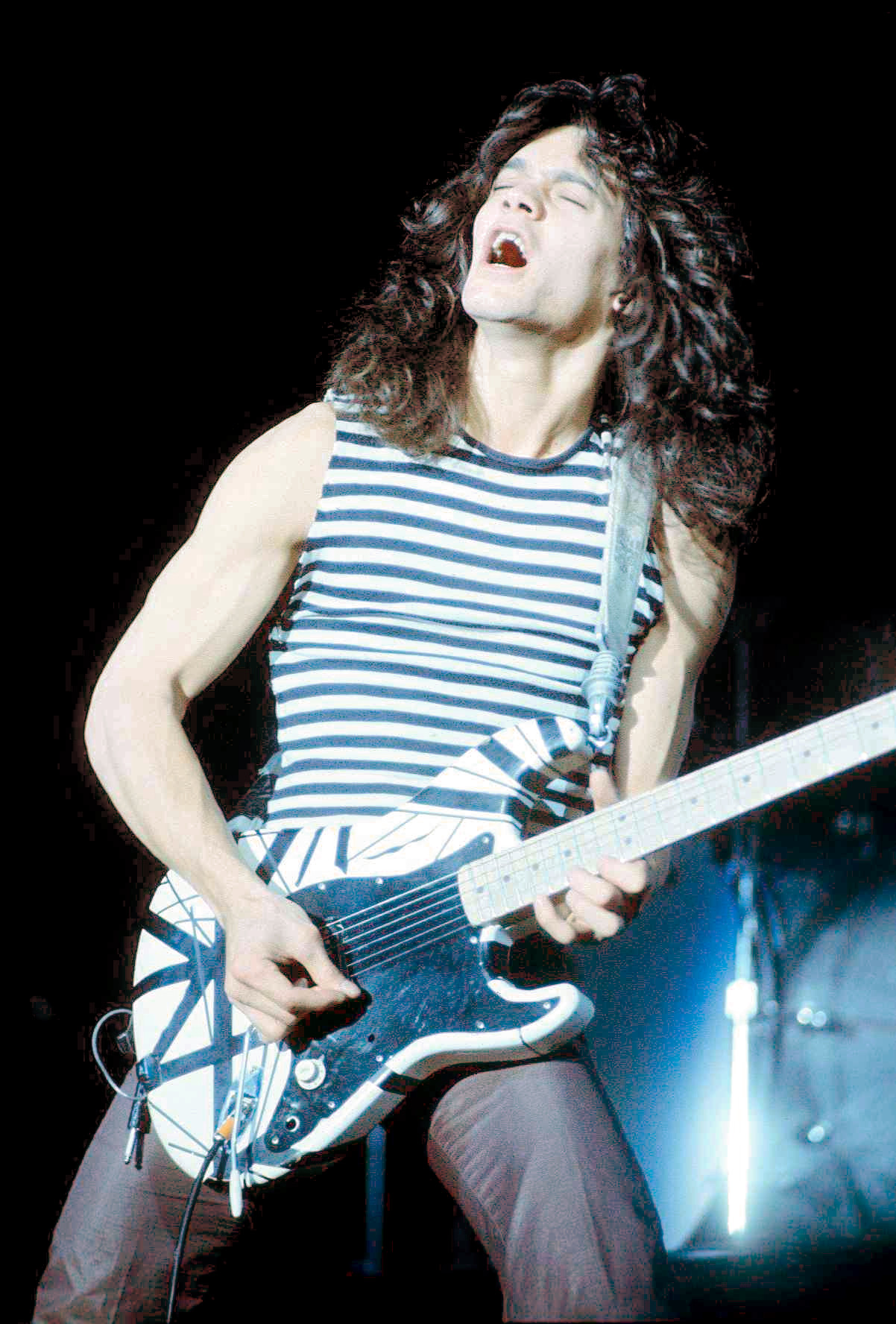
Rose sold the rest of his early units the hard way, at big concerts. He learned fast that asking for the band got him nowhere, so he asked for the guitar tech instead. "So I would show them first and they would show the artist, and that's how I got in."
That's how he got to Journey's Neal Schon. "Neal saw it and wanted one put on his Les Paul, and he gave me one that he said he'd never liked the sound of," Rose said. "I brought it back to him and it became one of his favourites as I'd taken so much wood out of it the sound had changed." Schon and Night Ranger's Brad Gillis are both widely named among the very first Floyd owners, with low serial numbers attached to their stories.

Was it all Eddie?
Rose has been asked that a lot, and his answer is measured. "Many people ask if this would have happened without Eddie and I think it would have, but certainly not as quickly," he said. "I think guitar players wanted to stay in tune, but Eddie's power and popularity at the time made it explode onto the scene."
He also confirmed a bit of friendly tension. "He always wanted to have his name on it and I wouldn't agree to that; I wanted my name on it!" Rose laughed. Years later, Eddie's signature version did carry his name, which Rose described as a "thank you" for his part in the bridge's success.
Fine Tuners: The Fix for the Fix
The locking nut solved one problem and created another. Once you clamp the strings at the nut, the tuning keys don't do anything anymore. If a string drifts after you lock it, you're unscrewing the clamp with an Allen key and starting over.
Rose said his handmade bridges didn't really need fine tuners, because he hand-sanded the nut clamps so they couldn't twist when tightened. "When we started to mass produce them, you couldn't really make them that accurately anymore," he said. "That's when I invented the version with the fine tuners."
Other accounts give Eddie Van Halen credit for pushing the idea, and both stories can be true at once. Rose's patent filings back up the timeline. An application for "apparatus for restraining and fine tuning the strings" went in on March 15, 1982, and was granted on February 5, 1985. The result is the familiar row of thumbscrews at the back of the bridge, each one changing a string's tension a little after the nut is locked.
Kramer, the Licensing Deal, and the Copycats
The Floyd became a mass-market product through Kramer. With Eddie endorsing the brand in the early 1980s, Kramer guitars with Floyd Rose bridges sold fast, and Kramer dropped the Rockinger vibrato it had been using in favor of the Floyd between 1982 and early 1983.
Demand outran supply, and imitations followed. "When I got all the patents secured and Kramer started selling guitars like crazy with tremolo on them, the other companies started copying," Rose said. "We couldn't just constantly sue everybody."
His solution, worked out with Kramer CEO Dennis Berardi, was to license the design. Other makers could build double-locking bridges stamped "Licensed Under Floyd Rose Patents," and companies that cared about quality could buy the real thing as an OEM part.
Rose was candid about the downside. "When we did that deal we just didn't think that approving the quality mattered at the time — it was just impossible to police," he said. Some licensed bridges went onto cheap guitars built by factories that hadn't mastered the metal hardening. "They didn't know how to make one," he said. "The bridges failed pretty easily."
That's the origin of the bad reputation some cheap locking trems still carry. The design wasn't the problem. Soft metal was.
The rivals and the variations
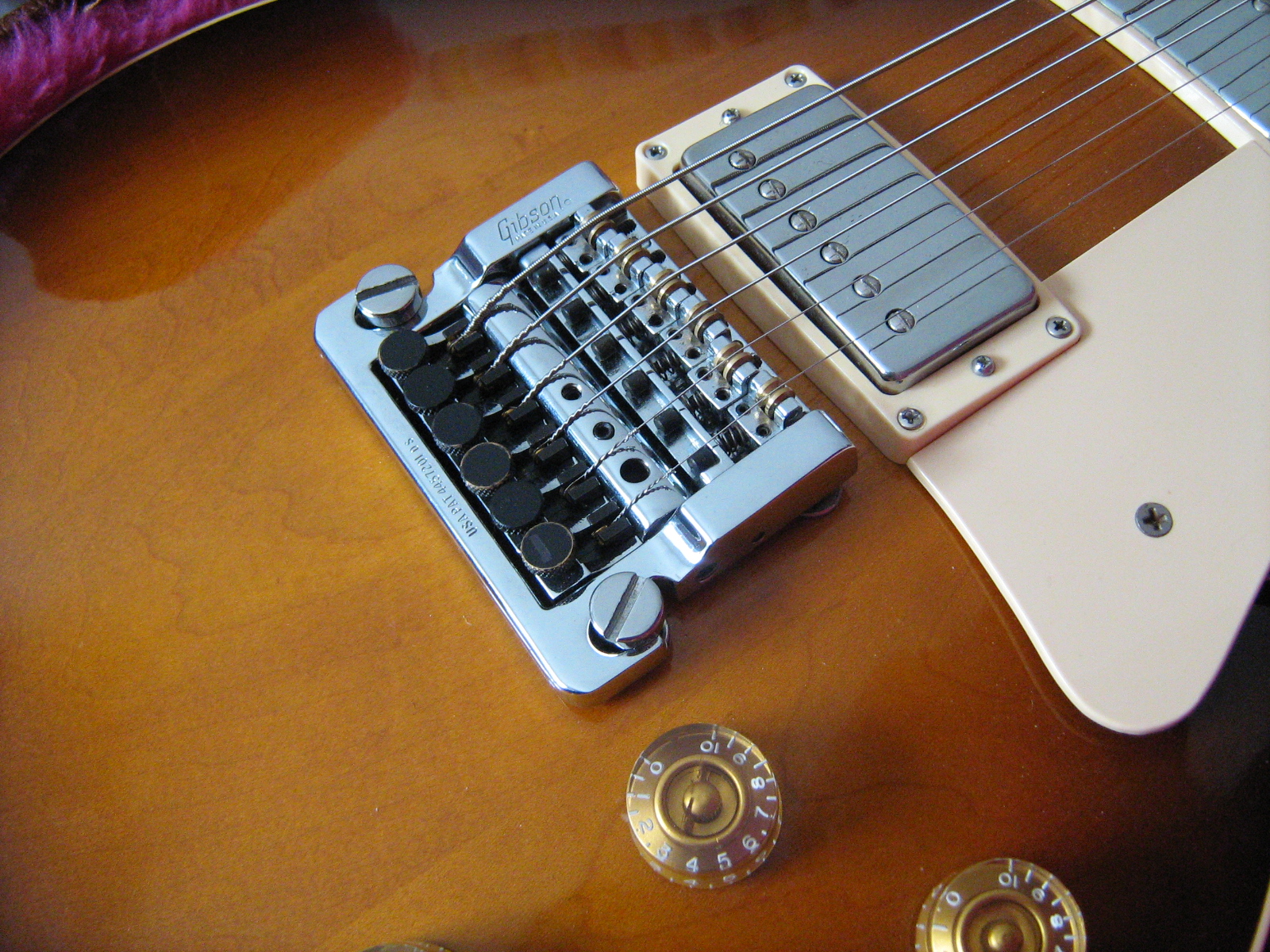
Not everyone licensed. Kahler built its own cam-based tremolo, introduced in 1979, which became the Floyd's best-known competitor in the 1980s and showed up on everything from superstrats to Gibson Les Pauls. Japanese makers built their own licensed takes, including Ibanez's Edge, developed with Gotoh, which became the signature bridge on Steve Vai's and Joe Satriani's Ibanez guitars.
Meanwhile, the Original Floyd Rose itself was being built by Schaller in Germany from 1983 on, which is why "German-made" became the shorthand for a real Floyd.
Fender takes the wheel
In January 1991, Kramer's exclusive distribution deal ended and Fender became the exclusive distributor of Floyd Rose products. That's why the early '90s gave us Fender models with a real Floyd, including the Richie Sambora Stratocaster and the Floyd Rose Classic Strat. Rose also worked with Fender on its Deluxe Locking Tremolo, which locked the strings at the saddles and at locking tuners instead of a clamp nut. In 2005, distribution of the Floyd Rose Original went back to Floyd Rose's own company.
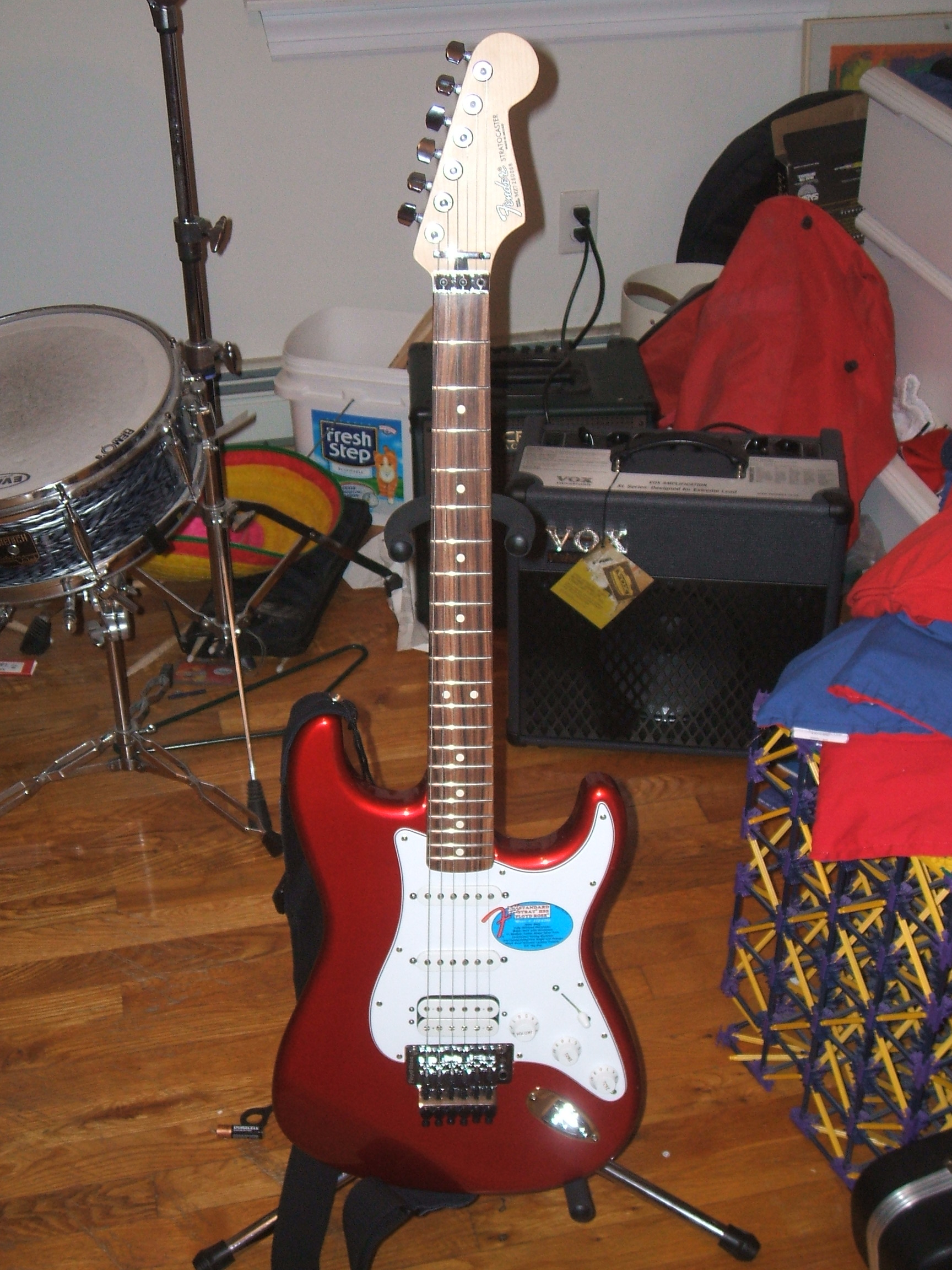
How a Floyd Rose Actually Works
Under all the history, the mechanics are simple. The bridge balances on two knife edges that rest against pivot studs. String tension pulls the bridge forward, and the springs in the back cavity pull it back. When those forces are equal, the bridge sits level with the body.
Because the strings are clamped at the saddles and the nut, nothing can slide or bind. Push the bar, the bridge tips forward and the strings go slack. Let go, the springs pull it back to the balance point, and the strings return to the same tension. That's the whole trick.
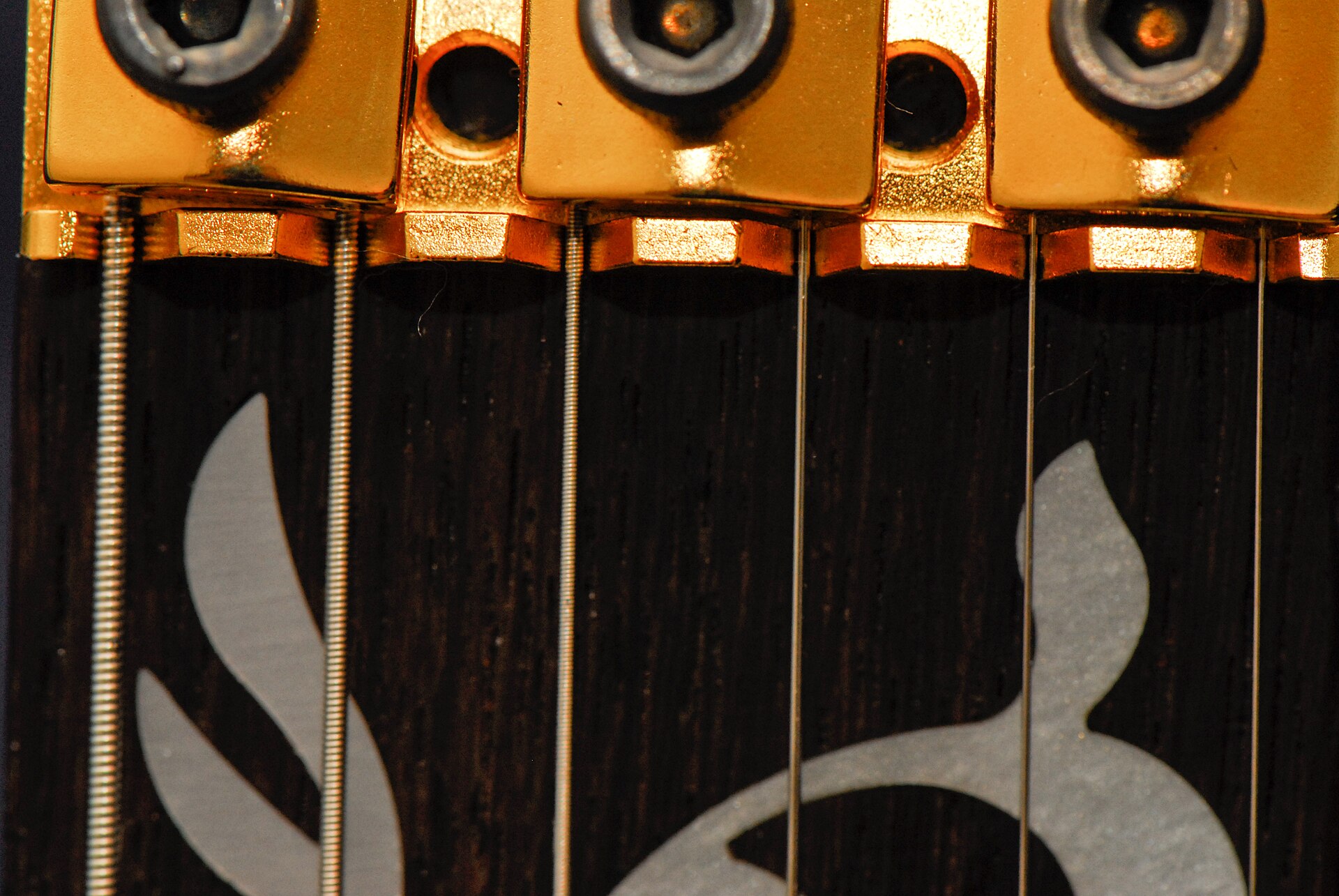
Floating vs. decked
How the bridge is set up changes how the guitar behaves.
- Floating: The bridge sits level with a cavity routed behind it, so you can push down and pull up. This is where the flutters, pull-up squeals, and big pitch rises come from.
- Decked (flush-mounted): Spring tension is set slightly higher than string tension, so the bridge rests against the body and only moves down. Eddie Van Halen famously ran his this way. If you break a string, the rest stay in tune. A decked Floyd also makes drop-tuning gadgets like Eddie's own D-Tuna practical, since you can drop the low E to D without the other strings moving.
The tradeoffs nobody puts in the ad
A floating Floyd is a balancing act, and that brings real downsides:
- Tuning is interactive. Raise one string's tension and the bridge tips forward a hair, which flattens the others. Getting it in tune can take a few passes.
- Breaking a string throws everything off. On a floating bridge, losing one string changes the balance, and the rest of the guitar goes sharp.
- Bends pull other strings flat. When you bend one string, the bridge tips slightly and the unbent strings drop in pitch. That makes country-style double-stop bends and some oblique bends harder to keep in tune.
- Changing gauge or tuning means a re-setup. Going from 9s to 10s, or from E standard to D standard, changes string tension, so you'll be adjusting the claw screws and probably the intonation.
- String changes take longer. On a traditional Original, you clip the ball ends off and clamp each string in its saddle block, then stretch, tune, lock the nut, and fine-tune.
There's also a long-running argument about tone. Some players hear a Floyd as thinner than a hardtail. That debate is why aftermarket larger brass, copper, and titanium sustain blocks exist, though how much they change the sound depends on who you ask.
Original vs. 1000 Series vs. Special: What You're Buying
If you're shopping for a guitar with a Floyd or replacing one, the model name on the bridge tells you a lot.
| Model | What it is | Who it suits |
|---|---|---|
| Floyd Rose Original | The flagship design, long built by Schaller in Germany. Hardened steel parts throughout. | Players who use the bar hard and want the reference standard. |
| Floyd Rose 1000 Series | Floyd Rose says it keeps the Original's design, materials, and features but is made in Korea. It was historically sold mostly to guitar makers as an OEM part. | Mid-priced guitars; most of the Original's durability for less. |
| Floyd Rose Special | The budget tier, built to compete with cheap copies, with some parts in less expensive alloys instead of steel. | Entry-level guitars and lighter bar use. A common upgrade target. |
| Licensed / other double-lockers | Gotoh, Schaller, Ibanez Edge, and many more. Quality ranges from excellent to poor. | Judge each one on its own reputation, not the word "licensed." |
Two practical notes. First, the knife edges and pivot studs are the parts that wear, and soft metal there is what makes a cheap locking trem go out of tune over time. Second, not every bridge with a locking nut is a drop-in swap for another. Stud spacing, string spacing, and block depth vary, so measure before you order a replacement.
Why the Floyd Still Matters
It's easy to treat the Floyd Rose as a relic of hair metal, but that undersells it. Rose didn't invent the vibrato arm. He found the real reason it went out of tune, and he fixed it at the source. Everything that came after, from the Ibanez Edge to modern locking tuner systems, is working on the same idea.
The bridge also changed how guitarists play. Dive bombs, flutters, harmonic squeals, and whole solos built around the bar became normal because players could finally trust their guitar to come back in tune. If you grew up on Van Halen, Night Ranger, Satriani, Vai, or the Jackson and Charvel superstrats that made the Floyd a default spec, you grew up on Floyd Rose's fix for his own '57 Strat.
The takeaway for players today is simple. If you want a whammy bar you can really abuse, a well-made double-locking Floyd is still the benchmark, and the quality of the steel matters more than the logo on the guitar. If you mostly want a little shimmer and easy string changes, a good non-locking vibrato will make your life easier.
Restringing a Floyd is a job you don't want to do in a hurry. X Concepts String Club sends fresh strings to your door every month, so you're playing, not hunting for strings.
Are you a floater or a decker? Tell us how you set up your Floyd, and which guitar it's on, in Guitar Talk.
Sources - Simon Bradley, interview with Floyd Rose, *Guitarist* (2010), republished by MusicRadar: https://www.musicradar.com/guitarist/floyd-rose-new-interview-257435 - U.S. Patent 4,171,661, "Guitar tremolo method and apparatus," filed Jan. 3, 1977, granted Oct. 23, 1979: https://patents.google.com/patent/US4171661A/en - U.S. Patent 4,497,236, "Apparatus for restraining and fine tuning the strings of a musical instrument, particularly guitars," filed Mar. 15, 1982, granted Feb. 5, 1985: https://patents.google.com/patent/US4497236A/en - Floyd Rose company history and 1000 Series product pages: https://www.floydrose.com/history and https://www.floydrose.com/collections/1000-series - Background on Kramer, Kahler, Fender distribution, and licensed models: Wikipedia, "Floyd Rose" and "Vibrato systems for guitar" (cross-checked against the primary sources above)
Experience-driven coverage, not algorithm bait.
- 20+ years of guitar playing experience
- Real-world retail experience at Guitar Center
- Thousands of hours testing guitars, amps, and pedals
- A community of 50,000+ guitar enthusiasts across platforms
- Partnerships with Fender, DistroKid, TrueFire, Card Chords, and Enya
- Editorial standards published openly — see how we test gear
Ask GP
3 free questions a dayStill curious? Ask GP about this story.
Your personal classic-rock and guitar guide — ask anything about The Floyd Rose Story.
Discussion (0)
Sign in to join the discussion.
Sign in to commentLoading comments…
Discover another guitar story
Swipe through our latest features, breaking news and iconic solos — one story at a time.
Open Swipe →More in Signature Gear
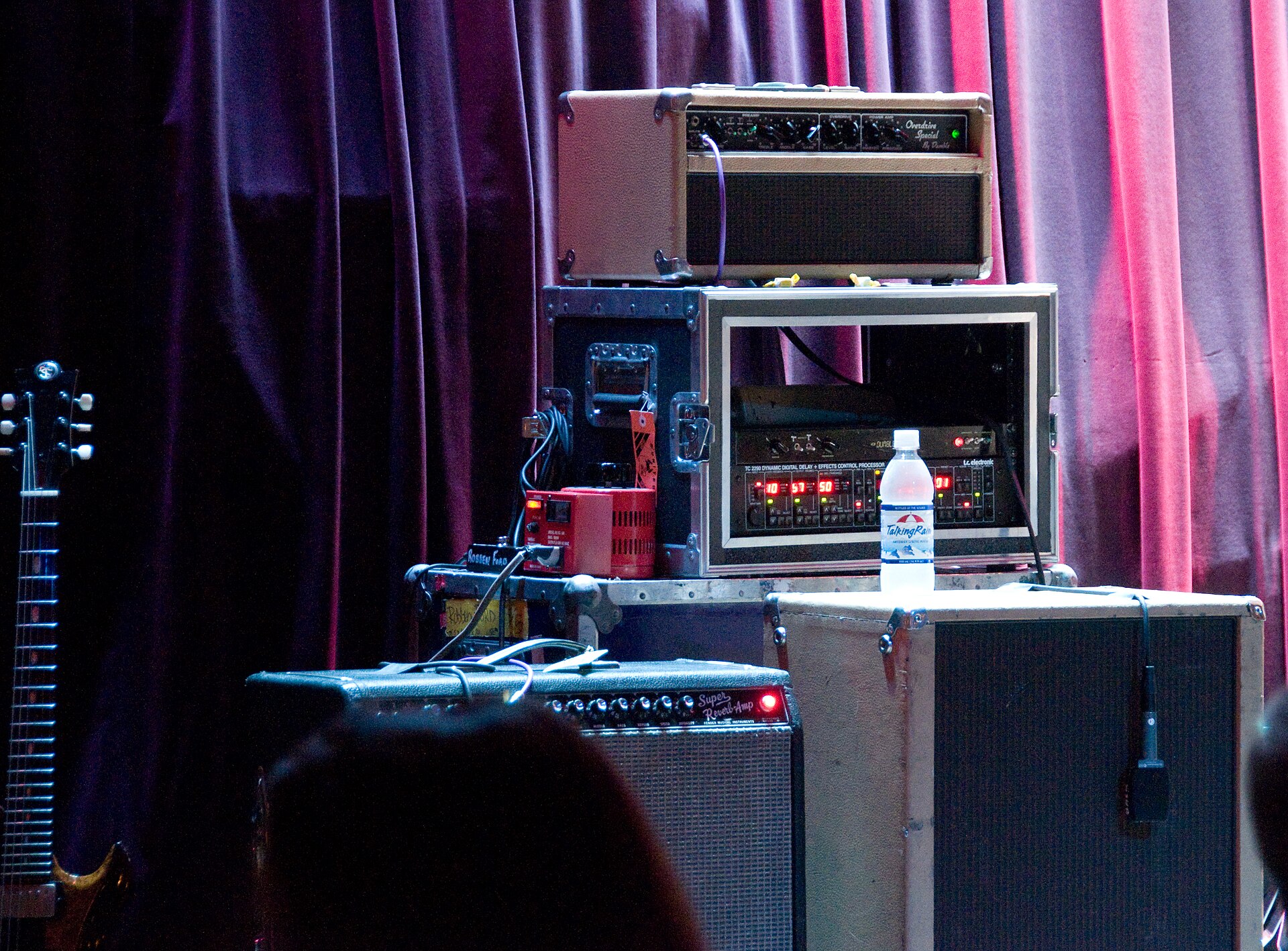
Dumble Is Taking Special Orders Again. That Is Not the Same Thing as Alexander Coming Back.
The Dumble Preservation Society is inviting special orders for an Overdrive Special, a Tweedle Dee, and a MegaPLX. No prices are listed. Alexander Dumble died in 2022, and the guitarist most tied to the Overdrive Special says the builder wanted the amplifiers to stop with him.

RipToneZ Is Giving Valeton GP-200 Players More Reasons to Keep Playing
With free downloads, affordable artist-inspired packs, and a $4.99 monthly Tone Club, RipToneZ is building an offering that goes beyond buying another preset.

Line 6 Helix Stadium Native Review: Agoura Amps, Proxy Clones, and the Studio Helix You’ve Been Waiting For
Agoura amp modeling, Proxy clone loading, Focus View, 48 blocks and 192 kHz—the Stadium brain finally lives in your DAW. Here’s who should pay $399.99, who should upgrade for $99.99, and who should start with the free Intro.