History of the Riff: Link Wray's "Rumble" — The Instrumental That Made the Guitar Sound Dangerous
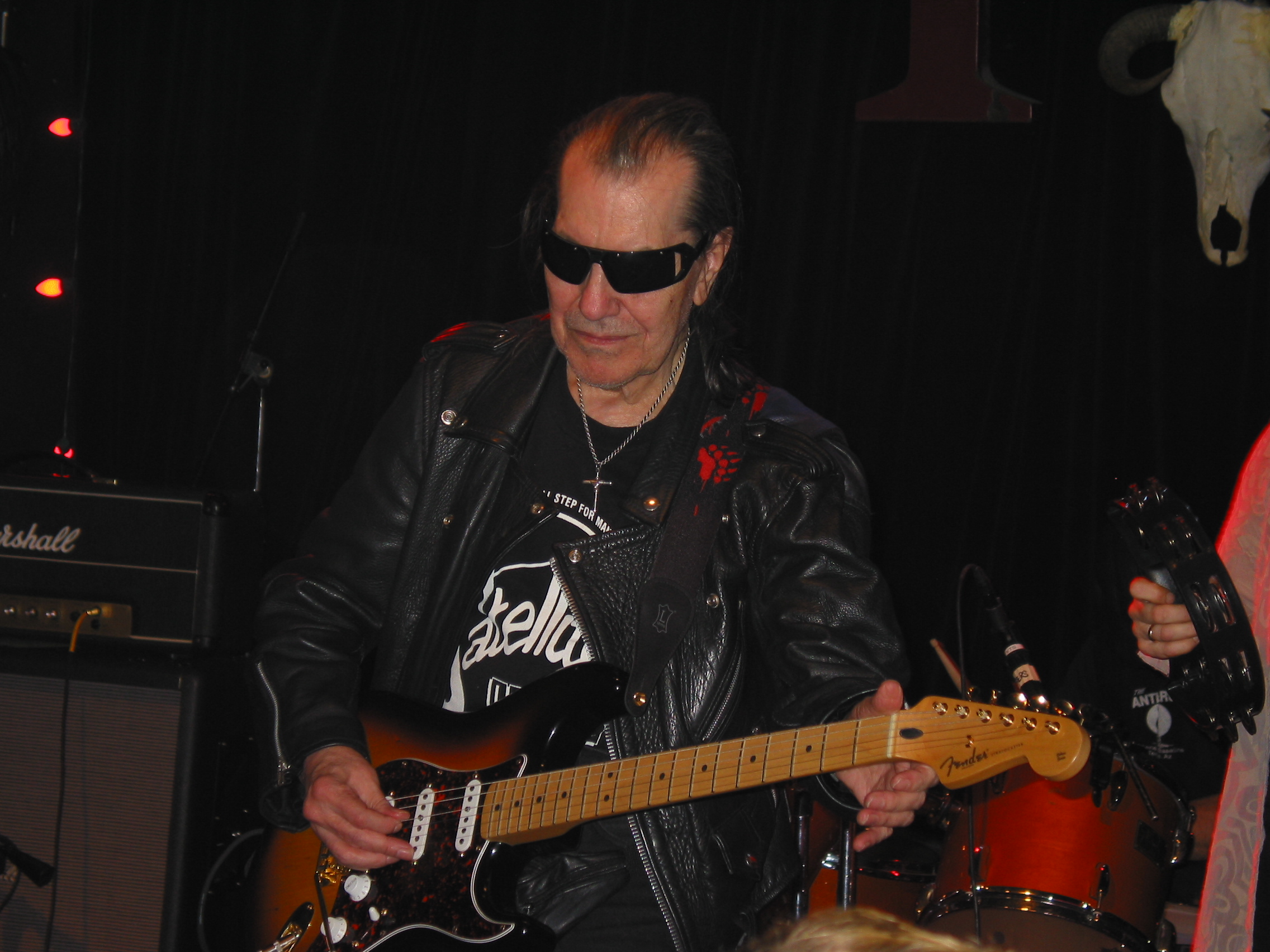
Photo: Eric Frommer. License: CC BY-SA 2.0.
No lyrics. No melody you’d hum in the shower. Just power chords, a punctured speaker, and a sound so menacing some radio stations banned it. Here’s how Link Wray’s 1958 instrumental rewired rock guitar.
Most guitarists can name the riffs that made them want to play. Fewer can name the riff that made the electric guitar sound dangerous in the first place.
That record is Link Wray’s “Rumble.”
Released on March 31, 1958, it has no words, almost no conventional melody, and barely two and a half minutes on the clock. What it does have is attitude — thick, dragging power chords, amp distortion that wasn’t supposed to be there yet, and a title scary enough that some American radio stations refused to play an instrumental.
This is a researched History of the Riff deep dive — not a hands-on gear review — into how a Virginia sock-hop improvisation, a pencil through a speaker cone, and one stubborn guitarist helped invent the vocabulary every hard-rock and metal player still uses.
Why "Rumble" Still Matters to Guitar Players
Before “Rumble,” electric guitar in popular music mostly meant clean twang, country snap, or blues bite pushed just far enough to sting. Distortion happened. It just wasn’t usually the point.
Wray made it the point.
The track sits on slow, heavy root-fifth power chords — the same basic architecture you’ll hear later in The Who, Black Sabbath, punk, and half the drop-tuned metal written after 1990. Tremolo undulates underneath. The tone is fuzzy, mid-forward, and deliberately ugly by 1958 standards.
Guitar magazines and historians routinely credit Wray with bringing the power chord into the rock mainstream via this single. Debate the exact “first” all you want. For working players, the practical truth is simpler: after “Rumble,” distorted block chords stopped being an accident and started being a language.
That’s why Pete Townshend, Jimmy Page, Iggy Pop, and Bob Dylan all circled back to it. Not because it was complicated. Because it was a new kind of permission.
Fredericksburg, 1958: A Stroll That Went Wrong in the Best Way
The origin story is almost too perfect for guitar mythology — which is why it helps that multiple accounts line up on the essentials.
Link Wray & His Ray Men were playing a dance in Fredericksburg, Virginia, early in 1958. Disc jockey Milt Grant was involved as host/promoter; the band needed something the kids could stroll to. The Diamonds’ “The Stroll” was the hit of the moment. Wray didn’t know the chords.
So he improvised.
Brother Doug Wray put down a stroll-like beat. Link answered with a slow, ominous sequence of heavy chords. Someone moved a microphone close to the amp — close enough to thicken and dirty what was coming out of the cabinet. The room lost its mind. Accounts say the crowd demanded the “weird song” again and again that night — roughly four times.
They called the improvisation “Oddball.”
That live accident is the seed. Everything that follows is Wray trying to bottle it.
How the Studio Version of Link Wray's Rumble Got Its Sound
Back in the Washington, D.C. area, the band tried to cut the piece properly. Clean studio capture didn’t match Fredericksburg. The menace was gone.
Wray’s fix was not subtle.
He took a pencil and punched holes in his Premier amplifier’s speaker (he later specified the tweeters rather than the big woofer). The damaged cone rasped and compressed. Combined with tremolo, it got him closer to the live grind he wanted.
Cadence Records head Archie Bleyer reportedly hated the result — especially after watching a guitarist deliberately wreck a speaker to make a record. His stepdaughter, Jackie Ertel, loved it. That enthusiasm helped push the single out the door anyway.
Songwriting credit went to Link Wray and Milton Grant (Grant had financed the recording). The working title “Oddball” didn’t survive. The finished single was named “Rumble.”
Accounts differ on who landed the title. Some place it with Phil Everly, who heard street-fight menace in the sound. Others connect the name to Jackie Ertel and the gang-fight slang popularized by West Side Story. Either way, the word did marketing and controversy at once: a rumble meant a fight.
B-side: “The Swag.” Runtime of the A-side: about 2:25.
◆ What made the record different in 1958
- Distorted electric guitar as the center of the arrangement
- Root-fifth power chords played as the riff, not decoration
- Tremolo as atmosphere, not novelty
- No vocal to soften the threat
- A title that radio programmers associated with juvenile delinquency
The Only Instrumental Radio Tried to Ban
“Rumble” entered the Billboard Hot 100 and peaked at No. 16. It also reached No. 11 on the R&B chart and No. 16 in Canada. Those are healthy numbers for a sparse instrumental built on ugly guitar.
Then came the bans.
In an era already nervous about leather jackets and teenage violence, some stations — particularly in large East Coast markets — refused to air the track because of its title and mood. Writers have repeatedly noted its unusual status: an instrumental treated as too dangerous for the airwaves. Dick Clark, introducing Wray on American Bandstand, reportedly avoided saying the song’s name aloud.
Suppression did what suppression usually does. Kids who heard it wanted it more. The record’s commercial life continued. Its myth grew faster.
Cadence and Wray did not stay aligned for long. Bleyer reportedly preferred Wray soften toward country. Wray was not interested in sanding the edges off. He moved on — cutting more instrumentals, including later hits like “Raw-Hide,” and keeping the distorted, physical approach that “Rumble” had made his signature.
Who Link Wray Was Before the Pencil
Fred Lincoln “Link” Wray Jr. was born in 1929 in North Carolina and raised with Shawnee heritage on his mother’s side — a fact he spoke about with pride later in life. He served in the Korean War. Tuberculosis cost him a lung, which is one reason his career tilted so hard toward instrumentals: singing was harder, volume and feel were not.
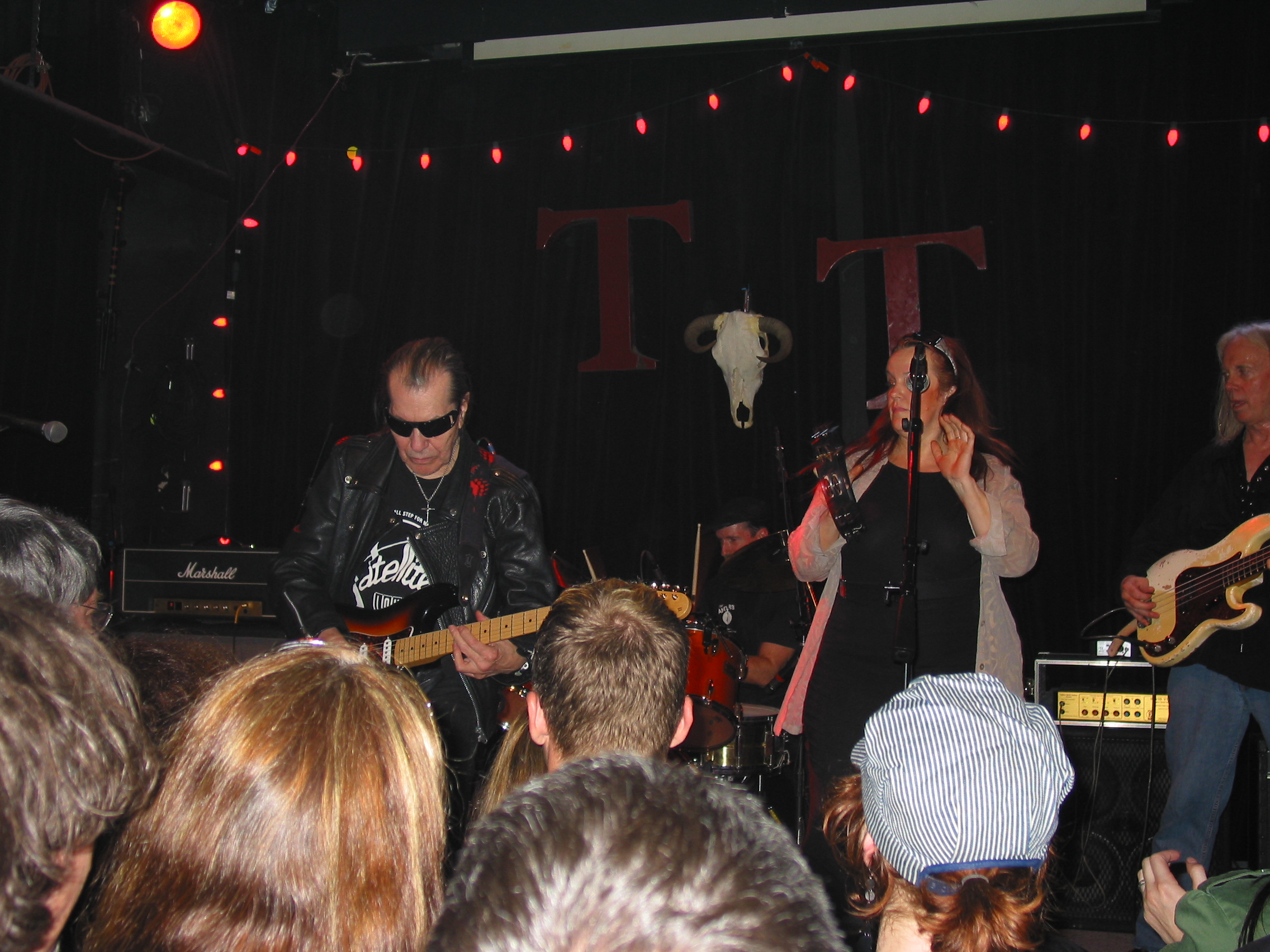
By the mid-1950s he was working the D.C./Virginia circuit with brothers Vernon and Doug and bassist Shorty Horton — hillbilly and rock ’n’ roll for rooms that threw bottles as casually as tips. That apprenticeship matters. “Rumble” does not sound like a conservatory experiment. It sounds like someone who already knew how to hold a rowdy floor with three chords and a stare.
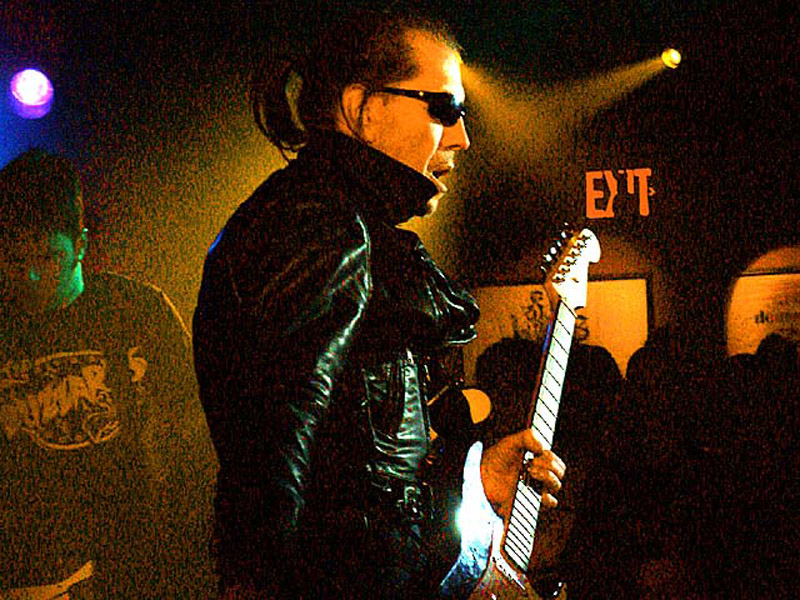
Photo: Anthony Pepitone (uploaded by Dxede5x). License: CC BY 3.0.
Anatomy of the Riff: What You’re Actually Hearing
Strip the mythology for a minute and listen like a player.
The foundational idea is the power chord: root and fifth, sometimes with the octave, often with the third left out so the harmony stays open and aggressive. Wray doesn’t rush. He lets the chords hang and decay into the tremolo. The space between hits is part of the arrangement. Silence does half the intimidation.
The distorted tone is midrange-heavy and grainy — closer to a damaged speaker than to a modern high-gain preamp. That’s historically important. A lot of early rock distortion came from pushing small amps, bad cables, cheap mics, or literal hardware abuse. Pedals that bottled fuzz for the masses (think Maestro FZ-1 a few years later on the Stones’ “(I Can’t Get No) Satisfaction”) were still ahead. Wray got there with a pencil.
Rhythmically, the track sits in that slow stroll/shuffle pocket Doug helped establish. It is not thrash. It is not swing-for-the-fences rockabilly. It is menace at walking speed — which is why it still works under film scenes of approaching trouble decades later.
If you teach beginners, “Rumble” is also a useful lesson in economy. You do not need a hundred notes. You need commitment, tone, and a rhythmic identity strong enough to survive without a singer.
The Line of Influence: Townshend, Page, and Everyone After
Influence claims get sloppy in guitar writing. “Rumble” is one of the rare cases where the quotes are blunt.
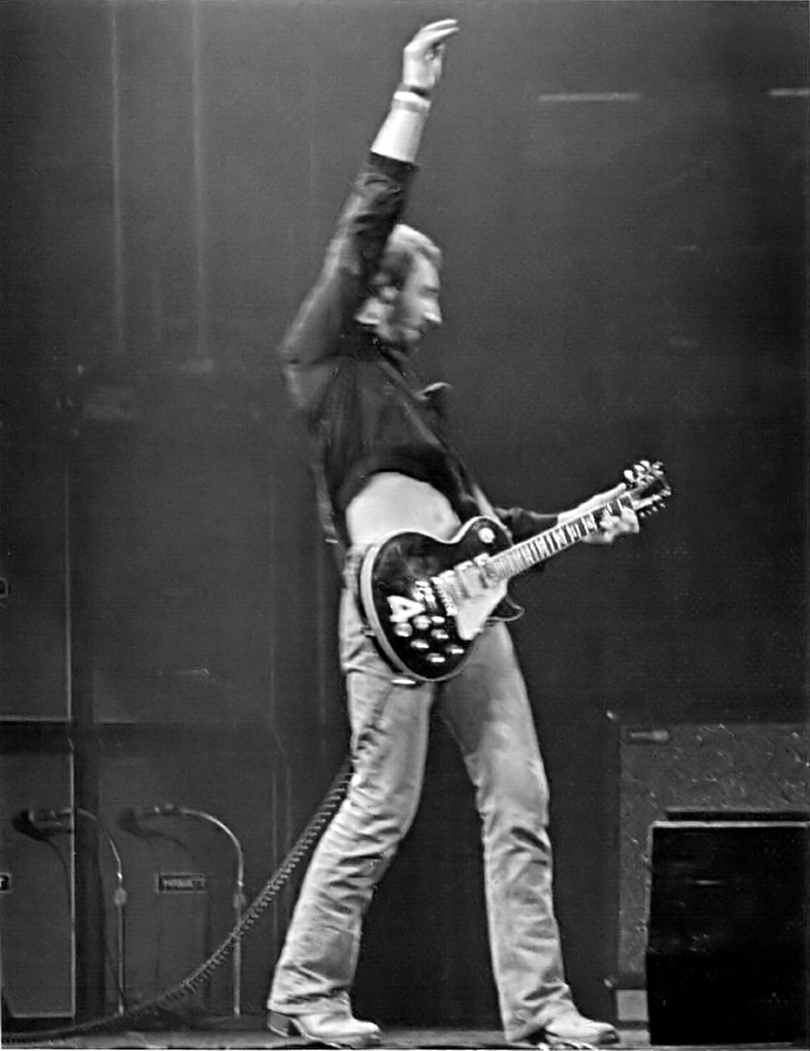
Pete Townshend of The Who has said that without Link Wray and “Rumble,” he would never have picked up a guitar — and called Wray “the king.” Townshend’s own vocabulary is built on power chords, controlled feedback, and physical attack. You can draw a straight pedagogical line from Wray’s 1958 single to the windmill and the Marshall wall without pretending they sound identical.
Jimmy Page has praised the record’s “profound attitude.” In the 2008 documentary It Might Get Loud, Page is shown playing “Rumble” on a turntable and reacting like a fan, not a curator. In 2023, when Wray was inducted into the Rock & Roll Hall of Fame, Page performed the piece live at the ceremony.
Iggy Pop has described hearing “Rumble” as an emotional exit from school — the moment that pointed him toward a life in music. Bob Dylan, who saw Wray young, called it the best instrumental ever and has returned to it onstage.
Ray Davies of The Kinks has likewise cited Wray. Davies’ mid-’60s work with razor-blade speaker abuse on “You Really Got Me” sits in the same DIY distortion tradition, even if the stories are separate.
None of that means every heavy riff “comes from” Link Wray in a literal genealogical sense. It means “Rumble” proved that a guitar part could be the song, the attitude, and the danger at once — and that proof traveled.
From Banned Single to National Recording Registry
Institutional recognition arrived late, which is normal for players who invent languages before markets know how to sell them.
In 2008, the Library of Congress added “Rumble” to the National Recording Registry — the U.S. list of recordings deemed culturally, historically, or aesthetically significant. The Registry essay frames Wray as a missing link between early electric blues vocabulary and the '60s guitar pantheon, and as a foundational figure for distortion, fuzz attitude, and the power chord as rock’s default weapon.
In 2018, the Rock & Roll Hall of Fame inducted “Rumble” in a then-new category for influential singles. Wray himself was inducted as a performer in 2023.
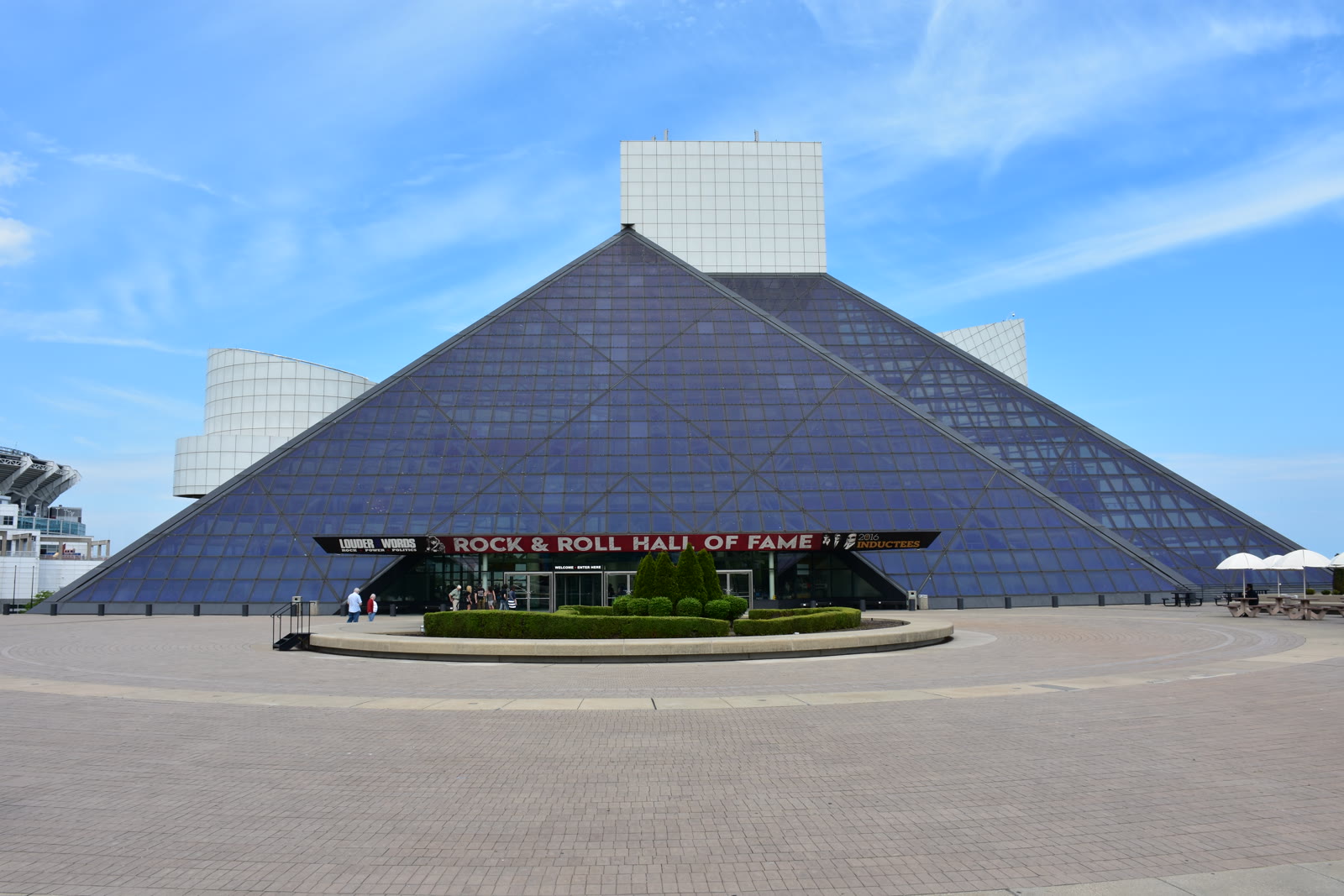
Those honors don’t make the record better. They confirm what guitarists already knew from the neck up: this two-minute instrumental changed what “rock guitar” was allowed to mean.
Gear Notes: What We Can Say Without Inventing a Spec Sheet
A researched overview has limits. Wray’s 1958 session was not documented like a modern producer’s recall sheet, and TGP is not going to invent pickup magnet types or exact Premier model numbers to fill white space.
What is solidly part of the public record:
- Amp damage was intentional — pencil holes through the Premier’s speakers/tweeters to recreate live rasp
- Tremolo was part of the recorded sound
- The arrangement centered on guitar chords and rhythm section, not solos-as-spectacle
- Later in his career Wray was associated with other tools of the trade (including Danelectro Longhorn territory in the broader Wray story), but those later guitars are not required to explain the 1958 single
If you’re chasing a “Rumble”-adjacent tone on modern gear, think principles, not cosplay:
- Mid-forward grind over scooped metal high-gain
- Power chords with space between them
- Tremolo or subtle amplitude movement
- Less gain than you think; more speaker breakup character
- Play behind the beat enough to feel heavy without dragging into mush
A Tube Screamer into a clean amp will not “be” a punctured Premier. Neither will a Helix patch labeled Vintage Fuzz. You can get close enough to learn the musical lesson: aggression plus restraint.
What Guitarists Should Actually Steal From "Rumble"
Not the pencil. Please don’t destroy a good speaker for Instagram.
Steal these ideas instead:
1. The riff as the song.
Sabbath perfected this later, but Wray demonstrated it early. If the guitar figure is strong enough, everything else can be scaffolding.
2. Negative space.
Modern players fill every beat. “Rumble” leaves air. The gaps make the hits land harder.
3. Tone as character, not polish.
Wray looked for a sound, not a correct sound. That distinction still separates memorable players from competent ones.
4. Attitude without lyrics.
If your instrumental needs a singer to feel like a statement, write a better instrumental.
5. Physical commitment.
Even on a record, you can hear intention in the pick attack and chord weight. Software cannot fake that part for you.
The Long Shadow: Film, Punk, Metal, and the Riff Vault Mentality
“Rumble” never stopped circulating. Directors use it when they need guitar-as-threat without dialogue. Punk heard kinship in its refusal to be pretty. Metal heard the power-chord skeleton. Garage rock heard the template for a whole aesthetic.
For TGP readers building a personal canon — the same instinct behind our Riff Vault — “Rumble” belongs near the front of the “why guitar sounds like this” shelf, next to Chuck Berry’s propulsion, Muddy Waters’ electricity, and the later monuments (Whole Lotta Love, Smoke on the Water, Iron Man) that inherit its permission structure even when they don’t quote it.
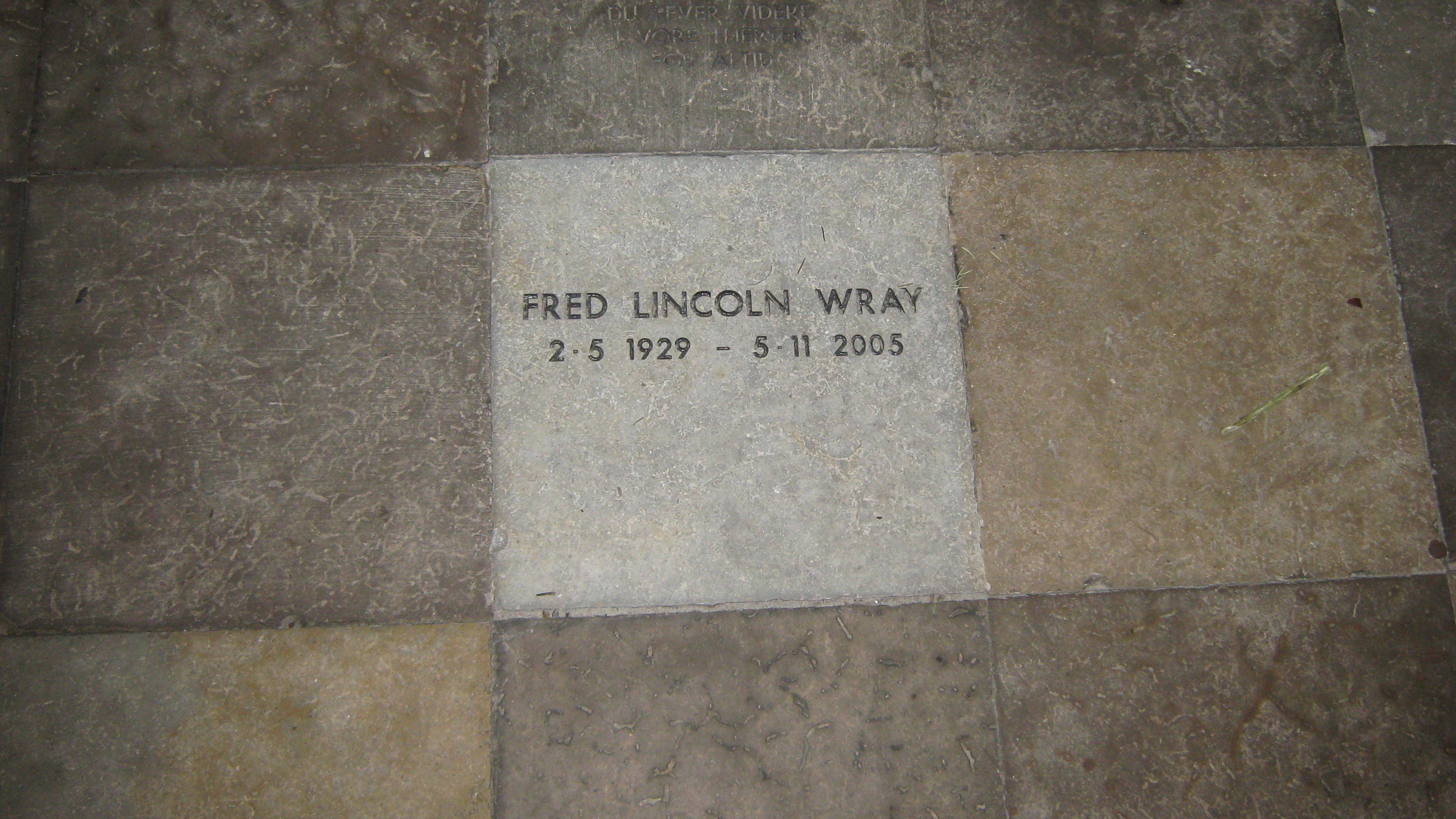
Wray died in Copenhagen in November 2005 at 76. He never became a household-name guitar hero on the scale of Hendrix or Page. He didn’t need to. Household-name guitar heroes kept citing him.
The Takeaway
“Rumble” is not famous because it is difficult. It is famous because it is decisive.
In 1958, Link Wray took a dance-floor improvisation, ruined a speaker on purpose, and released an instrumental so heavy with implication that radio flinched. The charts still found it. Guitarists never stopped finding it.
If you play rock, punk, metal, or anything built on distorted block chords, you are living in a house Wray helped frame — whether or not his name is on your practice-room wall.
Put the record on. Listen past the nostalgia. Hear the midrange rasp, the unhurried chords, the tremor in the amp, the absence of apology.
That is the sound of the electric guitar learning how to threaten.
— The Guitar Plugged | TGP
★ Key Takeaways
What to Remember
- ▸“Rumble” by Link Wray & His Ray Men was released March 31, 1958 on Cadence; it peaked at No. 16 on the Billboard Hot 100 and No. 11 R&B.
- ▸The piece began as a live improvisation (“Oddball”) at a Fredericksburg, Virginia dance when Wray didn’t know “The Stroll.”
- ▸In the studio, Wray punched pencil holes in his Premier amp’s speakers/tweeters to recreate the live distorted grind.
- ▸Some radio stations banned the instrumental over its title’s association with gang fights — a rare fate for a wordless record.
- ▸Pete Townshend, Jimmy Page, Iggy Pop, Bob Dylan and others have cited it as foundational; it entered the National Recording Registry in 2008 and the Rock Hall’s singles category in 2018, with Wray inducted as a performer in 2023.
Keep Exploring
- History of the Riff: Jimi Hendrix’s “Foxey Lady”
- History of the Riff: “Whole Lotta Love”
- Tone Decoded: Why the Last 10% of Tone Isn’t the Pedalboard
- Best Of: The Top 25 Greatest Guitar Riffs of All Time
Sources & further reading
1. Library of Congress National Recording Registry essay — “Rumble” (Link Wray, 1958)
2. Contemporary reporting and obituaries summarizing the Fredericksburg origin, Cadence release, and radio bans (Washington Post, Rolling Stone, New York Times)
3. Rock & Roll Hall of Fame induction materials (singles category, 2018; performer induction, 2023)
4. It Might Get Loud (2008) — Jimmy Page listening segment
5. Published Townshend / Dylan / Iggy Pop attributions collected in standard Wray profiles (AllMusic, NPR, Washington Post)
Note: This feature is a researched historical overview. Gear descriptions reflect publicly documented accounts of the 1958 recording approach; TGP did not studio-recreate the Premier pencil-mod for this article.
Experience-driven coverage, not algorithm bait.
- 20+ years of guitar playing experience
- Real-world retail experience at Guitar Center
- Thousands of hours testing guitars, amps, and pedals
- A community of 50,000+ guitar enthusiasts across platforms
- Partnerships with Fender, DistroKid, TrueFire, Card Chords, and Enya
- Editorial standards published openly — see how we test gear
The Modern Guitar Magazine. Delivered to your inbox.
No spam. No gimmicks. Just great guitar content — stories, tones, iconic solos, and honest gear takes. Every week.
Ask GP
3 free questions a dayStill curious? Ask GP about this story.
Your personal classic-rock and guitar guide — ask anything about Link Wray's "Rumble".
Discussion (0)
Sign in to join the discussion.
Sign in to commentLoading comments…
Discover another guitar story
Swipe through our latest features, breaking news and iconic solos — one story at a time.
Open Swipe →More in Guitar Talk
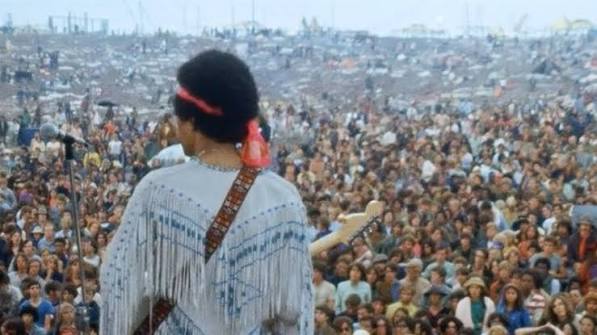
The 10 Greatest Guitar Renditions of “The Star-Spangled Banner”
From Jimi Hendrix's controlled chaos at Woodstock to modern performances by H.E.R., Gary Clark Jr. and Jack White, these guitarists turned America's national anthem into something deeply personal.
Happy Birthday, Joe Perry: The Riff Machine Who Gave Aerosmith Its Swagger
Joe Perry turns 76 today. From the swampy grind of “Sweet Emotion” to the reunion that saved a band, this is the career of the guitarist who taught American hard rock how to strut.

History of the Riff: How Joe Satriani Made “Flying in a Blue Dream” Feel Weightless
An acoustic guitar in an unusual tuning, a stray broadcast and a melody that seems to hang in the air: inside the construction of Satriani’s 1989 masterpiece.