
Robin Trower: The Man Who Turned the Strat Into Weather
Photo: Jim Summaria, via Wikimedia Commons, CC BY-SA 3.0; cropped for hero/listing display.
He played on the albums that came after a hit everyone knows. Then he left, made one record that rewired how a generation heard the Stratocaster, and spent the next fifty years refining it. A look at Robin Trower's career, his rig and why he still matters at 81.
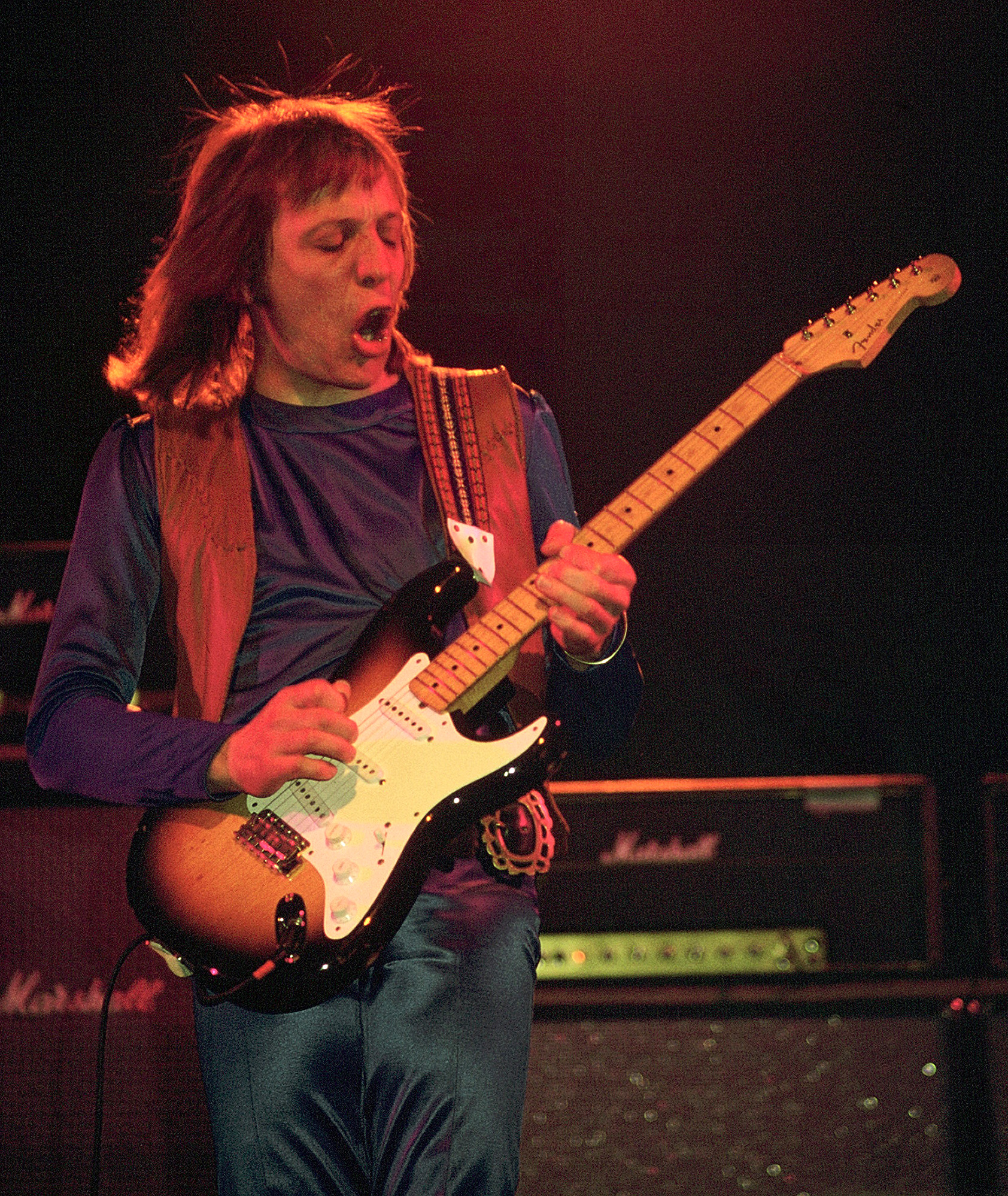
Some guitarists play the instrument. Others build an atmosphere with it. Robin Trower belongs to the second, smaller club. Put on the title track of Bridge of Sighs and you're inside it before you notice: a slow, heavy riff, a Stratocaster that seems to be moving through water, notes that swell, sag and hang in the air long after they should have died. It's a sound you can recognize from one bar, and it came from a guitarist most of the world first heard as the quiet man standing behind Procol Harum.
Trower is still at it in 2026. He released a new studio album, Shine, on September 25, and he's finishing a 19-date U.S. tour this week, the latest stop in a career that began in early-'60s British R&B clubs. Here's how he got from there to here, what's actually in the rig and why that tone is still the reference point for anyone chasing "liquid" Strat sustain.
Southend Beginnings and The Paramounts
Robin Leonard Trower was born on March 9, 1945, in Catford, south-east London, and grew up in Southend-on-Sea in Essex. Like a lot of English kids of his generation, he got hooked on American rock 'n' roll and R&B and ended up in a beat group. That group was The Paramounts, a hard-working R&B band whose line-up included singer and pianist Gary Brooker.
The Paramounts never became stars, but the connection to Brooker turned out to be the most important one of Trower's early life. When Brooker went on to co-found Procol Harum with lyricist Keith Reid, and "A Whiter Shade of Pale" became one of the defining records of 1967, Brooker needed a reliable band behind the song. He called old friends, and Trower was one of them.
The Procol Harum Years (1967–1971)
Trower wasn't on "A Whiter Shade of Pale." He joined in 1967 as the band reorganized after the single's success, and over roughly the next four years he played on five studio albums: Procol Harum (1967), Shine On Brightly (1968), A Salty Dog (1969), Home (1970) and Broken Barricades (1971).
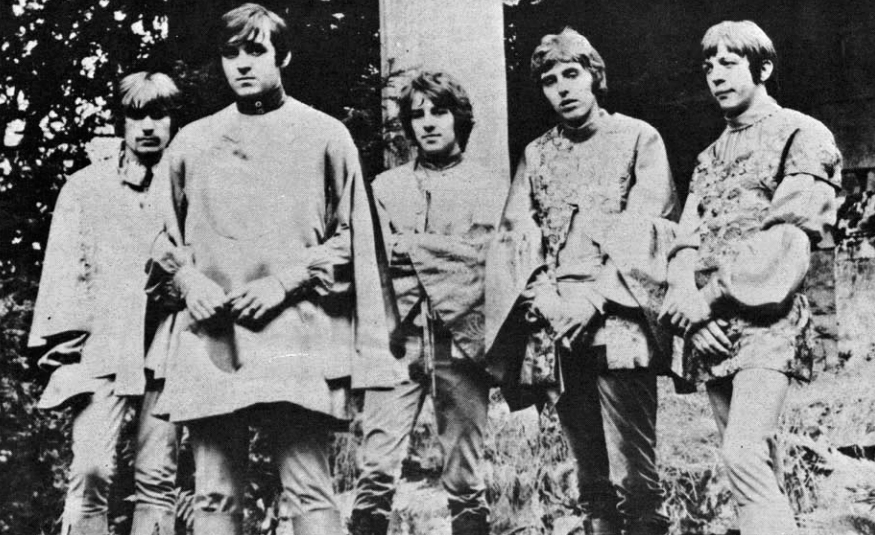
That's an odd place for a future blues-rock guitar hero to learn his craft. Procol Harum was built around Brooker's piano, organ (first Matthew Fisher's, later Chris Copping's) and Reid's literary, often gloomy lyrics. The guitar wasn't the main voice, so Trower had to fit his playing into a dense keyboard sound. That habit of serving the song stayed with him. Listen to his work across A Salty Dog and Home and you hear a player getting heavier and bluesier each year, pushing at the edges of a band that was really about something else.
Something else changed him during those years, too. Like a huge number of British guitarists, Trower was floored by Jimi Hendrix. On Broken Barricades he contributed "Song for a Dreamer," a tribute to Hendrix, who died in September 1970. You can hear him working out a different way of playing the guitar on that track, with long, effects-soaked lines and the instrument used as texture as much as lead. It's an obvious signpost to where he was headed, and it made it clear he'd outgrown his role in Procol Harum. He left the band in 1971.
Jude, Jim Dewar and the Birth of the Trio
After Procol, Trower briefly formed Jude with Scottish singer Frankie Miller and bassist-vocalist Jim Dewar. The band never made a record, but it gave him Dewar. Dewar's warm, soulful voice and steady bass became the second half of the classic Robin Trower sound, and he and Trower kept working together after Jude broke up.
The first Robin Trower album, Twice Removed from Yesterday, came out in 1973. The power-trio format was in place, with Trower on guitar, Dewar on bass and lead vocals, and Reg Isidore on drums. Procol's Matthew Fisher produced it. The record introduced the template: blues forms played slowly and heavily, with soul-singer vocals over a guitar that seemed to fill every corner of the room. It was a strong start. The next record is the one people remember.
Bridge of Sighs (1974): The Record That Defined a Tone
Bridge of Sighs was released in 1974. Fisher produced it again, and the engineer was Geoff Emerick, best known for his work with The Beatles. It became Trower's commercial breakthrough, especially in the United States, where FM rock radio played tracks like "Day of the Eagle," "Too Rolling Stoned" and the title song heavily. A record that could have been dismissed as one more post-Hendrix trio album became a fixture of '70s rock and has stayed in print ever since.
Fifty years on, it still sounds unusual, and that comes down to a few decisions:
Tempo and space. The title track is slow. Trower lets the riff breathe, and the gaps between phrases matter as much as the phrases. Most heavy rock of the era tried to fill every beat. Bridge of Sighs leaves space.
Modulation as part of the tone. The famous swirl comes from a Uni-Vibe-style effect, the phase-shifting, pulsing modulation Hendrix had made famous. Trower didn't use it as a special effect for one song. It became part of the basic voice of the guitar, the way another player might treat reverb.
Sustain without fizz. The leads on "Bridge of Sighs" and "Too Rolling Stoned" are saturated, but they never collapse into buzz. Notes bloom and decay naturally, as you'd expect from a loud valve amp working hard rather than a pedal faking distortion.
Song structure. "Too Rolling Stoned" is the clearest example. It opens with a strutting, funky riff, then drops into a slow, spacious coda where Trower stretches out. That shift from groove to atmosphere is a big part of why the album has lasted. These are songs first and guitar showcases second.
If you play guitar and have never sat down with this album on decent headphones, put it near the top of your list. Pay attention to how little Trower plays at times, and how much the tone and vibrato carry.
The Hendrix Question
You can't write about Trower without dealing with the Hendrix comparison, and it was there right from the start. Plenty of '70s critics wrote him off as an imitator. It's an understandable reaction. Trower uses a Strat, a Uni-Vibe, loud Marshalls and wide, vocal vibrato, and he has openly said he loved Hendrix.
But the comparison stops being useful pretty quickly. Hendrix's playing was restless and full of ideas, with chord fragments, sudden runs and showmanship. Trower's style is almost the reverse. He's patient and repetitive in the good sense, happy to circle one idea and let the tone do most of the work. He took one corner of Hendrix's vocabulary, the slow, spacey, modulated blues of tracks like "Machine Gun," and built a whole career inside it. Doing that for fifty years without getting bored or boring takes a strong identity of its own.
Guitarists have generally been kinder than critics. In a 2026 MusicRadar feature on Shine, the writer quoted Paul Gilbert's description of Trower as "one of the best warbly guitar players." From Gilbert that's meant as a compliment: the "warble," the moving, breathing quality of the sustained note, is what makes Trower's sound his own.
The Guitar: From Vintage Strats to the Fender Signature Model
Trower has been a Stratocaster player for almost his entire solo career, and the Strat is central to the sound. The bright single-coil attack cuts through the swirl of the modulation, and the guitar's natural snap keeps slow, heavy riffs from turning to mud.
In 2005, Fender's Custom Shop marked the 30th anniversary of Bridge of Sighs with a limited-run tribute Strat, master-built by Todd Krause and released alongside a matching Fulltone Mini Deja'Vibe. A standard Robin Trower Signature Stratocaster joined Fender's Custom Artist line, and Fender has revised it over the years. The current version, according to Fender's own product page, includes:
- A select alder body in Arctic White or Midnight Wine
- A custom "C"-shaped maple neck with abalone dot inlays
- A large, '70s-style headstock with a '70s-style decal
- A Custom Shop Texas Special bridge pickup, a reverse-wound/reverse-polarity Custom Shop '60s middle pickup and a Custom Shop '54 neck pickup, so positions two and four cancel hum
- A vintage-style synchronized tremolo, a bullet truss-rod nut and Sperzel Trim-Lok staggered tuners
That big headstock reflects Trower's personal taste, not just nostalgia for the '70s. In a September 2025 interview with Guitar World's David Mead, he explained that the signature models "are built for me by [Fender Master Builder] Todd Krause" and that "I like to have the bigger headstock because I think a bit more wood might add a bit more resonance. I don't know if that's true or not, but it's just an idea I have." It's a typical Trower remark: practical, a bit stubborn and honest about where the science runs out.
Fulltone's notes for Trower's signature overdrive mention another part of the setup: heavy strings, .012–.048, tuned down. Heavy gauges and a hard attack go a long way toward explaining why his notes sound so thick. If you want to get near his sound, start there before you spend money on pedals.
Amps: Loud Marshalls, Pushed Hard
Trower's amp approach is old-fashioned: Marshall amps, turned up. He has long relied on Marshall heads and cabinets, and Fulltone's notes on his signature pedal say it was designed to work equally well with Fender or Marshall amps because Trower used both brands.
What matters more than the exact model is how he uses them. The Shine press material on his official site describes the studio as "always very loud." The lesson for players is the same one Trower has been teaching since 1974: a lot of the sustain and bloom comes from power-amp tubes and speakers working hard, not from preamp gain alone. Pedals shape the sound, and the cranked amp provides the body.
That's also why his tone is hard to copy at bedroom volume, and why good amp modelers and attenuators have been so useful for fans of his sound. If you're using a modeler, pick a non-master-volume Marshall-style model, keep the preamp gain lower than you'd expect, push the "power amp" or master section and let a drive pedal do the rest.
The Pedalboard: Uni-Vibe Swirl and the Fulltone Connection
For about the past two decades, Trower's effects have come almost entirely from one builder: Michael Fuller of Fulltone, in California. In the 2025 Guitar World interview, Trower said: "They're all Fulltone pedals, made by Mike Fuller in California. He actually doesn't make pedals any more, but all the ones I have are his, like the Deja Vibe and the Clyde wah."
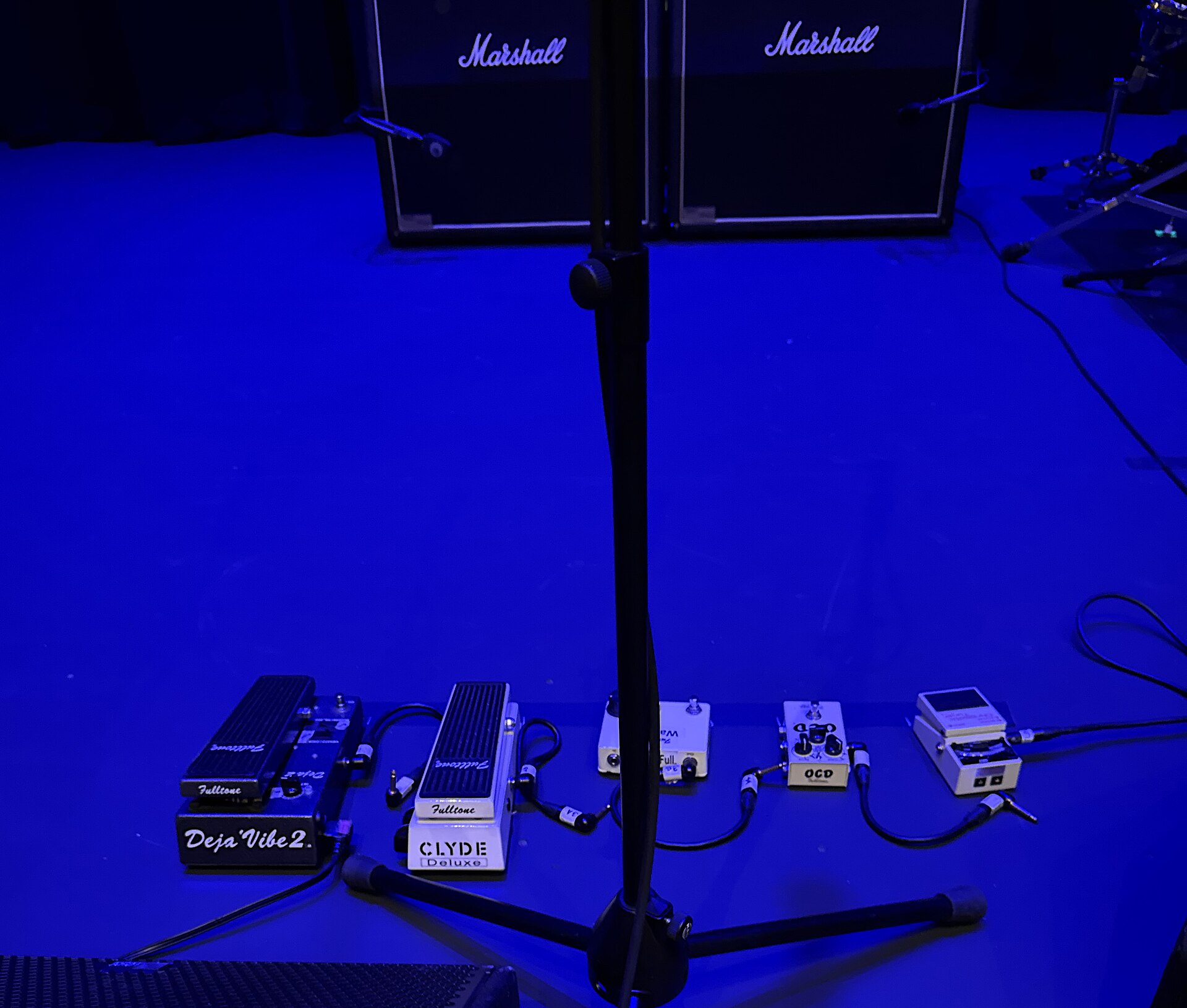
The main pieces:
Fulltone Deja'Vibe. Fuller's take on the classic Uni-Vibe is the heart of the Trower swirl. A real Uni-Vibe-style circuit isn't the same as a phaser. It has a choppier, more irregular pulse and a slightly throaty character that sounds like the speaker itself is moving. Trower usually runs it slowly, so it adds motion without sounding seasick.
Clyde Wah. Fulltone's Clyde wah, which follows the vintage Vox/Clyde McCoy designs, shows up in both recent interviews.
WahFull. A custom pedal Fuller built for Trower. In Trower's words to Guitar World, "instead of a foot sweep wah, it's on a tone-control thing that you can preset at one position." It's effectively a wah parked in one spot, a filtered, vocal midrange you can switch in and out. It's a smart trick, and anyone with a wah and some patience can try it.
Overdrive. In 2008 Fulltone released the RTO (Robin Trower Overdrive), a signature pedal Fuller developed while working with Trower on tour. Fulltone's own description calls it touch-responsive and high-sustain, clear when you roll back the guitar's volume, and tuned for his hard attack on heavy strings. Trower has switched drives over the years. In 2025 he told Guitar World he was "using an OCD overdrive" at the time and tended to "switch between them," and MusicRadar's 2026 Shine piece names a Fulltone FullDrive as the grit on his current board.
The takeaway: Trower's board is small and focused. Vibe, wah or fixed-wah, one drive, and a loud amp. No gigantic signal chain, no presets for every song. The variety comes from his hands.
Key Songs and Riffs Every Player Should Know
If you're going to learn Trower, start with these.
"Bridge of Sighs" (1974). The essential lesson in slow, heavy, modulated blues. Learn the riff, then work on the vibe speed and how much you let each note ring.
"Too Rolling Stoned" (1974). A funky, syncopated riff followed by a long, atmospheric outro solo. It teaches groove and patience in one track.
"Day of the Eagle" (1974). Driving, faster and harder-edged. A great right-hand workout that shows Trower can rock, not only float.
"Little Bit of Sympathy" (1974). A tougher, riff-led side of the album and a live favorite.
"Daydream" (1973). From Twice Removed from Yesterday. Slow, dreamy and lyrical, it shows the template was already there before Bridge of Sighs.
"Song for a Dreamer" (Procol Harum, 1971). His Hendrix tribute and an important step toward the solo sound.
For Earth Below (1975). The follow-up album, For Earth Below, extended the Bridge of Sighs approach and got a 50th-anniversary reissue in 2025. It's worth hearing as the natural next chapter.
Also listen to Robin Trower Live!, recorded in Stockholm in 1975. In April 2026 it got an expanded release that includes the full Stockholm concert for the first time. It's an excellent record of the classic trio playing at full power.
The Long Middle Career
The '70s were Trower's commercial peak, with For Earth Below (1975), Long Misty Days (1976), In City Dreams (1977) and Caravan to Midnight (1978) among the albums that followed. At the start of the '80s he made two albums with Cream bassist and singer Jack Bruce, and he kept recording and touring through every decade that followed, including more work with Dewar and later with other singers.
He never chased trends. Through new wave, hair metal, grunge and everything after, Trower kept making the same kind of records: soulful vocals, slow-burning blues-rock and that moving Strat tone. Fashion moved away from him and later came back, and he stayed exactly where he was. In a business that rewards reinvention, that kind of consistency is rare, and it has earned him a loyal audience that still fills theaters.
Recent Work: Still Writing at 81
Few players from Trower's generation are this productive this late. In 2025 he released the studio album Come and Find Me and the For Earth Below 50th-anniversary edition. He also played a 42-date American tour that year, which produced the live album One Moment in Time: Live in the USA, released in January 2026. Shine followed on September 25, 2026, on Provogue/Artone. Trower produced it himself and played guitar and bass, with Chris Taggart on drums and longtime vocalist Richard Watts singing. British blues/soul singer Jess Hayes guests on "Truth."
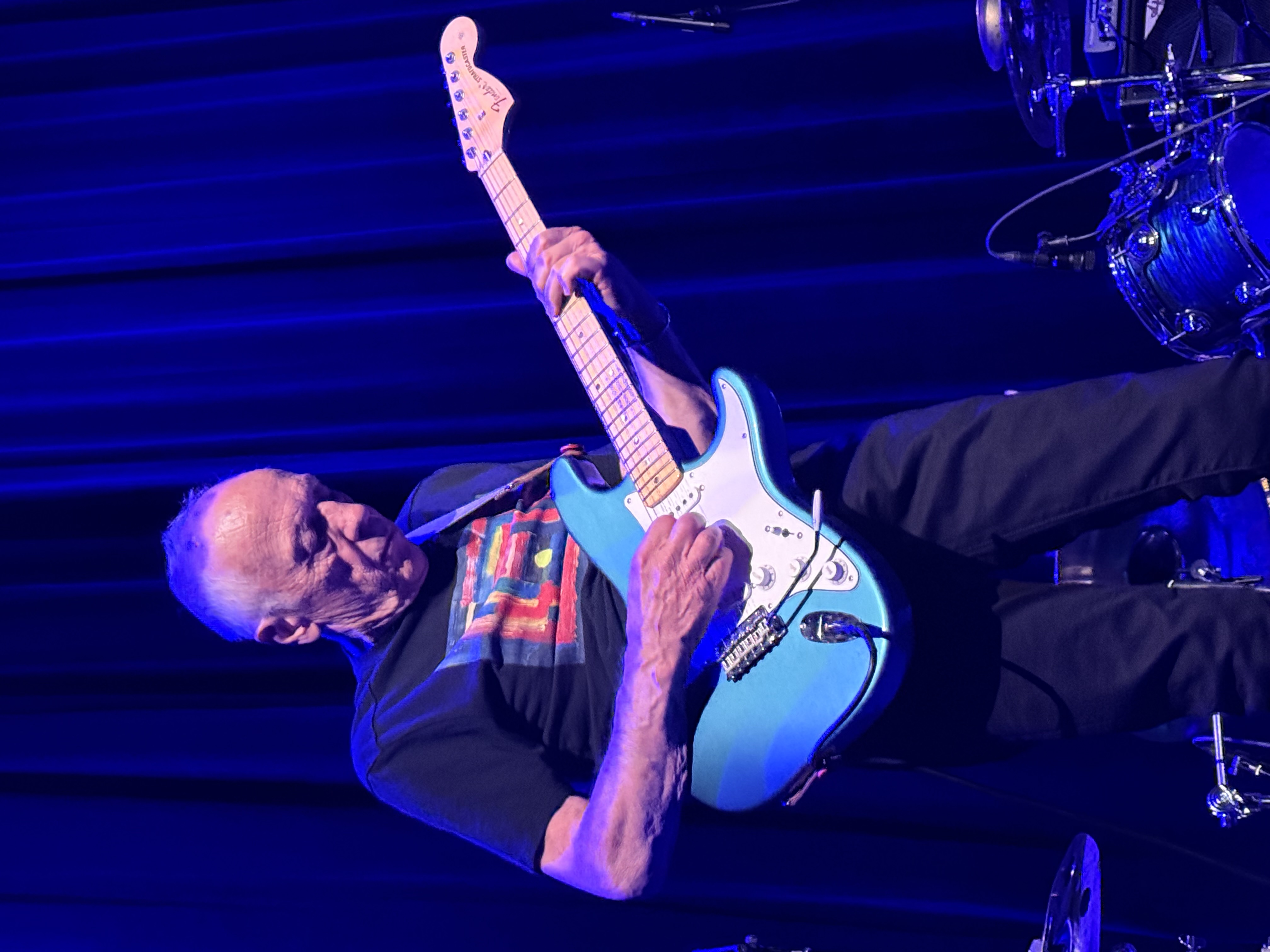
His working method has barely changed. The official Shine announcement describes him starting each morning in his workroom with "a battle-scarred signature Strat," and quotes him: "Really, if I have a gift, it's probably that I come up with ideas. Ideas for songs, ideas for lead work. Certainly, that's what keeps me going." Come and Find Me even began as rough recordings on his phone, according to Guitar World. One track came from asking himself whether he could write something that would fit a James Bond film.
He has toured on both sides of the Atlantic this year, with five UK dates from August 31 to September 5, 2026, and a U.S. run from September 15 to October 14.
Why Robin Trower Still Matters
Trower's legacy is more about an idea than a single hit or a showy technique: tone, space and feel can be the whole statement. Long before "tone chasing" became an online hobby, he showed that a guitarist could build a career out of how a single sustained note sounds and moves.
You can hear his influence in the slow-blues side of modern players. It's there in the Uni-Vibe-and-Strat sounds of the Texas blues revival, in the many boutique "vibe" pedals that exist because players wanted Bridge of Sighs in a box, and in a whole range of signature drives and Strat setups aimed at "liquid" sustain. For guitar companies he has been something of a one-man market: Fender built him a signature Strat, Fulltone built him a signature overdrive and companies have been cloning the Uni-Vibe circuit for decades largely because of him and Hendrix.
For players, the biggest lesson is restraint. Trower shows that you don't need a thousand notes. You need the right note, played with good vibrato on a guitar that's actually in tune with itself, through an amp that's loud enough to sing. Then you leave space for it.
Fifty-two years after Bridge of Sighs, he's still making new records instead of coasting on old ones. Put the album on, turn up the vibe and listen to how much he says with so little.
Experience-driven coverage, not algorithm bait.
- 20+ years of guitar playing experience
- Real-world retail experience at Guitar Center
- Thousands of hours testing guitars, amps, and pedals
- A community of 50,000+ guitar enthusiasts across platforms
- Partnerships with Fender, DistroKid, TrueFire, Card Chords, and Enya
- Editorial standards published openly — see how we test gear
The Modern Guitar Magazine. Delivered to your inbox.
No spam. No gimmicks. Just great guitar content — stories, tones, iconic solos, and honest gear takes. Every week.
Ask GP
3 free questions a dayStill curious? Ask GP about this story.
Your personal classic-rock and guitar guide — ask anything about Robin Trower.
Discussion (0)
Sign in to join the discussion.
Sign in to commentLoading comments…
Discover another guitar story
Swipe through our latest features, breaking news and iconic solos — one story at a time.
Open Swipe →More in Guitar Talk
History of the Riff: Black Sabbath's "Iron Man" — A Lumbering Monster, a Factory Accident, and Doom's Walking Template
After Smoke on the Water turned four notes into guitar-shop folklore, Tony Iommi's Iron Man riff showed how a slow, blues-stained figure — born in a rehearsal room over Bill Ward's boom — could invent metal's sense of weight, space, and riff-as-character.
Remembering Eddie Van Halen: Six Years On, the Guitar Still Speaks His Language
Six years on, guitar shops still sound a little like Eddie Van Halen. This Guitar Talk feature is for players — what he left us that we still use every time we plug in.
Why Guitar Gear Has Never Been Better—and Guitarists Have Never Been More Frustrated
We have more incredible guitars, amplifiers, pedals, and digital technology at our fingertips than any generation before us. So why does finding the perfect tone sometimes feel harder than ever?