Why Guitar Gear Has Never Been Better—and Guitarists Have Never Been More Frustrated
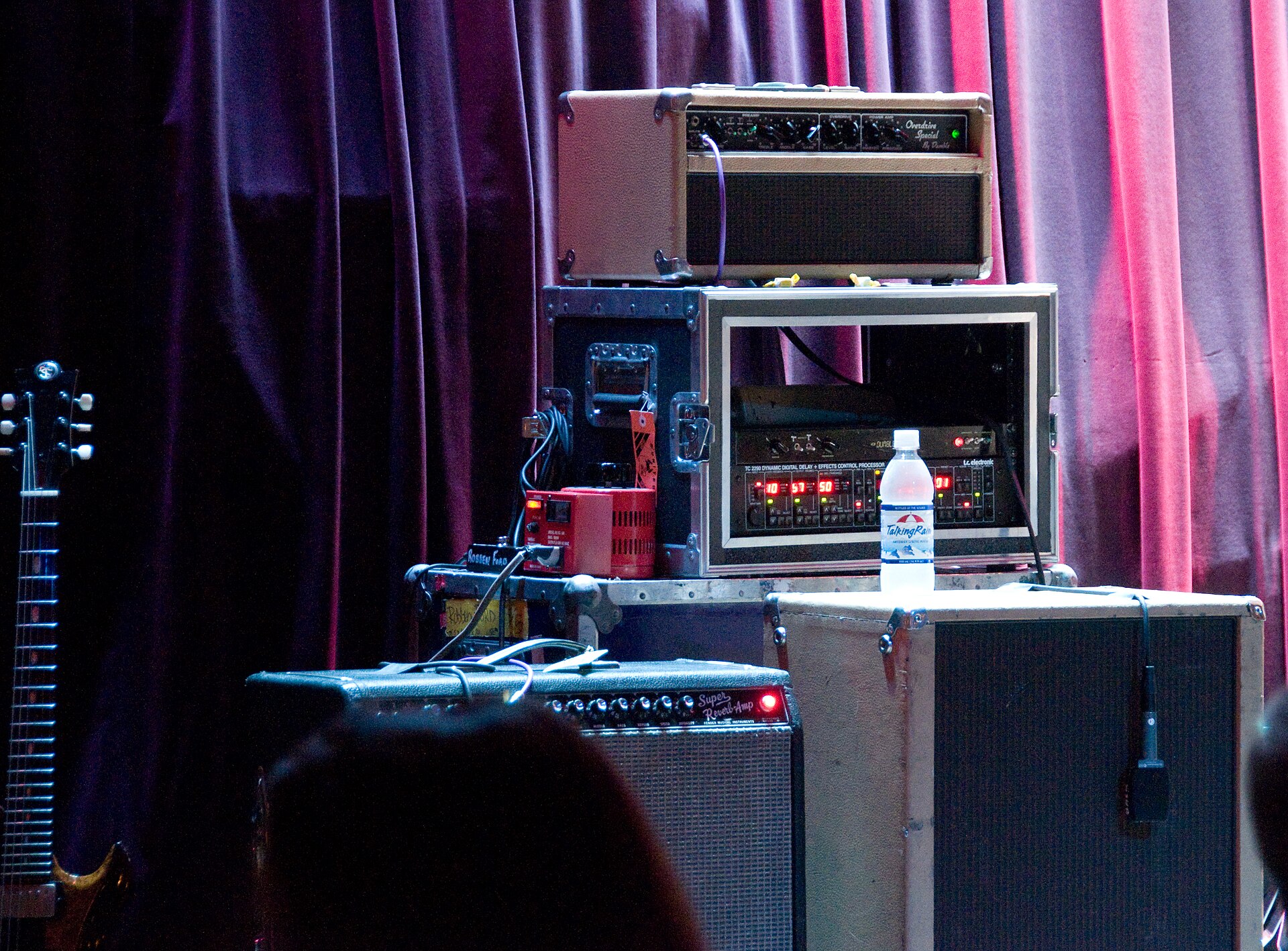
Robben Ford’s stage rig, 12 September 2008 — a guitarist’s amp and a handful of effects. Photo: Art Bromage / Wikimedia Commons, CC BY-SA 2.0 (https://creativecommons.org/licenses/by-sa/2.0/). Source: https://commons.wikimedia.org/wiki/File:Dumble_Overdrive_Special_on_Robben_Ford%27s_Rig,_2008-09-12.jpg
We have more incredible guitars, amplifiers, pedals, and digital technology at our fingertips than any generation before us. So why does finding the perfect tone sometimes feel harder than ever?
There has arguably never been a better time in history to be a guitar player.
For a few hundred dollars, a guitarist can purchase equipment capable of producing sounds that once required thousands of dollars in amplifiers, effects, recording equipment, and studio time. Digital processors can recreate entire signal chains. Affordable guitars arrive with features that were once reserved for custom-shop instruments. Even a modest bedroom setup can deliver recordings that would have been difficult to achieve in a professional studio decades ago.
And yet, something strange has happened along the way.
For all the technological progress, guitarists seem to be spending an extraordinary amount of time worrying about their equipment.
They're comparing amp models, downloading impulse responses, watching endless comparison videos, installing firmware updates, and questioning whether the next piece of gear will finally deliver the sound they've been chasing.
The equipment has improved dramatically.
But has the experience of playing guitar actually become better?
When Having Less Was Enough
Think about what guitarists had to work with during the 1960s, 1970s, and much of the 1980s.
A guitar. An amplifier. Maybe a handful of pedals.
That was often the entire rig.
Jimi Hendrix pushed a Stratocaster, Marshall amplifiers, fuzz, and modulation effects into territory that few musicians had imagined. Eddie Van Halen built one of the most recognizable guitar sounds in rock history using modified equipment, a Marshall amplifier, and an approach to playing that was entirely his own.
Tony Iommi, Brian May, Angus Young, and countless others developed instantly identifiable sounds with equipment that would look surprisingly limited compared with today's digital guitar rigs.
Of course, these musicians experimented relentlessly. Their equipment wasn't always simple, and their sounds weren't necessarily easy to reproduce.
But there was a fundamental difference.
They were often forced to discover what their equipment could do rather than choose from hundreds of simulations of what somebody else's equipment had already done.
Limitations encouraged experimentation.
And experimentation helped create identity.
The Digital Revolution Changed Everything
Modern guitar technology is genuinely extraordinary.
Processors from companies such as Fractal Audio, Line 6, Neural DSP, Kemper, and IK Multimedia have dramatically expanded what guitarists can accomplish without traditional amplifier setups.
A single device can provide convincing clean tones, high-gain amplifiers, studio-quality effects, cabinet simulations, and complex signal routing.
For touring musicians, these systems can simplify transportation and provide consistent sounds from one venue to another.
For recording musicians, they eliminate many of the practical challenges associated with loud amplifiers and microphone placement.
For bedroom players, they make professional-quality sounds accessible at reasonable listening volumes.
These are meaningful advances, not marketing gimmicks.
The problem isn't that modern equipment sounds bad.
The problem is that modern equipment offers so many possibilities that choosing one can become its own exhausting hobby.
A guitarist might spend an evening comparing twelve cabinet impulse responses, adjusting microphone placement parameters, and fine-tuning an amplifier model's sag or bias settings.
By the end of the session, the tone might be slightly better.
But how much actual guitar playing happened?
The Endless Search for the Perfect Tone
Guitarists have always chased tone.
That isn't new.
What's different is the sheer number of ways they can pursue it.
In the past, finding a new sound might have meant visiting a music store, borrowing a pedal from a friend, or experimenting with an amplifier's controls.
Today, a guitarist can watch fifty videos comparing two nearly identical overdrive pedals without ever leaving the couch.
And there's almost always another option.
Another plugin.
Another preset pack.
Another boutique pedal.
Another amplifier model.
Another firmware update promising improved responsiveness or a more authentic playing feel.
The internet has transformed the search for tone into a nearly limitless cycle of comparison.
The irony is that many guitarists already own equipment capable of producing excellent sounds.
What they don't necessarily have is confidence that they've found the right one.
When More Choices Make Playing Harder
Psychologists have studied a concept commonly called choice overload: the possibility that too many options can make decisions more difficult and, under certain circumstances, less satisfying.
It's not a universal rule. More options can be valuable, particularly when people know exactly what they're looking for.
But the idea feels remarkably relevant to modern guitar equipment.
Imagine sitting down with an amplifier that has five controls.
You adjust the gain, bass, middle, treble, and volume until you find something you like.
Then you play.
Now imagine sitting down with a digital processor containing dozens of amplifiers, hundreds of effects, extensive cabinet libraries, multiple microphone configurations, and countless adjustable parameters.
You might find an incredible sound.
You might also spend two hours wondering whether a different cabinet simulation would sound slightly better.
Neither outcome is inevitable.
But the second system introduces a temptation that the first simply doesn't offer.
When every detail can be changed, it becomes difficult to know when to stop changing things.
The Firmware Update Problem
There's another interesting contradiction in modern guitar equipment.
Traditional amplifiers are generally purchased as finished products.
A great amplifier from 1975 doesn't need a software update to remain a great amplifier.
Modern digital processors operate differently.
Firmware updates can introduce new amplifier models, effects, features, and improvements. That's a tremendous benefit for owners, who may receive additional functionality years after purchasing a device.
But updates can also introduce uncertainty.
Should you rebuild your presets after an update?
Did the new firmware change how your favorite amplifier responds?
Are other users hearing an improvement that you're missing?
Is your processor suddenly outdated because another company released a more powerful unit?
These questions can turn ownership into an ongoing evaluation process.
Instead of simply enjoying equipment, some guitarists feel compelled to keep optimizing it.
And the more time they invest in optimization, the harder it can become to accept that their existing sound might already be good enough.
The Boutique Pedal Paradox
Digital equipment isn't the only category contributing to the problem.
The boutique pedal market offers another example.
There are exceptional independent pedal builders producing innovative, beautifully engineered products. Small manufacturers have helped keep analog effects interesting and pushed larger companies to improve their designs.
But the sheer number of choices can be overwhelming.
Consider the humble overdrive pedal.
A guitarist looking for a mid-gain overdrive can choose from countless variations inspired by familiar circuits, each promising a particular combination of clarity, warmth, dynamics, transparency, or responsiveness.
Some of those differences are real and significant.
Others become much less obvious when the pedal is placed in a full band mix.
Yet guitarists can spend enormous amounts of time comparing subtle distinctions that an audience may never notice.
There's nothing wrong with appreciating those details. Tone is personal, and small changes can influence how a musician responds to an instrument.
The question is whether those differences improve the music enough to justify the time, money, and attention devoted to them.
Social Media Turned Gear Into a Competition
The internet has done wonderful things for guitarists.
Players can learn techniques from musicians around the world, discover independent manufacturers, and hear equipment demonstrations before making purchases.
But social media has also created an environment where guitar equipment is constantly being displayed, compared, and upgraded.
A guitarist might be perfectly satisfied with a $500 instrument until they watch a video featuring a $4,000 custom guitar.
A perfectly functional pedalboard can suddenly feel inadequate after seeing a professionally wired touring rig.
And an amplifier that sounded fantastic yesterday might seem disappointing after hearing a carefully produced demonstration of something newer.
It's worth remembering that gear demonstrations aren't always neutral listening environments.
Microphones, recording interfaces, equalization, compression, mixing, video production, and the performance itself can dramatically influence the final sound.
A great player through a modest amplifier can sound extraordinary.
An inexperienced player through an expensive rig can still sound inexperienced.
Yet it's remarkably easy to confuse the quality of a performance with the price of the equipment producing it.
Expensive Doesn't Automatically Mean Better
Modern guitarists have access to instruments across an enormous range of prices.
And while premium guitars can offer meaningful advantages in craftsmanship, hardware, electronics, consistency, and attention to detail, the relationship between price and musical results is not always straightforward.
A properly set up affordable guitar can be an excellent instrument.
A high-end guitar can still require adjustments to suit an individual player's preferences.
And two instruments with dramatically different price tags may sound surprisingly similar in a dense recording.
This doesn't mean expensive equipment is pointless.
It means value depends on what the musician actually needs.
A touring professional might reasonably pay more for durability, consistency, and reliable hardware.
A home player might achieve everything they need with a comparatively inexpensive instrument.
The trouble begins when price becomes a substitute for evaluating whether equipment genuinely improves the playing experience.
Have We Forgotten What Great Tone Actually Is?
Listen to some of the most celebrated guitar recordings in history.
Not all of them are technically perfect.
Some feature amplifier noise, unusual equalization, distortion, imperfect intonation, or recording limitations that modern engineers might attempt to correct.
Yet those imperfections often contribute to the character of the performance.
The guitar sound on a classic recording isn't memorable solely because of its frequency response or amplifier settings.
It's memorable because of the person playing it.
The vibrato.
The timing.
The pick attack.
The phrasing.
The way the guitarist interacts with the rest of the band.
Those qualities cannot simply be downloaded as a preset.
Technology can recreate elements of a famous signal chain. It cannot automatically reproduce the musical decisions that made the original performance compelling.
And that's where the conversation about gear sometimes loses its way.
Great tone isn't merely a sound. It's the relationship between the musician, the instrument, and the music being played.
The Case for Modern Gear
None of this should be mistaken for an argument that guitarists need to abandon modern technology.
Quite the opposite.
Today's equipment has removed barriers that once prevented musicians from creating, recording, and performing.
A guitarist living in an apartment can record convincing high-gain tones without disturbing the neighbors.
A touring musician can carry an entire rig in a compact case.
A beginner can explore sounds inspired by decades of music without purchasing a collection of expensive amplifiers.
And independent musicians can produce impressive recordings without access to traditional studio budgets.
These are extraordinary developments.
Modern gear has made guitar playing more accessible and flexible.
The challenge is learning to use those advantages without becoming overwhelmed by them.
Maybe the Best Rig Is the One You Stop Thinking About
There's a point in the life of almost every guitarist when the equipment seems to disappear.
You stop thinking about the amplifier settings.
You stop wondering whether another pedal would sound better.
You stop comparing your guitar with somebody else's.
And you simply play.
That's the moment equipment is doing its job.
Not because the sound is objectively perfect, but because it allows the musician to focus entirely on making music.
Maybe that requires a vintage tube amplifier and two pedals.
Maybe it requires a sophisticated digital modeler.
Maybe it's an inexpensive practice amp and a guitar you've owned for twenty years.
The specific equipment matters less than whether it helps you create something meaningful.
The guitar industry will continue developing better products. Digital modeling will improve. New pedals will appear. Manufacturers will introduce increasingly sophisticated instruments.
And guitarists will continue searching for the next great sound.
There's nothing inherently wrong with that.
But perhaps the most important upgrade isn't another piece of equipment.
Perhaps it's recognizing when the gear you already own is good enough.
Because at some point, the search for perfect tone has to end.
And the music has to begin.
The Guitar Plugged's Take
We're living in a remarkable era for guitar equipment, and innovation deserves to be celebrated. But more technology doesn't automatically create better musicians or more memorable music.
Experiment with gear. Support innovative builders. Explore new sounds. Enjoy the process.
Just don't let the pursuit of the perfect rig become more important than the reason you picked up a guitar in the first place.
What do you think? Has modern guitar technology made playing more enjoyable, or has the endless selection of gear made everything unnecessarily complicated?
Experience-driven coverage, not algorithm bait.
- 20+ years of guitar playing experience
- Real-world retail experience at Guitar Center
- Thousands of hours testing guitars, amps, and pedals
- A community of 50,000+ guitar enthusiasts across platforms
- Partnerships with Fender, DistroKid, TrueFire, Card Chords, and Enya
- Editorial standards published openly — see how we test gear
The Modern Guitar Magazine. Delivered to your inbox.
No spam. No gimmicks. Just great guitar content — stories, tones, iconic solos, and honest gear takes. Every week.
Ask GP
3 free questions a dayStill curious? Ask GP about this story.
Your personal classic-rock and guitar guide — ask anything about Why Guitar Gear Has Never.
Discussion (0)
Sign in to join the discussion.
Sign in to commentLoading comments…
Discover another guitar story
Swipe through our latest features, breaking news and iconic solos — one story at a time.
Open Swipe →More in Guitar Talk
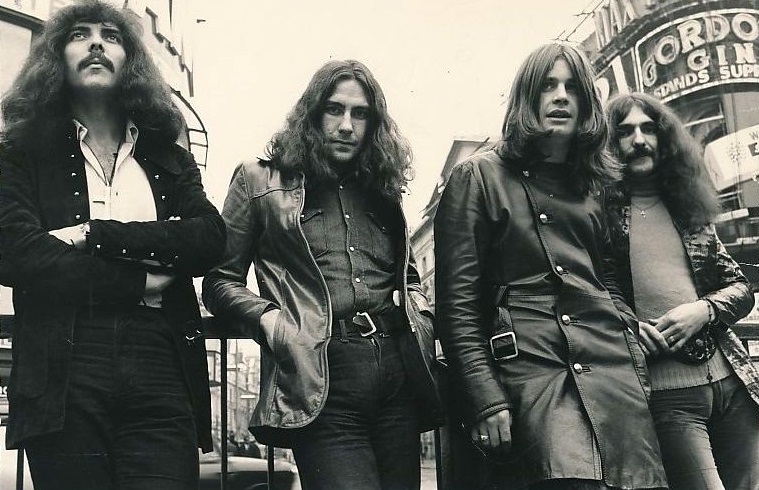
History of the Riff: Black Sabbath's "Iron Man" — A Lumbering Monster, a Factory Accident, and Doom's Walking Template
After Smoke on the Water turned four notes into guitar-shop folklore, Tony Iommi's Iron Man riff showed how a slow, blues-stained figure — born in a rehearsal room over Bill Ward's boom — could invent metal's sense of weight, space, and riff-as-character.
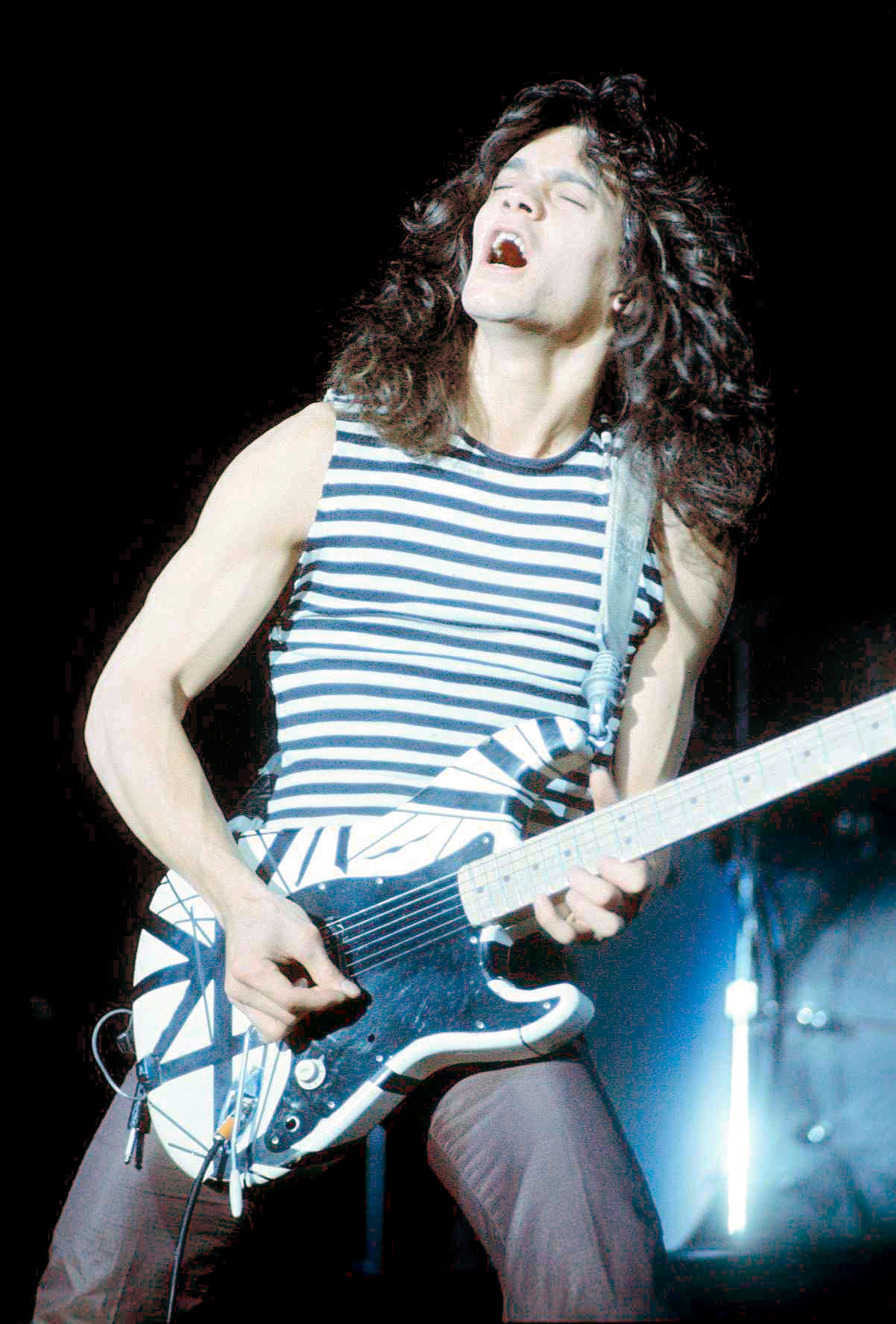
Remembering Eddie Van Halen: Six Years On, the Guitar Still Speaks His Language
Six years on, guitar shops still sound a little like Eddie Van Halen. This Guitar Talk feature is for players — what he left us that we still use every time we plug in.

Gretchen Menn on Finding Her Own Voice, Playing with Steve Vai, and the Hardest Music of Her Career
From Zepparella and a Dante-inspired solo album to a guitar concerto, orchestral recording, and a new band, Menn has built a career that refuses to stay in one musical lane. In an exclusive conversation with TheGuitarPlugged, she talks about the experiences and ideas connecting it all.