Gretchen Menn on Finding Her Own Voice, Playing with Steve Vai, and the Hardest Music of Her Career
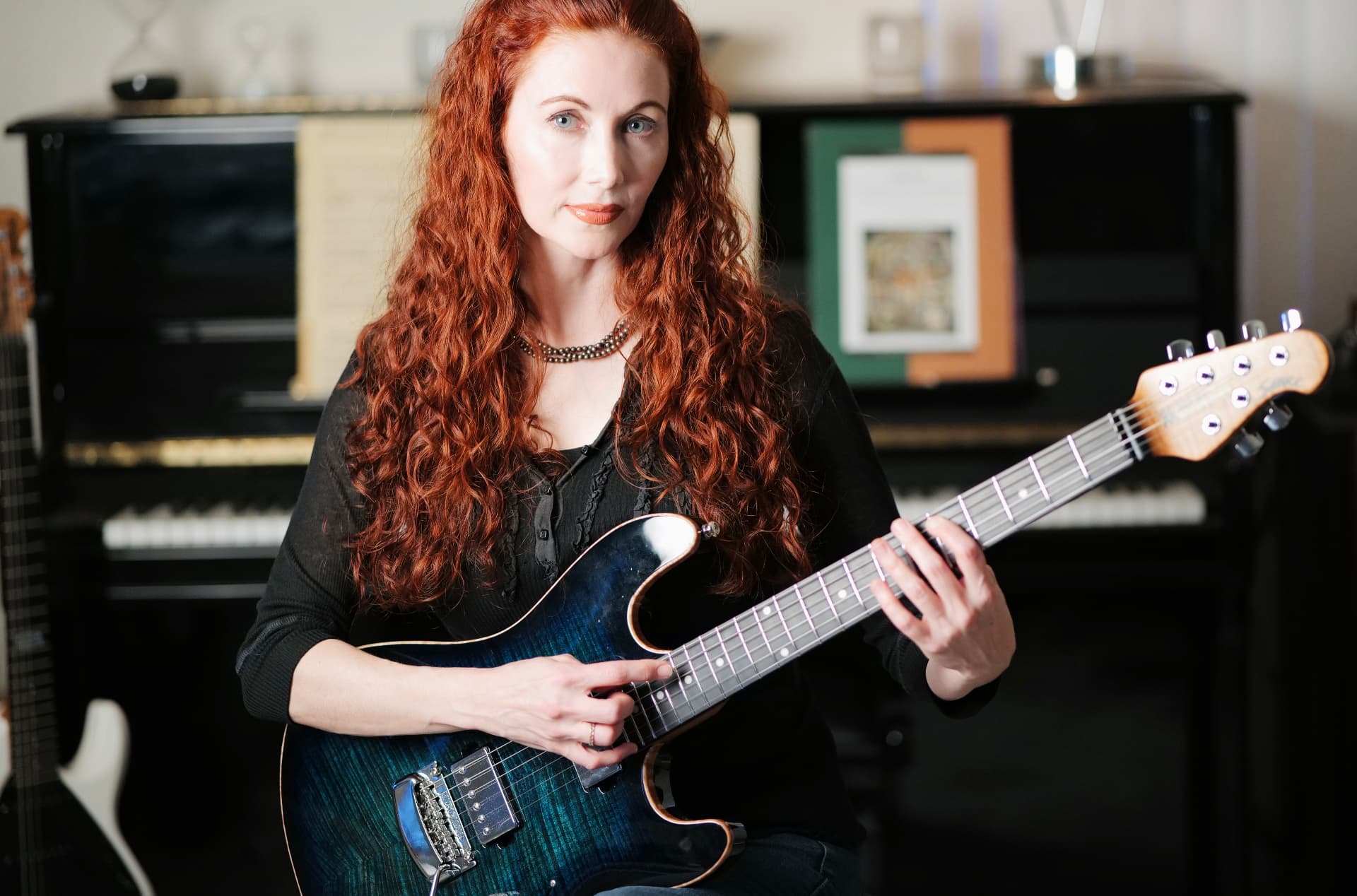
Photo: Daniele Gottardo
From Zepparella and a Dante-inspired solo album to a guitar concerto, orchestral recording, and a new band, Menn has built a career that refuses to stay in one musical lane. In an exclusive conversation with TheGuitarPlugged, she talks about the experiences and ideas connecting it all.
Seeing Eric Johnson perform made Gretchen Menn want to pick up a guitar. She had already been listening to Joe Satriani, Steve Vai, and Nuno Bettencourt, but Johnson's playing offered something beyond the instrument's technical possibilities. To her, it sounded joyful, melodic, and unmistakably personal.
That last quality has become a guiding pursuit in Menn's own work. She is widely known as the guitarist and a founding member of Zepparella, where she performs music associated with one of rock's most inventive guitarists, Jimmy Page. Yet her career extends well beyond that stage. Her original instrumental albums draw on rock, classical music, and composition; her recent work has taken her into concert halls, orchestral recordings, and an expanding circle of collaborators.
Menn studied music and classical guitar at Smith College. Her first solo album, Hale Souls, arrived in 2011. Five years later, Abandon All Hope pursued a more ambitious concept: an instrumental journey inspired by Dante's Inferno, with electric and classical guitars set against a broader palette of instruments. She has also taught guitar, produced instructional material, had a book published (The Way Music Works, Stringletter Media, 2019), and brought her understanding of Led Zeppelin's music to educational videos.
Those credits could read like separate careers. In conversation, they begin to sound like parts of the same one. Menn talks about listening beyond her guitar, finding what serves a piece of music, and taking on projects whose demands will change her as a musician. Performing for diverse audiences informs her writing. Studying scores informs her guitar playing. A new sound can suggest a new piece; so can a musical problem she sets herself to solve.
Her current projects put those ideas to work on an unusually large scale. She recently performed with Six String Symphony, whose debut album, A Six String Odyssey, was recorded largely at Abbey Road Studios with the London Symphony Orchestra. She has performed a five-movement guitar concerto, Aluminum Flowers, written for her by composer Steven Mackey and has further performances planned with the Milwaukee Symphony in January 2027. Alongside continuing Zepparella shows and dates with her original trio, she is preparing Ghost Engineers, a new project with Michael Manring, Scott Amendola, and her husband, guitarist Daniele Gottardo.
Menn answered TheGuitarPlugged's questions while flying home from a Six String Symphony performance in Dallas with the Allen Philharmonic. We began with the performance that set her own journey in motion.
The conversation
TheGuitarPlugged: Who were your biggest musical inspirations, and what first made you want to pick up the guitar?
Gretchen Menn: I naturally gravitated toward guitar-centric music, and was listening to Joe Satriani, Steve Vai, and Nuno Bettencourt before I started playing. It was seeing Eric Johnson live that made me decide I needed to pick up the guitar, though. Eric's playing struck me as so joyful and melodic. And of course that tone!
Your influences range from Beethoven and Frank Zappa to Steve Morse and Jimmy Page. How do you bring those different worlds together while still sounding distinctly like yourself?
That's a very kind question. I think it's a lifelong journey to figure out who we really are. Our creativity is an extension of our individuality and is shaped by our tastes, interests, and inclinations. In my mind, the wider the range of influences and experiences, the greater the musical vocabulary, the more personalized the combinations, and the more likely the synthesis will yield a result that is unique. I think developing a truly individual, recognizable musical voice is the creative holy grail. I'm always working on that, but have so much growing still to do.
You studied music at Smith College and analyzed Frank Zappa's compositions. What did that kind of study teach you that learning songs on guitar could not?
I don't know if I'd say anyone can't learn the same lessons with guitar in hand, but I do find that active listening and score study away from my instrument have been immensely beneficial and fun for me. As guitarists, our training and experiences encourage us to develop perceptual acuity as it relates to our own instrument. It is often necessary to be able to elect to tune into strongly to your own guitar frequencies—less than ideal stage monitoring is an example of why that can be a helpful skill—but that shouldn't lead us to perceiving the guitar as the main character in every context. There is a vast and beautiful and fascinating world beyond of our fretboards. Paying attention to the roles and interplay of other instruments, the details of composition, harmony, and orchestration allow for so much musical growth and understanding beyond the shapes, scales, arpeggios, and licks that prevail in how guitar is often approached.
When you begin composing, what usually comes first—a melody, chord progression, rhythm, image, or emotion?
Yes. All of them. I am a big fan of trying as many approaches as possible. It keeps things fresh and can often allow you to surprise yourself. I will even try giving myself some sort of parameter or challenge: What happens if I just use this set of pitches and move them around between instruments? Can I write something that sounds complete while avoiding any diatonic cadences? Can I take this one harmonic movement I love from Ravel and make it unrecognizable? This doesn't always yield a complete piece of satisfying music, but the challenges make you grow. You sharpen your skills, expand your vocabulary, and solve musical puzzles, such that you'll ultimately have more skills fluently at your disposal when you do sit down to write something important to you.
From Hale Souls to Dante's Inferno
There is a revealing story behind Abandon All Hope. Menn had been considering a concept album that would bring her interest in literature into her music. Then Michael Molenda, the former editor-in-chief of Guitar Player, approached her after hearing Hale Souls. What began as a conversation became a defining creative challenge: telling a story through instrumental music, with mood guiding the composition.
Abandon All Hope was inspired by Dante's Inferno. How did you translate that story and imagery into instrumental music without relying on lyrics?
Much of the credit for the approach I used must go to Michael Molenda, former editor-in-chief of Guitar Player Magazine. He reached out to me after hearing my first album, Hale Souls. I have always been interested in composition that involved dialogue and interplay between guitar and other instruments. Steve Morse and his work in both Steve Morse Band and The Dixie Dregs were enormously influential. Molenda heard some of that in my first album and pitched the idea to me, imagining that I might be able to do a guitar album that was more compositional. I had been musing over the idea of a concept album for my next endeavor, and had thought about folding in my love of literature. When we sat down at a cafe, and Molenda placed a sheet of paper in front of me that said “Dante's Inferno, a journey in 11 musical moods,” I immediately knew what I'd be doing the next few years. While there was a lot of study of everything from Stravinsky ballets to rock concept albums, the simplest answer is mood was the driving force behind all compositional choices.
Tone, tools, and the stage
Menn's interest in the full arrangement does not make the sound of the guitar an afterthought. Sometimes she writes directly into a score while imagining the tone; at other times, a sound itself suggests a direction. She sees a practical place for modern modeling, while remaining closely attached to the response of her amplifiers when she records and performs.
What are your thoughts on today's amp modelers compared with traditional tube amps? Do you see them as different tools for different situations, or does one still offer something the other cannot?
Modelers certainly have earned their place. I love my NeuralDSP Quad Cortex. For preproduction and certain situations, the ease and convenience are undeniable. But I am very attached to my tube amps for live performing and all of my album recording. It is really a question of what is the situation and what are your goals. If the whole band on in-ears with minimal stage volume, and guitars serving more of a support role, a modeler might make the most sense. For what I do, I'm more than happy to sacrifice some convenience for the sound and response of my beloved Two Rocks, Engls, and Laneys.
You've had the opportunity to play with Steve Vai, who is one of my personal guitar heroes. What was that experience like, and is there anything you learned from sharing the stage with him?
He is incredibly gracious, musically generous, and takes all things musical with a seriousness beyond what one might expect from a guitar god sitting in with a Led Zeppelin tribute band. He wanted to rehearse, which was amazing—he could have easily just showed up to the gig, and we would have worked around him in whatever way he wanted. But he was so dedicated to making the performance better than that would have allowed.
In terms of his generosity, at rehearsal he immediately dismissed my offer of having him take all the solos, and insisted we go back and forth (no pressure!!). Once we had rehearsed all the songs he was going to play with us, he asked what we were doing for the rest of the night. We told him more rehearsing and asked if he wanted to jam on another song or two for fun. To all of our surprise, he said yes, and then proceeded to improvise the most gut-wrenchingly beautiful solo over the introduction of “Babe I'm Gonna Leave You.”
Before the show, he wanted to talk through all the song structures one last time to make sure he was completely sure of every detail—for anyone who hasn't played Led Zeppelin, the structures of the songs are more complex and counterintuitive than many people realize. The show was wonderful, and I've never been more impressed by someone's musical integrity. It made sense in hindsight, though—one doesn't become a musician of Vai's caliber by taking anything lightly when it comes to doing music well.
Has performing Jimmy Page's music with Zepparella changed how you approach dynamics, layering, or tension in your own compositions?
Jimmy's approach often feels more like a producer who happens to play the guitar rather than a guitarist writing from a fretboard-first perspective. That kind of bigger picture view allows for attention to musical aspects like those you referenced that can really resonate with audiences—more so than a geeky new line or arpeggio might. And performing Zeppelin's music live allows me to have quite a bit of experience in seeing what actually translates well to a live audience. So while I've only deliberately written anything Page-inspired a handful of times, I definitely subscribe to the importance of a wide view of musical aspects outside of the guitar.
How early does tone enter your writing process? Do you write the music first, or can a particular guitar, amplifier, or effect inspire the piece?
Interesting question! For sure new sounds inspire new approaches. But when I'm writing a piece directly into the score without guitar in hand, as I often do, I always have a general guitar tone in mind.
Of everything you have written and recorded, do you have a favorite composition? What makes it especially meaningful to you?
Whatever I composed most recently is usually my current favorite. It's the most representative of where I am in life and as a musician. I almost never go back and listen to my work after it has been released. I don't avoid it—sometimes it can be fun or interesting to hear an earlier version of yourself—but I'm always more interested in dreaming up what I might do next.
What advice would you give a guitarist who is just starting today—especially about developing technique and finding an individual voice?
Such a huge topic! The simplest answer I can give is to keep your love of music in full focus. If a band, a teacher, or a social media platform is harming that love, take some time to reconsider and adjust accordingly. There are so many musical paths, so keep your mind open, work hard, and align your goals with your practice.
Also: be a decent person and treat others with integrity. But also don't be a doormat. It's a small industry, and people freely share their experiences of working with others. Be someone who is true to your word and commitments—both to yourself and to others.
The work ahead
Menn's answer about her latest projects reads like a map of everything her career has been building toward: classical guitar beside other virtuoso players, electric guitar in an orchestral setting, the continuing demands of Zepparella, and new original music with musicians whose backgrounds invite further exploration. She recently completed an MFA in professional composition and orchestration, and describes the Mackey concerto as the hardest musical undertaking of her career so far.
What are you working on now, and what creative challenge currently excites you most?
I am doing these questions on a flight home from Dallas after playing classical guitar in a new project called Six String Symphony. I am one of a quartet of classical guitarists joined by Vivian Fang Liu on piano and Tess Remy-Schumacher on cello. My guitarist bandmates, Russ Hewitt, Giovanni Piacentini, and Mak Grgic are virtuosi of the highest caliber, and it's a joy and honor to play alongside and learn from them. Our debut album, A Six String Odyssey, was released just a few weeks ago, and the bulk of it was recorded at Abbey Road Studios with the London Symphony Orchestra.
I also just listened to mixes of a five-movement guitar concerto, Aluminum Flowers, written for me by one of my greatest musical heroes, Steven Mackey, and which I performed with the Utah Symphony under the direction of David Robertson this past May. I have two more performances coming up in January 2027 with the Milwaukee Symphony as part of a guitar program that features Another Night on Earth, an eight-guitarist collective that includes Jiji, Joe Gore, James Moore, Heiko Ossig, Steve Mackey, David Robertson, my husband Daniele Gottardo, and me.
Gigs with Zepparella are constant, and I have a few upcoming shows with my original trio (Gretchen Menn Trio). I am also excited about brand new project called Ghost Engineers with Michael Manring on bass, Scott Amendola on drums, and both Daniele and me on guitars. That has shows coming up after the Milwaukee Symphony performances.
I also just finished an MFA in professional composition/orchestration.
It seems I am always seeking out challenges, so it would be hard to say which of the many I'm tackling is the most challenging or fulfilling, though I will say performing a five-movement guitar concerto written by a composer known for writing challenging music is definitely at the top of the list. Even with three performances of it under my belt, it is still, without a doubt, the most difficult musical challenge of my career so far. But also the most rewarding.
Menn's path began with hearing something in another guitarist's playing that made her want to find out what she could do with the instrument. Today, her projects range from the immediate exchange of a rock performance to music that demands months of study and an orchestra of collaborators. The thread through them is her continuing search for a voice of her own—and a willingness to follow that search wherever the music leads.
Follow Gretchen Menn
- Website: gretchenmenn.com
- Patreon: patreon.com/gretchenmenn
- Instagram: @gretchenmenn
- YouTube: youtube.com/gretchenmenn
- Facebook: GretchenMennGuitar
Experience-driven coverage, not algorithm bait.
- 20+ years of guitar playing experience
- Real-world retail experience at Guitar Center
- Thousands of hours testing guitars, amps, and pedals
- A community of 50,000+ guitar enthusiasts across platforms
- Partnerships with Fender, DistroKid, TrueFire, Card Chords, and Enya
- Editorial standards published openly — see how we test gear
The Modern Guitar Magazine. Delivered to your inbox.
No spam. No gimmicks. Just great guitar content — stories, tones, iconic solos, and honest gear takes. Every week.
Ask GP
3 free questions a dayStill curious? Ask GP about this story.
Your personal classic-rock and guitar guide — ask anything about Gretchen Menn on Finding Her.
Discussion (0)
Sign in to join the discussion.
Sign in to commentLoading comments…
Discover another guitar story
Swipe through our latest features, breaking news and iconic solos — one story at a time.
Open Swipe →More in Guitar Talk
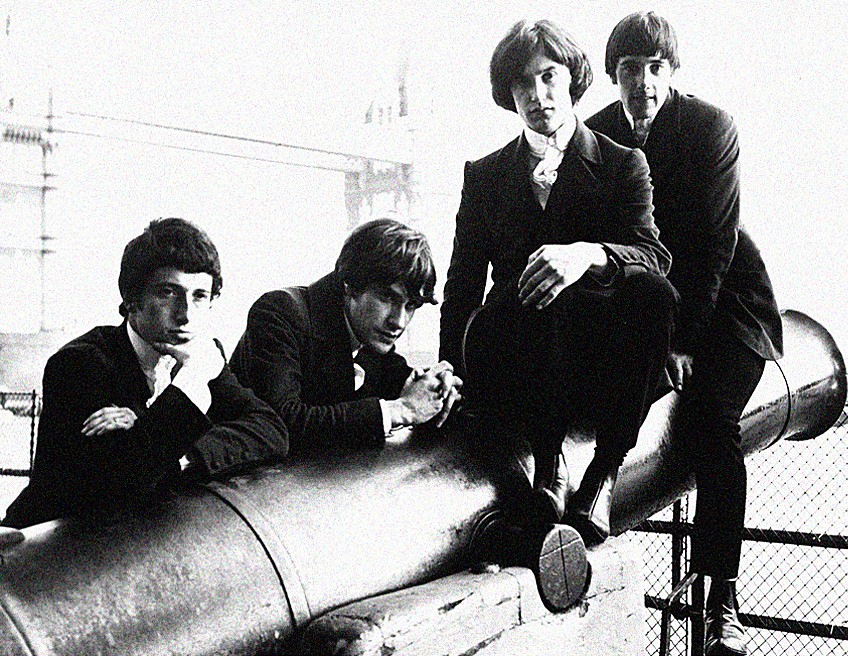
History of the Riff: The Kinks' "You Really Got Me" — How Two Power Chords and a Sliced Speaker Invented Hard-Rock Guitar
After Rumble taught the guitar to threaten and Misirlou taught it to sprint, Dave Davies' 1964 two-chord smash taught it to punch the charts — with a razor-cut Elpico, a Vox slave, and zero apology.
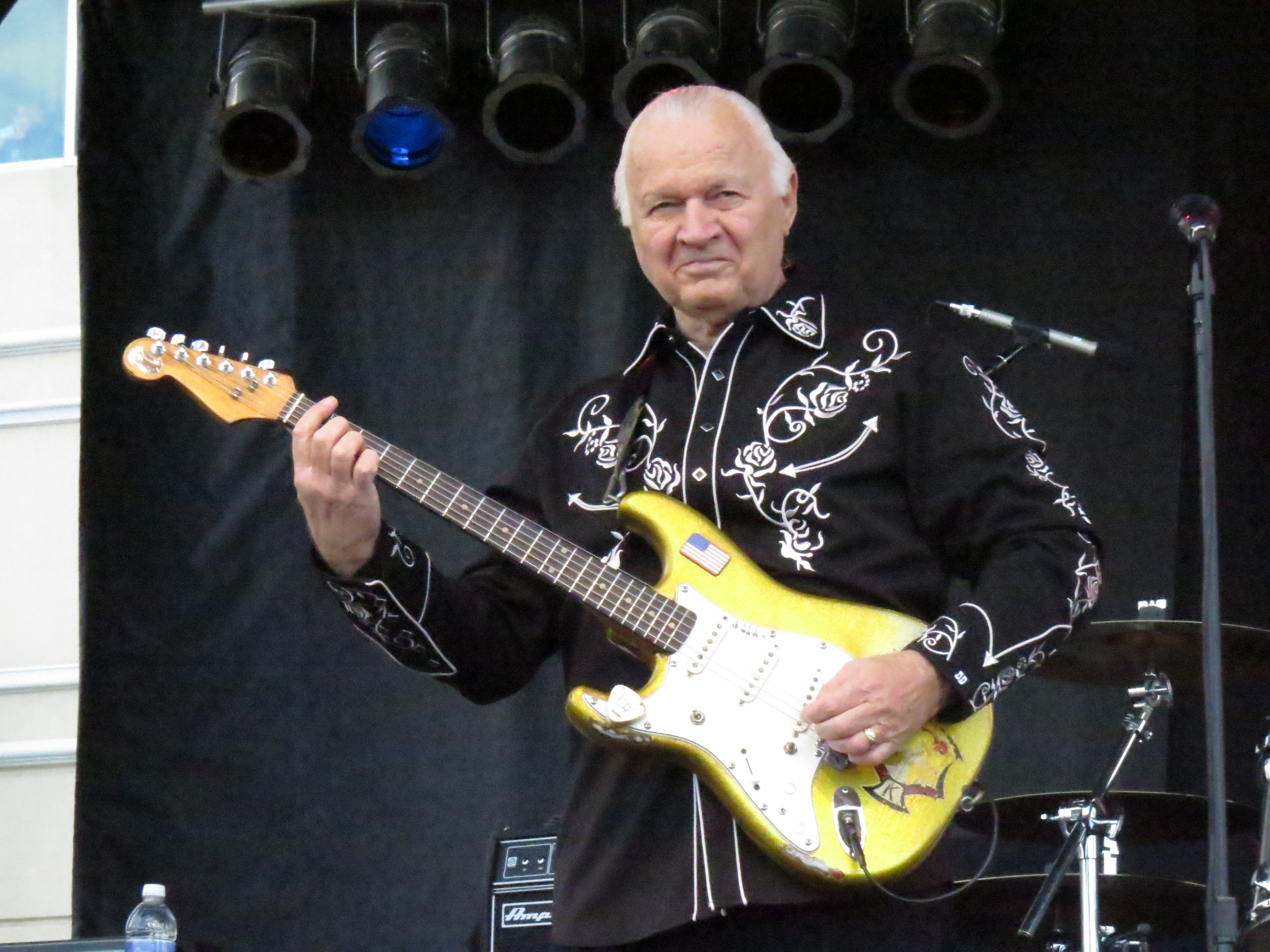
History of the Riff: Dick Dale's "Misirlou" — How Surf Guitar Turned a Middle Eastern Melody into a Rocket
No power chords. No punctured speaker. Just double-picked fire, spring reverb splash, and an Eastern Mediterranean folk tune rebuilt as the sound of Southern California surf — then resurrected by Pulp Fiction.
History of the Riff: Link Wray's "Rumble" — The Instrumental That Made the Guitar Sound Dangerous
No lyrics. No melody you’d hum in the shower. Just power chords, a punctured speaker, and a sound so menacing some radio stations banned it. Here’s how Link Wray’s 1958 instrumental rewired rock guitar.