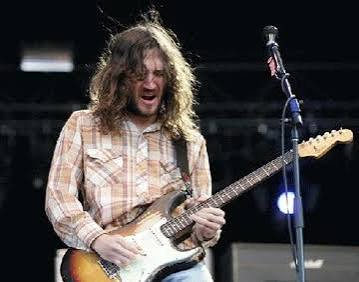
Everyone chases the Strat, the Tube Screamer, the CE-1 chorus. But the real Frusciante sound lives in his hands, his dynamics, and the way he treats pedals like colors — not crutches.
There are few guitar tones that send players down a rabbit hole quite like John Frusciante's.
Search online and you'll find thousands of videos claiming to have cracked the code. Buy a Strat. Grab a Tube Screamer. Add a CE-1 chorus. Maybe a DS-2. Throw in a Marshall and you're done, right?
Not even close.
The truth is that Frusciante's tone isn't the result of one magical pedal or one rare amplifier. It's the combination of touch, dynamics, vintage gear, recording techniques, and — most importantly — how he approaches the guitar. That's exactly why so many players spend thousands of dollars chasing it and still come away disappointed.
It Starts With the Way He Plays
One thing that's easy to overlook is how hard Frusciante actually attacks the strings.
He isn't a feather-light player. Listen closely to songs like "Can't Stop," "Scar Tissue," or "Under the Bridge," and you'll hear a guitarist constantly working the dynamics of his picking hand. He digs in when he wants aggression and immediately backs off to clean things up.
Most players leave their amp doing all the work.
Frusciante lets his hands do it.
That subtle difference completely changes the way every pedal and amplifier responds.
A Strat Is Only the Beginning
Yes, a vintage-style Stratocaster is essential.
Single-coil pickups provide the snap, clarity, and high-end sparkle that define much of his sound.
But simply buying a Strat doesn't magically unlock Frusciante territory. Pickup height, string gauge, fresh strings, proper setup, and even where you pick all have a noticeable effect.
Move your picking hand closer to the bridge and suddenly everything becomes tighter.
Move toward the neck and the sound opens up dramatically.
Frusciante constantly works those variables without thinking about them.
The Marshall Isn't Doing All the Heavy Lifting
One of the biggest misconceptions is that his Marshall is providing all the distortion.
Get John Frusciante’s “Under the Bridge” Tone
Tell ToneMD what gear you own and get a full signal chain with real numbered settings for this tone.
Included with Premium
In reality, Frusciante often runs loud, clean-ish amplifiers with plenty of headroom. Instead of relying on amp gain, he layers pedals to push the front end only when he needs more bite.
That's why his tone never feels compressed or lifeless.
Even with overdrive engaged, every note still breathes.
His Pedals Are Used Sparingly
Look at photos of his pedalboard and you'll see familiar names.
- A Boss DS-2.
- An Ibanez Tube Screamer.
- A vintage CE-1 Chorus Ensemble.
- A Big Muff.
Yet none of them stay on for very long.
Instead of stacking effects throughout every song, Frusciante treats pedals like colors on a painter's palette. He brings them in for specific moments and turns them off just as quickly.
“Most players leave their amp doing all the work. Frusciante lets his hands do it.”
That restraint is one of the biggest reasons his guitar always sounds alive.
Dynamics Matter More Than Gain
Listen to the intro of "Under the Bridge."
Then jump to "Can't Stop."
Then compare both to "Dani California."
Those are completely different sounds, yet they all unmistakably sound like John Frusciante.
The common thread isn't the equipment.
It's his control over dynamics.
He constantly rolls the guitar's volume knob. He changes his attack. He changes where he picks. He changes how aggressively he frets notes.
Very few guitarists are that deliberate every single phrase.
Vintage Gear Helps — but Isn't Required
There's no denying that Frusciante has owned some incredible equipment over the years.
- Vintage Fender Stratocasters.
- Marshall Major heads.
- Marshall Silver Jubilee amps.
- Rare effects that now cost thousands of dollars.
Does that gear sound incredible? Absolutely. Is it the reason he sounds like John Frusciante? Not by itself.
Give most players his exact rig and they'd still sound like themselves after five minutes.
So What's the Secret?
If you're trying to sound like Frusciante, stop chasing gear first.
- Work on your right-hand dynamics.
- Practice controlling your guitar's volume knob instead of relying on pedals.
- Learn to leave space.
- Play cleaner than feels comfortable.
- Then start adding the gear.
Ironically, that's exactly the opposite order most players follow.
Final Thoughts
John Frusciante's tone has become legendary because it never depends on one piece of equipment.
It's expressive. It's dynamic. It's imperfect in all the right ways.
The pedals matter. The Strat matters. The Marshall matters.
But the biggest ingredient has always been the player behind them.
That's the part no gear purchase can replicate — and it's also the most rewarding part to develop.
Experience-driven coverage, not algorithm bait.
- 20+ years of guitar playing experience
- Real-world retail experience at Guitar Center
- Thousands of hours testing guitars, amps, and pedals
- A community of 50,000+ guitar enthusiasts across platforms
- Partnerships with Fender, DistroKid, TrueFire, Card Chords, and Enya
- Editorial standards published openly — see how we test gear
Join thousands of guitar players
Weekly tone breakdowns, gear deep-dives, and player profiles — straight to your inbox.
Build a John Frusciante Inspired Rig
These are the core pieces of gear that capture the spirit of Frusciante's iconic tones without requiring vintage collector prices.
- GuitarFender American Vintage II 1961 Stratocaster
The closest production Strat to the early-'60s slab-board sound Frusciante has leaned on for decades. Snappy single coils, a period-correct neck, and just enough grit under the pick.
Check prices on Reverb → - PedalBoss DS-2 Turbo Distortion
The pedal on Frusciante's board for the aggressive Californication and By the Way lead moments. Turbo Mode II is the setting to chase — thick, singing, and unmistakably his.
Check prices on Reverb → - Amp / CabMarshall Studio Vintage SV20H
A 20-watt Plexi-style head that gives you Frusciante's clean-with-headroom Marshall voice at bedroom and small-club volumes. The pedals will react to this amp the way they react to his.
Check prices on Reverb →
The biggest lesson? Buy the gear if it inspires you — but spend even more time developing your touch. That's where the real Frusciante sound lives.
TheGuitarPlugged may earn a commission if you purchase through affiliate links. This helps support independent guitar journalism.
Ask GP
3 free questions a dayStill curious? Ask GP about this story.
Your personal classic-rock and guitar guide — ask anything about Why John Frusciante's Tone Is.
Discussion (0)
Sign in to join the discussion.
Sign in to commentLoading comments…
Discover another guitar story
Swipe through our latest features, breaking news and iconic solos — one story at a time.
Open Swipe →More in Tone Decoded
Dimebag Darrell Didn't Just Make Metal Heavier—He Made It Swing
Inside the fearless Texas guitar language, brutal-but-musical tone, and melodic instinct that made Dimebag Darrell impossible to imitate — and impossible to replace.
The Infamous Stevie Ray Vaughan Soundcheck
No crowd. No spectacle. Just Stevie Ray Vaughan checking levels at the Syria Mosque in 1986 — and sounding absolutely monstrous. What the footage reveals about tone, touch and the myth of the rig.
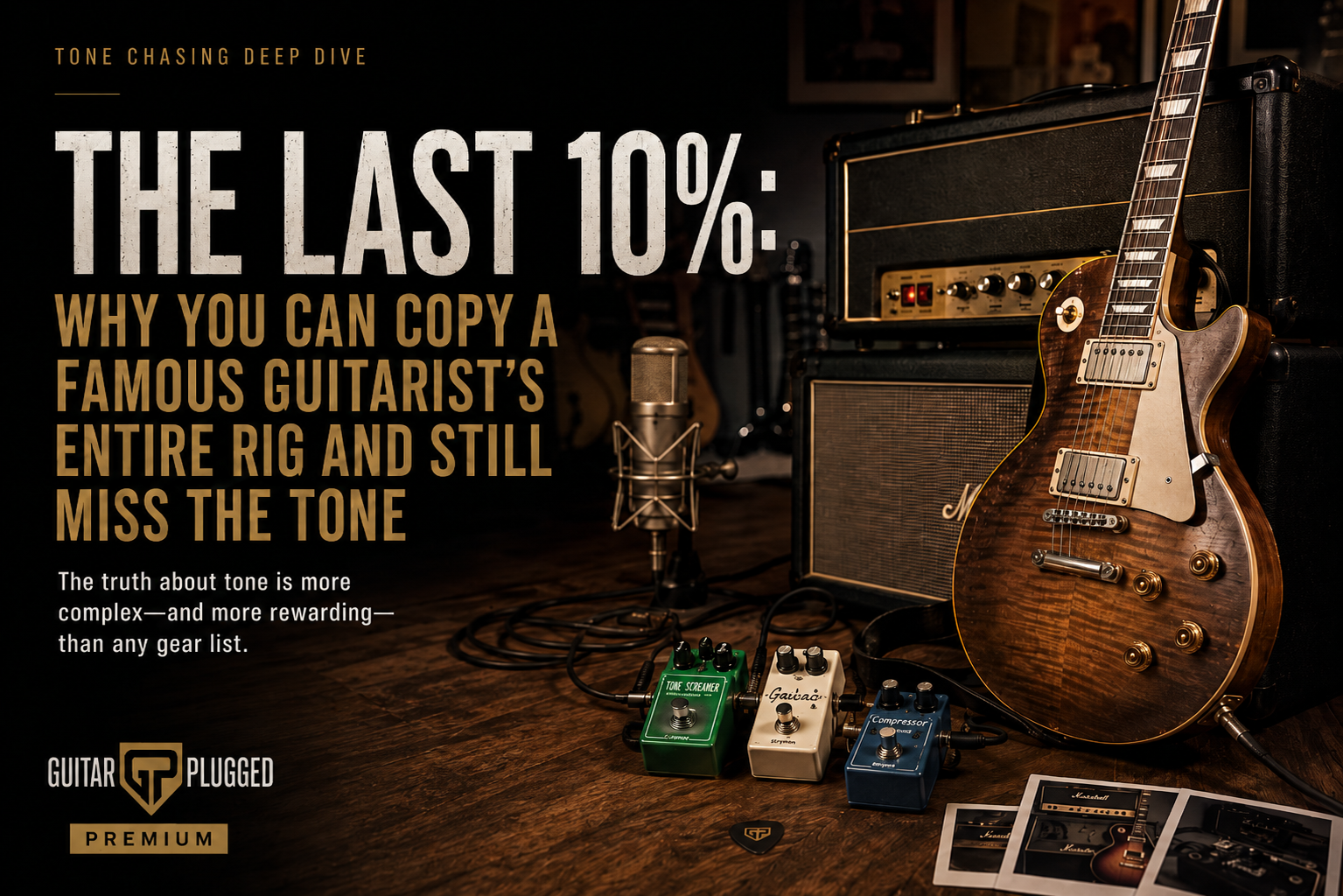
The Last 10%: Why You Can Copy a Famous Guitarist’s Entire Rig and Still Miss the Tone
You bought the guitar, the amp, and the pedals — so why doesn’t it sound right? The last 10 percent of guitar tone is the most important part, and it’s almost never about the gear list.