
Yamaha's Acompass 60 Combines a 60W Acoustic Amp and Vocal Channel
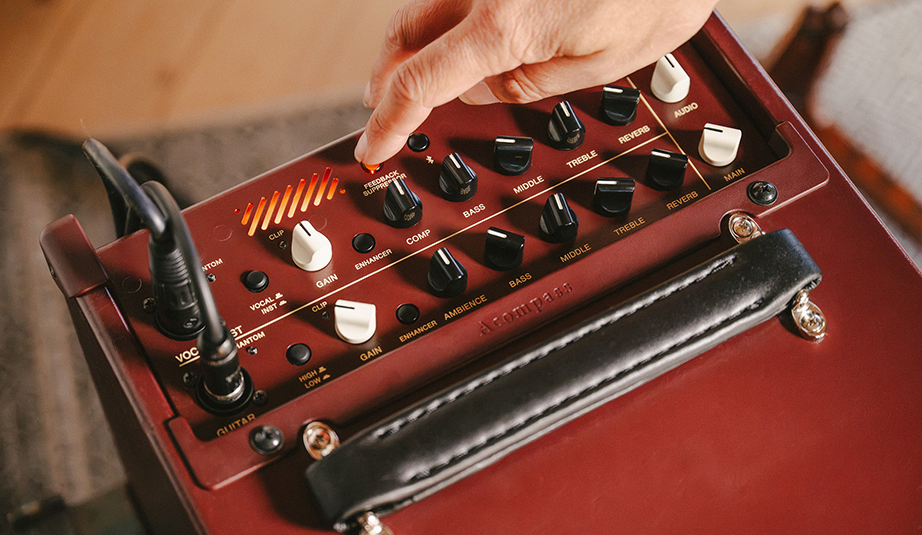
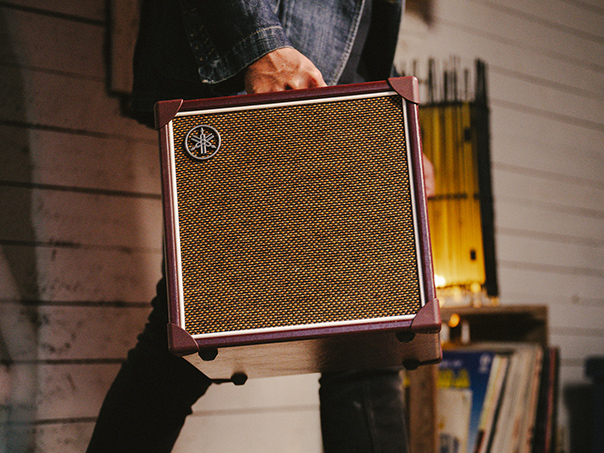
The Acompass 60 places its two channels, EQ and effects on a single top-panel control surface.
Yamaha's Acompass 60 combines independent guitar and vocal channels, an eight-inch speaker, feedback suppression, Bluetooth and XLR output in an 8.2-kilogram combo.
Yamaha has announced the Acompass 60, a compact acoustic amplifier built around a job many singer-songwriters know well: getting both an acoustic guitar and a vocal microphone through one small rig. Announced on November 6, 2026, the 60-watt combo has two independent channels, an eight-inch full-range speaker and a control panel that keeps its EQ and effects on conventional knobs and buttons.
The central idea is what Yamaha calls TRUE ACOUSTIC VOICE. That is the company's name for its attempt to reproduce the natural character of an acoustic guitar and a voice without treating the vocal side as an afterthought. Yamaha says the design draws on both its acoustic-instrument work and its professional audio engineering. Those are design goals from the manufacturer, not a listening verdict; we have not tested the amplifier.
What Yamaha Announced
The Acompass 60 is a 60-watt, two-channel combo with one specially designed eight-inch full-range speaker. One channel is labeled GUITAR, while the other is VOCAL/INST, allowing the second input to be used for a microphone or another instrument. Both channels have their own gain control, three-band EQ, enhancer and reverb. Yamaha also includes its D-PRE microphone preamp on both channels.
That two-channel arrangement is the most important part of the announcement. A performer can connect an acoustic guitar and a microphone to the same cabinet, set each input separately and use the master control for the overall level. Yamaha's connection list shows combination inputs that accept balanced XLR or unbalanced quarter-inch connections.
The cabinet measures 310 mm wide, 300 mm high and 300 mm deep, and Yamaha lists the weight at 8.2 kg. That is approximately 12.2 by 11.8 by 11.8 inches and 18.1 pounds. A top handle reinforces the emphasis on transport rather than a fixed installation.
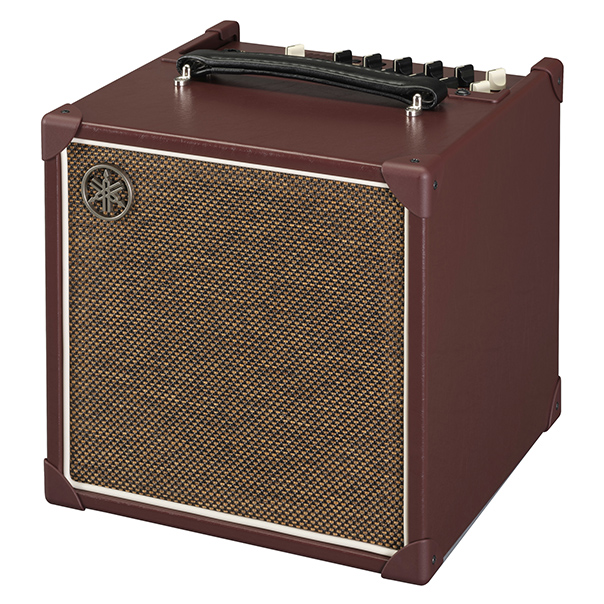
Acompass 60 key specifications
| Feature | Yamaha specification |
|---|---|
| Output | 60 W |
| Channels | 2: GUITAR and VOCAL/INST |
| Speaker | 1 x 8-inch full range |
| Channel controls | Gain, Bass, Middle, Treble, Enhancer and Reverb |
| Guitar processing | Ambience |
| Vocal/Inst processing | Compressor |
| Other controls | Main, Audio, Feedback Suppressor, Bluetooth and Ground Lift |
| Line output | Balanced XLR |
| Other connections | Headphones, stereo AUX input and USB-C for firmware updates |
| Power | AC 100–240 V, 50/60 Hz |
| Dimensions | 310 x 300 x 300 mm |
| Weight | 8.2 kg |
Guitar and Voice Get Separate Treatment
Yamaha has not simply given both channels the same processing and changed the labels. The GUITAR channel gets AMBIENCE, which Yamaha says recreates some of the natural resonance and air of an acoustic guitar. The VOCAL/INST channel gets a COMP control intended to make singing feel more comfortable and natural. Both channels get ENHANCER for restoring high-frequency detail and clarity, plus their own REVERB control.
The EQ is also optimized separately for the two channels, according to Yamaha. That matters because an undersaddle pickup and a vocal microphone present different problems. The practical promise here is not a long list of amp models or presets; it is a compact set of controls aimed at the two sources a solo acoustic performer actually uses.
A FEEDBACK SUPPRESSOR button is shared by the rig. Yamaha describes its operation as automatic, so there is no paragraph of notch-filter settings for the player to manage. The company says it is intended to minimize unwanted feedback during live performance. How quickly or transparently it works in a difficult room is something only a hands-on test can establish.
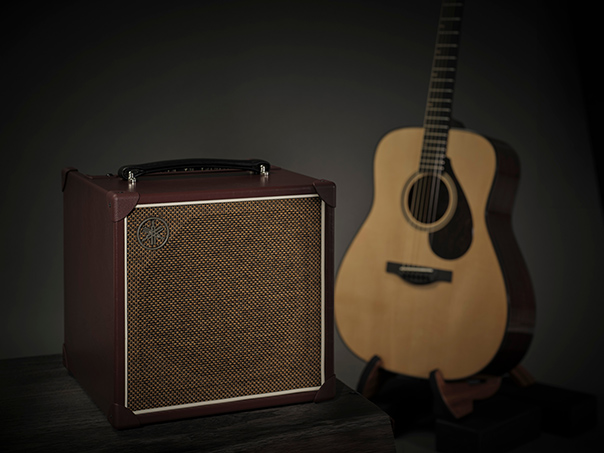
A Small Rig for Rehearsal and Gigs
The rear panel includes a balanced XLR line output for connection to a PA or recording equipment. Yamaha also suggests using the combo as a stage monitor while sending that output to the front-of-house system. A ground-lift switch sits alongside the line output.
For practice and backing tracks, the Acompass 60 supports Bluetooth and a stereo AUX input. There is also a quarter-inch stereo headphone output. The rear USB-C connection deserves one clarification: Yamaha's specification sheet labels it for firmware updates only. It is not listed as a USB recording interface.
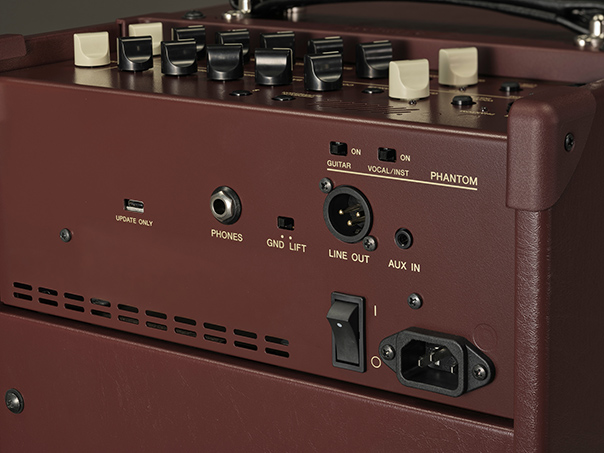
The published power specification is AC 100–240 V, 50/60 Hz, and a power cord is included. Battery operation is not listed. Players looking for a rechargeable busking amp should therefore not confuse this model with Yamaha's battery-capable desktop products.
At 8.2 kg, the Acompass 60 is light enough on paper for a one-trip carry with a small guitar and microphone bag. Its nearly cube-shaped cabinet should also be straightforward to place on a chair or small table, although its actual stage footprint will include whatever space you leave for the rear connections and ventilation.
What We Do Not Know Yet
Yamaha's international announcement and product pages did not list a US retail price or US on-sale date when we checked them on November 13, 2026. We are not filling that gap with a currency conversion from another market or an unverified store listing. US buyers should wait for Yamaha's regional pricing and dealer information.
The other unknown is the part a specification sheet cannot answer: how the amp handles a real pickup and voice at performance volume. The 60-watt rating, speaker size and cabinet dimensions tell us about the format, but they do not by themselves establish headroom, dispersion, feedback resistance or recorded sound quality.

The Early Take
On paper, the Acompass 60 is a focused piece of gear rather than an attempt to put an entire modeling rig in a wooden cabinet. Two independently controlled inputs, channel-specific processing, a balanced line output and a feedback button cover the basic needs of a solo acoustic setup without requiring a separate small mixer.
That makes the concept worth watching for coffeehouse performers, rehearsal rooms and players who currently carry both an acoustic amp and another device for vocals. The lack of listed battery power and USB recording keeps its role narrow, but narrower can be useful when the controls stay understandable.
For now, the Acompass 60 is an announced product with a promising specification set, not an amplifier we can recommend from experience. The meaningful next details are US pricing, availability and a proper listening test with both an acoustic guitar and a microphone connected.
Sources & further reading
Plugged Gear Co. may earn a commission from qualifying purchases.
Reader-supported
Keep Guitar Alive
Enjoyed this story? The Guitar Plugged is free to read and reader-supported. If it helped you play, listen or buy a little smarter, chip in to keep guitar journalism like this coming.
One-time contribution, processed securely by Stripe. Contributions are not tax-deductible.
Experience-driven coverage, not algorithm bait.
- 20+ years of guitar playing experience
- Real-world retail experience at Guitar Center
- Thousands of hours testing guitars, amps, and pedals
- A community of 50,000+ guitar enthusiasts across platforms
- Partnerships with Fender, DistroKid, TrueFire, Card Chords, and Enya
- Editorial standards published openly — see how we test gear
The Modern Guitar Magazine. Delivered to your inbox.
No spam. No gimmicks. Just great guitar content — stories, tones, iconic solos, and honest gear takes. Every week.
Ask GP
20 free questions a dayStill curious? Ask GP about this story.
Your personal classic-rock and guitar guide — ask anything about Yamaha's Acompass 60 Combines a.
Discussion (0)
Sign in to join the discussion.
Sign in to commentLoading comments…
Discover another guitar story
Swipe through our latest features, breaking news and iconic solos — one story at a time.
Open Swipe →More Guitar News
The 5 Best Budget Modeling Amps in 2026 (That Actually Sound Incredible)
Big tone, small budget, zero excuses. We tested today's best affordable modeling amps — from the Boss Katana to the Spark 2 — and ranked the five that genuinely sound incredible without breaking the bank.
Boss Fills the Katana Gap: Katana-25 Is a $199.99 Home Combo With 60+ Effects and Bluetooth
Boss unveils the Katana-25: a compact 25W 1x8 home combo with six amp characters, 60+ effects, Bluetooth, USB-C recording and 0.5W power control for $199.99.
Best Acoustic Guitars Under $500 in 2026: The Ultimate Buyer's Guide
You don't need to spend a grand to get an acoustic that sounds great and stays in tune. Here are the six best acoustic guitars under $500 in 2026 — ranked, compared, and reviewed with Amazon buying links.