
Frank Gambale Changed the Way Guitarists Move Their Picking Hand. Here's the Whole Story.
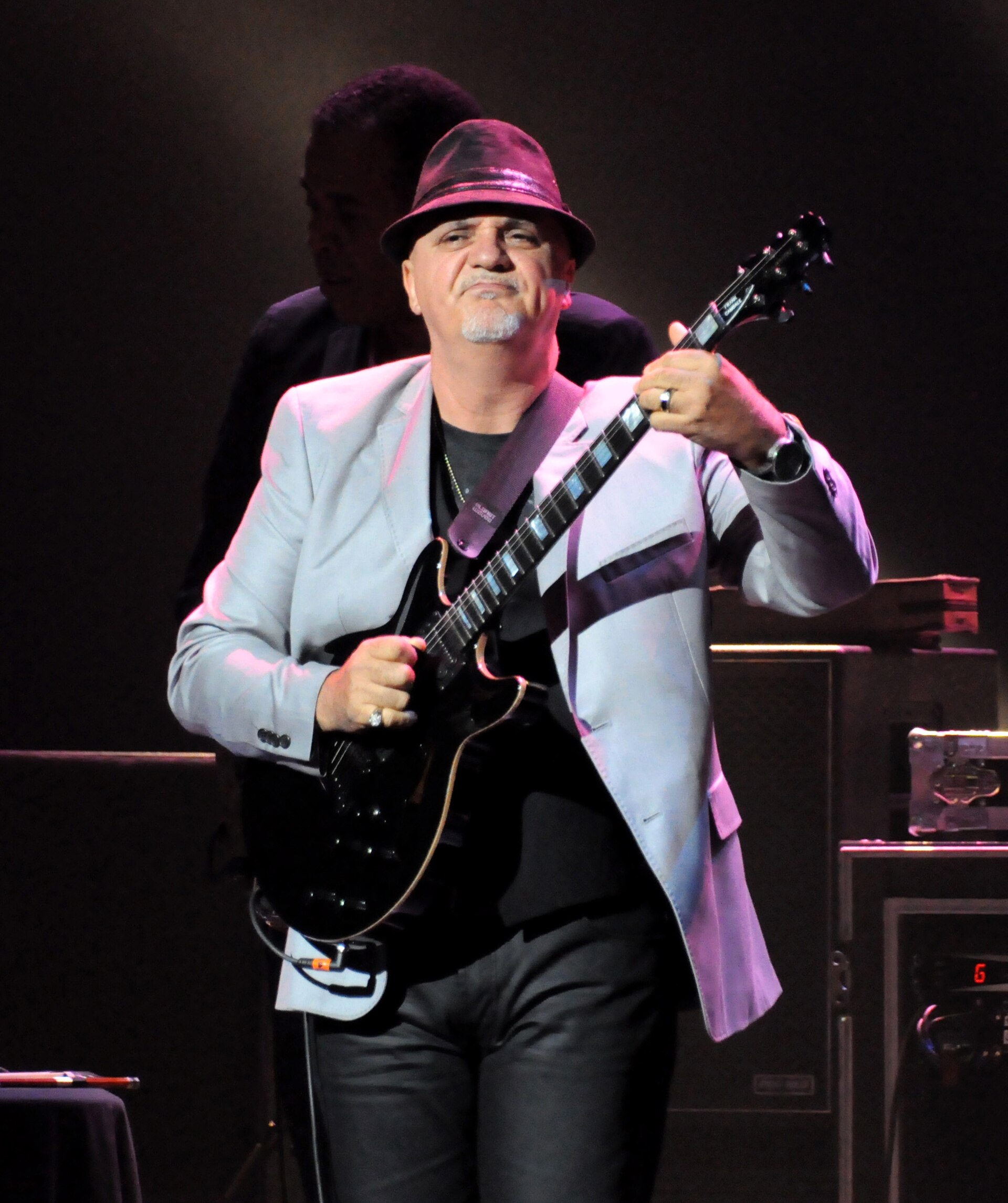
Frank Gambale on stage in Montréal with Return to Forever IV, June 26, 2011.
CC BY-SA 3.0. Photo: Philippe Frenette-Roy / Wikimedia Commons
From Canberra clubs to GIT, Chick Corea's Elektric Band and his own Gambale Tuning, here's how Frank Gambale rewired the guitarist's picking hand.
Frank Gambale's best-known idea is an obvious one: if the next note is on the next string, keep the pick moving the way it's already going. In the early 1980s that went against how most serious players were taught, which was strict alternate picking and nothing else. Gambale, a young Australian student at the Guitar Institute of Technology in Hollywood, treated the idea as a complete system. He wrote it up in a book called Speed Picking, taught it to hundreds of students, and then took it on the road with Chick Corea.
His story goes well beyond one technique, though. Gambale spent six years in one of the most-watched fusion bands of the era and helped win a Grammy. He spent more than a decade with Steve Smith's Vital Information, played alongside Allan Holdsworth and Shawn Lane, filled the guitar chair in Return to Forever's 2011 lineup, and designed signature guitars with four different companies. In his forties he invented a tuning that he now says matters more than the picking technique he's famous for.
This is a full look at Frank Gambale: where he came from, what he played, what he plays now, and how his method actually works. Grab a guitar for the technique section.
Canberra, Brothers, and a $10 Classical Guitar
Gambale was born on December 22, 1958, and grew up in Canberra, Australia's capital. He described it to Vintage Guitar as "a fairly small town, about 300,000 people." He was the youngest of three boys. Both older brothers played, and Frank picked up the guitar at seven. The family's first instrument was a cheap nylon-string that his mother bought when the eldest son asked for a trumpet she couldn't afford.
Their first electric guitar was a no-name model plugged into the family stereo. Gambale has said one brother had to lie underneath and hold the cable against the input contacts while the other played. On his 13th birthday the family pooled their money and bought him a white early-'60s Stratocaster. He loved it mainly because it looked like Jimi Hendrix's. It was later sold for a black Les Paul Custom. All of his Fenders and Gibsons were gone by the time he left for America.
His early listening was blues rock: John Mayall's Bluesbreakers, the Paul Butterfield Blues Band's East-West with Mike Bloomfield, Hendrix, Clapton, and, surprisingly, the Grateful Dead. Gambale has said he loved the idea of a song taking up a whole side of a record and continuing on the other. Years later Jerry Garcia returned the compliment. In a 1991 Rolling Stone interview, Garcia named Gambale as his "personal favorite lately."

CC BY-SA 3.0. Photo: JJ Harrison (jjharrison.com.au) / Wikimedia Commons
Disco, Country, and the Australian Club Circuit
Gambale was playing real gigs by 13. One of his first was a pop festival near Canberra around 1970, and he was hooked on performing from then on. His brothers kept forming bands with Frank as the lead guitarist, and sometimes they had to sneak him into clubs because he was underage.
The family band started as Quasar and later became Night Flight. Night Flight's angle was unusual. Australia's musicians' union required disco clubs to book live music, and most rock bands hated those gigs. Night Flight played the disco hits themselves, leaning on Earth, Wind & Fire and funk, and stayed busy for years touring the east coast.
When he got back to Canberra around 1980, Gambale noticed it was a country-and-western town. He started a country trio with his older brother. They worked seven nights a week, and he taught about 25 students a week on the side. Every dollar was going toward one goal: getting to Los Angeles, where much of the music he loved most, especially Chick Corea's, was being made.
Before GIT: Transcribing, Theory, and a Detour to Piano
Gambale had no formal lessons as a teenager, and he has never pretended otherwise. He learned from records. The breakthrough came when Australian jazz guitarist George Golla, whom Gambale has called "like the Australian Joe Pass," gave a seminar at a Canberra music store. Only three people showed up, and two were beginners. Gambale had been playing for about eight years by then, and he left with pages of notes on modes and voicings. Transcribing made more sense afterward because he could hear why a note worked over a chord.
He also came close to quitting guitar. After hearing Chick Corea, he spent about two years playing piano before coming back to guitar. Over and over, Gambale's career has been about getting keyboard harmony and saxophone-style lines onto six strings. That two-year detour is where it began.
GIT, 12-Hour Days, and the Book That Named a Technique
In 1982 his brother Nunzio flew to Los Angeles to research opening a music shop. He took Frank's audition tape to the Guitar Institute of Technology (now Musicians Institute) and called home with a simple message: there were players sitting around everywhere, and Frank needed to be there.
Gambale was about 22 when he left Canberra. He has said GIT was partly a way to stay in the US long enough to find opportunities. Once he got there, he went all in. "I routinely practiced 12 hour days," he later wrote. He has said he soaked up everything he could from faculty like Joe Diorio, Don Mock and Scott Henderson, and that he also spent time with Joe Pass.
He graduated as Student of the Year, and the school asked him to teach. He has called that offer "great because I was completely broke," and by his own count he stayed on for four years. Wikipedia lists his teaching years as 1984 to 1986.
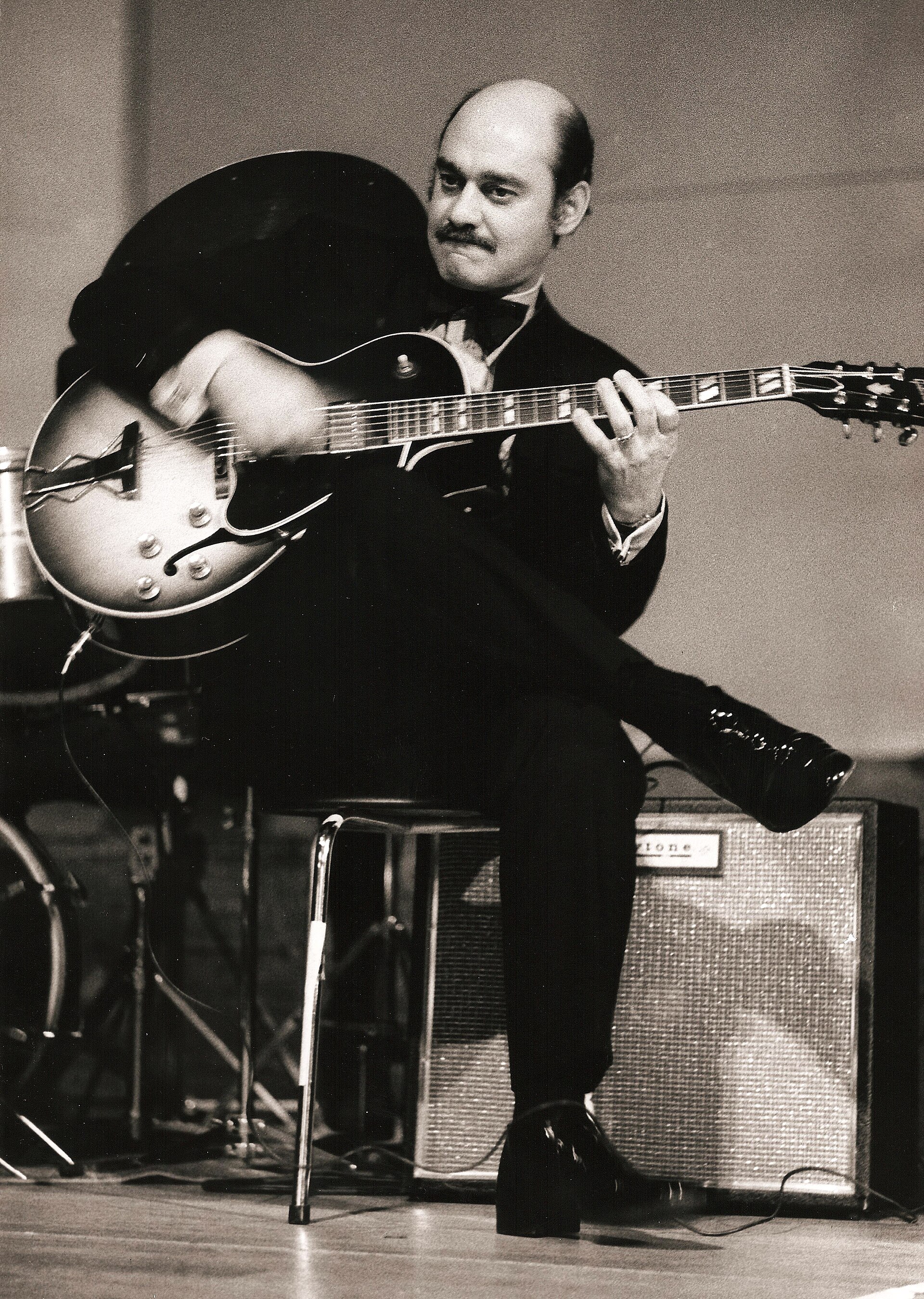
CC BY-SA 3.0. Photo: Hans Bernhard (Schnobby) / Wikimedia Commons
Why It Was Called "Speed Picking"
While he was still a student, people kept stopping in the practice-room doorway to ask what he was doing. He told the French magazine Guitare Live that he wrote the method mostly so they'd understand it and stop asking. "I wrote the Speed Picking book while I was still a student," he has said. Sources differ on the publication year (he gives both 1984 and 1985 in different places), but it came out through REH in the mid-'80s.
The title came from the market more than from Gambale. Guitar Interactive's Levi Clay points out that what we now call economy or sweep picking was sold as "Speed Picking" because shred was the hottest thing in guitar in 1985. Clay also says Gambale wrote the book after a push from Iain Scott, his bandmate in the group Afterburner.
That book was aimed at intermediate and advanced players, and its examples weren't easy. Gambale has said there were already plenty of books for beginners. The sweeps were only part of the challenge. You also had to understand the melodic sequences they were built on.
CC BY-SA 4.0. Photo: Robin Déboite / Wikimedia Commons
The Baked Potato and Jean-Luc Ponty
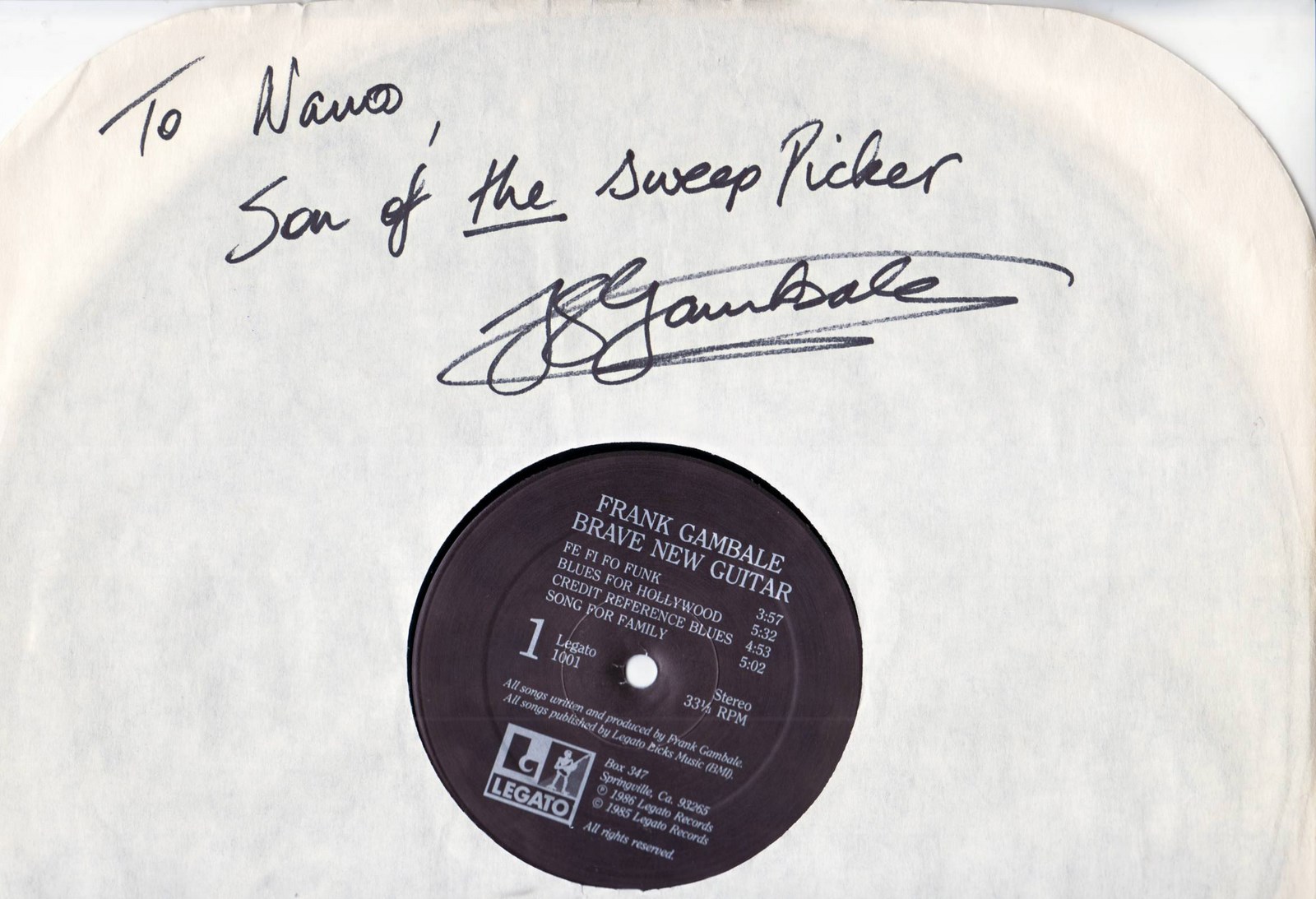
Gambale started gigging around Los Angeles, especially at the Baked Potato, the tiny Studio City club where he says he's played "since about 1983." Mark Varney's small Legato Records label put out his first three albums: Brave New Guitar (the label copy is dated 1985–86), A Present for the Future, and a live record.
One night Jean-Luc Ponty came to the Baked Potato looking for a guitarist. Gambale auditioned and toured with the violinist in the summer of 1986, alongside bassist Baron Browne, drummer Rayford Griffin, and keyboardist Kei Akagi, whom Gambale had recommended. It was his first big-league gig, and he has said Ponty's crowds then were about twice the size of Chick Corea's.
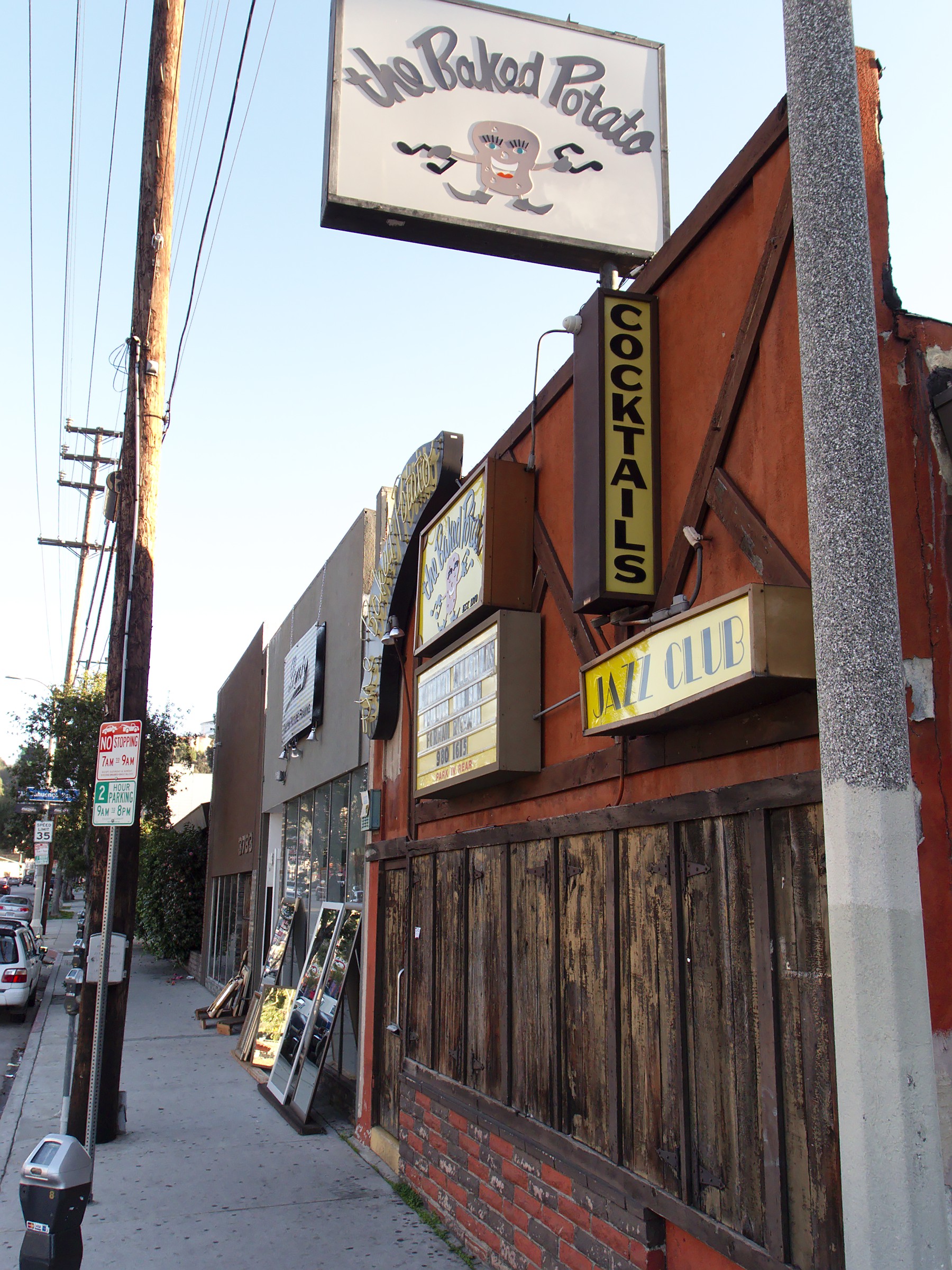
CC0 (public domain dedication). Photo: Junkyardsparkle / Wikimedia Commons
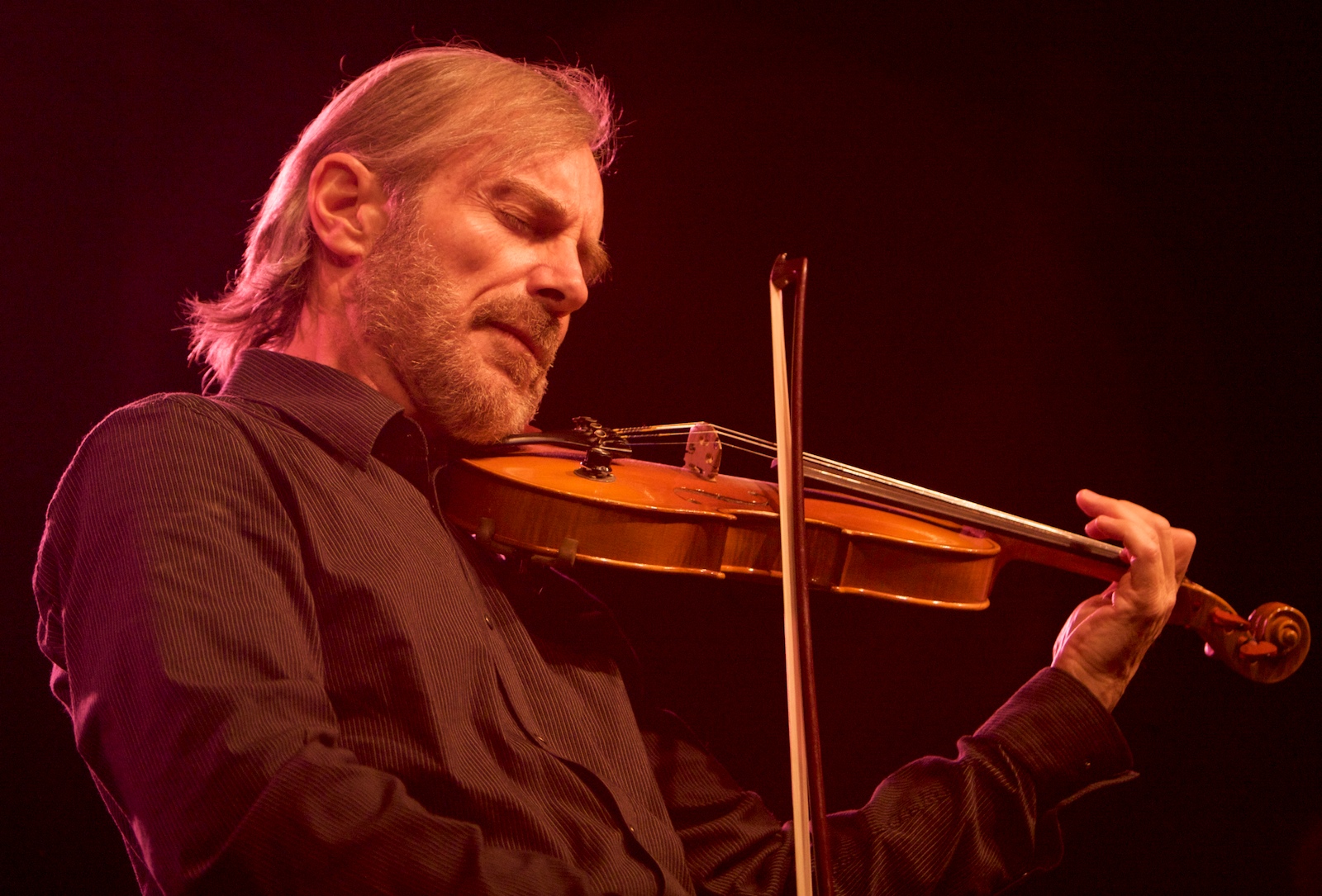
CC BY-SA 2.0. Photo: Guillaume Laurent / Flickr via Wikimedia Commons
The Chick Corea Elektric Band Years
How Gambale got the Corea gig is one of fusion's best stories. He was recording bassist Jeff Berlin's album Pump It! at Mad Hatter Studios, which Corea owned. The studio was upstairs and Corea's management office was downstairs. One day, while loading his gear, Gambale introduced himself to Evelyn Brechtlein, the manager's secretary and the wife of drummer Tom Brechtlein. He gave her his card and asked her to call him if Chick ever needed a guitarist.
About six months later the call came. Hundreds of tapes had come in, and four players made the live audition. Corea had told them to learn a couple of his standards and jam on the changes. Gambale had transcribed so much Corea that he also learned the melodies, and he counted the band in from the top of the head. He told Alternate Music Press that Corea "jumped up off his keyboard after the first song and shook my hand." Then Corea started talking about which way Gambale's amp would face on stage, before catching himself and remembering there were still two guitarists left to hear.
Gambale replaced Scott Henderson, one of the GIT teachers he'd learned from. The classic Elektric Band lineup was Corea, Gambale, saxophonist Eric Marienthal, bassist John Patitucci and drummer Dave Weckl, and it was set by 1987's Light Years. That album won the Grammy for Best R&B Instrumental Performance, an odd category for a fusion band.
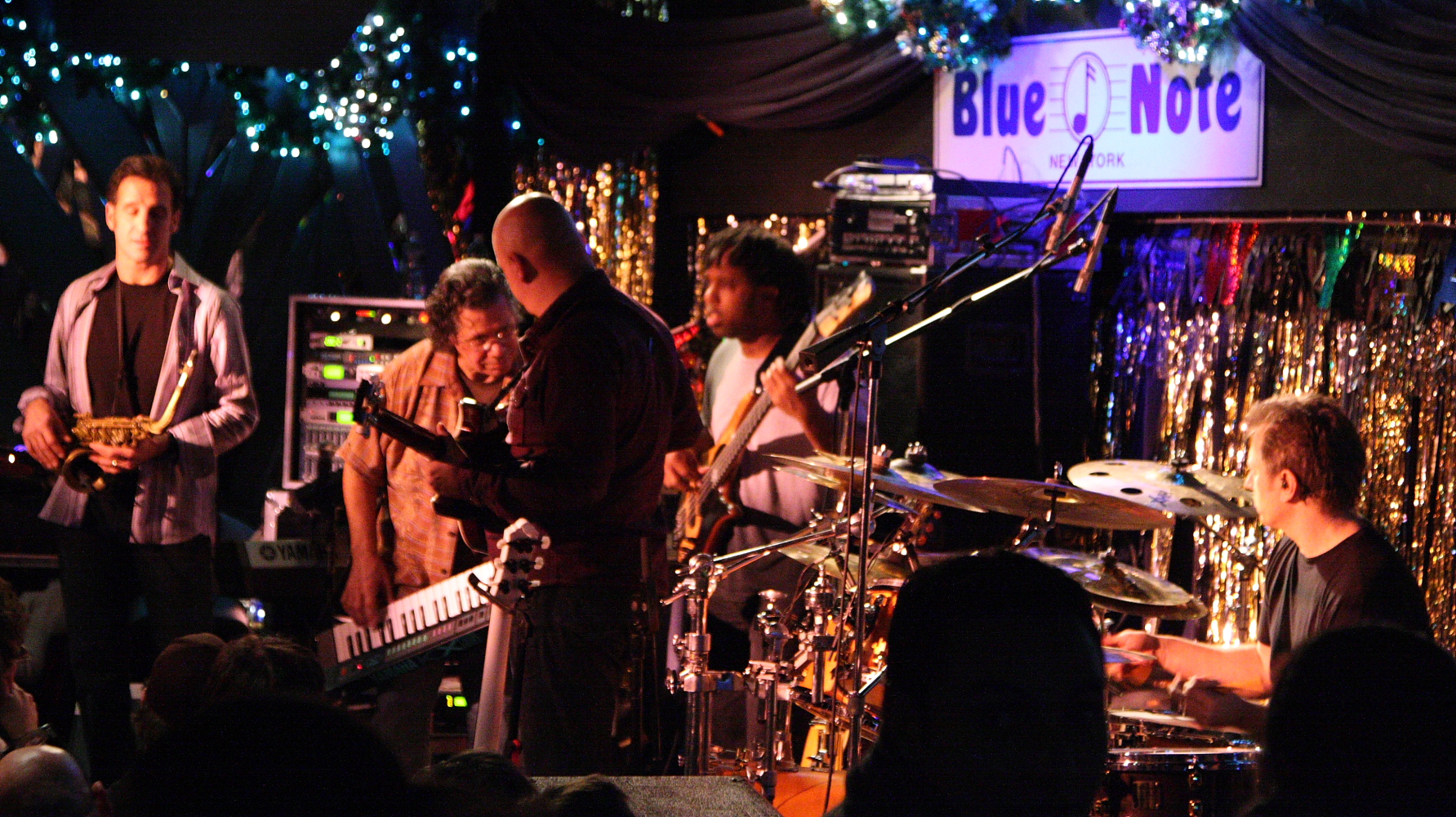
CC BY-SA 2.5. Photo: Jesse Merz / Wikimedia Commons
Light Years to Beneath the Mask
Gambale's main Elektric Band albums are Light Years (1987), Eye of the Beholder (1988), Inside Out (1990) and Beneath the Mask (1991), plus the GRP Super Live in Concert recording. Wikipedia credits the band with two Grammy nominations overall. The touring schedule was brutal. Gambale has described "like 300 concerts a year at one point," with a first tour that went from the US through South America and then straight on to Japan.
Ask him for a highlight and he'll pass along Chick's pick. Gambale says Corea always raved about his solo on "Make a Wish" from Inside Out and called it his favorite guitar solo. Start there if you're new to this era. Then listen for what makes Gambale work in that band. He isn't playing rock solos over jazz changes. He plays through the changes, landing on chord tones at speed the way a horn player would, while running a distorted tone that jazz purists didn't expect.
Gambale has said that's why Corea mattered so much to him. In the Guitare Live interview he described Corea as a jazz legend who actually liked hearing loud electric guitar and didn't think distortion degraded the musical information.
Coming Back When Chick Called
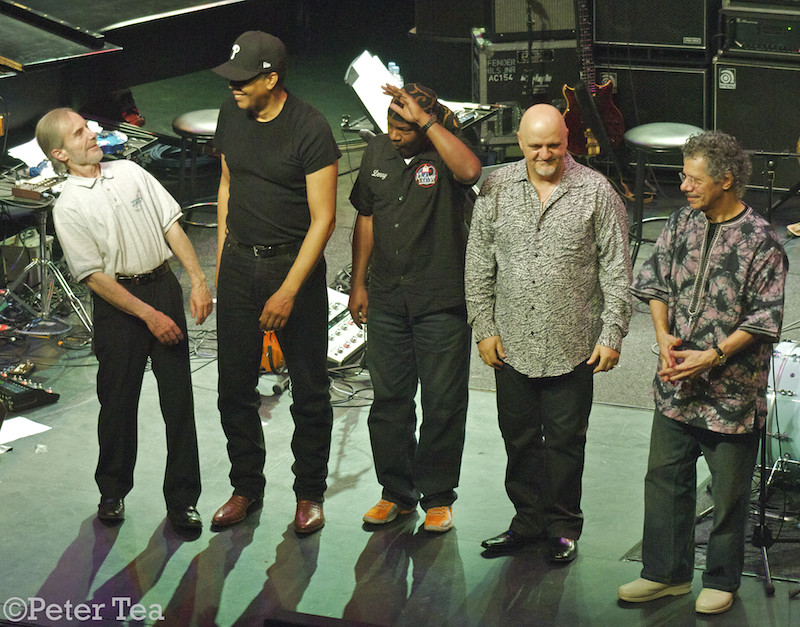
The original lineup broke up after Beneath the Mask, and the 1993 Paint the World album used a new rhythm section. Gambale kept coming back, though. He played with the band, along with Steve Vai's band, on a version of "The Rumble" for 1996's The Songs of West Side Story. He reunited with Corea, Weckl, Patitucci and Marienthal for Corea's 60th-birthday celebrations in the early 2000s, and the band made To the Stars in 2004 with Patitucci back on bass. The 2007 Blue Note photo in this article shows a later lineup with Victor Wooten on bass. "When Chick calls, we all jump," Gambale told Vintage Guitar.
Chick Corea died on February 9, 2021. In 2024 Gambale played a residency at Melbourne's Bird's Basement with Dave Weckl, his first time playing with Weckl since Corea's death. He told I Heart Guitar he'd worked with Weckl "36 years off and on" through the Elektric Band.
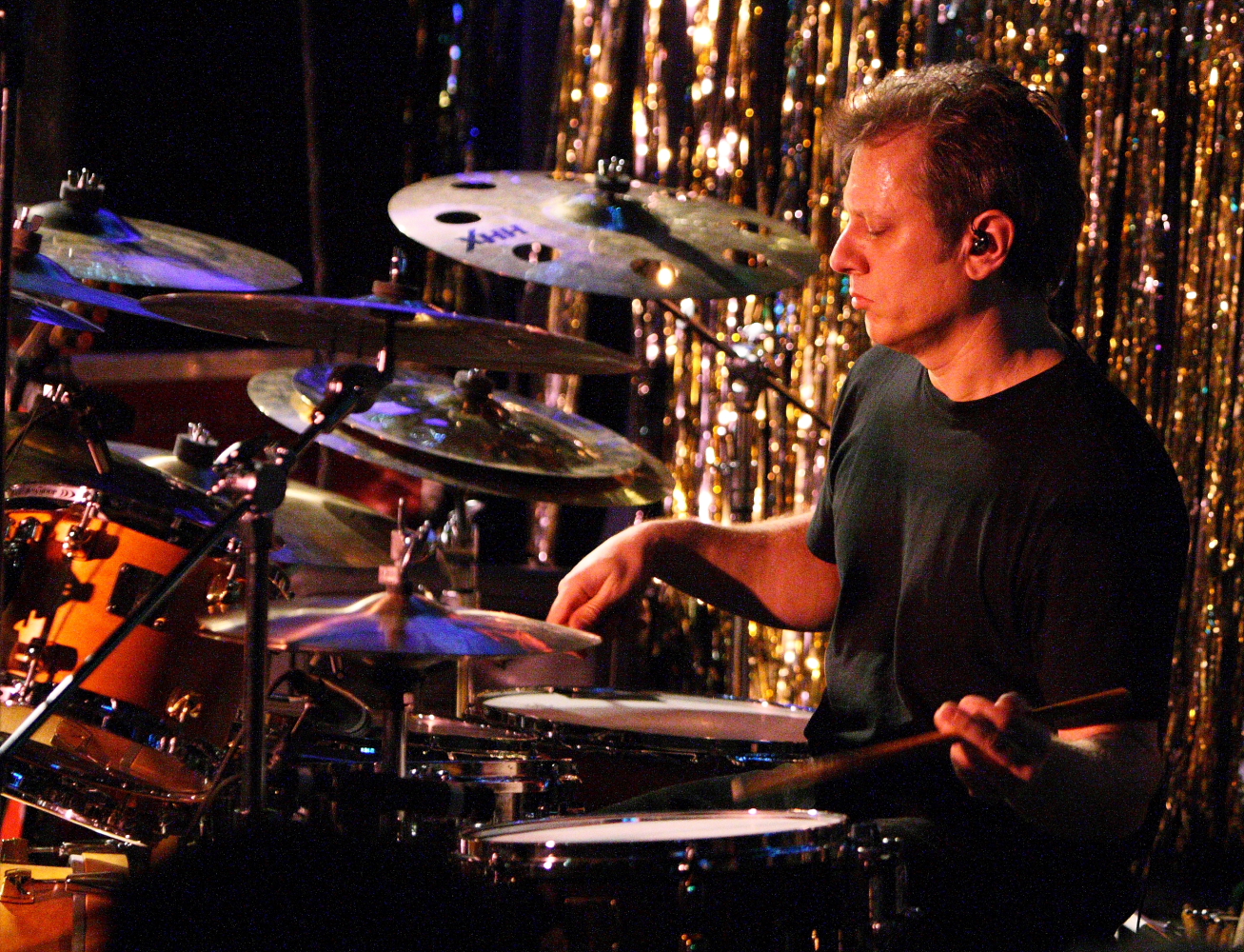
Public domain (released by the author). Photo: Jim Merz / Wikimedia Commons
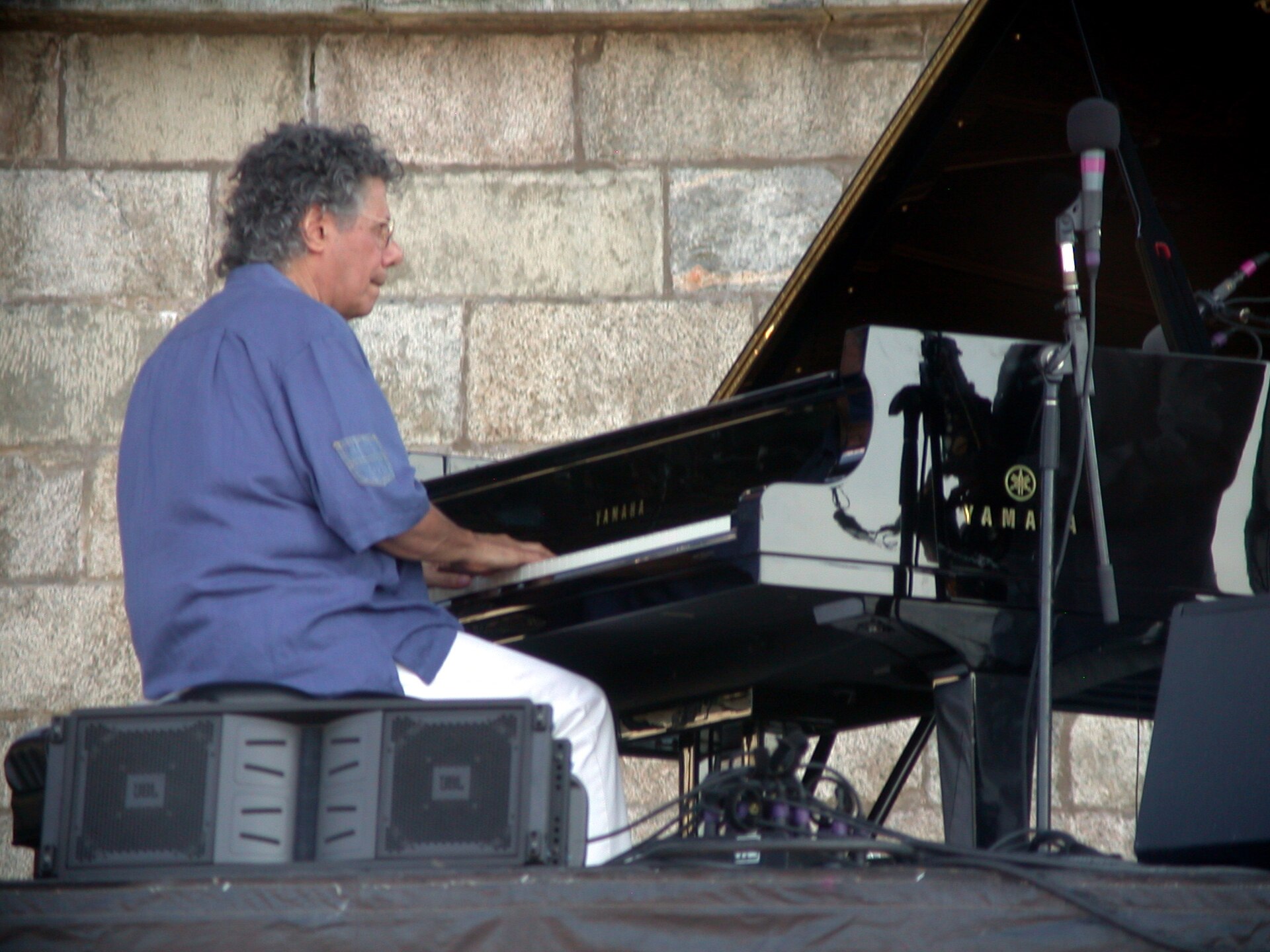
CC BY 2.0. Photo: Lee Wright / Flickr via Wikimedia Commons
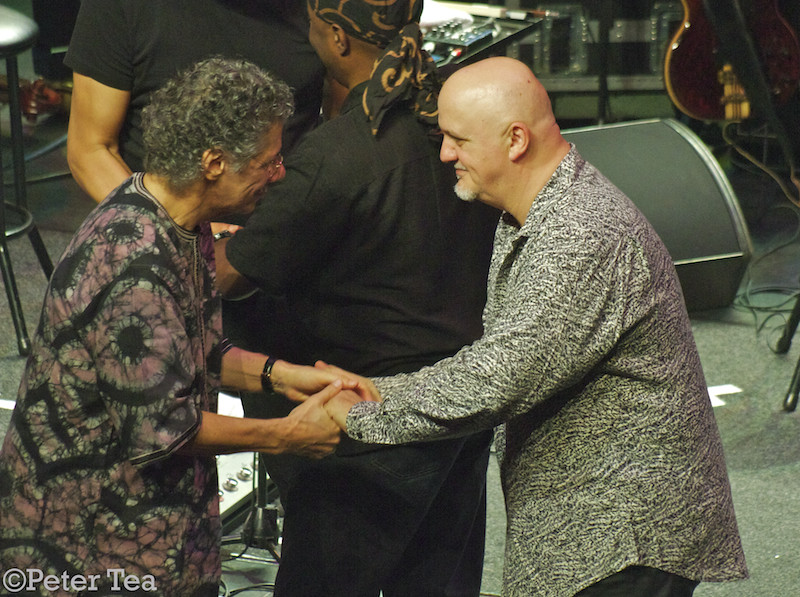
CC BY-ND 2.0. Photo: Peter Tea / Flickr
Vital Information, GHS, and the Side Projects
If the Elektric Band made Gambale famous, Vital Information is where he settled in. Drummer Steve Smith, a Journey alum who started the group as a solo project, brought Gambale in around the turn of the '90s. Sources disagree on the exact year. The Wikipedia band page lists him from 1990 to 2007, and a 2001 Yamaha press release called the association 13 years old. Gambale is on Vitalive!, Easier Done Than Said, Ray of Hope, Where We Come From, Live Around the World, Show 'Em Where You Live, Live from Mars and Come On In.
The lineup that defined the late-'90s and early-2000s records was Smith, ex-Santana keyboardist Tom Coster, bassist Baron Browne from the Ponty band, and Gambale. "Oh man, it's better than a marriage," he said of that lineup. He has described Vital Information as "a little jazzier and bluesier" than his own music. Smith even pushed him to play hollowbodies on the Live Around the World tour so the group would look more like a jazz band.
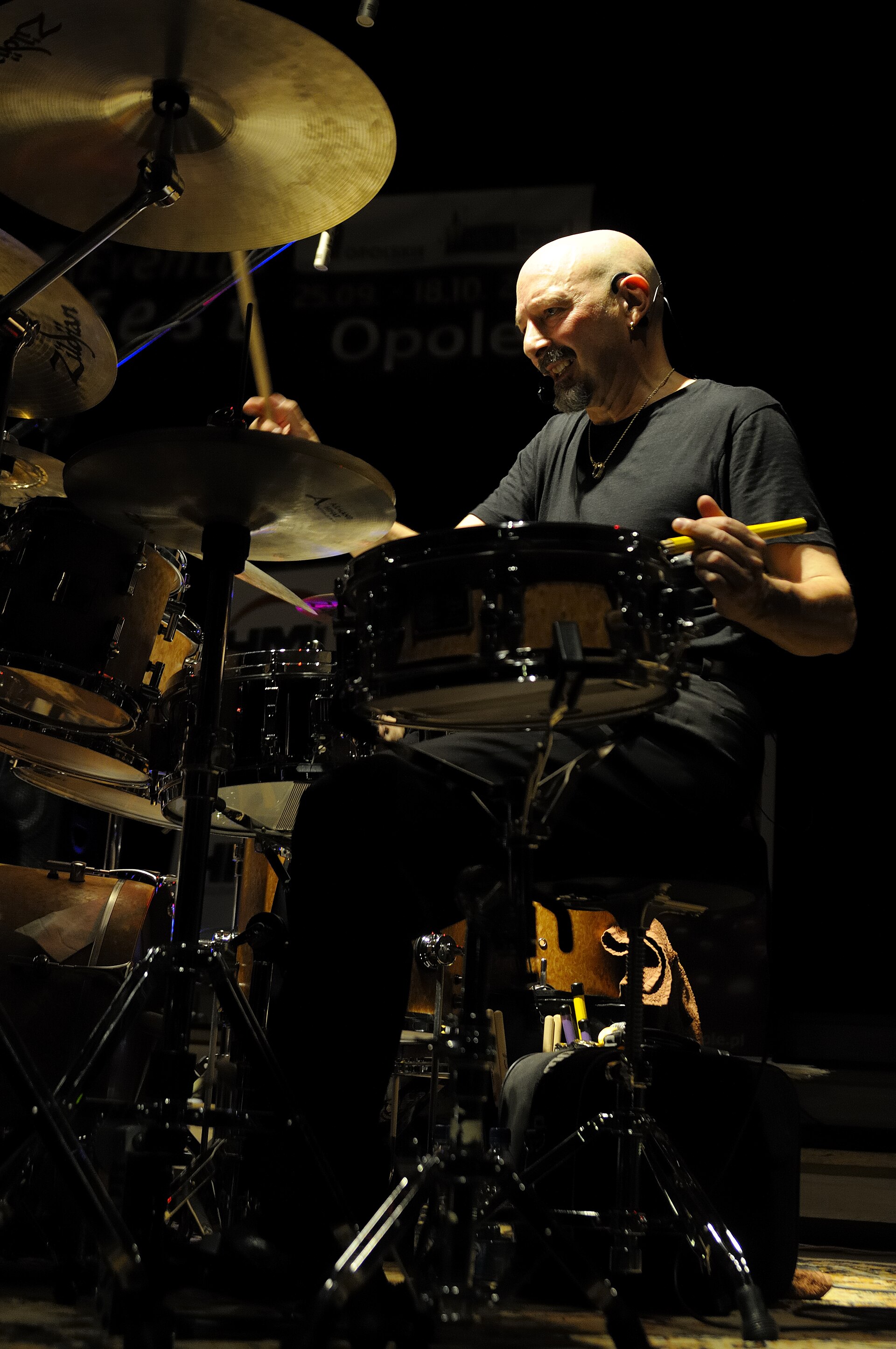
CC BY 2.0. Photo: Kuba Bożanowski / Flickr via Wikimedia Commons
GHS: The Fusion Power Trio
When Gambale wanted to "get our fusion rocks off," as he put it, he played with Smith and bassist Stuart Hamm, best known for his years with Joe Satriani. Gambale, Hamm and Smith made three albums for Mike Varney's Tone Center label: Show Me What You Can Do (1998), The Light Beyond (2000) and GHS 3 (2002). "I think those are some of my best recordings, really," Gambale told Don Zulaica. Reviewers called the first album ferocious, and they weren't wrong. If you want Gambale at full shred over funk and rock grooves without Corea's harmonic maze, start with the GHS records.
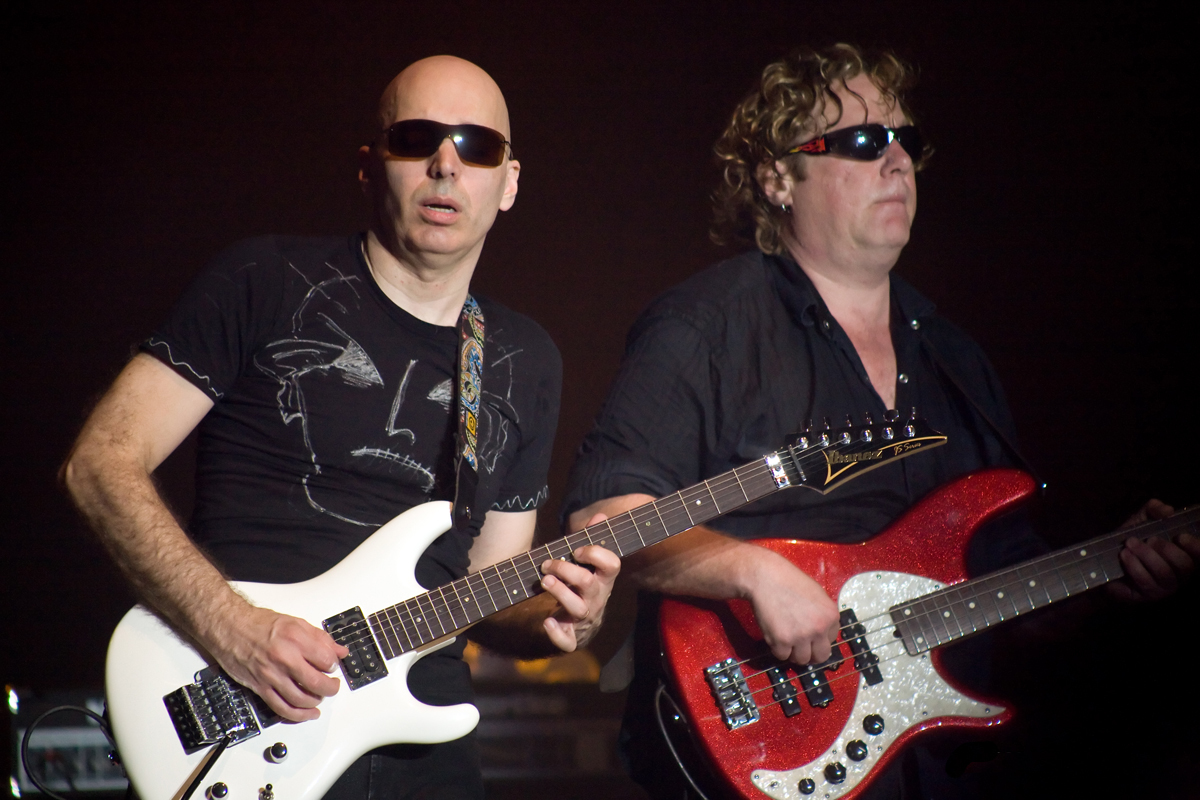
CC BY-SA 4.0. Photo: Victor Peters / Wikimedia Commons
The Mark Varney Project
Two cult records from the early '90s put Gambale alongside other guitarists who'd changed technique. Truth in Shredding (1990) paired him with Allan Holdsworth, whose legato phrasing is close to the opposite of Gambale's picked precision. Centrifugal Funk (1991) put him with Shawn Lane and fellow Australian Brett Garsed. Both were produced by Mark Varney, the same man who'd signed Gambale to Legato. They're mostly remembered as chops summits, but they're also a useful lesson in three or four very different approaches to playing fast.
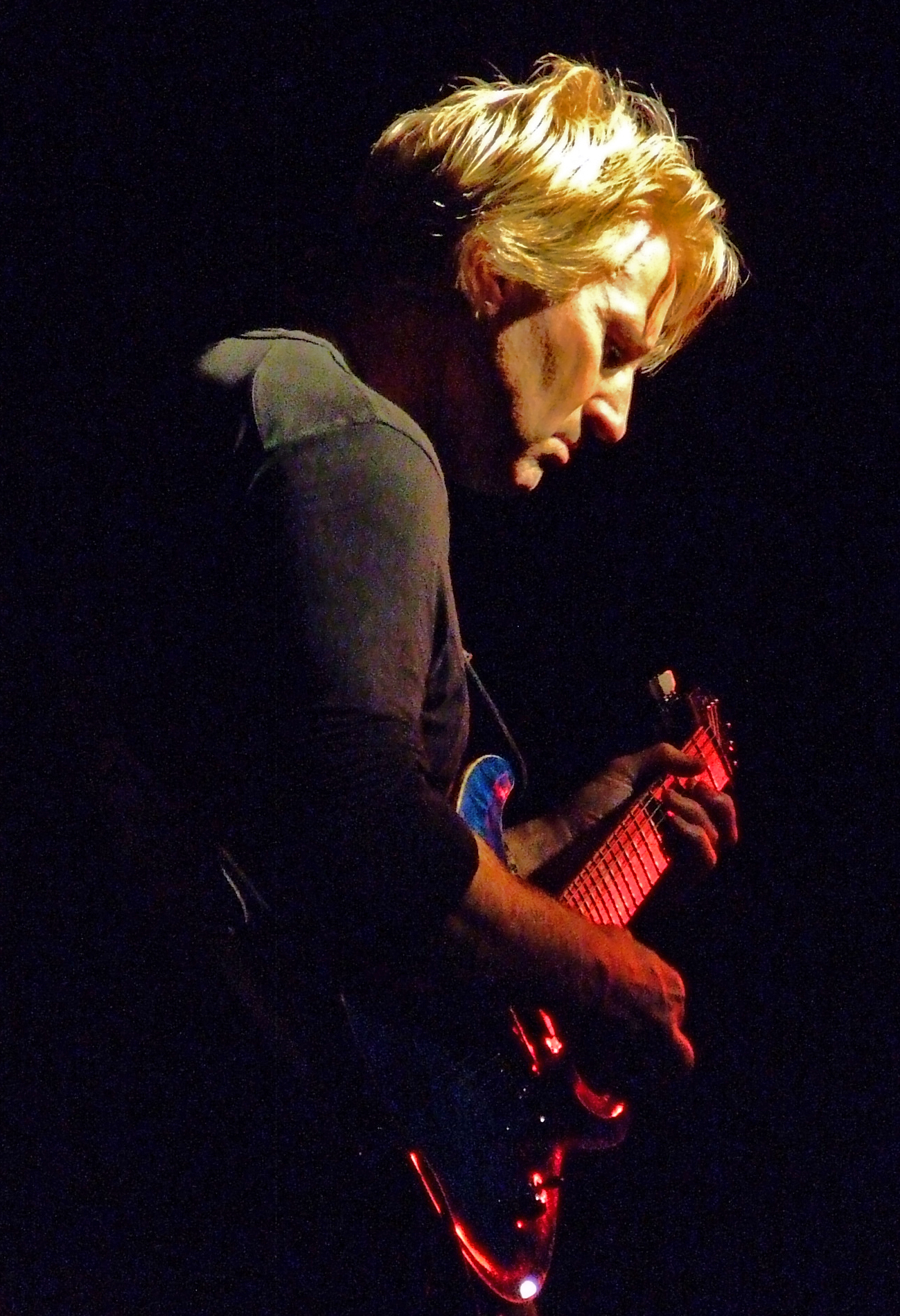
CC BY-SA 4.0. Photo: Fabio Pitisci / Wikimedia Commons
Everything Else
Gambale's résumé includes duo concerts in Italy with classical guitarist Maurizio Colonna, the Made in Australia live album with drummer Virgil Donati and bassist Ric Fierabracci, work with Billy Cobham and Alain Caron, and recent sessions such as The Haas Company's Celestial Latitude (2024). He told Jazz Guitar Today that one was "not my album," just a session he took because he liked keyboardist Pete Drungle's writing.
Return to Forever IV
In 2011 Corea brought back Return to Forever with Stanley Clarke and Lenny White, plus Jean-Luc Ponty on violin and Gambale on guitar. Fans called it Return to Forever IV. Guitar Interactive put it this way: Gambale was "filling Al Di Meola's shoes." That's a hard job in a band whose 1970s records are partly famous for Di Meola's alternate-picked runs.
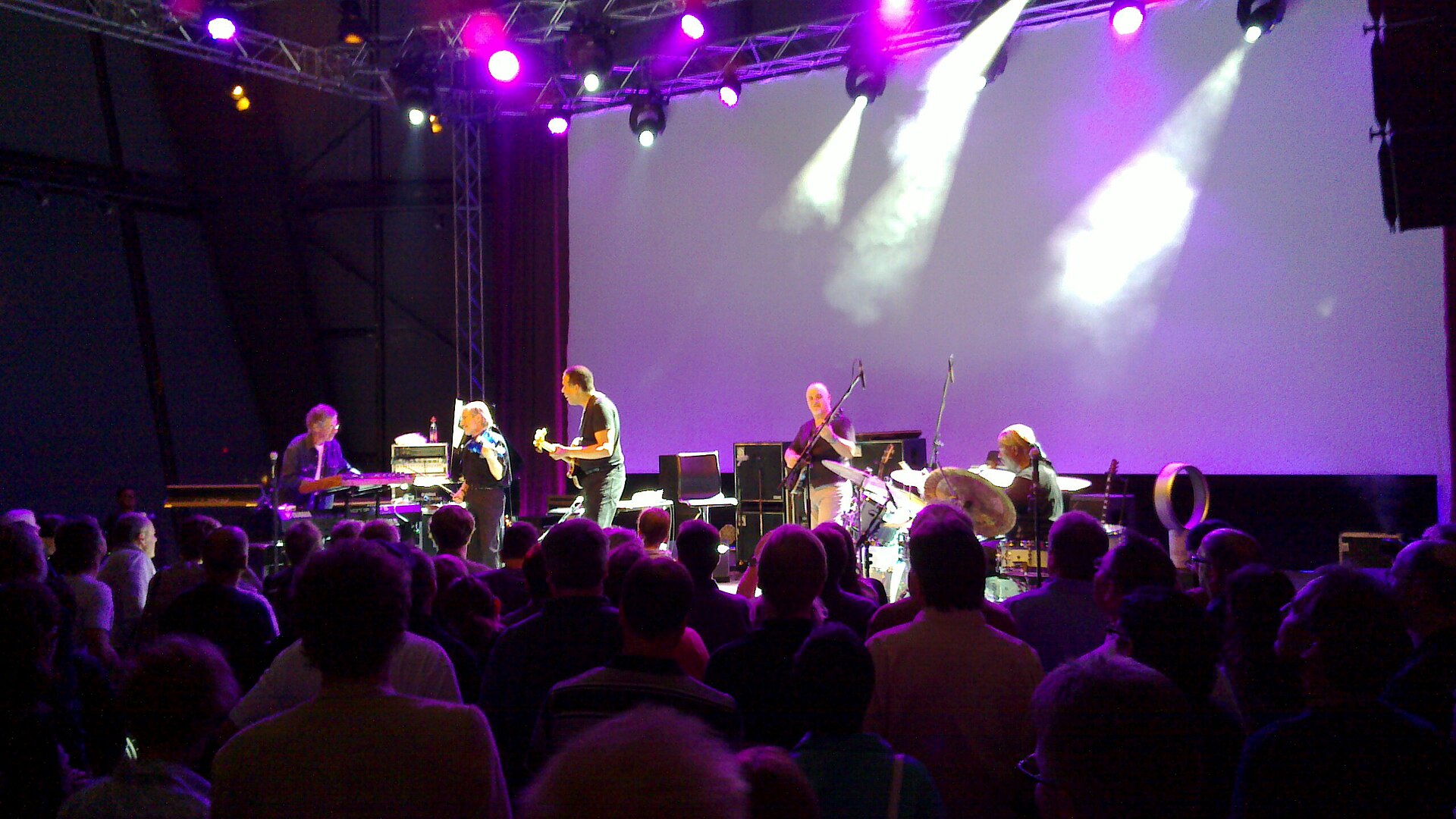
The tour went worldwide in 2011. The photos here are from Adelaide in February, Montréal in June and Neckarsulm, Germany in July, and the North American leg ran with Zappa Plays Zappa that summer. It was recorded for The Mothership Returns, a 2CD-plus-DVD set released in 2012. If you want to hear how differently two fast players approach the same material, put on a '70s RTF record with Di Meola and then The Mothership Returns. Di Meola attacks with machine-gun alternate picking. Gambale's lines are more legato and more arpeggio-based, and they swing more.
For a refresher on the guitarist he replaced, see our piece on Al Di Meola at 72.
CC BY-ND 2.0. Photo: Peter Tea / Flickr
CC0 (public domain dedication). Photo: Wikipedia-ce / Wikimedia Commons
The Solo Albums: A Listening Guide
Gambale has released close to 20 albums under his own name. The ones below are a good place to start, with notes on what each one shows about his playing.
| Year | Album | Label | Why it matters |
|---|---|---|---|
| 1985–86 | Brave New Guitar | Legato | The debut. Tracks like "Fe Fi Fo Funk" and "Credit Reference Blues" show the GIT-era player with the sweep system already in place. |
| 1987 | A Present for the Future | Legato | His second Legato studio album. |
| 1990 | Thunder from Down Under | JVC | His first album for JVC, and the start of his '90s peak as a solo artist. |
| 1991 | Note Worker | JVC | Features Dave Weckl. Gambale has played tunes from it live as recently as 2024. |
| 1993 | The Great Explorers | JVC | Part of his run of '90s fusion albums for JVC. |
| 1994 | Passages | JVC | Rounds out the JVC fusion run. |
| 1995 | Thinking Out Loud | JVC | A jazz-guitar album recorded entirely on an Ibanez GB10 George Benson model with flatwound strings. |
| 2000 | Coming to Your Senses | Favored Nations | The first release on Steve Vai's Favored Nations label. |
| 2004 | Raison d'Être | ESC | Introduced the Gambale Tuning on a Yamaha double-neck. |
| 2006 | Natural High | Wombat | A mostly acoustic trio record on his own label. |
| 2010–11 | Natural Selection | Wombat | A trio album with keyboardist Otmaro Ruiz and bassist Alain Caron. |
| 2012 | Soulmine feat. Boca | Wombat | A Latin-tinged vocal project with his wife, singer Boca. |
| 2018 | Salve | — | His most recent full album. Singles followed in 2024. |
Two live sets, Resident Alien – Live Bootlegs volumes one and two (2004), cover his trio playing in the 2000s. Our listening path for new fans: Inside Out with Corea, then Show Me What You Can Do with GHS, then Thinking Out Loud to hear the jazz side, then Raison d'Être to hear the tuning.
The Gambale Technique, Explained
Here's the core of it. Economy picking (Gambale calls his version sweep picking) follows one rule:
When you change strings, pick the new string in the direction you're already moving.
Going from a lower string to a higher one (toward the floor), the first note on the new string is a downstroke. Going from a higher string to a lower one, it's an upstroke. On a single string you alternate as usual.
That's it. Everything else comes from applying the rule consistently and arranging scales and arpeggios so it applies as often as possible. Gambale's own course pitch calls it freedom from "the tyranny of the pick."
Why Odd Numbers Matter
If you start each string with a downstroke going up across the strings, the number of notes on each string decides what happens at the string change:
- Odd number of notes per string (1, 3, 5): The last note on the string is a downstroke, so the pick just continues through to the next string. You get two downstrokes in a row, which is a small sweep.
- Even number of notes per string (2, 4): The last note is an upstroke, so the next downstroke is ordinary alternate picking.
So Gambale's system relies heavily on three-notes-per-string scales and one-note-per-string arpeggios. The more odd groupings there are, the more of the line is effectively swept.
Example 1: Three-Notes-Per-String G Major, Ascending
Start at the 3rd fret of the low E string. Pick the first note with a downstroke and follow the pattern under each string. (D = downstroke, U = upstroke.)
e|-------------------------------------------5-7-8-|
B|-----------------------------------5-7-8---------|
G|---------------------------4-5-7-----------------|
D|-------------------4-5-7-------------------------|
A|-----------3-5-7---------------------------------|
E|---3-5-7-----------------------------------------|
     D U D   D U D   D U D   D U D   D U D   D U D
Look at each string change. The last downstroke on one string and the first downstroke on the next form a single motion. Played slowly it sounds like two separate notes, and at speed it becomes a smooth glide. Descending, the logic flips: start the high e string with an upstroke and play U D U on every string, so each string change is two upstrokes in a row.
The most common mistake is letting the swept pair sound like a strum. The fix is in the fretting hand, not the picking hand. Each note has to be fretted and then lifted or muted before the next one sounds. Gambale has talked about this "rolling" fretting-hand movement and about palm muting with the picking hand when he explains how he keeps big arpeggios clean.
Example 2: The Five-String A Minor Sweep
This is the classic shred-era arpeggio, and it's also where economy picking turns into a full sweep:
e|------------------12h17p12------------------|
B|--------------13------------13--------------|
G|----------14--------------------14----------|
D|------14----------------------------14------|
A|-12h15----------------------------------15p12|
    D       D   D   D   D         U   U   U   U
Downstroke the A string at the 12th fret and hammer on to the 15th. Then sweep one downstroke across the D, G, B and high e strings, one note per string. Hammer to the 17th fret on the e string and pull back to the 12th. Then sweep back up with a single upstroke through the B, G and D strings and land on the A string's 15th fret, pulling off to the 12th. Keep the pick at a slight angle so it moves through the strings without catching.
Gambale's arpeggio vocabulary goes well past minor triads. His own lessons cover major-seven shapes, add2 arpeggios, quartal (stacked-fourth) lines and melodic-minor sounds. The key point about Gambale is that he uses sweeps to outline jazz harmony, not to play the neoclassical triad runs most people associate with sweeping. Compare him with the players covered in our Yngwie Malmsteen feature and the difference in harmony is obvious, even though the mechanics are similar.
Example 3: Fourths Across the Strings
One of the most recognizable fusion sounds, and a favorite of Gambale's, is a line built from stacked fourths. Barre the 5th fret across all six strings and you get A, D, G, C, E, A. Every adjacent pair is a perfect fourth apart except the G and B strings, which are a major third apart. Played one note per string, that stack is a single downward sweep:
e|---------------------5---|
B|-----------------5-------|
G|-------------5-----------|
D|---------5---------------|
A|-----5-------------------|
E|-5-----------------------|
   D   D   D   D   D   D
Those six notes (A, D, G, C, E, A) are an A minor pentatonic sound, and they're the same note names you get from the open strings of the Gambale Tuning (see below). For true fourths all the way up, move the B-string and high-e notes up one fret:
e|---------------------6---|
B|-----------------6-------|
G|-------------5-----------|
D|---------5---------------|
A|-----5-------------------|
E|-5-----------------------|
   D   D   D   D   D   D
That's A, D, G, C, F, Bb, a quartal stack. Play it as one motion first. Then break it into two-string pairs, sweep it back down with upstrokes, and move the shape through a scale. That's the start of the quartal language heard on Gambale's '90s records.
How to Practice It
1. Start slow and keep it even. Use a metronome at a tempo where the swept pairs line up exactly with the beat. A rushed sweep is the usual giveaway of bad economy picking. 2. Practice the string change by itself. Play just the last note of one string and the first note of the next, over and over, until the motion feels like one stroke. 3. Mute constantly. Rest the side of your picking hand lightly near the bridge, and lift each fretting-hand finger as soon as its note is done. 4. Go both directions. Gambale has said he loads his technique so it works descending as well as ascending, and descending is where most players fall apart. 5. Make it music quickly. Gambale has talked about speed as an effect to use on purpose, not the goal. Once a pattern is clean, put it over a chord change and aim for chord tones.
The Gambale Tuning
Gambale says he discovered his tuning in 2003. He quickly built an album around it, 2004's Raison d'Être, and had Yamaha build him a double-neck so he could switch between standard tuning and his own on stage.
The tuning is A D G C E A, low to high. Guitar Player summed it up this way: "the whole guitar is tuned up a fourth, but the top two strings are down an octave." Because the intervals between strings are the same as standard tuning, every chord shape you already know still works and simply sounds a fourth higher. What changes is the voicing. Dropping the top two strings down an octave tucks them into the middle of the chord, so notes a step or a third apart end up next to each other in a way that's nearly impossible in standard tuning.
Strum the open strings and you hear it right away. The pitches are A2, D3, G3, C4, E3 and A3, which make a close-voiced A minor 11 sound (A, C, D, E, G) with seconds and thirds packed together like a pianist's left hand.
"Because I play keyboards, I always wanted to be able to freely play my favorite voicings that are impossible with standard tuning," he told Jazz Guitar Today in 2024. In the same interview he called the tuning "revolutionary" and added: "I think it's even more important than Gambale Sweep Picking, which is saying a LOT!" He also likes to joke that "it only took me 40 years to come up with it."
Stringing a Guitar for Gambale Tuning
Gambale has posted his string recipe. It uses two standard sets:
| String | Note | Source string | How to tune |
|---|---|---|---|
| 6th | A2 | A string (.036) from a 10–46 set | At pitch |
| 5th | D3 | D string (.026) from a 10–46 set | At pitch |
| 4th | G3 | G string (.017) from a 10–46 set | At pitch |
| 3rd | C4 | B string (.013) from a 10–46 set | Tune up a half step |
| 2nd | E3 | D string (.024) from a 9–42 set | Tune up a whole step |
| 1st | A3 | G string (.016) from a 9–42 set | Tune up a whole step |
Expect to adjust the nut slots and intonation, especially on the wound 2nd string. Don't retune a guitar you can't set up again. If you want to try it without changing your main guitar, use a spare one.
Gambale's Gear: From the White Strat to Kiesel
The Ibanez Years (1990–1999)
Gambale says Ibanez approached him while he was in the Elektric Band. Their first guitar connected to him, the 540S-LPF from 1990, already had what became his signature features: pickups mounted flush with the body and a deeply set neck and tremolo, so the strings could sit extremely close to the top. The named FGM series followed:
- FGM100 (1991–93): A mahogany S-type body, three humbuckers, sharktooth inlays matched to the body color, and finishes including the Desert Sun Yellow that became his trademark.
- FGM200 (1994): The only hardtail in the series.
- FGM300 (1994–96): Pearl sharktooth inlays and DiMarzio pickups.
- FGM400 and FGM400QM (1997–99): An HSS layout, a special 12th-fret inlay, and on the QM, a quilted maple top.
"I put a lot of my ideas into that guitar," Gambale told Vintage Guitar. He has said the low-profile bridge reduced the string's break angle so much that "you just never break strings." (He also remembered the partnership lasting 13 years and four versions, while the Ibanez catalog shows five FGM models over 1991–99. Count the 540S-LPF and the earlier S-body years and both versions are plausible.)
Yamaha AES-FG (2001)
The guitar Gambale says he was given "carte blanche" on was Yamaha's AES-FG, unveiled at Winter NAMM 2001. It had a mahogany body with a carved top, a 25.5-inch-scale neck, Seymour Duncan pickups mounted from the back, and a Fretwave system for tempered intonation. Its most unusual feature was the tremolo spring claw, which screwed into the end of the neck instead of the body. Gambale and builder Dave Cervantes had removed so much body wood for upper-fret access that the neck was the only place left to anchor it. Gambale says it turned out to give "uncanny" sustain and brightness. List price was $2,699.
The guitar reflected a strong opinion of his. The traditional Strat neck joint, he said, makes the upper frets feel "like holding an L.A. phone book." Yamaha later built the double-neck he used to debut the Gambale Tuning.
Carvin FG1 (2011) and Kiesel FG-1 / FG-2
Gambale moved to Carvin in 2010. The FG1 came out at NAMM in January 2011. It's a chambered, semi-hollow carved-top guitar with a mahogany body, a flamed maple top, a 25-inch scale, an ebony board, a custom neck profile and low heel, and a signature FG22N neck pickup. "The lead tone from the FG1 is so fat, round and warm," he said at the launch. When Carvin's guitar line became Kiesel, the FG1 carried over.
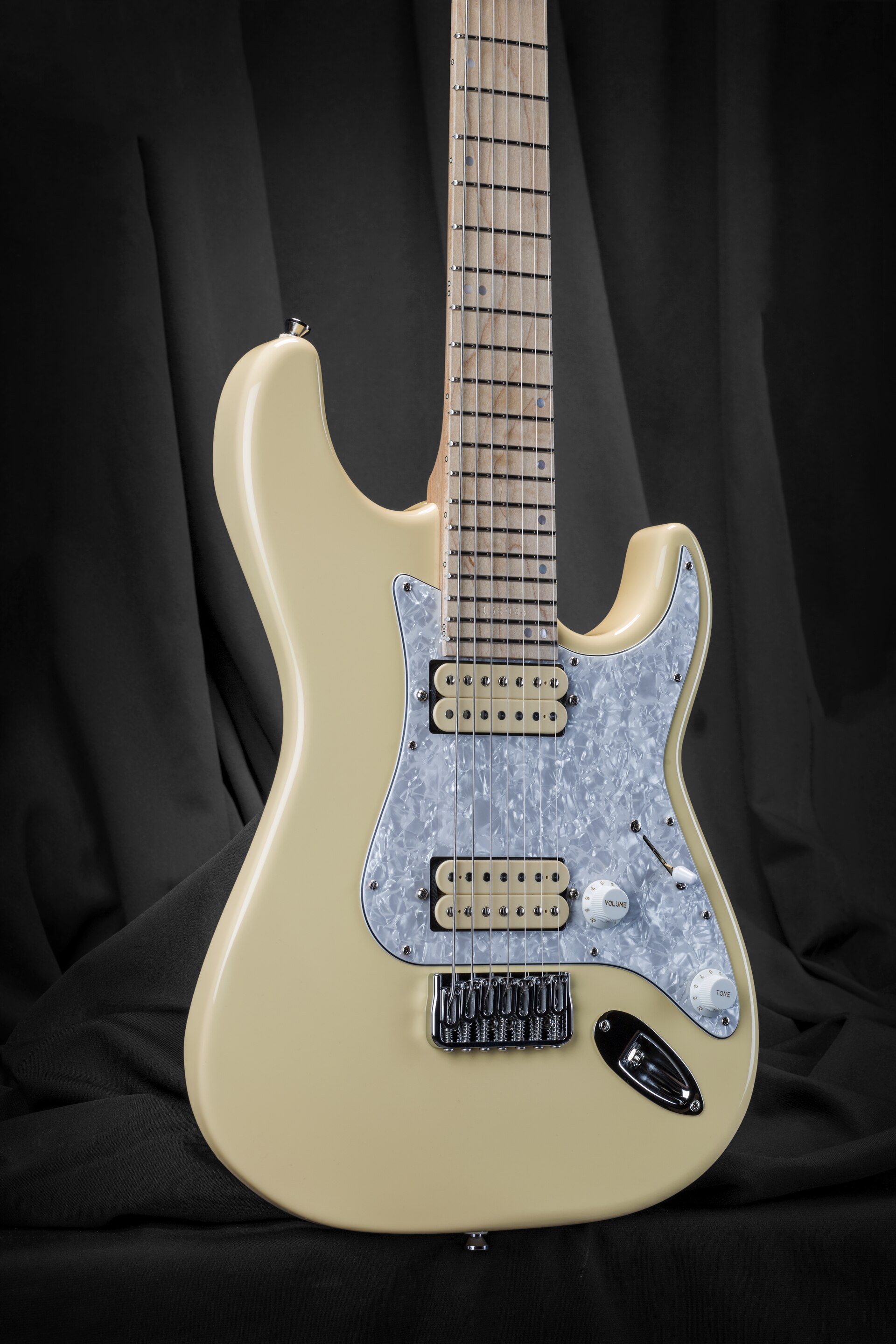
He later wanted single-coil sounds again and asked Jeff Kiesel for a modern Strat-style guitar. The result was the Kiesel FG2. It's based on the Delos, with an alder body, a 14-inch-radius ebony board, a Beryllium bridge humbucker plus two Twinblade pickups, a Gotoh 510 tremolo, and the inevitable Pearl Yellow finish. Gambale has said it "plays like butter and even looks like butter." In 2024 he said a new pale-yellow FG-1 was his favorite guitar, and that "98%" of the guitars he owns are his own signature models, past and present.
CC BY-SA 4.0. Photo: Kiesel94 / Wikimedia Commons (the original is a TIFF; the local file is a 1920 px JPEG made from it)
Jazz Boxes and Acoustics
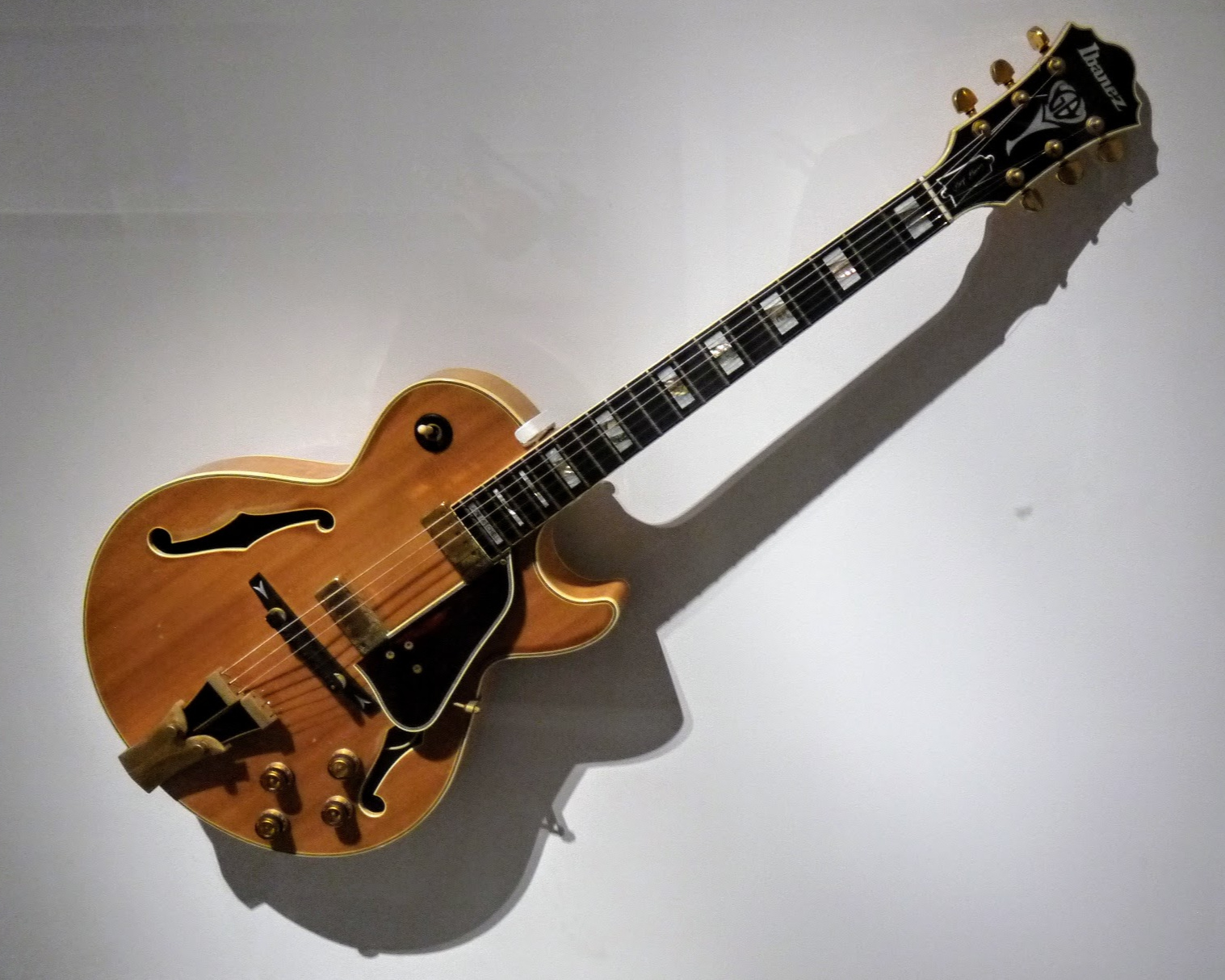
For straight-ahead jazz Gambale plays an Ibanez GB10 George Benson model with flatwound strings, the same guitar he used for all of Thinking Out Loud. He has also used an Ibanez AS-2200 semi-hollow and owns a '68 Gibson Johnny Smith. For acoustic guitar he's with Cort. The steel-string Luxe (now the Luxe II, with Fishman Flex Blend electronics, a solid Adirondack spruce top and flamed blackwood back and sides) and the newer Luxe Nylon both use his Art Deco–inspired inlay design.
CC BY 2.0. Photo: Eden, Janine and Jim / Flickr via Wikimedia Commons
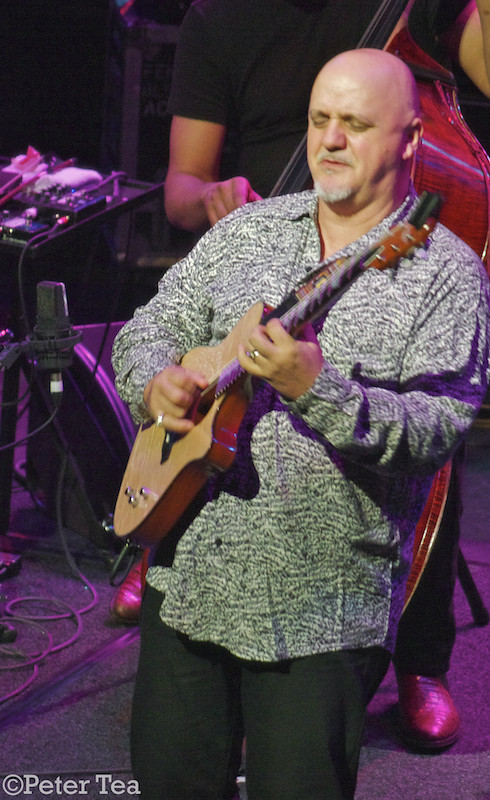
CC BY-ND 2.0. Photo: Peter Tea / Flickr
Amps: From "McDonald's Amplifier" to an SD Card
Gambale's amp history tracks the whole industry. He went from a Fender Twin to Marshalls, and early on he chose a preamp and separate power amp because combos didn't give him enough headroom. Around 2002 his rig was a Marshall JMP-1 preamp, a Stuart power amp, a TC Electronic G-Force, volume pedals and a Marshall 4x12. At the time he had little patience for modeling amps. "I don't want [my amp] to be a McDonald's amplifier," he told Vintage Guitar.
Within about a decade he'd switched sides. Italian company DV Mark made him a signature combo and, announced at NAMM 2015, the Multiamp FG, a digital modeling head loaded with his own presets. Italy's Accordo summarized his view in one line: tubes are fine in the studio, but on tour he brings an SD card. If you followed our coverage of Vai and Satriani recording The Sea of Emotion mostly on plugins, Gambale got to the same place years earlier.
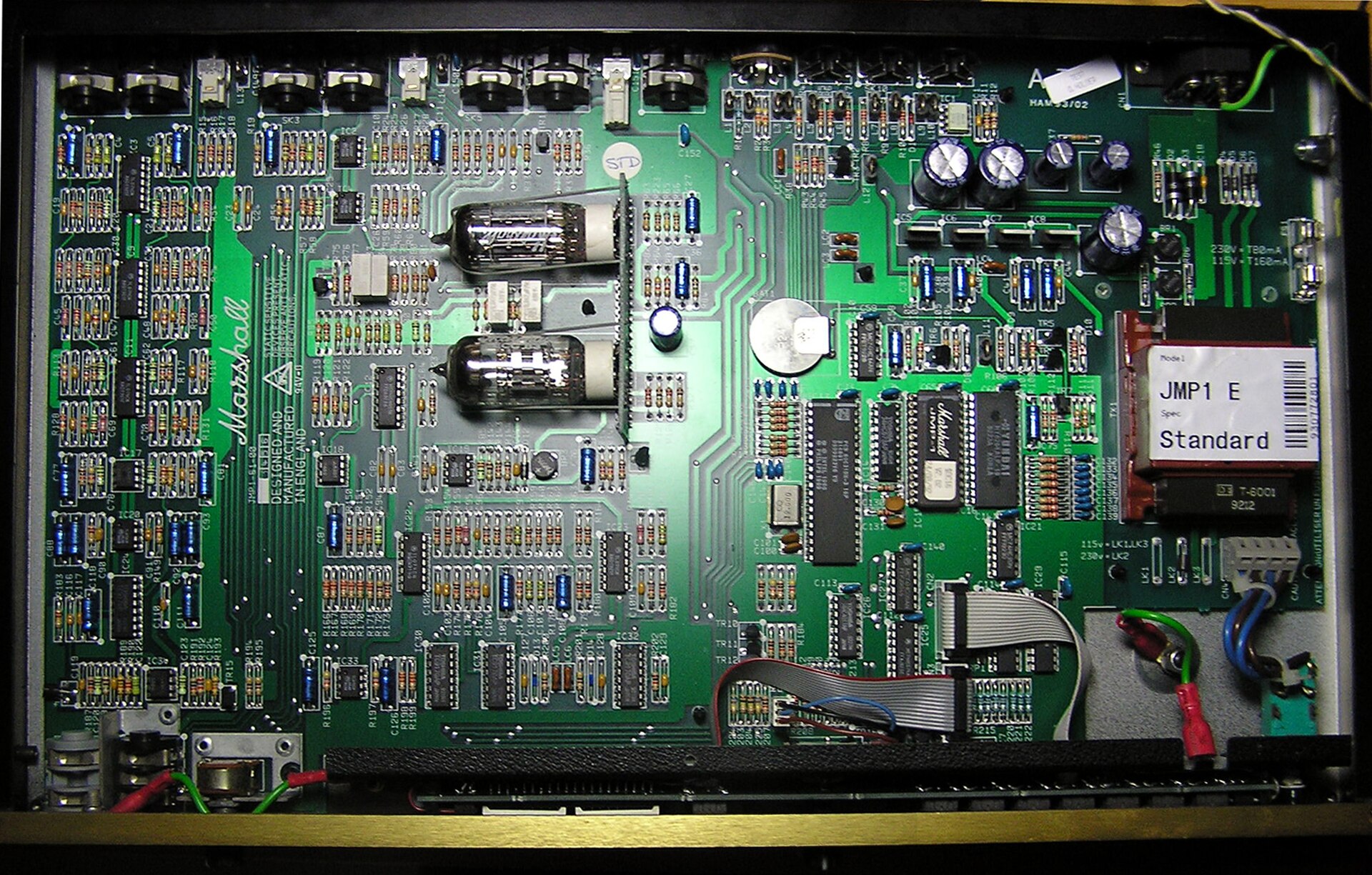
Public domain (released by ProperFraction at English Wikipedia)
The Teacher
Teaching runs through Gambale's whole career. He had 25 students a week in Canberra, taught at GIT for several years, then became head of the guitar department at the Los Angeles Music Academy, where he says he wrote most of the guitar curriculum. He joked that this put him in direct competition with his old school. He became head of the guitar department at the Isina mentorship program in 2014 and started his online school around 2015.
The Books and Videos
- *Speed Picking* (REH, mid-1980s). The book that introduced the system.
- *Monster Licks & Speed Picking* (REH video, 1988). Gambale calls it the first-ever video on sweep picking.
- *Modes: No More Mystery* (1991). The Alfred DVD reissue includes bonus performances by Allan Holdsworth and Joe Pass.
- *Chopbuilder: The Ultimate Guitar Workout* (1993).
- **The Frank Gambale Technique Book I and Book II* (1994). His theory-for-soloists course. Guitar Interactive*'s Levi Clay repeats a long-running joke that they cover what GIT taught, for about $40.
- *Improvisation Made Easier* (1997).
- *Concert with Class (2003) and Acoustic Improvisation* (2007).
The Frank Gambale Guitar School
Today most of his teaching runs through the Frank Gambale Guitar School (frankgambaleguitarschool.com). The flagship course is Gambale Sweep/Economy Picking: more than 10 hours of video in 11 chapters, with PDFs, Guitar Pro files and backing tracks. Gambale says it took three years to make. Other courses include Peace & Harmony: The Theory of Creativity, Rhythmic Displacement, and updated "2.0" versions of Speed Picking, Chopbuilder, Modes and Improvisation Made Easier. More courses on composition, chords and the Gambale Tuning are listed as coming soon. He also teaches in-person masterclasses on tour, including one at Bird's Basement in Melbourne in September 2024.
For a parallel story about a great player whose teaching shaped a generation, read our piece on how Joe Satriani became one of guitar's greatest teachers.
Influence: Who Learned From Frank Gambale
Gambale's influence spreads further than most fusion players' because his books and videos reached kids who would never buy a Chick Corea record. Players who have cited him include Synyster Gates of Avenged Sevenfold, Dweezil Zappa and Greg Howe. Jazz Guitar Today reports that Pat Metheny has said he wished he had time to study with Gambale. Garcia's 1991 compliment is on the record. Troy Grady, whose Cracking the Code series breaks down the mechanics of fast players, devoted a full "Masters in Mechanics" interview to him, covering his pick grip, his movable anchor at the bridge, and what Grady calls his "two-way pickslanting."
Gambale's place in shred history is a little unusual. Sweep picking itself wasn't new. Guitarists had raked across strings for decades, and the late-'80s neoclassical players made arpeggio sweeps famous. What Gambale did was turn it into a general picking system that applies to scales as well as arpeggios, write it down for people to study, and then prove it worked in one of the most harmonically demanding bands on earth. Whether you call it economy picking, sweep picking or speed picking, and whatever you think of who did it first, many players learned it from his book or video.
Gambale doesn't spend much time worrying about any of that. "I'm serving the art, nothing else," he told I Heart Guitar in 2024. After 40 years in Los Angeles, he said, he's spent the last four living on Spain's Costa Brava.
Gear and Study Material: A Short Buyer's Guide
You don't need a signature guitar to learn Gambale's approach. Here's where to put your money, from the cheapest option to the most expensive. Prices change, so check the listing. As an Amazon Associate, The Guitar Plugged earns from qualifying purchases.
- **The Frank Gambale Technique, Book 1**: The best value here. His theory-for-soloists course, with online audio.
- **The Frank Gambale Technique, Book II**: The second half of the course, covering the last two chord families.
- **Frank Gambale: Monster Licks & Speed Picking (DVD)**: The original 1988 sweep-picking video, now on DVD. Stock varies. For the updated version, the Gambale Sweep course at his school is the modern, much longer replacement.
- **Ibanez GB10SE George Benson Signature*: The current version of the jazz box Gambale has played for decades and used on Thinking Out Loud*. Put flatwounds on it to get his jazz tone.
- **Cort Luxe II Frank Gambale Signature**: His actual signature acoustic. It has a solid Adirondack spruce top, flamed blackwood back and sides, and Fishman Flex Blend electronics.
Kiesel's FG-1 and FG-2 are sold direct from Kiesel. DV Mark's Multiamp FG has its own product page at dvmark.it, and availability varies by region.
The Takeaway
Frank Gambale's career follows one idea: make the guitar do what pianists and saxophonists do. That idea took him from Canberra discos to GIT, where he found a picking system, and then to Chick Corea's band, where that system had to work over real jazz changes every night. It's behind the Ibanez, Yamaha and Kiesel guitars built for upper-fret access, and in his forties it led him to a tuning that gives the guitar close keyboard voicings.
If you only take one thing from this article, practice the string change in Example 1 until two downstrokes feel like one motion. That's the start of the technique, and the music is what he did with it. Start with "Make a Wish" on Inside Out.
*Have you studied Gambale's books or tried the Gambale Tuning? Tell us how it went in Guitar Talk. For a modern player taking fusion into new places, read Our Take on Matteo Mancuso next.*
Experience-driven coverage, not algorithm bait.
- 20+ years of guitar playing experience
- Real-world retail experience at Guitar Center
- Thousands of hours testing guitars, amps, and pedals
- A community of 50,000+ guitar enthusiasts across platforms
- Partnerships with Fender, DistroKid, TrueFire, Card Chords, and Enya
- Editorial standards published openly — see how we test gear
The Modern Guitar Magazine. Delivered to your inbox.
No spam. No gimmicks. Just great guitar content — stories, tones, iconic solos, and honest gear takes. Every week.
Ask GP
3 free questions a dayStill curious? Ask GP about this story.
Your personal classic-rock and guitar guide — ask anything about Frank Gambale Changed the Way.
Discussion (0)
Sign in to join the discussion.
Sign in to commentLoading comments…
Discover another guitar story
Swipe through our latest features, breaking news and iconic solos — one story at a time.
Open Swipe →More Guitar News

Al Di Meola at 72: How One Guitarist Redefined Speed Without Sacrificing Musicality
Al Di Meola turns 72 on July 22, 2026. Reducing his career to 'plays fast' misses everything that actually matters — the phrasing, the Latin and Mediterranean feel, and a half-century of pushing what a guitar can be.
Yngwie Malmsteen: The Guitar Virtuoso Who Turned Classical Music Into Shred History
From Stockholm to Rising Force, Yngwie Malmsteen fused Bach and Paganini with a scalloped Strat and a wall of Marshalls — permanently rewriting the vocabulary of shred guitar.
How Joe Satriani Became One of Guitar's Greatest Teachers and Players
From mentoring Steve Vai, Kirk Hammett, and Alex Skolnick to releasing Surfing with the Alien, Joe Satriani built a legacy on inspiring generations while proving instrumental guitar music could reach a massive audience.
Our Take On Matteo Mancuso
Every once in a while a guitarist comes along that makes even seasoned players stop and ask, "How is he doing that?" Matteo Mancuso is one of those players.

Guthrie Govan: The Guitarist Other Guitarists Study
Discover why Guthrie Govan is considered one of the greatest living guitarists, from The Aristocrats and Asia to his legendary solo album and signature Charvel.
The Endless Horizon of Guitar: Why Pat Metheny Is One of Music's True Visionaries
For nearly five decades, Pat Metheny has redefined what a guitar can say. Inside the melodies, the tone, the gear, and the essential albums of jazz guitar's most singular voice.