
Schecter's New E-1 Standard Puts the Explorer-Style Metal Shape at $499
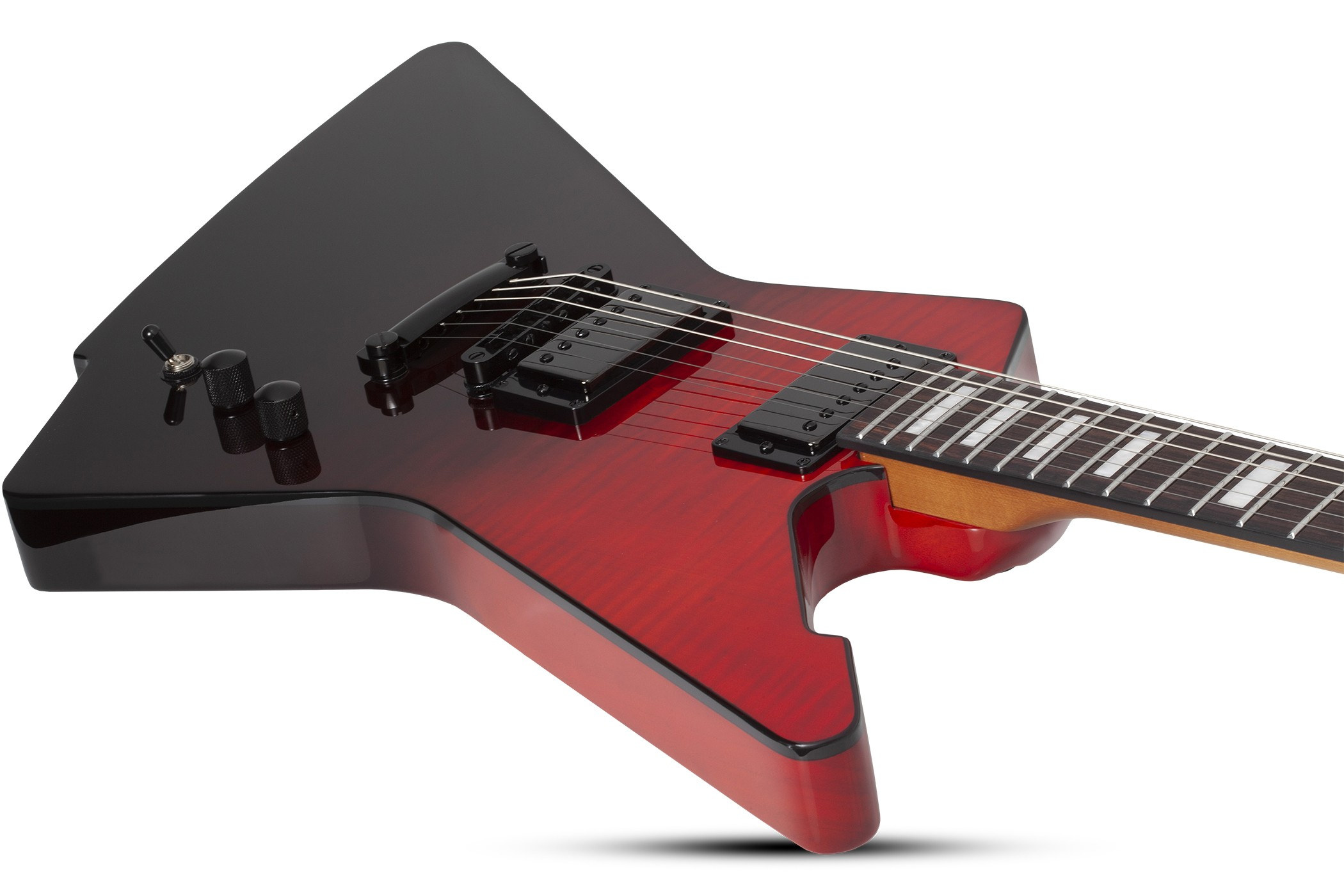
The new Schecter E-1 Standard in Blood Burst, official product photograph. The flamed-maple top and black hardware are the visual signature of this finish.
Schecter has added a bolt-on E-1 Standard to its Standard series, in Charcoal Satin and Blood Burst, at $499 as of November 19, 2026. Here is what the official spec actually says, how it fits the E-1 line, and where it sits among other affordable metal guitars.
There is a particular kind of holiday guitar that does not need a vintage serial number or a Custom Shop invoice to make the argument. It needs a shape people already want, a price a working player can actually write a check for, and a spec sheet that does not fall apart when you read it twice. Mid-November is when those instruments tend to show up, and this week one of them is a Schecter.
On November 15, Gear Gods reported that Schecter had expanded its E-1 lineup with two new E-1 Standard models, in Charcoal Satin and Blood Burst, at $499.99. The announcement was brief, and it was aimed at the obvious audience: players who have always liked the company's angular Explorer-style silhouette and have not had a straightforward, sub-$500 way into it. We went to Schecter's own site to check the claim. As of November 19, 2026, the official E-1 Standard page lists both right-handed finishes at $499.00, with a $719.00 price shown above that figure. That $499.00 official price is the one we will use, dated, and we will not round a dealer coupon or a UK listing into the U.S. number.
This is news, not a bench review. We have not had one of these in the building. What follows is what Schecter's official specifications actually say, how this guitar sits in the E-1 family and in Schecter's own Standard series, and how it compares with other metal guitars in the same price neighborhood — without inventing a tone we have not heard.
A Bolt-On E-1, and Why the Name Matters
Schecter has used the E-1 name for years as its take on the offset-Z, Explorer-descended outline — the same family of sharp upper and lower bouts that Gibson introduced in 1958 and that later became one of hard rock and metal's most recognizable silhouettes. We already told that longer shape story in our Gibson Explorer history. The E-1 is not a Gibson, and Schecter does not market it as a historical replica. It is the company's own angular solidbody, and until this month the accessible end of that idea was not this guitar.
That last point is easy to miss because Schecter has already used the words "E-1 Standard." The older E-1 Standard, still listed on Schecter's site as a separate catalog entry with the Black Pearl finish, is a different instrument: a set-neck mahogany guitar with a three-piece mahogany neck, a 12-inch rosewood fingerboard radius, 22 extra-jumbo frets, Graph Tech Tusq nut, Grover tuners, TonePros hardware, cream binding, chrome parts, and a pair of Schecter Diamond Alnico Plus humbuckers. The official page for that older model does not show a current selling price. If you have an E-1 Standard in your memory, or in a used listing, check the construction before you assume it is this one.
The new guitar, officially item 3966 in Blood Burst and 3967 in Charcoal Satin, is a Standard-series bolt-on. Schecter's site files it under both "Standard" and "New for 2026." The neck is roasted maple, not mahogany. The fingerboard radius is 14 inches, not 12. The tuners, bridge, nut, binding, and pickups are all different from the older Standard. Sharing a name and a silhouette is not the same thing as being a re-spec of the same guitar.
Higher in the same family, the E-1 is not a budget idea at all. On Schecter's site as of November 19, 2026, current E-1 models include the E-1 Custom at $1,199.00, the E-1 Koa at $1,149.00 (with a $1,649.00 price shown above it), the E-1 SLS Evil Twin and the E-1 FR S Special Edition at $1,499.00, the left-handed E-1 FR S at $1,549.00, the BalSac E-1 FR at $1,599.00, and the Jake Pitts E-1 FR S at $1,649.00. Those are official selling prices from Schecter's own catalog, checked the same day as the $499.00 Standard. The new model is the floor of that range, not a stand-in for a Floyd Rose and Sustainiac guitar that costs three times as much.
What the Official Spec Sheet Actually Says
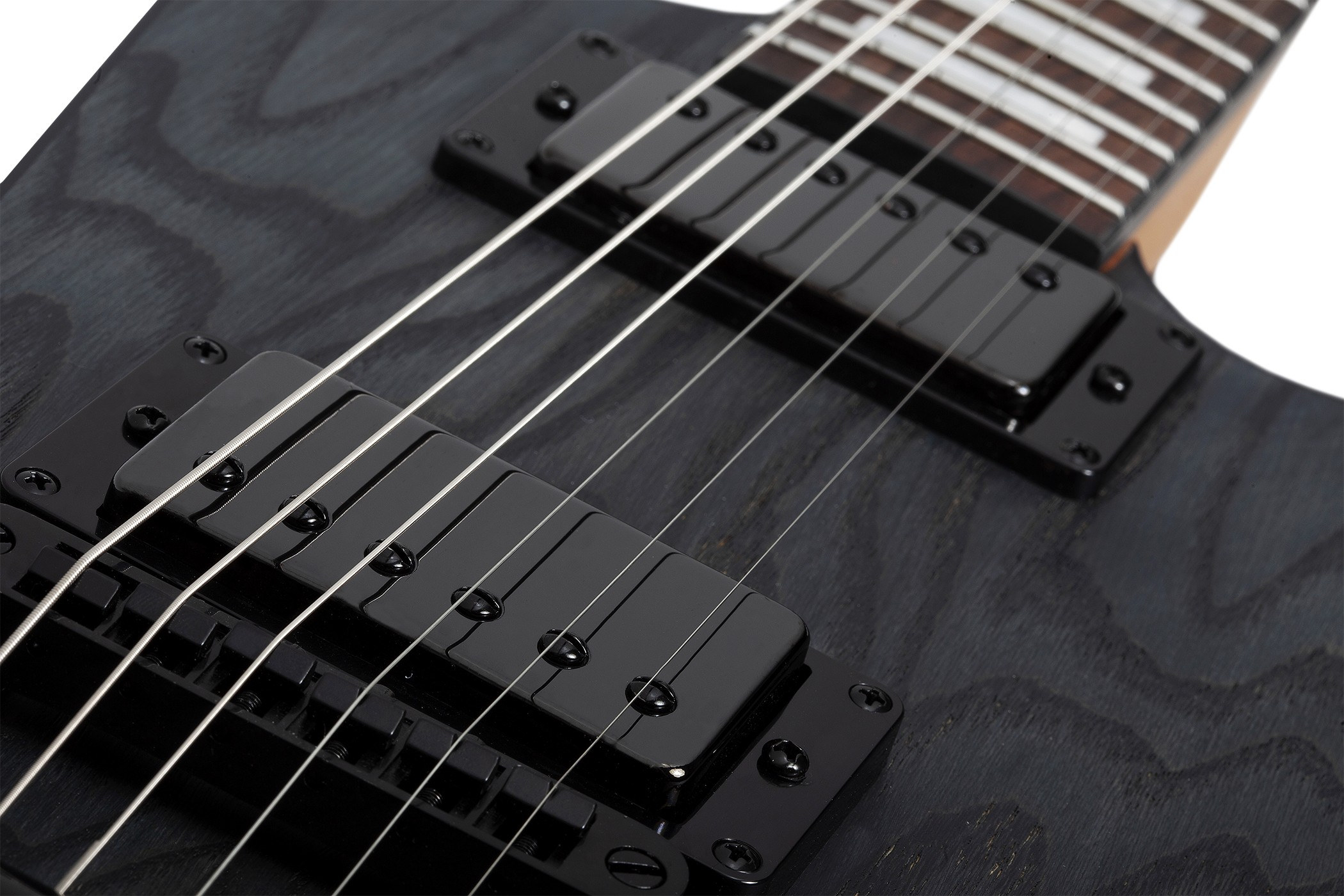
Both right-handed finishes share the same core recipe. The body is mahogany, flat-topped, with black one-ply binding and black hardware. The neck is a bolt-on roasted maple piece in a Thin "C" profile, measuring 20 mm at the first fret and 22 mm at the twelfth. The fingerboard is rosewood, 14 inches in radius, with 22 jumbo frets and white pearloid block inlays. The scale length is 24.75 inches. The nut is graphite, 42 mm wide. The truss rod is a two-way adjustable rod with a 5/32-inch (4 mm) Allen nut. The bridge is a Tune-O-Matic with a stopbar tailpiece. The electronics are a pair of Schecter '78 humbuckers with black metal covers, one in the neck and one in the bridge, with a master volume, a master tone, and a three-way toggle. The tuners are Schecter-branded. The knobs are metal domes. The guitar ships with a .010–.046 set, listed officially as .010/.013/.017/.026/.036/.046. It is right-handed.
That is the whole shared sheet, taken from Schecter's own product data for items 3966 and 3967. A few things the official listing does not say are worth marking as absences, because they are the details people often assume. The official spec does not list a country of manufacture. It does not give a tuner gear ratio. It does not describe a sculpted heel, a body contour beyond "flat top," or a pickup magnet, output, or resistance figure for the '78 humbuckers. Retailer copy sometimes fills those gaps. We are not going to treat a dealer's adjective as a factory measurement.

Epiphone Les Paul Standard 60s
$699.00 at Guitar Center
The hard case is also not in the box. Schecter lists the 1702 SGR-E-1 Hardcase as sold separately. On the company's site as of November 19, 2026, that case is $229.00, with a $319.00 price shown above it. If you are buying this as a gift and you want it to travel, budget for the case or a quality gig bag on top of the $499.00 guitar.
Two Tops, Two Looks, the Same Electronics
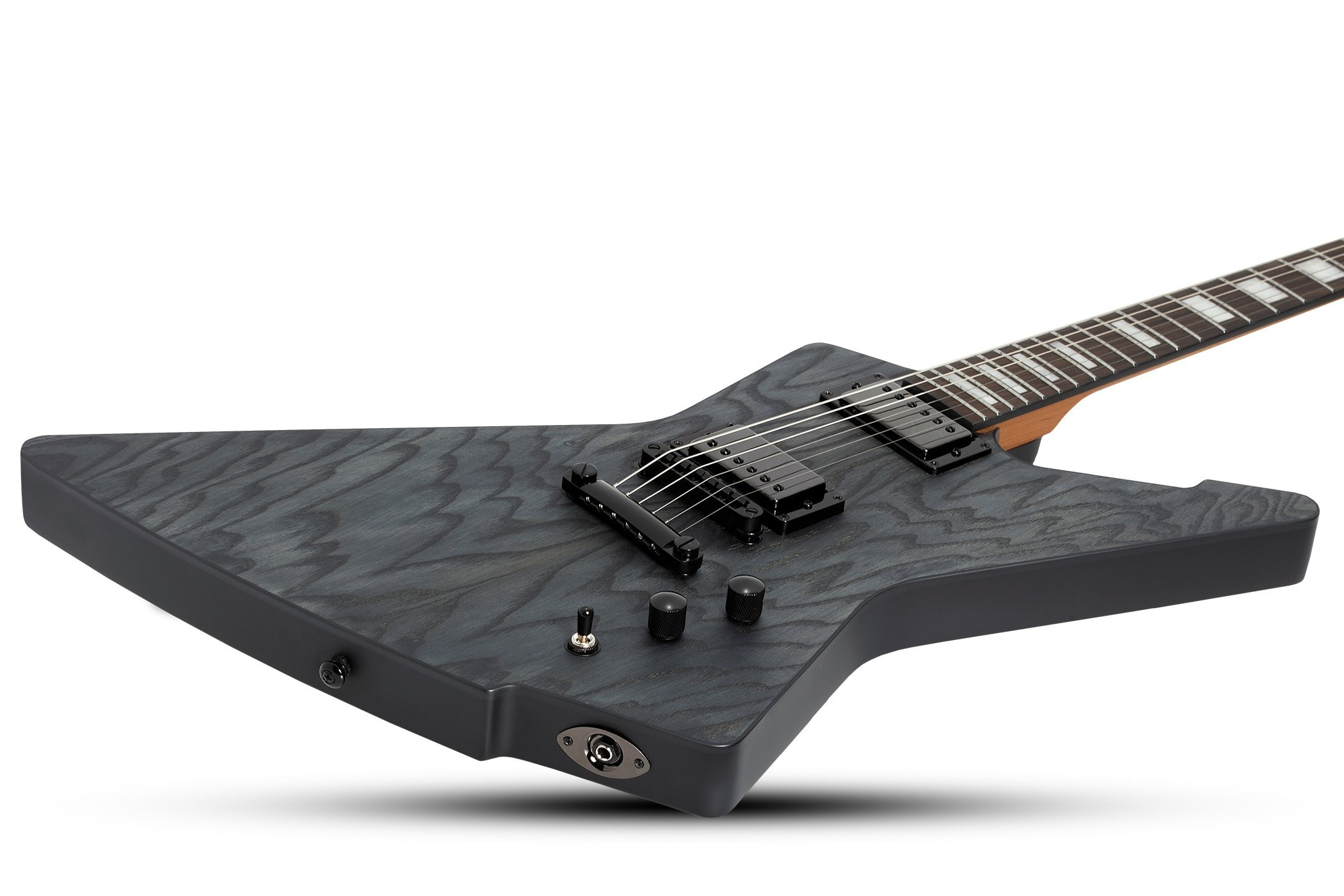
The only official construction difference between the two right-handed models is the top wood. Blood Burst, item 3966, gets a flamed-maple top. Charcoal Satin, item 3967, gets an ash top. Both sit on the same mahogany body, with the same neck, hardware, and pickups. That is a cleaner split than a lot of "two finishes" launches, where the catalog photos change and the wood does not.
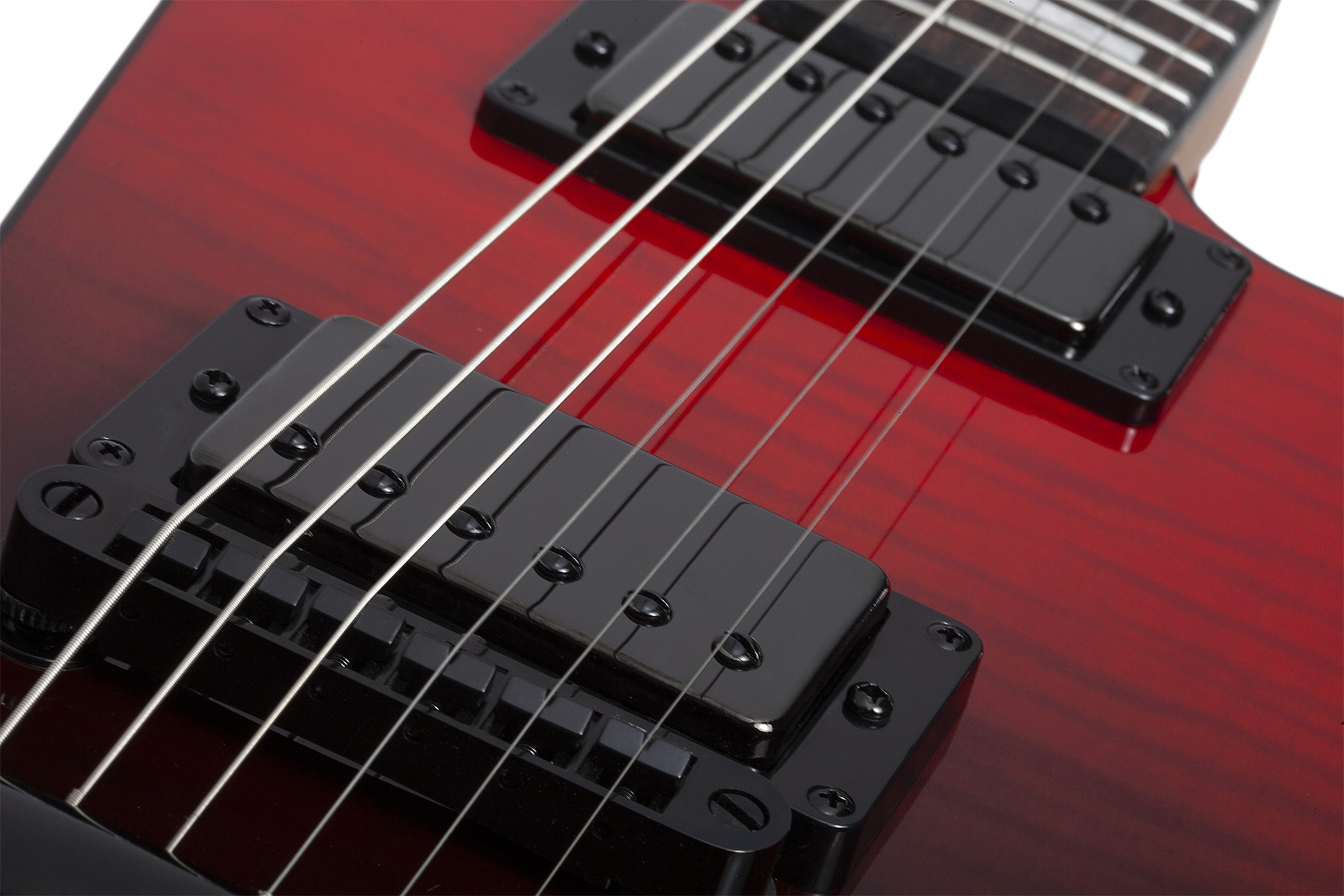
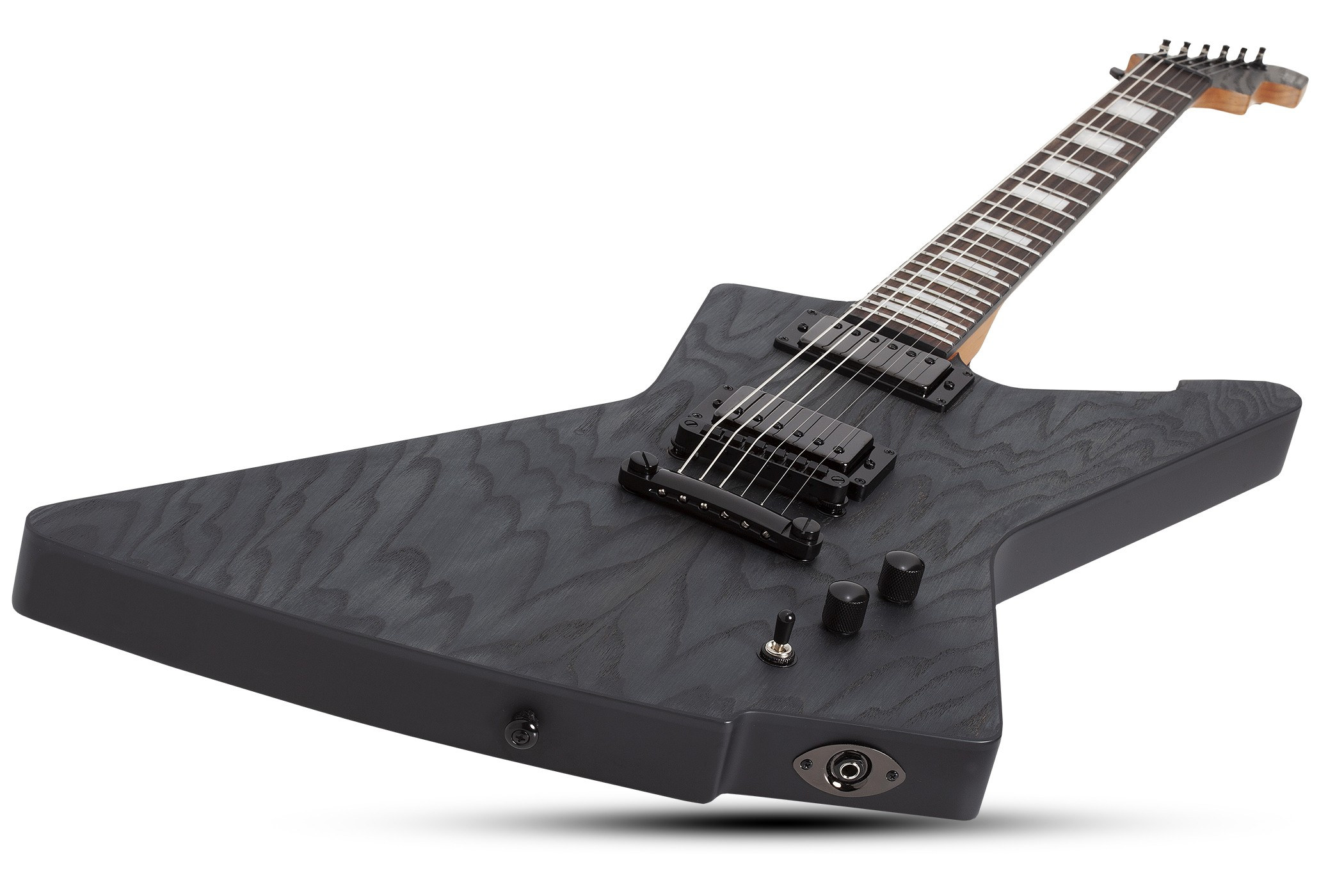
On the official photographs, the difference is not subtle. Blood Burst is a red-to-black fade over visible flame, with a gloss that reads as a stage guitar even in a still picture. Charcoal Satin is the quieter of the two, a dark, open ash grain under a satin coat, closer to a charcoal wash than a burst. If you are shopping from pictures, and most people buying a $499.00 guitar in November will be, those two photographs tell you more than a finish name will. The Charcoal Satin top is the one a few retailer pages have already mislabeled as flamed maple. Schecter's own specification says ash. We are sticking with Schecter.
There is a left-handed version as well, and it is not a complete mirror of the two-finish right-handed pair. The official E-1 Standard LH, item 3968, is listed in Blood Burst only, with the same flamed-maple top, mahogany body, roasted-maple neck, and '78 humbuckers. As of November 19, 2026, Schecter prices it at $549.00, with a $769.00 price shown above that figure. If you play left-handed and you wanted Charcoal Satin, the official catalog does not currently offer it.
The Neck, the Bridge, and a 24.75-Inch Scale
A 24.75-inch scale is the Gibson-derived measurement, not the 25.5-inch Fender-derived one that shows up on a lot of modern metal bolt-ons. On paper, that usually means slightly less string tension at a given pitch and a slightly softer feel when you bend, which is one reason the scale has stayed attached to Les Paul and SG necks for decades. It is also why this E-1 will feel like a different instrument than a 25.5-inch Schecter C-1 or Avenger in the same Standard series, even before you get to body shape. Whether that is an advantage depends on the player. It is not a feature we can grade from a spec sheet. It is a fact of the design, and it is one of the clearer dividing lines in this price range.
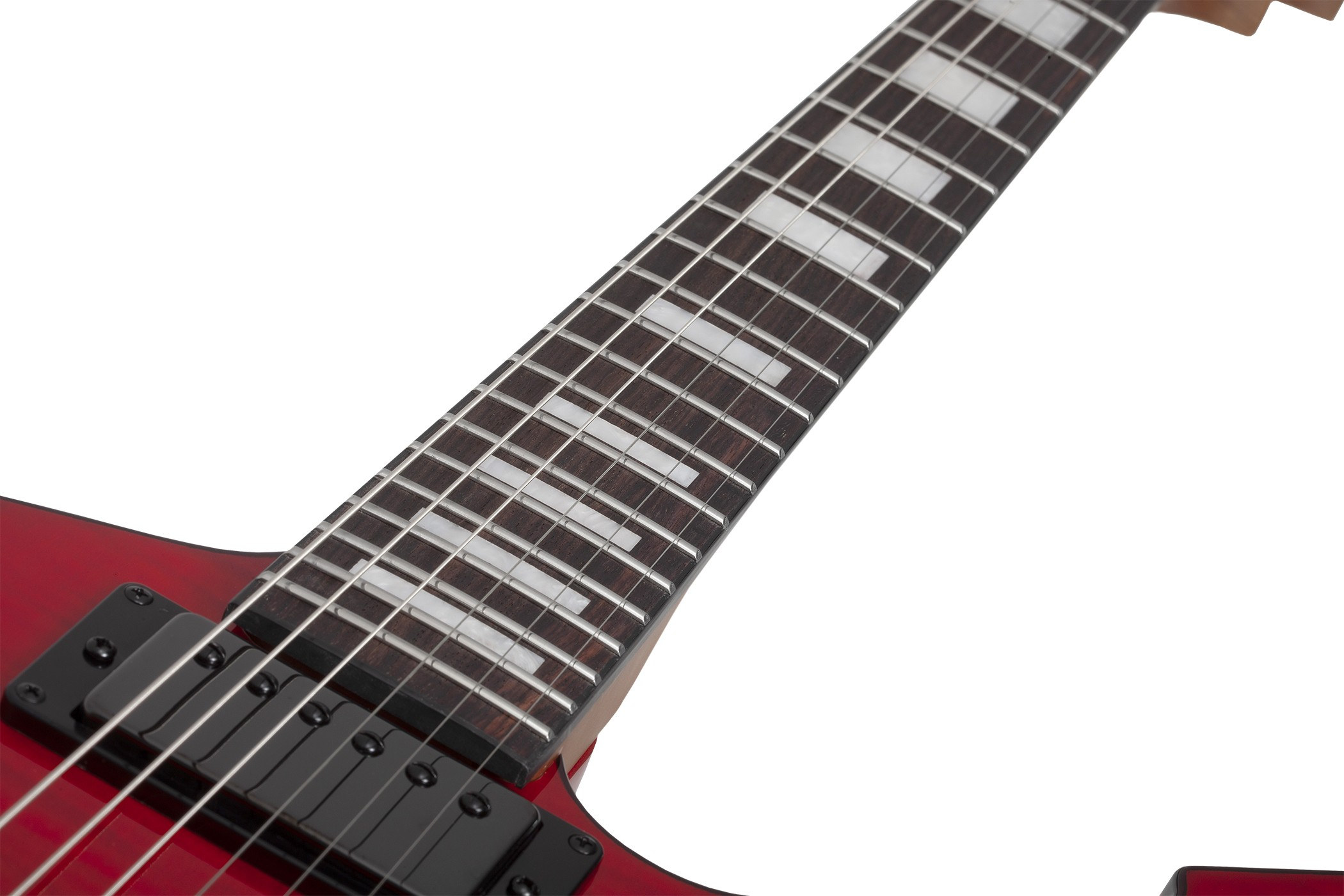
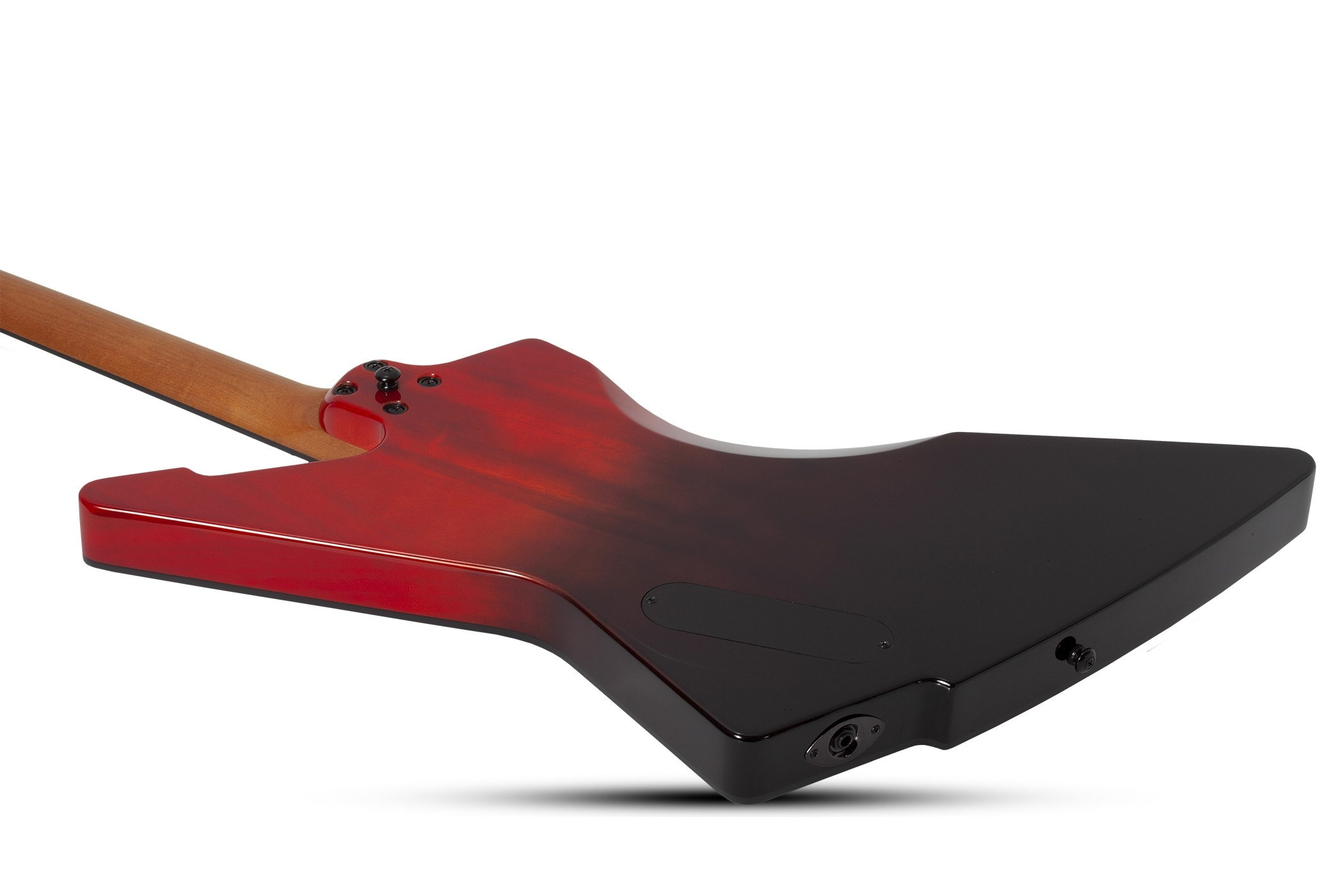
The neck profile is listed only as Thin "C," with those 20 mm and 22 mm depth figures. That is a slim neck by traditional Les Paul standards, and it is in line with the rest of Schecter's current Standard series. The 14-inch radius is flatter than the 12-inch board on the older set-neck E-1 Standard, and flatter than a vintage Gibson radius. Combined with jumbo frets, it is the kind of board Schecter has been putting on fast-playing production guitars for a long time. The official photos of the back of the instrument show a roasted-maple neck that is clearly lighter in color than the body, with a straightforward bolt-on heel. We are not going to call that heel "sculpted" unless Schecter does.
The hardware is deliberately simple. A Tune-O-Matic and stopbar is the fixed-bridge setup most players already understand. There is no Floyd Rose, no licensed locking tremolo, and no coil-split listed on the official control layout. If you want dive bombs, this is the wrong E-1. If you want a hardtail that stays in one tuning and does not ask you to set a double-locking system, the official sheet is built for that. The graphite nut and Schecter tuners are the official stability features. The photographs of the headstock show a six-in-line Schecter headstock, not an Explorer-style three-and-three, with the logo on the face and the roasted maple visible on the back.
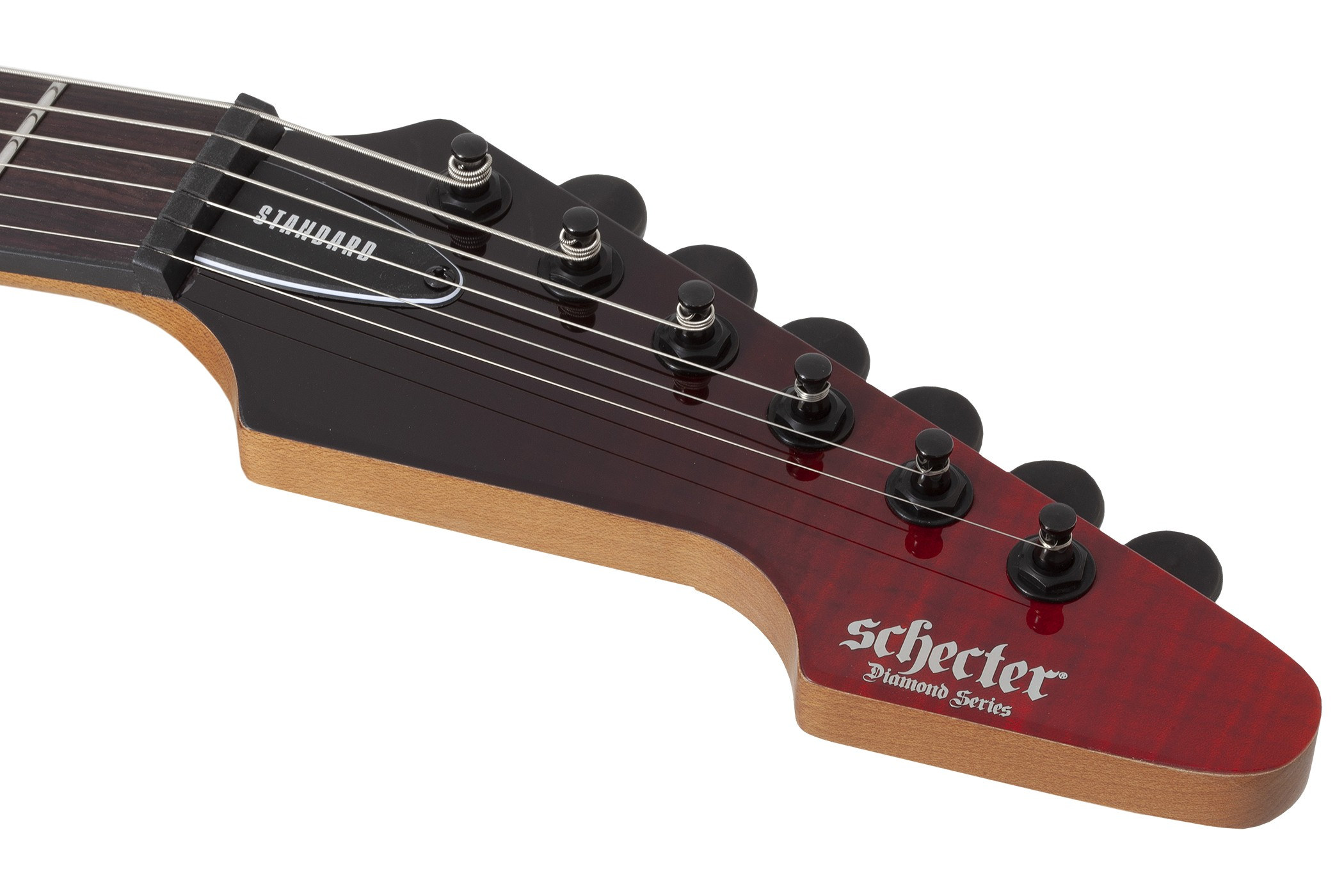
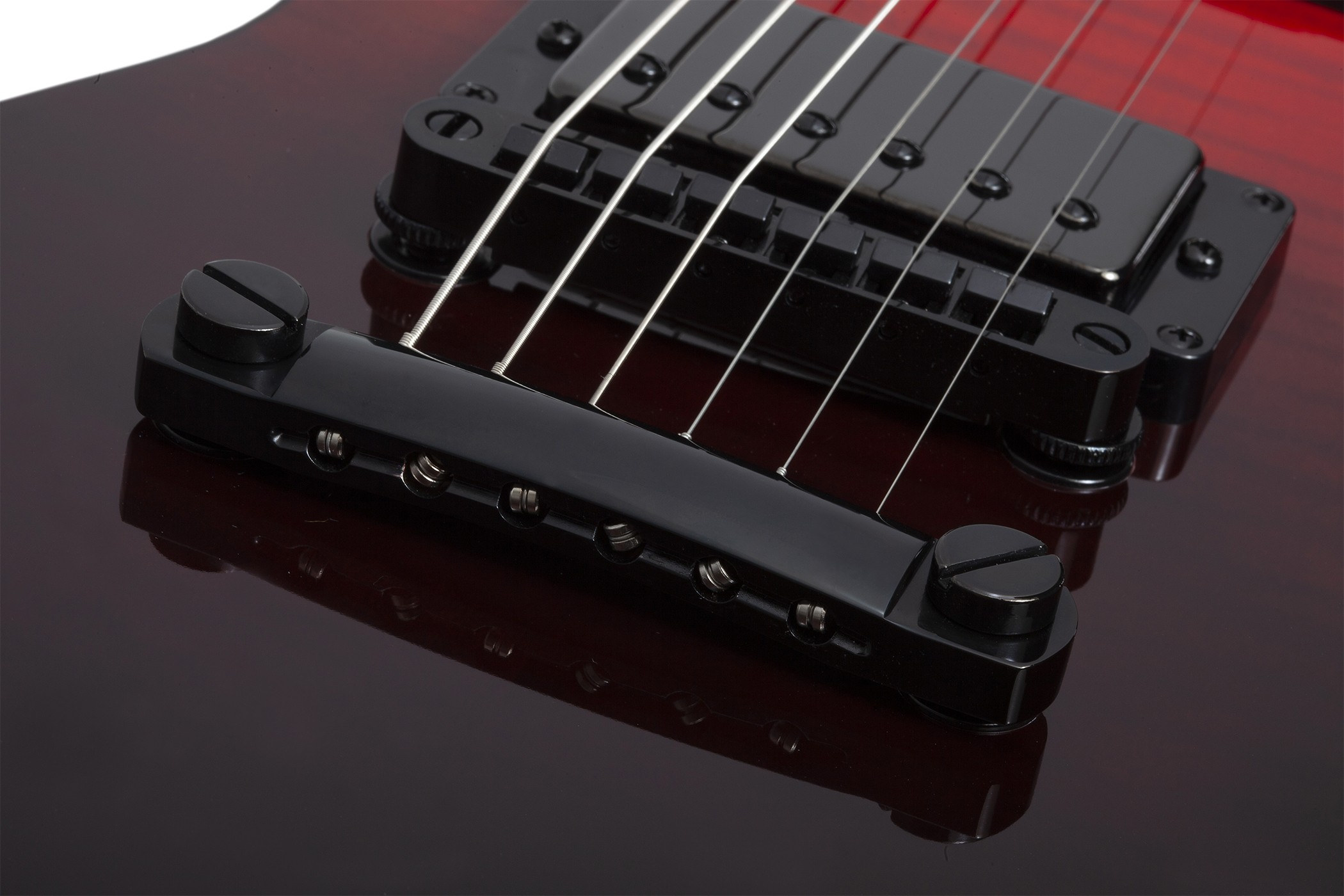
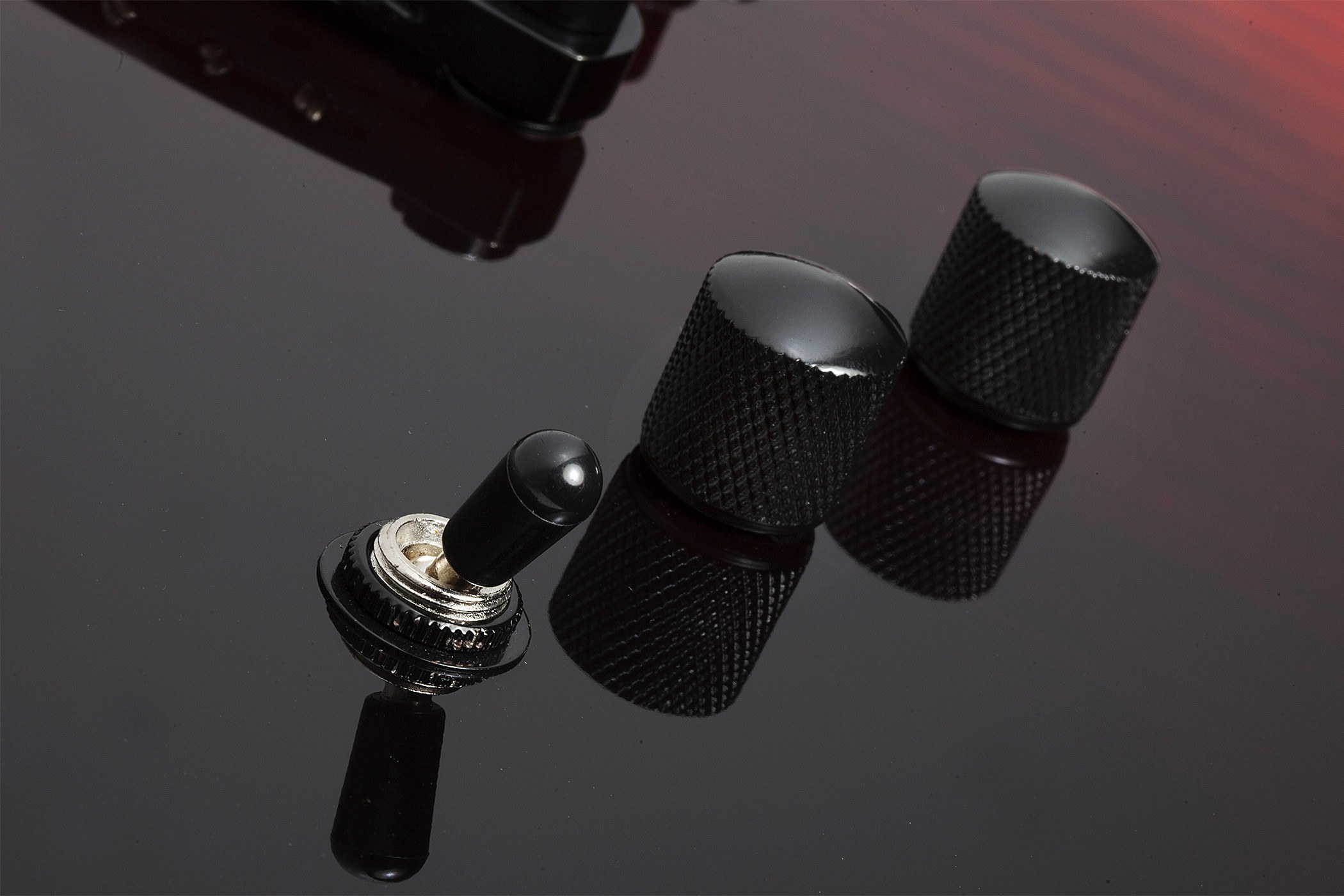
Schecter at 50, and How a Parts Shop Became a Metal Brand
The price makes more sense if you remember what kind of company is putting this guitar out. Schecter Guitar Research started in 1976, when David Schecter opened a repair shop in Van Nuys, California, and began building replacement parts — necks, bodies, pickups, bridges, pickguards, wiring — rather than finished instruments. Guitar.com's 2023 history of the brand, drawing on that early period, notes that complete Schecter guitars did not arrive until 1979, assembled in small numbers from especially good wood, and that Tom Anderson was running the wood shop by 1977. By 1983 the company had been sold to a Texas investment group and moved to Dallas. After legal trouble with Fender in the mid-1980s, the operation folded in late 1986 or early 1987, then was purchased in 1987 by Hisatake Shibuya, the Japanese businessman who also owned ESP and Musicians Institute. The company came back to California as a small custom shop.
The modern volume story starts later. In 1996, Michael Ciravolo became president. In the summer of 1998, Schecter launched the Diamond Series: Korean-built production guitars, set up in the United States, at prices that were no longer custom-shop money. That is the line that turned Schecter from a Los Angeles parts-and-custom name into the metal-catalog brand most players mean when they say the word now — the Omen, Hellraiser, Damien, Demon, and artist models that filled guitar-shop walls in the 2000s and 2010s. The official site still lists the company in Sun Valley, California.
2026 is 50 years after that Van Nuys start, and Schecter's own site is currently featuring a 50th Anniversary Collection, including a C-1 50th Anniversary. We are not going to pretend this E-1 Standard is an anniversary model. It is not listed that way. It is a Standard-series production guitar that happens to arrive in the anniversary year, at the price point where Schecter has always done some of its most important work: giving a recognizable shape to players who are not buying a $1,499.00 SLS.
The Standard series itself is the immediate family. On Schecter's site as of November 19, 2026, the Avenger Standard and the C-1 Standard are both listed at $399.00, with a $569.00 price shown above each. Related listings on the official Avenger Standard page also show the PT Standard and the Solo-II Standard at $399.00, and the C-1 Standard Plus at $549.00. The new E-1 Standard sits $100.00 above the $399.00 Standard-series floor on that official list. You are paying the extra hundred, on paper, for the E-1 shape, the 24.75-inch scale, the '78 humbuckers, and, depending on the finish, either a flamed-maple or an ash top.
How It Sits Among Other Sub-$500 Metal Guitars
A $499.00 street price, officially, puts the E-1 Standard in a crowded bracket, and the honest way to compare it is by recipe, not by a shootout we have not played.
Inside Schecter's own catalog, the closest relatives are those $399.00 Standard-series models. The Avenger Standard is the other angular option: a mahogany body, roasted-maple bolt-on neck, 25.5-inch scale, 24 jumbo frets, 14-inch radius, and Schecter Diamond Standard humbuckers, officially $399.00 as of November 19, 2026. Guitar Center had the Charcoal Satin Avenger at $399.00 the same day. It is a more pointed, Avenger-shaped guitar with an extra two frets and a longer scale, for $100.00 less on Schecter's official list. If the E-1 outline is not a requirement, it is the in-house alternative.
The C-1 Standard is the conventional double-cut in the same series, also officially $399.00 as of November 19, 2026, and $399.00 at Guitar Center in Charcoal Satin on the same date. It uses a 25.5-inch scale, 24 jumbo frets, a roasted-maple neck — the C-1 official sheet specifies a roasted maple/purpleheart multi-ply neck with carbon-fiber reinforcement rods — and a Schecter Diamond hardtail rather than a Tune-O-Matic. It is the better comparison if you want Schecter's current Standard-series build quality in a shape you already know, and you do not need the Explorer-style body.
Fender Player II Telecaster
$849.99 at Guitar Center
Outside the brand, the comparison that keeps coming up for angular metal guitars under $500 is Jackson's JS Series. On Jackson's official site as of November 19, 2026, the JS Series King V JS32 is listed at $469.99. That guitar is a different proposition: a poplar body, a 25.5-inch scale, a bolt-on maple neck, 24 jumbo frets on a 12-to-16-inch compound-radius amaranth board, Jackson high-output ceramic humbuckers, and a Floyd Rose-licensed Jackson double-locking tremolo. If the priority is a locking tremolo and a V, the Jackson is officially cheaper than the E-1 Standard and built around a different job. If the priority is a 24.75-inch mahogany guitar with a stopbar, it is not a substitute.
A step above this bracket, ESP's official site listed the LTD EC-256 at $599.00 as of November 19, 2026. That is a single-cut, not an Explorer-style guitar, with set-neck construction, a mahogany body and three-piece mahogany neck, 22 extra-jumbo frets, a Tune-O-Matic and tailpiece, and ESP Designed LH-150 humbuckers with a coil-split. It is in the conversation because it is a familiar sub-$600 mahogany/humbucker formula, not because it is the same shape. We did not find a current official U.S. price we could stand behind today for a new Epiphone Explorer; the Inspired by Gibson Explorer page we opened was marked no longer available. We are not going to invent one.
The point of those comparisons is not to declare a winner. It is to show what $499.00 actually buys on November 19, 2026. The E-1 Standard is not the cheapest metal-shaped guitar in the neighborhood. Schecter's own Avenger Standard and C-1 Standard undercut it by $100.00 on the official list, and Jackson's King V JS32 is officially $469.99 with a locking tremolo. What the E-1 Standard uniquely offers in that group, according to the official sheet, is Schecter's E-1 outline, a mahogany body with either a flamed-maple or ash top, a 24.75-inch roasted-maple bolt-on, and a pair of '78 humbuckers, at the bottom of a line that otherwise starts north of $1,100.00.
A Holiday Gift, With the Usual Caveats
If you are buying one as a gift, the case for it is straightforward. The official price is $499.00 as of November 19, 2026. There are two visually distinct right-handed finishes, so you can choose between a satin ash guitar and a flamed burst without changing the hardware. The shape is immediately recognizable. The controls are the ones most players already know. And Schecter has spent a couple of decades making production guitars in this part of the market, which is a more useful fact than a first-impression YouTube riff.
The caveats are just as straightforward. We have not played it, so we cannot tell you whether the '78 humbuckers are the right voice for a high-gain rhythm sound, or whether the bolt-on heel gets in the way, or what the factory setup is like when the guitar lands. Several U.S. retailers were still in preorder or coming-soon territory when we checked on November 19, 2026. Music & Arts listed both Blood Burst and Charcoal Satin at $499.00, available for preorder. Sweetwater listed the Blood Burst at $499.00 as a coming-soon item. Guitar Center's Schecter Standard series page listed the Charcoal Satin E-1 Standard at $499.00 the same day; we were not able to open a standalone Guitar Center product page for either finish. Yandas Music, a Schecter dealer, listed both right-handed finishes at $499.00 and showed stock on its site. American Musical Supply's catalog feed, last updated November 16, 2026, did not include the new E-1 Standard when we searched it, and we could not confirm a live AMS product page today.
Availability will change. The price may too. The official $499.00 figure, against that $719.00 list price on Schecter's own page, is the number we can defend today. If you order one for the holidays, check the ship date before you wrap the box, and decide whether you want to add the official $229.00 SGR-E-1 case.
Schecter did not invent the angular solidbody, and it did not invent the $499.00 metal guitar. What it did, this month, is put its own E-1 shape into the Standard series at a price that finally matches the way most players actually shop for a first serious Explorer-style instrument. The official sheet is complete enough to take seriously. The rest, as always, will have to wait until one of them is on a bench.
If you want the longer history of the silhouette this guitar is aiming at, the Gibson Explorer history is already up, and the Flying V history covers the other pointed classic from the same 1958 moment. For the rest of the news desk, Guitar News / Music Releases is the queue.
Similar gear
These are similar options and substitutes, not the artist's exact gear or an endorsement by the artist.
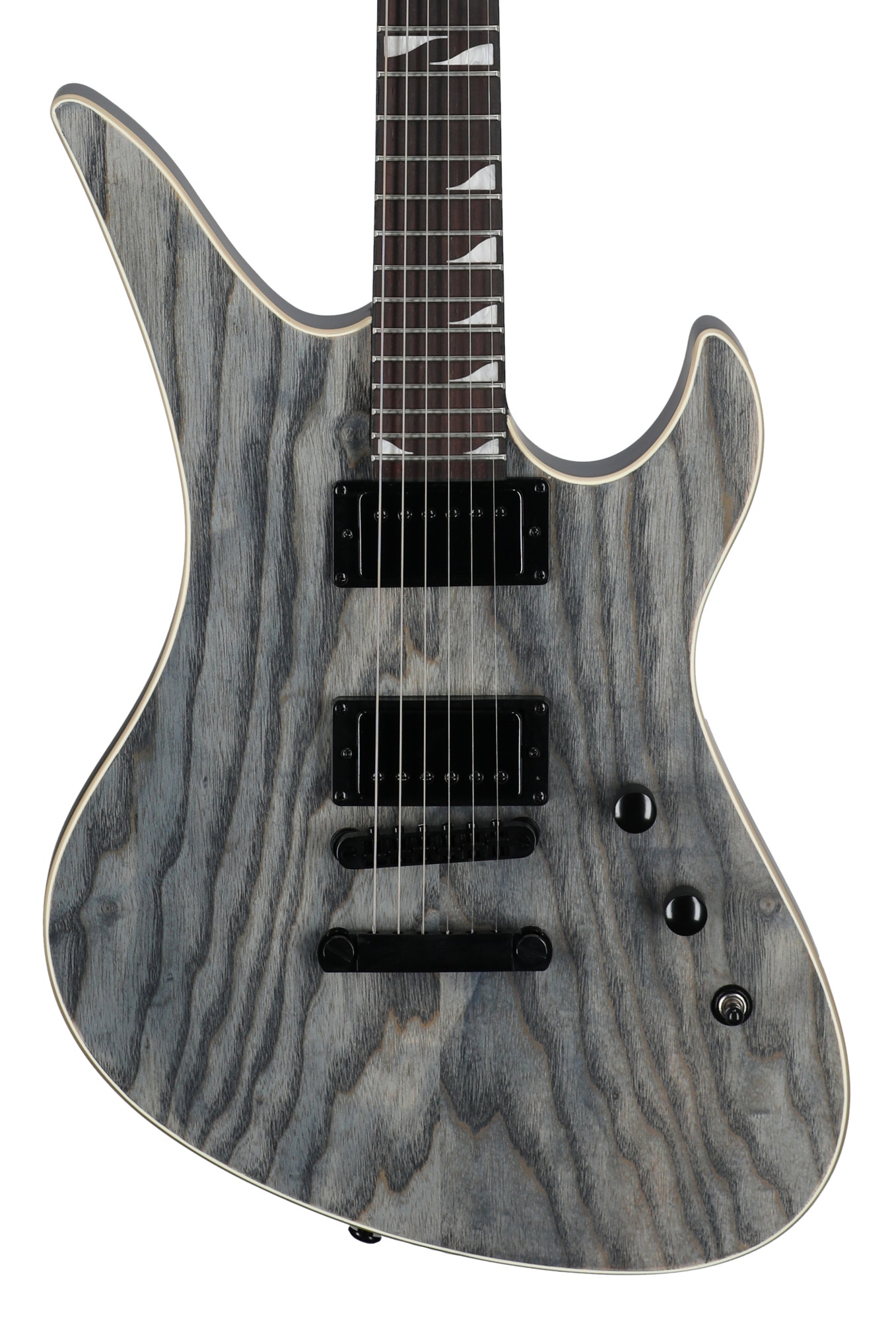
- Schecter Avenger Standard Electric Guitar, Charcoal Satin (Standard series; not the new E-1)Compare prices at Plugged Gear Co.
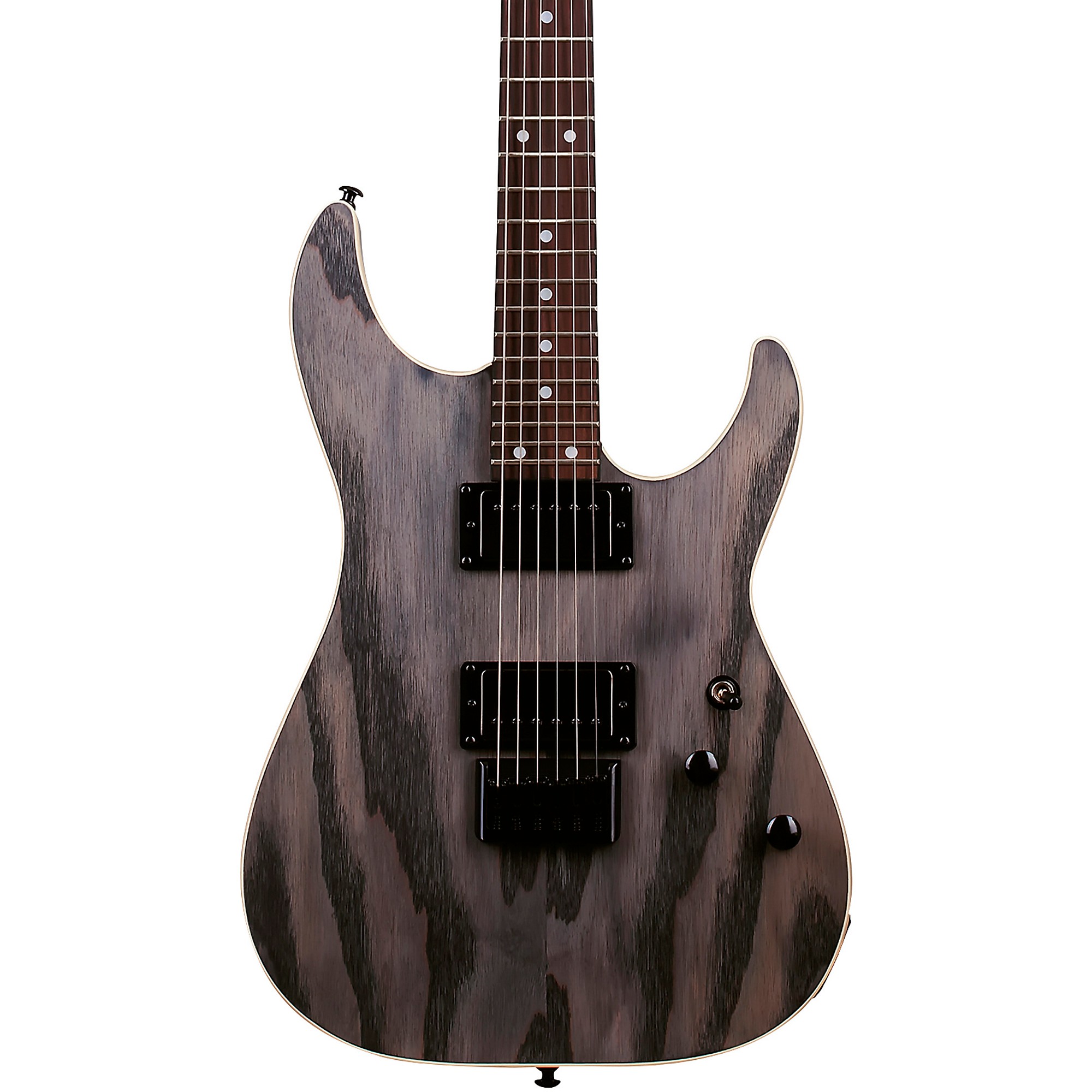
- Schecter C-1 Standard Electric Guitar, Charcoal Satin (Standard series double-cut; not the new E-1)Compare prices at Plugged Gear Co.
- Schecter Solo-II Standard Electric Guitar, Blood Burst (Standard series single-cut; not the new E-1)Compare prices at Plugged Gear Co.

- Schecter Omen Extreme-6 Electric Guitar, Blood Burst (a different Schecter series at a similar price; not the new E-1)Compare prices at Plugged Gear Co.

Plugged Gear Co., Guitar Center and American Musical Supply links may earn us a commission from qualifying purchases.
Reader-supported
Keep Guitar Alive
Enjoyed this story? The Guitar Plugged is free to read and reader-supported. If it helped you play, listen or buy a little smarter, chip in to keep guitar journalism like this coming.
One-time contribution, processed securely by Stripe. Contributions are not tax-deductible.
Experience-driven coverage, not algorithm bait.
- 20+ years of guitar playing experience
- Real-world retail experience at Guitar Center
- Thousands of hours testing guitars, amps, and pedals
- A community of 50,000+ guitar enthusiasts across platforms
- Partnerships with Fender, DistroKid, TrueFire, Card Chords, and Enya
- Editorial standards published openly — see how we test gear
The Modern Guitar Magazine. Delivered to your inbox.
No spam. No gimmicks. Just great guitar content — stories, tones, iconic solos, and honest gear takes. Every week.
Ask GP
20 free questions a dayStill curious? Ask GP about this story.
Your personal classic-rock and guitar guide — ask anything about Schecter's New E-1 Standard Puts.
Discussion (0)
Sign in to join the discussion.
Sign in to commentLoading comments…
Discover another guitar story
Swipe through our latest features, breaking news and iconic solos — one story at a time.
Open Swipe →More Guitar News
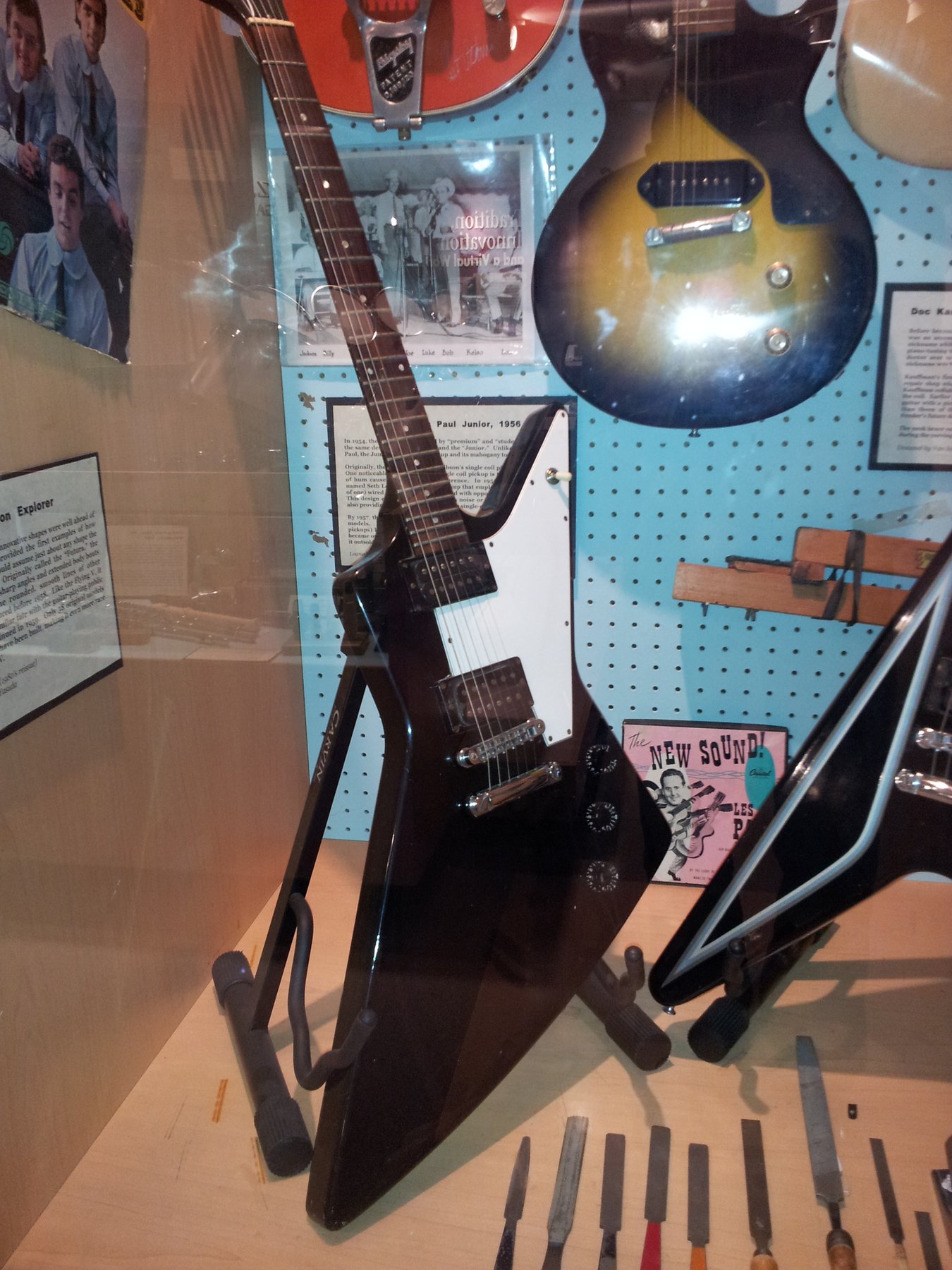
The Gibson Explorer History: How Gibson's 1958 Flop Became Hard Rock's Sharpest Silhouette
Gibson shipped just 22 Explorers in 1958–59 and shelved the design. Here's how the most radical shape of the Modernistic era became hard rock and metal's sharpest silhouette.
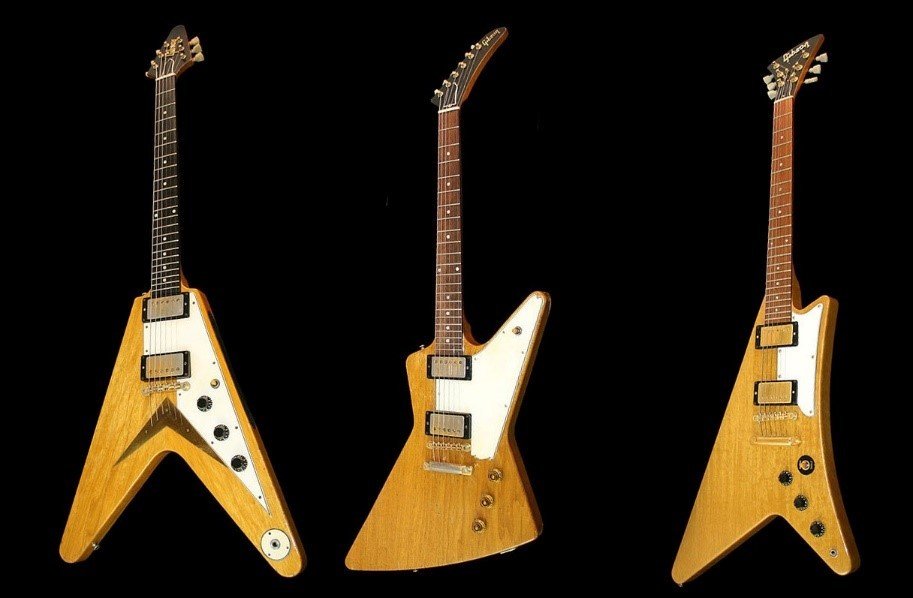
Gibson Flying V History: From 98-Guitar Flop to Metal's Favorite Shape
Gibson made fewer than a hundred Flying Vs in 1958–59 and nearly gave up on the shape. Here's how a futuristic flop became the guitar of blues kings, Hendrix, UFO, Judas Priest and Metallica, and which V to buy today.