
Boss DS-1 History: The Orange Box That Defined Distortion
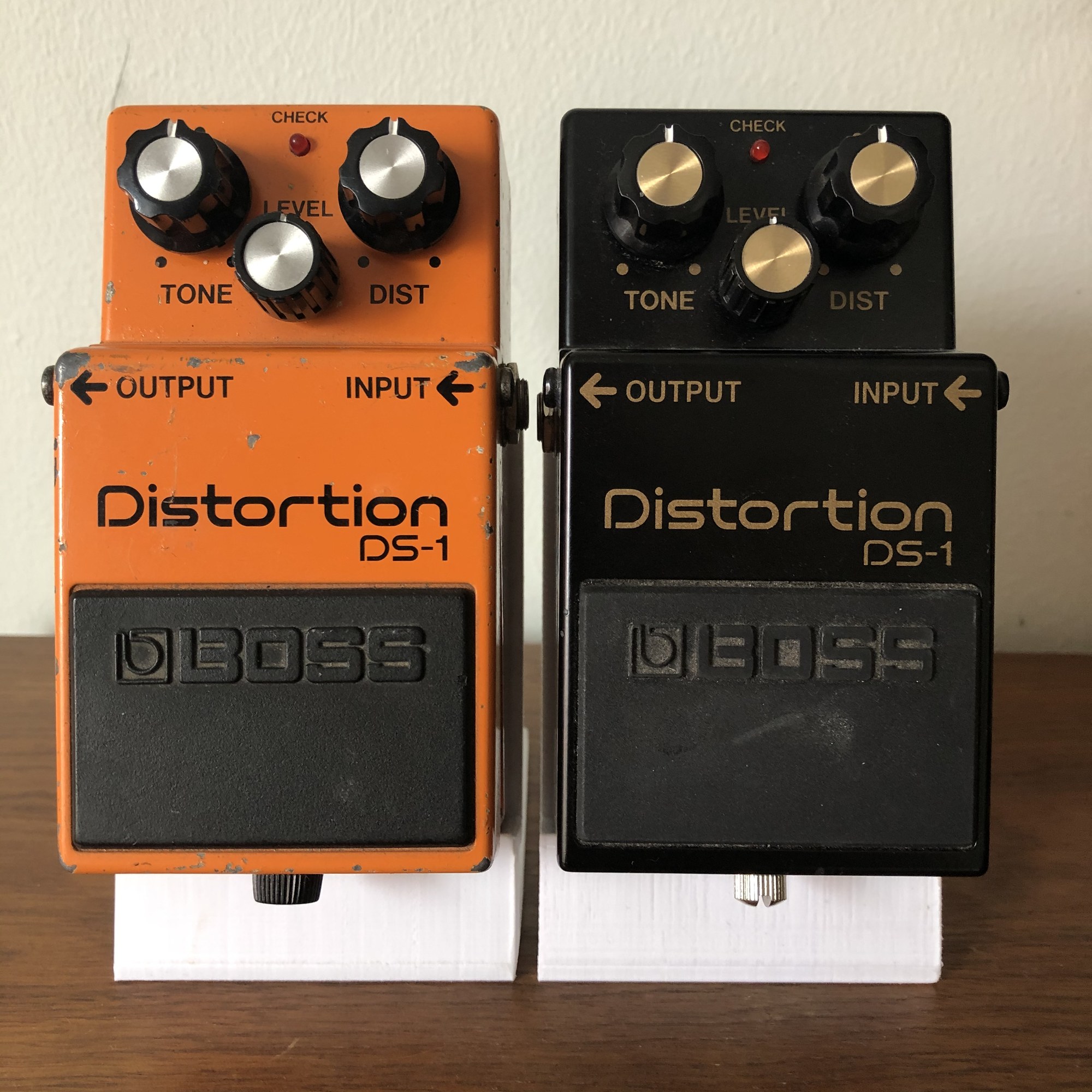
The classic orange Boss DS-1 next to the black DS-1-4A, the 40th-anniversary edition Boss sold throughout 2018.
Photo: Johan Rosén / Kuriosatempel, CC BY-SA 4.0, via Wikimedia Commons
The Boss DS-1 history from its 1978 debut to the Waza Craft DS-1W: the circuit, the chip changes, the mods, and the players who made the orange box famous.
There's a good chance the first distortion pedal you ever stepped on was orange. The Boss DS-1 Distortion came out in 1978, it has never left the Boss catalog, and Boss says it has sold more than 1.5 million of them, which makes it the best-selling pedal in the company's compact line. It sat on the floor in front of Kurt Cobain when Nirvana cut Bleach, in front of Joe Satriani when he had to turn a surprise hit record into a live show, and in front of countless teenagers plugging into practice amps in their bedrooms.
It's also one of the most argued-about pedals ever made. Players call it harsh, fizzy, thin, and cheap. Other players, some of them very famous, have said it beats almost anything else on the market. Both camps are describing the same three knobs.
This is the Boss DS-1 history: where the pedal came from, what's actually inside it, why the "Made in Japan" versions get collectors excited, how modders turned it into a cottage industry, and where the 2022 Waza Craft DS-1W fits in.
Before the DS-1: A Fuzz World
To understand why the DS-1 mattered, you have to remember what "dirt in a box" meant in the mid-1970s. Most drive pedals on the market were fuzzes. The Maestro FZ-1, the Fuzz Face, the Tone Bender, and the Big Muff all have their place in rock history (we've covered several of them here at TGP), but they share a personality: woolly, splattery, and often unpredictable. Push them hard and the low strings tend to turn to mush.
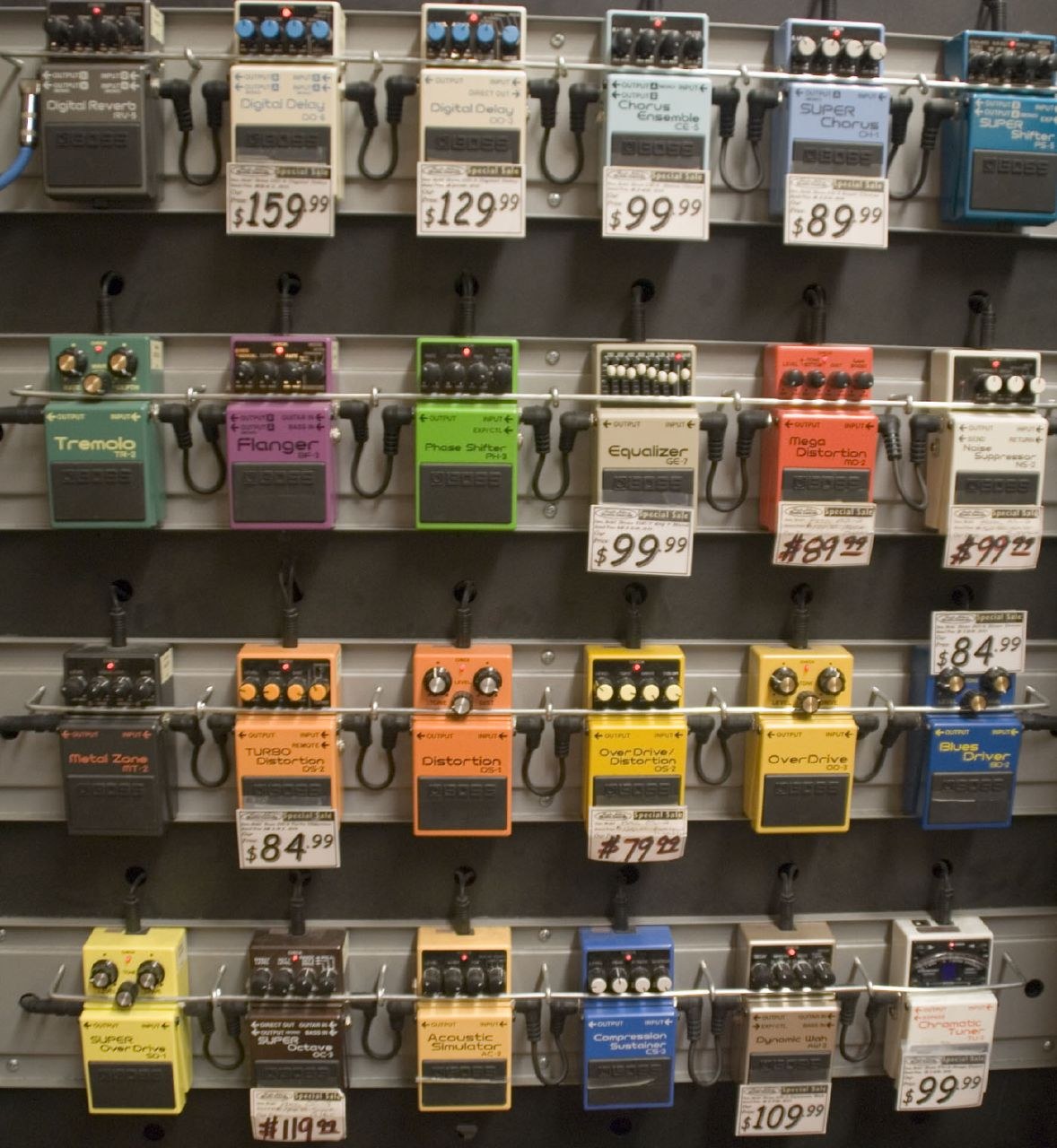
Boss, the effects brand of Roland, had already made a name for itself with the CE-1 Chorus Ensemble. In 1977 it launched the compact pedal series that still defines the company: the OD-1 Overdrive, the PH-1 Phaser, and the SP-1 Spectrum. Boss now calls those first three the "traffic light" pedals because of their yellow, green, and red enclosures.
The OD-1 matters to this story. It used an asymmetrical clipping circuit to imitate a tube amp starting to break up, and it gave players a smoother, more amp-like drive than a fuzz. Boss's own history of the DS-1 describes the next step plainly: the engineers wanted to tackle full-throttle distortion and improve on what was already out there.
1978: The Orange Box Arrives
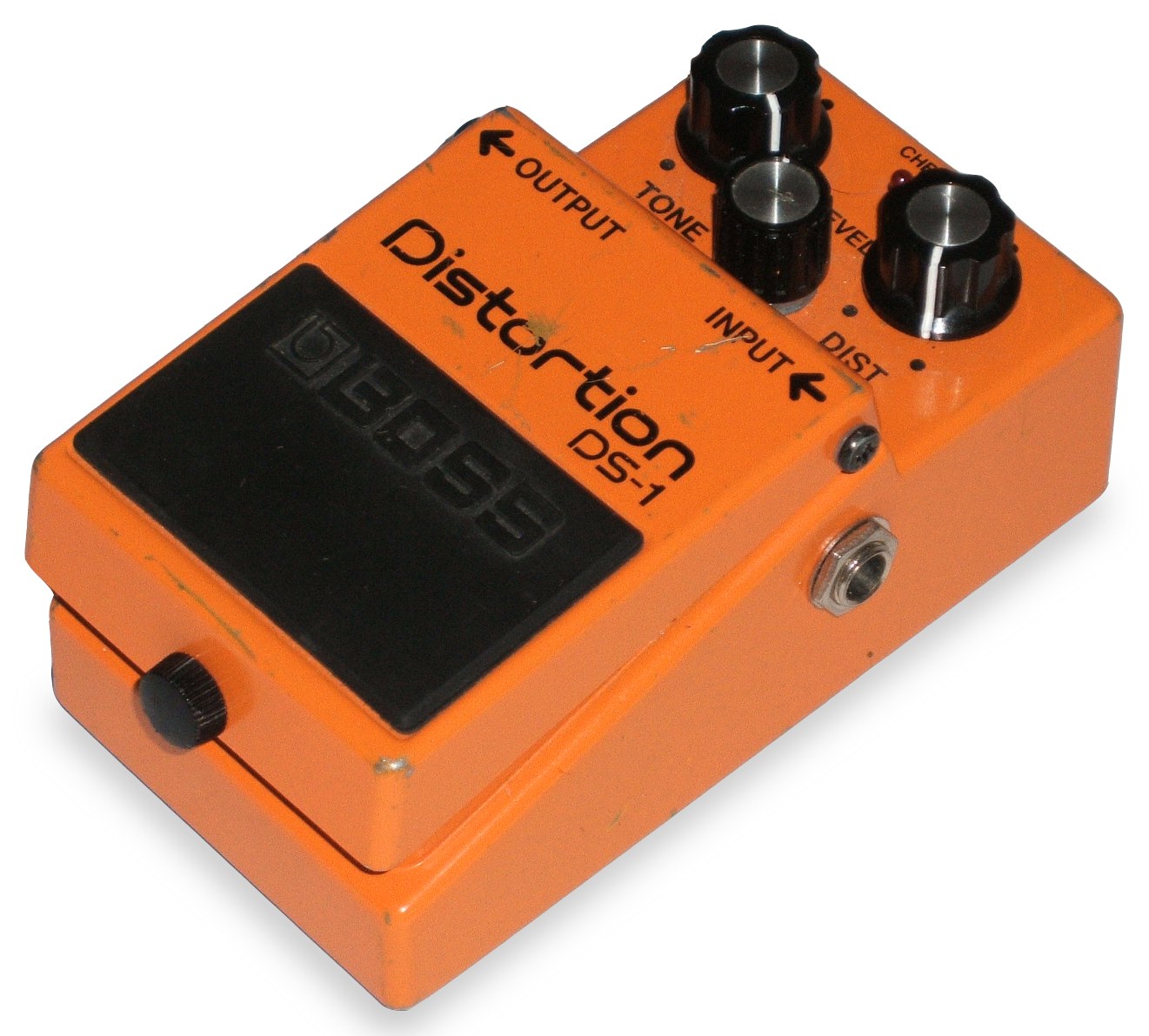
The DS-1 Distortion joined the compact line in 1978. One Japanese collector who has studied Boss serial numbers dates the first production run to June of that year. It was the fourth compact, and it came in an orange enclosure that's now about as recognizable as a Strat headstock.
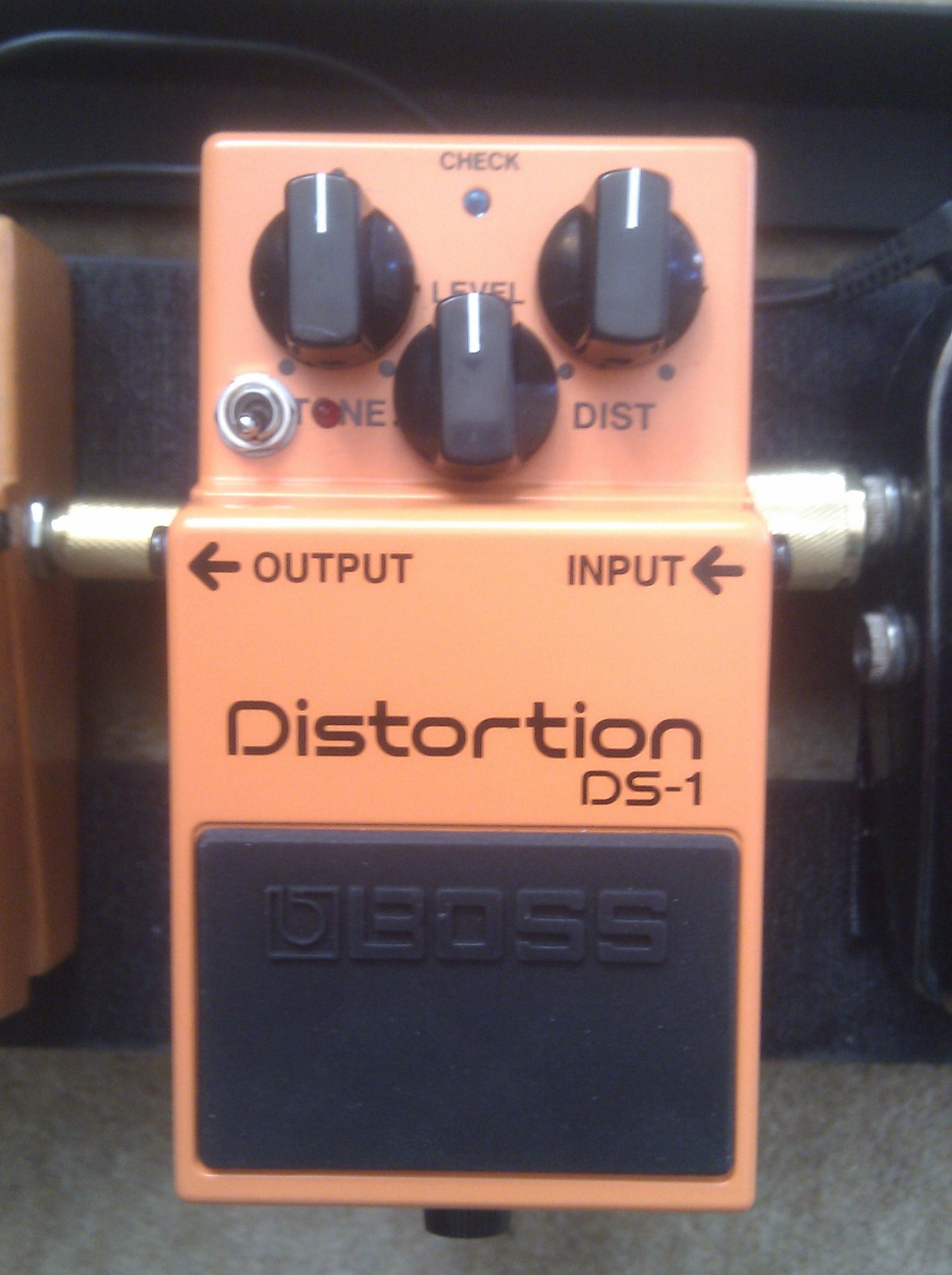
The control layout was simple enough to understand without reading a manual:
- Tone: one knob that shapes the overall voicing
- Level: output volume
- Dist: the amount of gain
That's it. No mid knob, no voicing switch, no clipping options. You set three dials and you stomp.
It's worth noting that 1978 was a big year for distortion. The ProCo Rat appeared the same year, and both pedals used hard-clipping diodes to get a more aggressive, more saturated sound than the soft-clipping overdrives of the time. That hard-clipped sound is a big part of why "distortion" and "overdrive" became separate categories on pedal-store shelves.
What's Actually Inside a DS-1
For a pedal with three knobs, the DS-1 has a surprisingly clever circuit, and understanding it explains most of the arguments about how it sounds.
Two stages, one hard clip
Boss describes the DS-1 as combining the era's two most common drive approaches, a transistor gain stage and an integrated-circuit gain stage, into a single hard-clipping design. In practice, your signal gets boosted by a transistor, then hit with a lot more gain from the chip, and then the peaks get chopped flat by a pair of clipping diodes.
Hard clipping is what gives the DS-1 its edge. Soft clipping, like the Tube Screamer's, rounds off the tops of the waveform gradually. Hard clipping flattens them abruptly, which creates more upper harmonics. Those harmonics are the bite people love and the fizz people complain about.
The tone knob isn't a normal tone knob
Most guitar tone controls are simple treble cuts. The DS-1's Tone knob works more like a seesaw. Boss calls it a "tilt" EQ: turn it one way and you get more bass and less treble, turn it the other way and you get more treble and less bass. There's no setting that's simply "flat."
Boss also points out that the DS-1's voicing has a slight dip in the lower midrange. That one detail explains a lot about how the pedal behaves in different rigs. Into a mid-heavy amp like a classic Marshall or a Fender tweed, the dip gets filled in and the pedal sounds full. Into a scooped amp like a blackface or silverface Fender, the dip stacks on top of the amp's own scoop and things can get thin and spiky. Boss's own suggestion for those amps is to try the Normal input or switch off the bright switch.
If you've ever plugged a DS-1 into a clean Twin, cranked the Dist and Tone, and wondered why it sounded like a hornet in a coffee can, that's the reason. It's not that the pedal is bad. It's that the pedal and the amp are both cutting the same frequencies.
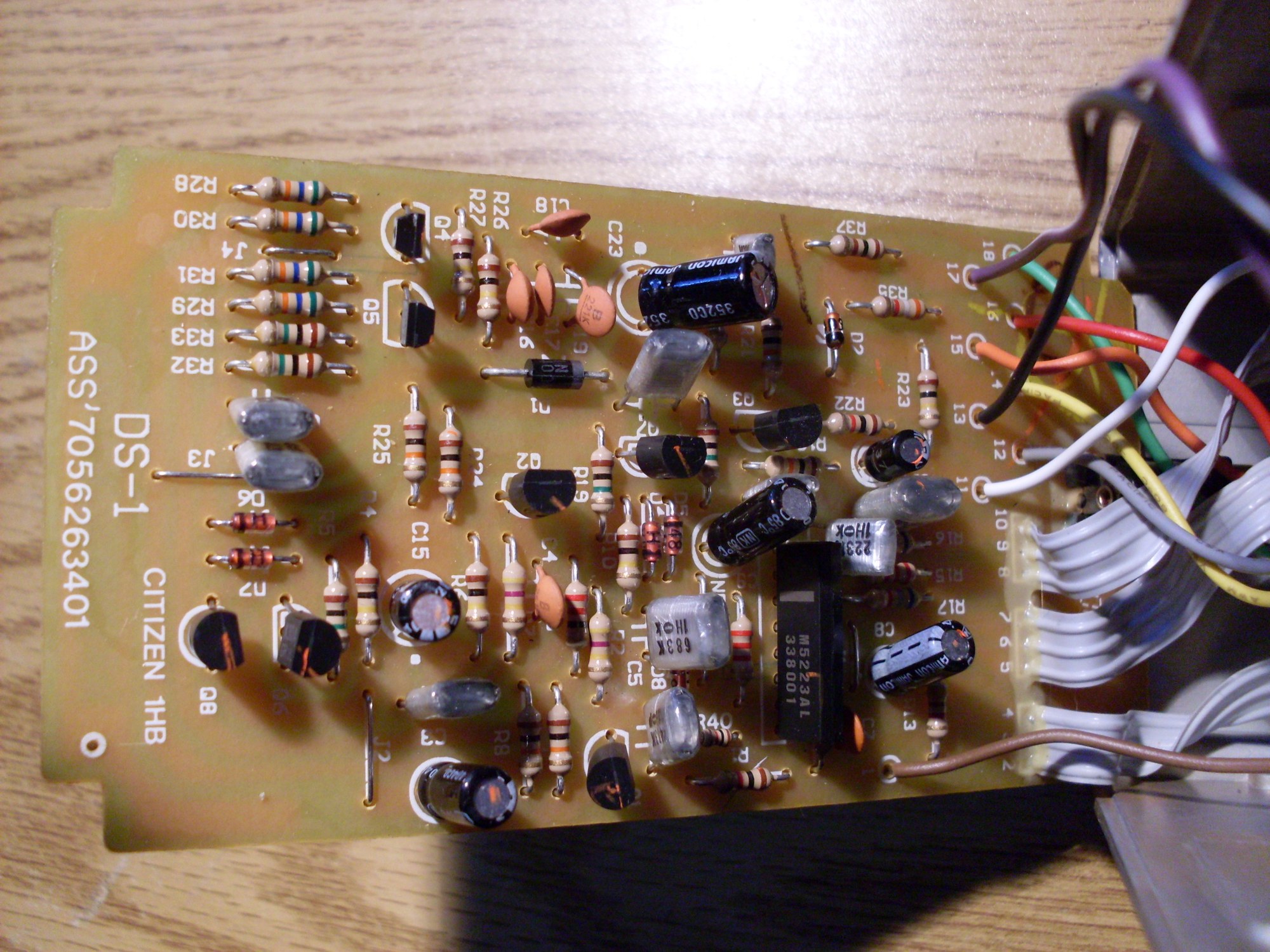
Photo: Roadside Guitars, CC BY-SA 2.0, via Wikimedia Commons
The Chip Story: Why Collectors Care About Early DS-1s
Here's where the Boss DS-1 history gets nerdy, and where a lot of used-market pricing comes from.
The Toshiba TA7136 years (1978 to 1994)
The original DS-1 didn't use a standard op-amp at all. It used a Toshiba TA7136 preamplifier IC. The pedal analysis site ElectroSmash, along with collector research, says early units used the TA7136P, then the TA7136P1, then the TA7136AP from around 1979 onward. Boss's own service notes referred to it as an op-amp, which is why you'll see it described both ways.
The early pedals had a few quirks you wouldn't accept on a modern pedal, but the TA7136 versions are widely described as the warmest and smoothest-sounding DS-1s. They're also the ones collectors chase, partly for the sound and partly because they're the original.
The move to Taiwan
Facing price competition from brands like DOD and Peavey, Boss moved production of several compacts, including the DS-1, from Japan to Taiwan around 1989 and 1990, according to a detailed history published by Stompbox Electronics. Early Taiwan units kept the Toshiba chip, so "Made in Taiwan" doesn't automatically mean "post-redesign." The label on the bottom plate and the chip inside are two different questions.
The 1994 redesign: DS-1A
By the early 1990s the TA7136 was running out of stock. In 1994 Boss reworked the circuit around a common dual op-amp, the Rohm BA728N, and labeled the new circuit "DS-1A" in its service documentation. Everything from that point forward is what pedal people call a "post-'94" DS-1.
After that, the circuit stayed largely the same while the chip changed as parts went obsolete. ElectroSmash lists a Mitsubishi M5223AL arriving around 2000 and a New Japan Radio part around 2006.
Does it matter?
Some reviewers, including Guitar Player in its DS-1W review, have pointed out common complaints about post-'94 units: modest output volume, noise at high gain, and an unfiltered, fizzy top end. Other players hear the same pedal and like its cut.
The honest answer is that the differences are real but smaller than the price gaps on the used market sometimes suggest. If you find an early silver-screw DS-1 at a fair price, it's a cool piece of history. If you're just looking for the DS-1 sound, a current one will get you most of the way there for far less money.
How to spot an early one
A few signs collectors look at:
- The silver screw. Early Japanese DS-1s had a silver thumbscrew on the battery door. Later units switched to black.
- The label. The bottom plate says where the pedal was made.
- The chip. If you open the pedal, a TA7136-series IC tells you it's a pre-'94 circuit.
Serial-number dating exists too, but it's detailed enough that it's best checked against a dedicated collector guide.
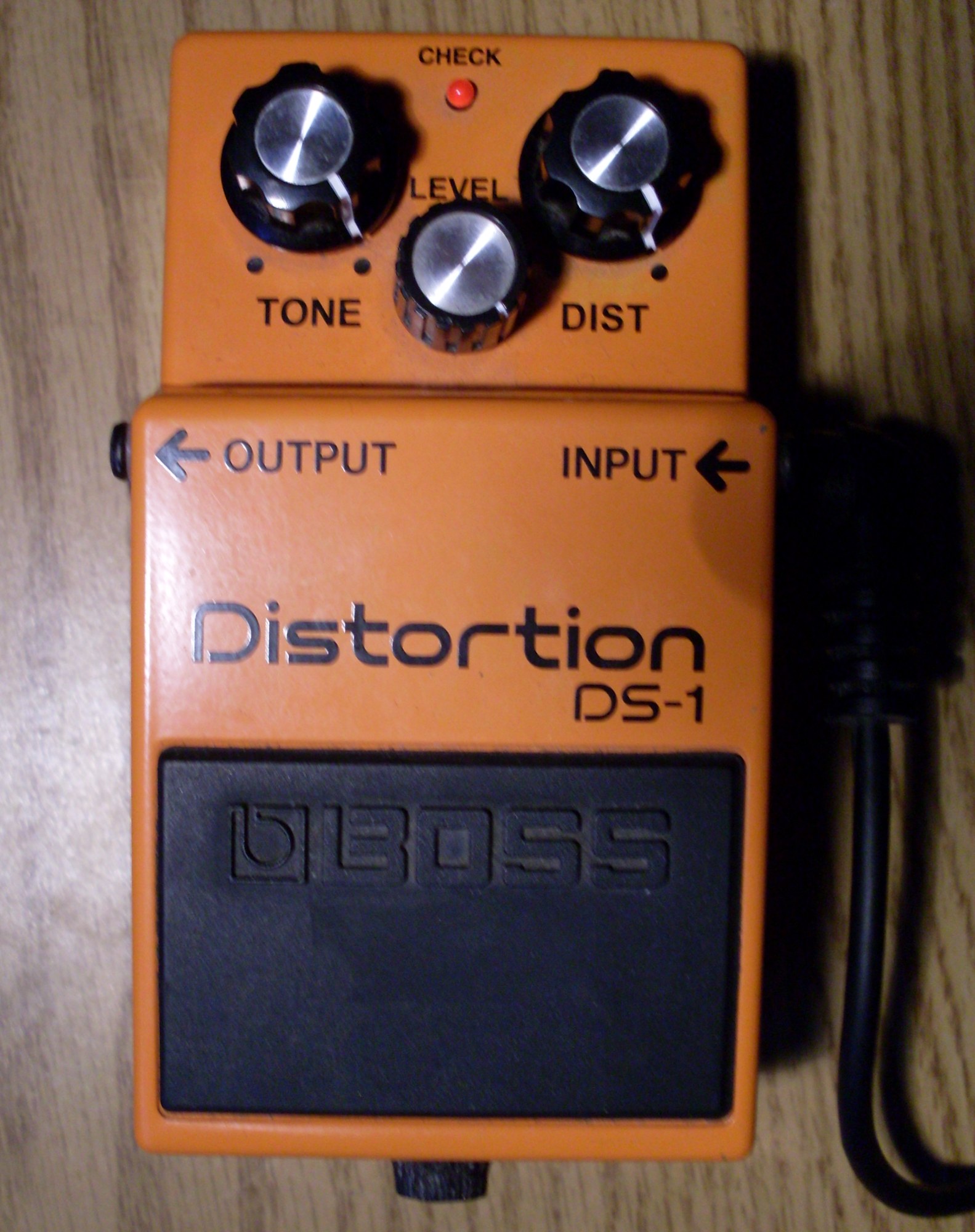
Photo: Roadside Guitars, CC BY-SA 2.0, via Wikimedia Commons
The Players Who Made the Orange Box Famous
The DS-1's reputation isn't just about sales numbers. A surprising list of serious players have used it, and several have talked about it on the record. The quotes below come from Boss's own DS-1 history article, which compiled them from interviews in Boss Users Group, Guitar World, and Premier Guitar.
Kurt Cobain and the sound of Bleach
Seattle producer Jack Endino, who recorded Nirvana's 1989 debut, told Guitar World: "I can tell you Kurt was using a BOSS DS-1, the orange pedal with three knobs. That was his sound in 1989." Cobain later became associated with the DS-2 Turbo Distortion, the DS-1's dual-mode cousin.
That's an important detail for the pedal's story. The Bleach sound is raw and cheap on purpose, and the DS-1 fit that perfectly. It's a reminder that the "budget" pedal helped make one of the most influential guitar sounds of the decade.

Joe Satriani: the sound in a little box
Satriani's story might be the best argument for the DS-1 ever told. After Surfing with the Alien took off in 1987, he suddenly had to tour as an instrumental headliner without the budget for a big rig. Speaking to the Music Gear Network YouTube channel, as quoted by Boss, he explained: "I'm not going to lug around vintage Marshalls. I didn't have the money to do that." His solution was "to get the sound in a little box, which was the DS-1, and figure out one amp that I could play."
That's exactly the problem the DS-1 was built to solve: reliable distortion that doesn't depend on a specific cranked amp.
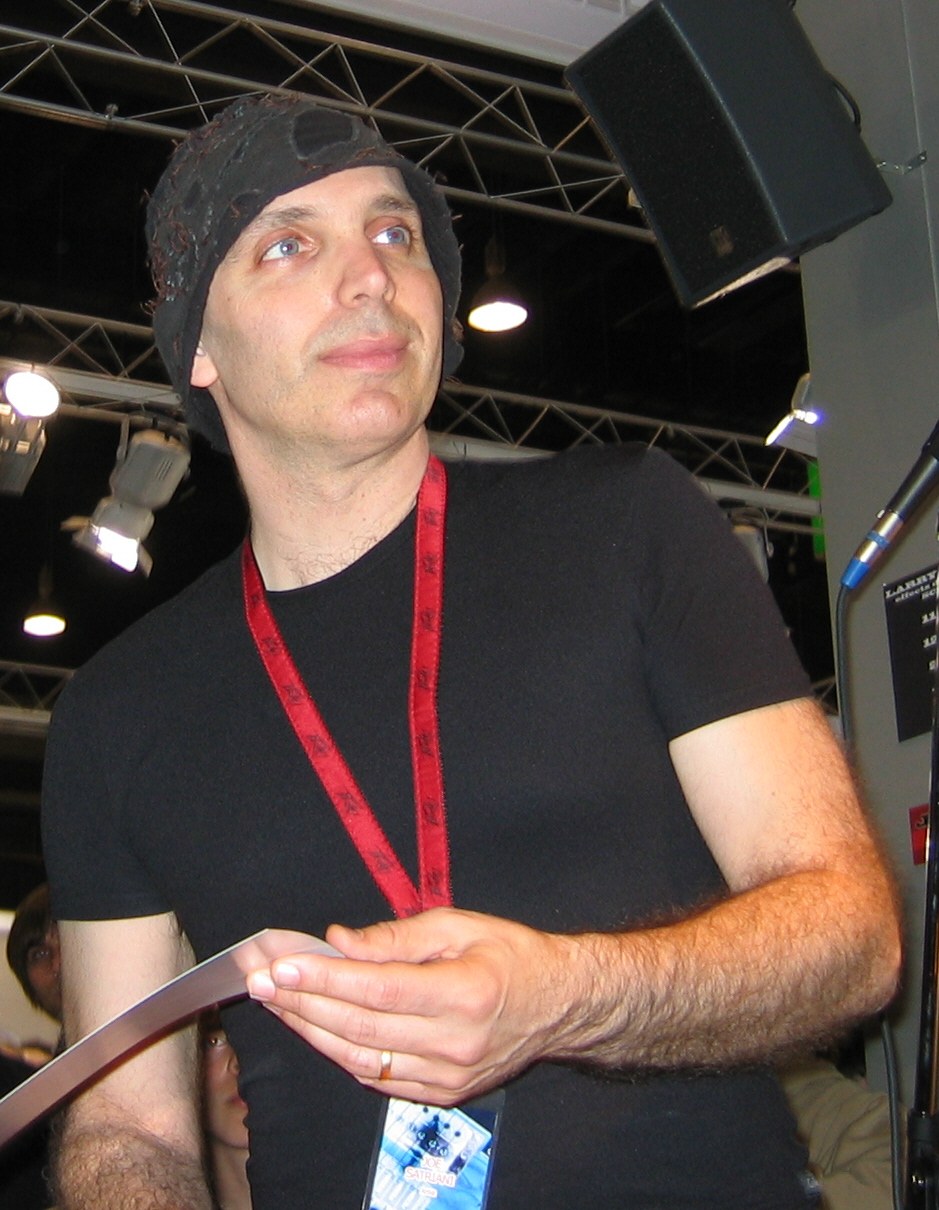
Photo: Michael Hanselmann, CC BY-SA 3.0, via Wikimedia Commons
Steve Vai
Vai used the DS-1 for years before moving to a signature dual-distortion pedal, one side of which drew on the DS-1. His longtime tech Thomas Nordegg told Boss Users Group: "From '99 on up, yeah, he used the DS-1. That was his main pedal. Forever he had the DS-1, always."
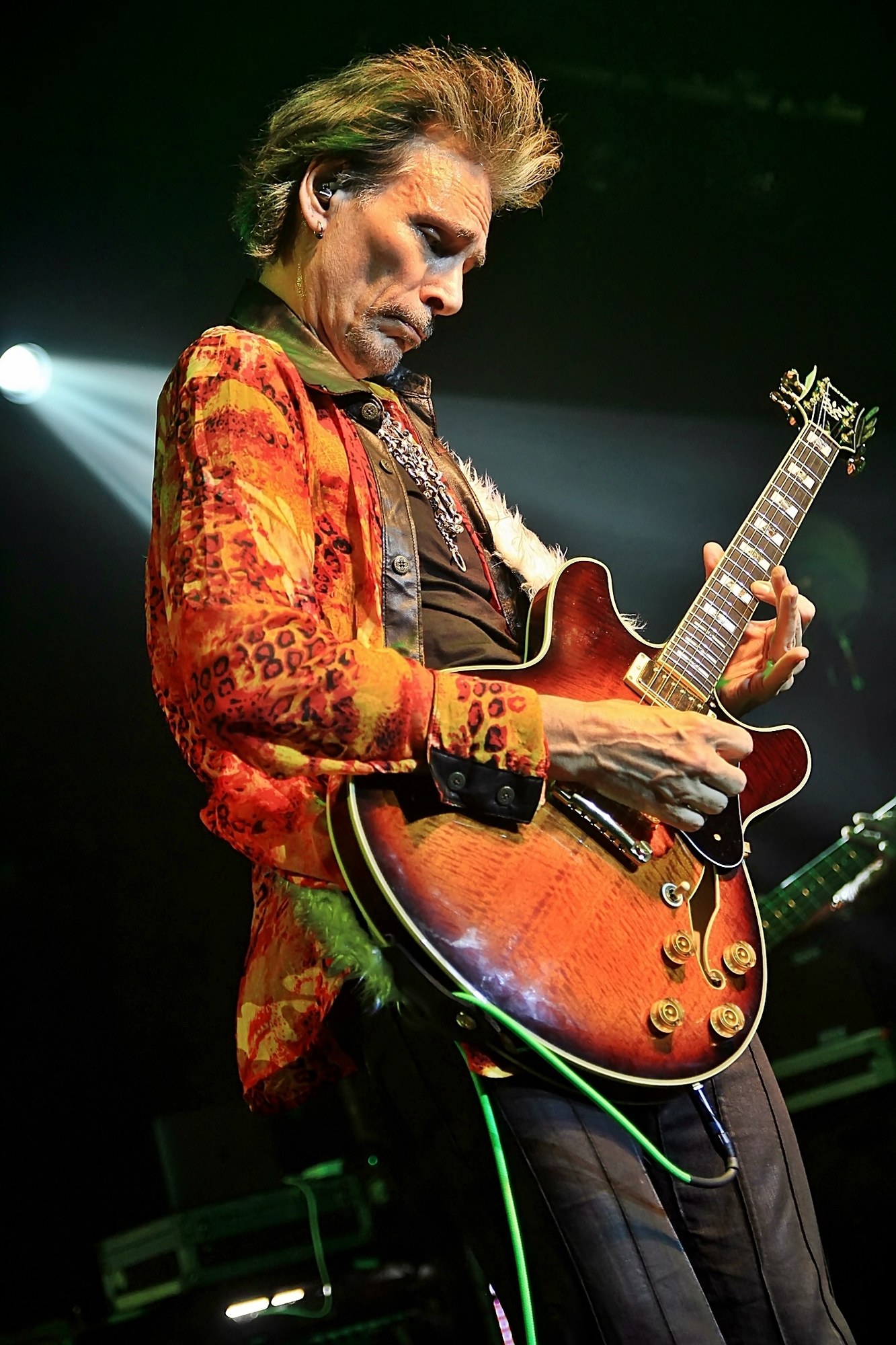
Photo: Klaus Hellmerich, CC BY-SA 4.0, via Wikimedia Commons
George Lynch
The Dokken guitarist is a self-described collector of vintage pedals, which makes his endorsement more interesting. "The box I've used consistently since the '80s is the DS-1," Lynch told Boss Users Group in 2004. "I swear the DS-1 beats 95 percent of everything that's current or ever made. You can't go wrong with it."

Photo: Glenn Francis (Toglenn), PacificProDigital.com, CC BY-SA 3.0, via Wikimedia Commons
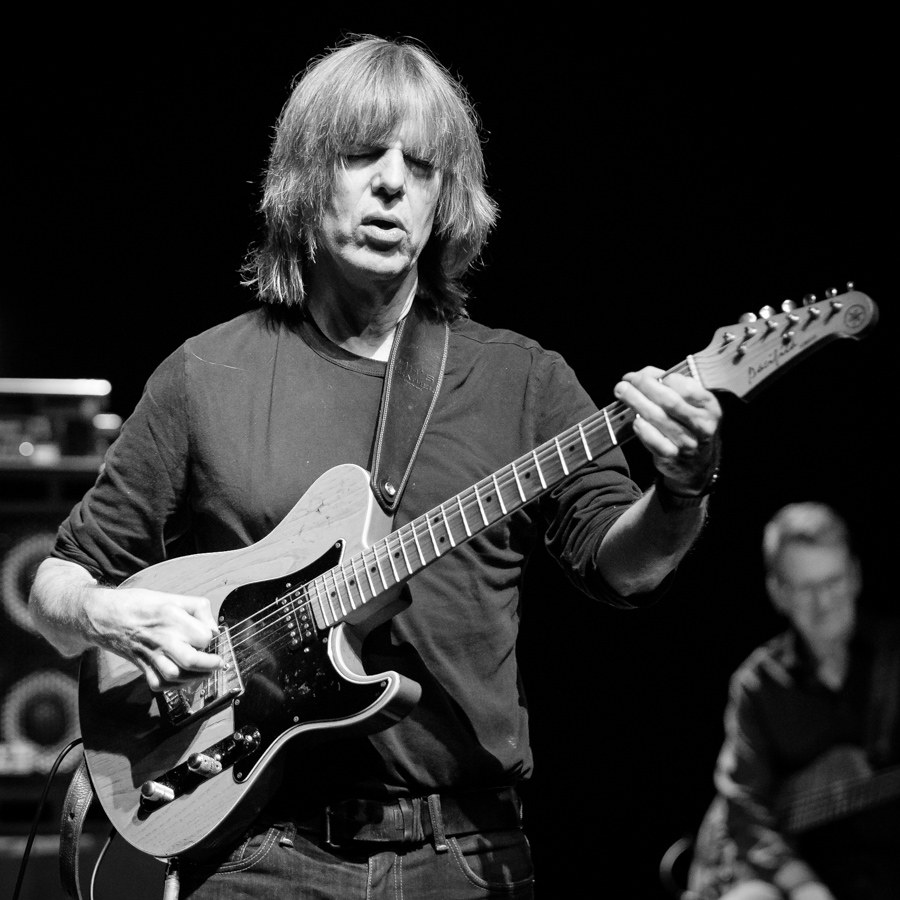
Mike Stern: the jazz guy with an orange pedal
Not every DS-1 player is a rock guitarist. Jazz-fusion great Mike Stern told Boss Users Group in 2006: "I've used the distortion, the DS-1, on every one of my own records, and on a lot of other peoples' records too." Stern's singing lead tone is a good counterargument to anyone who thinks the pedal can only do buzzsaw.
And more
Boss's article also cites John Frusciante's use of the DS-1 and DS-2 on Red Hot Chili Peppers' Stadium Arcadium sessions, per a 2006 MusicRadar interview, and Khruangbin's Mark Speer, who told Premier Guitar in 2018 that his preferred setup was a Cry Baby wah into a DS-1. Grunge, shred, jazz fusion, funk-rock, and psychedelic soul is a wide range for one three-knob pedal.
The Modding Industry the DS-1 Built
Because the DS-1 was cheap, everywhere, and built on a simple board, it became one of the most modified pedals in history. Boss itself names Analog Man and Robert Keeley among the well-known modders, and Guitar Player's review points to Analog Man as one of the companies that built a business partly on fixing the stock pedal's complaints.
Common goals for DS-1 mods are pretty consistent:
- More low end, usually by changing coupling capacitors so the pedal doesn't thin out the bottom
- Smoother highs, by filtering the fizzy top end the hard clipping creates
- More output, especially on the quieter post-'94 versions
- Clipping options, swapping or switching the diodes for different textures
Keeley's "Ultra" mod became one of the best-known versions, and for years a modded DS-1 was a common route to a boutique-sounding distortion without boutique pricing.
There's an important practical point here: modding a stock pedal yourself means soldering on a small board, and it will usually void any remaining warranty. If you're not comfortable with a soldering iron, buying a professionally modded unit or a pedal inspired by the circuit is the safer way in.
The DS-1 Family Tree
The DS-1 itself has barely changed on the outside, but Boss has built a whole family around it.
| Year | Model | What it is |
|---|---|---|
| 1978 | DS-1 Distortion | The original orange compact |
| 1987 | DS-2 Turbo Distortion | Two modes: Turbo I near the DS-1, Turbo II adds gain and a mid boost |
| 1994 | DS-1 (DS-1A circuit) | Redesign around a standard dual op-amp after the Toshiba chip ran out |
| 1998 | Gold DS-1 commemorative | A tiny run of gold pedals given to distributors and top dealers to mark 6 million compacts sold |
| 2014 | DS-1X Distortion | A modern take using Boss's Multi-Dimensional Processing |
| 2018 | DS-1-4A | 40th-anniversary edition: black body, gold-capped knobs, silver screw |
| 2022 | DS-1W Waza Craft | Premium Japanese-built version with Standard and Custom modes |
Boss says the 1998 gold units are the rarest Boss pedals of all, and they sell for serious money when they turn up.
DS-1 vs DS-1W: Which One Should You Buy?
The DS-1W is the version most people are deciding about today. It's built in Japan, it has a silver screw as a nod to the originals, and it adds a mode switch.
According to Boss, the DS-1W uses a newly revised analog circuit built with discrete components. Standard mode delivers the DS-1 sound. Custom mode gives a fatter sound with more midrange, a retuned tone control, and more input sensitivity and output.
One thing that surprises people: Guitar Player's review notes that Standard mode targets the post-'94 DS-1 sound rather than the original TA7136 pedal. So if your goal is specifically the 1978 to 1994 voice, the DS-1W isn't a reissue of that pedal.
Here's how we'd think about the choice, based on the published specs and the reviews above (TGP hasn't run a side-by-side test of these units):
- Get the standard DS-1 if you want the classic sound for the least money, you play into a mid-forward amp, or you want a pedal to modify.
- Get the DS-1W if your amp is scooped and you need the extra midrange of Custom mode, or if you want one pedal that covers both the classic voice and a thicker one.
- Hunt for an early silver-screw DS-1 if you're a collector or you specifically want the TA7136 sound, and you're willing to pay for age and condition.
As an Amazon Associate, TGP earns from qualifying purchases.
Getting a Good Sound From a DS-1
Because the DS-1 is so often blamed for bad tone, a few starting points are worth sharing. These are general guidelines drawn from how the circuit works, not a substitute for your ears.
- Start with the Tone knob near noon or lower. Remember, it's a seesaw. Turning it up adds treble and also removes bass.
- Don't max the Dist knob by default. A lot of the DS-1's best sounds live in the lower half of the gain range, where it's punchy rather than fizzy.
- Match the amp. Mid-forward amps make the DS-1 sound fuller. With a scooped clean amp, add some mids on the amp if you can.
- Try it as a boost. Gain low and Level up into an amp that's already breaking up is a very different pedal from the one most people know.
- Check your strings and pickups. Hard clipping exaggerates whatever you feed it, so dead strings and harsh bridge pickups get louder in the mix.
Why the DS-1 Still Matters
The DS-1's history isn't the story of a boutique secret. It's the story of a pedal that was always there: affordable, tough, easy to understand, and in stock at the local music store. That availability is exactly why it ended up on so many important records. Cobain didn't pick it because it was rare. Satriani didn't pick it because it was exotic. They picked it because it worked, it fit in a gig bag, and it sounded like distortion.
Nearly half a century later, the orange box is still the default answer to "what's a distortion pedal?" Pedal builder Josh Scott of JHS put it this way in a quote Boss reprinted: "When you say distortion pedal, an orange box pops up into my head."
Our takeaway is simple. If you've written off the DS-1 because of one harsh night with a clean, scooped amp, give it another shot with the tone knob down, the gain below maxed, and an amp with some midrange. You might hear what Satriani, Lynch, and Stern heard.
Got a DS-1 story? Is yours an early silver-screw pedal, a modded unit, or the one you bought with your first paycheck? Tell us about it in Guitar Talk.
Experience-driven coverage, not algorithm bait.
- 20+ years of guitar playing experience
- Real-world retail experience at Guitar Center
- Thousands of hours testing guitars, amps, and pedals
- A community of 50,000+ guitar enthusiasts across platforms
- Partnerships with Fender, DistroKid, TrueFire, Card Chords, and Enya
- Editorial standards published openly — see how we test gear
Ask GP
3 free questions a dayStill curious? Ask GP about this story.
Your personal classic-rock and guitar guide — ask anything about Boss DS-1 History.
Discussion (0)
Sign in to join the discussion.
Sign in to commentLoading comments…
Discover another guitar story
Swipe through our latest features, breaking news and iconic solos — one story at a time.
Open Swipe →More Guitar News
The Fuzz Face History: How a Cheap Copy in a Mic-Stand Base Outlived Its Flaws
The Fuzz Face was a borrowed circuit in a mic-stand base, and half of them sounded bad. Here's how it became Hendrix's fuzz and still sells 60 years later.
The RAT Started With the Wrong Resistor: The Real ProCo RAT History
The ProCo RAT was born from a wrong resistor in a Kalamazoo basement. Here's how it went from 11 hand-built boxes to Beck, Nevermind, and your pedalboard.
The Ibanez Tube Screamer: How a Little Green Box Built to Compete Became the Pedal Everyone Copies
How a Maxon engineer's answer to the Boss OD-1 became the Ibanez Tube Screamer, why the TS808 vs TS9 debate never ends, and what SRV really used.
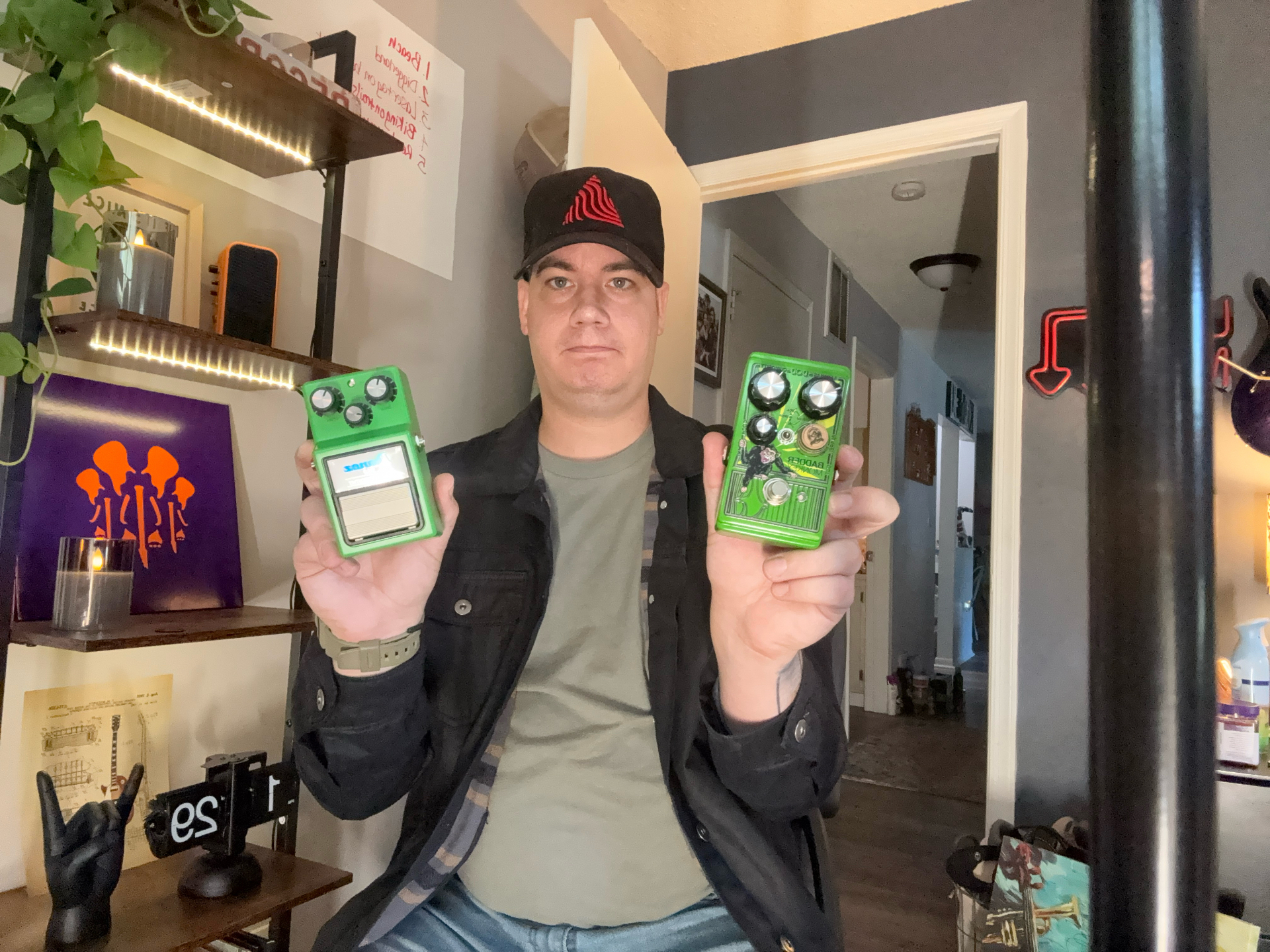
Can the Badder Monkey Beat the Legendary Tube Screamer? I Put Them Head-to-Head
The DOD Badder Monkey takes on the Ibanez Tube Screamer in a head-to-head shootout. Same guitar, same amp, same playing — here's which overdrive actually deserves a spot on your board.