
The Fender Telecaster History: How a Radio Repairman's "Plank" Became the Guitar That Does Everything
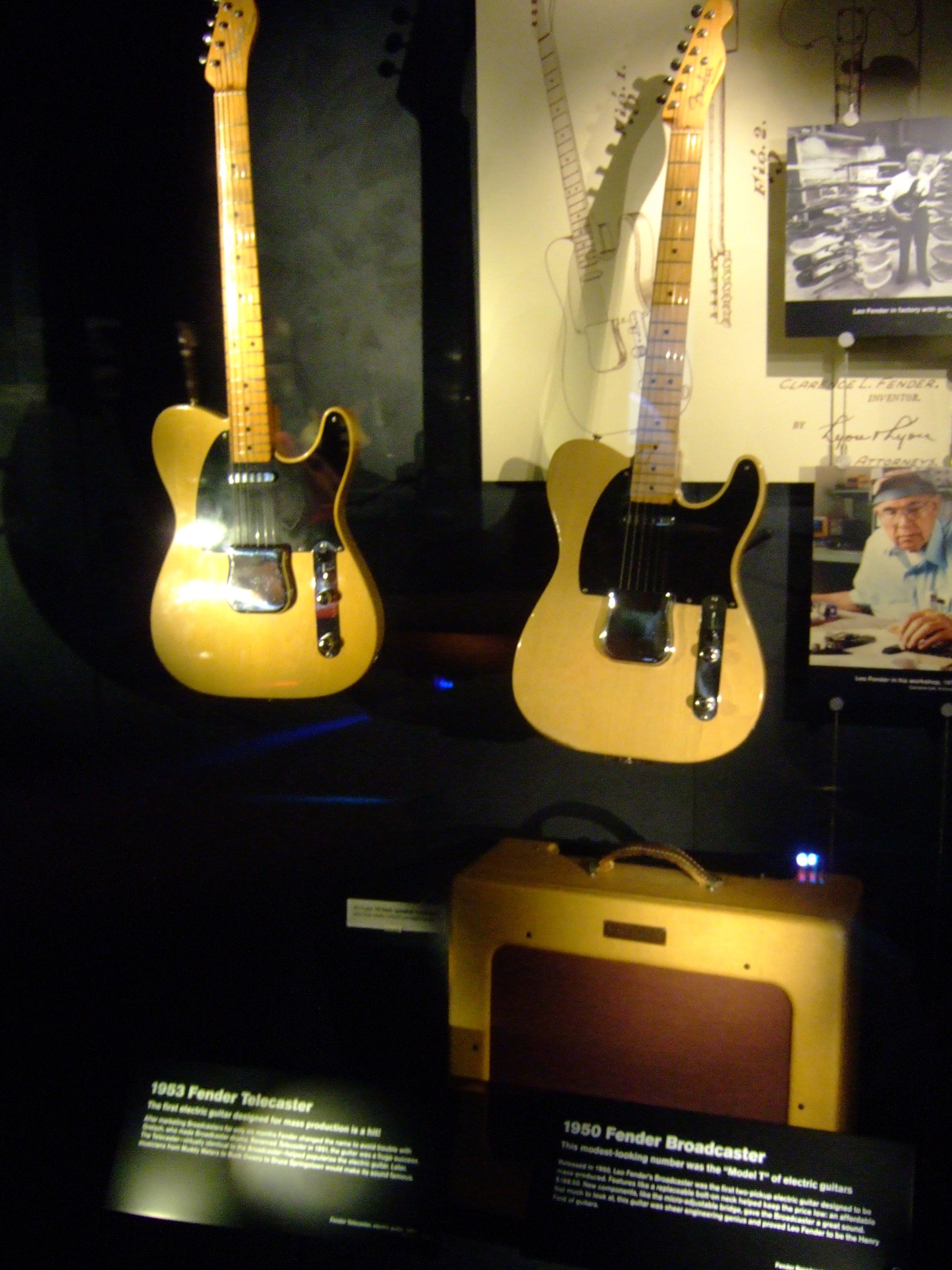
A 1950 Fender Broadcaster and a 1953 Telecaster on display at the Experience Music Project (now MoPOP) in Seattle. Same guitar, two names.
The Fender Telecaster history, from Leo Fender's 1950 Esquire and Broadcaster to the Nocaster, Keith's Micawber, Springsteen's Esquire and what to buy now.
Turn on almost any kind of music made in the last 75 years and there's a decent chance a Telecaster is on it. It could be the snapping chicken-pickin' on a Bakersfield country record, the two-chord soul stab on a Stax single, the open-G chug of a Rolling Stones riff, or the slashing rhythm of a punk song.
That's a long list of jobs for a guitar that was designed to be simple. It started life as a flat slab of ash with a maple neck screwed onto it. Players at the time called it a plank, a boat paddle and a snow shovel. The man who designed it couldn't even play guitar.
This is the Fender Telecaster history: how a radio repair shop in Fullerton, California, built the first electric Spanish guitar of its kind to be made in real numbers, why it went through three names in about a year, what makes it twang, who turned it into a legend, and which Tele makes the most sense to buy today, 75 years on.
A Radio Repairman in Fullerton
Clarence Leonidas "Leo" Fender was born in 1909 and grew up in Orange County, California. He got hooked on electronics as a teenager, studied accounting, and in 1938 used a borrowed $600 to open a radio repair business in Fullerton called Fender's Radio Service.
Musicians started coming in. They needed PA systems and amplifiers, and they needed someone to fix them. Southern California was full of western swing bands and players of electric lap steel guitar, which was a huge craze at the time. Leo listened to what they wanted.
During World War II he teamed up with Clayton "Doc" Kauffman, a lap steel player and inventor who had worked for Rickenbacker. Together they formed K&F Manufacturing to build lap steels and small amps. In 1943, as a test bed for a pickup, the pair knocked together a crude solid wooden guitar. According to the Wikipedia history of the Telecaster, local country players started asking to borrow it for gigs. It was bright, it sustained, and it didn't howl with feedback.
Kauffman left in 1946. By the end of 1947 Leo was running the Fender Electric Instrument Company, still making mostly lap steels and amps.
Here's the part that surprises a lot of players: Leo Fender wasn't a guitarist. George Fullerton, who joined the shop in 1948 and worked alongside Leo on the new guitar, told the Fender historian Tony Bacon that Leo couldn't tune a guitar and never learned a single chord shape. What Leo had was an engineer's mind and a habit of asking working musicians what was wrong with their gear.
The Big Idea: A Guitar Built Like an Appliance
By the late 1940s, a few people had already experimented with solid-body electrics. Rickenbacker had sold a Bakelite "Spanish" electric in the 1930s. Les Paul had his homemade "Log." Paul Bigsby, working about 15 miles from Fullerton in Downey, had built a solid-body electric for country star Merle Travis around 1948. Fullerton later admitted that the Bigsby guitar, with its cutaway and its tuners all on one side, was on their minds.
None of these had become a real product. Leo's breakthrough wasn't the solid body on its own. It was the way he planned to build it.
Most quality guitars of the era were made one at a time by skilled luthiers. Necks were carved, fitted and glued into bodies with traditional joints. Leo's plan looked more like a radio than a violin:
- A slab body. It was cut flat on the front and back from a blank of wood, with no carved top, no arching and no binding. A bandsaw and a router did the work.
- A bolt-on neck. It was held on with four screws through a metal plate. If a neck warped or wore out, you could take it off and put a new one on in minutes. Fender's own marketing has always loved this point.
- A one-piece maple neck. On the early guitars, the frets went straight into the maple. There was no separate fretboard to glue on.
- Parts you could get at. The bridge pickup sat in the bridge plate, the neck pickup sat under the pickguard, and the controls sat on a metal plate you could unscrew. Compare that with a hollow archtop, where a repair meant fishing parts out through the f-holes.
Fullerton remembered Leo wanting something that was easy to repair and "built like a tank." That's the whole idea in four words.
The headstock was the other clever bit. Instead of three tuners per side, all six went on one side. That let the strings run in a straight line from the nut to the tuner posts, without bending sideways, which helped the guitar stay in tune. It also meant the headstock could be cut from the neck blank without gluing extra "wings" of wood on.
Why a solid body mattered
The point of all this wasn't only cheaper manufacturing. Players in loud dance halls had a real problem. Hollow-body electrics fed back badly when you turned them up, howling and squealing in a way you couldn't control. A solid plank of ash doesn't resonate like that. You could turn it up and be heard over a drummer and a fiddle player, with clean notes that sustained.
Don Randall, who ran Fender's sales and distribution, told Tony Bacon that with the new solid body, a guitarist could finally play as loud as the drummer. For a western swing guitarist in 1950, that was the selling point.
1949–1950: Prototypes and the Esquire
Leo and Fullerton built the first prototype in the summer of 1949. It had a body made of pine, painted white, with a headstock that had tuners on both sides, borrowed from Fender's lap steels. It had one pickup. A second prototype later that year used ash and the six-on-a-side headstock that's still used today. Most of Fender's development guitars were thrown away, but those two survived.
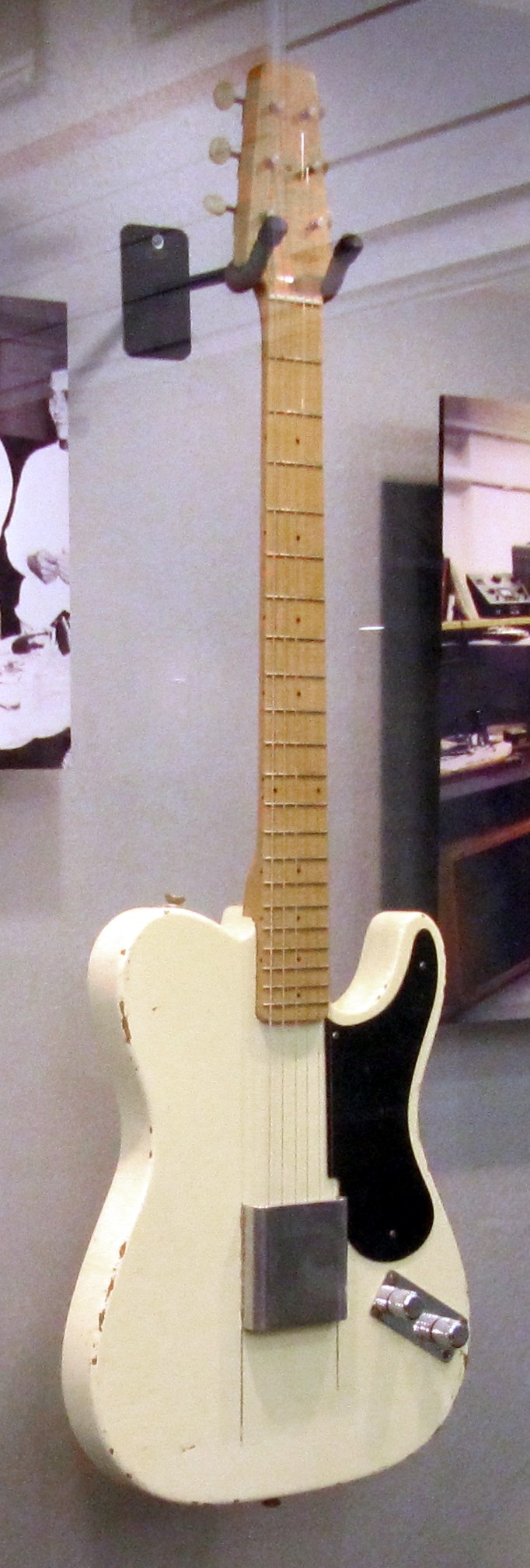
Photo: Mr. Littlehand, derivative work by Clusternote, CC BY 2.0, via Wikimedia Commons
The first production model was the single-pickup Esquire, made from the spring of 1950. It appeared in the spring 1950 catalog of Fender's distributor at the time, Radio & Television Equipment Co. (Radio-Tel), priced at $139.95. The catalog guitar was black, but production Esquires soon switched to ash bodies in a see-through blonde finish with a black pickguard. That blonde finish yellowed over the years into the color collectors now call butterscotch.
There was a big flaw. The early necks had no truss rod, the steel bar inside a neck that keeps it from bowing under string tension. Leo believed a thick maple neck didn't need one. Don Randall disagreed. In his telling, a rival from National/Valco looked at an early guitar at a Chicago trade show and warned him that a neck without a rod meant a lot of trouble. Randall told Leo flatly that the guitar would get a rod or Radio-Tel wouldn't sell it.
Randall was right. Guitarists traveling between hot and cold climates found their necks bending, and many of the earliest Esquires were replaced under warranty. Guitarist magazine's 75th-anniversary history says Fender bought truss-rod tooling in October 1950. Every Fender neck after that got a rod.
Broadcaster, Nocaster, Telecaster: Three Names in a Year
Randall also pushed for a second pickup. Rival makers were showing guitars with more than one, and a two-pickup model would cover more sounds.
So in the fall of 1950, Fender introduced a two-pickup version with a truss rod, and Randall came up with the name Broadcaster. That was a natural name for a company that came out of radio. The single-pickup Esquire was paused and came back in early 1951 as the cheaper option, now with a truss rod too.
The Broadcaster name lasted only a few months. Gretsch, the big New York instrument company, already sold a line of drums (and earlier banjos) called the Broadkaster. In early 1951, Gretsch sent a telegram objecting to the name. Fender didn't fight it.
Fender also didn't throw away its leftover headstock decals. Workers just snipped the word "Broadcaster" off and applied what was left, so the headstock said only "Fender." Collectors later called these guitars Nocasters. They were made for a short period in 1951, and estimates of how many are rough. Wikipedia puts the number at fewer than 500. Nacho Baños, whose book The Blackguard is one of the deepest studies of these guitars, estimates no more than about 250 true Broadcasters were made between October 1950 and February 1951. Fender has since trademarked the Nocaster name for its own reissues.
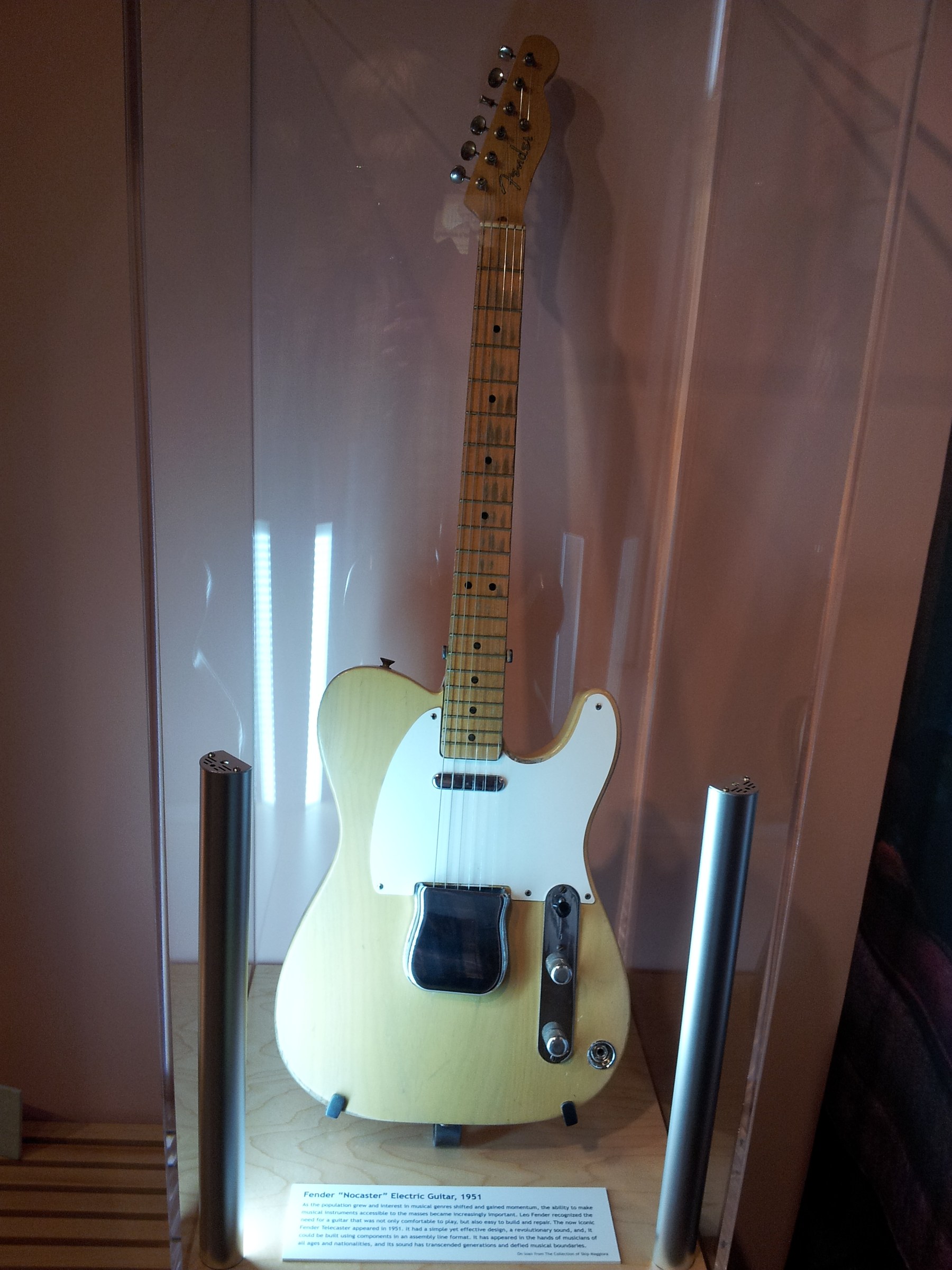
Randall then came up with a new name. Television was the hot new technology, and Leo's shop sold TV sets. Fullerton remembered Leo putting a TV in the shop window with a speaker outside so crowds could stand on the sidewalk at night and watch wrestling. "Telecaster" connected the guitar to that new thing. It stuck.
When exactly did the first Telecaster decals appear? Sources don't agree. Tony Bacon has said around April 1951. Guitarist says late summer 1951. Wikipedia gives August or September. What everyone agrees on is that by the end of 1951, the guitar had the name it still has, and it hasn't changed much since.
In 1951, Fender also released the Precision Bass, which used the same slab-body, bolt-on idea. In 1954, the contoured, three-pickup Stratocaster arrived. Leo expected the Strat to replace the Tele. It didn't.
Inside the Twang: Bridge, Pickups and That Strange Switch
The Telecaster's sound is so recognizable that "twang" has practically become its brand name. Where does it come from? Some of it is how you play, but a lot of it is built into the hardware.
The bridge pickup and the "ashtray"
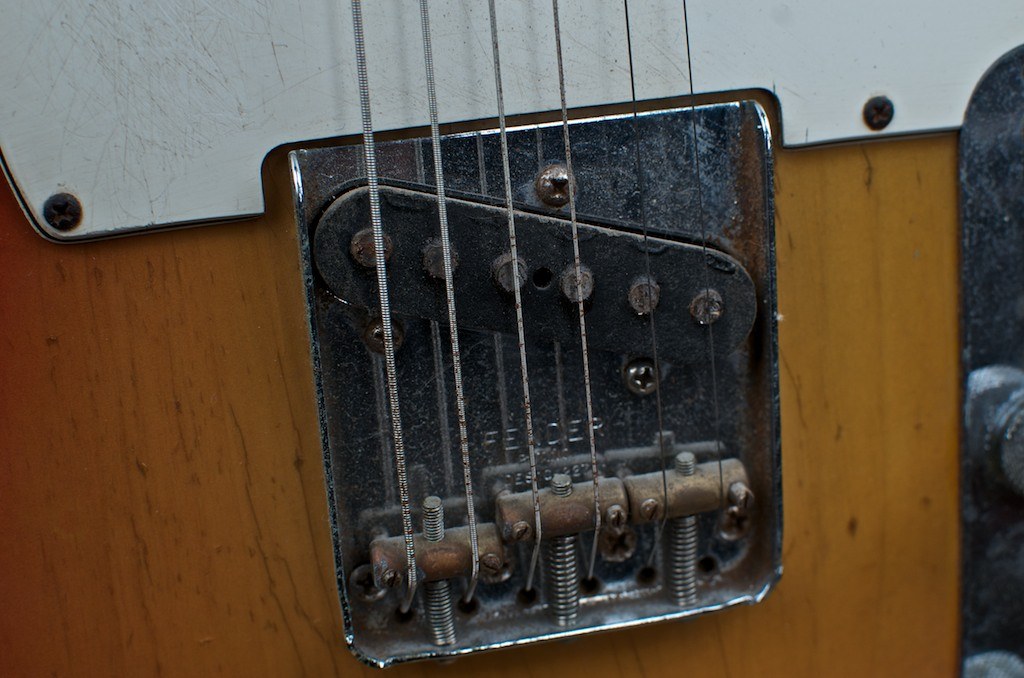
The bridge pickup is the heart of the guitar. It was adapted from the pickup on Fender's Champion lap steel and mounted on a steel bridge plate. The plate has raised sides that players nicknamed the "ashtray." The pickup is slanted, with the treble end closer to the bridge. George Fullerton said that they were chasing "those fabulous highs" from the bridge position, and the slant helped balance it with a bit more bass.
The pickup has more windings than the neck pickup, so it's louder. That makes up for the fact that strings move less near the bridge. Because the pickup is mounted to a metal plate that the strings press down on, many players and builders believe the bridge itself becomes part of the sound, adding a little extra sparkle. That's a widely held explanation rather than a measured fact, but anyone who has played a Tele bridge pickup knows it's a different animal from a Strat's.
The original bridge had only three saddles, with two strings sharing each one. That means you can't set perfect intonation for every string, and every Tele player knows a few chords that never sound quite right. Many players still prefer three saddles for the sound and feel. On the earliest guitars, the strings passed through the body and came out the bridge from below, which adds to the guitar's snap. Fender stopped doing that between 1958 and '59 and went back to it later.
The neck pickup and the "dark circuit"
The neck pickup is smaller and sits under a chrome cover. On its own it's mellow, round and a little jazzy. Plenty of blues and jazz players love it, though some people find it a bit dull next to the bridge pickup.
The wiring on early Teles was odd by modern standards. On the 1950–52 guitars, the switch's first position gave you the neck pickup with the treble rolled off on purpose. It was a muffled "bass" sound, possibly meant to stand in for a bass guitar in small groups. The middle position gave you the neck pickup normally, and the third position gave you the bridge pickup, with the second knob blending in the neck. In 1952, the wiring changed to a normal tone control, but that dark setting stayed. The setup players expect today, with the neck pickup, both pickups together and the bridge pickup on their own switch positions, didn't become standard until around 1967–68.
The rest of the early recipe
The first Teles had ash bodies, one-piece maple necks with a walnut "skunk stripe" down the back (where the truss rod went in), and black pickguards. That's why players call 1950–54 Teles Blackguards. In 1954, the pickguard turned white. In 1959, rosewood fretboards appeared. Over time, Fender also used alder bodies, especially under solid colors and sunbursts.
The Country Pickers Who Proved It
A new kind of guitar needs someone to show what it can do. For the Telecaster, that person was a young hotshot named Jimmy Bryant.
George Fullerton told Tony Bacon about the night he and Leo took an early guitar to the Riverside Rancho, a big country dance hall in Los Angeles. A young player came over, picked it up, sat on the edge of the stage and started playing through the band's amp during a break. Before long, the dancers had crowded around him. That was Bryant. Fender put a guitar in his hands, and Fullerton said demand took off like "a prairie fire." Bryant's dazzling Capitol records with steel guitarist Speedy West, along with his TV appearances, put the new Fender in front of a lot of players.
Then came the musicians who turned the Tele into the sound of country music.
Luther Perkins bought a beat-up Esquire and used it to play the plain, muted "boom-chicka-boom" behind Johnny Cash at Sun Records, starting with songs like "Hey Porter." It wasn't flashy. It was a rhythm built into the songs, and it's one of the most copied guitar parts in American music.
James Burton got his first Telecaster as a kid in Shreveport, Louisiana, around 1952 or '53, after spotting a blonde one in a music store window. His stinging lead on Dale Hawkins' "Susie Q" (1957), and later his work with Ricky Nelson and Elvis Presley, made the Tele a lead guitar. Burton's 1969 Pink Paisley Telecaster became one of the most famous Teles ever.
Don Rich played alongside Buck Owens in the Buckaroos, and together they defined the Bakersfield sound in the 1960s. That style was raw and electric and built around bright Telecasters, picking instead of strumming, and a hard backbeat, a deliberate contrast to slick Nashville production. Rich started out on Owens' early-'50s Telecaster. Later, Fender gave the band sparkle-finished Teles, and the red, white and blue Telecasters Owens and Rich played became part of the look.
Clarence White of the Byrds brought the next big change. In 1968, he and drummer Gene Parsons (also a machinist) invented the Parsons/White "Pull-String," now known as the B-Bender. It uses a lever linked to the strap button. Pull down on the neck, and the B string bends up a whole step, imitating a pedal steel. White's own Tele with the original bender is now owned and played by Marty Stuart. The B-Bender later turned up in the hands of plenty of other players, including Jimmy Page.
Soul and Blues: Cropper, Muddy and the Master of the Telecaster
The Tele didn't stay in country music for long.
Steve Cropper, the Stax Records house guitarist who died in December 2025, is often credited with doing more with fewer notes than almost anyone. On the early Stax records with Booker T. & the M.G.'s, he played a 1956 Fender Esquire, the single-pickup model, and later a blonde Telecaster. The bridge pickup's short, snappy attack was perfect for the clipped, perfectly placed chords behind "Green Onions" and Otis Redding's records. (We wrote about Cropper's legacy in Steve Cropper at 85.)
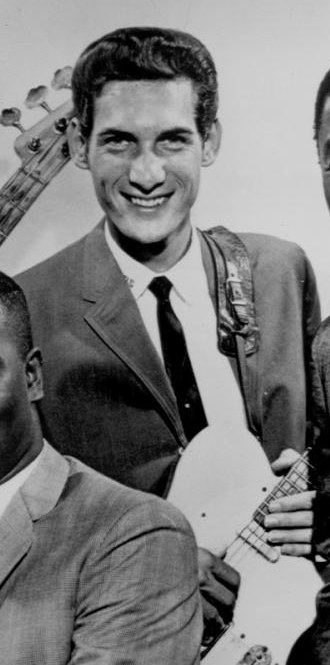
Photo: Stax Records, public domain per the Wikimedia Commons file page
Muddy Waters made a Telecaster the voice of Chicago electric blues. His guitar, which he called "The Hoss," started as a standard blonde Telecaster from around 1957–58 with a maple neck. According to the Metropolitan Museum of Art, it was his main guitar from 1958 until his death in 1983. In the early-to-mid 1960s, it was painted bright red and fitted with a rosewood-fretboard neck from a Custom Telecaster. Along the way it also picked up numbered Fender amp knobs in place of the usual Tele knobs. Guitar World has pointed out that a dated 1964 photo still shows the guitar blonde, so the red paint job probably came a bit later than the often-repeated 1961 date.
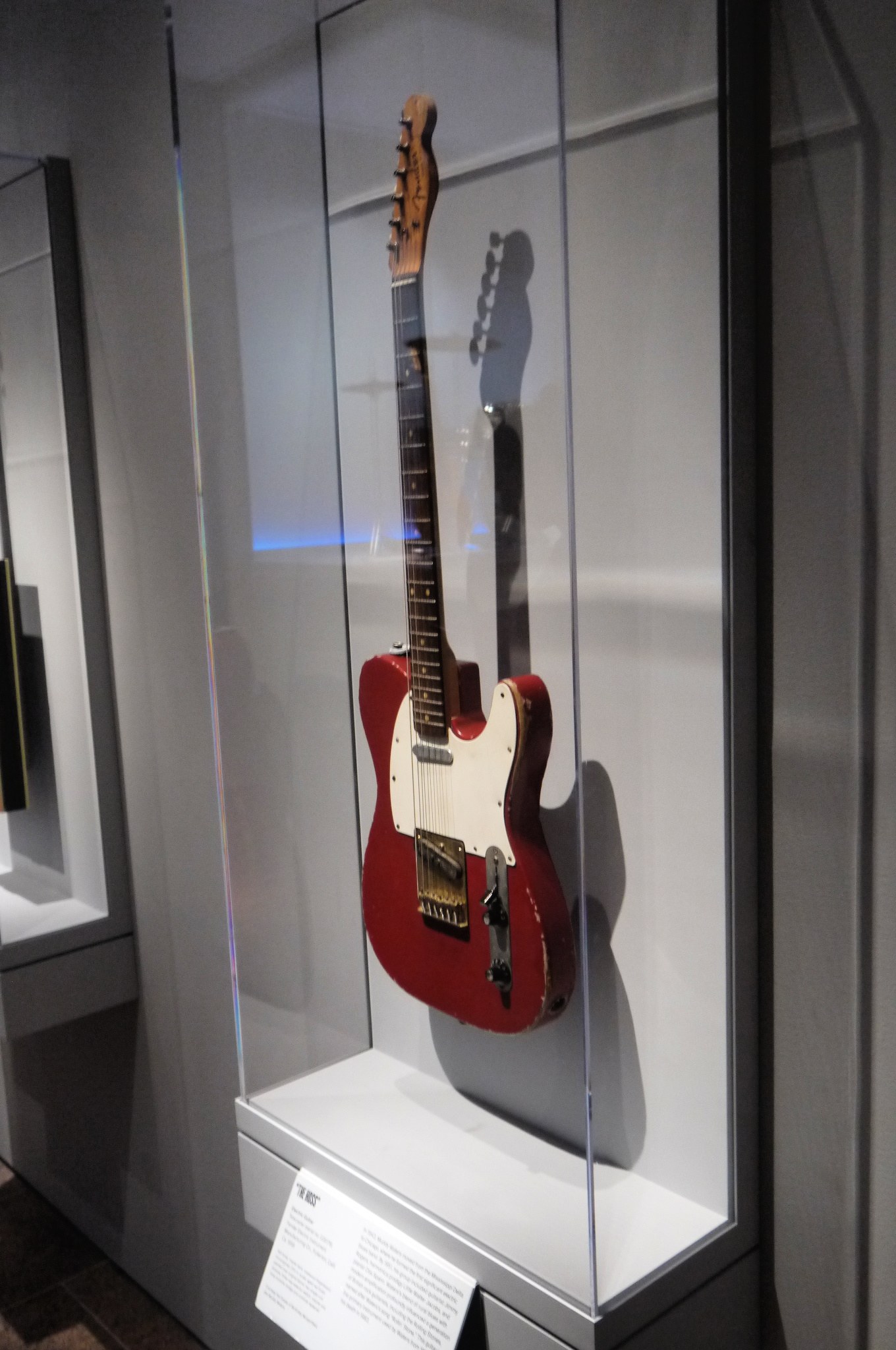
Photo: Eden, Janine and Jim from New York City, CC BY 2.0, via Wikimedia Commons
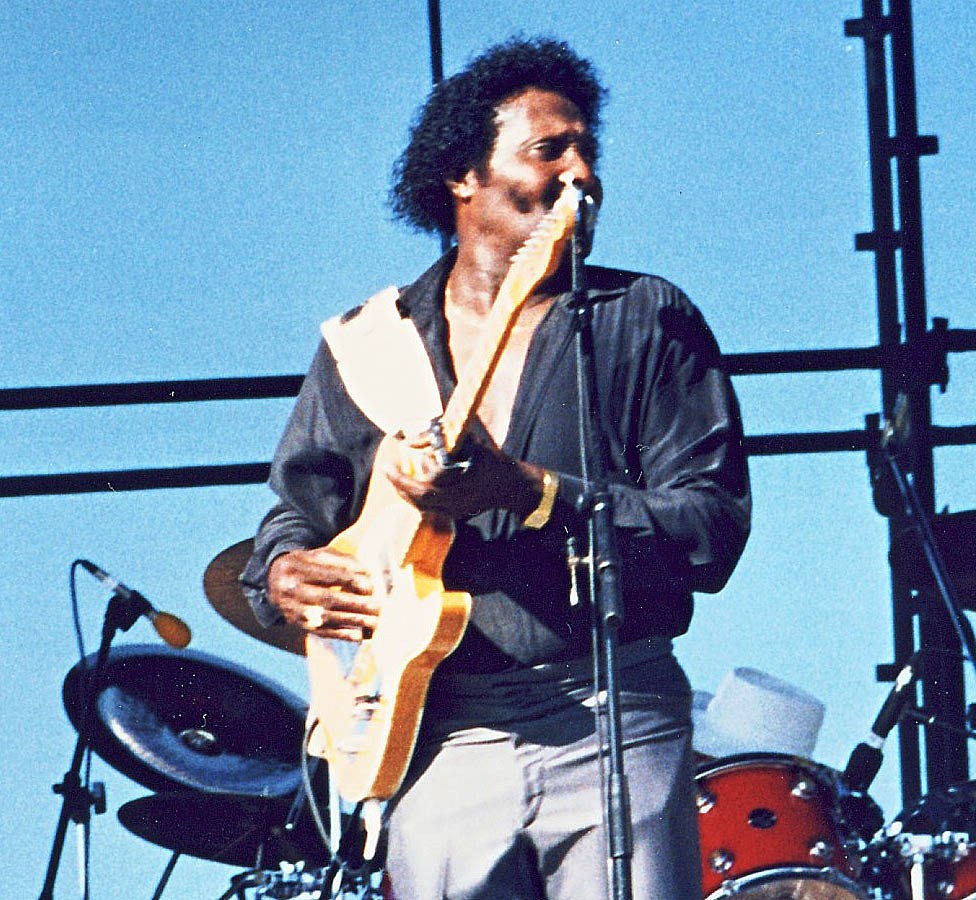
Albert Collins earned the nickname "The Master of the Telecaster." In 1952, after seeing Clarence "Gatemouth" Brown play an Esquire, he wanted a Tele but couldn't afford one. He bought an Esquire and had a Houston music shop add a neck pickup. That's the guitar on his early records, including "Frosty." For most of his career after that, he played a 1966 Telecaster Custom with a Gibson humbucker added in the neck position.
His sound was icy, piercing and unique. Part of that came from his tuning. He tuned to an open F minor chord, usually with a capo placed high on the neck, which put the Tele's bright bridge pickup into an even sharper register. If you want to understand what "cuts through the mix" really means, listen to Albert Collins.
The Rock Era: Page, Keith, Springsteen and Strummer
By the late 1960s, the Tele looked old-fashioned next to Les Pauls and Marshall stacks. Then some of the biggest names in rock picked one up anyway.
Jimmy Page's Dragon
Around 1965, Jeff Beck gave Jimmy Page a 1959 Telecaster. Page painted a psychedelic dragon on the body himself and put on a reflective pickguard. The Met, which displayed it in 2019, says this is the guitar he used to record the first Led Zeppelin album, and the one he played with a violin bow on "Dazed and Confused." Wikipedia's account of Page's gear adds that he used a Telecaster for the "Stairway to Heaven" solo too. Most fans picture Page with a Les Paul, but early Zeppelin owes a lot to a Tele running through a small Supro amp.
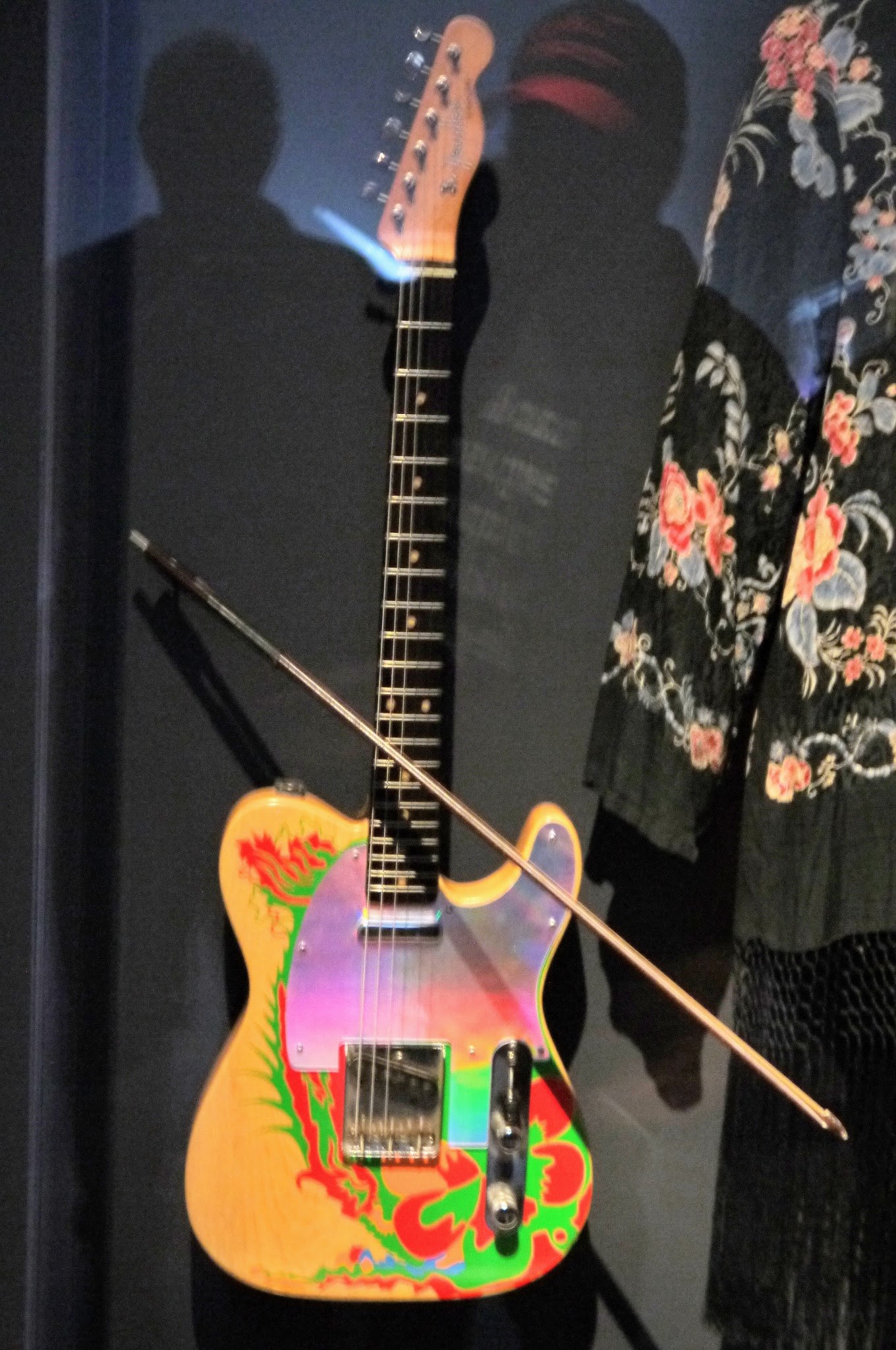
Photo: Eden, Janine and Jim from New York City, CC BY 2.0, via Wikimedia Commons
Keith Richards and Micawber
Keith Richards built much of his classic-era sound on open tunings, and the Tele became one of his main tools for them. In a 2002 Guitar World interview that Fender has also quoted, he said the Telecaster lent itself especially well to the dry, five-string drone sound he wanted for rhythm guitar.
His most famous Tele, Micawber, was a gift from Eric Clapton for Keith's 27th birthday in December 1970. The Met dates the guitar to 1954. Some writers say 1953, and Guitar World has described it as a '54 body with an earlier neck. During the Exile on Main St. sessions, Keith took off the low E string and tuned the other five strings to open G (G-D-G-B-D).
After the Stones' 1972 tour, his tech Ted Newman Jones put a 1950s Gibson PAF humbucker in the neck position, mounted backward, and swapped the bridge pickup for a lap-steel-style unit. Later came a brass bridge with five saddles and Sperzel tuners. Keith named it after Wilkins Micawber in Dickens' David Copperfield, and it became his main guitar for open-G songs.
His humbucker-in-the-neck mod was so influential that when Fender redesigned the Telecaster Custom in 1972, it used the same layout.
Springsteen's "Mutt"
Bruce Springsteen bought his main guitar at age 22 for $185 from a luthier in Belmar, New Jersey. It was a mid-1950s instrument put together from parts. Wikipedia describes it as a Telecaster-style ash body (heavily routed by a previous owner, which made it unusually light) with an Esquire neck. The Met's 2019 exhibition labeled it a 1953–54 Esquire-Telecaster composite. Springsteen called it a "mutt."
It's the guitar on the cover of Born to Run, and he played it at almost every show for about 30 years before retiring it from regular touring. Sources disagree on which parts are Esquire and which are Telecaster, so "composite" is the safest word. For a Jersey Shore publication, it's hard to think of a more important Fender.
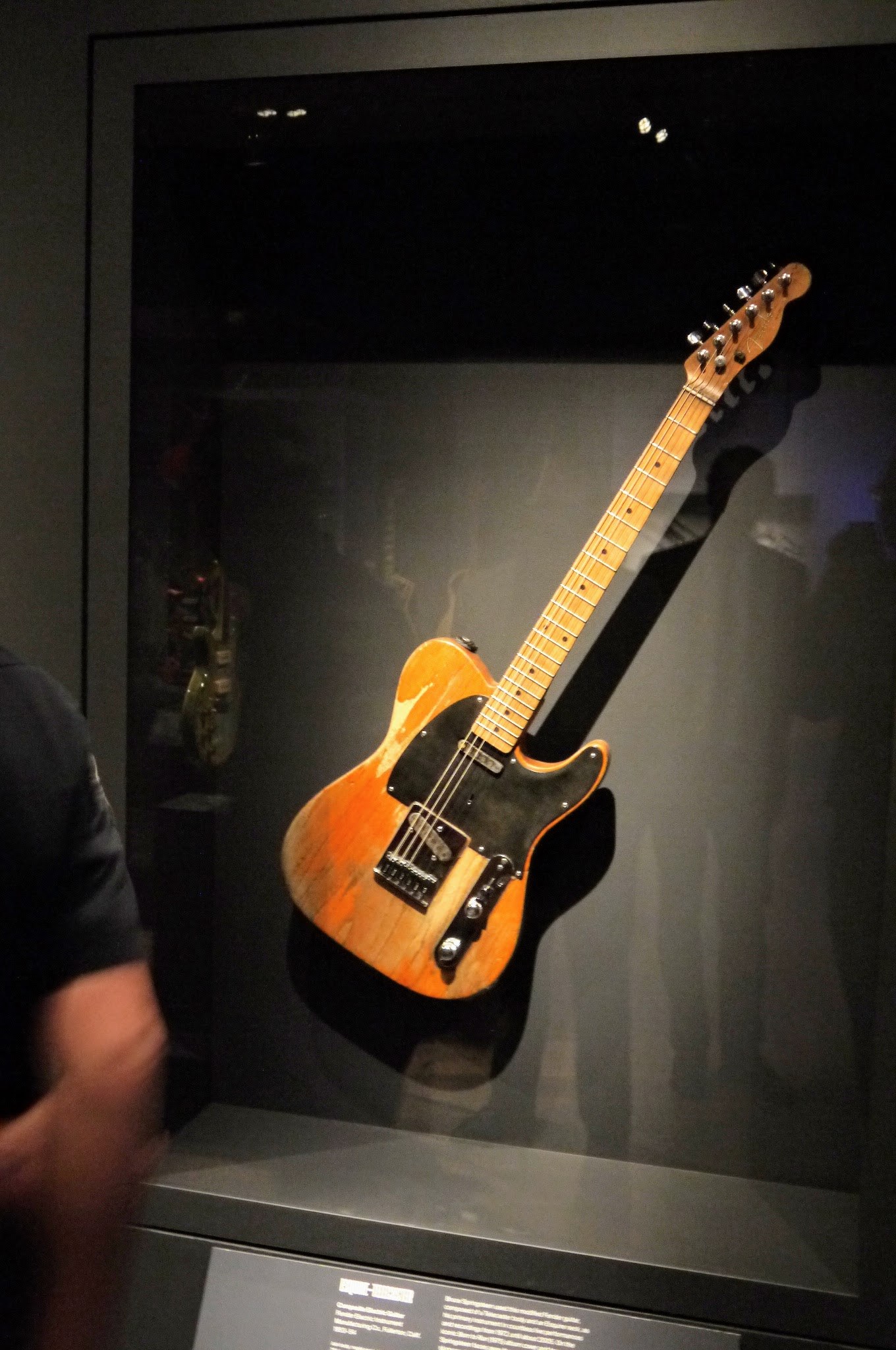
Photo: Eden, Janine and Jim from New York City, CC BY 2.0, via Wikimedia Commons
Joe Strummer and punk
Joe Strummer of the Clash played a 1966 Telecaster for most of his career, and it got progressively more battered, painted and stickered. It's another sign that the Tele works for almost any music where the rhythm guitar has to hit hard. Fender honored him with a Joe Strummer tribute Telecaster in 2007.
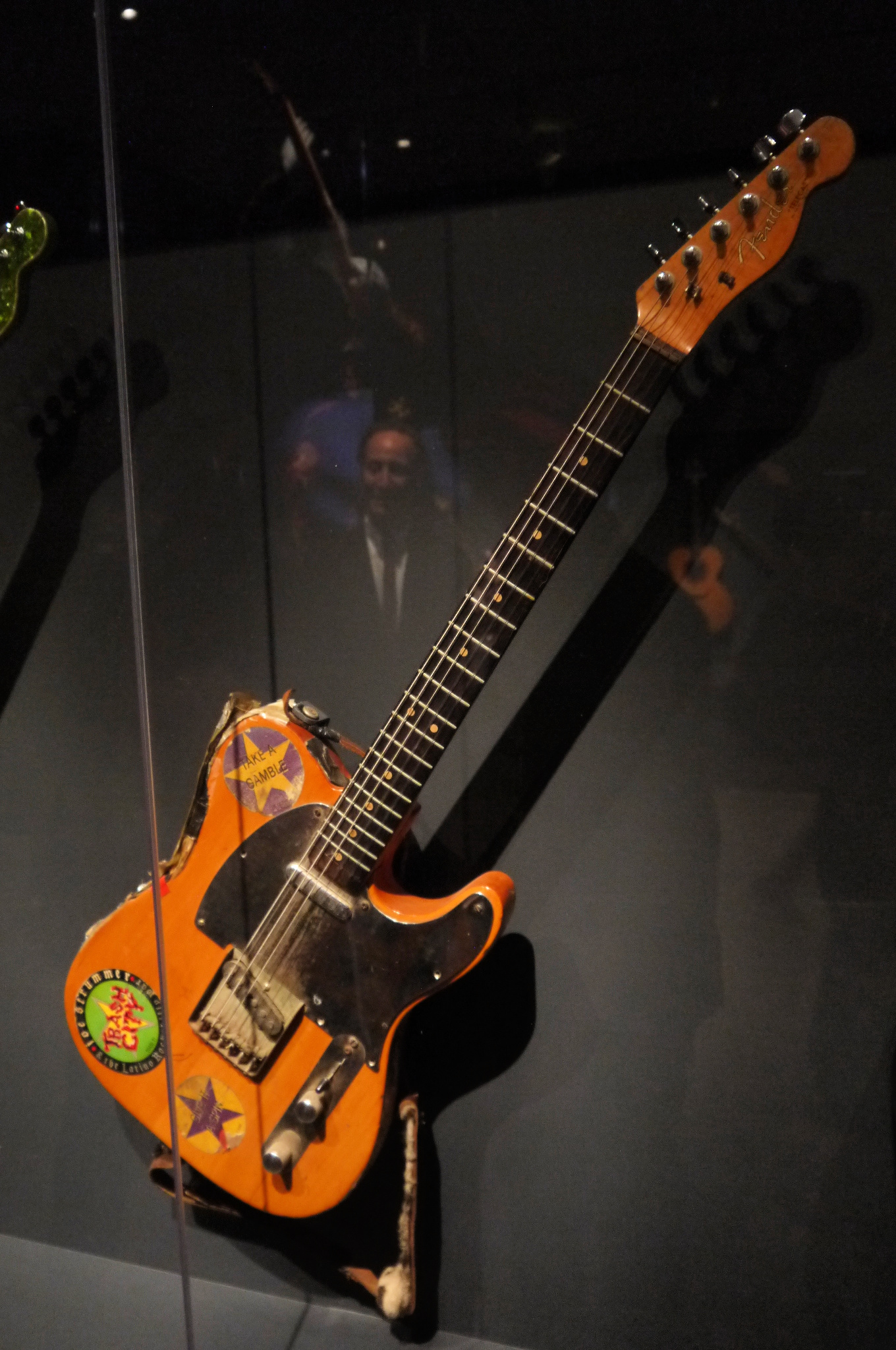
Photo: Eden, Janine and Jim from New York City, CC BY 2.0, via Wikimedia Commons
The Tele Wizards: Roy Buchanan and Danny Gatton
Then there are the players who treated the Telecaster less like a rhythm guitar and more like an instrument with no limits.
Roy Buchanan is the patron saint of Tele tone. His best-known guitar was a 1953 Telecaster, serial number 2324, that he nicknamed "Nancy." He shaped his sound with his guitar's volume and tone knobs. Wikipedia says that by working the tone control, he could get a wah-like sound without a pedal. He also made pinch harmonics and volume swells into signature sounds.
Buchanan was mostly a sideman until a 1971 public television documentary, Introducing Roy Buchanan, brought him national attention. It's often misremembered as "The Best Unknown Guitarist in the World."
Danny Gatton from the Washington, D.C., area was called "the Telemaster" and "the Humbler." He mixed jazz, rockabilly, country, blues and bebop into what he called "redneck jazz." His main guitar was a heavily modified 1953 Telecaster with Joe Barden pickups, and Fender's Custom Shop made a Danny Gatton signature model starting in 1990.
One great bit of Tele trivia: according to Wikipedia, one of Buchanan's Telecasters later belonged to Gatton and then to jazz guitarist Mike Stern, who lost it in a robbery.
Beyond the Blackguard: Custom, Thinline and Deluxe
Leo Fender sold his company to CBS in 1965. Over the years, Fender and CBS released several variations on the Tele. Three of them matter most.
The Custom Telecaster (1959). This was the fancier version, with binding around the front and back edges of the body, a sunburst finish and a rosewood fretboard. The decal read "Custom Telecaster," though catalogs often called it the Telecaster Custom. In 1972, the Custom name went to a different guitar with a humbucker in the neck position, a single-coil Tele pickup at the bridge, and separate volume and tone knobs for each pickup. That's the layout Keith Richards made famous.
The Thinline (1968–69). Designed by German luthier Roger Rossmeisl in 1968 and introduced in 1969, the Thinline had hollow chambers on one side of a solid center and a single f-hole. One main reason was weight. Light ash was getting harder to find, and Teles were getting heavy. The first Thinlines used standard Tele single-coils. In 1971–72, Fender gave the Thinline a pair of Wide Range humbuckers designed by Seth Lover, the former Gibson engineer who created the original PAF humbucker.
The Telecaster Deluxe (1972–73). This was Fender's attempt to compete with the Les Paul, with two Wide Range humbuckers, a large Strat-style headstock and separate controls for each pickup. Sources differ on whether it came out in 1972 or 1973. It didn't sell well and was discontinued in 1981, along with the '72-style Custom. Then '90s British and alternative rock rediscovered both models. Reissues have been in Fender's lineup ever since.
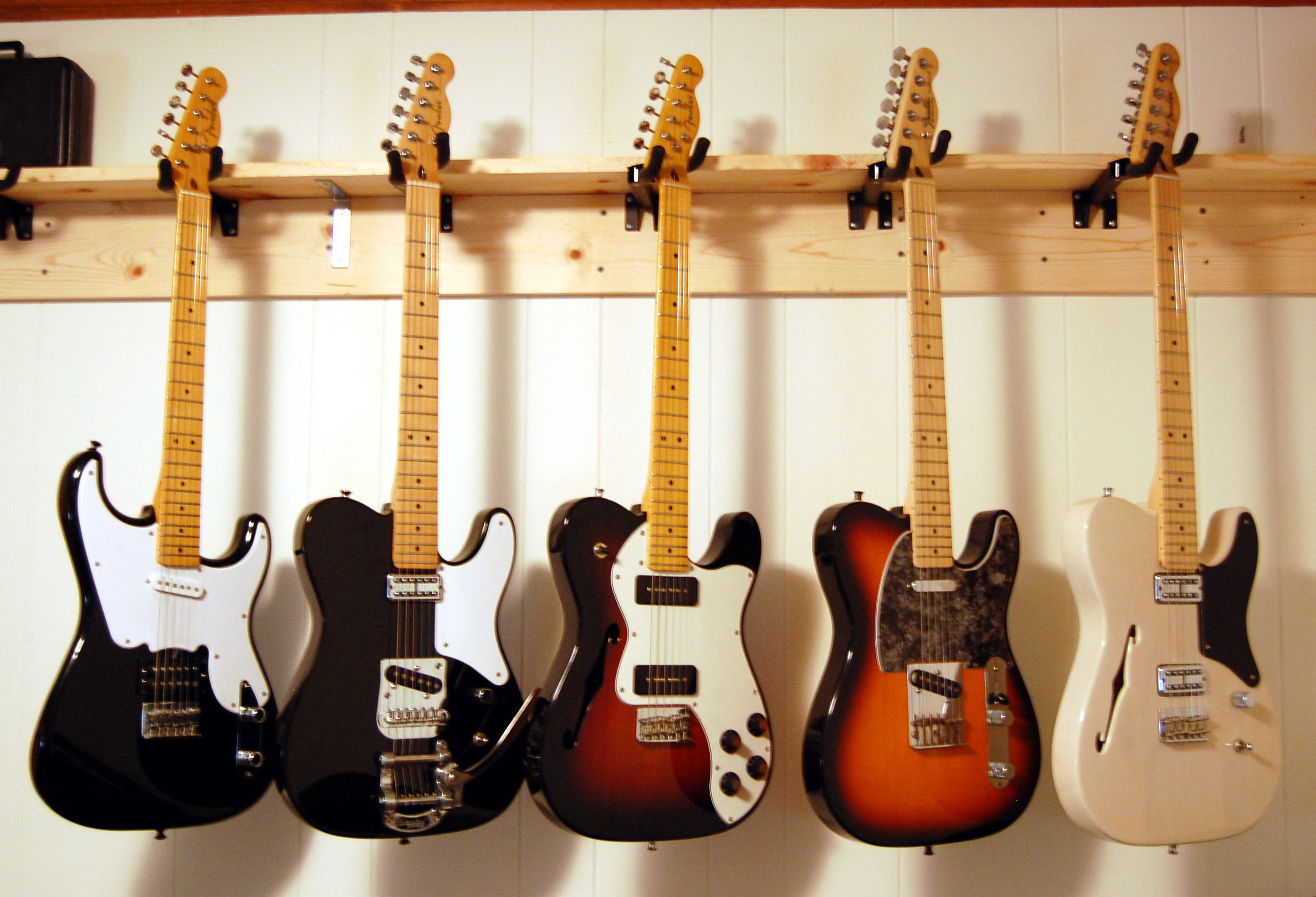
Many other players have used the Tele in their own way. Fender's 75th-anniversary announcement listed Joe Strummer, Jonny Greenwood, Chrissie Hynde, Graham Coxon, Sheryl Crow, Tom Morello and Brad Paisley among the players who took it into indie, alternative, hard rock, pop and modern country. Greenwood, for example, has long used a Telecaster Plus, a late-'80s/'90s model with Lace Sensor pickups, in Radiohead. Further afield, heavy players like Slipknot's Jim Root have Fender signature Teles with active humbuckers. That's a long way from western swing.
The 75th Anniversary: Which Year Counts?
Is the Tele 75 this year or last? It depends on what you count.
If you count from the first two-pickup Broadcaster in late 1950, the 75th anniversary fell in 2025. Fender honored the Broadcaster's 70th in 2020 with a reissue. If you count from the Telecaster name, which is what Fender is doing, the anniversary is 2026. On March 17, 2026, Fender announced its 75th Anniversary Telecaster Collection, describing the Telecaster as "introduced in 1951." Guitarist and Guitar World also ran their "Telecaster at 75" histories in 2026.
The collection has five limited models. Here are their launch MSRPs as given in Fender's press release:
- 75th Anniversary Vintera Road Worn 1951 Telecaster ($1,899.99): swamp ash body, early-'50s U-shaped neck, aged nitro finish, three brass saddles and Pure Vintage 1951 pickups
- 75th Anniversary American Ultra II Telecaster ($2,999.99): Liquid Gold finish, ebony fretboard, a Noiseless neck pickup and a Fastlane bridge humbucker
- 75th Anniversary American Professional Custom Telecaster ($2,799.99): flame maple top, double binding, two-color sunburst and gold hardware
- 75th Anniversary American Professional Classic Cabronita Telecaster ($1,999.99): TV Jones pickups
- 75th Anniversary Player II Telecaster ($1,099.99): Diamond Dust Sparkle finish and Thunderbolt pickups
These are limited editions. Check current availability and street prices before treating them as a shopping list.
What Telecaster Should You Buy Today?
This is a researched buying guide, not a hands-on test. TGP hasn't reviewed these guitars. Prices are what we saw on Fender's site, Fender's press materials or major retailers in late October 2026, and they change often.
Squier Classic Vibe '50s Telecaster. This is the classic recommendation for a first Tele with vintage looks. It's built around a '50s blackguard-style design with a butterscotch or white blonde finish and a black pickguard. Guitar Player's 2026 guide calls it its pick for a first Telecaster. We saw it listed at $499.99 at Sweetwater. If you want the cheapest possible way in, Guitar Player also points to the Squier Sonic Telecaster.
Fender Player II Telecaster. Most major guides call this the best all-rounder. It's made in Mexico, with a Modern C neck, rolled fretboard edges, 22 medium-jumbo frets, Alnico V single-coils and a six-saddle string-through bridge. You can choose an alder body, chambered ash or chambered mahogany. Fender lists it at $849.99. If you want three brass saddles and vintage-correct details, look elsewhere, but as a gigging guitar it's hard to argue with.
Fender American Professional Telecaster (2026). Fender replaced the American Professional II this month. The new US-made series launched on October 13, 2026, and dropped the "II." The new Tele has V-Mod III pickups, a Deep C neck with rolled edges, a bone nut, 22 narrow-tall frets, a push-push tone control that puts the pickups in series, and a new three-saddle bridge with compensated brass "bullet" saddles that can be strung through the body or top-loaded. Guitar World reports a starting price of $1,799, about $100 less than the American Professional II it replaces. There's also a HotShot version with a middle pickup and five-way switch, starting around $1,849. If you see American Professional II Teles discounted while stores clear stock, they're still excellent guitars. Just know they're now the previous generation.
Vintage-style reissues. If you want to get close to the 1950s guitar, Fender's Vintera II series includes a '50s Nocaster, and the American Vintage II line has included '51 and '63 Telecasters. Prices and availability vary, so check current listings.
| If you want… | Look at… | Why |
|---|---|---|
| A first Tele with vintage looks on a budget | Squier Classic Vibe '50s Telecaster (~$499.99) | Blackguard-style looks and a well-reviewed build for the price |
| The best all-round value with the Fender name | Fender Player II Telecaster ($849.99 list) | Modern neck, lightweight body options, six-saddle bridge |
| A pro US-made Tele | American Professional Telecaster (from ~$1,799) | New 2026 pickups, brass bullet saddles, series switching |
| More sounds in one guitar | American Professional HotShot Telecaster (from ~$1,849) | Adds a middle pickup and five-way switching |
| The 1951 look and feel | Vintera II '50s Nocaster or the limited 75th Anniversary Road Worn 1951 ($1,899.99 MSRP) | U-shaped neck, three brass saddles, vintage-style pickups |
| Humbucker power in a Tele | A Telecaster Deluxe or Custom reissue | The '70s Wide Range-style recipe the Britpop crowd loved |
Getting the Tele Sound: A Few Starting Points
These are general starting points based on how the guitar is designed and how the players above used it. They aren't TGP bench tests.
- Live on the bridge pickup. It's what the guitar is famous for. Pick near the bridge for snap and further up toward the neck for a rounder tone.
- Try hybrid picking. That means using a pick plus your middle and ring fingers. The bright, clucking sound people call "chicken pickin'" comes partly from plucking strings with your fingers while palm-muting.
- Use the knobs like Roy Buchanan. Start with the amp loud and the guitar's volume rolled back. Turn the volume up for leads, and sweep the tone knob for vocal-sounding effects.
- Try open G with the low E removed. If you want Keith's sound, take off the sixth string, tune to G-D-G-B-D, and play the major chord shapes with one finger across the strings.
- Keep the amp fairly clean. Teles can sound harsh through lots of fuzzy gain. A clean amp with just a bit of breakup, with compression or slapback echo if you like, is the classic country and soul recipe.
- Tune carefully. Three-saddle bridges have some compromise built in. Tune with our Free Guitar Tuner, and use a good setup to deal with the rest.
TGP Lessons, powered by Guitar Tricks (affiliate link, clearly labeled) If you want to learn the rhythm and blues sounds in this story step by step, our free Rock Rhythm and Blues Basics guides are a good place to start. For a full video course, our lessons partner Guitar Tricks offers a 14-day free trial. Disclosure: TGP earns a commission if you sign up through this link, at no extra cost to you.
Why the Plank Still Matters
The Telecaster has stayed in production because it never tried to be clever. Leo Fender built a tool: a flat body, a screwed-on neck, two pickups and one bridge that made the guitar loud enough for a dance hall without feeding back. Then he let musicians decide what to do with it.
They had plenty of ideas. Jimmy Bryant played dazzling runs on it at the Riverside Rancho. Luther Perkins muted it into a train rhythm. Steve Cropper made it bark two chords at a time. Muddy Waters painted it red. Keith Richards took a string off. Jimmy Page painted a dragon on it, and Bruce Springsteen played a mismatched one for 30 years. Every one of them sounds different, and every one of them sounds like a Telecaster.
If you've never owned one, don't let all the history scare you off. It's the simplest electric guitar you'll ever play. It's also one of the hardest to hide behind. Every bad note comes through clearly, and so does every good one. That's why great players keep coming back to it, 75 years after a radio repairman in Fullerton put a neck on a plank.
*More gear history: read our Vox AC30 history and the Charvel story, or catch up on John 5's Telecaster career. Then tell us in Guitar Talk: Blackguard or Thinline, three saddles or six? And who's the greatest Tele player ever?*
Experience-driven coverage, not algorithm bait.
- 20+ years of guitar playing experience
- Real-world retail experience at Guitar Center
- Thousands of hours testing guitars, amps, and pedals
- A community of 50,000+ guitar enthusiasts across platforms
- Partnerships with Fender, DistroKid, TrueFire, Card Chords, and Enya
- Editorial standards published openly — see how we test gear
The Modern Guitar Magazine. Delivered to your inbox.
No spam. No gimmicks. Just great guitar content — stories, tones, iconic solos, and honest gear takes. Every week.
Ask GP
3 free questions a dayStill curious? Ask GP about this story.
Your personal classic-rock and guitar guide — ask anything about The Fender Telecaster History.
Discussion (0)
Sign in to join the discussion.
Sign in to commentLoading comments…
Discover another guitar story
Swipe through our latest features, breaking news and iconic solos — one story at a time.
Open Swipe →More Guitar News
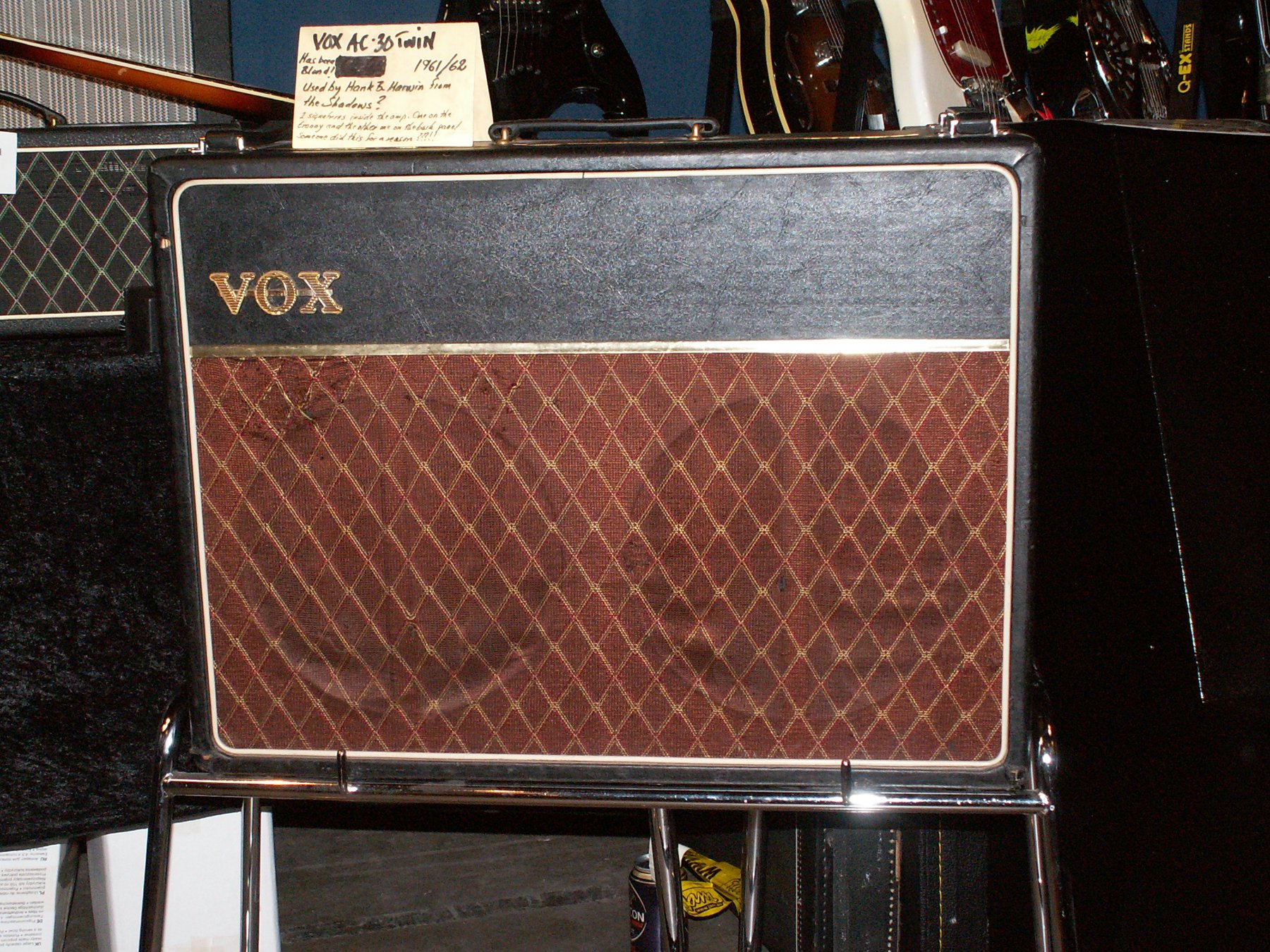
The Vox AC30 History: How a British Amp Learned to Chime
The Vox AC30 history, from Hank Marvin's call for more volume to the Top Boost, Beatlemania, Brian May and The Edge: the circuit, the speakers, the chime.
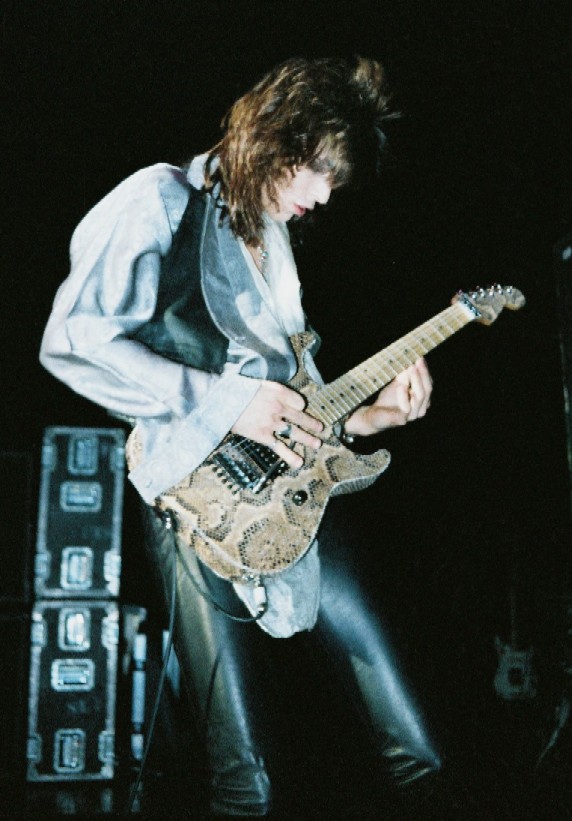
Wayne Charvel and the Birth of the Superstrat: How a Repair Shop Rewired Rock Guitar
Wayne Charvel's name is still on the headstock of some of the most aggressive bolt-on guitars you can buy, but he left the company that carries it in 1978. In that short window, he helped create the idea that a Fender-style guitar was a starting point, not a finished product — the superstrat.
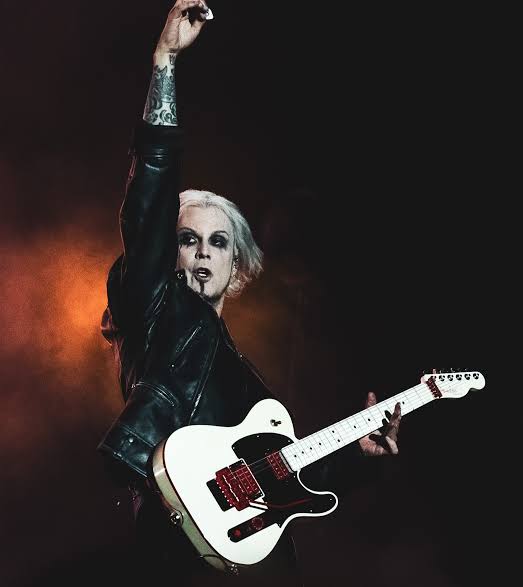
John 5 at 56: How a Telecaster Obsessive Became Rock's Ultimate Guitar Hired Gun
John 5 turns 56 today — and the real story isn't the résumé. It's how a country-schooled Telecaster obsessive became rock's most adaptable hired gun while still sounding unmistakably like himself.
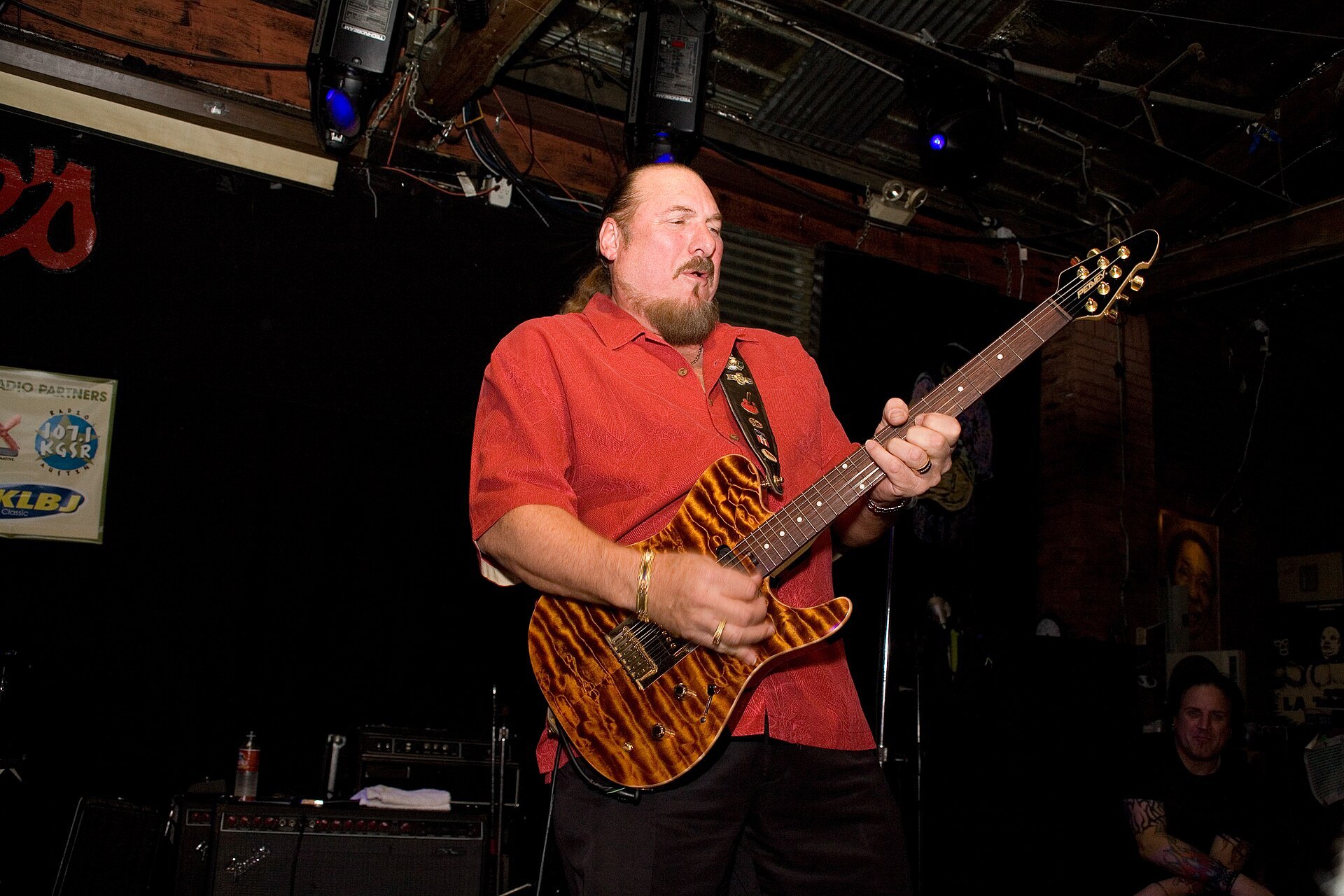
Steve Cropper at 85: The Stax Guitarist Who Proved Less Is Everything
Steve Cropper would have turned 85 today, his first birthday since he died. Here's how the Stax guitarist made every note count, and what players can learn.