George Harrison, 25 Years On: The Gretsch, the Rickenbacker 12, Rocky and the Slide Guitar That Sang
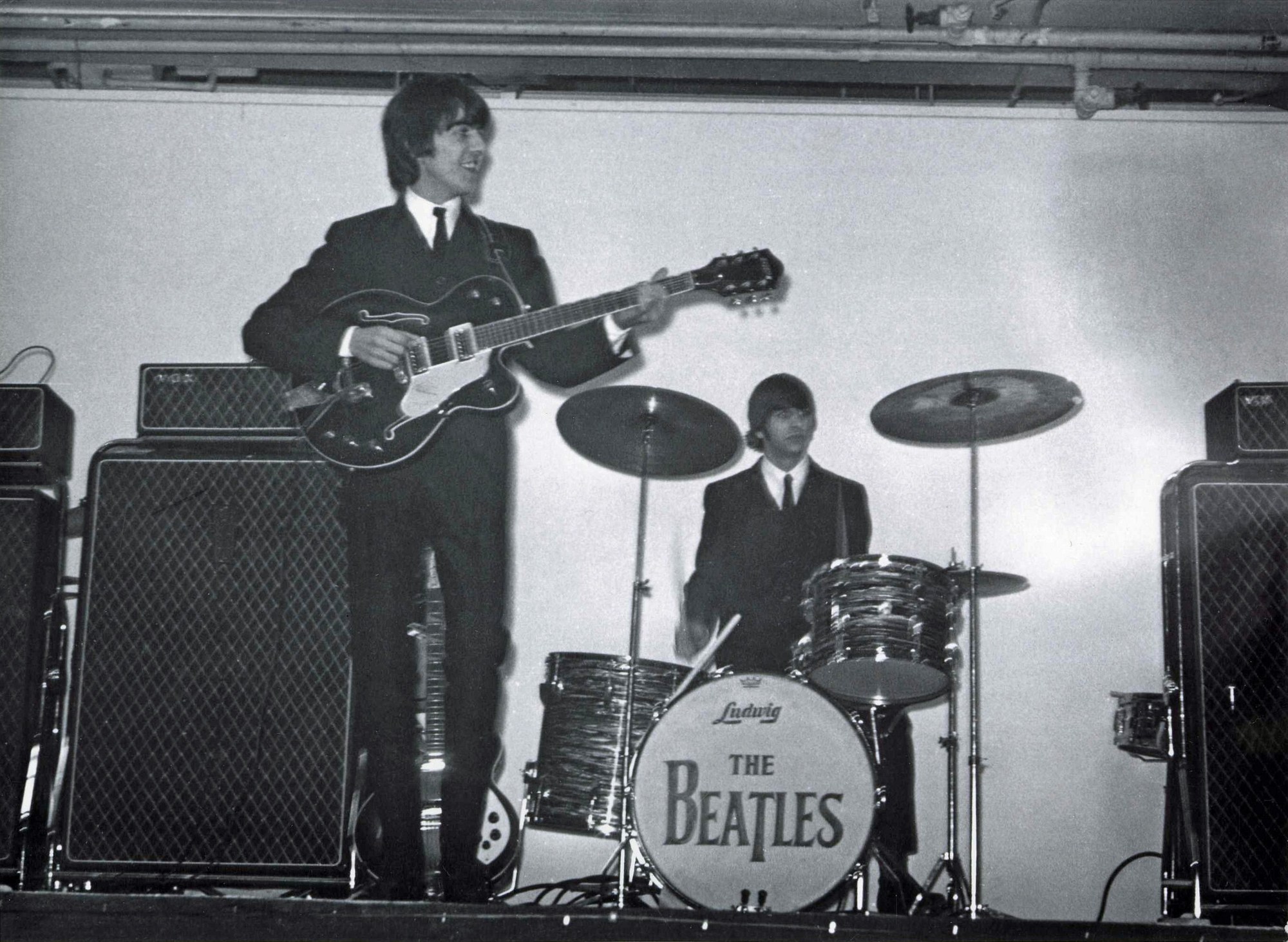
George Harrison and Ringo Starr on stage at the King's Hall, Belfast, November 2, 1964.
George Harrison died 25 years ago this month. He was never the fastest guitarist in the room, and he never tried to be. What he left behind is a set of guitars, a handful of tricks and a slide sound you can recognize in two notes.
George Harrison died on November 29, 2001. He was 58. Next Sunday marks 25 years, and the tributes are already on the calendar: Jeff Slate and friends play "25 Years Gone" at Cafe Wha? in Greenwich Village tonight, a 15-piece Chicago band recreates the Concert for George in Blue Island, Illinois, on November 28, and The George Harrison Project plays Twickenham, in the Thames Valley, on the anniversary itself.
Most of those shows will end with "Here Comes the Sun" or "My Sweet Lord," and most of the audience will sing along without thinking about the guitar parts. That is the funny thing about Harrison. He wrote some of the most recognizable guitar lines in pop music, and he did it so quietly that a lot of people still file him as "the other songwriter" in the Beatles.
Guitarists should know better. Harrison was the player who brought the electric 12-string into the mainstream, who made a capo sound like an arranging tool instead of a crutch, who used a volume pedal before most rock players knew what one was for, and who, after the Beatles, built a slide-guitar voice so personal that you can identify it in two notes. Eric Clapton called him "clearly an innovator." Rolling Stone founder Jann Wenner put it more simply: Harrison "played exquisitely in the service of the song."
This is the guitar story: the cheap first acoustic, the Gretsches, the Rickenbacker that rewrote the jangle, Rocky, Lucy, the rosewood Telecaster, the sitar detour, and the slide that carried him from All Things Must Pass to the Traveling Wilburys.
A £3 Guitar in Wavertree
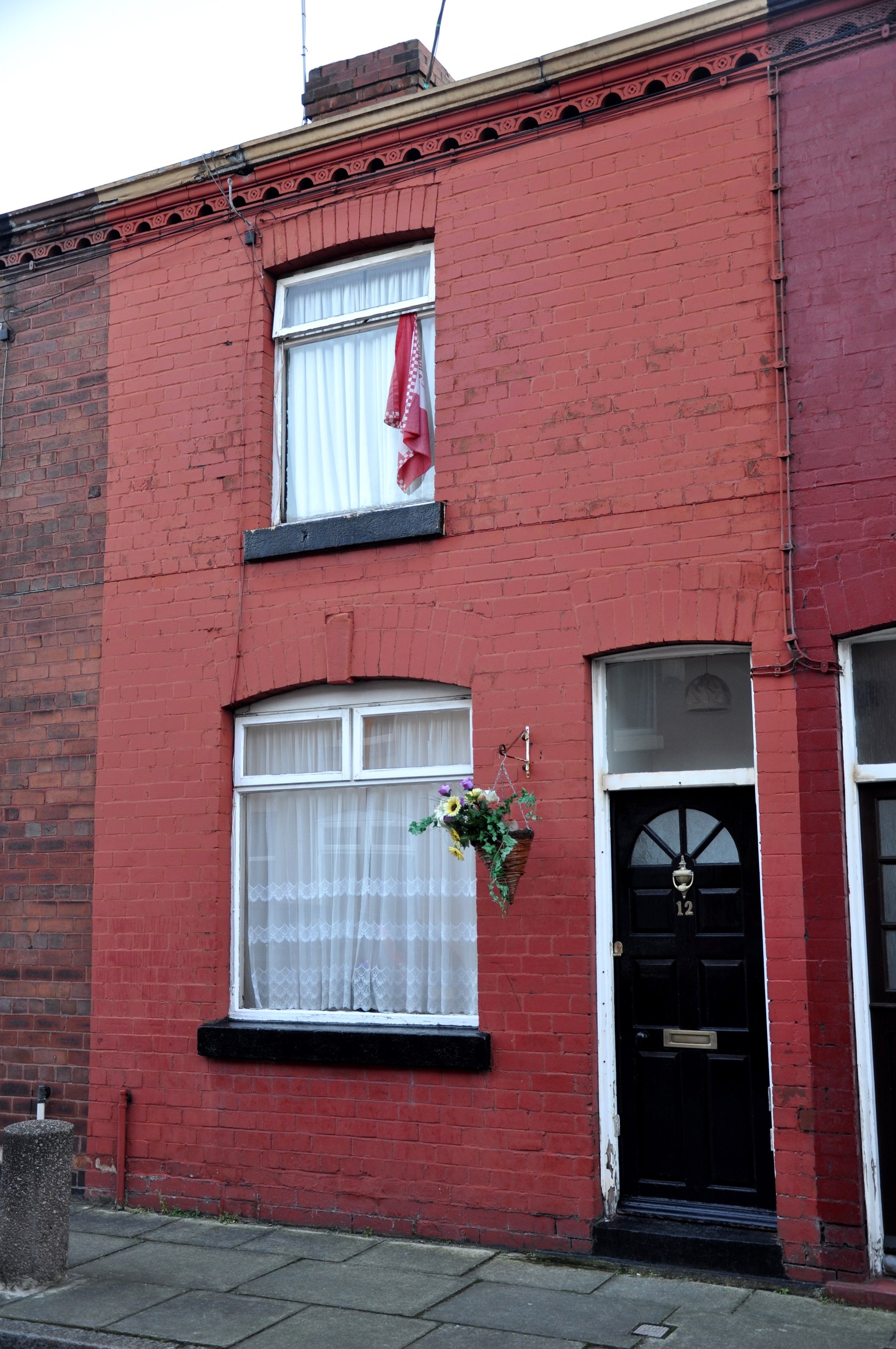
Harrison was born at 12 Arnold Grove in Wavertree, Liverpool, on February 25, 1943, the youngest of four children. His father, Harold, was a bus conductor who had worked as a ship's steward; his mother, Louise, worked in a shop and was the parent who pushed the music. The house was a small terrace with an outdoor toilet and one coal fire. The family moved to a council house in Speke when he was six.
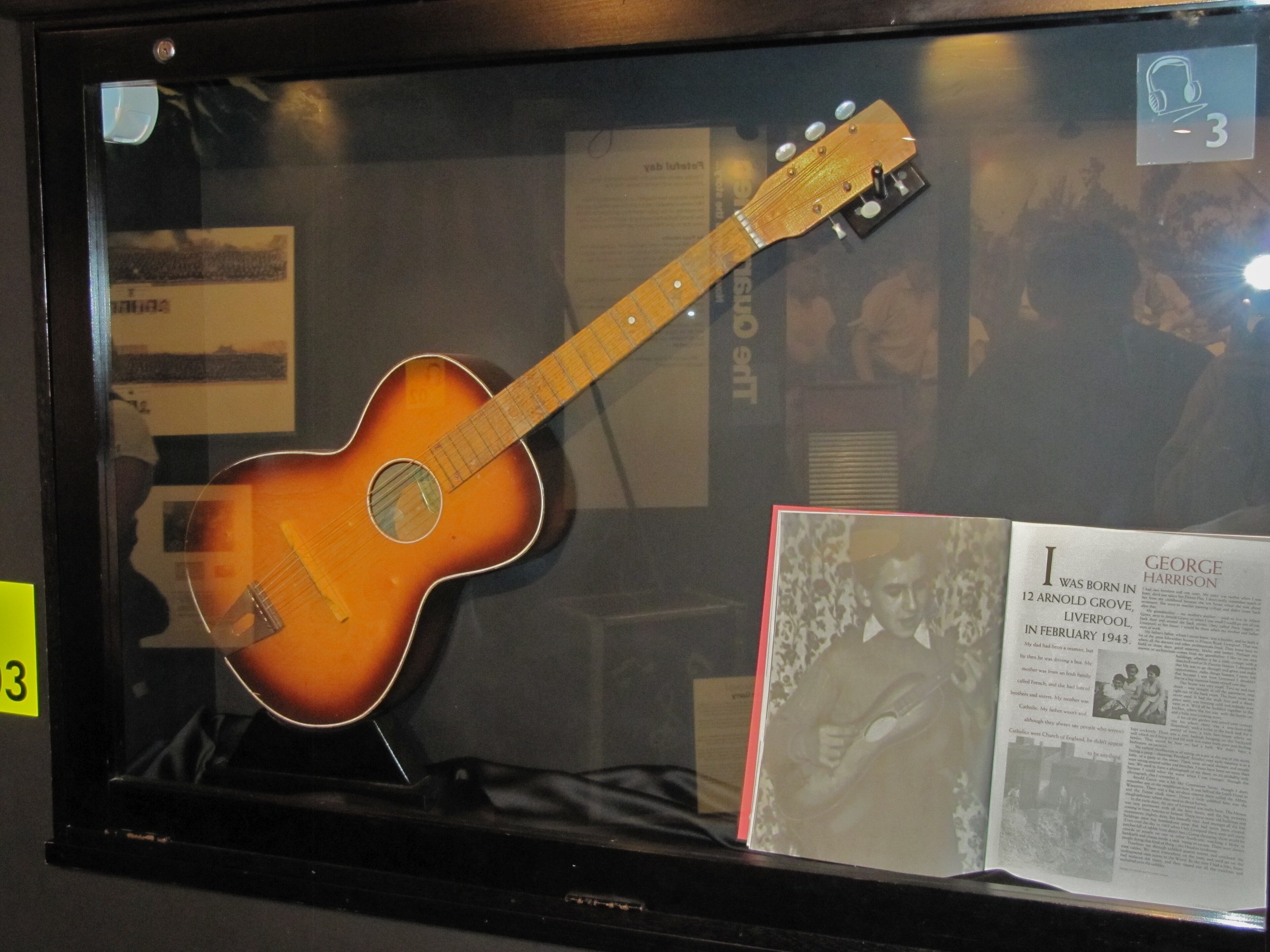
The guitar bug came early and hard. Harrison later said he drew guitars in the back of his schoolbooks: "I was totally into guitars." His influences were all over the map for a Liverpool kid in the 1950s — George Formby, Django Reinhardt, Hoagy Carmichael, Cab Calloway — and then Lonnie Donegan and Carl Perkins arrived and gave him something he could actually play. The famous turning point was hearing Elvis Presley's "Heartbreak Hotel" drifting out of a house while he rode past on his bike.
At about 14, a school friend named Raymond Hughes offered to sell him a guitar. His mother paid: £3.10s. A friend of his father taught him "Whispering," "Sweet Sue" and "Dinah," and before long he had a skiffle group, the Rebels, with his brother Peter and a friend.
"Raunchy" on the Top Deck of a Bus
On the bus to the Liverpool Institute, Harrison met Paul McCartney. McCartney had a friend named John Lennon who ran a skiffle group called the Quarrymen. In March 1958 Harrison auditioned at Rory Storm's Morgue Skiffle Club with Arthur Smith's "Guitar Boogie Shuffle." Lennon thought he was too young — he had just turned 15.
So McCartney set up a second meeting on the upper deck of a Liverpool bus, and Harrison played the lead part of Bill Justis's instrumental "Raunchy." That did it. It is worth noticing what won him the job: not flash, but the ability to play a recognizable instrumental line cleanly and correctly. That was his whole value to the band for the next five years.
The early instruments were a run of whatever he could afford. When he joined the Quarrymen, his main guitar was a Höfner President acoustic, which he soon traded for a Höfner Club 40. His first solid-body electric was a Czech-built Jolana Futurama (sold in some markets as the Grazioso), the closest thing to a Stratocaster a teenager in Liverpool could get his hands on. On the band's 1960 tour of Scotland, he called himself "Carl Harrison," after Carl Perkins.
Then came Hamburg, where he was deported partway through the first residency for being too young to work in the clubs, and the Cavern, and Brian Epstein, and EMI.
The Gretsch Years: A Duo Jet and Chet Atkins Fingers
If you want to understand early Beatles guitar, start with Gretsch and Chet Atkins.
Harrison bought a secondhand Gretsch Duo Jet in 1961. A Duo Jet looks like a solid-body but is chambered inside, which gives it a little more air and snap than a slab of mahogany. Through a Vox amp, it gave the Beatles the bright, slightly twangy lead sound you hear on their earliest records. He kept it for the rest of his life; he posed with it on the cover of Cloud Nine in 1987.
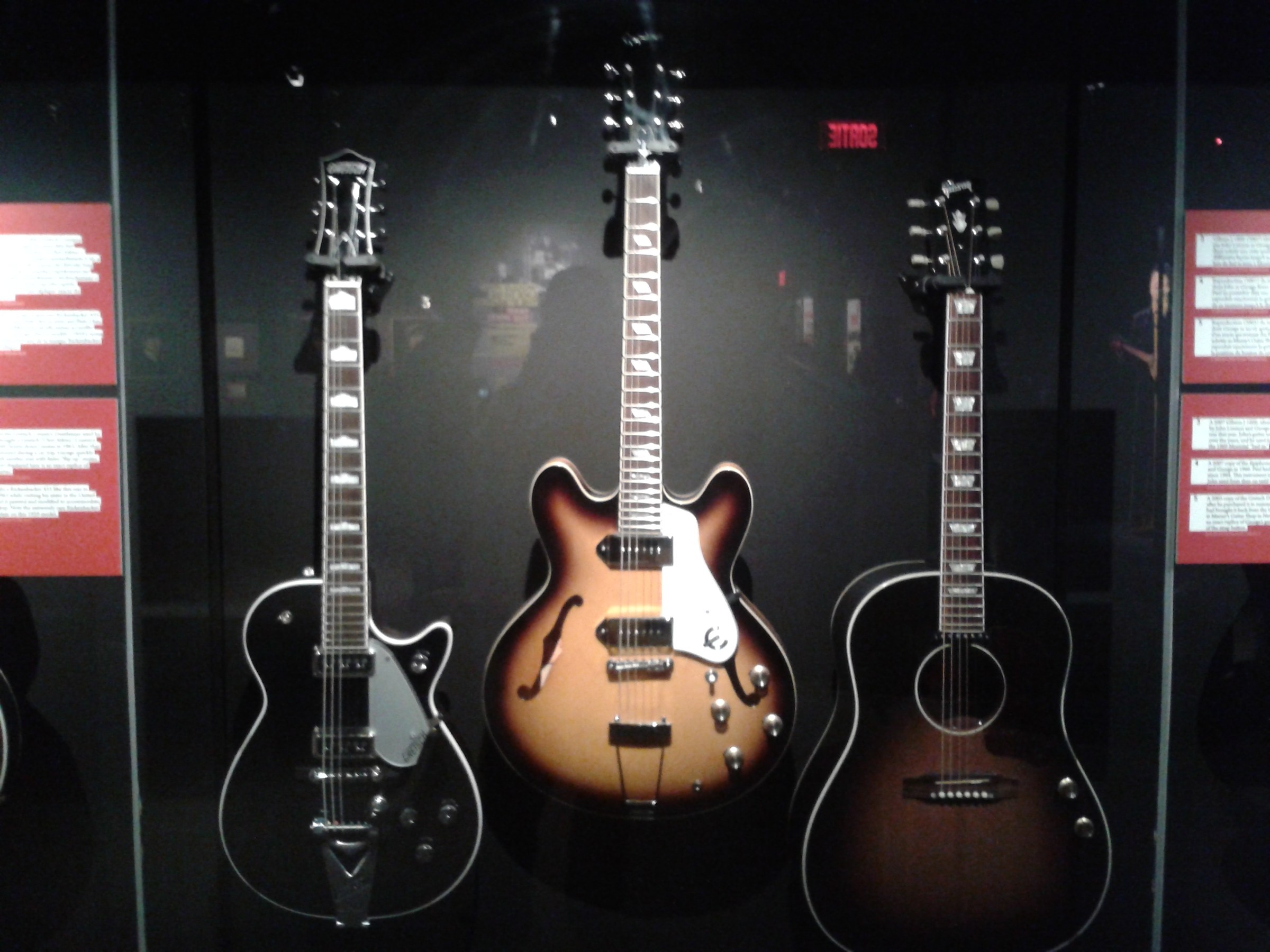
He moved up the Gretsch range as the money came in. A Gretsch Tennessean and a Gretsch Country Gentleman followed. He was playing a Country Gentleman around the time of "She Loves You," and he played one on The Ed Sullivan Show in February 1964, the broadcast that turned the Beatles into an American phenomenon. If you were a kid in 1964 who went out and bought a guitar the next day, there was a good chance the guitar you wanted was the big double-cutaway hollowbody George was holding.
The Gretsch connection mattered for more than looks. Atkins, Perkins and Chuck Berry were his models, and you can hear the country picking in a lot of early Beatles parts: little double-stops, hybrid fills, octave lines like the one on "I'll Be on My Way." On "Cry for a Shadow," the 1961 instrumental he wrote with Lennon in Hamburg, he worked out a Shadows-style lead around unusual chord voicings. This was a rock guitarist thinking like a session player.
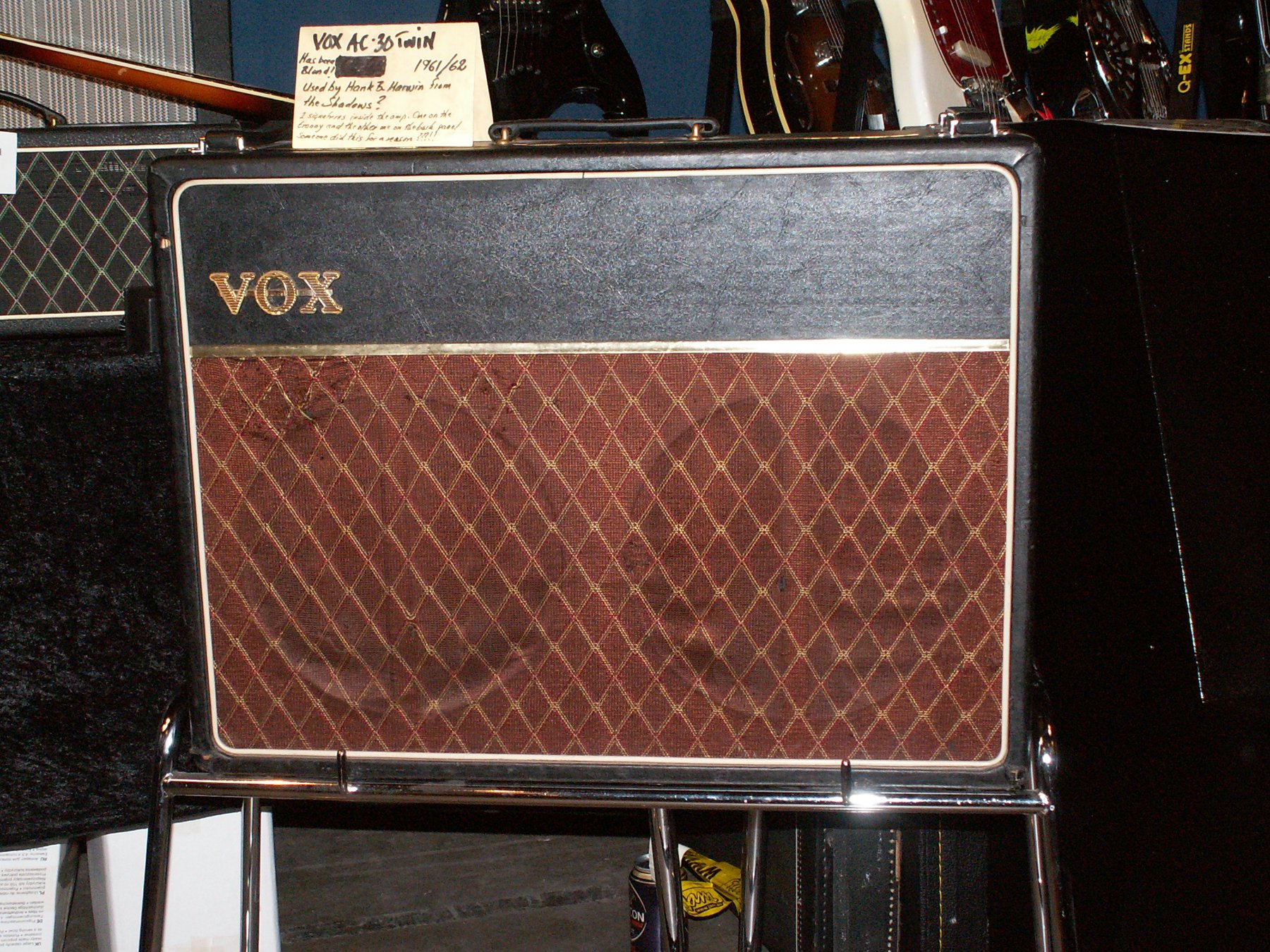
We've told the bigger story of the Gretsch hollowbody in our Gretsch 6120 history, and the Vox side in our Vox AC30 history. Harrison sits right at the point where those two stories meet.
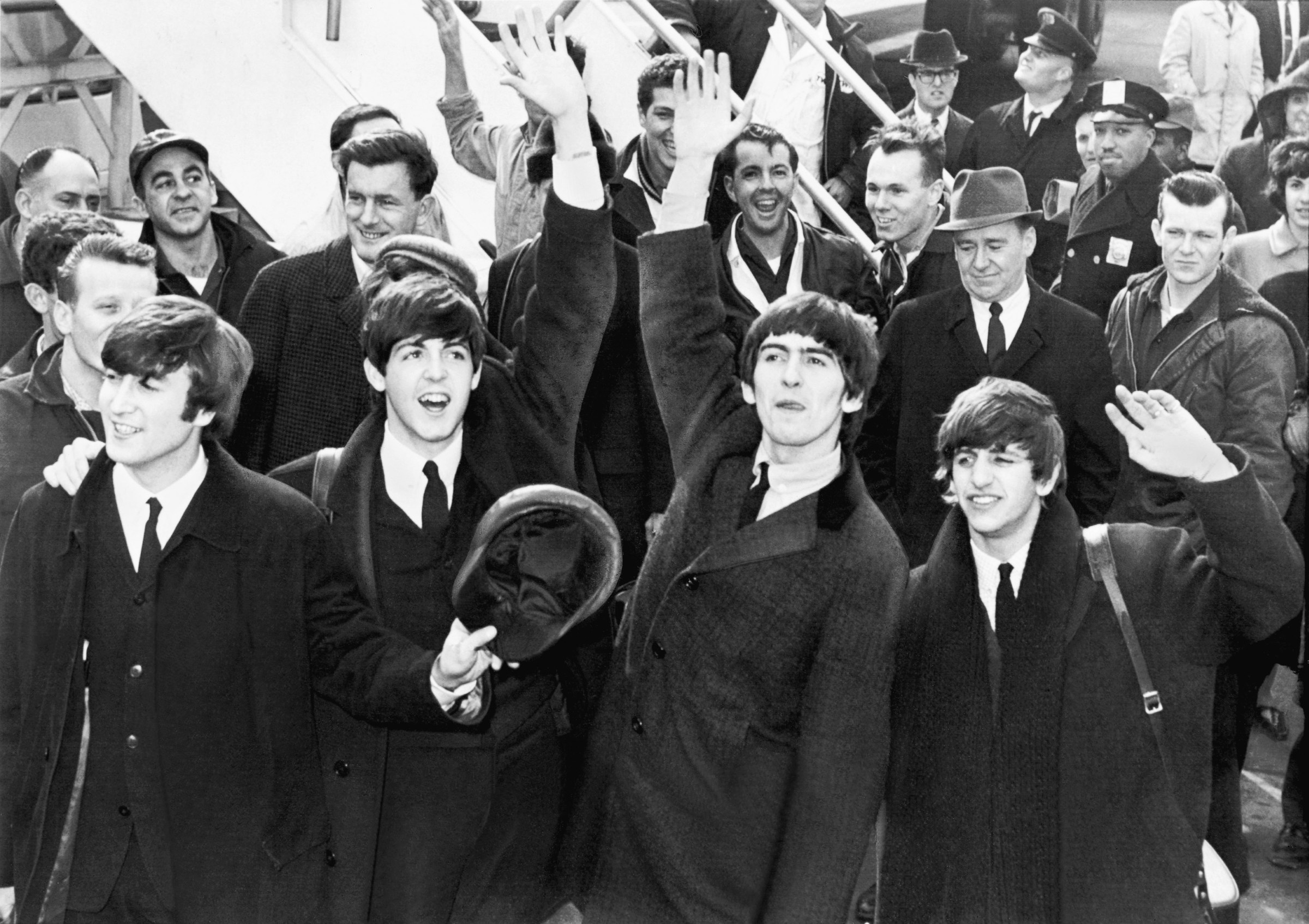
Photo: United Press International, public domain, via Wikimedia Commons.
The Rickenbacker 360/12: The Beatles' "Secret Weapon"
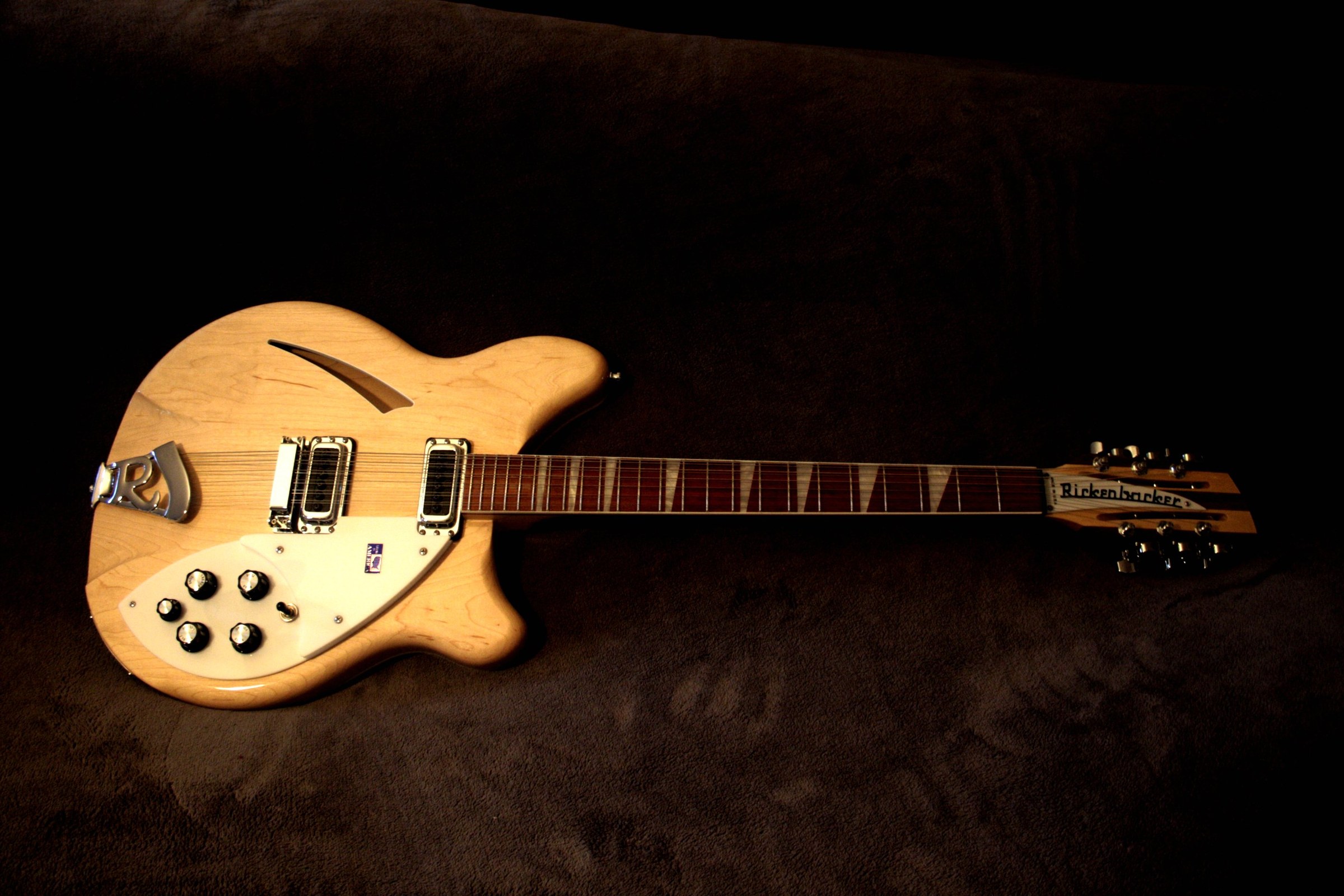
In February 1964, during that first American trip, Harrison was given a Rickenbacker 360/12. It is often described as the second one ever made. Within weeks it changed the sound of the band, and within a year it changed the sound of American rock.
The 360/12 is built in an unusual way. On most 12-strings, the octave string of each low pair sits above the main string. Rickenbacker is typically described as reversing that, and the guitar's headstock uses slotted and solid tuners side by side to keep all twelve keys on a normal-sized head. The low four courses are tuned in octaves and the top two in unison. The result is less of a shimmering acoustic 12-string wash and more of a bright, ringing chime with a hard, focused attack.
Harrison first used it on "I Call Your Name," recorded in March 1964. Then came the A Hard Day's Night sessions. The ending of the title track — those ringing, unresolved chord arpeggios fading out — is a 360/12 part, and it is one of the first great examples of Harrison writing guitar lines that don't resolve where you expect. Melody Maker called the jangly Rickenbacker sound the Beatles' "secret weapon."
The secret didn't stay a secret. Roger McGuinn of the Byrds has said he saw Harrison's Rickenbacker in the A Hard Day's Night film and went out and got one, and the Byrds built folk rock around it. In 1965 Harrison returned the favor: "If I Needed Someone" on Rubber Soul borrows a Byrds-style 12-string figure, and the capo-high, ringing pattern on that song is a direct ancestor of "Here Comes the Sun."
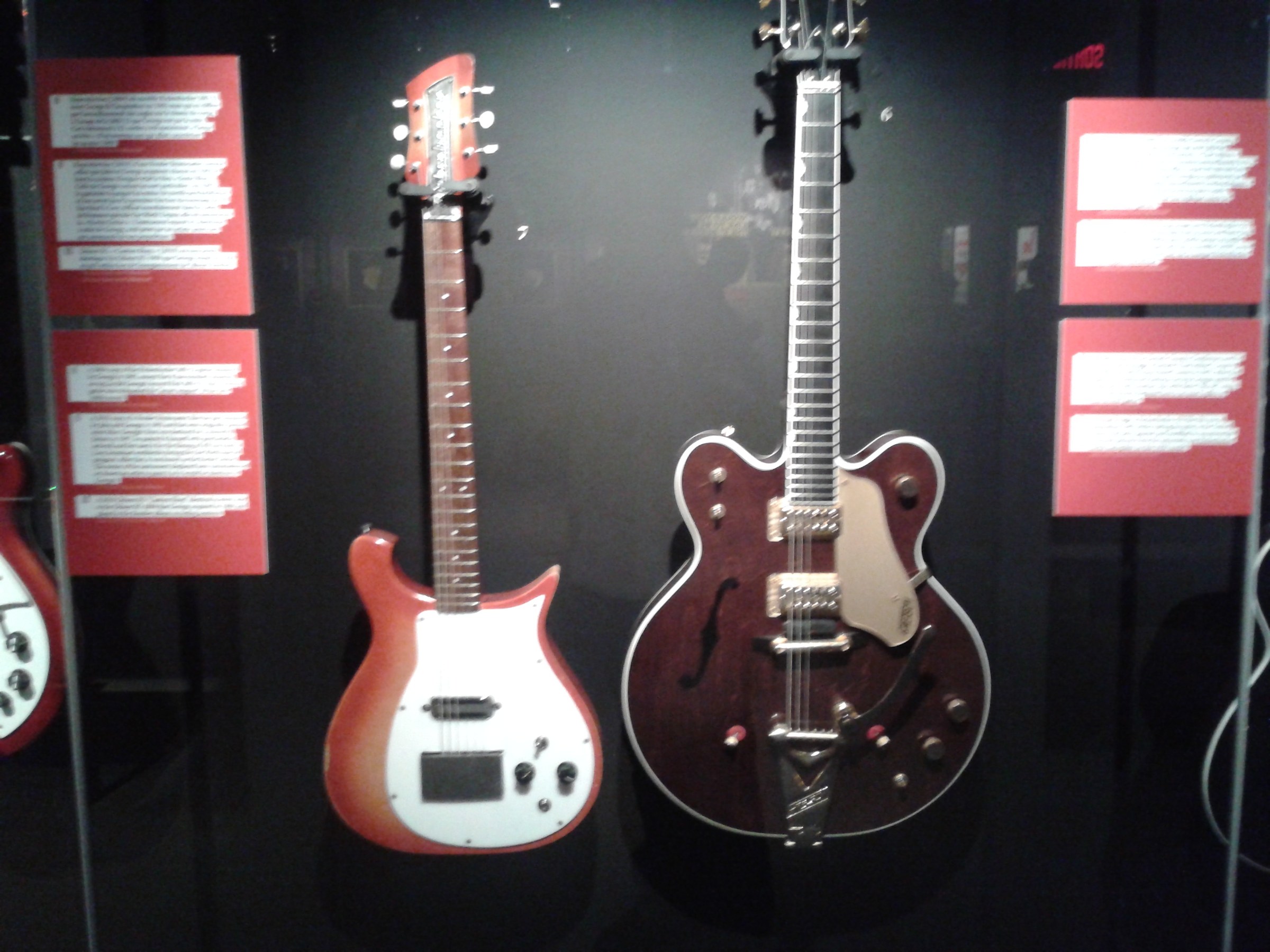
He also played a six-string Rickenbacker 425 in Fireglo, bought in 1963.
The Quiet Experiments: Volume Swells, Backwards Guitar and the Capo
The most useful thing a modern guitarist can learn from Harrison's middle-Beatles period is that tone isn't only about the guitar. It's about what you do with the note after you hit it.
Look at what he was trying in 1965 and 1966:
- Volume swells. On "I Need You" (1965), he used a foot-operated volume pedal to fade notes in, removing the pick attack and creating a soft, bowed sound. He did the same on "Yes It Is," swelling natural harmonics in and out. Musicologist Walter Everett called it "ghostly articulation." This is basically the technique every ambient guitarist with a volume pedal uses today.
- Backwards guitar. On Lennon's "I'm Only Sleeping," from Revolver (1966), Harrison's solo was recorded to be played back in reverse, which gives it that sucked-in, yawning quality.
- Parallel octaves. His counter-melody on "And Your Bird Can Sing" moves in octaves above McCartney's bass line, a twin-guitar idea that later hard-rock bands would turn into a genre.
- The capo as an arranging tool. On Rubber Soul and later on "Here Comes the Sun," he capoed acoustic guitars high on the neck to get a bright, sweet register that cut through a dense mix without stepping on the vocal.
His instruments changed too. In early 1966 he and Lennon each bought an Epiphone Casino, a thinline hollowbody with P-90s that gets loud and hairy in a way a Gretsch doesn't. For Revolver, he also used a Gibson J-160E acoustic-electric and a Gibson SG Standard. That SG is the "Paperback Writer" era guitar you see in a lot of 1966 photos.
Rocky: The Strat He Painted Himself
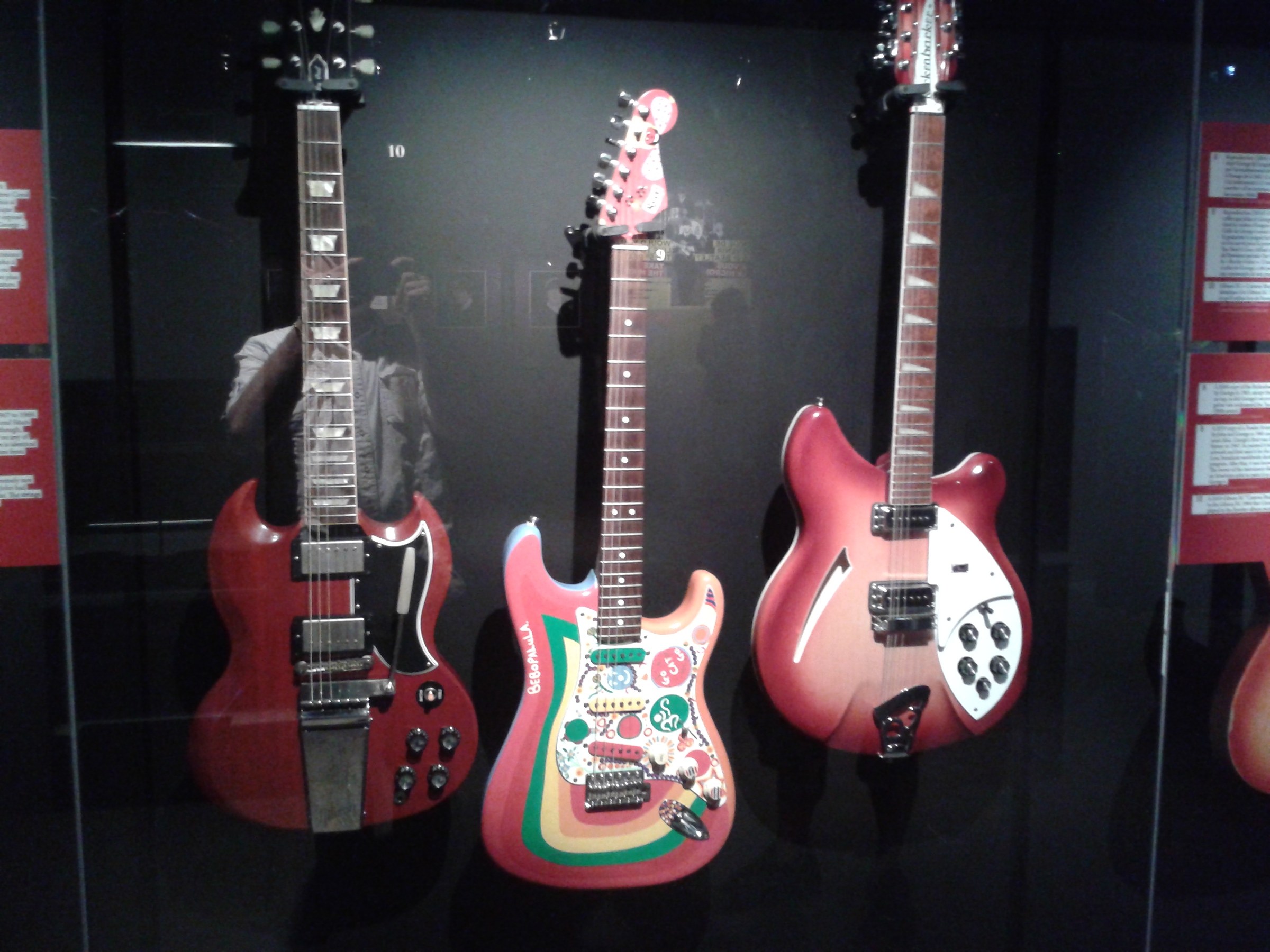
Harrison got his first Fender Stratocaster in 1965 and first used it during the Help! sessions that February. He played it again on Rubber Soul, most memorably on "Nowhere Man," where session accounts describe him and Lennon doubling the solo with the treble turned all the way up until it practically squeaks.
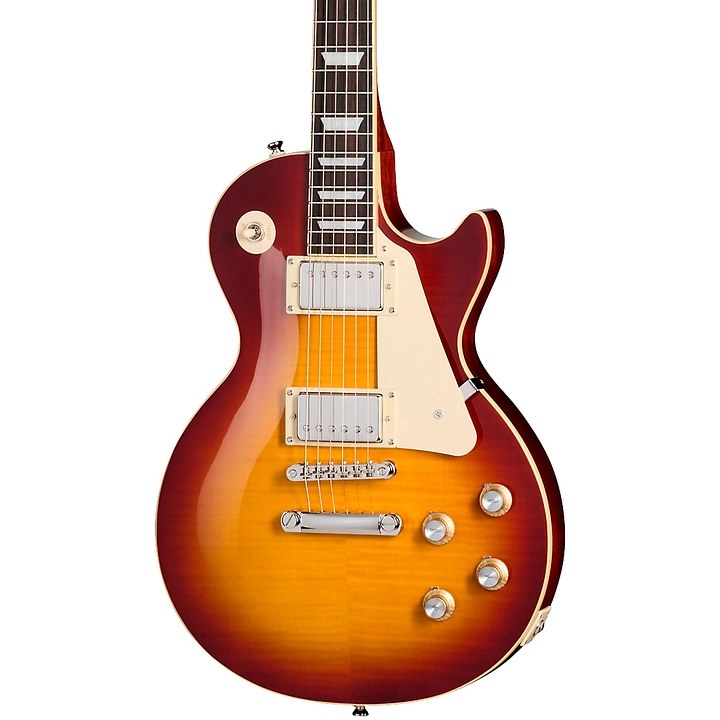
Epiphone Les Paul Standard 60s
$699.00 at Guitar Center
In 1967, in the middle of the psychedelic summer, he is widely reported to have painted the guitar himself. The design is a rainbow of loud colors, with the word "Bebopalula" above the pickguard and the guitar's new name, "Rocky," on the headstock. You can see Rocky on the Our World satellite broadcast of "All You Need Is Love" in June 1967 and in the Magical Mystery Tour film the same year.
What makes Rocky important is not the paint job. It's that Harrison kept playing it. Rocky went from being a psychedelic prop to a guitar often cited as one of his main slide instruments in the solo years, and it stayed with him for the rest of his career. A lot of rock-star art guitars were retired after one photo shoot. This one went to work.
Lucy, Clapton and "While My Guitar Gently Weeps"
Harrison's best-known Les Paul has a better backstory than most vintage guitars.
The guitar left Gibson's Kalamazoo factory as a goldtop Les Paul Standard with PAF humbuckers, serial number 7-8789, shipped on December 19, 1957. By 1965 it belonged to John Sebastian of the Lovin' Spoonful, who passed it to Rick Derringer of the McCoys in 1966. The gold finish was worn, so Derringer had Gibson refinish it in the translucent cherry red the company was using on SGs. "It was a very, very used guitar, even when I got it," Derringer said. He then sold it to Dan Armstrong's guitar shop in Greenwich Village, where Eric Clapton bought it within days.
Clapton didn't play it much. In 1968 he gave it to Harrison, who named it "Lucy" after the redheaded comedian Lucille Ball.
The story most fans know is that Clapton brought the guitar to the "While My Guitar Gently Weeps" session and handed it over afterward. That's a myth. What actually happened is close to the opposite. Harrison was frustrated that he couldn't get a lead he liked on the song, and he felt Lennon and McCartney weren't taking it seriously. So he invited Clapton to EMI Studios on September 6, 1968, knowing the others would behave better with a guest in the room. He told Clapton not to bother bringing a guitar, because he had a good Les Paul he could use. Clapton played Lucy. They recorded 28 takes of the rhythm track, and take 25 became the master.
Lucy stayed one of Harrison's main guitars for the rest of the Beatles years. It shows up in the promo films for "Revolution" and "The Ballad of John and Yoko," in the Let It Be film, and in the three-way guitar trade near the end of "The End" on Abbey Road.
The Rosewood Telecaster and the Roof
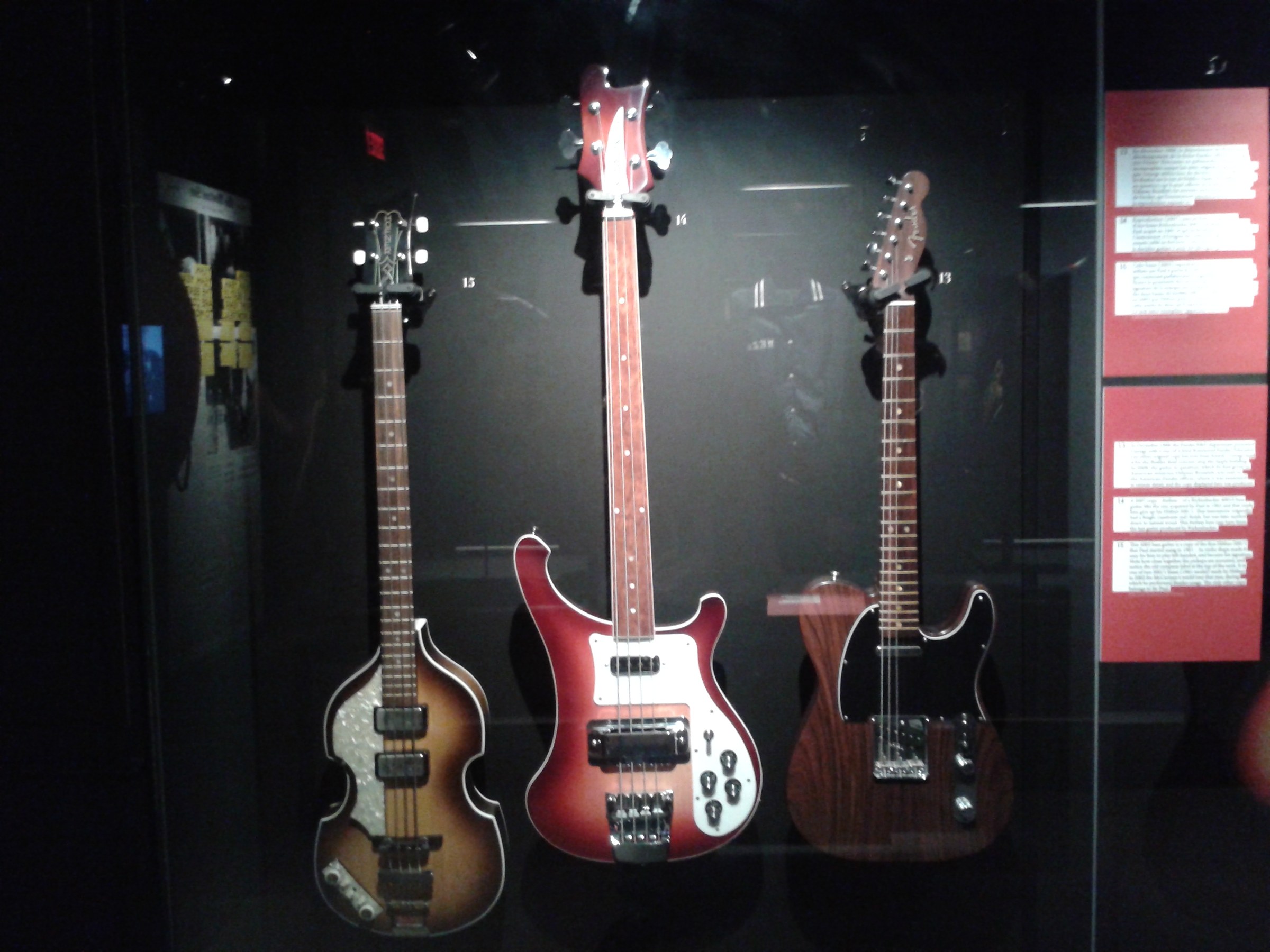
In late 1968, Fender gave Harrison something no one else had: a Telecaster made almost entirely of rosewood. It was a custom prototype, made by Philip Kubicki. The design is generally credited to Roger Rossmeisl. It's heavy, warm and woody-sounding, and it's the guitar Harrison played on the roof of Apple's Savile Row building in January 1969 during the Beatles' last public performance, filmed for Let It Be.
Fender later issued a Limited Edition George Harrison Rosewood Telecaster in August 2017, modeled on the guitar Rossmeisl created for him.
The same period produced one of his most generous gestures. Around this time he got a Gibson J-200 jumbo acoustic. He later gave it to Bob Dylan, who played it at the 1969 Isle of Wight Festival.
The Sitar Detour, and Why He Came Back
No account of Harrison as a guitarist works without the sitar, partly because it explains where the slide came from.
In August 1965, on the Beatles' American tour, David Crosby of the Byrds introduced him to Indian classical music and the work of Ravi Shankar. Harrison played sitar on Lennon's "Norwegian Wood (This Bird Has Flown)" that year, a part that, in the words of author Peter Lavezzoli, "opened the floodgates" for Indian instruments in rock. By Revolver, the sitar-and-tabla piece "Love You To" showed how fast he was learning.
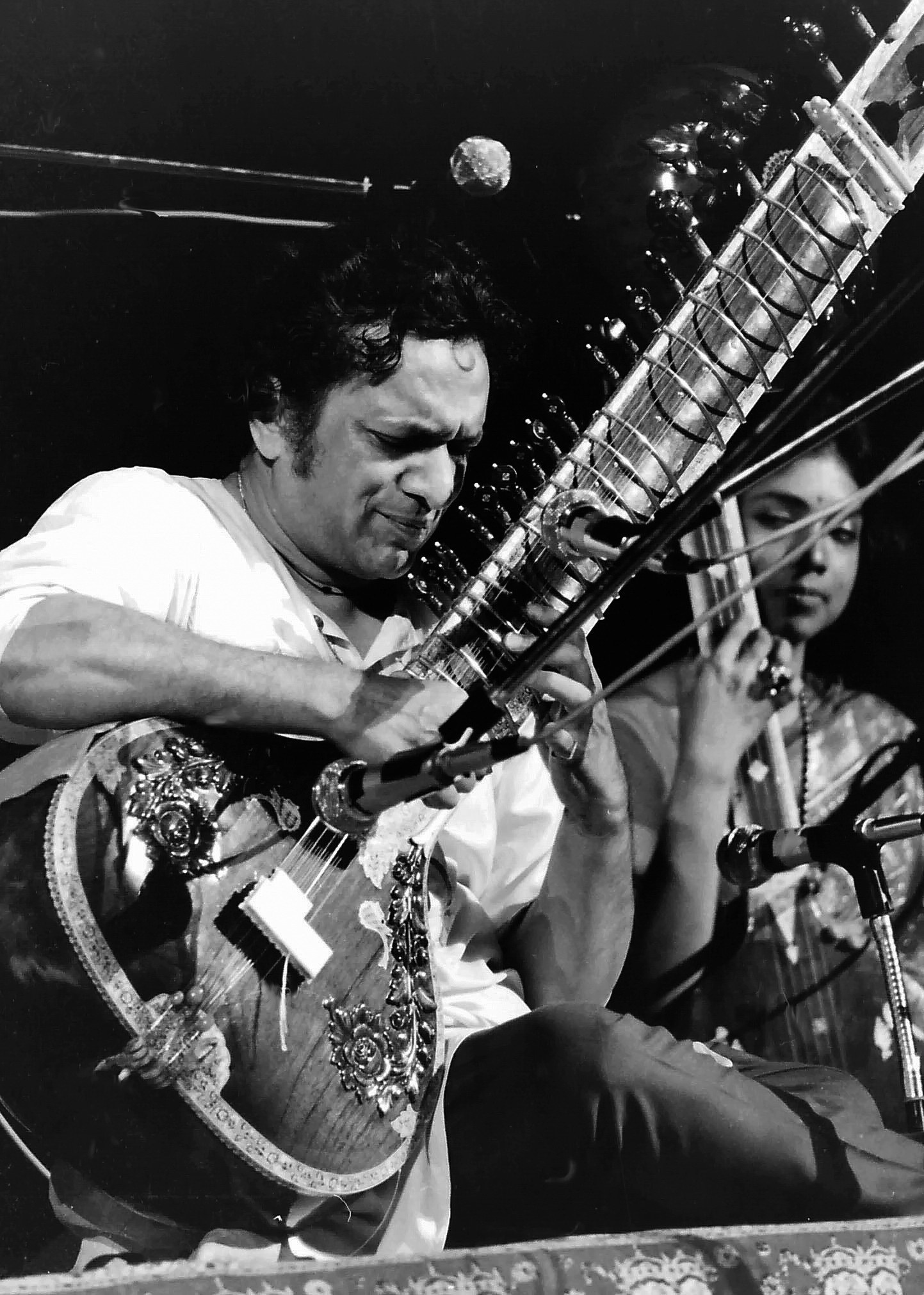
In June 1966 he met Shankar in London and asked to be his student. In July he bought a sitar from Rikhi Ram & Sons in New Delhi, and that September, after the Beatles' last tour, he went to India for six weeks to study. Of Shankar, he said, "the first person who ever impressed me in my life ... and he was the only person who didn't try to impress me."
He studied seriously until 1968. Then, after a talk with Shankar about finding his own roots and a meeting with Clapton and Jimi Hendrix in New York, he went back to the guitar. He was honest about why: "I decided ... I'm not going to be a great sitar player ... because I should have started at least fifteen years earlier."
That decision is the hinge of his whole guitar story. He didn't stop thinking like a sitar player. He just went looking for a way to make a guitar do it.
Delaney Bramlett Hands Him a Slide
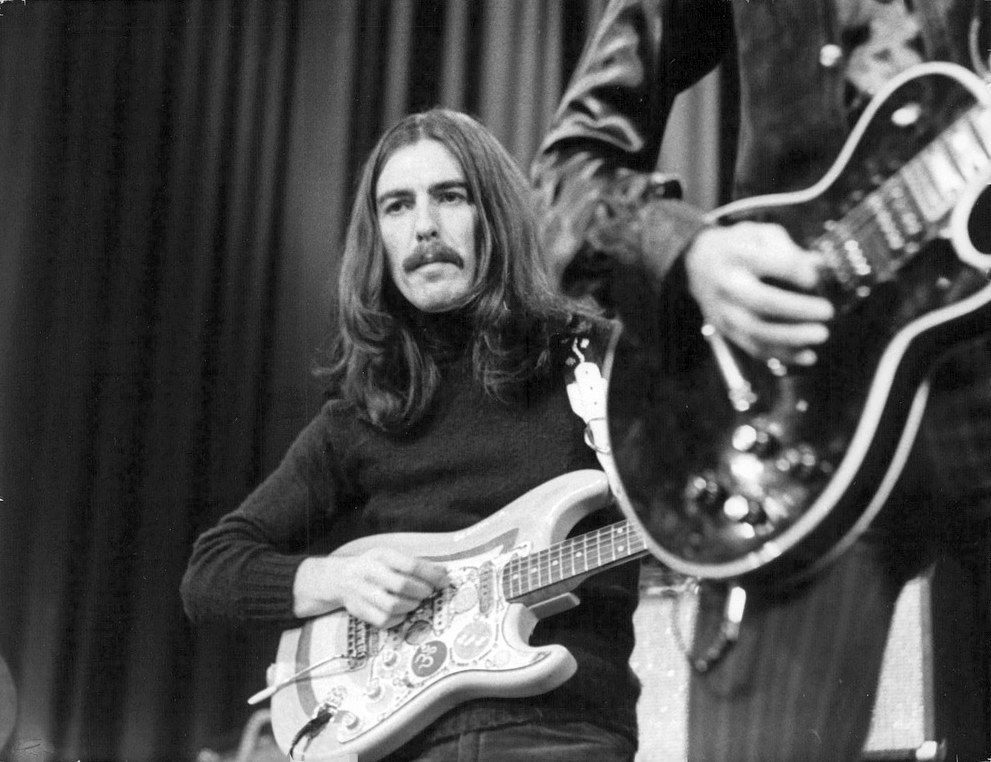
The slide came from a very unexpected place: a tour on which Harrison was basically a sideman.
In December 1969, he joined the American band Delaney & Bonnie and Friends for a short European tour, alongside Clapton, Bobby Whitlock and drummer Jim Gordon. Delaney Bramlett encouraged him to pick up a slide, and on that tour Harrison began to play it. He also began writing "My Sweet Lord."
It was a perfect fit. A slide lets you play between the frets: glide into a note, add a slow, wide vibrato, bend pitch the way a voice or a bowed string does. That was exactly the Indian vocal phrasing — the ornaments called gamakas — that he had spent two years trying to learn on sitar. Biographer Simon Leng has written that slide let Harrison mimic instruments like the sarangi and the dilruba.
All Things Must Pass: The Slide Becomes the Signature
All Things Must Pass, released in 1970, was a triple album of songs he'd been stockpiling while Lennon and McCartney took most of the Beatles' album space. Co-produced with Phil Spector, it topped the charts on both sides of the Atlantic. Clapton, Starr, Gary Wright, Billy Preston, Klaus Voormann, Badfinger and Delaney & Bonnie's band all played on it.
The single was "My Sweet Lord." It opens with a wall of strummed acoustic guitars, and then the slide comes in: a short, aching motif, often doubled or harmonized, that Leng describes as "among the best-known guitar passages in popular music." Another biographer called the slide sound "as distinctive a signature as the mark of Zorro." The song was later the subject of a copyright suit by the owners of the Chiffons' "He's So Fine," and in 1976 a U.S. court found that Harrison had copied the melody subconsciously. The slide part was all his.
What does Harrison's slide actually sound like? A few things set it apart:
- It is melodic first. He played slide like a singer — mostly single lines, carefully phrased, often in harmony with a second slide part. You won't hear a lot of open-tuning blues rhythm in his best-known slide.
- The intonation is precise. He doesn't do the fast, rough slide vibrato of Delta blues players. His vibrato is slower, wider and more controlled, which is part of why it sounds vocal.
- It's often stacked. Many of his solo records layer two or three slide parts in harmony, a sound you can hear from "My Sweet Lord" through Cloud Nine.
- The tone is sweet, not fuzzy. Clean-ish, compressed, with a little sustain. Rocky, the Strat, was a frequent slide guitar.
He kept refining it for 30 years. Leng called Harrison's slide solo on Lennon's 1971 song "How Do You Sleep?" "one of Harrison's greatest guitar statements," and Lennon himself was blunter: "That's the best he's ever f**ing played in his life." The Hawaiian side of it came out on Gone Troppo* (1982), and his last great slide piece, the instrumental "Marwa Blues," won a Grammy in 2004, after his death.
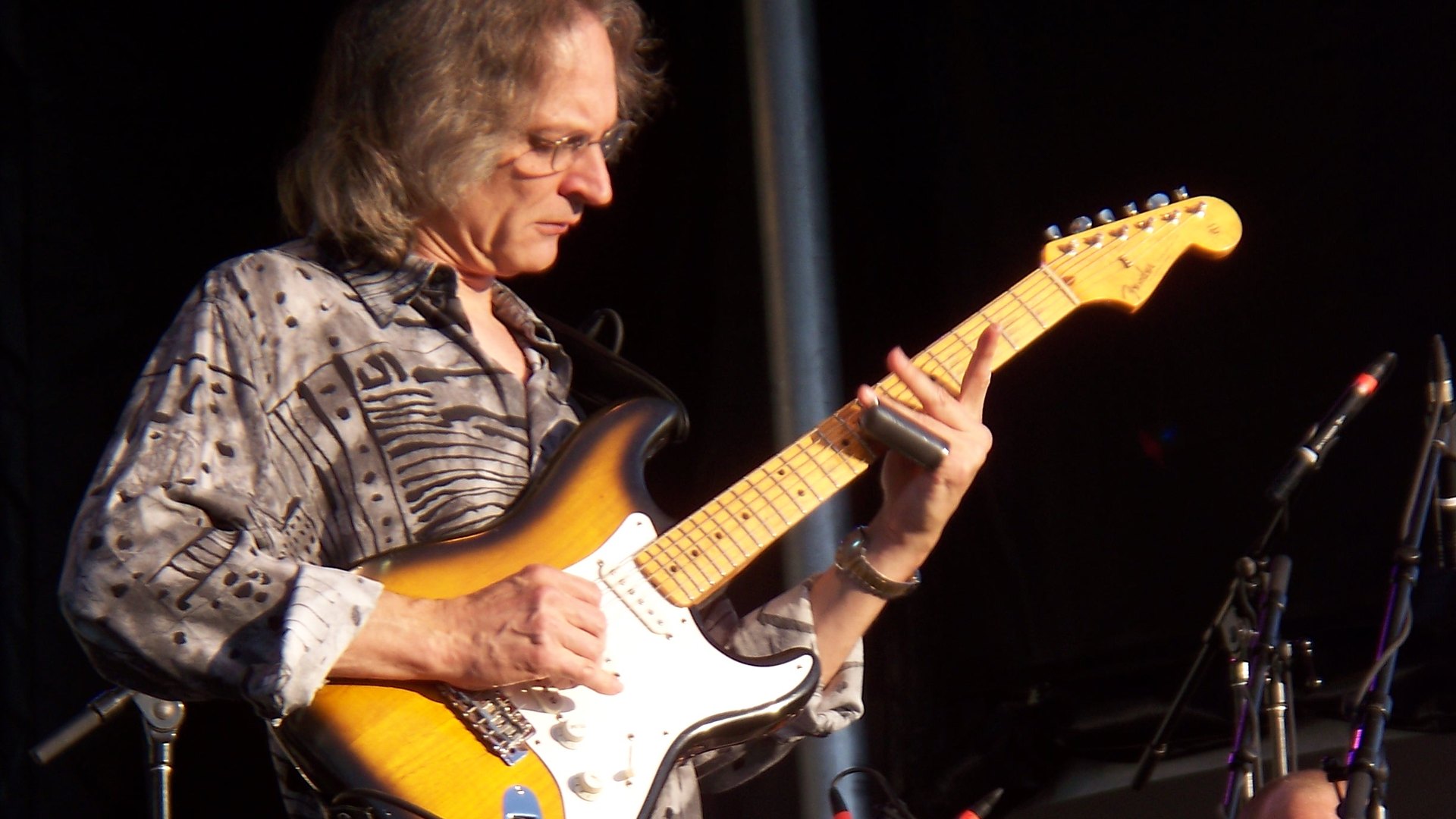
If you want the technical side of how slide players get there, our feature on Sonny Landreth goes deep on behind-the-slide technique — an entirely different approach from Harrison's, which is part of the point. There's no single right way to play slide.
"Something" and "Here Comes the Sun": The Abbey Road Peak
Before the solo years, though, came the two songs that finally put him level with Lennon and McCartney.
"Here Comes the Sun" was recorded at EMI Studios on July 7, 1969, without Lennon, who was recovering from a car crash. Harrison spent an hour redoing his acoustic part at the end of the session. He capoed at the 7th fret, which put the song in A major, and the tape was varispeeded up a little less than a semitone. That high-capo trick was the same one he'd used on "If I Needed Someone" four years earlier. If you play it with a capo at 7, you're most of the way to the record's sparkle without trying.
"Something" is the song that most clearly shows what kind of lead guitarist he had become. It became his first Beatles A-side, on a double A-side single with "Come Together," and the combined sides topped the Billboard Hot 100. Frank Sinatra called it "the greatest love song of the past fifty years." The solo is short, and nothing in it is fast. What it does have is shape: blues bends of the Clapton school, mixed with sliding, vocal ornaments that come straight from Indian music. Musicologist Kenneth Womack called it "a masterpiece in simplicity."
That's the Harrison lesson in one solo. You don't need more notes. You need each one to land in the right place.
Bangladesh, Friar Park and the Long Middle
On August 1, 1971, at Ravi Shankar's request, Harrison organized two benefit shows at Madison Square Garden for refugees from the Bangladesh Liberation War. More than 40,000 people came. The bill included Shankar, Dylan, Clapton, Leon Russell, Badfinger, Billy Preston and Ringo Starr. The live triple album, credited to "George Harrison and Friends," won the Grammy for Album of the Year. It is often described as a precursor to later benefit concerts such as Live Aid.
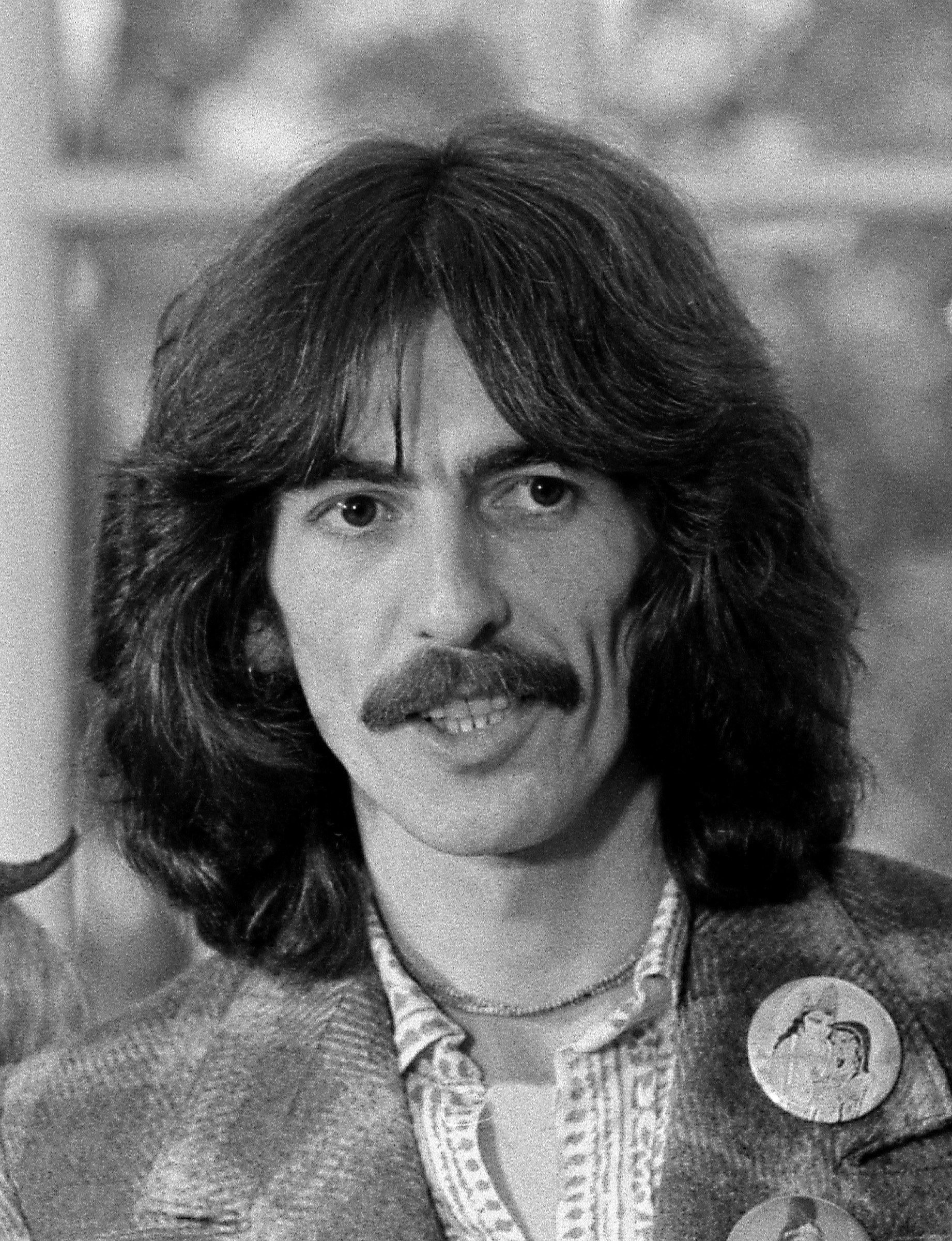
Photo: David Hume Kennerly, official White House photograph, public domain, via Wikimedia Commons.
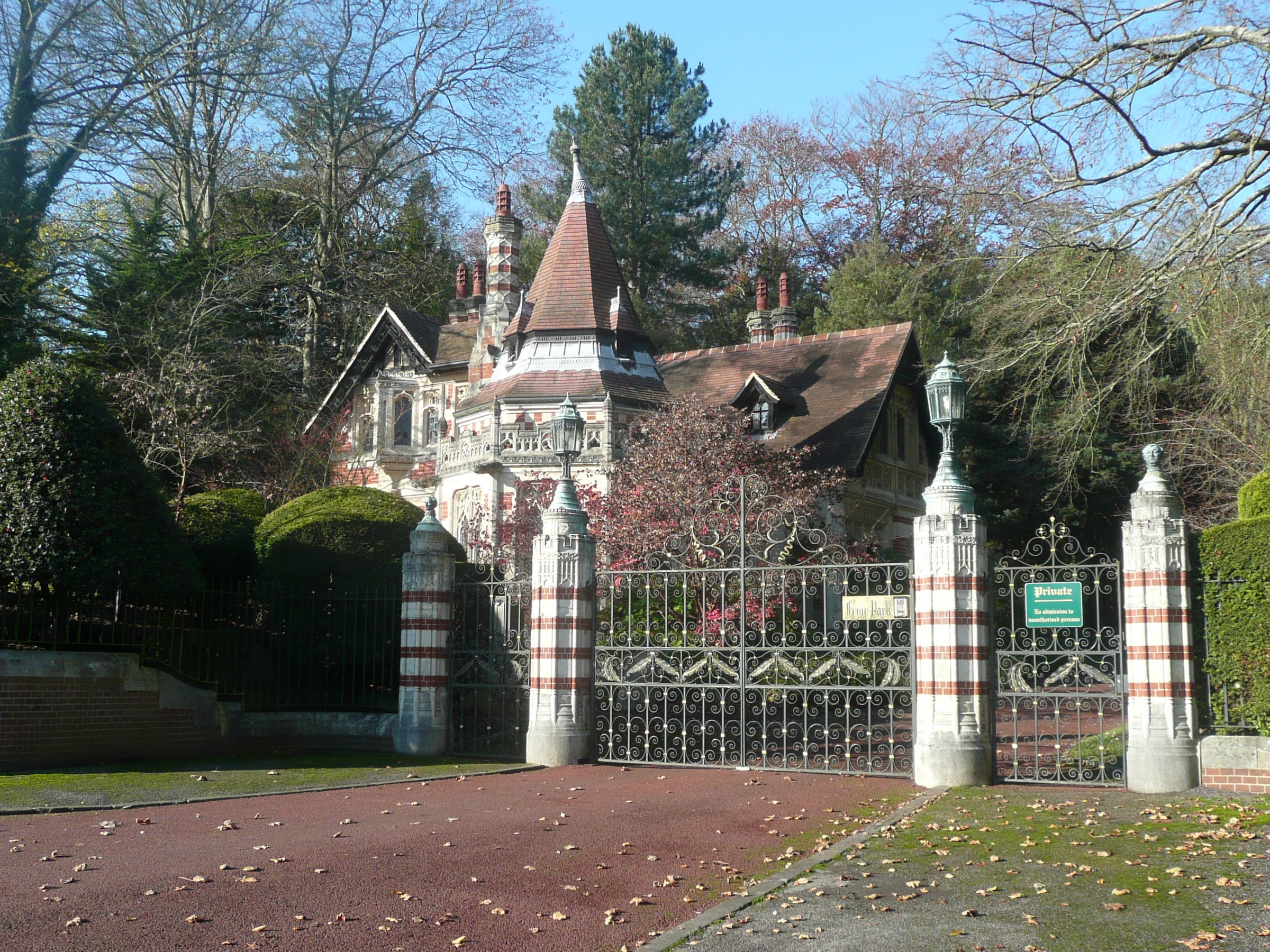
The 1970s and early '80s were uneven for him commercially, and he spent a lot of energy elsewhere — his Dark Horse label, and HandMade Films, which he co-founded in 1978 partly to finance Monty Python's Life of Brian. In 1970 he bought Friar Park, a neo-Gothic Victorian mansion in Henley-on-Thames, which became his home and his studio for the rest of his life.
Cloud Nine and the Traveling Wilburys
The comeback, when it arrived, was all about the guitar.
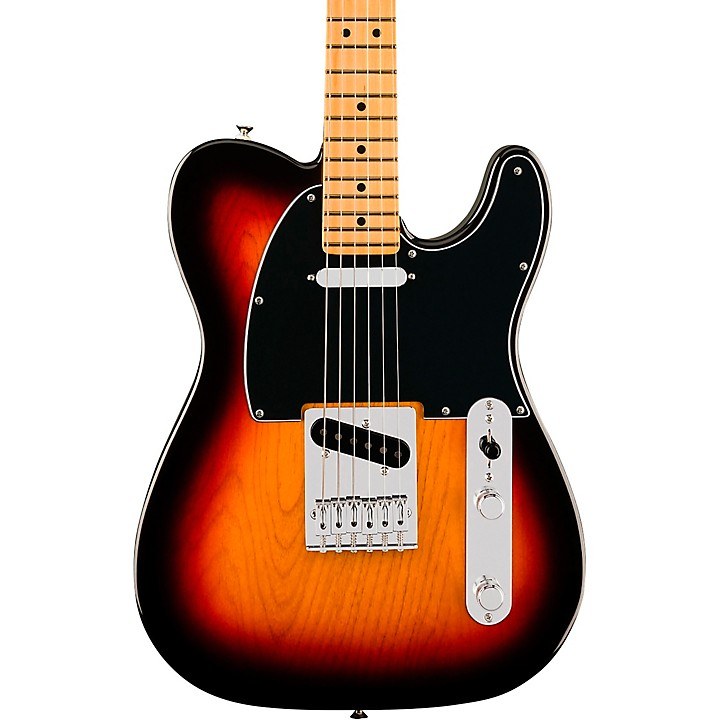
Fender Player II Telecaster
$849.99 at Guitar Center
Cloud Nine, released in November 1987 and co-produced with Jeff Lynne of ELO, put Harrison's slide front and center again. Recorded at Friar Park with Clapton, Jim Keltner and Jim Horn, it went platinum, and his cover of James Ray's "Got My Mind Set on You" went to No. 1 in the U.S. On the cover, Harrison holds the old Gretsch Duo Jet he'd bought secondhand in Liverpool 26 years earlier. It's hard to think of a clearer statement of where he thought his sound came from.
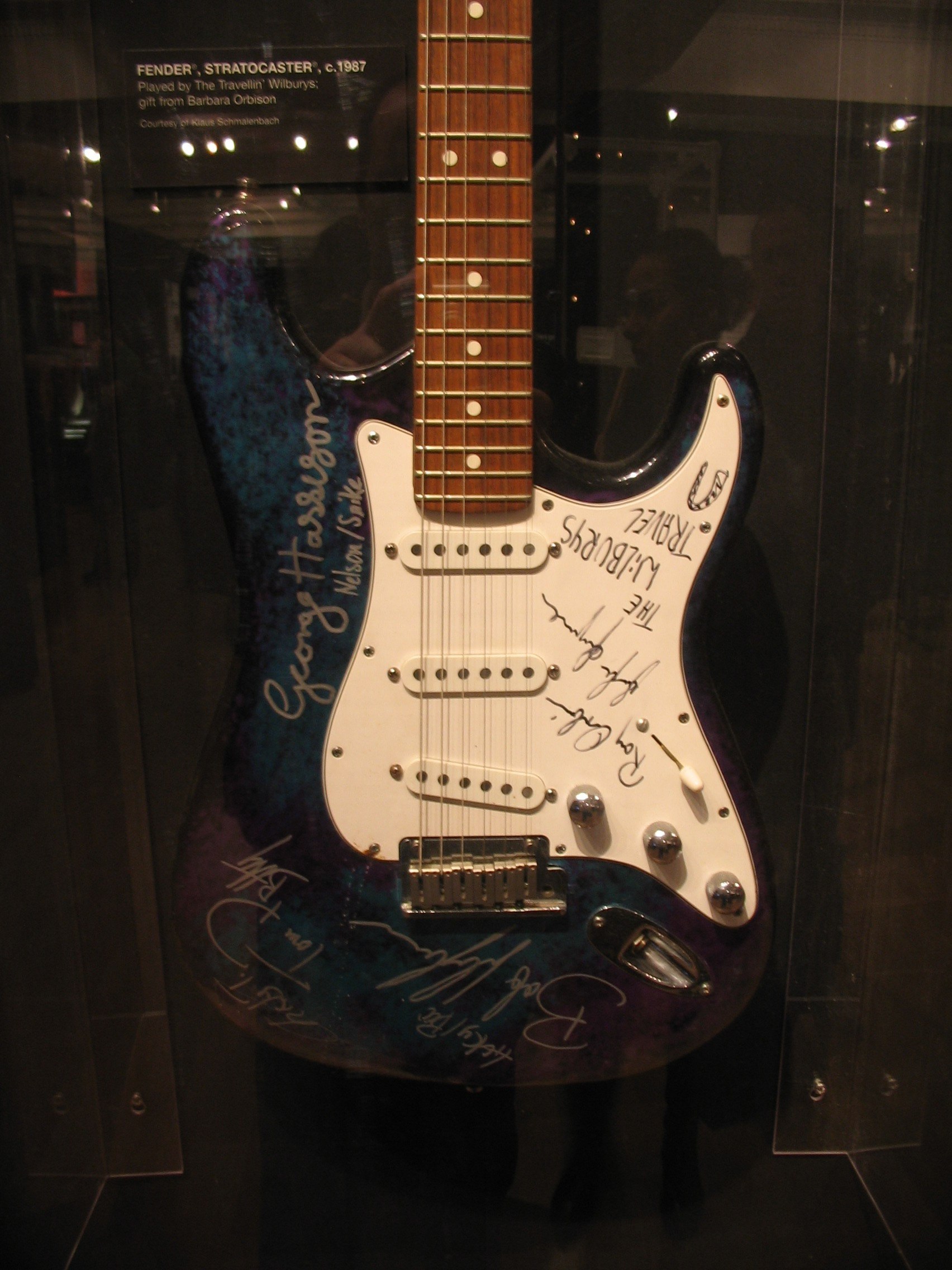
A year later, a session in Bob Dylan's garage to cut a B-side turned into the Traveling Wilburys: Harrison, Dylan, Lynne, Tom Petty and Roy Orbison. Harrison's record label decided "Handle with Care" was too good to waste on a B-side, and Traveling Wilburys Vol. 1 went triple platinum in the U.S. He was "Nelson Wilbury" on the first album and "Spike Wilbury" on the second. If you want to hear his slide sitting comfortably in a group, it's there all over those records.
The Last Years
In 1997, soon after his final TV appearance, Harrison was diagnosed with throat cancer. On December 30, 1999, an intruder broke into Friar Park and stabbed him repeatedly; his wife, Olivia, fought the man off. His statement afterward was pure Harrison: "He wasn't a burglar, and he certainly wasn't auditioning for the Traveling Wilburys."
The cancer came back. He died in Los Angeles on November 29, 2001, with Olivia, his son Dhani, Ravi Shankar and Shankar's family at his side. His last album, Brainwashed, was finished by Dhani and Jeff Lynne and released in 2002.
A year to the day after his death, Clapton was musical director of the Concert for George at the Royal Albert Hall, organized by Olivia and Dhani. In 2004 he was inducted into the Rock and Roll Hall of Fame as a solo artist by his fellow Wilburys Jeff Lynne and Tom Petty, 16 years after his induction as a Beatle.
What Every Guitarist Can Steal From George Harrison
Harrison is one of the best players to learn from precisely because his ideas don't require speed. Here's what's worth taking from him:
- Write a part, not a solo. His best Beatles leads — the "Something" solo, the "And Your Bird Can Sing" line, the end of "A Hard Day's Night" — are composed. You could sing them. Try writing an eight-bar solo you'd be happy to play exactly the same way every night.
- Use a capo to change the color, not just the key. Put a capo at the 5th or 7th fret, play open chord shapes and listen to how differently they sit in a mix. That's the "Here Comes the Sun" and "If I Needed Someone" sound.
- Get a volume pedal and learn swells. Turn the volume down, pick the note, roll the volume up. Doing this on a clean amp with a little reverb puts you right in "I Need You" and "Yes It Is" territory.
- Play slide like a singer. Start with single-note melodies you already know how to sing. Keep the vibrato slow and even. Aim for exact pitch over the fret wire, not just near it. Then double the line a third above.
- Treat 12-string as an arranging instrument. An electric 12 doesn't need to do anything fancy. A simple arpeggio on a Rickenbacker-style 12-string fills up a whole track.
- Listen outside guitar music. Harrison's slide makes sense once you hear the Indian vocal and string music he was trying to imitate. Whatever you listen to that isn't guitar, try to play it on the guitar.
Getting a George Harrison Sound Without His Guitars
You don't need a 360/12, a rosewood Tele and a hand-painted Strat. Here's a realistic way to approach it:
- Early Beatles: a Gretsch-style single-cut or hollowbody, or any guitar with bright, clear pickups, into a chimey British-voiced tube amp kept on the clean side. Play with a light touch and let the treble ring.
- Mid-'60s jangle: an electric 12-string if you can, or a 6-string plus a chorus pedal used very gently as a stand-in (it won't sound like a real 12). Light compression helps a lot.
- Revolver-era grit: a P-90 hollowbody like an Epiphone Casino, with the amp pushed a little harder.
- Solo-years slide: a Strat or Tele, a glass or brass slide, a compressor for sustain and a touch of delay. Keep it clean and sweet. Harrison complained in 2000 that his 1970 records used more reverb than he liked: "In fact, I don't use reverb at all. I can't stand it."
- Acoustic: a big jumbo like a J-200 for strumming, and a capo always within reach.
None of this needs boutique gear, and that's very much in keeping with how he played.
The Takeaway
George Harrison never set out to be a guitar hero. That's exactly why his playing has lasted. He had an ear for the right sound, from the jangle of a 12-string to a volume swell to a slide line that could make a crowd of 40,000 go quiet. He found it by trying things: Gretsch, Rickenbacker, sitar, slide, more than once making up the technique as he went.
Twenty-five years after his death, the best tribute a guitarist can pay him isn't another note-for-note cover. It's to take one Harrison idea — a capo, a swell, a slide melody you could sing — and write something of your own with it.
What's your favorite George Harrison guitar part? Tell us in Guitar Talk.
Shop this gear
- Fender Limited Edition George Harrison 1967 Bass VI, Bleached 3-Color SunburstCompare prices at Plugged Gear Co.

- Epiphone Casino, Vintage SunburstCompare prices at Plugged Gear Co.

- Gretsch Streamliner Jet, 1-pickup, BlackCompare prices at Plugged Gear Co.

- Epiphone Inspired by Gibson Custom 1957 SJ-200 ReissueCompare prices at Plugged Gear Co.

Plugged Gear Co., Guitar Center and American Musical Supply links may earn us a commission from qualifying purchases.
Reader-supported
Keep Guitar Alive
Enjoyed this story? The Guitar Plugged is free to read and reader-supported. If it helped you play, listen or buy a little smarter, chip in to keep guitar journalism like this coming.
One-time contribution, processed securely by Stripe. Contributions are not tax-deductible.
Experience-driven coverage, not algorithm bait.
- 20+ years of guitar playing experience
- Real-world retail experience at Guitar Center
- Thousands of hours testing guitars, amps, and pedals
- A community of 50,000+ guitar enthusiasts across platforms
- Partnerships with Fender, DistroKid, TrueFire, Card Chords, and Enya
- Editorial standards published openly — see how we test gear
The Modern Guitar Magazine. Delivered to your inbox.
No spam. No gimmicks. Just great guitar content — stories, tones, iconic solos, and honest gear takes. Every week.
Ask GP
20 free questions a dayStill curious? Ask GP about this story.
Your personal classic-rock and guitar guide — ask anything about George Harrison, 25 Years On.
Discussion (0)
Sign in to join the discussion.
Sign in to commentLoading comments…
Discover another guitar story
Swipe through our latest features, breaking news and iconic solos — one story at a time.
Open Swipe →More Guitar News
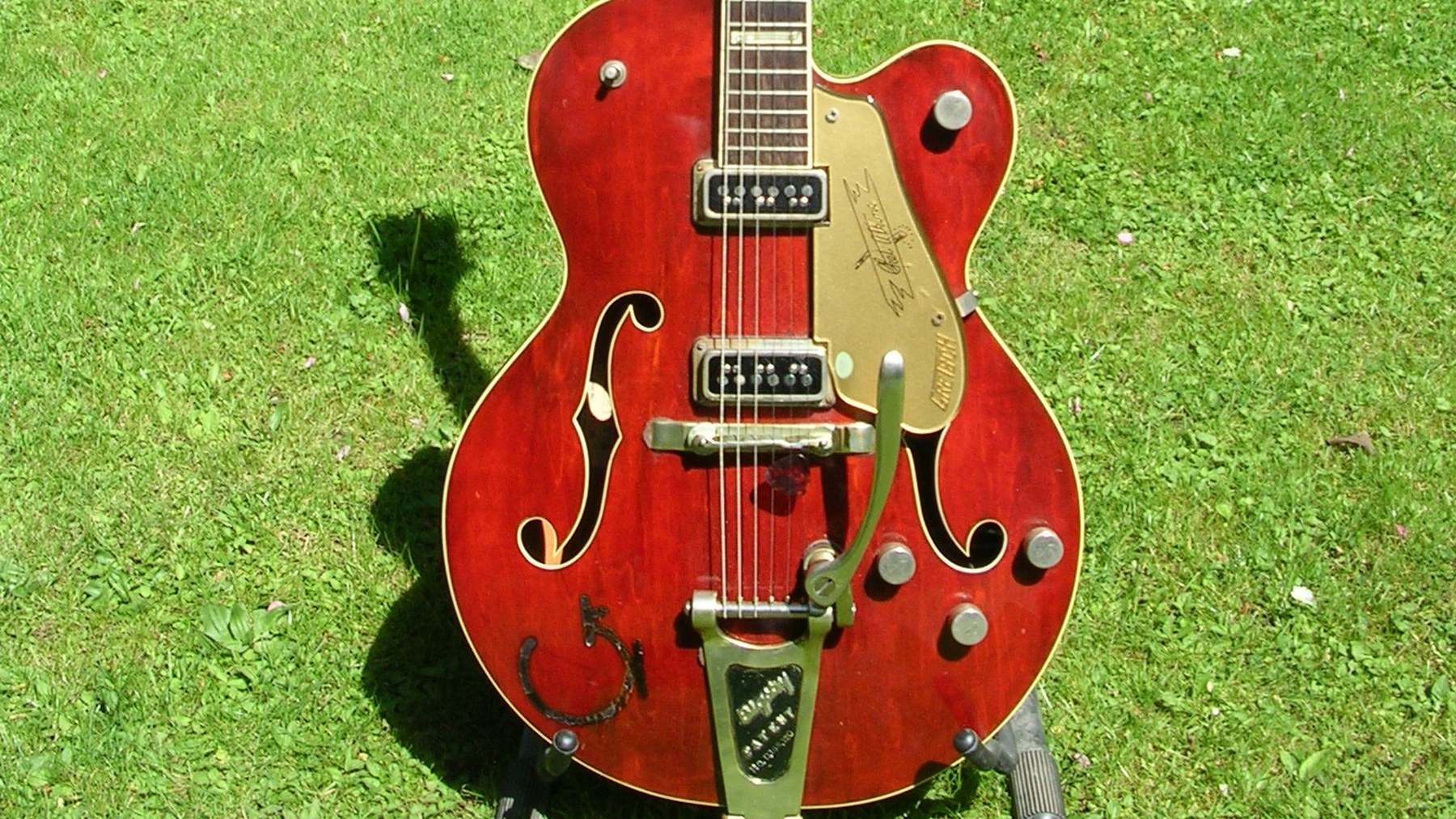
The Gretsch 6120 History: How a Country Star's Signature Guitar Became Rock & Roll's Loudest Orange Guitar
Gretsch built the 6120 to sell Chet Atkins to country pickers. Then Eddie Cochran, Duane Eddy and Brian Setzer turned the orange guitar with the cowboy trim into rock & roll's loudest hollowbody.
The Vox AC30 History: How a British Amp Learned to Chime
The Vox AC30 history, from Hank Marvin's call for more volume to the Top Boost, Beatlemania, Brian May and The Edge: the circuit, the speakers, the chime.
Sonny Landreth: The Louisiana Slide Master Who Found Another Way to Play Guitar
Sonny Landreth wears his slide on his pinky and frets chords behind the glass. Here's how the Louisiana master built his sound, from Clifton Chenier and John Hiatt to Crossroads, plus his gear and the albums to hear first.