The Gretsch 6120 History: How a Country Star's Signature Guitar Became Rock & Roll's Loudest Orange Guitar
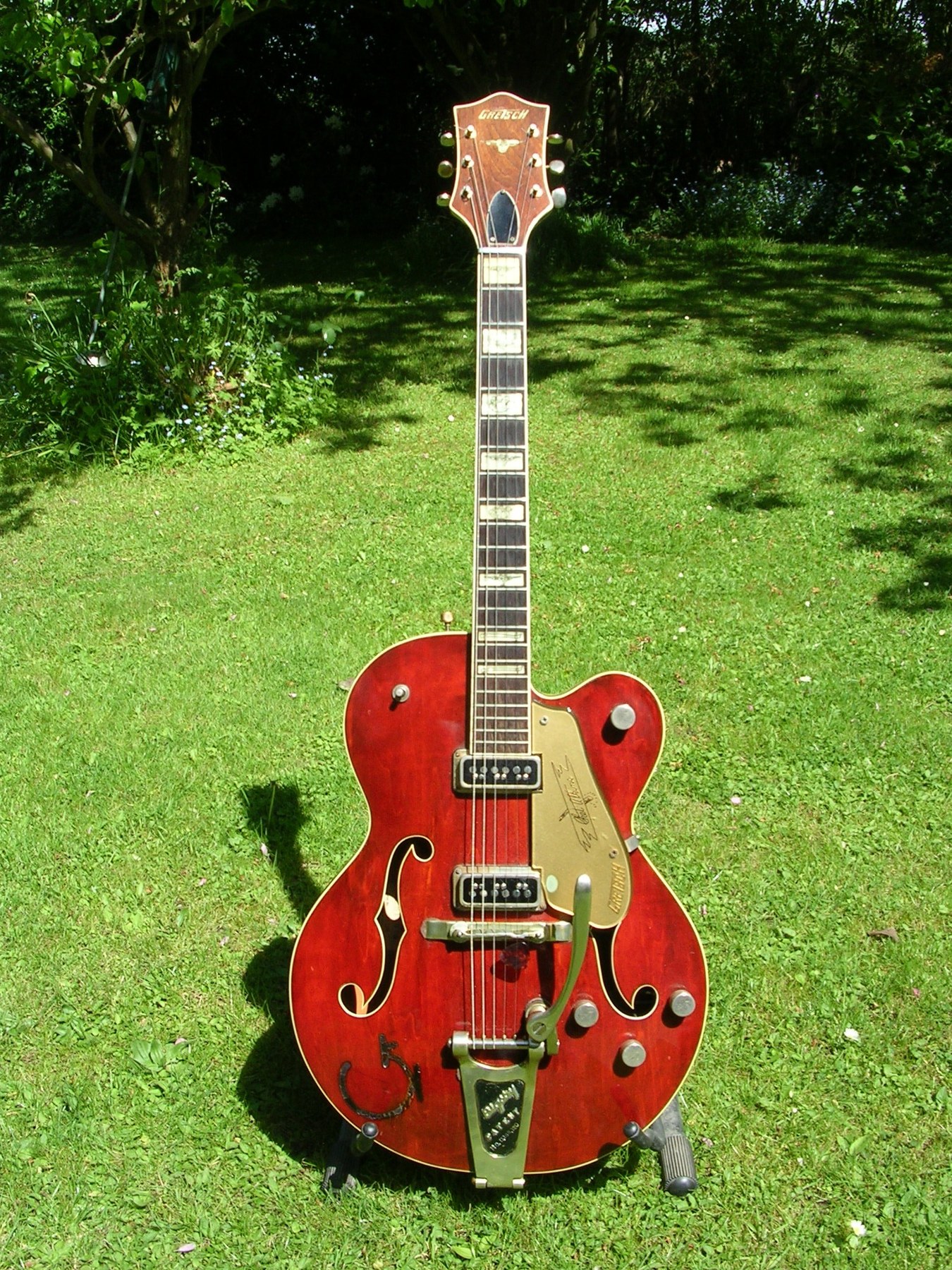
A 1955 Gretsch 6120 Chet Atkins Hollow Body with the "G" brand burned into its lower bout, DeArmond DynaSonic pickups, a gold Bigsby and the amber-orange finish that made the model famous.
Photo: Francis Pullen, public domain, via Wikimedia Commons.
Gretsch built the 6120 to sell Chet Atkins to country pickers. Then Eddie Cochran, Duane Eddy and Brian Setzer turned the orange guitar with the cowboy trim into rock & roll's loudest hollowbody.
Gretsch built the 6120 to sell Chet Atkins to country pickers. Rock & roll stole it almost right away.
The first Chet Atkins Hollow Body shipped on January 1, 1955. It came dressed for a rodeo, with an orange finish, a cattle brand on the top, a steer's head on the headstock and cactus engraved into the fret markers. Chet himself didn't like most of that. Within a couple of years he'd moved on to other Gretsch models, and the decorations were gone.
But the orange guitar kept going. Eddie Cochran carried one through "Twenty Flight Rock" and "Summertime Blues." Duane Eddy used one to invent a sound the record business literally named "twang." Twenty years later, a kid from Long Island bought a beat-up 1959 6120 for $100 and used it to drag rockabilly back onto the charts.
This is the Gretsch 6120 history: how a guitar designed by a Brooklyn salesman and a Nashville session ace turned into one of the most recognizable rock & roll instruments ever made, and why players still pick one today.
Brooklyn Wanted Its Own Les Paul
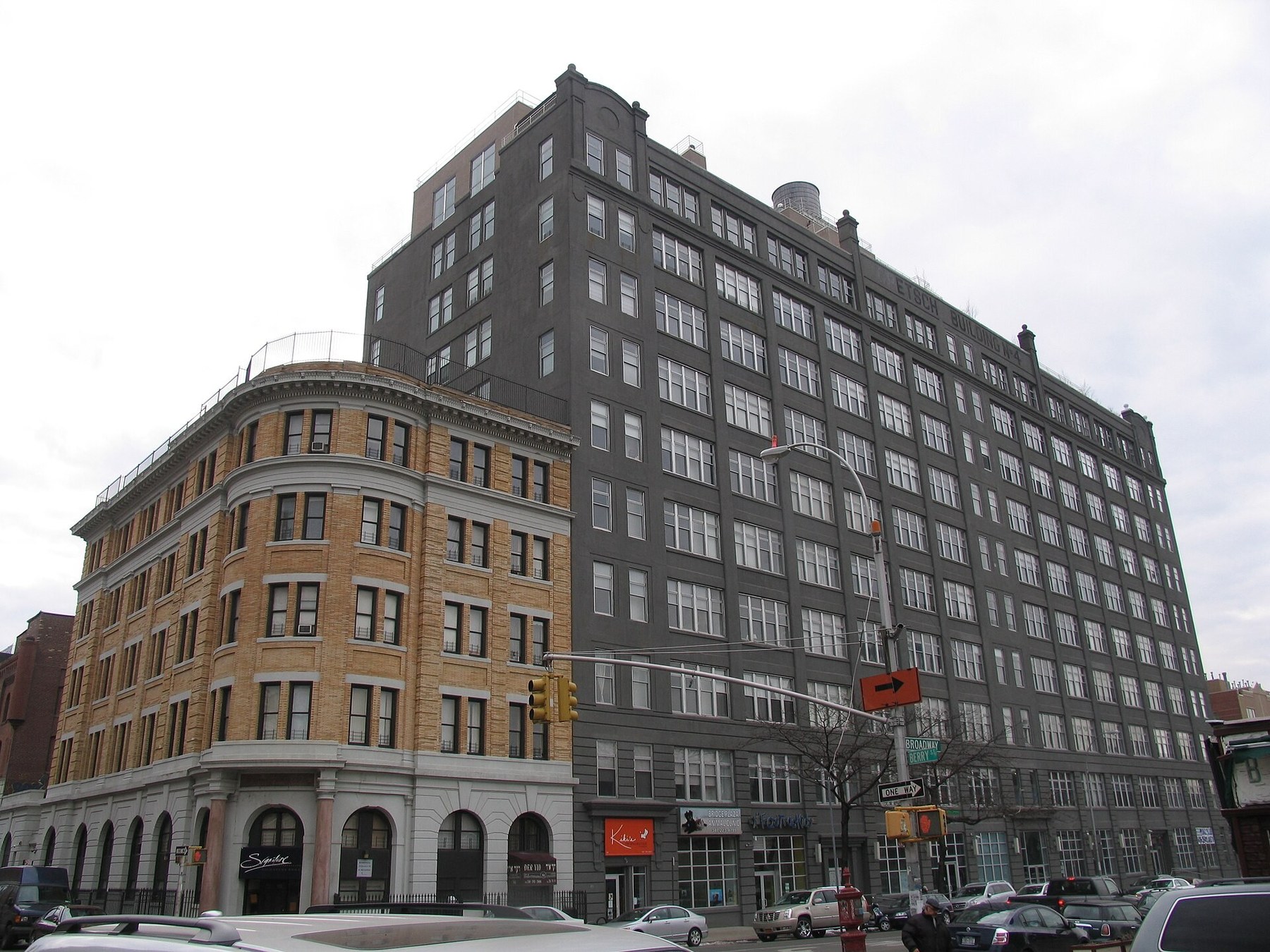
By the early 1950s, the Fred Gretsch Manufacturing Company was an old firm with a new problem. Gretsch had been around since 1883 and made drums, banjos and archtop guitars in Brooklyn. Then electric guitars took off, and two rivals grabbed the headlines. Fender had the Telecaster. Gibson had the Les Paul, and with it the most famous guitarist in America as its spokesman.
Gretsch's answer was Jimmie Webster. Inside the Brooklyn factory, Gretsch's own history calls him the company's "Mr. Guitar." He was a talented player known for a two-handed tapping technique he called the "Touch System," and he traveled the country giving demonstrations at Gretsch "Guitarama" shows. He was also a designer and an idea man.
Webster gave Gretsch its first big electric hits. The Duo Jet arrived in 1953 as Gretsch's reply to the Les Paul and Telecaster. In July 1954 he unveiled the White Falcon, a white-and-gold showpiece that dealers wanted so badly Gretsch put it into the 1955 catalog.
What Webster still didn't have was a star. Gibson had Les Paul. Gretsch needed a player whose name could sell a professional guitar.
How Jimmie Webster Signed Chet Atkins
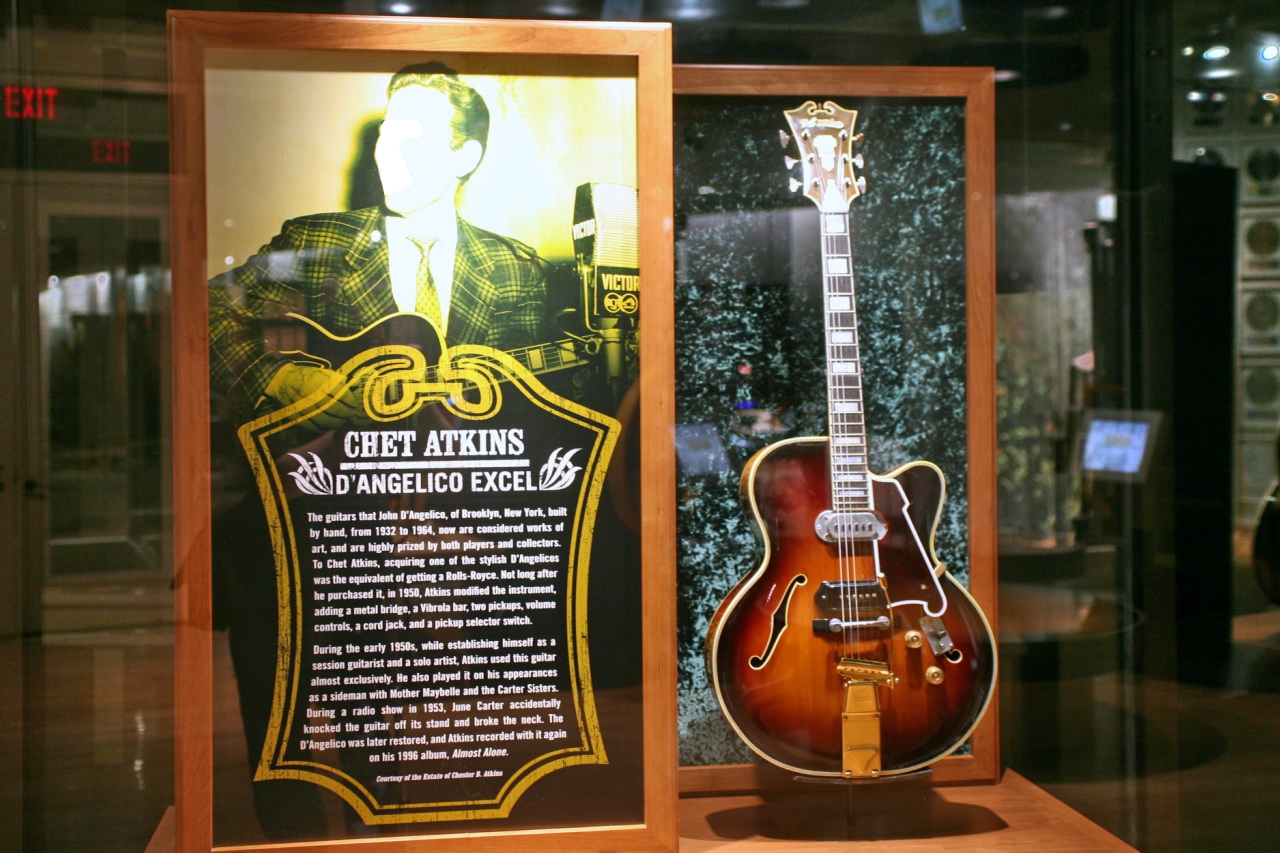
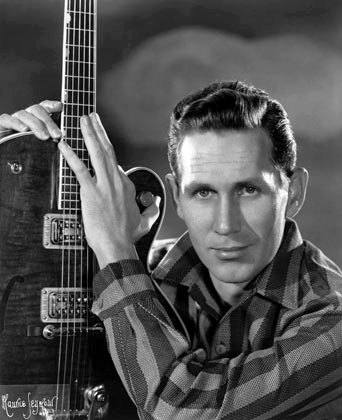
In 1954, Chet Atkins was 30 and rising fast. He was a Nashville session guitarist and RCA recording artist with a thumb-and-fingers picking style other guitarists studied like scripture. He was also a hardcore tinkerer who loved his modified D'Angelico Excel and wasn't impressed by Gretsch's guitars.
According to Chet's own account, retold on Gretsch's official history blog, he met Webster at a Guitarama show in Nashville and the two hit it off as fellow "guitar nerds and tinkerers." Chet still turned down the endorsement more than once. Then Webster caught him backstage at the Grand Ole Opry and asked the question that worked:
"Would you say yes and become a Gretsch endorser if we let you design your own guitar?"
That was the hook. Chet had plenty of ideas about how electric guitars should work. He flew to New York, met company president Fred Gretsch Jr., and, by Gretsch's account, didn't even bring a lawyer. The endorsement contract is dated July 6, 1954.
The Streamliner Special: A Prototype Dressed for a Rodeo
"Design your own guitar" turned out to mean "approve the one we already built." The guitar Gretsch showed Chet in 1954 was mostly Webster's work.
It started as a Gretsch Streamliner, a 16-inch electric archtop. The first prototype was even labeled "Streamliner Special," with serial number 13753. Gretsch finished it in an orange stain it called Amber Red and borrowed western decorations from the Round Up, a cowboy-themed Gretsch solidbody of the same era. Gretsch's history says the prototype even had a "campfire belt buckle tailpiece."
Chet made a few changes that mattered:
- A metal bridge and a metal nut, to improve sustain.
- A Bigsby vibrato, replacing the belt-buckle tailpiece.
A second prototype, serial number 13770, carried those changes and is usually treated as Chet's first true 6120. Vintage Guitar has documented a third prototype-era guitar, serial 13767, with pot codes from April 1954 and a 6120 model stamp. In a twist nobody could script, that guitar ended up with Bobby Cochran, Eddie Cochran's nephew.
What Chet Atkins disliked about the 6120
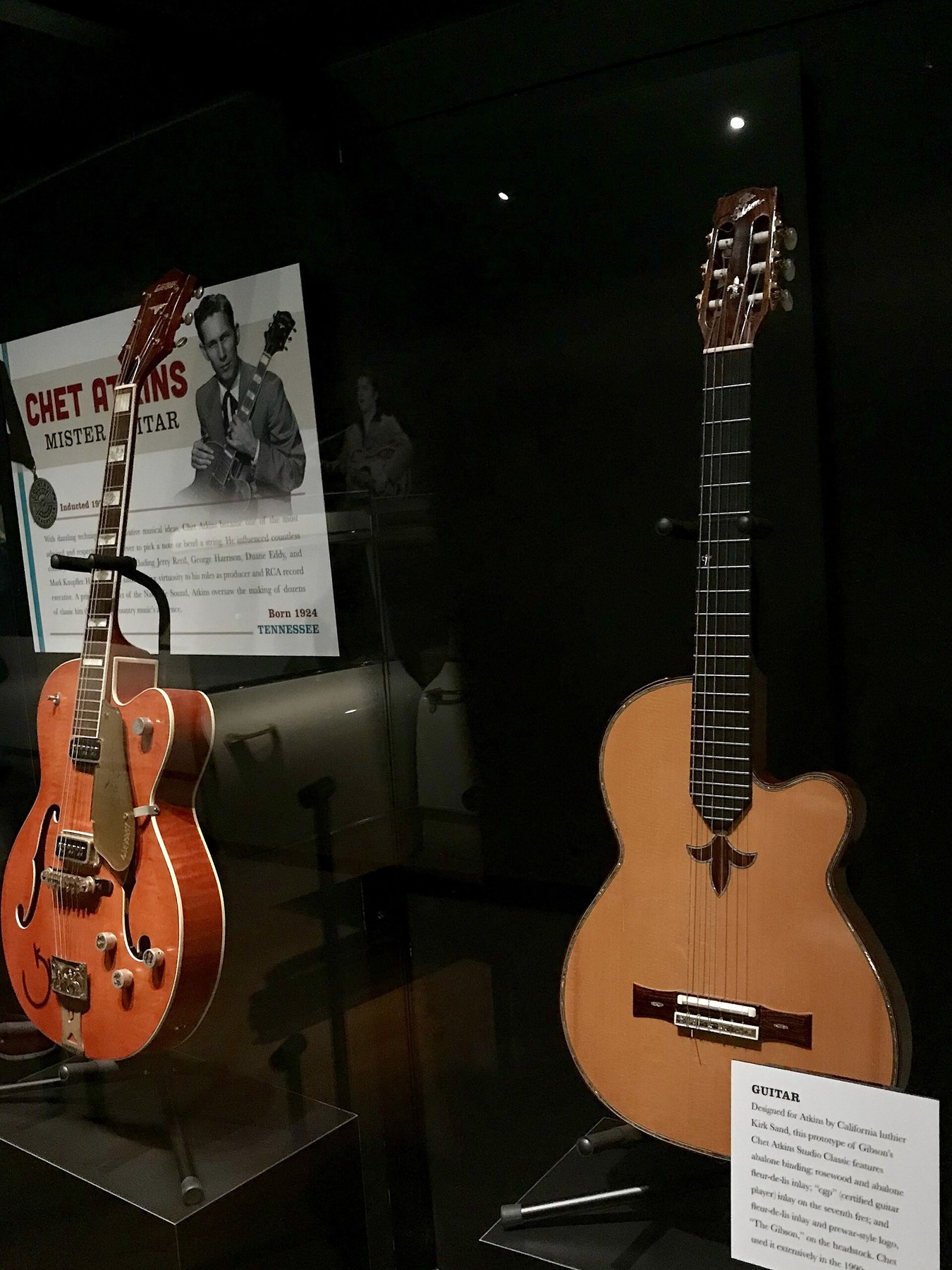
Here's the irony at the center of the Gretsch 6120 history. The man whose name was on the pickguard didn't love the guitar.
The cowboy trim. Gretsch's own history says Chet "wasn't wild about the G Brand and other western and cowboy-themed appointments," but he wanted the guitar in production too badly to argue. Gretsch's tech blog puts it more bluntly: the western inlays went on the first 6120s "to the chagrin of Chet Atkins himself." Guitar World describes him as somewhat embarrassed by the more hokey features. Gretsch had a good reason for them, though. The company was selling a Nashville star's guitar to country fans, and in 1955 that meant cowboys.
The DeArmond pickups. This bothered him far more. Gretsch didn't make its own pickups. It bought DeArmond Model 2000 single-coils, sold as Gretsch DynaSonics. In his book Chet Atkins: Me and My Guitars, Chet wrote that "they were too heavy on bass response, and they hummed terribly." Guitar World adds that he found the neck pickup too bassy and the bridge pickup too bright, and struggled to balance the strings for his fingerstyle playing.
Playing it at all. Chet was photographed with the 6120 plenty, but Guitar World says he rarely played it. His favorite became the Country Gentleman, which arrived in 1957 and was more fully his design from the start.
The Bigsby, for the record, was Chet's idea. Every account we found says he asked for it.
The 1955 Chet Atkins Hollow Body, Model 6120
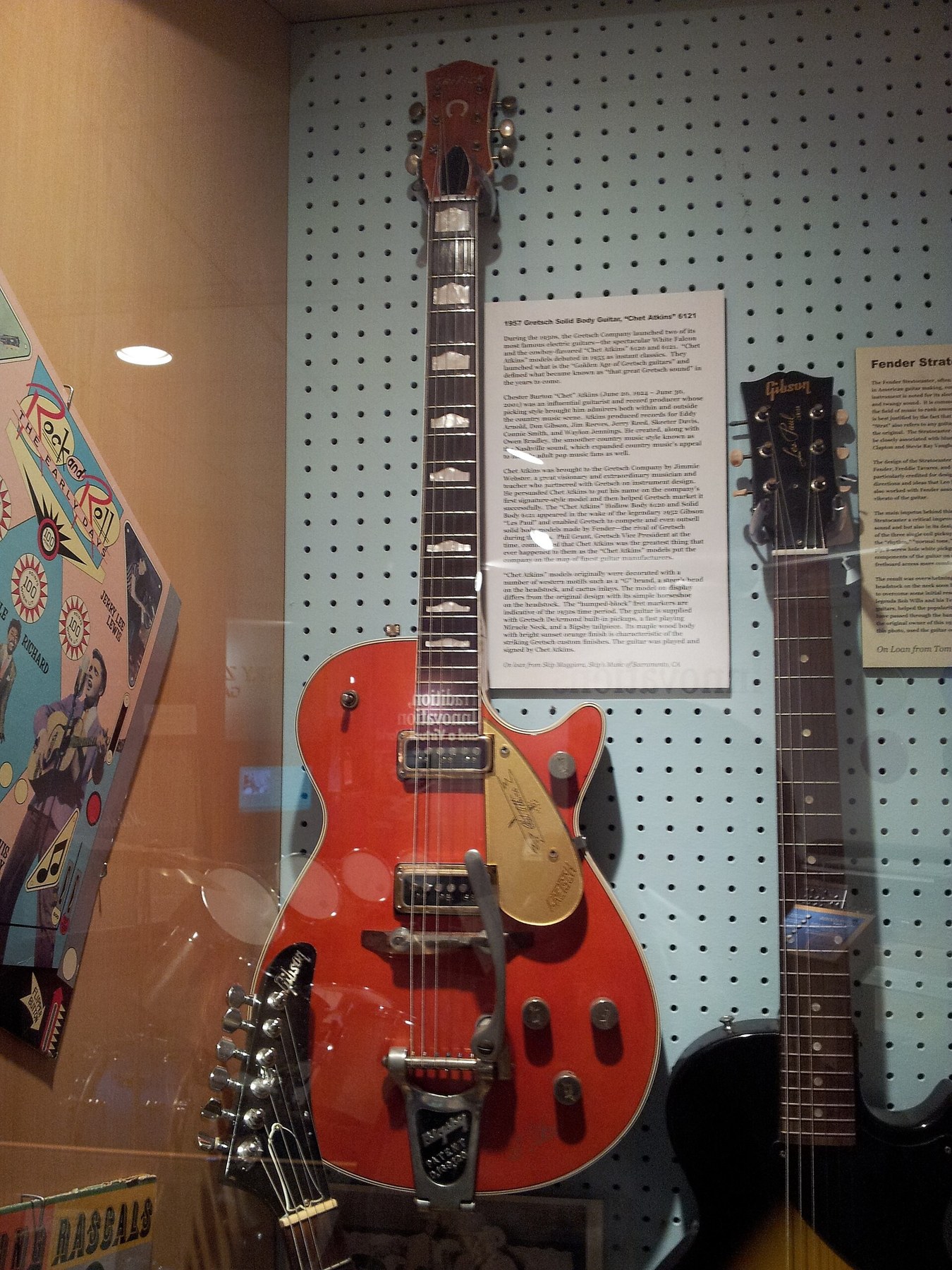
On January 1, 1955, the Chet Atkins Hollow Body Guitar, Model 6120, started shipping to dealers. Gretsch launched a solidbody sibling, the 6121 Chet Atkins Solid Body, at the same time. Gretsch backed both with print ads and its first full-color catalog.
The 6120 wasn't cheap. It listed at $385, a lot of money for a guitar in the mid-'50s.
Here's what that money bought on an early model, based on Premier Guitar's and MusicRadar's spec breakdowns:
- Body: single-cutaway hollow archtop of laminated maple, about 16 inches wide and roughly 2¾ inches deep, with open f-holes.
- Neck: set maple neck with a rosewood fretboard. The very first production batch had 21 frets; Gretsch moved to 22 almost immediately.
- Pickups: two DeArmond DynaSonic single-coils.
- Hardware: a Bigsby vibrato (gold-anodized on the earliest guitars), a metal bar-style bridge and a gold "signpost" pickguard with Chet's signature.
- Decoration: a "G" brand on the lower bass bout, a steer's head inlaid in the headstock, steer and cactus engravings on the fret markers, and the amber-red orange finish.
How the 6120 changed, year by year
Gretsch kept changing the 6120 almost every year. Most of the decorations Chet disliked were gone within three years. This timeline is based on MusicRadar's "Classic Gear" history and Gretsch's own inlay history:
- 1956: the steer's head on the headstock gives way to a horseshoe, and the cowboy-engraved fret markers go plain.
- 1957: "hump-block" fret markers arrive, and the G brand disappears from the top.
- Late 1957–1958: Filter'Tron humbuckers replace the DynaSonics. The fretboard switches to ebony with "thumbnail" (Neo-Classic) inlays, and a bar bridge and three-way tone switch arrive.
- 1959: Gretsch-logo Bigsby, zero fret and bone nut.
- 1960–61: the body gets thinner, then switches to a double-cutaway design with painted-on fake f-holes.
- 1964: renamed the Nashville, with a nameplate on the headstock.
- 1970s: renumbered 7660 in the early '70s, real f-holes return in 1973, and production ends around 1980.
For many collectors, Guitar World says, the 1958–61 single-cut with Filter'Trons is the ultimate 6120.
Ray Butts and the Filter'Tron Humbucker
The fix for Chet's pickup problem came from Cairo, Illinois.
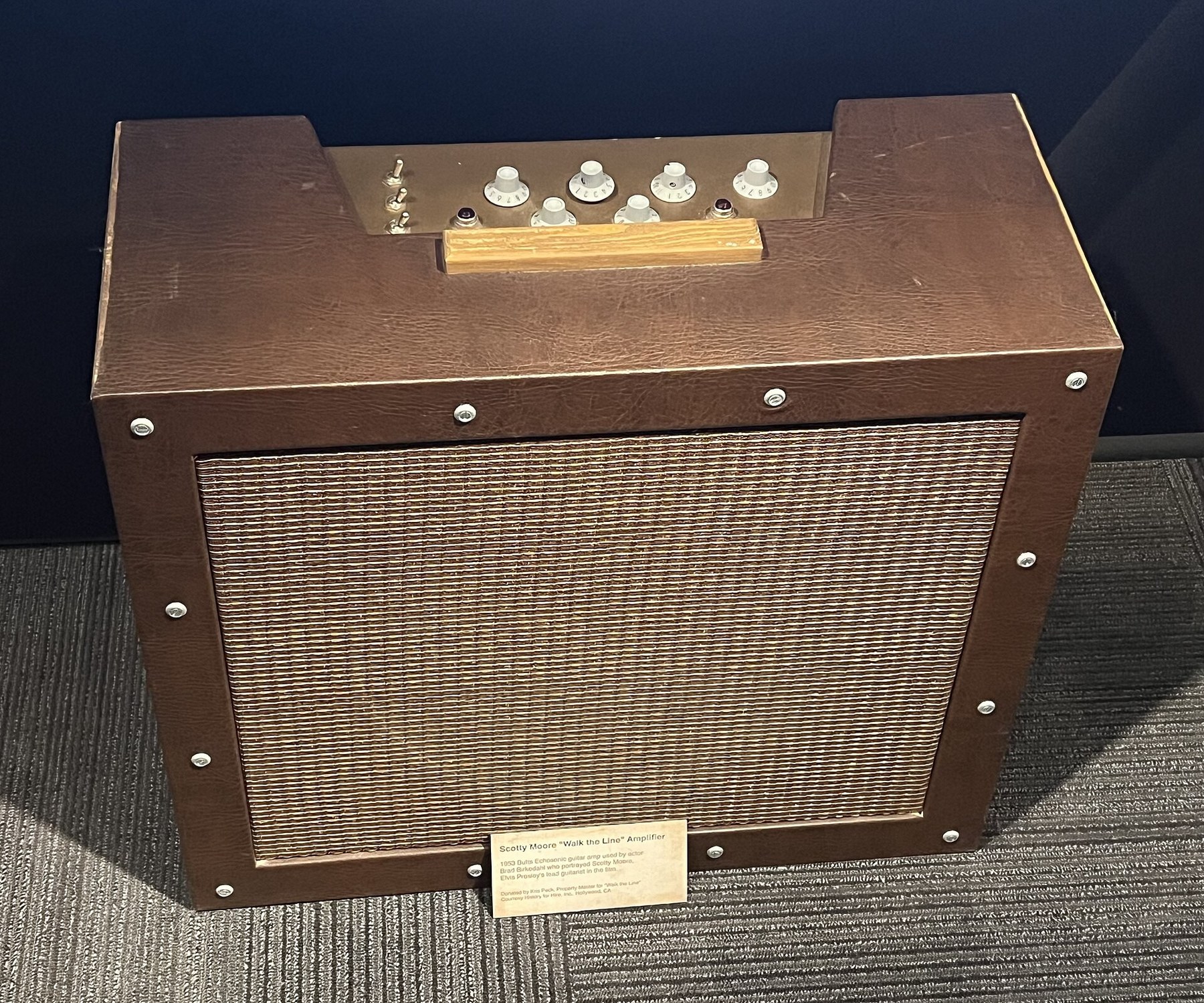
Ray Butts was an accordion player turned music-store owner and electronics wizard. He built the EchoSonic, a guitar amp with a tape echo built in. In 1954 he looked up Chet Atkins in the Nashville phone book. Chet sold a new Fender amp to buy one of the first EchoSonics, and used it on many records. Scotty Moore, Elvis Presley's guitarist, became another famous EchoSonic user.
Chet kept complaining to Butts about hum. As Chet later told it, quoted by Guitar World: "I kept telling Ray how unhappy I was. I had to twist my body around to get the guitar in a certain position relative to the amp to get rid of the humming."
Then Butts showed up with a rough-looking pickup on an old guitar and asked Chet how he'd like a pickup that didn't hum.
How the Filter'Tron works
Butts wired two coils together in series and out of phase, so the hum each one picked up canceled out. That's the humbucking principle, which wasn't new (hum-canceling designs go back to the 1930s). The trick was making it sound good on a guitar.
By Guitar World's account, Butts recalled showing Chet a humbucker in 1954 and kept refining it. Chet put a prototype set in his own 6120 and was first photographed playing it at a Grand Ole Opry show in September 1956. When Chet pushed Gretsch to use the design, Fred Gretsch asked Butts for samples. Gretsch agreed to build the pickup in-house and pay Butts a royalty, and Butts worked with Jimmie Webster on the production version. Gretsch called it the "Filter'Tron Electronic Guitar Head," because it filtered out electronic hum.
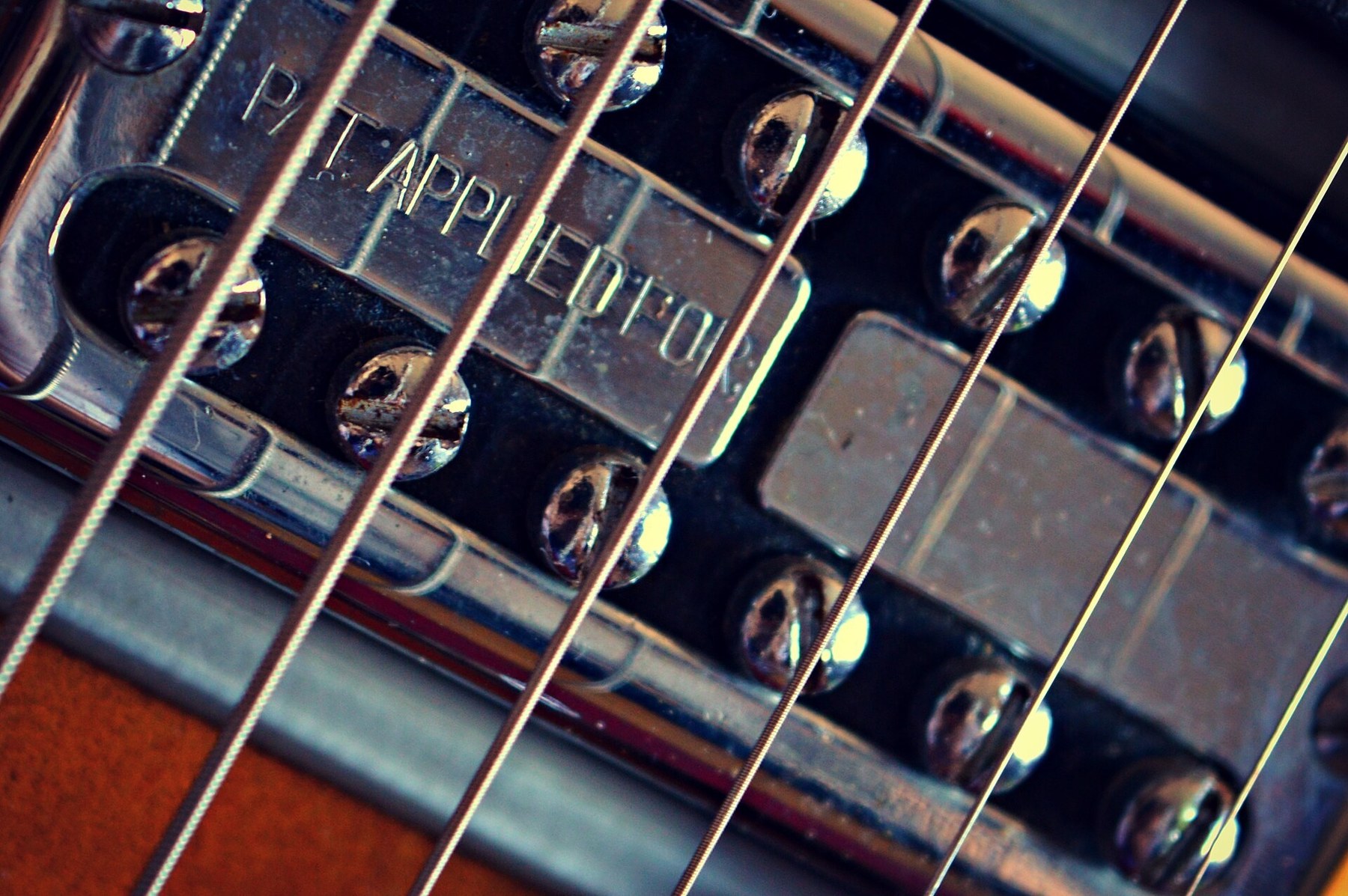
Gibson's Seth Lover was working on his own humbucker at the same time. Butts and Gibson president Ted McCarty exchanged some sharp letters, but it never went to court. Both pickups made their public debut at the 1957 Summer NAMM show. Butts got his patent, No. 2,892,371, on June 30, 1959, a month before Lover got his.
The 6120 got Filter'Trons as standard in late 1957 and 1958. That's the moment the guitar's sound shifted from the hotter, rawer DynaSonic tone toward the chime and growl most people now call "the Gretsch sound." (If you want the basics of why two coils behave differently from one, our guide to humbuckers vs. single coils explains it.)
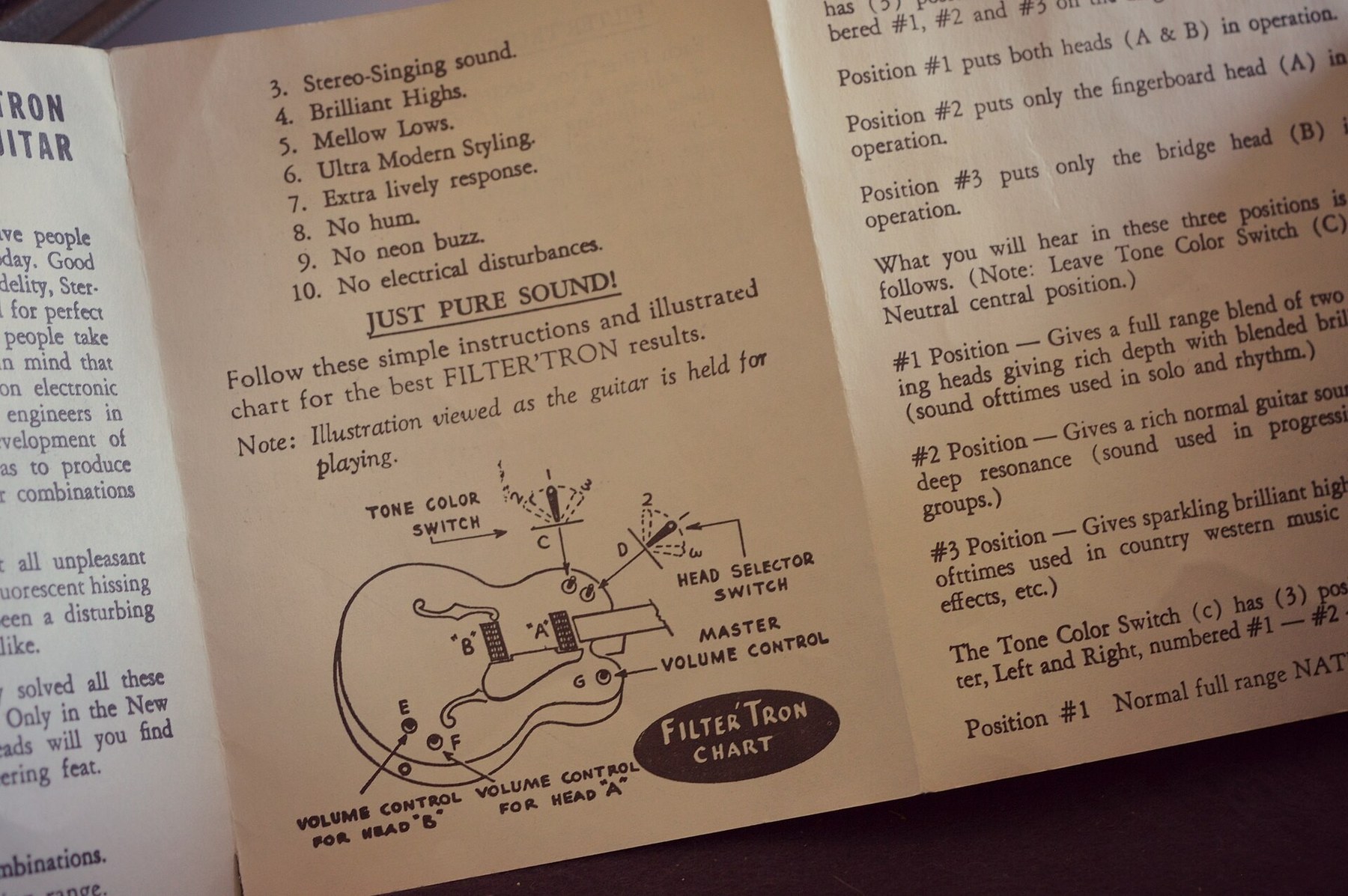
What makes a Filter'Tron sound like a Filter'Tron
A Filter'Tron isn't just a small Gibson humbucker. Guitar World's breakdown lists the key differences:
- Smaller bobbins with the pole screws set closer together, which narrows the pickup's focus.
- Low output, usually around 4k to 5k ohms on vintage units.
- Alnico bar magnets about twice as thick as Gibson's, plus longer pole screws, for a stronger magnetic field.
- Coils left unpotted.
Guitar World once described the result as "warm and round, but also edgy and commanding." Guitar.com says Filter'Trons "fuse hazy clarity, twang and midrange growl." Both are fair descriptions of the sound. It's brighter and tighter than a PAF, fuller than a Strat pickup, and it clears up well when you pick lightly.
The Bigsby: The Part Chet Got Right
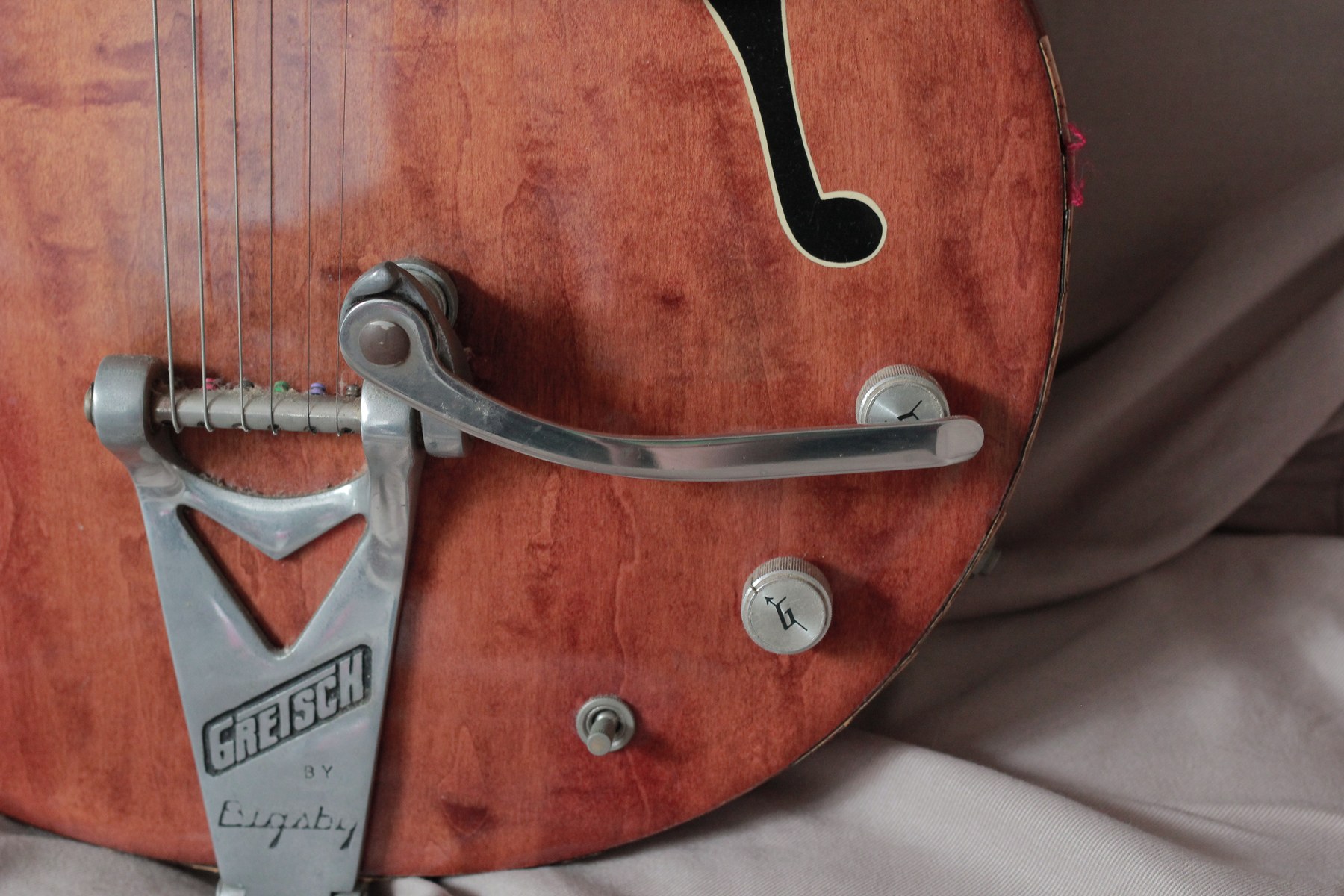
If the 6120 has a single visual signature besides orange paint, it's the Bigsby. Paul Bigsby's vibrato wraps the strings around a roller bar that the arm rotates against a spring, moving the pitch gently up and down. It doesn't dive-bomb like a Floyd Rose. It shimmers, sways and wobbles.
That gentle range suits the 6120 perfectly. Country players used it for subtle shading. Rockers used it to make chords quiver at the end of a phrase. And Duane Eddy, as we'll see, used it to bend whole melodies.
It's also the part that gives Gretsch owners the most practice tuning. A Bigsby, a floating bridge and a hollow body make a guitar that rewards a careful setup. More on that later.
Eddie Cochran: The 6120 Goes Rock & Roll
Gretsch aimed the 6120 at country guitarists. It found a teenager in suburban Los Angeles instead.
In January 1955, at 16, Eddie Cochran dropped out of high school in Bell Gardens, California, to play music full time. That same year, with help from his parents, he bought a brand-new 6120 from the Bell Gardens Music Center. It was a first-year model, serial number 16942. It became the guitar he played for the rest of his short life.
Cochran was picky about his sound and started modifying the guitar right away. According to Gretsch and Vintage Guitar:
- He replaced the neck DynaSonic with a black Gibson P-90, which gave him a warmer sound with more bite.
- He didn't want Chet's name on his guitar. First he taped over the signature on the pickguard, then he sanded off the paint and the autograph. Vintage Guitar notes he didn't swap the pickguard for a clear one, despite the legend.
- He kept the G brand, the Bigsby and the orange finish, which became his look.
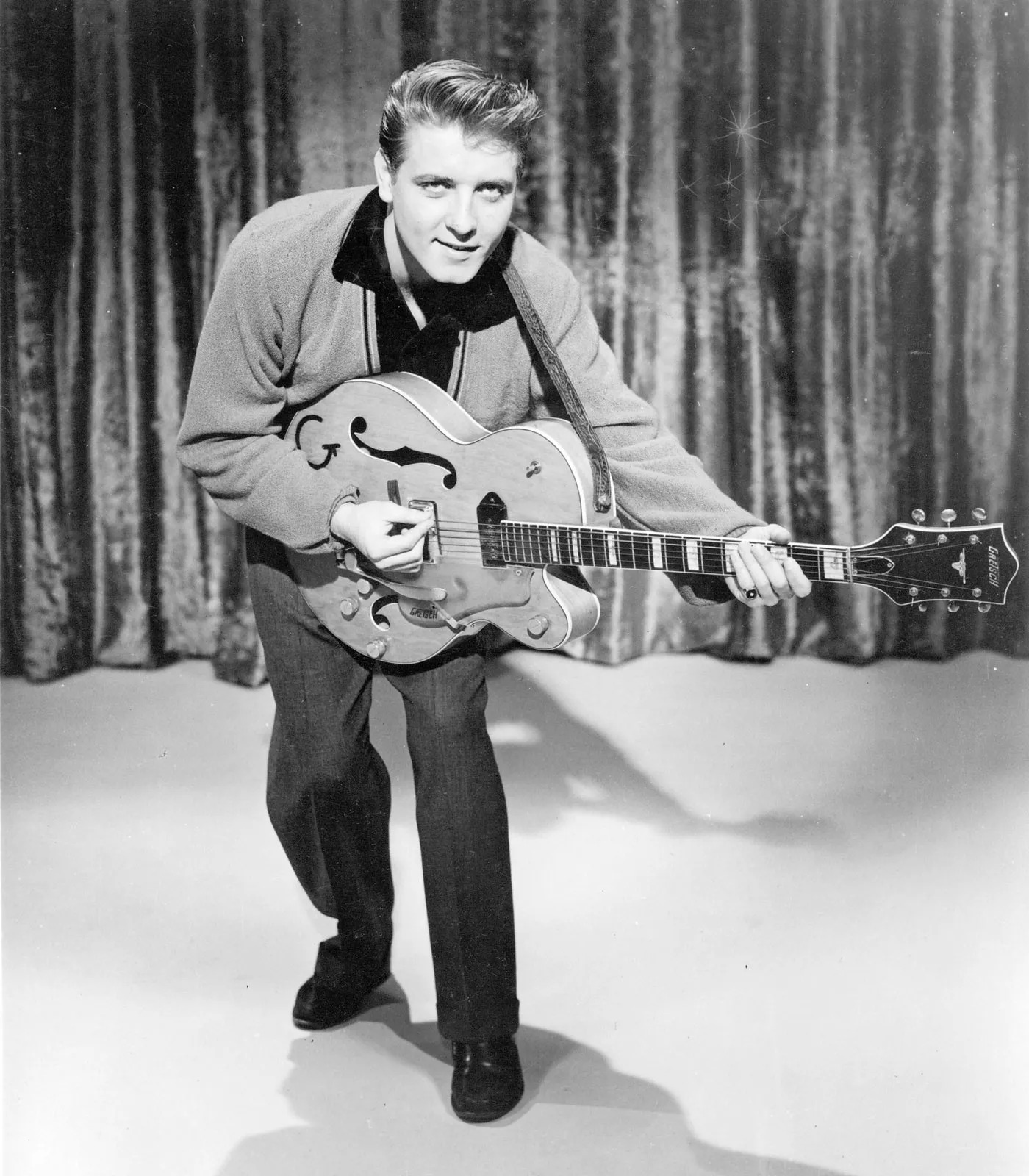
"Twenty Flight Rock" and "Summertime Blues"
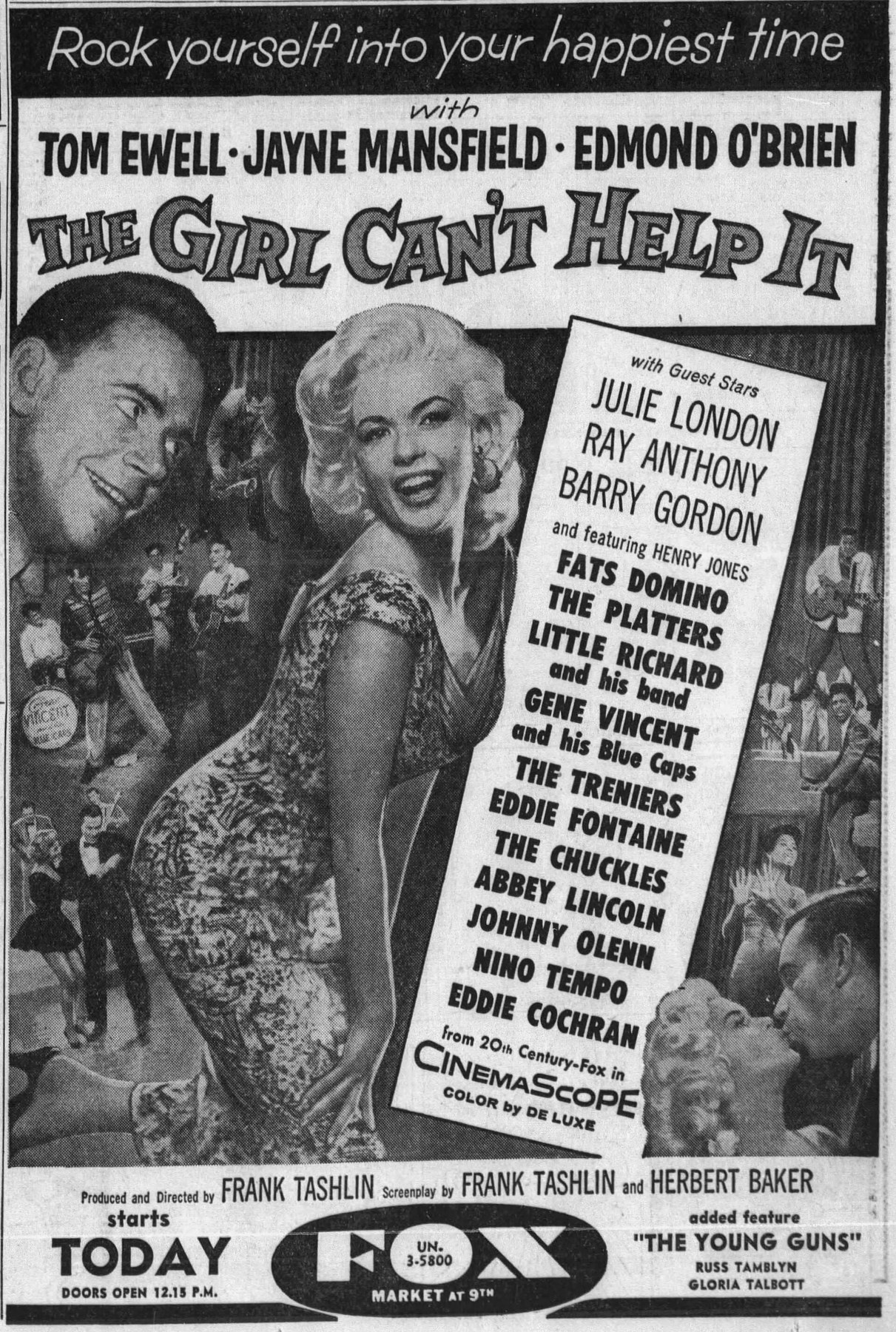
Cochran first recorded "Twenty Flight Rock" in July 1956 at Gold Star Studios in Hollywood. A month later he filmed it for The Girl Can't Help It, the Jayne Mansfield comedy that sent rock & roll into movie theaters around the world.
That film performance had a famous ripple effect. On July 6, 1957, in Liverpool, a 15-year-old Paul McCartney played "Twenty Flight Rock" for John Lennon. Lennon was impressed, and the Beatles story started with an Eddie Cochran song.
Then came the big one. Cochran recorded "Summertime Blues" at Gold Star on March 28, 1958. He wrote it with his manager, Jerry Capehart, sang both voices, and played all the guitar parts himself. Released as a B-side, it reached No. 8 on the Billboard Hot 100 on September 29, 1958. "C'mon Everybody" followed that fall.
Cochran's records sound tough and clipped, with chunky chords, stop-time breaks and tight rhythm parts. They're the work of a skilled session player, which he was. Gretsch's history credits his 6120 with those hits. It's the guitar people picture when they hear them.
The guitar that survived the crash
On April 16, 1960, at the end of a British tour with Gene Vincent, Cochran's taxi crashed near Chippenham, England. He died the next day, aged 21. His 6120 was in the car.
Duane Eddy: How the 6120 Got Its Twang
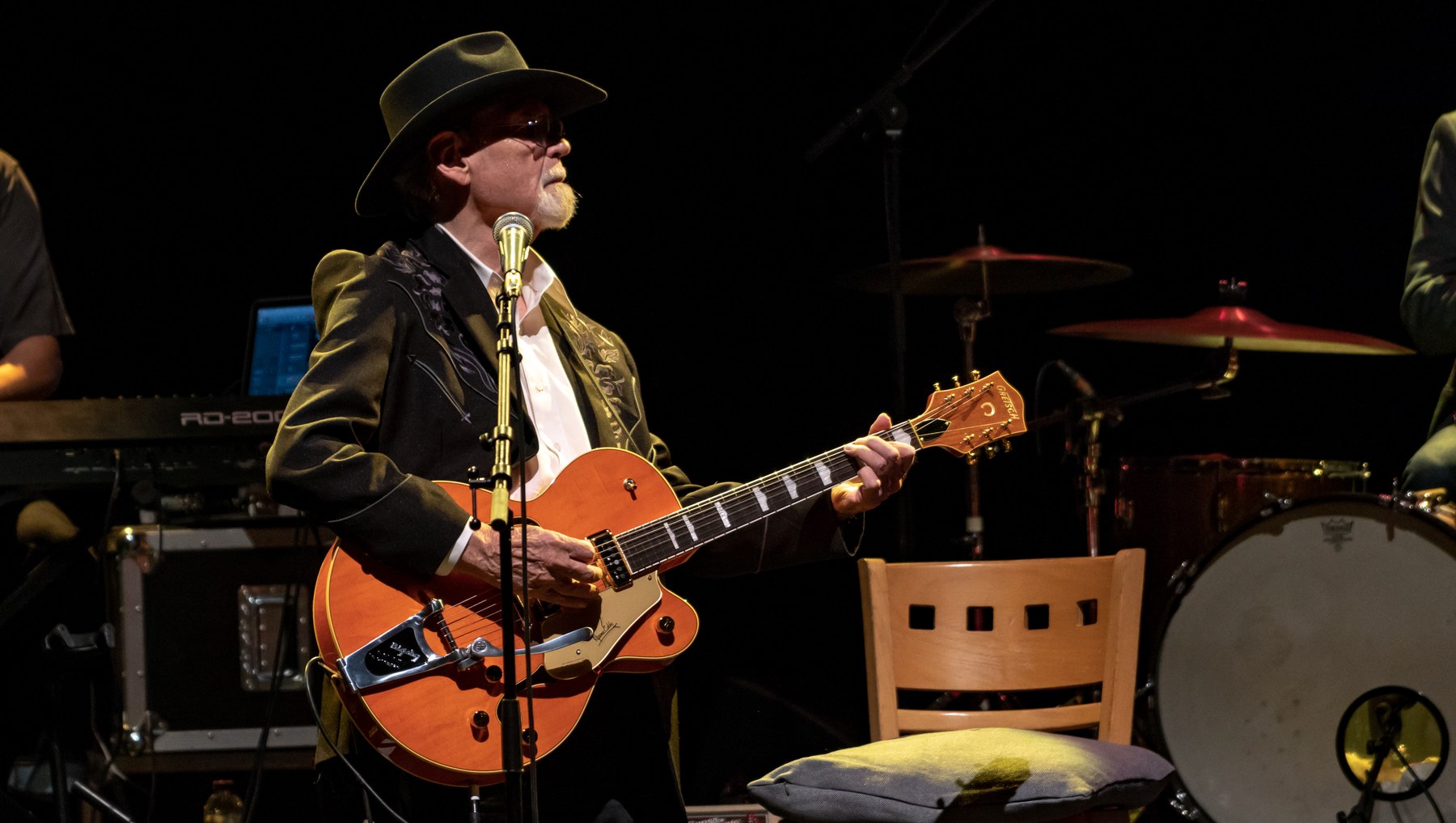
If Cochran made the 6120 a rock & roll guitar, Duane Eddy gave it its signature sound.
In 1957, the 19-year-old Eddy traded his Gibson Les Paul for a new 6120 at Ziggie's Music in Phoenix, Arizona. He wasn't happy with his singing voice. So he played melodies low on the bass strings of the guitar, a thick, rumbling sound that made the guitar the lead singer.
Producer Lee Hazlewood took that sound and made it enormous. At Audio Recorders in Phoenix, Hazlewood used a giant metal tank as an echo chamber. The Guardian's obituary of Eddy describes a 2,000-gallon water tank, while Eddy himself remembered it as an empty grain silo. Either way, the guitar came back sounding like it was being played at the bottom of a canyon.
"Rebel-'Rouser"
Eddy's second big single shows the whole formula. Released in 1958, "Rebel-'Rouser" climbed to No. 6 on the Billboard Hot 100. Eddy told Guitar Player exactly what he used:
"I used my Gretsch 6120 on that, and I was plugged into a souped-up Magnatone amplifier. It ran at 100 watts and had a JBL speaker and a tweeter. It stayed clean and wouldn't break up no matter how hard you hit the note."
That's an important detail for anyone chasing the sound. Eddy's twang isn't distortion. It's a loud, clean amp, heavy echo, low-string melodies and the Bigsby used to bend notes and make them sway. Records like "Peter Gunn," "Cannonball" and "Forty Miles of Bad Road" followed. By 1963, he'd sold 12 million records.
The influence was huge. George Harrison, Hank Marvin, Bruce Springsteen and John Entwistle are among the players who've credited Eddy. You can hear the same low, menacing guitar idea a few years later in Link Wray's "Rumble" and in surf records; see our History of the Riff: "Rumble" and History of the Riff: "Misirlou".
Gretsch has since made a Duane Eddy signature 6120, the G6120DE, first from 1997 to 2003 and again from 2011.
The '60s: Beatles Sessions, Buffalo Springfield and the Who
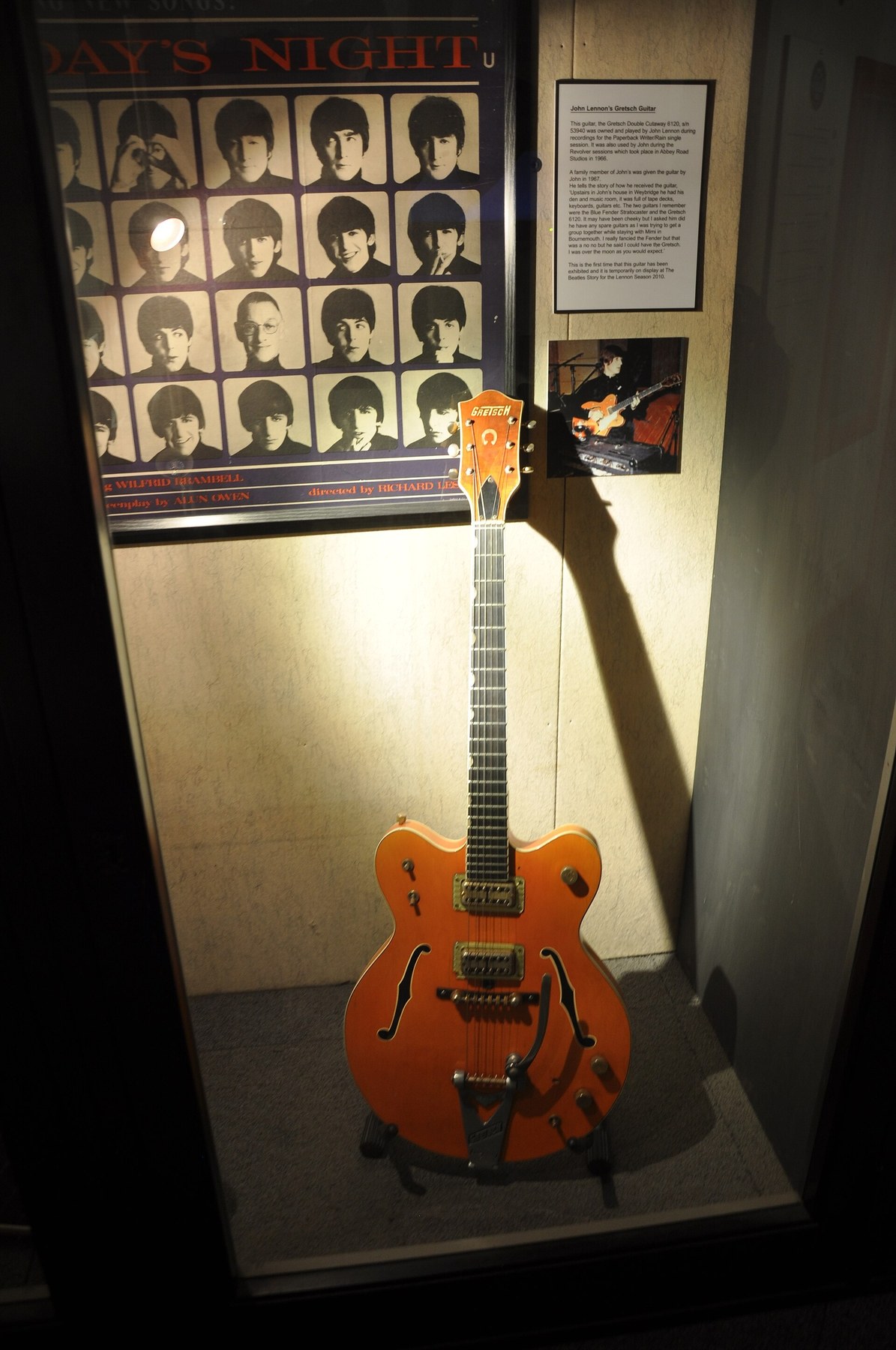
By the 1960s, the 6120 was a different guitar: thinner, double-cut, with fake f-holes and, from 1964, the Nashville name. It never became as big as Chet's Country Gentleman, which George Harrison made famous with the Beatles. But it kept turning up in important hands.
Guitar World lists Neil Young and Steve Miller among the 6120's '60s players, and notes brief but important stints in the hands of Eric Clapton in the Yardbirds and John Lennon on the "Paperback Writer" sessions. Randy Bachman used one with the Guess Who and BTO.
The most famous later story involves the Who. In 1970, Joe Walsh gave Pete Townshend a 1959 6120. Townshend went on to use it on Who's Next and Quadrophenia. A guitar built for country picking ended up on some of the loudest rock records of the decade.
Decline: The Baldwin Years
Then the bottom fell out. In 1967, Fred Gretsch Jr. sold the company to the Baldwin piano company. Baldwin moved guitar production from Brooklyn to Booneville, Arkansas, in 1970. Two serious fires hit the Arkansas plant in 1973. Quality and morale slipped, and model specs kept changing.
The 6120 limped on under the Nashville name, and as the 7660 in the '70s. Chet Atkins ended his Gretsch endorsement and signed with Gibson around 1980. Baldwin shut down Gretsch guitar production at about the same time.
By the late '70s, Guitar World says, the 6120 had become a forgotten relic of pawnshops. That's exactly where the next chapter starts.
Brian Setzer and the Stray Cats Revival
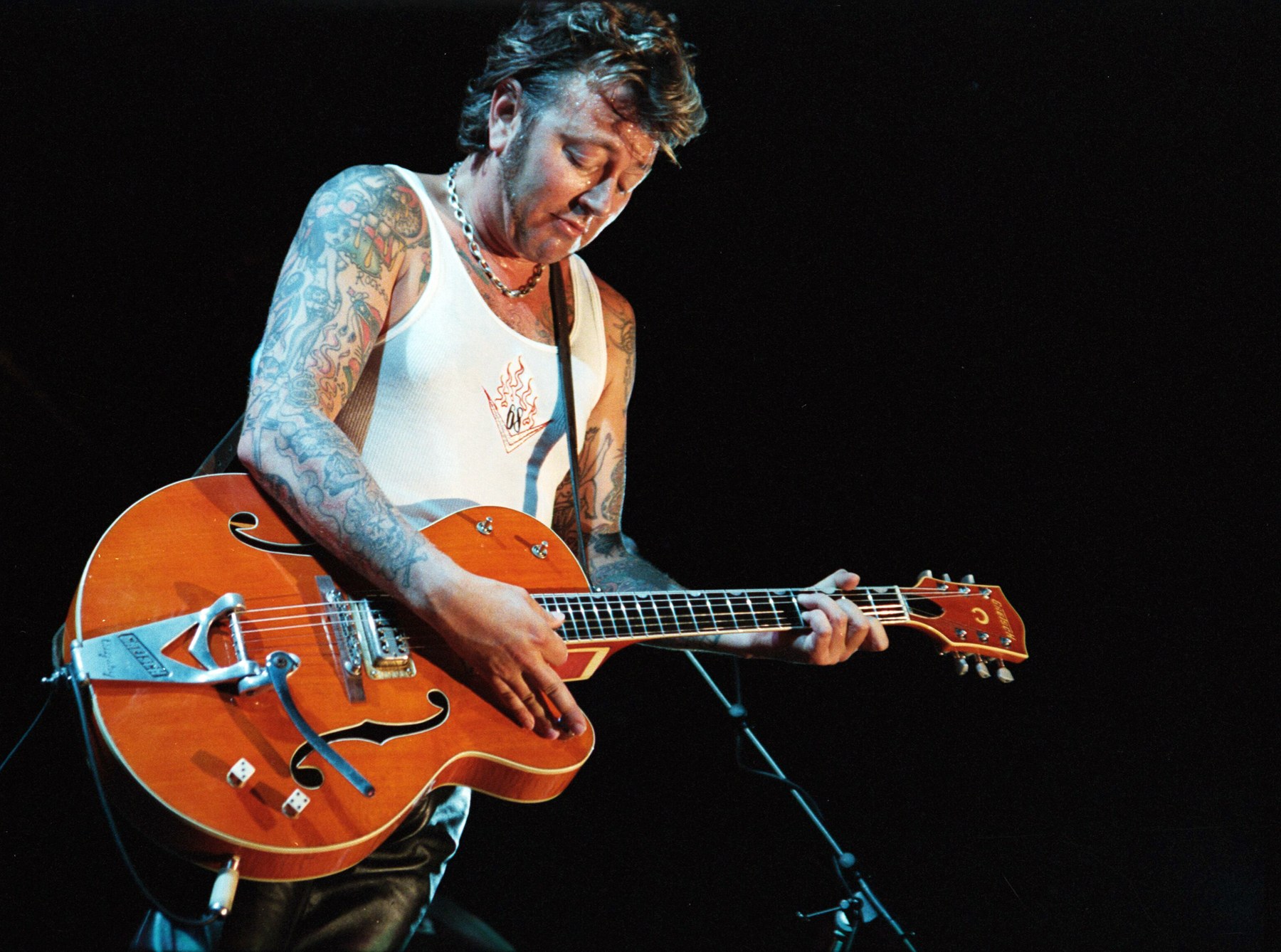
Brian Setzer was a teenager in Massapequa, on Long Island, when he saw a photo of Eddie Cochran on a record sleeve hanging in a local record store. He told Vintage Guitar he didn't know who Cochran was, but he wanted to be him and look like him.
So he went looking for the guitar. "I didn't know a Dynasonic from a Filter'tron from a humbucker, I just wanted that orange guitar," he said.
He found one in his local classified paper, listed as an orange Gretsch for $100. He told Guitar Player in 2019 that he called the seller and asked, "Is it like Eddie Cochran's?" The man answered, "Who?"
The seller had pulled out all the electronics and put them in a shoebox, because he planned to strip the guitar and refinish it natural. Setzer paid his $100 and took the guitar and the shoebox. A local repair shop put it back together. The guitar was a 1959 6120, serial number 33024. Setzer bought it in 1976 or '77 and was 16 or 17, depending on which interview you read.
Rockabilly crosses the Atlantic and comes back
Setzer formed the Stray Cats with double bassist Lee Rocker and drummer Slim Jim Phantom on Long Island in 1979. In 1980 they moved to London, where rockabilly still had a following. Producer Dave Edmunds signed on and produced their 1981 debut album. By 1982 and '83, with Built for Speed and its MTV videos, the Stray Cats were huge in America, too.

Every one of those videos put an orange Gretsch in front of millions of viewers. Values of old 6120s jumped. Setzer's sound became the modern template: a Filter'Tron 6120 into a Fender Bassman with slapback echo, and the Bigsby always moving.
Setzer later played Eddie Cochran in the 1987 film La Bamba and recorded "Summertime Blues" for it. The kid who wanted to be Cochran got to play him on screen.
Guitar World goes as far as to argue that Setzer and the 6120 saved Gretsch from oblivion. That may be generous, but it's hard to imagine the modern Gretsch catalog without him.
Fred Gretsch Buys It Back: Terada and the Reissues
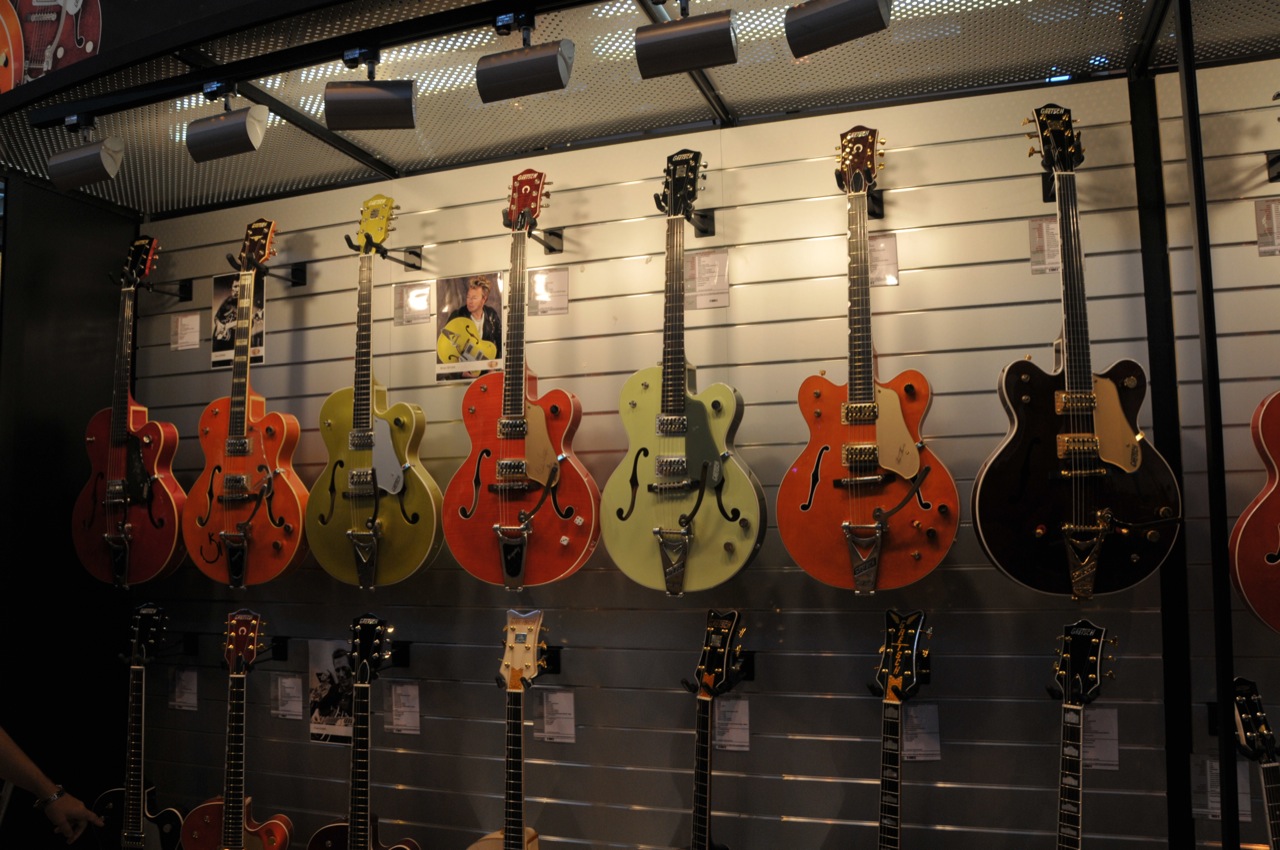
In January 1985, Fred W. Gretsch, the founder's great-grandson and a nephew of Fred Gretsch Jr., bought the family business back from Baldwin. Making guitars again took a few years.
According to Tony Bacon's history for Reverb, Gretsch executive Duke Kramer tried several American factories, including Heritage, Guild and Gibson, before going to Japan. He chose Terada, an experienced hollowbody builder in Nagoya.
Gretsch announced its first new guitar lineup in the second half of 1989. There was one catch. After Chet's move to Gibson, Gretsch couldn't use his name, so the 6120 came back as the Nashville, and the G-brand version as the Nashville Western. Other reissues and signature models followed in the '90s, including Brian Setzer models from 1993 and Duane Eddy's model from 1997.
Those early Japanese reissues weren't exact copies. Guitar World notes the first revived Filter'Trons used ceramic magnets and different wire and sounded louder and more aggressive than the originals. Gretsch went back to original specs around 2001.
The next big change came in 2002. Fender agreed to take over production, marketing and distribution of Gretsch guitars, starting January 1, 2003, while the Gretsch family kept ownership of the brand. Today, the Chet Atkins name is back on Gretsch's vintage-style 6120s.
The Gretsch 6120 Today
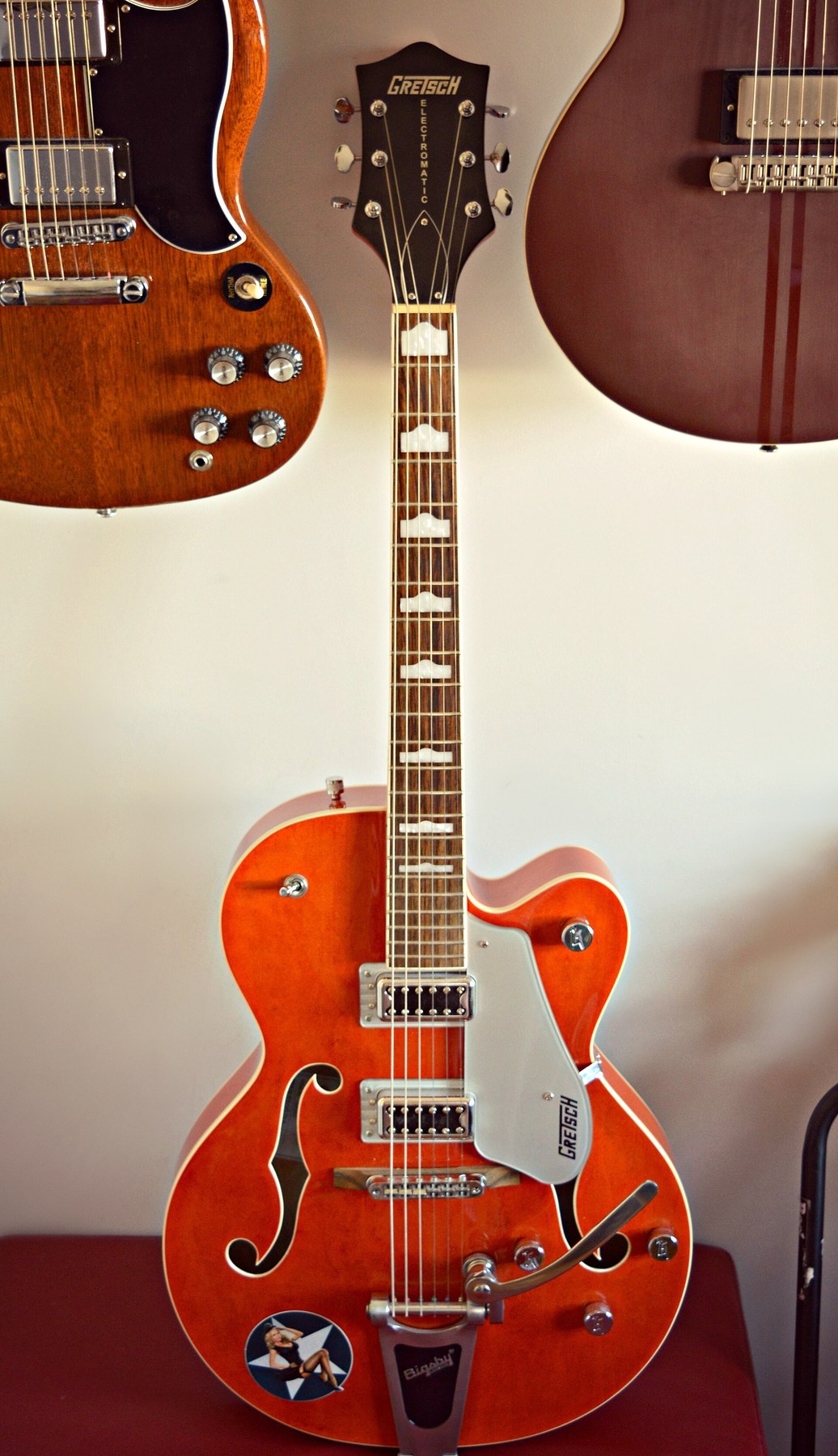
Gretsch's current Nashville/G6120 family page lists eight guitars, all in its Japanese-made Professional Collection. Here's how the lineup breaks down, from Gretsch's own spec pages:
| Model | What it is | Key specs (per Gretsch) | ||
|---|---|---|---|---|
| G6120T-55 Vintage Select Edition '55 Chet Atkins | The early, DeArmond-era 6120 | Laminated flame maple, 2.75" deep, TV Jones T-Armond pickups, aluminum nut and bridge, Bigsby B6CBVF | ||
| G6120T-59 Vintage Select Edition '59 Chet Atkins | The Filter'Tron-era classic | Laminated maple, 2.75" deep, ebony board, TV Jones Filter'Tron Classics, rocking bar bridge, 1959-style trestle bracing | ||
| G6120T-BSNSH, G6120TFM-BSNV, G6120T-BSSMK | Brian Setzer Signature Nashville models | Setzer's '59-based spec in different finishes | ||
| G6120T-HR | Brian Setzer Signature Hot Rod | A stripped-down Setzer take | ||
| G6120T-SW | Steve Wariner Signature Nashville Gentleman | A Chet Atkins disciple's 6120 | ||
| G6620T Players Edition Nashville Center Block | Modern, gig-friendly double-cut | 1.75" deep, center block, High Sensitive Filter'Trons, string-thru Bigsby |
Gretsch's Players Edition line also includes the G6120TG Players Edition Nashville Hollow Body, with FT-67 Filter'Trons, modern bracing, a treble-bleed circuit and a string-thru Bigsby. Current 6120s use Gretsch's 24.6-inch scale.
Below that, Gretsch's Electromatic line covers budget versions of the idea. The G5420T Electromatic Classic Hollow Body has the same 2.75-inch depth and 24.6-inch scale, laminated maple, FT-5E Filter'Trons, trestle-block bracing and a Bigsby B60. It even comes in Orange Stain.
What the 6120 Actually Sounds and Feels Like
This is a researched overview, not a hands-on review. But what players and reviewers report about 6120s is consistent enough to pass on.
The sound
Filter'Tron models sound bright, clear and growly. A '59-style 6120 has more sparkle than a Gibson hollowbody and more midrange push than a Fender. Clean, it chimes. Push the amp, and it gets a snarling, slightly hollow growl instead of a thick, compressed lead tone.
DynaSonic and T-Armond models sound rawer. A '55-style 6120 has a punchier, more aggressive single-coil sound. That's closer to early Cochran or the first Duane Eddy records, and it's why some players prefer the '55 reissue.
The body is part of the sound. It's a true hollow archtop with an air chamber, so notes have a woody bloom and a quick, percussive attack. That's a big part of why rockabilly rhythm parts sound so springy on a 6120.
The feel
Big but light. At 16 inches wide and around 2¾ inches deep, a full-depth 6120 feels big against your body. Hollow construction keeps it lighter than you'd expect.
Feedback is part of the deal. A fully hollow guitar will howl at stage volume with gain. Rockabilly players often work with it. Heavier rock players tend to pick a center-block model like the G6620T.
The bridge floats. Most 6120s use a bridge that sits on the top, held only by string tension. It's a big part of the sound, but it can shift if you change strings carelessly, which throws off intonation. Mark the bridge position before a string change.
The Bigsby needs care. A Bigsby on a well-set-up 6120 stays in tune fine for normal use. Lubricating the nut and stretching new strings make a big difference.
Controls take a minute. Classic 6120s have separate neck and bridge volumes, a pickup selector, and a master volume on the cutaway. Some vintage-style models use a tone switch instead of a knob. The master volume sits right where your picking hand can reach it mid-song.
Tone tip: For a Setzer-style sound, Guitar World suggests a Filter'Tron 6120 into a Fender Bassman with tape-style or analog slapback echo at about 90 to 100 milliseconds. For Duane Eddy, keep the amp loud and clean, play the melody on the low strings, add lots of reverb, and let the Bigsby bend the end of each note.
Why Players Still Pick a Gretsch 6120
There are more versatile guitars. There are cheaper, lighter, easier ones. People still buy 6120s for a few clear reasons.
It's the rockabilly guitar. From Cochran to Setzer to the Reverend Horton Heat, the orange Gretsch is the genre's uniform. If that's your music, nothing else looks or sounds quite right.
The Filter'Tron sound sits in its own lane. It cuts through a band without harshness. Country, rockabilly, garage rock and indie players all use that clarity.
It rewards a light touch. A hollow 6120 responds to dynamics. Dig in and it barks. Ease off and it chimes.
It's a piece of history you can play. Few guitars have this many chapters: a Brooklyn salesman, a Nashville legend, a Cairo inventor, two '50s teen idols and a punk-era kid with a shoebox full of wiring.
The Bottom Line on the Gretsch 6120 History
The Gretsch 6120 is proof that a guitar's real identity comes from the people who play it, not the people who design it.
Jimmie Webster built it to sell Chet Atkins to country fans. Chet asked for a Bigsby and a metal nut, put up with the cowboy trim, and pushed Ray Butts' hum-canceling pickup into production. Then he mostly played something else.
The guitar's real story belongs to Eddie Cochran, who sanded off Chet's name, Duane Eddy, who played the melody on the low strings, and Brian Setzer, who paid $100 for one and put it on MTV. If you're shopping for one, start by deciding which of those three you want to sound like. Then pick a '55-style for rawer single-coil bite, or a '59-style Filter'Tron for chime and growl.
Join the conversation: DynaSonic or Filter'Tron? Single-cut or double-cut? Tell us which 6120 you'd take home in Guitar Talk, and keep reading the gear-history series with our Gibson Firebird history.
Plugged Gear Co. may earn a commission from qualifying purchases.
Experience-driven coverage, not algorithm bait.
- 20+ years of guitar playing experience
- Real-world retail experience at Guitar Center
- Thousands of hours testing guitars, amps, and pedals
- A community of 50,000+ guitar enthusiasts across platforms
- Partnerships with Fender, DistroKid, TrueFire, Card Chords, and Enya
- Editorial standards published openly — see how we test gear
The Modern Guitar Magazine. Delivered to your inbox.
No spam. No gimmicks. Just great guitar content — stories, tones, iconic solos, and honest gear takes. Every week.
Ask GP
3 free questions a dayStill curious? Ask GP about this story.
Your personal classic-rock and guitar guide — ask anything about The Gretsch 6120 History.
Discussion (0)
Sign in to join the discussion.
Sign in to commentLoading comments…
Discover another guitar story
Swipe through our latest features, breaking news and iconic solos — one story at a time.
Open Swipe →More Guitar News
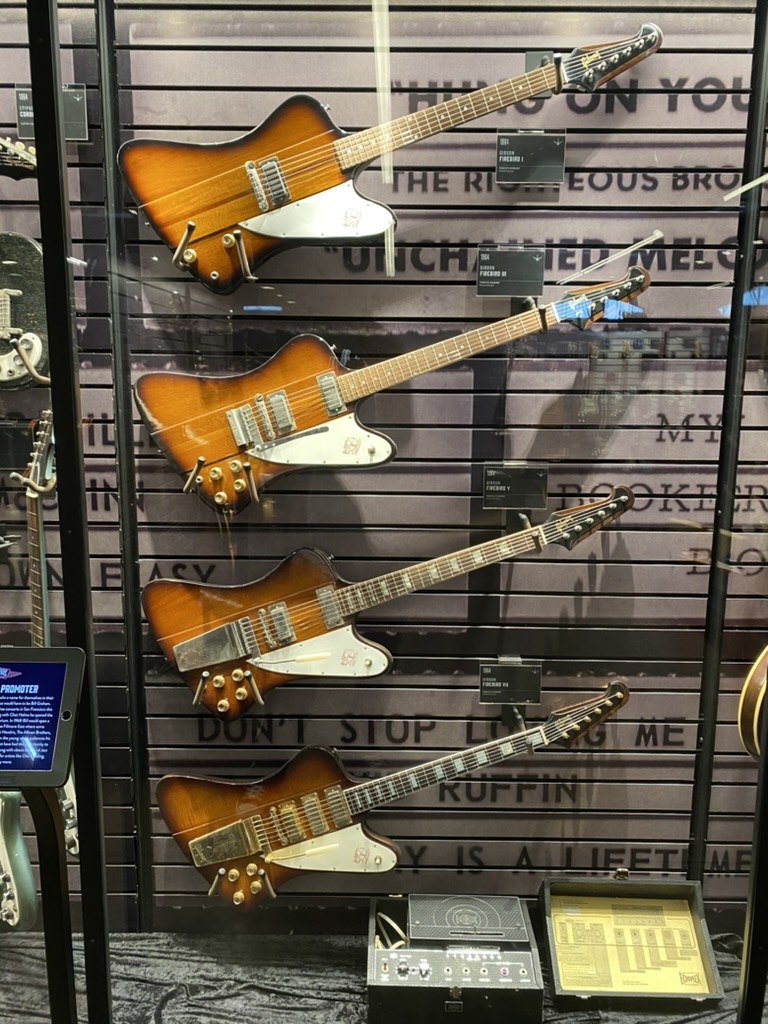
The Gibson Firebird History: The Car Designer Who Drew Gibson's Strangest Guitar Upside Down and Backwards
The Gibson Firebird is the only great electric guitar designed by a man who spent his career drawing cars. Here's the history, from Ray Dietrich's 1963 reverse Firebird to 2025's Platypus.
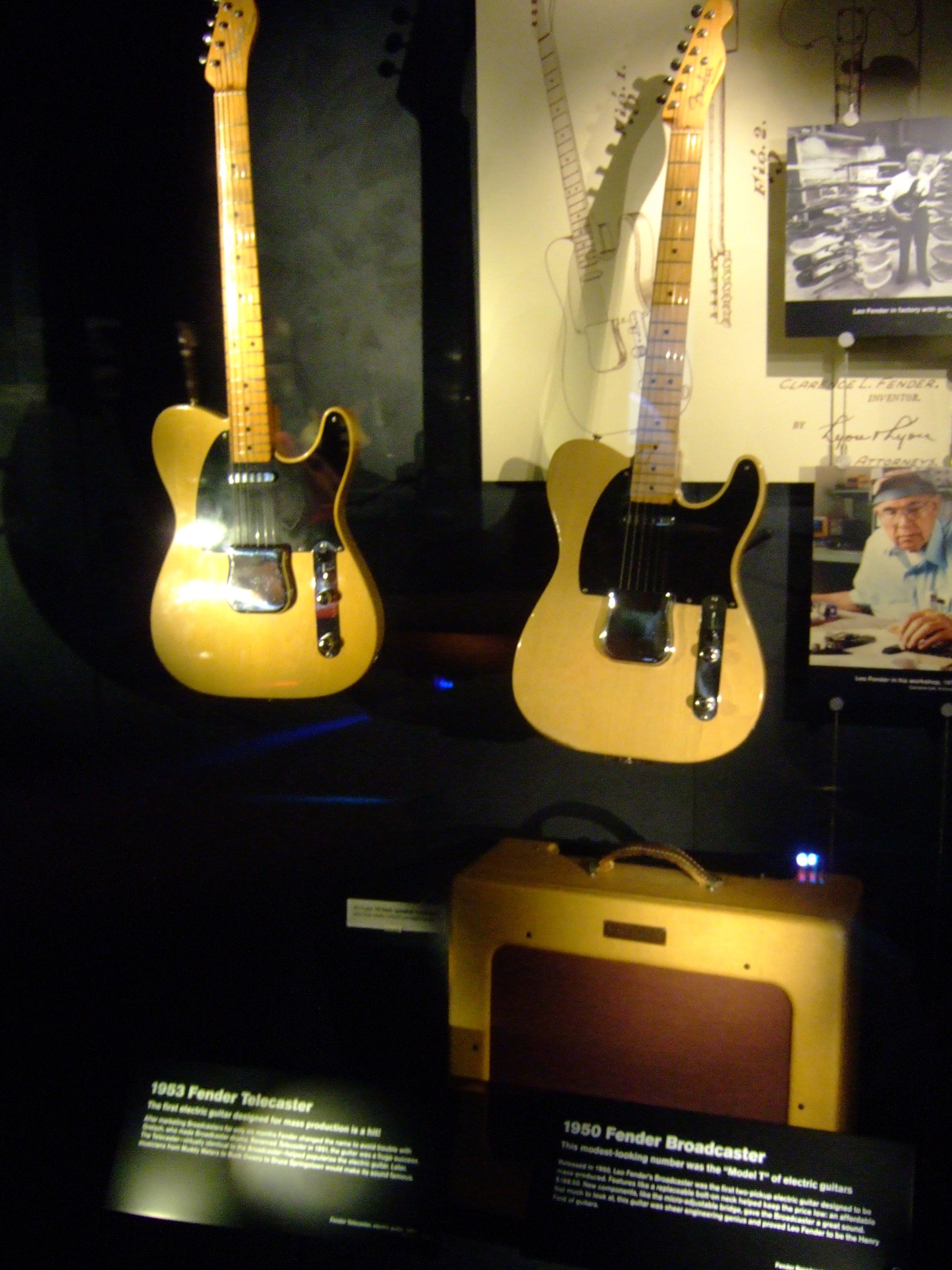
The Fender Telecaster History: How a Radio Repairman's "Plank" Became the Guitar That Does Everything
The Fender Telecaster history, from Leo Fender's 1950 Esquire and Broadcaster to the Nocaster, Keith's Micawber, Springsteen's Esquire and what to buy now.
History of the Riff: Link Wray's "Rumble" — The Instrumental That Made the Guitar Sound Dangerous
No lyrics. No melody you’d hum in the shower. Just power chords, a punctured speaker, and a sound so menacing some radio stations banned it. Here’s how Link Wray’s 1958 instrumental rewired rock guitar.
History of the Riff: Dick Dale's "Misirlou" — How Surf Guitar Turned a Middle Eastern Melody into a Rocket
No power chords. No punctured speaker. Just double-picked fire, spring reverb splash, and an Eastern Mediterranean folk tune rebuilt as the sound of Southern California surf — then resurrected by Pulp Fiction.
Humbuckers vs. Single-Coils: Which Pickup Is Right for You?
Humbuckers roar, single-coils sparkle. Here’s how pickups actually work, what they sound like, and the easy way to choose the right set for your guitar, genre, and budget.