
History of the Riff: Dick Dale's "Misirlou" — How Surf Guitar Turned a Middle Eastern Melody into a Rocket
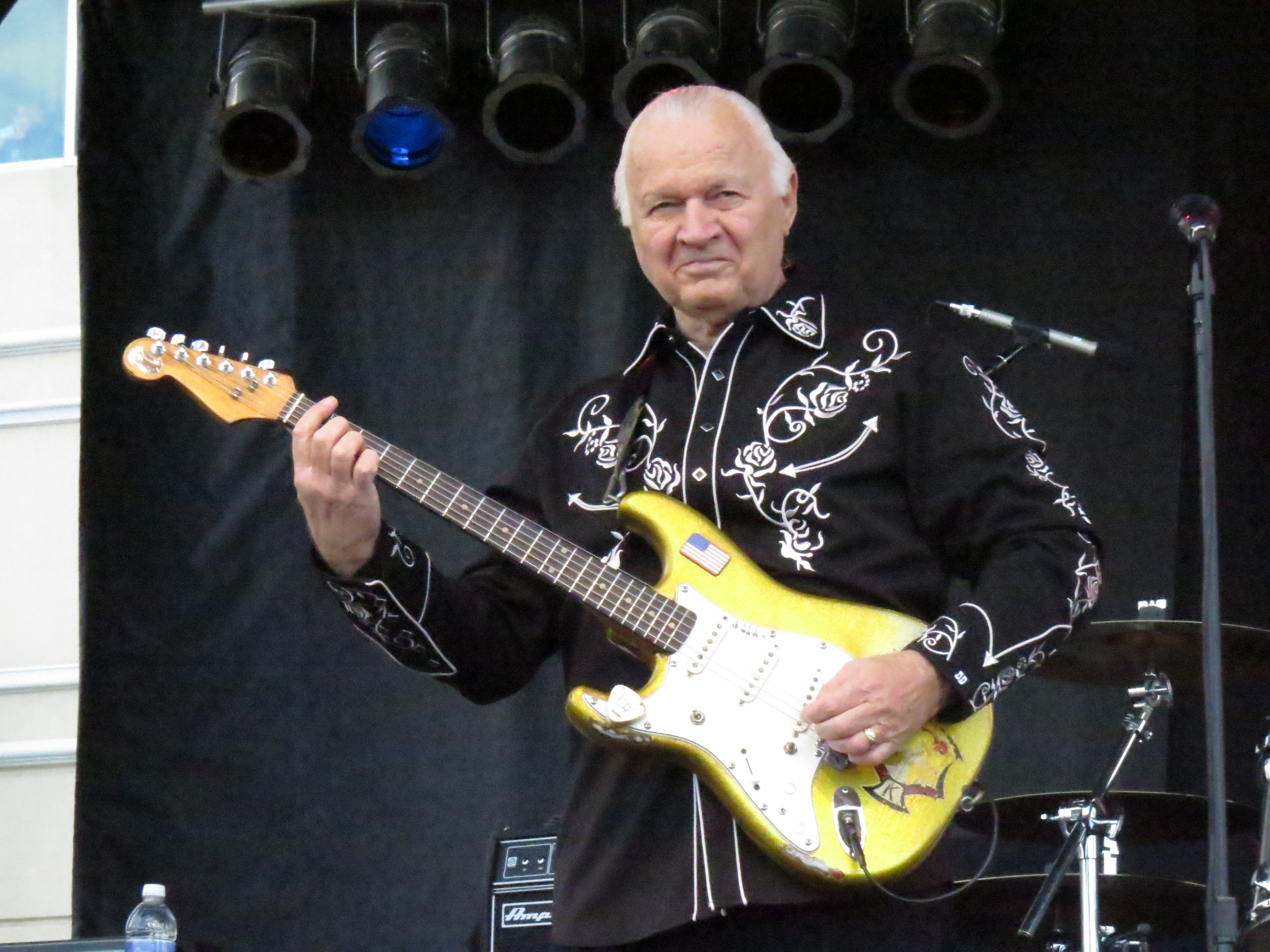
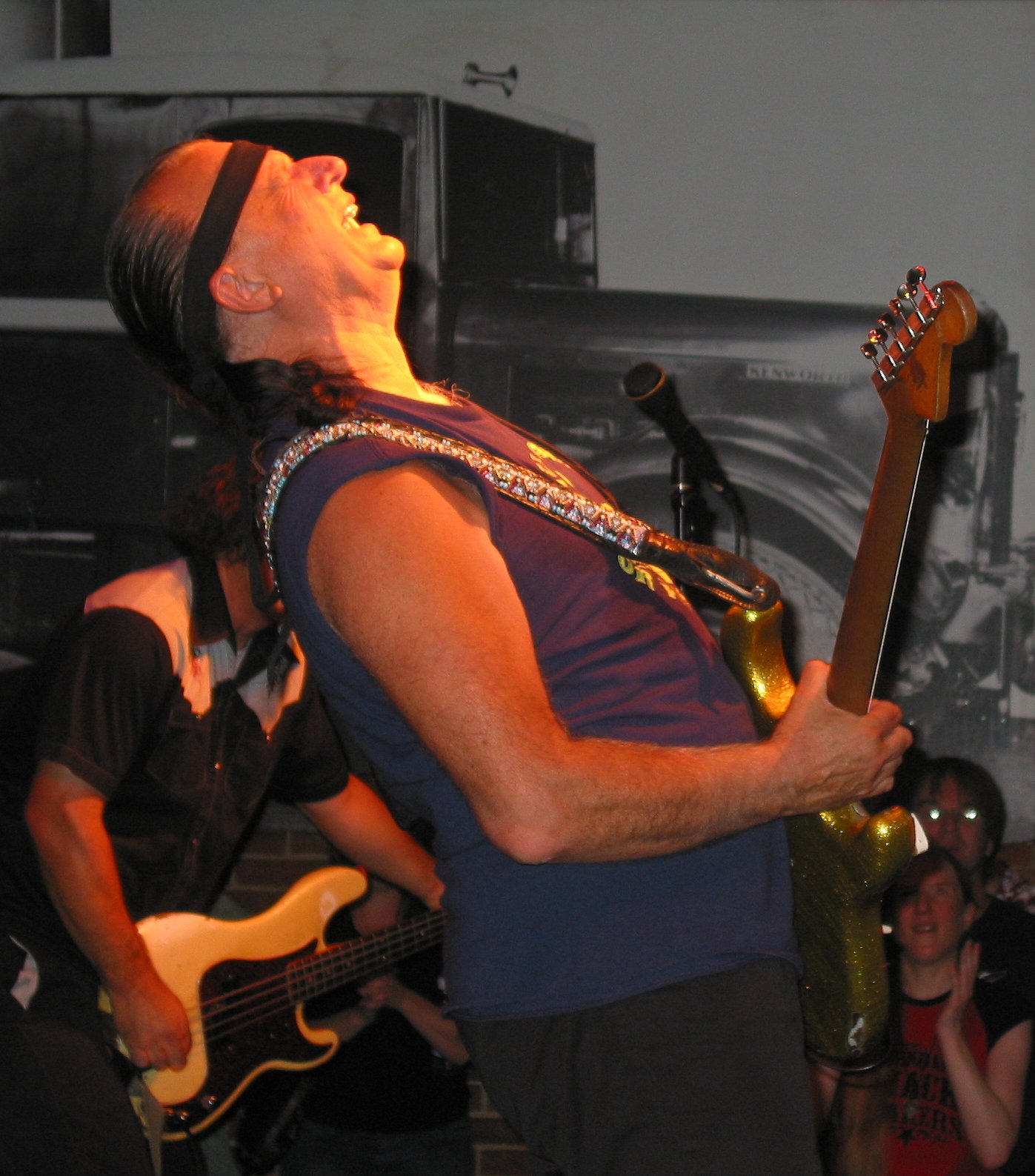
Photo: xrayspx. License: CC BY-SA 2.0.
No power chords. No punctured speaker. Just double-picked fire, spring reverb splash, and an Eastern Mediterranean folk tune rebuilt as the sound of Southern California surf — then resurrected by Pulp Fiction.
If Link Wray's "Rumble" taught the electric guitar how to threaten, Dick Dale's "Misirlou" taught it how to sprint.
No lyrics. Almost no chords in the modern rock sense. Just a single-note line fired at machine-gun tempo, soaked in spring reverb, and played loud enough that Leo Fender had to invent louder gear to keep up. Released in 1962, Dale's version of the Eastern Mediterranean folk tune "Misirlou" became the template for instrumental surf rock — and three decades later, Quentin Tarantino parked it over the opening titles of Pulp Fiction and handed it to a new century of players.
This is a researched History of the Riff deep dive — not a hands-on gear review — into how a Lebanese-American surfer, a left-handed Stratocaster held the "wrong" way, and a melody older than rock itself defined a sound that still shows up every time someone asks for "that wet, fast surf tone."
Why Dick Dale's Misirlou Still Matters to Guitar Players
Most famous riffs teach harmony: power chords, blues turns, modal colors. "Misirlou" teaches mechanics and attitude.
It is a picking study disguised as a hit. The melody rides rapid alternate picking — what guitarists often call tremolo picking when it stays on one pitch or one string long enough to feel percussive — at a tempo that leaves no room for a lazy right hand. The tone is bright, wet, and forward: bridge-pickup sting plus spring reverb splash, not midrange fuzz or high-gain compression. The arrangement trusts the guitar line to be the entire song.
That combination still matters because it sits at a different fork in the road from "Rumble." Wray opened the door to distorted block chords as rock's default weapon. Dale opened the door to velocity, exotic scale flavor, and amp volume as part of the instrument's identity. Metal tremolo picking, surf revival bands, punk covers, and film cues that need "instant California danger" all drink from that well — whether they name Dale or not.
If you only know the track from Tarantino, you already know why it works. It does not ease you in. It throws the gauntlet in the first bar.
Before Surf: Where the Misirlou Melody Came From
Dale did not invent the tune. He detonated it.
"Misirlou" (Greek: Μισιρλού) is a folk melody from the Eastern Mediterranean world of the late Ottoman era. The name traces through Turkish Mısırlı — "Egyptian" — ultimately from Arabic Miṣr (Egypt). In Greek, the form is feminine: the song is about an Egyptian woman. Ethnomusicologists and music historians place versions of it among Arabic, Greek rebetiko, and Jewish klezmer musicians by the 1920s. Claims that it descends from Sayed Darwish's "Bint Misr" are generally treated as incorrect in modern summaries of the song's history.
The earliest known recording is usually credited to Ottoman Greek rebetiko musician Theodotos ("Tetos") Demetriades in 1927 — a slower tsifteteli-dance reading, not a guitar rocket. Greek bandleader Michalis Patrinos circulated related versions around 1930–31. In U.S. popular music, Greek-American instructor Nick Roubanis released a jazz instrumental arrangement in 1941 and is still widely credited as composer for publishing purposes (a credit that has long been contested or paralleled in Greek sources naming Patrinos). English lyrics followed from Chaim Tauber, Fred Wise, and Milton Leeds. Harry James charted a version in 1941; pianist Jan August scored a sizable 1946 hit. Lounge and exotica bands kept the melody in circulation through the 1950s.
So by the time Dale grabbed it, "Misirlou" was already a traveler: Greek dance floors, Arab-American and Armenian-American communities, klezmer sets, swing bands, and cocktail-lounge "Oriental" novelty. What it was not yet was the sound of a thousand Southern California teenagers stomping in a ballroom.
Dale's bridge to that older world was personal. His paternal grandparents were Lebanese; he grew up hearing Arabic music in the Quincy, Massachusetts, Lebanese community and later described relatives playing "Misirlou" on the oud. NPR's 2006 feature on the melody's path from klezmer to surf guitar quotes that family memory directly. The melody was not a research project for him. It was inheritance, sped up until the ballroom shook.
Who Dick Dale Was Before the Reverb Tank
Richard Anthony Monsour was born in Boston on May 4, 1937, to a Lebanese father (James Monsour) and a mother of Polish-Belarusian descent (Sophia "Fern" Danksewicz). The family moved to Quincy, where he absorbed piano, trumpet, ukulele, and — crucially — Middle Eastern percussion and string traditions through relatives. An uncle taught him the tarabaki (goblet drum) and played oud. Dale later said his guitar "pulsation" came from that drumming feel as much as from any rock lesson.
In 1954, when he was finishing high school, the family drove west so his machinist father could take aerospace work. They landed in El Segundo. Dale graduated from Washington Senior High, learned to surf at seventeen, and fell into the Southern California beach world that was about to invent its own soundtrack.
Country and rockabilly bars came first. A performer named Texas Tiny rechristened him "Dick Dale" — a better country-singer name, the story goes. By the turn of the 1960s he was packing the Rendezvous Ballroom in Balboa with "stomps": no-alcohol, dress-code surfer dances in a room that could hold roughly three thousand people. Those nights are the incubator. Dale wanted the guitar to feel like the power of a wave — not a polite imitation of one.
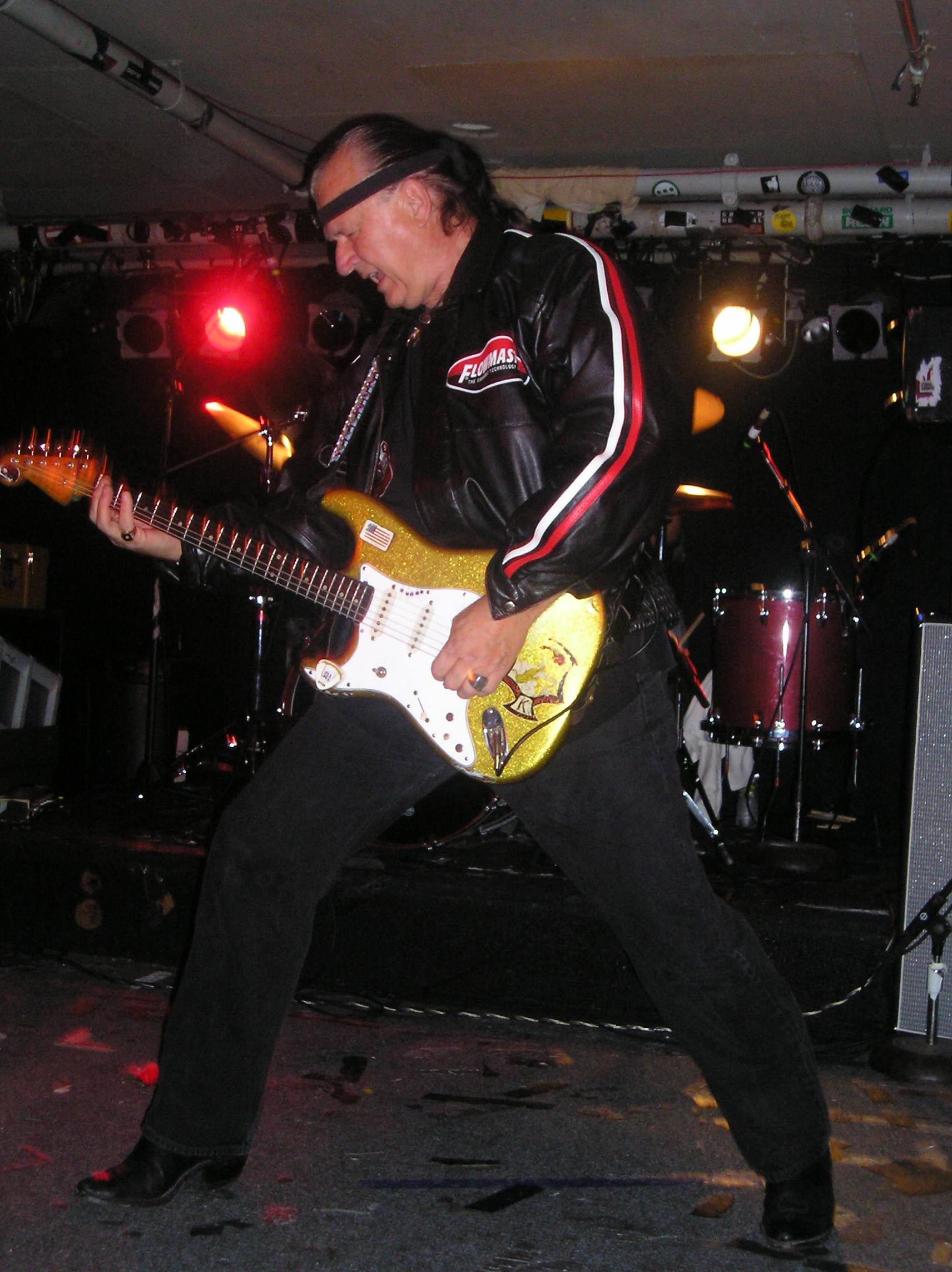
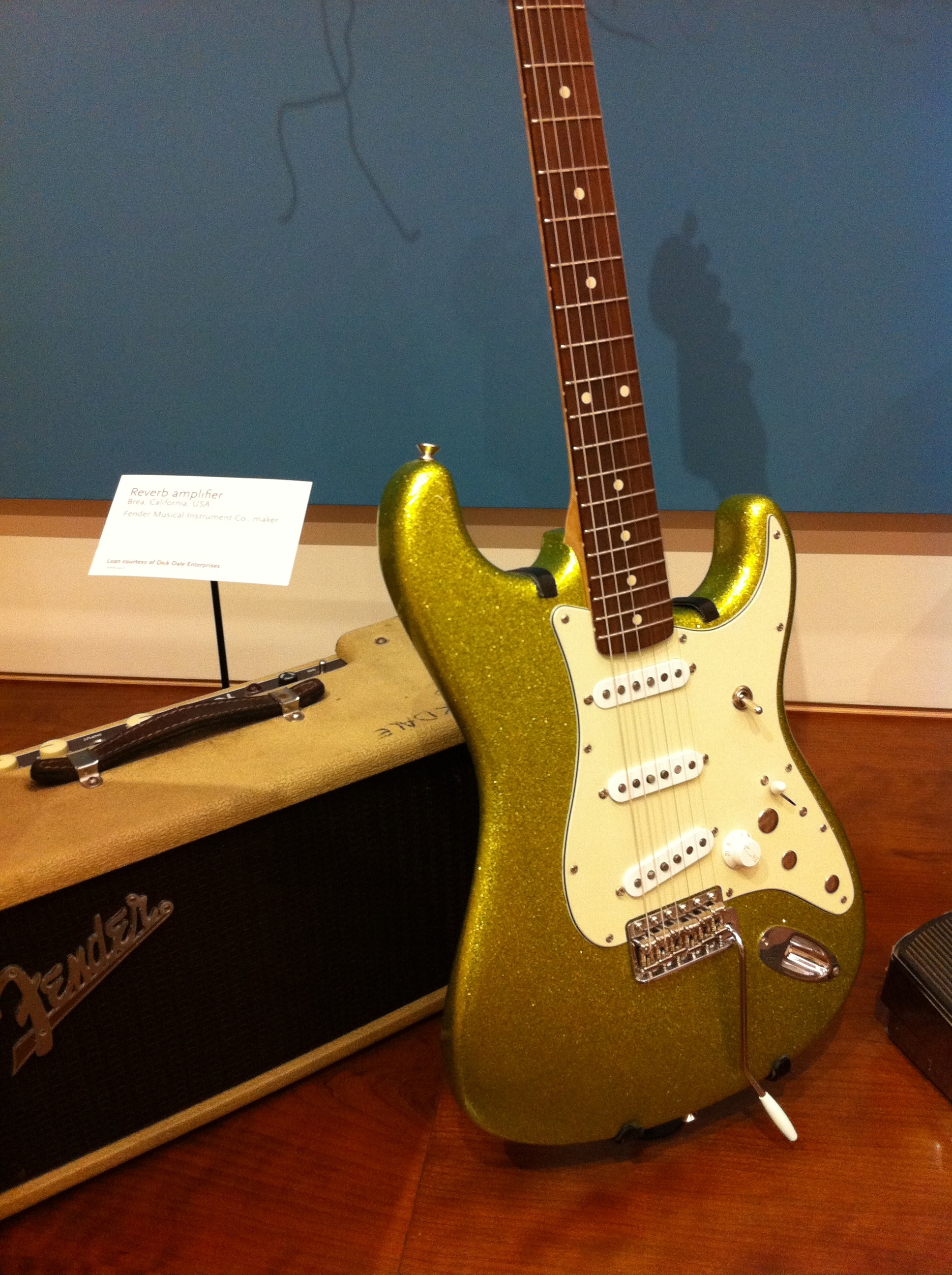
He was left-handed and famously played right-handed Stratocasters upside down without restringing them, the low E nearest the floor from the audience's view of a conventional setup — an approach that, as Guitar World and other profiles note, suited blistering runs on the low string. Even after Leo Fender supplied a proper left-handed Strat (Dale's long-associated "Beast"), he kept the reverse stringing. Form followed the way his hands already worked.
Leo Fender, the Showman, and the Volume Arms Race
You cannot tell the "Misirlou" story as a guitarist without the amp story, because Dale's sound was inseparable from loud.
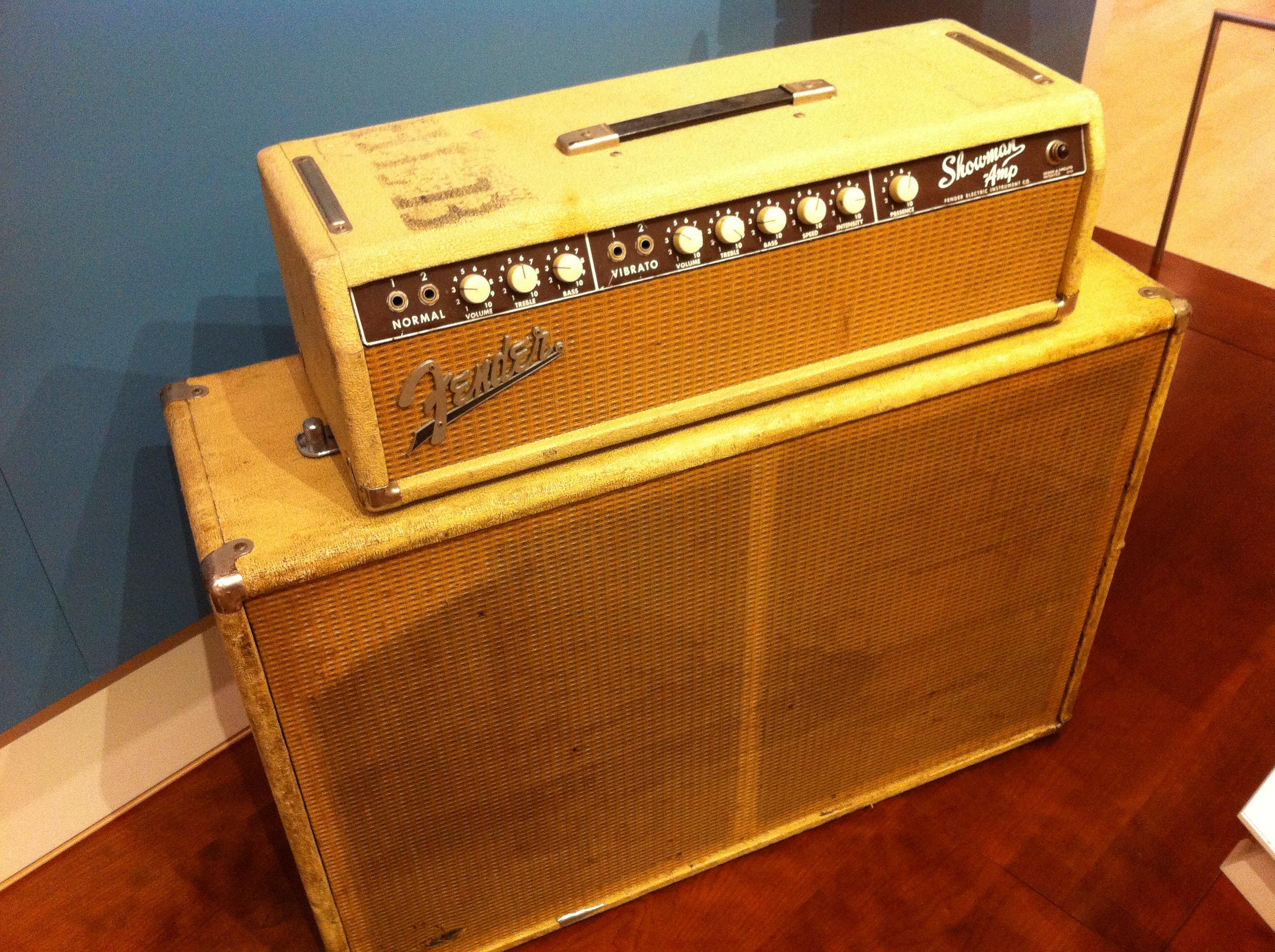
He partnered with Leo Fender as a brutal test pilot. Dale repeatedly blew Fender amplifiers trying to outrun screaming ballroom crowds. Fender and engineer/guitarist Freddie Tavares famously checked him out at the Rendezvous, then worked with James B. Lansing (JBL) on a custom 15-inch speaker that became the JBL D130F lineage associated with the Showman. The Single Showman and later Dual Showman pushed guitar amplification into territory Fender had been reluctant to enter — high-wattage heads and dual-15 cabinets built to survive Dale's attack. Dale loved to repeat Leo's line: when gear could withstand Dick Dale, it was fit for human consumption. He also claimed to have destroyed dozens of amps in the process. Treat the exact body count as Dale storytelling; treat the product outcome as industry history. The Showman/Dual Showman era is real, documented, and still a reference point for loud clean-to-breaking Fender tone.
Reverb is the other half of the equation. Surf's "wet" signature is spring reverb splash — that drip and splash after a picked note, not digital hall fog. Dale is widely credited with popularizing portable/outboard spring reverb as a guitar effect in this scene (he had chased reverb for vocals first, then parked the guitar in front of it). By the early 1960s, Fender's standalone reverb unit was part of the vocabulary Dale helped make permanent. Guitar into reverb into a cranked Showman is still the mental patch for "Misirlou" tone, even when modern players fake it with pedals.
1961–1962: From "Let's Go Trippin'" to the Misirlou Guitar Riff
Historians usually point to Dale's 1961 Deltone single "Let's Go Trippin'" as the first true surf-rock instrumental — the shot that told Southern California the genre had a record. Local follow-ups like "Jungle Fever" and "Surf Beat" kept the Del-Tones on the map. The debut album Surfers' Choice (Deltone, 1962; soon picked up by Capitol for national distribution) locked the brand.
"Misirlou" arrived as a Deltone single (catalog 5019; also issued on Capitol), with "Eight Till Midnight" on the B-side. Standard discographies list a release date of April 21, 1962. Runtime sits around two minutes fifteen seconds — short, ruthless, memorable. Publishing credits on Dale's release commonly list Roubanis / Wise / Tauber / Leeds, reflecting the earlier American popularization of the tune rather than Dale composing the folk melody from scratch. Producer credit often goes to Jim Monsour — Dale's father — on period labels.
Dale's own origin story for the arrangement is the one players retell. He remembered the melody from family oud playing. He jacked the tempo into rock territory. In interviews he described the first night they played it live: people rising off the floor, chanting and stomping — "the beginning of the surfer's stomp." A related anecdote (repeated in secondary sources, thinner on primary citation) says a young fan bet he could not play a song on only one string; Dale answered with the oud memory and "Misirlou." Whether or not the bet happened exactly that way, the musical point stands: the surf arrangement is essentially a hyper-driven single-line showcase.
Capitol's national push, Ed Sullivan Show exposure, Life magazine attention, and beach-party film appearances (Beach Party, Muscle Beach Party) carried Dale past the Orange County circuit. The Beach Boys cut their own Dale-flavored "Misirlou" for Surfin' U.S.A. (1963). The Ventures, the Trashmen, and a generation of instrumental acts treated his vocabulary as open source. Then the British Invasion crowded the charts, Dale's health collapsed into a mid-1960s cancer fight, and the first surf wave broke. The riff did not disappear. It waited.
Anatomy of the Riff: What Guitarists Are Actually Hearing
Strip the mythology and listen like a player.
Scale flavor. The line lives in the sound world guitarists usually tag as Hijaz / Hijaz Kar / double-harmonic major territory — the "Egyptian" or "snake charmer" color Western ears glue to Middle Eastern melodies. Relative to a tonal center, you get that tense flat-second against a major third, plus the raised seventh that keeps the line leaning forward. You do not need a theory doctorate to hear it: the melody sounds "Eastern" to American rock ears because those intervals are not the default major-pentatonic comfort food of early '60s pop guitar.
Technique. The engine is relentless alternate picking. Dale's right hand (for a lefty upside-down player, the picking side is still the attack side) functions like a drummer's ride pattern translated to a string. Stamina matters more than flash licks. Notes are short, percussive, and re-attacked. When the line sits on one string for stretches, it becomes a pure picking endurance test. Guitar magazines and teachers have spent sixty years using "Misirlou" as the gateway drug to tremolo picking for that reason.
Tone architecture. Bright attack near the bridge. Heavy string gauges by modern bedroom standards (published recollections vary; Dale was associated with very heavy sets, often cited in the .016-and-up neighborhood on the high side and into the .050s–.060s on the low — treat exact gauges as era-and-interview dependent, not a lab spec sheet). Amp volume high enough that the speaker and transformer are part of the compression. Spring reverb wet enough that trails splash after the pick. Tremolo arm use is not the star of the classic recording the way reverb and picking are; do not confuse Fender "tremolo" naming chaos with Dale's picking tremolo. The drama is in the right-hand machine gun and the tank.
Form. The record is a melody vehicle. Drums and band hit hard, but they clear space for the guitar line the way a big-band chart clears space for a featured horn — which fits Dale's Gene Krupa admiration. There is little interest in blues-box noodling. The hook is the composition.
What not to do when learning it. Do not steal copyrighted tab note-for-note from paywalled tab sites and call it research. Learn the contour by ear from Dale's record. Start slow with a metronome. Keep the picking even before you chase tempo vanity. Dial reverb after the notes are clean; wetness will not hide a broken right hand.
Gear Notes: What We Can Say Without Inventing a Spec Sheet
A researched overview has limits. TGP is not going to invent 1962 session mic models, exact reverb dwell numbers, or a fantasy wiring diagram and pretend we bench-tested Dale's "Beast."
What is solidly part of the public record and consistent reporting:
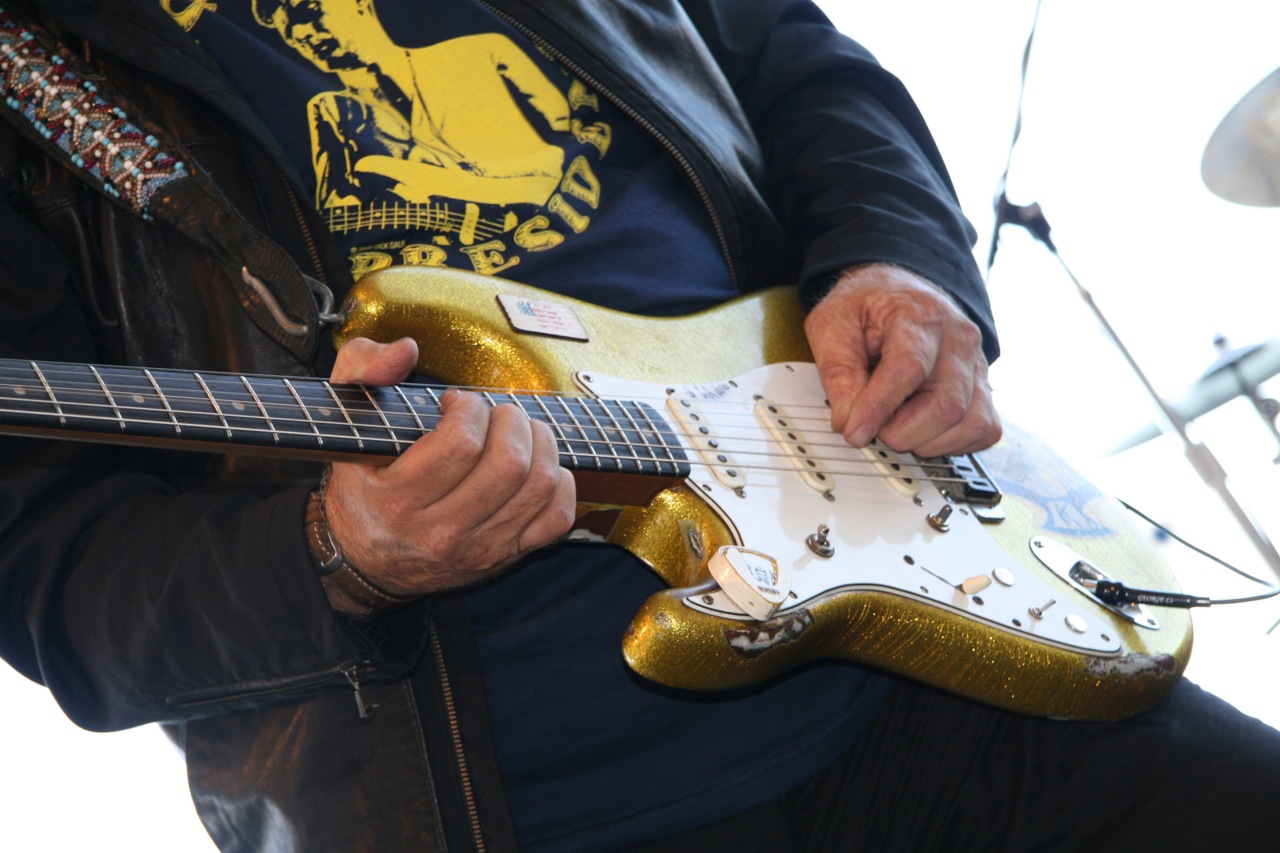
- Left-handed approach on reverse-strung Strat-family guitars; long association with a Fender Stratocaster Dale called "the Beast"
- Partnership with Leo Fender that helped drive Showman / Dual Showman high-power designs and rugged JBL 15-inch speakers
- Outboard spring reverb as a defining color of the surf guitar vocabulary Dale popularized
- Extremely loud stage volumes at Rendezvous-era shows; heavy strings; aggressive picking near the bridge
- Deltone → Capitol release path for the early-'60s recordings, including "Misirlou"
If you are chasing a "Misirlou"-adjacent tone on modern gear, chase principles:
- Bridge pickup, bright amp voice, minimal mud
- Spring reverb (tank or quality spring-style pedal) before you stack dirt
- Clean-to-edge-of-breakup volume rather than high-gain amp models
- Alternate-picking stamina at modest gain
- Less palm-muted chug, more open, singing single notes with splash
A Helix patch labeled "Surf" will not make you Dick Dale. Neither will buying a reissue Showman and never practicing sixteenth notes. The musical lesson is older than any model number: speed with accuracy, melody with attitude, and tone that announces itself in the first second.
Cultural Afterlife: Pulp Fiction and Everything After
Surf's first commercial boom cooled when British bands ate the American charts. Dale fought cancer, stepped back, returned, fought again, and kept playing. A 1987 Back to the Beach team-up with Stevie Ray Vaughan on "Pipeline" earned a Grammy nomination and reminded anyone paying attention that the King of the Surf Guitar still had teeth.
Then came 1994.
Quentin Tarantino opened Pulp Fiction with Dale's "Misirlou." In later comments collected by outlets including the Guardian and Rolling Stone, Tarantino framed the choice as intensity and scale: opening-credit music that announces an epic and throws down a gauntlet the movie has to live up to. For millions of viewers who had never owned a surf 45, the riff became inseparable from that film's swagger.
The revival was not nostalgia cosplay alone. Dale returned to wider touring and recording (Tribal Thunder and later albums). Punk and skate scenes that already claimed him — Agent Orange's early-'80s cover of "Miserlou" on Living in Darkness is a favorite citation among players who found Dale through Orange County punk — suddenly shared him with mainstream film culture. The Black Eyed Peas built 2006's "Pump It" around Dale's recording. Video games, ads, and sports bumpers kept mining the same adrenaline. Q magazine slotted Dale's track at No. 89 in a 2005 "100 Greatest Guitar Tracks" list. Rolling Stone's guitarist rankings placed Dale high in the 2003 edition (and still on the board in the 2011 revision). None of that replaced the 1962 record. It proved the record could outlive its first market.
Influence talk should stay honest. Dale is routinely named by or linked to players across rock — Hendrix (who reportedly reacted to news of Dale's mid-'60s illness with a line about never hearing surf music again), Townshend, Eddie Van Halen (often invoked for speed/picking kinship rather than identical tone), Brian May, and generations of metal guitarists who treat tremolo picking as basic vocabulary. "Father of heavy metal" is Dale's own colorful self-framing tied to volume and aggression, not a claim that Sabbath copied Surfers' Choice. The useful truth for working guitarists: he proved a single-note instrumental could feel as heavy as a chord riff if the right hand and the amp meant it.
What Guitarists Should Actually Steal From "Misirlou"
Not a costume. Please do not buy a fake lei and call it tone.
Steal these ideas instead:
1. The right hand is the riff.
If your picking collapses at tempo, no scale chart will save you. "Misirlou" is a honesty machine for alternate picking.
2. Melody can be heavier than chords.
Wray proved the opposite lesson the same decade, in spirit. Both are true. A ruthless single-note line with commitment will outplay a lazy power-chord loop.
3. Heritage is a sound source, not a costume.
Dale did not paste "world music" onto rock for novelty points. He accelerated music he grew up around. Players chasing "exotic" flavors might ask what they actually know well enough to transform.
4. Volume and reverb are arrangement tools.
The splash and the power are part of how the melody reads. Bedroom whisper takes teach the notes. Stage-level intent teaches the song.
5. Short records can be monuments.
Two minutes is enough if every second has a job.
The Long Shadow: Surf, Punk, Metal, and the Riff Vault Mentality
For TGP readers building a personal canon — the same instinct behind our Riff Vault — Dale's "Misirlou" belongs next to the records that changed what guitar was allowed to mean. Pair it with Wray's "Rumble" as twin 1958–1962 lessons: one about chordal menace and broken speakers, one about picking velocity, Middle Eastern melodic DNA, and Fender's volume race. Then put the Beach Boys' early instrumental debt, the Ventures' precision, Agent Orange's punk translation, and every metal lesson on tremolo picking on the shelf beside them.
Dale died in Loma Linda, California, on March 16, 2019, at 81, after years of touring through serious illness because, as he told interviewers bluntly, medical realities kept him on the road. He never became a household name on Hendrix's scale. He did not need to. Film directors, punk kids, metal shredders, and Fender historians kept citing the same two minutes of 1962 tape.
The Takeaway
"Misirlou" is not famous because Dick Dale wrote a folk song. It is famous because he recognized one, raised the tempo until it felt like a wave breaking, and built a guitar-and-amp language loud enough to carry it.
In 1962, a Lebanese-American surfer from the Rendezvous Ballroom took a melody that had already lived in Greek, Arabic, and Jewish musical neighborhoods, ran it through heavy strings and spring reverb, and released a single that still defines instrumental surf guitar. In 1994, a film soundtrack reminded the world the rocket still fired. Guitarists never really forgot.
If you play anything that depends on clean aggression, reverb as character, or right-hand speed with melodic intent, you are borrowing from Dale's permission structure — whether your playlist says "surf" or not.
Put the record on. Listen past the movie trailer in your head. Hear the flat-second tension, the even barrage of picked notes, the splash after the attack, the absence of apology.
That is the sound of the electric guitar learning how to race.
— The Guitar Plugged | TGP
★ Key Takeaways
What to Remember
- ▸Dick Dale & His Del-Tones released "Misirlou" (also styled "Miserlou") on Deltone in April 1962; it became Dale's signature surf instrumental and a cornerstone of Surfers' Choice.
- ▸The melody is an Eastern Mediterranean folk tune ("Egyptian" woman) with 1920s Greek/Arabic/klezmer circulation; Dale knew it through Lebanese-American family oud/tarabaki traditions and radically increased the tempo.
- ▸The guitar identity is rapid alternate/tremolo picking, often showcasing single-string drive, plus bright Strat attack, heavy strings, Showman-era volume, and spring reverb splash — not distortion-as-the-point.
- ▸Dale's partnership with Leo Fender helped push high-power Showman/Dual Showman designs and rugged JBL 15" speakers to survive Rendezvous Ballroom volumes.
- ▸Quentin Tarantino's use of Dale's recording over the Pulp Fiction (1994) opening titles sparked a major revival; punk (e.g. Agent Orange) and later pop (e.g. "Pump It") also carried the riff forward.
- ▸Dale (born Richard Monsour, 1937–2019) remains a reference for picking stamina, surf tone, and treating melody as enough of a riff to build a song.
Keep Exploring
- History of the Riff: Link Wray's "Rumble"
- History of the Riff: "Whole Lotta Love"
- History of the Riff: Jimi Hendrix's "Purple Haze"
- Tone Decoded: Why the Last 10% of Tone Isn't the Pedalboard
- Best Of: The Top 25 Greatest Guitar Riffs of All Time
Sources & further reading
1. NPR Weekend Edition — "'Misirlou,' from Klezmer to Surf Guitar" (Jan. 8, 2006) 2. Wikipedia overviews for "Misirlou" and "Dick Dale," cross-checked against obituaries and features (New York Times, Guardian, Rolling Stone, 2019) 3. Guitar World — Alan di Perna, "Dick Dale: the life and times of the King of the Surf Guitar" (2019) 4. Contemporary profiles on Dale–Fender collaboration, Showman/JBL development, and Rendezvous Ballroom era (Los Angeles Times archives; Fender historical summaries; musician interviews) 5. Pulp Fiction soundtrack history and Tarantino comments on the opening-credit placement (Rolling Stone / Guardian reporting) 6. Standard discographies for Deltone/Capitol singles and Surfers' Choice (AllMusic, label catalogs)
Note: This feature is a researched historical overview. Gear descriptions reflect publicly documented accounts of Dale's early-1960s approach and later-associated equipment; TGP did not studio-recreate a Dual Showman + tank chain for this article. Exact string gauges and some anecdotal details (e.g., the "one-string bet") vary by interview and should be treated as tradition surrounding the record, not lab measurements.
Closing CTA
Got a riff that hit you the way "Misirlou" hits — pure right-hand adrenaline, no vocal required? Share it in Guitar Talk — or dig the next History of the Riff feature and keep building the lineage that made your tone possible.
Experience-driven coverage, not algorithm bait.
- 20+ years of guitar playing experience
- Real-world retail experience at Guitar Center
- Thousands of hours testing guitars, amps, and pedals
- A community of 50,000+ guitar enthusiasts across platforms
- Partnerships with Fender, DistroKid, TrueFire, Card Chords, and Enya
- Editorial standards published openly — see how we test gear
The Modern Guitar Magazine. Delivered to your inbox.
No spam. No gimmicks. Just great guitar content — stories, tones, iconic solos, and honest gear takes. Every week.
Ask GP
3 free questions a dayStill curious? Ask GP about this story.
Your personal classic-rock and guitar guide — ask anything about Dick Dale's "Misirlou".
Discussion (0)
Sign in to join the discussion.
Sign in to commentLoading comments…
Discover another guitar story
Swipe through our latest features, breaking news and iconic solos — one story at a time.
Open Swipe →More in Guitar Talk
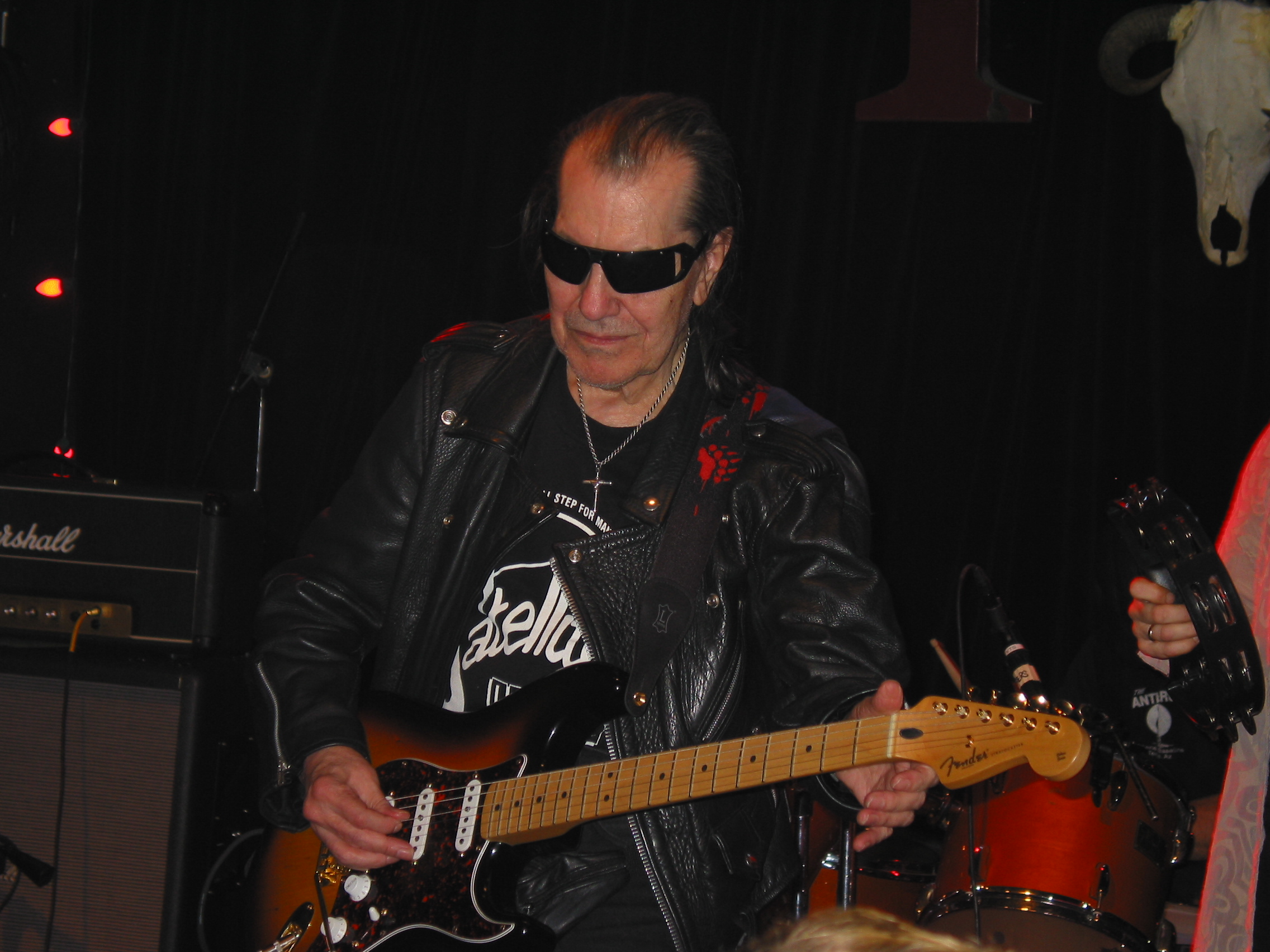
History of the Riff: Link Wray's "Rumble" — The Instrumental That Made the Guitar Sound Dangerous
No lyrics. No melody you’d hum in the shower. Just power chords, a punctured speaker, and a sound so menacing some radio stations banned it. Here’s how Link Wray’s 1958 instrumental rewired rock guitar.
The 10 Greatest Guitar Renditions of “The Star-Spangled Banner”
From Jimi Hendrix's controlled chaos at Woodstock to modern performances by H.E.R., Gary Clark Jr. and Jack White, these guitarists turned America's national anthem into something deeply personal.
Happy Birthday, Joe Perry: The Riff Machine Who Gave Aerosmith Its Swagger
Joe Perry turns 76 today. From the swampy grind of “Sweet Emotion” to the reunion that saved a band, this is the career of the guitarist who taught American hard rock how to strut.