
The Gibson Firebird History: The Car Designer Who Drew Gibson's Strangest Guitar Upside Down and Backwards
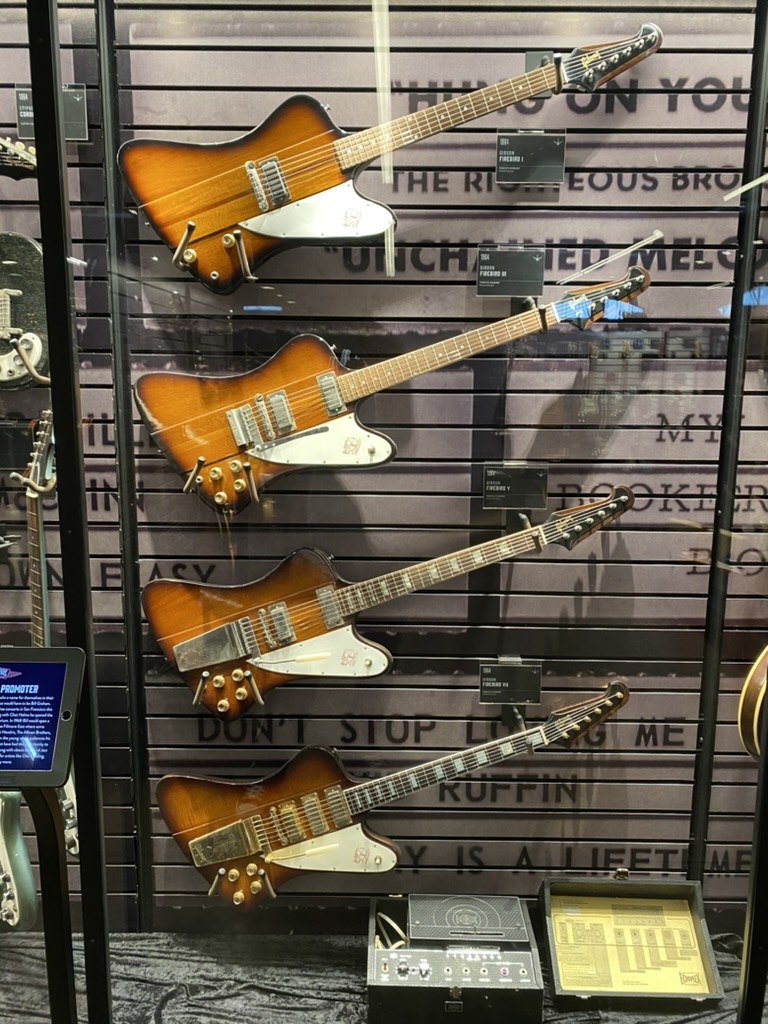
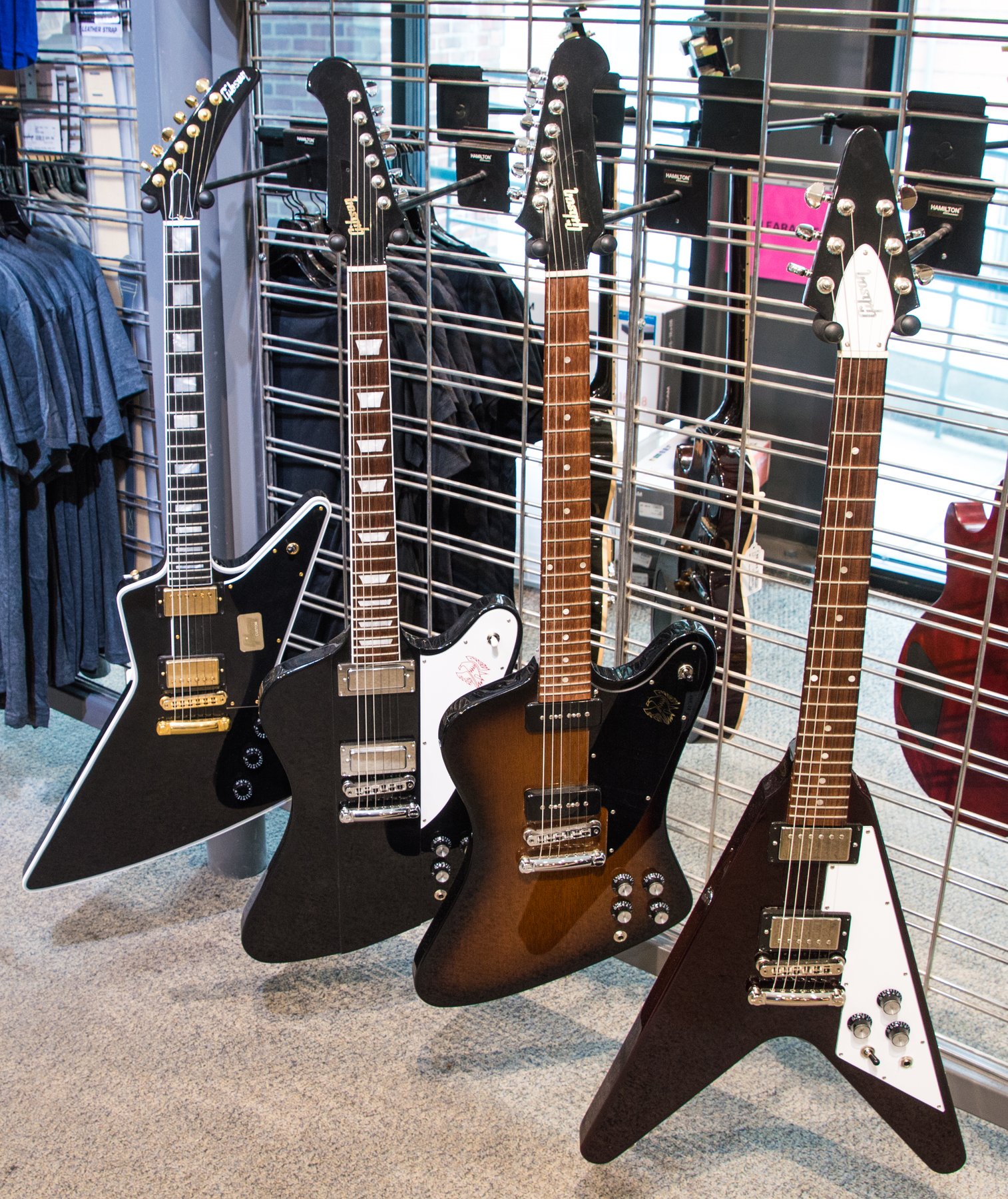
The original 1963 Firebird lineup, I, III, V and VII, hanging together in a sunburst display at the Songbirds Guitar Museum in Chattanooga, Tennessee.
The Gibson Firebird is the only great electric guitar designed by a man who spent his career drawing cars. Here's the history, from Ray Dietrich's 1963 reverse Firebird to 2025's Platypus.
The Gibson Firebird is the only great electric guitar designed by a man who spent his career drawing cars.
That one fact explains almost everything about it. It explains the tailfin body and the headstock that points the wrong way. It explains the custom paint colors, the stepped center section, and the banjo tuners you can't see from the front. It also explains why the original was so expensive to build, why it broke so easily, and why Gibson redesigned it from the ground up after barely two years.
If you read our Gibson Flying V history and our Gibson Explorer history, you already know Gibson's late-'50s habit of chasing Fender with shapes nobody asked for. The Firebird is the last chapter of that story, and the strangest one. The Flying V and Explorer were Kalamazoo ideas. For the Firebird, Gibson brought in an outsider from Detroit, and he looked at a guitar the way he'd look at a car.
The Man From Detroit: Who Was Ray Dietrich?
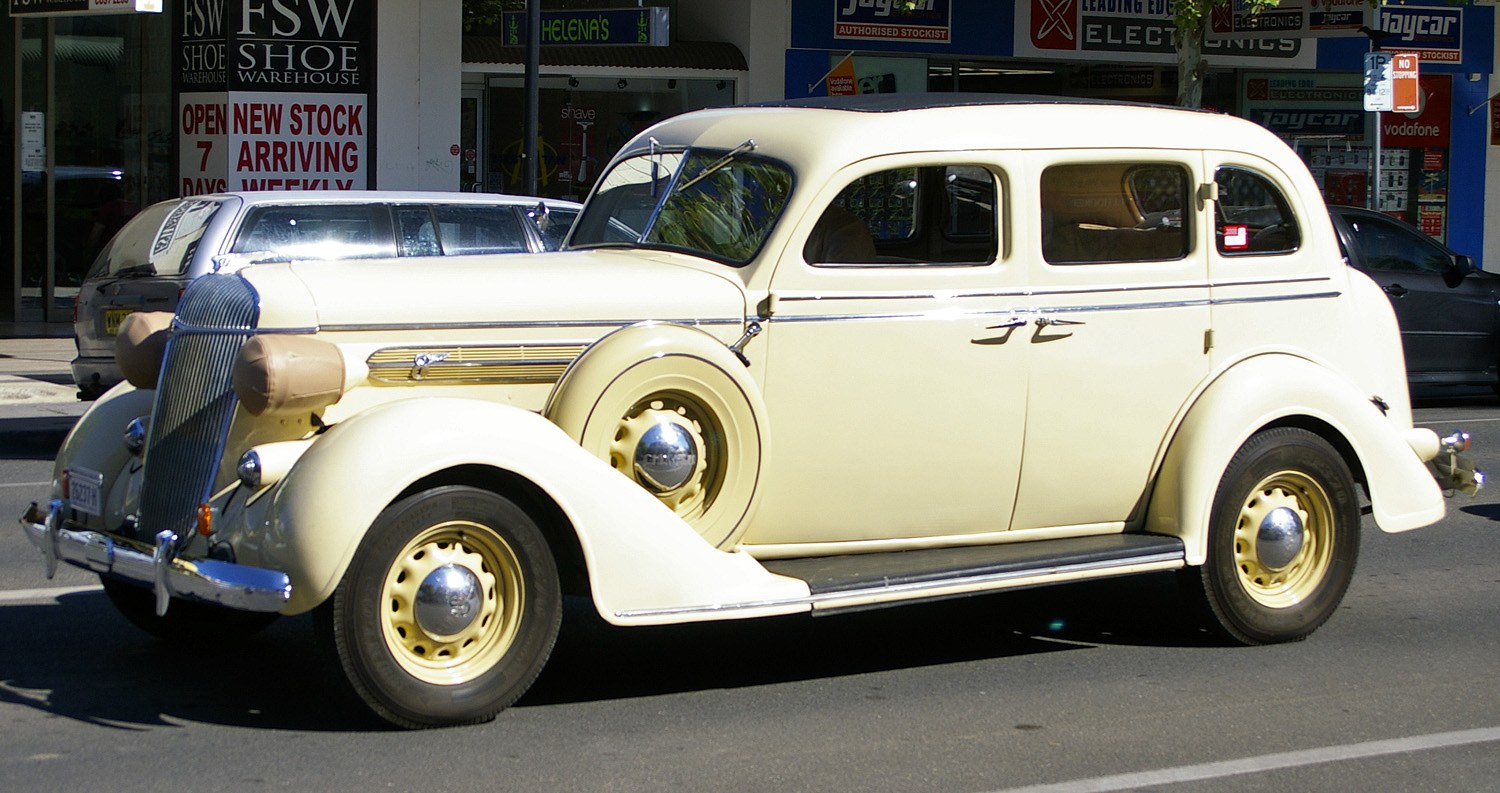
Raymond H. Dietrich was born in 1894, the son of an upholsterer in the Bronx. By the time Gibson called him he had more than half a century in the car business behind him, and his résumé reads like a tour of American luxury cars.
He started as a draftsman at Brewster & Company, the New York coachbuilder, in 1913. In 1920 he and fellow designer Thomas Hibbard set up LeBaron Carrossiers, a design firm whose French-sounding name was picked partly because it sounded expensive over the telephone. Edsel Ford then lured him to Detroit, where Dietrich Inc. built custom and semi-custom bodies for Lincoln, Packard, Franklin and others. In the 1930s he ran design at Chrysler, where he reworked the slow-selling Airflow and is credited with the Airstream that replaced it.
The detail that matters most for guitar players comes from the very start of his career. At 12, Dietrich was apprenticed as an engraver at the American Bank Note Company in Manhattan. Looking back in a 1958 memoir, he said the job had trained his eye because "an engraver creates his design upside down and backwards."
Keep that line in mind. Nobody ever designed a guitar more upside down and backwards than the Firebird.
Why a car designer ended up in Kalamazoo
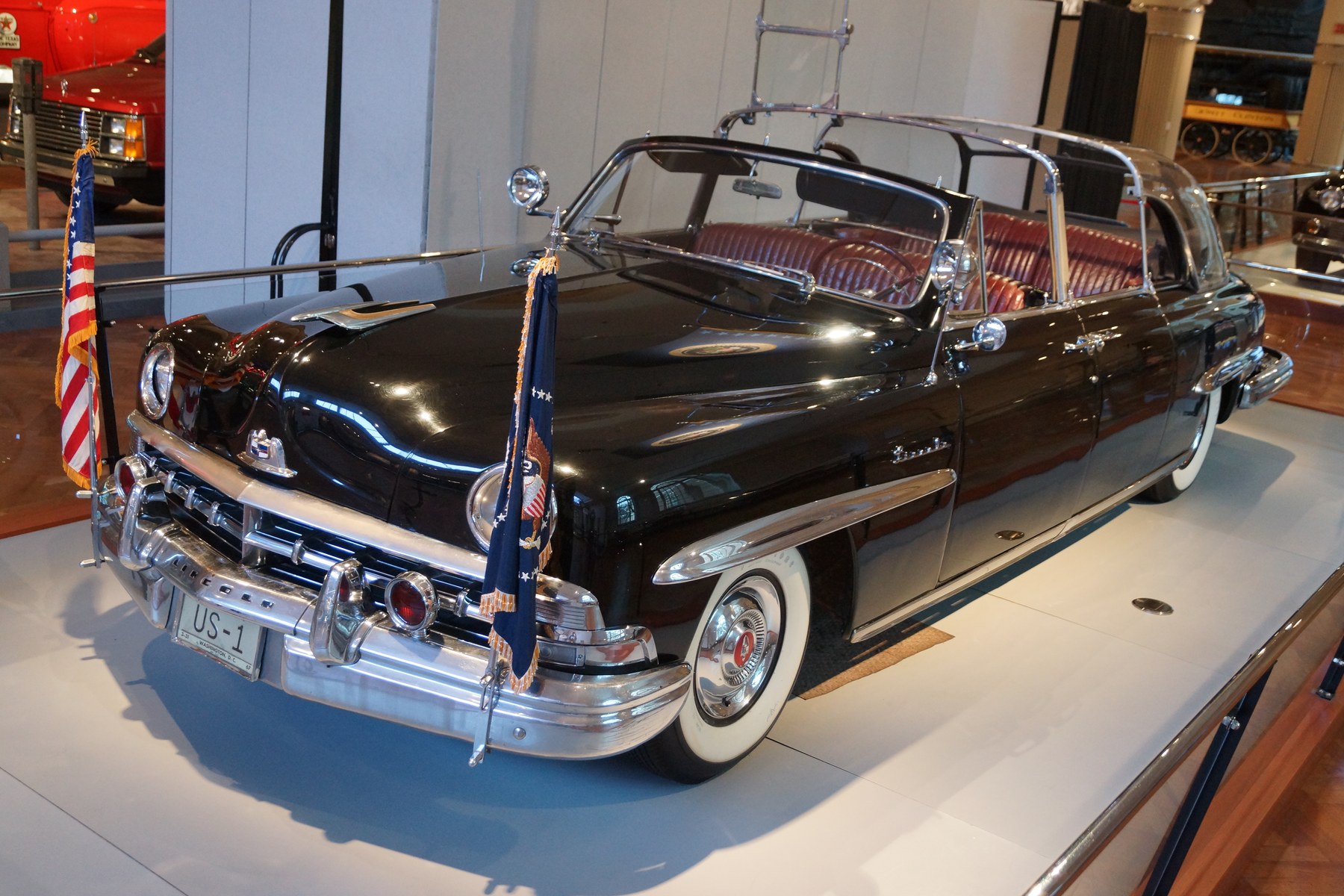
Dietrich didn't land in Kalamazoo by accident. After leaving Chrysler in 1938 he became a consultant to the Checker Cab Manufacturing Company, whose taxi plant was in Kalamazoo. He redesigned its welding jigs and assembly lines and helped on wartime equipment and taxi designs. He also had his own small shop in Grand Rapids, Michigan, from 1949 to 1953, which built show cars and limousines.
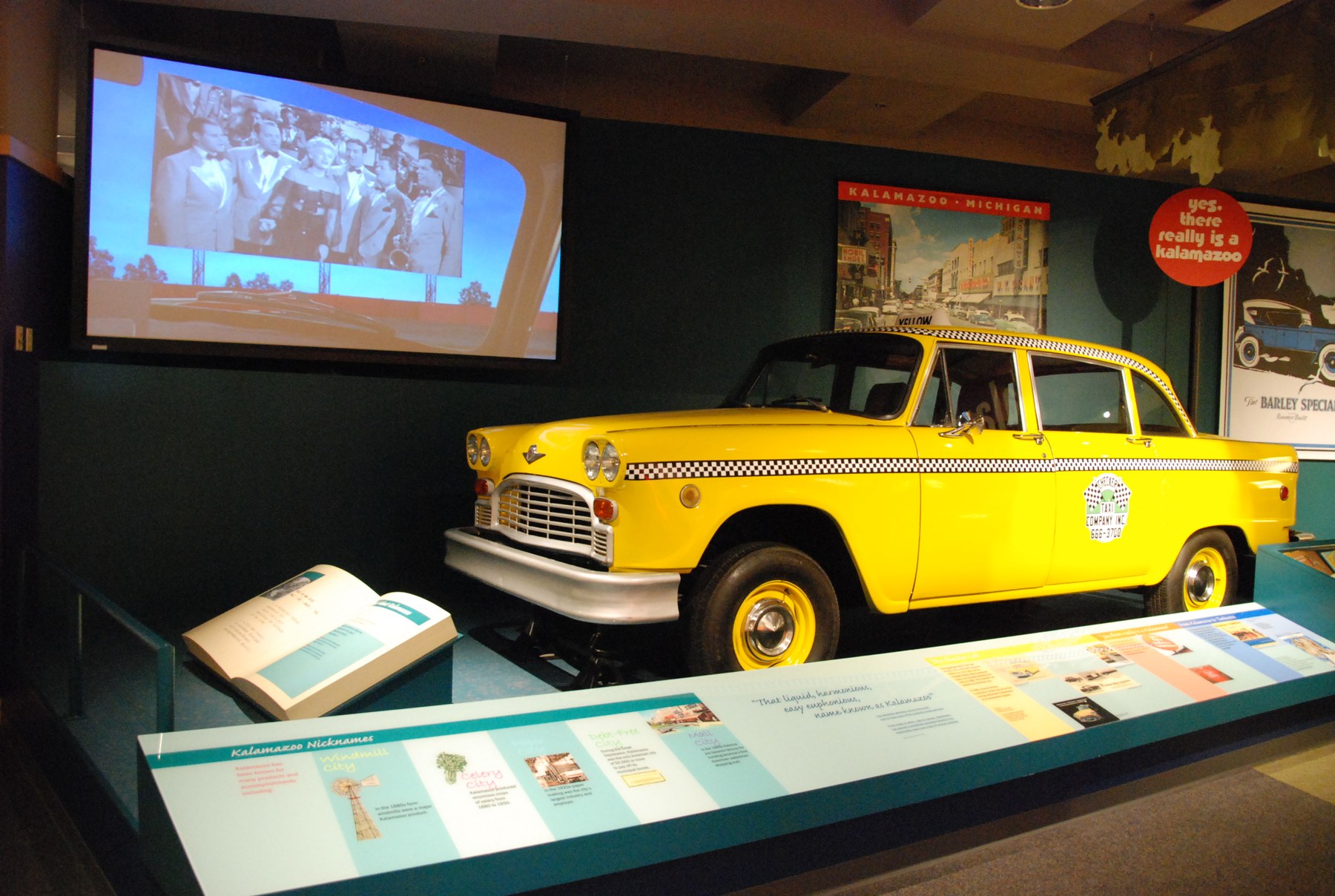
He retired from car work in 1960, aged 66, and settled in Kalamazoo. To fill the time he gave talks about his life in design. According to the account Tony Bacon published in Guitarist, Gibson president Ted McCarty went to one of those talks, introduced himself afterward, and asked if Dietrich would like to design a guitar.
Gibson's Problem in 1962: Fender Was Winning
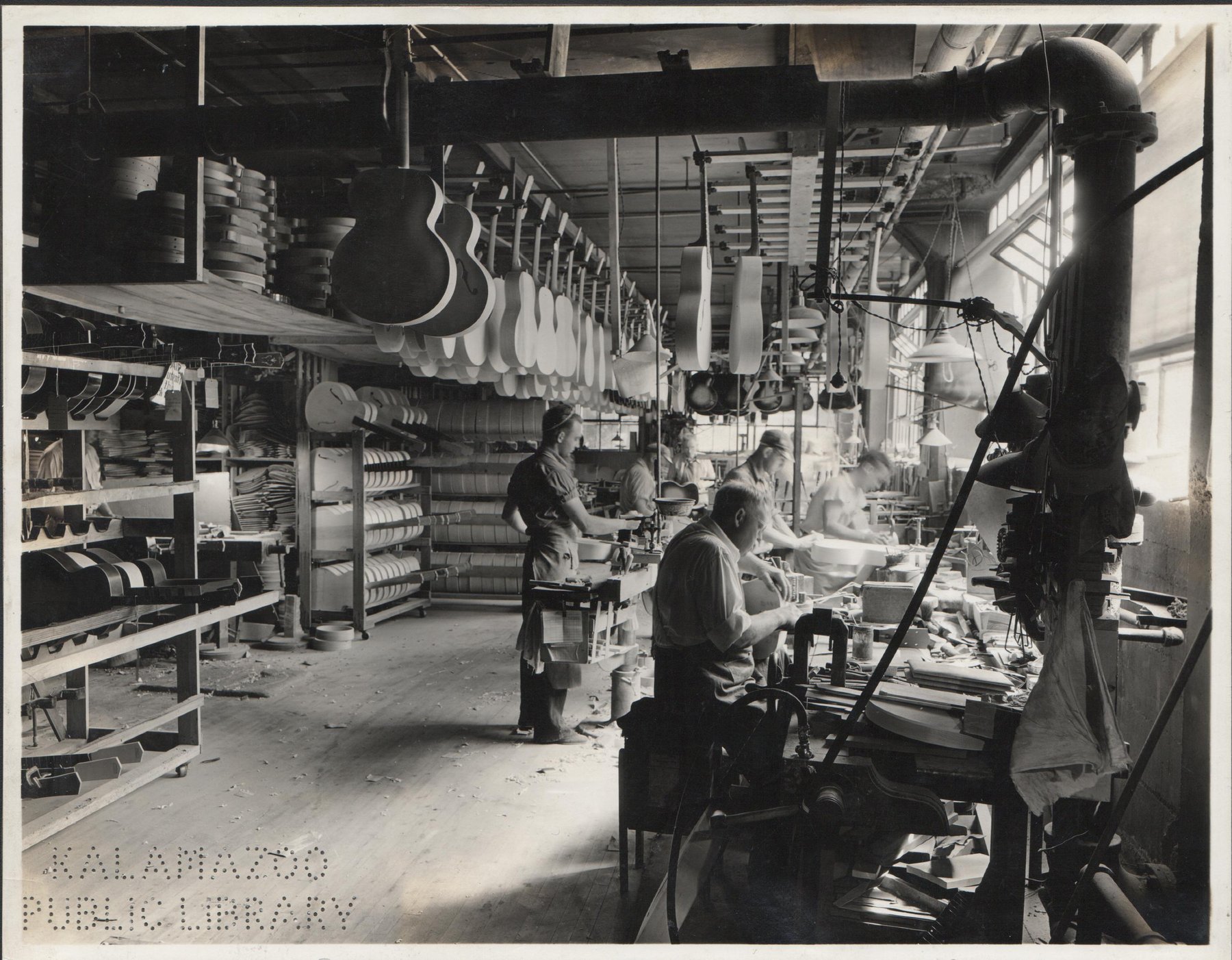
McCarty had good reason to try something new. By the early '60s Fender had four solidbody guitars that felt modern: the Telecaster, Stratocaster, Jazzmaster and Jaguar. They came in custom colors, had contoured bodies, and were tied to surf music, hot rods and Southern California. Next to them, much of Gibson's range still looked like something your uncle played in a dance band.
Gibson had already tried to beat Fender on looks. The Flying V and Explorer of 1958 were bold, but they sold so badly that Gibson quietly shelved them. The SG-style Les Paul of 1961 was a sleeker solidbody, but it was still a Gibson. McCarty wanted something that could stand next to a Jazzmaster on a music store wall and catch the same kids' eyes.
So he did something Gibson had never done with a solidbody electric. He handed the job to someone who didn't build guitars.
Tailfins, Not Violins: Designing the 1963 Firebird
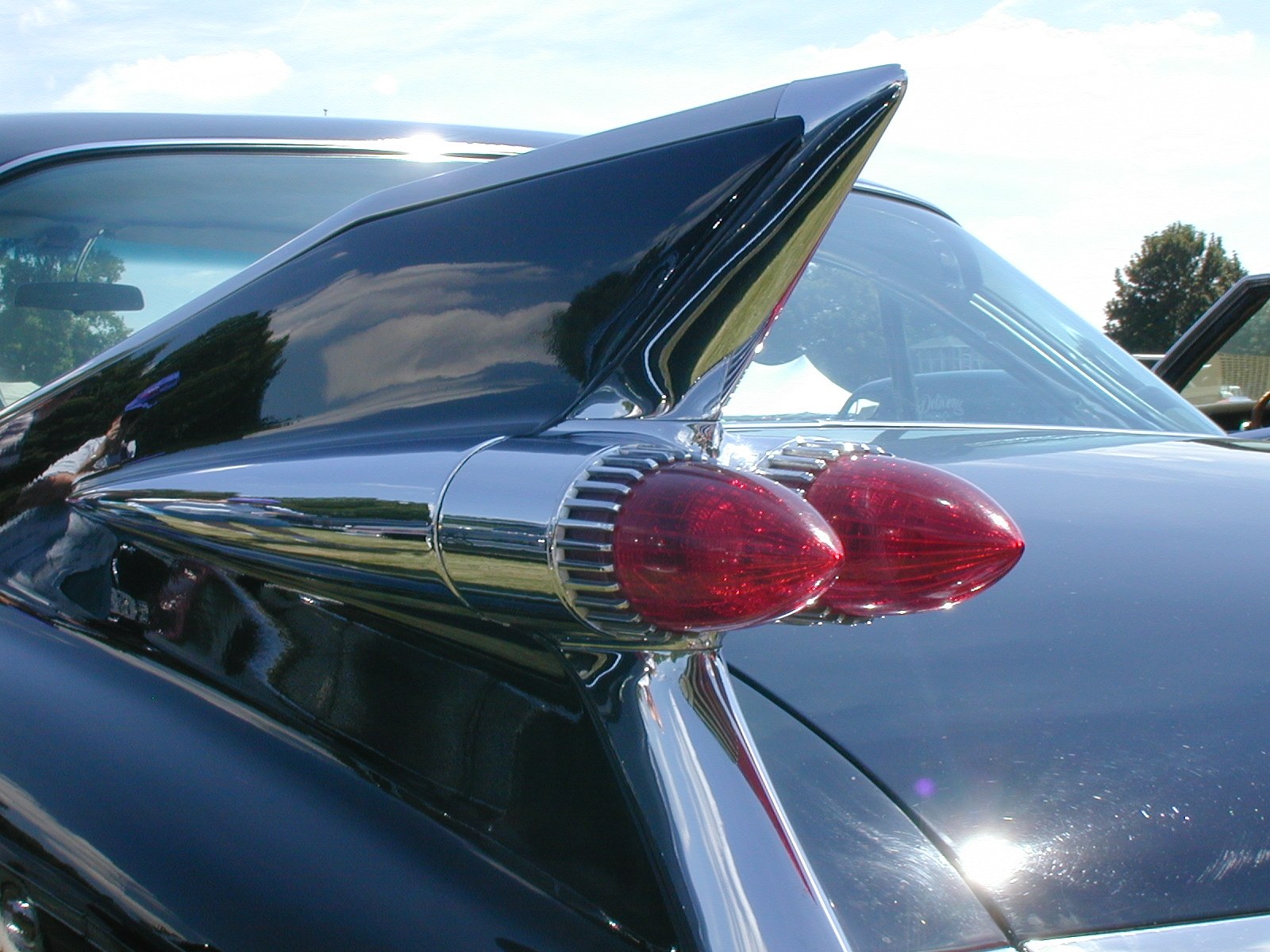
Gibson's own description of the Firebird says Dietrich worked the sleek lines of car tail fins into the body. Look at an original from the side and you can see it: the long, swept lower horn, the way the body flows back from the neck, the sense that the whole thing is leaning forward at speed.
The shape also owes a clear debt to the Explorer. Dietrich kept the Explorer's general idea of an offset, lopsided body with a long lower horn, then softened every hard corner into a curve. The result looked like a Jazzmaster seen in a mirror, which, as we'll see, became a problem.
How the Firebird got its name
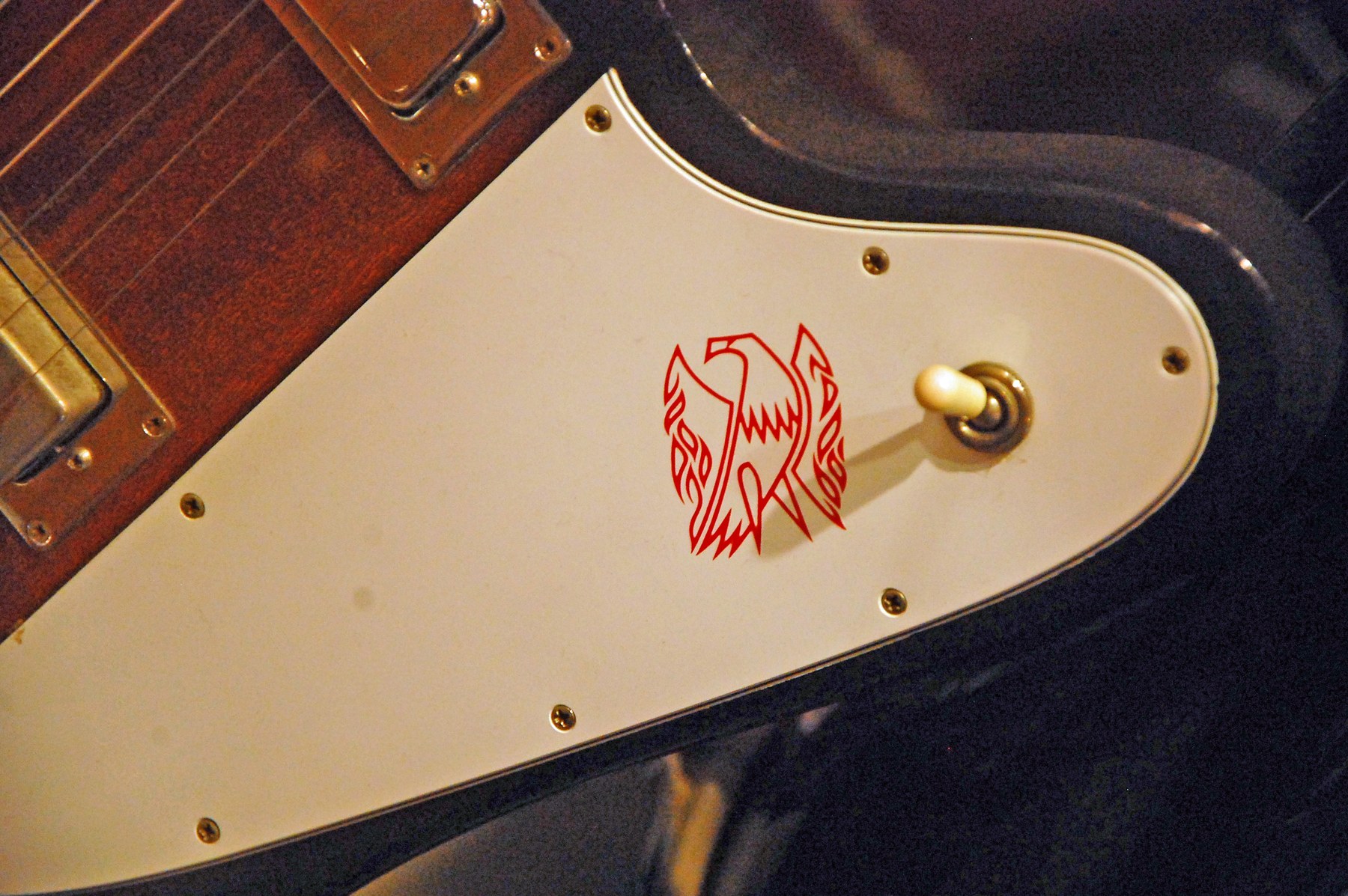
According to McCarty's later account, quoted by Tony Bacon, the new guitar had no name at first. Dietrich suggested "Phoenix." McCarty answered that the phoenix was the firebird, the creature that rises from the ashes, and the name stuck. McCarty also credited Dietrich with drawing the little firebird logo that sits on the pickguard.
Gibson announced the line just before the July 1963 NAMM show in Chicago. The guitars showed up on a July price list, and production started about three months later, so the first real Firebirds reached stores in late 1963.
What Made the Reverse Firebird So Different
The name "reverse" came later. Players use it because the original body flips the usual layout: the treble-side horn sticks out further than the bass side, the opposite of a Strat or Jazzmaster. But the shape was only the start. Underneath, the Firebird broke almost every Gibson habit at once.
Neck-through construction
Every Gibson solidbody before it had a glued-in neck. Fender bolted its necks on. The Firebird did neither. A long center section of laminated mahogany with walnut strips ran from the headstock to the end of the body, carrying the neck, the pickups and the bridge in one piece. Two mahogany "wings" were glued to either side to finish the body.
The wings were slightly thinner than the center, so the middle of the guitar sits on a raised shelf about four inches wide. You can feel that step under your picking hand on any real reverse Firebird. It's one of the details that makes a reverse 'bird look like a piece of industrial design rather than a slab of wood.
Banjo tuners on a backwards headstock
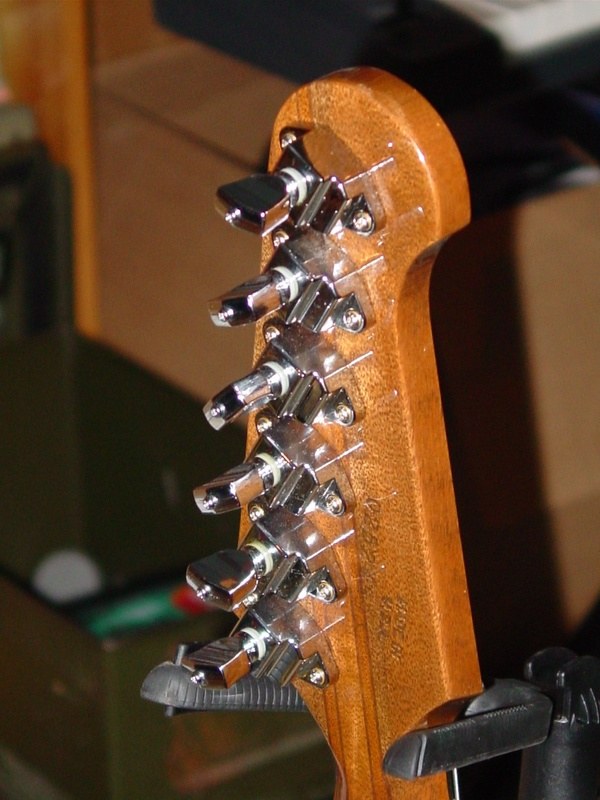
The headstock follows the body's logic. It's a six-in-line design, but flipped so the tuners sit on the treble side and the low E string runs to the far end, the reverse of a Fender. Even stranger, Gibson used Kluson banjo-style tuners with the buttons sticking straight out the back, so from the front the headstock looks clean, with no tuner buttons at all.
It's a beautiful piece of styling, and it's exactly what a car designer would do: hide the hardware and keep the line. It's also awkward to tune, since you reach around behind the headstock, and the heavy tuners put weight right where the guitar is weakest.
Firebird pickups
The pickups were new too. Firebirds used small humbuckers with plain metal covers and no visible pole pieces. They're often called "mini-humbuckers," but Gibson's Firebird pickups are their own design and a bit different from the mini-humbuckers Gibson used on Epiphones and, later, the Les Paul Deluxe. Players have always heard them as brighter and more cutting than a full-size PAF.
Johnny Winter, the guitarist most tied to the Firebird, put it better than any spec sheet. In a 2014 interview he said: "The Firebird is the best of all worlds. It feels like a Gibson, but it sounds closer to a Fender than most other Gibsons."
That's the whole sales pitch Gibson wanted in 1963. It just took a decade for players to hear it.
Custom colors, Detroit-style
Dietrich and Gibson also borrowed Fender's custom-color idea and treated it like a car showroom. A Firebird color chart offered ten finishes: Cardinal Red, Ember Red, Frost Blue, Golden Mist Poly, Heather Poly, Inverness Green Poly, Kerry Green, Pelham Blue Poly, Polaris White and Silver Mist Poly. "Poly" meant a metallic finish. A custom color cost $15 over the standard sunburst.
Most buyers still picked sunburst, which is why custom-color reverse Firebirds are now some of the most collectible Gibsons of the decade. Some of those shades were close matches for Fender colors under different names. That's no surprise: Fender's custom colors came from DuPont car paints, so in a sense Gibson was taking on Fender's car look with a real car designer.
The Lineup: Firebird I, III, V and VII
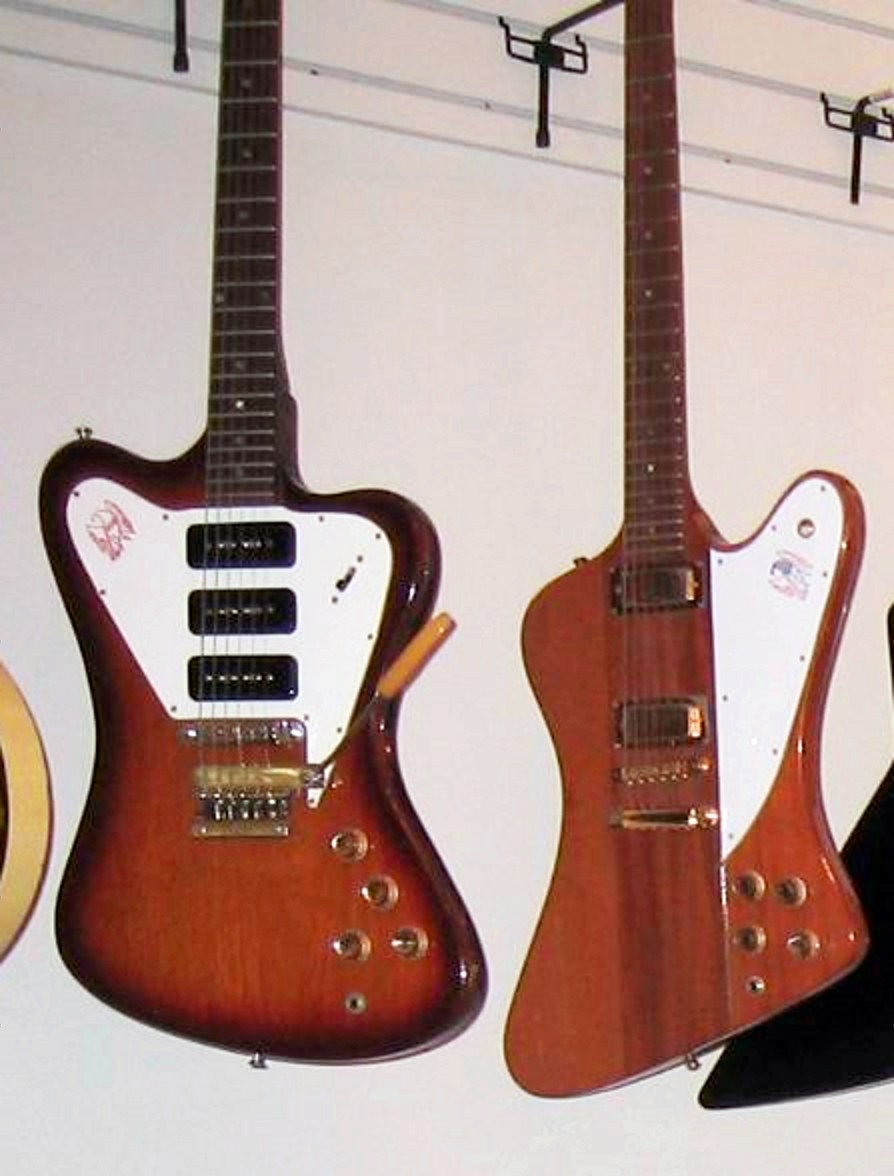
There were four reverse Firebirds at launch, and the numbers can be confusing. The even numbers, II and IV, went to the matching Thunderbird basses. There was never a VI.
| Model | Pickups | Fretboard & inlays | Bridge / vibrato | Hardware | 1963 list price | ||
|---|---|---|---|---|---|---|---|
| Firebird I | 1 | Unbound rosewood, dots | Wraparound bridge/tailpiece | Nickel | $189.50 | ||
| Firebird III | 2 | Bound rosewood, dots | Bridge plus short Vibrola | Nickel | $249.50 | ||
| Firebird V | 2 | Bound rosewood, trapezoids | Tune-o-matic plus Deluxe Vibrola | Nickel | $325 | ||
| Firebird VII | 3 | Bound ebony, blocks | Tune-o-matic plus Deluxe Vibrola | Gold | $445 |
Prices are 1963 list prices as reported by Tony Bacon (Guitarist/MusicRadar).
The VII was Gibson's most expensive single-neck solidbody, priced above the Les Paul Custom of the day. The I sat just under the SG Special. All four shared the 24.75-inch Gibson scale and 22 frets.
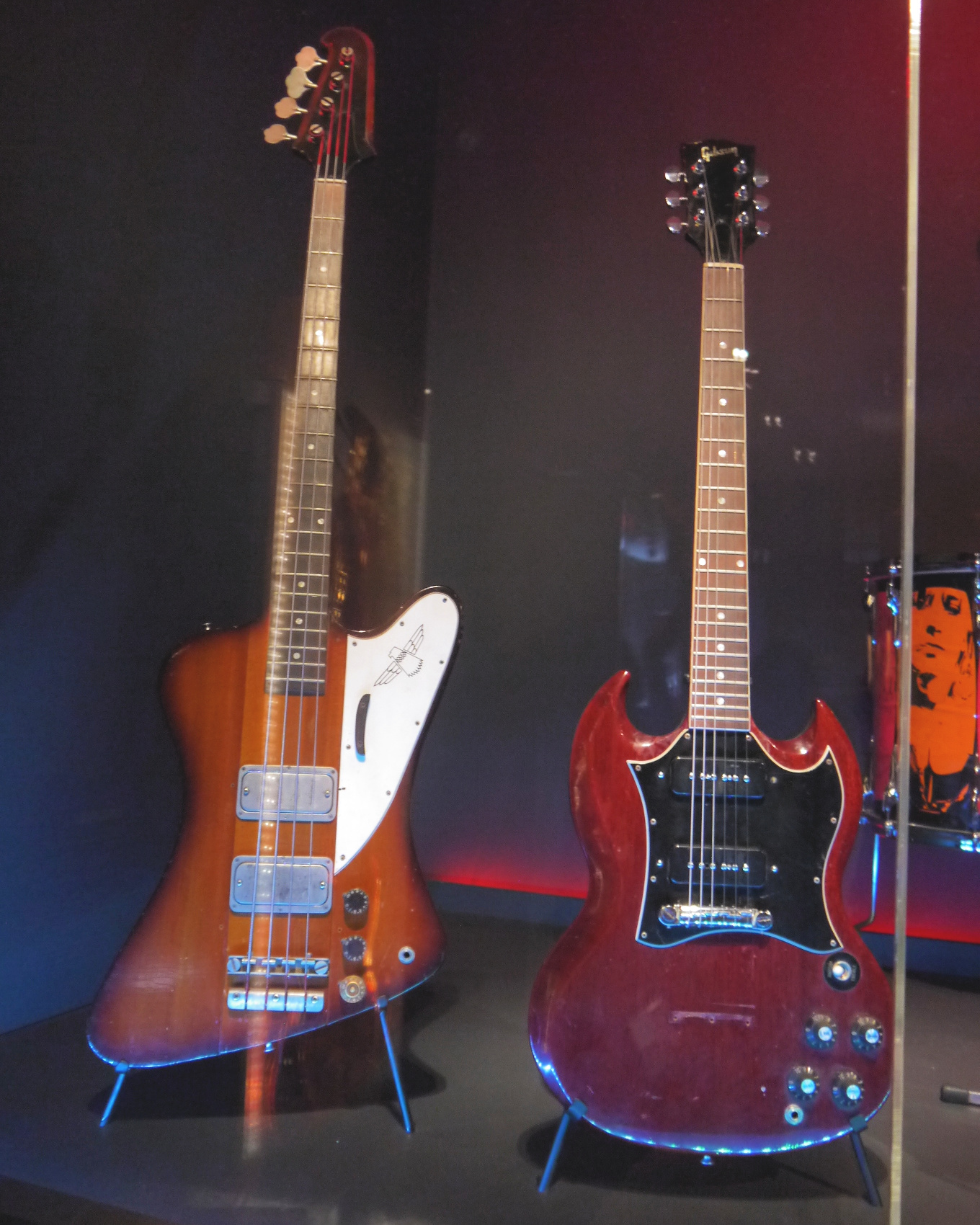
The Thunderbirds are worth a quick aside. They used the same reverse body and neck-through build, and they went on to their own long life with players like John Entwistle of The Who. The Firebird had a family from day one.
Beautiful, Expensive and Fragile
Here's where the outsider designer started to cost Gibson money.
A car stylist designs the shape and lets engineers and the factory work out how to build it. Gibson's factory found the Firebird a pain. The laminated neck-through section took extra work at every step, from preparing the wood to final assembly. Wiring the guitar was fiddly. And the one-piece design meant that if something went wrong with the neck, a big part of the body went in the scrap bin with it. Warranty repairs had the same problem.
Then there was the headstock. The joint between the neck and the head was weak, and those heavy banjo tuners didn't help. Reverse Firebirds broke there easily, and accounts of the period describe some breaking inside their cases.
All of that cost pushed the price up. The Firebird was supposed to fight Fender, but it was priced well above the bolt-neck Fenders it was chasing. By early 1965, Gibson knew the design wasn't working as a business.
Did Fender Really Threaten to Sue?
You'll read in a lot of places that Fender threatened to sue Gibson over the reverse Firebird, and that the lawsuit forced the redesign. The truth is more interesting, and it's mostly about cost.
There's real evidence Fender looked at it. Vintage Guitar has published a letter dated February 7, 1964, from Fender's patent attorneys, nudging the company to reconsider the Firebird. It famously points out that if you hold Gibson's catalog pages up to the light and look from the back, "the outline is very similar to a Fender outline." In other words, a reverse Firebird is roughly a Jazzmaster flipped over.
According to Ted McCarty, quoted in Gil Hembree's book on his Gibson years, the two companies' lawyers and engineers did meet. McCarty said Gibson's presentation "ended the discussion about a lawsuit." No suit was filed.
Historians like Tony Bacon go further. Fender only had a simple design patent on the Jazzmaster and still called its offset body "patent pending," so its legal case was thin. Fender's real response was an ad calling the Jazzmaster and Jaguar "the most imitated guitars in the world." Bacon's view is that the redesign was driven by cost and fragility, and the lawsuit talk may simply have been a handy excuse.
And here's the punchline. The guitar Gibson replaced it with looked more like a Fender, not less.
1965: The Non-Reverse Firebird
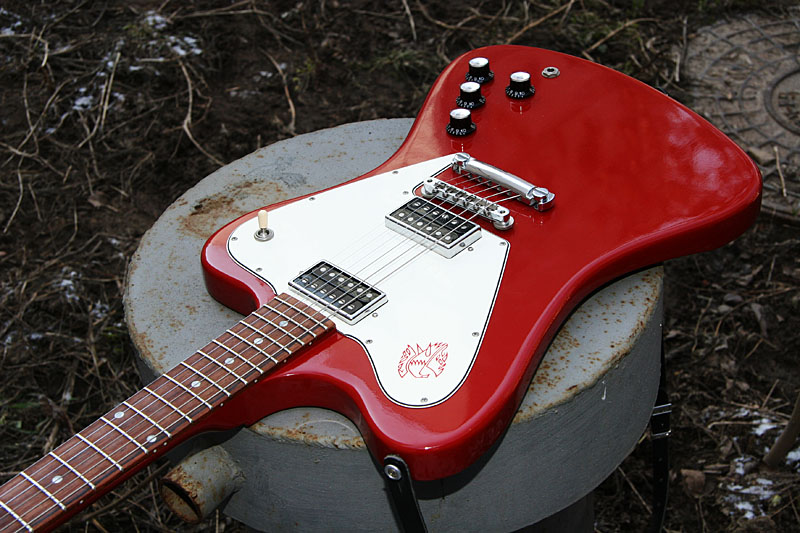
The new Firebirds appeared on a Gibson price list dated June 22, 1965, just ahead of that summer's NAMM show. Gibson barely promoted them.
Almost everything was simplified:
- Body: the shape was flipped so the bass-side horn was now the longer one, a "non-reverse" layout much closer to a Jazzmaster or Jaguar.
- Construction: the neck-through and raised center shelf were gone. The new guitars used a one-piece mahogany body with a conventional glued-in neck, about as much work to build as an SG.
- Headstock: flat, with ordinary tuners on the bass side. The same headstock shape had first appeared on the Trini Lopez Standard at the end of 1964, so the "Trini headstock" actually came first.
- Pickups: the Firebird I and III now used P-90 single-coils, while the V and VII kept the Firebird humbuckers.
- Switching: a three-way slider switch at first, very much like the one on a Jaguar.
- Price: much lower. The last reverse models had listed at $215 (I), $280 (III), $360 (V) and $500 (VII). The non-reverse line launched at $189.50, $239.50, $289.50 and $379.50.
During the changeover, Gibson also shipped a few oddballs built from leftover parts, mixing the reverse body with the new flat headstock and regular tuners. Writer Tom Wheeler later nicknamed these the "Platypus" Firebirds, after the animal that looks like it was assembled from spare parts. Remember that name. It comes back.
Did the redesign work?
For a moment. Vintage Guitar's research shows the two-P-90 non-reverse Firebird I became the line's best seller, shipping 1,164 units in 1966 before sales fell hard the next year. The three-P-90 Firebird III was a clever idea, too. Its middle switch position paired two pickups out of phase for a thin, quacky "fat Strat" sound.
But Fender was still selling far more. In 1966 Fender shipped more than 5,300 Stratocasters, and the beginner Mustang sold 17,788. Gibson added a Firebird V 12-string in 1966, just as the 12-string boom was fading, and only about 270 shipped. By the September 1969 price list the Firebird was gone, though a few stragglers shipped into 1970.
The Players Who Made It a Legend
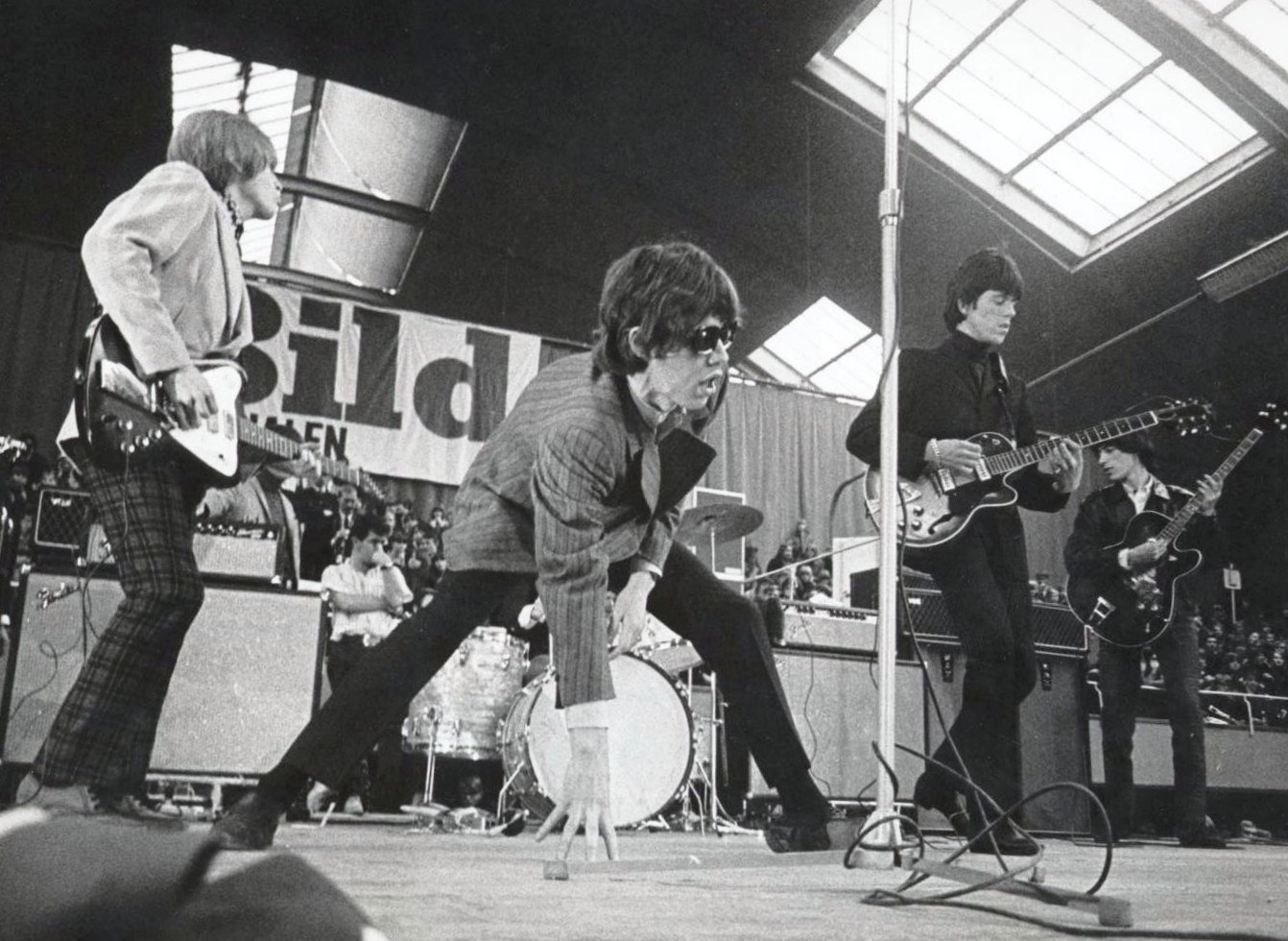
Sales flopped, but the Firebird landed in exactly the right hands. A short list, starting with the players whose Firebird use is best documented:
Brian Jones. The Rolling Stones' founder was the Firebird's most visible early player. Gibson gave him a sunburst VII, and a non-reverse VII became his main stage guitar in 1966–67. He played it when the Stones mimed "Have You Seen Your Mother, Baby?" on The Ed Sullivan Show. He also had a non-reverse III, the guitar on the cover of Got Live If You Want It! Both guitars later turned up in the hands of Mick Taylor.
Eric Clapton. In April 1968, during a Cream stand at the Electric Factory in Philadelphia, Clapton bought a 1964 reverse Firebird I. It replaced his painted "Fool" SG on the farewell tour and can be heard on the live Forum tracks on Goodbye. He carried it into Blind Faith in 1969. In a 1994 interview he said the single pickup "produced a fantastic sound." Gibson Custom and Guitar Center released a Clapton 1964 Firebird I in 2019. (Want the riff he was playing at the time? See our History of the Riff: "Sunshine of Your Love".)
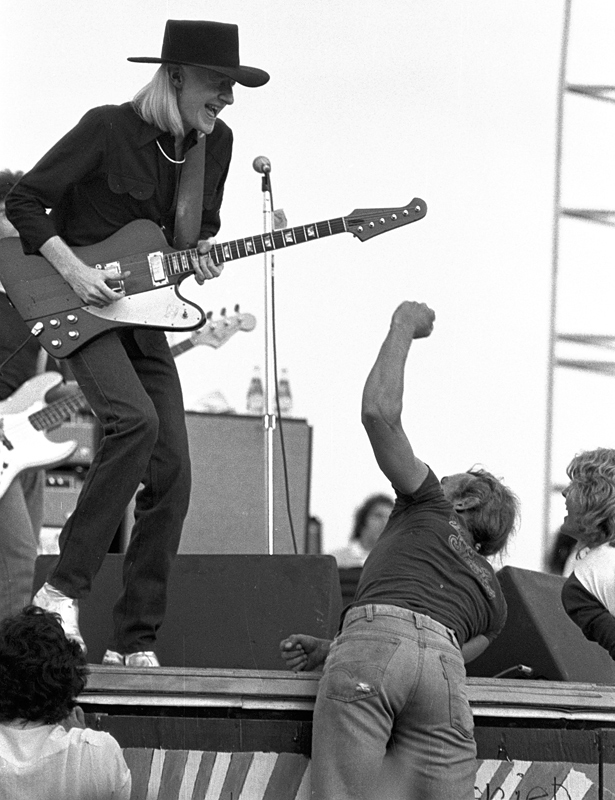
Johnny Winter. No one is more closely tied to the Firebird. Winter owned several, but his favorite was a 1963 Firebird V, and he swapped the original vibrato for a stop tailpiece, the same change Gibson made official on the 1976 reissue. Even after he moved to a headless Lazer, he said he still used the Firebird on slide songs because the slide sounded better on it. In 2008 the Gibson Custom Shop released a Johnny Winter 1963 Firebird V with an ABR-1 bridge and heavy stopbar, aged to copy his guitar. For more on how he played it, read our Johnny Winter guitar tone and legacy feature.
Allen Collins. Before his famous 1958 Explorer, Lynyrd Skynyrd's Collins played a Firebird for most of the band's early years, fitted with a P-90 in the bridge position and a vibrato arm. Accounts disagree on whether it started life as a Firebird I or III, but it's the guitar most tied to his early Skynyrd sound, including the "Free Bird" era. (Our Allen Collins "Free Bird" solo breakdown covers the solo itself.)
Phil Manzanera. Roxy Music's guitarist has played a 1964 Cardinal Red Firebird VII through his whole career. It's the guitar he holds in the gatefold photo of For Your Pleasure (1973), and in 2008 he named an album Firebird VII after it.
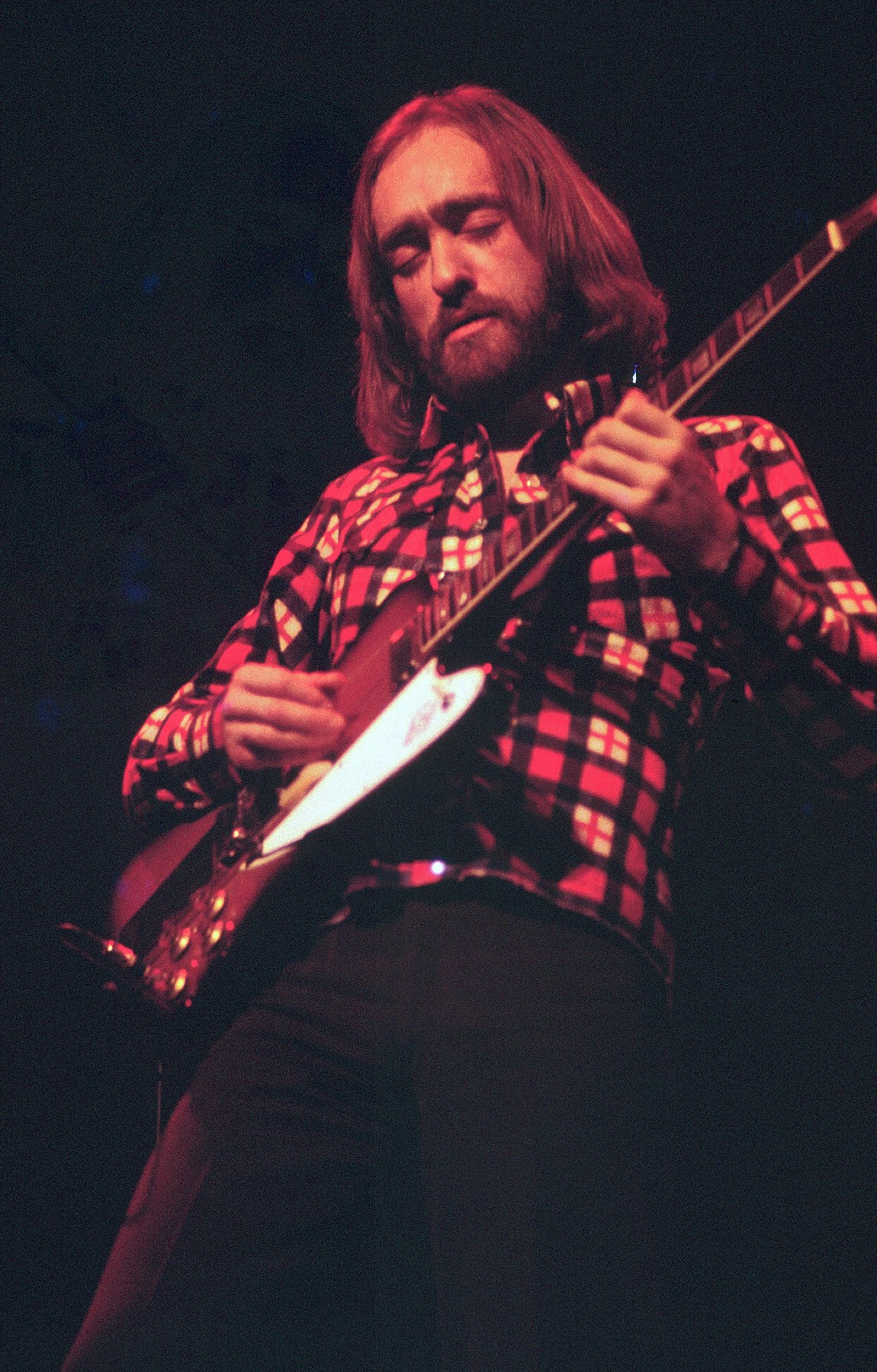
The non-reverse models had their own fans. Steve Winwood played a rare Inverness Green non-reverse in Traffic in the early '70s until it was stolen in New York in 1973. Clarence "Gatemouth" Brown made a heavily worn non-reverse V his main guitar. Vintage Guitar also reports that Paul McCartney owned a rare left-handed Firebird VII and used it during the Ram sessions.
Later generations kept the Firebird going. Gibson's own list of essential Firebird players names Dave Grohl with a white reissue Firebird V from the Colour and the Shape era, along with Warren Haynes, Joe Perry, Ronnie Wood and Mick Taylor. There's a nice twist with Grohl: his signature Gibson, the DG-335, is based on the Trini Lopez Standard, the guitar that introduced the headstock later used on the non-reverse Firebird.
Reissues: The Firebird Keeps Rising
The Firebird's name turned out to fit it perfectly. Gibson has killed it and brought it back more times than almost any model in its catalog.
- 1972–73, Medallion Firebird: a limited reverse-body reissue with a numbered medallion on the body, part of Gibson's early-'70s look back at its old shapes.
- 1976–78, Bicentennial Firebird: a reverse model for America's 200th birthday, with a red, white and blue firebird logo, gold hardware, and a Tune-o-matic with a stop tailpiece in place of the vibrato. That's essentially the Johnny Winter setup.
- 1977, the RD series: not a Firebird, but clearly shaped by it. Gibson's RD guitars used a similar swept body to package new active electronics, and didn't last.
- 1990 onward, Firebird V reissue: the long-running reverse V, with neck-through build, two Firebird pickups and a stopbar. Gibson replaced the banjo tuners with Steinberger gearless tuners in 2010, a change that still splits Firebird fans.
- 2000s, VII reissues and Firebird Studio: a reverse VII returned in 2002, and the more affordable set-neck Firebird Studio arrived in 2004.
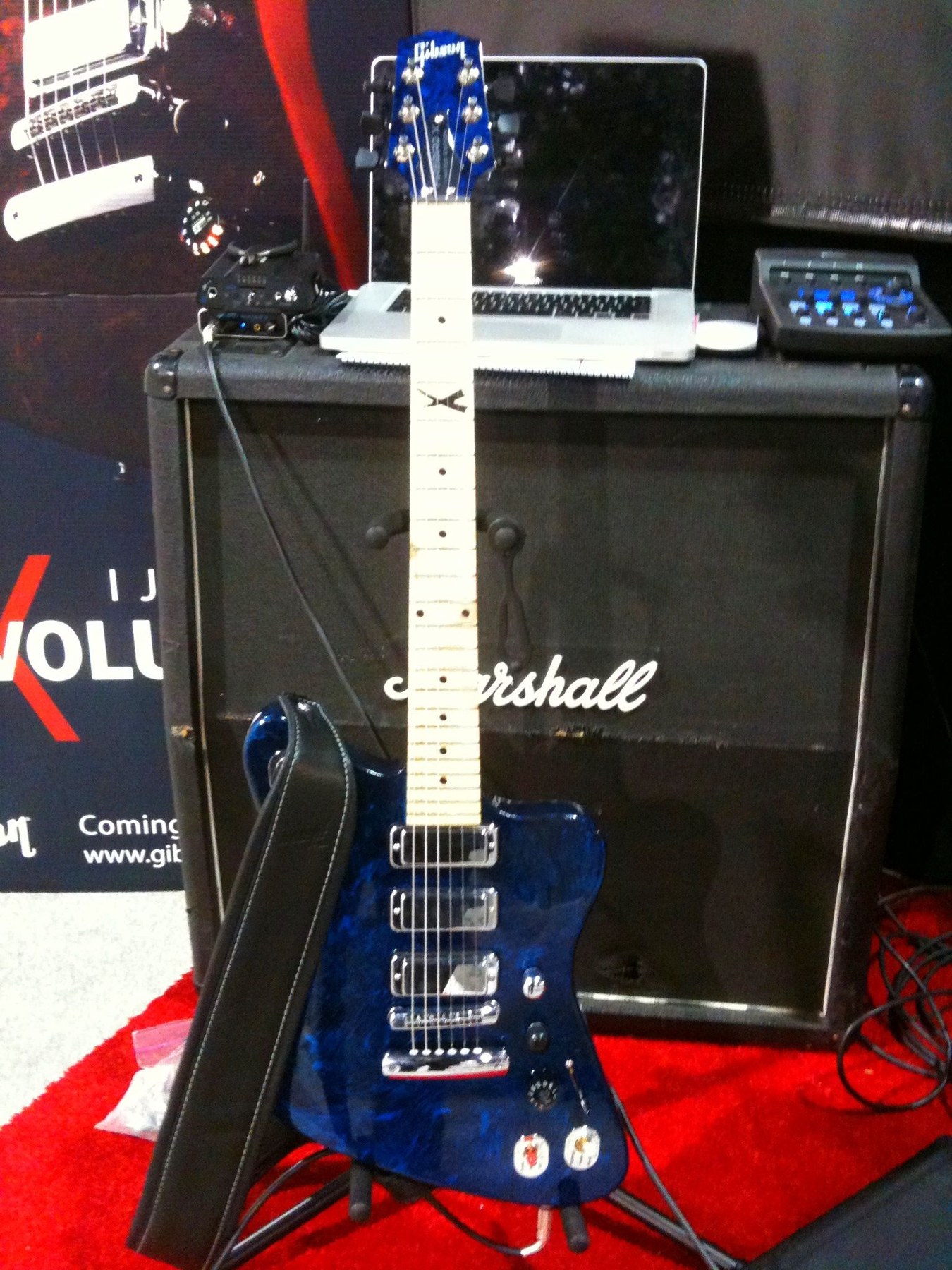
- 2011, Firebird X: a non-reverse-style guitar packed with Robot self-tuning, onboard effects and digital features, shown at CES in January 2011. It divided players, and in 2019 a video showing hundreds of Firebird Xs being crushed by an excavator went viral.
The Firebird today
The current lineup covers every stage of the story. In March 2025 Gibson brought the Firebird back to its regular USA range as the Firebird Platypus, named after those 1965 transitional guitars. It pairs the reverse body with the flat, non-reverse headstock, Grover Mini Rotomatic tuners, a set neck and two Firebird humbuckers with Alnico 5 magnets. Gibson's Mat Koehler called the reverse-body, non-reverse-neck combination his favorite version of the Firebird "because you've got the tuners on the top side."
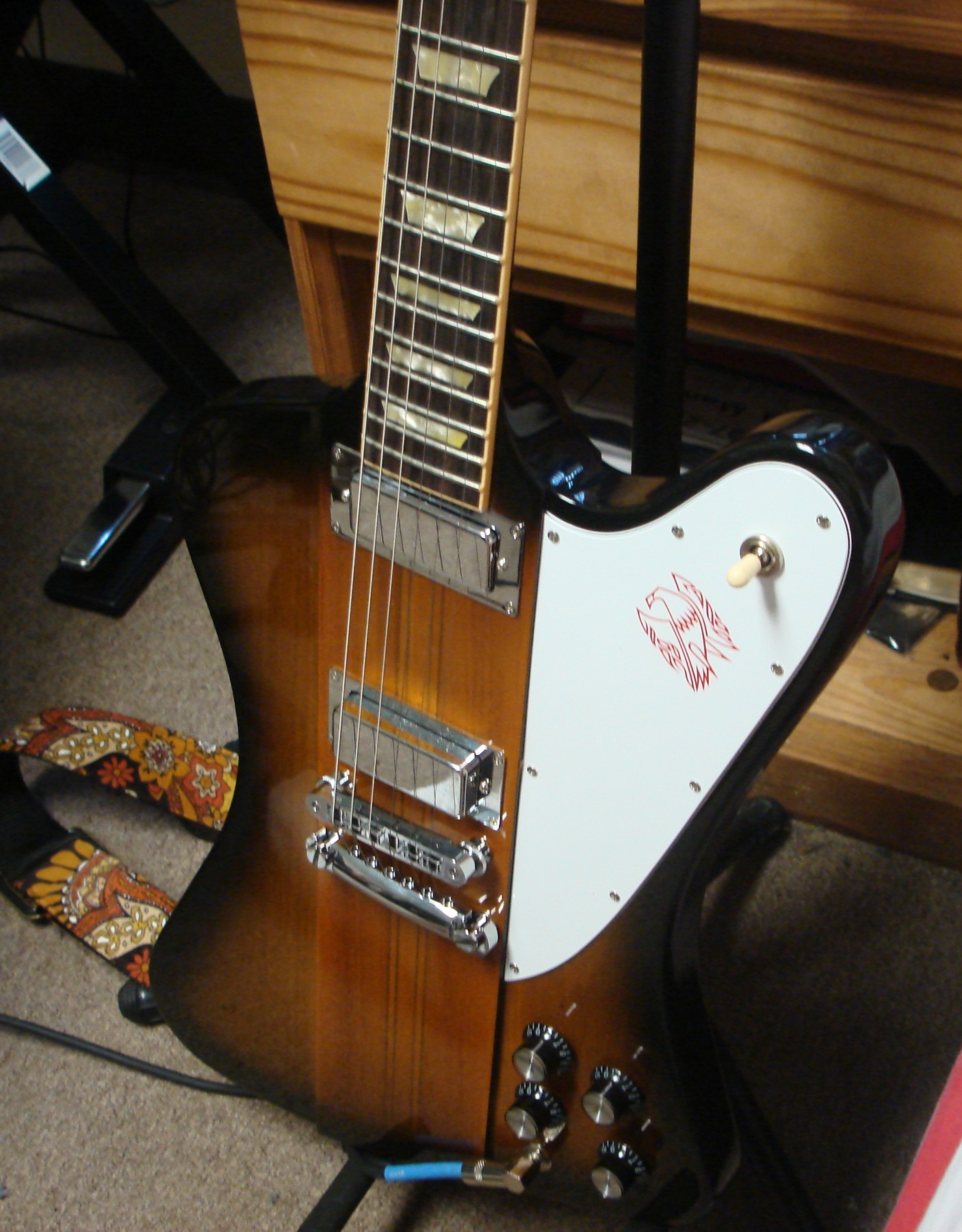
The Gibson Custom Shop covers the vintage end with a 1963 Firebird V Reissue (nine-ply mahogany and walnut neck-through, banjo tuners, Maestro Vibrola), a 1965 Non-Reverse Firebird V and its 12-string sibling, a limited 1963 Firebird VII, and the black-and-gold Firebird Custom. On the budget side, Epiphone's Inspired by Gibson Custom line offers a 1963 Firebird V with neck-through construction and a single-pickup 1963 Firebird I in Cardinal Red.
And the shape keeps spreading. Halestorm's Lzzy Hale put a Firebird headstock on an Explorer body for her 2022 Explorerbird, which takes us right back to where the Firebird started.
What a Firebird Actually Feels Like
This is a researched overview, not a hands-on test, but players' experiences with reverse Firebirds are consistent enough to pass on.
Neck dive is real. The long body puts the headstock far from your strap button, and a reverse 'bird with banjo tuners tends to pull the neck down. A wide, grippy strap helps. Gibson's move to lighter tuners on modern models is partly about this.
The sound sits between Gibson and Fender. That's Winter's point, and it holds up. Firebird pickups have more top end and less mud than full-size humbuckers. Clean, they're bright and glassy. With gain, they bite instead of bloom, which is why they work so well for slide and for crunchy rhythm parts that need to cut through.
Reverse and non-reverse are different guitars. A reverse Firebird has the neck-through build, the raised center and humbuckers on most models. A non-reverse is lighter, thinner and set-neck, and with P-90s it can sound closer to an SG Special or a Jaguar. Decide which sound you want before you shop.
Tuning takes practice. Banjo tuners work backwards from what your hands expect, and the gear ratios on vintage-style versions aren't as fine as modern guitar tuners. If you hate that, the Platypus and Studio-style models fix it.
Tone tip: For a Winter-style slide sound, start on the bridge pickup with a clean-to-edge-of-breakup amp and let the guitar's natural brightness do the work. You'll need less treble than usual. For a Clapton '68 sound from a one-pickup Firebird I, push a loud amp, roll the guitar's tone back a little, and use the volume knob as your gain control.
Why the Firebird Still Matters
The Firebird is what happens when design comes before manufacturing.
Ray Dietrich gave Gibson the most elegant guitar it had ever made, a body that looked like a tailfin, a headstock that hid its hardware, and a neck-through build that made the whole instrument feel like one piece. He thought like a car stylist, and in 1963 that wasn't what a guitar factory needed. The original Firebird was too costly and too fragile to win the price war with Fender, and Gibson replaced it in less than two years.
But the design was right in the way that matters over time. Players kept the reverse Firebird alive long after Gibson gave up on it. Johnny Winter fixed its tailpiece. Allen Collins changed its pickup. Brian Jones and Eric Clapton put it on the world's biggest stages. Every reissue since has been Gibson catching up to what those players already knew.
That's the thread that runs through the Flying V, the Explorer and the Firebird. Gibson's strangest guitars all failed first. The Firebird is the one that was literally drawn upside down and backwards, and it's still flying.
Join the conversation: Reverse or non-reverse? Banjo tuners or Platypus? Tell us which Firebird you'd take home in Guitar Talk, and catch up on the rest of the series with our Gibson Flying V history and Gibson Explorer history.
Plugged Gear Co. may earn a commission from qualifying purchases.
Experience-driven coverage, not algorithm bait.
- 20+ years of guitar playing experience
- Real-world retail experience at Guitar Center
- Thousands of hours testing guitars, amps, and pedals
- A community of 50,000+ guitar enthusiasts across platforms
- Partnerships with Fender, DistroKid, TrueFire, Card Chords, and Enya
- Editorial standards published openly — see how we test gear
The Modern Guitar Magazine. Delivered to your inbox.
No spam. No gimmicks. Just great guitar content — stories, tones, iconic solos, and honest gear takes. Every week.
Ask GP
3 free questions a dayStill curious? Ask GP about this story.
Your personal classic-rock and guitar guide — ask anything about The Gibson Firebird History.
Discussion (0)
Sign in to join the discussion.
Sign in to commentLoading comments…
Discover another guitar story
Swipe through our latest features, breaking news and iconic solos — one story at a time.
Open Swipe →More Guitar News
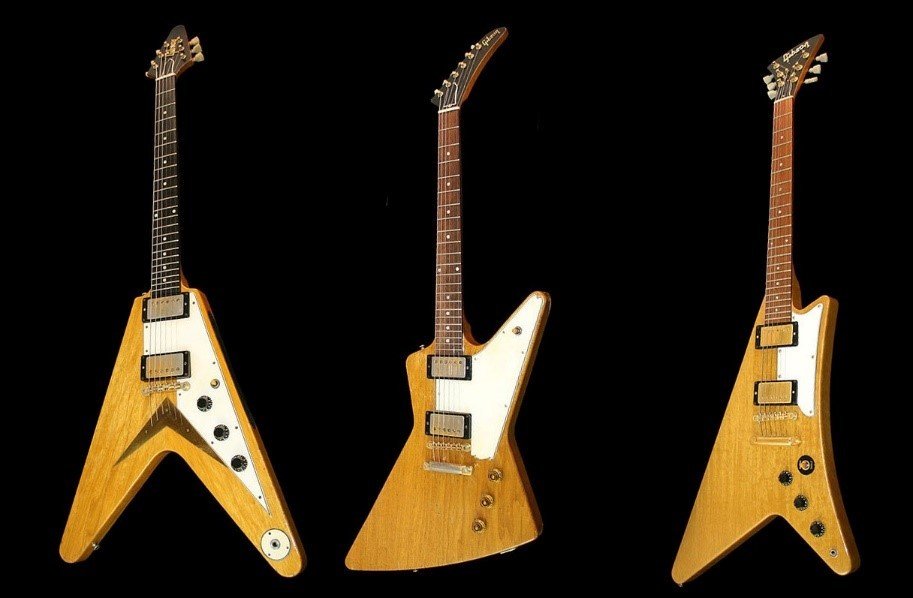
Gibson Flying V History: From 98-Guitar Flop to Metal's Favorite Shape
Gibson made fewer than a hundred Flying Vs in 1958–59 and nearly gave up on the shape. Here's how a futuristic flop became the guitar of blues kings, Hendrix, UFO, Judas Priest and Metallica, and which V to buy today.
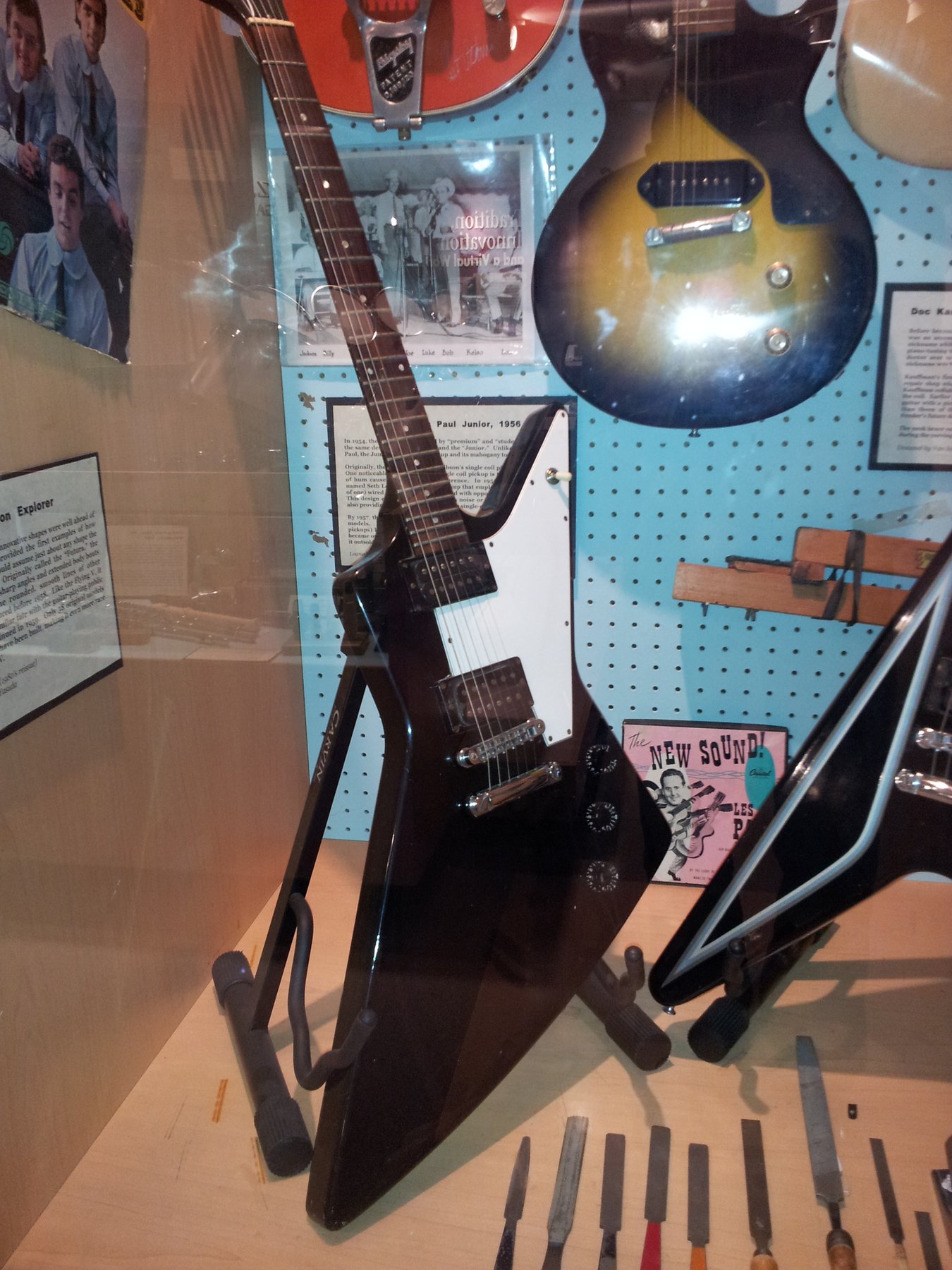
The Gibson Explorer History: How Gibson's 1958 Flop Became Hard Rock's Sharpest Silhouette
Gibson shipped just 22 Explorers in 1958–59 and shelved the design. Here's how the most radical shape of the Modernistic era became hard rock and metal's sharpest silhouette.
Johnny Winter: The Albino Bluesman Who Played Guitar Like His Life Depended on It
Johnny Winter played the blues with frightening speed, raw aggression and unmistakable Texas fire. We explore his guitar style, legendary Gibson Firebird, slide playing, tone and lasting influence.
Iconic Solos: Why the "Free Bird" Solo Feels Like Flying
Allen Collins' four-minute Free Bird solo isn't about speed — it's about momentum, repetition, and reckless tone. Here's why it still gives guitarists chills.
History of the Riff: How "Sunshine of Your Love" Changed Rock Guitar Forever
The story behind Cream's legendary "Sunshine of Your Love" riff — how Jack Bruce, Eric Clapton, and Ginger Baker created one of rock's most influential guitar moments.