
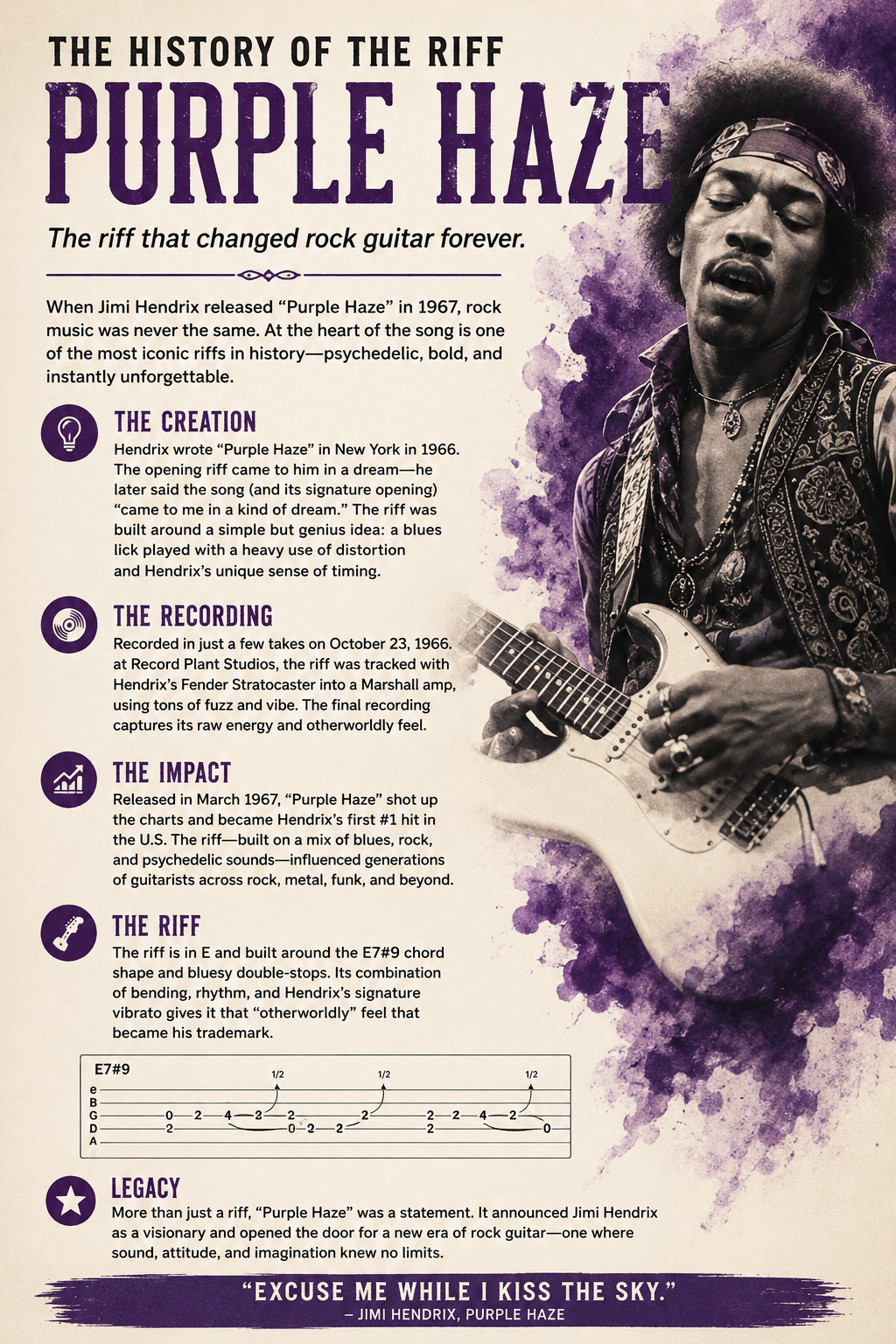
The story behind Jimi Hendrix's legendary Purple Haze riff — where it came from, how it was recorded, and why it changed rock guitar forever.
Some riffs become famous. Others become part of music history.
When Jimi Hendrix unleashed "Purple Haze" in 1967, guitar players had never heard anything quite like it. It wasn't just the fuzz, the attitude, or the psychedelic lyrics. It was that opening riff—a dark, mysterious, swagger-filled phrase that sounded like it came from another planet.
More than half a century later, "Purple Haze" remains one of the most recognizable guitar riffs ever recorded and a blueprint for generations of rock guitarists.
Where Did the Riff Come From?
Hendrix claimed the song came to him in a dream. According to interviews, he woke up with the idea in his head and quickly worked it out on guitar.
At the time, Hendrix was pushing beyond traditional blues guitar. He loved the music of Muddy Waters and B.B. King, but he wanted something heavier, stranger, and more explosive.
The result was a riff that blended blues phrasing, psychedelic experimentation, and pure rock-and-roll power.
Breaking Down the Riff
What makes the Purple Haze riff so unforgettable?
The secret is Hendrix's use of the infamous E7#9 chord, often called the "Hendrix Chord."
• Blues-based movement
• Chromatic notes
• Aggressive bends
• Distortion and fuzz
• Rhythmic swagger
Instead of sounding polished and clean, the riff feels alive and unpredictable.
That tension between blues roots and psychedelic chaos became Hendrix's trademark sound.
The Gear Behind the Tone
The Purple Haze tone wasn't an accident.
Get Jimi Hendrix’s “Purple Haze” Tone
Tell ToneMD what gear you own and get a full signal chain with real numbered settings for this tone.
Included with Premium
• Fender Stratocaster
• Marshall Super Lead amplifier
• Dallas-Arbiter Fuzz Face
• Studio effects and tape saturation
The fuzz creates the aggressive edge, while the Marshall provides the punch and sustain that made the riff leap out of the speakers.
Classic Hendrix-style fuzz, warm vintage character, and perfect for psychedelic and classic rock tones. Check used gear prices on Reverb below.
Recording the Song
Purple Haze was recorded in late 1966 and released in 1967 as one of Hendrix's breakthrough singles.
“More than 50 years later, it still sounds dangerous. And that's exactly why it remains one of the greatest riffs ever written.”
Producer Chas Chandler immediately recognized the song's potential. The opening riff was unlike anything dominating radio at the time.
While British rock bands were beginning to get heavier, Purple Haze pushed the guitar into completely new territory.
The song helped launch Hendrix into superstardom and established him as one of the most innovative musicians on Earth.
Why Guitar Players Still Learn It
Nearly every guitarist eventually learns some version of Purple Haze.
• String bending
• Timing
• Dynamics
• Vibrato
• Blues phrasing
• Fuzz-driven tone
It sounds simple, but making it feel like Hendrix is incredibly difficult.
The magic isn't just the notes—it's the attitude.
The Legacy
Purple Haze didn't just introduce a legendary riff. It changed expectations for what rock guitar could be.
Without Purple Haze, it's hard to imagine later innovations from players like Eddie Van Halen, Steve Vai, Joe Satriani, and Tom Morello.
The riff proved that a guitar could be aggressive, expressive, experimental, and unforgettable all at the same time.
More than 50 years later, it still sounds dangerous.
And that's exactly why it remains one of the greatest riffs ever written.
Final Thoughts
The opening notes of Purple Haze are instantly recognizable to musicians and casual listeners alike.
That's the mark of a truly great riff.
It wasn't just a song. It was a statement. A declaration that guitar music had entered a new era.
And it all started with a few unforgettable notes from Jimi Hendrix.
Shop Purple Haze-Inspired Gear
Some links may be affiliate links. We may earn a small commission at no cost to you.
Experience-driven coverage, not algorithm bait.
- 20+ years of guitar playing experience
- Real-world retail experience at Guitar Center
- Thousands of hours testing guitars, amps, and pedals
- A community of 50,000+ guitar enthusiasts across platforms
- Partnerships with Fender, DistroKid, TrueFire, Card Chords, and Enya
- Editorial standards published openly — see how we test gear
The Modern Guitar Magazine. Delivered to your inbox.
No spam. No gimmicks. Just great guitar content — stories, tones, iconic solos, and honest gear takes. Every week.
Ask GP
3 free questions a dayStill curious? Ask GP about this story.
Your personal classic-rock and guitar guide — ask anything about Purple Haze.
Discussion (0)
Sign in to join the discussion.
Sign in to commentLoading comments…
Discover another guitar story
Swipe through our latest features, breaking news and iconic solos — one story at a time.
Open Swipe →More in Guitar Talk
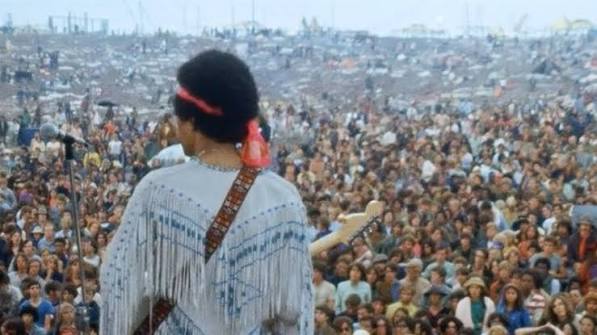
The 10 Greatest Guitar Renditions of “The Star-Spangled Banner”
From Jimi Hendrix's controlled chaos at Woodstock to modern performances by H.E.R., Gary Clark Jr. and Jack White, these guitarists turned America's national anthem into something deeply personal.
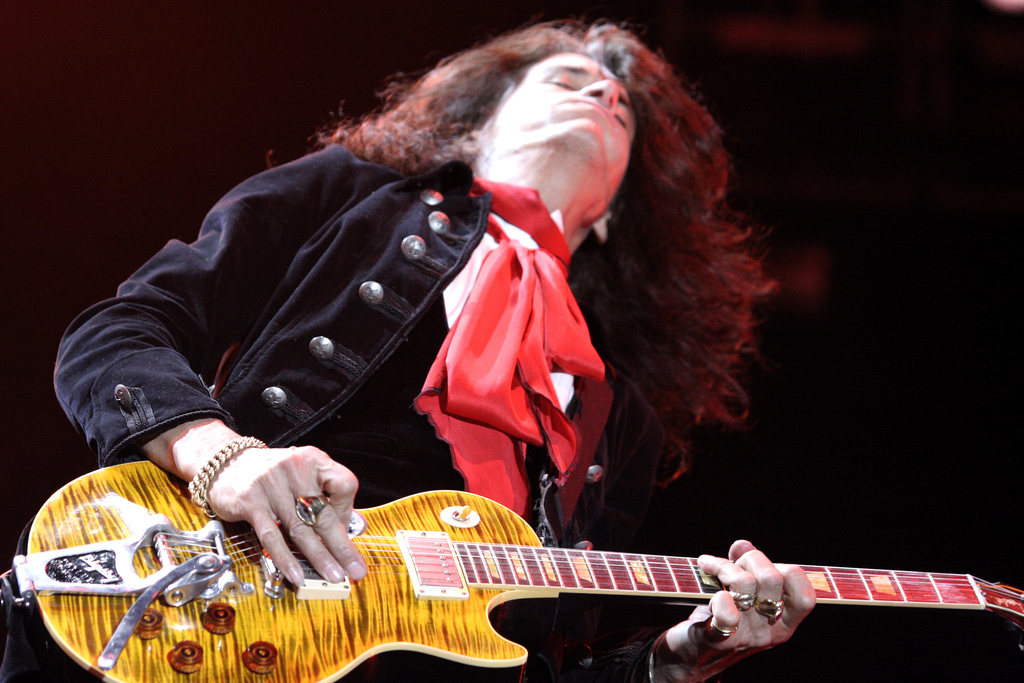
Happy Birthday, Joe Perry: The Riff Machine Who Gave Aerosmith Its Swagger
Joe Perry turns 76 today. From the swampy grind of “Sweet Emotion” to the reunion that saved a band, this is the career of the guitarist who taught American hard rock how to strut.

History of the Riff: How Joe Satriani Made “Flying in a Blue Dream” Feel Weightless
An acoustic guitar in an unusual tuning, a stray broadcast and a melody that seems to hang in the air: inside the construction of Satriani’s 1989 masterpiece.