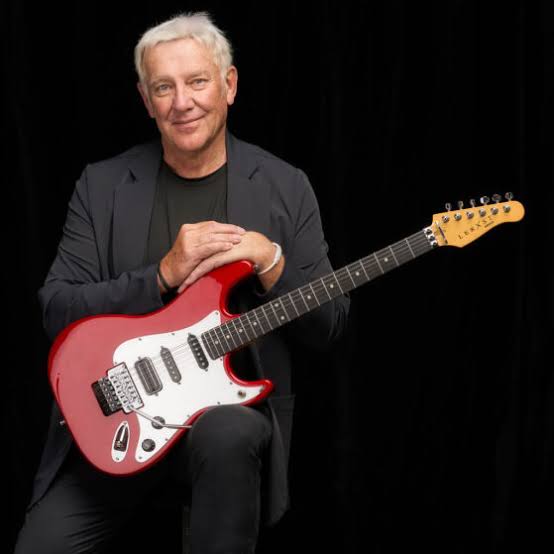
History of the Riff: How Alex Lifeson Made “The Spirit of Radio” Sound Like Electricity
Rush's 1980 masterpiece opens with rock guitar's most recognizable burst of controlled chaos — a modified Strat, a flanged Marshall and a riff built to sound like radio waves.
There are guitar riffs that introduce songs.
Then there are guitar riffs that seem to switch the entire record on.
Alex Lifeson's opening figure to Rush's “The Spirit of Radio” belongs emphatically to the second category.
It arrives almost instantaneously: a rapid, shimmering cascade of notes that seems to flicker between your speakers before the rest of Rush snaps into place around it. It is bright without being clean, aggressive without relying on enormous distortion, technically demanding without sounding like an exercise.
Most importantly, it moves. It buzzes. It flashes. It behaves almost like a signal.
That was no accident. Lifeson has explained that the idea behind the opening riff was connected to the movement of radio waves. The guitar was not simply establishing a chord progression. It was helping establish the concept of the song itself.
That distinction is important because “The Spirit of Radio” represents something larger than another great Alex Lifeson guitar part. It captures Rush at one of the most important crossroads of their career.
The Rush that entered the 1980s was still unmistakably the band responsible for 2112, A Farewell to Kings and Hemispheres. They had lost none of their appetite for complexity, unusual meters, ambitious arrangements or serious musicianship. But something was changing.
Songs were becoming tighter. New musical influences were entering the room. The Police, reggae, new wave and the rapidly changing musical landscape surrounding the end of the 1970s were impossible to ignore.
And Rush were beginning to realize that progressive music did not necessarily have to mean twenty minutes. Sometimes it could happen in five. Sometimes the most progressive thing a band could do was become concise.
At the beginning of Permanent Waves, Alex Lifeson announced that transformation with a handful of notes. This is the history of the riff.
Before the Riff: Rush at the End of the 1970s
To understand why “The Spirit of Radio” mattered, you have to understand where Rush had just been. By 1978, Rush had pushed large-scale progressive rock about as far as three musicians reasonably could.
Hemispheres was enormous in virtually every sense. The title composition occupied an entire side of the original LP. The arrangements were dense. The instrumental requirements were formidable. The conceptual ambitions were enormous.
Rush had become extraordinarily good at being Rush. But mastery can create its own problem. Once you have perfected a particular approach, where do you go? Repeating Hemispheres would have been easier than reinventing it. Rush chose reinvention.
The musical environment around them was changing rapidly. Punk had already challenged the excesses of progressive rock. New wave was introducing sharper arrangements and unusual textures. Reggae was increasingly influencing rock musicians. The Police were proving that extraordinary musicianship could exist inside compact songs without announcing itself as progressive rock.
Rush noticed. Rather than rejecting those developments, they absorbed them. That is one of the reasons Rush survived stylistic eras that swallowed countless other bands. They listened — not necessarily to imitate, but to learn.
Alex Lifeson's guitar playing began reflecting that curiosity. The huge Gibson-and-amp architecture of the classic Rush sound wasn't disappearing, but more wiry textures were entering his vocabulary. Chorus, flanging, cleaner articulation, Stratocaster sounds and rhythmic space increasingly mattered.
Geddy Lee was becoming even more interested in synthesizers. Neil Peart was refining his writing. The band's compositions began compressing enormous musical ideas into increasingly efficient structures.
That transformation would eventually lead directly into Moving Pictures. But before “Tom Sawyer,” before “Limelight,” before “YYZ,” there was Permanent Waves. And before virtually anything else on Permanent Waves, there was that riff.
A Song About Radio That Sounds Like Radio
The brilliance of the opening figure becomes clearer when viewed in the context of the song. “The Spirit of Radio” wasn't merely given a radio-related title after the music was finished. Radio is embedded into the DNA of the composition.
The song was connected to the changing culture of FM broadcasting and the tension between radio as a place of musical discovery and radio as a commercial enterprise. Neil Peart's lyrics celebrate the almost magical connection between music, broadcasting and the listener while simultaneously questioning what happens when that relationship becomes controlled by commercial interests.
That conflict is one of the great ironies surrounding the song. Rush wrote a song partly concerned with the commercialization of radio — and created one of the most radio-friendly songs of their career. But Rush's definition of “radio friendly” was considerably stranger than everyone else's.
Listen closely. The arrangement moves through different musical environments almost like someone turning a radio dial. Hard rock. Progressive rock. Pop. Reggae. Rhythmic interruptions. Sudden transitions. Different textures appear and disappear.
The opening guitar therefore performs another role. It establishes motion. Lifeson has described the concept behind it as representing radio waves. Once you know that, the riff becomes almost visual. Up. Down. Across. Back. Signal. Static. Transmission. Reception.
It is a rare example of a guitar riff functioning almost like sound design while remaining completely musical.
The First Few Seconds
The opening of “The Spirit of Radio” is one of those musical passages that sounds simpler in memory than it feels underneath your fingers. A guitarist hears it and thinks: I know that part. Then they try to play it cleanly. That is when Alex Lifeson enters the room.
The difficulty isn't simply speed. It is control. The figure requires the fretting hand and picking hand to cooperate with an almost mechanical consistency while preserving the flowing quality that makes the recorded performance exciting.
Play it too stiffly and the magic disappears. Play it too loosely and the notes smear together. Use too much gain and the articulation collapses. Use too little sustain and it loses authority.
That balance is quintessential Lifeson. He frequently occupies a strange territory between rhythm guitarist, lead guitarist and orchestral arranger. Is the riff rhythm guitar? Technically. Is it a lead figure? Absolutely. Is it texture? Yes. Is it the hook? Without question. That's Lifeson.
How Alex Lifeson Actually Plays It
One of the most revealing details about the riff is Lifeson's own description of his fingering. Rather than frantically repositioning the entire fretting hand for every note, Lifeson anchors part of the shape and allows the remaining fingers to create the movement.
He has explained that he plays the figure around second position, keeping the D on the B string fretted while performing the rapid movement on the high E string.
That is important, because great guitar technique is often less about moving faster than it is about eliminating unnecessary movement. The beginner moves five fingers; the expert moves two. The beginner attacks every note; the expert discovers which notes can be connected. The beginner fights the guitar; the expert organizes it.
Lifeson's approach turns what initially appears to be a chaotic spray of notes into a compact mechanical system. The fretted note acts almost like an anchor while the upper notes dance around it. This creates part of the riff's distinctive shimmering quality.
Multiple pitches overlap psychologically even when they aren't literally sustaining forever. The ear hears a pattern expanding and contracting. It sounds bigger than the number of notes involved. That is one of the secrets behind many great riffs: perceived complexity is not always actual complexity. The best players learn how to create maximum musical movement from minimum physical movement.
The Rhythm Section Makes the Riff Even Stranger
If Lifeson played the opening figure alone for the entire introduction, it would already be memorable. Rush being Rush, that wasn't enough. Geddy Lee and Neil Peart begin punctuating the figure with tightly synchronized rhythmic accents.
Suddenly the listener has two competing pieces of information. Lifeson's guitar appears to flow continuously. Lee and Peart stab through it. The ear tries to decide where the center is. Then Rush shift again.
This was one of the trio's greatest abilities. Three musicians could create the illusion of five musicians because each player was capable of functioning independently while remaining rhythmically connected. Lifeson didn't always follow Lee. Lee didn't always follow Peart. Peart didn't merely keep time. They could become three independent rhythmic voices — and then, without warning, all three would converge.
That tension-and-release relationship is fundamental to the opening of “The Spirit of Radio.” The guitar creates continuity. The rhythm section creates interruption. Together they create momentum.
The Guitar: A Modified 1978 Stratocaster
By the late 1970s, Lifeson's guitar arsenal was changing. Many listeners associate classic Rush with Gibson guitars — especially Lifeson's iconic white ES-355 — and for good reason. But the Stratocaster became increasingly important as Rush moved toward the 1980s.
For “The Spirit of Radio,” Lifeson has identified the instrument as his 1978 Fender Stratocaster, modified with a Bill Lawrence humbucker in the bridge position.
That combination tells you a great deal about the sound. A traditional Stratocaster can deliver tremendous clarity and attack, but Lifeson wanted additional authority. Installing a bridge humbucker fundamentally changes the instrument's personality: now the guitar can retain some of the immediacy and physical feel of a Strat while pushing an amplifier with greater density.
Get Alex Lifeson’s “The Spirit of Radio” Tone
Tell ToneMD what gear you own and get a full signal chain with real numbered settings for this tone.
Included with Premium
That hybrid philosophy would become enormously important to rock guitar. Players increasingly wanted Fender ergonomics with Gibson-like aggression. Eddie Van Halen was famously pursuing his own version of the same broad idea. Countless hot-rodded Strat-style instruments would follow.
Lifeson's modified Strat existed in that transitional universe. It wasn't about respecting the factory specification. It was about building the instrument required by the music. And “The Spirit of Radio” required clarity and muscle simultaneously.
The Amplifier Sound: Big, But Not Buried
Modern guitarists often make a critical mistake when attempting classic rock tones. They use too much gain.
Listen carefully to Lifeson's tone on “The Spirit of Radio.” It is powerful. It is compressed. It is wide. But the individual notes remain remarkably intelligible.
That matters enormously during the opening figure. Every additional layer of distortion introduces compression and harmonic information. Eventually, fast notes begin collapsing into one another. Lifeson needed the opposite. The riff needed edges. The pick attack needed to survive. The upper strings needed to speak. The amp needed to feel large without turning the guitar into fuzz.
Lifeson later described using two Marshall 2x12 combos for the track, with the guitar treated by an Eventide-derived flange effect. That combination helped create the strange width surrounding the riff.
The modulation isn't merely decoration. It contributes to the entire concept. Remember: radio waves. Movement. Electricity. Transmission. The modulation makes the guitar feel like it is moving even when the pitch itself isn't. That is an important lesson in guitar production — effects are most powerful when they reinforce the musical concept rather than simply make the guitar sound cool.
The Secret Second-Verse Layer
One of the most interesting production details arrives after the listener has already accepted the basic guitar sound. Lifeson explained in a 1980 Guitar Player interview that most of Permanent Waves was recorded using miked amplifiers, but “The Spirit of Radio” also demonstrates his interest in blending amplifier and direct guitar sounds.
During the second verse, a direct-recorded Stratocaster is blended with the amplified guitar. On its own, Lifeson characterized that direct tone as comparatively small. Combined with the amplifier sound, it broadens the guitar.
This is fascinating because it anticipates a production technique that remains incredibly useful today. A huge guitar sound isn't always created by adding another huge guitar sound. Sometimes the missing ingredient is contrast. A large, compressed amplifier track can benefit from a thinner, sharper layer. The thinner sound adds definition. The larger sound supplies body. Together they create something neither produces independently.
It is essentially audio architecture. Low information here. Midrange there. Attack somewhere else. Width around everything. Modern digital rigs make this ridiculously easy to experiment with. Lifeson was thinking this way decades ago.
Le Studio: The Perfect Place for a Band in Transition
Permanent Waves was recorded at Le Studio in Morin-Heights, Quebec, during 1979. The environment mattered. Rush had spent years making increasingly ambitious records, and the band was searching for a setting that allowed them to work efficiently without feeling trapped inside the traditional studio grind.
Le Studio provided isolation and atmosphere. The sessions moved quickly by Rush standards, and that efficiency mirrored the new musical philosophy. The band wasn't becoming less ambitious. They were becoming more decisive.
This distinction is critical. Permanent Waves does not sound like Rush simplifying themselves because they had run out of ideas. It sounds like Rush learning how to compress ideas. “The Spirit of Radio” contains enough musical information to fuel an entire side of a lesser progressive-rock record. Rush fit it into approximately five minutes.
That may be the song's greatest technical accomplishment. Not the notes. Not the meters. Not the chops. The editing.
The Reggae Section: Why Is This Even Here?
Then comes one of the most wonderfully Rush moments imaginable: the song suddenly veers toward reggae. In another band's hands, this could have sounded like novelty. With Rush, it becomes part of the architecture.
“The riff doesn't merely introduce the song. It visualizes the concept.”
The trio had already experimented with reggae ideas, and Lifeson later recalled that the reggae section in “The Spirit of Radio” was partly included simply because the band enjoyed it.
That sense of humor is easy to overlook when discussing Rush. Because their musicianship was so formidable and Peart's lyrics could be so cerebral, people sometimes describe Rush as if three professors formed a rock band. But Rush could be playful. They liked musical jokes. They liked unexpected turns. They liked making one another laugh.
The reggae passage demonstrates that. It also reinforces the radio-dial quality of the arrangement. One station. Another station. Another style. Another rhythmic world. And somehow the whole thing remains a single song.
Alex Lifeson's Great Superpower: Making Space
There is a paradox at the center of Alex Lifeson's guitar playing. Rush were only three musicians, yet Lifeson often played less than guitarists in bands with five members. Why? Because he understood space.
When Geddy Lee's bass became busy, Lifeson could widen the guitar voicing. When synthesizers occupied the center of the arrangement, Lifeson could move toward texture. When Peart's drums became enormous, Lifeson could avoid filling every rhythmic subdivision. When the music required violence, he could deliver it. When it required atmosphere, he could almost disappear.
“The Spirit of Radio” demonstrates several of these identities within one song. The opening riff is hyperactive. Other sections breathe. Some passages rely on chordal punch. Others become rhythmic. The reggae section changes his entire role.
This adaptability explains why copying Lifeson's equipment rarely produces Lifeson's sound. The gear is only part of it. His real instrument was arrangement.
Why the Riff Doesn't Sound Like a Guitar Exercise
There is another lesson hidden inside the opening figure: fast repeating patterns are dangerous. Not physically — musically. They can immediately begin sounding like exercises. Anyone who has practiced alternate picking knows the problem. Repeat a sequence quickly enough and suddenly you're no longer playing music; you're demonstrating coordination.
Lifeson avoids that trap because the riff has direction. It exists inside a composition. The notes aren't asking the listener to admire the guitarist. They are creating anticipation. Then Lee and Peart enter. The context changes. Then the tempo and feel shift. The riff has already completed its job.
This is why the opening remains exciting after thousands of listens. It isn't a lick pasted onto a song. It is structural. Remove it and “The Spirit of Radio” loses part of its identity. That's the difference between a great lick and a great riff. A lick decorates. A riff defines.
The Tone Is Cleaner Than You Remember
Try an experiment. Imagine “The Spirit of Radio” with modern high-gain distortion. It immediately becomes worse.
The riff needs transient information. You need to hear the pick. You need to hear the separation between strings. You need enough saturation to make the guitar authoritative but not enough to erase the mechanics.
This is why recreating Lifeson's sound can be surprisingly difficult. The player becomes exposed. High gain forgives certain things. Moderate gain doesn't. If the picking isn't even, you hear it. If the pull-offs aren't consistent, you hear it. If one note is dramatically louder than another, you hear it.
The tone demands technique. But the technique also creates the tone. That relationship is frequently forgotten. Tone isn't simply what comes out of an amplifier. Tone begins with how the string moves.
How to Approach the Riff as a Player
Don't begin by trying to play the recording at full speed. That approach usually teaches your hands how to play the riff badly.
Instead, isolate the mechanical idea. Keep the fretting hand relaxed. Anchor the necessary note. Practice the upper-string movement independently. Listen for equal volume between picked and articulated notes. Then introduce the rhythmic placement. Only after the movement feels automatic should speed become the priority.
The goal isn't merely reaching tempo. The goal is reaching tempo while maintaining the illusion of ease. That is the difference between technically playing the notes and actually sounding like the record. Lifeson doesn't sound like he's surviving the riff. He sounds like he's throwing it into the air.
ToneMD Prescription: Alex Lifeson — “The Spirit of Radio”
Target tone: Alex Lifeson, “The Spirit of Radio.” Era: Permanent Waves, 1980. Guitar type: Strat-style. Pickup: bridge humbucker preferred. Gain: low-to-moderate classic-rock drive. Character: bright, compressed, articulate, wide. Core effect: flanging/modulation. Additional approach: optional direct/clean parallel layer. Playing priority: note separation over saturation.

Starting amp recipe. Use a British-style amp model with enough headroom to preserve the attack. Gain 4.0/10. Bass 4.0/10. Mid 6.0/10. Treble 6.5/10. Presence 6.0/10. Master: adjust for model response.
The exact numbers are less important than the relationship. Do not scoop the mids. Do not bury the guitar in gain. Do not exaggerate the bass. This tone lives primarily in the upper-midrange articulation.
Modulation. Start with a moderate flanger and keep the rate relatively restrained. You want movement without turning the part into an exaggerated jet-plane sweep — think width and electricity, not special effect. A tiny amount of room ambience can help, but avoid washing out the attack.
Compression. Use carefully. The recorded guitar has a controlled, compressed quality, but too much pedal-style compression can destroy the natural attack required by the riff. If your modeler provides amp compression naturally, you may not need additional compression.
Pickup. A bridge humbucker is the historically appropriate starting point given Lifeson's modified Strat. However, modern players using a bright medium-output humbucker will generally get closer than players using an extremely hot modern metal pickup. You want definition, not maximum output.
ToneMD tip. If your recreation sounds too heavy, reduce gain before changing EQ. If it sounds too thin, increase mids before increasing bass. If the riff doesn't feel animated enough, adjust modulation depth slightly before dramatically increasing the flanger rate. And if the notes blur together, the problem may not be your preset — slow the riff down. ToneMD can prescribe the signal chain. Your hands still have to transmit the signal.
The Riff as a Turning Point
There is an argument to be made that the opening seconds of “The Spirit of Radio” contain the blueprint for Rush's next several years. Moving Pictures arrives in 1981. “Tom Sawyer.” “Red Barchetta.” “YYZ.” “Limelight.” Rush's compositions become extraordinarily efficient.
The complexity remains, but it becomes increasingly invisible. That's important. The highest form of technical sophistication often doesn't sound technical. It simply sounds inevitable.
“The Spirit of Radio” helped establish that language. Progressive rock didn't need a twenty-minute running time. Odd meter didn't need to announce itself. Virtuosity didn't need a spotlight. Complexity could hide inside hooks. Rush had discovered a new weapon: compression of ideas.
Why Lifeson Was Different
The era that followed Permanent Waves produced some of the most celebrated guitar heroes in history: Eddie Van Halen, Randy Rhoads, Yngwie Malmsteen, Stevie Ray Vaughan, Steve Vai, Joe Satriani. All would push guitar playing in spectacular directions.
Lifeson occupied a different lane. His brilliance was rarely about proving that he possessed more technique than everyone else. It was about finding the guitar part that made Rush sound complete.
That required enormous discipline. Imagine playing guitar beside Geddy Lee and Neil Peart. Most players would respond by becoming busier. Lifeson frequently responded by becoming smarter. He understood when to compete. He understood when to disappear. He understood when one unusual chord voicing could accomplish more than twenty notes. And he understood when twenty notes were exactly what the song needed.
“The Spirit of Radio” opens with the latter, then spends the rest of the song demonstrating the former.
The Sound of a Radio Dial
One of the most compelling ways to hear “The Spirit of Radio” today is to stop thinking about it as a conventional verse-chorus rock song. Think of it as someone searching for something on the radio. Turn the dial. Rock. Turn. Pop. Turn. Reggae. Turn. Static. Turn. Commercial. Turn. Music.
The song keeps moving because the subject itself is movement. Music traveling through space. A transmitter somewhere. A listener somewhere else. Invisible waves connecting them.
And that is why Lifeson's opening riff is so perfect. It doesn't merely introduce the song. It visualizes the concept. Before Geddy Lee sings a word, the guitar has already told you what the song is about.
The Irony of “The Spirit of Radio”
Rush had spent years becoming one of rock's premier album bands. They wrote lengthy compositions. They resisted conventional formulas. They built an audience largely through persistence, touring and the loyalty of listeners who wanted something more substantial than disposable singles.
Then they wrote a song questioning commercialization and the changing nature of radio — and produced a genuine hit. “The Spirit of Radio” reached No. 13 in the United Kingdom and became one of Rush's defining songs. It also became a permanent fixture of the band's live identity.
There is something wonderfully appropriate about that. Rush didn't conquer radio by surrendering to radio. They made radio come to them. The song remained unmistakably Rush: unusual arrangement, rhythmic games, reggae, progressive transitions, philosophical lyrics and a bizarre opening guitar figure. Nothing about it resembles a committee's idea of a safe single. Yet it works, because the hook is undeniable.
Why Guitarists Still Chase This Riff
More than four decades later, guitarists continue learning the opening. Partly because it's famous. Partly because it's challenging. But also because it teaches something valuable: it exposes the difference between speed and control.
A player can possess impressive raw speed and still struggle with “The Spirit of Radio.” Why? Because the riff requires synchronization, dynamics, articulation, muting, timing, consistency, tone and relaxation. It is almost a miniature guitar lesson disguised as a rock intro.
That is characteristic of Lifeson's best work. You learn the notes and discover that the notes weren't the lesson.
The Lifeson Lesson
If there is one principle guitarists should take from “The Spirit of Radio,” it is this: technique should create an effect in the listener.
The point of the opening riff isn't that Alex Lifeson can play it. The point is what it makes you feel. Excitement. Movement. Electricity. Arrival. Something is happening. The radio just turned on.
That's composition — and composition is ultimately what separates the greatest guitarists from the merely impressive ones. Thousands of players can play quickly. Far fewer can write five seconds of guitar that millions of listeners recognize immediately.
The Riff That Opened the 1980s for Rush
January 1980. A new decade. A new Rush album. Needle down. A fraction of silence. Then — Alex Lifeson.
For Rush, “The Spirit of Radio” wasn't the abandonment of progressive rock. It was an evolution of what progressive rock could mean. The band didn't become less complicated. They became better at hiding the machinery.
The opening riff captures that transformation perfectly. On paper, it is a repeating guitar figure. Through Lifeson's hands, it becomes something else: a waveform, a transmission, a burst of electricity crossing invisible distance. And then Geddy Lee and Neil Peart arrive, twisting the pulse around it until three musicians sound like a machine simultaneously operating and tearing itself apart.
Forty-plus years later, guitarists are still trying to make those first few seconds feel right. Some use vintage amplifiers. Some use modelers. Some chase the modified Strat. Some chase the Eventide modulation. Some load a ToneMD prescription and begin dialing.
But eventually everyone discovers the same thing. The equipment can bring you closer. The settings can bring you closer. The correct pickup can bring you closer. But the final ingredient is Alex Lifeson: the controlled attack, the economy of motion, the restraint, the sense of arrangement, the willingness to let a guitar function as rhythm instrument, lead instrument and atmospheric texture simultaneously.
That's why “The Spirit of Radio” remains more than a famous intro. It represents the moment Rush discovered how to take everything enormous about their 1970s music and compress it into a few electrifying seconds.
The riff sounds like radio waves because that was the idea. But in retrospect, it sounds like something else, too. It sounds like Rush receiving the future — and transmitting it back.
History of the Riff
Great riffs are more than collections of notes. They have origins. They have equipment. They have accidents, decisions, studio tricks and stories hidden behind them. History of the Riff is a Guitar Plugged Premium series exploring the writing, recording, tone and lasting influence behind the guitar parts that changed rock music.
Want the tone? Open ToneMD inside The Guitar Plugged Premium, choose your guitar and rig, and build a gear-specific prescription inspired by Alex Lifeson's “The Spirit of Radio” tone. The riff has a history. Your rig deserves the prescription.
Experience-driven coverage, not algorithm bait.
- 20+ years of guitar playing experience
- Real-world retail experience at Guitar Center
- Thousands of hours testing guitars, amps, and pedals
- A community of 50,000+ guitar enthusiasts across platforms
- Partnerships with Fender, DistroKid, TrueFire, Card Chords, and Enya
- Editorial standards published openly — see how we test gear
The Modern Guitar Magazine. Delivered to your inbox.
No spam. No gimmicks. Just great guitar content — stories, tones, iconic solos, and honest gear takes. Every week.
Ask GP
3 free questions a dayStill curious? Ask GP about this story.
Your personal classic-rock and guitar guide — ask anything about How Alex Lifeson Made “The.
Discussion (0)
Sign in to join the discussion.
Sign in to commentLoading comments…
Discover another guitar story
Swipe through our latest features, breaking news and iconic solos — one story at a time.
Open Swipe →More in Guitar Talk
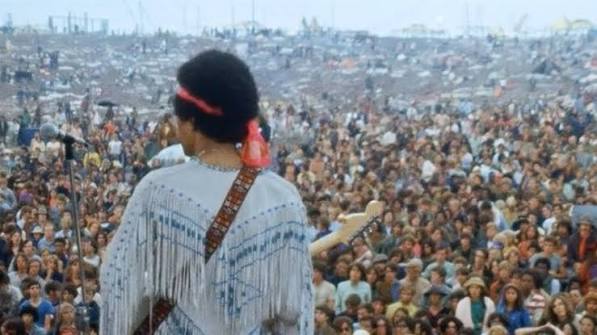
The 10 Greatest Guitar Renditions of “The Star-Spangled Banner”
From Jimi Hendrix's controlled chaos at Woodstock to modern performances by H.E.R., Gary Clark Jr. and Jack White, these guitarists turned America's national anthem into something deeply personal.
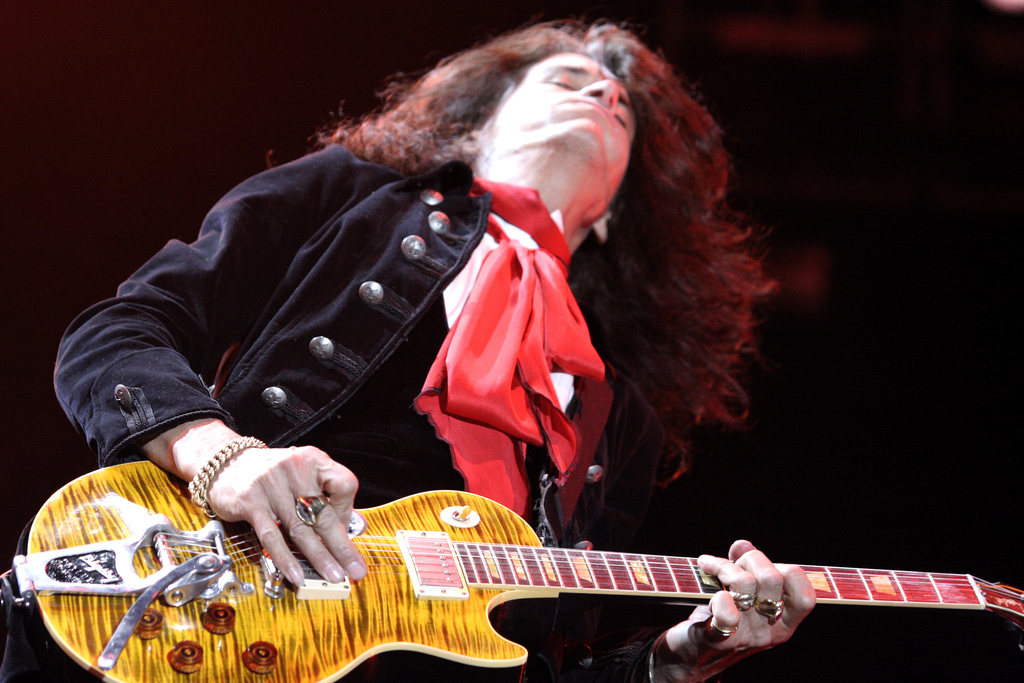
Happy Birthday, Joe Perry: The Riff Machine Who Gave Aerosmith Its Swagger
Joe Perry turns 76 today. From the swampy grind of “Sweet Emotion” to the reunion that saved a band, this is the career of the guitarist who taught American hard rock how to strut.
History of the Riff: How Joe Satriani Made “Flying in a Blue Dream” Feel Weightless
An acoustic guitar in an unusual tuning, a stray broadcast and a melody that seems to hang in the air: inside the construction of Satriani’s 1989 masterpiece.