Jimmy Page's Sundragon Dragonette Puts the Led Zeppelin I Supro Into a 6-Watt, $9,000 Combo
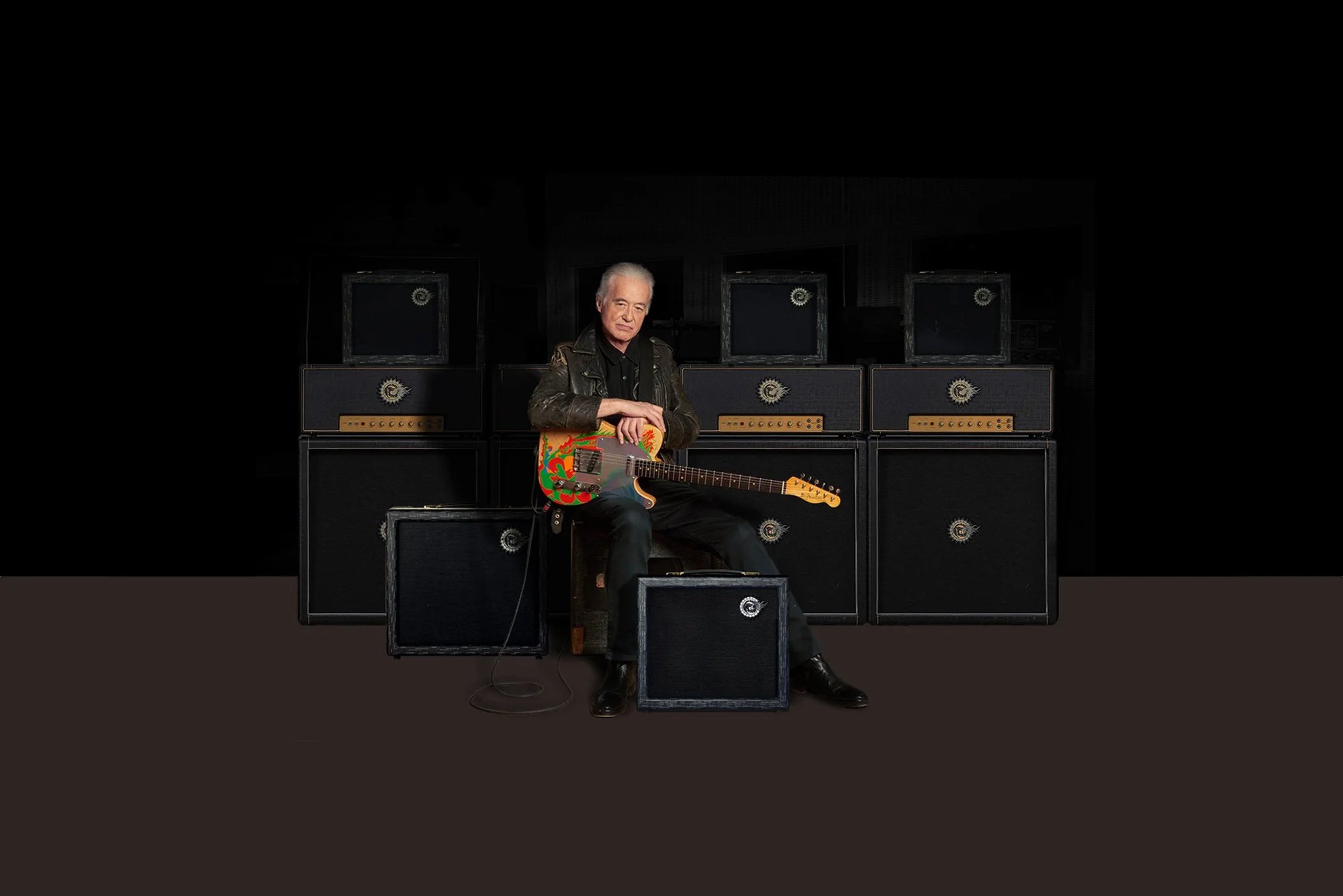
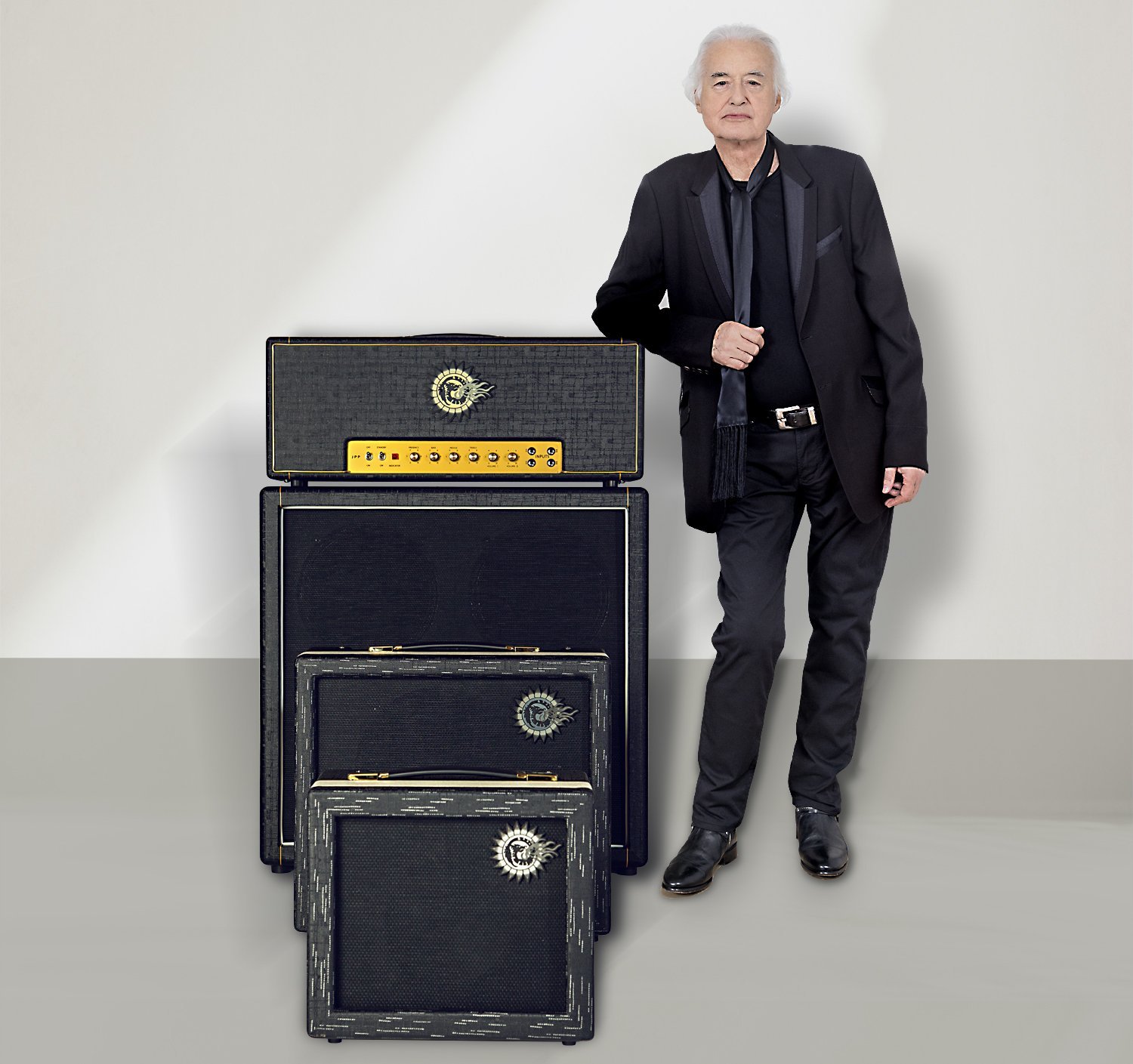
Jimmy Page with the Sundragon lineup.
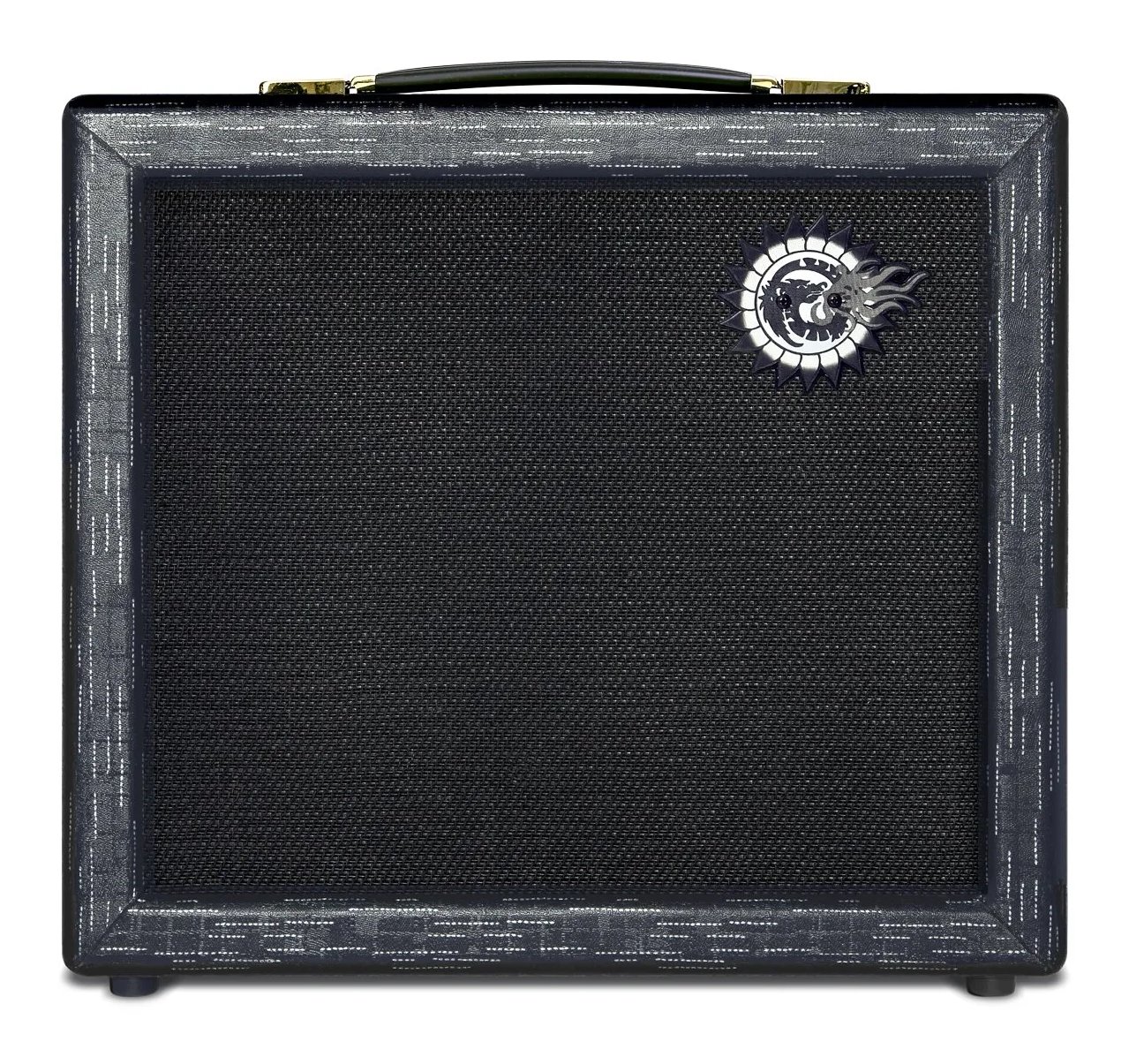
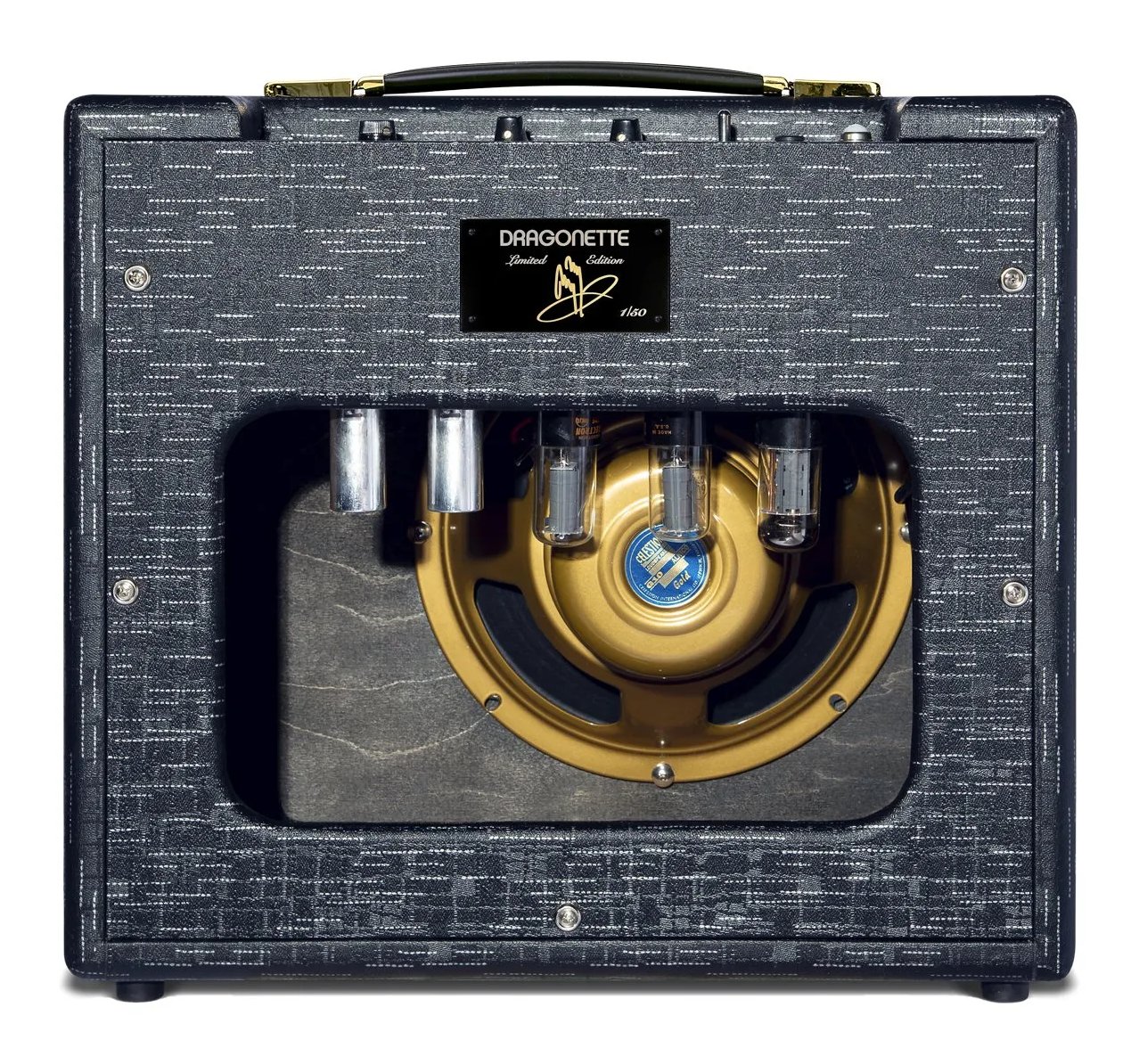
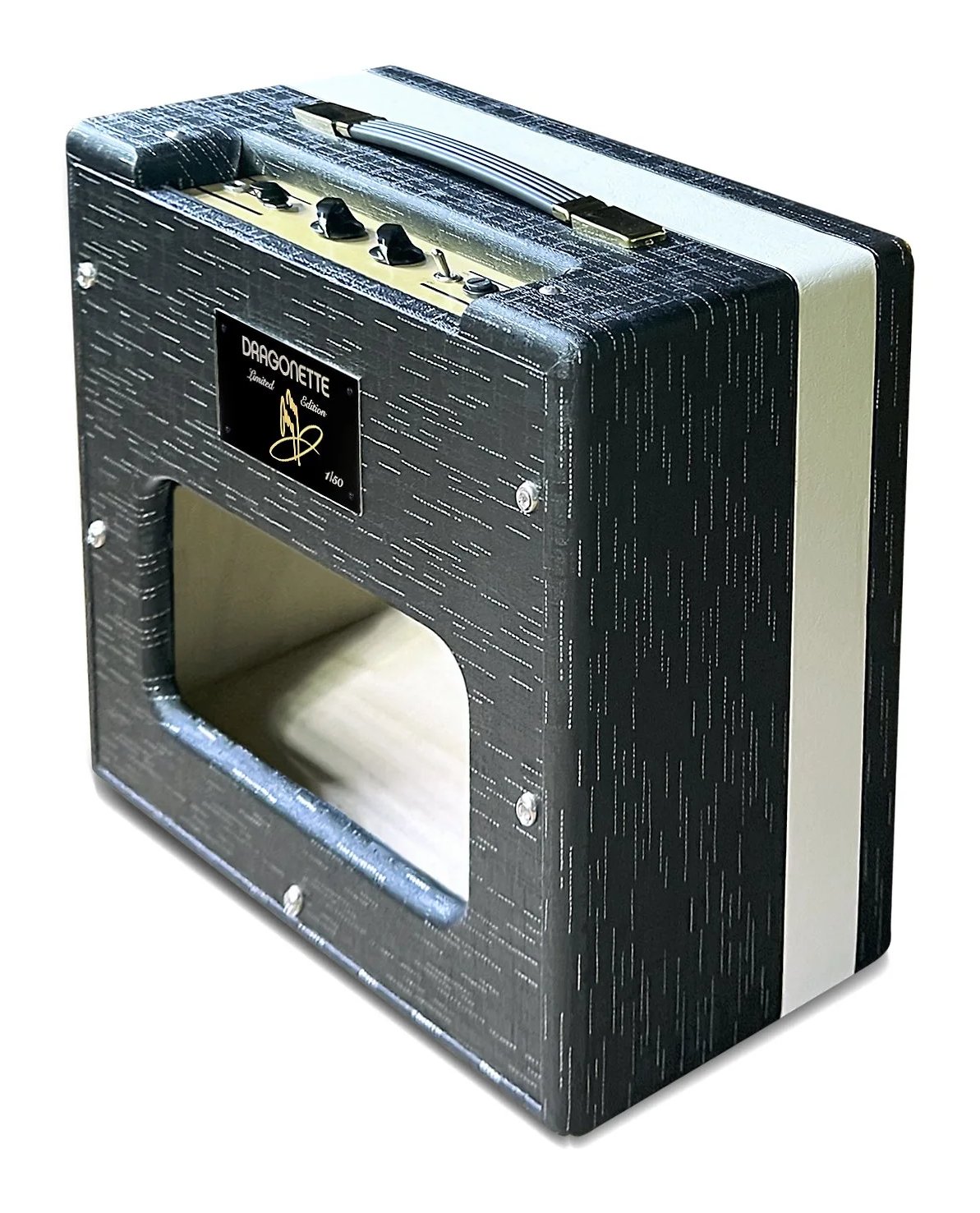
Sundragon and Jimmy Page's Dragonette pairs the Nymph preamp with a scaled-down power section from Page's Led Zeppelin I Supro: 6 watts, a 10-inch speaker, $9,000 and only 50 made.
Jimmy Page has a new amplifier with his name on it, and it goes straight back to the sound of 1968. Sundragon, the boutique amp company Page runs with collector and producer Perry Margouleff and amp builder Mitch Colby, has released the Dragonette Limited Edition, a 6-watt, 1x10" tube combo built on the circuit of the modified Supro that Page used to record Led Zeppelin.
The essentials are simple. Sundragon's shop lists it at $9,000. Only 50 will be made, and the company says every one will be signed by Jimmy Page. When we checked the listing on November 9, 2026, it said "As of today there are only 10 left." Guitar World reported the launch the same day.
This isn't a reissue of the original Sundragon combo, and it isn't a bigger Nymph either. It's a hybrid: the preamp of the tiny Nymph paired with a power section taken from Page's original amp and scaled down to six watts. On paper it's the most practical amp Sundragon has built so far. It's also a $9,000 small combo, which makes it a collector's piece before anyone plugs in.
What Sundragon Announced
Sundragon has given out less detail than most amp launches. There is no spec sheet yet, and the product page describes the amp rather than listing its parts. This is what the company has confirmed:
- Model: Sundragon Dragonette Limited Edition ("LTD Dragonette")
- Format: Combo, 1x10" speaker ("a relatively small combo format (1x10")")
- Power: Six watts, per Jimmy Page's statement
- Circuit: Nymph preamp with a power amp based on the original Sundragon, "slightly scaled back"
- Build: "totally hand wired in New York using New Old Stock parts and tubes"
- Edition: 50 made, all signed by Jimmy Page
- Price: $9,000.00, with shipping in the USA included
- Lead time: Sundragon says it can ship "within six weeks of your order"
- Included: "a high quality padded Tuki cover"
- Export: versions for 100V or 220–240V at 50 or 60Hz, ordered directly through sales@sundragonamps.com with a shipping quote
Sundragon hasn't published the tube complement, the control layout, the speaker model, the weight or the dimensions. If you're seriously thinking about one, ask the company for those details before you order. The listing also says orders are non-cancelable under its Terms of Service, so you'll be "paying the full price" when you place the order.
In Jimmy Page's Words
Sundragon's homepage carries Page's own introduction to the amp. Here it is in full:
"I am pleased to introduce our latest Sundragon model, the DRAGONETTE. After working with Mitch and Perry to recreate my original combo amp, we wanted to offer a low watt amp that carried the tone of my original amp as used on the recording of Led Zeppelin One. That project turned out the Nymph, a one watt amp with a newly designed preamp and a low-power output section. The response has been incredible. Now we thought, why not make an amp that combines the two? Enter the DRAGONETTE; an amp with the preamp of the Nymph and the power section of my original amp, slightly scaled back to six watts with a carefully chosen 10" speaker. The result is a perfect blend of the old and new. The response from musicians in our inner circle has been great and we are happy to release the amp for this fall season." – Jimmy Page
The company explains the reasoning in its own words. After hearing from Nymph owners, "including Dweezil Zappa," Sundragon says it "envisioned the need for a higher powered version of the NYMPH with a similar preamp and a power amp based on the original Sundragon with slightly less power." It sums up the result as "an amp with a superior variety of tones with an emphasis on overdrive from mild to deep."
The shop listing pitches the amp toward small gigs: "It's loud enough for a small venue gig but it's tone is like no other small combo amp. While it gives you everything from clean to overdrive, it's a rock and roll amp with surprisingly satisfying overdrive."
The Amp Behind Led Zeppelin I
To understand why anyone would pay $9,000 for a 6-watt amp, start with the amp it comes from.
For years there was uncertainty about exactly which Supro model Page used on Led Zeppelin's debut. That changed in 2019, when Page lent gear to the Metropolitan Museum of Art's Play It Loud: Instruments of Rock & Roll exhibition. The Met's catalog entry identifies the amp as a 1959 Supro 1690T Coronado, made by Valco. It lists the amp as 24 watts with four inputs, two channels with separate volume and tone controls, and a tremolo section, "modified for one 12 in. speaker."
The Met's description of how Page used it is about as direct as museum writing gets: "He played his Telecaster through the amp to record the entirety of Led Zeppelin (1968) and used it for his solo on 'Stairway to Heaven.'"
Sundragon's own write-up says what made the amp special was damage and repair. Page's Coronado was modified "after it was damaged from falling out of an equipment truck." According to the company, the changes included swapping the original two 10" speakers for "a single Oxford 12" Alnico magnet speaker reconed with a British style 8 ohm cone," a new baffle and grille cloth, and "small but significant circuit changes that alter the feel of the amp."
The Telecaster half of the sound
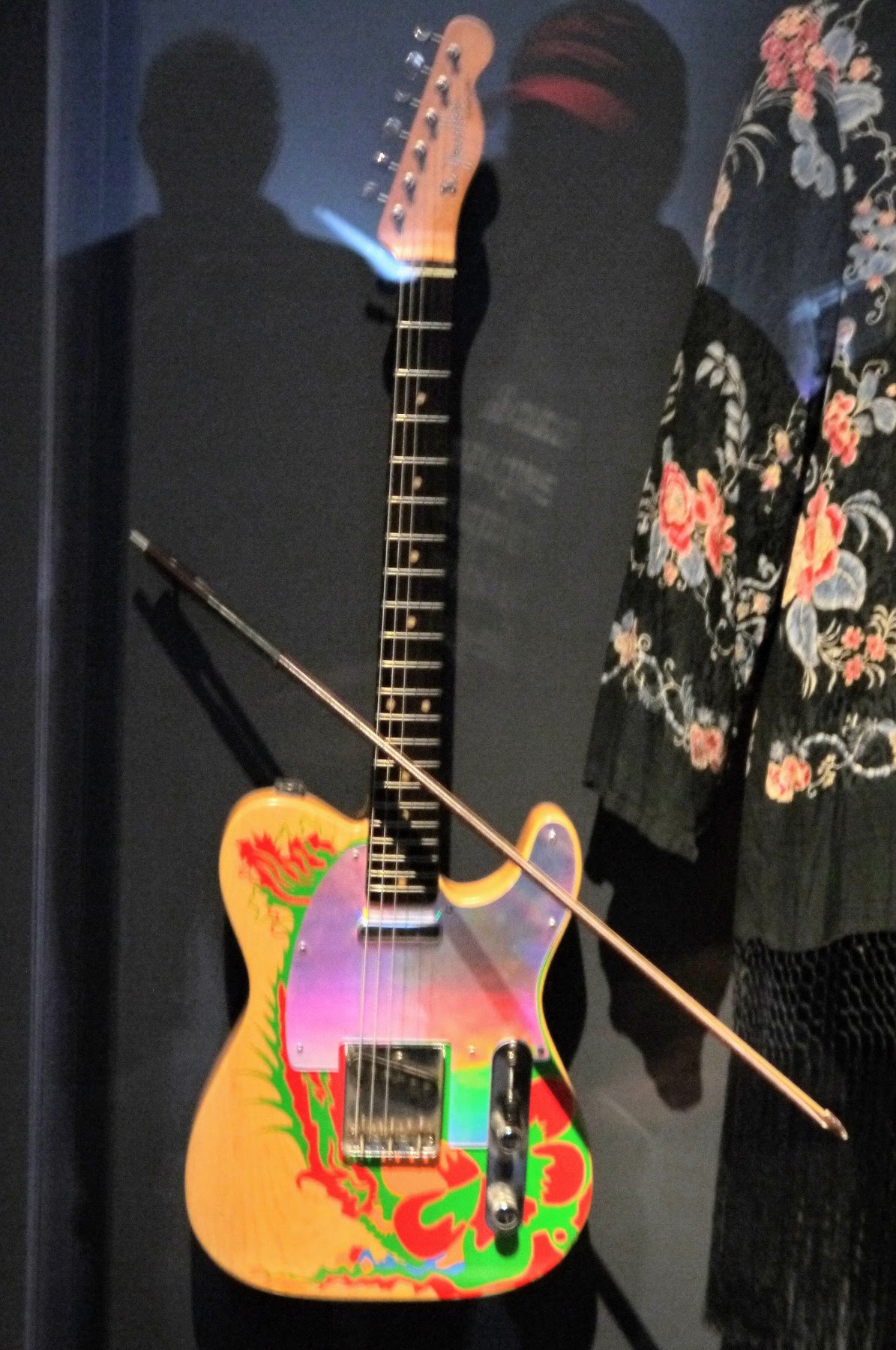
The guitar matters as much as the amp. The Met says Page received his 1959 Telecaster from Jeff Beck, used it with the Yardbirds in 1967, and "after the Yardbirds disbanded, he used it to record all of Led Zeppelin (1968)." Page painted the dragon on the body himself. The museum also notes that the guitar "was later stripped by a well-meaning friend, but Page restored the design in 2018."
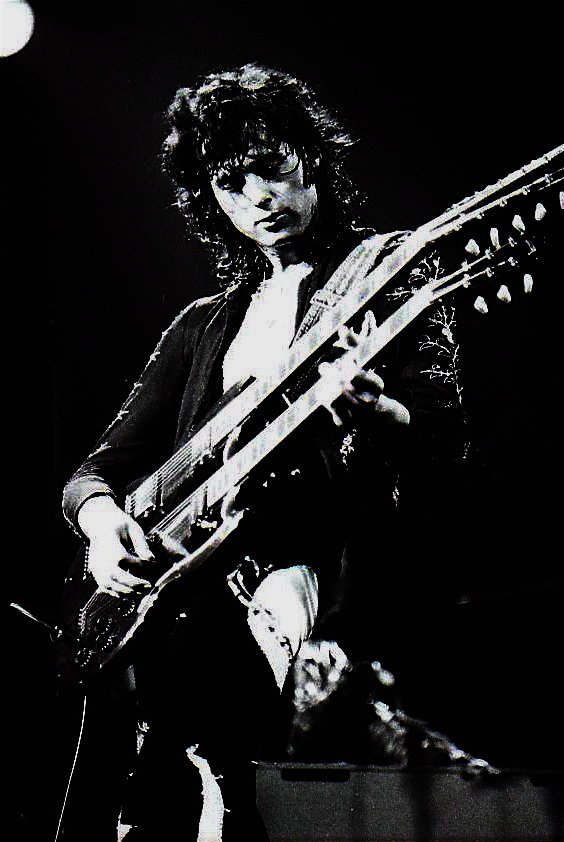
Guitar World reported on a demo Page filmed for the exhibition, in which he summed up the whole record's guitar sound: "And the whole of that first album [Led Zeppelin I] is done with this guitar, this amplifier, the wah wah pedal and the overdrive."
That combination explains a lot of the album's character. A Telecaster's bright, fast single-coil attack through a small, overdriven combo gives you something very different from the Les Paul-and-Marshall roar most people hear when they think of Led Zeppelin. The debut is rawer and spikier. The midrange is grainier, and the pick attack sits right on top of the note. If you know the band mainly from the later records, go back to "Communication Breakdown" or "Dazed and Confused" with that rig in mind and the difference is obvious.
For contrast, our History of the Riff: "Whole Lotta Love" covers the second album, by which time Page's sound was moving toward the Les Paul and the big Marshall.
How Sundragon Started
Sundragon's "Tale" page tells the story as a slow-burning project between friends, and it's worth summarizing because it explains the company's obsession with matching Page's original amp.
By the company's account, Margouleff hired Colby around 2010 to restore Margouleff's very large collection of vintage amps. Colby had spent 30 years at Korg USA, and Sundragon's About page says he rose to Executive VP and was closely involved with Marshall while Korg distributed the brand in the US. Around 2014, Margouleff found an unusually good-sounding tweed Champ in the collection, and Colby worked out what made it special. That work led to the Colby Lil Darlin, and in 2016 Margouleff gave Page one, which the company says Page used as his at-home practice amp.
In 2017 the Supro project began. Colby first modified a vintage Coronado to his best guess at Page's sound. It came close, but not close enough, so Page shipped his original amp to Colby's shop in New York. The second attempt was a true clone, with "transformers from the original manufacturer, exact wiring and other details of modifications that were done to the amp," housed in a brass-plated preamp chassis like the original. According to Sundragon, Page loved it, and the three partners agreed to build 50 amps for the 50th anniversary of Led Zeppelin I.
For the speaker, the company says it couldn't source the cone used in Page's Oxford because that manufacturer was out of business. It chose a Jensen P12Q with an Alnico magnet as the closest modern match. Guitar World later reported that the first 50 limited-edition combos, at $12,500 each, "all sold in two days."
Where the Dragonette Fits in the Sundragon Family
Sundragon now has five amps, from a 1-watt practice combo to a Marshall-based half stack. These are the prices on the company's shop page as of November 9, 2026:
| Model | What it is | Listed price | Status on Nov 9, 2026 |
|---|---|---|---|
| Limited Edition Sundragon Combo | Original 50-unit recreation of Page's modified Supro Coronado | $12,500 | Sold out |
| Sundragon Standard Combo | Production version of the same circuit | $3,875 | Listed |
| Sundragon Nymph | 1-watt / ¼-watt all-tube combo with a Supro-derived preamp | $2,900 | Listed |
| Super Dragon (Limited Availability) | Recreation of Page's modified 1968 Marshall Super Bass | $22,500 | Sold out |
| Dragonette Limited Edition | 6-watt 1x10" hybrid of Nymph preamp and Sundragon power section | $9,000 | Listed, "only 10 left" |
A few details from Sundragon's model pages help explain the table.
The Standard Combo is described as the second edition of the original amp, "built with the same unique circuit," with separate preamp and power amp chassis, original-specification transformers "built by the actual original manufacturer," and point-to-point hand wiring on terminal strips.
The Nymph is "a small format one watt, all-tube amp" whose preamp "is a modified version of Jimmy's combo," with a new push-pull power section using pentodes. Page's own story about first hearing it is on the Nymph page. Backstage at the Rock & Roll Hall of Fame, he tried it with his Gibson EDS-1275 double-neck and was startled to learn he'd been playing in the quarter-watt mode. "I've got to tell you, that amplifier, the Nymph, is absolutely extraordinary," he says.
The Super Dragon goes a different way entirely. Sundragon says 50 half stacks were made from November 2023 through mid-2024, each head signed by Page. In his statement on that page, Page calls it "a faithful recreation of my 'Number 1' amp," a 1968 Marshall Super Bass modified by Tony Frank. He says it became "the principal amp I would rely on in the studio for all Led Zeppelin records from Zeppelin II onwards."
The Dragonette sits between the Nymph and the Standard Combo in volume. In price, it sits between the Standard Combo and the original Limited Edition. You pay much more than you would for the Standard Combo because of the signature, the 50-unit run and the hand-built NOS construction. What you get over the Nymph is real headroom and the ability to play with a drummer.
What Six Watts Means for a Player
Wattage numbers can mislead people who are used to solid-state practice amps, so it's worth being clear about what a 6-watt tube combo usually means in practice. That's general amp behavior, not a test of the Dragonette, which we haven't played.
A small tube amp reaches power-section breakup at a far lower volume than a 30-, 50- or 100-watt amp. That's the whole appeal. The sound of an amp working hard, with the compression, sag and touch sensitivity that come when the output stage is pushed, arrives at a level you can manage in a small room, a studio or a modest club. A 1-watt amp like the Nymph gets there at bedroom volume. Six watts into a 10" speaker gives you more air and more volume before things fall apart. That fits Sundragon's claim that the Dragonette is "loud enough for a small venue gig."
A 10" speaker also tends to sound tighter and more focused than a 12" in the same cabinet, with less low-end bloom. That's not the same as Page's 1x12" Coronado. Sundragon says the speaker was "carefully chosen," but it hasn't named it, so we can't tell you anything more specific.
For recording, a small hand-wired amp that sounds driven at low volume is exactly what a lot of players want. It's also, more or less, how Led Zeppelin I was made: a small combo pushed hard, with a single-coil guitar and a fuzz in front of it.
Is a $9,000 Dragonette Worth It?
That depends on why you want one.
As a collectible, the case is easy to make. It's a 50-unit run, it's signed, and it comes from a company whose first limited edition reportedly sold out in two days at an even higher price. Its maker also has access to the original amp it's based on. Sundragon's listing said only 10 of the 50 remained when we checked. If you collect Zeppelin artifacts, the price is set by that market, not by what other 6-watt amps cost.
As a working amp, it's a harder sell, and you should be honest with yourself about that. Several excellent hand-wired, low-wattage tube combos cost a fraction of $9,000. Within Sundragon's own range, the Nymph ($2,900) and the Standard Combo ($3,875) share the core preamp idea and the original circuit at much lower prices. The Dragonette's main practical advantage is its middle-ground power. If you want the Sundragon flavor at a volume you can gig with but don't need the signature, the Standard Combo is the obvious one to look at first.
Also think about the fine print. Orders are non-cancelable, and Sundragon hasn't published full specs. Players outside the US need to contact the company about voltage and shipping. This isn't something to buy on impulse.
Getting Closer to the Led Zeppelin I Sound Without $9,000
You don't need a Sundragon to get into the territory of the first Zeppelin record. Page told you the recipe himself: a Telecaster, a small overdriven amp, a wah and a fuzz.
- Start with a Telecaster or another bright single-coil guitar. Much of the debut album's bite comes from the Tele's attack. Our Fender Telecaster history explains why that guitar cuts the way it does.
- Use a small amp and turn it up. A low-wattage tube combo near the edge of breakup will get you further than a big amp at bedroom volume.
- Keep the fuzz in front, not instead. Page's "overdrive" on that album was a fuzz pedal pushing an already-driven amp. Set the fuzz gain lower than you think and let the amp do some of the work.
- Use the wah as a filter, not just an effect. A partly open wah is a quick way to shape the midrange of a solo.
- Dig in. Much of the tone on those records is in the hands. A small amp at the edge of breakup rewards a hard pick attack and cleans up when you play softly.
If you want to go further into Page's playing, our breakdowns of the Link Wray "Rumble" riff (the song Page played when he inducted Wray into the Rock & Roll Hall of Fame), "Black Dog", "Kashmir" and the "Since I've Been Loving You" solo are good next steps. Jimmy Page and Robert Plant's chemistry in Led Zeppelin covers the band side of the story.
The Takeaway
The Dragonette is the most usable amp in Sundragon's lineup. It's the first one that sits between a 1-watt bedroom amp and a full-size combo, and it's built on a circuit with as good a claim as any to being the sound of Led Zeppelin I. Page's own words make clear it's meant for playing, not just display.
It's still a $9,000, 50-unit, signed edition, and only 10 were left when we checked. Most players will get more from understanding why it works than from owning one: a small amp pushed hard, a bright guitar, a fuzz and a heavy right hand. If you're one of the few who can buy one, ask Sundragon for the full specs first, and remember the order can't be canceled.
Would you spend $9,000 on a signed Page amp, or build your own Led Zeppelin I rig for a lot less? Tell us in Guitar Talk.
Sources: Sundragon (sundragonamps.com homepage, Dragonette Limited Edition shop listing, model and About pages, checked November 9, 2026); The Metropolitan Museum of Art collection entries for the Supro 1690T Coronado and the "Dragon" Telecaster; Guitar World.
Shop this gear
- Fender Jimmy Page Telecaster — NaturalCompare prices at Plugged Gear Co.

- Fender Jimmy Page Mirror Telecaster — White BlondeCompare prices at Plugged Gear Co.

Plugged Gear Co. may earn a commission from qualifying purchases.
Experience-driven coverage, not algorithm bait.
- 20+ years of guitar playing experience
- Real-world retail experience at Guitar Center
- Thousands of hours testing guitars, amps, and pedals
- A community of 50,000+ guitar enthusiasts across platforms
- Partnerships with Fender, DistroKid, TrueFire, Card Chords, and Enya
- Editorial standards published openly — see how we test gear
The Modern Guitar Magazine. Delivered to your inbox.
No spam. No gimmicks. Just great guitar content — stories, tones, iconic solos, and honest gear takes. Every week.
Ask GP
3 free questions a dayStill curious? Ask GP about this story.
Your personal classic-rock and guitar guide — ask anything about Jimmy Page's Sundragon Dragonette Puts.
Discussion (0)
Sign in to join the discussion.
Sign in to commentLoading comments…
Discover another guitar story
Swipe through our latest features, breaking news and iconic solos — one story at a time.
Open Swipe →More Guitar News
History of the Riff: Link Wray's "Rumble" — The Instrumental That Made the Guitar Sound Dangerous
No lyrics. No melody you’d hum in the shower. Just power chords, a punctured speaker, and a sound so menacing some radio stations banned it. Here’s how Link Wray’s 1958 instrumental rewired rock guitar.
Robert Plant at 78: Why His Chemistry With Jimmy Page Was Led Zeppelin's Real Secret Weapon
Robert Plant turns 78 today. The conventional story says Page played guitar and Plant sang. The truth is stranger and more useful: they behaved like two lead instruments arguing, answering and leaving each other room.
Jimmy Page's 'Since I've Been Loving You' Solo: The Greatest Blues Performance Ever Captured on Tape?
More than fifty years after Led Zeppelin III, Jimmy Page's slow-blues masterpiece still teaches guitarists what technical perfection never could — that phrasing, dynamics, and human imperfection are the real currency of great guitar playing.