
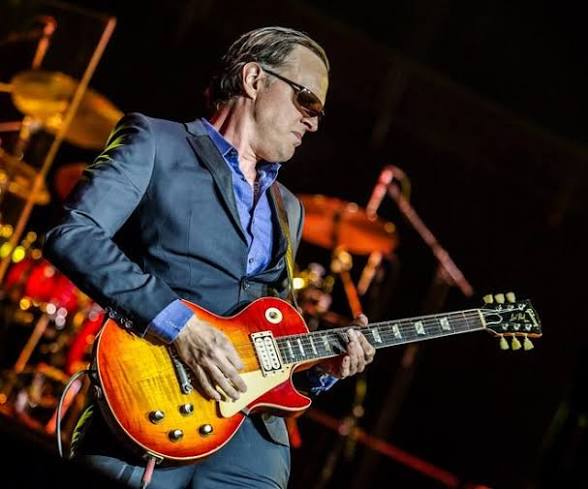
Joe Bonamassa Says Guitar Culture’s “Armchair Quarterbacks” Are Killing the Fun — and Points to Nick Jonas as a Warning
The blues-rock heavyweight says online guitar culture has become obsessed with judging players, ranking performances and tearing musicians apart over mistakes. For Bonamassa, the infamous backlash against Nick Jonas shows just how ugly it can get.
There may be no instrument on Earth that inspires quite as much opinion as the electric guitar.
Tone. Technique. Feel. Speed. Gear. Authenticity. Who played it better. Who has the better vibrato. Who deserves to be called a blues player. Who used too much gain. Who used too little. Who played one wrong note in a two-minute clip posted to Instagram.
Joe Bonamassa has apparently had enough.
Speaking with Guitar Interactive Magazine in an interview published June 26, 2026, Bonamassa took aim at a part of modern guitar culture that he believes has turned what should be a shared love of music into something closer to a spectator sport. His target wasn't constructive criticism. It was the army of online commentators he described as “armchair quarterbacks” — people judging musicians from the safety of a screen without understanding what it takes to actually perform at that level.
And he didn't soften the message.
Bonamassa's problem isn't criticism. It's the competition.
Bonamassa's argument starts with something almost every guitarist who spends time online has seen.
Two respected players share a stage. Within minutes, the comments become: Who won? Who had better tone? Who played faster? Who embarrassed whom?
Bonamassa sees the entire premise as ridiculous.
He explained that when he plays with musicians such as Kenny Wayne Shepherd or Warren Haynes, the musicians themselves aren't standing onstage trying to determine a winner. They're playing music together. They're reacting to each other, improvising, exchanging ideas and — importantly — having fun.
“It's not a competition,” Bonamassa said while discussing those collaborations.
That distinction sounds obvious until you spend five minutes scrolling through the comments beneath almost any guitar jam involving two famous players.
The internet has turned comparison into content. A jam becomes a battle. A guest appearance becomes an audition. A missed bend becomes evidence that somebody was “never that good.” And an imperfect night can suddenly become a permanent piece of a musician's online identity.
Bonamassa's point isn't that audiences can't prefer one guitarist over another. Guitar fans have debated players since long before social media existed. It's what happens when the debate becomes more important than the music.
“Armchair quarterbacks”
Bonamassa used an American football analogy to describe the phenomenon. An armchair quarterback can watch Tom Brady throw a football from home and convince himself that he could have made a better decision.
The obvious difference? He's not standing in the stadium. He's not dealing with the pressure. He's not being watched by thousands of people. And he isn't the one who actually has to throw the ball.
Bonamassa believes guitar culture increasingly suffers from the same problem: people with little or no comparable performance experience confidently dissecting professional musicians from short online clips.
His strongest line may have been aimed directly at that disconnect: “If you've not been on a stage for 10,000 hours. Shut the f--- up.”
Crude? Absolutely. But the point behind it is harder to dismiss.
Playing guitar in your bedroom and playing guitar on a major stage are not the same skill. Neither is recording the perfect take and delivering one shot, live, with cameras rolling.
Every guitarist who has performed enough gigs eventually encounters the moment when the fingers don't do what the brain expected. A string breaks. A pedal doesn't switch. The monitor mix disappears. You forget where you are. You hit a note and instantly know it wasn't the note you intended.
Usually, you keep playing. Sometimes millions of people happen to be watching.
And that's where Nick Jonas enters Bonamassa's argument.
The Nick Jonas solo that wouldn't go away
At the 2016 Academy of Country Music Awards, Nick Jonas joined Kelsea Ballerini during a performance of “Peter Pan.” Jonas took a guitar solo. It went badly.

During the live performance, Jonas hit an incorrect note and struggled to recover cleanly. Because it happened on a nationally televised awards show, the moment quickly escaped the confines of the performance itself and spread across social media.
The clips came. Then the jokes. Then the memes. Then the analysis.
Jonas acknowledged the mistake publicly at the time, essentially putting his hands up and admitting he'd suffered a mental lapse during the solo.
What wasn't apparent to everyone watching was how deeply the moment affected him. Years later, during a 2023 appearance on Armchair Expert, Jonas explained that the performance had affected him enough that he went to therapy afterward. He described going blank during the solo despite having rehearsed it repeatedly and said the experience intensified the pressure he felt to perform perfectly.
“The guitar is an instrument, not a combat sport.”
That's the part Bonamassa can't get past. Not that Jonas missed notes — every professional musician has missed notes. The problem, in Bonamassa's view, was the scale of the punishment. One bad guitar solo became an internet event.
Bonamassa's defense of Nick Jonas is really a defense of every musician
It's worth noting that Bonamassa isn't arguing that the solo was secretly great. It wasn't. That's not his point.
His argument is far more interesting because he doesn't attempt to rewrite what happened. He's asking why one mistake needed to become a referendum on a person's legitimacy as a musician.
That distinction matters. There's an enormous difference between saying “that solo wasn't good” and spending days or weeks humiliating the person who played it.
Bonamassa's position is essentially that musicians are allowed to fail in public. That shouldn't be a controversial idea. But social media has created a strange environment where perfection is expected from performers while imperfection is often the content most likely to spread.
Nobody clips the other 500 nights when everything went correctly. The missed note gets five million views.
Guitar culture has always loved a shootout
There is also something uniquely guitar-centric about Bonamassa's frustration. Guitar fans love rankings.
Hendrix or Clapton? Page or Blackmore? Van Halen or Randy Rhoads? Stevie Ray Vaughan or Gary Moore? Bonamassa or John Mayer?
The debates can be fun. They're part of the culture. The problem begins when appreciation becomes tribalism.
A guitar player doesn't have to lose for another guitarist to be great. Eric Johnson's technique doesn't diminish David Gilmour's phrasing. Yngwie Malmsteen's speed doesn't invalidate B.B. King's economy. A player doesn't need to possess somebody else's strengths for his own strengths to matter.
And two guitarists sharing a stage certainly don't need judges holding scorecards. That's what Bonamassa appears to be pushing back against. The guitar is an instrument, not a combat sport.
The internet isn't the enemy
Interestingly, Bonamassa didn't dismiss social media altogether. In the same Guitar Interactive conversation, he acknowledged its enormous ability to expose musicians to audiences they might never otherwise reach. He pointed to the way online platforms can allow talented players from practically anywhere to suddenly be discovered around the world.
That's an important distinction. This isn't simply an older musician yelling at the internet. Bonamassa understands what the internet has given guitar players: access, education, exposure, communities, and careers that would have been nearly impossible to build through traditional gatekeepers.
His complaint is about what comes with it: the constant judgment, manufactured competition and certainty of people who experience performances through edited clips rather than from the stage.
And perhaps that's the more useful takeaway from his comments. The internet didn't create opinion. It industrialized it.
The stage still matters
Elsewhere in the interview, Bonamassa repeatedly returned to the importance of actual experience. Playing gigs. Watching other musicians. Standing next to great players. Learning how someone really produces a sound rather than assuming a pedal, amplifier or secret setting is responsible.
He recalled seeing Robben Ford and recognizing that Ford still sounded unmistakably like himself regardless of whether the expected boutique gear was present. That reinforced one of Bonamassa's larger ideas: years of playing create something that can't simply be downloaded from a tutorial or copied from somebody else's signal chain.
You can learn information online. Experience still has to be earned.
Maybe guitar culture could use more players and fewer judges
Bonamassa's comments are deliberately provocative, but underneath the profanity and frustration is a surprisingly simple argument: music is supposed to be enjoyable, musicians are supposed to take chances, and taking chances means occasionally failing.
Nick Jonas missed a guitar solo on television. It was a bad moment. It was not a crime against the instrument.
More importantly, Jonas' later comments about therapy demonstrate how something audiences consume as a 30-second joke can carry far greater weight for the person standing onstage.
That doesn't mean guitar criticism should disappear. It means perspective might be useful.
Because sooner or later, every guitarist misses the bend. Every guitarist forgets the part. Every guitarist hits the wrong note. Most of us are simply fortunate enough that nobody turns it into a meme.
And perhaps that's Bonamassa's real message. Before declaring a winner, tearing apart somebody's career or deciding a single bad performance proves a musician can't play, remember what you're actually watching: a human being playing an instrument. Not a quarterback. Not a boxer. And not someone competing for a trophy. Just a musician trying to make music.
Sources & further reading
- 1.Guitar Interactive Magazine — Joe Bonamassa interview with Sam Bell (June 26, 2026)
- 2.Academy of Country Music Awards 2016 — Nick Jonas and Kelsea Ballerini perform “Peter Pan”
- 3.Armchair Expert (2023) — Nick Jonas on the aftermath of the ACM performance
Experience-driven coverage, not algorithm bait.
- 20+ years of guitar playing experience
- Real-world retail experience at Guitar Center
- Thousands of hours testing guitars, amps, and pedals
- A community of 50,000+ guitar enthusiasts across platforms
- Partnerships with Fender, DistroKid, TrueFire, Card Chords, and Enya
- Editorial standards published openly — see how we test gear
The Modern Guitar Magazine. Delivered to your inbox.
No spam. No gimmicks. Just great guitar content — stories, tones, iconic solos, and honest gear takes. Every week.
Ask GP
3 free questions a dayStill curious? Ask GP about this story.
Your personal classic-rock and guitar guide — ask anything about Joe Bonamassa Says Guitar Culture’s.
Discussion (0)
Sign in to join the discussion.
Sign in to commentLoading comments…
Discover another guitar story
Swipe through our latest features, breaking news and iconic solos — one story at a time.
Open Swipe →More in Guitar Talk
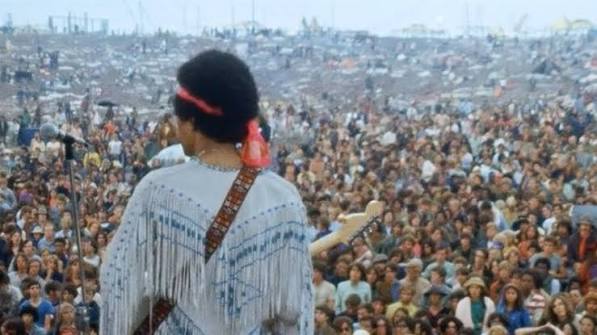
The 10 Greatest Guitar Renditions of “The Star-Spangled Banner”
From Jimi Hendrix's controlled chaos at Woodstock to modern performances by H.E.R., Gary Clark Jr. and Jack White, these guitarists turned America's national anthem into something deeply personal.
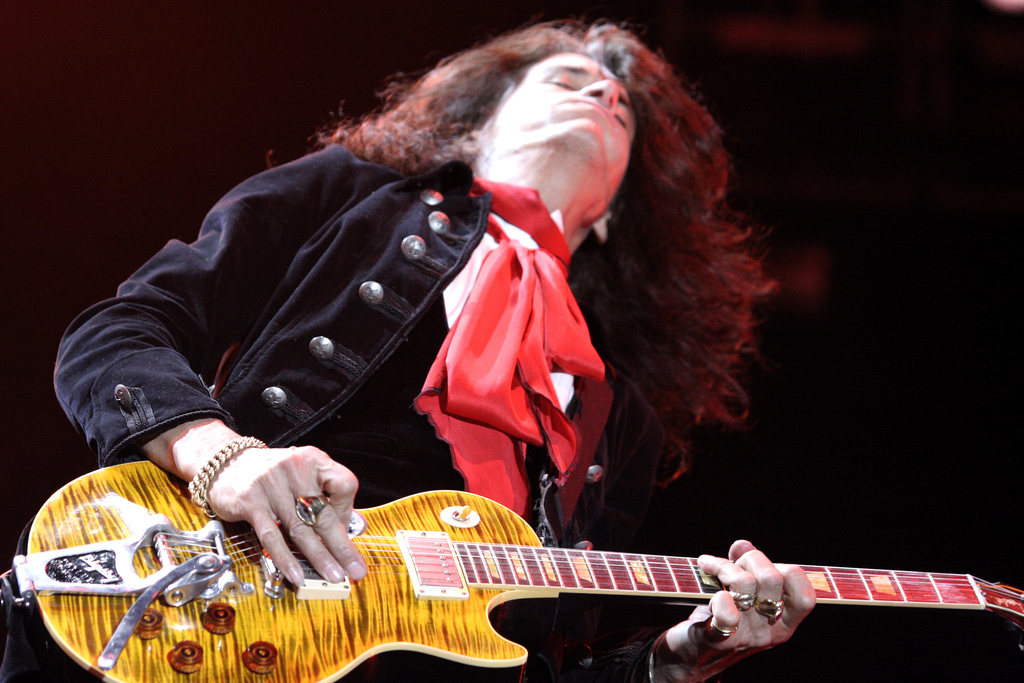
Happy Birthday, Joe Perry: The Riff Machine Who Gave Aerosmith Its Swagger
Joe Perry turns 76 today. From the swampy grind of “Sweet Emotion” to the reunion that saved a band, this is the career of the guitarist who taught American hard rock how to strut.
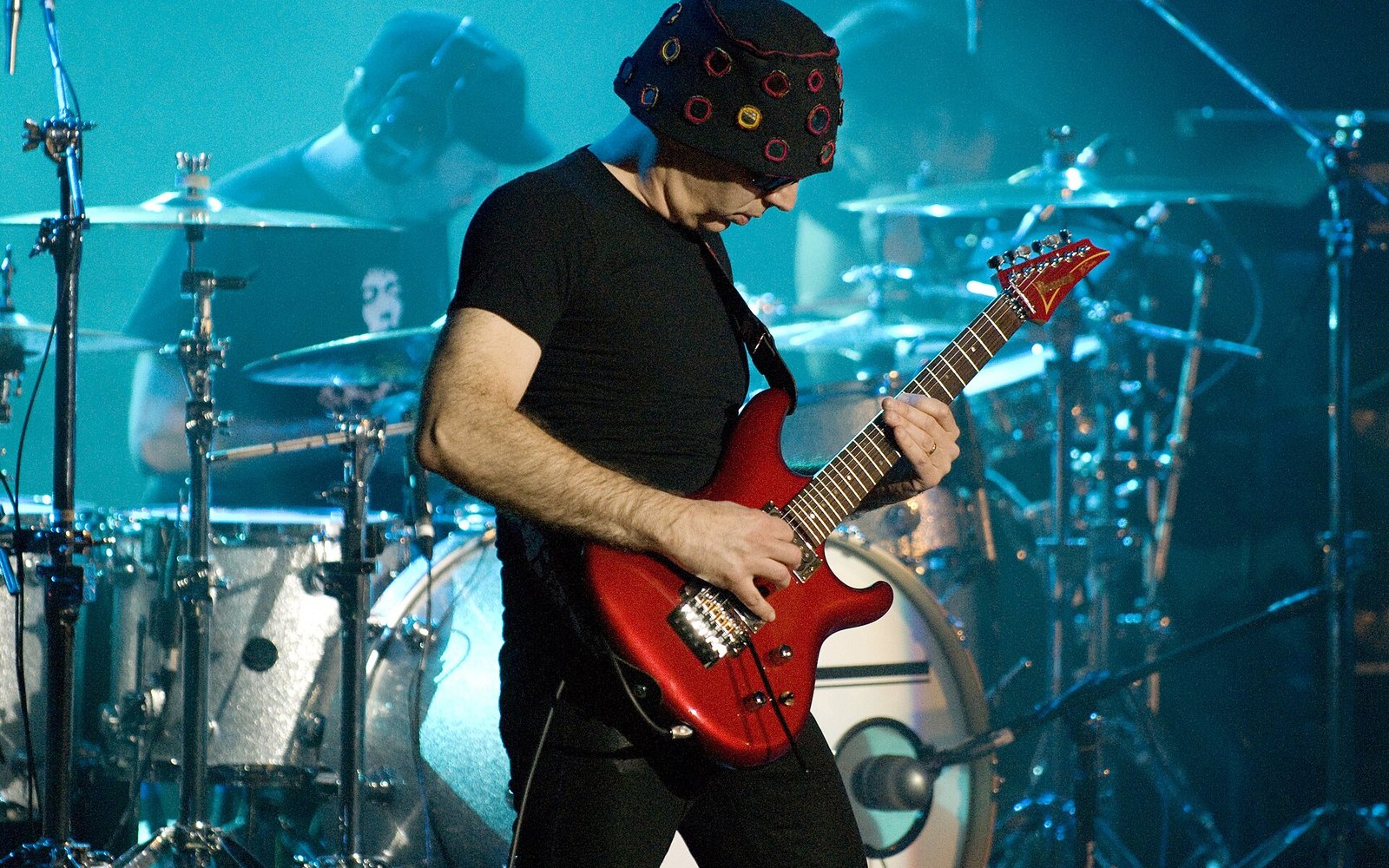
History of the Riff: How Joe Satriani Made “Flying in a Blue Dream” Feel Weightless
An acoustic guitar in an unusual tuning, a stray broadcast and a melody that seems to hang in the air: inside the construction of Satriani’s 1989 masterpiece.