
Pete Townshend’s Smashed 1969 Gibson SG Returns: Met Opera Throw, 56 Years Later, Paris Stage
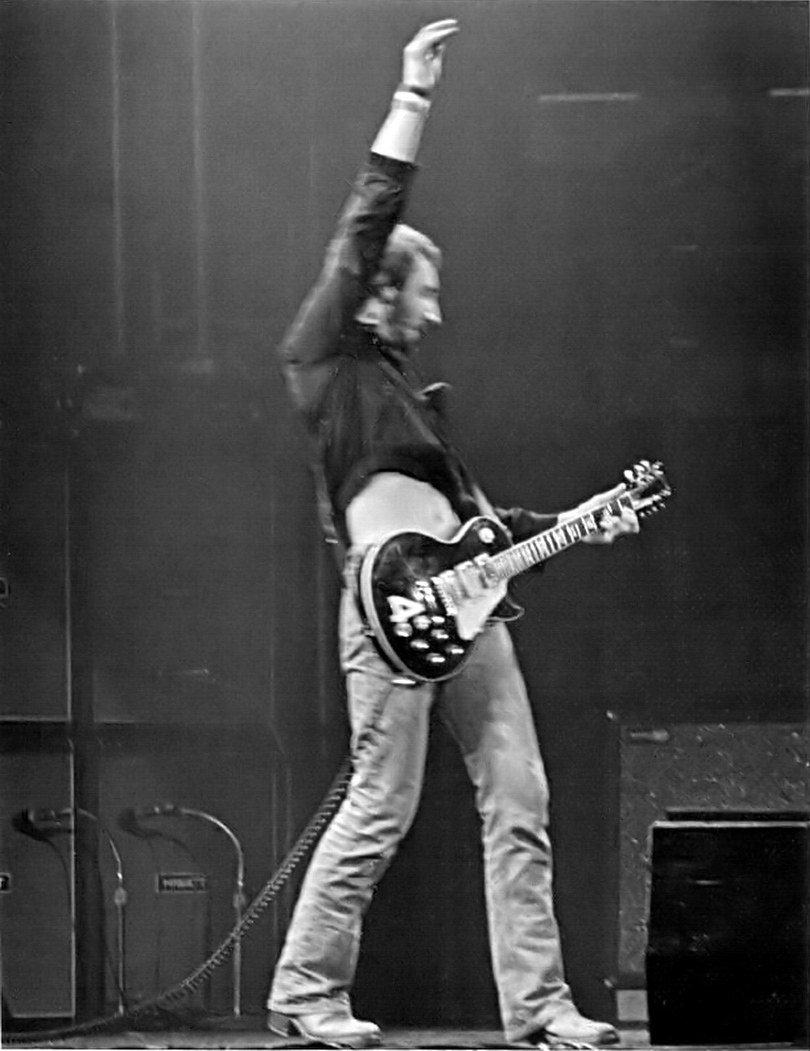
Pete Townshend’s windmill — the physical vocabulary that made cherry SG Specials both iconic and disposable. Photo: John Haslam, CC BY-SA 2.0, via Wikimedia Commons.
Pete Townshend’s cherry 1969 Gibson SG Special, cracked at the Met Opera in 1970 and caught by fan Binky Philips, is headed to Matt’s Guitar Shop in Paris.
A cherry-red 1969 Gibson SG Special with two P90 soapbar pickups — the model forever glued to Pete Townshend’s late-’60s / early-’70s silhouette — has resurfaced for players again. According to Guitar World (Oct 29, 2026) and matching coverage from Guitar Player, the guitar Townshend cracked onstage at New York’s Metropolitan Opera House on June 7, 1970, then tossed to superfan Binky Philips, is headed to Matt’s Guitar Shop in Paris, where founder Matthieu Lucas wants working musicians to plug it in.
This is not a new smash reel. It is a provenance story with a living instrument at the end of it: a Who-era SG Special that survived a chaotic Tommy-era night, got a luthier’s headstock graft, spent decades as a fan’s holy relic, and is now being treated the way Lucas treats other excavated icons — as a guitar that should be played, not locked behind glass.
The News: From a Front-Row Catch to a Paris Shop Floor
Lucas has spent 2026 chasing lost guitars. Guitar World notes he earlier brought Eric Clapton’s long-missing “Summersburst” Les Paul into the light. The Townshend SG is the next chapter: a cherry SG Special tied to one of the most photographed instrument eras in rock, now routed toward Matt’s Guitar Shop so “every musician who wants to play this on stage” can, in Lucas’s words to Guitar World.
How Lucas authenticated it, in the same interview:
“Well, you can tell this is the very strap Pete used during that show, and the story is well-known if you are a Pete fan.”
He added that Townshend and Philips stayed in touch over the years, that Townshend knows about the guitar, that photos of Pete playing it exist, and that the instrument has been featured in U.S. exhibitions over roughly the last 15 years. Lucas also told Guitar World he played it through one of Townshend’s original Hiwatts:
“I can tell you one thing: this guitar sounds like him… This is without a doubt the most iconic guitar associated with Pete.”
TGP is reporting Lucas’s claims as his authentication case, not as a laboratory certificate. The chain that matters for readers is consistent across Guitar World, Guitar Player, Philips’s own long-form account, and Who gear documentation: Met Opera, June 7, 1970; cracked SG; thrown to Philips; repaired; now entering a playable public chapter in Paris.
June 7, 1970: Tommy at the Met, Then “Shakin’ All Over”
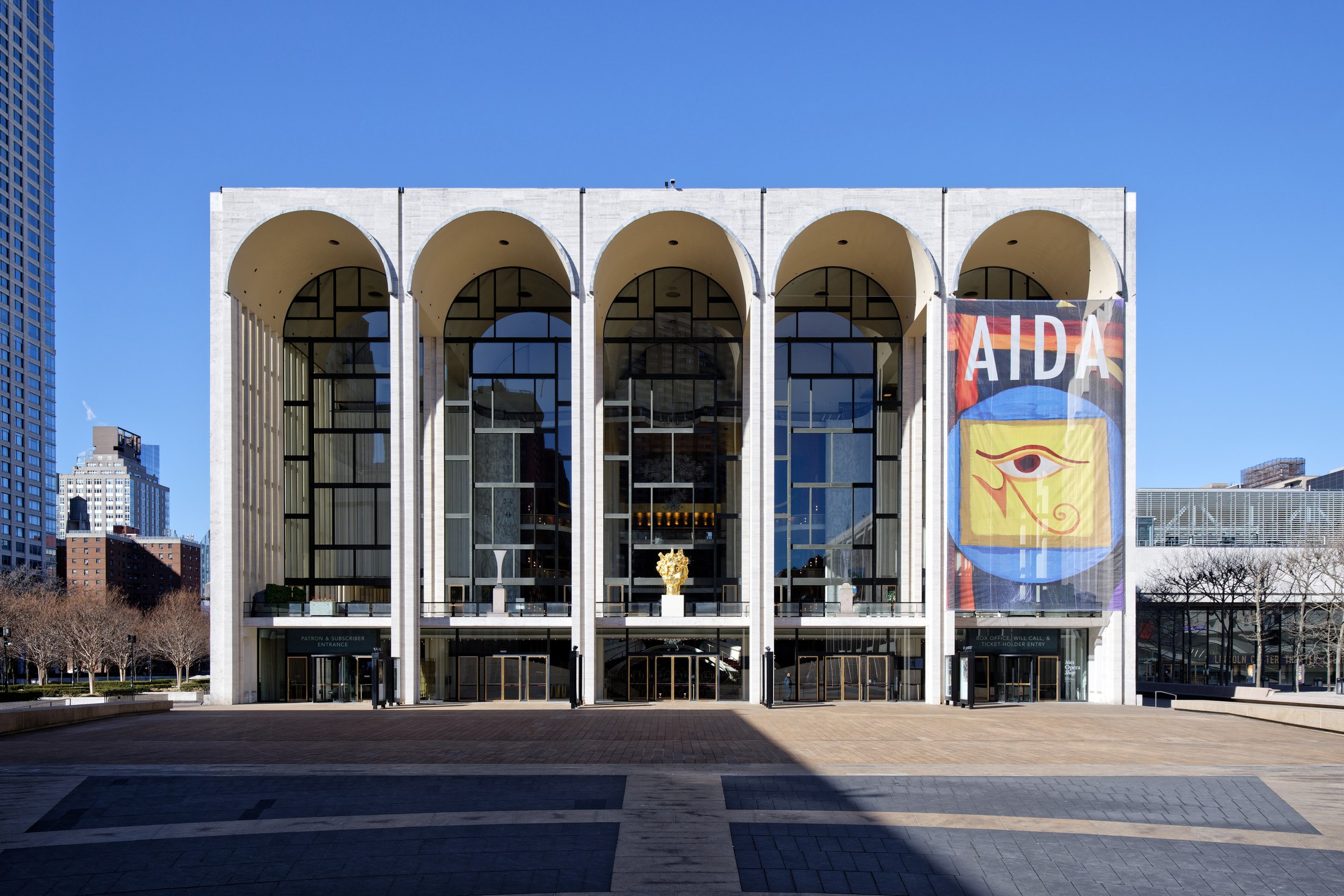
The Who’s Metropolitan Opera House dates were billed around the final New York Tommy performances — rock invading Lincoln Center with Bill Graham in the mix. Philips later wrote that he slept out near the Fillmore East marquee for tickets and scored front-row seats for the June 7 shows, orchestra pit and all.
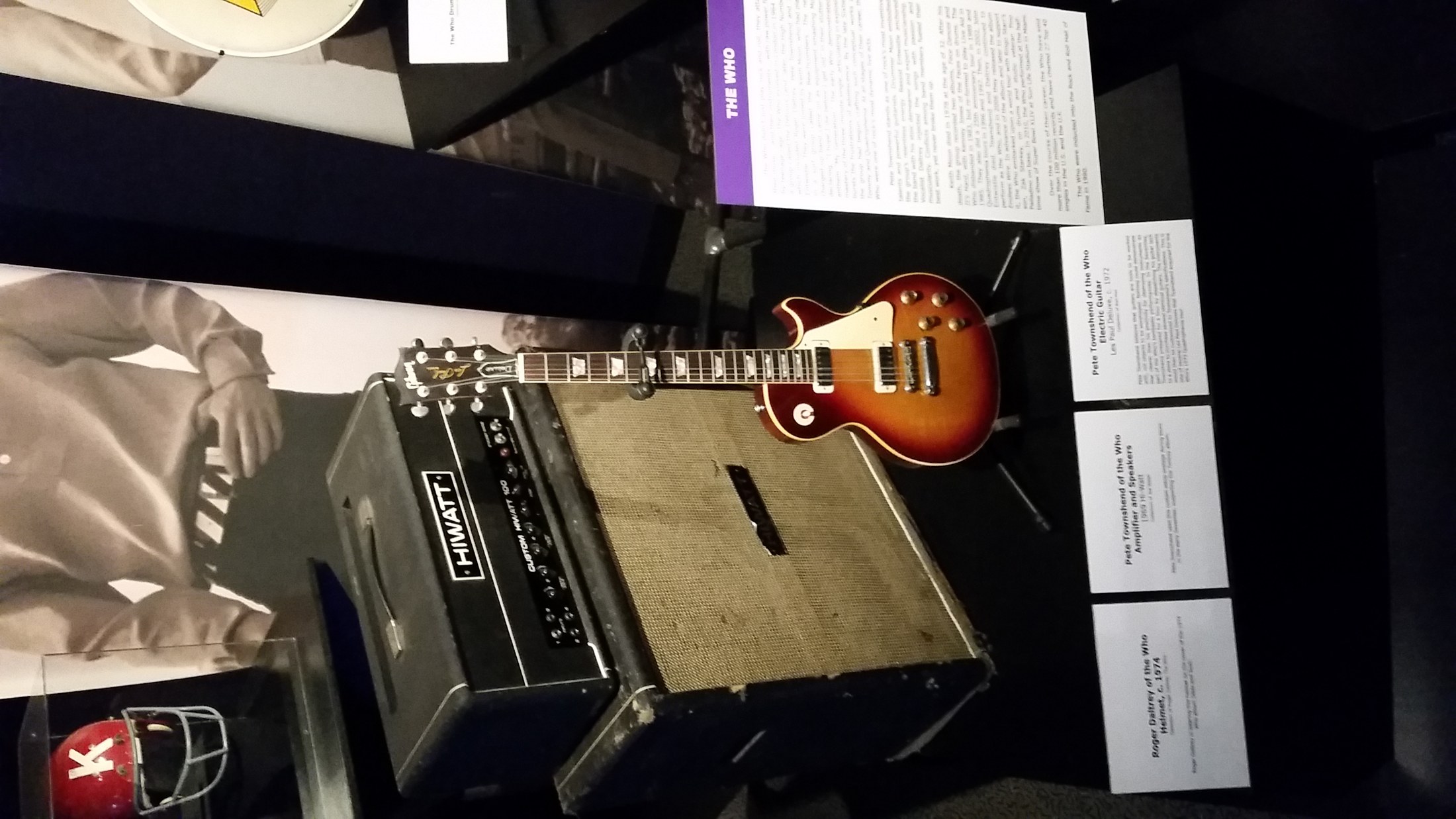
His fullest first-person telling remains the 2010 HuffPost essay “I Caught Pete Townshend’s Guitar,” which matches the spine of the story Lucas retells in 2026. After Tommy and a closing “My Generation,” Townshend carefully leaned the SG against a Hiwatt stack and walked off — no smash. The crowd demanded an encore. The band returned for “Shakin’ All Over.”
What happened next is the night’s hinge. Philips’s account: Townshend, deep in a solo, backed into the Hiwatt cabinets, smacked the guitar, and knocked it hopelessly out of tune. He threw it down, grabbed a spare SG, and kept playing. A roadie tried to drag the wounded guitar offstage. Townshend noticed, stomped the instrument, and snapped the headstock. Then he looked at Philips.
Guitar World’s Lucas interview compresses the same beat from the shop’s recent telling:
“He touched the amps and went way off-tune during a cover of Shakin’ All Over, which, of course, made him angry. This resulted in Pete throwing the guitar on the floor.”
“A tech tried to grab the SG quickly to give Pete his spare guitar, but Pete didn't want his tech to grab the guitar… He walked on the guitar by accident, and that's how the headstock cracked. Funnily enough, this guitar was not destroyed intentionally that day.”
“Binky and Pete made eye contact when the SG's headstock got cracked. Pete looked at Binky and said, ‘You ready?!’ That was Binky's moment.”
Philips’s HuffPost version is more granular and physical: Townshend wrapped the strap around the headless body, judged the orchestra pit, and threw the SG high into the air. Philips caught it by the two cutaway horns. In Guitar Player’s recent shop interview, Philips puts the throw in plain baseball language — a perfect arc to the front row.
Keeping the guitar was the second fight. Philips writes that when the house lights came up, a mob charged the aisle. A towering Fillmore/Met usher who recognized him as a regular blocked the crowd and got Philips and his date out a side exit onto West 66th Street. Guitar Player’s recent piece adds a small coda: one fan begged for a knob; Philips gave it to her — the only piece of the guitar he says he no longer has.
How the Guitar Was Saved: Charles LoBue’s Headstock Graft
A headless SG is a souvenir. A playable SG is a responsibility. Guitar World reports that Philips took the instrument to Charles LoBue, a New York luthier who also worked for Gene Simmons and Paul Stanley in that era. LoBue grafted new wood onto the headstock and made the guitar playable again.
That repair is part of the object’s identity now. This is not a pristine 1969 SG Special in a collector’s vacuum. It is a working instrument with a documented trauma and a documented save — closer in spirit to other Townshend SGs that were smashed and later restored for exhibition than to a closet-queen serial.
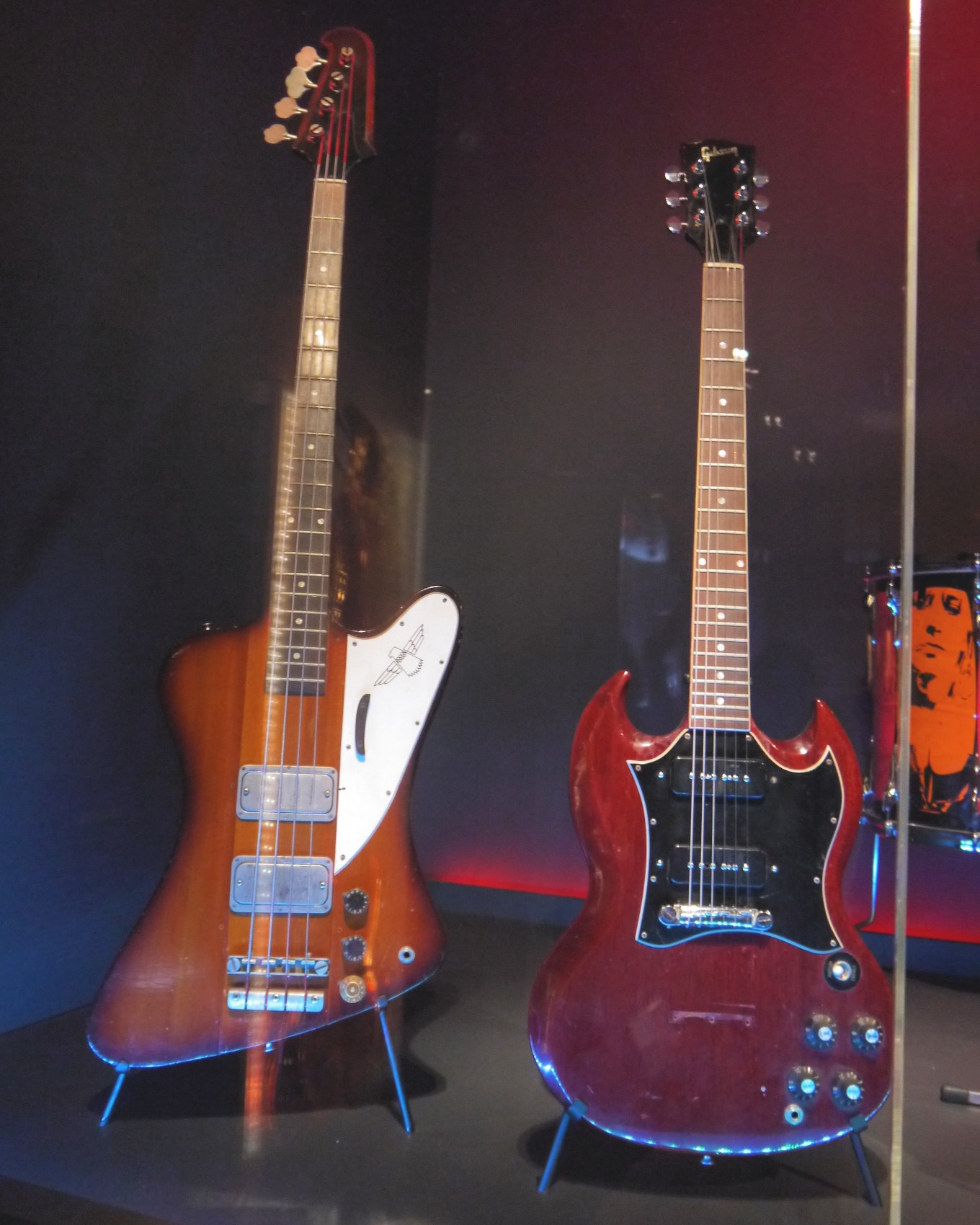
Photo: Eden, Janine and Jim, CC BY 2.0, via Wikimedia Commons
The SG Era: 1968–1971, Woodstock, Leeds, Isle of Wight
To understand why this guitar matters, you have to understand the window. Whotabs’ long-running Townshend gear documentation — the best single public ledger of Who instruments — places the cherry Gibson SG Special as Pete’s exclusive stage guitar from mid/late 1968 into 1971. That is the silhouette of Woodstock, Live at Leeds (February 14, 1970), the Isle of Wight shows, and the Tommy touring years.
Typical recipe in that era, per Whotabs and Townshend’s own vintage interviews:
- Cherry SG Special, usually 1966–1970 full black wraparound pickguard
- Two P90 soapbar pickups (not humbuckers)
- Maestro/Gibson vibrola removed, leaving screw holes; strings to the wraparound / “stairstep” bridge
- Heavy strings (Townshend has described .012 tops and a doubled B-as-G approach in period interviews)
- Univox Super-Fuzz into Sound City / Hiwatt stacks
Townshend told Sound International (April 1980) that Henry Goldrich at Manny’s Music in New York turned him onto the thin crimson SG around 1968, and that the single-coil P90s “really suited my amplifiers.” In a 1972 Guitar Player interview he was blunter about durability: Fenders lasted longer in smash mode; SGs “were like balsa wood” in a later Guitarist recollection — light enough to bend for “temper tuning,” fragile enough that spinning and slamming finished many of them.
Gibson’s factory changes eventually dried up the exact cherry Specials Pete preferred. Whotabs dates the last known use of the classic 1966–1970 cherry Special to a September 9, 1972 Paris gig, before Les Paul Deluxes and later experiments took over. The Met Opera SG sits near the peak of that SG religion: post-Tommy album culture, post-Leeds live document, still months before the Isle of Wight 1970 film cemented the image.
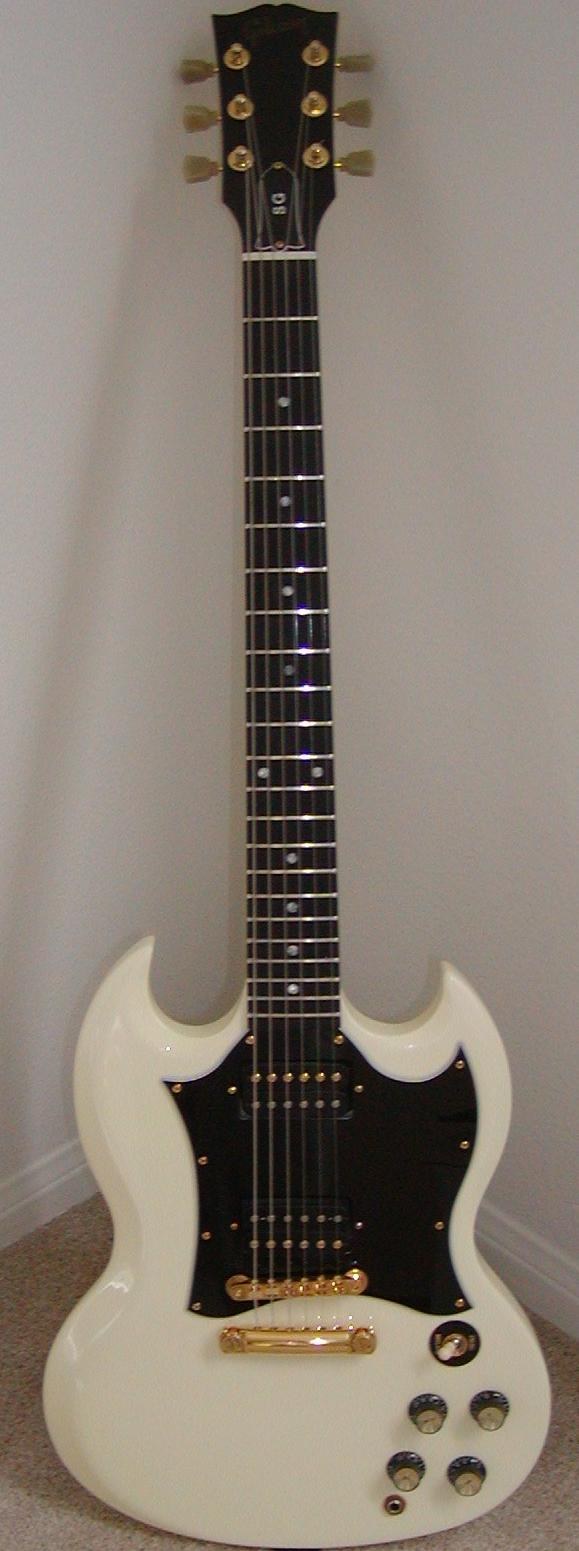
Photo: Swcom / Wikimedia, Public domain, via Wikimedia Commons
Why Townshend Smashed Guitars: Metzger, the Railway, and Auto-Destruction
The Met Opera incident was not a clean “auto-destructive art” set piece. By Lucas’s telling, the headstock crack that night was almost accidental rage after a tuning disaster. But the larger Townshend smash tradition absolutely was art-school ideology colliding with R&B violence.
The origin myth is September 1964 at the Railway Tavern (also called the Railway Hotel in some tellings) in Harrow. Townshend has described knocking a Rickenbacker into a low ceiling, poking the headstock through plaster, and — when art-school friends laughed — finishing the job in anger. Guitar World’s origin-story feature quotes his recollection to author Richard Barnes about the ceiling crack and the decision to smash what was left “to smithereens.”
The intellectual frame came from Gustav Metzger and auto-destructive art, which Townshend encountered while studying at Ealing Art College. In a 2009 BBC Radio 3 Night Waves conversation, Townshend talked about Metzger’s lectures and the idea that an artist had a duty to destroy not only the work but the tools. He has long tied The Who’s early self-immolation mythology — last a year, then destroy yourselves — to that classroom shock, even as hit records made the manifesto impractical.
That is why a surviving smashed SG is a paradox Townshend fans understand immediately. Most of the cherry Specials from 1968–71 became confetti. This one got a second neck life because a kid in the front row was ready when Pete asked.
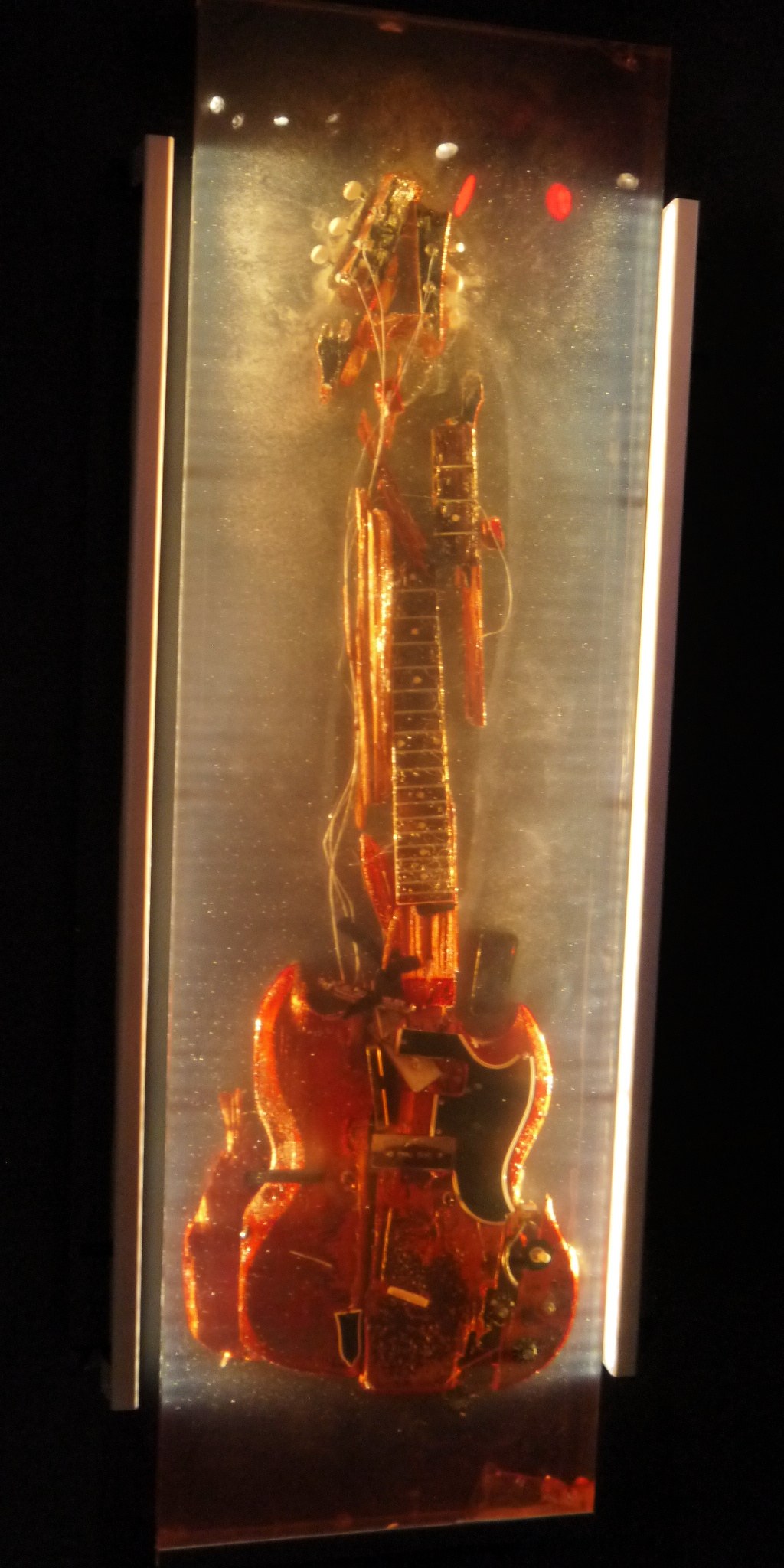
Photo: Eden, Janine and Jim, CC BY 2.0, via Wikimedia Commons
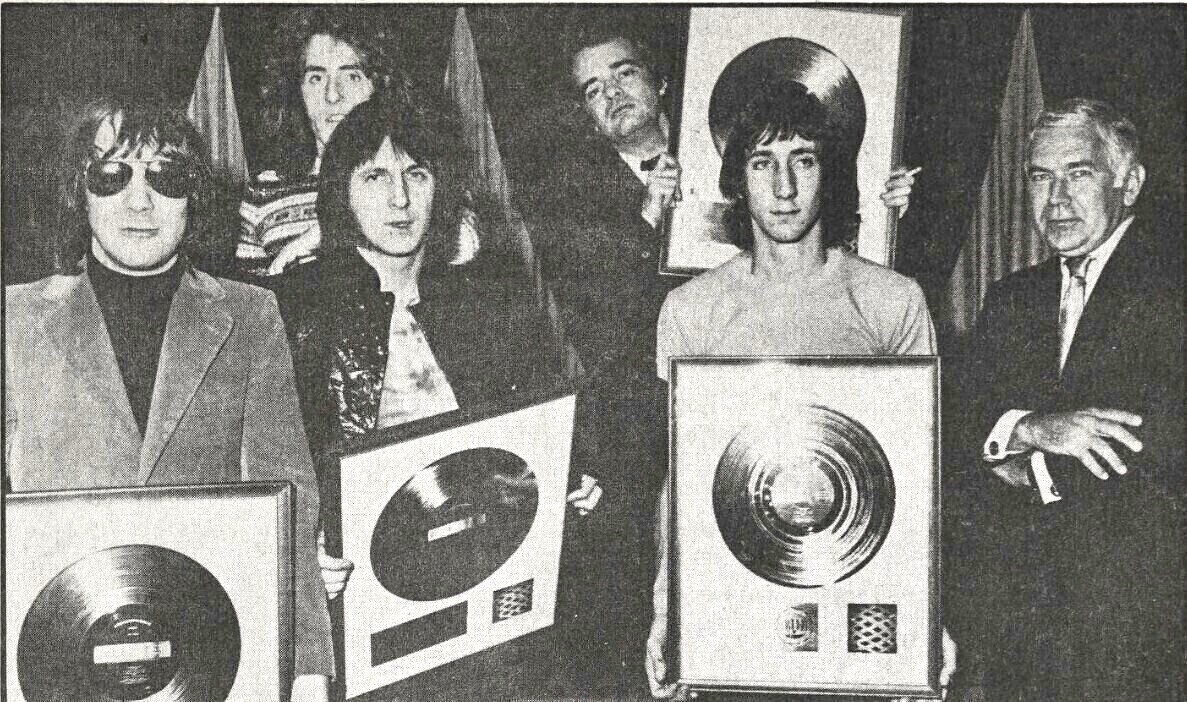
Photo: Hit Parader magazine, Public domain, via Wikimedia Commons
What Happens Next: Matt’s Guitar Shop, Open Door
Lucas’s ethos, repeated to Guitar World, is blunt: legendary guitars are not museum pieces.
“That guitar was Binky's pride and joy – his connection to his guitar hero. Now, it's time to be played again and enjoyed by somebody else. While it's with us, it's gonna be played by every musician who wants to play this on stage.”
“Everybody is welcome to come to the shop and play it… Also, any younger bands who are inspired by Pete should reach out to me. The guitar is legendary, but it has to be played!”
Guitar World also reports that Craig Ross (Lenny Kravitz’s guitarist) was slated to play it in Central Park in September, but wind and rain cancelled the show. Lucas said he is sure Ross still wants the chance.
For players reading TGP: that is the actionable news. The instrument is entering a shop culture that loans mythology back to stages. If you are in Paris, the door is the story.
TGP Lessons, powered by Guitar Tricks (affiliate link, clearly labeled) > Townshend’s SG era is a masterclass in aggressive rhythm, open-string drones, and power-chord economy. Start with our free First Riffs Rock path. For structured video lessons through classic rock repertoire, our lessons partner Guitar Tricks offers Rock Level 1 with a 14-day free trial. Disclosure: TGP earns a commission if you sign up through this link, at no extra cost to you.
Why This Story Belongs on TGP Today
Guitar news weeks are usually about new SKUs. This one is about an old SKU that refused to stay dead. The SG Special with P90s is still one of the most efficient rock tones on earth — midrange bark, quick attack, no humbucker mud — and Townshend’s setup (fuzz into British stacks, heavy strings, physical trem via the neck) is still a syllabus. Pair this piece with our Epiphone Prophecy coverage for modern Gibson-family design, the Fender Telecaster history for the other great single-coil workhorse, and Jimi Hendrix at Woodstock for the festival year that framed The Who’s SG chapter.
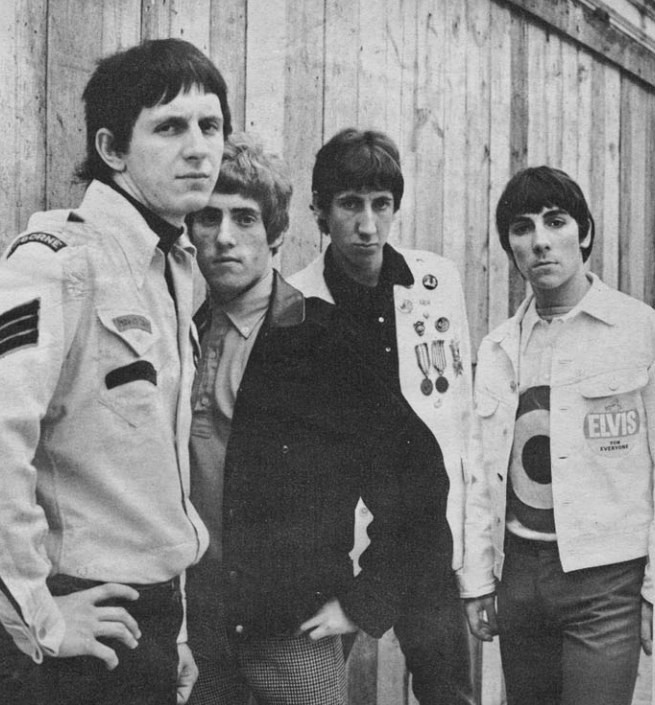
Photo: KRLA Beat / Beat Publications, Public domain, via Wikimedia Commons


FAQ
What guitar is it?
A cherry-red 1969 Gibson SG Special with two P90 pickups, associated with Pete Townshend and damaged at The Who’s June 7, 1970 Metropolitan Opera House show.
Who caught it?
New York Who superfan Binky Philips, who has written and spoken about catching the throw in detail (HuffPost 2010; later shop interviews).
Was it smashed on purpose?
Philips and Lucas describe a sequence that started with an accidental amp collision and out-of-tune rage; the headstock break came when Townshend stomped the guitar after a tech tried to pull it away. Lucas told Guitar World it “was not destroyed intentionally that day” in the classic planned-smash sense — then Townshend chose to throw the wrecked instrument to Philips.
Who repaired it?
Luthier Charles LoBue, per Guitar World, by grafting wood onto the broken headstock.
Where is it going?
Matt’s Guitar Shop in Paris, founded by Matthieu Lucas, with an open invitation for players and younger Who-inspired bands to use it onstage.
Is this the same SG Townshend used at Woodstock or Live at Leeds?
Not claimed. Those shows used the same model in the same era. This instrument’s documented night is the Met Opera, June 7, 1970. Whotabs and Who historiography treat Townshend as going through many SG Specials in 1968–71.
Did TGP republish photos of this exact guitar?
No. Guitar World’s hero uses Jeffrey Mayer/WireImage and Matt’s Guitar Shop courtesy images. We used Wikimedia Commons photos of Townshend, the Met, Tommy-era Who history, and related SG Specials clearly captioned as contextual — including a different serial (561569) from Play It Loud.
Experience-driven coverage, not algorithm bait.
- 20+ years of guitar playing experience
- Real-world retail experience at Guitar Center
- Thousands of hours testing guitars, amps, and pedals
- A community of 50,000+ guitar enthusiasts across platforms
- Partnerships with Fender, DistroKid, TrueFire, Card Chords, and Enya
- Editorial standards published openly — see how we test gear
The Modern Guitar Magazine. Delivered to your inbox.
No spam. No gimmicks. Just great guitar content — stories, tones, iconic solos, and honest gear takes. Every week.
Ask GP
3 free questions a dayStill curious? Ask GP about this story.
Your personal classic-rock and guitar guide — ask anything about Pete Townshend’s Smashed 1969 Gibson.
Discussion (0)
Sign in to join the discussion.
Sign in to commentLoading comments…
Discover another guitar story
Swipe through our latest features, breaking news and iconic solos — one story at a time.
Open Swipe →More Guitar News
Epiphone Rebuilds the Prophecy Series: First Victory, 27" Les Paul Baritone, Custom Fishman Fluence
Epiphone's rebuilt Prophecy Series adds a first Victory FR and 27" Les Paul Baritone with custom Fishman Fluence pickups at $1,499. Full specs, finishes and who it's for.
The Fender Telecaster History: How a Radio Repairman's "Plank" Became the Guitar That Does Everything
The Fender Telecaster history, from Leo Fender's 1950 Esquire and Broadcaster to the Nocaster, Keith's Micawber, Springsteen's Esquire and what to buy now.
Jimi Hendrix at Woodstock: The Performance That Redefined Electric Guitar Forever
On the morning of August 18, 1969, Jimi Hendrix walked onto the Woodstock stage and delivered one of the most influential guitar performances ever witnessed — a set that turned the Stratocaster into a new instrument and the American anthem into a statement heard around the world.
History of the Riff: Purple Haze
The story behind Jimi Hendrix's legendary Purple Haze riff — where it came from, how it was recorded, and why it changed rock guitar forever.
The Fuzz Face History: How a Cheap Copy in a Mic-Stand Base Outlived Its Flaws
The Fuzz Face was a borrowed circuit in a mic-stand base, and half of them sounded bad. Here's how it became Hendrix's fuzz and still sells 60 years later.