

Polyphia’s ‘With Eyes to See’: Tim Henson, Scott LePage and the Long Road to Be Not Afraid
Tim Henson of Polyphia at Shepherd's Bush Empire in London, May 31, 2023. Photo: Drew de F Fawkes, CC BY 2.0, via Wikimedia Commons.
Polyphia’s newest single With Eyes to See, Tim Henson’s nylon-string style, Scott LePage, and the band’s path from Plano to Be Not Afraid.
Polyphia’s newest single is still the one that arrived just before the album. “With Eyes to See” landed on September 24, 2026, as the third preview from the Plano, Texas band’s fifth studio record, Be Not Afraid, which Rise Records released on October 23. There is no featured guest on the track. The official video is live on the band’s YouTube channel.
If you have been following the campaign, the order matters. First came the surprise rave-metal punch of “Can You Feel It” on June 11. Then “Power in the Blood” on August 26, paired with the album announcement and a video shot at Rio de Janeiro’s São Francisco da Penitência Church. “With Eyes to See” closed the pre-album single run. As of today, October 28, 2026, no newer Polyphia single has been issued after it. The full album is now out; this feature opens on the last single that led the charge, then pulls back to Tim Henson, Scott LePage and the career that made a mostly instrumental guitar band a mainstream-adjacent phenomenon.
What “With Eyes to See” Sounds Like
TGP is writing from coverage and the released track, not from a studio visit. Even so, the consensus from guitar and rock press is unusually consistent for a song this dense.
Premier Guitar’s October 2 write-up called the track “hypnotic” and framed the video as a dreamlike unraveling intercut with redacted Epstein-file imagery and scenes of destruction. Kerrang!, covering the single on release day, called it “pounding” and said the clip “fearlessly stares in the face of apocalypse.” In Kerrang!’s later album review of Be Not Afraid, Sam Law zeroed in on the arrangement: “With Eyes To See adds a looping vocal sample and blasts of heavier six strings to mesmerising effect.”
New Noise Magazine’s album review (October 26) pushes that further. After the opener “Let There Be Light,” the record pivots: “With Eyes to See” quickly reveals how much denser and beefier things are about to get. Beautiful guitar passages and soulful vocal samples are gradually swallowed by distorted, extended-range guitars and hyperpop glitchiness, while the same vocal motif transforms alongside the production.
That is the useful guitar-player takeaway. The song is not a pure shred showcase in the “G.O.A.T.” or “Playing God” sense. It is a production piece: vocal loops as hooks, extended-range weight where older Polyphia might have stayed cleaner, and a mix that keeps mutating the same motif instead of resetting every eight bars. If “Can You Feel It” was the dancefloor statement, “With Eyes to See” is the haunted club after midnight.
The official video is worth watching once with headphones, then again watching the hands:
Why This Single Matters in the Be Not Afraid Cycle
Be Not Afraid is Polyphia’s first full studio album since Remember That You Will Die (October 28, 2022). Wikipedia and the band’s store list twelve tracks and a 46-minute runtime. Rise is the label. Co-production credits in press materials go to the band with RJ Pasin and guitarist Spiro Dussias, with writing sessions across Miami, Los Angeles and Dallas in 2024–2025.
Tim Henson has been unusually direct about the theme. In the Guitar World album announcement (August 26, 2026), he said:
“During the making of this record, we went down some pretty dark rabbit holes. We kept coming across things that were so depraved they sounded insane when you said them out loud. Then some of the very things we had been talking about started appearing in documents released to the public.
“You can read that stuff and feel disgusted, demoralized, and completely powerless. BE NOT AFRAID is our response to that. Rather than allowing the ugliness of the world to paralyze us, we put everything we had into making something beautiful.
“We weren’t afraid of whether something was too different or whether people were going to understand it. We just followed what excited us and made what I believe is our best record to date.”
He continued, in the same interview and again in Premier Guitar’s single piece:
“The album takes you through the extremes of two different worlds and moods: one being very uplifting and triumphant, the other being spine-chilling and terrifying. There are moments on the record that legitimately scare me when I listen to them.”
Kerrang! also quoted him on depth over breadth:
“Instead of going wide on BE NOT AFRAID, we went as deep as we could. There are so many layers to pull back. Every time you listen to it, you’ll notice something new. Thematically, it’s by far the most meaningful record we’ve ever made.”
Those quotes explain why “With Eyes to See” feels less like a viral guitar challenge and more like a thesis statement. The singles campaign leaned into political and religious imagery. The music leaned heavier and more electronic. Henson told Guitar World at NAMM 2025 that the live scale of modern festivals changed how they write:
“It’s heavy. That’s exciting for us, and I think last year was really eye-opening for us in terms of how we should start composing for the live performance.
“It made us realize, like, ‘Hey, we should start composing for it to work in these situations of 80,000-plus people.’ And so we’re trying to, obviously, bring more energy by making it heavier.”
“Can You Feel It” made that promise loud. “With Eyes to See” made it unsettling.

Never Run Out of Strings Again.
Fresh USA-made strings delivered every month from the X Concepts String Club.

Tim Henson: Hybrid Technique, Nylon Strings and the TOD10N
Tim Henson is the face most guitar YouTube algorithms already know. The shorter version of the story is still the true one: a Plano guitarist who treated Instagram and YouTube as practice rooms, then built a vocabulary that mixes classical right-hand ideas, trap-era rhythmic chopping, jazz-adjacent harmony and metal left-hand facility. The longer version is that he treated the guitar like a sample library.
That instinct is why the nylon-string chapter mattered. When Polyphia released “Playing God” in 2022, Henson was suddenly all over timelines with a thin, single-cut nylon electric that did not look like a classical guitar and did not behave like one either. Guitar World later reported that the idea started with a producer’s question: what if you made Polyphia-style classical loops the way beat makers sample old classical guitar records? Henson’s own description of the production TOD10N, quoted in Guitar World’s launch coverage, stayed practical:
“[It] kind of looks like a Telecaster. I wanted to stay somewhat close to the traditional, single cutaway acoustic-looking guitar, while also keeping modern aesthetics.”
Ibanez released the production TOD10N in 2022. Current Ibanez USA specs list a modified FR hollow body with fan bracing, a solid Sitka spruce top, sapele back and sides, a C-shape nyatoh set-in neck, rosewood fingerboard and bridge, 22 frets, a 46 mm nut, a side sound port (no top soundhole), Fishman S-Core pickup, and an Ibanez AEQ210TF preamp with onboard tuner. The fingerboard inlay is Henson’s “Tree of Death” twist on Ibanez’s classic Tree of Life motif. Street pricing at launch was reported around $699, which put a signature nylon in reach of the same players learning the song from tabs.
The technique that made the guitar famous is not pure classical fingerstyle and not pure electric shred. It is hybrid: nails or fingertips for nylon attack, left-hand taps and slides for the “vocal” lines, and a rhythmic right hand that chops like a producer’s grid. Players coming from metal often miss how much of Henson’s sound is arrangement and mute control. Players coming from classical often miss how much gain, compression and sample layering are doing. Both sides are right. The TOD10N just made the acoustic source louder in the conversation.
Henson’s electric signatures have moved in parallel: earlier THBB10 territory, then the TOD10 solidbody with Fishman Fluence Tim Henson Signature pickups and the same Tree of Death visual language. He has also collaborated with Neural DSP on Archetype: Tim Henson, which packages amp sims with his Multivoicer idea. If you want a TGP entry point for how modern players chase that kind of multi-voice harmony without a studio, our piece on Steve Vai and Joe Satriani plugins sits in the same conversation about software as an instrument.
TGP Lessons, powered by Guitar Tricks (affiliate link, clearly labeled) > Henson’s nylon lines reward clean right-hand control more than speed drills. If you want a free starting point for fingerstyle mechanics before you chase Polyphia tabs, try our Fingerpicking lesson. For a full video course path, our lessons partner Guitar Tricks offers a 14-day free trial. Disclosure: TGP earns a commission if you sign up through this link, at no extra cost to you.
Scott LePage: The Other Half of the Guitar Front Line
Scott LePage is easy to underrate if you only watch Henson clips. Live and on record, Polyphia is a two-guitar band. LePage’s role is often the one that makes Henson’s melodies land: interlocking counterlines, heavier rhythmic beds, and the kind of left-hand fluency that keeps a mostly instrumental set from turning into a clinic.
His Ibanez signatures tell the same story as Henson’s. The earlier SLM10 is out of production. The current KRYS10 carries Fishman Fluence Scott LePage Signature humbuckers, a roasted maple neck, and Gotoh tremolo hardware in the modern Ibanez production language. On New Levels New Devils and Remember That You Will Die, the guitar parts are written like two producers sharing a session, not like a lead player with a rhythm chair. That chemistry is still the band’s secret even when the marketing spotlight tilts one way.

From Plano: Muse, Renaissance and the Viral Climb
Polyphia formed in 2010 in Plano, Texas. The name comes from polyphony: multiple independent melodic lines at once, which is still a fair description of how the guitars behave. Early members and vocal experiments came and went. The lineup that stuck is Henson and LePage on guitars, Clay Gober on bass, and Clay Aeschliman on drums (Aeschliman joined in 2016).
The first real break was online. A play-through of “Impassion” from the Inspire EP (2013) went viral on YouTube. That is the origin myth every modern guitar band wants, and in Polyphia’s case it was literal. They toured with progressive and metalcore acts, then started leaving the metalcore box on purpose.
Muse arrived September 2, 2014 as an independent full-length and later got an Equal Vision reissue after charting interest. It is the record where pop, funk and electronic ideas start elbowing the shred. Renaissance followed March 11, 2016 on Equal Vision, still fusing hip-hop and EDM instincts with instrumental rock. The Most Hated EP in 2017 sharpened the internet-native identity. Then came the charting breakthrough.
New Levels New Devils: G.O.A.T. and the Technique Arms Race
New Levels New Devils (October 12, 2018, Equal Vision) was the first Polyphia album to crack the Billboard 200, peaking at No. 61. The singles around it — especially “G.O.A.T.” — became homework for a generation of bedroom players. Harmonic tapping, impossible-looking left-hand shapes, and beat-driven structures made guitar YouTube feel like a sport again.
Production from hip-hop and EDM names (Judge, Y2K among those cited in contemporary coverage) mattered as much as the chops. Polyphia stopped sounding like a progressive metal band that happened to like trap hats. They started sounding like a trap-era production team that happened to be terrifying on guitar. If you teach or learn advanced technique, that album is still a syllabus. Our Frank Gambale sweep-picking career piece is about a different vocabulary, but the same question: what happens when a technical idea becomes a generation’s default language?
Remember That You Will Die: Playing God, Guests and the Crossover Peak
Remember That You Will Die arrived October 28, 2022 on Rise and debuted at No. 33 on the Billboard 200 (also charting in Australia and Canada). It is still the band’s commercial high-water mark on the album chart.
The singles campaign was a masterclass in platform thinking. “Playing God” made the nylon TOD10N a character in the story. “Neurotica” and “ABC” (with Sophia Black) kept the algorithm fed. “Ego Death,” with Steve Vai, was the virtuoso handshake moment: a younger instrumental generation inviting the old master into a modern production. The album also featured turns with Brasstracks, $NOT and Deftones’ Chino Moreno, according to Guitar World’s pre-release reporting.
Critically and culturally, this was the point where Polyphia stopped being “that YouTube band” and became a headlining proposition. A 2023 live document, Live at the Factory in Deep Ellum (November 24, 2023), captured the Remember That You Will Die tour energy on home turf in Dallas.
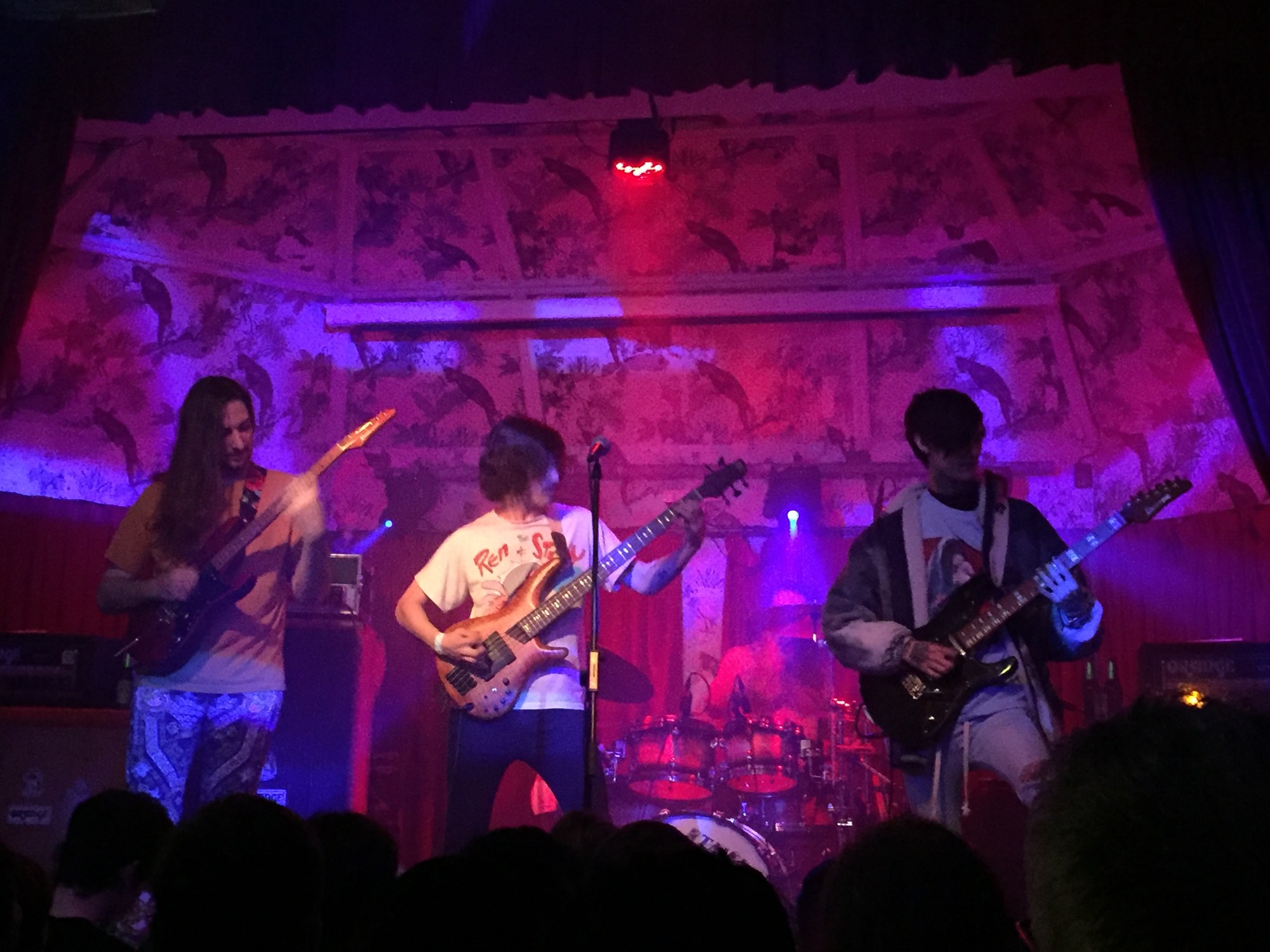
Be Not Afraid: Heavier, Darker, Still Obsessively Detailed
The 2026 record is the deliberate left turn after the crossover peak. Guitar World heard “Can You Feel It” as a new hybrid — eight-string weight over house/club pulse, with legato still cutting through — and half-jokingly called the lane dance-djent. Kerrang!’s album review heard a narrower, darker, synthier world than the buffet of Remember That You Will Die, with comparison points ranging from Animals as Leaders and Periphery to Skrillex and Perturbator.
Track titles lean biblical and confrontational: “Let There Be Light,” “With Eyes to See,” “Screwtape,” “Power in the Blood,” “Mark of the Beast,” “Deny the Flesh,” “Fear God.” Whether you read that as concept, aesthetic, or provocation, it matches Henson’s “dark rabbit holes” framing. The North American tour supporting the album was delayed into early 2027, with UK/Europe dates still listed for November–December 2026 in Premier Guitar’s rundown, and support names including RJ Pasin, Ladrones, Intervals and Perturbator depending on territory.
For guitarists, the practical question is simple: can you learn these songs the old way? Tabs are already part of Polyphia’s ecosystem via the band’s tab site referenced in official video descriptions. The harder homework is rhythmic feel and production listening. Slow the vocal loops. Count the drops. Notice when the “guitar hero” part is actually a supporting texture.
Gear Snapshot: What the Band Is Known For
This is a researched overview, not a TGP bench test of anyone’s touring rack.
Tim Henson: Ibanez endorser. Signature nylon TOD10N; signature electrics in the TOD/TH lineage; Neural DSP Archetype: Tim Henson. The nylon model’s published specs are listed above from Ibanez USA.
Scott LePage: Ibanez KRYS10 (current) with Fishman Fluence Scott LePage Signature humbuckers; earlier SLM10 discontinued.
Clay Gober: Commonly associated with Ibanez SR-series basses in public gear roundups.
Clay Aeschliman: Public endorsements include TAMA drums and Meinl percussion.
On Be Not Afraid, press coverage repeatedly flags extended-range guitars and heavier low-end writing. Exact touring string counts and tunings for every song are not something TGP will invent from incomplete public lists. Watch the videos, trust your ears, and treat social close-ups as clues rather than gospel.

Where Polyphia Fits in 2026 Guitar Culture
Polyphia solved a problem a lot of instrumental bands never solve: they made virtuosity feel like pop structure. Hooks first, flex second. That is why “Playing God” traveled farther than a thousand flawless sweeps, and why “With Eyes to See” can carry a looping vocal sample without apologizing for it.
It is also why the new album’s darkness matters. After a decade of proving they can do anything, they are choosing a lane. Henson’s quotes make the stakes plain. The singles’ visuals make the mood plain. The playing is still ridiculous — Kerrang! and New Noise both say so — but the flex is now in service of a thicker, more electronic, more confrontational band identity.
If you are here for the new music, start with the official “With Eyes to See” video, then play Be Not Afraid front to back once without tabbing a single bar. If you are here for the career arc, work backward: Remember That You Will Die, New Levels New Devils, then the earlier Equal Vision years. And if you are here because Tim Henson’s right hand looks impossible, remember the boring truth every good guitarist eventually learns: the viral clip is the tip. The arrangement is the iceberg.
Be Not Afraid is out now on Rise Records. For more modern guitar technique and tone reading on TGP, see Eric Johnson: Tone Decoded and Frank Gambale’s sweep-picking career. Then tell us in Guitar Talk: is “With Eyes to See” your favorite of the three Be Not Afraid singles, or are you still living in “Can You Feel It”?
Experience-driven coverage, not algorithm bait.
- 20+ years of guitar playing experience
- Real-world retail experience at Guitar Center
- Thousands of hours testing guitars, amps, and pedals
- A community of 50,000+ guitar enthusiasts across platforms
- Partnerships with Fender, DistroKid, TrueFire, Card Chords, and Enya
- Editorial standards published openly — see how we test gear
The Modern Guitar Magazine. Delivered to your inbox.
No spam. No gimmicks. Just great guitar content — stories, tones, iconic solos, and honest gear takes. Every week.
Ask GP
3 free questions a dayStill curious? Ask GP about this story.
Your personal classic-rock and guitar guide — ask anything about Polyphia’s ‘With Eyes to See’.
Discussion (0)
Sign in to join the discussion.
Sign in to commentLoading comments…
Discover another guitar story
Swipe through our latest features, breaking news and iconic solos — one story at a time.
Open Swipe →More Guitar News
Frank Gambale Changed the Way Guitarists Move Their Picking Hand. Here's the Whole Story.
From Canberra clubs to GIT, Chick Corea's Elektric Band and his own Gambale Tuning, here's how Frank Gambale rewired the guitarist's picking hand.
Even the Shred Gods Went DI: How Steve Vai and Joe Satriani Made The Sea of Emotion on Plugins
Steve Vai says he and Joe Satriani tracked The Sea of Emotion mostly on plugins (Neural DSP, SansAmp, Tonex) after Satch's Elephants of Mars changed his mind. Here's why plugins aren't cheating.
Eric Johnson Tone Decoded: Rig, '54 Strat, Pedals & Picking
Eric Johnson just walked Guitarist through his touring rig for the first time in 13 years. Here's how the three-amp setup, the '54 Strat, the pedals and his picking hand add up to the most-studied lead tone in instrumental rock, and how to get close today.

Sophie Lloyd Unleashes Horror-Inspired Guitar Cover of Avenged Sevenfold's "Nightmare"
Sophie Lloyd's Nightmare cover turns Avenged Sevenfold's 2010 hit into an instrumental guitar shred, with a horror video filmed in a former UK Cold War bunker.