Slash Says Young Guitar Players Are ‘Blowing My Mind’ — Maybe Guitar Isn’t Dying After All
For years we’ve been told the guitar is losing its place in popular music. Slash appears to be seeing something very different.
For years we’ve been told the guitar is losing its place in popular music.
Slash appears to be seeing something very different.
Every few years, somebody declares the guitar dead.
Rock is supposedly finished.
The guitar solo is supposedly irrelevant.
Young musicians supposedly don’t care about six strings anymore.
And then you open Instagram, TikTok or YouTube and encounter a 13-year-old playing something that would have sent half the Sunset Strip back to the practice room in 1987.
Apparently, Slash has noticed too.
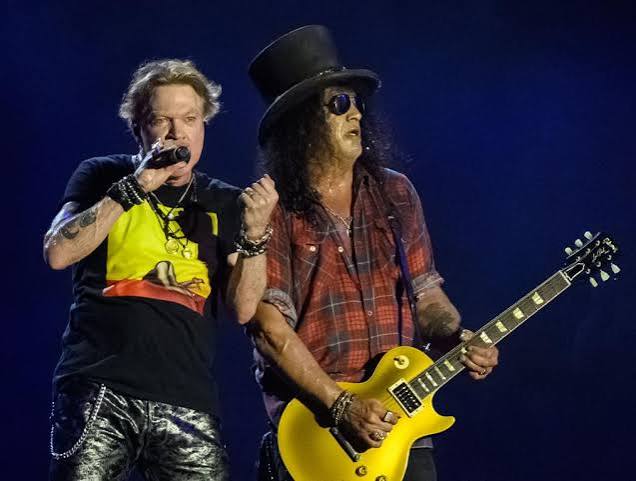
The Guns N’ Roses guitarist recently praised the emerging generation of players, saying that some of the young guitarists he sees today are genuinely astonishing.
That is significant coming from somebody who helped create one of the most recognizable guitar styles of the last four decades.
Because Slash isn’t describing a dying instrument.
He is describing an instrument whose technical ceiling keeps getting higher.
Slash Has Seen Several Generations of Guitar Heroes
Slash belongs to a generation that helped define what a guitar hero could be.
He came up in an era when players were expected to have a sound, a swagger, and a catalogue of solos that people could sing along with.
That was a different world.
There were fewer guitarists. There were fewer places to get noticed. And the gatekeepers — labels, radio, video channels — decided which players the rest of the world would hear.
Today, the gatekeepers are gone.
A teenager can post a solo from a bedroom, and if it’s good enough, the world sees it in a matter of hours.
Slash is in a rare position to compare the two eras.
He has toured through them. He has watched young players grow up in real time online. And he has seen the standards they are now expected to meet.
His praise is not just a compliment.
It is a reminder that the guitar has not stopped producing jaw-dropping players.
The Internet Completely Changed How Guitarists Learn
There was a time when learning a song meant sitting with a record, rewinding it until the tape wore thin, and trying to figure out what was happening one note at a time.
That process taught patience.
It also taught a lot of bad habits, because plenty of players were guessing wrong.
Now, the same player can watch a close-up demonstration from a professional, see the tablature synced to the audio, slow it down, and isolate the exact hand position.
The information has been democratized.
That means young players are not limited by geography, teachers, or money.
If they are motivated, they can learn almost anything.
And the results are starting to show.
Players in their teens are covering solos that once took professionals years to master.
They are writing original music earlier. They are developing their ears faster.
Slash is exactly the kind of player who would notice, because his own style was built on obsessive listening and painstaking imitation.
Social Media Has Created a Global Guitar Competition
Get Slash’s “Sweet Child o' Mine” Tone
Tell ToneMD what gear you own and get a full signal chain with real numbered settings for this tone.
Included with Premium
There is another side to the digital revolution.
Visibility is not the same as opportunity.
A young player can be technically brilliant and still struggle to turn that into a career.
The platforms reward attention, not musicianship.
That creates pressure to play faster, louder, and more dramatically than the last person who posted.
But it also means that real talent is harder to fake.
When millions of people can play, the ones who truly stand out have to bring something beyond speed.
They need a voice.
They need to sound like themselves.
Slash is not impressed by flash alone. His own style is built on tone, phrasing, and restraint.
So when he says young players are blowing his mind, he is likely describing players who have already moved past technical exercises and into something more musical.
But Technique Isn’t the Same Thing as Identity
This is the part that older players sometimes miss.
Watching a young guitarist shred through a complex solo is impressive.
But watching a young guitarist who already knows why they are playing is something else entirely.
“Maybe the guitar isn't dying. Maybe the next generation has simply been practicing while everyone else was arguing about whether it was dead.”
Slash has always been a player of identity.
You can hear three notes and know it is him.
That is not technique. That is the result of a lifetime of choices about tone, touch, timing, and taste.
The question is whether the next generation can build that same sense of self while growing up in an environment that constantly rewards imitation.
Slash seems to think they can.
And if they can, the future of guitar is not in danger at all.
Maybe We’ve Been Asking the Wrong Question
The debate over whether guitar is dying has always been a little bit misleading.
Guitar sales are not what they were in the 1990s.
Mainstream radio does not feature guitar solos the way it once did.
But those are not the only measures that matter.
There has never been more guitar content available.
There have never been more online communities for players.
And there has never been more cross-pollination between genres, countries, and styles.
The guitar may not dominate the top of the charts the way it once did.
But the guitar is absolutely alive in the culture of people who actually play it.
That is where Slash is coming from.
He is not reading market reports. He is watching players.
And he likes what he sees.
The Guitar May Be Changing Instead of Dying
One of the reasons the guitar-is-dying narrative keeps returning is that people expect the instrument to stay the same.
They want new players to sound like the heroes of the past.
They want new bands to look and behave like bands from the 1970s or 1980s.
But the guitar is not frozen in time.
It is changing shape, changing function, and changing audience.
Young players are using the guitar in hip-hop, in electronic music, in video game soundtracks, in film scoring, and in experimental genres that did not exist twenty years ago.
They are combining effects in ways that would have seemed impossible when Slash was first recording Appetite for Destruction.
The guitar is not disappearing.
It is being reimagined.
And that is exactly how every instrument stays alive.
ToneMD: Technique Is Only Half the Equation
There is a deeper lesson here for anyone trying to learn the guitar.
Watching young players advance so quickly is inspiring, but it can also be misleading.
Technique is not the end goal. It is the starting point.
Slash’s tone on ‘Sweet Child O’ Mine’ is not just a Les Paul through a Marshall. It is the way he holds back, the way he lets space breathe, the way he bends into notes rather than landing on them.
That is where ToneMD can help.
ToneMD takes a target sound and translates it into real settings for the modeler or software you actually own. It gives you the signal chain, the amp settings, and the effect order so you can stop guessing and start playing.
If you want to understand what makes Slash sound like Slash, try the ToneMD tool with your own rig. You will be surprised how much of the tone is in the touch, not just the gear.
Slash’s Comments Should Make Guitar Fans Optimistic
It is easy to be cynical about the future of the guitar.
The business side has changed. The media landscape has changed. The way people listen to music has changed.
But the instrument itself is doing just fine.
There are still young players who fall in love with it.
There are still players who practice until their fingers hurt.
And there are still players who will one day walk on stage and make the next Slash stop and pay attention.
Slash’s comments are not about nostalgia.
They are about the fact that the guitar is still producing something worth watching.
That is not a dying art form.
That is a living one.
The Guitar Plugged is for players who still believe the guitar has plenty left to say.
Experience-driven coverage, not algorithm bait.
- 20+ years of guitar playing experience
- Real-world retail experience at Guitar Center
- Thousands of hours testing guitars, amps, and pedals
- A community of 50,000+ guitar enthusiasts across platforms
- Partnerships with Fender, DistroKid, TrueFire, Card Chords, and Enya
- Editorial standards published openly — see how we test gear
The Modern Guitar Magazine. Delivered to your inbox.
No spam. No gimmicks. Just great guitar content — stories, tones, iconic solos, and honest gear takes. Every week.
Ask GP
3 free questions a dayStill curious? Ask GP about this story.
Your personal classic-rock and guitar guide — ask anything about Slash Says Young Guitar Players.
Discussion (0)
Sign in to join the discussion.
Sign in to commentLoading comments…
Discover another guitar story
Swipe through our latest features, breaking news and iconic solos — one story at a time.
Open Swipe →More in Guitar Talk
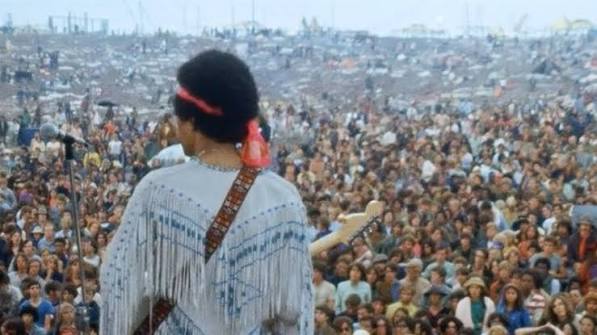
The 10 Greatest Guitar Renditions of “The Star-Spangled Banner”
From Jimi Hendrix's controlled chaos at Woodstock to modern performances by H.E.R., Gary Clark Jr. and Jack White, these guitarists turned America's national anthem into something deeply personal.
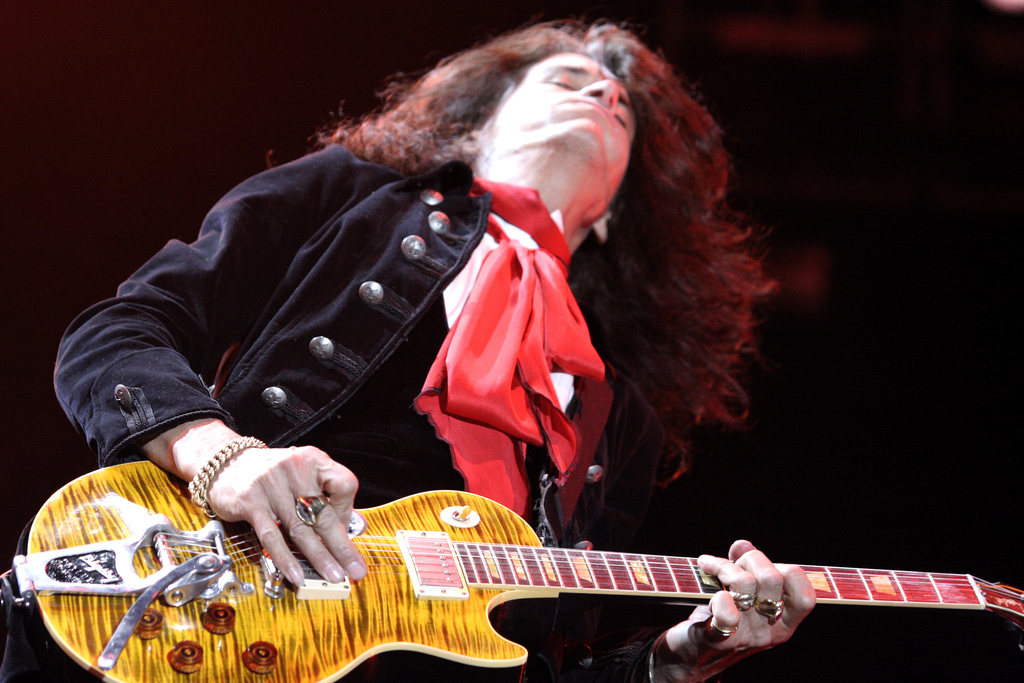
Happy Birthday, Joe Perry: The Riff Machine Who Gave Aerosmith Its Swagger
Joe Perry turns 76 today. From the swampy grind of “Sweet Emotion” to the reunion that saved a band, this is the career of the guitarist who taught American hard rock how to strut.
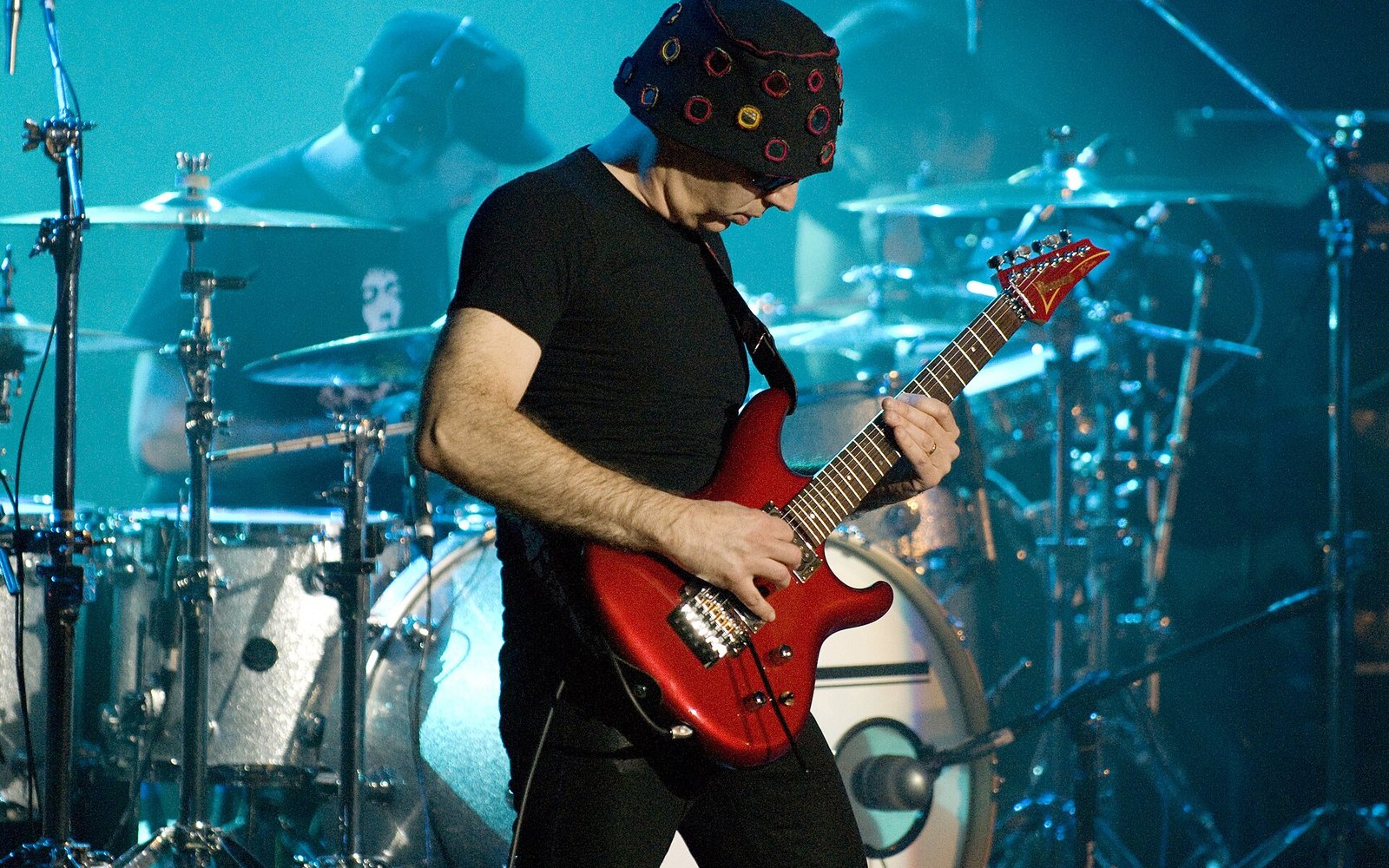
History of the Riff: How Joe Satriani Made “Flying in a Blue Dream” Feel Weightless
An acoustic guitar in an unusual tuning, a stray broadcast and a melody that seems to hang in the air: inside the construction of Satriani’s 1989 masterpiece.