
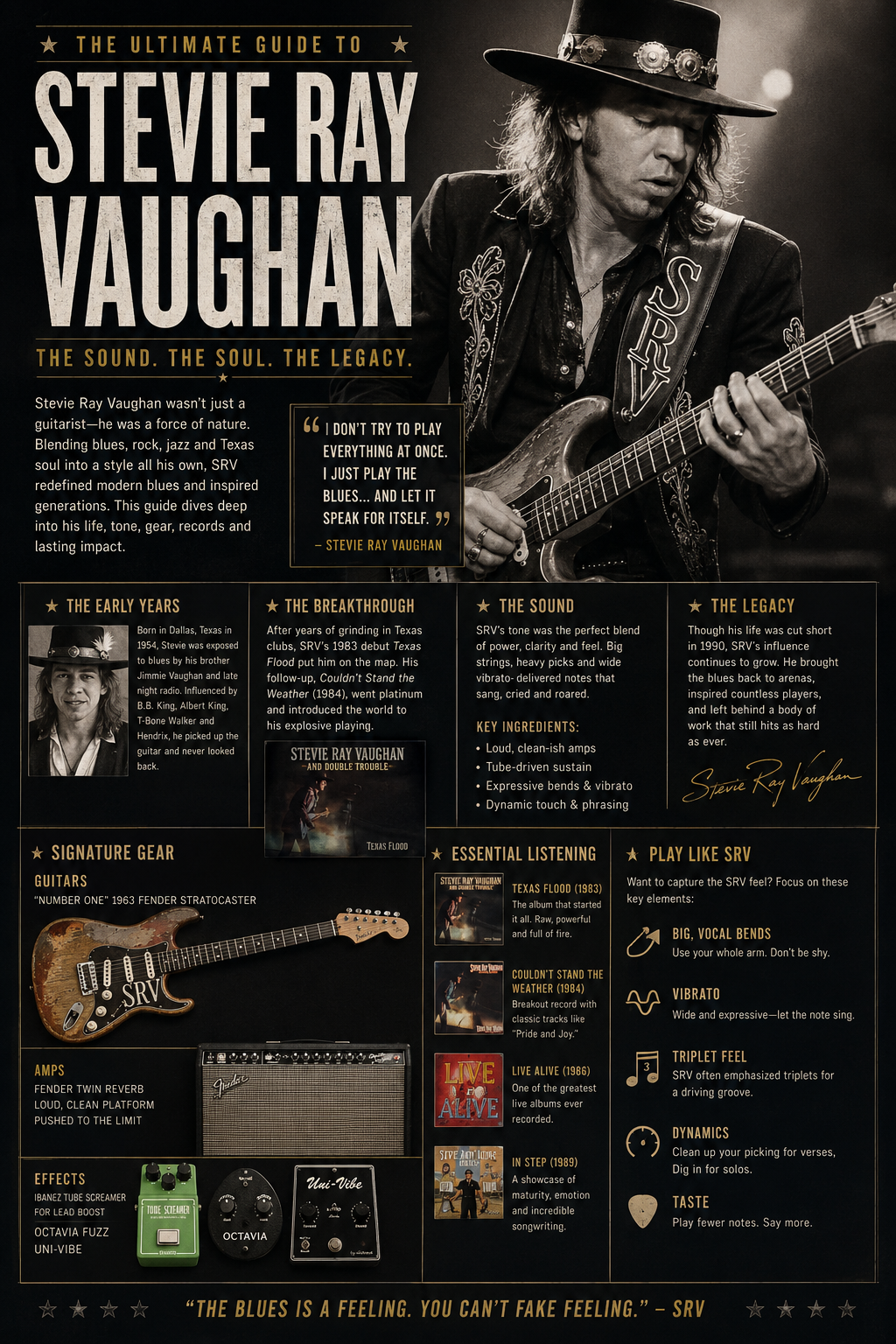
From Pawn Shops to Legend: How Stevie Ray Vaughan Rewired the Blues and Saved Guitar Music
His rise wasn’t clean, fast, or easy. It was messy, loud, and built on pure obsession—and that's exactly why Stevie Ray Vaughan’s story still hits so hard today.
▶ LISTEN WHILE READING
Before he became one of the most electrifying guitar players in history, Stevie Ray Vaughan was just a kid from Texas obsessed with the blues—and stubborn enough to outwork everyone around him.
His rise wasn’t clean, fast, or easy. It was messy, loud, and built on pure obsession. And that’s exactly why his story still hits so hard today.
A Texas Kid With Too Much Guitar
Stevie Ray Vaughan grew up in Dallas, Texas, in the shadow of his older brother Jimmie Vaughan. While most kids were figuring out school or sports, Stevie was locked in rooms practicing guitar until his fingers were wrecked.
He didn’t just learn blues—he absorbed it. Artists like Albert King, Jimi Hendrix, and Buddy Guy weren’t influences. They were targets. Stevie didn’t want to copy them. He wanted to push past them.
Hustling Through the Bottom
Before fame, Stevie’s life was pure grind. He played small clubs, bar gigs, and anywhere that would take him. No spotlight. No industry push. Just loud amps in smoky rooms where half the crowd didn’t even know what they were hearing.
He also went through addiction, broke periods, and constant rejection from labels who didn’t “get it.” At one point, he was literally surviving gig-to-gig with barely enough money to keep his gear running.
Most players would’ve quit. He didn’t.
The Breakthrough: Montreux Changed Everything
Get Stevie Ray Vaughan’s “Pride and Joy” Tone
Tell ToneMD what gear you own and get a full signal chain with real numbered settings for this tone.
Included with Premium
Everything shifted in 1982 when Stevie Ray Vaughan and Double Trouble played the Montreux Jazz Festival. The crowd didn’t understand him. They booed.
But someone in that audience did—David Bowie. That moment led to studio work, exposure, and eventually the record deal that changed everything. What looked like failure on stage was actually the spark of a career explosion.
Texas Flood and the Shockwave
When Texas Flood dropped in 1983, it didn’t just revive blues—it punched modern rock in the face. Guitar hadn’t sounded like that in years: aggressive but controlled, emotional but technical, raw but intentional.
“He didn’t play guitar. He wrestled it.”
Stevie wasn’t playing faster than everyone. He was playing harder than everyone. Every note felt like it had weight.
Tone That Felt Dangerous
Part of what made Stevie special wasn’t just skill—it was sound. His rig was simple: heavy strings, cranked amps, and a Strat that looked like it had survived a war.
But the way he attacked the strings made everything feel alive. He didn’t play guitar. He wrestled it.
Why His Come-Up Still Matters
Stevie’s story hits different because it’s not built on luck—it’s built on refusal. He refused to quit when nobody cared, refused to simplify his playing to fit trends, and refused to stop chasing better tone and feel.
And in doing so, he brought blues guitar back into mainstream music when it was fading out. Without him, modern guitar would sound very different.
The Legacy of a Relentless Player
Stevie Ray Vaughan didn’t just become a great guitarist. He became proof that feel, obsession, and discipline can outshine hype, trends, and timing.
His career was short—but his impact is still everywhere: in modern blues players, in rock guitar tone, and in how people define “feel” over “speed.”
Final Thought
Stevie Ray Vaughan’s come-up isn’t just a success story. It’s a reminder that greatness doesn’t usually start with recognition.
It starts with nobody watching… and someone refusing to stop anyway.
- Fender Stevie Ray Vaughan Signature Stratocaster$2,299·Check on Amazon →
- Ibanez TS9 Tube Screamer Overdrive Pedal$109·Check on Amazon →
- Fender '64 Custom Deluxe Reverb 20W Tube Combo$2,499·Check on Amazon →
Some links are affiliate links — we may earn a small commission at no cost to you.
Experience-driven coverage, not algorithm bait.
- 20+ years of guitar playing experience
- Real-world retail experience at Guitar Center
- Thousands of hours testing guitars, amps, and pedals
- A community of 50,000+ guitar enthusiasts across platforms
- Partnerships with Fender, DistroKid, TrueFire, Card Chords, and Enya
- Editorial standards published openly — see how we test gear
The Modern Guitar Magazine. Delivered to your inbox.
No spam. No gimmicks. Just great guitar content — stories, tones, iconic solos, and honest gear takes. Every week.
Ask GP
3 free questions a dayStill curious? Ask GP about this story.
Your personal classic-rock and guitar guide — ask anything about From Pawn Shops to Legend.
Discussion (0)
Sign in to join the discussion.
Sign in to commentLoading comments…
Discover another guitar story
Swipe through our latest features, breaking news and iconic solos — one story at a time.
Open Swipe →More in Guitar Talk
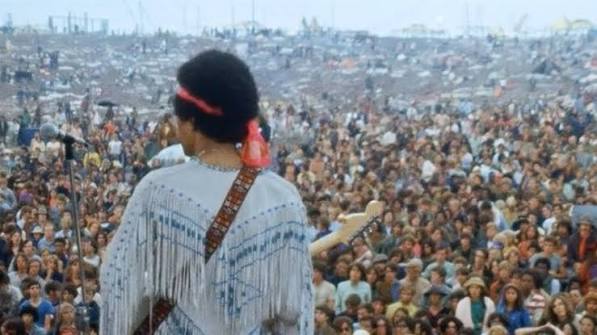
The 10 Greatest Guitar Renditions of “The Star-Spangled Banner”
From Jimi Hendrix's controlled chaos at Woodstock to modern performances by H.E.R., Gary Clark Jr. and Jack White, these guitarists turned America's national anthem into something deeply personal.
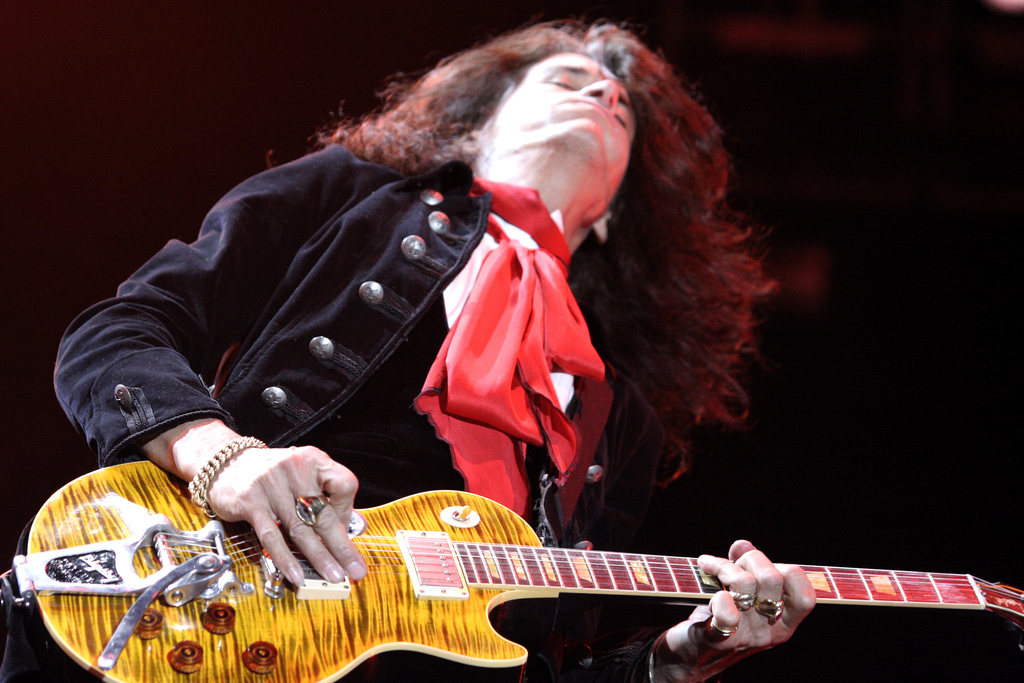
Happy Birthday, Joe Perry: The Riff Machine Who Gave Aerosmith Its Swagger
Joe Perry turns 76 today. From the swampy grind of “Sweet Emotion” to the reunion that saved a band, this is the career of the guitarist who taught American hard rock how to strut.

History of the Riff: How Joe Satriani Made “Flying in a Blue Dream” Feel Weightless
An acoustic guitar in an unusual tuning, a stray broadcast and a melody that seems to hang in the air: inside the construction of Satriani’s 1989 masterpiece.