
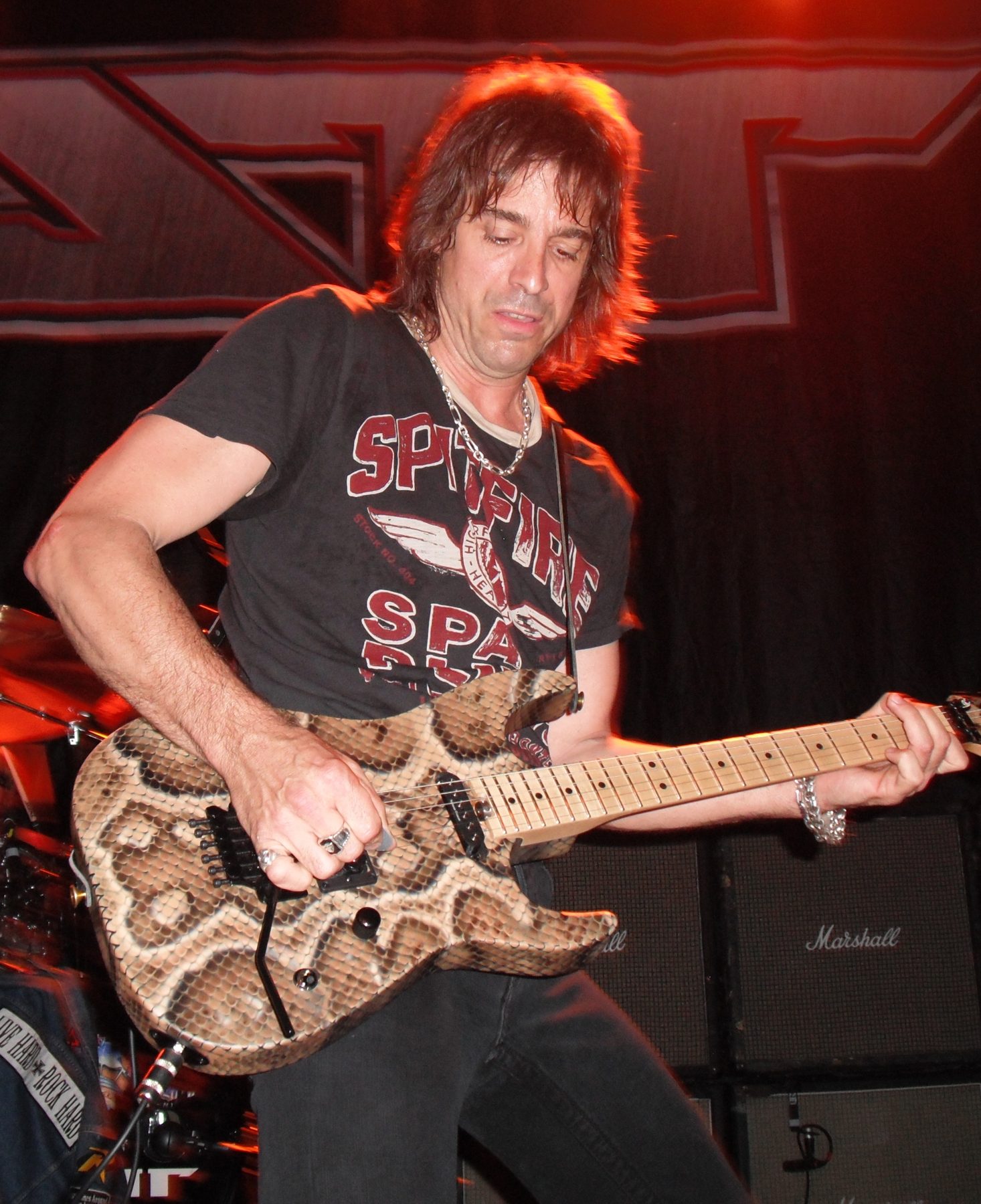
Ratt's lead guitarist sat right between flash and feel — and in a decade obsessed with shred, that quiet mastery is exactly why Warren DeMartini still gets overlooked.
When people talk about the greatest guitarists of the 1980s, the usual names come up fast — Eddie Van Halen, Randy Rhoads, George Lynch. And rightfully so. But somehow Warren DeMartini, the lead guitarist of Ratt, often gets left out of that conversation. That's a mistake.
The Perfect Balance of Flash and Feel
Unlike many of his peers, DeMartini wasn't just about speed or theatrics. He had something far more valuable: taste. His solos weren't just fast — they were composed. Songs like "Round and Round" and "Lay It Down" showcase phrasing that sticks in your head long after the song ends. That's something a lot of shred-first players struggled with. He lived right in the sweet spot between technical ability and musicality — never overplaying, never underdelivering.
Riffs That Defined an Era
While many guitarists get praise for solos, DeMartini's riff writing is just as important. "Round and Round" is one of the most iconic riffs of the entire decade. "Lay It Down" is a bluesy, sliding groove that still sounds fresh today. "Wanted Man" is aggressive, punchy, and pure Sunset Strip energy. These weren't just good riffs — they were hits. And hits are what separate great players from legendary ones.
A Player's Guitarist
Get Warren DeMartini’s “Round and Round” Tone
Tell ToneMD what gear you own and get a full signal chain with real numbered settings for this tone.
Included with Premium
Ask guitarists — not casual listeners — and DeMartini's name comes up a lot more. Why? Because his playing is deceptively difficult. His timing, vibrato, and phrasing require control that goes way beyond flashy technique. He wasn't just playing notes — he was shaping them. In many ways, he's closer in spirit to players like Jake E. Lee than the more over-the-top shred crowd.
Overshadowed by the Era
The '80s were crowded with guitar heroes, and unfortunately that worked against him. Eddie Van Halen reinvented the instrument. Yngwie Malmsteen pushed technical boundaries. George Lynch brought wild, aggressive flair. DeMartini? He just quietly wrote better songs. And in an era obsessed with flash, that didn't always get the spotlight it deserved.
“He wasn't just playing notes — he was shaping them.”
The Tone Factor: The Gear Behind the Sound
Warren DeMartini's tone wasn't just great — it was strategically built, and his gear choices played a huge role in shaping that signature Ratt sound.
At the core, DeMartini was known for playing Charvel Super Strats, which gave him the perfect combination of playability and bite. These guitars, often loaded with high-output humbuckers, delivered the punch and clarity needed for both tight rhythm work and soaring leads.
On the amp side, he leaned heavily on Marshall amplification, particularly hot-rodded Marshall heads. That classic British crunch — pushed just to the edge — gave him that thick, midrange-forward tone that cuts through a mix without getting overly saturated.
But what really set his tone apart was restraint. Instead of drowning his sound in gain like many of his peers, DeMartini kept things controlled and articulate. You can hear every note in his chords and every nuance in his solos. His tone had a tight low end that never got muddy, a pronounced midrange that defined his presence in the mix, and smooth sustain without excessive compression.
He also made tasteful use of effects — subtle delay, light reverb — just enough to add space without washing out his attack. The result? A tone that wasn't just flashy — it was functional. It served the song, elevated the band, and still sounded massive on record. That's the difference between a good guitar tone and a timeless one.
Final Thoughts
Warren DeMartini didn't need gimmicks. He didn't need to be the fastest or the loudest. He just needed a guitar, a great riff, and a sense of melody. And maybe that's exactly why he doesn't get enough credit — because in a decade full of excess, Warren DeMartini was all about precision, feel, and songwriting. The things that actually last.
- Charvel Pro-Mod So-Cal Style 1 HH FR Electric Guitar$1,199·Check on Amazon →
- Charvel Pro-Mod DK24 HSS 2PT CM$1,099·Check on Amazon →
- MXR M101 Phase 90 Pedal$89·Check on Amazon →
Some links are affiliate links — we may earn a small commission at no cost to you.
Experience-driven coverage, not algorithm bait.
- 20+ years of guitar playing experience
- Real-world retail experience at Guitar Center
- Thousands of hours testing guitars, amps, and pedals
- A community of 50,000+ guitar enthusiasts across platforms
- Partnerships with Fender, DistroKid, TrueFire, Card Chords, and Enya
- Editorial standards published openly — see how we test gear
The Modern Guitar Magazine. Delivered to your inbox.
No spam. No gimmicks. Just great guitar content — stories, tones, iconic solos, and honest gear takes. Every week.
Ask GP
3 free questions a dayStill curious? Ask GP about this story.
Your personal classic-rock and guitar guide — ask anything about Why Warren DeMartini Doesn't Get.
Discussion (0)
Sign in to join the discussion.
Sign in to commentLoading comments…
Discover another guitar story
Swipe through our latest features, breaking news and iconic solos — one story at a time.
Open Swipe →More in Guitar Talk
The 10 Greatest Guitar Renditions of “The Star-Spangled Banner”
From Jimi Hendrix's controlled chaos at Woodstock to modern performances by H.E.R., Gary Clark Jr. and Jack White, these guitarists turned America's national anthem into something deeply personal.
Happy Birthday, Joe Perry: The Riff Machine Who Gave Aerosmith Its Swagger
Joe Perry turns 76 today. From the swampy grind of “Sweet Emotion” to the reunion that saved a band, this is the career of the guitarist who taught American hard rock how to strut.
History of the Riff: How Joe Satriani Made “Flying in a Blue Dream” Feel Weightless
An acoustic guitar in an unusual tuning, a stray broadcast and a melody that seems to hang in the air: inside the construction of Satriani’s 1989 masterpiece.