The Guitar Plugged · Guitarist Index
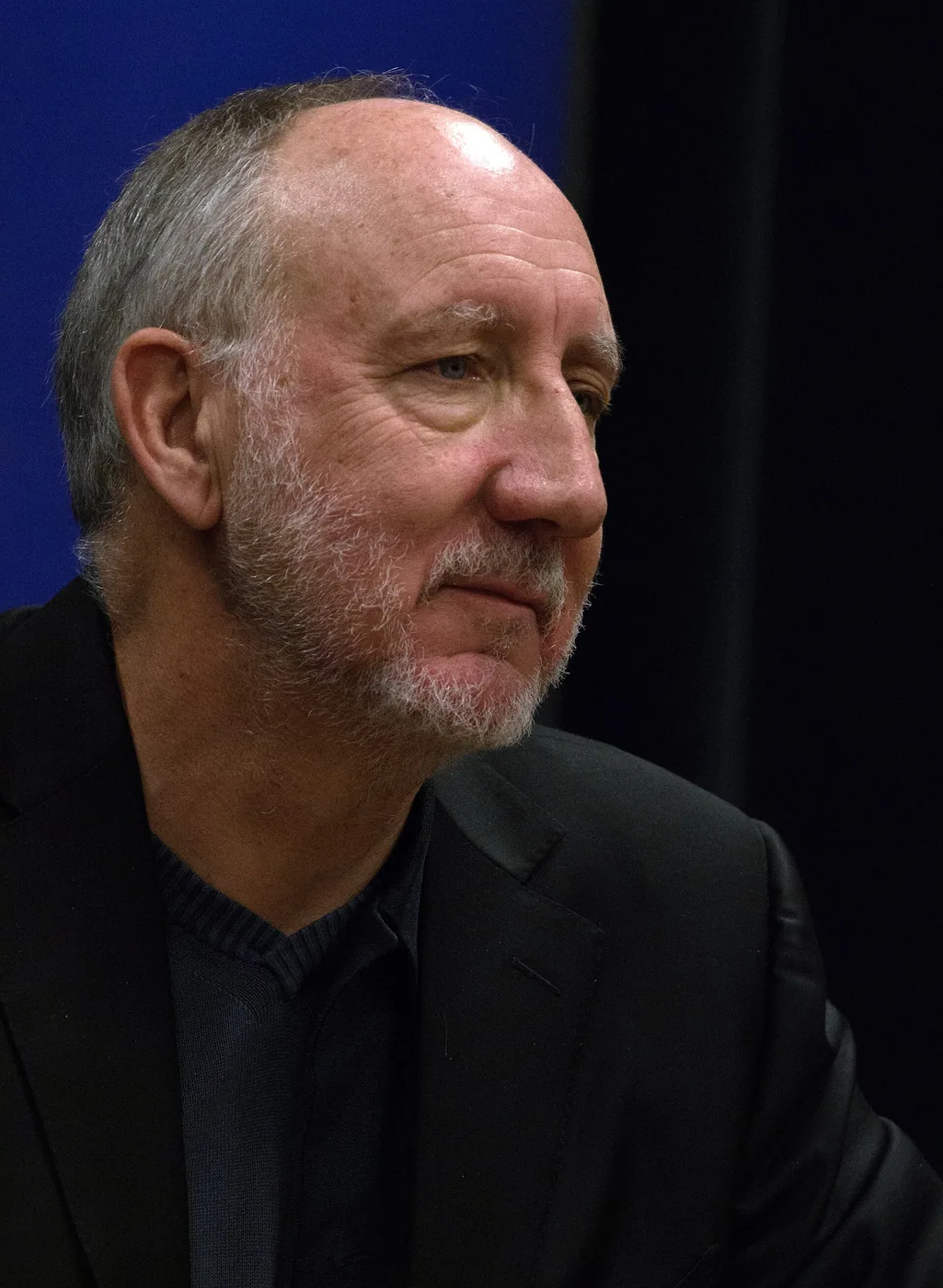
Pete Townshend
The Who
1962–present
Rock · Progressive
The greatest rhythm guitarist in rock, playing lead parts by refusing to.
Main guitar
Gibson SG Special, later Les Paul Deluxe and Fender Stratocaster
Signature sound
Suspended chords through Hiwatt stacks, huge and ringing
Era
1962–present
Influence
91 / 100
Genre
Rock / Progressive
Why they matter
The greatest rhythm guitarist in rock, playing lead parts by refusing to.
The Who had no second guitarist, so Townshend invented a rhythm style that filled the space of two: suspended chords, open strings ringing against fretted notes, and a right arm that treated the guitar percussively. Almost nobody has ever made one guitar sound larger.
He was also rock's first serious long-form composer, building Tommy and Quadrophenia as complete works and using synthesizer sequences ('Baba O'Riley', 'Won't Get Fooled Again') as structural elements a decade before that became normal.
His actual soloing is deliberately limited. He described himself as a rhythm player, and the vocabulary — sus4 chords, windmills, feedback as punctuation — is what thousands of rock bands still use.
The sound
Suspended chords through Hiwatt stacks, huge and ringing
Won't Get Fooled Again
Clean-to-edge Hiwatt with an ARP sequence behind it; the guitar's job is to be enormous and rhythmic, not saturated.
Baba O'Riley
Almost entirely open-position acoustic-style chords played electric, ringing over a synth pattern.
Pinball Wizard
Acoustic strumming carrying a rock arrangement — the aggression is all in the right hand.
Recreate the sound
Want this tone on your rig?
ToneMD translates Pete Townshend's sound into settings for the amp, modeler or plugin you already own.
Prescribe my tonePowered by ToneMD
Style & technique
How you recognise the playing
Suspended-chord rhythm
Sus2 and sus4 voicings with open strings, giving chords motion without changing root.
Percussive strumming
The right hand functioning as a second drummer, including the famous windmill.
Feedback and destruction as texture
Amplifier feedback used deliberately to end songs and, occasionally, guitars.
Power-chord economy
Fifths and octaves used to leave space for Entwistle's melodic bass playing.
The rig
Instruments, amplification and effects
- Gibson SG Special
- Gibson Les Paul Deluxe
- Rickenbacker (early, frequently destroyed)
- Fender Stratocaster
- Gibson J-200 acoustic
- Hiwatt DR103 stacks
- Fender Vibro-King (later)
- Marshall (mid-1960s)
- Edwards volume pedal
- Univibe
- Boss OD-1 (later)
- ARP synthesizer sequences on record
- Gibson P-90s and humbuckers
- Hiwatts run loud and clean — the crunch comes from playing hard
Essential listening
Where to start
- 011965
My Generation
The Who · My Generation
- 021967
I Can See for Miles
The Who · The Who Sell Out
- 031969
Pinball Wizard
The Who · Tommy
- 041971
Baba O'Riley
The Who · Who's Next
- 051971
Won't Get Fooled Again
The Who · Who's Next
- 061973
The Real Me
The Who · Quadrophenia
Career landmarks
The moments that mattered
1970
Live at Leeds, 1970
The loudest, most complete document of one guitar filling an entire band's frequency range.
Tommy and Quadrophenia
Long-form rock composition, decades before concept albums became routine.
Windmills and destroyed guitars
Stage theatre that permanently shaped what rock performance looks like.
The legacy
Lineage
Influenced by
Influenced
Paul Weller
Eddie Vedder-era rhythm players
Slash
Adjacent players
More from the archive
The player who turned amplifier noise into a musical language.
The virtuoso who rewrote the vocabulary of rock guitar.
Session-hardened producer who built rock guitar as an architecture, not a solo.
The player who translated Chicago blues into British rock volume.
The restless technician who kept reinventing what an electric guitar could be.
The master of the long note — space, sustain and perfect note choice.