
The Story Behind the Riff: How Focus Created the Controlled Chaos of "Hocus Pocus"
Yodeling, flute solos, and one of the most exhilarating guitar riffs ever recorded. Here's how Jan Akkerman and Focus turned progressive rock into a controlled riot.
Some guitar riffs are instantly recognizable because they're simple. Others become legendary because they're impossible to forget. Then there's "Hocus Pocus."
Released in 1971 by Dutch progressive rock band Focus, "Hocus Pocus" sounds like someone accidentally shoved hard rock, jazz fusion, classical music, and a mountain climber's yodeling session into the same tape machine — and somehow created one of the most exhilarating guitar tracks ever recorded.
More than fifty years later, the song remains one of rock's most unique instrumentals and one of the greatest showcases of pure guitar energy ever put on tape.
The Riff That Refuses to Sit Still
At the heart of "Hocus Pocus" is guitarist Jan Akkerman and his endlessly inventive riff. The main figure is deceptively simple. It rides on a driving E-based blues rock groove, but Akkerman's phrasing is what gives it life. Instead of settling into a predictable pattern, the riff constantly pushes forward with aggressive accents, quick pull-offs, and a relentless sense of momentum.
It's a riff that feels like it's sprinting.
While most early-'70s rock guitarists were building songs around massive power chords and heavy distortion, Akkerman approached the guitar differently. His playing was deeply informed by jazz, classical music, and fingerstyle techniques, allowing him to inject an unusual level of sophistication into what is essentially a hard rock boogie. The result is one of rock's most exhilarating guitar intros — a riff that immediately grabs you by the collar and never lets go.
Jan Akkerman: The Guitar Hero Nobody Talks About Enough
Long before guitar magazines were obsessed with shredding, Jan Akkerman was already demonstrating frightening levels of technical ability. His touch combined blues phrasing, jazz sophistication, classical precision, and speed that bordered on proto-shred. In many ways, Akkerman helped lay the groundwork for players who would emerge years later, including Steve Vai and Joe Satriani.

What makes his playing on "Hocus Pocus" remarkable isn't simply speed — it's control. Every note feels intentional. Every run has direction. Even during the song's most chaotic moments, Akkerman sounds completely in command.
Then Comes the Yodeling...
Get Jan Akkerman’s “Hocus Pocus” Tone
Tell ToneMD what gear you own and get a full signal chain with real numbered settings for this tone.
Included with Premium
Just when listeners think they've figured the song out, vocalist and keyboardist Thijs van Leer detonates every convention in rock music. Yodeling. Whistling. Flute passages. Random vocal exclamations. By all logic, none of it should work.
Yet these bizarre elements are exactly what transformed "Hocus Pocus" from a great instrumental into one of the most unforgettable recordings in rock history. The song becomes a musical roller coaster — one moment it's a ferocious guitar workout, the next it's a comedy sketch, and seconds later it's back to sounding like the heaviest bar band in Europe.
The Live Version Was Even More Dangerous
The studio recording is fantastic. The live performances were absolute chaos. Focus often played "Hocus Pocus" at breakneck tempos that bordered on insanity, accelerating the song to speeds that challenged even Akkerman's formidable technique.
Watching vintage footage of the group is a reminder that technical rock didn't begin with the '80s shred movement — Focus was already pushing the limits years earlier. The band performed with a sense of reckless joy that made every rendition feel as though it might fall apart at any moment. It never did. That's what made it exciting.
“Underneath all the yodeling and madness lies one of the coolest riffs ever recorded.”
Why Guitarists Still Love "Hocus Pocus"
The song remains a rite of passage for adventurous players because it teaches several lessons at once:
- Groove matters more than complexity. The main riff isn't impossibly difficult, but the feel is everything.
- Dynamics create excitement. The arrangement constantly shifts between tension and release.
- Technique should serve the music. Akkerman's incredible chops never feel like an exercise.
- Being different is powerful. No one has ever successfully copied "Hocus Pocus" because no one else would have thought to make it.
The Gear Behind the Madness
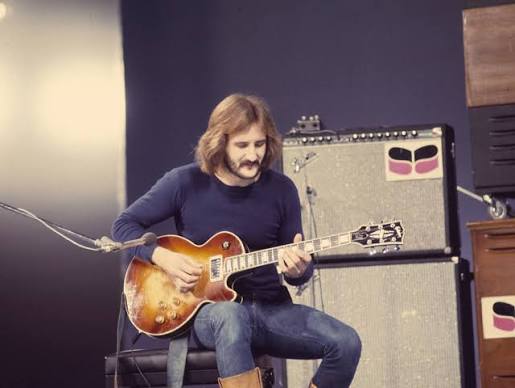
During the early Focus years, Jan Akkerman was known for using various Gibson models, including a Les Paul Custom, along with Marshall amplification that gave "Hocus Pocus" its aggressive bite. The tone itself isn't overly saturated — there's plenty of clarity, allowing every note in the riff to punch through the mix. That's one reason the song still sounds fresh today. It's heavy without being muddy and technical without becoming sterile.
Learn the Hocus Pocus Tone
Approximating Akkerman's crunchy early-'70s sound with modern gear is easier than you might think. The recipe is Marshall-style British crunch, a splash of phase for movement, and a humbucker-loaded guitar with enough clarity to keep every note in the riff articulate.
Start with a British-voiced tube combo like the Marshall DSL40CR, set the gain lower than you think you need, and let a Boss SD-1 push the front end for that mid-forward bark. An MXR Phase 90 adds the subtle swirl that gives the tone its early-'70s character, and a Les Paul with vintage-style humbuckers ties the whole thing together. Keep your pick attack tight, palm-mute lightly, and let the amp do the heavy lifting.
• Guitar: Gibson Les Paul Standard with humbuckers
• Overdrive: Boss SD-1 Super OverDrive pushing the amp
• Modulation: MXR Phase 90 for that early-'70s swirl
• Amplifier: Marshall DSL40CR, low-to-mid gain, mids up
• Attack: Heavy pick, tight palm mutes, aggressive right hand
• "Hocus Pocus" reached the Top 10 in the United States in 1973 — a genuinely wild feat for a mostly instrumental yodeling prog-rock track.
• Jan Akkerman was voted one of the world's best guitarists by readers of Melody Maker, beating out several household names during Focus' peak years.
Recommended Listening
The Legacy of "Hocus Pocus"
"Hocus Pocus" remains one of rock's great anomalies. It's progressive rock. It's hard rock. It's comedy. It's a guitar clinic. It's all of those things at once.
Most importantly, it's proof that great guitar music doesn't need to follow rules. The opening riff still feels wild, unpredictable, and dangerous over fifty years later — a reminder that sometimes the most memorable songs are the ones brave enough to sound unlike anything else. And that's exactly why guitar players keep coming back to "Hocus Pocus." Because underneath all the yodeling and madness lies one of the coolest riffs ever recorded.
What to Remember
- ▸"Hocus Pocus" was released in 1971 by Dutch progressive rock band Focus and became a Top 10 hit in the U.S. in 1973.
- ▸Jan Akkerman's riff blends blues, jazz, and classical phrasing into one of the most exhilarating guitar intros ever recorded.
- ▸Thijs van Leer's yodeling, whistling, and flute breaks turned a great instrumental into an unforgettable rock oddity.
- ▸The tone is Gibson humbuckers into a cranked Marshall — heavy but clear, aggressive but articulate.
- ▸The song is a rite of passage: it teaches groove, dynamics, technique in service of music, and the power of sounding like nobody else.
- Boss SD-1 Super OverDrive$59·Check on Amazon →
- MXR Phase 90$89·Check on Amazon →
- Marshall DSL40CR$999·Check on Amazon →
Some links are affiliate links — we may earn a small commission at no cost to you.
Experience-driven coverage, not algorithm bait.
- 20+ years of guitar playing experience
- Real-world retail experience at Guitar Center
- Thousands of hours testing guitars, amps, and pedals
- A community of 50,000+ guitar enthusiasts across platforms
- Partnerships with Fender, DistroKid, TrueFire, Card Chords, and Enya
- Editorial standards published openly — see how we test gear
Love the stories behind legendary guitar riffs?
Subscribe to The Guitar Plugged for more deep dives into iconic riffs, gear histories, and the accidents that shaped rock history.
Ask GP
3 free questions a dayStill curious? Ask GP about this story.
Your personal classic-rock and guitar guide — ask anything about The Story Behind the Riff.
Discussion (0)
Sign in to join the discussion.
Sign in to commentLoading comments…
Discover another guitar story
Swipe through our latest features, breaking news and iconic solos — one story at a time.
Open Swipe →More in Guitar Talk

The 10 Greatest Guitar Renditions of “The Star-Spangled Banner”
From Jimi Hendrix's controlled chaos at Woodstock to modern performances by H.E.R., Gary Clark Jr. and Jack White, these guitarists turned America's national anthem into something deeply personal.

Happy Birthday, Joe Perry: The Riff Machine Who Gave Aerosmith Its Swagger
Joe Perry turns 76 today. From the swampy grind of “Sweet Emotion” to the reunion that saved a band, this is the career of the guitarist who taught American hard rock how to strut.

History of the Riff: How Joe Satriani Made “Flying in a Blue Dream” Feel Weightless
An acoustic guitar in an unusual tuning, a stray broadcast and a melody that seems to hang in the air: inside the construction of Satriani’s 1989 masterpiece.