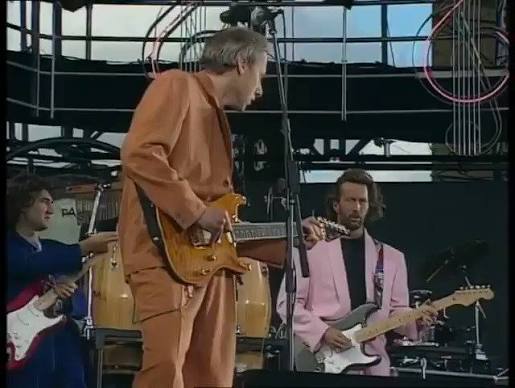
Mark Knopfler and the History of "Money for Nothing": The Riff That Defined an Era
How Mark Knopfler chased Billy Gibbons, discovered a happy accident with a Les Paul and a strange microphone setup on Montserrat, and created one of the most recognizable guitar riffs ever recorded.
There are guitar riffs that open songs.
There are guitar riffs that define songs.
And then there are the rare riffs that seem to swallow everything around them — the band, the record, the decade — and become something larger than the music itself.
Mark Knopfler's opening assault on Dire Straits' "Money for Nothing" belongs firmly in that final category.
It is one of those sounds that requires almost no introduction. A few seconds are enough. The distant atmosphere. Sting's ghostly "I want my MTV." The synthesizers slowly building behind him. The enormous drum entrance. And then the guitar arrives.
Not clean. Not polite. Not remotely like the crystalline Stratocaster sound that had already made Knopfler one of the most distinctive guitarists of his generation.
Instead, the riff growls. It snarls. It sounds compressed, hollow, nasal and almost mechanical — yet underneath that bizarre tone is the unmistakably human touch of Mark Knopfler's fingers pulling against the strings.
Released in 1985 on Dire Straits' Brothers in Arms, "Money for Nothing" became one of the defining rock songs of the MTV generation. It was a commercial giant, an unavoidable music-video phenomenon and, perhaps most importantly for guitar players, proof that an extraordinary riff could still dominate popular culture in an increasingly polished technological age.
But the story behind that riff is more complicated than simply plugging in a Les Paul and turning up an amplifier. It involves ZZ Top. It involves an unusual recording session on the Caribbean island of Montserrat. It involves a guitar tone that emerged partly through accident. It involves Sting. It involves the rise of MTV. And at the center of everything is Mark Knopfler — a guitarist famous for restraint who, for one glorious moment, created one of the biggest guitar sounds ever committed to tape.
This is the history of the riff.
Before the Riff: Mark Knopfler Was Already Different
To understand why "Money for Nothing" hit guitar players with such force, you have to understand what Mark Knopfler represented before it arrived.
By the late 1970s, rock guitar was increasingly associated with excess. Players were chasing bigger amplifiers, more distortion, longer solos and increasingly spectacular technique. Knopfler seemed to arrive from another universe.
When Dire Straits broke internationally with "Sultans of Swing," guitarists immediately noticed something unusual. The tone was clean. The phrasing was conversational. The notes seemed to tumble effortlessly from the instrument. Most importantly, Knopfler wasn't attacking the strings with a pick. (We broke that performance down in our Sultans of Swing solo masterclass.)
His distinctive fingerstyle technique gave his playing a touch-sensitive quality that was difficult to imitate. Notes could snap, whisper or bark depending on how he struck the strings. Chords became rhythmic events rather than static blocks of sound. Small variations in attack suddenly mattered.
For many listeners, the classic Knopfler image was inseparable from a Fender Stratocaster: relatively clean amplification, carefully controlled dynamics and melodic lead playing that seemed to exist somewhere between blues, country, folk and rock.
Then came "Money for Nothing." Suddenly, Knopfler sounded like he had driven a bulldozer through his own rulebook. The guitar was thick. Distorted. Mid-heavy. Aggressive. Almost grotesque. And completely unforgettable.
The Birth of "Money for Nothing"
The inspiration behind "Money for Nothing" began not in a rehearsal room but in an appliance store. Knopfler has explained that he was in a store where a wall of televisions was tuned to MTV. Nearby, an employee was watching the rock stars appearing across the screens and commenting on what he saw.
To the man watching television, musicians appeared to have discovered the ultimate scam. They weren't carrying refrigerators. They weren't installing microwave ovens. They were appearing on television, playing guitars and apparently becoming wealthy in the process. Knopfler began writing down the kinds of comments he heard.
The song is therefore frequently misunderstood when its narrator is confused with Knopfler himself. The lyrics are written through the voice of an outside observer — someone looking at rock stardom with jealousy, resentment, disbelief and prejudice.
The irony was almost too perfect. Dire Straits were creating a song that mocked the perception of MTV rock stars while simultaneously creating one of the greatest MTV rock anthems ever recorded. And the music needed to match that contradiction. It couldn't sound elegant. It needed swagger. It needed attitude. It needed a riff.
Enter ZZ Top
One of the most fascinating elements of the "Money for Nothing" story is the influence of Billy Gibbons. By the early 1980s, ZZ Top had mastered something very few veteran rock bands managed successfully: they had reinvented themselves for the MTV era without completely abandoning their identity.
Underneath all of the visual spectacle — the beards, the Eliminator car, the spinning guitars — was Billy Gibbons' unmistakable guitar tone: thick but articulate, saturated but controlled, with a powerful midrange presence that could make a simple riff sound enormous.
Knopfler wanted some of that character. Producer and engineer Neil Dorfsman later recalled that they were aiming for something in the neighborhood of a ZZ Top sound during the recording of "Money for Nothing." What they ended up capturing, however, became something else entirely.
Get Mark Knopfler’s “Money for Nothing” Tone
Tell ToneMD what gear you own and get a full signal chain with real numbered settings for this tone.
Included with Premium
That distinction is important. Knopfler didn't simply reproduce Billy Gibbons. He chased one sound and accidentally discovered another. That is how some of the greatest guitar tones happen. Not through perfect planning. Through experimentation. Through microphones behaving strangely.
Montserrat: Where the Riff Became a Record
The Brothers in Arms sessions took place at AIR Studios Montserrat, the legendary Caribbean recording facility founded by Beatles producer George Martin. Dire Straits arrived there to make what would become the biggest album of their career.
Producer and engineer Neil Dorfsman played a crucial role in shaping the record's sound. The sessions came during a transitional period in recording history, as digital technology was becoming increasingly important. Brothers in Arms would become closely associated with the rise of the compact disc and the new possibilities of digital production.
Yet one of the album's most famous moments came from something beautifully primitive: a guitarist, an amplifier, microphones — and a sound nobody could quite reproduce afterward.
Accounts of the exact guitar used for "Money for Nothing" have varied over the years. The instrument is generally associated with Knopfler's Les Paul era rather than the Stratocaster sound most listeners associated with early Dire Straits, and the guitar most famously connected with the song was a 1983 Gibson Les Paul Standard reissue.
Dorfsman has described the tone as emerging from the relationship between the guitar, the amplifier and the microphone placement. The microphones captured a strange phase relationship that helped create the hollow, nasal quality heard on the finished recording. They were looking for something resembling Billy Gibbons. They found something that sounded like nobody else.
• 1983 Gibson Les Paul Standard reissue
• Moderately driven British-voiced amplifier
• Cocked wah pedal parked in the midrange
• Accidental microphone phase relationship
• Knopfler's fingerstyle attack — no pick
The Tone: Why Does "Money for Nothing" Sound Like That?
Guitarists have spent decades trying to answer this question. The most common description is a "cocked wah" sound — a wah pedal positioned at a fixed point rather than being rocked continuously with the player's foot. That kind of filtering emphasizes a narrow portion of the guitar's frequency spectrum, producing the honking, nasal midrange character associated with the recording.
But reducing "Money for Nothing" to "use a wah pedal" misses the larger point. The Les Paul-style foundation provides thickness and sustain. The driven amplifier supplies harmonic saturation. The unusual frequency emphasis creates the vocal, almost vowel-like character. The microphone relationship adds another layer of phase coloration.
“That guitar doesn't gently enter the song. It kicks the door open.”
And then there is Knopfler himself. You can buy the guitar. You can find the amplifier. You can copy the EQ. But if you attack the strings like a conventional rock guitarist holding a heavy pick, the riff immediately changes personality. Knopfler's right hand is part of the tone. Perhaps the most important part.
The Right Hand That Makes the Riff Work
Watch guitarists attempt "Money for Nothing" and you'll often notice something strange. The notes are correct. The rhythm is approximately correct. The tone is close. Yet something feels wrong.
The reason is that the riff isn't simply a sequence of fretted notes. It is a physical performance. Knopfler's fingerstyle attack creates different levels of emphasis within the riff. Certain notes jump forward. Others disappear almost immediately. Muted strings become percussion. Chords explode and collapse.
"Money for Nothing" may sound like a massive hard-rock riff, but underneath the distortion is an extremely sophisticated sense of rhythm. The riff breathes. It doesn't sit perfectly on a mechanical grid. It pushes. It pulls. It stutters. The guitar almost seems to be arguing with the drums.
Try playing the part too cleanly and it loses its danger. Try playing every note at exactly the same volume and it becomes flat. Try adding too much gain and the rhythmic definition disappears. The challenge is to make the riff sound huge without making it sound heavy-handed.
The Riff Is Built on Restraint
This is the great contradiction of "Money for Nothing." It sounds enormous. But the playing itself is remarkably economical. Knopfler isn't filling every available beat with guitar. He leaves holes. Those holes allow the rhythm section to hit harder.
This is one of the oldest tricks in great riff writing, from blues musicians to Jimmy Page to Tony Iommi to Malcolm Young. Silence creates weight. Knopfler understood that instinctively.
Sting and "I Want My MTV"
The presence of Sting added another instantly recognizable element to the recording. The Police frontman happened to be connected to the Montserrat sessions and contributed the now-famous "I want my MTV" vocal. The melody carried a resemblance to Sting's own "Don't Stand So Close to Me," resulting in his songwriting credit alongside Knopfler.
It was an inspired addition. The phrase functions almost like advertising. Simple. Repetitive. Instantly memorable. It also completed the song's central irony. Here was a track commenting on musicians appearing on MTV, built around a character complaining about those musicians, while simultaneously chanting the name of MTV itself. Then MTV put the song into heavy rotation. The satire became the phenomenon it was satirizing.
When the Guitar Riff Met the Music Video
To younger listeners, it can be difficult to appreciate just how powerful MTV became during the 1980s. Music videos could turn songs into cultural events, and "Money for Nothing" arrived at exactly the right moment. Its groundbreaking computer-animated video became inseparable from the song itself.
The primitive CGI looks unmistakably dated today, but at the time it was strikingly futuristic. The man known for standing relatively still and playing guitar had conquered the most image-driven musical platform of the decade. And he did it with a riff.
The Guitar Hero Who Didn't Act Like One
This may be the most important part of Mark Knopfler's legacy. He became a guitar hero while rejecting almost every stereotype associated with guitar heroes. No tapping fireworks. No dive-bombing tremolo theatrics. Knopfler's authority came from touch, timing, tone, phrasing and songs. There are countless guitarists who could play something technically more difficult. Very few could have invented that riff. (For the full picture of his approach, see our Mark Knopfler tone guide.)
How to Approach the "Money for Nothing" Tone Today
If you're trying to recreate the sound, don't become obsessed with finding one magical piece of equipment. Think of the tone as a recipe.
Start with a humbucker-equipped guitar. A Les Paul-style instrument is the obvious choice, giving you the thickness needed to establish the basic foundation. From there, use a moderately driven British-style amplifier. Too much distortion will destroy the articulation. The original sound is aggressive, but it isn't modern high gain.
Next comes the frequency filtering. A wah pedal parked in a fixed position can help create the nasal midrange emphasis associated with the recording. Slowly move the pedal through its sweep while playing the riff until the guitar begins producing that distinctive vowel-like quality. Then stop moving it. Modern modelers can achieve something similar using parametric EQ.
But here's the critical part: once the tone is close, stop adjusting the gear. Work on your hands. Use your fingers. Experiment with thumb-and-finger attacks. Snap certain strings harder than others. Mute aggressively. Gear can reproduce frequencies. Only your hands can reproduce feel.
Why More Gain Is Usually the Wrong Answer
One of the easiest mistakes when chasing the "Money for Nothing" sound is adding distortion. Knopfler's riff depends on transient information — the tiny bursts of attack created when his fingers strike the strings. Too much gain compresses those differences. Everything becomes equally loud. The riff loses its internal dynamics.
Instead, try reducing the gain until individual string attacks become obvious. Then increase the amplifier volume if possible. You want the sensation of an amplifier working hard without turning the guitar signal into an indistinct wall of distortion. Think texture. Not saturation.
A Riff That Changed Dire Straits
Brothers in Arms transformed Dire Straits from a highly successful band into a global phenomenon. "Money for Nothing" was central to that transformation. The album was perfectly positioned for the emerging compact-disc market. The production was immaculate. The songwriting was mature. Yet among all that sophistication, one ugly, honking guitar riff became the calling card.
There is another lesson there. Perfect production doesn't always require perfect sounds. Sometimes you need something strange. The guitar on "Money for Nothing" doesn't politely blend into the arrangement. It invades it. That is exactly why it works.
The Legacy
There are riffs that belong to guitar players. "Money for Nothing" belongs to everybody. Guitarists hear the articulation. Producers hear the microphone interaction. Songwriters hear the economy. Drummers hear the space. Casual listeners hear that opening sound and know exactly what's coming.
The riff sits comfortably beside the most recognizable guitar openings ever recorded — not because it is the fastest or most technically demanding, but because it has identity. You cannot mistake it for anything else. That may ultimately be the highest achievement available to a guitarist. Not speed. Not complexity. Identity.
With "Money for Nothing," Mark Knopfler didn't simply record one of the most recognizable riffs of the 1980s. He created one of those rare moments when songwriting, guitar tone, technology and popular culture collided at exactly the right time. That guitar doesn't gently enter the song. It kicks the door open. And after all these years, it still sounds enormous.
What to Remember
- ▸Knopfler was chasing a Billy Gibbons / ZZ Top tone — the sound that made it to tape was a happy accident produced by microphone phase quirks at AIR Montserrat.
- ▸The recorded rig is a Les Paul-style guitar into a moderately driven British-voiced amp with a cocked wah parked in the midrange — not a high-gain modern rig.
- ▸The riff's power comes from Knopfler's fingerstyle attack, rhythmic push-and-pull, and negative space — not gain or complexity.
- ▸Too much distortion destroys the riff. The transients in his right hand are what make it sound huge.
- ▸"Money for Nothing" satirized MTV rock stars while becoming one of the ultimate MTV rock songs — Sting's "I want my MTV" hook closed the loop.
Keep Exploring History of the Riff
- Epiphone Les Paul Standard '50s$699·Check on Amazon →
- Marshall DSL40CR Tube Combo$899·Check on Amazon →
- Dunlop GCB95 Cry Baby Wah$99·Check on Amazon →
Some links are affiliate links — we may earn a small commission at no cost to you.
Shop "Money for Nothing"–Inspired Gear
Some links may be affiliate links. We may earn a small commission at no cost to you.
Experience-driven coverage, not algorithm bait.
- 20+ years of guitar playing experience
- Real-world retail experience at Guitar Center
- Thousands of hours testing guitars, amps, and pedals
- A community of 50,000+ guitar enthusiasts across platforms
- Partnerships with Fender, DistroKid, TrueFire, Card Chords, and Enya
- Editorial standards published openly — see how we test gear
The Modern Guitar Magazine. Delivered to your inbox.
No spam. No gimmicks. Just great guitar content — stories, tones, iconic solos, and honest gear takes. Every week.
Ask GP
3 free questions a dayStill curious? Ask GP about this story.
Your personal classic-rock and guitar guide — ask anything about Mark Knopfler and the History.
Discussion (0)
Sign in to join the discussion.
Sign in to commentLoading comments…
Discover another guitar story
Swipe through our latest features, breaking news and iconic solos — one story at a time.
Open Swipe →More in Guitar Talk
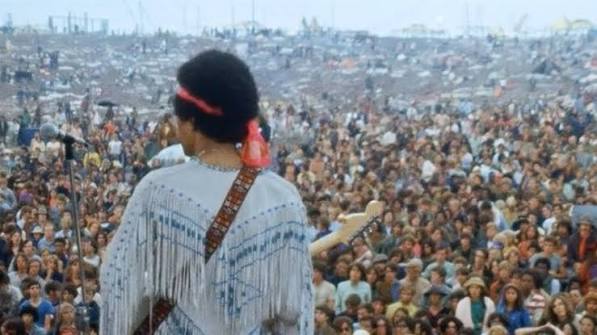
The 10 Greatest Guitar Renditions of “The Star-Spangled Banner”
From Jimi Hendrix's controlled chaos at Woodstock to modern performances by H.E.R., Gary Clark Jr. and Jack White, these guitarists turned America's national anthem into something deeply personal.
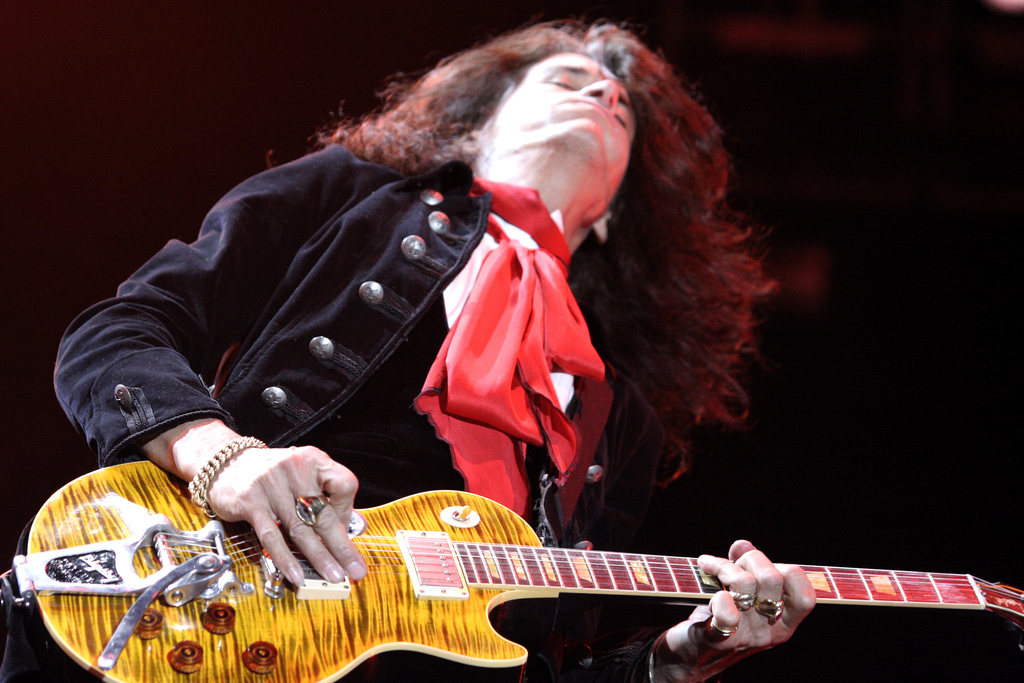
Happy Birthday, Joe Perry: The Riff Machine Who Gave Aerosmith Its Swagger
Joe Perry turns 76 today. From the swampy grind of “Sweet Emotion” to the reunion that saved a band, this is the career of the guitarist who taught American hard rock how to strut.
History of the Riff: How Joe Satriani Made “Flying in a Blue Dream” Feel Weightless
An acoustic guitar in an unusual tuning, a stray broadcast and a melody that seems to hang in the air: inside the construction of Satriani’s 1989 masterpiece.