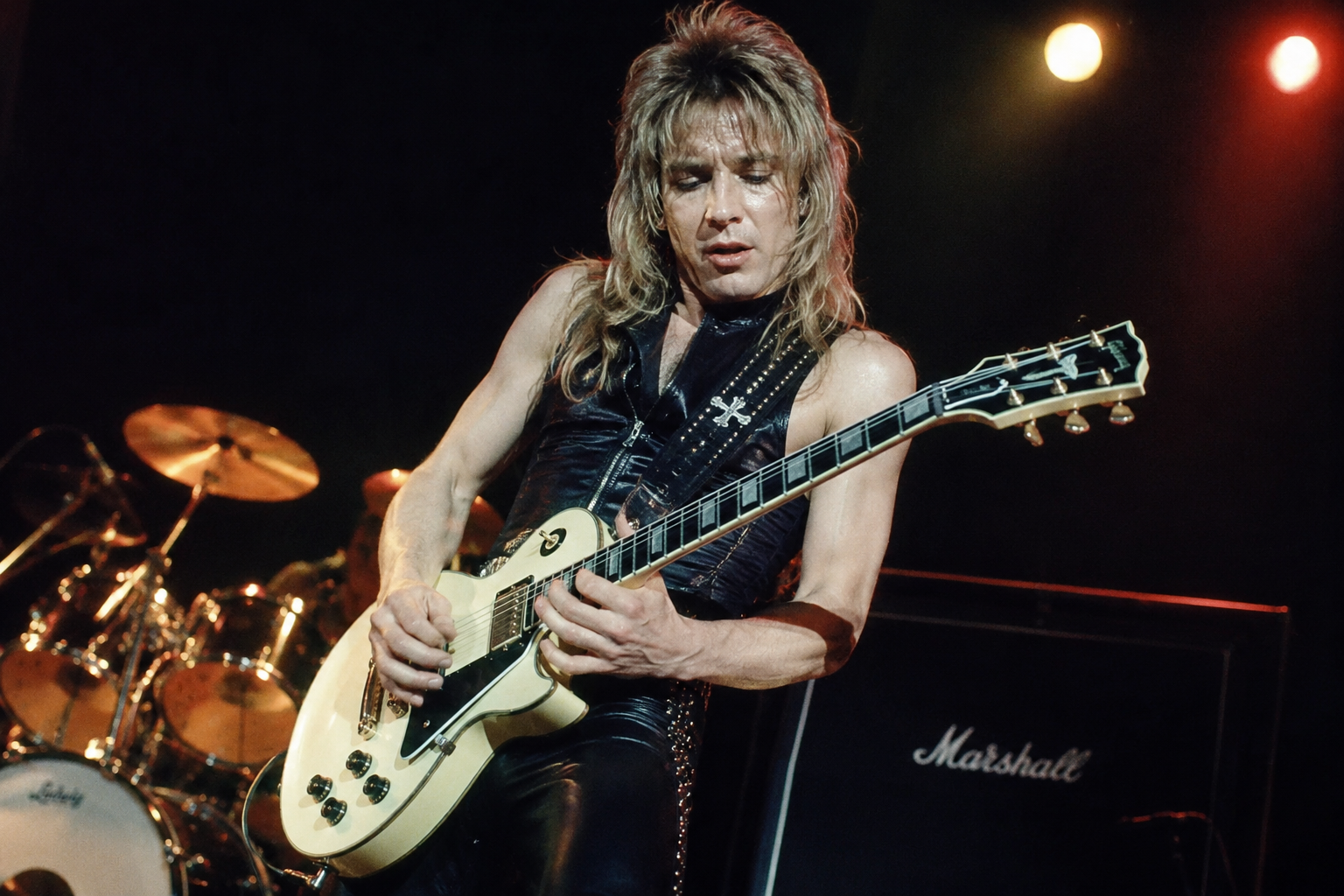
Few guitar riffs are as instantly recognizable as the opening of "Crazy Train." Here's how Randy Rhoads built one of heavy metal's greatest invitations to play guitar.
▶ LISTEN WHILE READING
Few guitar riffs in rock history announce themselves as boldly as the opening of "Crazy Train." Before the vocals, before the drums fully lock in, Randy Rhoads' guitar tells you exactly what kind of ride you're about to take.
Few guitar riffs in rock history are as instantly recognizable as the opening of "Crazy Train." Before a single lyric is sung, that chugging, energetic guitar line announces itself like a battle cry. Forty-plus years later, it's still one of the first riffs many guitar players learn — and one of the quickest ways to make a room full of rock fans turn their heads.
But what makes the riff so special? The secret isn't complexity. It's a simple compositional trick that Randy Rhoads borrowed from centuries of classical music: the pedal tone.
A New Beginning for Ozzy
In 1979, Ozzy Osbourne found himself at a crossroads. After being fired from Black Sabbath, many believed his career was finished. Then along came a young guitarist from California named Randy Rhoads.
Rhoads had built a reputation on the Los Angeles club scene with Quiet Riot, but he wasn't a typical rock guitarist. He studied classical guitar with his mother, loved complex harmony, and approached the instrument almost like a composer. That unique musical background would soon change heavy metal forever.
The Pedal Tone at the Heart of the Riff
Listen closely to the opening of "Crazy Train" and you'll notice something clever. Underneath the melodic movement, one note keeps ringing out over and over: a low, chugging F#.
That repeated note is called a pedal tone — a technique straight out of the classical playbook. Bach used pedal tones constantly in his organ works, letting a single bass note anchor the harmony while the melody moved above it. Randy Rhoads simply plugged that idea into a Marshall stack.
The result is a riff that feels both hypnotic and forward-moving. The F# gives it drive and gravity, while the higher notes create tension, release, and melody. It's rock guitar built on 300 years of European counterpoint — and most listeners never notice.
A pedal tone is a single note (usually a low one) that repeats or sustains underneath a moving melody. In "Crazy Train," Randy Rhoads keeps hammering a low F# while the upper notes weave a melodic line above it. That constant low anchor is what makes the riff feel relentless and driving — your ear locks onto the pedal tone while the melody creates all the excitement. It's a classical composition trick applied to a Marshall-cranked heavy metal riff, and it's the reason "Crazy Train" sounds so hypnotic even after thousands of listens.
Classical Roots, Heavy Metal Delivery
Get Randy Rhoads’ “Crazy Train” Tone
Tell ToneMD what gear you own and get a full signal chain with real numbered settings for this tone.
Included with Premium
Randy's classical training shows up everywhere in "Crazy Train." The neoclassical flavor of the melodic notes, the deliberate voice leading, the way tension resolves — none of it is accidental. He wasn't just noodling in a minor key. He was applying real compositional thinking to a hard rock format.
That's why the riff feels different from the blues-based hard rock that dominated the 1970s. Rhoads brought a European sensibility to American metal, and it opened the door for an entire generation of neoclassical shredders who followed.
The Guitar and Tone
Randy recorded "Crazy Train" using his legendary white Gibson Les Paul Custom into cranked British-style amplifiers, often with an MXR Distortion+ pushing the front end.
The tone itself isn't overly saturated by modern standards. Instead, it's:
“The opening of "Crazy Train" isn't great because it's complicated — it's great because Randy Rhoads turned a single pedal tone into one of the most exciting riffs in rock history.”
- Thick but articulate
- Aggressive yet clear
- Packed with upper-midrange bite
- Responsive enough that every note in the riff stays distinct
That clarity is essential. If the tone were too fuzzy, the pedal tone would blur into mush. The tightness is what lets your ear separate the low F# from the melodic notes above it.
• Guitar: White Gibson Les Paul Custom with humbuckers
• Amplifier: Marshall-style British stack, cranked loud
• Pedals: MXR Distortion+ for extra saturation and bite
• Strings: Nickel wound, light-to-medium gauge, standard tuning
• Picks: Heavy pick for precise attack and controlled palm muting
Practice This Riff
The "Crazy Train" opening is one of the best riffs in rock for developing right-hand precision. Focus on three things:
- Focus on alternate picking consistency. Every sixteenth note should feel even. Uneven picking is what makes the riff sound sloppy.
- Keep the repeated F# tight and controlled. The pedal tone is the anchor of the whole riff. Palm-mute it just enough to keep it chunky without choking the note.
- Practice slowly with a metronome before increasing speed. Nail the groove at 60 BPM before you push it. Speed comes from cleanliness, not the other way around.
Randy Rhoads' Lasting Legacy
Tragically, Randy Rhoads' career was cut short in 1982 when he died in a plane accident at just 25 years old. Despite his brief career, his influence on rock and metal guitar remains enormous. Players from Zakk Wylde to Paul Gilbert to a generation of neoclassical shredders have cited him as a major inspiration.

And while Randy gave the world many unforgettable moments, few are more enduring than the opening riff of "Crazy Train." The moment those first notes ring out, every guitarist knows exactly what's coming — a runaway train of pure rock and roll energy, built on a single, brilliant pedal tone.
• Song: "Crazy Train"
• Guitarist: Randy Rhoads
• Album: Blizzard of Ozz
• Released: 1980
• Key: F# minor
• Signature Technique: Pedal tone on low F# under a moving neoclassical melody
• Why It Matters: One of the most influential and recognizable riffs in heavy metal history.
More History of the Riff
What to Remember
- ▸The opening of "Crazy Train" is built on a pedal tone — a repeated low F# that anchors the riff while the melody moves above it.
- ▸Randy Rhoads borrowed the pedal-tone technique from classical composers like Bach and applied it to a Marshall-cranked heavy metal riff.
- ▸The tone comes from a white Gibson Les Paul Custom into a cranked British-style amp, often pushed with an MXR Distortion+.
- ▸The riff is a masterclass in right-hand precision — alternate picking consistency and controlled palm muting are everything.
- ▸Randy Rhoads died in 1982 at age 25, but his neoclassical approach reshaped heavy metal guitar for generations.
- Marshall JCM800 2203X 100W Reissue Head$3,199·Check on Amazon →
- MXR M104 Distortion+ Pedal$79·Check on Amazon →
- Dunlop Tortex Heavy Picks (1.14mm, 12-Pack)$6·Check on Amazon →
- Ernie Ball Regular Slinky Nickel Wound Strings (3-Pack)$17·Check on Amazon →
Some links are affiliate links — we may earn a small commission at no cost to you.
Gear for the "Crazy Train" Sound
Some links may be affiliate links. We may earn a small commission at no cost to you.
Experience-driven coverage, not algorithm bait.
- 20+ years of guitar playing experience
- Real-world retail experience at Guitar Center
- Thousands of hours testing guitars, amps, and pedals
- A community of 50,000+ guitar enthusiasts across platforms
- Partnerships with Fender, DistroKid, TrueFire, Card Chords, and Enya
- Editorial standards published openly — see how we test gear
Love the stories behind legendary guitar riffs?
Subscribe to The Guitar Plugged and get new guitar history, gear recommendations, and deep dives delivered straight to your inbox.
Ask GP
3 free questions a dayStill curious? Ask GP about this story.
Your personal classic-rock and guitar guide — ask anything about The Story Behind the Opening.
Discussion (0)
Sign in to join the discussion.
Sign in to commentLoading comments…
Discover another guitar story
Swipe through our latest features, breaking news and iconic solos — one story at a time.
Open Swipe →More in Guitar Talk
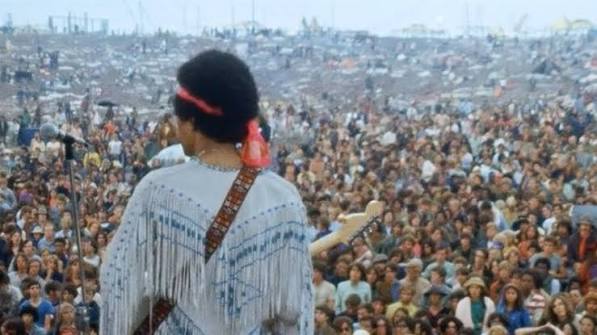
The 10 Greatest Guitar Renditions of “The Star-Spangled Banner”
From Jimi Hendrix's controlled chaos at Woodstock to modern performances by H.E.R., Gary Clark Jr. and Jack White, these guitarists turned America's national anthem into something deeply personal.
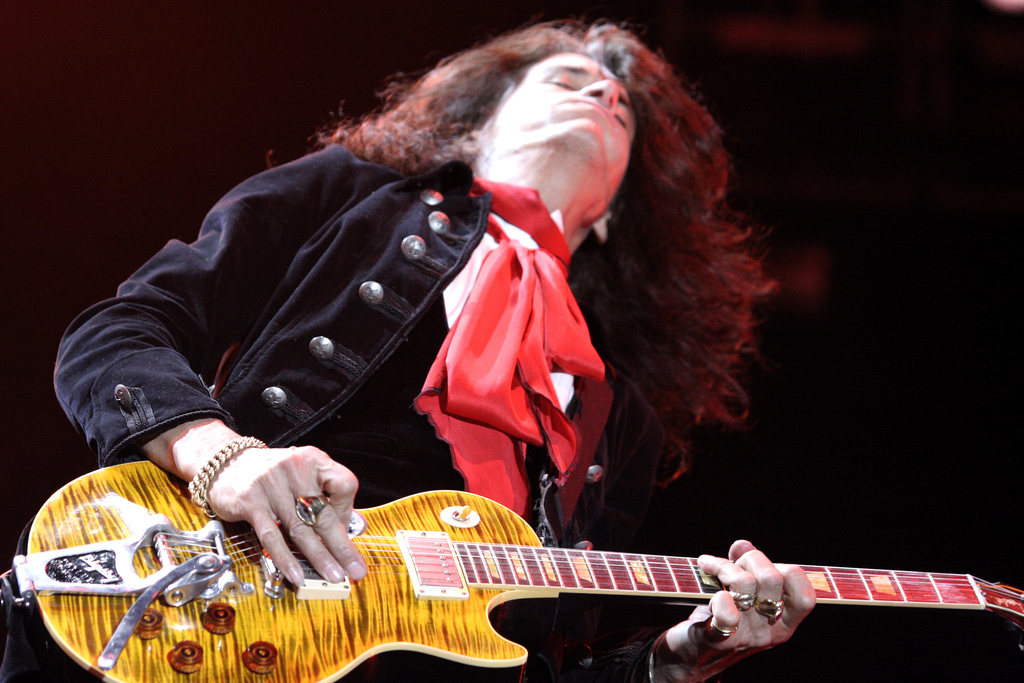
Happy Birthday, Joe Perry: The Riff Machine Who Gave Aerosmith Its Swagger
Joe Perry turns 76 today. From the swampy grind of “Sweet Emotion” to the reunion that saved a band, this is the career of the guitarist who taught American hard rock how to strut.
History of the Riff: How Joe Satriani Made “Flying in a Blue Dream” Feel Weightless
An acoustic guitar in an unusual tuning, a stray broadcast and a melody that seems to hang in the air: inside the construction of Satriani’s 1989 masterpiece.